Categories
Audio Sources - Full Text Articles

Bill forcing feds to fix prison cameras is signed into law

WASHINGTON (AP) — President Joe Biden signed into law Tuesday a bill requiring the federal Bureau of Prisons to overhaul outdated security systems and fix broken surveillance cameras after rampant staff sexual abuse, inmate escapes and high-profile deaths.

The bipartisan Prison Camera Reform Act, which passed the Senate last year and the House on Dec. 14, requires the Bureau of Prisons to evaluate and enhance security camera, radio and public address systems at its 122 facilities.

The agency must submit a report to Congress within three months detailing deficiencies and a plan to make needed upgrades. Those upgrades are required within three years and the bureau must submit annual progress reports to lawmakers.

Failing and inadequate security cameras have allowed inmates to escape from federal prisons and hampered investigations. They’ve been an issue in inmate deaths, including that of financier Jeffrey Epstein at a federal jail in New York City in 2019.

The Justice Department’s internal watchdog found that deficiencies with security cameras have compromised investigations into staff misconduct, the introduction of contraband, civil rights violations and inmate deaths.

In March, The Associated Press reported that a lack of security cameras in critical areas contributed to widespread staff sexual abuse of inmates at a federal women’s prison in Dublin, California.

“Broken prison camera systems are enabling corruption, misconduct, and abuse,” said the legislation’s sponsor, Sen. Jon Ossoff, D-Ga. “That’s why I brought Republicans and Democrats together to pass my Prison Camera Reform Act, which is now law.”

Categories
Audio Sources - Full Text Articles

U.S. House committee to release Trump“s tax returns on Friday

2022-12-27T20:10:38Z

The U.S. House of Representatives Ways and Means Committee plans to release former President Donald Trump’s redacted tax returns on Friday, a committee spokesperson confirmed on Tuesday.

Related Galleries:

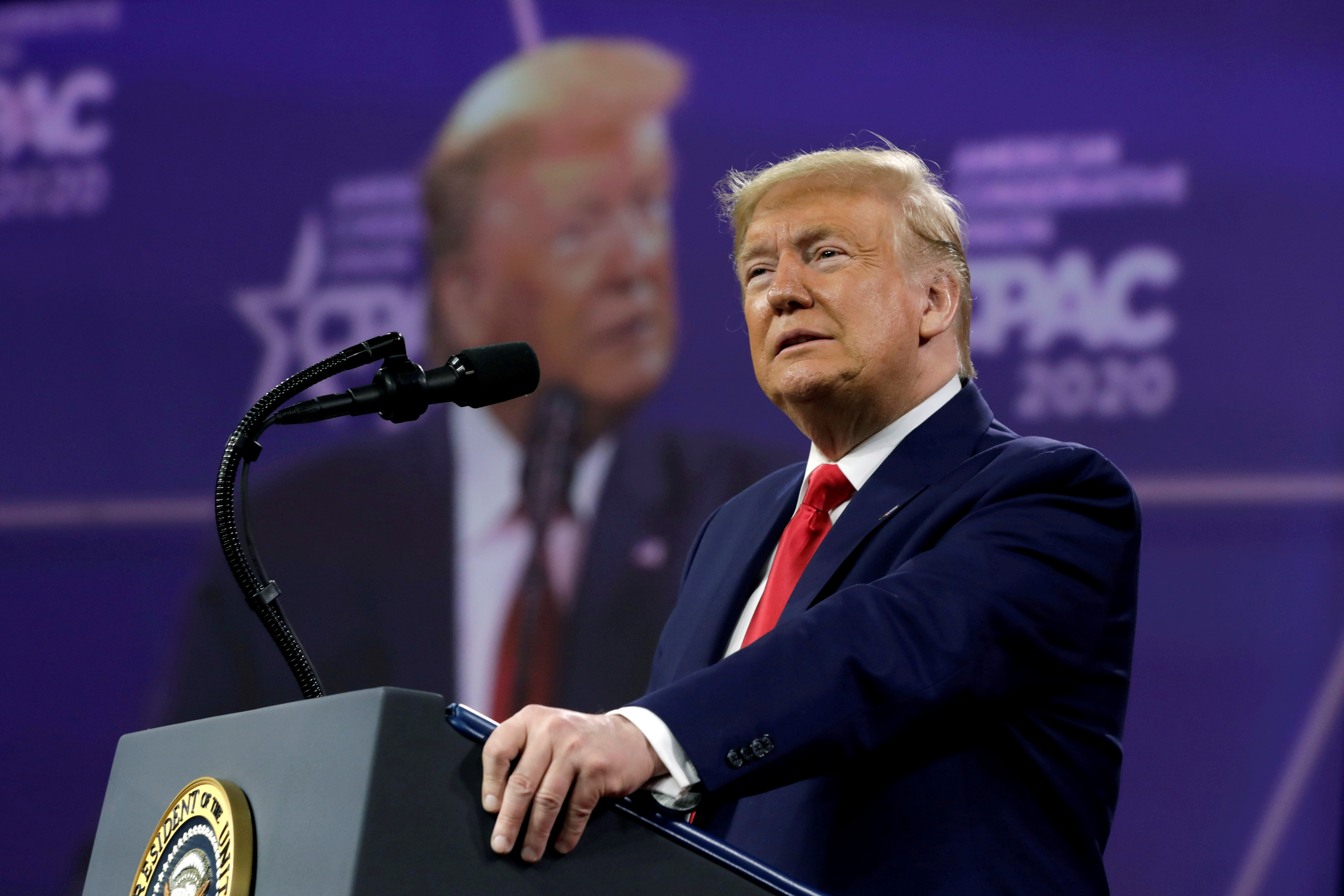
U.S. President Donald Trump addresses the Conservative Political Action Conference (CPAC) annual meeting at National Harbor in Oxon Hill, Maryland, U.S., February 29, 2020. REUTERS/Yuri Gripas

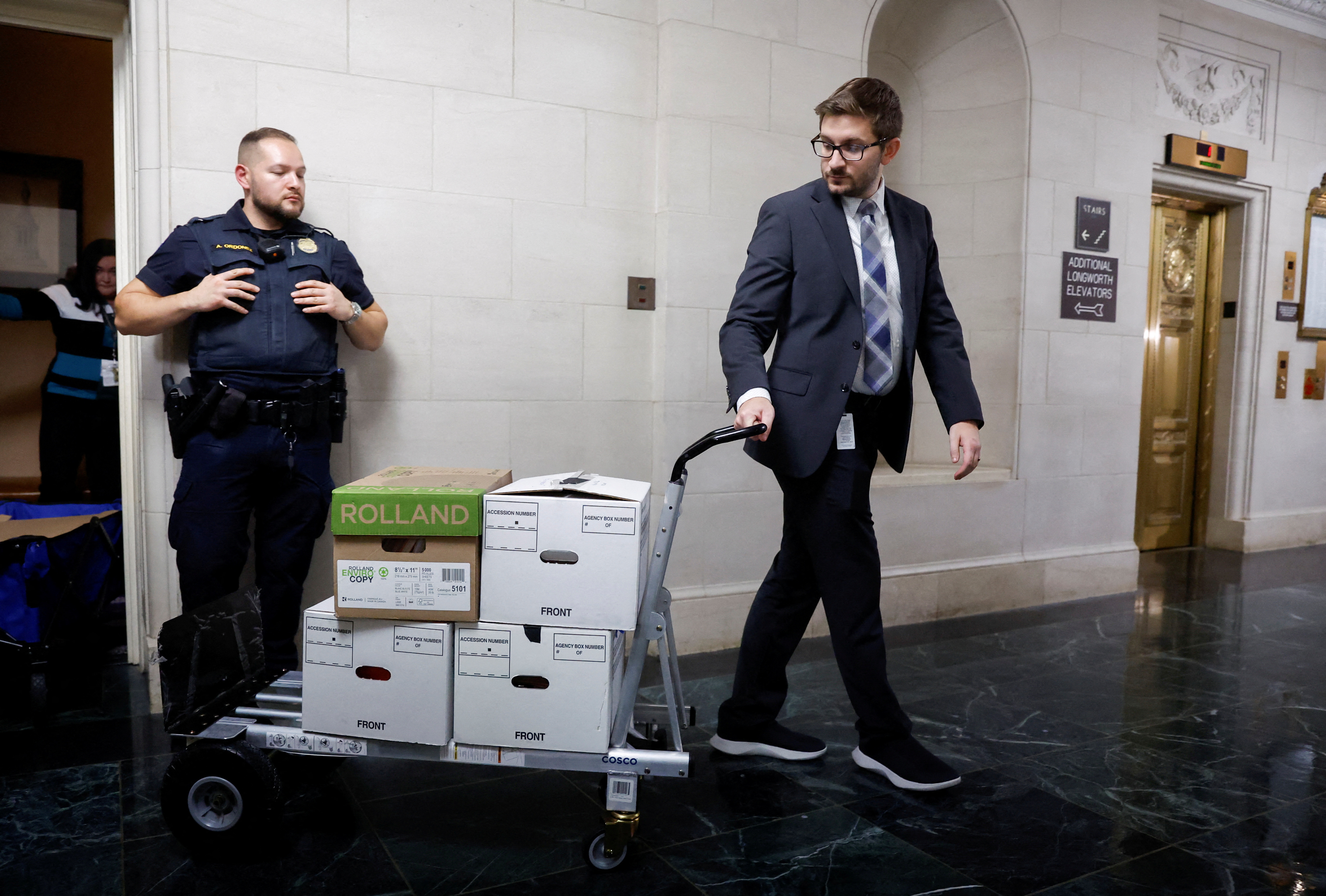
U.S. House Ways and Means Committee staff members transport boxes of documents after a committee meeting to discuss former President Donald Trump’s tax returns on Capitol Hill in Washington, U.S., December 20, 2022. REUTERS/Jonathan Ernst
Categories
Audio Sources - Full Text Articles

U.N. Security Council denounces Taliban bans on women in Afghanistan

2022-12-27T20:12:37Z

Afghan female students walk near Kabul University in Kabul, Afghanistan, December 21, 2022. REUTERS/Ali Khara

The U.N. Security Council on Tuesday called for the full, equal and meaningful participation of women and girls in Afghanistan, denouncing a ban by the Taliban-led administration on women attending universities or working for humanitarian aid groups.

In a statement agreed by consensus, the 15-member council said the ban on women and girls attending high school and universities in Afghanistan “represents an increasing erosion for the respect of human rights and fundamental freedoms.”

The university ban on women was announced as the Security Council in New York met on Afghanistan last week. Girls have been banned from high school since March.

The council said a ban on female humanitarian workers, announced on Saturday, “would have a significant and immediate impact for humanitarian operations in country,” including those of the United Nations.

“These restrictions contradict the commitments made by the Taliban to the Afghan people as well as the expectations of the international community,” said the Security Council, which also expressed its full support for the U.N. political mission in Afghanistan, known as UNAMA.

Four major global aid groups, whose humanitarian efforts have reached millions of Afghans, said on Sunday that they were suspending operations because they were unable to run their programmes without female staff.

U.N. aid chief Martin Griffiths told the Security Council last week that 97% of Afghans live in poverty, two-thirds of the population need aid to survive, 20 million people face acute hunger and 1.1 million teenage girls were banned from school.

The Islamist Taliban seized power in August last year. They had largely banned education of girls when last in power two decades ago but had said their policies had changed. The Taliban-led administration has not been recognised internationally.

Categories
Audio Sources - Full Text Articles

House Democrats come out swinging in George Santos scandal

democrat-republican-2.jpeg

Help support Palmer Report! Our articles are all 100% free to read, with no forced subscriptions and nothing hidden behind paywalls. If you value our content, you’re welcome to pay for it:

Pay $5 to Palmer Report:

Pay $25 to Palmer Report:

Pay $75 to Palmer Report:


House Republican George Santos is now confessing that several of his lies are indeed lies, meaning that so much of his life story isn’t real, he’s practically a fictional character. House Democrats don’t get to decide whether or not Santos is expelled, but this is a win for them either way.

If Santos resigns, they get to pursue his seat in a special election. If Santos decides to stick around, House Democrats will get to spend two years using his scandals against every other House Republican for failing to do anything about Santos. To that end, House Democrats are coming out swinging:

BREAKING: George Santos admits his life story is a complete fabrication. His pitiful confession should not distract us from concerns about possible criminality and corruption.

The Ethics Committee MUST investigate how he made his money. Where there’s smoke, there’s fire.

— Ritchie Torres (@RitchieTorres) December 27, 2022

Click here to support Palmer Report! Our articles are all 100% free to read, with no forced subscriptions and nothing hidden behind paywalls. If you value our content, you’re welcome to pay for it:

Pay $5 to Palmer Report:

Pay $25 to Palmer Report:

Sign up for the Palmer Report mailing list

Follow Palmer Report on FacebookTwitterPostMastodon


.

#BREAKING

Holy Smokes. @Santos4Congress just confessed to defrauding the voters of Long Island about his ENTIRE resume. RT if he should be banned from taking the oath for Congress. https://t.co/d3i2iXKWO3

— Rep. Eric Swalwell (@RepSwalwell) December 26, 2022


.

GOP Congressman-elect George Santos, who has now admitted his whopping lies, should resign. If he does not, then @GOPLeader should call for a vote to expel @Santos4Congress. https://t.co/WutPzhaTEX

— Ted Lieu (@tedlieu) December 27, 2022

.

The thing to keep in mind is that this is all about messaging. Contrary to the nonsense you hear from the worst of pundits, the Democrats are actually very good at messaging. They understand that George Santos is a weapon they can use to turn public consensus against House Republicans, which will make it more difficult for House Republicans to carry out their corrupt intended agenda, and easier for the Democrats to win the House back in 2024.

Save Palmer Report! Our articles are all 100% free to read, with no forced subscriptions and nothing hidden behind paywalls. If you value our content, you’re welcome to pay for it:

Pay $5 to Palmer Report:

Pay $25 to Palmer Report:

Pay $75 to Palmer Report:

Write for the Palmer Report Community Section.

Help support Palmer Report! Our articles are all 100% free to read, with no forced subscriptions and nothing hidden behind paywalls. If you value our content, you’re welcome to pay for it:

Pay $5 to Palmer Report:

Pay $25 to Palmer Report:

Pay $75 to Palmer Report:

The post House Democrats come out swinging in George Santos scandal appeared first on Palmer Report.

Categories
Audio Sources - Full Text Articles

George Santos makes an even bigger mess for himself

19121c5c768fb6ee35d5576afe2d9a7f?s=100&d

Help support Palmer Report! Our articles are all 100% free to read, with no forced subscriptions and nothing hidden behind paywalls. If you value our content, you’re welcome to pay for it:

Pay $5 to Palmer Report:

Pay $25 to Palmer Report:

Pay $75 to Palmer Report:


“I am not a crook!” I’m sure we all remember the words of former President and Watergate star Richard Nixon. But now, all these years later, we have another “politician” saying words that are a bit similar in nature. “I am not a fraud.”

Those words came from (Con artist) George Santos, who has finally spoken out about the fact that he is a pathological liar who cannot seem to tell the truth about anything. So — did Santos take responsibility? Did he gallantly offer to resign? Or to at least make amends for his many lies, which could fill a football stadium? Hardly. Instead, he blamed the “Bourgeois” media for his problems.

Bourgeois. What a charming word. Did Santos actually come up with this label himself? I’d say no. With Santos, we are not sure of anything. Santos claims he “embellished”, not lied about certain things, which means he lied, not embellished. He then proceeded to blame “elitism” on the part of the media — the Bourgeois media — for his mistakes.

“I worked as a customer service agent for 6-7 months of my life…elitists like the New York Times like to call blue-collar jobs like that odd jobs because it just doesn’t fit their bourgeois lifestyle.”

Wow. So there is so much to unpack here. First, there’s the fact that Santos seems to be saying that Democrats hate customer service reps which is hysterical, false and a very Santos-type of thing to say.

Click here to support Palmer Report! Our articles are all 100% free to read, with no forced subscriptions and nothing hidden behind paywalls. If you value our content, you’re welcome to pay for it:

Pay $5 to Palmer Report:

Pay $25 to Palmer Report:

Sign up for the Palmer Report mailing list

Follow Palmer Report on FacebookTwitterPostMastodon


Santos also said the elitists are to blame for his lying. He was forced to, he explained, because of the expectations of the media. This statement makes no sense, and you wouldn’t be alone in raising your eyebrows in disbelief.


In the meantime, Santos is apparently a bridge to far, even for some republicans. Jason Miller, a trump advisor and sycophant, actually spoke out and called on the GOP to “get rid of this loser.”

Wow. So Santos proved to be too much for Miller. Santos is obviously a disturbed human being. I think we can all agree on that. But we’re in a win-win situation. If he doesn’t get seated, great He can go off into the night and look for a new scam. If he does get seated, we tie his lies and deceptions straight to the Republicans, most of whom aren’t saying a word about Santos anyway.

Save Palmer Report! Our articles are all 100% free to read, with no forced subscriptions and nothing hidden behind paywalls. If you value our content, you’re welcome to pay for it:

Pay $5 to Palmer Report:

Pay $25 to Palmer Report:

Pay $75 to Palmer Report:

Write for the Palmer Report Community Section.

Help support Palmer Report! Our articles are all 100% free to read, with no forced subscriptions and nothing hidden behind paywalls. If you value our content, you’re welcome to pay for it:

Pay $5 to Palmer Report:

Pay $25 to Palmer Report:

Pay $75 to Palmer Report:

The post George Santos makes an even bigger mess for himself appeared first on Palmer Report.

Categories
Audio Sources - Full Text Articles

Wall Street dips as growth stocks drag on S&P 500, Nasdaq

2022-12-27T19:24:59Z

Traders work on the floor of the New York Stock Exchange (NYSE) in New York City, U.S., December 7, 2022. REUTERS/Brendan McDermid

Wall Street was mostly lower at the beginning of a holiday- shortened week on Tuesday as investors weighed the likelihood of protracted restrictive Fed policy against China’s relaxation of its strict zero-COVID rules.

Interest rate sensitive growth stocks (.IGX) weighed heaviest, dragging the tech-laden Nasdaq down the most. The S&P 500 joined the Nasdaq in negative territory, while the Dow, buoyed by value stocks (.IVX), was modestly green.

“On down days value tends to do well relative to growth,” said Tim Ghriskey, senior portfolio strategist at Ingalls & Snyder in New York.

“There’s not a lot of news out there, thin volume, the China issue is out there, the normalization of a post-COVID environment,” Ghriskey added.

Shares of Tesla Inc (TSLA.O) tumbled 8.3% after a review by Reuters of an internal schedule revealed the electric vehicle maker plans to scale back production at its Shanghai plant.

With Tuesday’s move, Tesla stock has lost nearly 68% of its value this year.

Rising Treasury yields put interest rate sensitive growth stocks under pressure, a recurring theme in 2022. For the year, growth shares have plunged over 30% compared with value’s slide of about 7.5% over the same period.

With just four trading days remaining in 2022, all three indexes are on course to post their biggest annual loss since 2008, the nadir of the global financial crisis.

“(This year) was all about the Fed raising rates, perhaps belatedly,” Ghriskey said. The aggressiveness to bring inflation down to the 2% level has shocked the market and investors.

Beijing eased its strict COVID-19 curbs, which have battered the $17 trillion economy, fueling hopes of a revival in global demand and an improving supply chain.

On the economic front, the Commerce Department’s initial take on the U.S. goods trade balance showed the deficit narrowing by 15.6%, while S&P Case-Shiller showed home price growth in its 20-city composite cooled to 8.6% year-on-year, the lowest reading since November 2020.

The Dow Jones Industrial Average (.DJI) rose 68.31 points, or 0.21%, to 33,272.24, the S&P 500 (.SPX) lost 13.95 points, or 0.36%, to 3,830.87 and the Nasdaq Composite (.IXIC) dropped 128.05 points, or 1.22%, to 10,369.81.

Of the 11 major sectors in the S&P 500, consumer discretionary (.SPLRCD) and communication services (.SPLRCL) suffered the steepest percentage loss.

Energy stocks (.SPNY) were up the most, advancing 1.2% as crude prices rose on an expected demand boost from China’s relaxed COVID restrictions.

U.S.-listed shares of Chinese firms including JD.Com Inc , Alibaba Group Holding Ltd and Pinduoduo Inc (PDD.O) gained between 2% and 4.2% after Beijing announced it was relaxing travel restrictions.

Southwest Airlines Co (LUV.N) fell 5.5% after harsh weather forced the discount commercial carrier to lead its peers in cancellations. The broader S&P 1500 Airlines index (.SPCOMAIR) was off 2.4%.

Declining issues outnumbered advancing ones on the NYSE by a 1.32-to-1 ratio; on Nasdaq, a 1.86-to-1 ratio favored decliners.

The S&P 500 posted 7 new 52-week highs and 3 new lows; the Nasdaq Composite recorded 74 new highs and 377 new lows.


Categories
Audio Sources - Full Text Articles

The 18 biggest Jewish stories of 2022

Antisemitism wasn’t the only big Jewish news this year, but it did dominate much of the Jewish discourse.

Physical attacks against Jews increased amid a rising cacophony of antisemitism on the airwaves and social media. The story was too big and complex for just one spot on our list of the top Jewish stories of 2022 — we gave it three, and it touched several others.

This year was also one of political upheaval. Elections and court decisions in the U.S. and Israel set Jews on edge and spurred them to protest. Jewish institutions, accused of sexism, racism and homophobia, were called to account. Some resisted. Others apologized.

It was also a year of Jewish heroes. The rabbi who foiled the gunman threatening to kill his congregants in Colleyville, Texas. The Ukrainian president who united his people against a Russian invasion. The Shabbat-observant yeshiva grad who dreamed of playing in the NBA — and took unprecedented steps toward doing so.

Here, in no particular order, is the Forward’s list of the 18 top Jewish stories of 2022. It is neither exhaustive, nor is it presented in any particular order. How does it compare to your list? Let us know: Email editorial@forward.com.
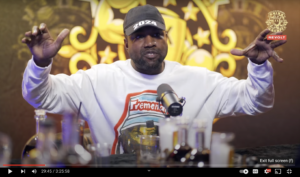
Ye, formerly known as Kanye West, during an Oct. 16 interview on “Drink Champs.” Image by

1. Antisemitic assaults and abuse. Physical attacks on Jews, antisemitic vandalism and hate crimes fueled by antisemitic conspiracy theories spiked across the nation. Lufthansa removed scores of Hasidic Jews from a flight because a few weren’t following masking rules. After Elon Musk bought Twitter and scrapped the teams that police hate speech, antisemitism on the platform soared. And the suspect in the fatal shootings of 10 Black people in Buffalo was found to have authored a screed detailing his hatred toward minorities that was rife with antisemitic conspiracy theories — illustrating how closely connected antisemitism can be to other forms of racial hatred.

2. Celebrity antisemitism. Rapper Kanye West’s rambling antisemitic tirades cost him business deals, but also drew praise from conspiracy-minded fans, and gave antisemites new fuel: One suspect in an antisemitic assault yelled “Kanye 2024,” and an antisemitic hate group hung banners over an LA highway claiming “Kanye was right.” NBA player Kyrie Irving tweeted a link praising an antisemitic film and took weeks to apologize. Comedian Dave Chappelle riffed on both the rapper and the player on Saturday Night Live, and left Jews wondering whether they had been defended or insulted.

3. The Shabbat hostages. An armed British citizen, who believed conspiracy theories about Jews controlling the government and wanted a terrorist released from prison, took Rabbi Charlie Cytron-Walker and three congregants hostage at their Texas synagogue on a Shabbat morning in January. After 11 hours, when Cytron-Walker feared the gunman was ready to kill them, he threw a chair to create a distraction that allowed all the hostages to flee.

Andrea Barron, of Camp Spring, Maryland, poses for a portrait during The Jewish Rally for Abortion Justice near the U.S. Capitol in Washington, D.C. on May 17, 2022. Photo by Eric Lee for The Forward

4. Roe in ruins. Jews across the political spectrum rejected the Supreme Court decision striking down Roe v. Wade. Jewish groups protested and promised both to fight for abortion rights in individual states and work toward enshrining them in a new national law. And a Chicago rabbi revived a clandestine abortion network founded by a Jewish woman pre-Roe.

5. An international Jewish hero. Before Ukrainians elected him as their first Jewish president, Volodymyr Zelenskyy was a television comedian who once triumphed on the Ukrainian version of Dancing with the Stars. When Russia invaded Ukraine he donned drab olive T-shirts and combat boots, coming to personify a beleaguered but defiant democracy that has managed to reclaim much of the land taken by Vladmir Putin’s army. For his strength and courage, Time magazine made him its person of the year.

6. Highland Park parade massacre. The gunman who opened fire at a Fourth of July parade in the Chicago suburb of Highland Park is not believed to have targeted Jews, but most of the seven people he killed were Jewish or part of Jewish families. Among them: a Russian-Jewish emigree and the bar and bat mitzvah coordinator at a synagogue in a neighboring town.

Former President Donald Trump is under fire for having dinner with Nick Fuentes, a vocal antisemite. (Photo illustration by Benyamin Cohen) Former President Donald Trump faced criticism for having dinner with Nick Fuentes, a vocal antisemite. (Photo illustration by Benyamin Cohen) Image by

7. New scrutiny on Trump’s ties to antisemites. In the middle of Kanye West’s antisemitism-spewing tour, former president Donald Trump hosted him for dinner. West brought along white nationalist Nick Fuentes, prompting widespread outrage and leading even some Trump’s allies, including several prominent Jewish Republicans, to call him out. Trump in response questioned American Jews’ loyalty and scolded them for failing to appreciate his support for Israel.

8. Midterm madness. Several candidates in key races, including for Pennsylvania governor, allied with antisemites and trafficked in antisemitic tropes. Orthodox Jews came out in force for New York state gubernatorial candidate Lee Zeldin, a Jewish Republican, but couldn’t push him over the top. And after redistricting pitted him against a longtime Democratic colleague, Rep. Jerrold Nadler won a tight primary and will keep his status as the leader of the U.S. House’s informal Jewish caucus.

9. AIPAC’s endorsements. The pro-Israel lobby faced criticism for endorsing more than 100 Republicans who refused to certify the 2020 presidential election, in a sign that the landscape of Jewish political advocacy is shifting. AIPAC was also criticized for helping to fund primary candidates it deemed more staunchly pro-Israel than their Democratic rivals — even when those rivals were incumbents.

President Isaac Herzog tasking incoming Prime Minister Benjamin Netanyahu to form a new government in November, 2022.President Isaac Herzog tasking incoming Prime Minister Benjamin Netanyahu to form a new government in November, 2022. Photo by Kobi Gideon/GPO

10. Netanyahu’s return. The fifth Israeli election in two years restored Benyamin Netanyahu’s coalition to power, a coalition that this time includes extreme-right figures who will hold influential offices. On a U.S. visit, Netanyahu tried to assure worried American Jews that he won’t let his coalition partners turn Israel into a theocracy or exacerbate the Israeli-Palestinian conflict.

11. LGBTQ@YU. Yeshiva University, the flagship Modern Orthodox institution of higher education, refused to recognize the YU Pride Alliance, citing prohibitions in Jewish law. The group sued, and a New York state trial court judge agreed that the school had to abide by city anti-discrimination laws. YU appealed to the U.S. Supreme Court, which held that the school had yet to exhaust its lower court options. Back in the lower courts, judges have so far again ruled in favor of the students.

An elderly Jewish man in the Dnipro region of Ukraine stands before a delivery of firewood made by JDC as part of an effort to support Ukrainian Jews in advance of a punishing winter. (Courtesy of the JDC) Image by

12. Russia invades Ukraine. Jewish organizations sent aid and volunteers to Ukraine, home to the 12th-largest Jewish community in the world, and Russian Jewish oligarchs were among those targeted with sanctions. Israel welcomed Ukrainian Jews fleeing the conflict, but also restrained its criticism of Russia, having long counted on the country to help keep hostile forces in neighboring countries in check. Still, Russia moved to shut down the Jewish Agency in Russia, which helps Jews emigrate to Israel, and more firmly allied with Iran, putting its relationship with Israel in new jeopardy.

13. Reckonings with sexual harassment. Jewish groups grappled with sexual harassment scandals, with the Union for Reform Judaism release of a report detailing the ways in which its congregational arm in past decades enabled the sexual abuse of children by clergy and summer camp employees. And the board of the Jewish Orthodox Feminist Alliance was accused of failing to act when an employee alleged that its president bullied and made sexually inappropriate comments to a colleague.

14. Madame Ambassador. After eight months of delays and a contentious hearing, the U.S. Senate confirmed Deborah Lipstadt, the renowned Holocaust historian, as the State Department’s envoy to combat and monitor antisemitism. Lipstadt is the first person in the job since it was elevated to the rank of ambassador. Republicans who held up her confirmation critiqued her social media activity, including one tweet in which she accused a GOP senator of embracing white supremacy.

An Israeli flag is set atop a delivery truck outside US ice-cream maker Ben & Jerry’s factory in Be’er Tuvia, on July 21, 2021. Photo by Emanuel Dunand/AFP via Getty Images

15. Ice cream and apartheid. Critics of Israel’s treatment of Palestinians made headlines with the release of an Amnesty International report that accused Israel of apartheid, and Ben & Jerry’s refusal to sell ice cream in the occupied West Bank reverberated in boardrooms and state governments. Defenders of Israeli policy said the Amnesty report was full of distortions and held the country to a higher standard than others, while Ben and Jerry’s stance faced opposition from its parent company, Unilever, which then arranged for sales to continue through a third party. Several states then acted on laws aimed at punishing companies that boycott Israel by barring them from state contracts and pension funds, and a U.S. appeals court upheld those laws.

16. Yeshivas under fire. A New York Times investigation documented the widespread failure of yeshivas, which are often supported with public funds, to educate children in secular subjects. Hasidic leaders blasted the story as unfair and biased, while rumors swirled over how the Times arranged for its report to be translated into Yiddish. Days later, a New York state board approved new rules to force yeshivas and other private religious schools to offer basic secular instruction.

17. Demise of the Iran nuclear deal. For much of the year, it looked as if the White House might secure a deal to slow Iran’s development of a nuclear weapon, reviving an agreement passed by Congress under former President Barack Obama and scuttled by former President Donald Trump. But the deal faced overwhelming obstacles, and negotiators’ enthusiasm waned after Iran cracked down on domestic protestors and sold weapons to aid Russia’s war in Ukraine.

18. Hebrew hustle. College basketball phenom Ryan Turell, Yeshiva University class of 2022, led the nation in scoring and then declared for the NBA draft. He went unselected, but then the Detroit Pistons’ minor league affiliate, the Motor City Cruise, picked him in the NBA G League draft. He still aims to be the first Orthodox Jew in the NBA.

The post The 18 biggest Jewish stories of 2022 appeared first on The Forward.

Categories
Audio Sources - Full Text Articles

Cargo theft is a $35 billion industry. Meet the 4 biggest players in logistics tech helping to solve the problem.

trucksCargo theft costs the US economy billions a year.

Rebecca Cook/Reuters

  • Stealing cargo is a $15 billion to $35 billion industry.
  • Insider compiled the four biggest players creating tech to track freight and prevent theft.
  • They include the veteran PowerFleet and the small-business-focused company TruckX.

Cargo theft, where goods are stolen in transport, is a $15 billion to $35 billion industry. While it’s been an unfortunate byproduct of trade for years, with stakeholders constantly looking to stem losses by beefing up security and adding checks and measures, media footage of thieves breaking into slow-moving trains and raiding cargo containers has many consumers and businesses concerned about the safety and stability of supply chains.

Name-brand companies like Amazon, FedEx, and UPS are predominantly bearing the brunt of these costs. It’s no surprise then that tech companies are cropping up to tackle the challenge. Here’s a look at some of the top players based on market share and innovation in the logistics-tracking space.

PowerFleetSteve ToweSteve Towe, the CEO of PowerFleet.

Courtesy of PowerFleet

Funding raised: Publicly traded

The New Jersey-based PowerFleet is an experienced incumbent in the telematics market, serving more than half a million customers, including Coca-Cola, GE, Avis, and Walmart. The company, formerly named I.D. Systems, was founded in 1993 by Kenneth Ehrman while he was an engineering student at Stanford University. The company pioneered and was at the forefront of using radio-frequency-identification, or RFID, technology for industrial-asset tracking. I.D. Systems was acquired by Pointer Telocation and was later rebranded as PowerFleet in 2019. 

PowerFleet offers a series of Internet of Things telematics devices, freight cameras, and sensors that track cargo location, status, and condition and assess an asset’s safety by combining location information to create alerts on where it stops. Its tech also integrates with the carrier transportation-management system, or TMS, to create virtual geographic perimeters (otherwise called a geofence) defined by GPS coordinates, which helps to monitor the real-time location of trucks and can help point out safe resting spots. 

TiveKrenar KomoniKrenar Komoni, the CEO of Tive.

Courtesy of Tive

Funding raised: $81.9 million, according to Crunchbase

Investors: AXA Venture Partners, Sorenson Capital, Qualcomm Ventures, Floating Point, SJF Ventures, RRE Ventures, Two Sigma Ventures, Supply Chain Ventures, Fifth Wall, NextView Ventures, Hyperplane Venture Capital, Broom Ventures

The Boston-based Tive counts major retailers and freight forwarders like Alpine Fresh, Driscoll’s, DSV, and Johnson Controls as part of its clientele today. Its trackers, once attached to a freight container, relay location data using cellular, WiFi, and GPS data. They also monitor the container’s environment, notifying management when the shipment is exposed to varying light or temperature conditions. 

Komoni, the company’s founder and CEO, developed the tracker that would later form the basis of Tive in 2015 to help his father-in-law grow his trucking business in Massachusetts. Fast-forward to today, and the company reported that it’s grown 5,540% during the pandemic years. Tive is part of the Open Visibility Network, where it works with the supply-chain-visibility giant Project44 to connect shippers, logistics-service providers, brokers, and clients via collaborative data sharing.

Tive runs a team of live-monitoring experts that track global shipments 24/7. When shipment-route deviation is detected, the team works with carriers to mitigate delays and recover their freight, getting law enforcement involved if necessary. 

TruckXTapan Chaudhari.Tapan Chaudhari, the president of TruckX.

Courtesy of TruckX

Funding raised: Self-funded

Like its competitors, the California-based TruckX, founded in 2016, provides sensors and trackers that stick to a truck’s surface and monitor truck movement and its environment, alerting the fleet back office of any break-ins or if the truck steers off the assigned route. 

Chaudhari, the founder and president of TruckX, comes with a decade of experience building cloud software, most notably at VMware. Chaudhari told Insider he saw many tracking solutions catering to enterprise businesses and decided to come up with a product that’s affordable and tailor-made to fit the needs of small and midsize businesses. With 90% of all trucking firms in the US running 10 or fewer trucks, this is a large addressable market. Today, TruckX services more than 10,000 trucking companies, with roughly 70,000 drivers using its tracking platform.

TruckX trackers have wireless access to other sensors on the vehicle, allowing them to relay data seamlessly even in cases where the truck is sabotaged. For instance, TruckX can track the truck’s cab and trailer-door status and send notifications every time a door is opened during the trip, enabling fleet management to keep a count of the instances the driver got off the truck while monitoring the integrity of the trailer’s door. 

LocatorXScott FletcherScott Fletcher, the president and CEO of LocatorX.

Courtesy of LocatorX

Funding raised: $9.5 million, according to Crunchbase

Investors: NewGate Capital Partners

The Atlanta-based LocatorX, founded in 2014, offers tracking sensors that are structurally built like the RFID tags commonly stuck on items at retail stores. The company is led by Fletcher, who has more than two decades of experience in technical consulting and building software for companies like Shell and the supply-chain-management firm i2 Technologies.

LocatorX’s sensors are a lot smaller than other Internet of Things sensors on the market and so can be added onto product packaging directly to help management easily retrieve stolen freight. They also have built-in miniature atomic clocks powered by energy-harvesting coils, which allows them to track shipments over long stretches of time without the need for external energy sources. 

Read the original article on Business Insider
Categories
Audio Sources - Full Text Articles

These top deputies of Sam Bankman-Fried were former regulators who tried to expand FTX’s reach in Washington, report says

sam bankman-friedSam Bankman-Fried

Alex Wong/Getty Images

  • Some of Sam Bankman-Fried’s top advisers were former officials at the CFTC and SEC, according to the LA Times. 
  • Emails viewed by the Times show these advisers helped arrange meetings for SBF with regulators. 
  • “Can you please accommodate a request to have a brief discussion on this? Many thanks for considering.”

Sam Bankman-Fried employed several former federal regulators who helped FTX connect with officials at the Commodity Futures Trading Commission and the Securities and Exchange Commission, according to a report from the Los Angeles Times

Emails viewed by the Times show how these top deputies of Bankman-Fried were able to help FTX gain access in Washington, DC, before the crypto exchange filed for bankruptcy last month. And three executives in particular were highlighted by the report.

FTX general counsel Ryne Miller previously served as legal counsel to then-CFTC Chairman Gary Gensler, who is now serving as chair of the Securities and Exchange Commission.

Mark Wetjen previously served as acting chairman and commissioner at the CFTC and is a current director at FTX affiliate LedgerX after earlier working as FTX’s head of policy and regulatory strategy.

Jill Sommers is also a former CFTC commissioner and worked on the FTX US Derivatives board of directors.

In one instance in October 2021, Miller helped Bankman-Fried meet and dine with former CFTC Commissioner Dan Berkovitz, who is the SEC’s general counsel, according to emails the Times obtained through Freedom of Information Act requests.

“I think the last time I went there with you was at your CFTC going away dinner with Gary, in 2013,” Miller wrote to Berkovitz, who reimbursed Miller for his share of the dinner.

Last week, SEC announced Berkovitz’s resignation effective in February, and Miller declined to comment to the Times. 

And in August 2021, Wetjen requested a meeting with CFTC Chairman Rostin Behnam and his chief of staff. Hours later, the meeting was secured, the Times said.

“Reaching out to seek some time to discuss with you a LedgerX matter of considerable urgency,” Wetjen wrote to Behnam. “Can you please accommodate a request to have a brief discussion on this? Many thanks for considering.”

Behnam was forthright about his meeting with Bankman-Fried when asked on December 1 by the Senate Agriculture Committee, and said the meeting was related to FTX’s clearinghouse application. 

“Over the past 14 months, we met 10 times in the CFTC office at their request all in relation to … this clearinghouse application,” Behnam said. “There were very, very strong feelings about this application. And I felt I needed to be engaged as the chairman of the agency that met directly with FTX and Mr. Bankman-Fried.”

The clearinghouse application was never approved, a spokesperson for Behnam told the Times. 

Read the original article on Business Insider
Categories
Audio Sources - Full Text Articles

‘Glass Onion’ director says he didn’t want ‘A Knives Out Mystery’ in the title

Glass Onion cast“Glass Onion.”

Netflix

  • “Glass Onion” director Rian Johnson said he was “pissed off” about the movie’s subtitle.
  • He told The Atlantic that he wants the “Knives Out” sequels to be “self-contained.”
  • “Glass Onion” debuted on Netflix on Friday.

“Knives Out” was a surprise hit in 2019, grossing $300 million at the worldwide box office after being made for just $40 million.

But despite the name recognition, director Rian Johnson still wasn’t thrilled to have “Knives Out” in the title of his sequel, “Glass Onion: A Knives Out Mystery,” which hit Netflix on Friday.

“I’ve tried hard to make them self-contained,” Johnson told The Atlantic’s David Sims in an interview published Monday. “Honestly, I’m pissed off that we have ‘A Knives Out Mystery’ in the title. You know? I want it to just be called ‘Glass Onion.'”

Whether it’s partly due to the familiar subtitle or not, “Glass Onion” appears to be a hit on Netflix. It’s been the No. 1 most-popular movie on the streamer in the US since it debuted.

“I get it, and I want everyone who liked the first movie to know this is next in the series, but also, the whole appeal to me is it’s a new novel off the shelf every time,” Johnson added. “But there’s a gravity of a thousand suns toward serialized storytelling.”

Netflix nabbed the rights to two “Knives Out” sequels last year, meaning viewers can expect a follow-up to “Glass Onion.”

The deal was worth more than $400 million, according to The Hollywood Reporter and Deadline. Johnson, his producing partner Ram Bergman, and star Daniel Craig were each expected to earn around $100 million as part of the agreement, THR reported.

Netflix gave “Glass Onion” a one-week theatrical release in 600 theaters last month, including for the first time in all three major cinema chains: AMC, Regal, and Cinemark.

But industry observers feel it could have been a big hit with a more robust theatrical release.

Netflix doesn’t report box-office figures, but  THR and Variety reported that it earned $13 million to $15 million in its first weekend. Shawn Robbins, the Box Office Pro chief analyst, told Insider that was an accurate estimate based on his observations of pre-sale tickets and pre-release tracking.

“I think this should make Netflix rethink how it approaches high-profile movies like this,” Robbins said.

But Netflix has been steadfast in its strategy. During Netflix’s most recent earnings call in October, co-CEO Ted Sarandos said: “We’re in the business of entertaining our members with Netflix movies on Netflix.”

Sarandos added that a theatrical release for a Netflix movie can “build anticipation for the film and build buzz for the film” before it’s available to stream.

Read the original article on Business Insider
WP Radio
WP Radio
OFFLINE LIVE