Categories
Audio Sources - Full Text Articles

U.S. House administration arm bans TikTok on official devices

2022-12-27T19:02:20Z

TikTok app logo is seen in this illustration taken, August 22, 2022. REUTERS/Dado Ruvic/Illustration//File Photo

The popular Chinese video app TikTok has been banned from all U.S. House of Representatives-managed devices, according to the House’s administration arm, mimicking a law soon to go into effect banning the app from U.S. government devices.

The app is considered “high risk due to a number of security issues,” the House’s Chief Administrative Officer (CAO) said in a message sent to all lawmakers and staff on Tuesday, and must be deleted from all devices managed by the House.

The new rule follows a series of moves by U.S. state governments to ban TikTok, owned by Beijing-based ByteDance Ltd, from government devices. As of last week, 19 states have at least partially blocked the app from state-managed devices over concerns that the Chinese government could use the app to track Americans and censor content.

The $1.66 trillion omnibus spending bill, passed last week to fund the U.S. government through to Sept. 30, 2023, includes a provision to ban the app on federally managed devices, and will take effect once President Joe Biden signs the legislation into law.

“With the passage of the Omnibus that banned TikTok on executive branch devices, the CAO worked with the Committee on House Administration to implement a similar policy for the House,” a spokesperson for the Chief Administrative Officer told Reuters on Tuesday.

The message to staff said anyone with TikTok on their device would be contacted about removing it, and future downloads of the app were prohibited.

TikTok did not immediately respond to a request for comment about the new rule.

U.S. lawmakers have put forward a proposal to implement a nationwide ban on the app.

Categories
Audio Sources - Full Text Articles

Tesla used car price bubble pops, weighs on new car demand

2022-12-27T18:24:56Z

A man wearing a face mask following the coronavirus disease (COVID-19) outbreak walks by Tesla Model 3 sedans and Tesla Model X sport utility vehicle at a new Tesla showroom in Shanghai, China May 8, 2020. REUTERS/Yilei Sun

Tesla buyers who waited months for their new car have had an unusual choice for much of the past two years: keep the new electric vehicle, or sell it at a profit to someone with less patience.

But the days of the Tesla flip are numbered – a potential threat to new car prices that are already getting cut.

Prices of used Teslas are falling faster than those of other carmakers and the clean-energy status symbols are languishing in dealer lots longer, industry data provided to Reuters showed.

The average price for a used Tesla in November was $55,754, down 17% from a July peak of $67,297. The overall used car market posted a 4% drop during that period, according to Edmunds data. The used Teslas were in dealer inventory for 50 days on average in November, compared with 38 days for all used cars.

Rising gasoline prices, an effect of the Ukraine war, boosted demand for Teslas, one of few long-range electric vehicles in the market. Tesla Inc (TSLA.O) itself raised prices faster than prices for other cars, building its profit margins. And buyers of some new Teslas took advantage of the booming market to sell their relatively new cars for a profit, then order new ones, driving demand for Tesla’s new cars.

Now fuel prices are easing, interest rates are rising, Tesla output is increasing, and EV competition is growing, leading used Tesla prices to fall faster than the market, and creating a cascading effect on prices of new Teslas.

Tesla last week doubled a U.S. new-car price cut to $7,500 for Model Ys and Model 3s delivered this year, adding to investor jitters about softening demand.

Nearly a third of used Teslas for sale in August were 2022 models up for resale, a sign that original buyers were aiming to flip, analysts said. That compares with about 5% of other brands on the used market, research firm Edmunds said.

Tesla shares fell 7.3% to a more than two-year low of $114.12 in early trading on Tuesday. They are down more than 65% this year.

“You can’t sell your current Tesla for more money than you paid for it, which was true for a lot of the past two years,” said Karl Brauer, executive analyst at car sales website iSeeCars.com. “That would reduce demand for new Teslas.”

On Thursday Musk said that the “radical interest rate changes” have increased the prices of all cars, new and used, and that Tesla potentially could lower pricing to sustain volume growth, which would result in lower profit.

Tesla, which has disbanded its media relations department, did not respond to Reuters’ emailed questions.

Indeed, Tesla is hardly alone: the U.S. used car market thrived as global vehicle manufacturing hit snags, but it now is facing a “used vehicle recession,” one analyst said, after used car seller CarMax last week reported an 86% drop in third-quarter profit.

But Tesla is leading the retreat: the factors that pushed up prices of its vehicles were exaggerated compared with other brands because Teslas were “basically for a long time really the only viable product when it came to used EVs,” said Ivan Drury, director of Insights at Edmunds.com.

EVs such as the Ford F-150 Lightning and the Hyundai Ioniq 5 are coming to market with a lot of buzz, said Liz Najman, content marketing manager at EV researcher Recurrent.

Software engineer Greg Profitt bought a new Model Y last year for $49,000 and sold it three months later for $12,000 more. He ordered a new one – but has just bought a used Tesla at a discount.

“The economy kind of scares me to buy new ” he said, adding that the new $7,500 discount would be too little to sustain demand.

Categories
Audio Sources - Full Text Articles

Embattled Republican Santos faces new heat over “Jew-ish“ heritage claim

2022-12-27T18:53:52Z

U.S. Representative-elect George Santos, a New York Republican who this week acknowledged lying about his education and employment history while running for Congress, faced fresh criticism on Tuesday over his claims of Jewish heritage.

The Republican Jewish Coalition said Santos would not be welcome at the group’s future events after misleading its members about his ties to their faith.

“He deceived us and misrepresented his heritage,” said Matt Brooks, the coalition’s chief executive. “In public comments and to us personally, he previously claimed to be Jewish.”

The group issued its statement a day after Santos told the New York Post that he “never claimed to be Jewish,” despite what the newspaper described as a message on his campaign website saying that his mother was Jewish and that his grandparents escaped the Nazis during World War II.

Santos has vowed to serve out his two-year term in Congress, and House Republican leaders have been silent about the controversy. The office of House Republican leader Kevin McCarthy did not respond to a query seeking comment on Tuesday.

“I am Catholic. Because I learned my maternal family had a Jewish background, I said I was ‘Jew-ish’,” the Post quoted him as saying.

Santos could not be reached for comment on Tuesday.

“My sins here are embellishing my resume. I’m sorry,” Santos told the Post on Monday.

“I didn’t graduate from any institution of higher learning,” the newspaper quoted him as saying. He also told the Post that he had “never worked directly” for Goldman and Citigroup, calling those assertions a “poor choice of words.”

Santos denied New York Times reporting that he had been charged with fraud in Brazil after being caught writing checks with a stolen checkbook. “I am not a criminal here – not here or in Brazil or any jurisdiction in the world,” Santos told the Post.

In November, Santos defeated Democrat Robert Zimmerman to win election to Congress from a New York district that was represented by Democrat Tom Suozzi, who ran for governor this year.

On Tuesday, Zimmerman called on Santos to resign and face him in a special election.

“Face the voters with your real past & answer questions about your criminal history,” the Democrat wrote on Twitter. “Let the voters decide.”


Categories
Audio Sources - Full Text Articles

A Ukrainian Jew made aliyah. Now he’s back in his homeland fighting Russia

KYIV — Growing up in Irpin, a small Ukrainian city not far from Kyiv, Serhii Pruzhanskyi had no idea he was Jewish. His first hint was at age 7 or 8, when a classmate taunted him with an antisemitic slur. When he ran home to tell his parents, his father changed the subject. 

Serhii Pruzhanskyi’s Ukrainian military medals. Photo by Serhii Pruzhanskyi

Fast forward a few decades, and Pruzhanskyi, now a decorated soldier fighting to defend Ukraine, goes by the call sign Yevrey – Ukrainian for Jew, pronounced yee-vray. And he has drawn on what he learned serving in the Israel Defense Forces to help resist the Russian attack on Kyiv and, more recently, liberate the occupied city of Kherson.

Unearthing the Jewish past

A hundred years ago, Jews made up 20% of Kyiv’s population, and more than half in some of its neighborhoods. Today, they are all but invisible. Pruzhanskyi, 43, is the exception that proves the rule. But his story is an intriguing window on some of what’s at stake in the war.

Religion was all but forbidden in the Soviet-controlled Ukraine of Pruzhanskyi’s childhood. Antisemitism kept what Jewish life there was hidden behind closed doors. By the time he came of age in a newly independent Ukraine, there was a fledgling Jewish community in Irpin. A family friend helped lead it, and a niece attended prayer services. 

Then, Pruzhanskyi’s sister traveled to Israel on a 10-day Birthright tour. Pruzhanskyi himself had no interest in religion, but he was struggling to find himself, and when a relative suggested making aliyah, it appealed to his sense of adventure. “Why not try it?” he recalls thinking. 

The first step was proving he had the Jewish roots required to qualify for Israeli citizenship. This was no easy task in a part of the world where two world wars had killed millions and scrambled borders, driving mass migrations of Jews, Poles and Ukrainians. Pruzhanskyi knew his mother wasn’t Jewish, but when he finally persuaded his father to talk, the older man opened up about his parents. 

Serhii’s paternal grandmother, Klara, had been born in Odesa to a family of Sephardic textile merchants. His grandfather, Leib, was from Poland. During World War II, Leib fought in the Red Army, while Klara and her 9-year-old daughter, Ida, were among hundreds of thousands of Jews evacuated to the Soviet interior. 

“They spent the war in Uzbekistan,” Pruzhanskyi explained in a recent interview in a café in downtown Kyiv. “That’s probably how they survived” — while more than a million Jews were murdered in Ukraine.

Making aliyah

It was Pruzhanskyi and his sister, searching online, who found the manifest documenting Klara and Ida’s evacuation. It was the proof he needed to make aliyah, and in 2007, he arrived in Israel.

There, as in Ukraine, he struggled a bit at first. He attended ulpan — school to learn Hebrew — but still had trouble communicating in the language. He worked taking inventory in a warehouse, then in a bus factory and as a janitor. Already in his late 20s, he was too old to be drafted. His luck seemed to change when he served for a year in the reserves. 

Serhii Pruzhanskyi worked for a time at Ben Gurion International Airport in Israel. Courtesy of Serhii Pruzhanskyi

He finally landed a good job in security at Ben Gurion International Airport. As he moved from thing to thing, he said, he was struck by the kindness and warmth of the Israelis he met. 

”There’s a kind of trust I’d never seen before,” he explained. “Of course, people squabble there like anywhere else, but they’re united by something bigger than themselves, and when something happens — a missile attack, a storm, a war — they help each other.”

In 2019, Pruzhanskyi learned that his mother was ill, and he returned to Irpin for what he thought would be a few weeks to care for her. He buried her in 2021 and stayed on to deal with probate issues. In early 2022, he was preparing to return to Israel when Russia invaded Ukraine.

Enlisting to defend Ukraine

Irpin came under attack in the first days of the war, and Pruzhanskyi was one of the first men in line at the recruiting office. “I didn’t have to think twice,” he said. “I knew I had to enlist and stand with my friends to defend Irpin.”

Serhii Pruzhanskyi. Courtesy of Serhii Pruzhanskyi

Like many Ukrainians, when asked about his experience in the war, Pruzhanskyi reached for his cellphone. He showed me a photo taken a few days after the invasion of him in a bulletproof vest with a Kalashnikov rifle. In the next image, he’s helping evacuees at the railroad station. “Things were completely chaotic,” he recalled. “But what I’d learned in the Israeli army kicked in. I knew how to turn off my panic and do what I had to do, how to keep my mind clear and make decisions.” 

Over the next month, he saw active duty all around Irpin. Some 90% of the city’s 100,000 residents evacuated in the first days, many of them under a destroyed bridge widely featured in the media when a Russian missile killed four civilians trying to escape to Kyiv. Then the two armies fought at close range in the empty streets for more than four weeks. 

By the time the fighting stopped, 70% of Irpin’s buildings had been damaged or destroyed and local estimates suggested that as many as 1,500 civilians were dead.

Pruzhanskyi fought at the bridge. He helped evacuate 500 civilians from Irpin and nearby Bucha, driving into the shelling in his own car, a battered sedan with the license plate “Yevrey,” to pick up people hiding in basements and bring them to the bridge.

After a chance encounter with an elite reconnaissance unit, he said, he began supplying intelligence on the movements of Russian troops — activity for which he could be tortured and shot if captured. 

By the time we met, nine months after the battle of Kyiv, Pruzhanskyi was splitting his time: half in Irpin, supervising a shelter for elderly people whose homes had been destroyed, and half on the front lines, now in southern and eastern Ukraine, serving with the reconnaissance squad. 

‘Things will only get worse’

He declined to say much about what he had done with that unit to help liberate the city of Kherson, which was occupied by the Russians from early March until mid-November. But he didn’t mince words about conditions in the shelter. 

“The fighting is over,” he said, “but things will only get worse for these old people. Their homes are gone. They have nothing to return to. And they’ve been left here with almost no help to survive the best they can.”

He showed me a video of a sunlit day on the main square of Irpin where he received a medal from the mayor. He beamed with pride as he described the ceremony but then turned somber. 

“What you don’t see,” he explained, “is what came next. The widow of my best friend and comrade in arms also got a medal from the mayor that day.”

The echo of history

If Pruzhanskyi sees the eerie echo of history that connects his grandmother Klara and the evacuees he rescued from Bucha and Irpin, he did not mention it. But he is eager for the world to know about the horrors he has witnessed. “You need to tell Americans about that sorrow and suffering,” he said. “You need to shout it to the world.” 

Pruzhanskyi has noticed changes in Ukraine since he returned from Israel. He said he had experienced no antisemitism. “On the contrary,” he explained, “when I tell people I’m Jewish, they often respect me more, especially in the military.” And he feels the war has brought people together.

“It’s a little more like Israel,” he said. “People trusting and helping each other.” 

As for the future — what he, like many Ukrainians, refers to as “after the victory” — Pruzhanskyi has no doubt he will return to Israel. “I was born and raised in Irpin,” he explained. “Now I’ve fought for it and for Ukraine. But I feel most at home in Israel. That’s where I belong.”

The post A Ukrainian Jew made aliyah. Now he’s back in his homeland fighting Russia appeared first on The Forward.


Categories
Audio Sources - Full Text Articles

Enemy attempting to advance in Bakhmut, Avdiivka areas

630_360_1672160426-405.jpg

Russian troops are trying to advance in the course of Bakhmut and Avdiivka, whilst around Lyman, they are striving to increase their tactical placement.

In accordance to Ukrinform, the Normal Workers of the Ukrainian Armed Forces reported this in an update published on Facebook.

In specific, the Basic Personnel warned that the danger stays of the enemy launching air and missile strikes on vital infrastructure during Ukraine.

“The enemy, in spite of significant losses in manpower, does not prevent offensive operations in the course of Bakhmut and Avdiivka. It is hoping to strengthen its tactical place in the Lyman place,” the report said.

It was set up that in relationship with important losses of enemy personnel in the Luhansk region, there is an enhance in conditions of desertion of Russian servicemen and their leaving overcome positions. According to the Basic Team, in order to manage regulate over the scenario, the Russian military management elevated the number of patrols to detain and return deserters to units.

Ukrainian rocket and artillery forces on December 27 strike the enemy’s command write-up, 6 navy staff and machines concentration areas, as properly as an ammunition depot and an additional vital military concentrate on.

Among February 24 and December 27, the Russian military shed about 103,220 soldiers in the complete-scale war towards Ukraine.

Photo: Typical Personnel of the Armed Forces of Ukraine

Source link

The post Enemy attempting to advance in Bakhmut, Avdiivka areas appeared first on Ukraine Intelligence.

Categories
Audio Sources - Full Text Articles

Putin bans Russian oil exports to countries that implement price cap

2022-12-27T17:55:21Z

President Vladimir Putin on Tuesday delivered Russia’s long-awaited response to a Western price cap, signing a decree that bans the supply of crude oil and oil products from Feb. 1 for five months to nations that abide by the cap.

The Group of Seven major powers, the European Union and Australia agreed this month to a $60-per-barrel price cap on Russian seaborne crude oil effective from Dec. 5 over Moscow’s “special military operation” in Ukraine.

The cap is close to the current price for Russian oil, but well beneath the windfall price Russia was able to sell for this year and that helped offset the impact of financial sanctions on Moscow.

Russia is the world’s second largest oil exporter after Saudi Arabia, and a major disruption to its sales would have far reaching consequences for global energy supplies.

The decree, published on a government portal and the Kremlin website, was presented as a direct response to “actions that are unfriendly and contradictory to international law by the United States and foreign states and international organisations joining them”.

“Deliveries of Russian oil and oil products to foreign entities and individuals are banned, on the condition that in the contracts for these supplies, the use of a maximum price fixing mechanism is directly or indirectly envisaged,” the decree stated, referring specifically to the United States and other foreign states that have imposed the price cap.

“The established ban applies to all stages of supply up to the end buyer.”

The decree, which includes a clause that allows for Putin to overrule the ban in special cases, stated: “This…comes into force on Feb. 1, 2023, and applies until July 1, 2023.”

Crude oil exports will be banned from Feb. 1, but the date for the oil products ban will be determined by the Russian government and could be after Feb. 1.

The price cap, unseen even in the times of the Cold War between the West and the Soviet Union, is aimed at crippling Russian state coffers and Moscow’s military efforts in Ukraine.

Some analysts have said that the cap will have little immediate impact on the oil revenues that Moscow is currently earning.

However, Finance Minister Anton Siluanov said on Tuesday that Russia’s budget deficit could be wider than the planned 2% of GDP in 2023, with the oil price cap squeezing export income, an extra fiscal hurdle for Moscow as it spends heavily on its military campaign in Ukraine.

Russia has been promising to respond officially for weeks, and the eventual decree largely established what officials had already said publicly.

The G7 price cap allows non-EU countries to continue importing seaborne Russian crude oil, but it will prohibit shipping, insurance and re-insurance companies from handling cargoes of Russian crude around the globe, unless it is being sold for less than the price cap.

EU countries have separately implemented an embargo that prohibits them from purchasing seaborne Russian oil.

Russian Urals oil traded above $56 per barrel on Tuesday, below the price cap level.

Brent crude oil moved a little higher on the news and was up 1.4% at $85.1 by 1743 GMT.

Related Galleries:

Russian President Vladimir Putin attends a meeting of the Commonwealth of Independent States (CIS) leaders in Saint Petersburg, Russia, December 26, 2022. Sputnik/Konstantin Zavrazhin/Pool via REUTERS

An oil platform operated by Lukoil company is pictured from a helicopter carrying members of a local election committee and journalists during the early voting for the parliamentary election, at the Kravtsovskoye oilfield in the Baltic Sea, Russia September 16, 2021. REUTERS/Vitaly Nevar
Categories
Audio Sources - Full Text Articles

Southwest cancels thousands more U.S. flights on weather woes

2022-12-27T18:06:58Z

Southwest Airlines Co (LUV.N) on Tuesday led U.S. airline cancellations again as the low-cost carrier struggled with harsh winter weather that grounded planes and left some workers unable to tend to jets, disrupting holiday travel for many.

The carrier had canceled 2,541 flights as of Tuesday 10.54 am ET or roughly two-thirds of its schedule, according to tracking website FlightAware, sending Southwest’s shares down as much as 6.3% to a two-month low of $33.81.

An arctic blast and a massive winter storm dubbed Elliott swept over much of the United States in the lead-up to the Christmas holiday weekend, forcing Southwest to scrap more than 12,000 flights since Friday.

The company has a more aggressive schedule than most other U.S. airlines and tighter turnaround times to accommodate its network that connects vast swathes of the country.

It earns most of its profits from flying domestically and unlike other large U.S. carriers, Southwest relies more on point-to-point service instead of operating out of large hubs. That leaves its staff vulnerable to being stranded in case of disruptions.

The airline’s cancellations on Tuesday were 30 times more than those of Spirit Airlines (SAVE.N), the carrier with the second-most cancellations. Additionally, Southwest called off 2,508 flights scheduled for Wednesday.

The official POTUS handle for U.S. President Joe Biden tweeted on Tuesday that his administration was working to ensure airlines were “held accountable.”

Southwest’s troubles have invited scrutiny from the U.S. Transportation Department as well, which has said it would examine the widespread disruptions to determine if they were in the airline’s control, branding them “unacceptable.”

“We expect Southwest to call out the impact (from the storm) as it was worse than the industry and likely hurt earnings more than a ‘normal’ storm,” Cowen analyst Helane Becker said in a note.

“Other airlines likely had manageable cancellations and delays, and actually appear to have recovered (in time to get everyone home).”

Staff could not stay outdoors for long due to the risk of frostbite, crimping Southwest’s ability to fly, said Randy Barnes, president of TWU Local 555, a union that represents the carrier’s ramp, operations, provisioning and freight agents.

The weather has thrown Southwest’s staffing into chaos since Friday, prompting its chief executive, Bob Jordan, to promise investments in upgrading the company’s systems, according to a memo obtained by CNN.

In total, airlines have canceled more than 5,000 U.S. flights for Tuesday and Wednesday.

Shares in other U.S. carriers such as Alaska Air Group (ALK.N), JetBlue Airways Corp (JBLU.O) and Spirit Airlines fell about 1% to 2%.

Related Galleries:

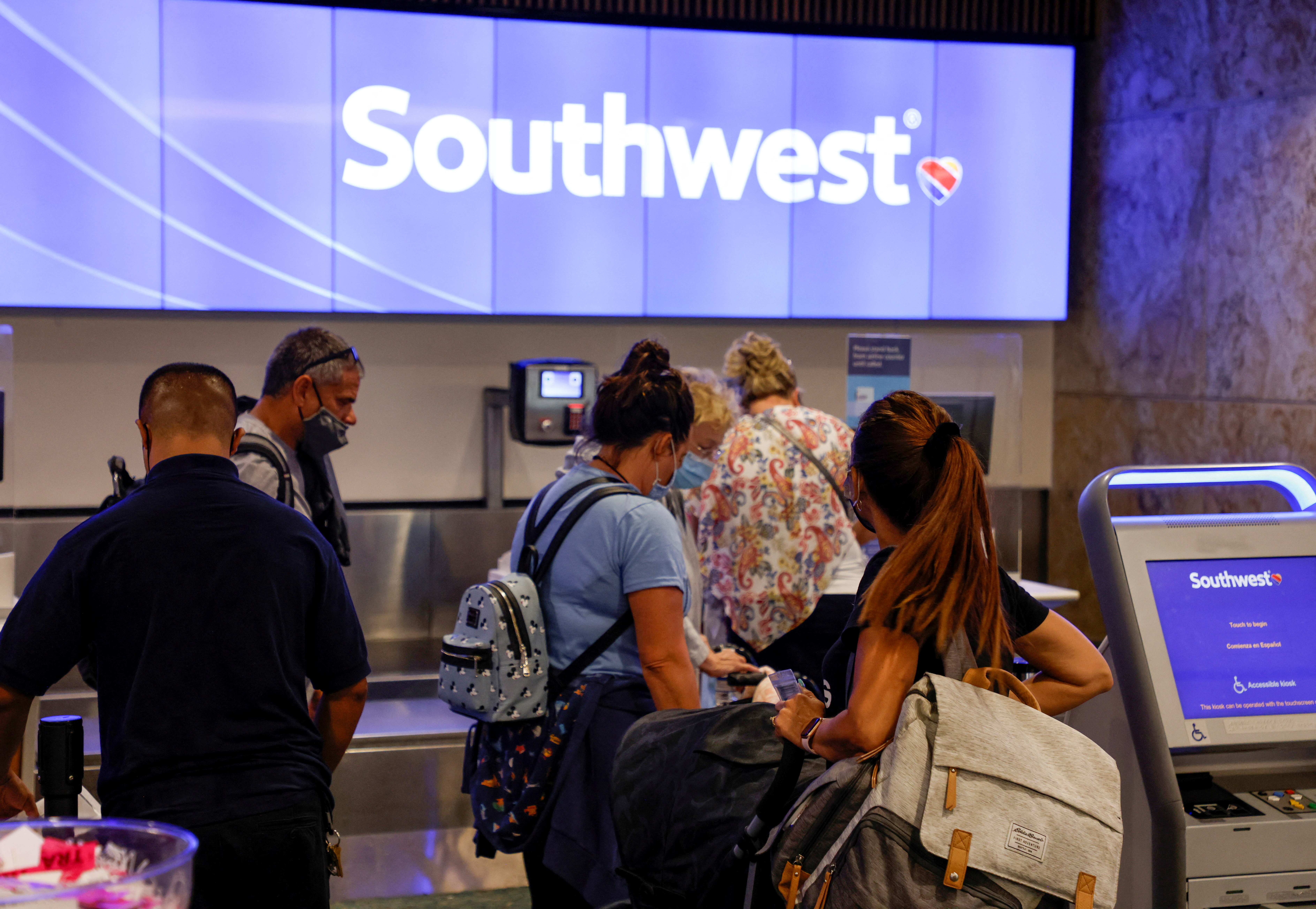
People wait in long lines for the Southwest Airlines check-in counters at Phoenix Sky Harbor International Airport where flight delays and cancellations stranded passengers in Phoenix, Arizona, U.S. December 26, 2022. Joe Rondone/USA Today Network via REUTERS/File Photo

Passengers check in for a Southwest Airlines flight at Orlando International Airport in Orlando, Florida, U.S., October 11, 2021 . REUTERS/Joe Skipper/File Photo

A Southwest Airlines commercial aircraft approaches to land at John Wayne Airport in Santa Ana, California U.S. January 18, 2022. REUTERS/Mike Blake
Categories
Audio Sources - Full Text Articles

Russia“s war on Ukraine latest news: Russian troops pull back near Kherson

2022-12-01T14:49:31Z

Fears that the Ukraine war could spill over its borders and escalate into a broader conflict eased on Wednesday, as NATO and Poland said it seemed likely a missile that struck a Polish village was a stray from Ukraine. Kyiv, which has blamed Russia, demanded access to the site. Lucy Fielder has more.

Ukraine’s military said Russia had pulled some troops from towns on the opposite bank of the Dnipro River from Kherson city, the first official Ukrainian report of a Russian withdrawal on what is now the main front line in the south..

* Spain has stepped up security at public and diplomatic buildings after a spate of letter bombs, including one sent to Prime Minister Pedro Sanchez and another to the Ukrainian embassy in Madrid, where an official suffered minor injuries.

* Air raid alerts were issued across all of Ukraine following warnings by Ukrainian officials that Russia was preparing a new wave of missile and drone strikes. “An overall air raid alert is in place in Ukraine. Go to shelters,” country’s border service wrote on Telegram messaging app.

* Ukraine’s military said it had found fragments of Russian-fired nuclear-capable missiles with dud warheads in west Ukraine, and that their apparent purpose was to distract air defences.

* The recently liberated Ukrainian city of Kherson has lost its power supply after heavy shelling by Russian forces, the regional governor said.

* European Union governments tentatively agreed on a $60 a barrel price cap on Russian seaborne oil, with an adjustment mechanism to keep the cap at 5% below the market price, an EU diplomat said.

* Russian Foreign Minister Sergei Lavrov said on that big problems had accumulated in the Organization for Security and Cooperation in Europe (OSCE), accusing the West of spurning the chance to make it a real bridge with Russia after the Cold War.

* Lavrov said that discussions with Washington about potential prisoner exchanges were being conducted by the two countries’ intelligence services, and that he hoped they would be successful.

* The European Union needs patience as it sanctions Russia for its invasion of Ukraine, as most measures will only have an impact in the medium and long term, Lithuania’s prime minister said in an interview at  the  Reuters NEXT conference.

* Switzerland has frozen financial assets worth 7.5 billion Swiss francs ($7.94 billion) as of Nov. 25 under sanctions against Russians to punish Moscow for its invasion of Ukraine, the State Secretariat for Economic Affairs (SECO) said.

* Russia said the German parliament’s move to recognise the 1932-33 famine in Ukraine as a Soviet-imposed genocide was an anti-Russian provocation and an attempt by Germany to whitewash its Nazi past.

* Ukraine sacked a top engineer at the Russian-occupied Zaporizhzhia nuclear power plant, accusing him of collaborating with Russian forces, and urged other Ukrainian staff at the plant to remain loyal to Kyiv.

* Russia must withdraw its heavy weapons and military personnel from the Zaporizhzhia plant if the U.N. atomic watchdog’s efforts to create a protection zone are to succeed, Ukrainian Foreign Minister Dmytro Kuleba said.

* In a grim sign of the energy crisis caused by Russian attacks on Ukraine’s electricity grid, nine people have been killed in fires over the past 24 hours as Ukrainians resorted to emergency generators, candles and gas cylinders in violation of safety rules to try to heat their homes after power outages.

* “Remember one thing – the Russians are afraid. And they are very cold and no one will help them, because they do not have popular support,” – Andriy Yermak, chief of Ukrainian presidential staff.

Related Galleries:

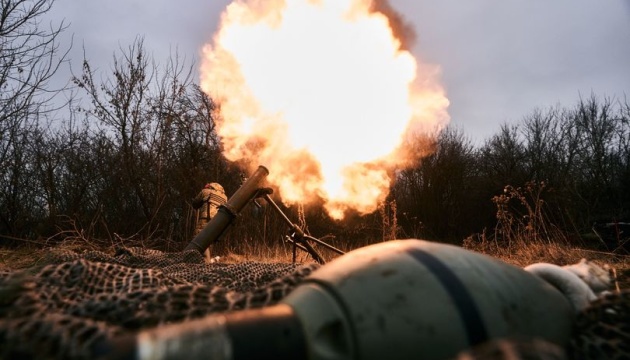
Ukrainian servicemen fire a mortar on a front line, as Russia’s attack on Ukraine continues, in Donetsk region, Ukraine, in this handout image released November 20, 2022. Iryna Rybakova/Press Service of the 93rd Independent Kholodnyi Yar Mechanized Brigade of the Ukrainian Armed Forces/Handout via REUTERS

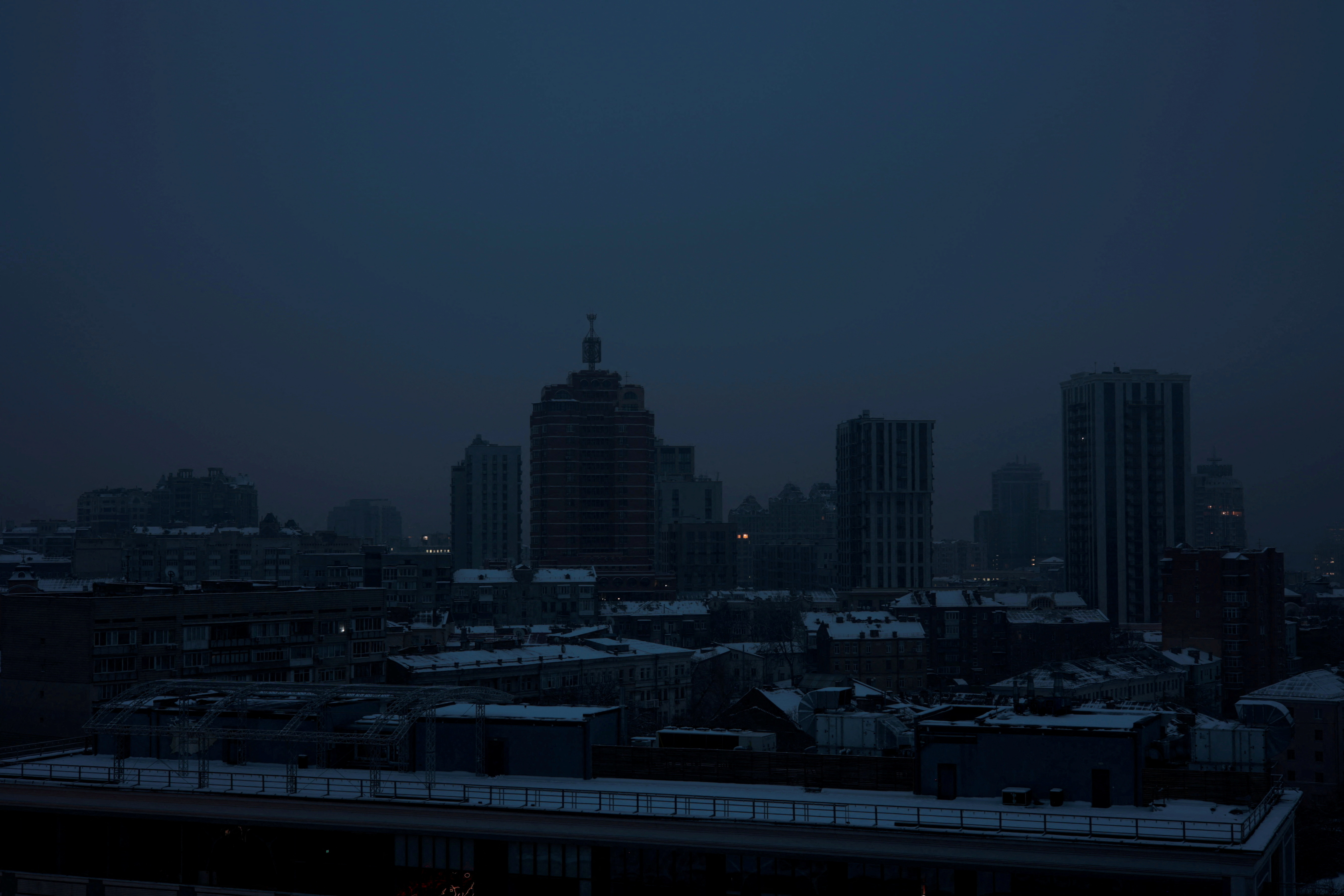
A view shows the city without electricity after critical civil infrastructure was hit by Russian missile attacks, amid Russia’s invasion of Ukraine, in Kyiv, Ukraine November 23, 2022. REUTERS/Vladyslav Sodel/File Photo

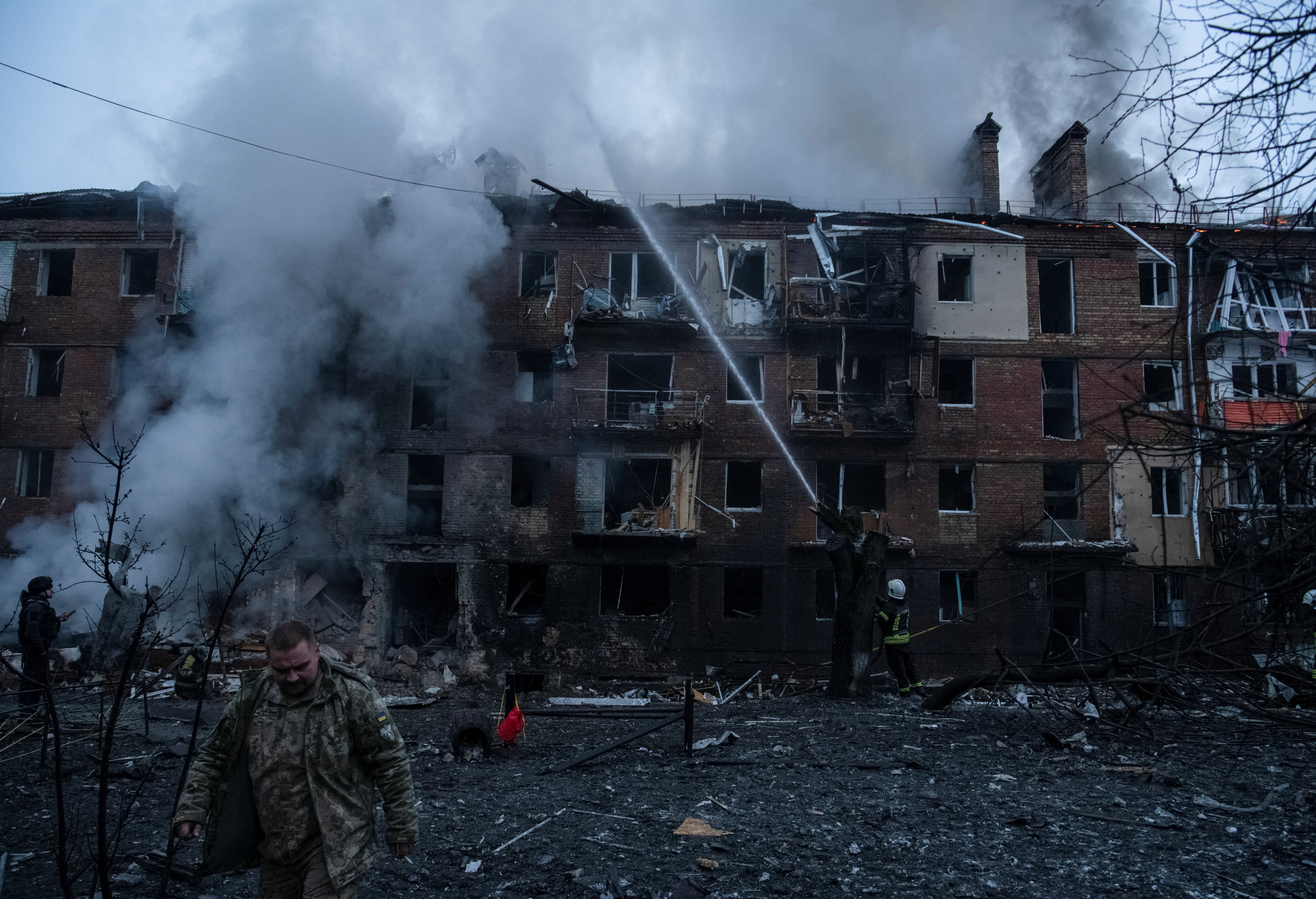
Rescuers work at a site of a residential building destroyed by a Russian missile attack, as Russia’s attack on Ukraine continues, in the town of Vyshhorod, near Kyiv, Ukraine, November 23, 2022. REUTERS/Vladyslav Musiienko

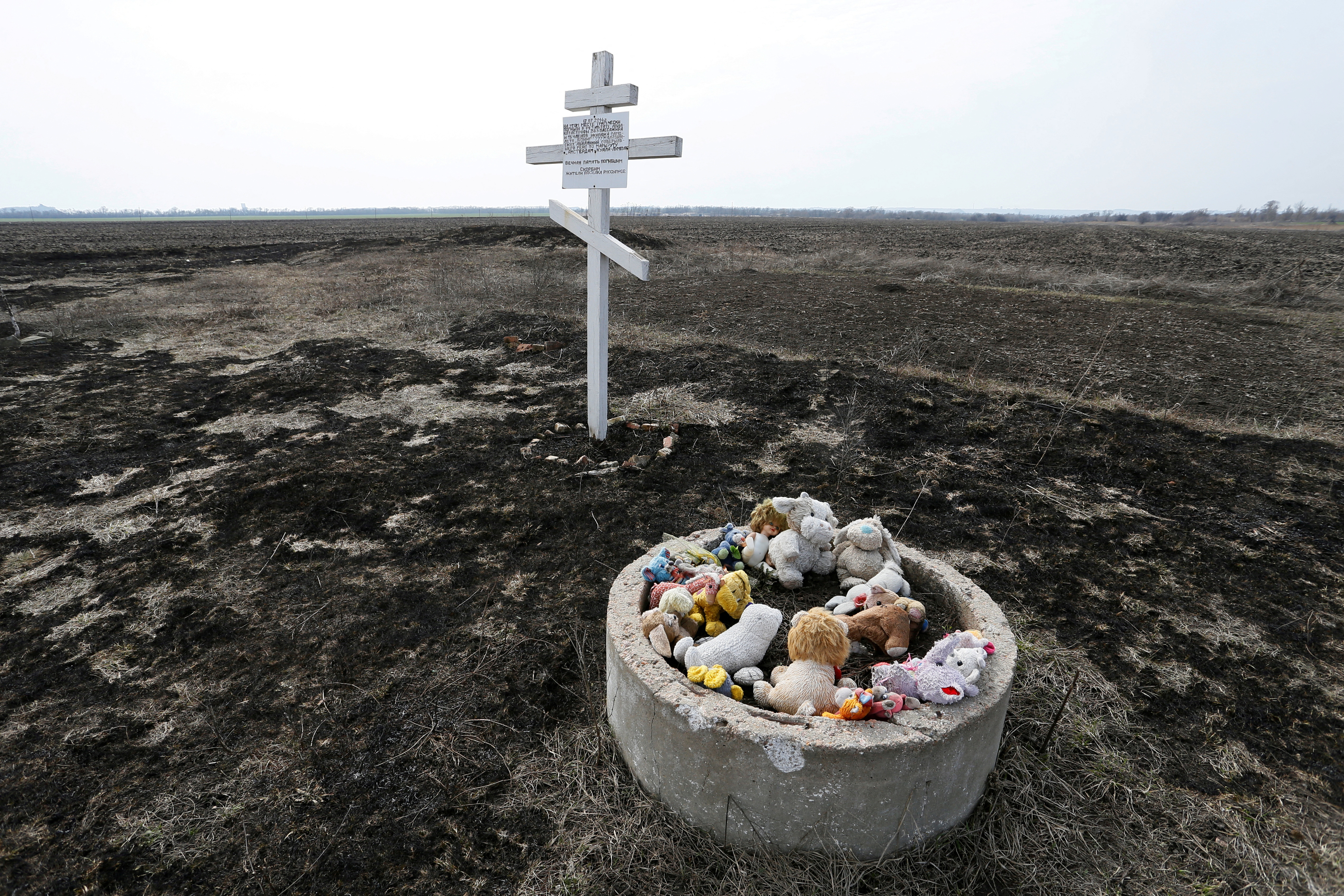
Toys are placed near the cross in memory of victims of Malaysia Airlines Flight MH17 plane crash in the village of Rozsypne in Donetsk region, Ukraine March 9, 2020. REUTERS/Alexander Ermochenko

NATO Secretary General Jens Stoltenberg speaks during a news conference at the Alliance’s headquarters in Brussels, Belgium November 25, 2022. REUTERS/Johanna Geron
Categories
Audio Sources - Full Text Articles

Book bans, Ukraine and the end of Roe: The year 2022 in Jewish ideas

(JTA) — Jewish eras can be defined by events (the fall of the Second Temple, the Inquisition, the founding of Israel) and by ideas (the rabbinic era, emancipation, post-denominationalism). A community reveals itself in the things it argues about most passionately.

It’s too early to tell what ideas will define this era, although a look back at the big debates of 2022 suggests Jews in North America will be discussing a few issues for a long time: the resurgence of antisemitism, the boundaries of free speech, the red/blue culture wars.

Below are eight of some of the key debates of the past year as (mostly) reflected in the Jewish Telegraphic Agency’s opinion section (which I have a hand in editing). They suggest, above all, a community anxious about its standing in the American body politic despite its strength and self-confidence.

Antisemitism and the Black-Jewish alliance

The rapper Kanye West spread canards about Jews and power. Brooklyn Nets star Kyrie Irving shared an antisemitic film on Twitter. And comedian Dave Chappelle made light of both incidents on “Saturday Night Live,” suggesting comics like him had more to fear from cancellation than Jews did from rising antisemitism. The central roles played in these controversies by three African-American celebrities revived longstanding tensions between two communities who haven’t been able to count on their historic ties since the end of the civil rights era. The war of words was particularly vexing for Jews of color, like the rabbi known as MaNishtana and Rabbi Kendell Pinkney — who wondered whether “my mixed Jewish child will grow up in an America where she feels compelled to closet aspects of her identity because society cannot hold the wonder of her complexity.”

Jewish attitudes toward Ukraine 

Russia’s war on Ukraine stirred up complex feelings among Jews. It led to an outpouring of support for the innocents caught up in or sent fleeing by Russia’s invasion, and the Jewish president who became their symbol of defiance. It reinvigorated a Jewish rescue apparatus that seemed to have been in hibernation for years. And it probed Jews’ memories of their own historic suffering in Ukraine, often at the hands of the ancestors of those now under attack.  

Jews and the end of Roe v. Wade

In June the U.S. Supreme Court voted 5-4 to overturn Roe v. Wade. It was an unthinkable outcome for liberal Jewish activists, women especially, who for 50 years and more had regarded the right to an abortion as integral to their Jewish identity and political worldview. Before the decision came down, Jewish studies scholar Michael Raucher questioned long-held Jewish organizational views that justified abortion only on the narrowest of religious grounds without acknowledging that women “have the bodily autonomy to make that decision on their own.” Conversely, Avi Shafran of Agudath Israel of America welcomed the end of Roe on behalf of his haredi Orthodox organization, writing that the rabbis “who guide us indisputably hold that, absent extraordinary circumstances, terminating a pregnancy is a grave sin.” Responding to Shafran, Daphne Lazar Price, an Orthodox Jewish feminist, argued that even in her stringently religious community, getting an abortion is a “conscious choice by women to follow their religious convictions and maintain their human dignity.”

Colleyville and synagogue safety 

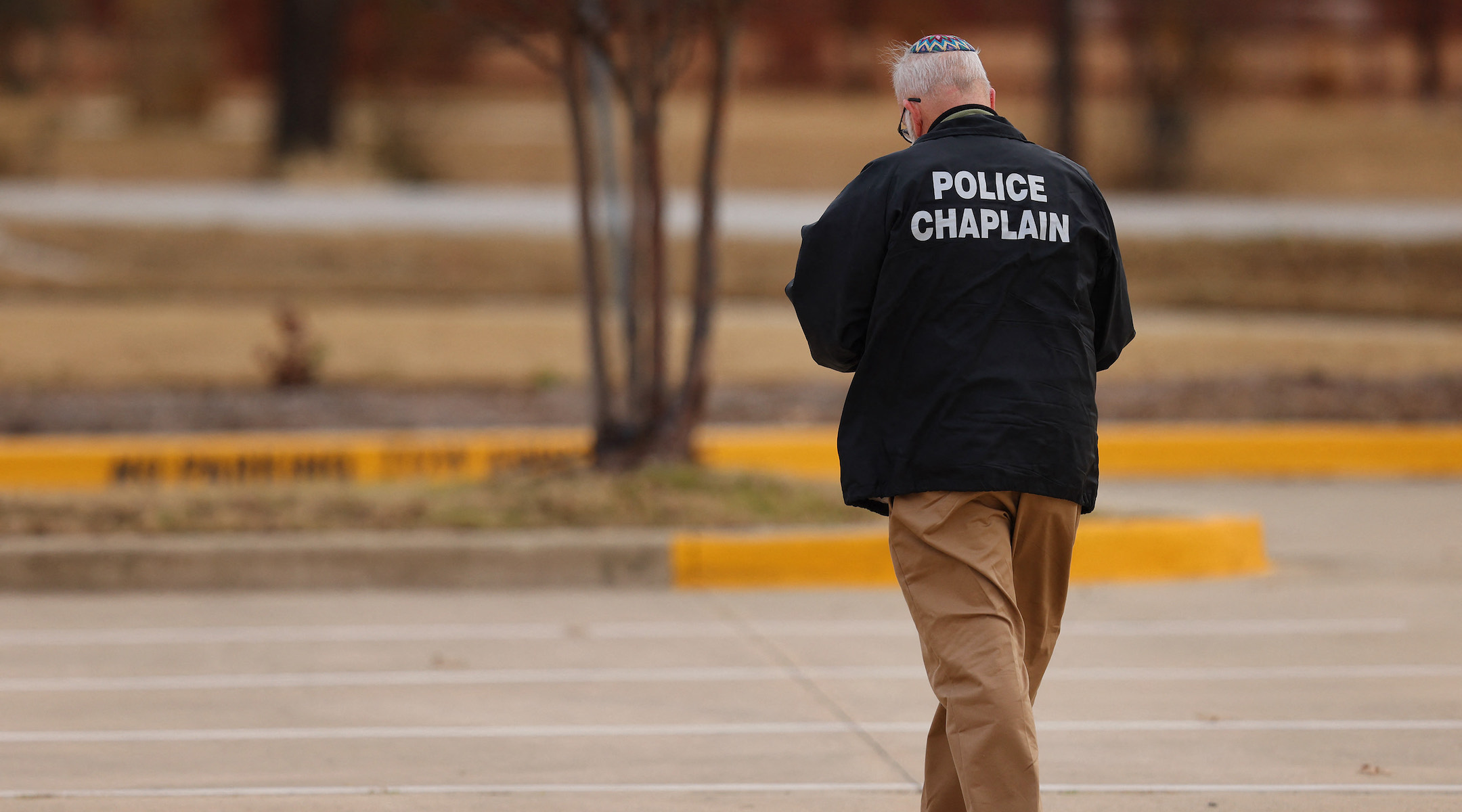
colleyville synagogue British suspectA police chaplain walks near the Congregation Beth Israel Synagogue in Colleyville, Texas Jan. 15, 2022. (Andy Jacobsohn/AFP via Getty Images) Image by

After a gunman held a rabbi and three congregants hostage at a Colleyville, Texas synagogue in January, Jewish institutions called for even tighter security at buildings that had already been hardened after the Pittsburgh synagogue massacre in 2018. And yet for some, the sight of armed guards and locked doors undermines the spirit of a house of worship. Raphael Magarik of the University of Illinois Chicago argued that the Colleyville incident shouldn’t lead to an overreaction, especially when congregations are struggling to come back together after the pandemic. Rabbi Joshua Ladon warned about the “impulse to allow fear to define our actions.” Meanwhile, Jews of color said armed guards and police patrols can make them feel unsafe. In a powerful response, Mijal Bitton and Rabbi Isaiah Rothstein of the Shalom Hartman Center wrote that Jewish institutions must think in “expansive and creative ways about how to fight for our combined safety in a way that takes into account the rich ethnic and racial diversity of our communities.” 

Anti-Zionism, antisemitism and “Jew-free zones”

When nine student groups at UC Berkeley’s law school adopted by-laws saying that they will not invite speakers who support Zionism, the Jewish Journal in Los Angeles ran an op-ed with the provocative headline, “Berkeley Develops Jewish Free Zones.” In the essay, Kenneth L. Marcus, who heads the Brandeis Center for Human Rights Under Law, argued that “Zionism is an integral aspect of the identity of many Jews,” and that the bylaws act as “racially restrictive covenants,” precluding Jewish participation. Defenders of the pro-Palestinian students countered that groups often invite only like-minded speakers, and that while being Jewish is an identity, Zionism is a political viewpoint. Faculty, politicians and activists weighed in on both sides of what has become a central debate on campuses and beyond: When does anti-Zionism become antisemitism, and how do you balance free speech rights against the claims by some students that their personal safety hangs in the balance?

“Maus” and school book bans

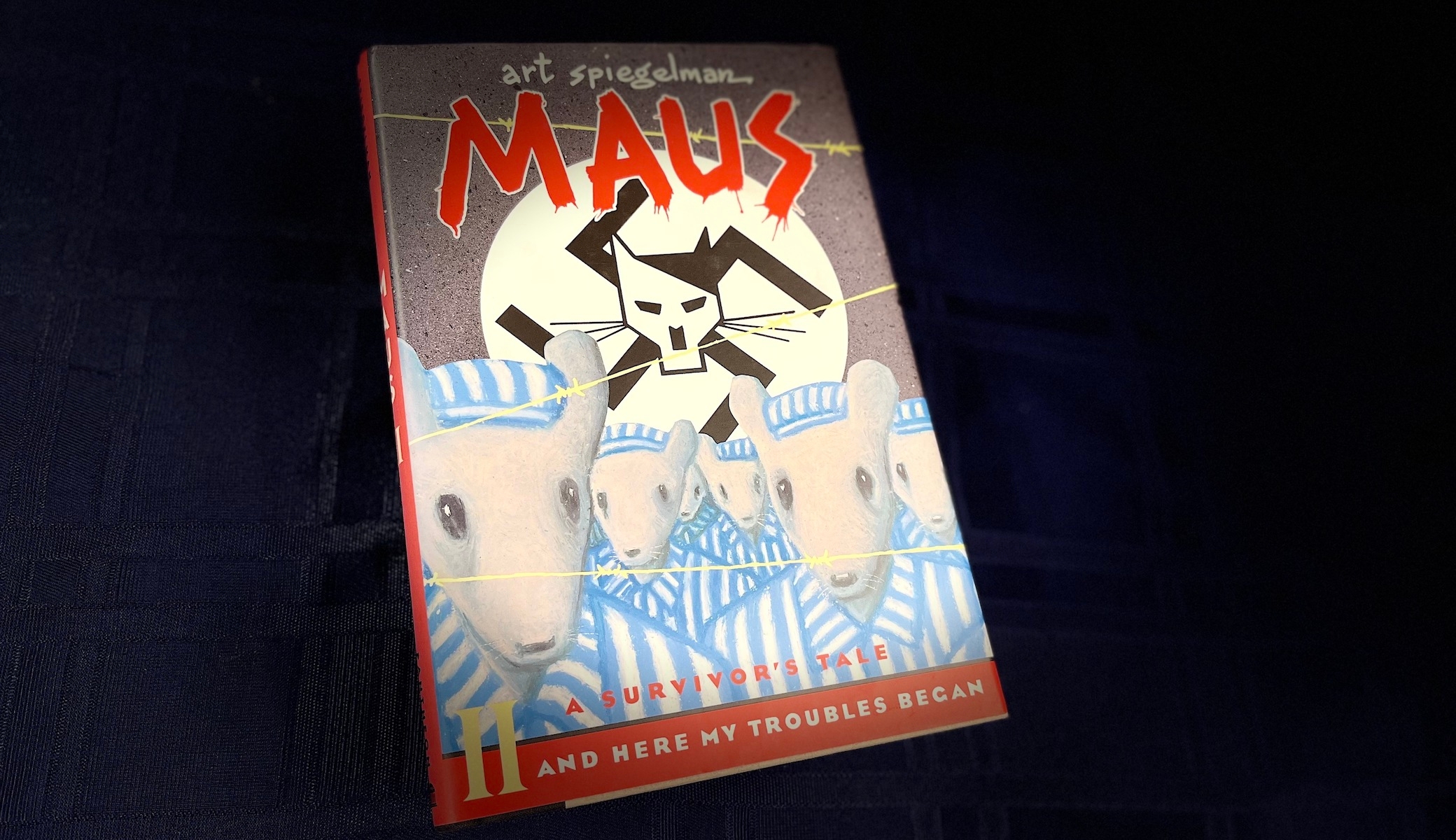
A Tennessee school board voted to remove  “Maus” — Art Speigelman’s epic cartoon memoir about the Holocaust — from middle-school classrooms. (JTA photo) Image by

Caught up in an epidemic of book-banning were Jewish books for children and young adults, a list that includes “The Purim Superhero,” “Family Fletcher” and “Chik Chak Shabbat.”  A Texas school board removed a 2018 graphic novel adaptation of Anne Frank’s diary. But perhaps the highest profile case of a Jewish-interest book being banned came when a Tennessee school board voted to remove  “Maus” — Art Speigelman’s epic cartoon memoir about the Holocaust — from middle-school classrooms, citing its use of profanity, nudity and depictions of “killing kids.” Coverage of the ban misleadingly depicted “Maus” as an introduction to the Shoah for young adults, while Speigelman recently noted that he had become a reluctant “metonym” for the book-banning issue. Jennifer Caplan explained why the book is indispensable: “‘Maus’ forces the reader to bear witness in a way no written account can, and the [illustrations] are especially good at forcing the eye to see what the mind prefers to glide past.”  

Artificial intelligence and real-life dilemmas

Artificial intelligence, or AI, has become a fact of corporate life, with computing advances that power robotic automation, computer vision and natural-language text generation. But what captured the public imagination — and dread — this year were sites like Dall-E, which threatened the livelihood of graphic designers by generating original, credible illustrations with no more than a simple prompt, and ChatGPT, which is able to expound cogently and humanly on practically any topic. Beyond everyday ethical dilemmas (“Can I write my book report using ChatGPT?”) AI raised profound questions about what it means to be human. “Rabbis have historically been very open to the idea of nonhuman sentience and have tended to see parallels between humans and nonhumans as an excuse to treat nonhumans better,” wrote David Zvi Kalman in an essay on the prospect of creating artificial life. Similarly, Mois Navon suggested in JTA that “if a machine is sentient, it is no longer an inanimate object with no moral status or ‘rights’ … but rather an animate being with the status of a ‘moral patient’ to whom we owe consideration.

A Pulitzer for “The Netanyahus”

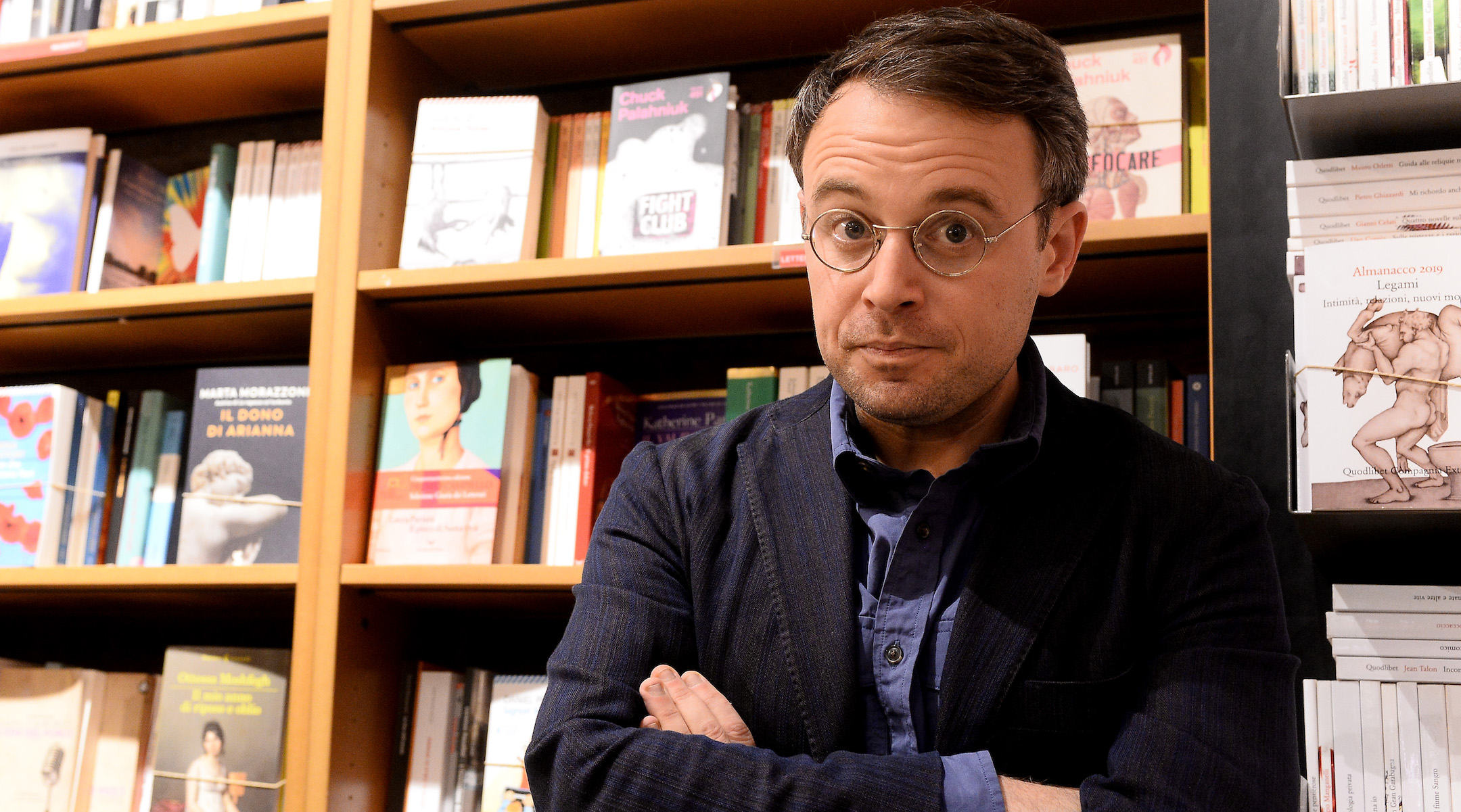
Author Joshua Cohen won the 2022 Pulitzer Prize in Fiction for his novel “The Netanyahus.” (Roberto Serra—Iguana Press/Getty Images)Author Joshua Cohen won the 2022 Pulitzer Prize in Fiction for his novel “The Netanyahus.” (Roberto Serra—Iguana Press/Getty Images) Image by

Joshua Cohen was the somewhat surprising winner of the Pulitzer Prize in Fiction for his novel “The Netanyahus: An Account of a Minor and Ultimately Even Negligible Episode in the History of a Very Famous Family.” Or maybe not so surprising: The book is a fictionalized treatment of a real-life visit in the late 1950s by the Israeli historian Benzion Netanyahu for a job interview at a university very much like Cornell. With Benzion’s son Benjamin angling for an ultimately successful return to office in real life, a satire about Jewish power, right-wing Zionism and Israeli self-regard might have seemed to the judges very much of the moment. As critic Adam Kirsch wrote in a JTA essay, Cohen concludes that both American and Israeli Jewish identities “are absurd, crying out for the kind of satire that can only come from intimate knowledge.” Others weren’t amused. Jewish Currents criticized the novel for being derivative of both Philip Roth and Saul Bellow, and the Jewish Review of Books said that the novel includes “a capsule history of Zionism that is so blatant a distortion that I just gave up.”

This article originally appeared on JTA.org.

The post Book bans, Ukraine and the end of Roe: The year 2022 in Jewish ideas appeared first on The Forward.

Categories
Audio Sources - Full Text Articles

A Queens synagogue is moving, and the fate of its storied ark is in limbo

(New York Jewish Week) — Crafted of bronze and gold-leaf plaster, and topped by a bejeweled crown, the astonishing 26-foot-tall ark of the Forest Hills Jewish Center fills its cavernous sanctuary with an imposing presence. 

When Temma Kingsley joined the congregation as a newlywed in 1965, she was taken aback by its style. 

“I thought it was really quite fancy, overdone,” she recalled recently, comparing it to the traditional wooden ark in the modest Philadelphia synagogue where she grew up. “But I’ve since learned what it’s all about, and I’ve become attached to it.” 

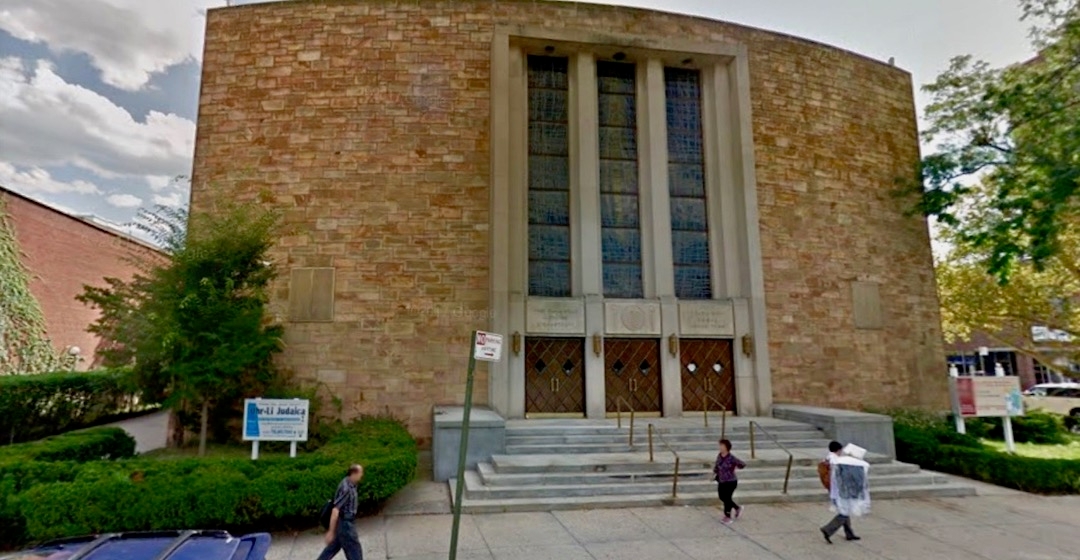
The ark, which houses the synagogue’s Torah scrolls, is the work of artist Arthur Szyk (1894-1951), a Polish-born artist who rose to fame in the United States with vivid, technicolor drawings on the covers of influential magazines, in the pages of high-profile newspapers and in fine galleries and museums around the world. When the synagogue dedicated its minimalist post-war building on Queens Boulevard in 1949, Szyk’s opulently designed ark stood out as entirely different. 

Now, with the impending sale of the Forest Hills Jewish Center building, Kingsley is concerned about the ark’s future. So too are current synagogue leaders, as well as art historians and museum curators, who are scurrying to find it a new home. Meanwhile, the ark’s fate remains in question.

The Conservative synagogue announced last year it was selling its building and would look for a new home in the same area in Queens. In August, an investment partnership led by Joseph Yushuvayev and Uri Mermelstein of Top Rock Holdings announced it was in contract to buy the building and develop the site.

Fully acknowledging the value and importance of the Szyk ark, the congregation is seeking to find it a new home. At least one art dealer has expressed interest in acquiring the ark, but this route has been rejected as it would not come with any guarantee of where it might eventually land. 

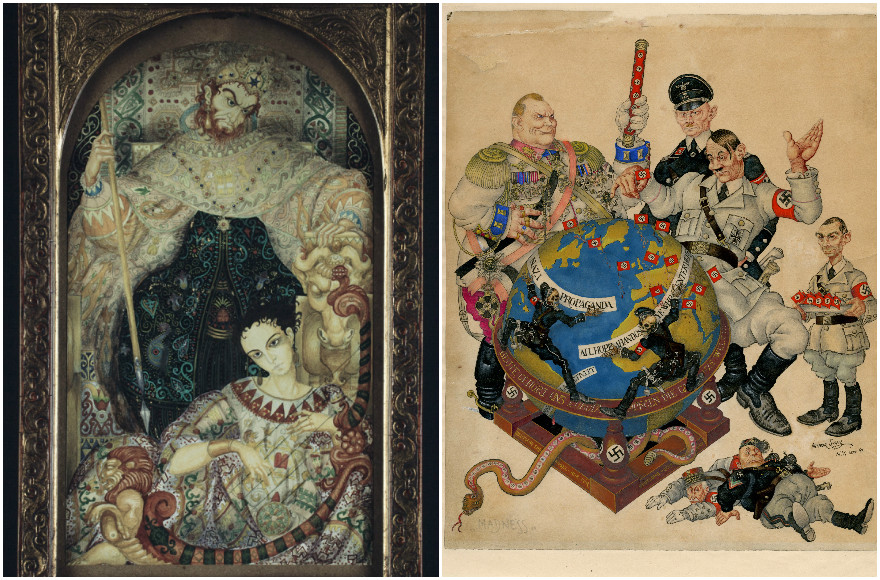
Arthur Szyk was known for his vivid Jewish art, including “David and Saul” (1921), left, and his political cartoons and illustrations, including “Madness” (1941). (The Magnes Collection of Jewish Art and Life, University of California, Berkeley)Arthur Szyk was known for his vivid Jewish art, including “David and Saul” (1921), left, and his political cartoons and illustrations, including “Madness” (1941). (The Magnes Collection of Jewish Art and Life, University of California, Berkeley) Image by

“What if the buyer decides to disassemble the ark and use its beautiful bronze doors as the entrance to their home?” Deborah Gregor, executive director of the Forest Hills Jewish Center, asked rhetorically, her voice tightening. 

Taking into consideration this theoretical scenario, the board has agreed to prioritize keeping the ark intact to honor its legacy. Several museums have been contacted. Thus far none have come forward.

Simona Di Nepi, the Charles and Lynn Schusterman Curator of Judaica at the Boston Museum of Fine Arts, traveled to Forest Hills last month to see the ark and “fell in love.” 

“I see it as a tour de force of Jewish art,” she said — a unique and spectacular “show-stopper.”

On her recommendation, the Boston Museum of Fine Arts explored the possibility of acquiring it, but the height ultimately presented logistical challenges that could not be overcome. Di Nepi has now turned her attention to several large synagogues with the hopes of finding one that might adopt it. 

“I can’t bear the thought of what will happen if it does not find a home,” she said.

Born in Poland, trained in Paris and influenced by the brief time he spent at Bezalel Art School in British Mandate Palestine, Szyk was known for his vivid Jewish art, biting political cartoons and his portraits of American heroes and European figureheads. In 1941, The Times Literary Supplement wrote that his illuminated Passover haggadah was “worthy to be placed among the most beautiful books that the hand of man has produced.” Reprinted many times in the decades since, it remains a staple in Jewish homes today. 

While Szyk’s oeuvre is described by critics as “exquisite,” “masterful” and “marvels of technical skill,” the artist did not view his own creations as ends unto themselves. Instead, he used his work to influence politics and world opinion. Irvin Ungar, editor of the 2017 study “Arthur Szyk: Sol­dier in Art,” wrote that Szyk employed pen and paintbrush as tools to wage war against the Nazis, attack racism, promote Zionism and preserve freedom.

His work caught the attention of two leading rabbis of his day: Abba Hillel Silver in Cleveland and Ben Zion Bokser in Queens. Both led growing congregations that would reach well over 1,000 family members. Separately, the two commissioned Szyk to create significant objects for their respective synagogues. 

The baroque form of Szyk’s ark at the Forest Hills Jewish Center, left, is reminiscent of the arks of Eastern European synagogues that were destroyed in the war; Szyk’s stained glass “Warrior Windows” at Cleveland’s Reform Temple Tifereth Israel feature the biblical figures Gideon, Samson and Judah Maccabee. (Courtesy of Irvin Ungar)The baroque form of Szyk’s ark at the Forest Hills Jewish Center, left, is reminiscent of the arks of Eastern European synagogues that were destroyed in the war; Szyk’s stained glass “Warrior Windows” at Cleveland’s Reform Temple Tifereth Israel feature the biblical figures Gideon, Samson and Judah Maccabee. (Courtesy of Irvin Ungar) Image by

Szyk’s stained glass “Warrior Windows” were dedicated in Cleveland’s Reform Temple Tifereth Israel on the last day of Hanukkah in 1947. Commissioned to honor congregants who fought in World War II, the 15 windows include the names of fallen soldiers and showcase the biblical figures Judah Maccabee, Samson and Gideon, resplendent in sumptuous battle dress.

In a letter to Silver, Szyk explained that he would have ordinarily charged $15,000 for the project (the equivalent of $200,000 today). But because Szyk aligned so closely with the rabbi’s ideological mission — Silver was a leading proponent of Zionism — he viewed the job as “a personal favor,” and agreed to a much lower sum of $4,500.

Bokser, a social justice activist whose edition of the Jewish prayer book was a staple of Conservative synagogues for decades, was also drawn to Szyk’s bold, innovative style for the sanctuary of his congregation’s sleek new building on Queens Boulevard. Art historian and Cleveland State University Distinguished Professor Samantha Baskind calls it “sui generis”: Like Szyk’s illuminated manuscripts, the ark’s design packs in a dizzying array of abstract ornaments woven together with Jewish emblems. Scrolls, flowers, acorns and leaves are interspersed with holiday symbols, lions of Judah and representations of the Israelite tribes. 

Its baroque form is reminiscent of the arks of Eastern European synagogues that were destroyed in the war. But Szyk was neither mournful nor nostalgic. Forward looking and hopeful, his ark doors are flanked by birds that can be read as either eagles or doves. With their wings spread wide, the figures stretch toward the biblical and Talmudic passages that border the work, invoking God’s judgment and heralding freedom.  

Ungar assesses the ark as “an American and a Jewish icon” and a “culmination of [Szyk’s] prayers” as expressed through his art. Gregor refers to it as the artist’s “ark de triomph,” quite literally: “It is Szyk’s own statement of triumph, celebratory and grand,” she said. 

The Forest Hills Jewish Center has been a fixture on Queens Boulevard since the late 1940s. (New York Jewish Week)The Forest Hills Jewish Center has been a fixture on Queens Boulevard since the late 1940s. (New York Jewish Week) Image by

Ironically, its grandeur is precisely the source of its uncertain future. 

When the Jewish Center’s current building was dedicated in 1949 in the presence of 5,000 guests, its scale was meant to accommodate a growing membership. Its main sanctuary held 1,200 seats, and its religious school would eventually accommodate some 900 students. Now the hulking space has become too large and costly for its 300-400 member families to maintain. The congregation has not yet announced relocation plans. But their hope for the future is an intimate space with a cozy aesthetic, where the monumental scale of the Szyk ark will likely not fit in.  

Art historian Samantha Baskind has been preoccupied with the issue. “A logical solution would be to unite it with Szyk’s Warrior Windows” in Cleveland’s Temple Tifereth Israel,” she said. “Bringing the works into conversation with each other in the same sacred space is conceptually brilliant and would honor the memory of Rabbi Silver at the same time that it beautifies the synagogue.”

Whatever the future holds for the ark, some Forest Hills Jewish Center members are finding it hard to say goodbye. Kingsley recalled the central role the synagogue has played in her life since she moved to Forest Hills 57 years ago. For her, the ark is not just about its aesthetic details, or the artist who created it. 

“That was the ark Rabbi Bokser commissioned,” she said wistfully. It holds his spirit, too. 

Alanna E. Cooper serves as the Abba Hillel Silver Chair in Jewish Studies at Case Western Reserve University. Her book “Disposing of the Sacred” is forthcoming with Penn State University Press.

This article originally appeared on JTA.org.

The post A Queens synagogue is moving, and the fate of its storied ark is in limbo appeared first on The Forward.
WP Radio
WP Radio
OFFLINE LIVE