Categories
Audio Sources - Full Text Articles

TikToker standing by Idaho murder accusation despite lawsuit

(NewsNation) — The Moscow Police Department said in a statement on Tuesday that investigators don’t think a University of Idaho professor is implicated in the grisly killings of four college students, refuting a social media user and tarot reader who repeatedly claimed that the professor was connected to the murders.

“At this time in the investigation, detectives do not believe the female associate professor and chair of the history department at the University of Idaho suing a TikTok user for defamation is involved in this crime,” the statement reads.

Earlier this month, TikToker and tarot reader Ashley Guillard accused Rebecca Scofield, a history professor at the University of Idaho, of being involved in the murders. As noted by the Moscow police, Scofield has responded with a defamation lawsuit.

In an interview with NewsNation, Guillard stood by her accusation.

“When I go to court and they see the evidence or they see how I connect the dots, then they’ll make a decision as it pertains to whether they want to continue to live in blinders or believe it. If they don’t, I don’t care,” she said.

Police have yet to name a suspect but have cleared a number of people, including Scofield. Meanwhile, rumors and speculation have gained momentum online.

One of the victims’ neighbors told NewsNation’s Ashleigh Banfield he submitted his DNA to law enforcement on his own accord so they would clear him as a suspect after online sleuths who suspected him would not leave him alone.

Scofield’s attorney sent NewsNation a statement denouncing the accusation.

“The statements made about Professor Scofield are false, plain and simple. What’s even worse is that these untrue statements create safety issues for the professor and her family. They also further compound the trauma that the families of the victims are experiencing and undermine law enforcement efforts to find the people responsible in order to provide answers to the families and the public.”

Tracy Walder, a former FBI Special Agent, warned that no matter what happens with the lawsuit, the damage caused by the speculation may be long-lasting.

“This is incredibly damaging to someone’s career because we forget, the internet lives forever,” she said during an appearance on NewsNation’s Rush Hour. “Even though she may be successful in a civil lawsuit or criminal lawsuit, her name will still be associated with this forever.”

Meanwhile, on Tuesday Moscow Police Department reiterated that they have yet to identify any suspects in the killings.

Police said that “progress continues” in the search for a white Hyundai Elantra that was seen near the murder scene. They are asking the public to send them tips related to the case.

If you have information that could be helpful to law enforcement, you can contact them at their Tip Line: 208-883-7180, email tipline@ci.moscow.id.us, or go online to fbi.gov/moscowidaho.

Categories
Audio Sources - Full Text Articles

Buffalo, N.Y., digs out from blizzard; warming could bring rain, slush

2022-12-28T00:00:16Z

Thousands of western New Yorkers were digging out from under four feet of snow dumped during a deadly Christmas blizzard. And as snow continues to fall on Tuesday, officials are warning of the potential for ‘rapid melt’ with warmer temperatures later in the week. This report produced by Jillian Kitchener.

Storm-weary road crews and residents of western New York struggled on Tuesday to dig out from a deadly weekend blizzard, with snow still falling and forecasts for rapid warming and rains that could cause flooding and turn the frozen landscape to slush.

The region in and around Buffalo, New York, downwind of Lake Erie and Lake Ontario emerged as ground zero for an Arctic deep freeze and massive winter storm that extended over most of the United States last week and through the Christmas holiday as far south as the Mexican border.

The toll of confirmed storm-related deaths in western New York rose to 29 on Tuesday, officials said, as snowfall began to taper off. Emergency crews continued locating and removing vehicles left buried under deep mounds of snow and drifts several feet high.

Some people were found dead frozen in cars, others in snowbanks outdoors, while some died in medical emergencies such as cardiac arrest while shoveling snow, Erie County’s chief executive Mark Poloncarz told reporters.

“We’re recovering from the worst storm I’ve ever seen, certainly in terms of death from mother nature’s wrath,” he said.

Nationwide, at least 60 died in weather-related incidents in recent days, NBC News reported.

In and around Buffalo, up to 52 inches of snow fell over four days and a bit more was expected by Tuesday night, according to the National Weather Service (NWS).

The situation was expected to change dramatically. The NWS forecast a rapid thaw later this week, with temperatures climbing well above freezing and well above normal, accompanied by rain that could unleash flooding.

“With 50-degree temperatures and rain later this week, we are working with our NWS Buffalo partners to monitor the forecast,” Poloncarz said in a Tweet. “This is one of the reasons certain streets are targeted for extra clearance to allow for proper drainage of melt water.”

Progress was slow due to the sheer volume and depth of the snow, which Poloncarz said “is not plowable.”

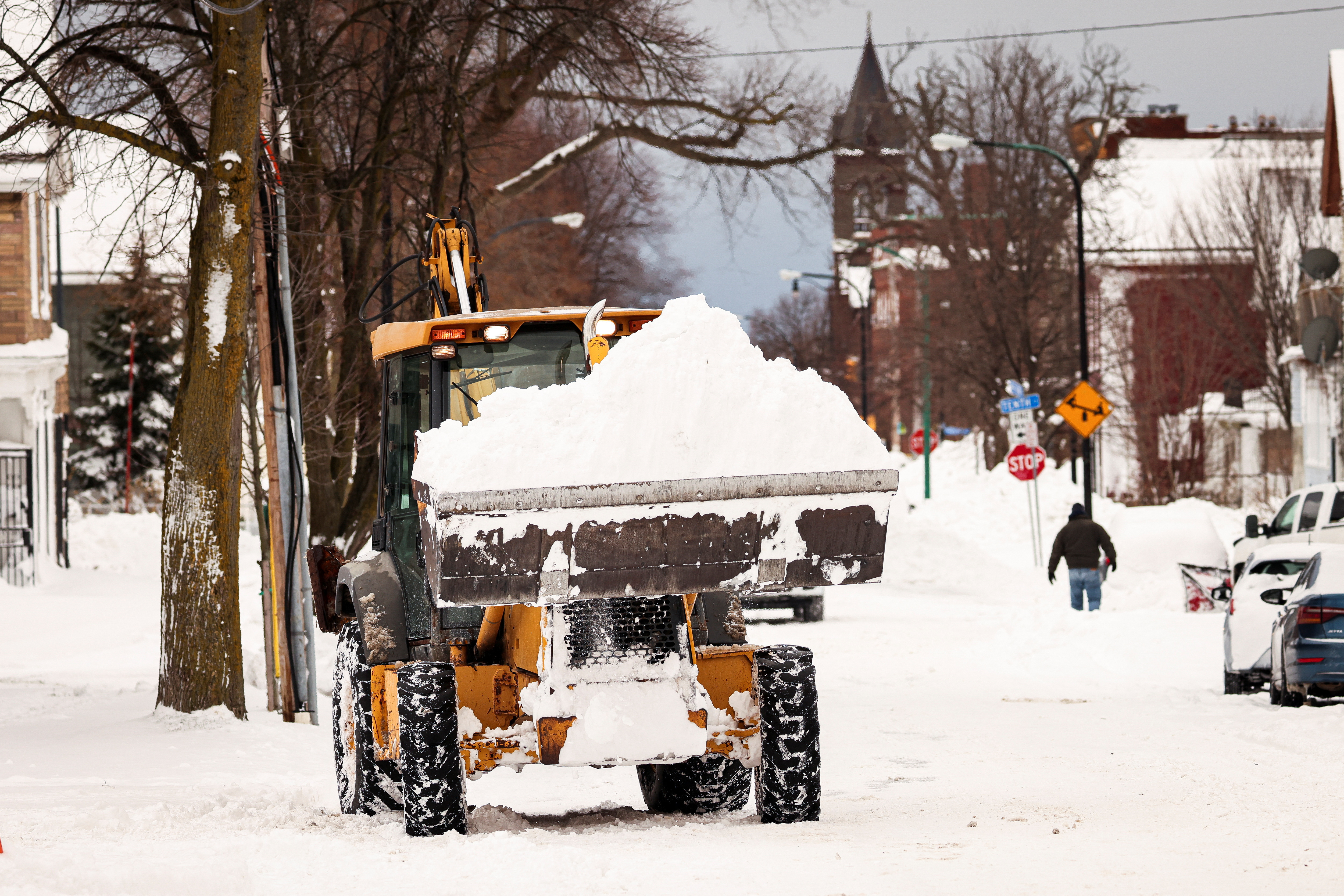
Special high-lift shovel tractors were brought in to scoop up snow into dump trucks, which then cart away the frozen loads to be discarded elsewhere. Poloncarz said it would take two days to open up one lane on every city street.

Giant snow-blowing machines were also deployed to help clear several major highways clogged with towering drifts. A ban on personal road travel was still in effect for Buffalo.

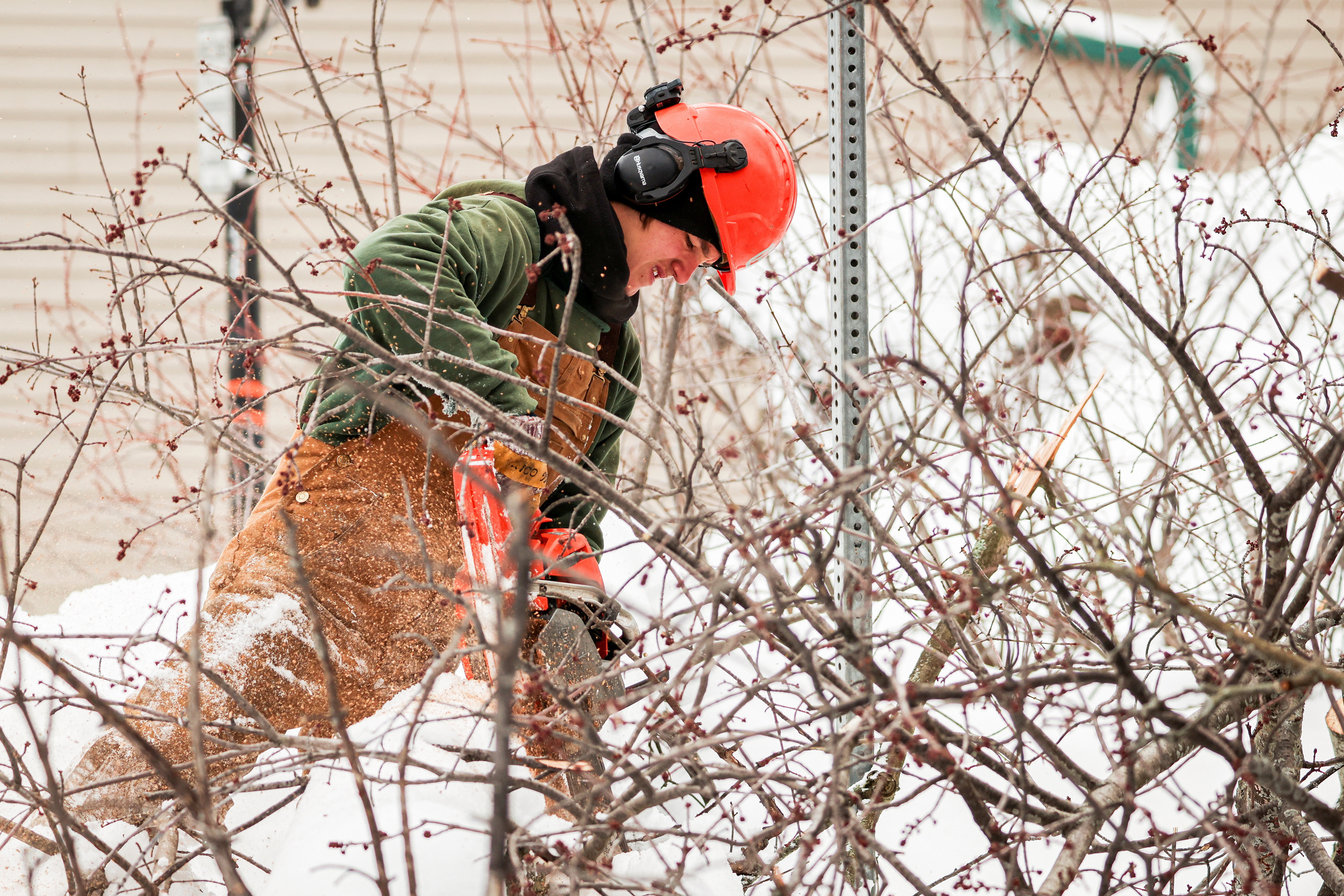
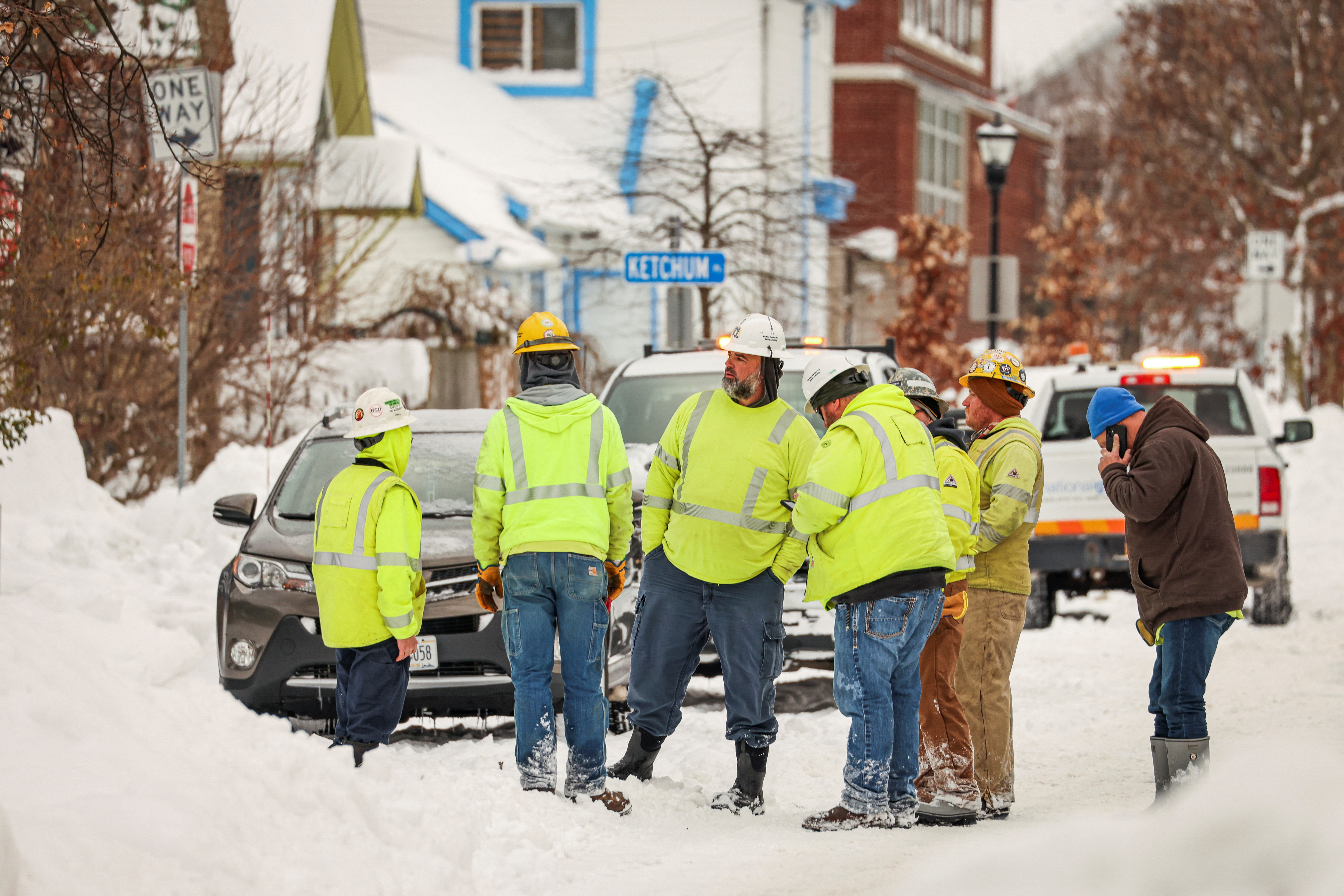
Hundreds of electric company linemen were out restoring power, and Poloncarz said on Twitter that about 4,500 customers remained without electricity on Tuesday, as crews cleared downed trees with chain saws.

For residents essentially trapped in their homes for two days, the easing of the storm finally brought a realization of how much snow fell during white-out conditions that had limited their view.

“We would look out the window and it was blowing so much that we couldn’t really tell if we were getting any accumulation, but when it finally settled we had a lot of work to do,” said Jim Nowak, who was out shoveling on Tuesday.

NWS meteorologist Bob Oravec of the NWS Weather Prediction Center in Maryland predicted two more inches would fall in Western New York Tuesday, but said that was “probably the last.

“It’ll be warming up soon. By Thursday the high will be 46 (8 degrees Celsius). By Saturday it’ll be 54 (12 C),” Oravec said.

Tuesday remained cold, with a high of 28 F (minus 2 C) and a low of 20 F (minus 6 C), Oravec said.

Buffalo, New York state’s second largest city, was hardest hit by the blizzard, which took shape over the Great Lakes on Friday and extended its grip into the Ohio and Upper Mississippi valleys and mountains of Appalachia.

New York Governor Kathy Hochul called it an “epic, once-in-a-lifetime” weather disaster, the worst blizzard to hit the Buffalo area in 45 years.

The county has called in 100 military police from the state National Guard as well as officers from New York City to help manage traffic and enforce road restrictions.

Buffalo residents with plows attached to their Jeeps and pickup trucks helped clear side streets. People walked a mile or more in the lanes cut by snow plows to reach convenience stores and supermarkets that were beginning to reopen.

Poloncarz, speaking at a press briefing Tuesday, urged residents to stay home and the curious to stay away.

“Please stay out of the city of Buffalo,” he said.

Related Galleries:

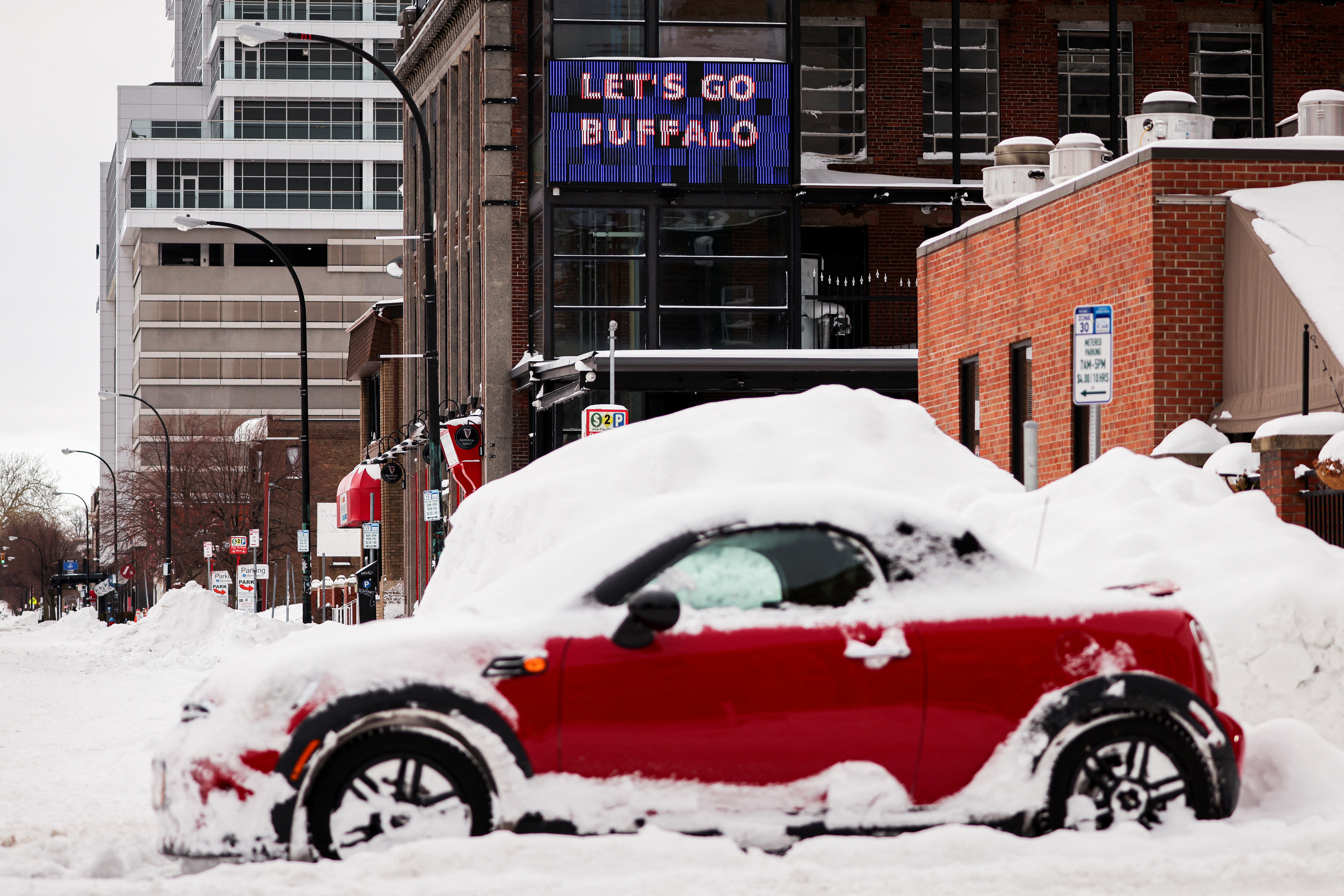
A “let’s go Buffalo” sign is seen behind an abandoned car on the road following a winter storm in Buffalo, New York, U.S., December 27, 2022. REUTERS/Lindsay DeDario

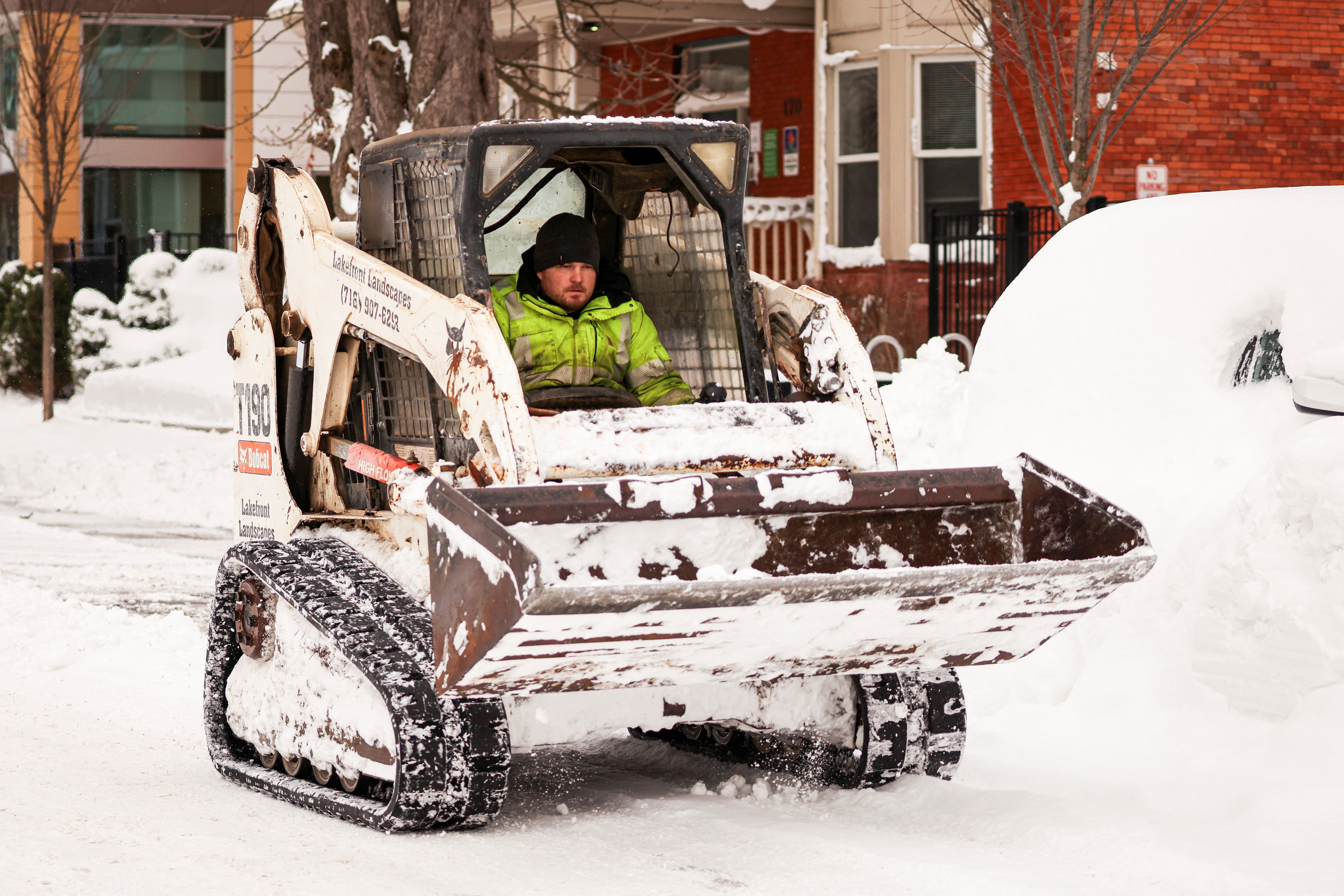
A man uses Bobcat to remove snow from around a trapped car following a winter storm in Buffalo, New York, U.S., December 27, 2022. REUTERS/Lindsay DeDario

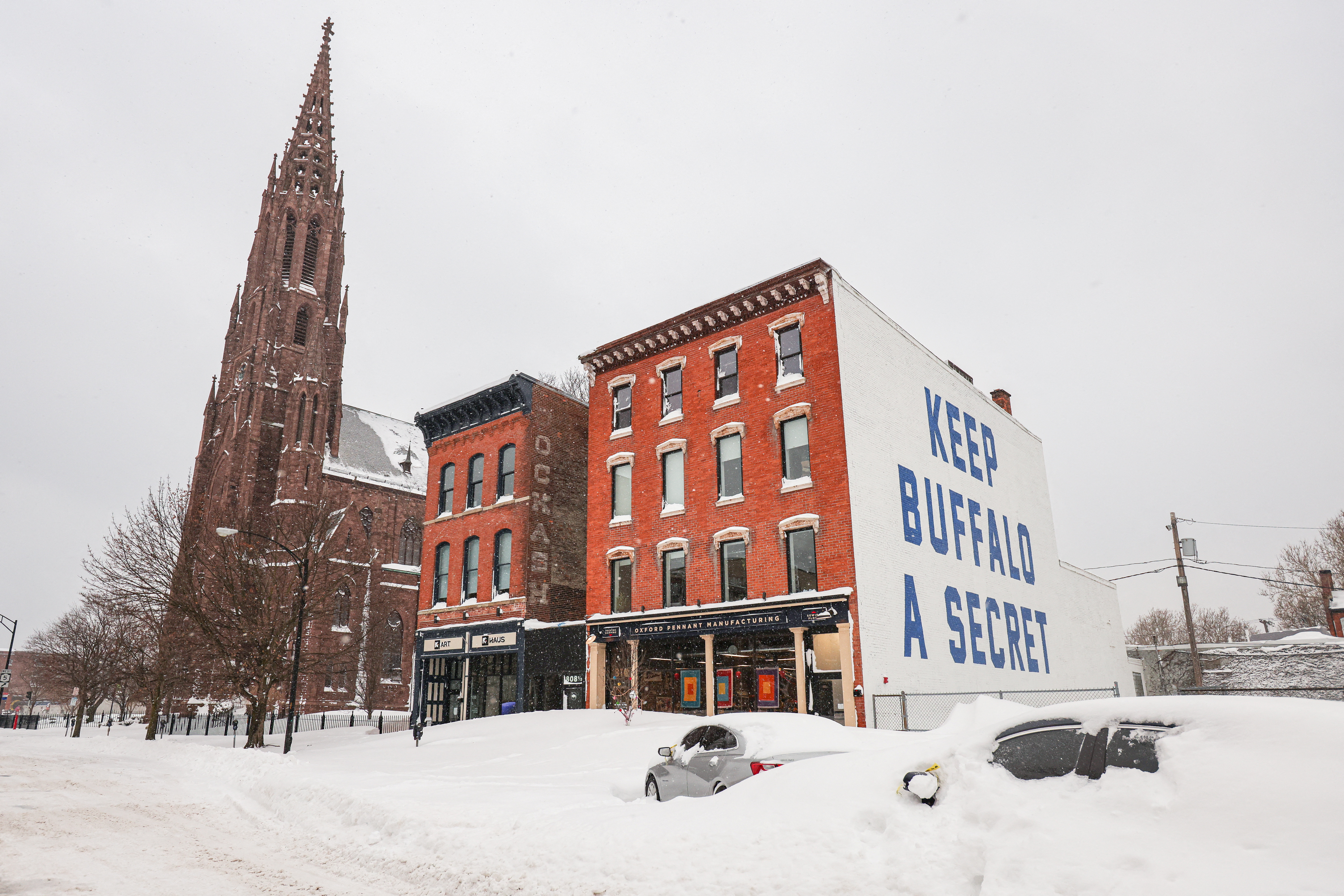
Abandoned cars are covered in snow on a road following a winter storm in Buffalo, New York, U.S., December 27, 2022. REUTERS/Lindsay DeDario

A front loader removes snow from street following a winter storm in Buffalo, New York, U.S., December 27, 2022. REUTERS/Lindsay DeDario

A man uses chain saw to remove a fallen tree blocking a road following a winter storm in Buffalo, New York, U.S., December 27, 2022. REUTERS/Lindsay DeDario

A crew works to repair electrical services following a winter storm in Buffalo, New York, U.S., December 27, 2022. REUTERS/Lindsay DeDario

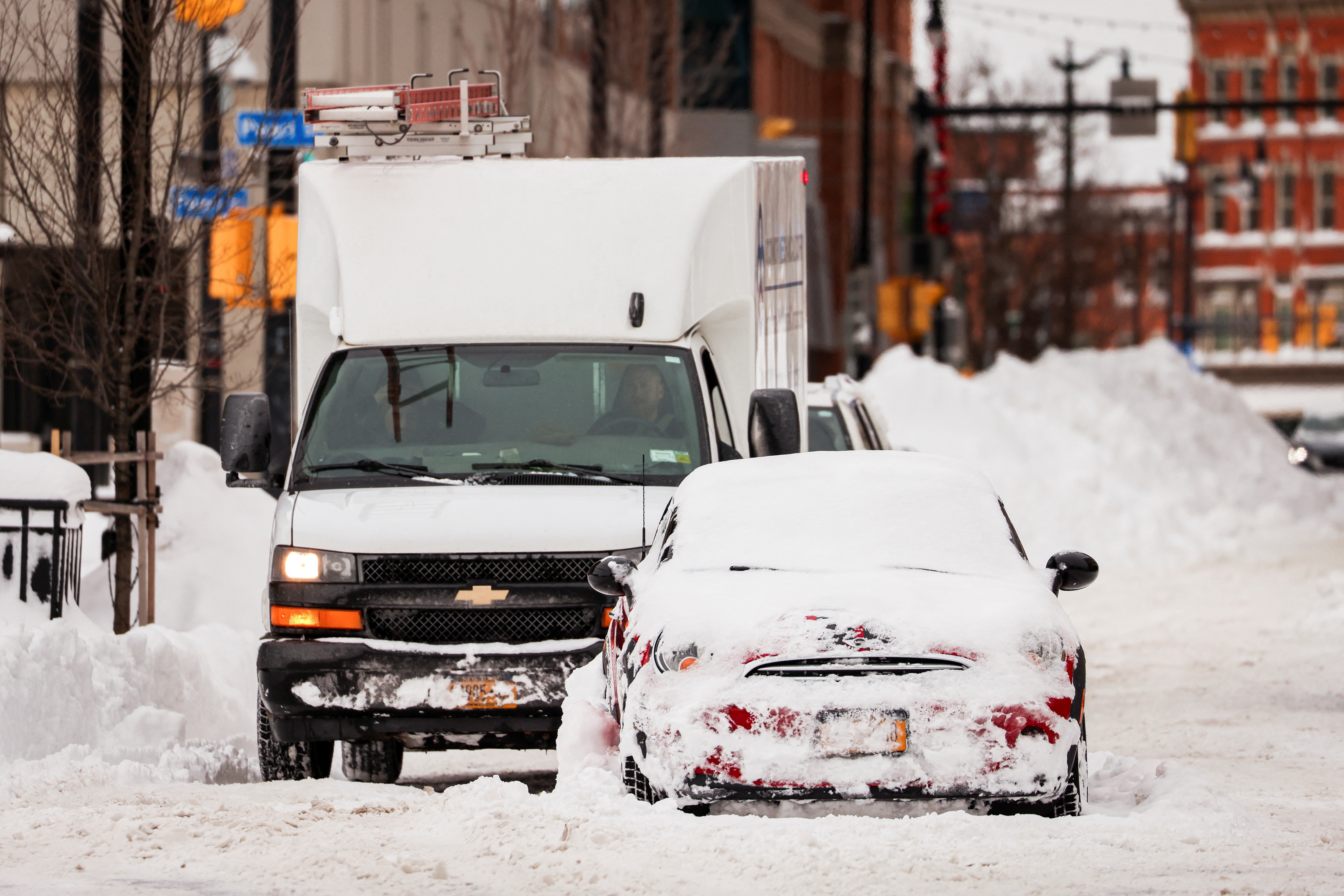
A truck navigates around an abandoned car following a winter storm in Buffalo, New York, U.S., December 27, 2022. REUTERS/Lindsay DeDario
Categories
Audio Sources - Full Text Articles

“Gift of love“ Waterford crystals placed on Times Square New Year“s Eve ball

2022-12-28T00:24:06Z

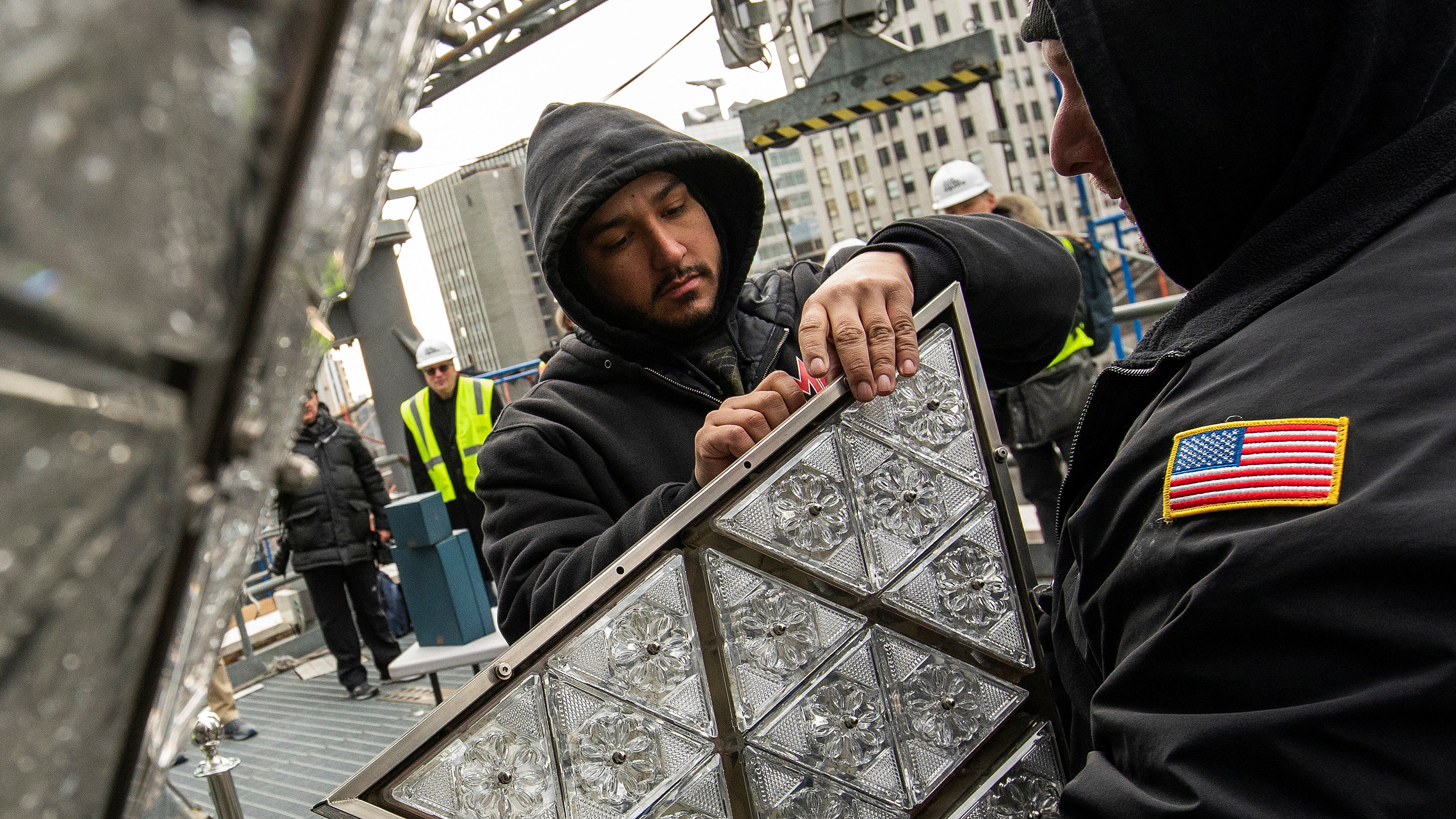
Nearly 200 new Waterford crystals were installed on the New Year’s Eve ball in Times Square in New York on Tuesday in preparation for Saturday’s celebration to welcome in 2023.

Since 1999, replacements for the 2,688 crystal panels that make up the ball have been designed and made by hand by Irish craftsmen at Waterford. Each year, a new theme is chosen.

This year’s theme was the “Gift of Love,” incorporating intertwining love hearts, said Waterford master artisan Tom Brennan at the Times Square site.

“We need this after the pandemic. We’ve all gone through an horrendous two years. We’ve come out the other side of it and we’ve come out better. We surround ourselves with love. We’ve got everything,” he said.

This year, for the first time since before the pandemic, there will be no COVID-related restrictions on visitors willing to brave the cold and crowds of Times Square in midtown-Manhattan to count down the new year and see the ball drop on the stroke of midnight.

Related Galleries:

A workers holds up one of the new Waterford Crystal triangles featuring this year’s “Gift of Love” design on the Times Square New Year’s Eve Ball on the roof of One Times Square in Manhattan, New York City, U.S., December 27, 2022. REUTERS/Eduardo Munoz

Workers install sparkling new Waterford Crystal triangles featuring this year’s “Gift of Love” design on the Times Square New Year’s Eve Ball on the roof of One Times Square in Manhattan, New York City, U.S., December 27, 2022. REUTERS/Eduardo Munoz

Workers and media stand next to the new Waterford Crystal triangles featuring this year’s “Gift of Love” design on the Times Square New Year’s Eve Ball on the roof of One Times Square in Manhattan, New York City, U.S., December 27, 2022. REUTERS/Eduardo Munoz

A worker stands next to the Waterford Crystal triangles featuring this year’s “Gift of Love” design on the Times Square New Year’s Eve Ball on the roof of One Times Square in Manhattan, New York City, U.S., December 27, 2022. REUTERS/Eduardo Munoz
Categories
Audio Sources - Full Text Articles

Asheville faces water outages, boil-water advisory amid cold

ASHEVILLE, N.C. (AP) — Thousands of people in Asheville are dealing with water outages or a boil-water advisory after days of extremely cold temperatures in the mountain city.

The city said on Tuesday that a water production facility in the southern part of Asheville has been unable to produce water since Saturday.

An advisory to water customers late Monday said the problem has been exacerbated by line breaks due to the temperatures. The southern part of the city was also under a boil-water advisory due to low water pressure, though no contamination had been detected, according to an alert to residents. Residents were asked to conserve water.

The city said in a news release late Tuesday that it anticipated the water facility to produce water at reduced capacity on Wednesday. Those without water, however, shouldn’t expect to receive it for another 24 to 48 hours, according to the news release.

City officials expected more information Wednesday about getting drinking water to those who can’t obtain it for themselves.

City spokeswoman Christy Edwards said that the boil-water advisory was sent to more than 38,000 customers in the southern part of the system. She said it was difficult to quantify how many people may be experiencing an outage. Asheville has about 94,000 residents total.

Categories
Audio Sources - Full Text Articles

Democrats stick it to Republican cheating efforts

shirley-kennedy-100x100.jpg

Help support Palmer Report! Our articles are all 100% free to read, with no forced subscriptions and nothing hidden behind paywalls. If you value our content, you’re welcome to pay for it:

Pay $5 to Palmer Report:

Pay $25 to Palmer Report:

Pay $75 to Palmer Report:


Republicans steadfastly refused to support the spending bill passed by the Senate. These lawmakers would rather see the government shut down than to cross the aisle and help the country. It passed despite them with a final vote of 68-29. Not only does the bill keep the government open through the fall, but some very important pieces of legislation are included. NBC News reported that Majority Leader Schumer called the bill: “One of the most significant appropriations packages we’ve done in a really long time.” One of the best aspects of this bill has nothing to do with spending and everything to do with stopping what Donald Trump did from ever happening again.

Click here to support Palmer Report! Our articles are all 100% free to read, with no forced subscriptions and nothing hidden behind paywalls. If you value our content, you’re welcome to pay for it:

Pay $5 to Palmer Report:

Pay $25 to Palmer Report:

Sign up for the Palmer Report mailing list

Follow Palmer Report on FacebookTwitterPostMastodon


Associated Press calls this legislation “the most significant legislative response Congress has made yet to Trump’s aggressive efforts to upend the 2020 election.” From its inception, the House Select Committee’s goal was legislative and not partisan as Trump and his cronies alleged. Overhauling the Electoral Count Act, a law that has been in place since 1887, is where they began. According to AP, the way the legislation is written, it will be more difficult for future presidents to behave as Trump did. The legislation was adopted by the Senate and now awaits President Biden’s signature. AP quoted law professor Rick Hansen: “This law goes a long way toward shutting down the avenues Trump and his allies tried to use in 2020 and could have been exploited in future elections.” They should call it the sore losers’ bill since no other losing president has had the audacity to pull off such nonsense and create chaos that continues to plague the country.


In addition to stopping sore loser presidents, the bill raises the threshold required for Congress members to object to certification. The objections raised in 2020 were ridiculous, and the objectors carried on with their meaningless objections even after the Capitol had been attacked and they were in danger. That behavior shows just how ridiculous some elected officials can be and why their behavior required action. The bill also reiterates the vice president’s role as merely ceremonial and that he or she has no power to determine the winner. Instead of holding up the process as Republicans did on January 6, they will now be required to have the support of one-fifth of each chamber to force a vote on objections. Also safeguarding against Trump’s shenanigans, the bill includes a provision that ensures that only one slate of electors is presented to Congress, and it closes a loophole that allows state legislatures to name electors despite the will of the people.

Everyone wanted to complain about the Democratic-majority in the House, but they accomplished things that will keep us on track for the foreseeable future. The House Select Committee did a fantastic job of getting to the bottom of January 6, and they ended their investigation with criminal referrals. If the next House is led by Kevin McCarthy, we can expect chaos and nothingness. Their focus is and always has been on revenge, not the people who sent them to Washington in the first place.

Save Palmer Report! Our articles are all 100% free to read, with no forced subscriptions and nothing hidden behind paywalls. If you value our content, you’re welcome to pay for it:

Pay $5 to Palmer Report:

Pay $25 to Palmer Report:

Pay $75 to Palmer Report:

Write for the Palmer Report Community Section.

Help support Palmer Report! Our articles are all 100% free to read, with no forced subscriptions and nothing hidden behind paywalls. If you value our content, you’re welcome to pay for it:

Pay $5 to Palmer Report:

Pay $25 to Palmer Report:

Pay $75 to Palmer Report:

The post Democrats stick it to Republican cheating efforts appeared first on Palmer Report.

Categories
Audio Sources - Full Text Articles

Supreme Court Keeps Pandemic-Era Immigration Limits in Place Indefinitely

(WASHINGTON) — The Supreme Court is keeping pandemic-era limits on immigration in place indefinitely, dashing hopes of immigration advocates who had been anticipating their end this week.

In a ruling Tuesday, the Supreme Court extended a temporary stay that Chief Justice John Roberts issued last week. Under the court’s order, the case will be argued in February and the stay will be maintained until the justices decide the case.

The limits, often referred to as Title 42 in reference to a 1944 public health law, were put in place under then-President Donald Trump at the beginning of the pandemic. Under the restrictions, officials have expelled asylum-seekers inside the United States 2.5 million times and turned away most people who requested asylum at the border on grounds of preventing the spread of COVID-19.

[time-brightcove not-tgx=”true”]

Immigration advocates sued to end the policy, saying it goes against American and international obligations to people fleeing to the U.S. to escape persecution. They’ve also argued that the policy is outdated as coronavirus treatments improve.

The Supreme Court’s decision comes as thousands of migrants have gathered on the Mexican side of the border, filling shelters and worrying advocates who are scrambling to figure out how to care for them.

“We are deeply disappointed for all the desperate asylum seekers who will continue to suffer because of Title 42, but we will continue fighting to eventually end the policy,” said Lee Gelernt, a lawyer with the American Civil Liberties Union, which had been arguing to end Title 42′s use.

The ruling Tuesday said specifically that the Supreme Court will review the issue of whether the states have the right to intervene in the legal fight over Title 42. Both the federal government and the immigration advocates have argued that the states waited too long to intervene and even if they hadn’t waited so long, that they don’t have sufficient standing to intervene.

In a dissent, Justices Neil Gorsuch and Ketanji Brown Jackson said that even if the court were to find the states have the right to intervene and Title 42 was lawfully adopted “…. the emergency on which those orders were premised has long since lapsed.”

The judges said the “current border crisis is not a COVID crisis.”

“And courts should not be in the business of perpetuating administrative edicts designed for one emergency only because elected officials have failed to address a different emergency. We are a court of law, not policymakers of last resort,” the justices wrote.

A federal judge sided with advocates in November and set a Dec. 21 deadline to end the policy. Conservative-leaning states appealed to the Supreme Court, warning that an increase in migration would take a toll on public services and cause an “unprecedented calamity” that they said the federal government had no plan to deal with.

Roberts, who handles emergency matters that come from federal courts in the nation’s capital, issued a stay to give the court time to more fully consider both sides’ arguments.

The federal government asked the Supreme Court to reject the states’ effort while also acknowledging that ending the restrictions abruptly would likely lead to “disruption and a temporary increase in unlawful border crossings.”

The precise issue before the court is a complicated, largely procedural question of whether the states should be allowed to intervene in the lawsuit, which had pitted advocates for the migrants against the federal government. A similar group of states won a lower court order in a different court district preventing the end of the restrictions after the Centers for Disease Control and Prevention announced in April that it was ending use of the policy.

Until the judge’s November order in the advocates’ lawsuit, the states had not sought to take part in that case. But they say that the administration has essentially abandoned its defense of the Title 42 policy and they should be able to step in. The administration has appealed the ruling, though it has not tried to keep Title 42 in place while the legal case plays out.

___

Spagat contributed from San Diego.

Categories
Audio Sources - Full Text Articles

2022 Killed Wide-Eyed Crypto Idealism. Here Are Lessons for 2023

What a difference a year makes. Twelve months ago, I published a 2021 appraisal of crypto that focused on NFT art, with the blockchain artist and pioneer Rhea Myers contending that “creativity on every level is the highest I’ve ever seen.” Bitcoin and Ether were worth more than three times what they are now. Sam Bankman-Fried had recently been anointed the “world’s richest 29-year-old” by Forbes.

Since then, crypto has embarked on a long and brutal fall in terms of market value and public perception. Following the collapse of Bankman-Fried’s crypto exchange FTX, many people now consider the technology nearly synonymous with scams. The saga has threatened the mettle of even the most devoted members of the space. NFT trading volume is a fifth of what it was at the end of last December, and about $2 trillion—that’s with a “T”— has been lost from the crypto market since peaking near $3 trillion.

[time-brightcove not-tgx=”true”]

But it’s far too early to write crypto’s epitaph: the industry has recovered from several major slumps in the past. As the calendar turns, it’s likely that a sluggish bear market will stretch on for months. But there are many people in the space working on tools for improving transparency to prevent future collapses; on regulation that both protects consumers and allows them access to crypto across the world; and on financial projects that don’t overpromise rewards.

The hyper-financialization and extreme emphasis on “number go up” (crypto parlance for unstoppable financial growth) only hurt the space in 2022. Next year, it’s time to try a different approach.

Here are some of the biggest lessons that the crypto world (hopefully) learned in 2022, to take into the new year.

If a deal looks too good to be true, it probably is

Get-rich-quick schemes thrived in crypto in the beginning of the year. In particular, many companies offered financial products with interest rates significantly higher than you’d get at a traditional bank. Celsius, a major lender, offered yields of up to 18%. Anchor, a program that was part of the Terra-Luna ecosystem, offered 20%. While these deals were met with skepticism, their creators —Celsius’s Alex Mashinsky and Terra-Luna’s Do Kwon—bragged that they had unlocked mechanisms that were simply better and smarter than their predecessors.

Perhaps unsurprisingly, these schemes quickly fell apart when the market turned downward. Celsius filed for bankruptcy in July with more than 100,000 creditors—many of them individual customers. The Terra-Luna ecosystem became basically worthless, and Do Kwon is wanted by the South Korean police.

Although many people had questioned the sustainability of both Celsius and Anchor during their rises, those criticisms were often dismissed as “FUD:” a shorthand for the needless “fear, uncertainty, doubt” of crypto skeptics. Too often, legitimate criticisms are dismissed as “FUD” by crypto optimists, who would rather believe that their riches will always swell even when faced by strong evidence going the other way.

Decentralization can be a liability

Decentralization is a core tenet of crypto: the idea that no government, bank, or individual actor should be able to control or manipulate it. Crypto leadership should be dispersed, Ethereum founder Vitalik Buterin explained to me in February. “Leadership positions aren’t fixed, so if leaders stop performing, the world forgets about them,” he said. “And the converse is that it’s very easy for new leaders to rise up.”

Read More: Vitalik Buterin is Worried About Crypto’s Future

But in 2022, crypto became shockingly centralized, precisely because there were no gatekeepers or regulators to stop new leaders from accumulating wealth and power. Three leaders in particular—Do Kwon, Su Zhu of Three Arrows Capital, and Bankman-Fried—amassed fortunes through social media charisma, sketchy financial products and a fierce growth mindset. They each earned widespread trust early in the year, and their projects became so integral to the crypto ecosystem that they seemed too big to fail. Yet fail they did.

When Kwon’s Terra-Luna ecosystem fell apart, a vicious contagion hit crypto markets, in turn felling Su Zhu’s Three Arrows Capital and then Bankman-Fried’s FTX. Crypto was supposed to be about code, not people—but three men were able to accrue enough power to wipe out trillions in value.

A similar problem plagued DAOs (decentralized autonomous organizations), an organizational structure that was supposed to be more equitable for members. But because voting in those organizations was often based on the number of tokens you owned, a July study found that across several major DAOs, less than 1% of all holders retained 90% of the voting power.

Self-regulation is failing to stop scams

Crypto’s number one enemy in America this year was Securities and Exchange Commission (SEC) Chair Gary Gensler, who used his power to crack down upon various crypto projects. Many crypto insiders believed that the industry should exist outside the purview of the SEC, and that the blockchain would allow them to self-regulate effectively.

But crypto communities also failed to sniff out bad actors in their midst before it was far too late. First, investors of the decentralized finance (DeFi) project Wonderland failed to notice for months that its co-founder was Michael Patryn, a long-time scammer who had led a Canadian crypto exchange that had defrauded customers $190 million.

Sam Bankman-Fried also amassed unprecedented power and popularity without anyone in crypto (or outside of it) bothering to fact-check whether anything he said was true. While it is true that Bankman-Fried’s downfall was brought about by insiders—including the crypto news outlet Coindesk and then Bankman-Fried’s rival Binance Changpeng Zhao—these revelations came too late for at least one million FTX customers and investors.

It’s getting easier to catch crypto criminals

Billions of dollars worth of crypto were swiped in scams this year, according to blockchain analysis firms like Chainalsysis. But while thieves thrived on the blockchain by exploiting bridges between chains and persuading users to hand over their personal keys, it also became increasingly clear that its transparent nature helped police track them down. The Department of Justice and other law enforcement agencies have become increasingly active and adept in tracking down stolen money by tracing information trails across the blockchain. In February, the DOJ tracked down $3.6 billion in Bitcoin that had been stolen in 2016.

Last month, the journalist Andy Greenberg published the book Tracers in the Dark: The Global Hunt for the Crime Lords of Cryptocurrency, which reveals the increasingly sophisticated techniques that investigators use to track down crypto criminals. “It took me a decade to realize how opposite of untraceable Bitcoin really was,” Greenberg told me in an interview. “Cryptocurrency tracing was not only possible, but an incredibly powerful investigative technique. And in the hands of one small group of detectives, it led to the bust of one massive cyber criminal operation after another, each bigger than the last.”

Crypto prices are increasingly tied to mainstream markets

Crypto idealists want to believe that Bitcoin and Ethereum operate outside of the traditional financial systems, and that cryptocurrencies are inflation-resistant. This was proved false in 2022: the prices of these currencies have begun to move in tandem with larger markets like the S&P 500.

Crypto has certainly provided a lifeline for investors in countries with radically unstable currencies, like Venezuela. Crypto has also proved crucial for expedited fundraising and money transfers in Ukraine during the Russian invasion. But just as the stock market has tanked, with tech stocks in particular faring poorly, so too has crypto.

Read More: Here’s Why Bitcoin and Other Cryptocurrencies Keep Crashing

Ethereum’s merge was a rare bright spot

Amidst the slew of bad news, there was a shining bright spot for the crypto community: Ethereum completed its transition from Proof of Work to Proof of Stake after years of preparation. The transition reduced Ethereum’s energy usage by over 99.9%, according to estimates, and was shepherded into existence by a team of developers working in tandem across the world. The merge sets the stage for Ethereum to become faster, cheaper and more secure.

Read More: Why The Ethereum Merge Matters

Categories
Audio Sources - Full Text Articles

The Sinaloa Cartel’s ‘narco juniors’ have big plans for marijuana, and they’re borrowing ideas from California’s dispensaries

Mexican soldier marijuana plantation Cosala SinaloaA Mexican soldier takes part in the destruction of an illegal marijuana plantation in Cosalá, southeast of Culiacán, in October 2019.

RASHIDE FRIAS/AFP via Getty Images

  • Sinaloa Cartel members want to get a jump on the potential legalization of marijuana in Mexico.
  • The effort is led by sons of “El Chapo” Guzmán, and the key is marketing, operatives said.
  • “What we are trying to do is very simple: to produce the best weed in the world,” one grower said.

Culiacán, SINALOA — Someone walking around the Mexican city of Culiacán, the capital of Sinaloa state and home turf of the cartel of the same name, could be forgiven for thinking marijuana had been legalized.

Ten years ago, weed was still being sold in dark alleys or delivered by shady dealers in old cars, but Culiacán now has almost as many marijuana dispensaries as Los Angeles, even though an ounce of weed could still land you in jail in Mexico.

Since US states started legalizing marijuana — prompting a decline in Mexican weed being smuggled north — members of the Sinaloa Cartel have been looking for ways to adapt and take back the business that helped their predecessors build globe-spanning operations.

The key to their new business, according to Sinaloa Cartel operatives who spoke with Insider, is marketing.

“We don’t want to be associated with the shady drug dealer selling weed in the streets or out of a window. Look at the gringos, they are selling this same product in their beautiful stores. That’s what we want for the organization,” a Sinaloa Cartel member described by many as a “godfather” and who is in charge of funding the new weed industry, told Insider.

Sinaloa marijuana jointsMarijuana cigarettes inside a manufacturing house in Culiacán.

Luis Chaparro

The organization — a term that members prefer over “cartel” — restructured its weed business and began a trial-and-error phase in Culiacán at the direction of Iván Archivaldo Guzmán Salazar, one of Guzmán’s sons with his first wife, according to the “godfather.”

Ivan and his brothers — known as “Los Chapitos” and members of a larger group of young cartel scions known as “narcojuniors” — have made Culiacán their stronghold and focal point of their efforts to expand into the marijuana business.

“The juniors put a lot of money into this, but more than money they were extremely cautious of the people they relied on,” the godfather said.

After El Chapo’s extradition to the US in 2017, Iván Archivaldo put together a group of five to six men who had “all of his trust” to serve as “godfathers” for a new marijuana business model.

Their role is to channel funds to a larger group of independent marijuana producers to experiment with strains, seeds, methods, and brands “until the organization finds a brand to compete or even overshadows the weed produced in the US,” one of the “godfathers” said.

The Sinaloa Cartel began recruiting young producers who do not identify as members of the organization and have three main characteristics: “their passion for weed, their knowledge of the weed production process, and that have lived in a US state where weed is legal,” according to the “godfather.”

Sinaloa marijuana joint assemblyMarijuana cigarettes are assembled inside a manufacturing house in Culiacán.

Luis Chaparro

“My godfather asked me very straight up if I really knew what I was doing. I confessed that I had already started a small greenhouse for my own consumption but that if he were to trust me enough to fund me for a bigger one I could make the best weed in Sinaloa,” one of the local producers, who had lived in California, told Insider.

The producer, a 31-year-old man originally from Culiacán, allowed Insider to enter one of his greenhouses, a state-of-the-art indoor operation with over 200 small marijuana plants. The plants were cared for by heat and lights, with security cameras and music running 24/7.

“What we are trying to do is very simple: to produce the best weed in the world. We buy seeds from the US, from Europe and from Canada and then we mix them and experiment with them until we get new strains original to Sinaloa,” he said.

After the plants are fully grown, the weed produced in the greenhouse is taken into a different location managed by different people, where they make pre-rolled joints, wax, edibles, and a dozen other products.

The manufacturing place is a large house in a middle-class neighborhood in Culiacán where some five men oversee the operations. Each room has a different process: one for stashing the bags of weed coming from the greenhouses, another to fill the pre-rolls, another to press the weed with heat to produce the wax, and one to package and brand everything.

“The best sellers are the pre-rolled [cigarettes], and we make those by hand. We hired three people to roll joints and we are manufacturing around 1,200 to 1,500 a week,” a man in charge of the manufacturing process said.

This manufacturer alone sells over 1,200 pre-rolled weed cigarettes, each for 140 Mexican pesos, or about $7, making around $400,000 a year. The “godfather” said that the organization has at least 20 different manufacturing houses under different brands.

Sinaloa marijuana joint wrapperWrappers for marijuana cigarettes inside a manufacturing house in Culiacán.

Luis Chaparro

Insider conducted interviews in a house producing “Star Kush,” which is probably Culiacán’s most well-known brand.

Its logo has an astronaut eating a slice of pizza — the pizza is used by the Sinaloa Cartel to reference “La Chapisa,” the people working for “El Chapo” and his sons. The astronaut sits on top of a huge tomato, a reference to Culiacán, which is Mexico’s biggest tomato exporter.

The products are sold at about 20 dispensaries scattered around the city and owned by the same “godfathers” funding the operations. Iván Archivaldo Guzmán receives more than 30% of the revenue, according to the sources interviewed by Insider.

“We only have the permit to produce. The organization is giving us their money, their trust, and the green light to make the best product. But we can only sell to one client: the organization. We get a good pay for our job, not in the millions, but enough to live off well, but more than that, the opportunity to develop top-notch weed,” one of the producers said.

Mexican lawmakers have yet to fully legalize marijuana, including its production and sale, at the federal level, but El Chapo’s sons are looking to get the jump on what could soon be a legal and lucrative business.

“Los Chapitos” ultimately want to build a weed business in Culiacán as big and as flashy as the one in Los Angeles, and like their father, they aren’t waiting for when the law says they can do it.

Read the original article on Business Insider
Categories
Audio Sources - Full Text Articles

Inside outsider: Counseling Hasidic special needs children

older-boys-cropped.jpg

Many years ago, after retiring from being a psychologist for children in residential treatment centers and public schools, I began working as a psychologist for intellectually and emotionally challenged Hasidic children in a program that was housed in a kheyder, a Hasidic elementary school for boys, in Williamsburg, Brooklyn.

I was told by the agency that sent me that the school administrators didn’t want any counselors for their children from outside the community, apparently concerned that they could adversely influence the faith of their most vulnerable boys. But there are very few licensed Yiddish-speaking counselors, and I was the only one available. The administrators for the special needs program in the school were said to have been told by their local Committee on Special Education that if the school didn’t accept me, it would lose other government services.

I well understood that the Hasidic community considered people like me a spiritual threat to their children. I was clearly a Jew, but I represented an alternative way of expressing my Jewishness — and they didn’t want their children exposed to it.

Working in a community that didn’t want me

So why would I choose to work in a community that didn’t want me? After a long career serving a diverse population of children, I could have retired completely. Why had I made the effort to get licensed as a Yiddish-speaking psychologist? Yiddish was the language of home for me. When I was a child, wherever my family settled after the Holocaust, nothing was really certain except our family language, Yiddish. It was our bedrock.

Ironically, my father, a Yiddish writer, sent me to an ultra-Orthodox yeshiva, although we only loosely followed traditional ways. He felt that yeshiva was where I would learn what a Jew needed to know. Not surprising, really. He had studied in yeshiva for years and remained a fervent believer in God till the end of his life. What was surprising is that he maintained his faith even after adopting a secular lifestyle, which included eating non-kosher meat and having coffee with milk after a meat meal.

My father was happy with his decision, but honestly, I didn’t fit in with the other students in the yeshiva. It wasn’t just because I wasn’t religious. Although the school administrators accepted me as a student, I was never welcomed into the insular German Jewish Washington Heights community that had founded the school. Besides, Yiddish wasn’t the language of home for my classmates. I was a Jew but, for the long years I spent there, I was always an outsider, like a yovn in suke, someone who didn’t belong in their sukkah. When I discovered in my teens that there were many young people in my own community engaged in secular Yiddish life, I immediately took to it.

Why I, a secular Jew, am so drawn to the Hasidic community

Now, as an adult in my 60s, I knew there were few secular Yiddish speakers left. My Yiddish-speaking friends, American children of Holocaust survivors, were intimately connected to the amazing cultural ferment of the Eastern Europe Yiddish world farn krig (before the war), without ever having lived in it. But so very few of my generation’s children and those of other secular Yiddish speakers can speak our mame loshn. I had an urgent yearning to hear children speaking Yiddish. So when I was ready to retire from my regular work, I decided that I wanted to work with Yiddish-speaking children, and the only ones who still spoke the language on a daily basis were those of the Hasidic communities.

But there were other reasons I was drawn to the Hasidic world. In many ways they still lived the way Jews lived in Eastern Europe before World War II, and I wanted to reclaim the Eastern Europe that had been stolen from me, that by rights should have been my heritage. There was also what might be called a spiritual component to my interest in them. As a boy in yeshiva and a camper in the Lubavitch summer camp Gan Yisroel, I had experienced fleeting moments in which I felt enfolded in the arms of God. Even though I could never bring myself to be a believer, I secretly longed to be one.

The Hasidic kids’ reaction upon meeting me

I was invited to an interview with the board of directors of the special needs program. I told them that I had religious training, and so I wouldn’t pose a threat to the children’s beliefs and way of life. The main decider in the group was a young rabbi who apparently had a background in psychology. He and I had an immediate rapport as we discussed boys’ relationships with their fathers, hinting about our personal experience with our own fathers.

The only question remaining was, would the children accept me. I was brought into a classroom with six boys and the teacher. The children seemed curious and began peppering me with questions in Yiddish and I responded. When I said something I thought was funny, they laughed.

They asked if I spoke any other languages besides Yiddish. I said I also spoke French and English. They were excited when I said I spoke English, because they thought I said “Ingrish,” which is what they called Hungarian, the language of their Eastern European forebears to which their community still had an emotional tie. When I figured out that they thought I said “Hungarian,” I told them that I didn’t speak it and they accepted that, saying that they didn’t either. But they seemed happy to talk to this outsider who spoke their language: Yiddish.

On the other hand, I was probably a novelty to them, being beardless, wearing a sedate suit, white shirt and necktie. And my knit yarmulke was a sign that I was too modern. One child was actually intrigued by it. He grabbed it off my head and traded it for his own velvet one and ran off. Everyone, including the administrators standing there, laughed. I was in.

Bringing in maps and secular books about other cultures

I started working in their summer program, ostensibly so that the school administrators could see if it would work out, i.e. that I wouldn’t influence the children’s faith in a negative way. When I saw the toys in the room where I was to work with the children, I was surprised to find lifelike dolls among them. There’s a Talmudic prohibition against dolls because of the biblical proscription against making graven images. I asked one of the rebbes (teachers) about this. He said that dolls were accepted in the general community because they were clearly not intended for idol worship. But they were especially acceptable for special needs children. I found out that in order to help these children, many dispensations were made. Including me, I guessed.

I was also surprised that the program had a model of the solar system, and that they were proud to show it to me. Making images of heavenly bodies is specifically proscribed in the khumesh, the Bible. I never found out why it was permissible to have it in the school. Maybe because the model was plastic and in no way resembled the actual heavenly bodies.

I bought a velvet yarmulke so that I would fit in more, but it really wasn’t necessary because the boys were always eager to come to me. I tried to get them to talk about their feelings, but it was challenging. They simply weren’t accustomed to talking about themselves in detail, especially about their emotions.

So I set low goals. Through the medium of playing games and toys, I tried to have them engage in give-and-take conversations with me or with another child in a “group” of two — all in Yiddish, of course.

Getting to know the teachers

The adults appreciated that I had a good rapport with the boys and treated me warmly. Some of the rabbis clearly liked that I brought the outside world in, such as when I taped maps of New York onto the wall and displayed a globe of the world, as well as books about other cultures in my office cubicle. I brought one of the rabbis the secular books in Yiddish that he asked for, especially one that documented the Czernowitz Conference of 1908 declaring Yiddish a national language of the Jewish people.

I developed a few genuine friendships among the teachers. We often discussed our different perspectives. I was struck by how little these learned men knew about secular culture. None of them knew who William Shakespeare was. They had heard of George Washington and some knew of Abraham Lincoln, but not much more of our country’s history. On the other hand, they knew the name of every major rabbi who had influenced religious Jewish thought throughout the centuries. Even the boys in this special needs program knew about these famous rabbis, as well as children in secular schools know the names of sports heroes. Many of the children even had picture cards of the rabbis.

The rabbis I worked with knew the names of only two Yiddish writers: Sholem Aleichem and Aaron Zeitlin. Yiddish was their daily language, but it was used only for practical day-to-day communication, not for developing higher-level ideas. For that they had loshn-koydesh, the Hebrew-Aramaic holy language used for religious texts.

Members of the Hasidic community welcome me into their homes

I was excited to be among the rabbis and children of the Hasidic program in which I worked. Here, in this small segment of the Haredi community, I felt welcomed. People would invite me to their homes for simkhes (celebrations) and to weddings. I was often treated like an honored guest. I was not one of them, just as I hadn’t been an insider in my yeshiva as a child, but among the Hasidim I was appreciated.

Surprisingly, what was most gratifying for me was davening (praying) the minkhe service every afternoon at 2 o’clock. I put my hat on over my yarmulke, as the others did, and joined the men and boys over 13 who had gathered for prayer in the room outside my little cubicle. Even though they did this every day, the fervor of the vocal utterances and especially the murmurings and deep silences of group prayer were profoundly moving to me. There is something powerful about joining others in supplication to a shared higher being.

I had had traces of such experiences when I was a boy in yeshiva and in Lubavitch camp. But something new astounded me and made my knees wobble. I was overwhelmed that two boys, ages 7 and 8, whom I saw for counseling, nestled close to me as I prayed. They leaned their heads against me and gently held onto my arms, literally connecting with me in my prayers, shokling (swaying) in unison with me. It was the most connected to other human beings I had ever felt during prayer. I was there to do therapy with these sweet, innocent young boys, but they were healing me.

The post Inside outsider: Counseling Hasidic special needs children appeared first on The Forward.

Categories
Audio Sources - Full Text Articles

A Mexican restaurant will replace Rep. Lauren Boebert’s former gun-themed restaurant

Lauren BoebertLauren Boebert poses for a portrait at Shooters Grill in Rifle, Colorado on April 24, 2018

EMILY KASK/AFP via Getty Images

  • The location of Rep. Lauren Boebert’s former gun-themed restaurant is being filled by a Mexican restaurant.
  • Shooters Grill, where waitresses proudly holstered firearms on the job, closed its doors in July.
  • Boebert has been a staunch advocate for heightened restrictions at the US-Mexico border, especially advocating for a border wall.

The location of GOP Rep. Lauren Boebert’s shuttered firearm-themed restaurant is being filled by a Mexican restaurant.

While serving in Congress, Boebert has been a staunch advocate of stricter border policies at the Mexico-United States Border, especially supporting the notion of building a wall between the two countries.

She’s characterized many of the border crossers as “illegals,” noting in May that under Secretary of Homeland Security Alejandro Mayorkas, “millions of illegals including rapists, drug dealers, and criminals on the terrorist watch list have crossed the southern border,” and calling for his removal from office.

Prior to joining Congress, Boebert opened Shooters Grill in Rifle, Colorado, a restaurant where waitresses proudly holstered guns on the job and customers could order dishes like the “M16 burrito” and a “bump stock corned beef hash.”

In July, Shooters Grill closed its doors for good after the landlord did not renew its lease, according to a tweet from Boebert. The New York Times also noted that the landlord also booted the congresswoman’s campaign office which was located next door to the location. 

Boebert said in her tweet that “this decision was his to make and was purely a business decision with no political motivation.”

Boebert’s office did not respond to Insider’s request for comment.

Now that Boebert’s restaurant has shuttered, it appears that its location is going to be filled by a Mexican restaurant, Tapatios Family Mexican Restaurant, which now has emblazoned its “coming soon” sign on the premises’ front window.

Insider verified the location of the new restaurant by finding that “TAPATIOS2 LLC” was established in October at the same location as the former Shooters Grill.

Dan Meskin, a principal owner of Milken Enterprises which owns the building housing the restaurant, did not respond to Insider’s request for comment.

Read the original article on Business Insider
WP Radio
WP Radio
OFFLINE LIVE