Categories
Audio Sources - Full Text Articles

Donald Trump’s big meltdown gives away just how terrified he is

robert-harrington.jpg

Help support Palmer Report! Our articles are all 100% free to read, with no forced subscriptions and nothing hidden behind paywalls. If you value our content, you’re welcome to pay for it:

Pay $5 to Palmer Report:

Pay $25 to Palmer Report:

Pay $75 to Palmer Report:


I don’t ordinarily like the word “meltdown.” It’s overused on the internet. My dislike of the term stems from my old days of online debate when it was cheaply and frequently used by opponents. It didn’t matter how calm or factual my retort may have been, it was always a “rant” and I was always having a “meltdown.” To me the word is too often redolent of a coward’s excuse for not replying to valid rejoinders eloquently delivered and impossible to refute.

No, if you want to see a textbook example of an actual meltdown, check out Donald Trump’s Boxing Day video tirade that he posted to “Truth” Social. Now that’s a meltdown.

Trump is obviously beside himself with fury about the January 6 Committee’s criminal referral to the Department of Justice, naming him as the principal offender in four very serious crimes. I’ll let you in on a little secret about that rant, brothers and sisters. Donald Trump isn’t just angry, he’s also terrified.

I know this because I know narcissists. Once you’ve penetrated their massive defensive shield of delusion they become incandescent with rage. Sometimes dangerously so. It’s often because they’re terrified they’ve been exposed, and that exposure could get them into huge trouble.

That Trump’s diatribe is overflowing with numerous and easily refutable lies is a given. One of the biggest lies he told in his rant is that the “unselect committee did not produce a single shred of evidence that I in any way intended or wanted violence at our Capitol.”

Sure they did. Cassidy Hutchinson witnessed Donal Trump saying, “I don’t care that [the insurrectionists] have weapons. They’re not here to hurt me.” He also ignored numerous (hundreds?) of text messages and pleas from members of his own staff and his own family begging him to call out the National Guard to defend the Capitol and ask the crowd to stand down. He took absolutely no action against the violence — for hours.

Click here to support Palmer Report! Our articles are all 100% free to read, with no forced subscriptions and nothing hidden behind paywalls. If you value our content, you’re welcome to pay for it:

Pay $5 to Palmer Report:

Pay $25 to Palmer Report:

Sign up for the Palmer Report mailing list

Follow Palmer Report on FacebookTwitterPostMastodon


It was only after he saw that the violence was going to lead nowhere and that the mob wasn’t going to save his embattled presidency that he finally, tepidly asked the crowd to stand down and go home. Which they did and would have done had he asked them earlier. Or, if in his speech to them at the Ellipse, he’d told them explicitly and repeatedly that the protest was to be peaceful and without violence.


Trump wanted violence. In fact, he even opined to witnesses that his own Vice President, Mike Pence, “deserved” to be hanged.

There are more lies, easily refuted. I won’t give them any ink here. They are unworthy of being repeated and will be easily refuted in criminal court. And I think Donald Trump is now pretty sure that he’s going to have to answer for his crimes in criminal court. So am I. And, as ever, ladies and gentlemen, brothers and sisters, comrades and friends, stay safe.

Save Palmer Report! Our articles are all 100% free to read, with no forced subscriptions and nothing hidden behind paywalls. If you value our content, you’re welcome to pay for it:

Pay $5 to Palmer Report:

Pay $25 to Palmer Report:

Pay $75 to Palmer Report:

Write for the Palmer Report Community Section.

Help support Palmer Report! Our articles are all 100% free to read, with no forced subscriptions and nothing hidden behind paywalls. If you value our content, you’re welcome to pay for it:

Pay $5 to Palmer Report:

Pay $25 to Palmer Report:

Pay $75 to Palmer Report:

The post Donald Trump’s big meltdown gives away just how terrified he is appeared first on Palmer Report.

Categories
Audio Sources - Full Text Articles

Transportation Secretary Pete Buttigieg reminds Southwest Airlines CEO that thousands of stranded travelers are entitled to meal and hotel vouchers

Pete ButtigiegTransportation Secretary Pete Buttigieg.

Win McNamee/Getty Images

  • The US Department of Transportation is getting involved with the Southwest Airlines delays.
  • Sec. Pete Buttigieg met with the CEO of Southwest airlines, as well as union leaders, on Tuesday.
  • The DOT reminded passengers that the airline promises to provide meal vouchers and hotels to stranded travelers.

Secretary Pete Buttigieg met with Southwest airlines CEO Bob Jordan, as well as union leaders, to reiterate the company’s “responsibilities to customers” amid travel chaos, Buttigieg told CNN’s Wolf Blitzer on Tuesday.

Buttigieg told CNN that the Department of Transportation would hold Southwest accountable after he said the airline had promised the department in writing last summer that they would “take care of customers” during delays and cancellations.

“Now that we have those commitments that were made to us over the summer, we’re going to be using that as a tool to hold them accountable,” Buttigieg said on CNN. “And I made that clear to Southwest leadership. Now… the CEO pledged to me that they will not only meet but they will exceed the customer service standards and commitments that they have made to us in the past and that we’re in a position to enforce.”

Southwest Airlines canceled thousands of flights following the holiday weekend as a result of the historic winter storm that has taken hold across the nation. On Monday, the airline canceled nearly 2,900 flights, or 70% of its total flights. 

Southwest told Insider in a statement Monday that the cancellations arose, in part, due to their scheduling tools, which some airline workers have complained is outdated.

“We are encouraging Customers to submit receipts to be considered for reimbursement. We have assisted with hotels in some situations,” the airline told Insider.


—TransportationGov (@USDOT) December 27, 2022


On Twitter, the DOT linked to the Southwest Airlines customer service plan, which states: 

  • The airline will rebook customers on the next available Southwest flight to your destination at no additional cost. Southwest also provides refunds for tickets.
  • For circumstances that are within the airline’s control, staff will provide a meal voucher upon request or will provide “reasonable” reimbursement for meals purchased.
  • For circumstances that are within the airline’s control, staff will arrange lodging upon request if available or provide reasonable reimbursement for lodging. Staff can also offer transportation vouchers or reimbursement.
  • For circumstances that are not within the airline’s control, staff can try to arrange discounts for lodging near the airport.

On Monday, USDOT called the amount of cancellations from Southwest “unacceptable” and announced that they would be investigating the cause of the delays.

“USDOT is concerned by Southwest’s unacceptable rate of cancellations and delays & reports of lack of prompt customer service,” a statement read. “The Department will examine whether cancellations were controllable and if Southwest is complying with its customer service plan.”

Read the original article on Business Insider
Categories
Audio Sources - Full Text Articles

Saved Web Pages – Daily Report at 9 p.m. [Inoreader digest]

1636973850.png

Saved Web Pages – Daily Report at 9 p.m.

created by Michael Novakhov  •  Dec 27 2022

The most notable news articles in full text version.
Current Page:
https://www.inoreader.com/stream/user/1006407045/tag/web-pages/view/html

The Special Report was joined by FOX correspondent Stephen Goin as he discusses the dangers of misinformation…
foxla.com 13h

MOSCOW, Idaho – A renowned forensic pathologist and former medical examiner told Fox News Digital the…
fox6now.com 13h

Skip to content We use cookies to ensure that we give you the best experience on our website.10. John…
summitcl.com 14h

You can unsubscribe from those emails at any time.

Inoreader. Take back control of your news feed. Follow us on Twitter and Facebook.
Innologica Ltd. 35 Akad. Boris Stefanov str., 1700 Sofia, Bulgaria

The News And Times Information Network – Blogs By Michael Novakhov – thenewsandtimes.blogspot.com
Categories
Audio Sources - Full Text Articles

U.S. Supreme Court keeps pandemic-era border restrictions in place for now

2022-12-28T00:58:20Z

The U.S. Supreme Court on Tuesday left in place for now a pandemic-era policy allowing U.S. officials to rapidly expel migrants caught at the U.S.-Mexico border.

In a 5-4 vote, the court granted a request by Republican state attorneys general to put on hold a judge’s decision invalidating the emergency public health order known as Title 42.

The 19 states argue lifting the policy could lead to an increase in already-record border crossings and strain resources of the states where migrants end up. The court said it would hear arguments on whether the states could intervene to defend Title 42 in its February session.

A ruling is expected by the end of June.

President Joe Biden said the U.S. government would have to enforce the order until the matter was resolved.

“But I think it’s overdue,” he said.

Chief Justice John Roberts, a member of the court’s 6-3 conservative majority, on Dec. 19 issued a temporary administrative stay maintaining Title 42 while the court considered whether to keep the policy for longer. Prior to his order, it had been set to expire on Dec. 21.

Conservative Justice Neil Gorsuch joined with the court’s liberal members – Sonia Sotomayor, Elena Kagan and Ketanji Brown Jackson – in dissenting, calling Tuesday’s order “unwise.”

He questioned why the court was rushing to hear a dispute on “emergency decrees that have outlived their shelf life,” and said the only plausible reason was because the states contended Title 42 would help mitigate against an “immigration crisis.”

“But the current border crisis is not a COVID crisis,” Gorsuch wrote in an opinion joined by Jackson. “And courts should not be in the business of perpetuating administrative edicts designed for one emergency only because elected officials have failed to address a different emergency.”

Mexico’s foreign ministry had no immediate comment on the court’s decision.

Aid group the International Rescue Committee said in a statement that Title 42 had been used to justify nearly 2.5 million expulsions since March 2020, and argued that U.S. border policies had caused significant strain throughout the region, making migration routes deadlier.

Title 42 was first implemented in March 2020 under Republican former President Donald Trump when the COVID-19 pandemic began.

The Democratic Biden administration initially kept it in place but sought to lift it after U.S. health authorities said in April it was no longer needed to prevent the spread of COVID-19. However, the repeal was blocked by a federal judge in Louisiana – a Trump appointee – in response to a Republican-led legal challenge.

Enrique Lucero, director of migration affairs in Tijuana, said it was “absurd” that Title 42 remained in place, noting the city had a large backlog of U.S. asylum seekers.

“This measure has to disappear sooner or later,” he said.

Miguel Colmenares, a Venezuelan migrant in the Mexican border city of Tijuana, said on hearing of the court’s decision that he did not know what he would do.

“I haven’t got any money and my family’s waiting for me,” the 27-year-old said.

“It breaks my heart that we have to keep waiting.”

A group of asylum-seeking migrants represented by the American Civil Liberties Union had sued the U.S. government over the policy, arguing the expulsions to Mexico exposed them to serious harms, like kidnapping or assaults.

In that case, U.S. District Judge Emmet Sullivan in Washington, D.C., sided with the migrants on Nov. 15 and ruled Title 42 was unlawful.

Sullivan, an appointee of Democratic former President Bill Clinton, said the government failed to show the risk of migrants spreading COVID-19 was “a real problem.” It also failed to weigh the harm asylum seekers would face from Title 42, he said.

The Biden administration sought time to prepare for the end of the policy, at which point migrants would be able to once again, as they had pre-pandemic, be allowed to request asylum at the border. Sullivan gave it until Dec. 21.

Unhappy with the lower court’s decision, a group of Republican state attorneys general sought to intervene to keep defending the policy in court. When a federal appeals court on Dec. 16 declined to allow them to intervene and put Sullivan’s order on hold, they took the matter to the Supreme Court.

“It’s disappointing the Biden administration is willing to sacrifice the safety of American families for political purposes,” said Republican Arizona Attorney General Mark Brnovich, who is leading the defense of Title 42.

Related Galleries:

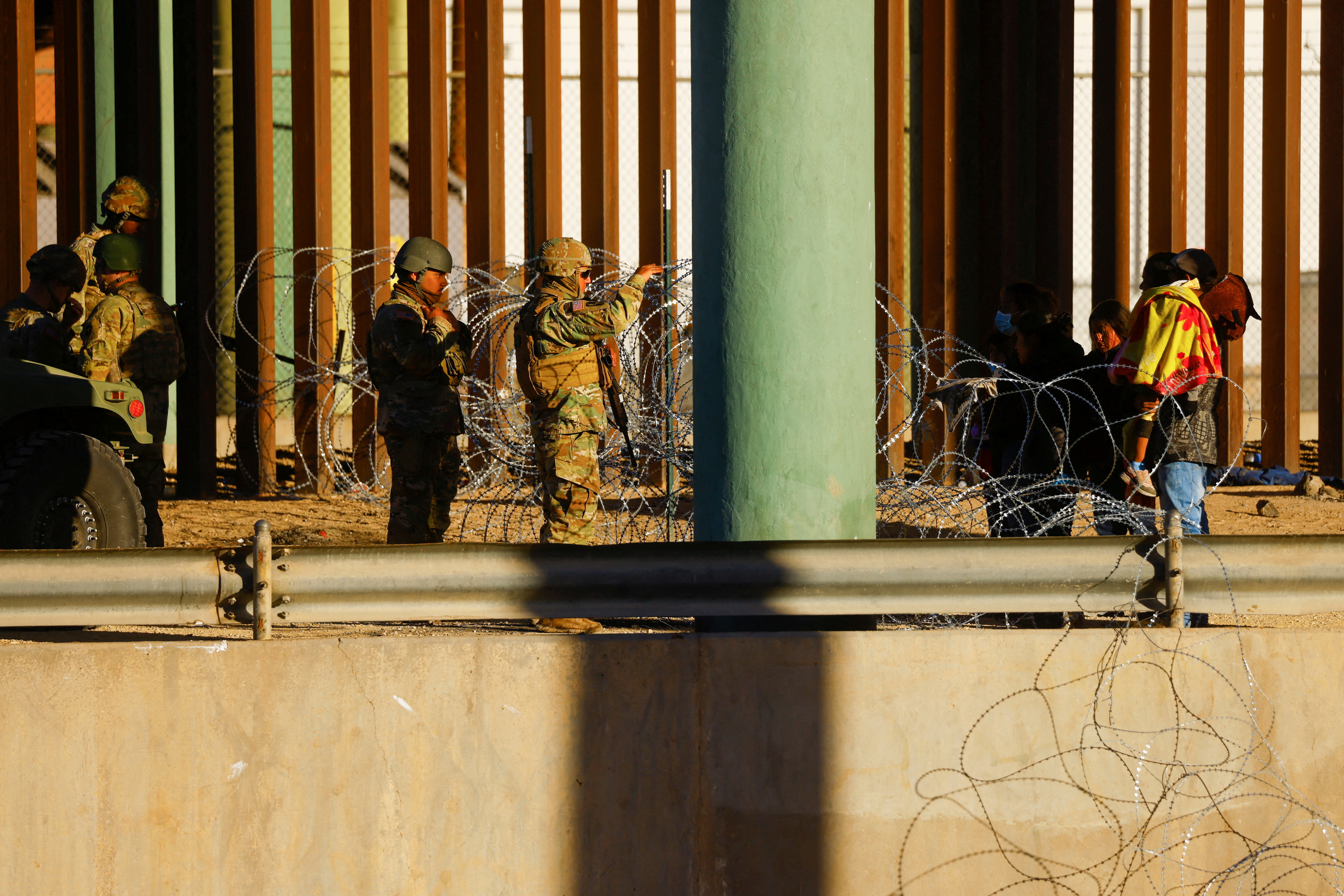
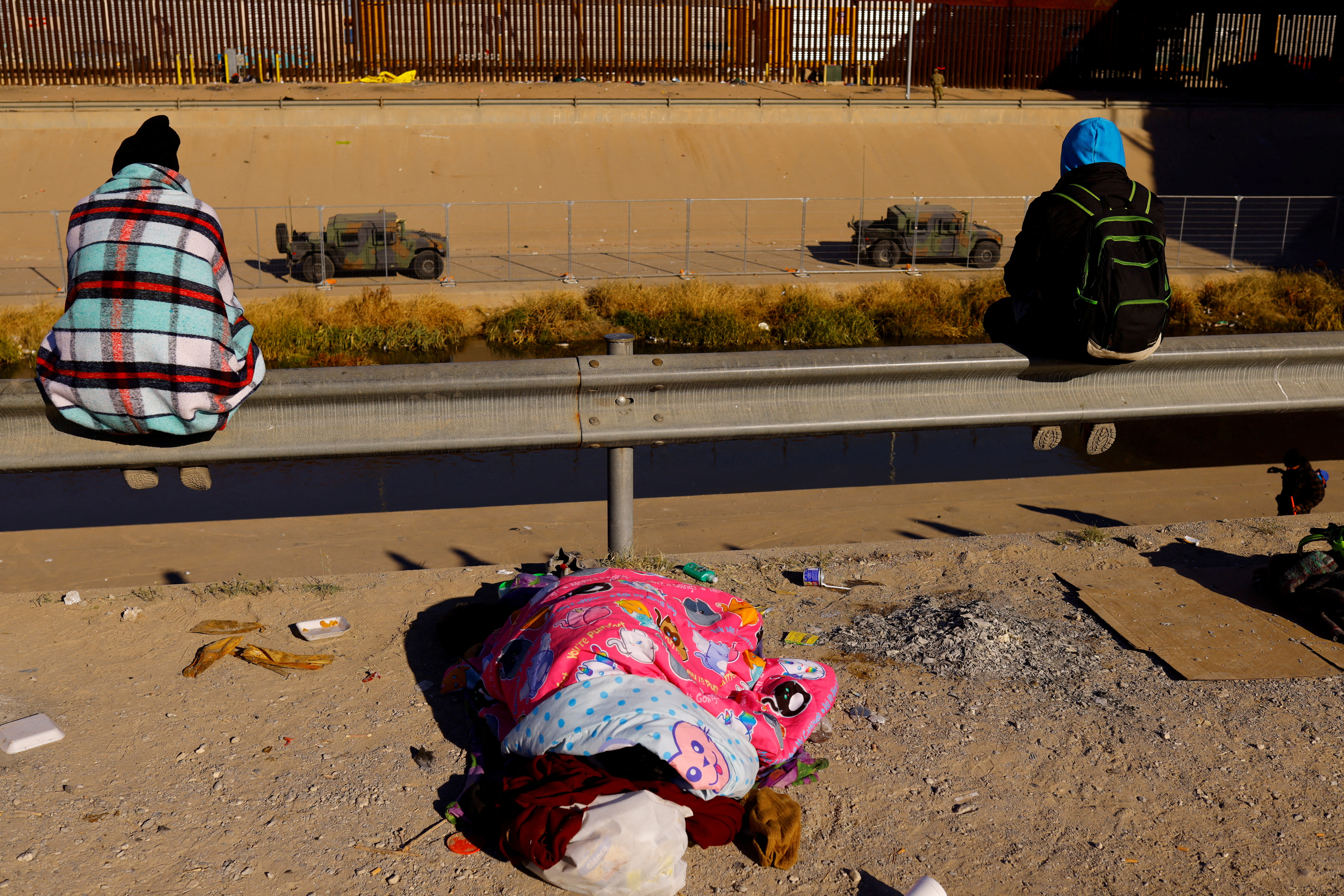
Members of the Texas National Guard stand guard on the banks of the Rio Bravo river, the border between the United States and Mexico, with the purpose of reinforcing border security and inhibiting the crossing of migrants to the United States, seen from Ciudad Juarez, Mexico, December 27, 2022. REUTERS/Jose Luis Gonzalez

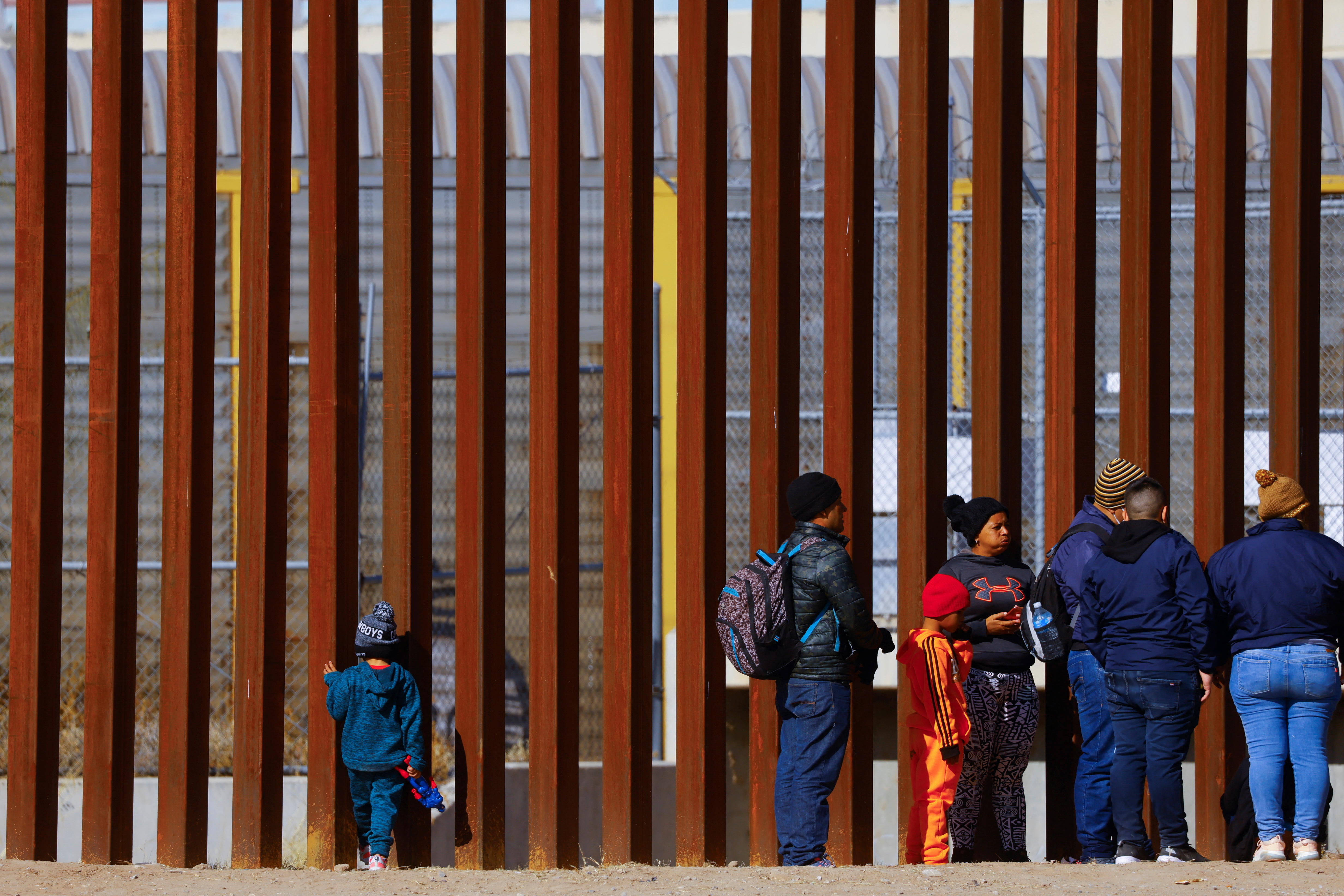
George, 5, a migrant boy from Venezuela traveling with his family, looks through the border wall as they queue to request asylum in El Paso, Texas, United States, seen from Ciudad Juarez, Mexico, December 27, 2022. REUTERS/Jose Luis Gonzalez

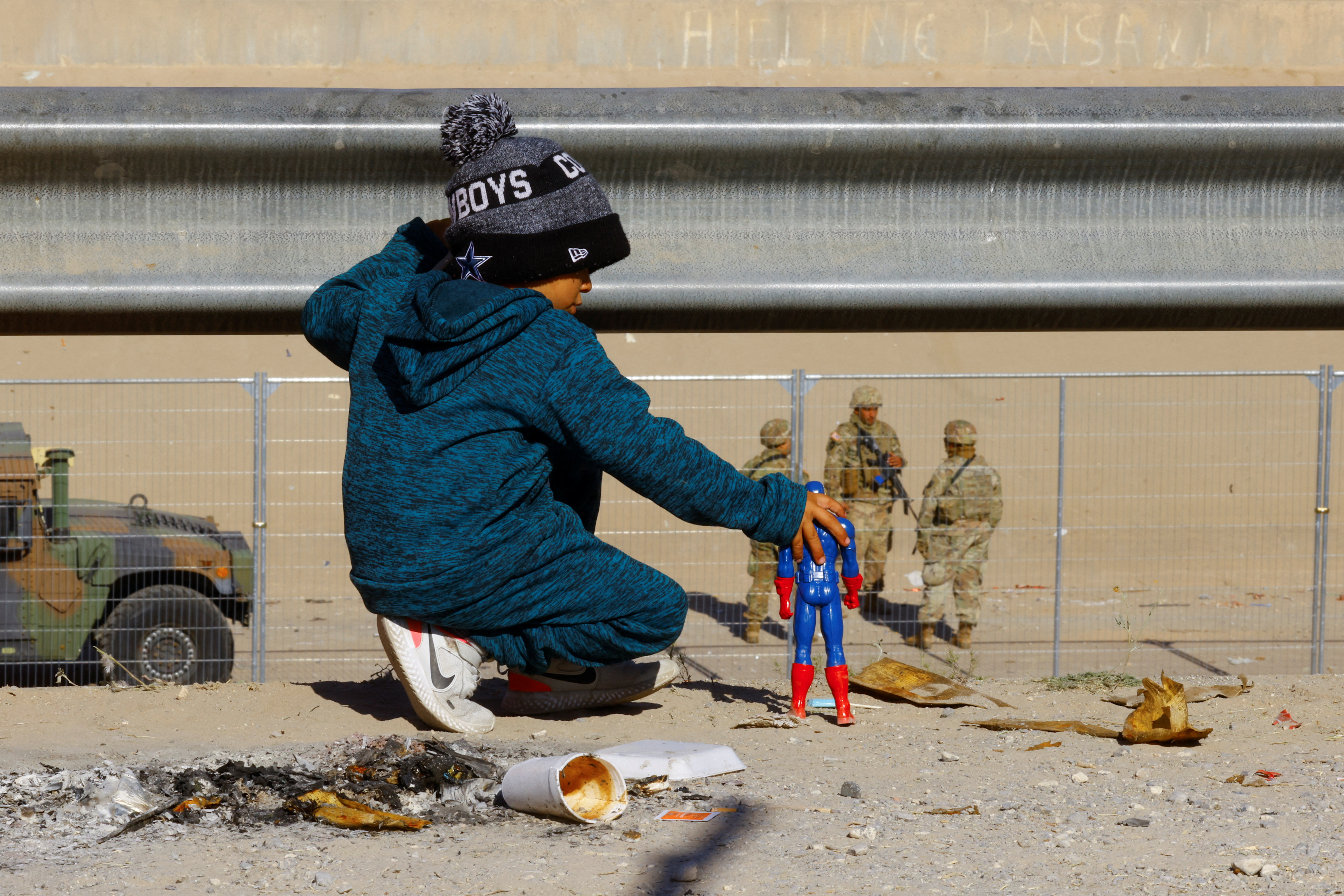
George, 5, a migrant boy from Venezuela who is traveling with his family and trying to seek asylum in the United States, plays with a Captain America doll in the border between Mexico and the United States, while members of the Texas National Guard stand guard on the banks of the Rio Bravo river, the border between the United States and Mexico, with the purpose of reinforcing border security and inhibiting the crossing of migrants to the United States, seen from Ciudad Juarez, Mexico, December 27, 2022. REUTERS/Jose Luis Gonzalez

Members of the Texas National Guard stand guard on the banks of the Rio Bravo river, the border between the United States and Mexico, with the purpose of reinforcing border security and inhibiting the crossing of migrants to the United States, seen from Ciudad Juarez, Mexico, December 27, 2022. REUTERS/Jose Luis Gonzalez

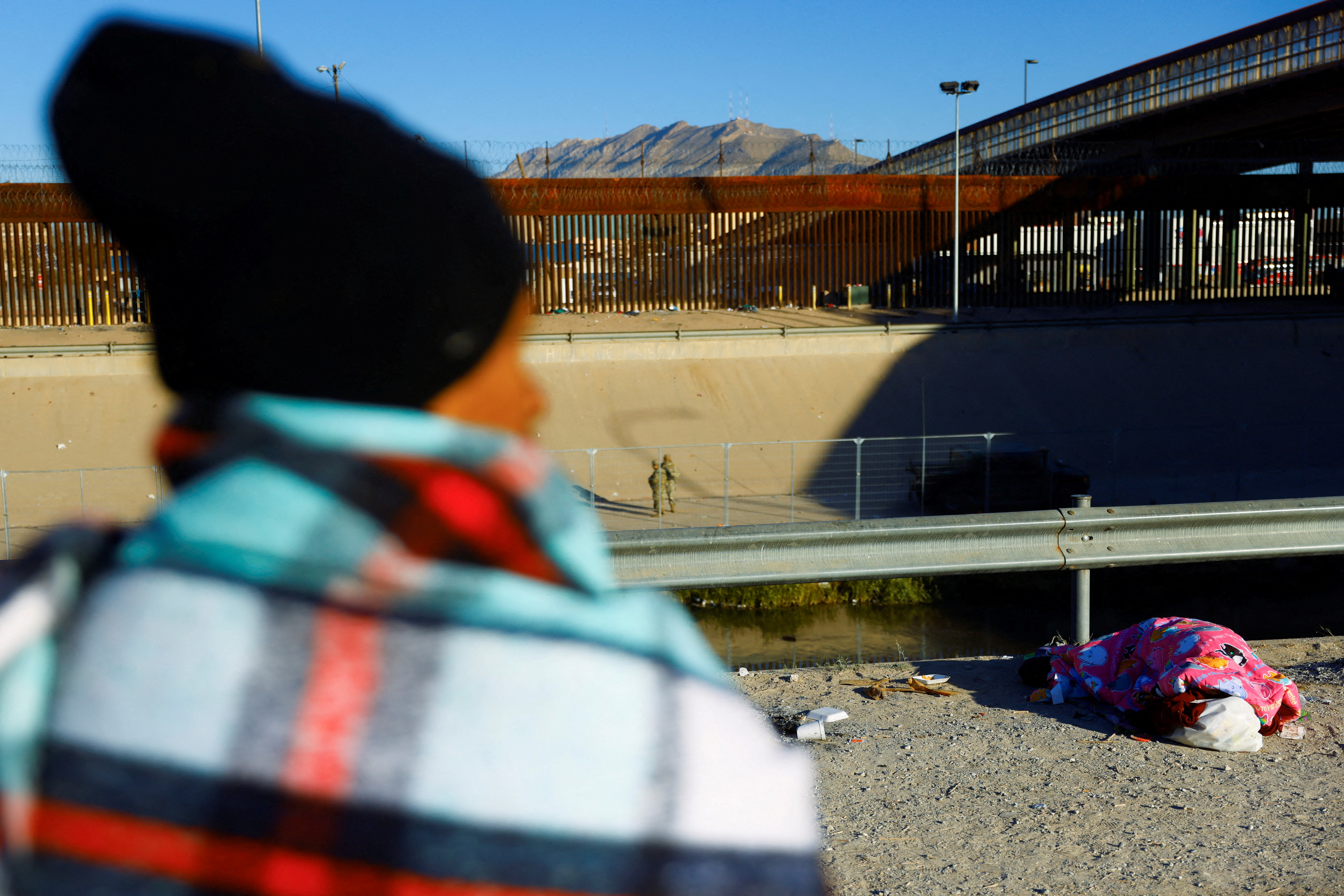
Asylum-seeking migrants rest near the Rio Bravo river, the border between Mexico and the U.S., in Ciudad Juarez, Mexico December 27, 2022. REUTERS/Jose Luis Gonzalez

Asylum-seeking migrants rest near the Rio Bravo river, the border between Mexico and the U.S., in Ciudad Juarez, Mexico December 27, 2022. REUTERS/Jose Luis Gonzalez
Categories
Audio Sources - Full Text Articles

Donald Trump craps the bed as everything falls apart for him

19121c5c768fb6ee35d5576afe2d9a7f?s=100&d

Help support Palmer Report! Our articles are all 100% free to read, with no forced subscriptions and nothing hidden behind paywalls. If you value our content, you’re welcome to pay for it:

Pay $5 to Palmer Report:

Pay $25 to Palmer Report:

Pay $75 to Palmer Report:


As snow fell outside, and people all over this great country were cozily at home on Christmas Eve, a madman was sharing his own Christmas Eve message with the American people. Only something was wrong. Something was very wrong. The person sharing this message appeared to be insane. As in rubber room insane.

Donald Trump, eager to share his delightful message of goodwill with the American people, took to Truth Social. And yes, I will now quote him IN FULL. Never have I quoted an ENTIRE message from him. But you see, the writer of this article is worried. The writer of this article is deeply concerned that Donald Trump and insanity have finally merged and become one, never to be parted again.

So yes, the writer of this article will now quote. And if you’re wondering why I am using the third person when referring to myself, I am just following the example of the orange monster:

“Merry Christmas to EVERYONE, including the Radical Left Marxists that are trying to destroy our country, the federal bureau of investigations that is illegally coercing & paying Social and LameStream media to push for a mentally disabled Democrat over the:

BRILLIANT, CLAIRVOYANT, AND USA-LOVING DONALD J. TRUMP.”

Ok — enough. I do have limits. CLAIRVOYANT? What in holy hell is our madman talking about? A few things. Stop, Donald, just stop referring to yourself in the third person. It’s creepy, it’s insane, and it’s just simply wrong.

Now — moving onto “clairvoyant-Gate” what have we here? Is the former president saying he does indeed have special powers? Is this part of a new scheme? A fortune telling thing? 1-800-Dial a Donald?

Perhaps he will offer to tell your future for a few bucks. I see a new scam coming down the chimney. On Twitter, of course, the mood was joyous. Here are some of the funniest comments:

“Well, past time for an intervention.”

“The clairvoyant trading card.”

“Does he levitate cheeseburgers?”

“The Trump psychic network.”

“coo coo for cocoa puffs.”

“Well, gee, it’s not like he’s insane or anything.”

“He is about to say that the Democrats stole his clairvoyant title and that cheating went on.”

“I’m more surprised by the brilliant comment.”

“Pretty sure Trump is referring to a stripper named Claire Voyant.”

Click here to support Palmer Report! Our articles are all 100% free to read, with no forced subscriptions and nothing hidden behind paywalls. If you value our content, you’re welcome to pay for it:

Pay $5 to Palmer Report:

Pay $25 to Palmer Report:

Sign up for the Palmer Report mailing list

Follow Palmer Report on FacebookTwitterPostMastodon


“Make it stop. ” (laughter emoji.)


“Always the portrait of humility.”

As you can see, Twitter had a great time with this. As for our traitor? I think he truly has reached rubber room status.

Save Palmer Report! Our articles are all 100% free to read, with no forced subscriptions and nothing hidden behind paywalls. If you value our content, you’re welcome to pay for it:

Pay $5 to Palmer Report:

Pay $25 to Palmer Report:

Pay $75 to Palmer Report:

Write for the Palmer Report Community Section.

Help support Palmer Report! Our articles are all 100% free to read, with no forced subscriptions and nothing hidden behind paywalls. If you value our content, you’re welcome to pay for it:

Pay $5 to Palmer Report:

Pay $25 to Palmer Report:

Pay $75 to Palmer Report:

The post Donald Trump craps the bed as everything falls apart for him appeared first on Palmer Report.

Categories
Audio Sources - Full Text Articles

Japan, US arranging summit meeting in Washington on Jan 13 – Yomiuri

2022-12-28T00:45:37Z

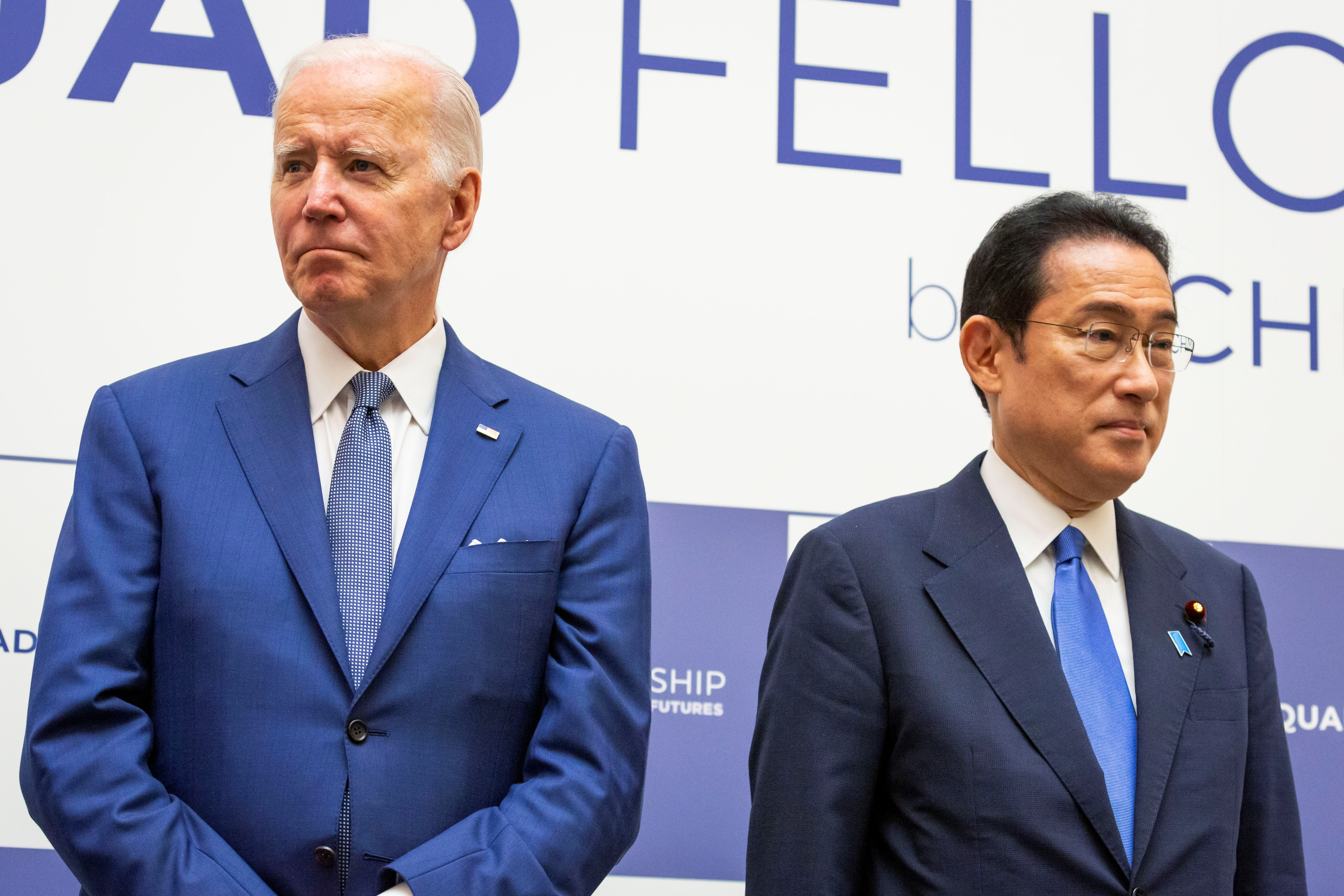
U.S. President Joe Biden and Japanese Prime Minister Fumio Kishida attend the Japan-U.S.-Australia-India Fellowship Founding Celebration event, in Tokyo, Japan, May 24, 2022. Yuichi Yamazaki/Pool via REUTERS

The United States and Japan have begun making arrangements for a summit meeting between President Joe Biden and Prime Minister Fumio Kishida in Washington on Jan. 13, the Yomiuri daily reported on Wednesday.

Citing multiple unidentified Japanese government sources, the newspaper said Kishida plans to discuss Japan’s new security policy, revised this month to unveil the country’s biggest military build-up since World War Two.

The January meeting would be Kishida’s first summit at the White House since he took office last year.

Categories
Audio Sources - Full Text Articles

The US military is planning for a ‘transformative’ year in Asia as tensions with China continue to rise

Marines amphibious landing in PhilippinesUS Marines rehearse for an amphibious landing with Philippine, South Korea, and Japanese troops in the Philippines in October.

US Marine Corps/Cpl. Yvonne Iwae

  • Amid rising tensions with China, the US military has sought to bolster its presence in Asia.
  • US forces there may see the “most transformative year” in a generation in 2023, a US official said.
  • Major changes to the US military presence in Asia face logistical and political hurdles, however.

The US military will have a “transformative” year in Asia in 2023, a top defense official said this month, continuing the Biden administration’s efforts counter what US officials say is China’s destabilizing influence on the region’s security.

The administration spent its first two years working to bolster US relationships in the Indo-Pacific, but expanding the US military presence is likely to run into both logistical challenges and the political sensitivities of countries that are wary of backlash from of their bigger neighbor, China.

The Obama administration announced plans for a “pivot” to Asia in late 2011, but that shift was waylaid by wars in the Middle East and Europe and by the Trump administration’s often antagonistic stance toward the region.

Since taking office, the Biden administration has unveiled major initiatives focused on improving the US’s diplomatic, economic, and security presence in the Indo-Pacific — the latter of which will see notable changes next year, according to Ely Ratner, the assistant secretary of defense for Indo-Pacific security affairs.

Obama Marines Darwin AustraliaPresident Barack Obama speaks to Australian troops and US Marines in Darwin in November 2011.

JIM WATSON/AFP via Getty Images

“It is no secret that the US forward presence in the region has historically remained predominantly in Northeast Asia, predominantly at major operating bases,” Ratner said at the American Enterprise Institute on December 8.

Ratner said the administration agrees with calls for “a more mobile, lethal, diversified posture in the region” but stressed that such changes require years of “hard government work.”

“It’s not something that you flip overnight,” Ratner added. “That said, I think it is fair to say that, in my view, 2023 is likely to stand as the most transformative year in US force posture in the region in a generation.”

‘Really hard work’

The 2011 “pivot” did lead to changes in US military posture in Asia, including basing of US warships in Singapore and US Marine Corps deployments to northern Australia, both of which continue today.

The US and the Philippines also signed the Enhanced Defense Cooperation Agreement in 2014, allowing extended deployments of US troops, though implementation was delayed by tense relations under President Rodrigo Duterte, who left office in June.

Those changes required “years of really hard work” by US officials, Ratner said, adding that such work has continued, citing the AUKUS agreement with Australia and the UK, a recent agreement to accelerate and expand EDCA projects, and an announcement this month about plans to increase the US military presence in Australia.

Navy littoral combat ship USS Coronado SingaporeUS Navy littoral combat ship USS Coronado docks in Singapore in October 2016.

ROSLAN RAHMAN/AFP via Getty Images

“We’ve been getting after that over the last couple of years, and I’m hopeful that we’re going to start seeing the fruit of those efforts bearing quite soon,” Ratner said. “I think folks are going to be quite satisfied with the results that are going to be rolling out throughout 2023.”

Sending more US troops to the region may not be transformative on its own, as many likely won’t be permanently assigned there, said Stacie Pettyjohn, director of the Defense Program at the Center for a New American Security, a think tank.

“A simple bean count does not capture whether these forces are truly combat credible and notably improve the United States’ ability to defeat aggression,” Pettyjohn told Insider.

“The number-one thing that would transform the region is making actual investments in infrastructure and facilities at new locations so that they can support distributed US operations and prepositioning equipment that American troops can unpack and use if they are deployed,” Pettyjohn said, citing projects at northern Australian bases that will be used by the US Air Force, Navy, and Marines.

The 2023 National Defense Authorization Act, signed into law this month, authorizes funds for military construction projects throughout the Pacific, including at major US bases and smaller outposts, such as Tinian in the Northern Mariana Islands, a US territory.

Air Force C-130J Angaur Island PalauA US Air Force C-130J lands on an airstrip on Angaur Island in Palau in November.

US Air Force/Staff Sgt. Divine Cox

“In particular, I’d like to see these improvements happen in the Philippines and some locations in the South Pacific like Palau or Papa New Guinea,” Pettyjohn said. “It would also be significant if Japan allowed US forces to have access to new bases even if this is just for temporarily deployments.”

US military branches are working on their own initiatives — such as the US Air Force’s agile combat employment — to enable their forces to operate in a more dispersed manner across the Pacific. Pettyjohn said training for those needed to be done on a larger scale and across services, as well as with allies, in order to be “a strong deterrent.”

Opportunities and limits

Some allies and partners have been receptive to US interest in increased defense cooperation. Japan and Australia are working more closely with the US and with each other. Other countries have sought more training with the US military or, in the case of Palau, to host US forces.

The new Philippine government is pursuing deeper defense ties with the US because of China’s “uncompromising position” on South China Sea disputes and because of a growing recognition that a war over Taiwan “would almost certainly spill over” into the Philippines, said Drew Thompson, a visiting senior research fellow at the Lee Kuan Yew School of Public Policy in Singapore.

Lloyd Austin ASEAN CambodiaDefense Secretary Lloyd Austin III meets with Southeast Asian defense ministers in Cambodia in November.

US Defense Department/Chad J. McNeeley

Southeast Asian countries, including US ally Thailand, and Pacific Island states have been more cautious, however.

Leaders in Southeast Asia, geographically and economically close to China, are reluctant to be seen as choosing sides, and Pacific Islanders are wary of a great-power competition that they believe overlooks their most pressing issues, chiefly climate change.

The administration has made overtures to both regions on its own, with several trips by senior officials to Southeast Asia and the first-ever US-Pacific Island country summit in September, and with partners, including a maritime-domain-awareness project announced at a summit with leaders from Australia, Japan, and India that is seen as a response to longstanding security concerns among Southeast Asian and Pacific Island states.

There are opportunities for the US “to expand its access and deepen relationships” in both Northeast and Southeast Asia, said Thompson, a former US Defense Department official, but US leaders will have to reckon with the limits of those partnerships, especially in Southeast Asia.

Countries there are “generally welcoming” of the US’s military presence, Thompson said, “but they are as a group uncomfortable at the prospect of a US-China conflict over Taiwan, are wary of US expectations in terms of posture and access in the event of a conflict, and they are certain that China will retaliate against them should they be seen as siding with the United States.”

Read the original article on Business Insider
Categories
Audio Sources - Full Text Articles

Some of Our Favorite Things for 2022

Share

JOURNALISM HAS ALWAYS BEEN a team sport. And from the get-go in August 2020 we‘ve been blessed with regular contributions from a top tier of reporting veterans and intelligence experts—people like (in alphabetical order):

Matthew Brazil, a Fellow at the Jamestown Foundation and co-author of the authoritative Chinese Communist Espionage, An Intelligence Primer (Naval Institute Press 2019). Our favorites from Matt this year included Dec. 19’s “How China’s Cell Phone Spies Track Covid Protesters,” on Beijing’s notoriously ubiquitous surveillance cameras and algorithms (designed with help from some of Silicon Valley’s biggest names). The previous month, Brazil provocatively wondered whether the startling protests revealed gaps in Chinese intelligence.

“If, as seems true, the sudden proliferation of chaos from Guangzhou to Zhengzhou to Urumqi is a surprise to the leadership, they may blame the Ministries of State Security and Public Security (MSS and MPS) for not anticipating it—and heads may roll,” Brazil wrote. “It’s also possible that the security agencies saw the protests coming, but were afraid to tell Xi and his cronies the truth: that their Covid strategies were failing.” In October, Matt also gave us “A Bold New Look at China’s Audacious Spies.”

Jonathan Broder. In November, Broder, a reporting veteran of Newsweek, Congressional Quarterly, the Chicago Tribune and A.P., mused on the horrific fallout from a U.S.-China military conflict, writing that each side’s hawks need to be reined in less the “unthinkable” happens. On the eve of Russia’s invasion of Ukraine, Broder wrote presciently on how “China Presents Russia With an Escape Hatch on Sanctions.”

A longtime Middle East hand, Broder wrote in June about how an “Israel-Iran Shadow War [was] on Verge of Exploding Into the Open”—a prospect that may be all the more salient now that a far-right coalition has taken power in Jerusalem. And on the same subject, Broder told readers about the controversial views of Israeli Maj. Gen. Isaac Ben-Israel,  a military scientist and weapons specialist who argues that Jerusalem should go public with its nuclear arsenal and engage Tehran in arms talks like the U.S. and Soviet Union did in the depths of the Cold War.

Jonathan Broder

We were also blessed again this year with contributions from John Dinges, a former Washington Post and NPR editor and winner of the Maria Moors Cabot Prize for excellence in Latin American reporting. Dinges, author of two highly regarded investigative books on Chile’s murderous Pinochet years, took a dim view of a blood-and-guts memoir by CIA veteran Enrique Prado.

“Reading Black Ops: The Life of a CIA Shadow Warrior, you can understand why it is so difficult for the CIA to shed its terrible reputation,” he wrote. “The author, Enrique Prado, who goes by Ric, was a 24 year veteran of some of the shadiest of the agency’s operations against Latin American leftists and Middle Eastern Jihadists. The nasty looking switchblade pictured on the cover points us to Prado’s approach to his job, or at least to the tough guy image he paints of himself in this book.”

John Dinges, whose latest book is The Condor Years: How Pinochet and His Allies Brought Terrorism to Three Continents. (photo via Foros-K)

We were also pleased this year to get two pieces from Ayako Doi, a co-founder and editor of The Japan Digest. Just last week, Doi delivered excellent insight on “What Prompted Japan to Adopt Its ‘Earth-Shattering’ Military Buildup Plan?

“How did the Japanese so quickly and decisively shed their pacifist tendencies, which were  so deeply ingrained in their psyche for almost eight decades since the country’s devastating defeat in World War II? There are several factors,” Doi wrote. “The most obvious, of course, is heightened perception of increased threat from China…”

Doi saw it coming—but it shouldn’t have surprised anyone, she wrote in July following the shocking assassination of Prime Minister Shinzo Abe.

“Indeed, the once-radical idea to remilitarize Japan, pushed by Abe’s maternal grandfather Nobusuke Kishi, is not so radical these days. North Korea’s nuclearization and the increasingly clear threat of China’s territorial expansion in recent years have succeeded to convert a once staunchly pacifist Japanese public into proponents of more robust military capability. China, North Korea and now Russia, which grabbed Japan’s northernmost territories in days just before Japan’s surrender in 1945, are helping Tokyo achieve the goals which Kishi and Abe failed to achieve.”

War and Pieces

It’s no surprise that Peter Eisner, a former Washington Post, Newsday and A.P. reporter and editor specializing in foreign affairs, would contribute a piece on Russia’s invasion of Ukraine. Teaming up with me as Putin massed his troops in Belarus last January, we wrote a piece headlined, “US Signaling Putin that Ukraine Will Be Bloody”—which, to the apparent shock of nobody but Putin, it turned out to be.

Eisner, author of a series of nonfiction World War Two books, most recently MacArthur’s Spies, The Soldier, the Singer, and the Spymaster Who Defied the Japanese in World War II, has also become a prolific reviewer of espionage-related books, movies and TV shows for SpyTalk.

One of my personal favorites was his take on Slow Horses, the droll spy thriller on Apple TV, in which “we follow the fortunes of a team of broken down British counterspies and their alcoholic, belching wreck of a boss, played to perfection by Gary Oldman.” The title derives from the shabby confines of the MI5 exiles, Slough House.

As the show’s theme music—from Mick Jagger, no less—fades, “we see our anti-hero snoring on the office couch, [aside] a coffee table strewn with trash, cigarettes, an overflowing ashtray and discarded MI5 envelopes. He’s startled awake by his own loud fart. He could not be more of a failure or more disgusting,” Eisner writes. Oldman is back now for a second season, whose dark comedy gets a jolt when suspected Russian assassins take down one of Oldman’s old colleagues.

Eisner also covered a new, compact biography of Sidney Reilly, “one of the most elusive master spies in modern history,” by the esteemed biographer Benny Morris.

“Reilly, a British agent in Russia in the early days of the Bolshevik revolution, was so elusive that, along with his significant failures and a few successes, he probably will remain a mystery man forever. Obscurity may have been his greatest triumph,” Eisner wrote.

Peter Eisner (via Twitter)

We also benefitted again this year with contributions from our friend James Grady, author of Six Days of the Condor, which, shorn of three days, was turned into the iconic 1970s movie thriller starring Robert Redford and Faye Dunaway. On the 50th anniversary of the Watergate break-in last June, Grady reminisced about working in Washington as a 24-year-old and soaking up the city’s raging paranoia.

Or was it? Years later, ex-FBI agent and “White House plumber” G. Gordon Liddy told Grady how he’d been given “White House orders” to murder Grady’s boss, the muckraking columnist Jack Anderson.

Grady also brought a novelist’s eye to the car-bombing assassination in August of Darya Dugina, a Russian media star and social media “influencer” who happened also to be the29-year-old daughter of Alexander Dugin, a far-right Russian businessman, philosopher, and well-known cheerleader of Vladimir Putin.

“If Ukraine operatives did pull off the car bombing, that means Russia’s ostensibly all-seeing secret police and spy agencies failed to detect, much less prevent a high-tech assassination by a ‘lesser’ global power (Ukraine) on Russian soil,” Grady wrote. “If, on the other had,  a Russian group pulled off the bombing, how potentially powerful and violent is the opposition to Putin in Russia?”

Speaking of Russia, Ukraine and conspiracies, we’re always pleased to get something from Olga Lautman, an analyst and researcher focused on the Kremlin, organized crime, intelligence and Eastern Europe and co-host of the Kremlin File podcast. In July, she gave us the inside dope on Ukraine’s security shake-up. “Even before the invasion,” she wrote, “President Volodymyr Zelenskyy had been moving to crush Putin’s agents. And in mid-July, he doubled down on his counter-subversion campaign.” Lots of good, still very relevant, insidery stuff on Ukraine’s murky security organs in Olga’s dispatch.

Olga Lautman

On conspiracies closer to home, contributing writer Jefferson Morley delivered a fascinating bulletin about the quiet death of Rolando Cubela, 89, the Fidel Castro intimate-turned CIA agent “whose rise and fall once convulsed the governments of Cuba and the United States and generated headlines worldwide.”

Morley, a former Washington Post editor and reporter, also explored the fate of the so-called Snowden archives, the “vast” trove of stolen NSA files that remains locked away in private hands all these years later, “with some stuff so sensitive even journalists with access don’t want to report it.”

Former CIA officer Frank Snepp, meanwhile, turned his well honed analytical skills onto Vladimir Putin’s “Plan B” for Ukraine once his initial strategy of quickly seizing Kyiv utterly failed: establish a puppet state in the Donbas. Of course, that hasn’t gone so well, either, but still…

“As an old Saigon hand, I am reminded of the communist effort in 1973 to set up a supposedly self-governing mini-state along South Vietnam’s western border—a ‘Third Vietnam’—fronted by a ‘Provisional Revolutionary Government’ and designed to give throw-weight to Hanoi’s political demands,” Snepp wrote in a massive two-part piece in mid-April. “If Putin is headed in this direction, or somewhere near it, he has two fully developed roadmaps in his knapsack, two faux ‘peace proposals,’ to guide him.

Subscribe now

“They were devised several years ago by spies and surrogates operating on his string and promoted by two prominent recruits from MAGA World, Trump’s one-time campaign Manager Paul Manafort, and his personal lawyer, Michael Cohen (whose wife happens to be Ukrainian).”

Kabul Chaos

In September, Snepp was back with another attention-getting piece arguing that the Biden administration’s tumultuous exit from Kabul was not as bad as the critics say, especially considering the bad hand he was left by Donald Trump and the virtually overnight collapse of the Afghan army and government.

“Despite these appalling conditions, the U.S. and its coalition partners evacuated in those same two weeks 123,000 people—twice as many souls as fled Saigon with some sort of official U.S. help during the entire last month of the Vietnam war.”

Frank Snepp speaking at ‘Beyond Snowden’ in 2013. Photo by Benjamin Dunn/Neon Tommy/Wikimedia Commons.

But the whole story of the chaos in Kabul has yet to be told, a contributor writing under the pen name C. Tatum told us a few months ago in an unsettling exposé we headlined, “CIA, Spec Ops roles in Kabul’s collapse belie official versions.”

House Republicans have vowed to highlight Biden’s handling of Kabul after they take power next week. But, Tatum writes, “If they desire a credible inquiry, House investigators should also consider scrutinizing the role the U.S. intelligence community played in the final outcome of the war—the good, the bad and the ugly—when their efforts cost some lives while saving others.”

Speaking of consequential mishaps, in “Bad Spy, Bad” the authoritative intelligence historian Mark Stout graced our pages once again this year with his review of a new book about Karel Koecher, a “half-hearted Czech spy [who] managed to penetrate the CIA, join a DC swingers club, play his bosses and the FBI and get home a free man.”

“Karel Koecher was a horrible choice to become an intelligence officer for any self-respecting  spy service.  Born in 1934, he grew up in Czechoslovakia and was always in some kind of minor trouble with the authorities,” Stout wrote in his very entertaining review of author Benjamin Cunningham’s The Liar: How a Double Agent in the CIA Became the Cold War’s Last Honest Man.

And that’s it, folks. Sure hope I didn’t leave any of your favorites out. Of course, we love hearing from you, so keep them megabytes coming.

Best wishes and good luck to all for the new year. God knows we could use it.

—Jeff Stein, Editor

SpyTalk is a reader-supported publication. To receive new posts & support our work, please consider a paid subscription.


Categories
Audio Sources - Full Text Articles

2022 Man of the Year: Anti-Vegan Legend

They say that actions speak louder than words. To that we would add that words lack flavor. Case in point: Last August, animal-rights activists went on a tear through New York City, spilling fake blood in front of Christian Dior and Louis Vuitton. They also protested loudly in front of the Nike Store. At which point a man calmly walked up to them and began eating a mouth-watering shish kebab.

The animal defenders went ape. “You’re a fucking coward,” said one. “You’re a piece of shit and you’re embarrassing. What am I going to do? Nothing, you’re going to die on your own.” The unidentified meat-eater remained silent—except, of course, for the chewing and salivating noises coming from his mouth.

A young female activist flew into a rage: “It feels good? You and your small dick and your pussy way of killing animals and it feels good in front of the vegans, huh?” And again, “It feels good with your small dick?” asked the woman who professes not to eat meat.

But our hero didn’t say a word, content to eat, lick, and savor the kebab as God intended. Which reminds us of Homer Simpson’s trenchant observation: “If God didn’t want us to eat animals, why did he make them out of meat?”

The protest continued at Nike (apparently the company uses leather from kangaroo, though we’re pretty sure they make for great steaks too). And eventually the man with the shish kebab went on his way, no doubt satiated by a savory piece of grilled meat and satisfied that he had skewered the activists’ minds.

In front of Nike in #NYC where animal rights activists were rallying in front. A man comes off the streets and starts mocking the activists and eats Shushka Bob in front of the activists. Activists start yelling at the man#pita #animals pic.twitter.com/puQ1I9EJlV

— Viral News NY (@ViralNewsNYC) August 27, 2022


It’s not always easy to stand up to tyrants. And this man on a mission was armed with nothing but a stick of meat—we are in awe. So congratulations to our courageous carnivore, a Washington Free Beacon Man of the Year.

The post 2022 Man of the Year: Anti-Vegan Legend appeared first on Washington Free Beacon.

Categories
Audio Sources - Full Text Articles

Southwest cancels more flights for Tuesday and Wednesday

(NewsNation) — U.S. airline Southwest canceled thousands more flights Tuesday and Wednesday after scrubbing more than 2,900 flights Monday as most of the nation recovers from a deadly winter storm.

Flight tracking website FlightAware reported Southwest’s cancellations accounted for more than 80% of the 3,000 trips that got canceled nationwide Tuesday, including 70% of Monday’s flight cancellations according to the Associated Press.

Now, Southwest has removed 2,500 additional flights for Wednesday and nearly 1,200 for Thursday as it tried to restore order to its mangled schedule.

This comes after the Transportation Department (DOT) tweeted it would examine “Southwest’s unacceptable rate of cancellations” and whether the airline was meeting its legal obligation to help stranded customers Monday.

NewsNation contacted DOT for additional comments Tuesday who said, in part:

The Department will take action to hold Southwest accountable if it fails to fulfill its obligations and we will stay engaged with Southwest Airlines to make sure the airline does not allow a situation like this to happen again.

TRANSPORTATION Department

Southwest claims pilots and flight attendants were out of position to work their flights, but offered an apology statement Tuesday:

With consecutive days of extreme winter weather across our network behind us, continuing challenges are impacting our Customers and Employees in a significant way that is unacceptable. And our heartfelt apologies for this are just beginning.

Southwest airlines

Meanwhile, leaders of unions representing Southwest pilots and flight attendants blamed antiquated crew-scheduling software and criticized company management.

Southwest is not wrong. The severity of the storm created havoc for many airlines, although the largest number of canceled flights Tuesday were at airports where Southwest is a major carrier, including Denver, Chicago Midway, Las Vegas, Baltimore and Dallas.

Spirit Airlines and Alaska Airlines both canceled about 10% of their flights, with much smaller cancellation percentages at American, Delta, United and JetBlue.

In upstate New York, Buffalo Niagara International Airport — close to the epicenter of the storm — remained closed Tuesday.

The AP reports customers stood in long lines hoping to find a seat on another flight at airports with major Southwest operations; some even tried to rent cars to get to their destinations sooner while others found spots to sleep on the floor. Luggage piled up in huge heaps.

The DOT also told NewsNation that Secretary Buttigieg spoke with the CEO of Southwest Airlines and expressed he expects the airline to make amends and compensate its affected passengers accordingly by “providing meal vouchers, refunds, and hotel accommodations for those experiencing significant delays or cancelations that came about as a result of Southwest’s decisions and actions.”

The same goes for Southwest’s flight attendants and pilots, who were reportedly stranded alongside passengers.

The U.S. DOT tells NewsNation Buttigieg expects Southwest’s CEO “to do right by their pilots and flight attendants—and all their workers— in these situations.”

The Associated Press contributed to this report.

WP Radio
WP Radio
OFFLINE LIVE