Categories
Audio Sources - Full Text Articles

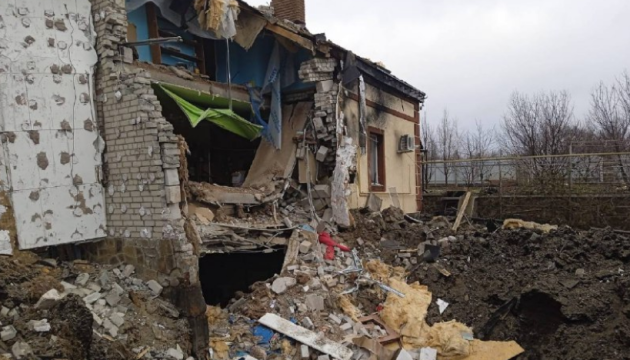
Enemy shells Kupyansk, Vovchansk. Five injured, including hospital staff

630_360_1671724410-698.png

5 persons were wounded in present day enemy shelling of Kupyansk and Vovchansk in Kharkiv location. Four of them are workers of the district healthcare facility.

“Right now, the enemy all over again shelled the cities of Kupyansk and Vovchansk. Civilians were injured. In Vovchansk, 5 persons were being hurt in the shelling. 4 of them (three gentlemen and one particular girl) are Central District Clinic team users. They have been identified with mine blast and shrapnel accidents. Also, a passer-by – a 62-12 months-old person – was hurt,” Oleh Synegubov, Head of the Kharkiv Regional Army Administration, posted on Telegram.

All the wounded are presented the required support.

A residential constructing was harmed in a Russian rocket assault on Kupyansk. In accordance to preliminary info, no one was hurt.

In addition, a 25-calendar year-outdated person bought hit by an unidentified explosive gadget in the forest in the village of Protopopivka, Izium district. He was hospitalized with accidents.

As reported, Russian troops proceed shelling the border of Kharkiv region. Kupyansk and Vovchansk towns, as effectively as the villages in Vovchansk group, are less than continual hearth.

Picture credit score: Oleh Synegubov

ol

Source link

The post Enemy shells Kupyansk, Vovchansk. Five injured, including hospital staff appeared first on Ukraine Intelligence.

Categories
Audio Sources - Full Text Articles

International migration drove US population growth in 2022

The U.S. population grew by 1.2 million people this year, with growth largely driven by international migration, and the nation now has 333.2 million residents, according to estimates released Thursday by the U.S. Census Bureau.

Net international migration — the number of people moving into the U.S. minus the number of people leaving — was more than 1 million residents from 2021 to 2022. That represented a growth rate of 168% over the previous year’s 376,029 international migrants, according to the vintage 2022 population estimates.

Natural growth — the number of births minus the number of deaths — added another 245,080 people to the total in what was the first year-over-year increase in total births since 2007.

This year’s U.S. annual growth rate of 0.4% was a rebound of sorts from the 0.1% growth rate during the worst of the pandemic from 2020 to 2021, which was the lowest since the nation’s founding.

___

Follow Mike Schneider on Twitter: @MikeSchneiderAP

Categories
Audio Sources - Full Text Articles

U.S. Congress advances bills targeting war criminals, Russian oligarchs

2022-12-22T22:07:28Z

The exterior of the U.S. Capitol is seen at sunset in Washington, U.S., December 13, 2022. REUTERS/Sarah Silbiger

A pair of bills granting the U.S. Justice Department additional tools to go after Russian oligarchs and alleged war criminals appeared poised to become law, after a last-minute push by a bipartisan group of lawmakers this week.

One bill, which broadens the Justice Department’s jurisdiction to prosecute war crimes, passed in the U.S. House of Representatives on Thursday after winning Senate approval on Wednesday. It now heads to President Joe Biden, who is expected to sign it into law.

Known as the Justice for Victims of War Crimes Act, the bill allows the Justice Department to bring war crimes charges against people in the United States, regardless of where the alleged crime occurred.

Current statute only allows for prosecution when an alleged war crime occurs in the United States or when the victim or offender is a U.S. national.

“I think that this is certainly a step in the right direction,” said Mykola Murskyj, director of government affairs at Razom, a pro-Ukraine advocacy group.

“We’re actually taking concrete steps to make sure that we’re using our justice system to further our values.”

Another bill, which will allow the Justice Department to transfer oligarchs’ forfeited assets in some situations to Ukraine, passed in the Senate as an amendment to Congress’ annual funding bill. Those assets will be first transferred to the State Department, which would disperse the funds as foreign aid, according to the bill’s text.

The entire funding bill – which includes $44.9 billion in additional wartime aid for Ukraine – is now headed to the House, where it is expected to be passed into law.

Both bills had been promoted heavily by Ukrainian advocacy groups. Their advance comes a day after Ukrainian President Volodymyr Zelenskiy addressed Congress, telling the body he hoped they would continue to support Ukraine on a bipartisan basis.

It also comes a day after the Biden administration unveiled new curbs on technology exports to Russia’s Wagner military group.

Categories
Audio Sources - Full Text Articles

FTX“s Bankman-Fried, charged with “epic“ fraud, released on $250 million bond

2022-12-22T22:10:39Z

Sam Bankman-Fried was released on a $250 million bond package on Thursday while he awaits trial on fraud charges related to the collapse of the FTX crypto exchange. Zachary Goelman produced this report.

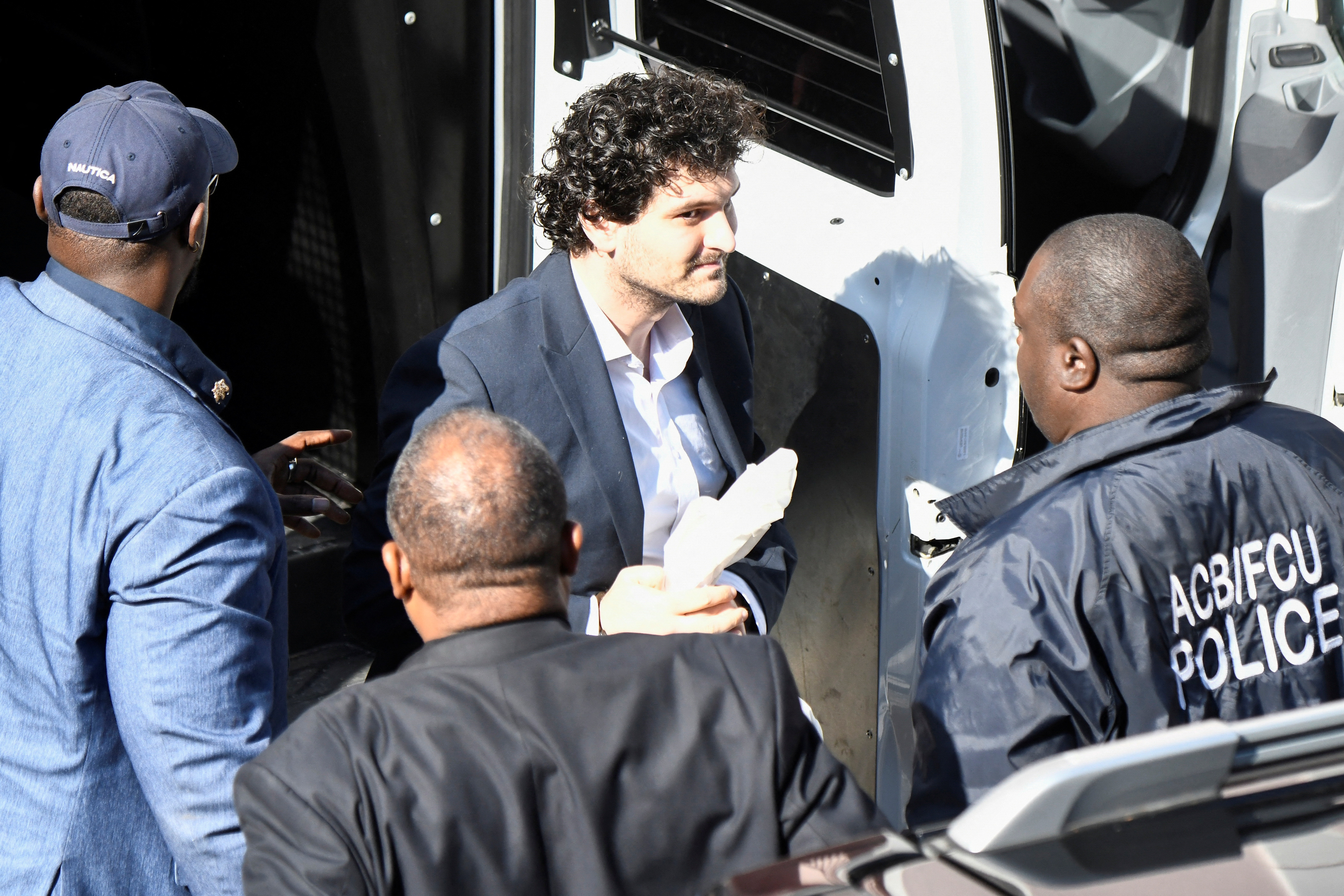
Sam Bankman-Fried was released on a $250 million bond package on Thursday while he awaits trial over the collapse of the FTX crypto exchange, which a U.S. prosecutor called a “fraud of epic proportions.”

Federal prosecutors in Manhattan have accused the FTX founder of stealing billions of dollars in customer funds to plug losses at his hedge fund, Alameda Research.

Bankman-Fried was not asked to enter a plea on Thursday. He has previously acknowledged risk-management failures at FTX, but has said he does not believe he has criminal liability. His defense lawyer, Mark Cohen, declined to comment after the hearing in Manhattan federal court.

U.S. Magistrate Judge Gabriel Gorenstein set Bankman-Fried’s next court date for Jan. 3, 2023, before U.S. District Judge Ronny Abrams, who will handle the case.

Bankman-Fried founded FTX in 2019. A boom in the values of bitcoin and other digital assets propelled the exchange to a valuation of some $32 billion earlier this year, making the Massachusetts Institute of Technology (MIT) graduate a billionaire several times over, as well as an influential donor to U.S. political campaigns.

In granting him pretrial release, Gorenstein said Bankman-Fried had “achieved sufficient notoriety that it would be impossible” for him to engage in further financial schemes or to hide without being recognized.

After Thursday’s court appearance, the one-time billionaire was surrounded by photographers as he exited the lower Manhattan courthouse and entered a black SUV. He sported facial stubble and a gray suit – a far cry for the shorts and T-shirt he became notorious for wearing in public appearances while running FTX.

Nicolas Roos, a prosecutor, told Gorenstein that the bail package would require Bankman-Fried to surrender his passport and remain in home confinement at his parents’ home in Palo Alto, California. He would also be required to undergo regular mental health treatment and evaluation.

Roos said that while Bankman-Fried had carried out a “fraud of epic proportions,” he had no history of flight and his financial assets had reduced significantly.

Bankman-Fried, 30, was arrested last week in the Bahamas, where he lived and where FTX is based, cementing his fall from grace. He departed the Caribbean nation in FBI custody on Wednesday night.

Cohen said he agreed with prosecutors’ proposed bail conditions. He noted that Bankman-Fried’s parents – both Stanford Law School professors – would co-sign the bond and post the equity in their home as assurance for his return to court. Both appeared at the hearing.

“My client remained where he was, he made no effort to flee,” Cohen said.

The bond is meant to ensure that if Bankman-Fried flees, the government could confiscate the family’s assets – including their Palo Alto home – up to $250 million. Reuters could not determine the family’s total net worth.

Bankman-Fried said at a New York Times conference on Nov. 30, following the exchange’s collapse, that he had $100,000 in his bank account.

Wearing leg restraints, Bankman-Fried sat flanked by his lawyers and nodded when the judge informed him that if he fails to appear in court, a warrant would be issued for his arrest. Gorenstein said conditions also included electronic monitoring via a device to be fitted before he left court, and a ban on opening new lines of credit or businesses.

He spoke only when asked by Gorenstein whether he understood the conditions of his release, and that he could be charged with an additional crime if he fails to show up to court.

“Yes I do,” Bankman-Fried replied.

But concerns about commingling of funds between FTX and Alameda led to a flurry of customer withdrawals in early November, ultimately forcing the exchange to declare bankruptcy on Nov. 11.

Roos said that evidence at trial would consist of testimony from “multiple cooperating witnesses,” as well as thousands of pages of written communications.

Just hours after Bankman-Fried’s plane from the Bahamas took off, Damian Williams, the top federal prosecutor in Manhattan, announced that two of Bankman-Fried’s closest associates – former Alameda CEO Caroline Ellison and FTX co-founder Gary Wang – had pleaded guilty and were cooperating with prosecutors.

Details of their cooperation were kept under wraps until Bankman-Fried left the Bahamas, according to court papers filed on Thursday.

Related Galleries:

Former FTX chief executive Sam Bankman-Fried, who faces fraud charges over the collapse of the bankrupt cryptocurrency exchange, walks from the Manhattan federal court after securing bail in New York City, U.S. December 22, 2022. REUTERS/Jeenah Moon

Former FTX chief executive Sam Bankman-Fried, who faces fraud charges over the collapse of the bankrupt cryptocurrency exchange, walks from the Manhattan federal court after securing bail in New York City, U.S. December 22, 2022. REUTERS/Jeenah Moon

Sam Bankman-Fried, the founder and former CEO of crypto currency exchange FTX, is escorted into the Magistrate Court building in Nassau, Bahamas December 21, 2022. REUTERS/Marco Bello
Categories
Audio Sources - Full Text Articles

U.S. population growth inches higher in 2022, driven by immigration

2022-12-22T22:16:46Z

People walk on Times Square in Manhattan as according to a United Nations report, the world’s population is estimated to reach 8 billion by November 15 of this year, in New York, U.S., November 14, 2022. REUTERS/Eduardo Munoz

The population of the United States accelerated in 2022 from its slowest rate on record, driven by net international immigration, as growth began to recover from a slowdown triggered by the COVID-19 pandemic, the U.S. Census Bureau said on Thursday.

The country’s population expanded 0.4% this year to 333.3 million after nearly stagnating at 0.1% in 2021 when the coronavirus exacerbated a trend of more subdued growth in prior years.

The year 2021 was the first time since 1937 that the U.S. population grew by fewer than one million people, reflecting the lowest numeric growth since at least 1900, when the Census Bureau began annual population estimates.

Net international migration – the number of people moving in and out of the country – added about 1.01 million people between 2021 and 2022 and was the primary driver of growth, the Census Bureau said in a statement on Thursday. That compared with net migration of more than 376,000 the previous year, signaling a potential return to pre-pandemic levels.

Florida was the fastest-growing state in 2022, with an population increase of 1.9% to about 22.2 million, the Census Bureau figures showed.

“While Florida has often been among the largest-gaining states, this was the first time since 1957 that Florida has been the state with the largest percent increase in population,” said Kristie Wilder, a demographer in the Population Division at the Census Bureau.

Eighteen states experienced a population decline in 2022, compared to 15 and the District of Columbia the prior year.

California and Illinois had six-figure decreases in resident population. Declining populations in both states reflected net migration to other states.

Categories
Audio Sources - Full Text Articles

Russian ex-deputy PM says he was wounded in Ukraine, needs operation

2022-12-22T18:06:43Z

(Reuters) -Russian former deputy prime minister Dmitry Rogozin said on Thursday he required surgery after being hurt in a blast in Russian-occupied Ukraine, the latest in a series of attacks on pro-Moscow officials.

?m=02&d=20221222&t=2&i=1617954481&r=LYNX

FILE PHOTO: A pro-Russian billboard that reads: “Russian passport means social stability and safety. Together with Russia” is pictured near the Fabrika shopping mall, in Kherson, Ukraine November 18, 2022. REUTERS/Murad Sezer

Earlier, authorities in a Russian-controlled part of Ukraine’s southern Kherson region said a local official had been killed on Thursday in a car bomb attack

Rogozin, also former head of the Russian space agency Roscosmos, was hurt on Wednesday when Ukrainian shells hit the hotel where he was staying in Donetsk, a town controlled by Russian proxies since 2014.

“I have wounds — a piece of metal 8 millimetres by 6 millimetres (1/3 to 1/4 inch) that entered above the right shoulder blade,” Rogozin said on Telegram. “There will have to be an operation. Several people close to me were also hit.”

Tass news agency quoted a Rogozin aide as saying he would be transported to Moscow as local doctors had decided an operation was too risky.

Officials said the shells hit the hotel on Wednesday before a meeting organised by Rogozin, who was advising on security in the region. Ukrainian media reports said two people were killed.

In Kherson, local officials blamed “Ukrainian terrorists” for the attack that killed local official Andrei Shtepa.

There was no immediate comment on either incident from Ukrainian authorities.

Ukrainian media reports referred to Shtepa as “an occupier” and as someone who had collaborated with Russian forces.

Shtepa is the latest in a number of Russian-installed officials to die in murky circumstances.

In November, Kirill Stremousov, deputy head of the Russian-installed local administration in Kherson, died in a car crash and other officials have been hurt or killed in bomb blasts.

Kyiv vows to retake by force all territory seized by Russian troops since they invaded on Feb. 24.

Categories
Audio Sources - Full Text Articles

Reimagining the technology workforce in broadband infrastructure

By Nicol Turner Lee, Brady Tavernier

An estimated 90,000 people have been laid off from some of the largest tech companies, including Meta, Twitter, Amazon, and potentially Google, as seen in recent press reports. The jobs that have been mostly impacted are white collar, primarily in sales and human resources, with new hires most affected in these industry-wide, cost-cutting measures. While some researchers have argued that big tech companies are simply responding to the winding down of COVID-19’s stay-at-home mandates or addressing the company bloat of redundancies in jobs, very little attention has been paid to the growth opportunities in another segment of the digital economy—broadband industries.

Employment opportunities to install, maintain, and troubleshoot high-speed broadband systems have gotten a boost from the federal government under the Biden administration, presenting new opportunities for workers outside of service sector industries, like retail store sales associates, product delivery drivers, and other occupations. Passed in 2021, the Infrastructure Investment and Jobs Act (IIJA) is expected to create up to 200,000 jobs for broadband deployment, which will need a ready and able workforce. Among big tech workers, there likely will be a soft landing for new employment opportunities due to an existing shortage in highly technical workers, including computer scientists and engineers. While some worker shortages will be expected for the new jobs created by the IIJA, our argument is that the workforce may be more plentiful in the broadband sectors, especially since many of the occupations do not require college or advanced degrees. Broadband jobs also have the potential to be more inclusive and representative of diverse talent, including workers who have been historically marginalized, low paid, and dislocated in the labor force.

What the Biden administration has promised to do

In November 2022, the White House and the U.S. Department of Labor (DOL) hosted their own job fair to publicize the jobs emanating from the government’s trillion-dollar investment in the nation’s infrastructure. The primary goal of these and other efforts was to reverse the narrative that IIJA-related jobs primarily require college or other formal education. Instead, the immediate needs of these opportunities, particularly within the broadband sectors, involve the installation, maintenance, and repair of high-speed networks—not at all demanding a minimum four-year degree. In fact, the Biden administration has been clear about its intention to leverage the IIJA in the creation of high-wage, blue-collar jobs by building the economy from the bottom up and middle out. However, what is not quite clear is where the specific opportunities are in the broadband sector, thus calling for a broader taxonomy of direct and indirect jobs, along with a structured pathway for professional career development for workers without college or advanced degrees and specific technical skills proficiencies.

In this blog, the authors rely upon feedback from a September 2022 focus group of academics, policymakers, and workforce development experts, as well as extensive research of available labor datasets to offer some perspective on how to effectively engage diverse and under-represented talent in the emerging broadband economy. This blog is the first of two and primarily touches on the types of jobs and skills needed to fill out the vast opportunities fueled by recent government investments, particularly if the aim is to engage even the lowest-skilled worker in the new digital economy.

What are the broadband jobs?

Broadband allows users to access information via the internet using one of several high-speed transmission technologies, which is particularly significant today, as getting online has become more of a necessity instead of a luxury. To date, insufficient and underwhelming data exists on the workforce opportunities within the broadband industry, including in areas like wireline, wireless, fiber, satellite, and other telecommunications services. To recruit and retain high-quality and skilled employees, workers need to know what and where the opportunities are. Currently, the DOL does not recognize any specific broadband “job codes.” State and regional workforce development organizations also have not classified broadband industry jobs as high skill or high wage, even though such jobs can significantly increase earning potential through certification and training programs.

Without the appropriate occupational classification of such industries in an expanding broadband labor market, it is nearly impossible to measure worker value, earnings potential, and skills acquisition in these occupations, and it is challenging to develop career pathways and related learning curricula to ease transitions into these roles. Further, despite the shortage of highly skilled, technical workers in areas that include cybersecurity, data science, and other computing-heavy jobs, the jobs created by the IIJA are not reliant on strict technical and educational credentialling. Instead, these jobs tend to be more task oriented, requiring more experiential and “on the job” immersion for workers, which can increase the engagement and improve the quality of employment for diverse and under-represented talent, especially workers who have been historically marginalized in the labor force.

Disadvantaged by the lack of available data to accurately project the range and scope of broadband jobs, the authors attempted to create a broad taxonomy of similarly aligned occupations that were mentioned during the September 2022 focus group, particularly construction, installation, machinery, customer service, and cloud support. Table 1 provides some of the preliminary functional descriptions from each of these areas, relying largely on data collected from O*Net, which is hosted by DOL’s Employment and Training Administration. It also adds in what the additive value of tech experience would be for the aligned occupations.

Table 1. Aligned Occupation and Perfunctory Job Functions

Table 2. Aligned Occupation, Functions, and Critical Technology Skills

Occupation

General Functions Critical Technology Skills

Construction

Perform tasks involving physical labor at construction sites. May operate hand and power tools of all types: air hammers, earth tampers, cement mixers, small mechanical hoists, surveying and measuring equipment, and a variety of other equipment and instruments. May clean and prepare sites, dig trenches, set braces to support the sides of excavations, erect scaffolding, and clean up rubble, debris, and other waste materials. May assist other craft workers.

Computer aided design (CAD) software; project management software; etc.

Installation / Maintenance Service or repair internet equipment on customer’s property. Repair, install, or maintain broadband cable, including fiber optics, as well as equipment used in mobile broadband. May test and analyze network coverage.

Facilities management software; geographic information system; map creation software; project management software; etc.

Machinery

Repair, install, adjust, or maintain industrial production and processing machinery or refinery and pipeline distribution systems. May also install, dismantle, or move machinery and heavy equipment according to plans.

Computer aided manufacturing (CAM) software; facilities management software; industrial control software; etc.

Customer Service


Interact with customers to provide basic or scripted information in response to routine inquiries about products and services. May handle and resolve general complaints. Excludes individuals whose duties are primarily installation, sales, repair, and technical support.

Accounting software; cloud-based data access and sharing software; customer relations management (CRM) software; data base user interface and query software; financial analysis software; helpdesk or call center software; etc.

Cloud Support

Analyze, test, troubleshoot, and evaluate existing network systems, such as local area networks (LAN), wide area networks (WAN), cloud networks, servers, and other data communications networks. Perform network maintenance to ensure networks operate correctly with minimal interruption.

Cloud-based data access and sharing software; cloud-based management software; cloud-based protection or security software; communications server software; development environment software; network monitoring software; network operating system enhancement software; etc.

Realistically, the existing and emerging opportunities within broadband industries will require some competency in any one or combination of the above-mentioned areas. Tasks that include the construction and maintenance of high-speed broadband networks to customer support, and on- and off-site troubleshooting will be needed as the U.S. expands its critical online infrastructure. However, these areas are not intensely focused on higher education credentials and will lean more towards skills-based proficiencies that are discussed in the next section.

More skills than degrees will be required

As shown in Table 1, occupations that include construction, installation, maintenance, customer service, and cloud support combine physical, technical, and cognitive skills, alongside problem solving, interpersonal strengths, specialized technical competencies, and project management. Further, these occupational functions can also add or reflect the desired technology skills that may not be gained from more traditional higher education.

At face value, the focus on skills-based hiring can not only widen the talent pool for the broadband workforce, but also bring in more diverse and under-represented talent who have not benefitted from these occupational spheres and have traditionally been left behind by educational institutions. In maintenance, construction, production, and transportation industries, there are already disproportionate shares of workers who already get paid high wages and do not have college degrees, especially in the more physical industries. Having a clear taxonomy of broadband occupations will widen the pool of high-wage work and expand the benefits of durable jobs to others. While some software requirements will be essential to many broadband jobs, in most instances, they still will not need highly specialized degrees. Instead, companies can develop their own training around their proprietary systems to lower the barriers to entry for lower-skilled workers.

Table 1 also should implore workforce development agencies and community-led organizations to ready diverse and under-represented talent pools around the descriptions of tasks assigned to occupational aligned professions in the absence of more robust job descriptions.

The role of the private sector and unions

Some activities are already in motion to jumpstart employment in this sector. The Biden administration, in coordination with various private and civic sector employers, recently committed to expanding pre-apprenticeships and high-quality training programs for broadband workforce development. The White House is committed to expanding equitable pathways into good-paying jobs through collective bargaining positions. Lumen Technologies, for example, plans to invest more than $80 million annually to hire 1,000 new employees, many of them in union jobs, to support its fiber broadband expansion program and provide technical training sessions. AT&T and the Communications Workers for America (CWA) are creating a task force to design broadband apprentice programs, work with community colleges to expand career options for current employees and streamline tuition reimbursement for AT&T’s union employees. These and other examples demonstrate a good faith effort toward equitable broadband workforce development by the private sector, with some job protection for these opportunities.

Yet, the authors lend caution if the transformative broadband economy begins to resemble traditional construction, manufacturing, and other trades, which have historically carved out racial minorities and women. Given that these industries have historically provided a structured path to the middle class for many Americans, most low-wage workers struggle to move up in a labor market and are declined membership in union jobs. Women and people of color have been disproportionately affected by these trends in the trades, impacting their ability to find unionized jobs and develop within internal ranks. As President Biden has suggested that IIJA jobs be proportioned to those with limited pathways to job mobility, more discussion needs to be had on how to incentivize more openness among unions of historically marginalized groups, including women.

That is why broadband job creation, training, and placement needs to be different

Despite our attempt to create a more fluid taxonomy, the skills demanded by broadband occupations will slightly differ from typical construction and manufacturing occupations, especially for cognitive-physical jobs, such as customer service and cloud support. Job seekers will need to be able to acquire and demonstrate competency in soft skills to be competitive for advancement within the broadband industry and adjacent industries made possible by the expansion of broadband, especially those that tend to be more customer facing. Likewise, employers need to ensure that applicants are evaluated on both their current and future value to the job, ensuring that the ability to learn or transfer their existing skill sets—both technical and interpersonal—are part of the framing of the ideal candidate.

In reality, most of these infrastructure jobs are going to be long-term careers in a broad variety of roles, most of which are positions where “you don’t need to wear a hard hat” to carry out employment functions. Further, the technical and social skills needed for these broadband opportunities are not necessarily taught in college. For example, general maintenance and repair workers often start out by performing applied tasks while learning from more skilled colleagues. Even the “soft skills” needed for customer service and cloud support occupations, such as communication and problem solving, can be developed outside of the classroom.

Recommendations for next steps

That is why a starting point to engage more diverse and under-represented talent in existing and emerging broadband jobs should center on accurate data collection and dissemination to workforce development agencies, training organizations, and employers. Without clear guidance on what to train employees for within broadband sectors, the U.S. will not meet projected goals to maximize labor opportunities here. We recommend that the White House and DOL, along with other affected state and local agencies, take these next steps to better prepare themselves for a longer debate on a more inclusive workforce and potentially gather more granular information on regional differences in employment opportunities, as well as hiring.

  1. Federal agencies and workforce practitioners, including O*Net, NIST, and other employee-serving organizations, must develop better taxonomies of broadband occupations and competency-based learning progressions to better measure, train, and narrow the scope of these occupations.
  2. People without college or advanced degrees should be the intended targets of IIJA-related job opportunities, which requires a more inclusive workforce development strategy that includes partnerships with community-based organizations for recruitment and supportive services, skills-based hiring practices on behalf of employers, ensuring job placement in occupational pathways that lead to a family-sustaining wage, benefits such as paid sick leave or health insurance, and ongoing career advancement opportunities.
  3. Standardized high-quality credentialing and “soft skills” training programs, like those adopted by some private and civic sector employers, should be readily available and serve as models for providing a structured pathway for marginalized workers without college or advanced degrees to acquire valuable and transferable skills in the broadband industry. Employer incentives should also be in place to recruit, train, and hire diverse and under-represented workers in fields that do not require higher education.
  4. Union jobs remain an important determinant of relatively high-wage jobs and high-quality working conditions, but many labor unions struggle to achieve equity in their membership and break the historical exclusion by race and gender. There must be intentional efforts to diversify unionized roles within broadband, such as hiring diverse leadership, providing retention support such as childcare, and addressing scheduling barriers for workers who are juggling family and work obligations.

Conclusion

With the recent appropriation of landmark funding for broadband deployment, the DOL and industry partners in the broadband sector should consider working together to clarify the existing and emerging employment opportunities in broadband industries, particularly for diverse and under-represented talent without college or advanced degrees who desire to move up in the labor market. Starting with more accurate data around what these jobs do is a first step, followed by more discussion on how to create traditional and alternative paths to technical and soft skills proficiencies. At this opportune time when job creation is in full swing, the creation of a more inclusive workforce must be prioritized in current and future broadband infrastructure spending.

AT&T, Meta, Google, and Amazon are general, unrestricted donors to the Brookings Institution. The findings, interpretations and conclusions in this piece are solely those of the authors and not influenced by any donation. The authors also acknowledge the research support of Jack Malamud and the constructive comments of Annelies Goger from the Brookings Metro program.


2021-04-19T220939Z_2006098342_RC2AZM9IW4
fblike20.png pinterest20.png twitter20.png email20.png rss20.png  
Categories
Audio Sources - Full Text Articles

California Briefing: In praise of non-kosher menorahs, and a Jewish child star lands an explosive role

Happy Hanukkah! Welcome to the California Briefing, the weekly dispatch of California Jewish news from the Forward’s Louis Keene. To get this in your inbox every Thursday, subscribe here: forward.com/california.

In praise of “non-kosher” menorahs

There’s been some debate online recently about the proper shape of a menorah: Should the branches be round or straight?

Actually, the debate isn’t recent at all — it dates back centuries. And some wise person always chimes in to say that, well, who cares? After all, either version would be kosher. (Not to eat, but to fulfill the rabbinic mitzvah of lighting it.)

That got me thinking though (and eventually tweeting) about the idea of the non-kosher menorah. The rules governing menorahs are simple — the eight candles have to be in a straight line and level, and the shamash (used to light them) has to be offset. The use of nonconforming menorahs used to bother me. It doesn’t anymore.

In fact, I’ve come to see them as an expression of non-Orthodox Jewish religious identity that should be celebrated — prized, even. Those expressions are important, just like (and because) non-Orthodox Judaism is important. Non-kosher menorahs may not fulfill my religious obligation, but they belong all the same under our grand Jewish tent (which I assume has a seriously large windowsill).

You know where I’m going with this: Send me pictures of your menorah(s)! We’ll include a few in next week’s newsletter.

What we’re watching

🥪  Hanukkah on Rye, Hallmark’s Christmas movie for the Jews starring Yael Grobglas (of Jane the Virgin), is streaming on Peacock. Reviewing it for the Forward, Irene Katz Connelly called the movie “weirdly good,” qualifying that it is a total ripoff of Nora Ephron’s You’ve Got Mail.

💣  The trailer dropped this week for Christopher Nolan’s newest epic Oppenheimer, about the development of the atom bomb. Benny Safdie (director of Uncut Gems) is slated to play Edward Teller, and wouldn’t you know — Josh Peck, former Nickelodeon child star of Drake & Josh, will play the goyish Kenneth Bainbridge. (Oppenheimer himself will be played by Nolan favorite Cillian Murphy.)

🔁  Jack Black sings the Hanukkah blessing.

🦸🏻‍♂️  Skyler Gisondo made a movie website’s list of actors who could play Clark Kent in James Gunn’s upcoming Superman reboot. But the Righteous Gemstones actor noticed the article was full of backhanded compliments for him, e.g., “Skyler would deliver a more comical, less confident Superman.” His reaction, which I recorded from his Instagram Stories, was downright heroic.

What we’re reading

Six of our best biblical Nepo Babies. Graphic by Mira Fox

👼  New York Magazine published a spicy feature this week on “nepo babies” — short for nepotism — and some of this newsletter’s recurring guests (Ben Platt, Zoë Kravitz and Rashida Jones to name three) are implicated. The Forward’s PJ Grisar ranked the Bible’s top nepo babies, with fellow culture writer Mira Fox contributing a top-shelf illustration.

🕎  “Hanukkah doesn’t need a hip rebrand.” On Manischewitz’s “crypto gelt.”

🦉  Tough week for Drake, who bet a million dollars on Argentina winning the World Cup final and still lost, then had his “how about you come to my office?” shtick rejected by celebrity interviewer Amelia Dimoldenberg (who graced the cover of this week’s British GQ).

🏀  An Orthodox Jewish basketball writer for Fox Sports (not me) profiled aspiring Detroit Piston Ryan Turell.

🌁  In a first for the city of San Mateo, its new mayor, Amourence Lee, is a Jew of color. Lee’s father is of Chinese-Hawaiian heritage and whose mother is an Ashkenazi Jew, was appointed to the role Dec. 12 by city council. J. Weekly has the scoop on the early resistance to her promotion.

Your humble correspondents

Sierra Canyon’s Bronny James is greeted by his father, LeBron James, after a win earlier this month. Sierra Canyon will face Valley Torah tonight. Photo by Christian Petersen/Getty Images

A trio of California stories from yours truly this week —

Not to be outdone, Rob Eshman brought three of his own:

Pictures of the Goyim Defense League banners supporting Kanye West’s comments about Jews went viral after they were captured in Los Angeles, Oct. 22, 2022. Photo by screenshot from Twitter
Finally, in the we-are-so-lucky-to-live-in-California department…

California was inhospitable enough to the dirtbag antisemite who hung the “Kanye is right about the Jews” sign from the 405 freeway that he left the state. He’s Florida’s problem now, per J Weekly. Good riddance!

The California Briefing goes out to subscribers every Thursday at 4 p.m. To subscribe, go to forward.com/california.

The post California Briefing: In praise of non-kosher menorahs, and a Jewish child star lands an explosive role appeared first on The Forward.

Categories
Audio Sources - Full Text Articles

Christmas Bombings

Share

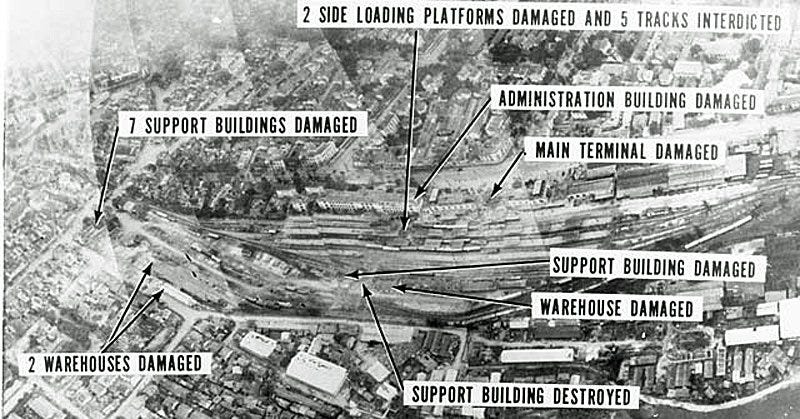
ON THE NIGHT of December 18, 1972, President Richard Nixon sent 129 B-52 bombers roaring over North Vietnam.  The idea was to break Hanoi’s will and force it to sign a peace treaty that would return our POWs and allow the U.S. to get out of the war.

Defense Dept (public domain)  

By the time “the Christmas bombing” of Hanoi and Haiphong ended 50 years ago on Sunday, some 1600 Vietnamese men, women and children had been killed—a number of them in a hospital—but the figure was probably much higher, observers said.  And that wasn’t the whole of it.  For several days before and after the week-long B-52 campaign, “the U.S. Air Force flew 729 night-time sorties over North Vietnam with devastating effect,” the BBC said. 

“It turned out to have been 57 consecutive nights of bombings—57 9/11s, if you will,” the popular historian Erik Larson, author of The Splendid and the Vile: A Saga of Churchill, Family, and Defiance During the Blitz, said in a 2020 interview. “57 consecutive nights of bombings— How does anybody cope with that?”

Ukrainians, blasted daily by Russian missiles and drones, are finding out.  Like the North Vietnamese, and the British suffering under nightly Nazi German air raids in the early months of 1940, the Ukrainians are discovering depths of courage and resilience they probably didn’t know they had, in no small measure because of their unexpectedly inspiring, defiant leader. Volodymyr Zelensky has been regularly compared to Winston Churchill since he refused to abandon Kyiv under Russian fire last February and stood up to Vladimir Putin.

“Against all odds and doom-and-gloom scenarios, Ukraine did not fall. Ukraine is alive and kicking,” Zelensky said in a rousing speech to Congress Wednesday night. “…Ukraine holds its lines and will never surrender.”  Expertly reading the room, the erstwhile comic actor compared his nation’s plight to the American GI’s who bent but did not break under the Nazis in the Battle of the Bulge. Indeed, his speech evoked nothing less than Churchill’s peroration to Britain in its darkest hour, that “we shall fight on the beaches, we shall fight on the landing grounds, we shall fight in the fields and in the streets, we shall fight in the hills; we shall never surrender.”

The terror bombings of London and Hanoi did not break their wills to win. It’s not breaking Kyiv. The same might be said of Tokyo’s denizens, 330,000 of whom died in conflagrations ignited by napalm jelly bombs dropped by American B-29s during the nights of March 9 and 10, 1944. Another year and a half would pass by, with air raids featuring napalm jelly-bombs on 65 more cities, the atomic bombs on Hiroshima and Nagasaki, and a looming invasion of its northern islands by Russia, before Japan surrendered. 

To be sure, the Japanese could be said to have been more mesmerized, rather than inspired by, their emperor’s supposed divinity to hold on. North Vietnam’s police-state leaders regularly invoked the memory of Ho chi Minh to harden the resolve of their people, not just to survive the American bombing but go south to fight. And the point still stands that they did hold on: No emperor or communist dictator could manufacture such sacrifices from an unwilling people. Iran’s mullahs may be coming to that conclusion as well. China may be thinking twice now about an invasion of Taiwan.

Putin’s bombing of Ukraine will not bring him victory. Bogged down in Ukraine’s northeast and south, his conscripted troops facing a highly motivated foe, better and better U.S. and NATO-supplied weaponry, and more and more internal sabotage and subversion, it’s Putin who may end up suing for peace. And that, finally, should bring an end to the myth that air power alone can deliver a victory when ground troops and a navy cannot.

SpyTalk is a reader-supported publication. To support our work, please consider becoming a paid subscriber.

Categories
Audio Sources - Full Text Articles

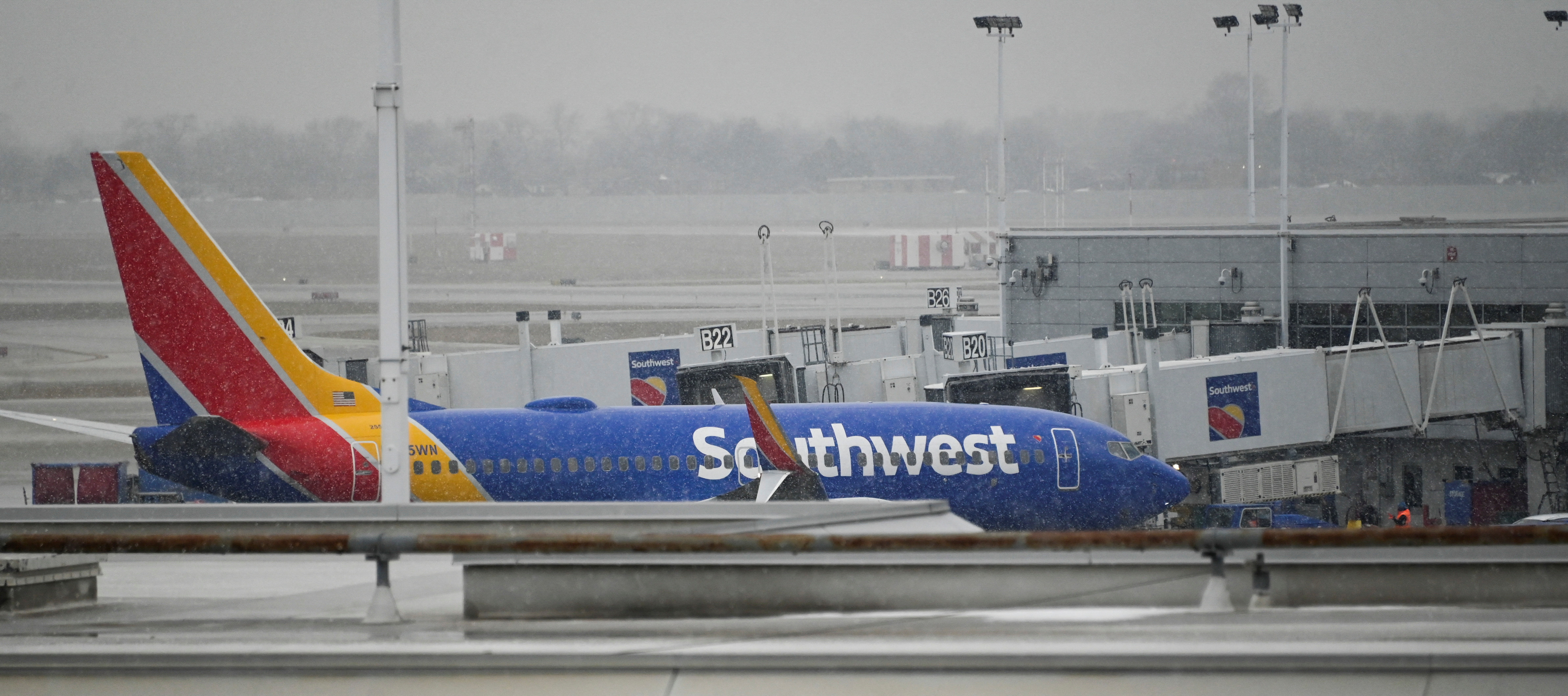
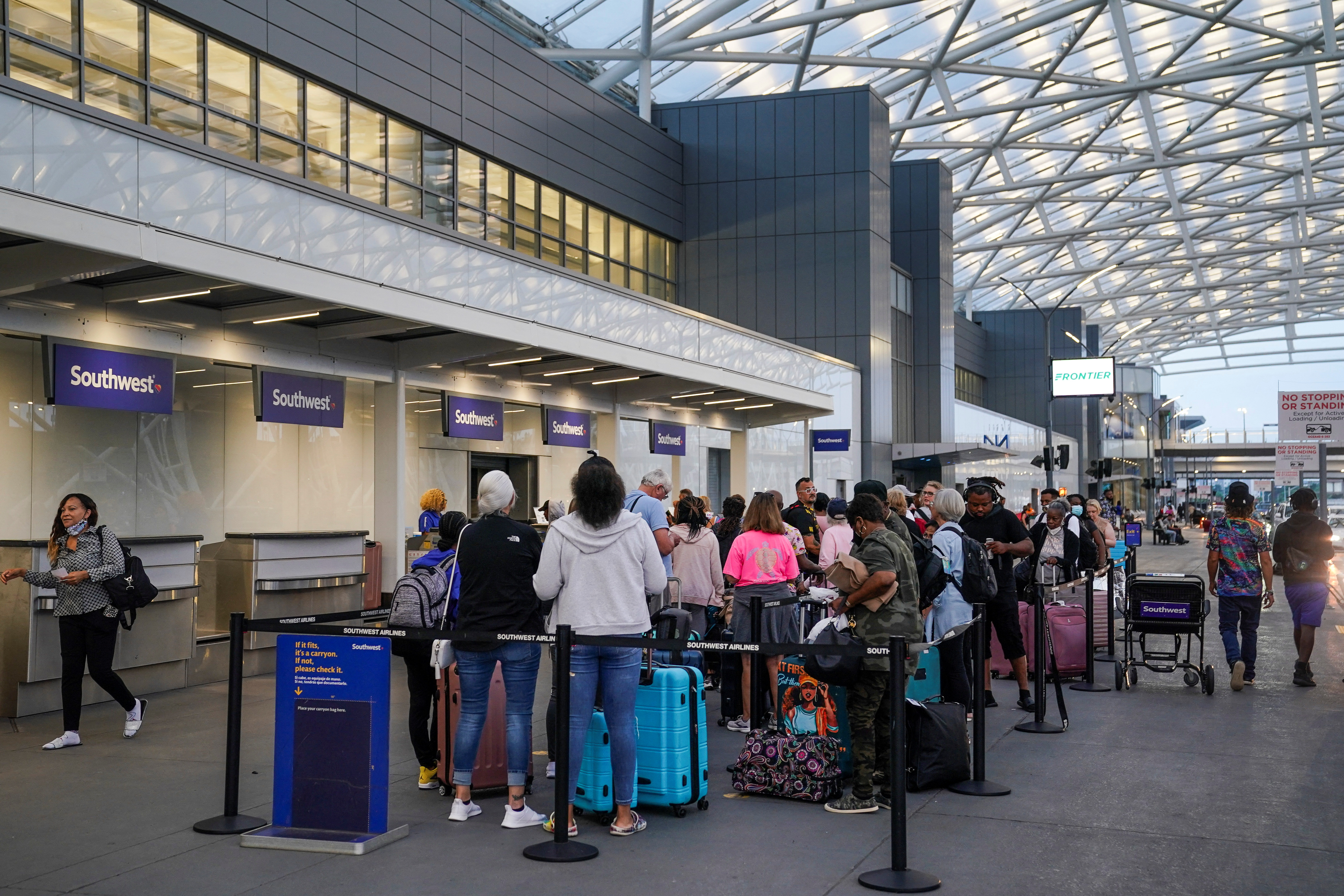
Airlines scrap 3,800 U.S. flights as winter storm disrupts holiday travel

2022-12-22T21:27:34Z

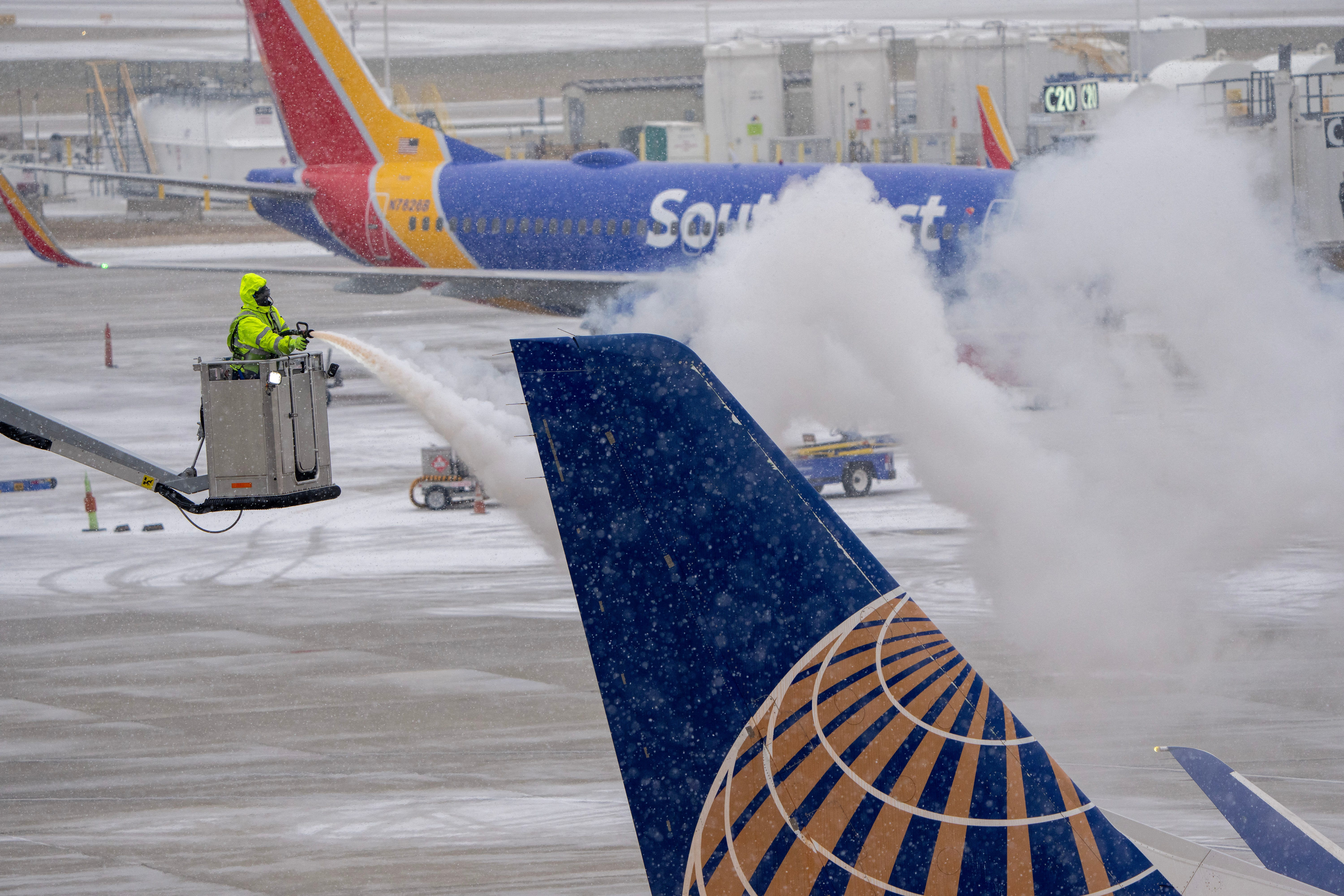
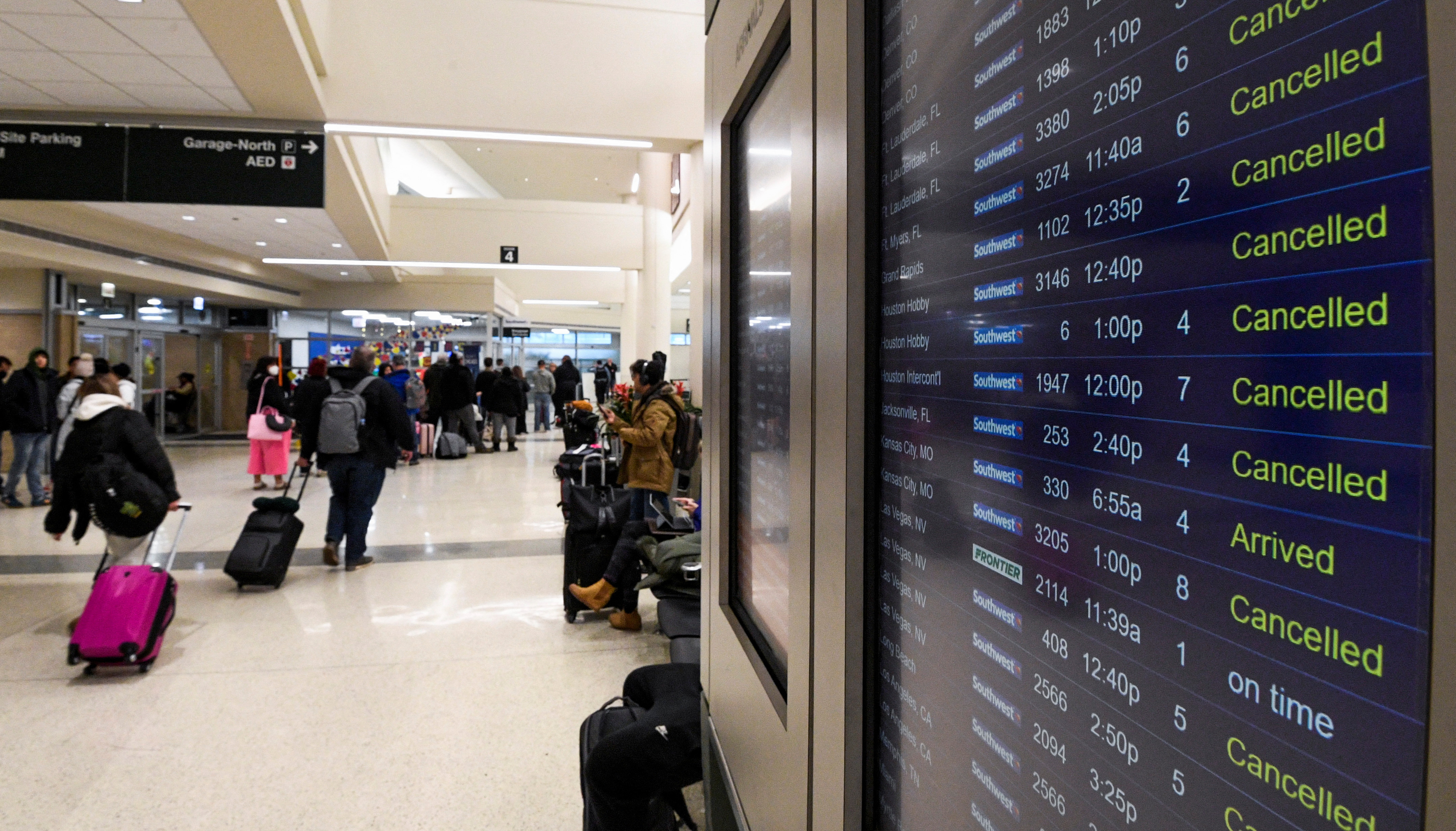
Airlines canceled more than 3,800 U.S. flights Thursday and Friday and U.S. passenger railroad Amtrak canceled some train service, disrupting holiday travel for thousands, as a powerful winter storm hit the United States.

The extreme weather coincided with the start of a holiday travel season that could be one of the busiest ever.

More than 2,180 U.S. flights had been canceled Thursday and another 1,600 flights for Friday were scrapped, according to flight tracking website FlightAware.

The Federal Aviation Administration said Thursday that the winter storm was bringing blizzard conditions to the Midwest with major travel disruptions expected in Chicago, Detroit and Minneapolis-St. Paul.

Delta Air Lines (DAL.N), which had cancelled 130 flights Thursday out of 4,400 and 84 on Friday per FlightAware, warned “additional cancelations will be necessary Friday as the storm continues to impact operations in Detroit and the Northeast.”

So far, 24% of departing flights at Chicago’s O’Hare International Airport and 37% of flights at Chicago Midway were canceled Thursday, while 26% of departing Denver flights had been canceled.

Amtrak said it was cancelling several dozen scheduled train trips in the Midwest through Christmas because of weather conditions including trains in Michigan, Illinois, Missouri and trains between New York and Chicago.

In the seven days ending Wednesday, the Transportation Security Administration said it screened nearly 16.2 million passengers, slightly below the 16.5 million screened in the same period in 2019.

Last year’s holiday period was marred by an outbreak of COVID-19 among staff that forced airlines to cancel thousands of flights.

U.S. airlines, including Delta, United Airlines (UAL.O) and American Airlines (AAL.O), said earlier this week they were waiving change fees and fare differences for passengers in a range of affected areas.

American Airlines said on Wednesday it was continuing to monitor the winter storm, which is expected to affect Midwest, Northeast and East Coast airports this week, and had canceled 130 flights as of 4 p.m. ET (1500 GMT).

Southwest Airlines (LUV.N) had canceled 833 flights.

Related Galleries:

Ice is removed from a United Airlines jet after a cold weather front moved into General Mitchell International Airport in Milwaukee, Wisconsin, U.S. December 22, 2022. Mark Hoffman/USA Today Network via REUTERS. NO RESALES. NO ARCHIVES MANDATORY CREDIT

Passengers arrive for their flight on Southwest Airlines as flight cancellations mount during a cold weather front as a weather phenomenon known as a bomb cyclone hits the Upper Midwest, at Midway International Airport in Chicago, Illinois, U.S. December 22, 2022. REUTERS/Matt Marton

A plane sits on the airfield as flight cancellations mount during a cold weather front as a weather phenomenon known as a bomb cyclone hits the Upper Midwest, at Midway International Airport in Chicago, Illinois, U.S., December 22, 2022. REUTERS/Matt Marton

A traveler sleeps as flight cancellations mount during a cold weather front as a weather phenomenon known as a bomb cyclone hits the Upper Midwest, at Midway International Airport in Chicago, Illinois, U.S., December 22, 2022. REUTERS/Matt Marton

Passengers line up to check bags before their flights at Hartsfield-Jackson Atlanta International Airport in Atlanta, Georgia, U.S. June 28, 2022. REUTERS/Elijah Nouvelage

A passenger looks at a flight departure board at Ronald Reagan Washington National Airport as a budding winter storm across the much of the country is likely to cause travel delays ahead of the Christmas holiday, in Arlington, Virginia, U.S., December 20, 2022. REUTERS/Kevin Lamarque
WP Radio
WP Radio
OFFLINE LIVE