Categories
Audio Sources - Full Text Articles

Cryptoverse: Bye-bye to the year that broke bitcoin

2022-12-20T06:14:54Z

A representation of bitcoin is seen in an illustration picture taken on June 23, 2017. REUTERS/Benoit Tessier

Bitcoin staggered into 2022. It ends the year slumped in an alleyway, robbed of its cocktail of cheap money and leveraged bets, shunned by the establishment.

The preeminent cryptocurrency has lost 60% of its value, while the wider crypto market has shrunk by $1.4 trillion, squashed by rising interest rates, vanishing risk appetite and corporate collapses including Sam Bankman-Fried’s FTX.

Crypto funds have seen net inflows of $498 million in 2022, versus $9.1 billion in 2021, according to data from digital asset manager CoinShares, reflecting how mainstream finance has steered clear of the market through its annus horribilis.

James Malcolm, head of FX strategy at UBS, said that in the first half of the year he had spent 70% of his time with clients talking crypto. By contrast, during 10 days in North America last month, from Montreal to Miami, “I spent less than 2% of my time discussing crypto”.

Even last year, before the decline began in November, cryptocurrencies were realistically seen as two or three years away from winning acceptance from mainstream institutional investors, Malcolm added.

“Now it’s completely in the far, distant future.”

It hasn’t been all bad for crypto, though: 2022 was also the year the Ethereum blockchain finally pulled off its “Merge” mega-upgrade, which moved it to a less energy-intensive “proof of stake” system in September.

“This event was a technological feat and one of the lone positive events in a year that otherwise has been rather dark for crypto,” said Anthony Georgiades, co-founder of the Pastel Network blockchain.

“These upgrades will make the Ethereum ecosystem far easier to use for people all around the world. Because of all this progress, it’s hard not to be a crypto optimist going into 2023.”

Ben McMillan, chief investment officer at IDX Digital Assets, said the rising popularity of blockchain-based tools including decentralized exchanges and decentralized finance had also been an important development this year.

“So that is very bullish for the ecosystem and something to keep an eye on long-term,” he added. “We could see bigger allocations to digital assets once risk appetite resumes in 2023.”

Bitcoin hit a record high of $69,000 in November 2021, with the crypto market touching $3 trillion, buoyed by fiscal and monetary stimulus from countries around the world trying to ward off the economic damage from COVID lockdowns.

But as societies reopened, surging inflation forced central banks to tighten rates and led to investors fleeing higher-risk assets – tech stocks and cryptocurrencies.

Bitcoin, long-heralded as a handy store of value in times of inflation because of its limited supply, flopped during the test, with investors turning to tried-and-tested havens such as the dollar as rates went up. It fell by about a third in January, outpacing an 8% fall for U.S. stocks.

“2022 was a new environment for digital assets. They’ve never been around in a recession or a rising-rates environment,” said Katie Talati, director of research at digital asset firm Arca.

As investors pulled money from crypto, major projects came under strain. The first to crack was terraUSD, supposedly a “stablecoin”, and its sister luna. The coins sank in value in May, with investors globally losing an estimated $42 billion..

The shockwaves reverberated through the market: U.S. crypto lender Celsius froze customer assets in June and revealed a $1.2 billion hole as it declared bankruptcy. Singapore-based crypto hedge fund Three Arrows Capital went bust the same month.

Bitcoin and other tokens took a hammering, slumping by over half in just 49 days from the end of May. On a single day in June, bitcoin fell over 15%, its worst day since March 2020 when COVID chaos roiled financial markets.

But the biggest crypto shock was yet to come.

In November, major exchange FTX crashed into sudden bankruptcy. Bitcoin fell by a quarter in less than four days as Bankman-Fried scrambled for funds to bail his exchange out.

The cryptocurrency is now hovering around $16,000. All in all, 2022 has pretty much been a crypto calamity.

Or, as economist Noelle Acheson puts it, “the year in which the leverage-inflated bubble popped, revealing the structural weaknesses of an industry that had grown too big, too fast”.

Categories
Audio Sources - Full Text Articles

U.S. sends B-52 bombers, F-22 fighters for joint drills with South Korea -News1

2022-12-20T05:59:06Z

The United States deployed B-52 bombers and F-22 fighters for joint drills with South Korea on Tuesday, the News1 agency reported.

Categories
Audio Sources - Full Text Articles

The world fears a new China COVID wave, ponders how to help Xi

2022-12-20T06:11:53Z

Officials and global health experts outside China are anxiously watching a COVID-19 surge there, worried a nation of 1.4 billion people is inadequately vaccinated and may not have the healthcare tools to treat a wave of illness expected to kill more than one million people through 2023.

Some U.S. and European officials are struggling to figure out how, or if, they can help mitigate a crisis they fear will hurt the global economy, further constrain corporate supply chains and spawn new coronavirus variants of concern.

“We have made that point that we are prepared to help in any way they might find acceptable,” U.S. National Security Council spokesman John Kirby said on Wednesday.

Advance preparation of the healthcare system, accurate and shared data collection, and open communication are all important to battling mass coronavirus infections, say health experts from countries outside China who struggled through their own COVID waves. Many of those elements appear to be lacking in China, they say.

President Xi Jinping has long insisted that the country’s one party-system is best suited to handle the disease, and that Chinese vaccines are superior to western counterparts, despite some evidence to the contrary.

Democratic governments find themselves in a difficult spot diplomatically, wanting to help stem a burgeoning crisis with global and domestic health and economic implications in a way that the Chinese government might be willing to accept.

“China’s vaccine nationalism is deeply tied to Xi’s pride, and accepting Western assistance would not only embarrass Xi, it would also pierce his oft-propagandized narrative that China’s governance model is superior,” said Craig Singleton, deputy director of the China program at the Foundation for Defense of Democracies.

European and U.S. officials are conducting careful behind-the scenes talks with Chinese counterparts, while issuing deliberately worded public statements intended to make clear that the ball is in Beijing’s court.

Washington and Beijing officials discussed how to handle COVID earlier this month in talks in China to prepare for Secretary of State Antony Blinken’s visit early next year, U.S. national security adviser Jake Sullivan said last week. He refused to give details, citing “sensitive diplomatic channels.”

One area of potential Western assistance involves whether China would accept BioNTech’s (22UAy.DE) updated mRNA vaccine designed to target currently circulating Omicron-related virus variants, which many experts believe is more effective than China’s shots.

German chancellor Olaf Scholz discussed the issue in a visit to Beijing last month along with BioNTech Chief Executive Ugur Sahin.

However, the United States and other Western countries are not openly encouraging China to accept Western-made mRNA vaccines, White House coronavirus response coordinator Dr. Ashish Jha told reporters on Thursday. “We stand ready to help any country in the world with vaccines, treatments, anything else that we can be helpful with,” he said.

Beijing has said “institutional advantages” will help it get through the epidemic without foreign assistance, and China’s estimated COVID death toll is still lower than the 1.1 million U.S. deaths and Europe’s 2.1 million.

But U.S. drugmaker Pfizer (PFE.N) last week reached an agreement to export its COVID antiviral treatment Paxlovid to China through a local company, saying it was working with all stakeholders to secure adequate supply.

“Whether China asks or not, as a citizen of Beijing, I welcome the attitude of the US government,” Hu Xijin, former editor of party tabloid the Global Times, said on Twitter, adding that he hopes the U.S. government will push Pfizer to lower Paxlovid’s price.

The rivalry between the United States and China, the world’s two largest economies, has intensified in recent months, with the Biden administration trying to kneecap China’s semiconductor sector and elbow Beijing out politically in Asia and Africa.

President Joe Biden has described the state of global politics as an inflection point between democracy and autocracies.

But the two countries remain deeply intertwined, with China the largest U.S. trade partner and top customer for many American companies.

“We want China to get COVID right,” Blinken said earlier this month. “It’s in the interests of the Chinese people first and foremost, but it’s also in the interests of people around the world.”

China-exposed luxury firms such as France-based LVMH (LVMH.PA) and industrial indices have traded down recently on COVID concerns, and Federal Reserve Chair Jerome Powell signaled his worries last week.

“China faces a very challenging system in reopening,” Powell said, adding that its manufacturing, exporting and supply chain remain critical. “It’s a risky situation.”

Health experts outside China despair that it may be too late to stave off a tragedy.

“What do you do for a Category 5 hurricane when it’s an hour and a half offshore? If you haven’t done it by now, it’s too late,” said Michael Osterholm, director of the Center for Infectious Disease Research and Policy at the University of Minnesota.

“This pandemic is just going to blow through (China) in the next weeks,” he said. “It’s unfortunate they didn’t think about this six or 10 months ago. They could have bought themselves time to be in a better position.”

More than 160 million people in China are believed to have diabetes, and there are eight million unvaccinated Chinese over age 80, Yanzhong Huang, a senior fellow for global health at the Council on Foreign Relations said. Those are risk factors for severe COVID.

South Korea, which has one of the lowest COVID mortality rates of any large country, managed the pandemic by vaccinating as many people as possible, shoring up hospitals before reopening, and communicating with the public about the disease, said Dr. Jerome Kim, director general of the Seoul-based International Vaccine Institute.

Officials set up health centers and apps that told people with symptoms how to avoid infecting others, he said.

“Is that set up in China now? We don’t know.”

Related Galleries:

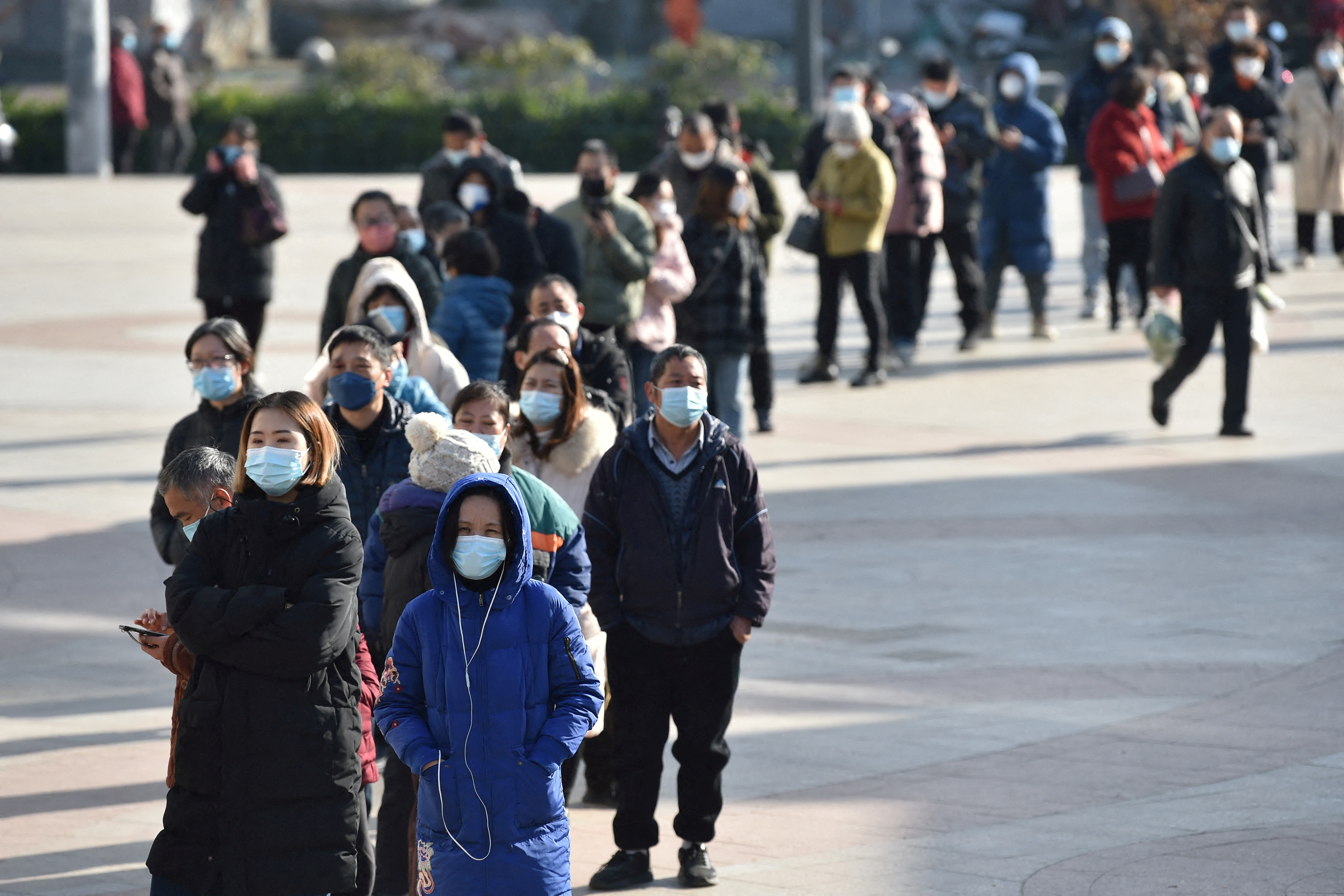
People line up at a makeshift fever clinic set up inside a stadium, amid the coronavirus disease (COVID-19) outbreak in Beijing, China December 19, 2022. REUTERS/Alessandro Diviggiano/File Photo

Residents line up outside a pharmacy to buy antigen testing kits for the coronavirus disease (COVID-19), in Nanjing, Jiangsu province, China December 15, 2022. China Daily via REUTERS ATTENTION EDITORS – THIS IMAGE WAS PROVIDED BY A THIRD PARTY. CHINA OUT./File Photo
Categories
Audio Sources - Full Text Articles

Asian shares slide as yen spikes higher on BOJ surprise policy shift

2022-12-20T06:17:35Z

The yen surged and Asian shares fell sharply on Tuesday after Japan’s central bank unexpectedly tweaked its bond yield controls – a move that will allow long-term interest rates to rise more.

While the Bank of Japan kept broad policy settings unchanged it widened the allowable band for long-term yields to 50 basis points either side of that, from 25 basis points previously.

That triggered an immediate spike in the yen with the greenback dropping 2.71% after the decision to 133.16 , a four-month low.

In turn, the Nikkei benchmark index (.N225) slumped 2.71% after trading in positive territory earlier in the day.

MSCI’s broadest index of Asia-Pacific shares outside Japan (.MIAPJ0000PUS) fell 1.6%.

The BOJ decision was taken as a signal that the forces which drove the yen to three-decade lows this year may be beginning to turn.

“The move came earlier than I had expected but a step towards the normalisation process of policy in Japan,” Kerry Craig, JP Morgan Asset Management’s global markets strategist, told Reuters.

“The market implications are most prevalent in the forex markets given the divergence between U.S. and Japanese policy settings.

“While there is still a wide gap, the hint that the BOJ is moving incrementally away from ultraloose policy should be yen positive in the near term.”

Elsewhere in Asia, Australian shares (.AXJO) extended earlier losses to be off by 1.54% in afternoon trade.

Hong Kong’s Hang Seng Index (.HSI) was down 1.9% while China’s CSI300 Index (.CSI300) was off 1.62%.

In early European futures trading, the pan-region Euro Stoxx 50 futures were down 1.23% at 3,772, German DAX futures were down 1.32% at 13,832 and FTSE futures were down 0.83% at 7,306.5.

U.S. stock futures, the S&P 500 e-minis , were down 0.85% at 3,812.8.

In Asian trading, the yield on benchmark 10-year Treasury notes rose to 3.6825% compared with its U.S. close of 3.583% on Monday.

The two-year yield , which rises with traders’ expectations of higher Fed fund rates, was at 4.2848% compared to the US close of 4.262%.

China’s reopening to the rest of the world from nearly three years of COVID lockdowns continued to be a major concern for investors.

Credit Suisse on Monday upgraded its outlook from neutral to outperform for China’s equities markets in the year ahead.

“The whole narrative of China has changed, it’s gone from COVID zero that was putting the economy under pressure and there’s now an intention to move towards a reopening,” Suresh Tantia, Credit Suisse’s senior investment strategist.

“And as that happens, we will see an recovery in China’s economy and markets.”

U.S. crude ticked up 0.41% to $75.5 a barrel. Brent crude rose to $79.87 per barrel.

Spot gold was slightly higher at $1,790.83 per ounce.

Related Galleries:

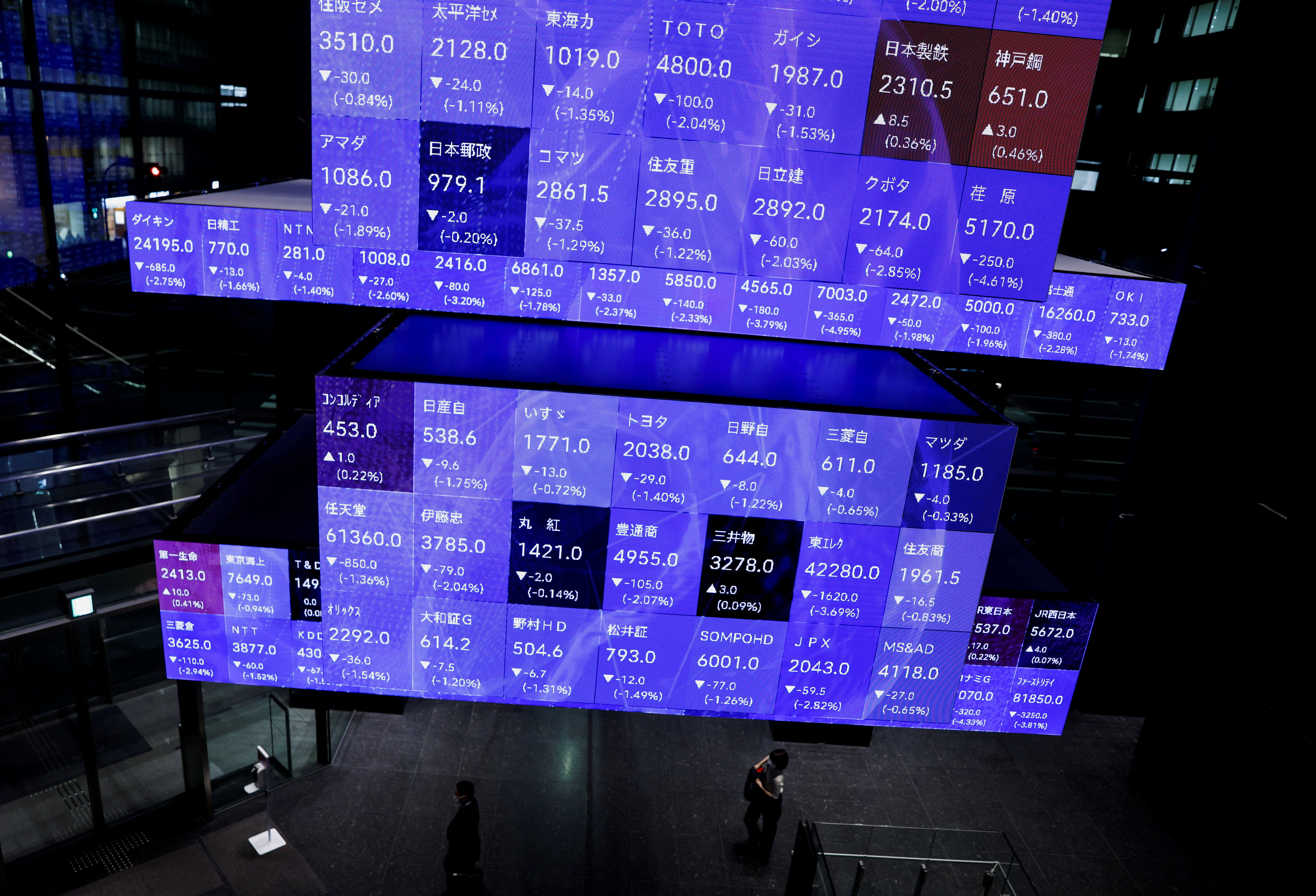
Visitors walk past Japan’s Nikkei stock prices quotation board inside a conference hall in Tokyo, Japan September 14, 2022. REUTERS/Issei Kato


Pedestrians wait to cross a road at a junction near a giant display of stock indexes in Shanghai, China August 3, 2022. REUTERS/Aly Song

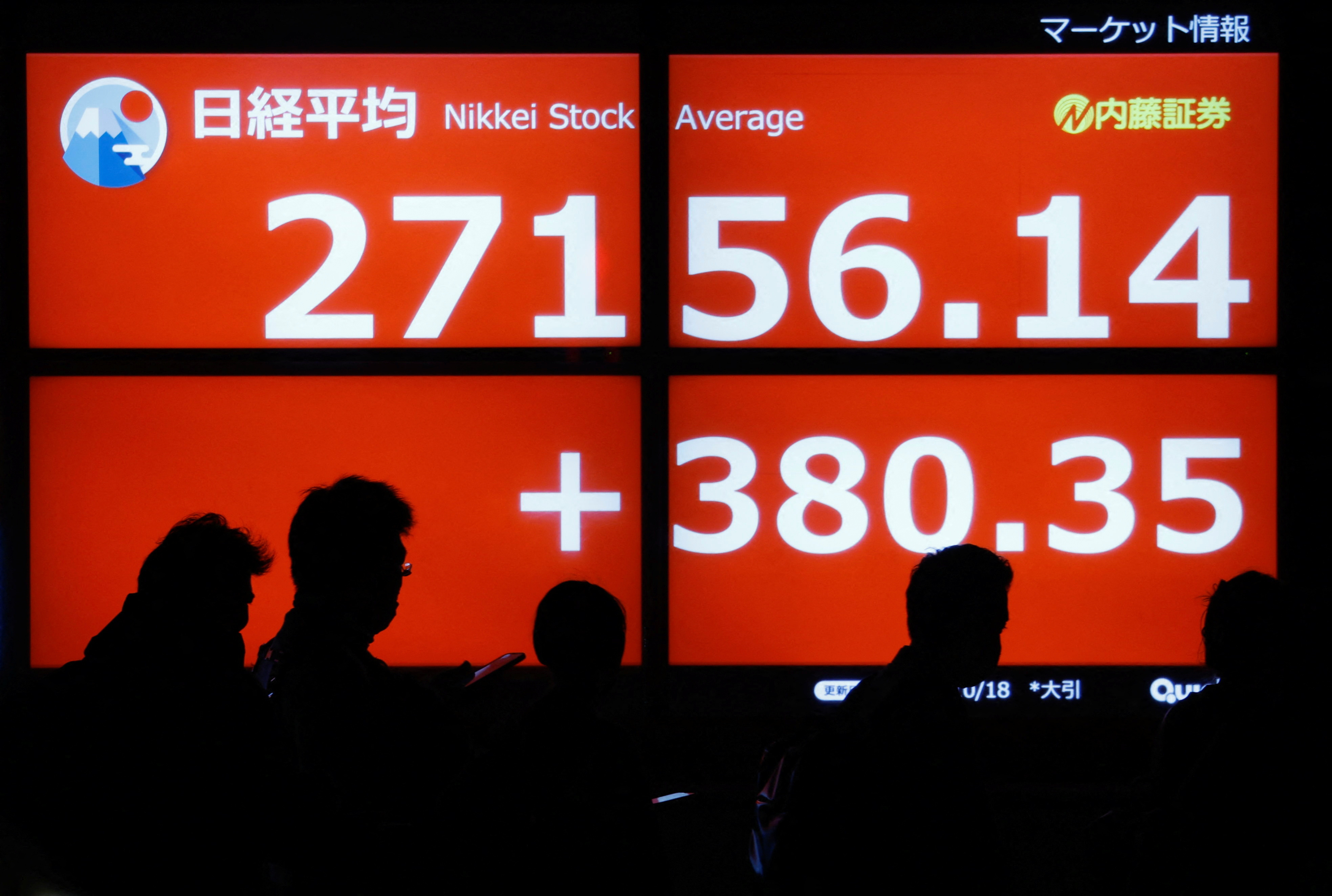
Passersby are silhouetted as they walk past in front of an electric monitor displaying the Japan’s Nikkei share average outside a brokerage in Tokyo, Japan October 18, 2022 REUTERS/Issei Kato
Categories
Audio Sources - Full Text Articles

How Innovation Can Build the Future Our Grandchildren Deserve

I’ve been saying for years that the world is getting better. I’ll point out that, for example, the number of young children who die before their fifth birthday has fallen by more than half in just two decades—from 10 million in 2000 to just over 4 million today.

But current events are making it harder to argue that the future will be better than the past. Russia’s war on Ukraine is inflicting terrible suffering in Eastern Europe and driving up food and energy prices around the world. The COVID-19 pandemic caused millions of deaths and severely hampered efforts to immunize children. Economic growth is slowing. And climate change is leading to more frequent extreme weather.

[time-brightcove not-tgx=”true”]

These setbacks are causing the most pain for people who were already the worst off. It would compound the tragedy if nations stopped doing the things that have worked for the past two decades—including being generous with foreign aid. The world should continue to do more to help the poorest.

The good news is that this is eminently achievable. We can continue to reduce health inequity while dealing with war, the economy, the pandemic, and climate change—thanks in part to innovations in global health that will allow the world’s efforts to have more impact than ever.

Some of these innovations are already being deployed, like a new polio vaccine that will move us closer to eradication despite recent setbacks. Others are being tested now with the potential to be used more widely soon, like AI-powered ultrasounds that could help save mothers and their babies.

Although the number of children who die before age 5 has gone down dramatically, the number of babies of who die in the first 30 days of life—what’s known as the neonatal period—is not dropping nearly as fast. Almost 1.9 million newborns died in 2019, only a third fewer than in 2000.

The causes of neonatal deaths are complicated. To make a dent in them, health workers need to deal with underlying causes as early in the child’s life as possible, or even before they’re born. The first step is to identify women with the greatest risk of complications during pregnancy. In rich countries like the United States, we do this with frequent checkups, lab tests, and an ultrasound.

But in low-income settings, ultrasound machines simply aren’t practical. They’re bulky, expensive, and require special training to use. That’s why the foundation and several partners are funding work to vastly simplify the process. Instead of wheeling in a big machine on a cart, you just plug a probe into a mobile phone or tablet. You swipe it across the mom’s belly a few times, and then up and down. Software uses artificial intelligence to read the images and provide all the information that a trained human would provide.

This super-promising approach is being tested in Kenya and South Africa to see whether using it at scale makes a measurable difference for moms and babies. If it does, we’ll bring in more partners to reduce the cost so that more countries can afford it.

Some of the innovations I’m most excited about are a lot further away, but they have the potential to save and improve millions of lives.

Based on recent research, I think there’s a good chance a cure for HIV will be available in 10 to 15 years. The key is breakthroughs in gene therapy, which involves making edits to small portions of a person’s genetic makeup. These edited genes can’t be passed on to the person’s children, but they can fix genetic mutations that cause the patient debilitating and deadly medical problems.

Scientists are working on various ways to accomplish this. (One involves modifying the surface of the cells that HIV likes to invade, making it much harder for the virus to get inside them.) There are still years of work ahead before any of these approaches are proven safe and effective, and the earliest versions might be short-lived and require additional doses to keep the HIV from coming back.

But the potential impact is enormous. Today, roughly 38 million people around the world are living with HIV, and another 1.5 million become newly infected each year. To survive, they have to take antiretroviral drugs every day for the rest of their lives. An ideal HIV cure will free all of them from taking these drugs and save the world millions of dollars a year in treatment costs. It will also mean that millions of people never have to worry about getting HIV in the future.

While there is a lot of bad news these days, I’m inspired by the breakthroughs amazing scientists around the world are making every day—whether they are a lifesaving new use for CRISPR or a groundbreaking new way to produce clean energy. Each one represents a new opportunity to help people, but it’s important to remember that none of these breakthroughs happened overnight. If we want to make things better for the next generation, we need to invest in a better future today.

The opportunities to reduce inequity, even at this tumultuous moment, are out there. Success is a long-term prospect, and it starts with actions we take now. 2023 is the year we should make the most of these opportunities.

This essay is adapted from Gates’ The Year Ahead 2023

Categories
Audio Sources - Full Text Articles

North Korea warns Japan over its “very dangerous“ military buildup

2022-12-20T05:31:12Z

North Korea on Tuesday condemned a Japanese military buildup outlined in a new security strategy, warning that Japan would soon see the consequences of its dangerous decision, while also hinting at a technical advance in its long-range missile system.

Japan last week announced its biggest military build-up since World War Two as tension with China and a hostile North Korea and Russia’s Ukraine invasion stoke fears of war.

North Korea’s foreign ministry said Japan had effectively formalised “the capability for preemptive attack” with its new strategy that would bring a fundamental change to East Asia’s security environment.

“The DPRK makes it clear once again that it has the right to take a resolute and decisive military step to defend its national sovereignty, territorial integrity and fundamental interests in the light of the complexity of the regional security environment caused by Japan’s action,” the official said in a statement carried by the North’s KCNA news agency.

The spokesman referred to North Korea by the initials of its official name, the Democratic People’s Republic of Korea.

Japan would realise “it made a wrong and very dangerous” decision, the spokesperson said, referring to a “shuddering shiver to be felt soon”.

North Korea has tested an unprecedented number of missiles this year, including an ICBM designed to reach the U.S. mainland, in defiance of international sanctions.

Several of the North Korean missiles have flown over Japan, or landed in waters near it, drawing condemnation from the staunch U.S. ally.

The North Korean spokesperson also criticised the United States for “conniving and instigating Japan’s rearmament and reinvasion scheme” saying the United States had no right to question North Korea’s defences.

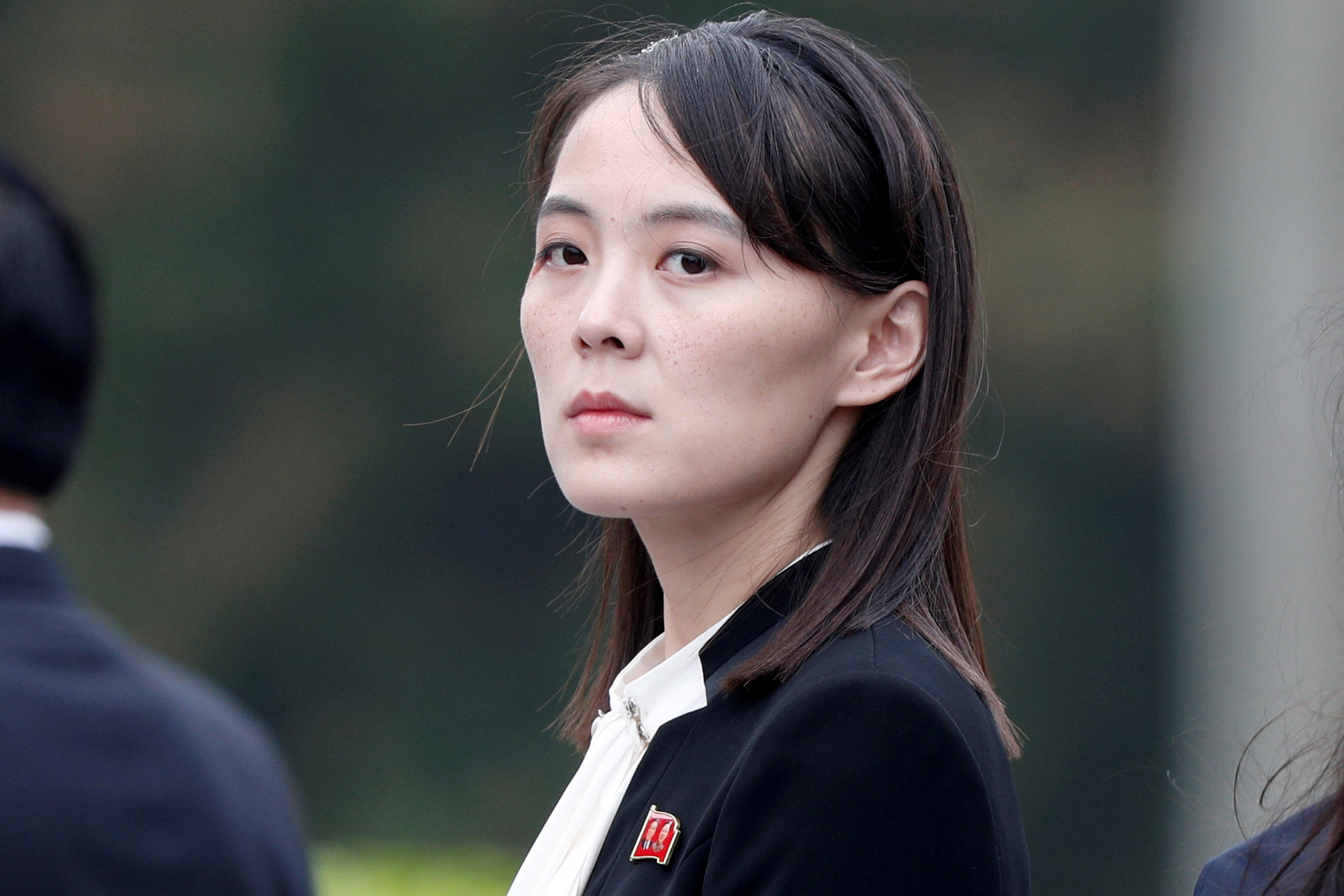
In a separate statement, Kim Yo Jong, the powerful sister of North Korean leader Kim Jong Un, hinted at a technological advance in its ICBM system, and denounced questions over what North Korea said was its bid to develop a spy satellite.

North Korea fired two medium-range ballistic missiles off its east coast on Sunday in what it called an “important” test for the development of a reconnaissance satellite that it hopes to complete by April.

Experts have raised doubts over the level of North Korea’s satellite technology but Kim Yo Jong derided the questions and suggested that North Korea’s technical abilities included new ICBM developments.

North Korea has test-fired its ICBMs at a steep angle and analysts say a normal launch angle requires more sophisticated technology to resist heat generated during re-entry into the atmosphere.

“I can clear up their doubt about it,” Kim Yo Jong said. “They will immediately recognise it in case we launch an ICBM in the way of a real angle firing straight off.”

Kim Yo Jong dismissed any threat of new sanctions.

“At this time when our right to existence and development is being threatened, how can we stop our advance for fear of sanctions that we have experienced abominably, not for the first time,” she said.

Related Galleries:

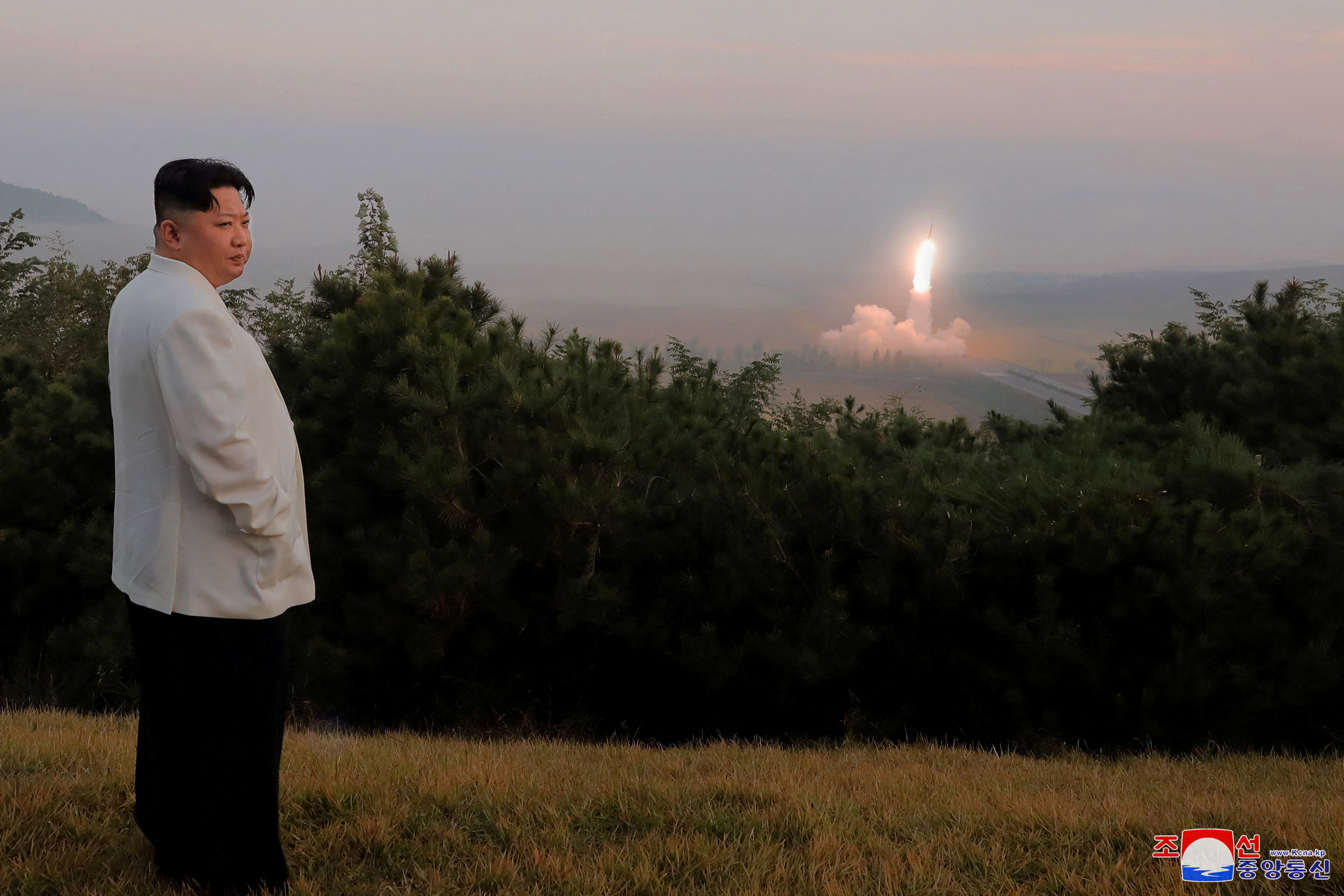
North Korea’s leader Kim Jong Un oversees a missile launch at an undisclosed location in North Korea, in this undated photo released on October 10, 2022 by North Korea’s Korean Central News Agency (KCNA). KCNA via REUTERS

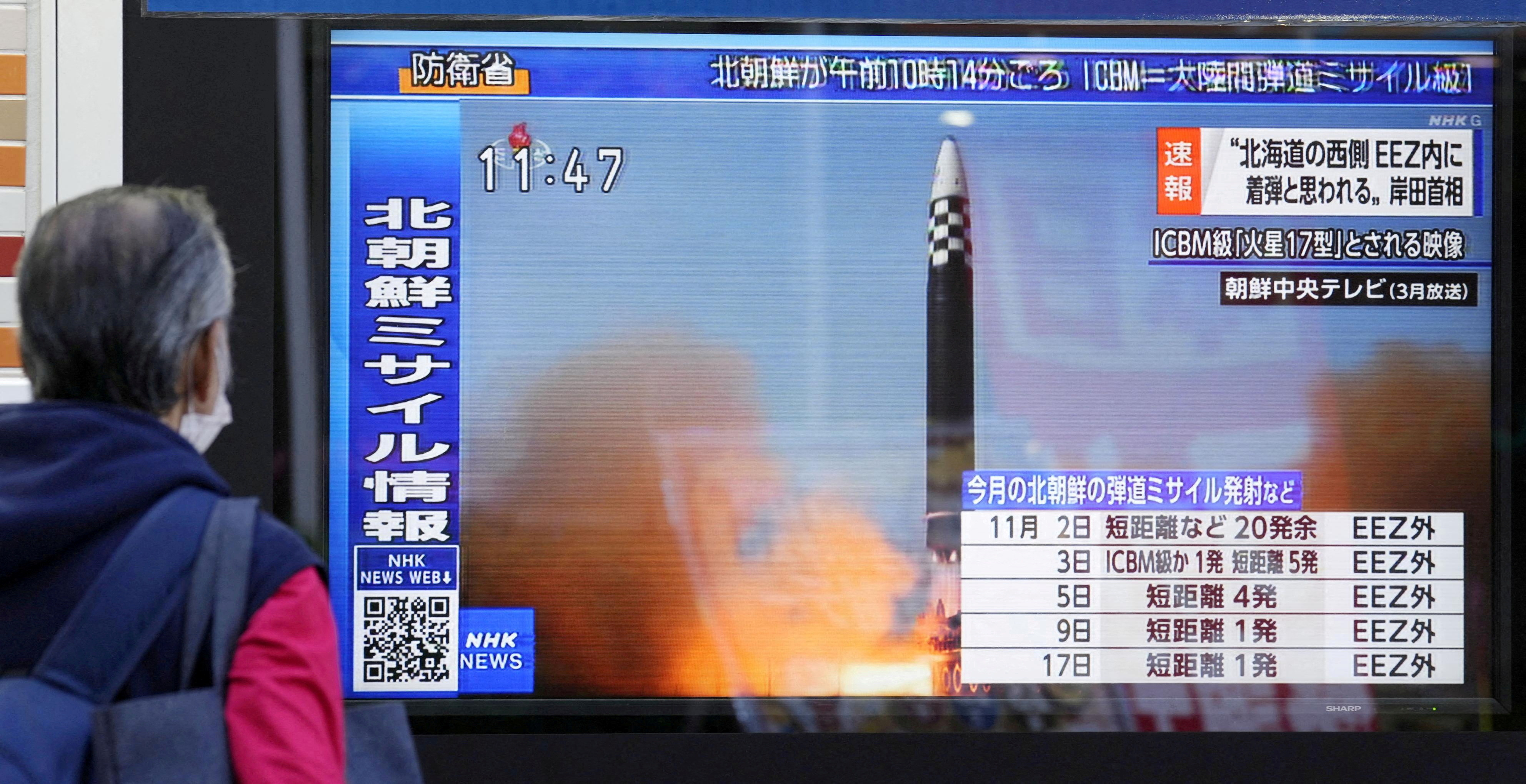
A passerby looks at a television screen in Tokyo, Japan showing a news report about North Korea firing a ballistic, November 18, 2022. Mandatory credit Kyodo via REUTERS

Kim Yo Jong, sister of North Korea’s leader Kim Jong Un attends wreath-laying ceremony at Ho Chi Minh Mausoleum in Hanoi, Vietnam March 2, 2019. REUTERS/Jorge Silva/Pool/File Photo
Categories
Audio Sources - Full Text Articles

Trump’s tax returns to be discussed by congressional panel

WASHINGTON (AP) — The Democratic-controlled House Ways and Means Committee is expected to vote Tuesday on whether to publicly release years of Donald Trump ’s tax returns, which the former president has long tried to shield.

Committee Chairman Richard Neal, D-Mass., has kept a close hold on the panel’s actions, including whether the panel will meet in a public or private session. And if lawmakers move forward with plans to release the returns, it’s unclear how quickly that would happen.

But after a yearslong battle that ultimately resulted in the Supreme Court clearing the way last month for the Treasury Department to send the returns to Congress, Democrats are under pressure to act aggressively. The committee received six years of tax returns for Trump and some of his businesses. And with just two weeks left until Republicans formally take control of the House, Tuesday’s meeting could be the last opportunity for Democrats to disclose whatever information they have gleaned.

Trump has long had a complicated relationship with his personal income taxes.

As a presidential candidate in 2016, he broke decades of precedent by refusing to release his tax forms to the public. He bragged during a presidential debate that year that he was “smart” because he paid no federal taxes and later claimed he wouldn’t personally benefit from the 2017 tax cuts he signed into law that favored people with extreme wealth, asking Americans to simply take him at his word.

Tax records would have been a useful metric for judging his success in business. The image of a savvy businessman was key to a political brand honed during his years as a tabloid magnet and star of “The Apprentice” television show. They also could reveal any financial obligations — including foreign debts — that could influence how he governed.

But Americans were largely in the dark about Trump’s relationship with the IRS until October 2018 and September 2020, when The New York Times published two separate series based on leaked tax records.

The Pulitzer Prize-winning 2018 articles showed how Trump received a modern equivalent of at least $413 million from his father’s real estate holdings, with much of that money coming from what the Times called “tax dodges” in the 1990s. Trump sued the Times and his niece, Mary Trump, in 2021 for providing the records to the newspaper. In November, Mary Trump asked an appeals court to overturn a judge’s decision to reject her claims that her uncle and two of his siblings defrauded her of millions of dollars in a 2001 family settlement.

The 2020 articles showed that Trump paid just $750 in federal income taxes in 2017 and 2018. Trump paid no income taxes at all in 10 of the past 15 years because he generally lost more money than he made.

The articles exposed deep inequities in the U.S. tax code as Trump, a reputed multi-billionaire, paid little in federal income taxes. IRS figures indicate that the average tax filer paid roughly $12,200 in 2017, about 16 times more than the former president paid.

Details about Trump’s income from foreign operations and debt levels were also contained in the tax filings, which the former president derided as “fake news.”

At the time of the 2020 articles, Neal said he saw an ethical problem in Trump overseeing a federal agency that he has also battled with legal filings.

“Now, Donald Trump is the boss of the agency he considers an adversary,” Neal said in 2020. “It is essential that the IRS’s presidential audit program remain free of interference.”

The Manhattan district attorney’s office also obtained copies of Trump’s tax records in February 2021 after after a protracted legal fight that included two trips to the Supreme Court.

The office, then led by District Attorney Cyrus Vance Jr., had subpoenaed Trump’s accounting firm in 2019, seeking access to eight years of Trump’s tax returns and related documents.

The DA’s office issued the subpoena after Trump’s former personal lawyer Michael Cohen told Congress that Trump had misled tax officials, insurers and business associates about the value of his assets. Those allegations are the subject of a fraud lawsuit that New York Attorney General Letitia James filed against Trump and his company in September.

Trump’s longtime accountant, Donald Bender, testified at the Trump Organization’s recent criminal trial that Trump reported losses on his tax returns every year for a decade, including nearly $700 million in 2009 and $200 million in 2010.

Bender, a partner at Mazars USA LLP who spent years preparing Trump’s personal tax returns, said Trump’s reported losses from 2009 to 2018 included net operating losses from some of the many businesses he owns through his Trump Organization.

The Trump Organization was convicted earlier this month on tax fraud charges for helping some executives dodge taxes on company-paid perks such as apartments and luxury cars.

The current Manhattan district attorney, Alvin Bragg, told The Associated Press in an interview last week that his office’s investigation into Trump and his businesses continues.

“We’re going to follow the facts and continue to do our job,” Bragg said.

Trump, who refused to release his returns during his 2016 presidential campaign and his four years in the White House while claiming that he was under IRS audit, has argued there is little to be gleaned from the tax returns even as he has fought to keep them private.

“You can’t learn much from tax returns, but it is illegal to release them if they are not yours!” he complained on his social media network last weekend.

Republicans, meanwhile, have railed against the potential release, arguing that it would set a dangerous precedent.

Rep. Kevin Brady of Texas, the Ways and Means Committee’s Republican leader, accused Democrats on the committee of “unleashing a dangerous new political weapon that reaches far beyond President Trump, and jeopardizes the privacy of every American.”

“Going forward, partisans in Congress have nearly unlimited power to target political enemies by obtaining and making public their private tax returns to embarrass and destroy them,” Brady said in a statement. “We urge Democrats, in their rush to target former President Trump, not to unleash this dangerous new political weapon on the American people.”

___

Kinnard reported from Columbia, South Carolina. Associated Press writers Michael R. Sisak and Jill Colvin in New York contributed this report.

Categories
Audio Sources - Full Text Articles

Mitch McConnell says the ‘entire nation knows’ who is responsible for the Capitol riot after the January 6 panel asked the DOJ to prosecute Donald Trump

Senate Minority Leader Mitch McConnell and former President Donald Trump.Senate Minority Leader Mitch McConnell and former President Donald Trump.

Kevin Dietsch and Joe Raedle/Getty Images

  • Mitch McConnell hit out at Donald Trump after the latter was referred to the DOJ for prosecution.
  • In a statement, McConnell said that “entire nation knows who is responsible” for the Capitol riot, without directly naming Trump.
  • The January 6 panel on Monday asked the DOJ to prosecute Trump on four charges linked to the riot.

Senate Minority Leader Mitch McConnell on Monday zinged former President Donald Trump after the latter was referred to the Justice Department for prosecution over the January 6 Capitol riot. 

“The entire nation knows who is responsible for that day. Beyond that, I don’t have any immediate observations,” McConnell said in a statement to CNN, the news outlet’s Manu Raju tweeted Monday.  

McConnell’s statement came after the House panel investigating the Capitol riot on Monday asked the Justice Department to prosecute Trump on four charges. These included: conspiracy to defraud the US, conspiracy to make false statements obstruction of an official proceeding, and inciting an insurrection.

While this referral does not mean Trump will be prosecuted, it now hands the matter over to the Justice Department, which can decide if it wants to charge Trump. 

McConnell’s statement comes close to two years after he blamed Trump for the riot during a February 2021 Senate speech. During that speech, McConnell rebuked the former president for his “disgraceful dereliction of duty” — despite voting that same day to acquit Trump in his second impeachment trial. 

“There is no question — none — that President Trump is practically and morally responsible for provoking the events of the day,” McConnell said of Trump at the time. “The people that stormed this building believed they were acting on the wishes and instructions of their president.”

“A mob was assaulting a Capitol in his name. These criminals were carrying his banners, hanging his flags, and screaming their loyalty to him,” McConnell added. 

McConnell has had a long-standing feud with Trump

McConnell’s statement on Monday marks the latest salvo in a long-standing feud between him and the former president. 

In November 2021, Trump slammed McConnell and other Republicans who backed President Joe Biden’s infrastructure bill, calling them “RINOs,” an acronym for Republicans In Name Only. That same month, he also gave McConnell the moniker “Old Crow” and accused him of “jeopardizing” other Republican senators’ reelection chances.

In February, McConnell shrugged off rumors that Trump might succeed in an attempt to oust him as the Senate GOP leader after the midterms. That was after Trump in January called McConnell a “loser” for defending GOP Sen. Mike Rounds of South Dakota. Rounds had contradicted Trump’s voter fraud claims.

And in October, McConnell and his wife, Trump-era Transportation Secretary Elaine Chao, became the target of Trump’s ire again. This was after McConnell voiced support in September for changing the way Congress counts electoral votes, an effort aimed at preventing a Trump-style coup.

In a rant on Truth Social, Trump escalated his acrimonious feud with the Kentucky senator, and accused McConnell of opposing him because he has a “death wish.” Trump also leveled a racially charged insult at Chao, calling her McConnell’s “China loving wife, Coco Chow.”

McConnell has largely stayed out of the mud-slinging — though in May, he did troll Trump by giving out bottles of the Kentucky-made Old Crow bourbon to GOP senators during a luncheon in his home state.

McConnell has also refrained from responding to Trump’s insults about his wife

Representatives for McConnell and Trump did not immediately respond to Insider’s requests for comment. 

Read the original article on Business Insider
Categories
Audio Sources - Full Text Articles

Chaos erupts at JFK after British Airways flights were grounded en-masse due to technical issues

British Airways Embraer ERJ-190 Departs From AmsterdamA British Airways’ plane.

Nicolas Economou/Getty Images

  • Chaos erupted at JFK on Monday after British Airways grounded its flights out of the US.
  • Several passengers said they waited for hours on the tarmac while the airline sorted the issue out.
  • The airline told Insider the disruption was due to “a technical issue.” 

Passengers were left fuming for hours after British Airways flights were grounded en-masse across airports in the US. 

Some Twitter users said they were caught in chaos at the John F. Kennedy International Airport on Monday night and waited for hours on the tarmac for their plane to take off.

Writer Colin Dickey tweeted that he was “chillin’ on the tarmac” at JFK for hours.

“Captain of our @British_Airways flight just said that their flight computers have been down for two hours worldwide and no BA plane can file a flight plan?” Dickey wrote on Monday night. 

—Colin Dickey (@colindickey) December 20, 2022


“@British_Airways’ system has been down worldwide for 3 hours now; Captain said the last time this happened (earlier this year, wtf), it took 2-3 hours once the system came back online,” he posted in a follow-up tweet. 

Four hours after his first tweet — close to midnight — Dickey told Insider that his plane had just pulled away from the terminal. 

Another Twitter user posted a video of the scene at JFK, where many passengers appeared to be sitting in a departure lounge waiting for their flight. 

—Emily Lewis (@lou_lou_505) December 20, 2022


In a statement to Insider, British Airways said: “We’re experiencing delays to some of our flights due to a technical issue with our flight planning.”

“We’re sorry for the disruption to our customers’ journeys, we’re urgently investigating this so that they can travel as soon as possible,” the company added.

British Airways also told Insider that the technical issue did not affect any flights that have already departed, and is not a safety issue. The company also noted that the majority of short-haul flights on its carrier were not affected. 

In a separate statement to the BBC, British Airways said the technical issue affected flights due to depart the US on Monday night. 

Read the original article on Business Insider
Categories
Audio Sources - Full Text Articles

Bill Gates upbeat on climate innovation, even if 1.5C goal out of reach

2022-12-20T05:09:00Z

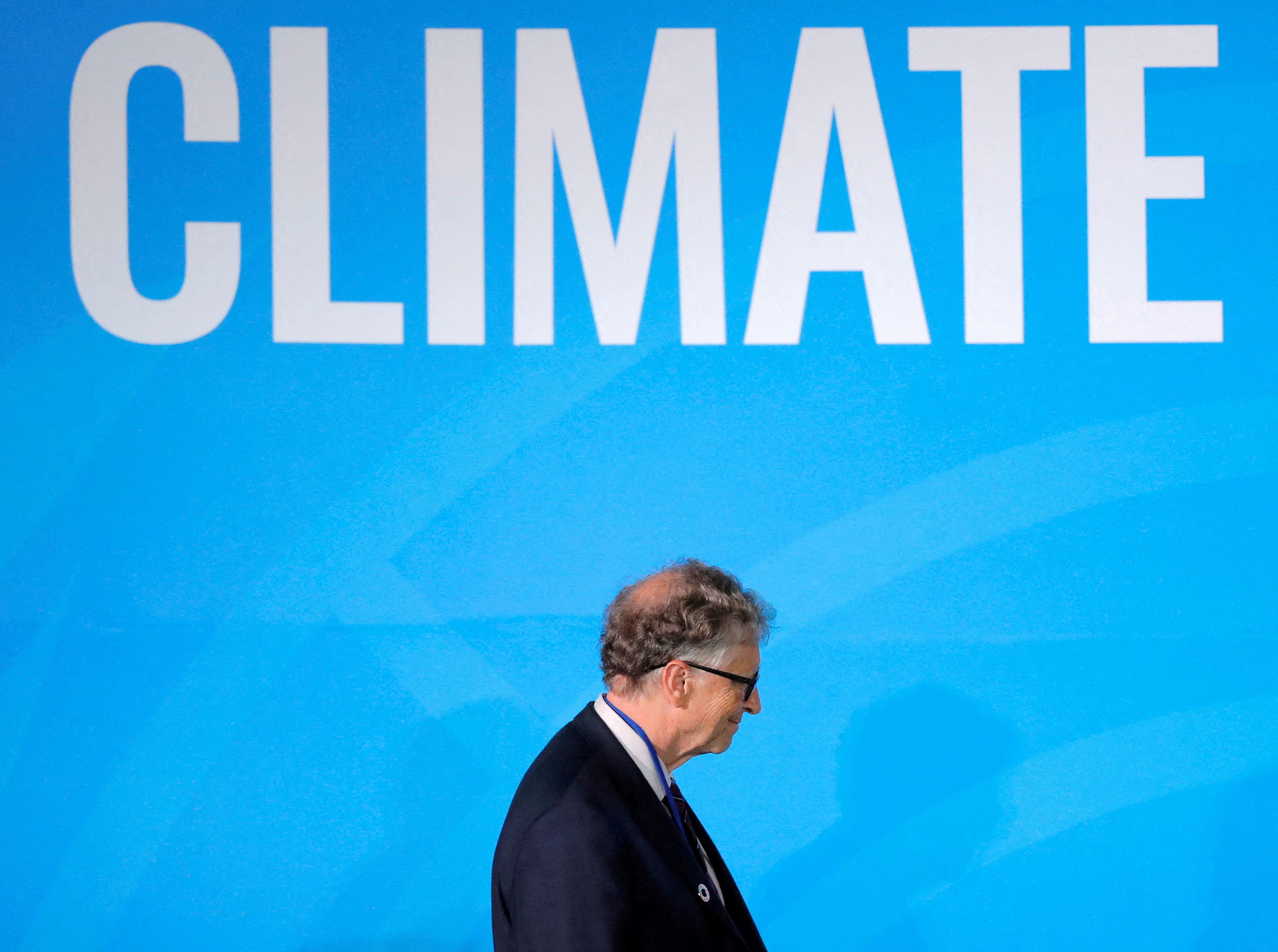
Bill Gates, trustee and co-chair of the Global Commission on Adaptation, arrives to speak during the 2019 United Nations Climate Action Summit at U.N. headquarters in New York City, New York, U.S., September 23, 2019. REUTERS/Lucas Jackson/File Photo

When it comes to climate change, Bill Gates considers himself a realist – even if that means admitting the world has no chance limiting warming to 1.5 degrees Celsius.

Given “the overall scale of our industrial economy … we’re going to have to do mind-blowing work to stay below 2 degrees,” he said.

But on meeting the Paris Agreement’s 1.5C goal? No one wants to be “the first to say it,” but the math shows it’s no longer within reach, Gates said in a video interview with Reuters.

The software-developer-turned-philanthropist was nevertheless upbeat about climate innovation – ticking off numerous areas advancing low-carbon technologies with funding from the Breakthrough Energy Group, which Gates founded in 2015.

Gates has invested more than $2 billion toward climate technologies, including direct air capture, solar energy and nuclear fission. The 14-year-old fission company under the Breakthrough umbrella, TerraPower, aims to have a demo reactor running by 2030.

These things take time, said Gates, co-founder of Microsoft Corp (MSFT.O).

Gates spoke with Reuters ahead of the release of his annual letter – reflecting on 2022 and describing what he’s most excited about in the year ahead.

He transferred $20 billion of his funds to the Gates Foundation’s endowment, which plans to increase philanthropic spending on public health and education from $6 billion to $9 billion in coming years.

He also praised Warren Buffett for his contribution, which Gates said totaled $45 billion since 2006, counting Berkshire Hathaway (BRKa.N) stock appreciation.

Breakthrough Energy, however, operates separately from the Gates Foundation charity. In his letter to shareholders, Gates explains that the climate problem is too enormous for philanthropy alone to tackle.

“There’s not enough money, and so you have to have some innovation,” he told Reuters. “The idea that it can be done by brute force, there’s just no chance.”

Companies need investment and technical support to prove their low-carbon ideas beyond the pilot phase – and then to scale up manufacturing, he says. But any Breakthrough Energy profits are funneled back into the group or to the foundation.

Some of the companies under Breakthrough that are developing Direct Air Capture (DAC) – technology designed to pull CO2 straight from the atmosphere – have their sights set on some $3.5 billion in newly announced U.S. contracts to build DAC plants and fund research grants.

“We have a number of Direct Air Capture companies that will bid on being a part of those projects,” he said, noting that the recent Inflation Reduction Act legislation has boosted prospects for climate innovation. He did not elaborate on the DAC companies’ plans.

In manufacturing, the steel and cement industries have made “fantastic” progress, he said, a change from his worries about that sector just two years ago.

Manufacturing is responsible for about a third of global climate-warming emissions.

Now, “there’s no area of climate mitigation that I feel like ‘Oh, that’s really completely uncovered,'” he said.

Instead, with the world set to push past 1.5C of warming, he said the challenge is shifting toward helping people adapt to a harsher, hotter future.

“In addition to mitigation, which will still be the biggest part (of Breakthrough Energy’s investment), we’ll also fund adaptation-related work.” That could include technology to help control forest fires, using coral reef type structures to create barriers to flooding, or development of crop strains that can withstand drought.

Read more:

EXPLAINER-What the latest U.N. science says about climate change

Rainforest-rich nations ensure COP15 deal on nature sticks

GRAPHIC-Disappearing plants jeopardize a green future

GRAPHIC-From flickering fireflies to lowly dung beetles, insects are vanishing

WP Radio
WP Radio
OFFLINE LIVE