Categories
Audio Sources - Full Text Articles

Hope Hicks testifies Trump refused to tell supporters to be non-violent on January 6, instructing them instead to ‘fight like hell’

Former US President Donald Trump, his right hand balled into a fist, speaks during an event at his Mar-a-Lago home on November 15, 2022 in Palm Beach, Florida.Former US President Donald Trump, his right hand balled into a fist, speaks during an event at his Mar-a-Lago home on November 15, 2022 in Palm Beach, Florida.

Joe Raedle/Getty Images

  • Former Trump aide Hope Hicks said she and others urged Trump to decry any violence on January 6.
  • Hicks told House select committee investigators that Donald Trump refused to listen.
  • Trump commanded the MAGA mob that amassed in Washington that day to “fight like hell.”

Donald Trump ignored his former adviser Hope Hicks and other White House officials who urged the embattled former president to instruct MAGA supporters to remain peaceful during the January 6, 2021 march on the US Capitol, according to testimony from Hicks revealed during Monday’s final January 6 select committee hearing.

In Monday’s new footage, Hicks tells House investigators that she and then-White House attorney Eric Herschmann tried to get Trump to promote the importance of not resorting to violence ahead of his planned “Stop the Steal” rally, but that they were shot down at every turn. 

“I communicated to people like Eric Herschmann that it was my view that it was important that the president put out some kind of message in advance of the event,” Hicks says in her taped testimony to the panel investigating the deadly attack on Congress. Hicks notes that she didn’t talk directly to Trump about trying to turn the temperature after his 2020 election loss, but said Herschmann had tried — and failed — to convince Trump to do just that. 

“Mr. Herschmann said that he had made the same recommendation directly to the president. And that he had refused,” Hicks said. 

In fact, Trump did the exact opposite that morning, prodding those who gathered to hear his airing of grievances on the National Ellipse to “fight like hell” before pointing them towards the vote certification effort happening on Capitol Hill. 

Hicks met with House select committee members in October to share her insights into everything that happened that day. 

The former model turned Trump whisperer reportedly broke with her then-boss because of his baseless election fraud claims. She told Trump that he’d lost and “nobody’s convinced me otherwise,” according to internal deliberations highlighted in the Trump-centric tome “The Divider: Trump in the White House, 2017-2021.”

Read the original article on Business Insider
Categories
Audio Sources - Full Text Articles

Car prices could drop 20% next year. Here’s where to expect the best deals first.

Hyundai SUVs at a car dealership.Industry experts have tips on how car-buyers can get the best deal in 2023.

AP Photo/David Zalubowski

  • After years of high prices and low inventory, car buyers might finally see things go their way.
  • But shoppers still need to weigh their options if they want a deal, experts say.
  • Consider certain brands or vehicle types if you’re car shopping in 2023.

After struggling with astronomical prices and a shortage of vehicles, car buyers are finally seeing some relief. 

Right now, supply chain crises are easing, bringing more inventory to dealership lots, while demand is stabilizing. As a result, JPMorgan says, used car prices could fall by as much as 20% in 2023, and new car prices could drop by 5%. 

But shoppers will still need to hunt to find a deal. Industry car-buying experts shared a few tips for what segments and brands may offer the best — and earliest — deals in 2023. 

(Hope you like minivans!)

Buy domestic

Brands like Tesla, Volkswagen, and BMW are generally more expensive now than in the past, said Brian Moody, executive editor of Kelley Blue Book. But some of their competitors have backed off jacked-up prices. 

“Looking for something like General Motors or maybe Hyundai, Mazda, Buick — some of those still have slight price increases, but just not as dramatic as some of the other ones,” he said. Buicks, for example, are selling for roughly 2% below MSRP, Moody said.

TrueCar industry analyst Zack Krelle agreed, noting that domestic brands have had more success building up inventory. 

“There are possibly some opportunities on the domestic brand side where they have slightly more inventory than some of the import brands,” Krelle said. “The domestic brands have a 30-, 40-day supply, which is still very, very low compared to historic levels.”  

Stay away from SUVs

Not only does brand matter, but the type of vehicle a car-buyer is looking for does, too.

“There are some deals out there, if you happen to want a vehicle that is maybe lower in demand or if you’re in a region that that particular vehicle doesn’t sell as well as others,” Krelle said. 

Secondhand pickup trucks, minivans, convertibles, and coupes were all trading at below the average for used cars as of November, according to Karl Brauer, executive analyst at the car search engine iSeeCars.com.

“The biggest, fastest drop in prices in returning toward normal, pre-pandemic prices would probably be in those segments,” Brauer said. More desirable SUVs will follow later on. 

Pickup trucks, though popular in general, don’t have great fuel economy, so prices have softened amid higher-than-normal gas prices, Brauer said. Coupes and convertibles are “fun cars” that shoppers stay away from when they’re worried about inflation and economic turmoil. 

Small cars, which haven’t been historically sought-after and which may seem like an obvious road to a good deal, are now in high demand because of their relatively low purchase price and good gas mileage, experts say. Brauer expects that trend to continue into next year. 

The pandemic may have turned the car market on its head. But the basic laws of supply and demand still hold true. 

“Generally speaking, if you want to save money, I wouldn’t be looking for the same thing everybody else is looking for,” Moody said.

Read the original article on Business Insider
Categories
Audio Sources - Full Text Articles

This 26-year-old FTX investor lost access to $14,000 when Sam Bankman-Fried’s exchange collapsed. Now he plans to keep his money in stocks.

Daniil Pemberton FTX investor Sam Bankman-FriedDaniil Pemberton, 26, lost access to about $14,000 in the collapse of FTX.

Daniil Pemberton

  • In an interview with Insider, Daniil Pemberton said the collapse of FTX has rattled his trust in companies within crypto sector.
  • The 26-year-old lost access to about $14,000 in his FTX account, which included bitcoin and ether. 
  • Moving forward, he plans to stick to stocks and index funds. 

On November 8, when Daniil Pemberton saw headlines on the collapse of Sam Bankman-Fried’s crypto exchange, he tried to transfer funds out of his FTX account. He soon realized that wouldn’t be possible. 

Based in the Netherlands, the 26-year-old graduate student said he had 1.25 ether and 0.64 bitcoin saved on his account, which at the time were worth about $13,825 all together.

When he tried to initiate a withdrawal, the app showed the transaction was pending, but nothing happened beyond that. When Pemberton checked the cryptocurrency wallet addresses he tried to send the money to, his balance remained at zero. Insider has reviewed these documents. 

“The tech itself, the crypto, seems fine, but the problem is the institutions around it,” Pemberton told Insider. “They are the ones who undermine the trust, because at any point a platform could make a bad decision, which leads them to becoming bankrupt, and everyone loses. There’s no safety net.”

FTX filed for bankruptcy on November 11, and Bankman-Fried stepped down as CEO. The Securities and Exchange Commission has since alleged that he orchestrated a years-long scheme to defraud investors. 

The new chief executive, John Ray III, has said that FTX had haphazard accounting and that there was “no record keeping whatsoever.” FTX also reportedly transferred billions of dollars in customer funds to Bankman-Fried’s Alameda crypto hedge fund.

“I lost faith in the companies within crypto,” Pemberton said. “I’m skeptical on who to entrust with my funds.”

While it’s possible FTX users can recoup some of their funds during bankruptcy proceedings, experts warn it could months or years — if at all.

Pemberton said one of the main reasons he chose FTX to store his cryptocurrency was that everyone seemed to praise it, including many finance influencers on YouTube that he followed. 

“The New York Times had wrote about Sam Bankman-Fried, and so did other prestigious publications and individuals. I thought surely they did their research and wouldn’t praise him without due diligence,” Pemberton noted. 

He also found the promise of FTX’s high interest-rate payments appealing, and that they remained high during a time when other platforms were giving lower yields on investments. “In retrospect it was a dumb decision. I had gotten greedy.”

Pivoting to traditional investments

In the implosion of FTX, Pemberton said he lost approximately 60% of his total portfolio, including stocks and holdings across other exchanges, including Binance. Moving forward, he plans to put more weight in traditional equities. 

“I’m going to pivot more to stocks,” he said. “Stocks have more policies in place in case something goes wrong.”

Johnson & Johnson, Coca-Cola, and the Vanguard S&P 500 ETF are all on his list as stable, long-term investments, Pemberton said. 

“This whole thing shocked me so much that I don’t want any more volatility. I’ll invest in more index funds and bonds too.”

Read the original article on Business Insider
Categories
Audio Sources - Full Text Articles

US businessman John Textor completes Lyon takeover

LYON, France (AP) — American businessman John Textor completed his takeover of French soccer club Lyon on Monday.

The sale was initially set for September but was pushed back several times.

Under the deal, Textor’s Eagle Football is acquiring a stake of 77.49% in the club. The agreement with Textor’s Eagle Football Holdings provides for a capital increase of 86 million euros ($90 million).

“After four months of constructive negotiations marked by a common understanding with (president) Jean-Michel Aulas and all our partners, we are proud to reach this exceptional agreement,” Textor said.

The American businessman made his fortune in digital media. It’s not the first time Textor has ventured into soccer. He also has stakes in Crystal Palace, Belgian second-division club RWD Molenbeek, and Brazilian team Botafogo.

Lyon’s run of titles from 2001-08 made it the powerhouse of French soccer. But after Bordeaux ended Lyon’s run in 2009, the club’s fortunes dipped.

Lyon finished eighth last season, 25 points behind champion Paris Saint-Germain.

___

AP World Cup coverage: https://apnews.com/hub/world-cup and https://twitter.com/AP_Sports

Categories
Audio Sources - Full Text Articles

FTX“s Bankman-Fried wants more information before agreeing to U.S. extradition

2022-12-19T19:36:09Z

A prison van delivered Sam Bankman-Fried, the founder of bankrupt crypto exchange FTX, to a court in the Bahamas on Monday, where he was expected to agree to be extradited to the United States to face fraud charges.

Sam Bankman-Fried wants to see the U.S. indictment against him before agreeing to be extradited to the United States to face fraud charges over the collapse of his crypto exchange FTX, his lawyer told a magistrate judge in the Bahamas on Monday.

Bankman-Fried has seen an affidavit laying out the charges against him, but has not yet read the indictment filed last week in Manhattan federal court that accuses him of stealing billions of dollars in FTX customer deposits to plug losses at his crypto hedge fund, Alameda Research, said the lawyer, Jerone Roberts.

Roberts’ statement came at a two-hour hearing in Nassau before Magistrate Shaka Serville. When the hearing concluded, Bankman-Fried was given the chance to speak on the phone with his U.S. defense lawyer with Roberts present. No further court date was set.

Serville said he could not take any action on Bankman-Fried’s extradition without Bankman-Fried’s consent.

“I can only be moved by Mr. Bankman-Fried, and he has not moved me,” Serville said.

Bankman-Fried, dressed in a dark blue jacket and an untucked white shirt, spoke only to greet the judge and confirm he would speak with his U.S. counsel. At one point during the hearing, he leaned back with his eyes closed and appeared to be awakened by a court official.

After the hearing, Bankman-Fried was remanded back to the custody of the Bahamas’ Department of Corrections. He departed the courthouse in a black van marked “Corrections,” carrying a manila folder containing papers, a Reuters witness said.

Mark Cohen, a U.S. lawyer who represents Bankman-Fried, did not respond to requests for comment. The U.S. Attorney’s Office in Manhattan and a spokesperson for Bankman-Fried declined to comment.

Bankman-Fried has acknowledged risk-management failures at FTX but said he does not believe he has criminal liability.

Bankman-Fried was arrested on Dec. 12 in the Bahamas – where he lives and where FTX is based – after federal prosecutors in New York accused him of misleading lenders and investors, conspiring to launder money and violating U.S. campaign finance laws.

Bankman-Fried initially had said he would fight extradition, but a source told Reuters on Saturday that the former billionaire would return to court to reverse his decision.

Roberts told Serville initially that he did not know why Bankman-Fried was brought to court on Monday morning. Following a recess, the lawyer said Bankman-Fried wanted to see the indictment before consenting to extradition.

Franklyn Williams – the Bahamas’ deputy director of legal affairs, who is representing the United States in its push to extradite Bankman-Fried – called the day’s proceedings “incredible” and appeared frustrated by the delay.

The 30-year-old crypto mogul rode a boom in the value of bitcoin and other digital assets to become a billionaire several times over and an influential political donor in the United States, until FTX collapsed in early November after a wave of withdrawals. The exchange declared bankruptcy on Nov. 11.

FTX’s current CEO, John Ray, told congressional lawmakers last week that FTX lost $8 billion of client money, saying the company showed “absolute concentration of control in the hands of a small group of grossly inexperienced, nonsophisticated individuals.”

The exchange’s collapse led to a plunge in the value of cryptocurrency and has spurred calls for greater regulation of exchanges such as FTX, which allow individuals to buy and sell digital currency.

Both the U.S. Securities and Exchange Commission (SEC) and the Commodity Futures Trading Commission (CFTC) alleged Bankman-Fried committed fraud in lawsuits filed last week.

The SEC said Bankman-Fried concealed that FTX was diverting customer funds to Alameda as the exchange raised more than $1.8 billion from equity investors.

Related Galleries:

The Founder and former CEO of crypto currency exchange FTX Sam Bankman-Fried arrives at the Magistrate Court building in Nassau, Bahamas December 19, 2022. REUTERS/Dante Carrer

Sam Bankman-Fried, the founder and former CEO of crypto currency exchange FTX, is escorted into the Magistrate Court building in Nassau, Bahamas December 19, 2022. REUTERS/Dante Carrer

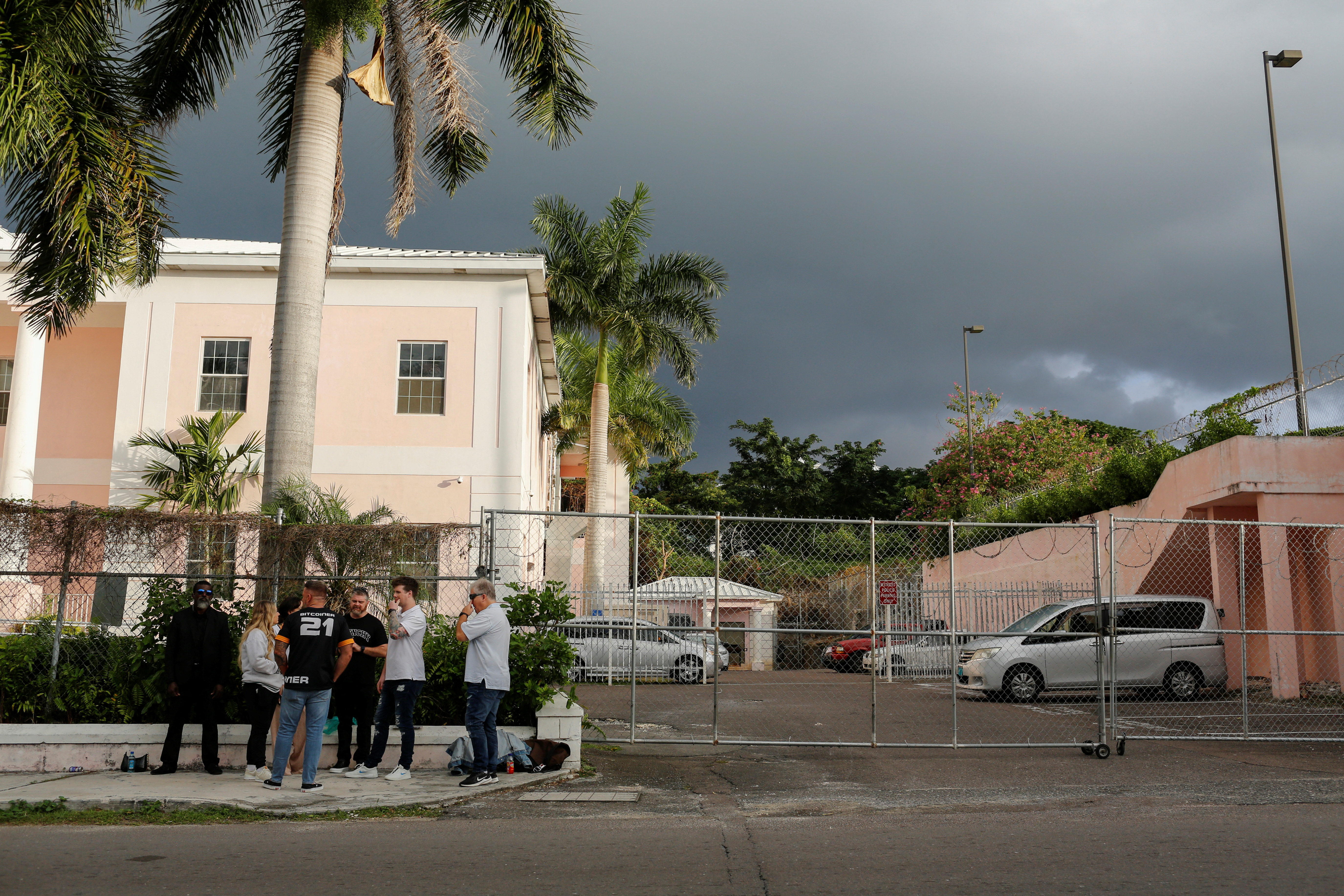
People wait outside of the Magistrate Court building where Sam Bankman-Fried, the founder and former CEO of crypto currency exchange FTX, is expected to appear later today to reverse his decision to contest extradition to the United States, in Nassau, Bahamas December 19, 2022. REUTERS/Marco Bello

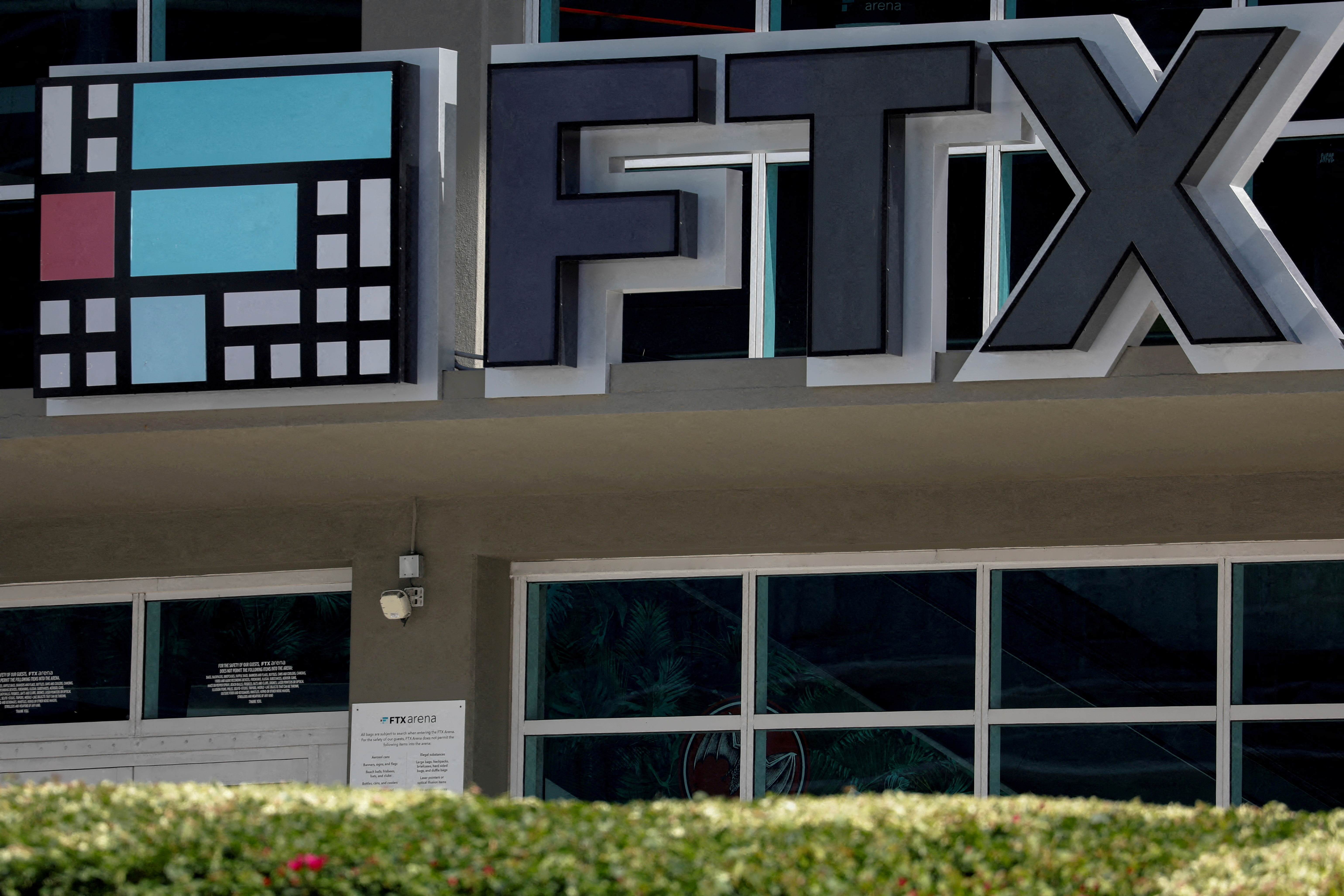
The logo of FTX is seen at the entrance of the FTX Arena in Miami, Florida, U.S., November 12, 2022. REUTERS/Marco Bello

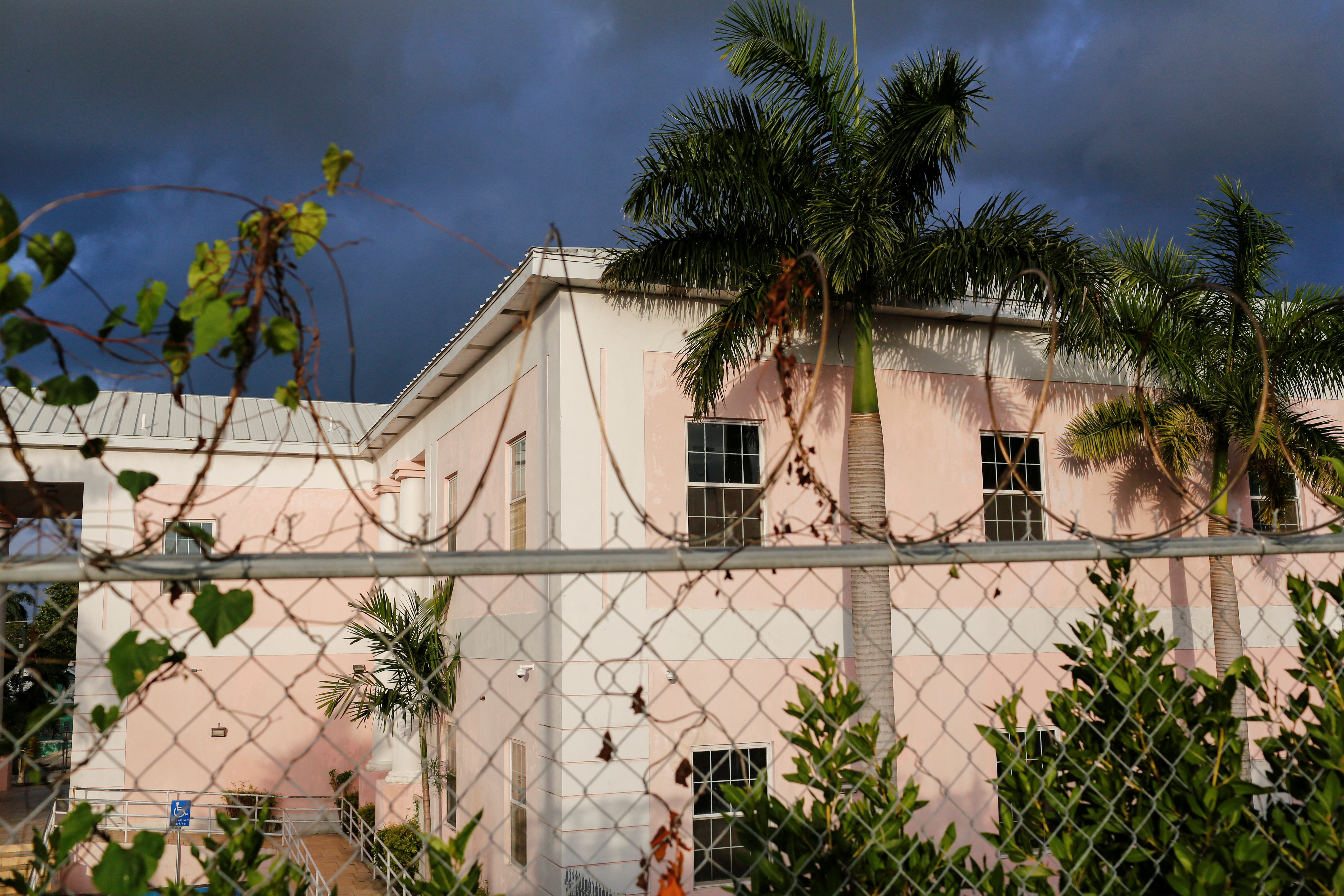
A view of the Magistrate Court building where Sam Bankman-Fried, the founder and former CEO of crypto currency exchange FTX, is expected to appear later today to reverse his decision to contest extradition to the United States, in Nassau, Bahamas December 19, 2022. REUTERS/Marco Bello

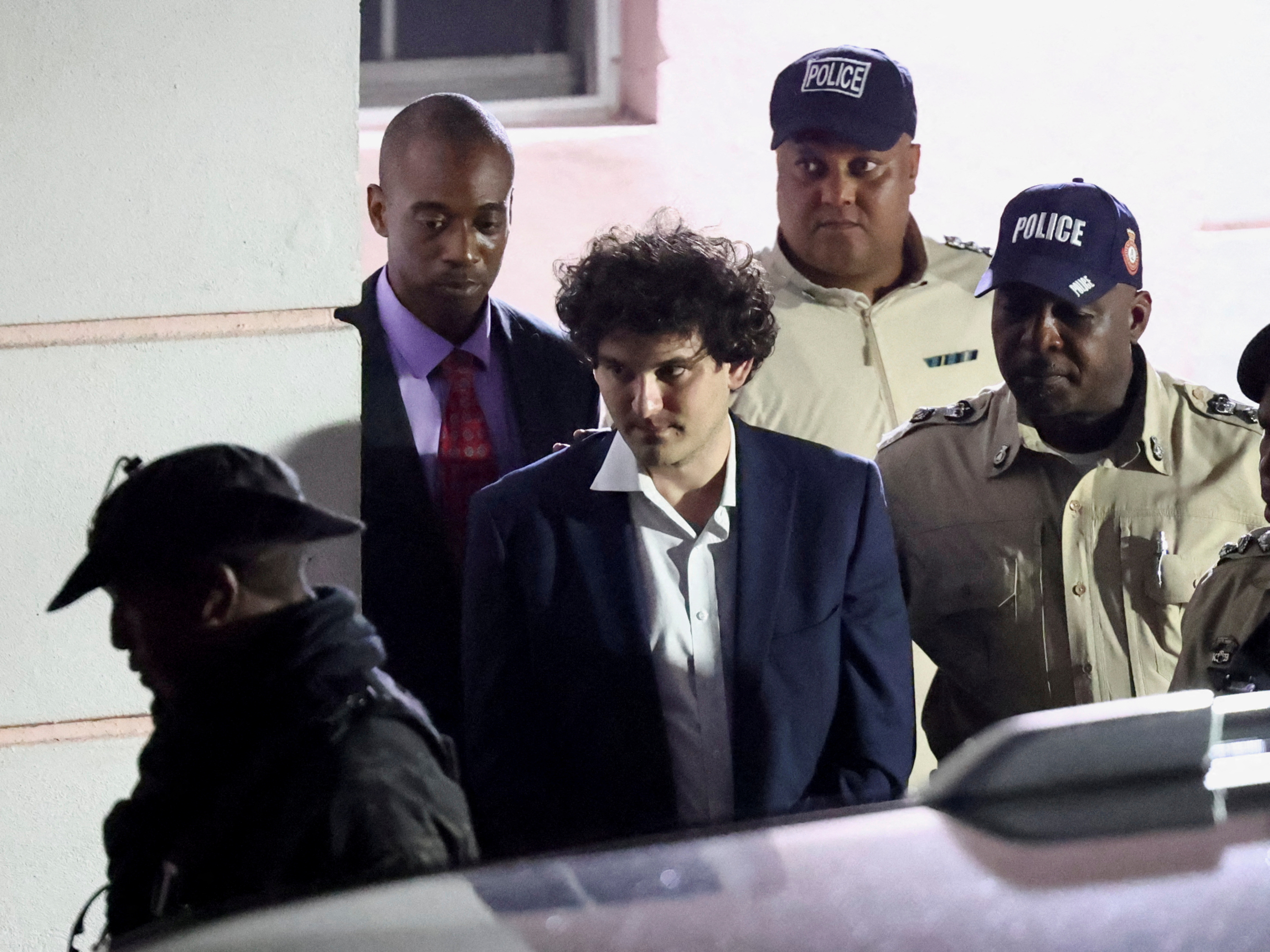
Sam Bankman-Fried, who founded and led FTX until a liquidity crunch forced the cryptocurrency exchange to declare bankruptcy, is escorted out of the Magistrate Court building after his arrest, in Nassau, Bahamas December 13, 2022. REUTERS/Dante Carrer

Sam Bankman-Fried, who founded and led FTX until a liquidity crunch forced the cryptocurrency exchange to declare bankruptcy, is escorted out of the Magistrate Court building after his arrest in Nassau, Bahamas December 13, 2022. REUTERS/Dante Carrer
Categories
Audio Sources - Full Text Articles

Biden meets Ecuador“s president amid growing immigration crisis

2022-12-19T19:34:36Z

President Joe Biden met Ecuador President Guillermo Lasso on Monday to discuss efforts to stem the flow of migrants to the United States as the White House faces increased pressure over its immigration policies.

The Biden administration is required this week to lift Title 42, a public health order first issued under former President Donald Trump that allows U.S. Customs and Border Protection to rapidly expel migrants to Mexico or back to their home countries to prevent the spread of the COVID-19 virus in U.S. holding facilities.

Lifting the order, which was required by a judge who said it was “arbitrary and capricious” and violated federal regulatory law, could lead to thousands of asylum-seeking migrants being released in border state communities and a greater influx of migrants to the U.S.-Mexico border.

Biden and Lasso sat beside each other in the Oval Office to begin their discussions.

“Today we’re going to keep building on the progress we’ve made. Together we’ve made historic strides on migration,” Biden told reporters.

Lasso said he and Biden would affirm democratic values of liberty and respect for human rights.

“We were the first country in Latin America that condemned the Russian attack on Ukraine. We believe in multilateralism, we believe in the international rule of law, we believe that dialogue is the best formula to resolve differences,” Lasso said.

U.S. lawmakers, both Republicans and Democrats, on Sunday pressed Biden to take action to manage an expected wave of asylum seekers at America’s southern border.

U.S. Senator Joe Manchin, a conservative Democrat, appearing on the CBS News “Face the Nation” program on Sunday, urged Biden to ask for an extension of Title 42.

“The president needs to find a way,” Manchin said.

Lasso visited the White House after former U.S. Senator Chris Dodd, who is Biden’s special adviser for the Americas, extended an invitation on the president’s behalf during a recent visit to Ecuador.

Lasso attended the Summit of the Americas in Los Angeles last summer after a number of key presidents opted to skip it and send delegations instead.

The Biden administration has sought to tackle what it calls the “root causes” of immigration, including poor economic conditions and political instability.

“We are obviously invested in Ecuador’s success and the president of Ecuador, democratically elected as he is, is working hard to deliver prosperity and security for his people,” White House National Security Council spokesman John Kirby said in a call with reporters on Friday.

Related Galleries:

U.S. President Joe Biden disembarks from Air Force One at Joint Base Andrews, Maryland, U.S., December 16, 2022. REUTERS/Elizabeth Frantz

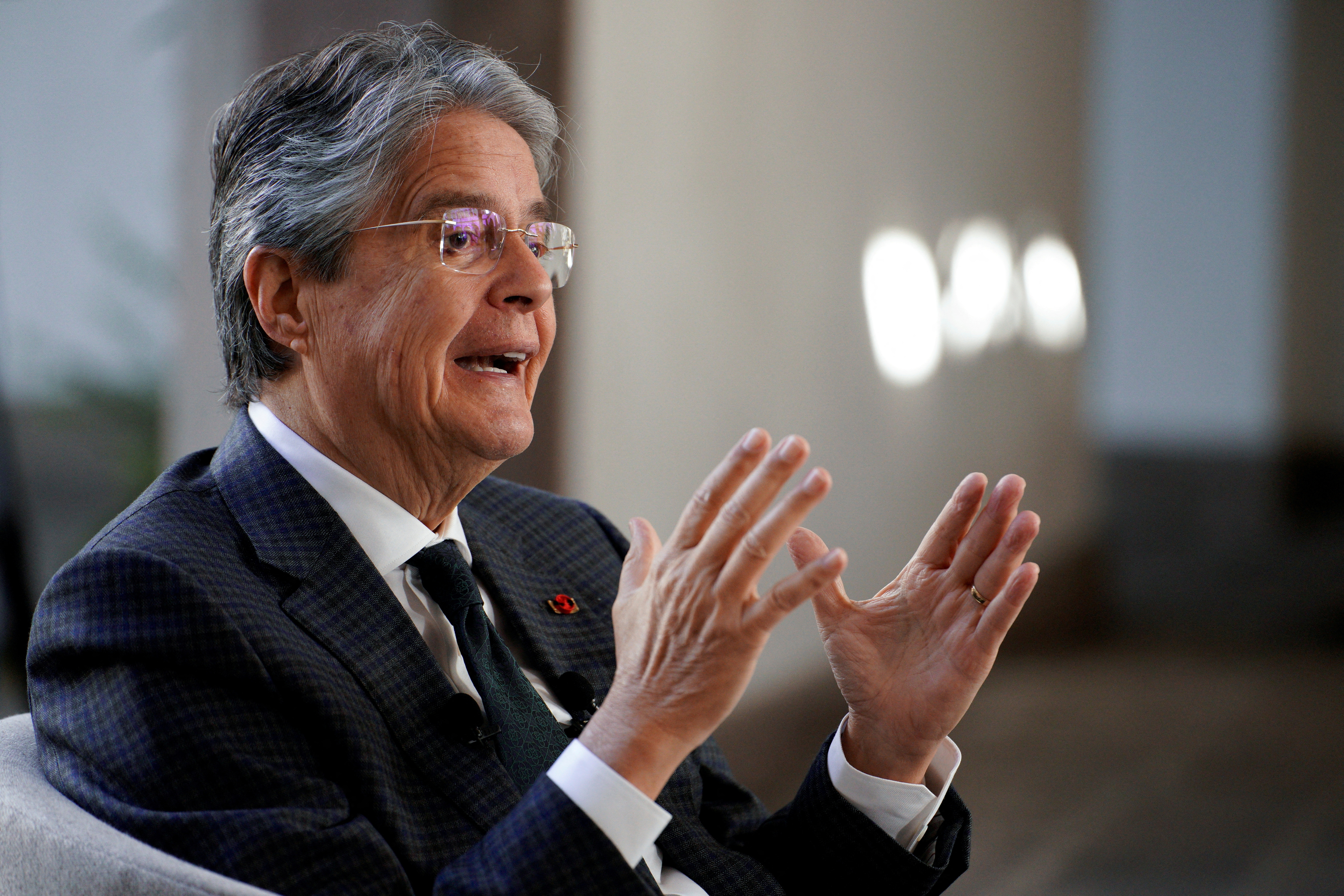
Ecuadorean President Guillermo Lasso participates in an interview at Carondelet Palace, in Quito, Ecuador April 26, 2022. REUTERS/Santiago Arcos/File Photo
Categories
Audio Sources - Full Text Articles

Russian “kamikaze“ drones hit Kyiv, Putin has talks in ally Belarus

2022-12-19T19:47:10Z

Russia attacked Ukraine with dozens of “kamikaze” drones in the early hours of Monday (December 19) as people slept, hitting critical infrastructure in and around Kyiv in Moscow’s third air attack on the Ukrainian capital in less than a week.

Russian “kamikaze” drones hit key energy infrastructure in and around Kyiv on Monday and President Vladimir Putin visited Belarus for the first time since 2019, fuelling Ukrainian fears he will pressure his ally to open a new invasion front.

But Ukraine was hardly mentioned by Putin and his Belarusian counterpart Alexander Lukashenko after their talks, with remarks to reporters dwelling instead on bilateral and economic cooperation.

The Ukrainian military high command said their air defences had shot down 23 of 28 drones – most over the capital Kyiv – in what was Moscow’s third air strike in six days and the latest in a series since October targeting the Ukrainian power grid, causing sweeping blackouts amid sub-zero temperatures.

No casualties were reported as a result of the drone strikes, it said in its evening update, though nine buildings were damaged in the Kyiv region.

The Ukrainian atomic energy agency accused Russia of sending one of the drones over part of the South Ukraine Nuclear Power Plant in the Mykolaiv region.

“This is an absolutely unacceptable violation of nuclear and radiation safety,” Energoatom wrote on Telegram.

Invading Russian forces now occupy the Zaporizhzhia nuclear reactor complex, Europe’s largest, in southeastern Ukraine near the front line.

The “kamikaze” drones used in the attacks are cheaply produced, disposable unmanned aircraft that fly towards their target before plummeting at speed and detonating on impact.

A Reuters witness said a fire raged overnight at an energy facility in the often-targeted Shevchenkivskyi district of central Kyiv, a city of 3.6 million people.

The Solomianskyi district in the western part of Kyiv, a busy transport hub and home to a train station and one of the city’s two passenger airports, was also hit.

“As a result of the attack on the capital, critical infrastructure facilities were damaged,” Mayor Vitali Klitschko said on the Telegram messaging app. “Engineers are working to quickly stabilise the situation with energy and heat supply.”

Oleskiy Kuleba, governor of the region surrounding Kyiv, said infrastructure and private homes were damaged and three areas had been left without power.

To the northwest of Ukraine, there has been constant Russian and Belarusian military activity for months in Belarus, a close Kremlin ally that Moscow’s troops used as a launch pad for their abortive attack on Kyiv in February.

Putin’s trip was his first to Minsk since the pandemic and a wave of Belarusian street protests in 2020 that Lukashenko crushed with support from the Kremlin.

Ukrainian joint forces commander Serhiy Nayev said before Putin’s arrival that Kyiv expected the Minsk talks would address “further aggression against Ukraine and the broader involvement of the Belarusian armed forces in the operation against Ukraine, in particular, in our opinion, also on the ground”.

However, Putin and Lukashenko scarcely touched on Ukraine at a post-talks news conference, instead extolling the benefits of defence and economic alignment and Sunday’s World Cup soccer final in response to journalists who were invited to speak.

Lukashenko has said repeatedly he has no intention of sending his country’s troops into Ukraine, where Moscow’s invasion has faltered badly of late with a string of battlefield retreats in the face of a major Ukrainian counter-offensive.

The Kremlin earlier dismissed the suggestion that Putin wanted to push Belarus into a more active role in the conflict. The RIA Novosti news agency quoted Kremlin spokesman Dmitry Peskov as saying such reports were “groundless” and “stupid”.

Both Putin and Lukashenko were also at pains to dismiss the idea of Russia annexing or absorbing Belarus. “Russia has no interest in absorbing anyone,” Putin said. “There is simply no expediency in this.”

Russian troops that moved to Belarus in October will conduct battalion tactical exercises, Russia’s Interfax news agency reported, citing the defence ministry. It was not immediately clear when they would start.

The 10-month-old conflict in Ukraine, the largest in Europe since World War Two, has killed tens of thousands of people, driven millions from their homes and reduced cities to ruins.

Ukrainian President Volodymyr Zelenskiy said the armed forces were holding firm in the town of Bakhmut – scene of the fiercest fighting for many weeks as Russia seeks to advance in eastern Ukraine’s Donetsk province.

In its update, Ukraine’s General Staff said Russian artillery on Monday hammered 25 towns and villages around Bakhmut and Avdiivka, and several areas around Kupiansk, a northeastern town retaken by Kyiv’s forces in September.

It also said Ukrainian air and artillery forces carried out more than a dozen strikes on concentrations of Russian troops and hardware including ammunition dumps, and shot down two helicopters.

On Monday, Zelenskiy appealed to Western leaders meeting in Latvia to supply a wide range of weapons systems especially modern battle tanks, air defence systems and artillery.

Denis Pushilin, Russian-installed administrator of the part of the Donetsk region controlled by Moscow, said Ukrainian forces shelled a hospital in Donetsk city, killing one person and injuring several others.

Russia’s defence ministry said that over the past 24 hours its forces had shot down four U.S.-made HARM anti-radiation missiles over the Belgorod region bordering Ukraine, state-run TASS news agency reported.

Reuters could not independently verify the battlefield accounts of either side.

Putin casts what he calls Russia’s “special military operation” in Ukraine as the moment when Moscow finally stood up to the U.S.-led Western bloc seeking to capitalize on the 1991 fall of the Soviet Union by destroying Russia.

Kyiv and the West say his assertion is nonsense and that Putin has no justification for what they see as an imperial-style war to reassert dominance over Russia’s fellow ex-Soviet republic and put Moscow in control of around a fifth of Ukraine.

Related Galleries:

Firefighters work at a site of a critical power infrastructure object, which was hit during Russia’s drones attacks in Kyiv, Ukraine, in this handout picture released December 19, 2022. Press service of the State Emergency Service of Ukraine/Handout via REUTERS
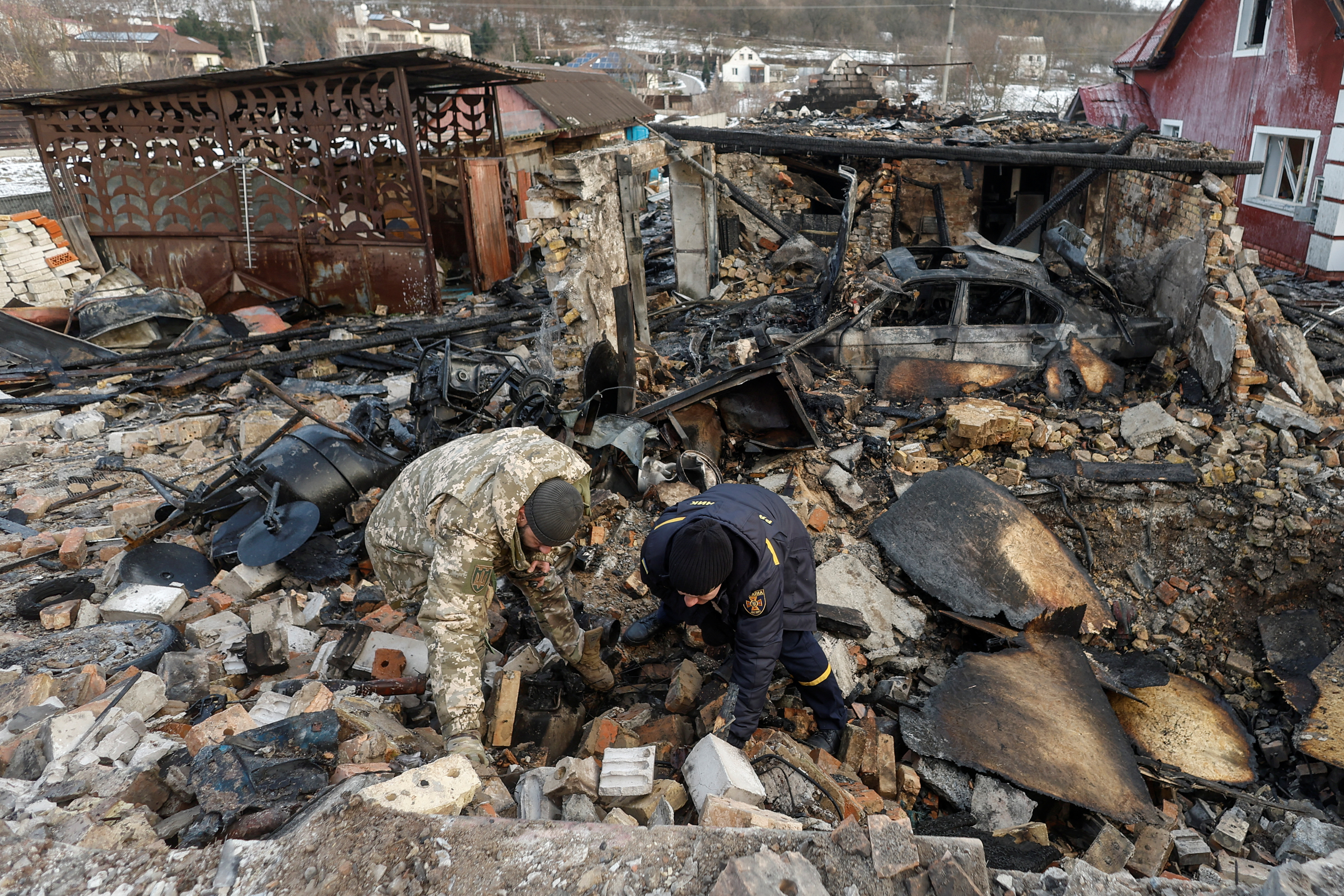
Investigators work a site of residential a building damaged during a Russian drone strike, amid Russia’s attack on Ukraine, in the village of Stari Bezradychi, in Kyiv region, Ukraine December 19, 2022. REUTERS/Valentyn Ogirenko

An investigator shows the remains of a Russian suicide drone found at a site of a damaged residential house, amid Russia’s attack attack on Ukraine, in the village of Stari Bezradychi, in Kyiv region, Ukraine December 19, 2022. REUTERS/Valentyn Ogirenko

A critical power infrastructure object burns after a Russian drone attack, amid Russia’s attack on Ukraine, in Kyiv, Ukraine December 19, 2022. REUTERS/Gleb Garanich
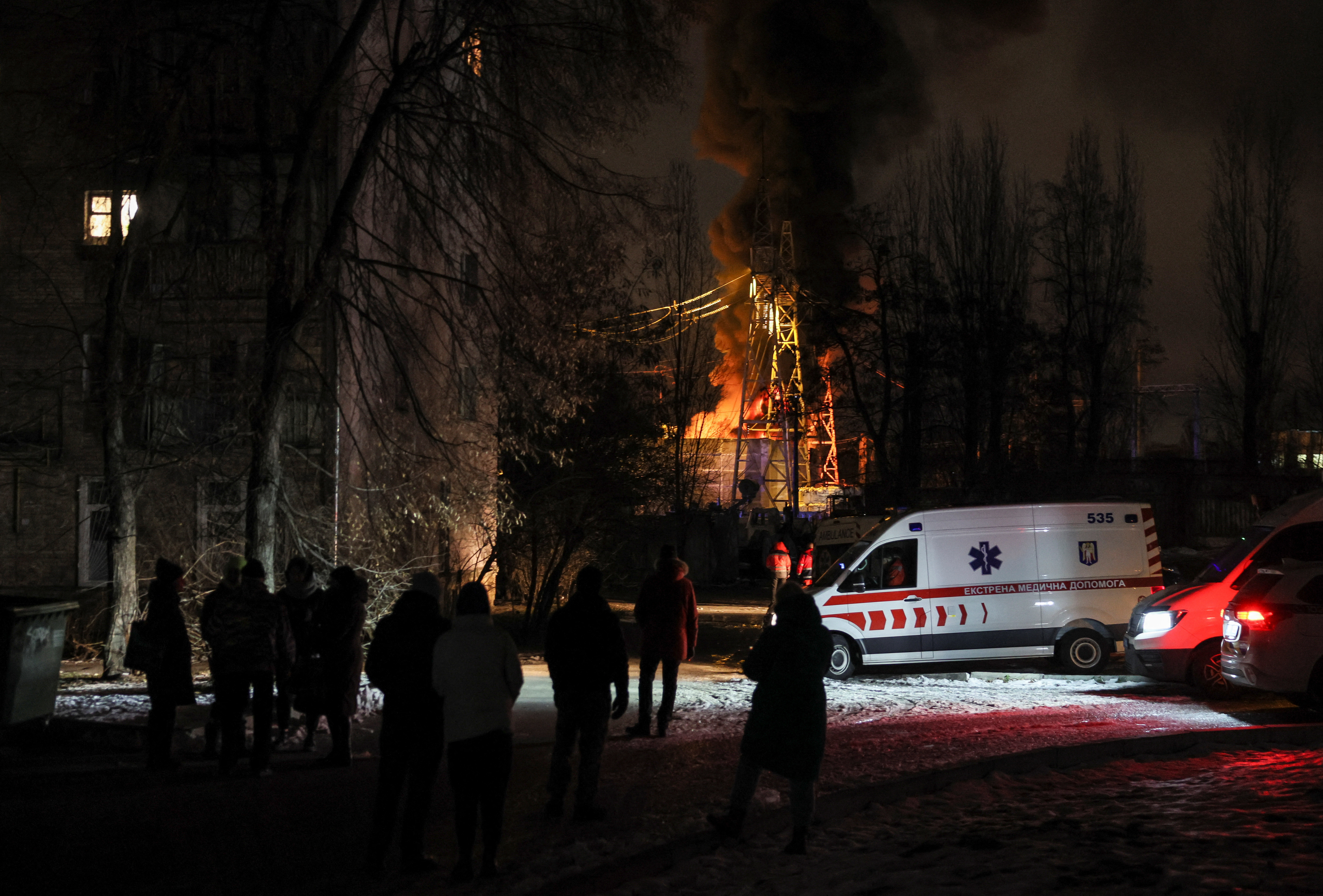
Local residents gather near a residential building as a critical power infrastructure object burns after a Russian drone attack, amid Russia’s attack on Ukraine, in Kyiv, Ukraine December 19, 2022. REUTERS/Gleb Garanich

A local resident Natalia, 67, stands at a window of her house destroyed by a Russian military strike, as Russia’s attack on Ukraine continues, in Kramatorsk, Ukraine December 17, 2022. REUTERS/Oleksandr Ratushniak
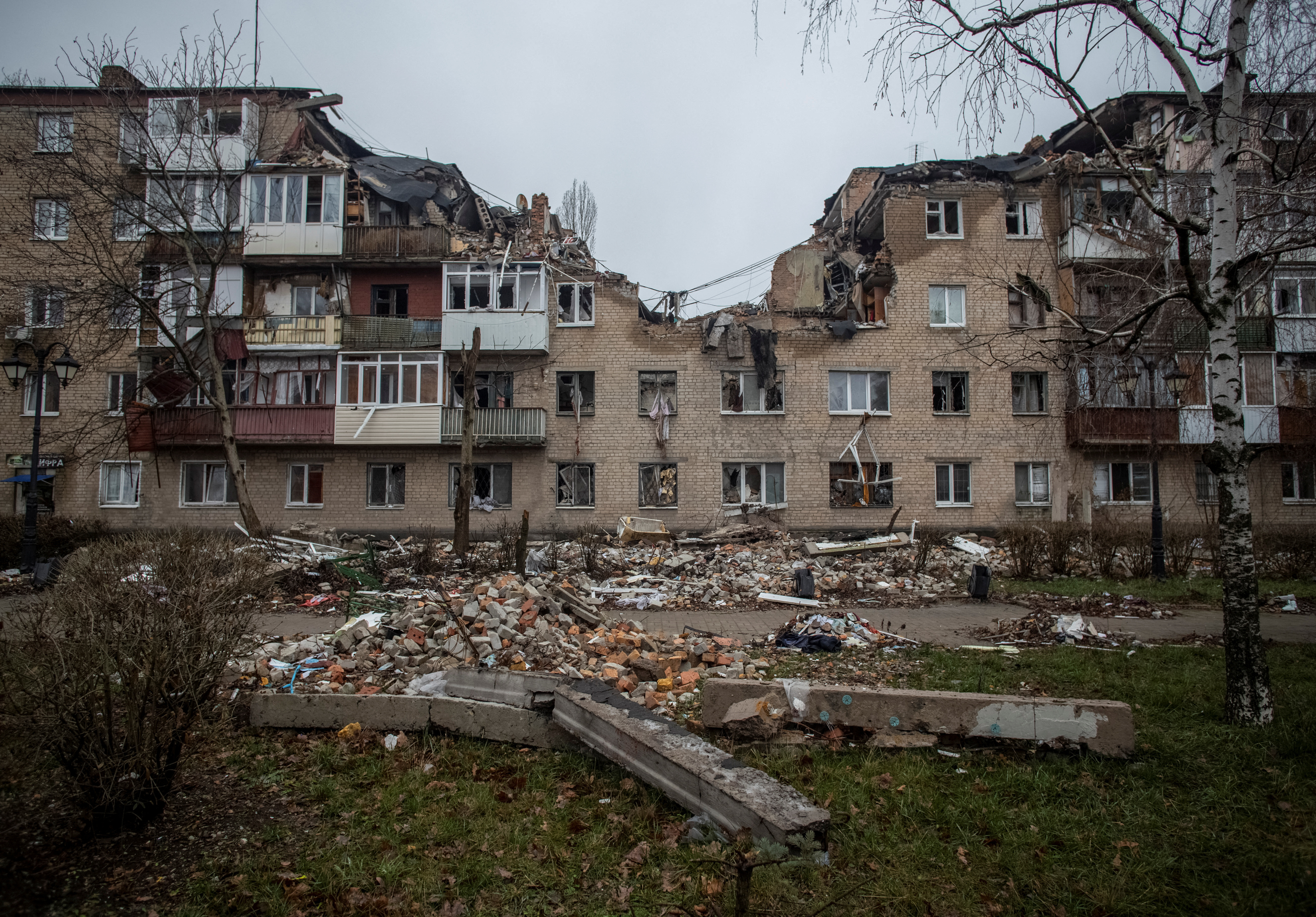
A view shows a residential building damaged by a Russian military strike, amid Russia’s attack on Ukraine, in Bakhmut, Ukraine December 18, 2022. REUTERS/Oleksandr Ratushniak

A local resident walks on an empty street, as Russia’s attack on Ukraine continues, in Bakhmut, Ukraine December 18, 2022. REUTERS/Oleksandr Ratushniak

A critical power infrastructure object burns after a Russian drone attack, amid Russia’s attack on Ukraine, in Kyiv, Ukraine December 19, 2022. REUTERS/Gleb Garanich

Ukraine’s President Volodymyr Zelenskiy attends the conference in solidarity with the Ukrainian people in Paris via videolink, amid Russia’s attack on Ukraine, in Kyiv, Ukraine December 13, 2022. Ukrainian Presidential Press Service/Handout via REUTERS/File Photo

Local residents visit a street market, as Russia’s attack on Ukraine continues, in Bakhmut, Ukraine December 18, 2022. REUTERS/Oleksandr Ratushniak

Categories
Audio Sources - Full Text Articles

U.S. Capitol riot panel recommends charging Trump with insurrection, obstruction

2022-12-19T19:25:11Z

A U.S. House of Representatives panel on Monday asked federal prosecutors to charge Donald Trump with obstruction and insurrection for his role in sparking the Jan. 6, 2021, assault on the Capitol.

The Democratic-led select committee asked the Justice Department to bring charges against the Republican former president, including obstruction of an official proceeding of Congress, conspiracy to defraud the United States and insurrection.

The request is non-binding, but may increase pressure on prosecutors, who are carrying out multiple investigations of Trump, to act.

Monday’s meeting is likely the last final public gathering of a panel that spent 18 months probing the unprecedented attempt to prevent the peaceful transfer of power by thousands of Trump backers, inspired by his false claims that his 2020 election loss to Democratic President Joe Biden was the result of widespread fraud.

“If we are to survive as a nation of laws and democracy, this can never happen again,” said Representative Bennie Thompson, the select committee’s chairperson, as the meeting began.

Slamming Trump for summoning the mob to the Capitol nearly two years ago, Thompson also criticized the former president for undermining faith in the democratic system.

“If the faith is broken, so is our democracy. Donald Trump broke that faith,” Thompson said.

Trump has already launched a campaign to seek the Republican nomination to run for the White House again in 2024.

The select committee’s work is one of a series of investigations into the riot. Five people, including a police officer, died during or shortly after the incident and more than 140 police officers were injured. The Capitol suffered millions of dollars in damage.

“Among the most shameful of this committee’s findings. was the President Trump sat in the dining room off the Oval Office, watching the violent riot at the Capitol on television,” Representative Liz Cheney, one of two Republicans on the committee, said.

Trump has dismissed the many investigations he faces as politically motivated. He says the Jan.6 committee, dominated by Democrats, is biased against him.

A jury has already found members of the right-wing Oath Keepers militia guilty of sedition for their role in the attack and a special counsel, Jack Smith, is leading probes into Trump’s efforts to overturn his loss and his removal of classified documents from the White House.

Trump has faced a series of legal problems since leaving office. His real estate company was convicted on Dec. 6 of carrying out a 15-year-long criminal scheme to defraud tax authorities.

Trump has dismissed the many investigations he faces as politically motivated. He says the Jan.6 committee, dominated by Democrats, is biased against him.

“The highly partisan Unselect Committee is illegally leaking confidential info to anyone that will listen,” the former president wrote on his Truth Social platform before the meeting. “How much longer are Republicans, and American Patriots in general, going to allow this to happen.”

Related Galleries:

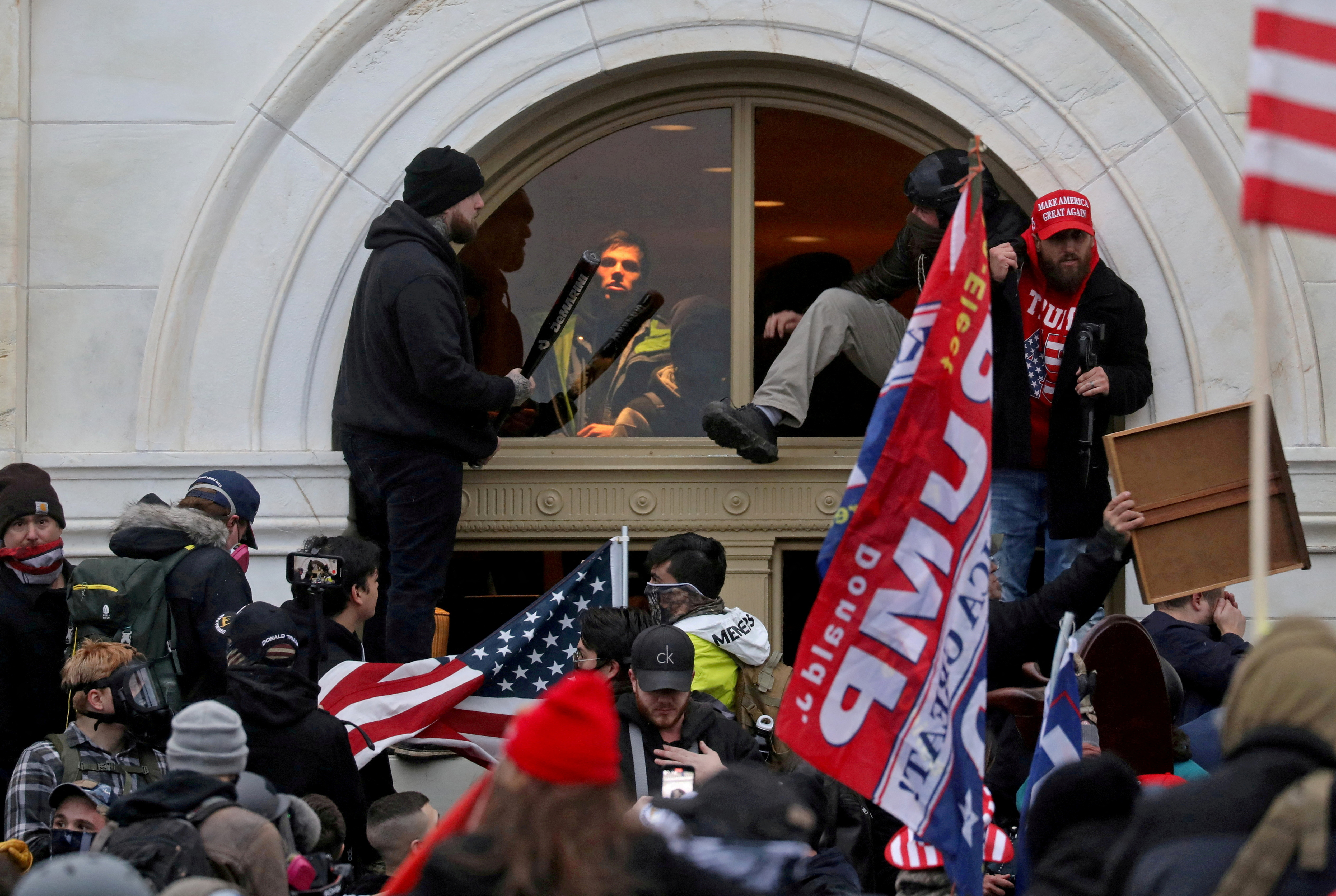
A mob of supporters of then-U.S. President Donald Trump climb through a window they broke as they storm the U.S. Capitol Building in Washington, U.S., January 6, 2021. REUTERS/Leah Millis/File Photo

Tear gas is released into a crowd of protesters, with one wielding a Confederate battle flag that reads “Come and Take It,” during clashes with Capitol police at a rally to contest the certification of the 2020 U.S. presidential election results by the U.S. Congress, at the U.S. Capitol Building in Washington, U.S, January 6, 2021. REUTERS/Shannon Stapleton/File Photo

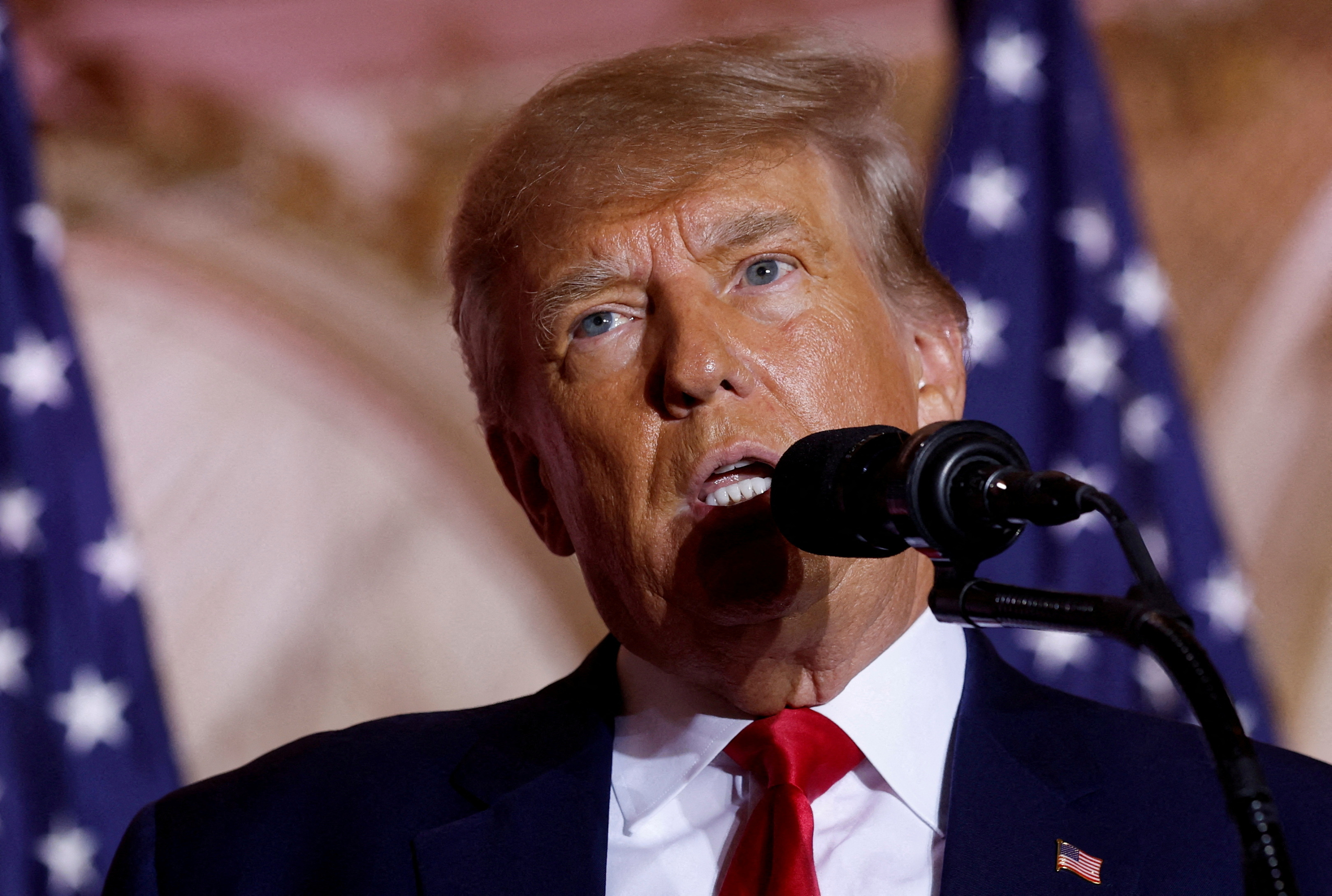
Former U.S. President Donald Trump announces that he will once again run for U.S. president in the 2024 U.S. presidential election during an event at his Mar-a-Lago estate in Palm Beach, Florida, U.S. November 15, 2022. REUTERS/Jonathan Ernst
Categories
Audio Sources - Full Text Articles

Head of Moldova intelligence says risk of Russian invasion next year seen as “high”

630_360_1536059928-4327.jpg

Russia may invade Molvoda in early 2023, while the decision will relaxation on no matter whether Russia seals gains in Ukraine.

This was said by the head of the Info and Security Support of Moldova (SIB) Alexandru Musteață, Ukrinform stories with reference to NewsMaker.

Musteață explained in an job interview with TVR Moldova that the protection agency is learning numerous variations of developments, amid which there is a risk that Russian troops will try out to capture the north of Ukraine, and if effective, progress to Moldova.

Browse also: Electrical power outages in Moldova amid Russian missile strikes at Ukraine

“The query is not irrespective of whether the Russian Federation will launch a new offensive towards the Moldovan territory, but when it will occur: early next yr, January or February, or later, in March or April. But judging by the details we have, Russia can go farther to create a corridor with the Transnistrian area, which is the territory of Moldova. Then it will be doable to say with clarity that certainly, they are heading to progress here to join (the territory – ed.). We can explore what will transpire right after that, what their intentions are for Chisinau, but this is a real, this is very superior possibility,” Musteață claimed.

The intelligence chief also observed that the biggest ammunition depot in Europe, found in Kolbasna in the Transnistrian location, is quite totally guarded by the Russian military. According to one particular of the official’s assumptions, Russia has options to use these munitions in a doable military confrontation.

As described by Ukrinform, on December 5, the Ministry of Interior Affairs of Moldova declared that the Border Police observed Russian missile debris close to Brychany. A criminal circumstance was initiated.

Oleksiy Danilov, Secretary of the Countrywide Stability Council, said that a Russian missile hit the territory of Moldova.

Source link

The post Head of Moldova intelligence says risk of Russian invasion next year seen as “high” appeared first on Ukraine Intelligence.

Categories
Audio Sources - Full Text Articles

Opportunities and blind spots in the White House’s blueprint for an AI Bill of Rights

By Nicol Turner Lee, Jack Malamud

In October 2022, the White House Office of Science and Technology Policy (OSTP) published a Blueprint for an AI Bill of Rights (“Blueprint”), which shared a nonbinding roadmap for the responsible use of artificial intelligence (AI). The comprehensive document identified five core principles to guide and govern the effective development and implementation of AI systems with particular attention to the unintended consequences of civil and human rights abuses. While the identification and mitigation of the intended and unintended consequential risks of AI have been widely known for quite some time, how the Blueprint will facilitate the reprimand of such grievances is still undetermined. Further, questions remain on whether the nonbinding document will prompt necessary congressional action to govern this unregulated space.

The Brookings Center for Technology Innovation hosted a conversation with experts from the OSTP, think tanks, and social justice organizations on December 5, 2022, during which they unpacked key aspects of the Blueprint while debating potential limitations and, in some instances, blind spots that may not have been considered in its development. Some thought was given to whether the harms were too broadly defined and if federal agencies had the resources to adhere to the responsible practices and procedures around AI procurement, use, and consistent audits as outlined in the Blueprint.

In terms of progress before and after the Blueprint’s release, at least five federal agencies have adopted guidelines for their own responsible use of automated systems. The Department of Defense’s (DOD) Ethical Principles for Artificial Intelligence and the U.S. Agency for International Development’s Artificial Intelligence Action Plan have both implemented some guidance around government use of AI. The Equal Employment Opportunity Commission (EEOC) has also launched its own AI and algorithmic fairness initiative in their partnership with the Department of Labor to “reimagine hiring and recruitment practices.” Further, the EEOC is collaborating with the Department of Justice to release guidance on how the use of AI in employment decisions can discriminate against people with disabilities.

A few federal agencies, including the DOD, the Department of Energy, the Department of Veterans Affairs, and the Department of Health and Human Services, have each established their own centers or offices to implement these guidelines. At least a dozen agencies have issued some sort of binding guidance for the use of automated systems in the industries under their jurisdiction, such as the Federal Trade Commission’s business guidelines on Using Artificial Intelligence and Algorithms and the Food and Drug Administration’s principles for Good Machine Learning Practice for Medical Device Development. However, the detail and scope of federal agencies’ full adherence to these activities still varies in terms of timeline and deliverables. While the mentioned entities are working toward responsible AI use, other federal agencies, including the Consumer Product Safety Commission, has issued a report with a proposed framework for evaluating potential AI harms.

Part of these varying degrees of progress within the federal government are due to the number of allotted staff who can effectively and expeditiously implement this new rights-based framework. Another related aspect is how far along they each were in the implementation of the previous guidance around AI from OSTP leaders in the Trump administration that encouraged similar alignments around responsible use.

The Blueprint also relies upon some consistency in the interpretability and protection of civil rights in automated decisions, particularly in the areas of lending, housing, and hiring. Yet, how widely known civil rights laws are followed within digital domains is still unknown, especially given the opacity of the internet and algorithmic applications. Because the factors affecting how algorithmic models operate are often hidden from consumers, people are normally in the dark about how they function and the potential threats. Recent studies have found that, although more algorithmic literacy is needed, particularly regarding their use on social media or new platforms, individuals often have little idea about how these algorithms work or what data they use. While the call for increased data privacy and security is also integral to the Blueprint, more work needs to be done to disentangle how to explicitly apply civil rights laws and protections when online malfeasance occurs.

Finally, the current Blueprint looks to the private sector for self-regulatory management, specifically governing and producing products and services from a consumer rights-based approach. However, this expectation may be too ambitious for companies that generally profit from AI’s opacity, including the inferential data that is collected from individual users in the absence of demographic information. Similarly, the Blueprint does not provide mandatory, enforceable guidelines, and the lack of an enforcement regime or a central governing body makes self-regulation insufficient to guard against potential harms.

Perhaps, the greatest limitation is the Blueprint’s carving out of law enforcement

The use of AI in law enforcement, especially facial recognition, has raised many legal and ethical considerations and created a great deal of risk. The use of AI in law enforcement can reinforce inequality and disproportionately impact people of color, leading to false arrests and detainment. The Blueprint’s developers missed a major opportunity to implement a rights-based framework to automated decision making and make great strides in AI and criminal justice. For now, the Blueprint avoided detailed scrutiny on these fronts by carving out law enforcement—even among federal agencies that use these technologies, including Capitol police, airport security, and customs and border protection officers. Excluding law enforcement may continue the oversurveillance of certain populations, communities, and individuals under the guise of public safety and national security and will not necessarily reduce the history and manifestation of rampant discrimination against people of color and immigrants. If law enforcement were included in the Blueprint provisions and guidance, it could have offered new guardrails and agency for individuals left with little recourse when misidentified and/or scrutinized by existing and emerging AI technologies.

How to make the national Blueprint stick

Some of the panelists from the Brookings December 5 event offered several recommendations worth describing in this blog, starting with the need for a more sectoral approach to AI governance, explicit inclusion of law enforcement in the Blueprint, and the idea of revisiting the nation’s existing civil and human rights precedents to ensure their applicability to the online space.

  1. Sectoral approaches will be critical to advancement and enforcement. There is no silver bullet for AI governance, which is evident in the comprehensive and singular legislation introduced in the European Union (EU). The EU is currently considering a new version of the proposed Artificial Intelligence Regulation Act (AI Act) that has faced significant challenges as a single piece of legislation—challenges that a sectoral approach would largely avoid. Maintaining a more flexible approach in the application of the Blueprint’s principles would enable innovative solutions tailored toward the various sectors—such as healthcare, housing, and education—where automated systems are used.
  2. Law enforcement must be fully part of the national Blueprint guidance. OSTP should consider either offering an addendum to the existing Blueprint to provide guidelines for law enforcement applications or the including relevant agencies under the purview of the federal government. The practices around the use of AI on human subjects, in addition to procurement policies, should be reviewed, and systems adopted under a “monolithic technology-procurement model” should be re-evaluated, especially since they “rarely [take] constitutional liberty into account,” which illustrates the need for including law enforcement in these initial conversations in order to develop clear guidelines for their use of AI.
  3. Existing civil rights regimes should be revisited to ensure their applicability to new and emerging digital rules. Historic civil rights laws and statutes have their roots in resistance efforts that pre-date the digital revolution. While, implicitly, laws that govern fair housing, credit, hiring, and education should apply, they can fall under the radar of contemporary interpretation, especially among AI systems that skirt around the edges of civil rights protections. Kearns and Roth pointed to the inferential data economy in their signature book, The Ethical Algorithm (2019), and when left unchecked, demographic data that is extrapolated rather than confirmed by subjects can lead to online biases and disparate impact, completely foreclosing opportunities for historically marginalized populations. The White House should create a new commission on civil rights to evaluate the agility of existing laws to the new digital environment.

Conclusion

A last alternative, but certainly not nominal consideration, is congressional action through constructive legislation that reinforces the insights gleaned from the Blueprint. The work to democratize AI in the U.S. and globally is not an easy task. Unsettled data privacy laws also complicate the presentation of a rights-based framework that potentially gives consumers agency over the data and decisions. But at this point, legislation might be the only way to make these rights stick, given the challenges in enforcing certain criteria and outcomes that may be driven by proprietary interests.

Congress must absolutely look to new data privacy rules that support the implementation of a rights-based AI governance framework, while setting clear guidance around auditing automated decisions within certain use cases—mainly credit, housing, hiring, education, and healthcare. The principles laid out in the Blueprint for an AI Bill of Rights are crucial—individuals must absolutely have the right to safe automated systems, protection from algorithmic discrimination, data privacy, notice of the use of AI, and meaningful human alternatives—but without congressional action, strategies to effectuate change may lack the effective, credible enforcement regime that only legislation can create. Whether Congress will act to codify these principles and expand their coverage to law enforcement and national security, where they are needed most, remains to be seen, but the influence of the White House behind this issue is an encouraging first step.

shutterstock_763283053.jpg?w=270
fblike20.png pinterest20.png twitter20.png email20.png rss20.png  
WP Radio
WP Radio
OFFLINE LIVE