Categories
Audio Sources - Full Text Articles

Trump should face insurrection, obstruction charges, U.S. Capitol riot panel says

2022-12-19T20:09:03Z

The Democratic chair of a special U.S. House select committee investigating the January 6, 2021 attack on the U.S. Capitol by supporters of former President Donald Trump said on Monday (December 19) that Trump’s efforts to subvert the election results amounted to an effort to break American democracy.

The U.S. House of Representatives committee investigating the Jan. 6, 2021, attack on the U.S. Capitol on Monday asked federal prosecutors to charge Donald Trump with obstruction and insurrection for his role in sparking the deadly riot.

The Democratic-led select committee’s request to the Justice Department is non-binding, but comes as a special counsel is overseeing two other federal probes of the Republican former president related to his attempt to overturn his 2020 election defeat, and the removal of classified files from the White House.

The panel asked the Justice Department to charge Trump with obstruction of an official proceeding of Congress, conspiracy to defraud the United States, making false statements and aiding or inciting and insurrection.

“An insurrection is a rebellion against the authority of the United States. It is a grave federal offense, anchored in the Constitution itself,” said Representative Jamie Raskin, a Democrat on the select committee member, as he announced the charges.

A Justice Department spokesperson declined to comment on the committee’s move. A Trump spokesperson did not immediately respond to a request for comment.

Monday’s meeting was the last final public gathering of a nine-member panel that spent 18 months probing the unprecedented attempt to prevent the peaceful transfer of power by thousands of Trump backers, inspired by his false claims that his 2020 election loss to Democratic President Joe Biden was the result of widespread fraud.

The committee also said it referred four Republican House members, including Republican leader Kevin McCarthy, to the chamber’s ethics committee, for failing to comply with its legal subpoenas as it investigated the attack.

“If we are to survive as a nation of laws and democracy, this can never happen again,” said Representative Bennie Thompson, the select committee’s chairperson, as the meeting began.

Slamming Trump for summoning the mob to the Capitol nearly two years ago, Thompson also criticized the former president for undermining faith in the democratic system.

“If the faith is broken, so is our democracy. Donald Trump broke that faith,” Thompson said.

Trump has already launched a campaign to seek the Republican nomination to run for the White House again in 2024.

The select committee’s work is one of a series of investigations into the riot. Five people, including a police officer, died during or shortly after the incident and more than 140 police officers were injured. The Capitol suffered millions of dollars in damage.

“Among the most shameful of this committee’s findings, was the President Trump sat in the dining room off the Oval Office, watching the violent riot at the Capitol on television,” Representative Liz Cheney, one of two Republicans on the committee and its vice chairperson, said.

A jury has already found members of the right-wing Oath Keepers militia guilty of sedition for their role in the attack. Special Counsel Jack Smith was appointed last month to lead federal probes into Trump.

Trump has faced a series of legal problems since leaving office. His real estate company was convicted on Dec. 6 of carrying out a 15-year-long criminal scheme to defraud tax authorities.

Trump has dismissed the many investigations he faces as politically motivated. He says the Jan.6 committee, dominated by Democrats, is biased against him.

“The highly partisan Unselect Committee is illegally leaking confidential info to anyone that will listen,” the former president wrote on his Truth Social platform before the meeting. “How much longer are Republicans, and American Patriots in general, going to allow this to happen.”

The select committee approved its report including the recommendation of charges unanimously, with all of its seven Democrats and two Republicans in favor.

The House Ways and Means Committee is due to meet on Tuesday to decide what to do with Trump’s tax returns, which it obtained late last month after a long court fight. Trump was the first presidential candidate in decades to not release his tax returns during either of his campaigns for president.

Related Galleries:
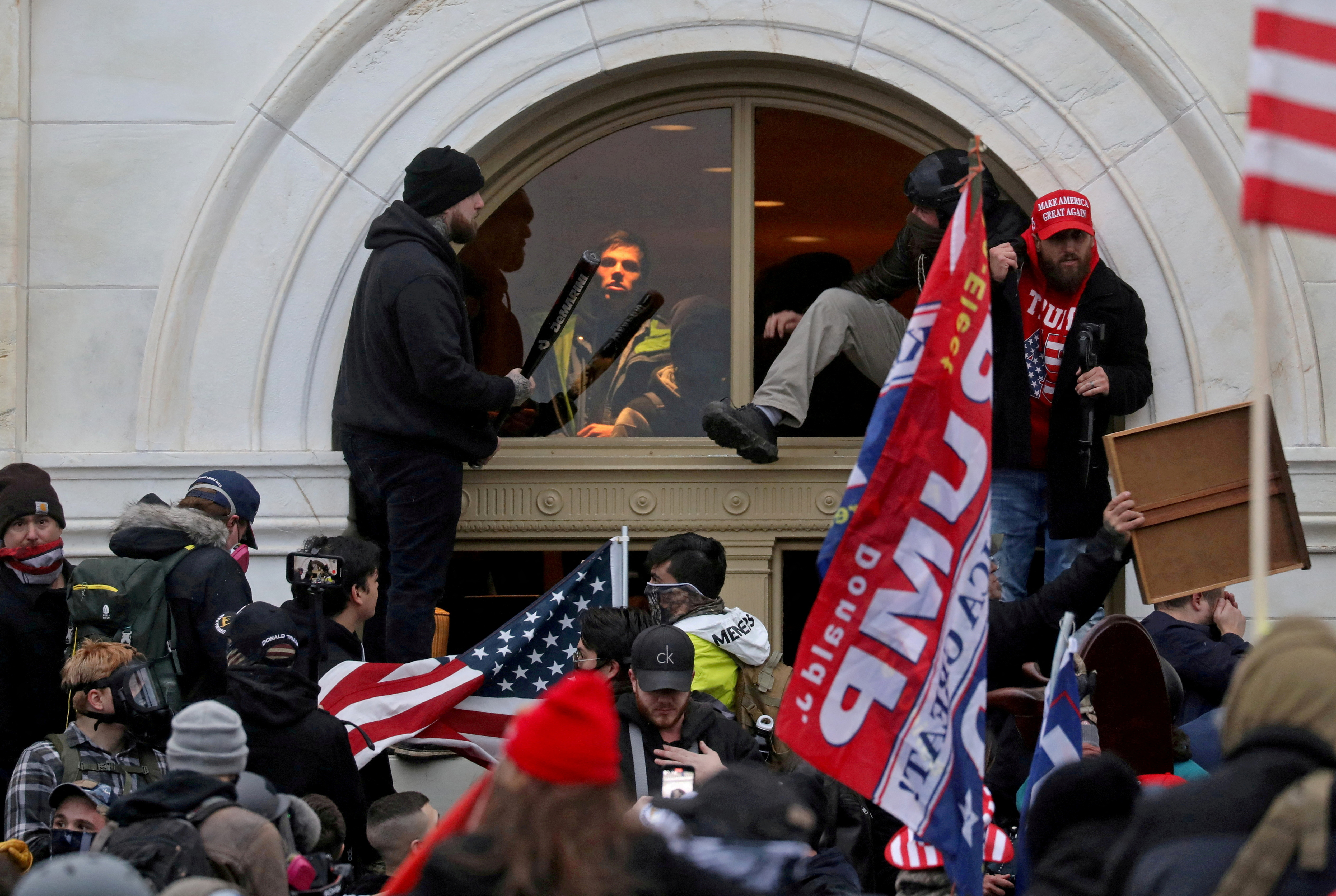
A mob of supporters of then-U.S. President Donald Trump climb through a window they broke as they storm the U.S. Capitol Building in Washington, U.S., January 6, 2021. REUTERS/Leah Millis/File Photo

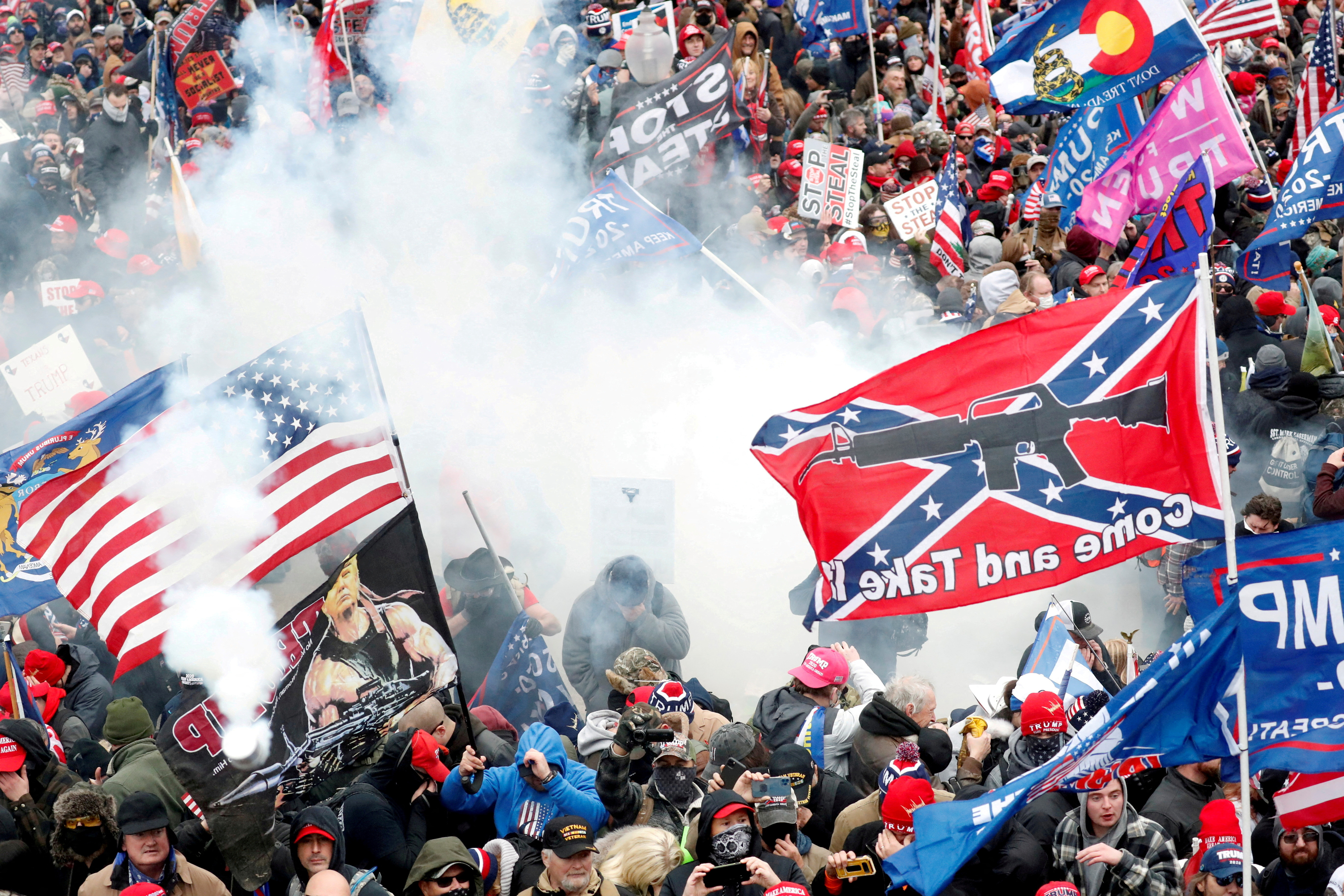
Tear gas is released into a crowd of protesters, with one wielding a Confederate battle flag that reads “Come and Take It,” during clashes with Capitol police at a rally to contest the certification of the 2020 U.S. presidential election results by the U.S. Congress, at the U.S. Capitol Building in Washington, U.S, January 6, 2021. REUTERS/Shannon Stapleton/File Photo

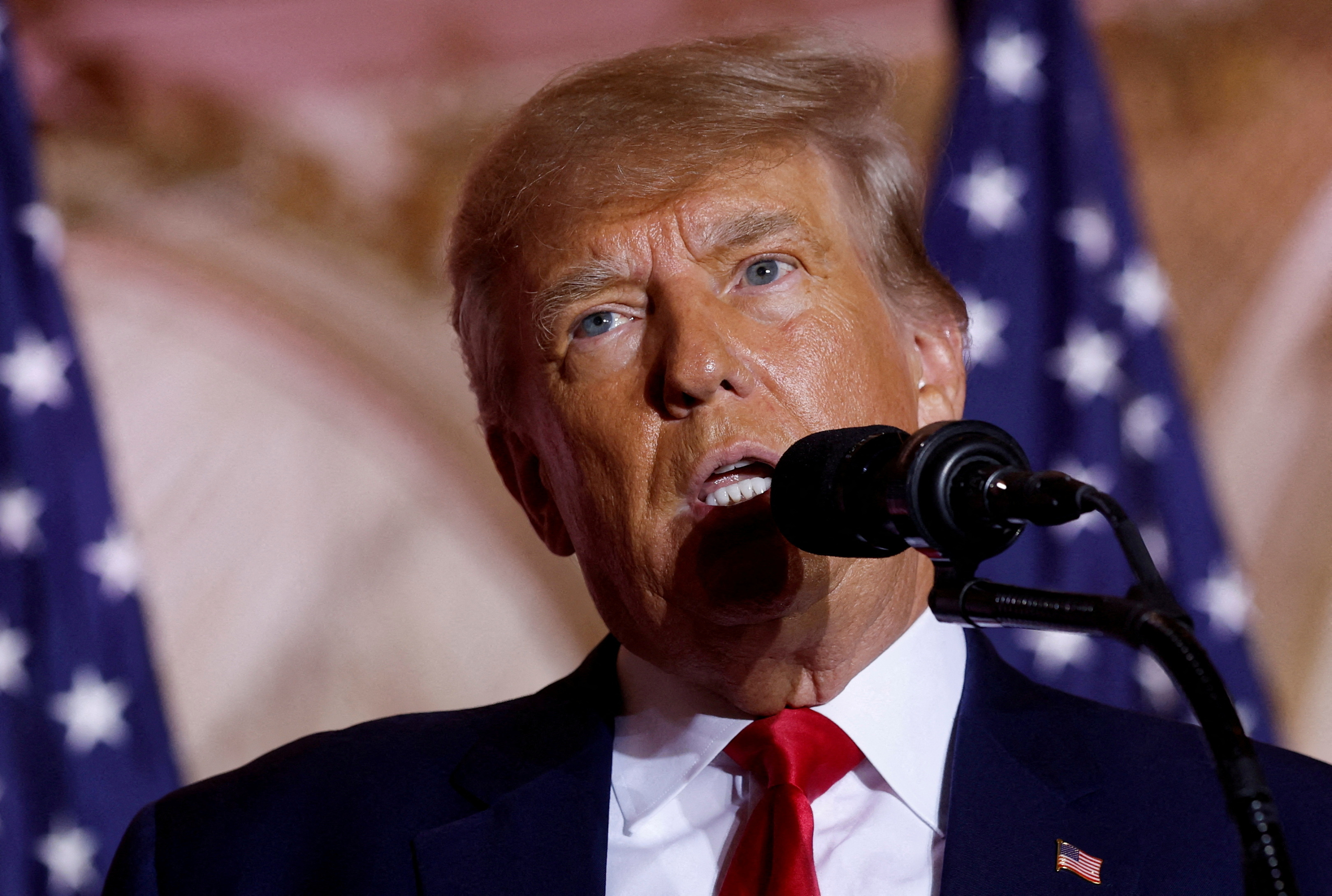
Former U.S. President Donald Trump announces that he will once again run for U.S. president in the 2024 U.S. presidential election during an event at his Mar-a-Lago estate in Palm Beach, Florida, U.S. November 15, 2022. REUTERS/Jonathan Ernst
Categories
Audio Sources - Full Text Articles

Senator wants review of U.S. security assistance to Nigeria following abortion report

2022-12-19T20:17:06Z

U.S. Senator Jim Risch, the top Republican on the Senate Foreign Relations Committee, has requested a review of U.S. security assistance and cooperation programs in Nigeria following Reuters reporting on an illegal abortion program and killing of children carried out by the Nigerian military.

Risch, in a letter to Secretary of State Antony Blinken seen by Reuters, also called for the State Department to examine the potential use of sanctions in addition to an expeditious review of U.S. security assistance and cooperation.

“I look forward to hearing more about the Department’s planned response to the serious and abhorrent allegations levied against a long-standing beneficiary of U.S. security assistance and cooperation which, if deemed credible, have done irreparable harm to a generation of Nigerian citizens and to U.S. credibility in the region,” Risch said in the letter dated Friday.

The State Department did not immediately respond to a request for comment on the letter. A spokesperson for Risch’s office said the State Department had confirmed receipt of the letter but had not yet provided further information. Nigeria’s information minister was not immediately available to comment on the requested review.

A Reuters investigation this month found that since at least 2013, the Nigerian military has conducted a secret, systematic and illegal abortion program in the country’s northeast, ending at least 10,000 pregnancies among women and girls.

Many had been kidnapped and raped by Islamist militants. Resisters were beaten, held at gunpoint or drugged into compliance, witnesses say.

Nigerian military leaders denied the program has ever existed and said Reuters reporting was part of a foreign effort to undermine the country’s fight against the insurgents.

Last week, Reuters also reported that the Nigerian Army and allied security forces have slaughtered children during their gruelling 13-year war against Islamist extremists in the country’s northeast.

Nigerian military leaders told Reuters the army has never targeted children for killing. They said that the reporting in the article was an insult to Nigerians and part of a foreign effort to undermine the country’s fight against the insurgents.

Nigeria’s military chief on Friday called on the National Human Rights Commission to launch an independent investigation into the illegal abortion program reported by Reuters, according to reports.

The Human Rights Commission had already said it would launch an investigation, according to reports.

Earlier this year, the United States approved nearly $1 billion in weapons sales to Nigeria, after Nigeria took delivery last year of Embraer-made A-29 Super Tucanos, a slow-flying plane that can provide close air support to infantry much like a helicopter.

The deal, approved in April, had been put on hold over concerns about possible human rights abuses by the Nigerian government.

The United States has also obligated about $6 million between 2016 and 2020 for the International Military Education and Training (IMET) program.

Related Galleries:

Senator Jim Risch (R-ID) ranking member of the Senate Foreign Relations Committee, attends a hearing on the Fiscal Year 2023 Budget at the Capitol in Washington, U.S., April 26, 2022. Bonnie Cash/Pool via REUTERS

The sun rises behind U.S. Capitol in Washington, U.S., September 13, 2021. REUTERS/Jonathan Ernst


Categories
Audio Sources - Full Text Articles

White House: Expiration of COVID-era restrictions does not mean southern border is open

2022-12-19T20:03:55Z

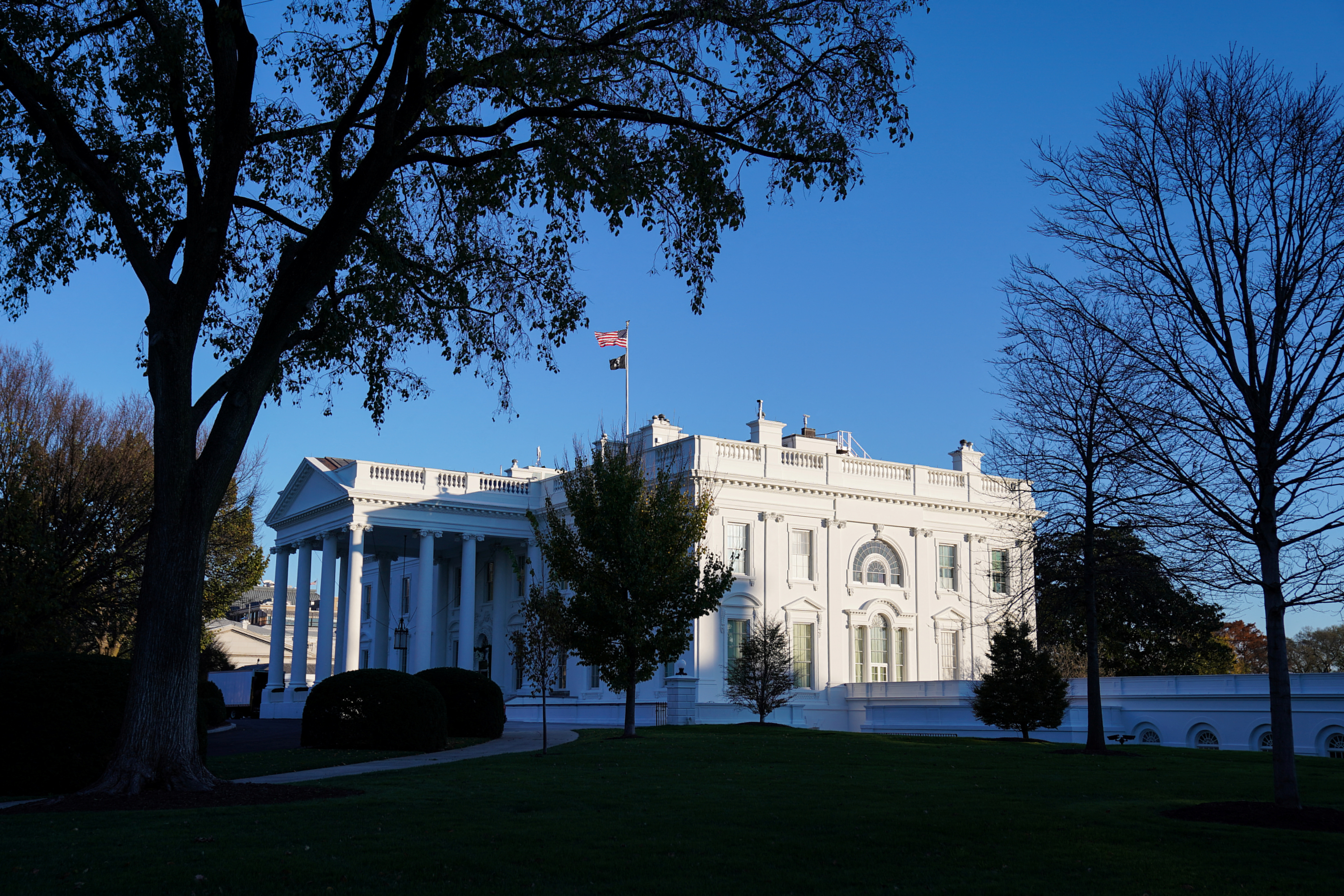
The exterior of the White House in Washington, D.C., U.S., November 19, 2022. REUTERS/Sarah Silbiger

The White House said on Monday an expiration of COVID-19-era restrictions blocking migrants at the U.S.- Mexico border does not mean the southern border is open.

U.S. lawmakers, both Republicans and Democrats, on Sunday pressed President Joe Biden to take action to manage an expected wave of asylum seekers at the southern border when such restrictions end this week.

The policy, known as Title 42, is due to end on Wednesday.

Categories
Audio Sources - Full Text Articles

A Twitter fascist microcosm

robert-harrington.jpg

Help support Palmer Report! Our articles are all 100% free to read, with no forced subscriptions and nothing hidden behind paywalls. If you value our content, you’re welcome to pay for it:

Pay $5 to Palmer Report:

Pay $25 to Palmer Report:

Pay $75 to Palmer Report:


In a previous article I quoted a tweet by Elon Musk complaining about being “doxxed” by reporters. In the tweet Musk wrote, “They posted my exact real-time location, basically assassination coordinates, in (obvious) direct violation of Twitter terms of service.”

What I didn’t know at the time was posting exact real-time locations was not, in fact, a violation of Twitter terms of service. I made the mistake of believing Musk. Musk made posting real-time locations as part of the terms of service retroactively in order to justify kicking several journalists off of Twitter.

That’s what tyrants do, and the tyrannical practice of creating retroactive laws is nothing recent. In fact, it’s so old a practice of tyrants that the United States Constitution specifically guards against it. They are what the Constitution refers to as “Ex post facto laws” and they are expressly forbidden in Article 1, Section 9, Clause 3. Congress is prohibited from passing ex post facto laws.

Elon Musk is showing us in real time how a fascistic regime works and why it ultimately fails in microcosm. It can help us understand why fascistic regimes are inherently unstable, ultimately bad for the state and are given to eventual self-destruction.

Typically (though not always) fascistic regimes begin as a cult of personality. They are often notable for the extreme use of physical symbols. Think swastikas, flags and uniforms in the case of Hitler, black shirts in the case of Mussolini or MAGA hats and Trump flags in the case of Donald Trump. For Musk his symbology was prefabricated in the form of corporate symbols: Tesla, SpaceX and now the bluebird of Twitter.

It’s easy to understand why fascistic regimes are unstable, because they reflect the immediate and often deeply flawed impulses of their dictator. They lack the subtle opposing forces of checks and balances. Elon Musk, for example, is a deeply unstable man whose unfiltered impulses have all but wrecked Twitter. His inherent rashness is untempered by the deliberation of a body of cooler heads. For Musk, to think is to act.

What’s more, like most tyrannical, fascistic dictators Musk is deluded by his own ego. He believes he’s a genius in all things including leadership. It is a feature of a cult following that many of his glassy-eyed adherents see his mistakes as part of a grand and brilliant strategy when in fact they are nothing more than mistakes.

Help support Palmer Report! Our articles are all 100% free to read, with no forced subscriptions and nothing hidden behind paywalls. If you value our content, you’re welcome to pay for it:

Pay $5 to Palmer Report:

Pay $25 to Palmer Report:


Fascism is also a feature of the extreme right. Wikipedia defines fascism as “a far-right, authoritarian, ultra-nationalist political ideology and movement, characterized by a dictatorial leader, centralized autocracy, militarism, forcible suppression of opposition, belief in a natural social hierarchy, subordination of individual interests for the perceived good of the nation and race, and strong regimentation of society and the economy.” Elon Musk is a notorious member of the extreme right, and he makes that clear almost daily.


Musk knows he’s been a bad leader and has made many mistakes. That is why Musk recently posted a tweet conducting a poll in which he says, “Should I step down as head of Twitter? I will abide by the results of this poll.” I voted YES, along with 56% of other Twitter users. Expect him to lose the vote and claim he won. Expect him not to step down. That’s also what fascists do, conduct polls or hold elections then refuse to abide by the results.

Whatever the eventual outcome, Musk has been unequivocally bad for Twitter in the same way all fascist dictators are bad for a nation. He is giving us all a lesson in microcosm. We should all profit and learn from that lesson. And, as ever, ladies and gentlemen, brothers and sisters, comrades and friends, stay safe.

Save Palmer Report! Our articles are all 100% free to read, with no forced subscriptions and nothing hidden behind paywalls. If you value our content, you’re welcome to pay for it:

Pay $5 to Palmer Report:

Pay $25 to Palmer Report:

Pay $75 to Palmer Report:

Write for the Palmer Report Community Section.

Help support Palmer Report! Our articles are all 100% free to read, with no forced subscriptions and nothing hidden behind paywalls. If you value our content, you’re welcome to pay for it:

Pay $5 to Palmer Report:

Pay $25 to Palmer Report:

Pay $75 to Palmer Report:

The post A Twitter fascist microcosm appeared first on Palmer Report.

Categories
Audio Sources - Full Text Articles

How Jan. 6th Committee’s Revelations of Interference in Their Investigation Can Enable Special Counsel Smith

JS-2-1-scaled-e1671474749401.jpg

On Monday, the House Select Committee investigating the January 6th attack on the U.S. Capitol released an executive summary of its final report, which focuses primarily on former President Donald Trump’s alleged criminal efforts to overturn the 2020 election. The committee, however, also presented new evidence of criminal efforts to interfere with its investigation – on the part of some witnesses, their attorneys, and others associated with the former president. It is the kind of evidence that may have far-reaching implications including bolstering Special Counsel Jack Smith’s January 6th and Mar-a-Lago investigations. 

Among the most significant new revelations is the statement in the summary: 

“The Committee has substantial concerns regarding potential efforts to obstruct its investigation, including by certain counsel (some paid by groups connected to the former President) who may have advised clients to provide false or misleading testimony to the Committee” (emphasis added). 

A recent Washington Post report revealed how similar ties have existed in the Mar-a-Lago investigation. That includes Trump’s Super Pac paying for the lawyers for key witnesses including Walt Nauta who apparently initially lied to the FBI before confessing knowledge of Trump’s concealing classified materials. (The committee explicitly notes this connection to the Post’s reporting.)

The committee’s revelations accordingly sweep in a set of lawyers who have exposed themselves to criminal liability. The committee also identified some witnesses who appear to have followed through by lying to the committee. 

These individuals may not have any criminal exposure involving the scheme to overturn the election itself, but now have criminal exposure for their actions toward the congressional investigation as part of a coverup. Their potential criminal liability could provide leverage for Special Counsel Smith to try to flip individuals to cooperate against Trump in the January 6 investigations and, if they also have insights into Mar-a-Lago, then in that investigation as well. 

More specifically, according to the committee’s summary, one “lawyer had advised the witness that the witness could, in certain circumstances, tell the Committee that she did not recall facts when she actually did recall them.” The committee also stated:

“During a break in the Select Committee’s interview, the witness expressed concerns to her lawyer that an aspect of her testimony was not truthful. The lawyer did not advise her to clarify the specific testimony that the witness believed was not complete and accurate, and instead conveyed that, ‘They don’t know what you know, [witness]. They don’t know that you can recall some of these things. So you saying “I don’t recall” is an entirely acceptable response to this.’”

Some of the witnesses also apparently followed through in falsely declaring an inability to recall pertinent information. The executive summary states: “Certain witnesses and lawyers were unnecessarily combative, answered hundreds of questions with variants of ‘I do not recall’ in circumstances where that answer seemed unbelievable.”

The committee also provided detailed analysis of other witnesses, such as former Deputy Chief of Staff for Operations Anthony Ornato, who appeared to have lied to the committee.

It can be a federal crime for any witness to tell congressional investigators that she does not recall information, when she does in fact clearly recall. It is also a federal crime to counsel someone to commit that act. Indeed, one of the most incriminating Nixon tapes included the sounds of President Richard Nixon coaching his senior aides to lie by claiming “I don’t remember, I can’t recall.” 

BOB HALDEMAN: You can say you forgot, too, can’t you?

JOHN DEAN: Sure

PRESIDENT NIXON: That’s right.

JOHN DEAN: But you can’t — you’re — very high risk in a perjury situation.

President Nixon: That’s right. Just be damn sure you say, “I don’t —“

BOB HALDEMAN: Yeah —

PRESIDENT NIXON: “—remember, I can’t recall. I can’t give any honest — an answer to that that I can recall.” But that’s it.

BOB HALDEMAN: You have the same perjury thing on the Hill, don’t you?

JOHN DEAN: That’s right.

PRESIDENT NIXON: Oh hell, yes.

“Several top Richard Nixon White House aides went to prison in part for perjury after insisting they couldn’t recall details surrounding Watergate that later proved disingenuous.” Darren Samuelsohn recounted in an analysis in 2017 of the general topic of falsely claiming not to recall. Others who have falsely claimed a faulty memory have met similar fates.

The core federal crimes include the federal offense of making intentional false statements (18 USC 1001). That law penalizes an individual who “covers up by any trick, scheme, or device a material fact” before congressional investigators. What’s more, witness tampering of the sort described by the committee is potentially covered by federal criminal statute as well (e.g., 18 USC 1505 and 18 USC 1512). 

The federal crime applies to “whoever … corruptly persuades another person, or attempts to do so, or engages in misleading conduct toward another person, with intent to— (1) influence, delay, or prevent the testimony of any person in an official proceeding; [or] (2) cause or induce any person to – withhold testimony … from an official proceeding.”

As for any effort to encourage a witness to lie to Congress, we have covered that issue in the past at Just Security, when it arose with allegations that Trump encouraged Michael Cohen to lie to Congress. We published a roundup of views from former federal prosecutors and defense counsel assessing the potential criminal liability.

The introduction to the committee’s executive summary concludes with a statement that “the Committee has evaluated the credibility of its witnesses and suggests that the Department of Justice further examine possible efforts to obstruct our investigation.” Indeed, Smith may have every incentive to go down that path. It could enable his investigators to learn more from these witnesses and their lawyers about what they truly know about the former president’s actions and other evidence of criminal activities.

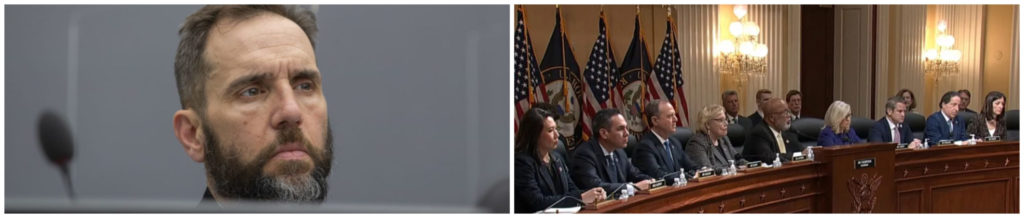
Photo credit: (L) Members of the House Select Committee to Investigate the January 6 Attack on the U.S. Capitol hold its last public hearing in the Canon House Office Building on December 19, 2022 (CSPAN) ; (R) Peter Dejong/ANP/AFP via Getty Images

The post How Jan. 6th Committee’s Revelations of Interference in Their Investigation Can Enable Special Counsel Smith appeared first on Just Security.

Categories
Audio Sources - Full Text Articles

What lessons do past international efforts at rebuilding war-torn countries hold for organizing the reconstruction of Ukraine?

By Elijah Asdourian, David Wessel

Going back to the Marshall Plan after World War II, the U.S. has spent substantial sums and energy to rebuild war-torn countries. The Hutchins Center on Fiscal and Monetary Policy and the Center on the U.S. and Europe asked four experts to identify lessons relevant to Ukraine, particularly for donor countries, from the Marshall Plan, South Sudan, Afghanistan, and Iraq. Here’s a summary of their answers and videos of their full remarks at the December 15, 2022 event, which also included a report on Ukraine’s economy and the way to finance, govern, and organize reconstruction.

The Marshall Plan: ‘The key is to identify the bottlenecks’

Harold James, Claude and Lore Kelly Professor in European Studies at Princeton University, discussed the connections between the crisis Western Europe faced after World War II and the crisis Ukraine faces now. He emphasized that while the U.S. provided necessary funding to Western Europe through the Marshall Plan, the American government paid nowhere near the full cost of reconstruction. The U.S. never spent more than 3% of GDP on the Marshall Plan, and most Western European countries received Marshall Plan funds worth only between 3% to 10% of their GDP. Instead, the administrators of the Marshall Plan identified and covered the costs of two key resources which Western Europe needed—foodstuffs and machinery—and these resources jumpstarted reconstruction efforts. James argued the same principle should apply in Ukraine: “What [Western governments] can do,” he said, “is trigger specific bits of reconstruction, and the key to doing that is to identify the bottlenecks.” While the bottlenecks post-WWII were in agriculture and manufacturing, James pointed to the energy and technology sectors as parallel challenges for Ukraine. Investing in these crucial sectors, in combination with debt relief and further economic integration with Western Europe, would allow donor countries to contribute significantly to Ukraine without paying for the full cost of damages incurred during the war. He added that while there was a real question in the 1940s as to whether Germany could be democratic, there is no need to teach Ukrainians lessons about democracy and democratic values.

South Sudan: ‘Without political and diplomatic attention, a development partner will not have impact’

Brian D’Silva, a retired consultant for the U.S. government who did extensive work in South Sudan, argued that reconstruction efforts often overlook important political factors on the ground. In the case of South Sudan, ethnic divisions, regional conflict, and corruption stymied many developmental efforts. D’Silva advocated for investments in infrastructure, agriculture, and natural resources, but cautioned against providing funding blindly. The U.S. provided over $4 billion in assistance for developmental and humanitarian assistance to South Sudan before it was independent, and several Western and Northern European nations joined. Yet South Sudan fell into a continuing civil war in 2013, only two years after gaining independence in 2011. Without transparency and monitoring, the funding got redirected away from intended uses and put into the hands of corrupt officials who enriched themselves. It also was directed to the capital, Juba, rather than distributed around the country. Existing military leaders, rather than the youth and women in the country, made away with most of the gains, as few processes existed to hold recipients accountable. “The focus has to be on institutions and on supporting a new generation of leaders who prioritize their own communities, rather than getting rich at any cost…” he noted. “We need to have both a political conflict lens and a technocratic lens,” he advised those planning efforts for Ukrainian reconstruction.

Afghanistan: ‘Promise less, deliver more’

Naheed Sarabi, a visiting fellow in Brookings’s  Global Economy and Development program and the former deputy minister for policy in Afghanistan’s finance ministry, warned that international development programs tend to overpromise. Even with 70 international donors on board after reconstruction began post-9/11, the reconstruction of Afghanistan missed many of its key targets, largely as a result of overly ambitious plans, Sarabi said. While some health and education indicators improved from very low starting points, crucial sectors like agriculture and infrastructure saw meager improvement, and Afghanistan remained reliant on international aid. “International assistance to Afghanistan suffered from short-termism and unpredictability,” she said. To achieve fast results, international donors relied on foreign funding and international aid groups within the country, rather than building up national institutions, and this undermined government legitimacy. The Afghan government became more accountable to international donors who had provided financing than to its own people, billions of dollars intended for development leaked out through inefficiency and corruption, and many promises were broken. Sarabi’s advice for multilateral coordination efforts: “Less ambitious plans. As our motto went in the last years of the Afghan Republic, promise less, deliver more.” Further, Sarabi emphasized the importance of donor coordination and country ownership of development efforts. As the West looks towards reconstruction financed by a large set of international donors, it is crucial that Ukraine plays a central role in its own economic development, and that the donors who make it possible are on the same page.

Iraq: ‘Private finance, as well as public finance, is essential.’

Hideki Matsunaga, Director General of the Middle East and Europe Department of the Japan International Cooperation Agency (JICA) and a former adviser to the World Bank on the Middle East and North Africa, argued that private sector investment is essential not just for the reconstruction of Ukraine, but for the long-term health of its economy. “In Iraq, the most critical shortcoming was that reconstruction failed to diversify the Iraqi economy away from the dominant oil sector. As a result, few economic opportunities were created in the non-oil private sector.” Matsunaga argued that private sector involvement is the safest bet for lasting gains for ordinary people within Ukraine, and for creating a large range of job opportunities. While the private sector has the capacity to invest in the Ukrainian economy, as it stands, the risks are very high. Matsunaga thus called for the international community to “de-risk private investment,” explaining, “The resources required for physical infrastructure development are so great that private, as well as public, finance is essential.” On the public finance side, he emphasized the importance of donor coordination. “In Iraq, reconstruction became a set of disparate projects rather than a national enterprise, in part because each donor oversaw projects for which it was providing funding,” he said. In Matsunaga’s view, low-risk private investment, in combination with strong donor coordination for publicly financed projects, will be necessary for Ukraine going forward.


The Brookings Institution is financed through the support of a diverse array of foundations, corporations, governments, individuals, as well as an endowment. A list of donors can be found in our annual reports published online here. The findings, interpretations, and conclusions in this report are solely those of its author(s) and are not influenced by any donation.

12192022_shutterstock_2094921034.jpg?w=2
fblike20.png pinterest20.png twitter20.png email20.png rss20.png  
Categories
Audio Sources - Full Text Articles

I’m a grown-up. I still love playing dreidel

iStock-1290152884.jpg

I love playing dreidel. I love the randomness of it, how it hardly takes any skill once you’ve mastered twisting the top just right and letting it rip for a good, long spin.

I love how it equalizes the players. A 5-year-old could best a grown-up, as my great-nephew did when I brought my dreidel collection to Florida to play with him a week ago. “I spinned it good!” he declared.

Last year, I took my dreidels to LA and got a bunch of 30- and 40-somethings down on the floor for a game. A Russian immigrant who’d never played before beat us all. And this past weekend, I played with my soccer-loving twin cousins and their grandmother. One child won the first round; Grandma won the second.

I love how it makes us pay attention. My son’s college friends came over one Hanukkah, all dressed up en route to an event much cooler than latkes at my house. But even they spent a good long while spinning dreidels in crazy swirling loops on my old parquet floor.

I love how beautiful it is when a dreidel really gets going, how we can’t help but smile when it spins so fast that it’s just a blur, and the relief we feel — even when we lose — when it finally slows and drops and reveals the player’s fate.

The Hebrew letters

And I love how it connects us to Hanukkah. The letters on each of the dreidel’s four sides — nun, gimel, hey, shin — sign the story in Hebrew (Nes gadol haya sham, meaning “A great miracle happened there”). But they also supply directions in Yiddish for how to play: nisht (nothing), gants (all), halb (half), shtel (put).

But then I get to thinking: Playing dreidel is so un-Jewish. It’s not about merit or skill, or hard work, or talent, or doing some good deed — all things we value religiously and culturally. It’s just about whether your dreidel lands on nun, gimel, hey or shin. Maybe you’ll have to put a penny in, or maybe you’ll get half the pot. Maybe you’ll get everything — or maybe you’ll end up with nothing.

That luck of the draw reminds me of something a friend’s mother once said. She was a hidden child in Holland during the war; in fact, she wrote an award-winning book about it, The Upstairs Room. Her name is Johanna Reiss, and she’s been compared to Anne Frank — except that she survived.

A survivor’s perspective

In times of trouble — after 9/11, for example, or during the pandemic’s darkest days — I’ve asked my friend, “What does Johanna say?” Inevitably, her mom is as stalwart as ever. I even keep this quote from her taped to my fridge to reread from time to time: “Life has these bumps, it’s not divided fairly. One gets none of it and others oodles, who knows why. It’s an art to stay tough, we have it. There’s always tomorrow with who knows what kind of good news, or the day after. We give in for a bit but not up.”

Kind of like playing dreidel: One player gets nothing; another gets it all. You never know what fate might have in store.

And then I think, isn’t that a Jewish story, too? A kid on the street might curse you out or grab your kippah or draw a swastika on your synagogue door. A  celebrity or politician might call you names. A country might even kick you out or round you up or worse.

Like Johanna said, life has these bumps; it’s not fair. We give in for a bit, but we don’t give up. And maybe that makes dreidel the most Jewish game of all.

The post I’m a grown-up. I still love playing dreidel appeared first on The Forward.

Categories
Audio Sources - Full Text Articles

Congressman-elect George Santos campaigned as a Jewish Republican. Was he lying?

12-19-2022-George-Santos.jpg

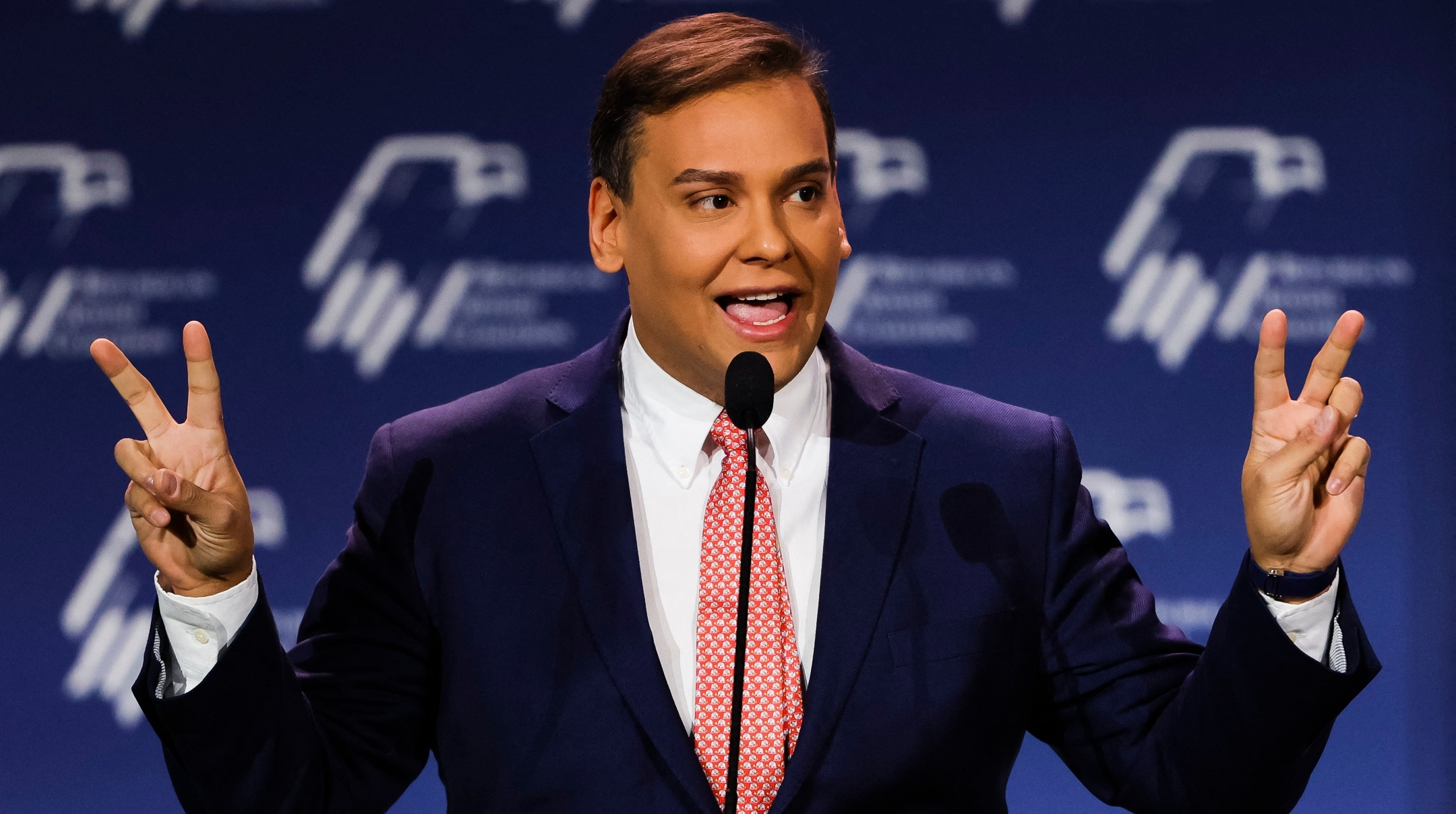
(JTA) — On Sunday night, George Santos joined the Republican Jewish Coalition on Long Island, where he was just elected to Congress, for a menorah-lighting to mark the first night of Hanukkah. He’d been invited as one of just two Republican Jews elected to Congress in November.

On Monday morning, The New York Times published a blockbuster expose alleging that much of what Santos, 34, had said about his education, his wealth, his business experience, and even where he lives is false or at least questionable.

Not addressed in the article: Was he lying about his Jewish background? As with so much else in his personal narrative, there’s little to suggest truth beyond his own past comments.

The Times noted that Santos, 34, has identified to Jewish Insider as Jewish through his mother and Catholic through his father. Both parents were born in Brazil. Santos has said on Twitter that he is a practicing Catholic — and it is not unusual for some Americans to identify as ethnically Jewish and religiously Christian.

“Whether my mother’s Jewish background beliefs, which are mine or my father’s Roman Catholic beliefs, which are also mine, are represented or not,” he told Jewish Insider after his election, “I want to represent everyone else that practices every other religion to make sure everybody feels like they have a partner in me.”

His campaign biography begins, “George’s grandparents fled Jewish persecution in Ukraine, settled in Belgium, and again fled persecution during WWII. They were able to settle in Brazil, where his mother was born.”

That story could well be true. Many European Jews fled to South America during the leadup to the Holocaust. But Santos’ mother, Fatima Devolder (Santos sometimes goes by the name George Devolder), died in 2016 in New York. Nothing in her online obituary, which often is posted by family, indicates any Jewish background. Fatima is one of a number of Roman Catholic appellations for the Virgin Mary, derived from what the church claims are apparitions of Jesus’s mother in 1917 in the Portuguese city of the same name. Devolder is a Flemish/Dutch name, which at least validates Santos’s claim that his mother has Belgian ancestry, but the Flemish people are overwhelmingly Catholic.

Matt Brooks, the RJC CEO who attended the Long Island event, told the Jewish Telegraphic Agency in a text, “I asked him about this. He identifies as Jewish.” 

Santos was a featured speaker last month at the RJC’s annual Las Vegas event, billed as one of two freshmen Jewish Republicans in Congress. (The other is Ohio’s Max Miller.) He campaigned heavily among Orthodox Jews living in New York’s 3rd District, encompassing parts of northern Long Island and a part of Queens. “It was an honor to address fellow members of the Jewish community in #NY03,” he tweeted Nov. 3 after attending a Chabad event also attended by Israeli Ashkenazi Chief Rabbi David Lau.

At Sunday’s Hanukkah event, Santos joined Lee Zeldin, the outgoing New York Jewish congressman who gained traction among New York’s politically conservative Orthodox Jewish voters.

Santos did not return emails sent by JTA to multiple addresses or messages sent through a number of social media platforms. His sister, Tiffany, also did not reply to an email, nor did his lawyer, Joe Murray.

Santos’ claims about his religious and ethnic origins are minor compared to the revelations in the Times expose, which offered new details as well as ones published previously elsewhere and uncovered by Democratic Party opposition research. There are no records of Santos attending the institutes of higher learning he claims to have attended, or of working at some of the financial brokerages he claims have employed him. A charitable institution he started has no evidence of being charitable. He has repeatedly identified with the far right, and then attempted to scrub such expressions from his social media. 

Santos faces outstanding charges in Brazil for allegedly stealing a checkbook from a man in the care of his mother, a nurse, and then cashing checks, according to the New York Times’ report. He has twice been evicted. His financial reporting as a candidate is missing required information, omissions that could bring legal jeopardy. The Times sought Santos out at the address where he is registered to vote; the person there said she did not know him.

It’s not the first time a politician has campaigned as identifying as having a Jewish background that evaporates under scrutiny. In 2018, Julia Salazar, a progressive Democrat who won a seat in the New York state legislature, said she identified as Jewish in part because of her father’s Jewish roots; her brother said their father was not Jewish. 

Salazar and her defenders said that she identified as Jewish and it was untoward to demand proof. The RJC’s Brooks sounded a similar note regarding Santos. “He considers himself a Jew. That’s good enough for me,” he texted.

This article originally appeared on JTA.org.

The post Congressman-elect George Santos campaigned as a Jewish Republican. Was he lying? appeared first on The Forward.

Categories
Audio Sources - Full Text Articles

Biden: US looking to strengthen relationship with Ecuador

WASHINGTON (AP) — With Ecuadorian President Guillermo Lasso by his side, President Joe Biden said Monday the U.S. is looking to expand and strengthen the U.S. relationship with one of its staunchest allies in South America and a country that’s getting plenty of attention from China.

Lasso’s visit to Washington comes as his tiny nation is on the verge of completing a trade agreement with China, the United States’ strongest economic competitor. China this year surpassed the United States as Ecuador’s top trading partner on non-petroleum goods.

The already fragile economy in oil-exporting Ecuador was battered by the coronavirus outbreak. One of Lasso’s top priorities when he took office last year was to sign a free trade agreement with the United States. Ecuador wants to join Colombia and Chile as the only other countries in South America to enjoy such privileged status.

But Biden, in the first two years of his presidency, has shied away from entering new trade pacts as he’s focused on first settling a U.S. economy that’s been battered by the pandemic, historic inflation and supply chain issues exacerbated by Russia’s war in Ukraine.

“Today we’re going to keep building on the progress we’ve made,” Biden said at the start of an Oval Office meeting with Lasso. “Together, we’ve made historic strides.”

Lasso was to meet with USAID administrator Samantha Power later Monday and was scheduled to hold talks with CIA Director William Burns, members of the Senate Foreign Relations Committee as well as World Bank President David Malpass and Inter-American Development Bank President Ilan Goldfajn before returning to Quito on Wednesday.

Sen. Marco Rubio, R-Fla., in a letter to the U.S. International Development Finance Corporation CEO Scott Nathan, urged the Biden administration to surge investment into Educador to counter China’s growing influence in the region.

“While the Biden administration continues to assert that the U.S. is the ‘partner of choice’ for Ecuador and other Latin American countries, governments and civil society in the region bemoan the lack of American-led, and other Western alternatives, to the Chinese Communist Party’s (CCP) current and future investments,” Rubio wrote. “I urge you to work with the Ecuadorian government to identify strategic sectors of the Ecuadorian economy, such as telecommunications, infrastructure, energy, and mining, so that Ecuador has options, other than CCP-backed entities, for investment in these areas.”

The alliance has become more important to the U.S. as much of South America has veered to the left, limiting the political space for cooperation with Washington, whose military and political interventions during the Cold War is recalled with bitterness across the region.

Lasso, a conservative former banker, eked out an upset victory in last year’s presidential election over former leftist strongman Rafael Correa’s handpicked successor. Following his narrow win, he sought to cement a strategic alliance with Washington.

In recognition of the deepening ties, the U.S. Senate last week passed a bipartisan bill, the United State-Ecuador Partnership Act, which seeks to expand bilateral cooperation on the economy, security and environmental conservation. The effort is part of the annual defense bill that awaits Biden’s signature.

Among its provisions are a promise to transfer two excess U.S. Coast Guard cutters to help Ecuador patrol the protected waters around the Galapagos Islands, where China’s distant water fishing fleet has become an unwelcome presence.

“Our idea is to position Ecuador’s name as a country that respects democracy, with independent branches of government,” Lasso said Sunday prior to departing for Washington.

While the Biden administration says it is invested in Ecuador’s success, Lasso confronts a long list of major challenges. Chief among them is the growing influence of criminal gangs — which have been behind a number of recent prison riots — and an economy pegged to the U.S. dollar that has struggled to compete with cheaper production costs in neighboring countries.

Lasso made no direct mention of his desire for a trade pact during his brief appearance with Biden before reporters on Monday. Lasso, however, reminded Biden that Ecuador has been a strong ally, including being one of the first in South America to condemn Russia’s invasion of Ukraine.

“Without a doubt, yes, we have been allies for decades now,” Lasso said. “And I am here to reaffirm that theory that we share among us as allies in our fight for democracy, peace and justice — not only in the region but also to support your vision throughout the world.”

___

Goodman reported from Miami. AP writer Gabriela Molina in Quito, Ecuador, contributed to this report.

Categories
Audio Sources - Full Text Articles

Moldova intel chief: Russia could aim for breakaway region

CHISINAU, Moldova (AP) — Moldova’s national intelligence agency said Monday that Russia could launch a new offensive next year with an aim to “create a land corridor” through southern Ukraine to the Moscow-backed breakaway region of Transnistria.

Moldova’s Intelligence and Security Services, or SIS, released a statement on Monday aimed at clarifying comments made by the agency’s head, Alexandru Musteata, who said during an interview with a local TV station that Kremlin forces could aim to cross into the separatist region of Moldova early next year.

“The question is not whether the Russian Federation will launch a new offensive in the direction of Moldovan territory, but when it will happen: either at the beginning of the year, in January, February, or later, in March, (or) April,” Musteata told TVR Moldova, which released a teaser ahead of the Monday evening broadcast.

“But, judging by the information we have,” he said, “Russia can go further to create a corridor with the Transnistrian region, which is the territory of Moldova.”

“Then it will be possible to say with clarity that yes, they intend to get here, to unite,” Musteata said. “What will follow — their intentions towards Chisinau — we can discuss. But this is a real and very high risk.”

In a move likely aimed at avoiding a public panic, the SIS released a statement seeking to clarify Musteata’s comments, which it said refer to an “analysis of several scenarios in which the Russian Federation would attempt, including a land invasion through the north of Ukraine, towards the Republic of Moldova.”

“We specify that the director of the SIS mentioned that the objective of the Russian Federation to create a land corridor to the Transnistrian region is still valid today, and a new offensive of the Russian Federation in this direction could take place in 2023,” the agency said.

And after the pre-recorded broadcast aired Monday, Musteata walked back his position somewhat, saying during an interview at the TVR Moldova studios that the “Transnistrian region remains at a fairly calm point.”

Transnistria broke away after a 1992 civil war but is not recognized by most countries. It extends roughly 400 kilometers (249 miles) between the eastern bank of the Dniester River in Moldova and the country’s border with Ukraine.

Since Russia invaded Ukraine on Feb. 24, concerns have flared in non-NATO, militarily neutral Moldova that the conflict could spread into the country via Transnistria. Russia bases about 1,500 troops nominally as “peacekeepers” in the breakaway region in a so-called frozen conflict zone. And at least one Russian official has spoken openly about snatching enough land in southern Ukraine to link up Russian-controlled areas from the mainland to Transnistria.

Whether Russia would be able to create such a corridor by April is questionable, as only last month, Russian forces withdrew from Kherson, which was the first major Ukrainian city to fall last winter and which is now back under Ukrainian control, though Russian forces have been shelling it pretty much daily. Kherson now could serve as a potential bridgehead for Ukrainian troops to advance toward Crimea, which Russia has occupied since 2014.

In April, tensions soared in Moldova — a former Soviet republic of about 2.6 million people that is one of Europe’s poorest countries — after a series of explosions hit Transnistria.

In late October, a Russian missile landed in the Moldovan town of Naslavcea near the Ukraine border which shook up residents there. Earlier this month, missile debris was also found in an orchard in another town close to the border, which also caused alarm.

Moldova, which has been suffering an acute energy crisis and skyrocketing inflation, has also experienced two massive power outages in recent months as a result of Russian strikes on Ukraine’s energy grid, to which Moldova’s Soviet-era systems remain interconnected.

___

McGrath reported from Warwick, U.K; Jim Heintz contributed from Moscow, Russia.

___

Follow the AP’s coverage of the war in Ukraine: https://apnews.com/hub/russia-ukraine

WP Radio
WP Radio
OFFLINE LIVE