Categories
Audio Sources - Full Text Articles

Twitter says recently leaked user data are from 2021 breach

Twitter confirmed that the recent leak of members’ profile information resulted from the 2021 data breach disclosed in August 2022.

Twitter confirmed that the recent data leak of millions of profiles resulted from the 2021 data breach that the company disclosed in August 2022.

At the end of July, a threat actor leaked data of 5.4 million Twitter accounts that were obtained by exploiting a now-fixed vulnerability in the popular social media platform.

The threat actor offered for sale the stolen data on the popular hacking forum Breached Forums.

The seller claimed that the database was containing data (i.e. emails, phone numbers) of users ranging from celebrities to companies. The seller also shared a sample of data in the form of a csv file.

Twitter data leakSource RestorePrivacy

In August the company confirmed that the data breach was caused by the now-patched zero-day flaw submitted by zhirinovskiy via bug bounty platform HackerOne and that the researcher received a $5,040 bounty.

“We want to let you know about a vulnerability that allowed someone to enter a phone number or email address into the log-in flow in the attempt to learn if that information was tied to an existing Twitter account, and if so, which specific account.” reads the Twitter’s advisory. “In January 2022, we received a report through our bug bounty program of a vulnerability that allowed someone to identify the email or phone number associated with an account or, if they knew a person’s email or phone number, they could identify their Twitter account, if one existed,” continues the social media firm.

“This bug resulted from an update to our code in June 2021. When we learned about this, we immediately investigated and fixed it. At that time, we had no evidence to suggest someone had taken advantage of the vulnerability.”

In November, the website 9to5mac.com claimed that the data breach was worse than initially reported by the company. The website reports that multiple threat actors exploited the same flaw and the data available in the cyberscrime underground have differed sources.

“A massive Twitter data breach last year, exposing more than five million phone numbers and email addresses, was worse than initially reported. We’ve been shown evidence that the same security vulnerability was exploited by multiple bad actors, and the hacked data has been offered for sale on the dark web by several sources.” reads the post published by 9to5mac.com

Source: Twitter account @sonoclaudio

9to5Mac‘s claims are based on the availability of the dataset that contained the same information in a different format offered by a different threat actor. The source told the website that the database was “just one of a number of files they have seen.” It seems that the impacted accounts are only those having the “Discoverability | Phone option (which is hard to find within Twitter’s settings)” enabled in late 2021.

The archive seen by 9to5Mac includes data belonging to Twitter users in the UK, almost every EU country, and parts of the US.

“I have obtained multiple files, one per phone number country code, containing the phone number <-> Twitter account name pairing for entire country’s telephone number space from +XX 0000 to +XX 9999.” the source told 9to5Mac. “Any twitter account which had the Discoverability | Phone option enabled in late 2021 was listed in the dataset.”

The experts speculate that multiple threat actors had access to the Twitter database and combined it with data from other security breaches.

The security researcher behind the account @chadloder (Twitter after the disclosure of the news) told 9to5Mac that the “email-twitter pairings were derived by running existing large databases of 100M+ email addresses through this Twitter discoverability vulnerability.”

The researcher told the website that they would reach out to Twitter for comment, but the entire media relations team left the company.

Now the company shared the results of the investigation conducted by its Incident Response Team.

“In November 2022, some press reports published that Twitter users’ data had been allegedly leaked online,” reads the update provided by the company. “As soon as we became aware of the news, Twitter’s Incident Response Team compared the data in the new report to data reported by the media on 21 July 2022. The comparison determined that the exposed data was the same in both cases.”

The company pointed out that no passwords were exposed, however, it encourages its users to enable 2-factor authentication using authentication apps or use hardware security keys to protect their accounts from unauthorized logins.

“We also encourage Twitter users to remain extra vigilant when receiving any kind of communications over email, as threat actors may leverage the leaked information to create very effective phishing campaigns,” concludes the advisory. “Be wary of emails conveying a sense of urgency and emails requesting your private information, always double check that emails are coming from a legitimate Twitter source.”

Follow me on Twitter: @securityaffairs and Facebook and Mastodon

Pierluigi Paganini

(SecurityAffairs – hacking, data leak)

The post Twitter says recently leaked user data are from 2021 breach appeared first on Security Affairs.

Categories
Audio Sources - Full Text Articles

Sam Bankman-Fried was playing the game Storybook Brawl and said in an interview he didn’t think he would be detained just hours before his arrest

Sam Bankman-FriedFTX founder Sam Bankman-Fried said he could not testify before Congress in person as he was “quite overbooked.”

Photo by Alex Wong/Getty Images

  • Bahamian authorities arrested FTX founder Sam Bankman-Fried on Monday.
  • Just hours before, SBF said in an interview he didn’t believe he would be detained on US shores.
  • He made the comments while explaining why he was planning to call-in to testify before the Congress on Tuesday.

A multitasking Sam Bankman-Fried — who was playing a video game and responding to questions during an interview — said he didn’t think he would be detained if he returned to the US, mere hours before he was arrested in the Bahamas.

“I don’t believe I would be, but I haven’t done a deep dive into that. That’s something I have to think harder about,” Bankman-Fried said in a Monday interview on Twitter Spaces with options flow platform Unusual Whales, per a transcript.

Unusual Whales has called Bankman-Fried’s interview “the last thing he did as a free man.”

Bankman-Fried was responding to a question about potential detainment if he entered the US — as he was scheduled to testify before Congress on Tuesday. The former FTX CEO had said he wasn’t going to be there in person because he was “quite overbooked,” per the transcript.

He also said it was difficult for him “to move right now and travel because the paparazzi effect is quite large.”

—unusual_whales (@unusual_whales) December 12, 2022

During the interview — and amid a constant clicking sound in the background — Bankman-Fried was asked if he was playing video games, to which he responded: “Yes I am.”

He said he was playing “Storybook Brawl,” a game FTX acquired in March 2022. Bankman-Fried had told the New York Times in November the game clears his mind.

Though he was arrested in the Bahamas, Bankman-Fried could face extradition to the US, experts told Insider’s Sindhu Sundar and Katherine Tangalakis-Lippert on Tuesday. 

The US Securities and Exchange Commission, or the SEC, said after Bankman-Fried’s arrest it will file charges against him on Tuesday, relating to violations of securities law.

Rep. Maxine Waters, who chairs the US House Financial Services Committee, said in a statement she was “surprised” at Bankman-Fried’s arrest as that means he wouldn’t be testifying as scheduled.

“Although Mr. Bankman-Fried must be held accountable, the American public deserves to hear directly from Mr. Bankman-Fried about the actions that’ve harmed over one million people, and wiped out the hard-earned life savings of so many,” Waters said. 

Bankman-Fried resigned as the CEO of FTX on November 11, the same day the exchange filed for Chapter 11 bankruptcy, as it failed to secure a rescue following an intense week-long liquidity squeeze. 

The curly-haired 30-year has been on a media apology tour since FTX’s collapse but told the New York Times in late November that he didn’t think he’s legally accountable.

The SEC did not immediately respond to Insider’s request for comment sent outside regular business hours.

Insider was not immediately able to reach Bankman-Fried’s representatives for comment, but a representative declined comment to the New York Times upon his arrest.

Read the original article on Business Insider
Categories
Audio Sources - Full Text Articles

Netanyahu vows to keep “status quo“ amid rise of religious parties

2022-12-13T08:11:55Z

Benjamin Netanyahu speaks during a ceremony where Israel President Isaac Herzog handed him the mandate to form a new government following the victory of the former premier’s right-wing alliance in this month’s election at the President’s residency in Jerusalem November 13, 2022. REUTERS/ Ronen Zvulun/File Photo

Prime Minister-designate Benjamin Netanyahu pledged on Tuesday to balance out religious and secular interests in Israel as he tries to form a new government with nationalist and ultra-Orthodox Jewish parties.

“We will preserve the status quo. Everyone will live in accordance with their own faith. This will not become a nation of religious law. It will be a country in which we tend to all citizens of Israel, without exception,” he told parliament.

Categories
Audio Sources - Full Text Articles

India reports injuries on both sides in border clash with China

2022-12-13T06:51:52Z

NEW DELHI (Reuters) -Indian troops prevented Chinese soldiers from entering Indian territory on Dec. 9 during a border scuffle, the first such clash since 2020, that led to injuries on both sides, India’s defence minister said on Tuesday.

?m=02&d=20221213&t=2&i=1616918538&r=LYNX

FILE PHOTO: India’s Defence Minister Rajnath Singh speaks during a joint statement with U.S. Secretary of Defense Lloyd Austin (not pictured) following their meeting in New Delhi, India, March 20, 2021. REUTERS/Adnan Abidi

The incident occurred in the Tawang sector of India’s northeastern Himalayan state of Arunachal Pradesh, which borders China’s south and is also claimed by Beijing. Indian troops suffered no fatality or serious injuries, minister Rajnath Singh said.

“PLA troops attempted to unilaterally change the status quo by encroaching on the Line of Actual Control, in the Yangtse area of Tawang sector,” Singh said, referring to the People’s Liberation Army.

“Our army faced this attempt of China with firmness. A scuffle ensued in this face-off. The Indian Army bravely prevented the PLA from encroaching on our territory, and forced them to withdraw to their posts. Some soldiers from both sides were injured in the skirmish.”

China’s foreign ministry said that according to their knowledge, the situation on the border with India was generally stable.

India’s foreign minister had told parliament last week, before the latest clash, that relations with China could not go back to normal without peace on the border.

The scuffle was the first between the two countries since deadly clashes in June 2020 when Indian and Chinese troops were involved in hand-to-hand combat in the Galwan Valley of Ladakh, abutting the Chinese-held Tibetan plateau.

The incident led to the death of 20 Indian soldiers and four Chinese troops.

“Due to timely intervention of Indian commanders, PLA soldiers went back to their locations,” Singh told lawmakers on the latest clash, adding that the Indian commander in the area held a meeting with his Chinese counterpart on Sunday to discuss the issue.

“The Chinese side was asked to refrain from such actions and maintain peace and tranquillity along the border. The issue has also been taken up with the Chinese side through diplomatic channels.”

The un-demarcated 3,800 km (2,360 mile) frontier between the nuclear-armed Asian giants had stayed largely peaceful since a war in 1962, before the clashes two years ago sent relations nose-diving.

For long, troops on both sides have adhered to long-standing protocols to avoid the use of any firearms along the de facto border known as the Line of Actual Control.


Categories
Audio Sources - Full Text Articles

Ladakh herders endeavor to save future on climate frontier

KHARNAK, India (AP) — Nomad Tsering Angchuk vows to stay put in his remote village in India’s Ladakh region.

His two sons and most of his fellow villagers have migrated to a nearby urban settlement but Angchuk is determined to herd his flock of fine cashmere-producing goats in the treeless Kharnak village, a hauntingly beautiful but unforgiving, cold mountainous desert.

The 47-year-old herds 800 sheep and goats and a flock of 50 Himalayan yaks in Kharnak. In 2013, he migrated to Kharnakling, an urban settlement in the outskirts of a regional town called Leh but returned a year later, not because his old home had become any better, he said, “but because the urban centers are getting worse and there are only menial jobs for people like us.”

Nestled between India, Pakistan and China, Ladakh has faced both territorial disputes and the stark effects of climate change. The region’s sparsely populated villages have witnessed shifting weather patterns that have already altered people’s lives through floods, landslides and droughts.

Thousands of Ladakh nomads, known for their unique lifestyle in one of the most hostile landscapes in the world have been at the heart of these changes, compounded by border conflict and shrinking grazing land. The changes have forced hundreds to migrate to mainly urban settlements, while others work to make it a more habitable place.

Angchuk’s sons didn’t return — they don’t want to be shepherds, he said — and settled in Leh. One became a construction contractor and the other works at a travel agency, part of the region’s burgeoning tourism industry.

With 300-plus days of sunshine, the desert is in the rain shadows of the Himalayas and receives only about 4 inches (100 millimeters) of precipitation annually.

At an altitude of 15,000 feet (4,750 meters), temperatures can fall to minus 35 Celsius (minus 31 degrees Fahrenheit) during long winter months. But it’s getting hotter.

There is no word for mosquito in the local Ladakhi language, but the region has lots of these insects now, said Sonam Wangchuk, an engineer working on solutions for sustainability at his Himalayan Institute of Alternative Ladakh.

“These are all coming with the viability of climate for them,” he said.

Ladakh’s thousands of glaciers, which help give the rugged region its title as one of the water towers of the world, are receding at an alarming rate, threatening the water supply of millions of people.

“This year we had an unprecedented melting of glaciers,” said Prof. Shakil Romshoo, a leading glaciologist and earth scientist.

Romshoo said his team has been studying seven glaciers in the Kashmir and Ladakh Himalaya for nine years but “this year shows the maximum ablation,” referring to the amount of snow and ice that has disappeared.

Drung-Drung, Ladakh’s second largest glacier, melted five meters (197 inches) in its thickness this year compared to an average one meter (39 inches) annually in last few years.

The melting, experts say, has been exacerbated by an increase in local pollution that has worsened due to the region’s militarization. Black carbon or soot from the burning of fossil fuels on the glaciers absorbs sunlight and contaminates waterways, threatening the region’s security of food, water and energy.

The pollution is “a huge environmental onslaught,” engineer Wangchuk said. “Most of it is due to heating shelters that can be easily replaced by non-carbon-based heating systems.”

He added Ladakh today is “probably the densest militarized zone where the civilian-soldier ratio is 1:2.”

The ongoing standoff between India and China has witnessed the deployment of tens of thousands of additional soldiers to the already militarized region.

“Climate change is a global mismanagement while the pollution is a local mismanagement. We’re witnessing devastating effects of the mix in Ladakh,” Wangchuk said.

“It’s not just any little conflict, it’s much more than that and whoever wins we all lose.”

Herders say with access to the usual breeding and birthing grounds blocked by militaries on either side, newborn goats and sheep are perishing in the extreme cold of higher elevations.

Shepherds roamed these pasturelands atop the roof of the world along the unmarked borders with China for centuries where the harsh winds cause the goats to grow their super-soft wool.

Cashmere takes its name from disputed Kashmir, where artisans weave the wool into fine yarn and exquisite clothing items that cost up to thousands apiece in a major handicraft export industry.

“None of the other products get as much revenue as what they produce and they are the true generators of wealth in Ladakh,” Wangchuk said about Kharnak nomads. “They’re the most precious but they’re the most neglected lot.”

The nomads live a grueling life and follow a strict round-the-clock routine. They milk and shear their animals twice a day, maintain stone-walled pens, weave carpets, collect and sun-dry manure for fire and cook food. Shepherds also shuttle their animals from place to place more often than usual in search of greener grazing areas.

But there’s almost no health care, school or a proper irrigation system.

“It’s a whole year work here, no holidays. Even if you’re sick you’ve to tend to animals,” Angchuk, the nomad, said. “In a decade or so I think there won’t be any Kharnak nomads although our people will be around. We’ll be history.”

Authorities say they’re doing everything they can to stop the flight of nomads. Today the village has solar panels for electricity, government-built prefab huts and water taps. Some parts have telecommunication coverage.

But the herders say it’s not enough.

Tundup Namgail, the Leh district head of sheep husbandry department, said all facilities notwithstanding, the nomads need to be “lured back on practical terms, not by romanticizing their life.”

The “only way to keep them there is to improve their profitability. Make them rich somehow,” he said.

Other solutions are emerging. Ice stupas, an artificial glacier made by villagers and named after a type of sacred Buddhist structure, are becoming an alternate water source.

In winter, villagers store water in the form of conical-shaped ice heaps that dribble down as the temperature warms.

In the region’s Kulum village this method has partially worked.

Some eight out of 11 families in the farming village migrated to other areas after a catastrophic drought followed deadly flooding in 2010 and dried up Kulum’s water.

A decade later villagers and a team of environmental activists, including Wangchuk, formed an ice stupa up in the nearby mountain. Last year, some families returned as a trickle of water from the man-made glacier irrigated some patches of the village field.

Still, experts say the climate change-induced flash floods and droughts have disrupted the hydrological system of many villages.

“It’s a kind of blessing in disguise that lesser people are doing farming now,” Wangchuk said. “People who are not farming are in a way helping those who are farming by making available the little water that now comes.”

Kharnak herder Paljor Tundup nevertheless worries he could be the last generation of shepherds in the region.

“Our children don’t want this life,” he said as he picked up a hank of wool to pass on to his daughter weaving a carpet nearby. “Honestly, we also don’t have much to argue with them in favor of this kind of life.”

___

Follow Aijaz Hussain on Twitter at twitter.com/hussain_aijaz

___

Associated Press climate and environmental coverage receives support from several private foundations. See more about AP’s climate initiative here. The AP is solely responsible for all content.

Categories
Audio Sources - Full Text Articles

Donors gather in Paris to get Ukraine though winter, bombing

PARIS (AP) — Dozens of countries and international organizations are throwing their weight behind a fresh push Tuesday to keep Ukraine powered, fed, warm and moving in the face of Russia’s sustained aerial bombardments that have plunged millions into the cold and dark during winter.

An international donor conference in Paris was expected to raise and help coordinate many tens of millions of dollars of aid — both financial and in kind — to be rushed in coming weeks and months to Ukraine to help its beleaguered civilian population survive winter’s freezing temperatures and long nights.

Specifically, the conference is to focus on helping Ukraine meet its needs for water, power, food, health and transport during the coming months through to the end of March. The meeting’s French organizers say the aid drive will also send a message to the Kremlin that the international community is sticking by Ukraine against Russia’s aerial bombardments that have savaged the Ukrainian power grid and other key infrastructure.

Sweden was among the first nations attending the meeting to pledge more aid. Its foreign trade minister, Johan Forssell, announced a contribution of 55 million euros (US$58 million) for humanitarian aid and the rebuilding of schools, hospitals and energy infrastructure.

As winter bites, “we need to do whatever we can to help improve conditions in Ukraine and also help them to fight off the Russian invaders,” he said. “We’re here for them as long as it takes.”

French President Emmanuel Macron and Ukraine President Volodymyr Zelenskyy, attending remotely by video link, will open the conference with speeches.

The conference is the latest Ukraine-related diplomatic effort that Macron has championed.

The meeting also aims to put in a place a system to coordinate international aid this winter, mirroring the way that Western nations supplying weapons coordinate their military support. A web-based platform will enable Ukraine to list its civilian aid needs, and allow donors to show what they’ll supply in response.

The conference’s French organizers say they are expecting more than 45 nations and 20 international institutions to take part.

___

Follow AP coverage of the war in Ukraine at: https://apnews.com/hub/russia-ukraine

Categories
Audio Sources - Full Text Articles

Analysis: Japan“s Kishida walks tightrope to redemption with planned defence splurge

2022-12-13T07:33:35Z

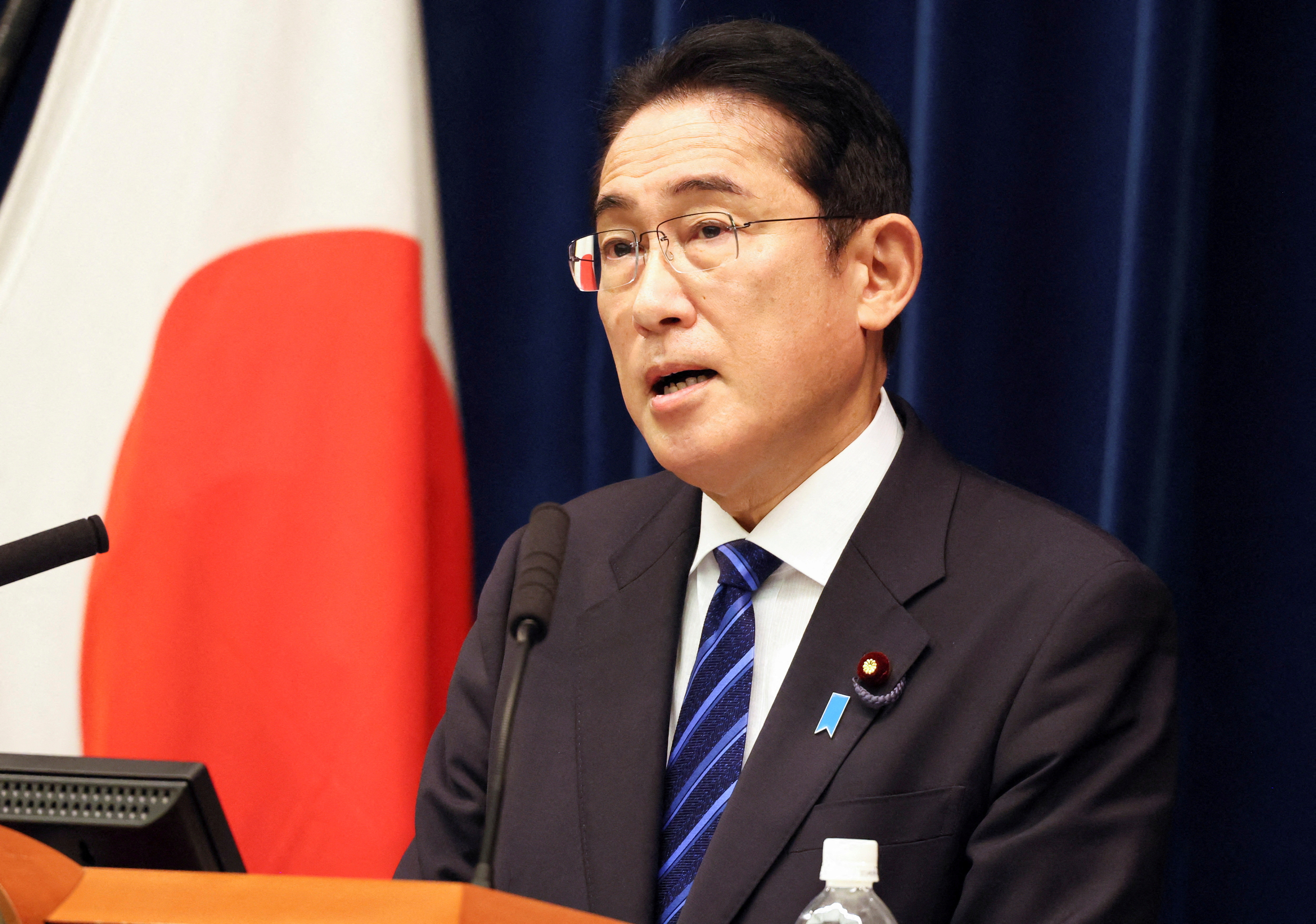
Japanese Prime Minister Fumio Kishida speaks to the media at his official residence after finished an extraordinary Diet session in Tokyo, Japan, December 10, 2022. Yoshikazu Tsuno/Pool via REUTERS

Boosting military spending may be Japanese Prime Minister Fumio Kishida’s best hope of reviving his sinking popularity, but there is a catch, analysts say: paying for it with unpopular new taxes could undermine an already wobbly premiership.

About two-thirds of Japanese voters back a government plan for the country’s biggest military build-up since World War Two, arming it with missiles that can strike targets in neighbouring China or North Korea.

That is more than double Kishida’s approval rating, which has plummeted amid revelations about his ruling Liberal Democratic Party’s (LDP) ties to the controversial Unification Church and the resignation of three scandal-tainted ministers.

The problem with the crowd-pleasing defence policy is that Kishida’s administration has been unclear about how it will pay for the estimated $320 billion splurge over the next five years. The increase would push defence spending to 2% of the country’s gross domestic product, or about a tenth of current public spending.

His government has said cost cutting won’t cover it, and with growing unease about how financial markets will react to signs of profligacy, Kishida is turning to tax increases that few voters appear to want and many LDP lawmakers oppose.

“From his perspective, he is engaged in a delicate balancing act,” said Koichi Nakano, a professor of political science at Sophia University in Tokyo. “If I had to bet, then I would probably bet against him (Kishida) surviving the entire calendar year next year.”

Kishida, who leads one of the LDP’s smaller factions, needs public support to keep the fractious group in line so he can govern Japan while navigating a slowing global economy, inflation and geopolitical tensions with the country’s nuclear-armed neighbours.

Although there are no signs of leadership challenges, analysts say digital minister Taro Kono, who stood against Kishida in last year’s leadership run-off, and former foreign minister Toshimitsu Motegi could be successors.

Missile tests and other aggressive acts by China and North Korea have solidified public support for a stronger Japanese military.

Yet only 20% of respondents to an October poll published by the Yomiuri newspaper, Japan’s biggest daily, favoured tax increases to pay for increased defence spending, compared with 40% who backed government borrowing.

In a survey by Fuji Television last month, 66% of people said they opposed higher taxes to pay for a bigger military.

Kishida’s advisers, however, have prodded him to embrace tax increases.

A panel of experts the premier established to guide him on defence last month urged “broad tax measures” to pay for the spending alongside financial prudence from the world’s most indebted large industrial nation.

The report even made vague reference to the turmoil unleashed on financial markets when former British Prime Minister Liz Truss announced unfunded tax cuts in September that were hastily withdrawn and led to her resignation.

Kishida’s experts seem to be winning his ear, even though many in his own party disagree.

At a news conference on Saturday, Kishida, who needs an extra $30 billion a year for his defence plan once money from other reserves runs out, said Japan would pay for any spending shortfall with tax revenue rather than government bonds, which would expand national debt that is already more than twice the size of the economy.

On Monday, however, Kyodo News reported that the government would issue about 1.6 trillion yen ($11.61 billion) in construction bonds for Defence Force facilities.

Kishida also pledged that tax increases would not squeeze peoples’ incomes, earning him a rare public rebuke from one of his own cabinet ministers for suggesting that businesses would have to cover the cost.

“I can’t comprehend why the Prime Minister would make remarks that will discourage wage increases,” economic security minister, Sanae Takaichi wrote on Twitter. Takaichi stood against him in the LDP leadership race in 2021.

Many in Kishida’s party are opposed to tax increases, including 70% of the LDP committee that has formulated much of Kishida’s defence plan, according to Masahisa Sato, an upper house lawmaker and former deputy defence minister, who is one of the LDP’s most vocal proponents of a stronger military.

Among those opposed, “some are just against it, but others want more time to discuss a funding plan,” he said, a course both he and Takaichi advocate.

For now it seems Kishida’s best policy may be silence, even if that just puts off awkward questions, analysts say.

“To head off any manoeuvring within the LDP that threatens his administration, Kishida will have to pander to the whims of lawmakers,” said Tomoaki Iwai, professor emeritus at Nihon University, who predicted the defence plan may not bolster Kishida’s popularity at all.

($1 = 136.5600 yen)

Categories
Audio Sources - Full Text Articles

China deletes COVID tracking app as reopening gathers pace

2022-12-13T07:47:46Z

People in China celebrated the withdrawal on Tuesday of a state-mandated app used to track whether they had travelled to COVID-stricken areas, in the latest loosening of some of the world’s toughest anti-virus rules.

As authorities deactivated the ‘itinerary code’ app at midnight on Monday, China’s four telecoms firms said they would delete users’ data associated with the app.

“Goodbye itinerary code, I hope to never see you again,” said a post on social media platform Weibo, where netizens cheered the demise of an app that critics feared could be used for mass surveillance.

“The hand that stretched out to exert power during the epidemic should now be pulled back,” wrote another user.

For all the relief over last week’s decision to begin rowing back the government’s stringent ‘zero-COVID’ policy, there are fears that China may now pay a price for having possibly protected its 1.4 billion people too well against the virus.

The potential for a surge of infections during the Chinese New Year holiday next month, when people travel across the country to be with their families, remains a danger for a population that lacks “herd immunity” and has relatively low vaccination rates among the elderly, according to some analysts.

Itinerary codes were mainly used to track domestic travel within China, while authorities also use so-called health codes that residents must scan to enter public venues in order to check whether they may have been in contact with the virus.

The moves made last week to unwind the COVID curbs included dropping mandatory testing prior to many public activities and reining in quarantine.

Long queues outside fever clinics were a worrying sign that a wave of infections is building, even though official tallies of new cases have trended lower in recent weeks as authorities eased back on testing.

While China has not announced that the health codes will be scrapped, several cities including Shanghai have said that residents are no longer required to show these codes when entering places such as shops and restaurants.

This loosening of controls, three years into the pandemic, comes after historic protests against economically-damaging curbs that had been repeatedly championed by President Xi Jinping.

The demonstrations, which ranged from candle-lit vigils in Beijing to street clashes between angry residents and riot police in Guangzhou, were the biggest show of public discontent in mainland China since Xi came to power in 2012.

Beijing’s envoy to the United States on Monday said he believes China’s COVID-19 measures will be further relaxed in the near future and international travel to the country will also become easier.

China has all but shut its borders to international travel since the pandemic first erupted in the central Chinese city of Wuhan in later 2019. International flights are still at a fraction of pre-pandemic levels and arrivals face eight days in quarantine.

Financial hub Hong Kong, which already has less stringent border controls than mainland China, on Tuesday said it would drop a requirement for incoming travellers to avoid bars and restaurants in the first three days after their arrival.

Hong Kong will also scrap its mobility-tracking app governing access to restaurants and venues such as gyms, clubs and salons, Chief Executive John Lee said on Tuesday.

While the lifting of controls is seen as brightening the prospects for global growth longer term, analysts say Chinese businesses will struggle in the weeks ahead, as a wave of infections create staff shortages and make consumers wary.

Analysts say the decline in reported new cases could reflect the dropping of testing requirements rather than the actual situation on the ground.

“The rapid surge of infections in big cities might be only the beginning of a massive wave of COVID infections,” said Ting Lu, Chief China Economist at Nomura.

“We reckon that the incoming migration around the Chinese New Year holiday in late January could bring about an unprecedented spread of COVID.”

Experts say China’s fragile healthcare system could be quickly overwhelmed if those fears are realised.

In China’s capital Beijing, the line of people queuing outside a fever clinic at one hospital in the upmarket Chaoyang district stretched back 30 metres, according to a Reuters witness.

Empty seats on commuter trains and deserted restaurants in Beijing have underlined the hesitancy some people harbour about embracing new found freedoms.

“Maybe other people are afraid or are worried about kids’ and grandparents’ health conditions. It’s a personal choice,” Gao Lin, a 33-year-old financier, told Reuters on a sidewalk in the capital.

China stocks (.CSI300) edged lower on Tuesday as a recent rebound triggered by reopening hopes gave way to concerns about spreading infections. The yuan currency was little changed, but it is already set for its worst year since 1994, when China unified the official and market exchange rates.

Related Galleries:

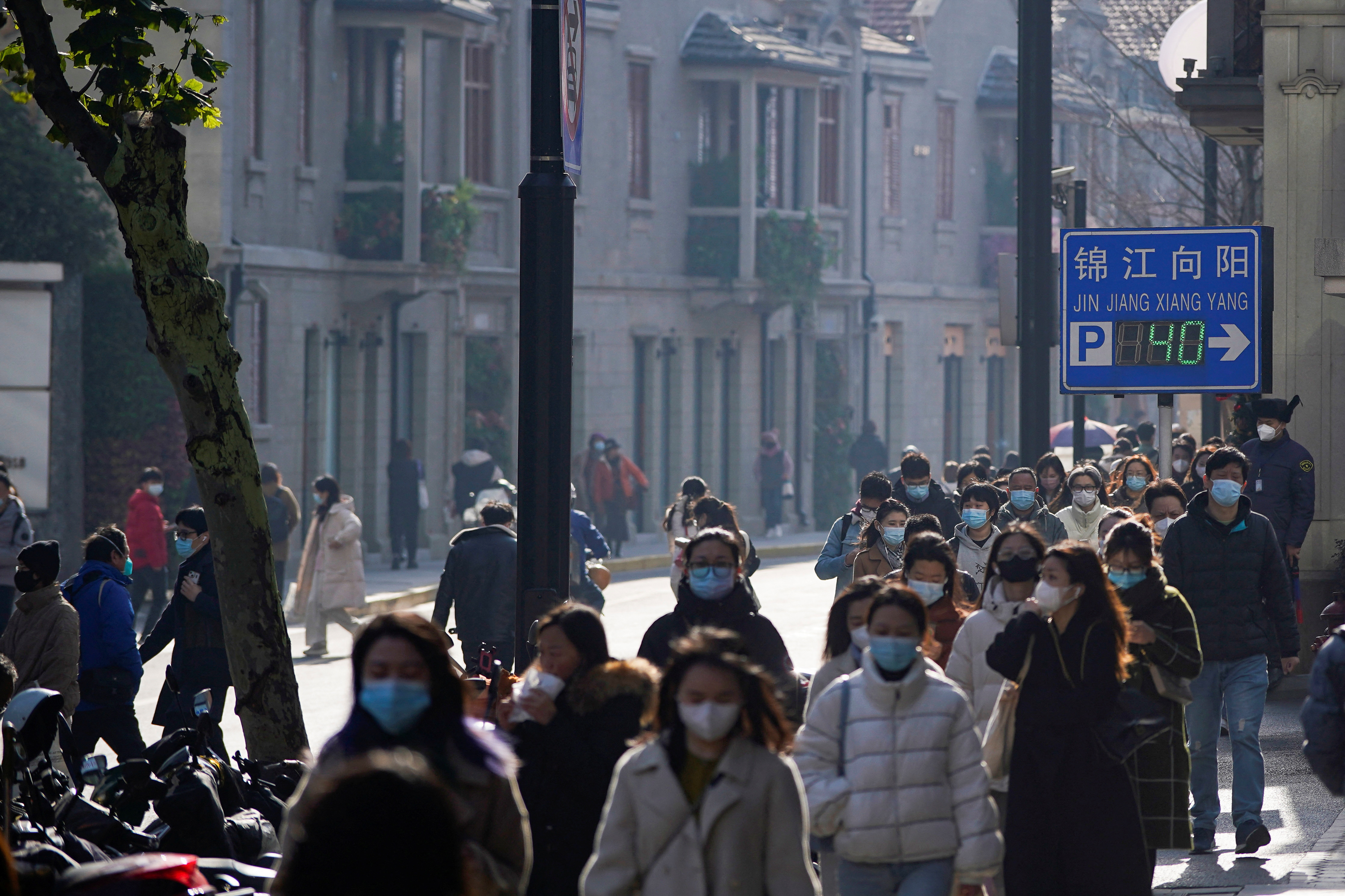
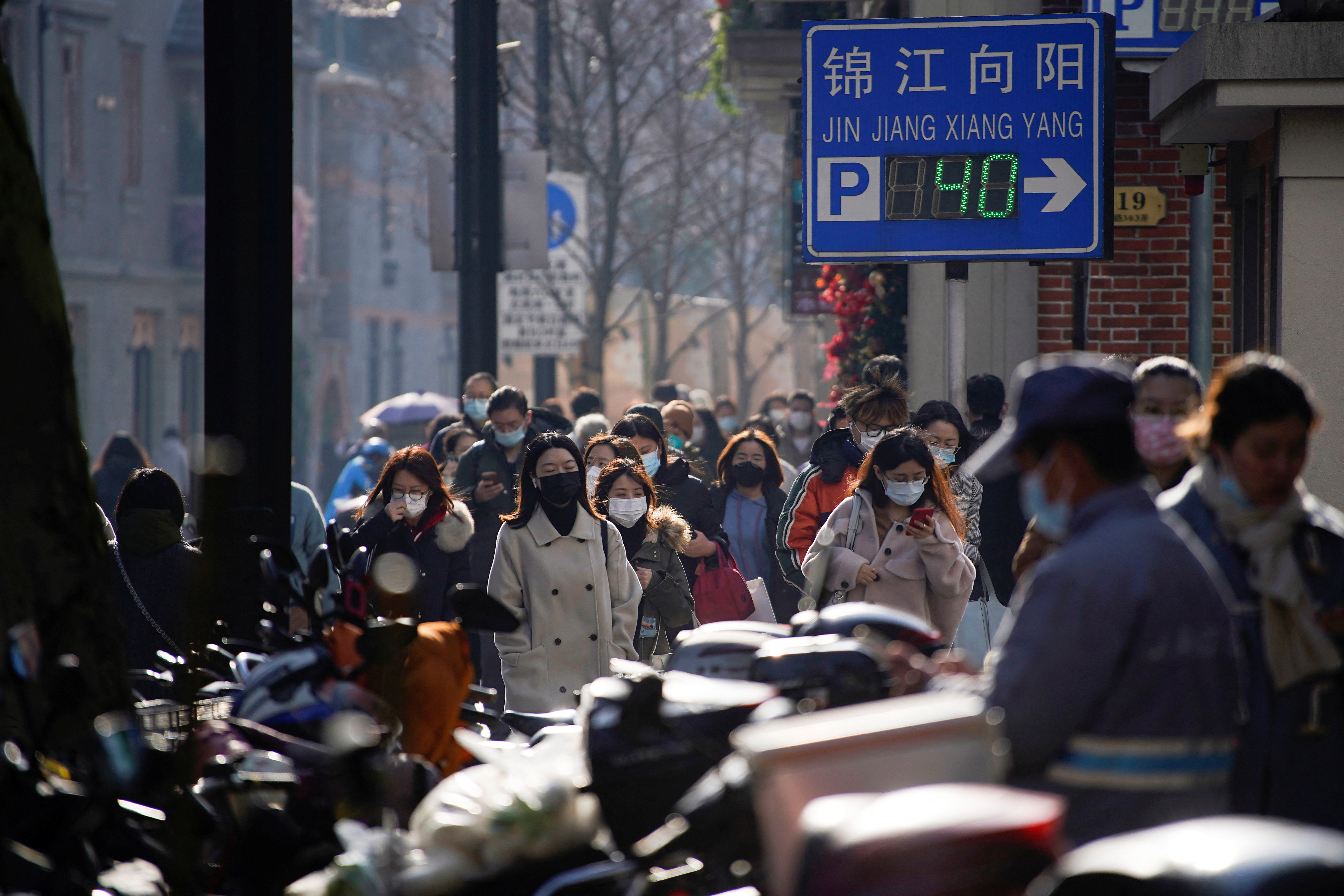
People wearing face masks walk on a street, as coronavirus disease (COVID-19) outbreaks continue in Shanghai, China, December 13, 2022. REUTERS/Aly Song

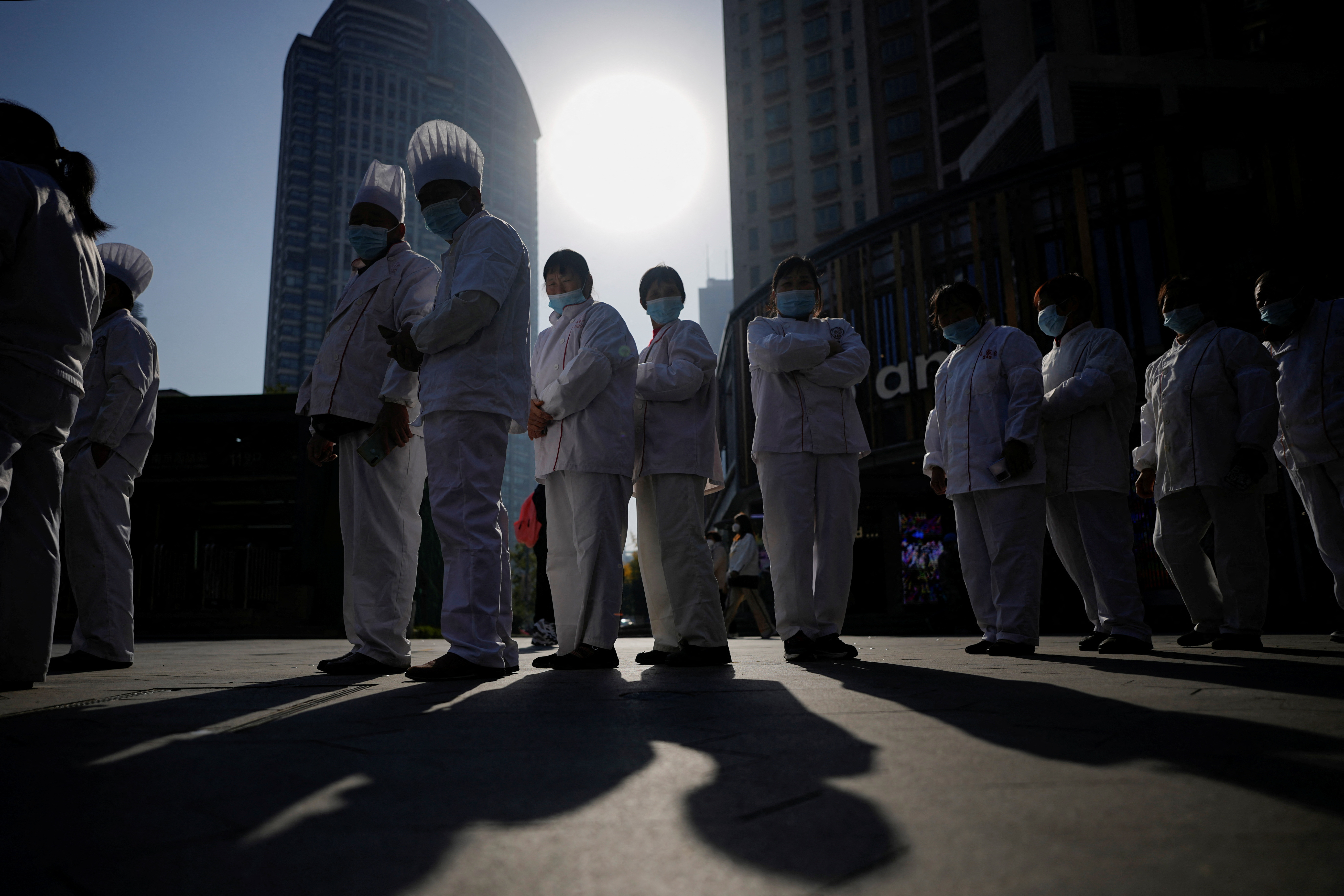
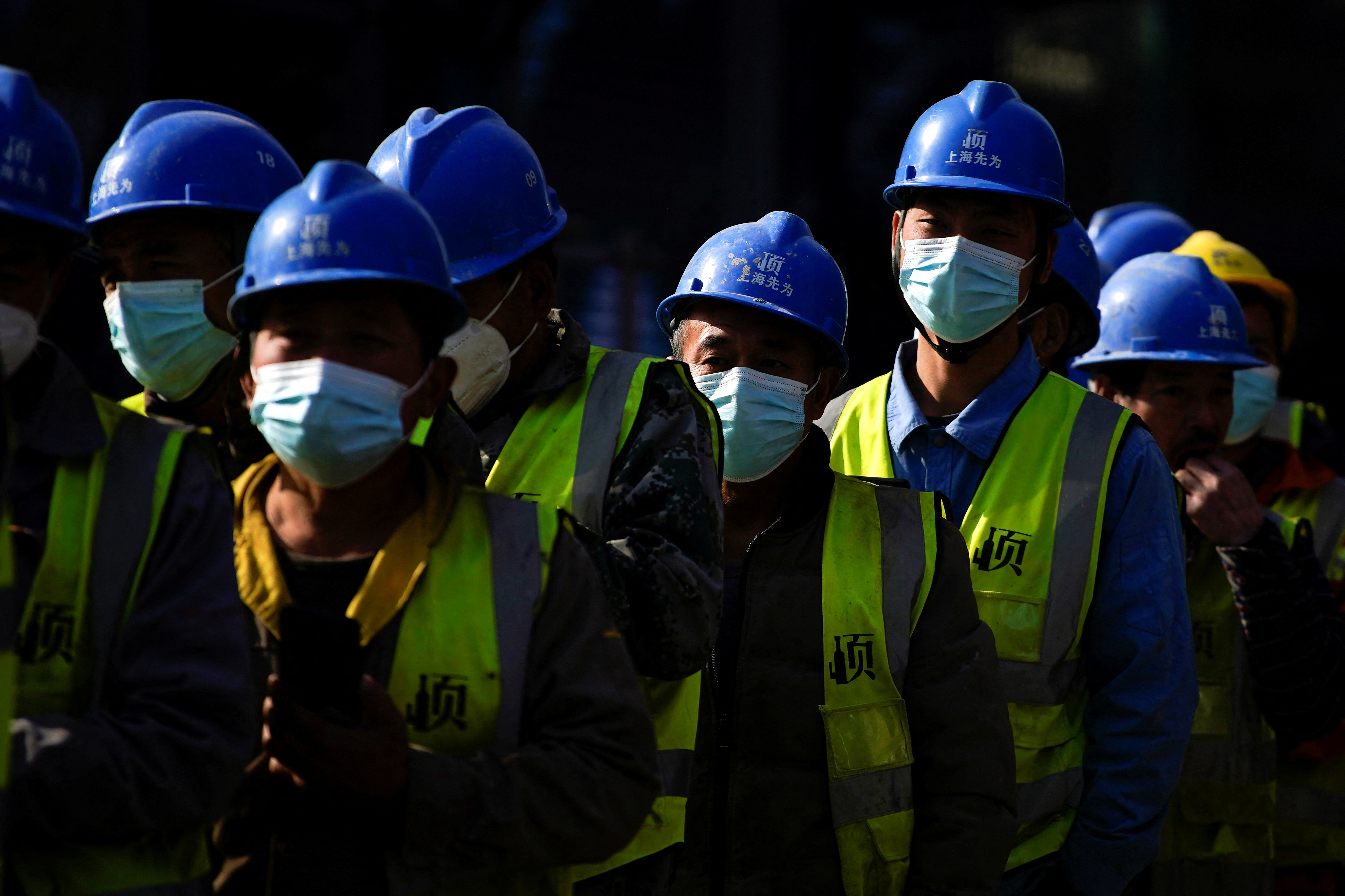
Restaurant workers wearing face masks line up to get tested for the coronavirus disease (COVID-19) at a nucleic acid testing site, as coronavirus disease (COVID-19) outbreaks continue in Shanghai, China, December 13, 2022. REUTERS/Aly Song

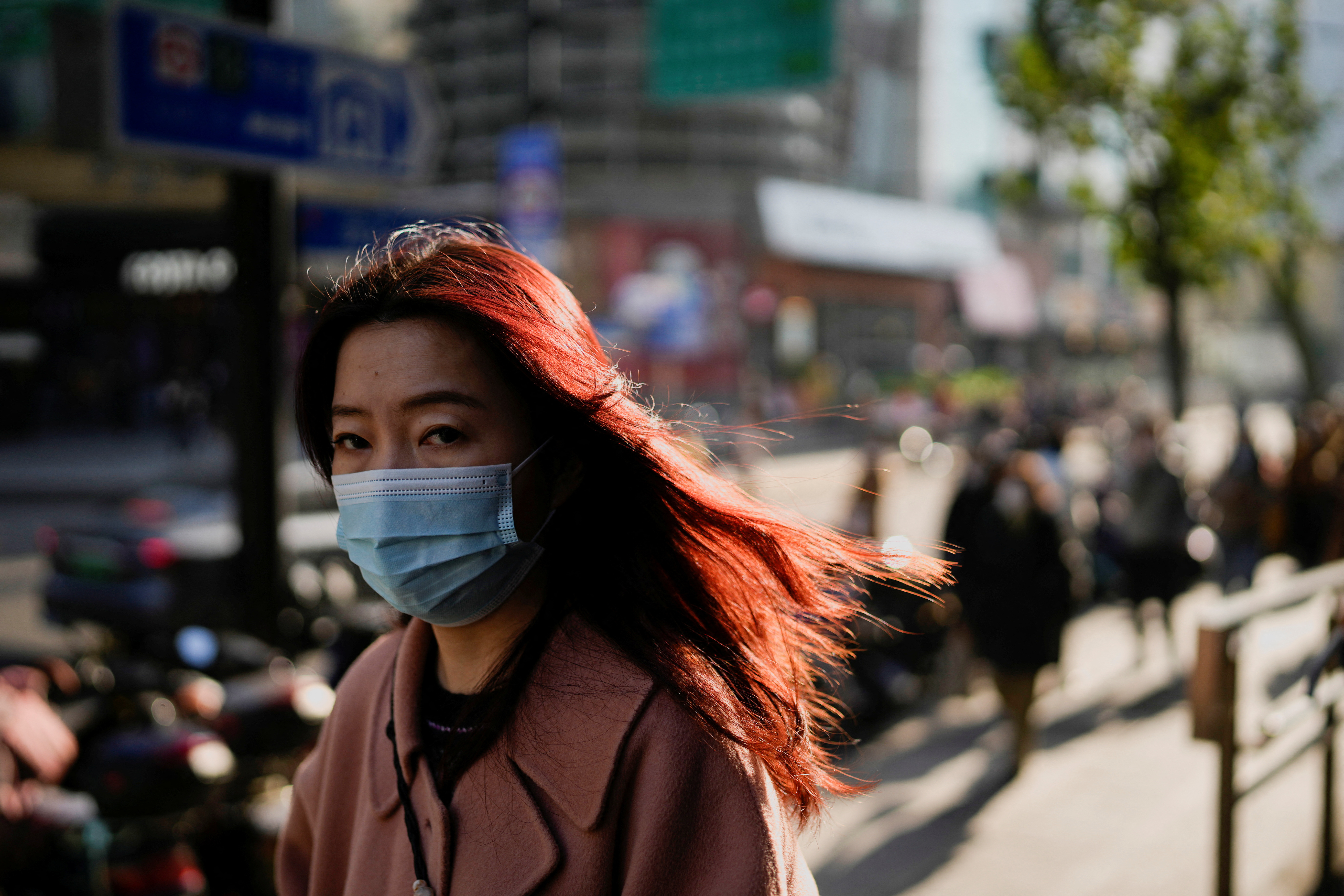
A woman wearing a face mask walks on a street, as coronavirus disease (COVID-19) outbreaks continue in Shanghai, China, December 13, 2022. REUTERS/Aly Song

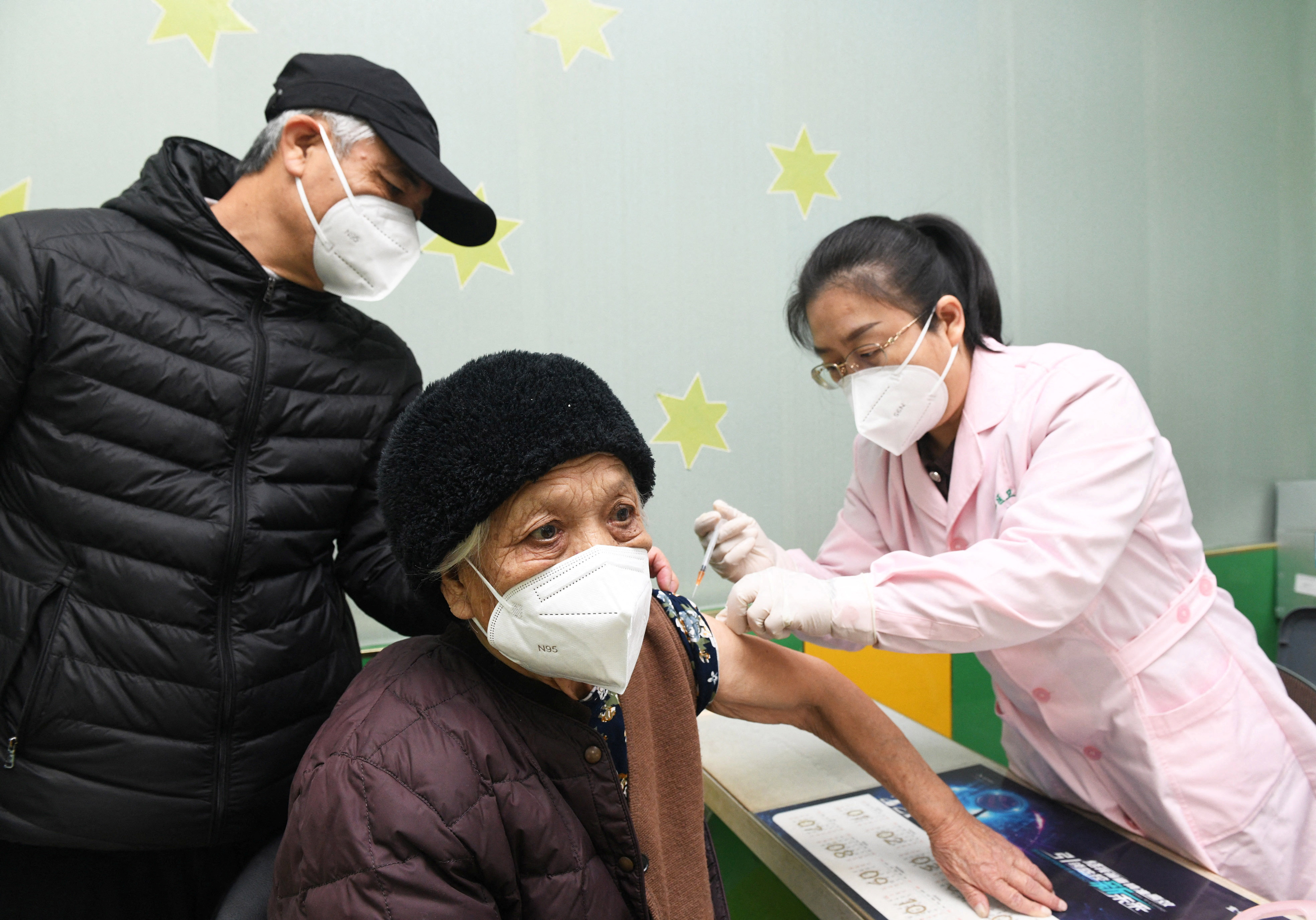
A medical worker administers a dose of the vaccine against coronavirus disease (COVID-19) to an elderly person at a community health service centre in Shijiazhuang, Hebei province, China December 12, 2022. China Daily via REUTERS

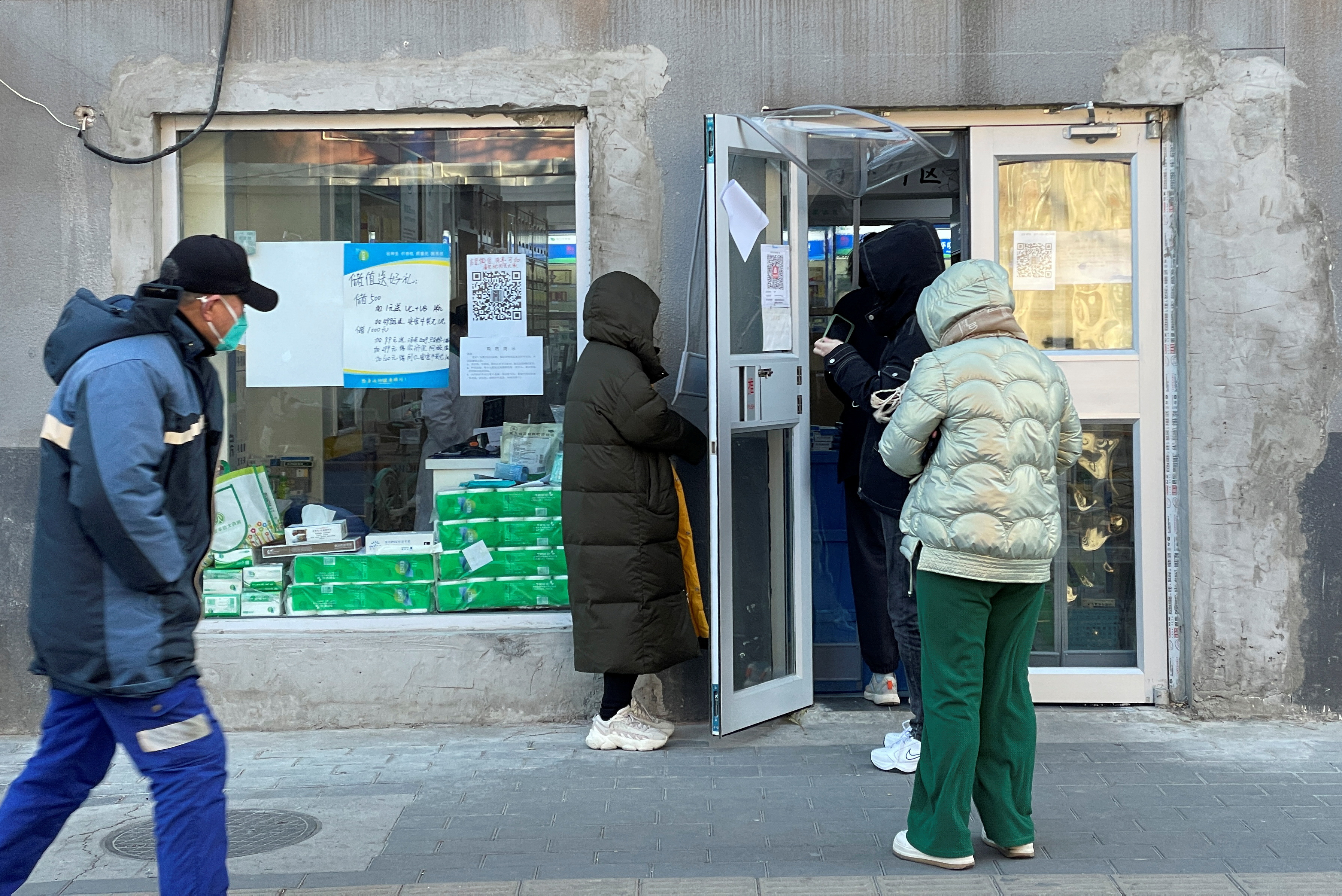
People wearing masks line up outside a pharmacy, as coronavirus disease (COVID-19) outbreaks continue, in Beijing, China December 13, 2022. REUTERS/Alessandro Diviggiano

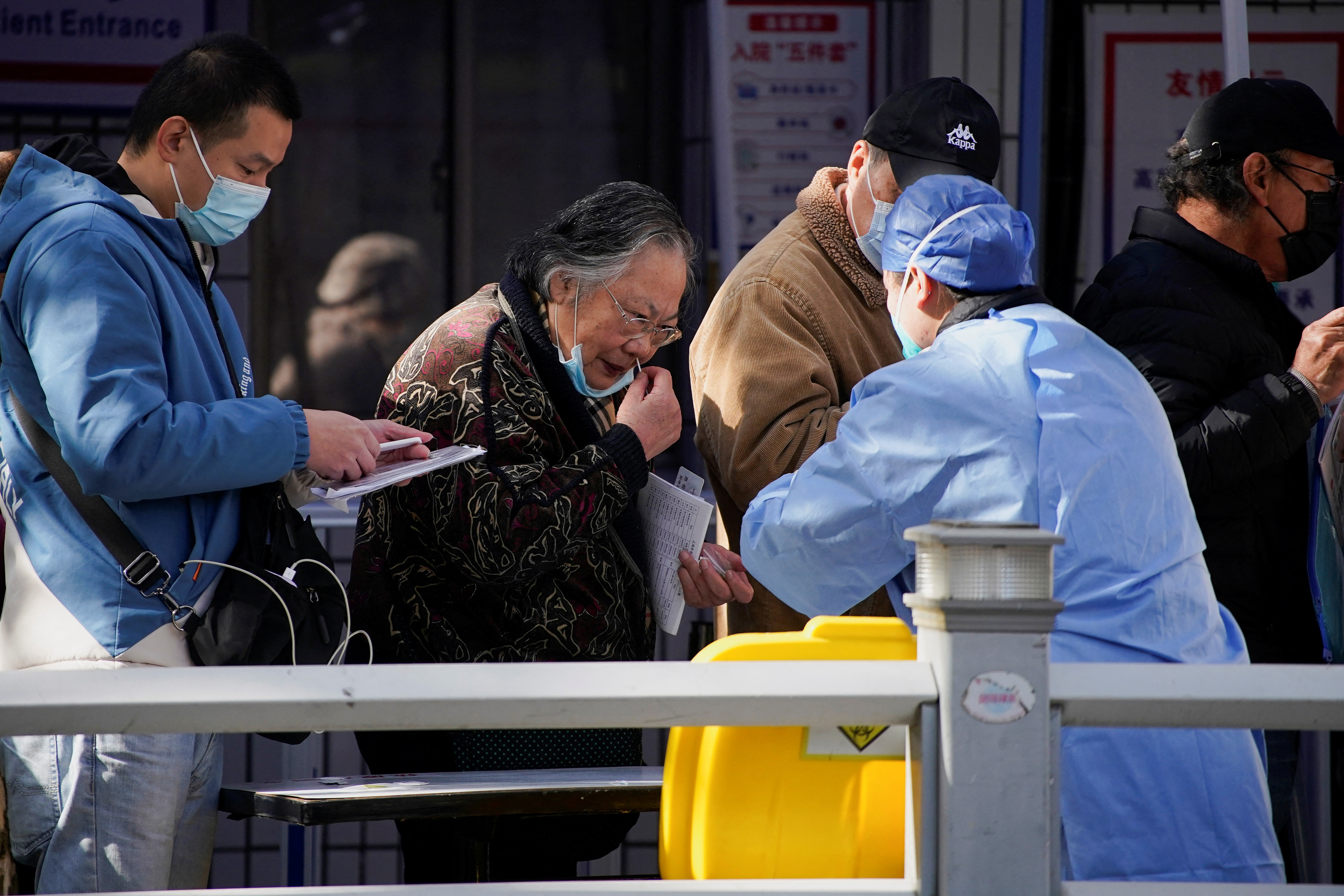
A woman takes a rapid antigen test for COVID-19 at an entrance of a hospital, as coronavirus disease (COVID-19) outbreaks continue in Shanghai, China, December 13, 2022. REUTERS/Aly Song

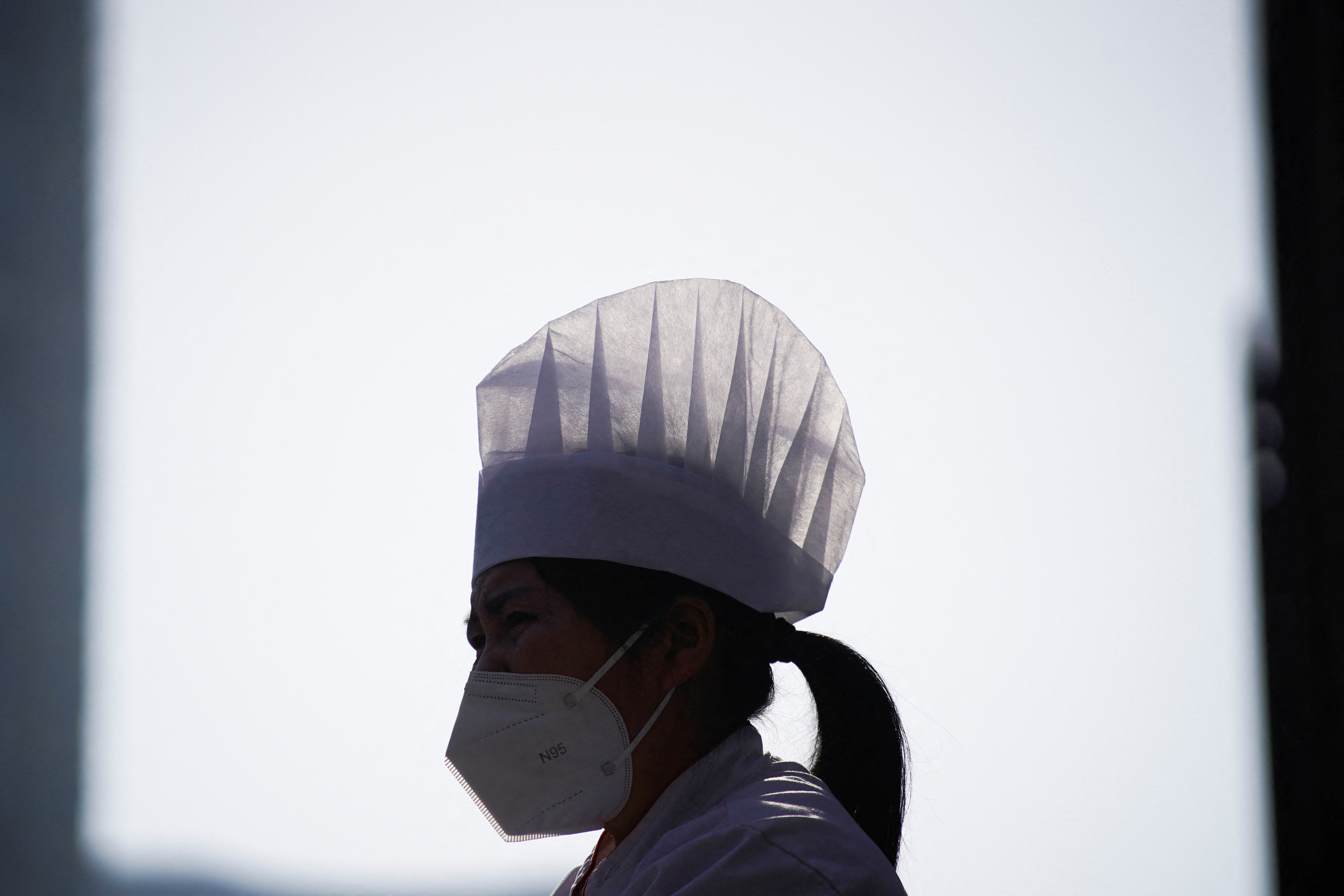
A restaurant worker wearing a face mask lines up to get tested for the coronavirus disease (COVID-19) at a nucleic acid testing site, as coronavirus disease (COVID-19) outbreaks continue in Shanghai, China, December 13, 2022. REUTERS/Aly Song

Workers wearing face masks line up to get tested for the coronavirus disease (COVID-19) at a nucleic acid testing site, as coronavirus disease (COVID-19) outbreaks continue in Shanghai, China, December 13, 2022. REUTERS/Aly Song

People wearing face masks walk on a street, as coronavirus disease (COVID-19) outbreaks continue in Shanghai, China, December 13, 2022. REUTERS/Aly Song

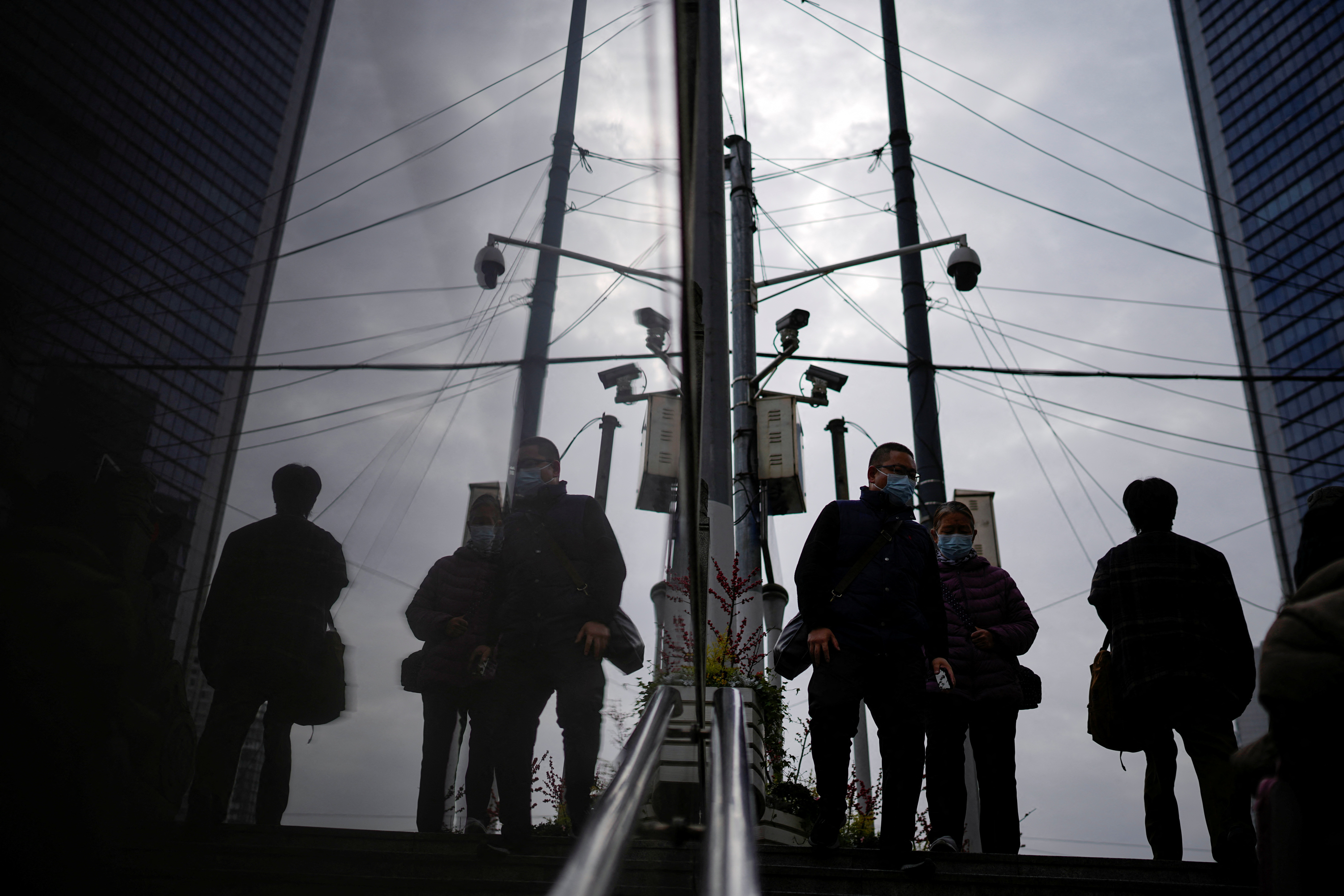
People wearing face masks walk under surveillance cameras on a street, as coronavirus disease (COVID-19) outbreaks continue in Shanghai, China, December 12, 2022. REUTERS/Aly Song

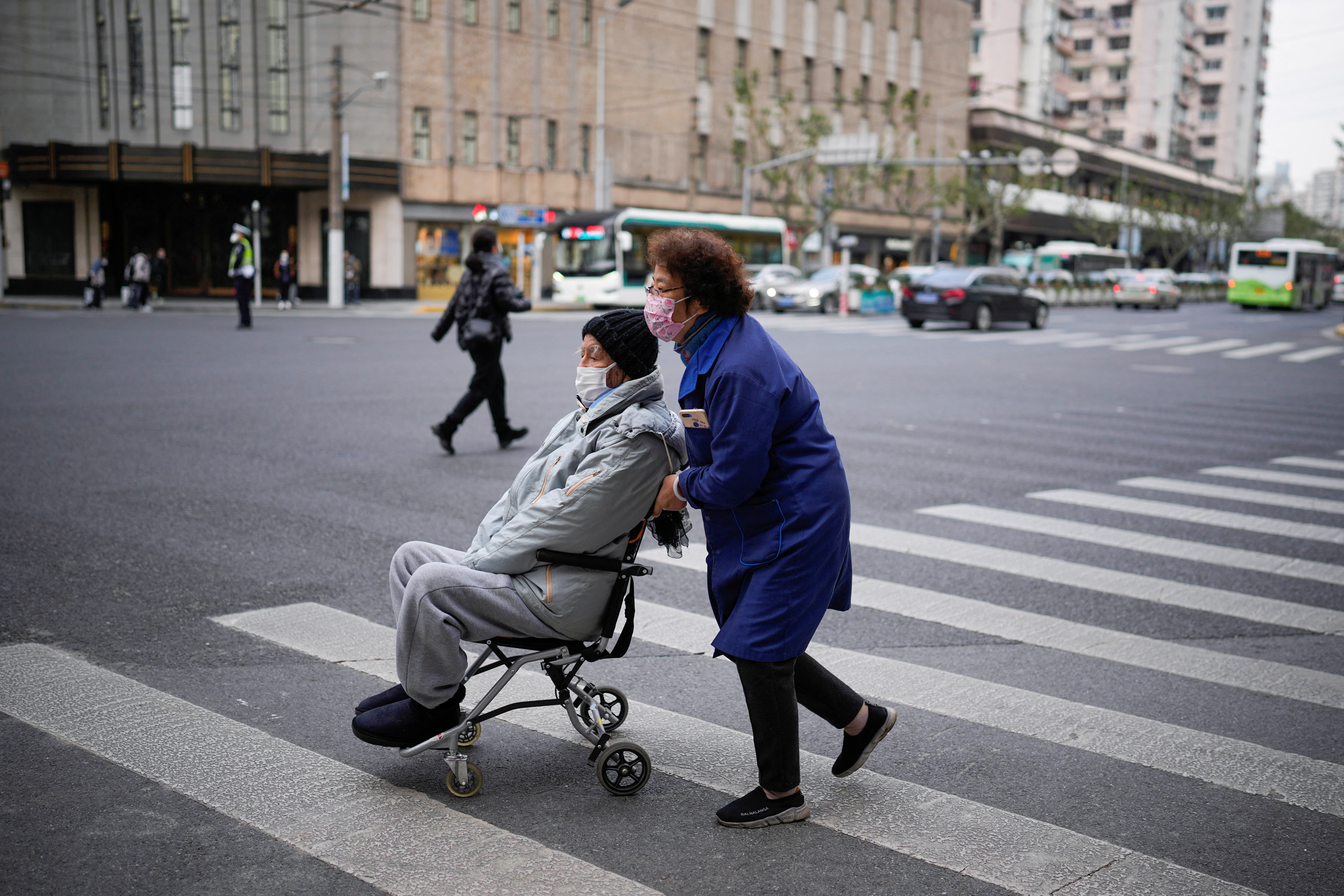
A woman pushes an old man in wheelchair to cross a street, as coronavirus disease (COVID-19) outbreaks continue in Shanghai, China, December 12, 2022. REUTERS/Aly Song
Categories
Audio Sources - Full Text Articles

Enemy shells Nikopol district with Grad MLRS, heavy artillery

630_360_1670913444-513.jpeg

The Russian troops shelled the Nikopol district in Dnipropetrovsk area with Grad MLRS and weighty artillery all evening extensive.

Valentyn Reznichenko, head of the Dnipropetrovsk Regional Armed service Administration, explained this in a Telegram submit, Ukrinform reviews.

“Seven attacks and extra than 50 enemy shells launched on peaceful towns and villages. The Russians terrorized the Nikopol district all evening extensive. They struck three communities – Nikopol, Chervonohryhorivka and Marhanets – with Grad MLRS and major artillery. No just one was killed or wounded,” the report suggests.

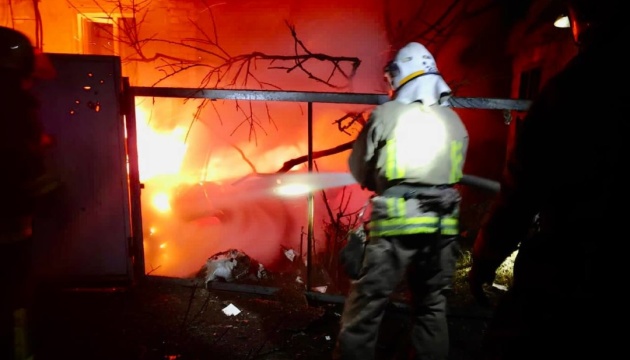
In Nikopol, dozens of condominium and private structures, utility properties, administrative buildings, a retail store and power traces ended up ruined. A hearth broke out as a consequence of the shelling. Firefighters have by now set out the flames.

In Chervonohryhorivka, much more than 10 private properties, farm properties and electricity traces have been destroyed. An enemy shell ruined a garage and a vehicle.

In the Marhanets neighborhood, consequences of the enemy assault are currently being clarified.

In other districts, the evening was tranquil and the circumstance is serene as of now.

As documented by Ukrinform, units of Ukraine’s Defense Forces on December 12 repelled enemy attacks in the vicinity of 16 settlements.

iy

Source link

The post Enemy shells Nikopol district with Grad MLRS, heavy artillery appeared first on Ukraine Intelligence.

Categories
Audio Sources - Full Text Articles

Rare gunfight kills six, including two police officers, in rural Australia

2022-12-13T06:34:44Z

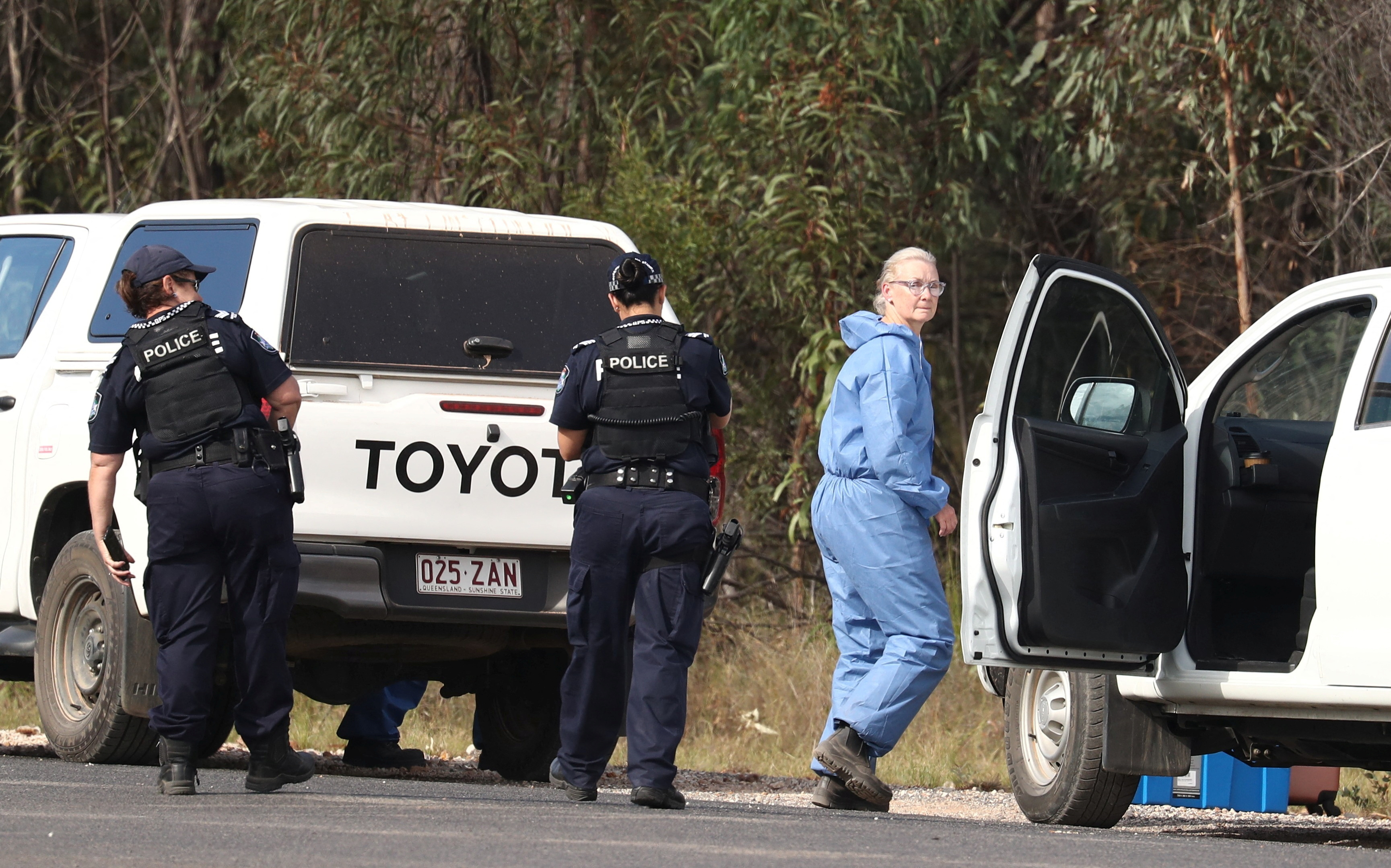
Police work near the scene of a fatal shooting, where police shot multiple people at a remote Queensland property after an ambush in which two officers and a bystander were also killed, in Wieambilla, Australia, December 13, 2022. AAP Image/Jason O’Brien via REUTERS

Six people, including two police officers, were killed in a gunfight at a remote property in Australia’s Queensland state, authorities said on Tuesday, after police visited a home there to investigate a missing person report.

When four officers arrived about 4:30 p.m. on Monday at the property in Wieambilla, about 300 km (186 miles) northwest of Queensland’s capital, Brisbane, two armed people opened fire and killed two of them, police said, without identifying the suspects.

Police said there was then a “siege” at the house, without elaborating. Police said 16 specialist officers responded and, in a gun battle about 10:30 p.m., killed a 46-year-old man from Kewarra Beach, about 1,500km northwest of the property; and a 47-year-old man and a 45-year-old woman, both from Wieambilla.

The slain police officers were Constable Matthew Arnold, 26, and Constable Rachel McCrow, 29, police said. The gunfire also killed a 58-year-old neighbour, police said, without providing the person’s name.

Two other officers were taken to the hospital with non-life-threatening injuries, police said.

Arnold and McCrow had gone to the home after a missing person report was filed in New South Wales for a person thought to be at the property.

Prime Minister Anthony Albanese described the incident as a “terrible and a heartbreaking day”.

Gun crime is relatively rare in Australia, which implemented some of the world’s toughest gun laws after a gunman killed 35 people in April 1996 at a cafe and tourist site at the former colonial prison of Port Arthur in the island state of Tasmania.

Queensland Police Commissioner Katarina Carroll said the shooting was the largest loss of life in a single incident the state police have suffered in recent times.

WP Radio
WP Radio
OFFLINE LIVE