Categories
Audio Sources - Full Text Articles

Forward Gyasi Zardes signs 3-year deal with MLS’s Austin

AUSTIN, Texas (AP) — Forward Gyasi Zardes and Major League Soccer’s Austin team agreed Monday to a three-year contract.

Zardes, 31, has 97 goals in 267 regular-season games for the LA Galaxy, Columbus and Colorado, including nine in 26 games after the Rapids acquired him from the Crew in April.

Zardes has 14 goals in 68 appearances for the United States, playing for the CONCACAF Gold Cup championship-winning teams in 2017 and 2021.

His deal includes a 2026 option. The team didn’t specify whether it was a player or club option.

___

AP World Cup coverage: https://apnews.com/hub/world-cup and https://twitter.com/AP_Sports

Categories
Audio Sources - Full Text Articles

Israel“s Netanyahu promises “liberal-right“ government

2022-12-13T09:32:12Z

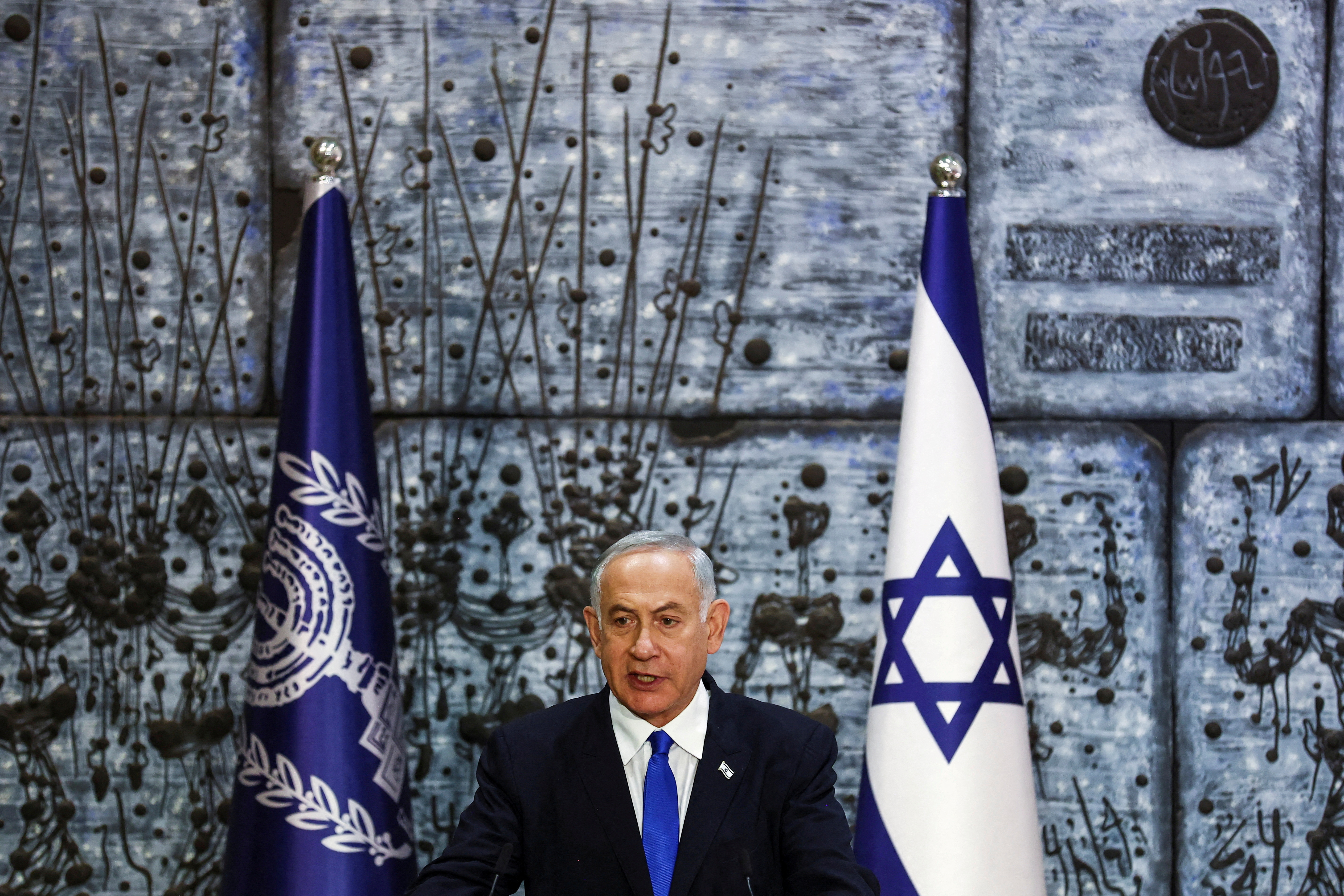
Benjamin Netanyahu speaks during a ceremony where Israel President Isaac Herzog handed him the mandate to form a new government following the victory of the former premier’s right-wing alliance in this month’s election at the President’s residency in Jerusalem November 13, 2022. REUTERS/ Ronen Zvulun/File Photo

Israeli Prime Minister-designate Benjamin Netanyahu pledged on Tuesday to balance religious and secular interests as he tries to form a new government with nationalist and ultra-Orthodox Jewish parties.

Netanyahu has come under fire from outgoing Prime Minister Yair Lapid and anti-corruption groups warning that demands from his future partners will erode Israel’s democracy and already tenuous separation of synagogue and state.

Agreements have been reached with far-right factions that call for ending a ban on Jewish prayer at a site in Jerusalem’s Old City that houses a major mosque.

Netanyahu is still in talks with ultra-Orthodox groups that want business and transport restricted on the Jewish Sabbath and prefer gender separation at beaches.

“There is and will be electricity (production) on the Sabbath. There is and will be beaches for everyone. We will preserve the status quo,” Netanyahu said in parliament.

The term “status quo” is used in Israel both for secular-religious cooperation and for a decades-old arrangement with Muslim authorities at the Al Aqsa mosque compound in Jerusalem under which Jews are allowed to visit, but not to pray.

The site is the holiest in Judaism, having housed its two ancient temples.

“Everyone will live in accordance with their own faith. This will not become a nation of religious law. It will be a country in which we tend to all citizens of Israel, without exception,” Netanyahu said.

“We were elected to lead in our way, the way of the nationalist-right and the way of the liberal-right, and so shall we do.”

Lapid and others in the outgoing centre-left government have refused to join Netanyahu in part due to his ongoing corruption trial.

“Netanyahu is weak, terrified of his trial. People who are younger than him – more extremist and determined than him – have taken over,” Lapid said in his own speech.

The two leaders spoke as parliament elected a new chairman who is expected to push through a series of controversial laws to help Netanyahu form a government. One such bill would enable a senior partner serve in cabinet despite a criminal record.

Netanyahu, who denies the corruption charges against him, has until Dec. 21 to finalise a government. Otherwise it could mean another election.

Categories
Audio Sources - Full Text Articles

Malaysia court lifts stay on deportation of 114 Myanmar nationals

2022-12-13T09:37:55Z

A Malaysian court on Tuesday lifted a stay on the deportation of 114 Myanmar nationals, raising concerns among rights groups they would be sent back to their strife-torn homeland amid threats to their safety.

The court granted the request from the Malaysian government, which deported 1,086 Myanmar citizens just days after the Myanmar military seized power in a coup in February last year, despite a court-ordered stay on the deportation.

It was unclear if the group of 114 people would be deported immediately.

“We strongly urge the government to reconsider its plan,” Amnesty International Malaysia and Asylum Access said in a joint statement.

“We continue to call for our leaders to respect human rights and international law and halt any decision to send people back to a violent and dangerous situation.”

The group of 114 people, who are in immigration detention, includes children and suspected asylum seekers, Amnesty Malaysia executive director Katrina Maliamauv told Reuters.

The United Nations refugee agency has not been allowed access to the detainees to determine their status, she said.

Malaysia’s immigration department did not immediately respond to a Reuters request for comment.

It has previously said those deported had been detained for immigration offences. Malaysia does not formally recognise refugees, treating them as undocumented migrants.

Myanmar has been gripped by fighting since last year’s coup sparked protests from pro-democracy and resistance groups, which the military has met with lethal force.

Malaysia has repeatedly condemned violence in Myanmar but has not stopped sending Myanmar nationals, including suspected refugees, back home.

In October, Malaysia deported 150 Myanmar citizens, including some former navy officers seeking asylum, Reuters reported.

The United Nations has said such deportations violated international law on non-refoulement, which protects refugees or asylum seekers from being deported.

Categories
Audio Sources - Full Text Articles

Shares, dollar hold steady ahead of key inflation data

2022-12-13T09:46:53Z

Global stocks held steady on Tuesday, while the dollar eased modestly ahead of U.S. inflation data that could persuade the Federal Reserve and other central banks to step back from aggressive interest rate hikes.

Headline consumer price pressures for November in the world’s largest economy are expected to have fallen for a fifth successive month, which in theory would take some pressure off the Fed to raise rates for an extended period of time – something investors have been banking on for months now.

The MSCI All-World index (.MIWD00000PUS) was up 0.12% in early European trade. It’s on course for its first monthly decline since September, having lost 1.2% so far, but is still on track for a 12.6% gain this quarter, its strongest quarterly performance since the final three months of 2020.

However, core inflation, which strips out food and energy prices – two key drivers of the rise in price pressures over the last year – has steadily risen in this time.

The core consumer price index is expected to have risen by 6.1% in November from October’s 6.3%, while headline inflation is forecast to have fallen to 7.3% from 7.7%.

“At the moment, market sentiment has really been built on the idea that U.S. inflation is heading lower, so I think that if that doesn’t happen … if we saw that even flatline, there is a significant risk here that it undermines what we’ve been seeing in terms of the market move towards the upside and the gains we’ve seen over Q4 so far,” IG strategist Joshua Mahony said.

The dollar eased 0.1% against a basket of major currencies , holding roughly steady against the euro , the yen and the pound . It’s lost nearly 6.5% in value so far in the fourth quarter, largely because investors believe U.S. inflation has peaked.

In Europe, stocks got off to modestly higher start, led by gains in oil and gas companies (.SXEP) thanks to a 1.7% rise in crude oil prices after the temporary shutdown of a key pipeline that feeds into the United States. That added to concerns around a squeeze on supply, especially as China is loosening some of its strict COVID restrictions.

The STOXX (.STOXX) was up 0.1%, while London’s FTSE 100 (.FTSE) gained 0.2%, as did Frankfurt’s DAX (.GDAXI).

In China itself, blue chip stocks dropped between 0.2% and 0.3% as investors factored in the chances that looser restrictions on activity would lead to a surge in COVID infections that could hamper economic growth. (.CSI300), (.SSEC)

But a tourism-linked index (.CSI930633) jumped more than 2% as Hong Kong eased COVID-19 restrictions for inbound travellers.

Later this week, the Fed, European Central Bank and the Bank of England (BoE) are all expected to raise rates by 50 basis points (bps), rather than the 75 bps hikes they delivered earlier in the year.

The pound eased against the dollar, down 0.1% to $1.2263 and by a similar amount against the euro , which traded around 85.93 pence, after data showed a rise in UK unemployment and an increase in wage growth that will keep BoE policymakers on edge when they meet this week.

Oil rallied for a second day, having jumped 2.5% on Monday, with Brent crude futures up 1.7% at $79.29 a barrel and West Texas Intermediate crude up 1.4% at $72.00.

Gold futures , which are sensitive to shifts in U.S. inflation, were last up 0.2% at $1,784.8 an ounce.

Related Galleries:

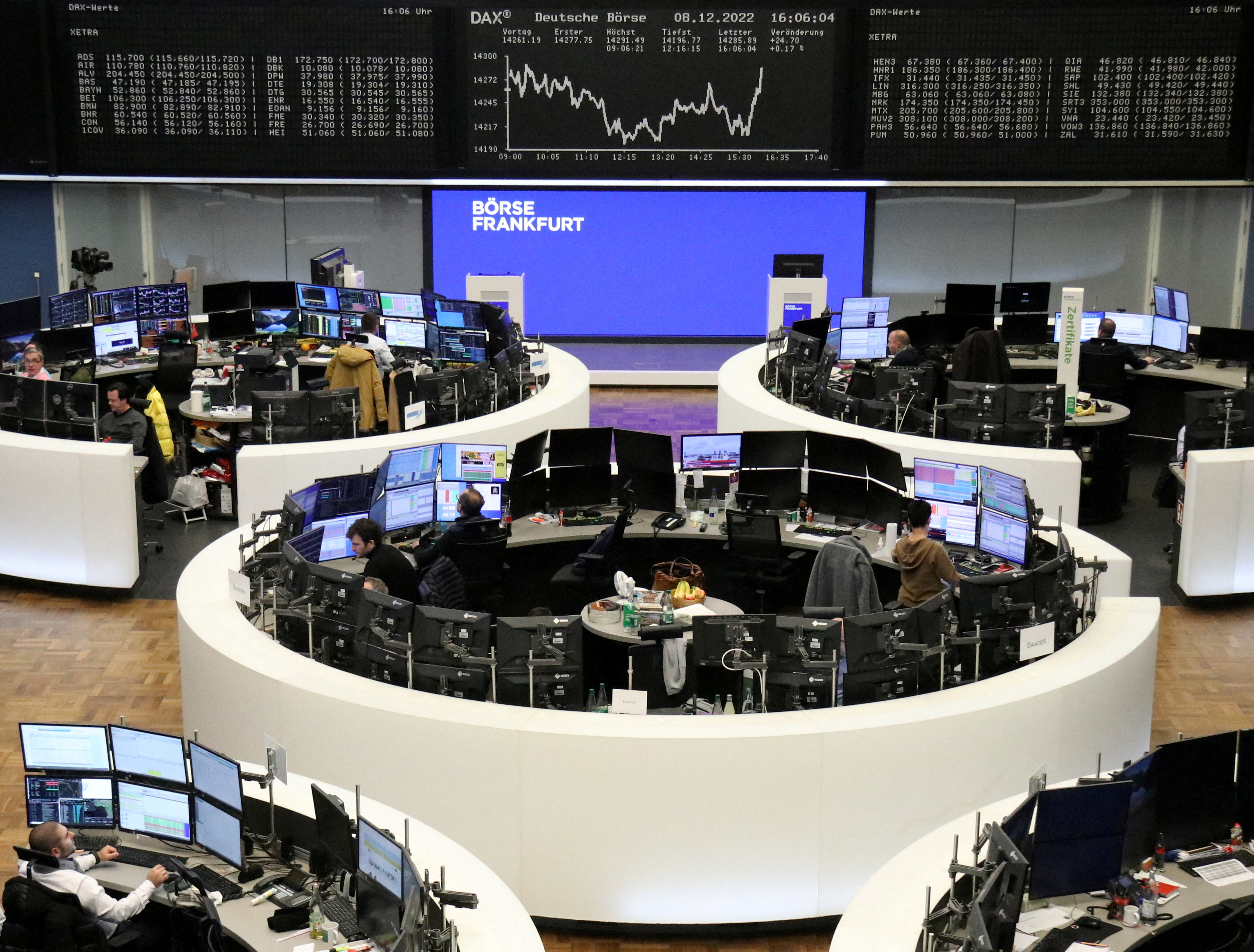
The German share price index DAX graph is pictured at the stock exchange in Frankfurt, Germany, December 8, 2022. REUTERS/Staff/File Photo

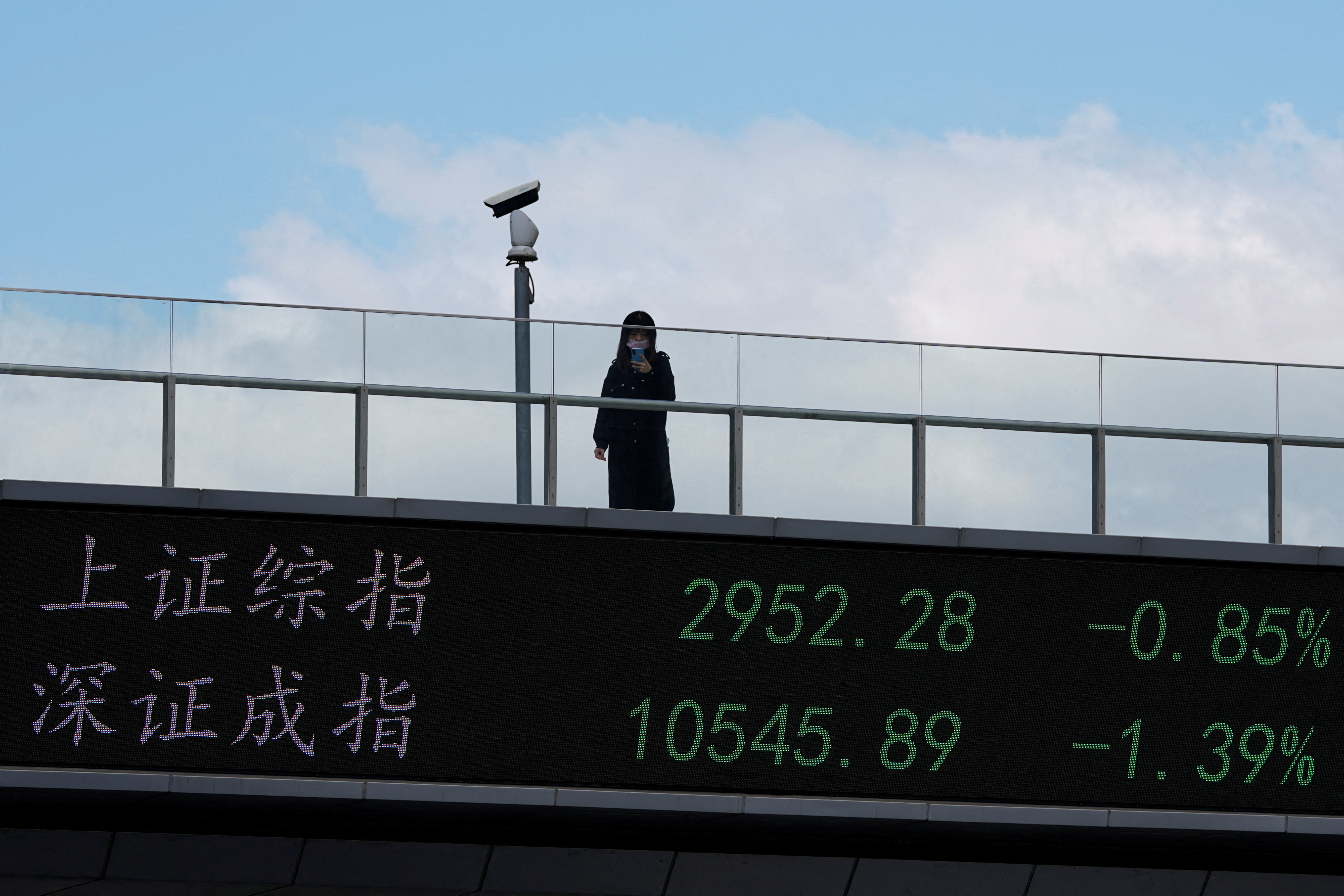
An electronic board shows Shanghai and Shenzhen stock indexes, at the Lujiazui financial district, following the coronavirus disease (COVID-19) outbreak, in Shanghai, China October 25, 2022. REUTERS/Aly Song/File Photo
Categories
Audio Sources - Full Text Articles

Ukraine battles Russian assault in east as Kyiv allies plan winter aid

2022-12-13T09:48:29Z

Ukrainian President Volodymyr Zelenskiy held talks with U.S. President Joe Biden and with the leaders of Turkey and France on Sunday, stepping up diplomatic activity around a war started by Russia nearly 10 months ago. Flora Bradley-Watson reports.

Russia and Ukraine pounded each other’s forces in heavy fighting in the eastern region of Donetsk on Tuesday as Kyiv’s allies met in Paris to provide urgent aid to help Ukrainians survive freezing winter temperatures.

Moscow is battling to take full control of the Donetsk and Luhansk regions, two of four territories the Kremlin claims to have annexed in votes rejected by most countries as illegal.

Moscow is also attacking Ukraine’s energy infrastructure with waves of missile and drone strikes, at times cutting off electricity for millions of civilians enduring Europe’s deadliest conflict since World War Two.

“A little more than 50% of the territory of the Donetsk People’s Republic has been liberated,” Denis Pushilin, Russian-installed administrator of the portion controlled by Moscow, told Russian state-owned news agency RIA.

Reuters was unable to independently verify the report.

Fierce fighting in the region in recent weeks has left unclear which parts of Donetsk are under Russian and Ukrainian control.

Three civilians were killed in the Donetsk region over past 24 hours, regional Governor Pavlo Kyrylenko said on his Telegram channel, while in the southern Kherson region, regional governor Yaroslav Yanushevych reported three people were killed and 15 wounded in Russian artillery attacks in the past day.

Russian troops shelled the part of the Kherson region under Ukrainian control 57 times, he said.

Russia’s sustained shelling of the frontline in Donetsk has completely destroyed the city of Bakhmut and heavily damaged the city of Avdiivka, which lies in the region’s centre, Ukrainian President Volodymyr Zelenskiy said on Friday.

On Monday, the general staff of Ukraine’s armed forces said Russia kept concentrating its efforts to advance and capture both cities.

Reuters could not independently verify the latest battlefield accounts.

Belarus, a close ally of Russia, launched a snap inspection of its troops’ combat readiness after an order from President Alexander Lukashenko, the defence ministry said on Tuesday.

It was the latest in a flurry of military actions, including a counter-terrorism exercise last week, that have raised fears Russia may mount an attack on Ukraine from Belarusian territory in coming months.

In Paris meanwhile about 70 countries and institutions will discuss what can be offered between now and March to maintain Ukraine’s water, food, energy, health and transport. A second meeting between France, Ukraine and some 500 companies will see what can be invested and done in the short to long term.

A French diplomat told reporters in a briefing ahead of the meeting the immediate priority was to ensure the electricity network did not collapse and that water pipes did not freeze.

As he arrived at the meeting, French President Emmanuel Macron said there was an agreement on removing heavy weapons from Ukraine’s Zaporizhzhia nuclear power plant and that talks were under way on the modalities around this.

The Group of Seven on Monday promised to “meet Ukraine’s urgent requirements” after Zelenskiy appealed for modern tanks, artillery and long-range weapons. Zelenskiy also urged G7 leaders at a virtual meeting to support his idea of convening a special Global Peace Summit to bring peace to his country.

The summit would be focused on the implementation of Kyiv’s 10-point peace plan that insists on, among other things, Russia’s withdrawal of all its troops from Ukraine and no territorial concessions on Kyiv’s part.

U.S. President Joe Biden told Zelenskiy on Sunday that Washington’s priority was to boost Ukraine’s air defences. The United States also shipped the first batch of power equipment to Ukraine under an aid package agreed last month.

Russia is “deliberately trying to freeze Ukrainians to death as we enter winter”, a senior U.S. official said.

Moscow denies deliberately attacking civilians, but the war has displaced millions and killed thousands of non-combatants.

Jan Egeland, head of the Norwegian Refugee Council, said “unliveable conditions” were likely to send another wave of Ukrainian refugees into Europe over the winter.

Sergey Kovalenko, the head of YASNO, which provides Kyiv with electricity, said on his Facebook page that power shortages in the capital were significant.

There are no peace talks under way to end the conflict, which Moscow describes as a “special military operation” against security threats posed by its neighbour. Ukraine and its Western allies call it an unprovoked, imperialist land grab.

Russia does not yet see a “constructive” approach from the United States on the Ukraine conflict, RIA news agency quoted Deputy Foreign Minister Sergei Vershinin as saying on Monday.

Related Galleries:
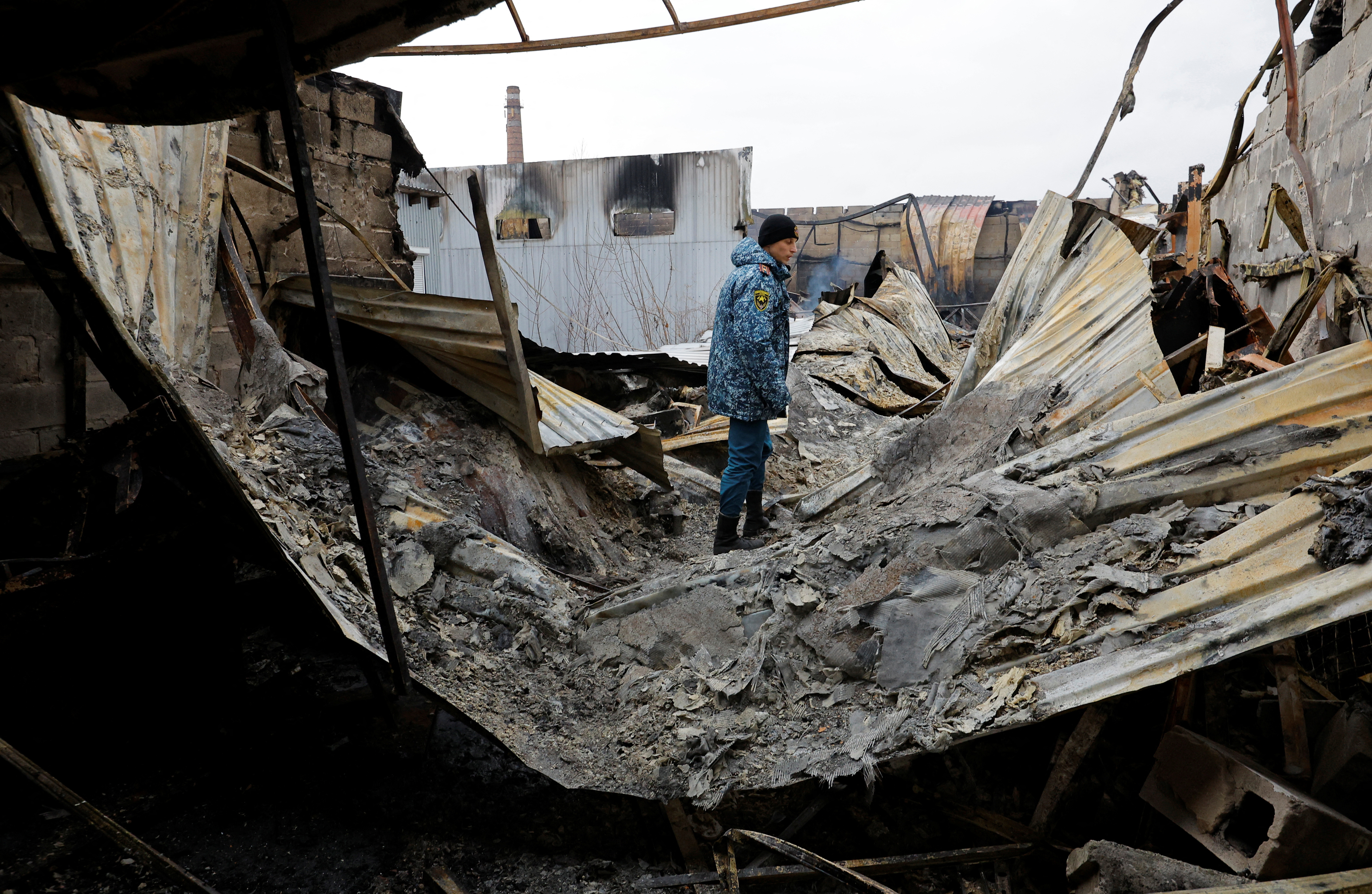
An emergencies ministry member walks at a local market hit by shelling in the course of Russia-Ukraine conflict in Donetsk, Russian-controlled Ukraine, December 12, 2022. REUTERS/Alexander Ermochenko
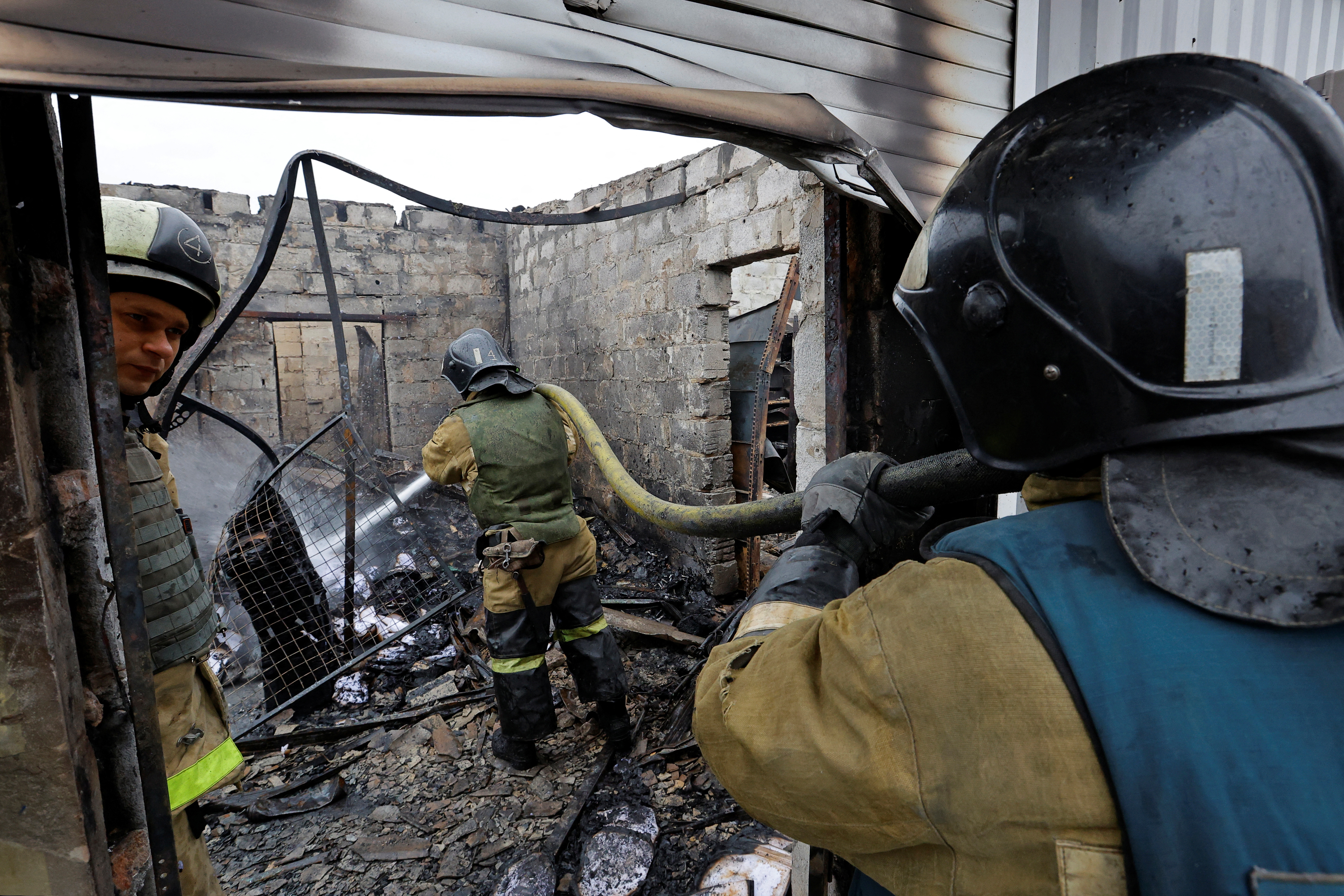
Firefighters work at a local market hit by shelling in the course of Russia-Ukraine conflict in Donetsk, Russian-controlled Ukraine, December 12, 2022. REUTERS/Alexander Ermochenko
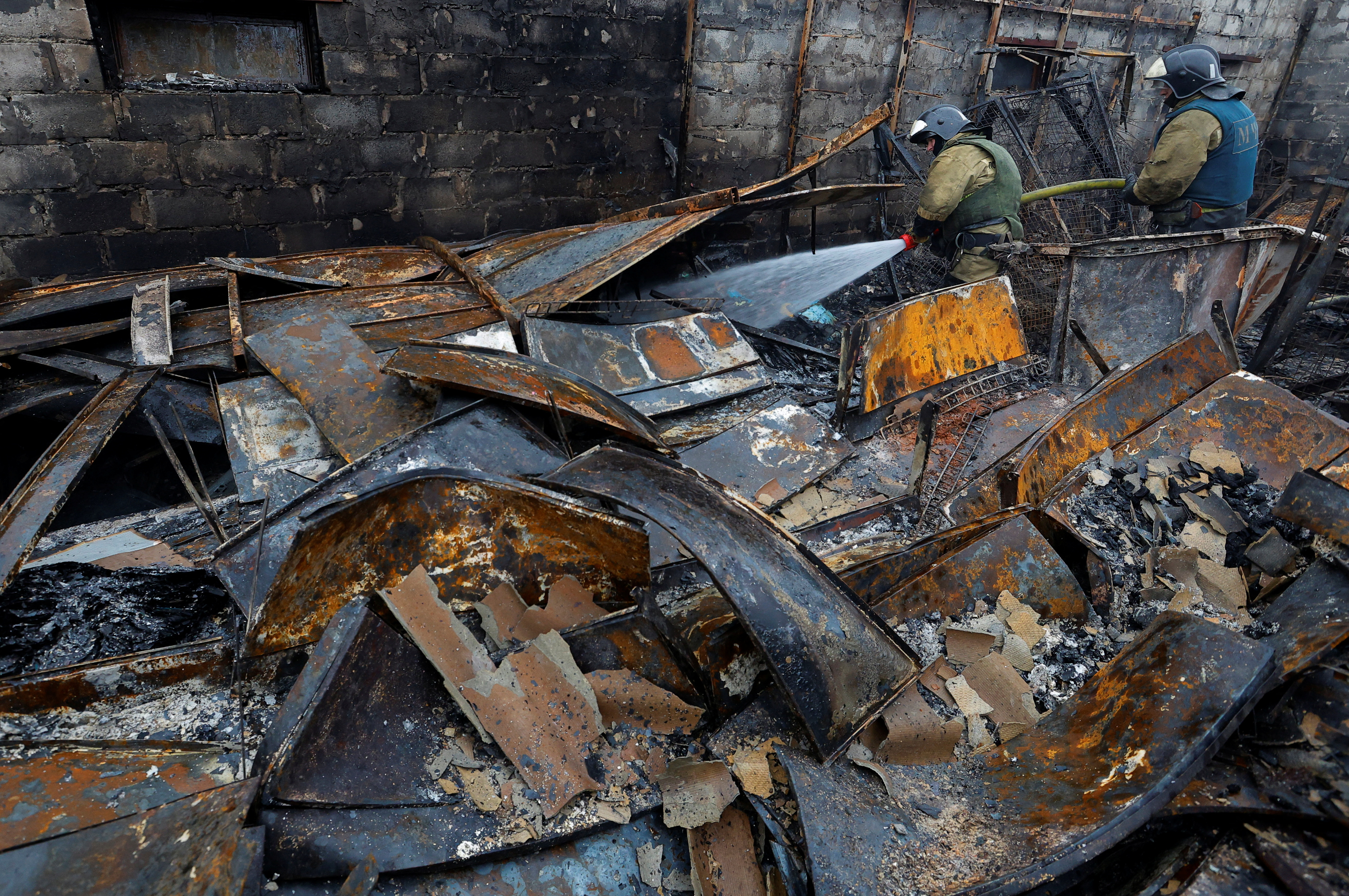
Firefighters work at a local market hit by shelling in the course of Russia-Ukraine conflict in Donetsk, Russian-controlled Ukraine, December 12, 2022. REUTERS/Alexander Ermochenko
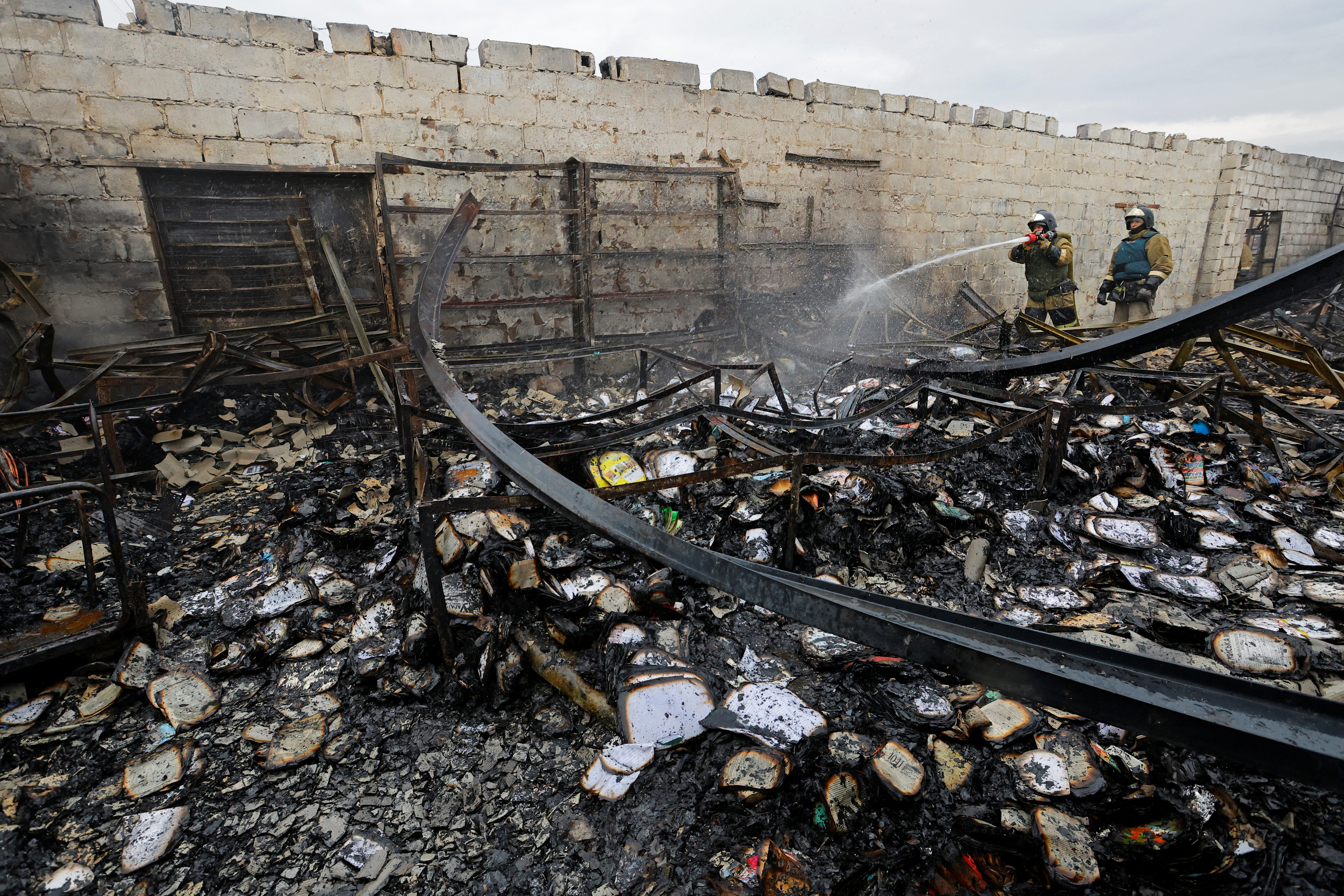
Firefighters work at a local market hit by shelling in the course of Russia-Ukraine conflict in Donetsk, Russian-controlled Ukraine, December 12, 2022. REUTERS/Alexander Ermochenko
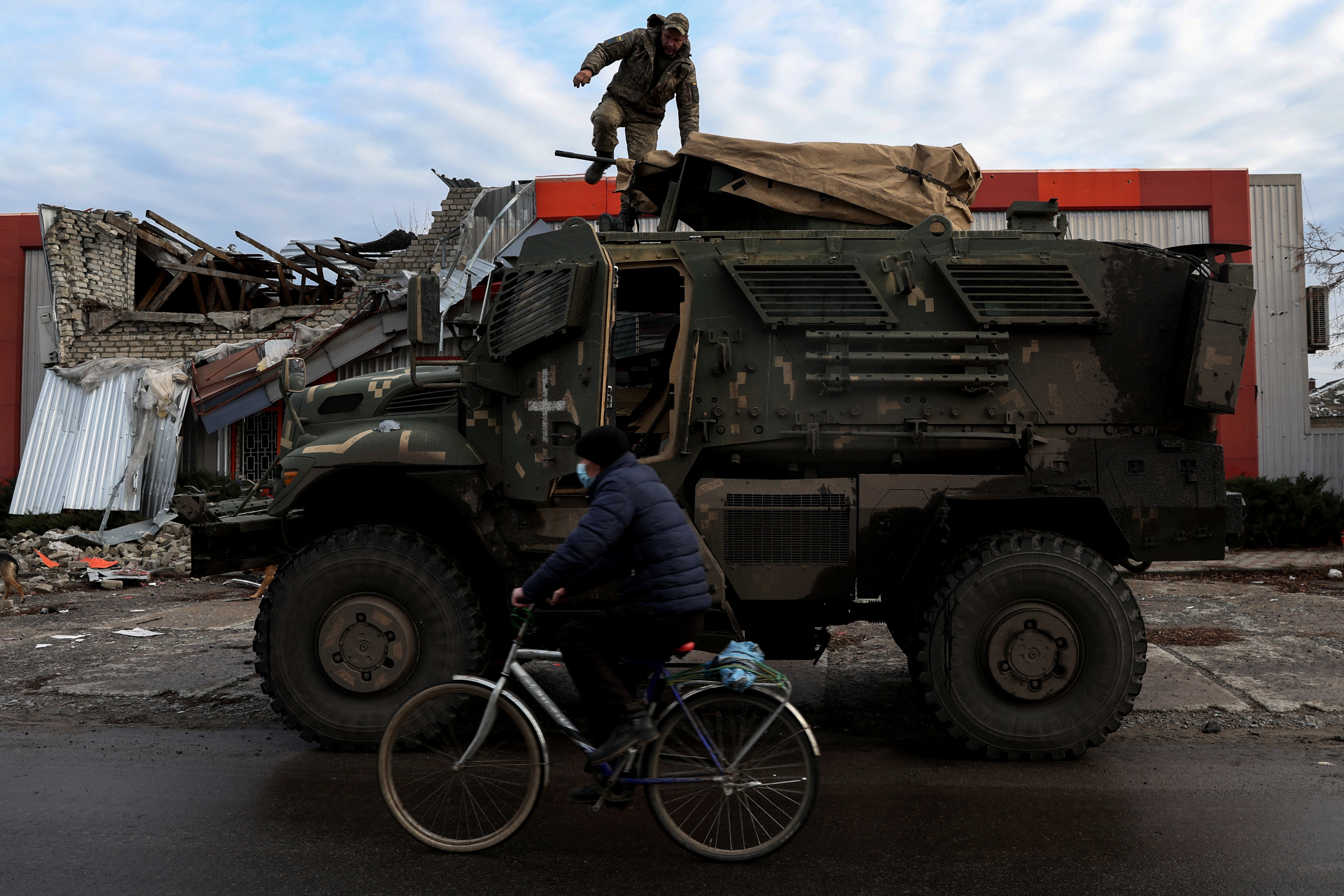
A man wearing a protective face mask rides a bike, as Russia’s attack on Ukraine continues, past a soldier on an American MaxxPro military vehicle in the formerly Russian occupied city of Lyman, Donetsk region of Ukraine, December 11, 2022. REUTERS/Shannon Stapleton
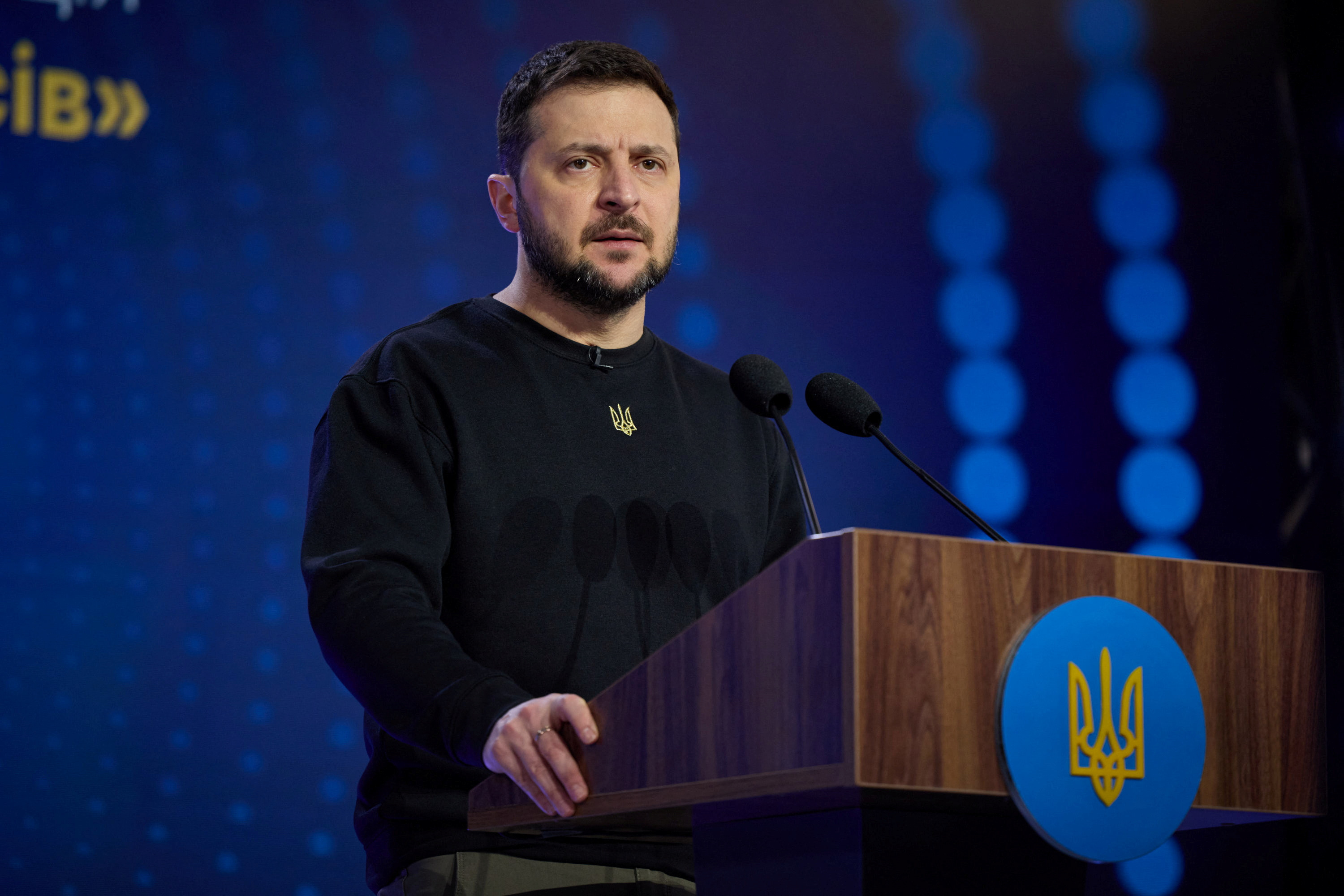
Ukraine’s President Volodymyr Zelenskiy attends an International Human Rights forum, amid Russia’s attack on Ukraine, in Kyiv, Ukraine December 9, 2022. Ukrainian Presidential Press Service/Handout via REUTERS
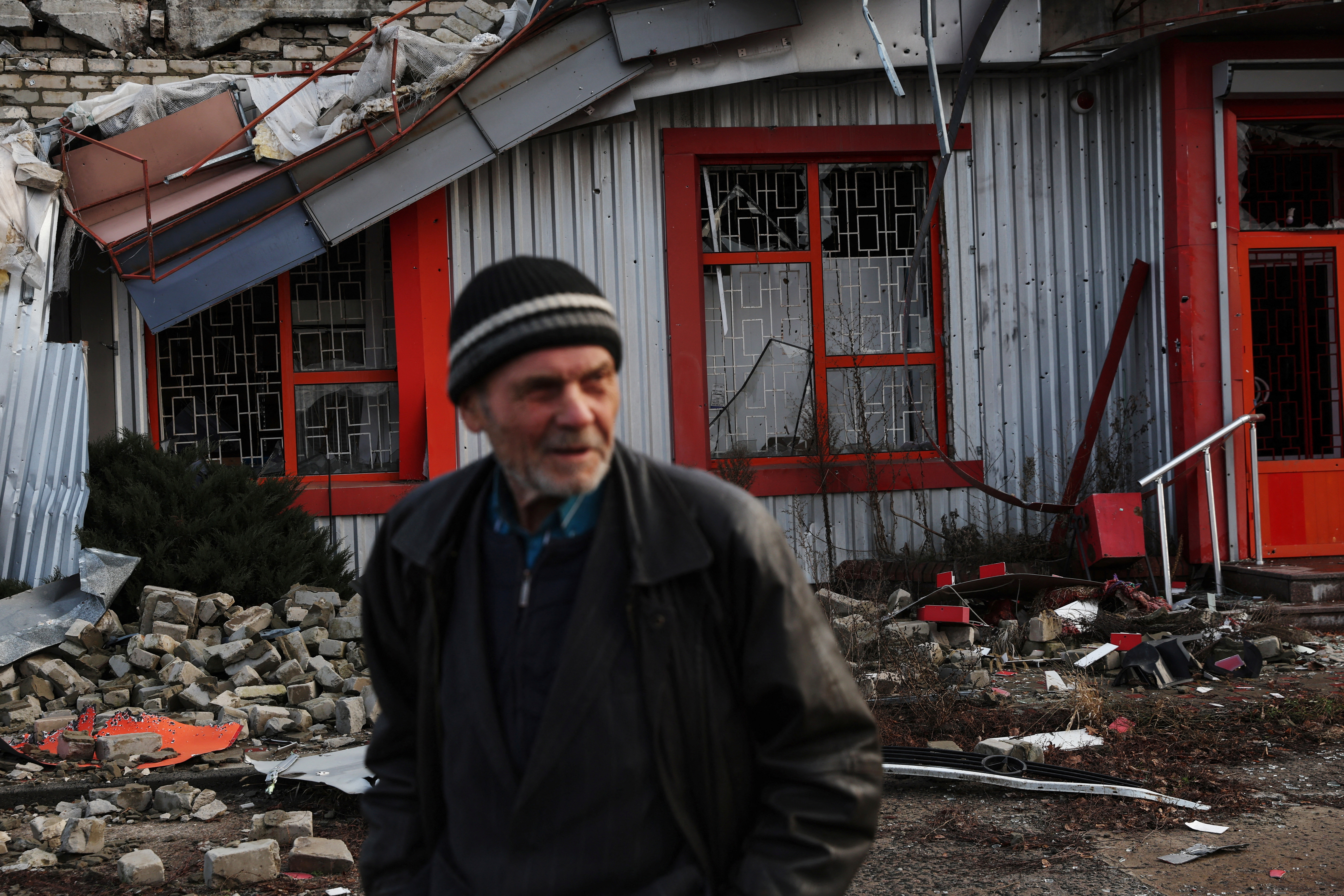
A man walks down by a damaged building, as Russia’s attack on Ukraine continues, inside the war-torn formerly Russian occupied city of Lyman, Donetsk region of Ukraine, December 11, 2022. REUTERS/Shannon Stapleton
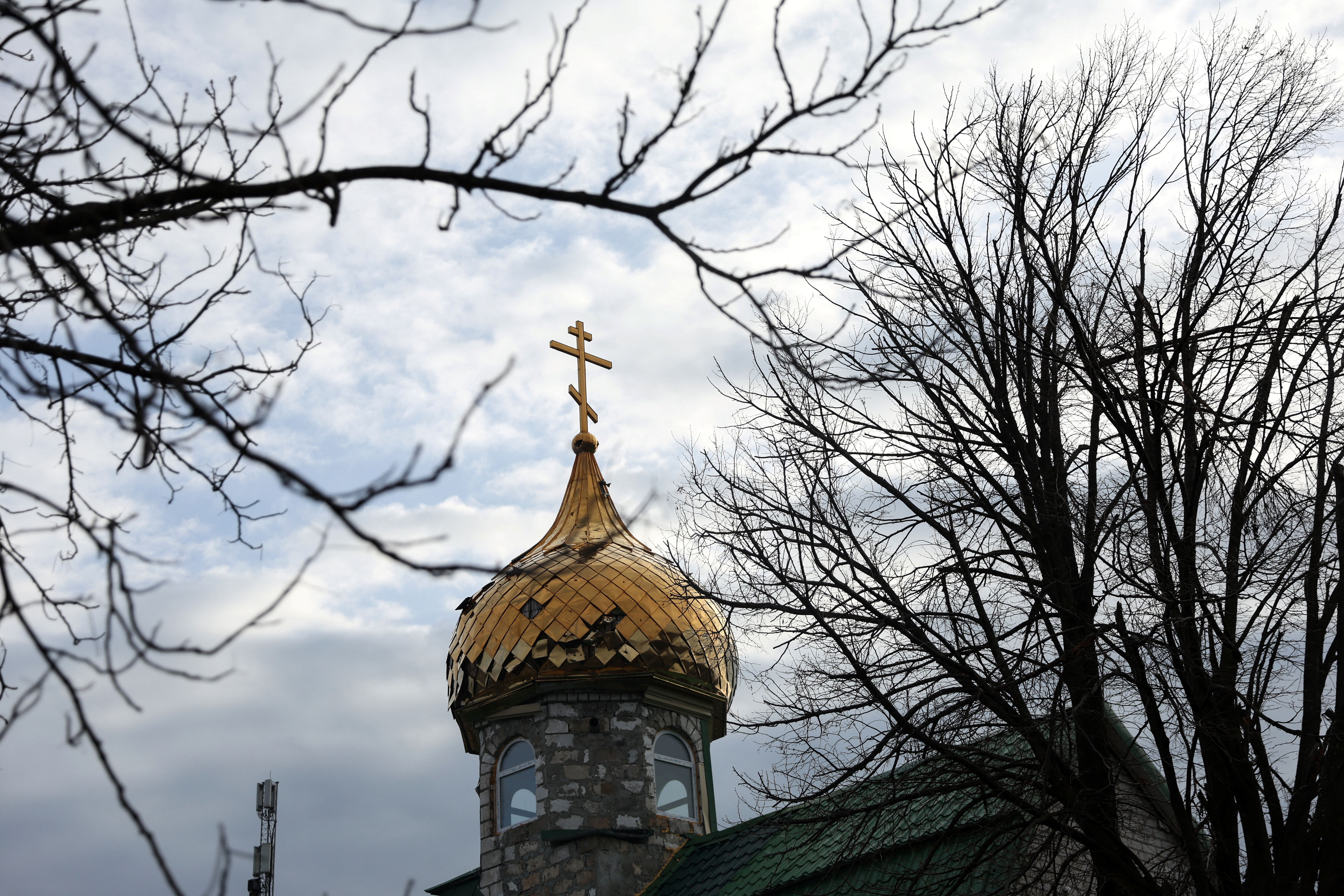
The remains of a cathedral on a war-torn church stand, as Russia’s attack on Ukraine continues, in the formerly Russian occupied city of Lyman, Donetsk region of Ukraine, December 11, 2022. REUTERS/Shannon Stapleton

Categories
Audio Sources - Full Text Articles

Hit by COVID wave, companies in China strain to keep operations running normally

2022-12-13T09:16:48Z

From e-commerce giant JD.com to cosmetics brand Sephora, companies in China are rushing to minimise the impact of surging COVID infections – doling out test kits, encouraging more work from home and, in some cases, procuring truckloads of medicine.

After unprecedented protests against oft-draconian COVID curbs, the world’s second-largest economy abruptly dropped its zero-tolerance COVID stance last week. The ensuing fierce spread of the virus has even forced certain businesses to shut their doors for the time being.

Anecdotally, in cities like Beijing and Wuhan, many workers and their families have succumbed to COVID, although official case numbers have fallen to under a fifth of a Nov. 27 peak as China now conducts much less testing.

“More than half of our staff in the mall and the hotel are positive,” said a senior executive at a firm that manages one of Beijing’s largest retail complexes.

The executive, who declined to be identified, said the mall was still open with remaining staff splitting into two teams and only one team working a particular shift.

The split-shift system is also being deployed by other companies, Chinese regulators and state-owned banks.

JD.com (9618.HK), which is headquartered in Beijing and employs more than 540,000 people, has sent antigen test kits to its staff and is asking those who are sick to stay home, sources at the company told Reuters.

At Sephora China, which has 321 stores across 89 cities on the mainland, each store is handling their staffing issues in accordance with their situation, said a spokesperson for the LVMH (LVMH.PA) brand, adding that all staff testing positive will be given paid leave and can work from home if possible.

At another Beijing shopping centre, a gym belonging to the U.S. Powerhouse chain said on Tuesday it would be closed until Dec. 25 to disinfect the premises and to protect the safety of staff and members.

“The spread of the virus is severe and there is a big risk of infection,” said the gym. It had just reopened five days ago after having had to shut for more than two weeks due to district-wide COVID curbs.

“It’s deeply frustrating. Businesses are having to close due to staff being sick, even though they can legally be open,” said Noah Fraser, Beijing-based managing director at the Canada-China Business Council.

“Blame is starting to flow from companies’ (foreign) headquarters to the team on the ground in China, with HQ asking ‘why can’t the China operations navigate these restrictions?’ All other markets have had to adjust and did so successfully,” he said.

Some factories and eateries are retaining COVID-19 curbs, including so-called closed-loop systems that isolate staff from the wider world, until they get a clearer picture of just how workplaces will be affected.

At Volkswagen (VOWG_p.DE), which has seen its plants in China heavily disrupted by lockdowns this year, production is currently stable but the automaker has reduced office attendance and is asking staff to stay 1.5 metres apart whenever possible, a spokesperson said.

Chinese electric vehicle maker Nio (9866.HK) also said its production was normal, although it is bracing for infections.

“We have sent trucks of medicines and equipment to the factory to be well prepared,” Nio’s president Qin Lihong told a media roundtable on Monday.

National health officials have so far made few comments on workplace conditions, only urging that high-risk areas should be much more narrowly defined, while production or business operations continue elsewhere.

Julian Evans-Pritchard, a senior China economist for Capital Economics, said he believed it will take quite a while for Chinese households to learn to live with the virus and it could take 3-6 months for consumer activity to return to “something resembling normality.”

“So even if the shift away from zero-COVID will benefit most businesses over the medium-term, it doesn’t provide immediate relief and the next few months will still be very challenging.”

Related Galleries:

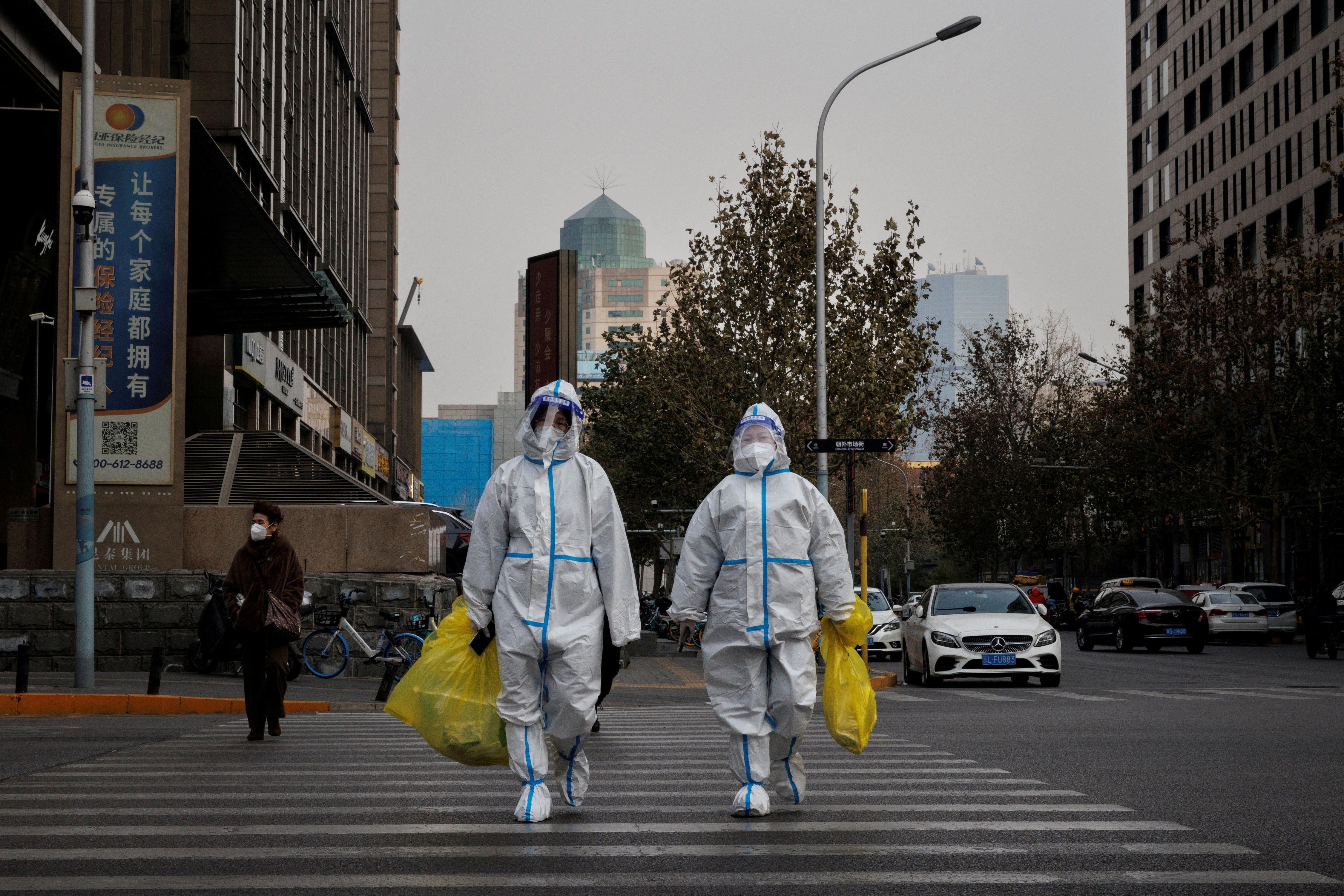
Pandemic prevention workers in protective suits cross a street as coronavirus disease (COVID-19) outbreaks continue in Beijing, December 9, 2022. REUTERS/Thomas Peter/File Photo

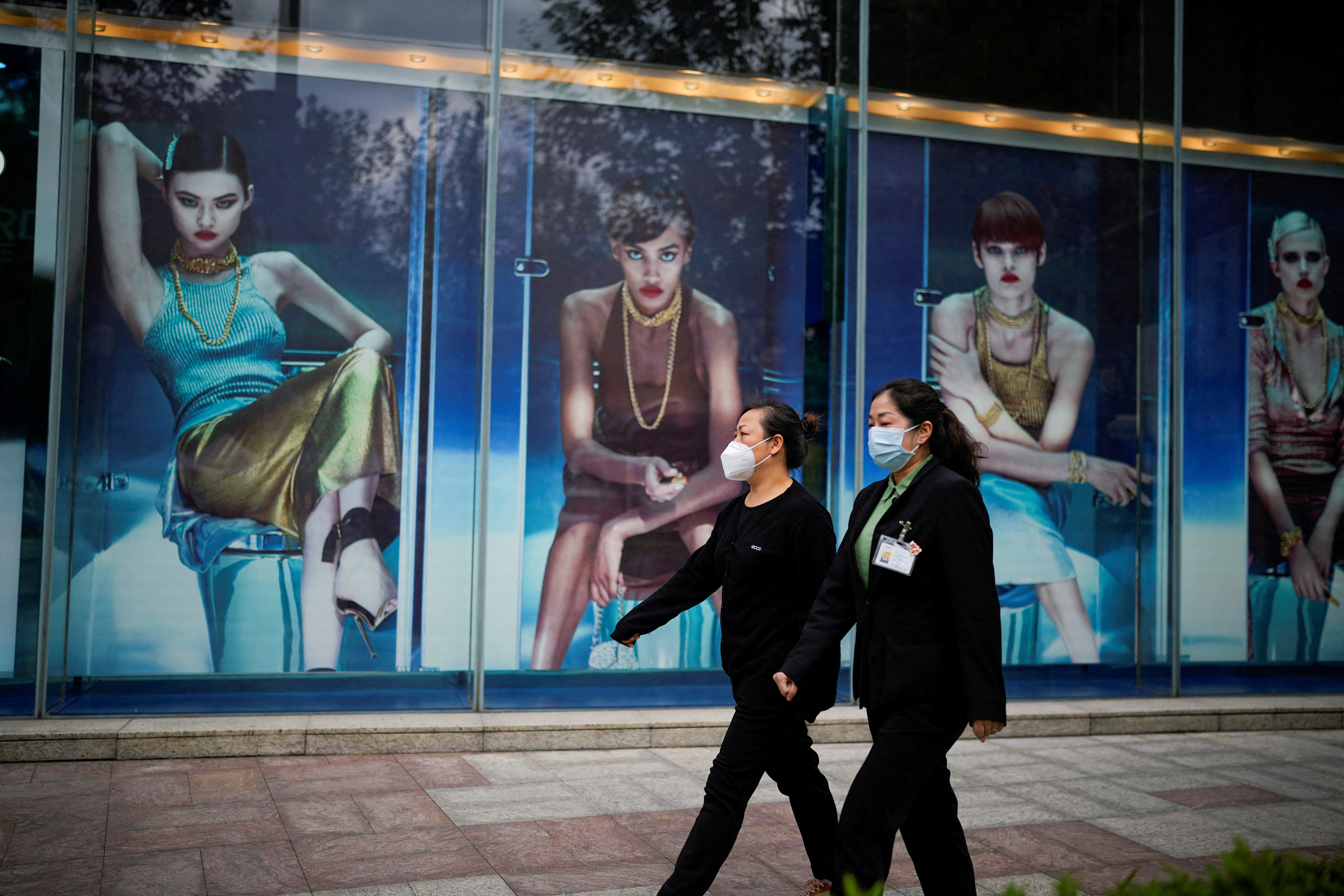
Women wearing face masks walk on street, as coronavirus disease (COVID-19) outbreaks continue in Shanghai, China, December 12, 2022. REUTERS/Aly Song/File Photo

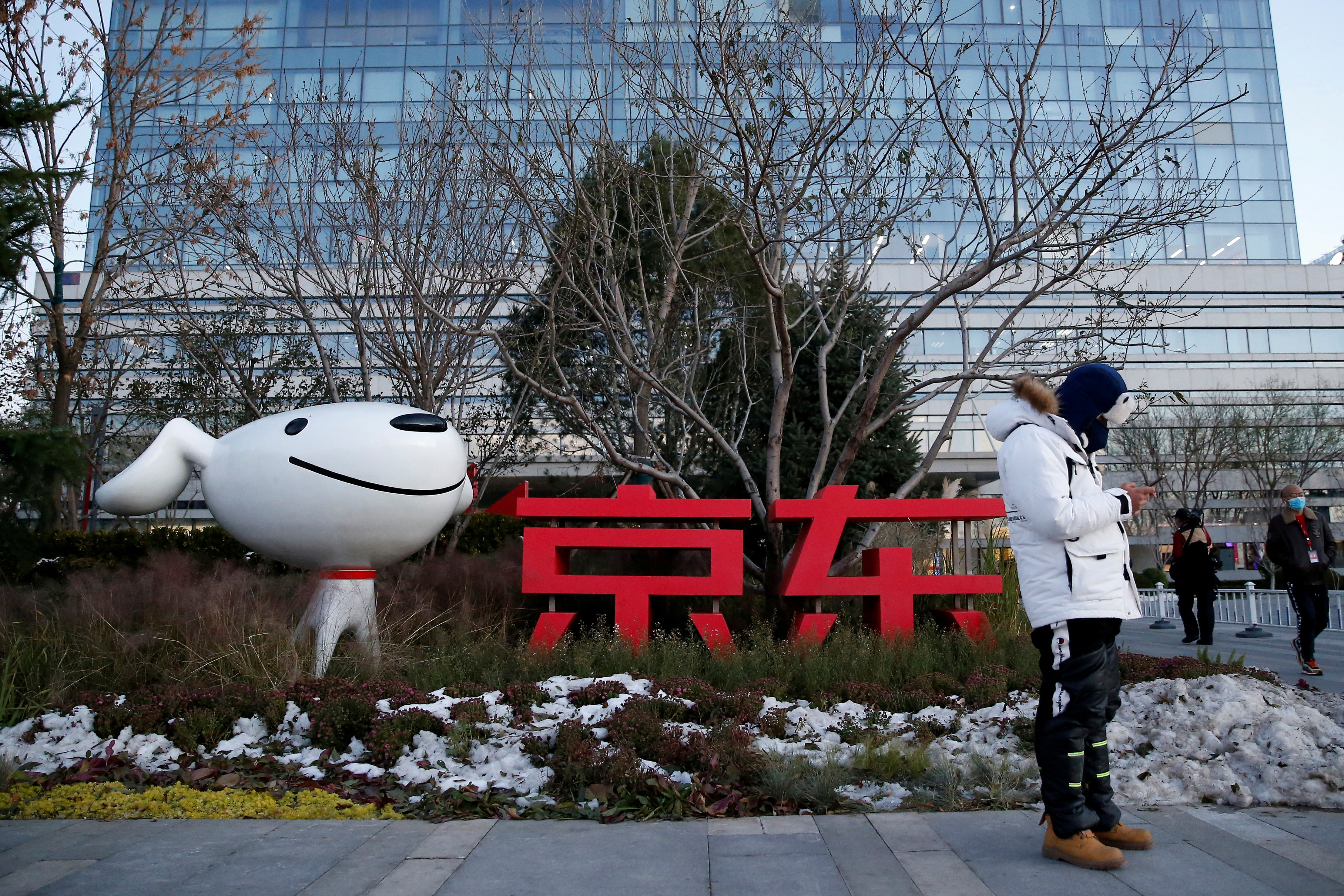
A man stands outside JD.com’s headquarters, amid the Singles’ Day shopping festival, during an organised tour in Beijing, China, November 9, 2021. REUTERS/Tingshu Wang/File Photo
Categories
Audio Sources - Full Text Articles

Exclusive: China readying $143 billion package for its chip firms in face of U.S. curbs

2022-12-13T09:17:38Z

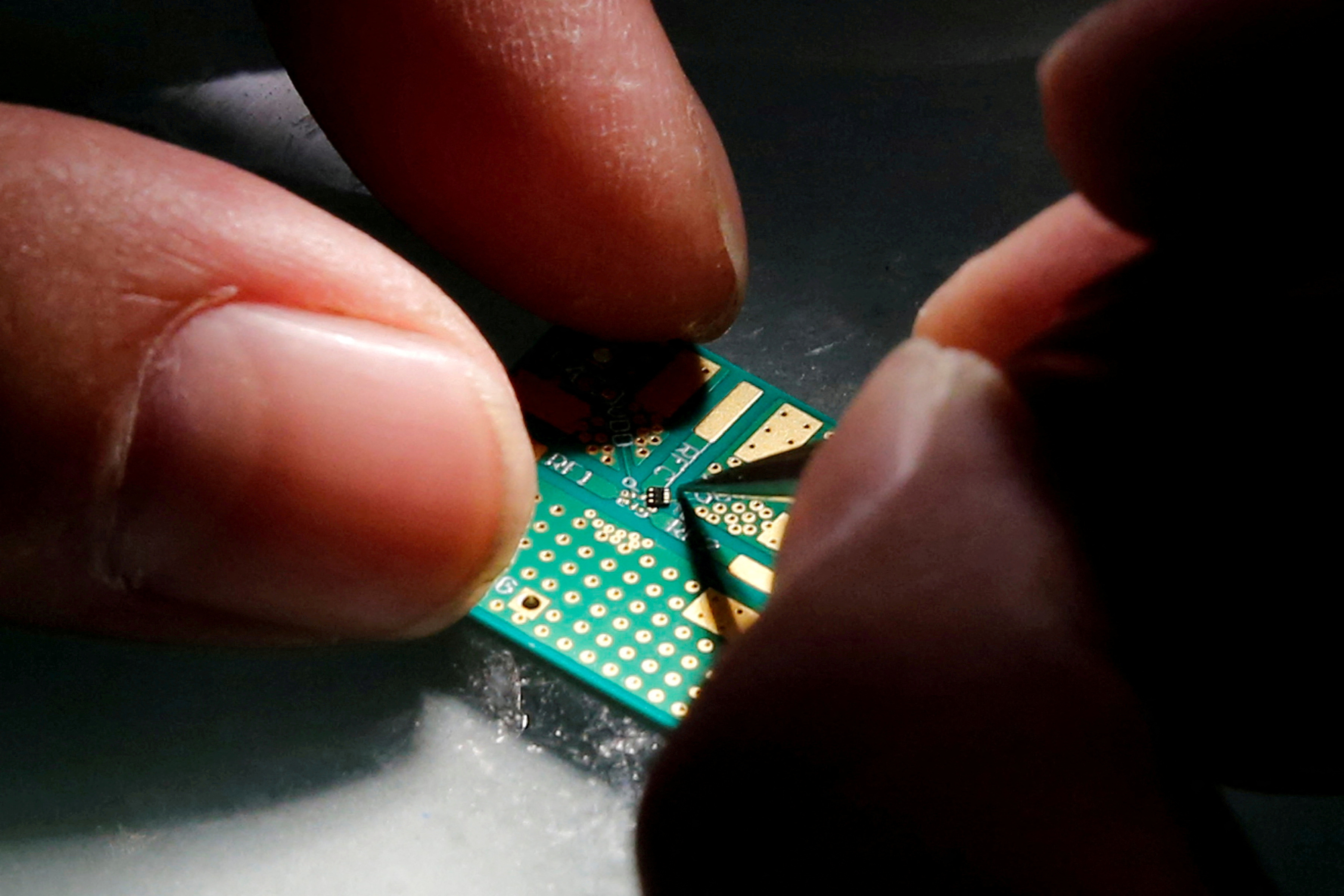
A researcher plants a semiconductor on an interface board during a research work to design and develop a semiconductor product at Tsinghua Unigroup research centre in Beijing, China, February 29, 2016. REUTERS/Kim Kyung-Hoon/File Photo

China is working on a more than 1 trillion yuan ($143 billion) support package for its semiconductor industry, three sources said, in a major step towards self sufficiency in chips and to counter U.S. moves aimed at slowing its technological advances.

Beijing plans to roll out what will be one of its biggest fiscal incentive packages over five years, mainly as subsidies and tax credits to bolster semiconductor production and research activities at home, said the sources.

It signals, as analysts have expected, a more direct approach by China in shaping the future of an industry, which has become a geopolitical hot button due to soaring demand for chips and which Beijing regards as a cornerstone of its technological might.

The plan could be implemented as soon as the first quarter of next year, said two of the sources who declined to be named as they were not authorised to speak to media.

The majority of the financial assistance would be used to subsidise the purchases of domestic semiconductor equipment by Chinese firms, mainly semiconductor fabrication plants, or fabs, they said.

Such companies would be entitled to a 20% subsidy on the cost of purchases, the three sources said.

The fiscal support plan comes after the U.S. Commerce Department passed in October a sweeping set of regulations, which could bar research labs and commercial data centres’ access to advanced AI chips, among other curbs.

The United States has also been lobbying some of its partners, including Japan and the Netherlands, to tighten exports to China of equipment used to make semiconductors. read more

And U.S. President Joe Biden in August signed a landmark bill to provide $52.7 billion in grants for U.S. semiconductor production and research as well as tax credit for chip plants estimated to be worth $24 billion.

With the incentive package, Beijing aims to step up support for Chinese chip firms to build, expand or modernise domestic facilities for fabrication, assembly, packaging, and research and development, the sources said.

Beijing’s latest plan also includes preferential tax policies for the country’s semiconductor industry, they said.

China’s State Council Information Office did not immediately respond to a request for comment.

The beneficiaries will be both state-owned and private enterprises in the industry, notably large semiconductor equipment firms like NAURA Technology Group (002371.SZ), Advanced Micro-Fabrication Equipment Inc China (688012.SS) and Kingsemi (688037.SS), the sources added.

Some Chinese chip shares in Hong Kong rose sharply after news of the package. Semiconductor Manufacturing International Corp (SMIC) (0981.HK) added more than 8%, sending its daily gain to nearly 10%. Hua Hong Semiconductor Ltd (1347.HK) closed up 17%, while mainland markets were closed when the report was published.

Achieving self-reliance in technology featured prominently in President Xi Jinping’s full work report at the Communist Party Congress in October. The term ‘technology’ was referred to 40 times, up from 17 times in the report from the 2017 congress.

Xi’s call for China to “win the battle” in core technologies could signal an overhaul in Beijing’s approach to advancing its tech industry, with more state-led spending and intervention to counter U.S. pressures, analysts have said. read more

The U.S. sanctions published in October have caused major overseas-based chip manufacturing equipment companies to cease supplying key Chinese chipmakers, including Yangtze memory Technologies Co (YMTC) and SMIC, and makers of advanced artificial intelligence chips to cease supplying companies and laboratories.

The world’s second-largest economy has launched a trade dispute at the World Trade Organization against the United States over its chip export control measures, China’s commerce ministry said on Monday. read more

China has long lagged the rest of the world in the chip manufacturing equipment sector, which remains dominated by companies based in the United States, Japan, and the Netherlands.

A number of domestic firms have emerged in the past twenty years, but most remain behind their rivals in terms of ability to produce advanced chips.

NAURA’s etching and thermal process equipment, for example, can only produce 28-nanometer and above chips, relatively mature technologies.

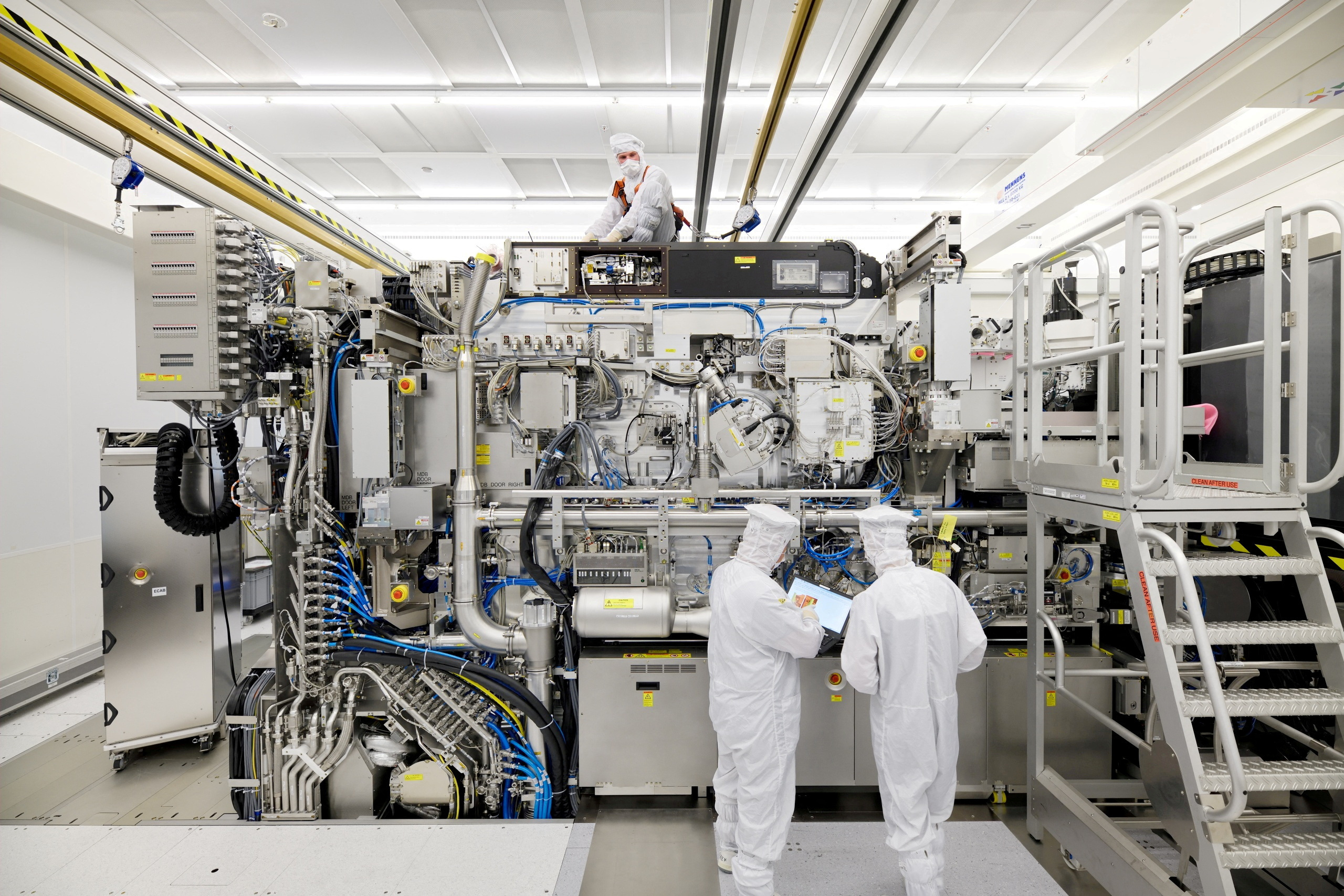
Shanghai Micro Electronics Equipment Group Co. Ltd (SMEE), China’s only lithography company, can produce 90-nanometers chips, well behind that of the Netherlands’ ASML, which is producing those as low as 3 nanometers.

($1 = 6.9796 Chinese yuan renminbi)

Categories
Audio Sources - Full Text Articles

European Parliament“s Kaili ousted from post as she denies corruption charges

2022-12-13T09:22:58Z

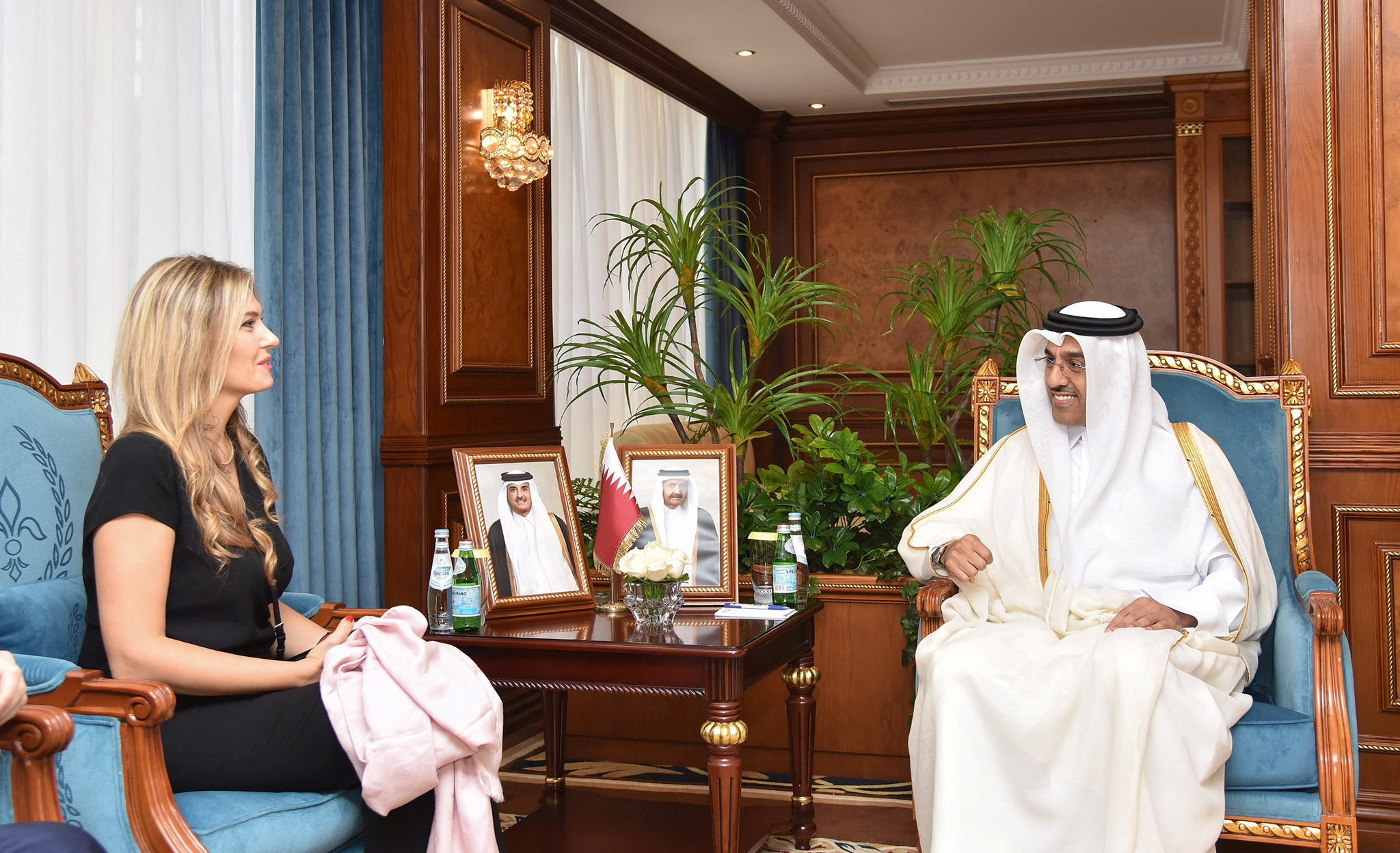
Ali bin Samikh Al Marri, Qatar’s minister of labour, speaks with Greece’s Eva Kaili, vice president of the European Parliament, during a meeting in Qatar, October 31, 2022 in this social media handout image. Twitter/Ministry of Labour – State of Qatar via REUTERS

The European Parliament’s political groups voted on Tuesday to strip Eva Kaili of her role as vice president over a major corruption scandal, just as her lawyer said she denied any wrongdoing in her first public comment on the case.

Kaili, one of 14 vice presidents of the parliament, was among four people arrested and charged in Belgium at the weekend over allegations that World Cup host Qatar lavished them with cash and gifts to influence decision-making.

The scandal has triggered outrage in Brussels and raised concerns among EU lawmakers and political leaders that the incident could further dent the EU’s image at home and abroad, prompting the assembly to quickly cut ties with Kaili.

The European Parliament sees itself as a moral compass in Brussels, issuing resolutions critical of human rights abuses across the globe and taking EU governments to task. Germany said the case had jeopardised the credibility of Europe.

The decision to remove Kaili was taken by the European Parliament’s conference of presidents in an emergency meeting, President Roberta Metsola said. The vote now needs to be confirmed by the whole parliament later on Tuesday.

Belgian prosecutors said they had suspected for more than four months that a Gulf state was trying to buy influence in Brussels.

A source with knowledge of the case said the state was Qatar. Qatar has denied any wrongdoing.

Greece on Monday froze Kaili’s assets in the country.

Belgian police searched 19 homes and the offices of the parliament from Friday to Monday and have seized computers, mobile phones and several hundred thousands of euros in cash.

Meanwhile, Michalis Dimitrakopoulos, a lawyer representing Kaili in her home country Greece, told Open TV: “Her position is that she is innocent, I can tell you that.”

“She has nothing to do with financing from Qatar, nothing – explicitly and unequivocally. That is her position,” Dimitrakopoulos said, adding that she had “undertaken no commercial activity in her life”.

Categories
Audio Sources - Full Text Articles

U.S. consulted Japan, Netherlands on curbing chip-related exports to China

2022-12-13T09:01:29Z

The United States has spoken with its partners, including Japan and the Netherlands, on tightening exports to China of equipment used to make semiconductors, Jake Sullivan, the White House national security adviser, said on Monday.

The Biden administration aims to cut China off from certain semiconductor chips made anywhere in the world with U.S. equipment, in a bid to slow Beijing’s technological and military advances, issuing a series of curbs in October.

Sullivan’s comments followed a report by Bloomberg News that the two countries had agreed in principle to join the U.S.-led technology export control, citing people familiar with the matter.

Asked about the report, Japanese Trade Minister Yasutoshi Nishimura said co-operation in export control figured in a telephone conversation he had with U.S. Commerce Secretary Gina Raimondo, but declined to elaborate.

“I cannot go into details as they are diplomatic exchanges, but Japan has been implementing its export control strictly, based on the foreign exchange and foreign trade law in the spirit of international co-operation,” he told reporters.

A spokesperson for the Dutch foreign ministry declined to comment. Trade Minister Liesje Schreinemacher has said the Netherlands is in talks with the U.S. on restrictions.

Apart from top U.S. gear suppliers, Japan’s Tokyo Electron Ltd (8035.T) and Dutch lithography specialist ASML Holding NV (ASML.AS), are companies that make equipment needed to make highly advanced chips, and their governments’ adoption of the curbs would mark a major shift in the industry.

In October, U.S. administration officials said they expected to reach a deal with allies on curbing exports ‘in the near term“.

The Dutch government has restricted ASML from shipping its most advanced equipment to China since 2019, but curbs announced by the U.S. in October go further. ASML declined to comment.

A spokesperson for Tokyo Electron said the company was in no position to respond, since the matter had to do with each country’s regulations.

“We intend to keep a close eye on the situation constantly and deal with it appropriately,” the spokesperson added.

China is Tokyo Electron’s largest market, accounting for 26% of its sales of 1.94 trillion yen ($14.1 billion) in chip-making equipment for the year that ended in March.

For Japanese chip-testing equipment maker Advantest Corp (6857.T), China is the second-largest market, after Taiwan. Orders of 189 billion yen came in from China in the previous business year, or 27% of its total.

ASML said in November that its financial outlook through 2030 would not be impacted by a total ban on equipment sales to China. The company, which cannot currently meet demand, could sell the 15% of its order backlog currently destined for Chinese customers elsewhere.

In another development underlining ties between Tokyo and Washington, IBM Corp and Rapidus, a newly formed chip maker backed by Japan, unveiled a partnership on Tuesday that aims to make the world’s most advanced chips in Japan by the second half of the decade.

Dario Gil, the U.S. firm’s research director, said the two companies would work together to make IBM’s 2-nanometer-node chips, unveiled last year.

($1=137.5500 yen)

Related Galleries:

Employees are seen working on the final assembly of ASML’s TWINSCAN NXE:3400B semiconductor lithography tool with its panels removed, in Veldhoven, Netherlands, in this picture taken April 4, 2019. Bart van Overbeeke Fotografie/ASML/Handout via REUTERS/File Photo

ASML logo is seen in this illustration taken February 28, 2022. REUTERS/Dado Ruvic/Illustration/File Photo

A White House press aide looks on as U.S. President Joe Biden, isolating following his COVID-19 diagnosis, appears virtually in a meeting with business and labor leaders about the Chips Act — relating to U.S. domestic chip and semiconductor manufacturing — in an auditorium on the White House campus in Washington, U.S., July 25, 2022. REUTERS/Jonathan Ernst
Categories
Audio Sources - Full Text Articles

Vladimir Putin: 2022 Loser of the Year

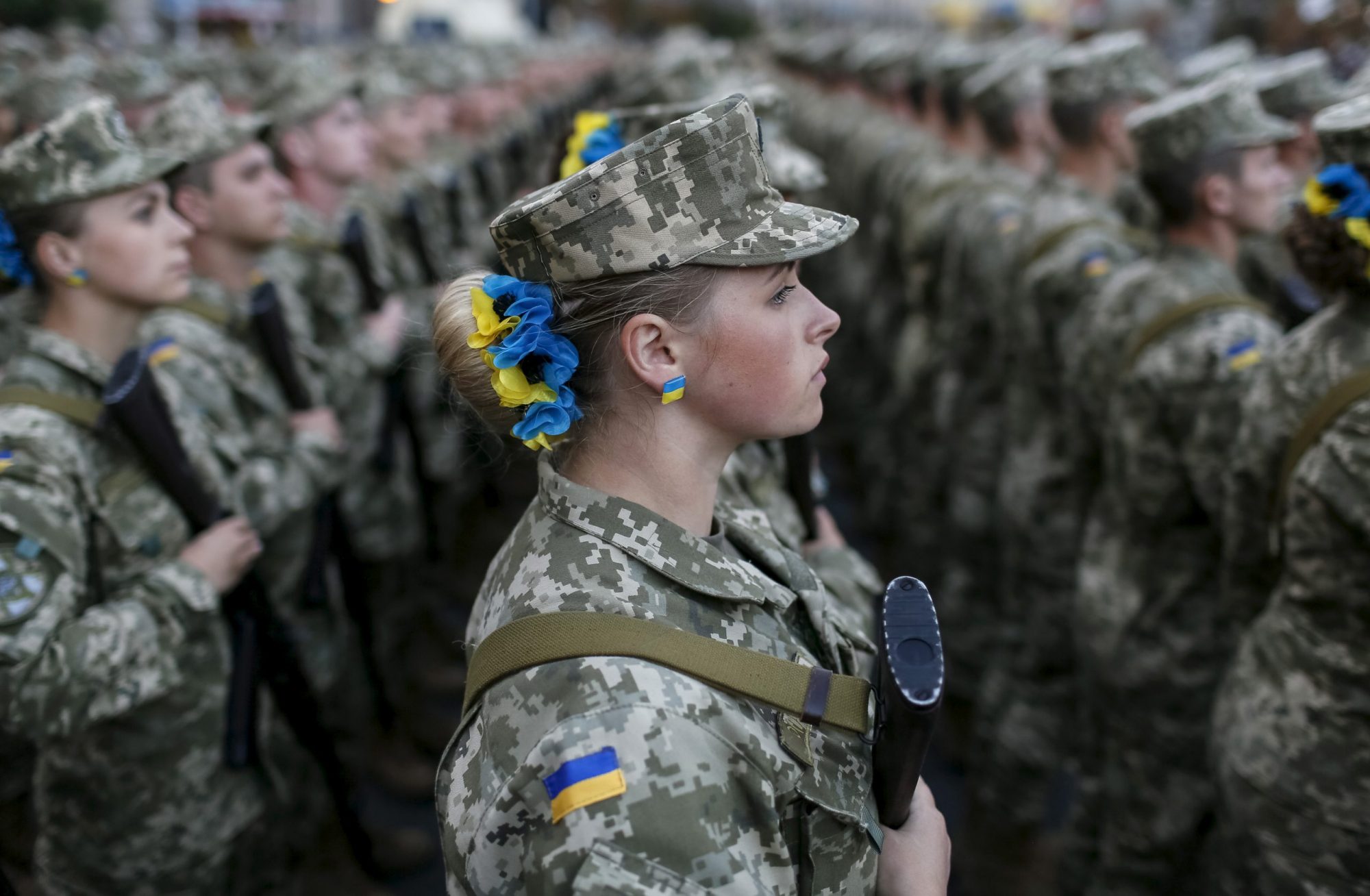
For the first time since the event was launched a decade ago, Vladimir Putin will not hold his flagship end-of-year press marathon this month. The surprise cancellation is the latest indication that all is not well in the Kremlin. For the past ten years, Putin’s annual press marathon has been a carefully curated propaganda spectacle allowing the Russian dictator to demonstrate his mastery of world affairs. However, with his invasion of Ukraine unraveling amid unprecedented losses and mounting military defeats, Putin is clearly in no mood to face even the most docile of audiences.

While Putin hides from the cameras, his arch-rival is ending the year on a wave of international acclaim. Ukrainian President Volodymyr Zelenskyy has already been named Person of the Year by an ever-expanding list of media outlets including TIME magazine and the Financial Times newspaper, and is now being routinely touted as one of the world’s most influential politicians. Zelenskyy’s rising profile is recognition of his wartime leadership and also reflects global admiration for Ukraine’s courageous resistance to the Russian invasion.

The contrasting fortunes of the Russian and Ukrainian leaders underline the self-defeating folly of Putin’s decision to launch Europe’s biggest conflict since World War II. His original plan envisaged a short and victorious war that would extinguish Ukrainian independence and force the country permanently back into the Kremlin orbit. Instead, he now finds himself an international pariah with his country’s reputation as military superpower in tatters and his Ukrainian enemies looking forward with growing confidence to the very real prospect of an historic victory in the coming year. By almost any measure, Vladimir Putin is comfortably the biggest loser of 2022.

Subscribe to UkraineAlert

As the world watches the Russian invasion of Ukraine unfold, UkraineAlert delivers the best Atlantic Council expert insight and analysis on Ukraine twice a week directly to your inbox.

2015-08-20T120000Z_1614809784_GF10000177

  • Name

    First

    Last

  • Email*
  • Email
    This field is for validation purposes and should be left unchanged.

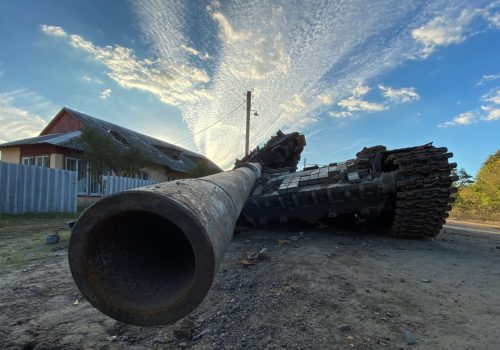
Putin’s woes can be traced directly to the battlefields of Ukraine. His invading army has performed disastrously over the past ten months and has lost a series of key engagements including the Battle of Kyiv, the Battle of Kharkiv, and the Battle of Kherson. More than one hundred thousand Russian soldiers are believed to have been killed or wounded, while thousands of Russian tanks and armored vehicles have been captured of destroyed. These losses have forced Putin to launch his country’s first mobilization since 1945, a move that has destabilized Russia and brought the war home to previously supportive domestic audiences.

Russia’s international image has also been badly tarnished by revelations of widespread war crimes committed against the Ukrainian civilian population. Russian troops stand accused of carrying out mass executions and engaging in sexual violence, abductions, and torture throughout occupied Ukraine. Millions of Ukrainians have been subjected to forced deportation, while policies of indiscriminate bombardment have left tens of thousands dead and reduced dozens of Ukrainian towns and cities to rubble. In recent months, Russia has begun the methodical destruction of Ukraine’s civilian infrastructure with the express intention of depriving Ukrainians of access to heating, electricity, and water during the depths of winter.

Many international observers see these policies as nothing short of genocide, especially as they have been accompanied by a steady stream of openly genocidal invective from regime propagandists and Kremlin officials in Moscow. Others have been appalled by Putin’s readiness to engage in nuclear saber-rattling. On multiple occasions, the Russian leader has issued thinly veiled threats alluding to the possible use of his country’s vast atomic arsenal. This nuclear blackmail has provoked a strong backlash, with US officials promising “catastrophic consequences” and even the normally supportive Chinese rebuking Russia.

All this has left Russia more internationally isolated than at any time since the immediate aftermath of the Bolshevik Revolution a century ago. In a revealing recent exchange, Kremlin spokesperson Dmitry Peskov admitted, “nobody likes us and they don’t intend to start liking us.” Peskov may have had the Western world primarily in mind, but his comment also reflected the wider reality of Russia’s increasingly unfavorable international position. Moscow’s isolation is most immediately obvious at the United Nations, where a series of General Assembly votes condemning the invasion of Ukraine have passed with resounding majorities. Tellingly, only a handful of fellow pariahs such as North Korea and Syria have been prepared to stand with Russia.

Closer to home, the Kremlin is visibly losing influence throughout the former Soviet Empire. In Central Asia, Kazakhstan is openly distancing itself from Russia while strengthening ties with China, Turkey, and the West. In the South Caucasus, Azerbaijan is increasingly ignoring Russia’s nominal role as regional peacekeeper while Armenia bristles over Moscow’s failure to provide any meaningful protection. Even Belarusian dictator Alyaksandr Lukashenka, who depends almost completely on the Kremlin for his political survival, has so far managed to resist Russian pressure to directly participate in the invasion of Ukraine.

On the wider international stage, the United States has succeeded in consolidating Western support for Ukraine. Meanwhile, Putin’s efforts to weaponize energy exports have backfired and forced European countries to turn decisively away from reliance on Russia. The BRICS nations (Brazil, India, China, and South Africa) continue to purchase Russian resources, but are now doing so on their own heavily discounted terms. Beyond this pragmatic trade, they have refused to back Russia or provide Moscow with much-needed weapons. This has forced the Kremlin to seek replacement tanks, artillery shells, drones, and missiles from the likes of Iran and Belarus.

What can Putin look forward to in 2023? He appears to believe the international alliance opposing his invasion may still eventually lose interest and is pinning his hopes on Western leaders forcing Kyiv into some kind of compromise deal that would allow Russia to snatch a victory of sorts from the jaws of defeat. However, with most of Ukraine’s backers publicly stating that they will let the Ukrainians themselves decide when to negotiate, this outcome looks unlikely. After all, no Ukrainian government could conceivably condemn millions of their compatriots to the horrors of indefinite Russian occupation.

A far more realistic scenario would see the well-armed and highly motivated Ukrainian military continue to steadily liberate occupied territory while Russia suffers heavy losses among poorly trained and badly equipped conscript troops. This is a recipe for disaster for the Putin regime. The Russian army in Ukraine is already deeply demoralized and struggling to mount localized offensives. Further attrition in the coming months will raise the prospect of a more comprehensive military collapse that could have grave consequences for the future of the Russian Federation itself.

As 2022 draws to a close, it is already obvious that Putin’s fateful decision to invade Ukraine was one of the biggest geopolitical blunders of the modern era. His dream of shattering the post-1991 settlement and rebuilding the Russian Empire has made him the single greatest threat to global security and placed him in direct confrontation with a formidable coalition of the world’s most powerful nations, who have reluctantly come to recognize the necessity of his defeat. Putin enters 2023 with few friends and fewer options. The coming year is shaping up to be the darkest of his entire reign. It may also be the last.

Peter Dickinson is Editor of the Atlantic Council’s UkraineAlert Service.

Further reading

The views expressed in UkraineAlert are solely those of the authors and do not necessarily reflect the views of the Atlantic Council, its staff, or its supporters.

The Eurasia Center’s mission is to enhance transatlantic cooperation in promoting stability, democratic values and prosperity in Eurasia, from Eastern Europe and Turkey in the West to the Caucasus, Russia and Central Asia in the East.

Follow us on social media
and support our work

The post Vladimir Putin: 2022 Loser of the Year appeared first on Atlantic Council.

WP Radio
WP Radio
OFFLINE LIVE