Categories
Audio Sources - Full Text Articles

Microsoft gaming ambitions hobbled as U.S. seeks to block Activision deal

2022-12-09T01:17:33Z

The U.S. Federal Trade Commission filed a complaint aimed at blocking tech giant Microsoft’s bid to buy “Call of Duty” and “Candy Crush” games maker Activision. Julia Sun has the details.

The Biden administration on Thursday moved to block Microsoft’s (MSFT.O) $69 billion bid to buy “Call of Duty” maker Activision Blizzard , throwing a stumbling block in front of the tech giant’s plans to rapidly expand its portfolio of popular games and catch up to bigger rivals.

Microsoft, which owns the Xbox console and game network platform, said in January 2022 that it would buy Activision for $68.7 billion in the biggest gaming industry deal in history.

Without Activision and its variety of games across mobile, consoles and PCs, Microsoft could struggle to attract users to its budding subscription service for accessing games. Drawing subscribers has become a priority for big tech companies as traditional growth sources such as ad sales become less reliable.

The U.S. software company had said it wanted the deal to help it compete with gaming leaders Tencent (0700.HK) and PlayStation owner Sony (6758.T), which has criticized the deal.

But, in its complaint, the U.S. Federal Trade Commission, which enforces antitrust law, said that Microsoft had a record of hoarding valuable gaming content.

“Microsoft has already shown that it can and will withhold content from its gaming rivals,” said Holly Vedova, director of the FTC’s Bureau of Competition

. “Today, we seek to stop Microsoft from gaining control over a leading independent game studio and using it to harm competition in multiple dynamic and fast-growing gaming markets.”

The agency set a hearing before an administrative law judge for August 2023.

Microsoft President Brad Smith said the company would fight the FTC. “While we believed in giving peace a chance, we have complete confidence in our case and welcome the opportunity to present our case in court,” he said.

The Biden administration has taken a more aggressive approach to antitrust enforcement. The U.S. Department of Justice recently stopped a $2.2 billion merger of Penguin Random House, the world’s largest book publisher, and smaller U.S. rival Simon & Schuster.

“This is more evidence of the administration’s and the antitrust agencies’ war against big tech,” said Andre Barlow of the law firm Doyle, Barlow and Mazard PLLC. Both the Trump and Biden administrations have prioritized big tech in antitrust enforcement.

Shares in Activision closed down 1.5% at $74.76, while Microsoft slipped from earlier highs but closed about 1% higher at $247.40.

Activision, which has long dreamt of being a Disney-like entertainment conglomerate, also realized it needed more tech know-how and it could be forced to trim back its roster of games to shift resources into emerging areas such as AI.

The FTC said that its concern was that Activision’s popular games, including “World of Warcraft” and “Diablo,” would not continue to be offered on a range of consoles, PCs and mobile devices.

While Microsoft has suggested concessions to address competition concerns, the rapid pace of change in the tech and gaming industries could make those conditions useless over time.

To woo regulators, shortly after the deal was announced Microsoft unveiled a new set of principles for its app store, including open access to developers who meet privacy and security standards.

This month, in another move to blunt criticism, Microsoft entered into a 10-year commitment to offer “Call of Duty,” the popular first-person shooter series, to Nintendo (7974.T) platforms. Microsoft made the same offer to Sony.

Antitrust challenges have stumbled when companies put forward a “fix” for antitrust harms being done by a deal, said William Kovacic, a former FTC chair who now teaches law.

“I think we can predict with a high degree of certainty that he (the judge) will listen to those arguments (from Microsoft) and may be sympathetic to it,” said Kovacic.

Chair Lina Khan and the two Democrats on the commission voted to approve the complaint, while Commissioner Christine Wilson, a Republican, voted no.

Activision Blizzard CEO Bobby Kotick told employees on Thursday that he was confident that the deal would go forward.

“The allegation that this deal is anti-competitive doesn’t align with the facts, and we believe we’ll win this challenge,” he told employees, saying that he believed the companies’ arguments would win “despite a regulatory environment focused on ideology and misconceptions about the tech industry.”

The deal also faces regulatory headwinds in Europe.

As of late November, Microsoft was expected to offer remedies to EU antitrust regulators in the coming weeks to stave off formal objections to the deal, people familiar with the matter said. The deadline for the European Commission to set out a formal list of competition concerns, known as a statement of objection, is in January.

Related Galleries:

A person walks past a Microsoft store in the Manhattan borough of New York City, New York, U.S., January 20, 2022. REUTERS/Carlo Allegri/File Photo

Activision games “Call of Duty” are pictured in a store in the Manhattan borough of New York City, New York, U.S., January 18, 2022. REUTERS/Carlo Allegri/File Photo
Categories
Audio Sources - Full Text Articles

In viral clip, French TV host asks Jewish guest why he wears a kippah in public

Screen-Shot-2022-12-08-at-7.00.45-PM.png

(JTA) — An Israeli professor was asked by the host of a French TV news show why he publicly identifies his religion by wearing a kippah in a clip that went viral on Wednesday.

“Many people are asking, why a professor wears a religious symbol in our studio,” the host of CNews pressed Dr. Cyrille Cohen, head of immunology at Bar Ilan University, who was invited to discuss vaccine effectiveness against the COVID-19 virus.

“For transparency, I wear it everyday, I did not put it on especially for this show,” he responded with an air of confusion.

“קוראים לי כהן, אני מישראל, אני עם כיפה”

הבנתי שהקטע הזה וויראלי למדיי בצרפת, הנה תרגום לעברית: פרופ’ סיריל כהן הישראלי בא להתראיין בערוץ צרפתי כרופא, ונשאל מה פתאום הגיע לאולפן עם כיפה… pic.twitter.com/6v0YM7ZnS5

— סיון רהב מאיר Sivan Rahav Meir (@SivanRahav) December 7, 2022

But French-Jewish journalist Elisabeth Levy, who was also a guest on the panel, pushed further.

“You understand, don’t you, that our non-religious way of life is discrete. It’s not against religion, but you should keep your religion to yourself,” she said.

“My name is Cohen! Why would you want me to ‘keep my religion to myself’? I’m coming from Israel,” Cohen responded in exasperation.

A clip of the video drew quick condemnation on Twitter. “Is this 1930s Europe?” tweeted Israeli journalist Emily Schrader.

Though brief, the exchange illustrated the starkly different perspectives on religious expression in France, the United States and elsewhere in the western world. “Laicite,” or secularism, rather than religious freedom, is enshrined in the first article of the French constitution, which also protects the free exercise of religion. The term has long been understood to imply a strict separation between the private sphere, where religion is accepted, and the public, where it is discouraged.

Religious minorities have complained that French secularism is often gentler with displays of Christianity, than other faiths.

“If a priest came in here would you ask him to take off his cross, if the pope, would you have him take off his cross and head covering?” Cohen said in the exchange.

Since 2004, French public schools have banned all personal displays of religion, including both crosses and yarmulkes. In 2009, debate erupted after a woman was banned from swimming in a public pool while wearing a bathing suit in line with some Islamic interpretations of modesty laws. In 2016, the swimsuit nicknamed a “burkini” was banned by the mayor of Cannes, a beach town. 

French Jews also came up against the government’s strict adherence to laicite when a hearing in the trial of suspects involved in the 2015 shooting at a Paris Kosher supermarket, which killed four Jews, was scheduled on Yom Kippur. The French judiciary refused to change the date after requests by the families of the victims, citing laicite. 

This article originally appeared on JTA.org.

The post In viral clip, French TV host asks Jewish guest why he wears a kippah in public appeared first on The Forward.

Categories
Audio Sources - Full Text Articles

Russia-Ukraine war at a glance: what we know on day 289 of the invasion

Brittney Griner freed in prison swap; Putin vows to continue attacking energy systems

Continue reading…

Categories
Audio Sources - Full Text Articles

Northern Plains tribes bring back their wild ‘relatives’

FORT BELKNAP AGENCY, Mont. (AP) — Native species such as swift foxes and black-footed ferrets disappeared from the Fort Belknap Indian Reservation generations ago, wiped out by poisoning campaigns, disease and farm plows that turned open prairie where nomadic tribes once roamed into cropland and cattle pastures.

Now with guidance from elders and outside wildlife groups, students and interns from the tribal college are helping reintroduce the small predators to the northern Montana reservation sprawling across more than 1,000 square miles (2,600 square kilometers) near the U.S.-Canada border.

Sakura Main, a 24-year-old Aaniiih woman who is entering Fort Belknap’s Aaniiih Nakoda College in January, is helping to locate, trap and vaccinate the severely endangered ferrets against deadly plague in a program overseen by the tribal fish and game department.

The nocturnal animals live among the mounded burrows of prairie dog colonies, where ferrets stalk the rodents almost as big as they are, wrapping themselves around their prey to strangle and kill it.

On a recent clear night, the Nakoda sacred site Snake Butte looming on the horizon, Main shined a flashlight into a long, skinny, wire trap atop a prairie dog burrow. Inside was the second ferret that she’d caught that night with fellow wildlife worker C.J. Werk, daughter of the former tribal president.

“We got one in there!” Main quietly exclaimed.

“Wow, really another one?” replied Werk, who was engaged in a friendly competition with another worker, her cousin, to catch the most ferrets. “I’m going to rub it in.”

Hurried back to the “hospital trailer,” the animal was sedated and vaccinated against sylvatic plague carried by their favorite prey, work done in partnership with World Wildlife Fund. It had a microchip inserted beneath its skin for future tracking, before being released back into the prairie dog colony to a soft cheer from Main and Werk.

As extinctions of animals and plants accelerate around the globe, Native American tribes with limited funding are trying to re-establish imperiled species and restore their habitat — measures that parallel growing calls to “rewild” places by reviving degraded natural systems.

But the direct relationship that Native Americans perceive between people and wildlife differentiates their approach from western conservationists, who often emphasize “management” of habitat and wildlife that humans have dominion over, said Julie Thorstenson, executive director of the Native American Fish & Wildlife Society.

“Western science looks at humans as kind of external managers of the land and of the ecosystem,” she said. “Indigenous people see themselves as part of it.”

The Nakoda and Aaniiih people have struggled to restore their land to a wilder state. Plague periodically wipes out ferret populations, and half the foxes released so far may have died or fled.

But tribal members say they’re committed to rebuilding native species with deep cultural significance to restore balance between humans and the natural world. Tribal elders speak nostalgically of the long-gone Swift Fox Society, which prized the secretive, rarely seen animals and used their pelts and tails to adorn hair braids and costumes. They call the foxes and ferrets their “relatives.”

“It’s like having your family back,” said Mike Fox, former director of the Fort Belknap wildlife program. “We have a pretty darn good spot on the Northern Plains to bring these animals back and just about complete the circle of animals that were originally here.”

Prior to European settlement as many as one million ferrets occupied an estimated 156,000 square miles (400,000 square kilometers) from Canada to Mexico — wherever prairie dogs were found. By the 1960s, conversion of grasslands to crops, plague and poisoning campaigns reduced prairie dogs to 2,200 square miles (5,700 square kilometers). Ferrets were presumed extinct then rediscovered in 1981 on a ranch in Meeteetse, Wyoming.

They’re one of the most endangered mammals in North America, with only about 300 in the wild, including fewer than 40 on Fort Belknap. Populations are propped up with a captive breeding program to counter periodic decimations by plague.

Prairie dogs are still considered a nuisance among ranchers, including on Fort Belknap, because they eat grass. Prairie dog shooting tournaments once were held annually to raise money for the tribal fish and game department, Fox said. The tournaments are gone on Fort Belknap, and prairie dogs — squirrel-sized rodents common across the U.S. Plains — are now recognized as vital to ferrets.

Parts of Fort Belknap also are being repopulated with bison, a species that sustained Native Americans for centuries before white settlers killed them off. Bison are being restored by dozens of tribes across the U.S., which is similar to efforts in the Pacific Northwest to sustain wild salmon populations, another keystone species that provides food for tribes.

The work to reestablish black-footed ferrets and swift foxes is different. Unlike bison and salmon, foxes and ferrets aren’t food sources. They live in the shadows, hunting mostly at night, and are rarely seen.

Ferrets have been reintroduced to seven reservations on the Northern Plains and two tribal sites in the Southwest, while swift foxes have been returned to four reservations, said Shaun Grassel, a former biologist for the Lower Brule Sioux Tribe in South Dakota.

Less than 100 yards (91 meters) from a small pen holding three swift foxes about to be released at Fort Belknap, tribal elders Buster Moore and John Allen sat among cactuses and scrubby grasses and passed a pipe around a circle of men, while women sat nearby, watching and listening.

After the ceremony, Moore — whose Nakoda name is Buffalo Bull Horn — rubbed his hands on the hard earth, explaining that they prayed for the foxes, the tribes, the land itself.

“It sustains itself, it helps Mother Earth, everything sustain balance,” Moore said of the restoration work celebrated that day. “Prairie dogs, wolves, swift fox, red fox, black-footed ferrets.”

Once abundant on the plains, swift foxes now occupy about 40% of their original habitat. Since 2020, the tribes and college have worked with scientists from the Smithsonian’s National Zoo to capture about 100 foxes from healthy populations in Wyoming and Montana and relocate them to Fort Belknap.

As Moore spoke, the reservation’s fish and wildlife biologist Tim Vosburgh and two assistants cautiously approached a few foxes in a pen. They used wire cutters to cut through the chain link and pulled it open.

When they moved about 50 yards (46 meters) away, a fox poked its head out of a prairie dog burrow inside the pen. It soon darted out the opening, followed within minutes by two others.

They disappeared across the rolling landscape and into the glaring sun behind the Bearpaw Mountains to the west.

“What they need is a little luck,” said Allen the elder. “They need to survive the winter and then they won’t have to worry about it, you know, because they’ve got all the skills. So we call on our relatives to protect them.”

___

Follow Matthew Brown on Twitter: @MatthewBrownAP

___

Associated Press climate and environmental coverage receives support from several private foundations. See more about AP’s climate initiative here. The AP is solely responsible for all content.

Categories
Audio Sources - Full Text Articles

New Mexico seeks tougher provisions for US nuclear dump

ALBUQUERQUE, N.M. (AP) — New Mexico officials outlined new conditions Thursday for a proposed permit for the U.S. government to continue the disposal of nuclear waste in the southeast corner of the state, part of a multibillion-dollar federal cleanup program.

As a hedge against becoming the nation’s only permanent dumping ground, New Mexico wants to raise the bar with its proposal by demanding federal officials produce a full accounting of materials still needing to be cleaned up and shipped to the Waste Isolation Pilot Plant, or WIPP.

The state also is putting Congress on notice that the permit would be revoked if lawmakers expand the type of waste accepted at WIPP. Currently, the repository is licensed to take what is known as transuranic waste, or waste generated by the nation’s nuclear weapons program that is contaminated with radioactive elements heavier than uranium.

There are a few other commercial facilities in the U.S. that accept low-level waste, but none involves hoisting it into an ancient salt formation about a half-mile (0.8 kilometers) deep.

The idea is that the salt from which the subterranean landfill is carved will shift and eventually entomb the barrels and special boxes that are stacked within disposal rooms. The containers are packed with lab coats, rubber gloves, tools and other contaminated debris.

Democratic Gov. Michelle Lujan Grisham and members of the state’s congressional delegation have relayed to top federal officials the concerns of New Mexicans about any plans that would call for opening WIPP to high-level waste such as diluted plutonium.

Top state officials also have criticized the federal government for prioritizing cleanup in other states rather than getting more waste from Los Alamos National Laboratory — the once top-secret birthplace of the atomic bomb — shipped to WIPP.

Prioritizing waste from New Mexico would be another condition in the permit, and state officials also want the federal government to submit annual reports on steps being taken to site another underground repository elsewhere in the U.S.

State Environment Secretary James Kenney told The Associated Press in an interview that the proposed conditions represent more than just a wish list, but rather a framework for holding the government accountable.

“One thing the federal government has taught me greatly in this job is that unless they’re told to do something, they may not do it,” Kenney said, adding that the proposed permit conditions would enable the state to leverage outcomes that are in New Mexico’s best interest.

The Environment Department plans to release the full draft permit Dec. 20, opening a 60-day public comment period that will be followed by a public hearing and negotiations with the U.S. Department of Energy.

The DOE is expected to push back on several conditions, and it could take a year before a final permit is hashed out and approved.

The agency did not immediately respond to an email request for comment.

Nuclear watchdogs were pleased with the details shared by the state Thursday, saying those steps, if adopted, would help prevent the state from being steamrolled by the federal government.

Kenney recalled being at a gas station in eastern New Mexico when he learned the DOE reached an agreement with Idaho to prioritize cleanup there and ship most of the waste to WIPP. New Mexico was never consulted, he said.

The proposed permit is aimed at reclaiming the state’s authority and prioritizing public health and environmental protections in ways that haven’t been seen in years, Kenney said.

“When you’re talking about various things coming to WIPP, your first call, before any other state, needs to be to New Mexico,” he said. “All roads lead from WIPP. They don’t lead to WIPP and we will not be put in the position — and I think this permit shows that — that we will be the last one consulted.”

Categories
Audio Sources - Full Text Articles

Herschel Walker’s embarrassing loss is having ramifications across the GOP

19121c5c768fb6ee35d5576afe2d9a7f?s=100&d

Save Palmer Report! Our articles are all 100% free to read, with no forced subscriptions and nothing hidden behind paywalls. If you value our content, you’re welcome to pay for it:

Pay $5 to Palmer Report:

Pay $25 to Palmer Report:

Pay $75 to Palmer Report:


Sign up for the Palmer Report mailing list

Save Palmer Report! Our articles are all 100% free to read, with no forced subscriptions and nothing hidden behind paywalls. If you value our content, you’re welcome to pay for it:

Pay $5 to Palmer Report:

Pay $25 to Palmer Report:

Pay $75 to Palmer Report:

Sign up for the Palmer Report Mailing List.


The fallout from the Herschel Walker fiasco continues. Reports are that many a republican is infuriated. Some of this fury we can see for ourselves. Meltdowns are being had by republicans all over the place. And the latest one comes from Fox non-news’s Laura Ingraham.

Never one to hold back on how she’s feeling, Ingraham gave new meaning to the word “bitter.” But it was WHERE her anger was directed that made things interesting. Her anger did not seem to be focused on Donald Trump — the man who personally selected Walker as a candidate.

Nor did it seem aimed at Walker himself for running a crappy campaign. No, Ingraham’s anger seemed focused on — the GOP themselves. “I’m pissed,” she snarled. “We felt this coming. To me, it never felt like the Senate Republicans wanted this guy in office.”

Well, yes, Laura, that might well be the case.

After all, a man who thinks he’s a vampire has ex-girlfriends accusing him of talking them into getting abortions and can’t string two coherent sentences together MIGHT worry the GOP a bit.

“He was a Trump pick,” a furious Ingraham went on. “They didn’t like that.”

“We just keep doing the same thing over and over,” Ingraham went on. “I’m pissed tonight. Frankly, I’m mad.”


My opinion? Laura IS mad, but I do not mean it in the sense of being angry. Frankly, anyone who wanted to get behind Walker’s candidacy is a bit mad. The man is a walking encyclopedia of how NOT to run a campaign. But Ingraham did admit there is a need for change.

“I felt it; you felt it but we don’t change anything,” she seethed. Ingraham is correct in that the GOP needs to change. They need to change A LOT. But they won’t. Any advice they get goes in one ear and out the other. Ingraham might just be poised for many more on-screen tantrums.

Save Palmer Report! Our articles are all 100% free to read, with no forced subscriptions and nothing hidden behind paywalls. If you value our content, you’re welcome to pay for it:

Pay $5 to Palmer Report:

Pay $25 to Palmer Report:

Pay $75 to Palmer Report:

Write for the Palmer Report Community Section.

Save Palmer Report! Our articles are all 100% free to read, with no forced subscriptions and nothing hidden behind paywalls. If you value our content, you’re welcome to pay for it:

Pay $5 to Palmer Report:

Pay $25 to Palmer Report:

Pay $75 to Palmer Report:

The post Herschel Walker’s embarrassing loss is having ramifications across the GOP appeared first on Palmer Report.

Categories
Audio Sources - Full Text Articles

Republicans remind everyone they’re anti-American traitors after Brittney Griner’s release

Save Palmer Report! Our articles are all 100% free to read, with no forced subscriptions and nothing hidden behind paywalls. If you value our content, you’re welcome to pay for it:

Pay $5 to Palmer Report:

Pay $25 to Palmer Report:

Pay $75 to Palmer Report:


Sign up for the Palmer Report mailing list

Save Palmer Report! Our articles are all 100% free to read, with no forced subscriptions and nothing hidden behind paywalls. If you value our content, you’re welcome to pay for it:

Pay $5 to Palmer Report:

Pay $25 to Palmer Report:

Pay $75 to Palmer Report:

Sign up for the Palmer Report Mailing List.


It’s shameful that Republicans are trying to force a debate about whether Brittney Griner or Paul Whelan is a more worthy person. They’re both human beings. They’re both Americans. They’re both Putin’s victims. Their families are on the same side. These Republicans are just divisive opportunists who couldn’t care less about either of these two humans.

And you just know that these Republicans don’t care about Paul Whelan either. Putin has been holding him for four years. What did the Republicans do for Whelan when they had the White House and the congressional majority? NOTHING. They couldn’t have cared less. Besides, the leader of the Republican Party, Donald Trump, has long been aligned with Putin.


Now these Republicans are suddenly coming to the defense of Paul Whelan today, four years after the fact. Why? It’s a cheap opportunity to bash President Biden for partisan reasons. It’s a cheap opportunity to give the racist, sexist, LGBT-phobic Republican base an excuse to bash Brittney Griner. And it’s not helping Whelan in any way.

It’s hard to get much more anti-American than this Republican Party. And for them to behave this way on a day like today, they’re basically conspiring with Putin against the United States. The Republican Party is the enemy of the American people. We must call it out, and we can’t allow it to set the terms of the national debate. Griner is an American. Whelan is an American. The Republican Party is a bunch of anti-American traitors.

Save Palmer Report! Our articles are all 100% free to read, with no forced subscriptions and nothing hidden behind paywalls. If you value our content, you’re welcome to pay for it:

Pay $5 to Palmer Report:

Pay $25 to Palmer Report:

Pay $75 to Palmer Report:

Write for the Palmer Report Community Section.

Save Palmer Report! Our articles are all 100% free to read, with no forced subscriptions and nothing hidden behind paywalls. If you value our content, you’re welcome to pay for it:

Pay $5 to Palmer Report:

Pay $25 to Palmer Report:

Pay $75 to Palmer Report:

The post Republicans remind everyone they’re anti-American traitors after Brittney Griner’s release appeared first on Palmer Report.

Categories
Audio Sources - Full Text Articles

Keystone pipeline shut after oil release into Kansas creek

2022-12-08T14:39:46Z

TC Energy’s logo is pictured on a smartphone in this illustration taken, December 4, 2021. REUTERS/Dado Ruvic/Illustration/File Photo

Canada’s TC Energy (TRP.TO) on Thursday said it shut the 622,000 barrel-per-day Keystone pipeline and was responding to an oil release into a creek about 20 miles south of Steele City, Nebraska.

An emergency shutdown and response was initiated at about 8 p.m. CT on Dec. 7 after alarms and a pressure drop in the system, the company said in a release, adding booms were deployed to control downstream migration of the release.

“The system remains shut down as our crews actively respond and work to contain and recover the oil,” the release said.

The company was not immediately available to comment on the volume of the release.

Keystone ships Canadian crude from Alberta to the U.S. Midwest and on to the Gulf Coast, and is a key part of Canada’s oil export network.

On Nov. 15, the company announced it would curtail volumes on the pipeline due to some severe weather-related incidents without specifying the size or duration of the curbs.

Categories
Audio Sources - Full Text Articles

Border barrier of shipping containers snakes across Arizona wilderness

2022-12-09T00:47:49Z

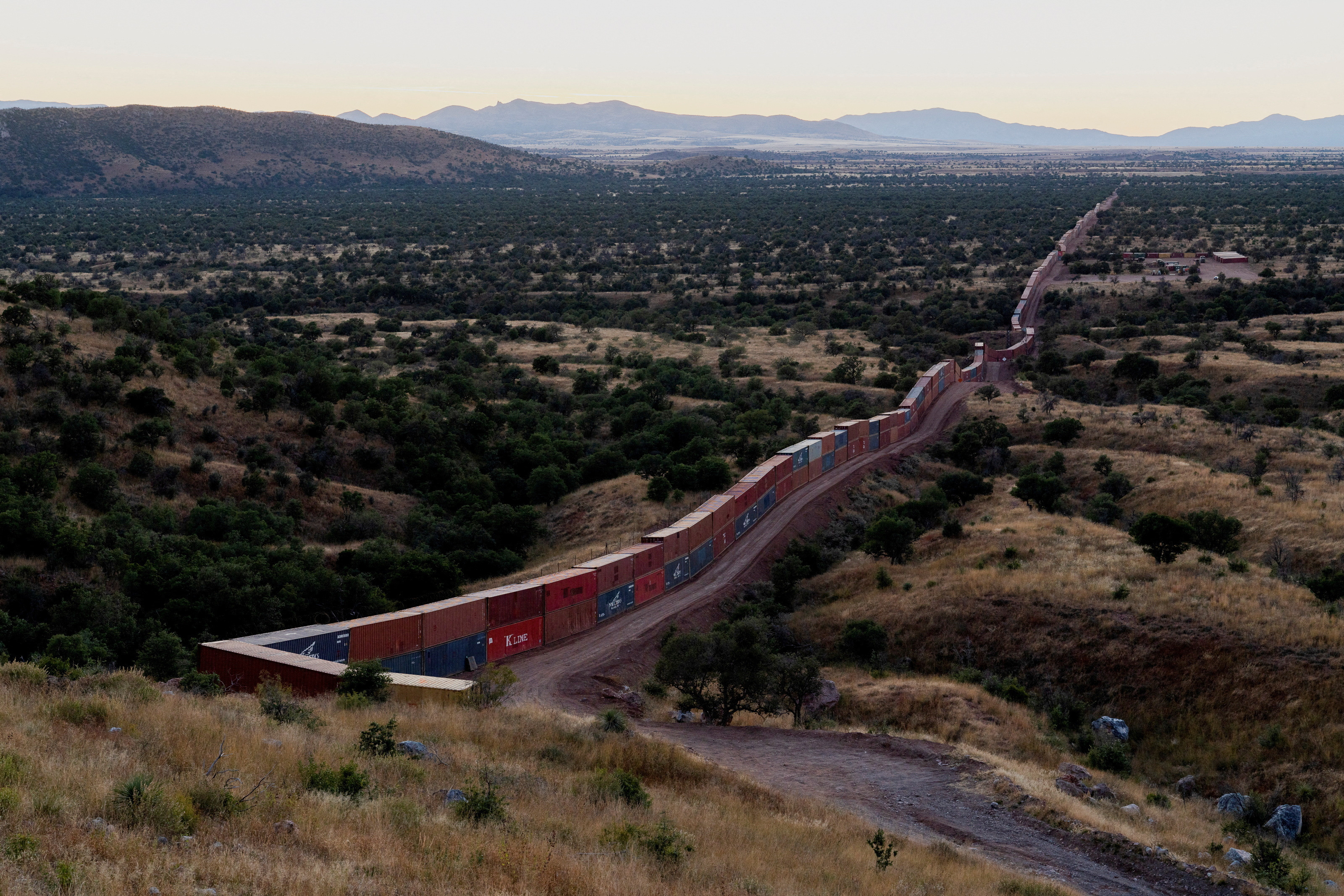
A view of shipping containers from the border wall on the frontier with Mexico in Cochise County, Arizona, U.S. November 6, 2022. REUTERS/Thomas Machowicz

A long, thin line stretches across the dusty Arizona landscape. It is a border barrier – but not the customary wall or fence. This is made up entirely of shipping containers stacked on top of each other.

The improvised wall – topped with concertina wire – was ordered built by Republican Governor Doug Ducey in August in an attempt to fill gaps in the U.S.-Mexico border used by migrants.

Border communities had been overwhelmed, he argued, saying the double-stacked containers would reach 22 feet (6.7 m) high.

Initially ordered for Yuma County, Reuters observed a container wall being constructed in Cochise County.

Environmental protesters said the construction was harmful to local wildlife. On Tuesday, a small group sat next to one of the containers.

“We’re not here to cause damage, get in anyone’s way. What we’re here to do is enjoy our public lands in a strategic way that hinders the placement of further shipping containers,” said Eamon Harrity, wildlife project manager at Sky Island Alliance.

The Center for Biological Diversity has said the containers may obstruct a critical jaguar and ocelot migration corridor, while the U.S. Forest Service said at the end of November that the wall could create safety hazards and called it unlawful.

Ducey argues he has the right to defend the state of Arizona and protect its citizens. He has filed a lawsuit asking a judge to stop the federal government from interfering. Last month, the federal government filed a motion to dismiss that lawsuit.

Categories
Audio Sources - Full Text Articles

Exclusive: Twitter to introduce new controls for ad placements

2022-12-09T00:22:14Z

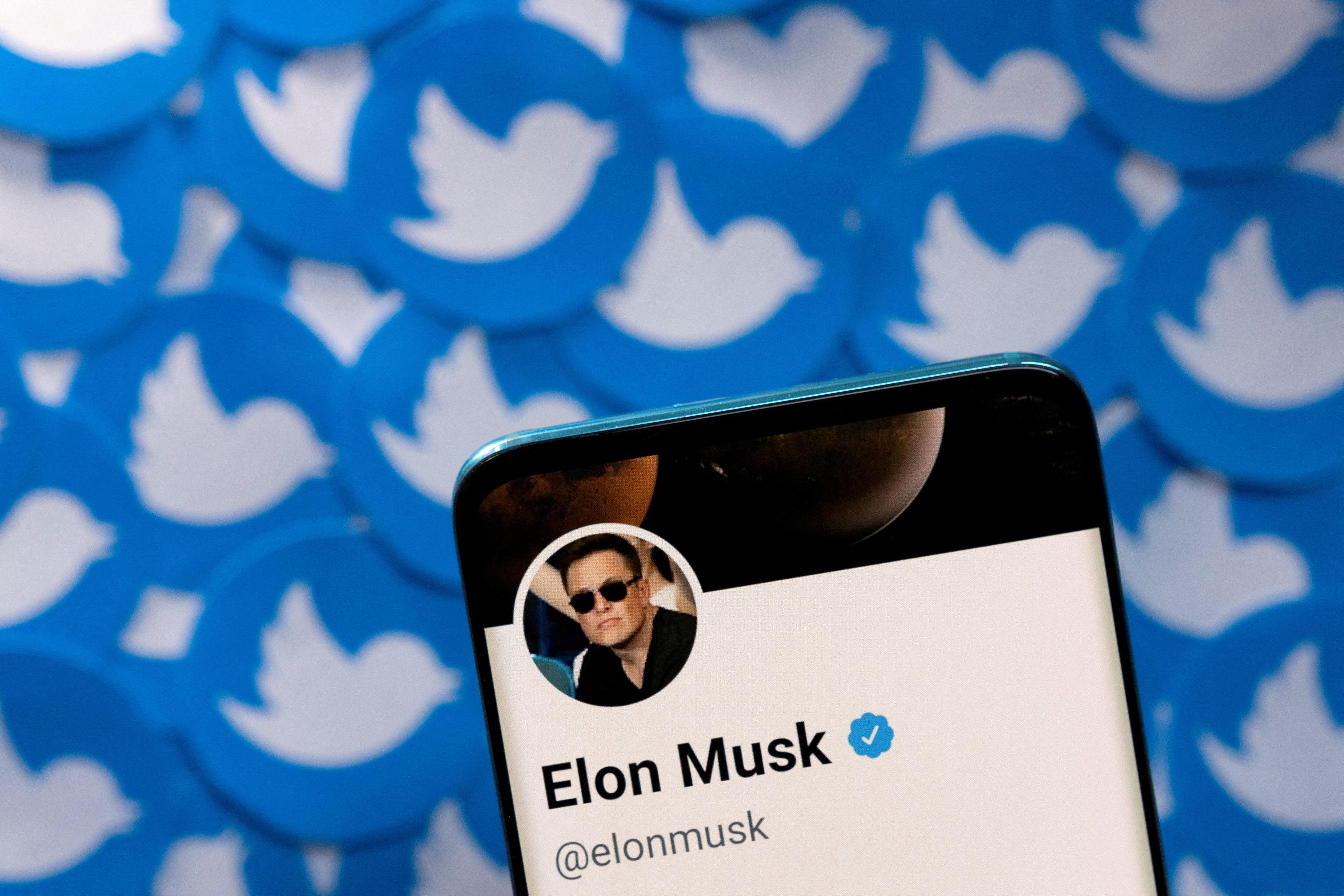
Elon Musk’s Twitter profile is seen on a smartphone placed on printed Twitter logos in this picture illustration taken April 28, 2022. REUTERS/Dado Ruvic/Illustration/File Photo

Twitter Inc will roll out new controls as soon as next week to let companies prevent their ads from appearing above or below tweets containing certain keywords, the social media platform told advertisers in an email on Thursday.

The new controls are part of Twitter’s effort to reassure and lure back advertisers that have pulled ads off the platform since it was purchased in October by billionaire Elon Musk, amid reports from civil rights groups that hate speech has risen since the acquisition and after several banned or suspended accounts were reinstated.

Twitter earns nearly 90% of its revenue from selling digital ads. Musk recently attributed a “massive drop in revenue” to civil rights organizations that have pressured brands to pause their Twitter ads.

In a recent call with an advertising industry group, a Twitter representative said the platform was considering bringing its content moderators, many of whom are contracted through third-party vendors, in-house, according to a source familiar with the remarks.

The Twitter representative said bringing content moderators in-house at Twitter would allow the platform to invest more in moderation for non-English languages, according to the source.

The email to advertisers on Thursday, which was reviewed by Reuters, said a revamped version of Twitter’s subscription service called Twitter Blue would begin rolling out on Friday.

The subscription will allow accounts to receive a verified check mark. Accounts for individuals will get a blue check, while gold and gray check marks will denote business and government accounts, according to the email.

The subscription price will be $7 per month on the web and $11 per month on Apple devices, the email said.

Twitter, which has lost many members of its communications team, did not immediately respond to a request for comment.

WP Radio
WP Radio
OFFLINE LIVE