Categories
Selected Articles

Idaho students’ front door was left open on morning of murders: neighbor

idaho-murders-front-door-index-2.jpg?qua

A neighbor of the four slain University of Idaho students says the door of their home was wide open the morning of the murders, according to a new report.

The unnamed neighbor in Moscow, Idaho told Fox News that the front door of the three-floor home wasn’t shut around 8:30 a.m. on Nov. 13.

Police believe Kaylee Goncalves, 21, Madison Mogen, 21, Xana Kernodle, 20, and Ethan Chapin, 20, were killed at the home in the early hours that day.

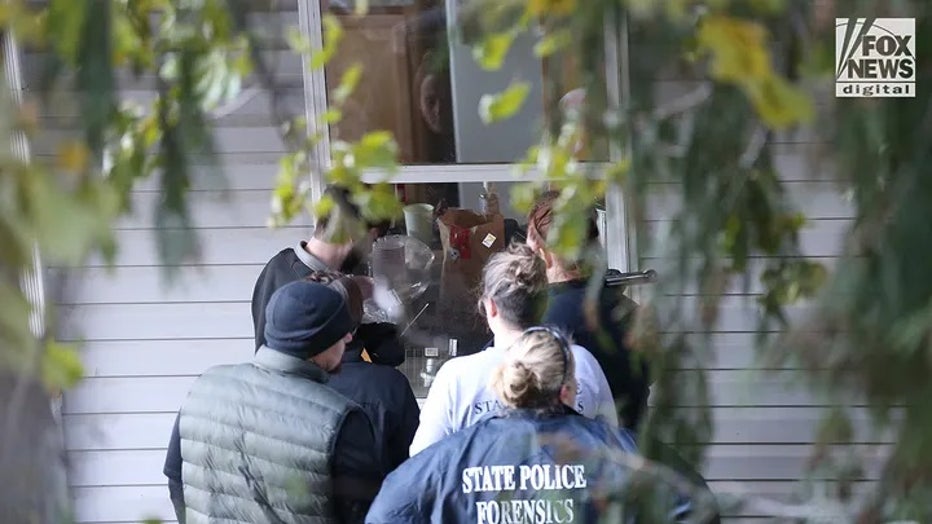
Police were back in the now-haunted house on Monday, still unable to find the killer.Police were back in the house Monday, still unable to find the killer.James Keivom

The house has three floors, and the roommates on the first floor were spared by the killer.The house has three floors, and the roommates on the first floor were spared by the killer.James Keivom

Slain students Madison Mogen, left, and Kaylee Goncalves.Slain students Madison Mogen, left, and Kaylee Goncalves.Instagram / @autumngoncalves

Two other roommates, who lived on the first floor where the door was open, survived.

Goncalves and Mogen were believed to be in the same bed on the third floor when they were found stabbed to death. Kernodle and Chapin, who were dating, were also together in a bed when they were likely killed on the second floor.

Here’s the latest coverage on the brutal killings of four college friends:

The haunting detail about the door revealed by the neighbor has not been confirmed by police, who have released scant details on the investigation into the quadruple murder as the case languishes and the bereaved community grows weary.

Despite assistance from the FBI, police appear to have no suspects and have not publicly released a profile of the possible killer. 

University of Idaho students Xana Kernodle, right, and Ethan Chapin on a boat.University of Idaho students Xana Kernodle, right, and Ethan Chapin. AP

Moscow Police Chief James Fry has insisted the case isn’t turning cold.

Authorities did reveal Wednesday they are searching for the occupants of a 2011 to 2013 white Hyundai Elantra who may have “critical information” related to the murders.

Categories
Audio Sources - Full Text Articles

Colorado shooting suspect“s previous case dismissed for lack of witnesses, records show

2022-12-09T02:44:02Z

The man accused of killing five people at an LGBTQ nightclub in Colorado was arrested last year on charges of threatening violence, but a judge dismissed that case because the alleged victims declined to cooperate, a prosecutor said on Thursday.

El Paso County District Attorney Michael Allen provided details on the 2021 prosecution of Anderson Lee Aldrich after a judge ordered court files from last year’s case unsealed at the request of Allen, the local sheriff and several news outlets.

Allen said he wanted to counter what he called a “false narrative” about the 2021 case suggesting the authorities did not pursue it or missed an opportunity to prevent the deadly shooting nearly three weeks ago.

Aldrich, 22, is being held without bail on more than 300 counts including murder, attempted murder, hate crimes and assault stemming from the Nov. 19 rampage at Club Q in Colorado Springs, which killed five and wounded 22.

The El Paso County Sheriff’s Office said Aldrich had been arrested in June 2021 over allegations he threatened to detonate a bomb and harm a family member.

Questions about the outcome of that arrest went unanswered under a Colorado law barring authorities from discussing a case in which charges are dismissed or never formally brought.

At Thursday’s news conference, Allen said that after initially giving statements implicating Aldrich in the 2021 case, his mother and grandparents testified on his for a bail reduction.

After victims declined to testify, the judge threw out the case, Allen said.

Attempts by Reuters to reach Aldrich’s mother and grandparents for comment were not immediately successful.

Allen said deputies seized a handgun and a rifle from Aldrich in the 2021 case, and those weapons were still in police custody when the nightclub massacre occurred. A different rifle and handgun were recovered from the Club Q shooting.

Aldrich is due back in court in February for a scheduled three-day preliminary hearing.

Related Galleries:

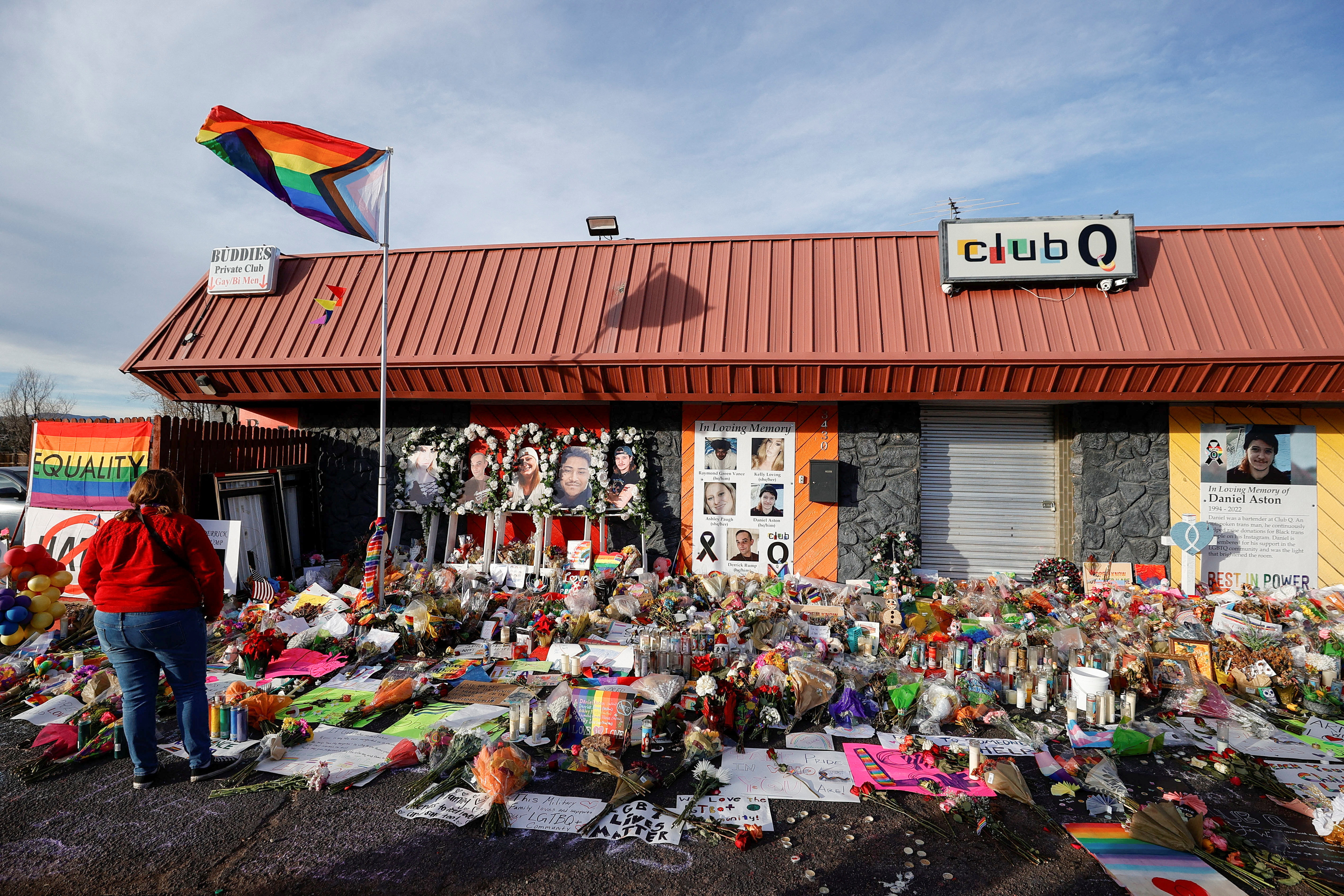
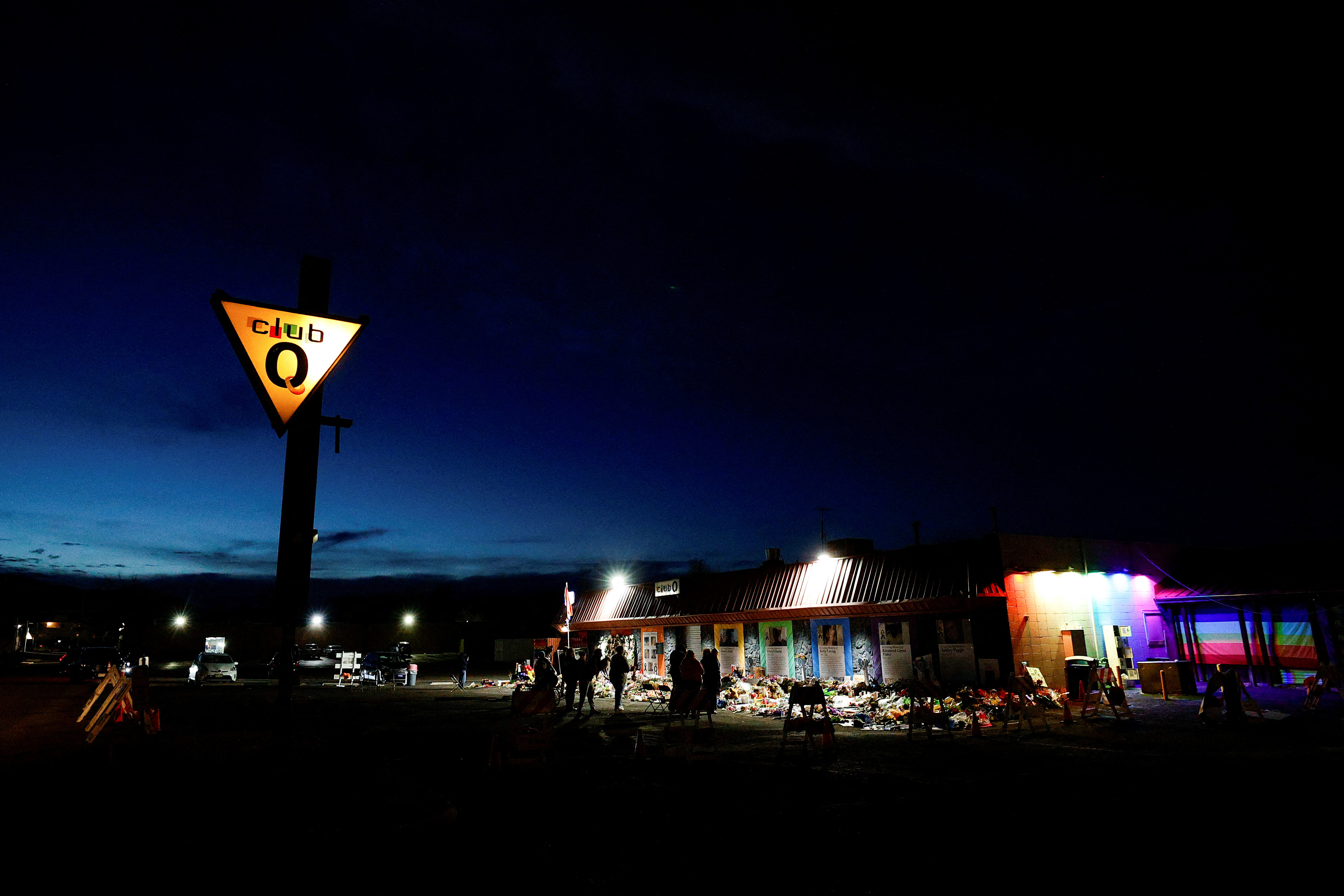
A person looks on at the flowers and mementos left at a memorial at Club Q after a mass shooting at the LGBTQ nightclub in Colorado Springs, Colorado, U.S. November 26, 2022. REUTERS/Isaiah J. Downing

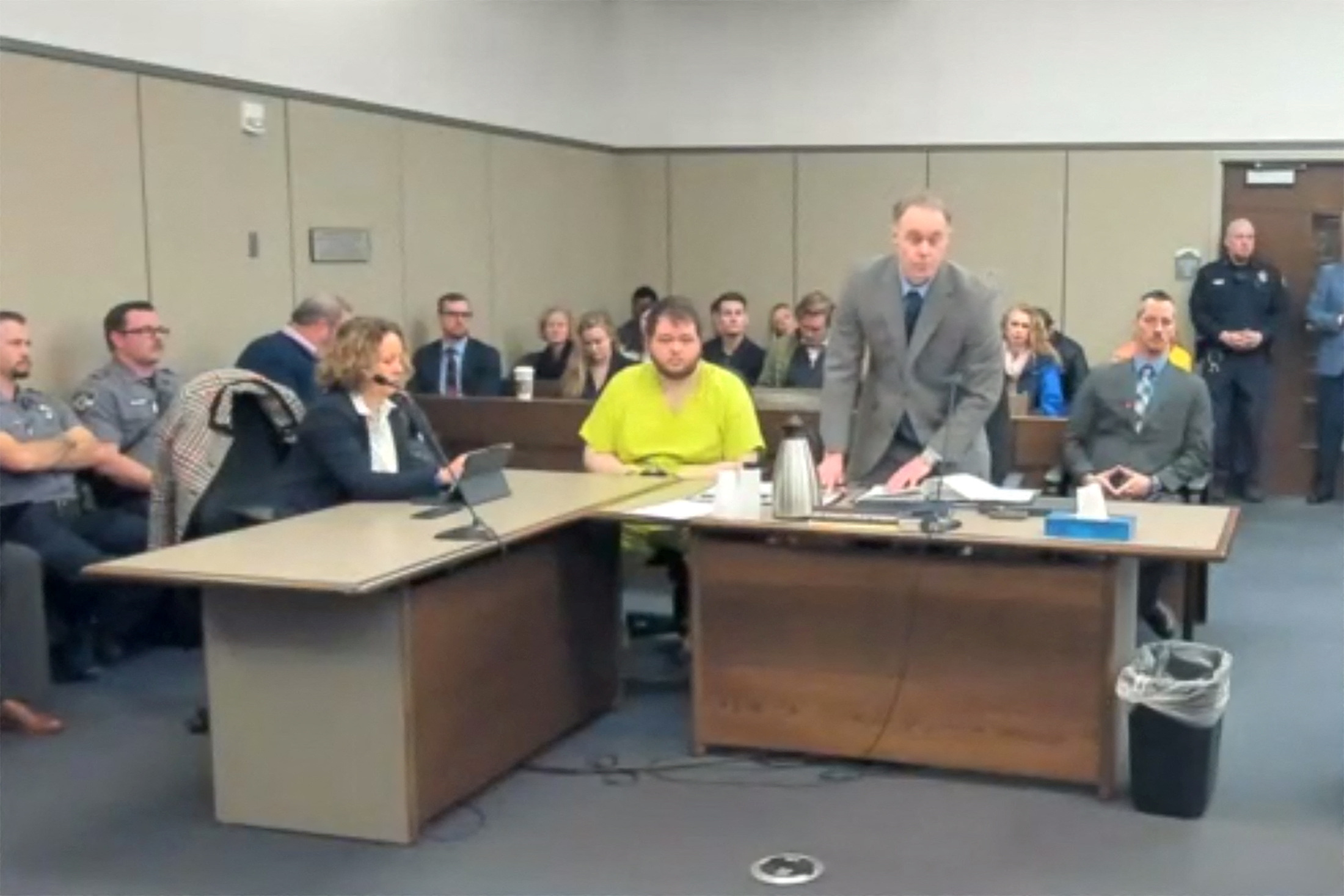
Anderson Lee Aldrich, 22, the suspect in the mass shooting that killed five people and wounded 17 at an LGBTQ nightclub appears seated before a judge during his charging hearing in Colorado Springs, Colorado, U.S. December 6, 2022 in a still image from livestream video. El Paso County Court/Handout via REUTERS

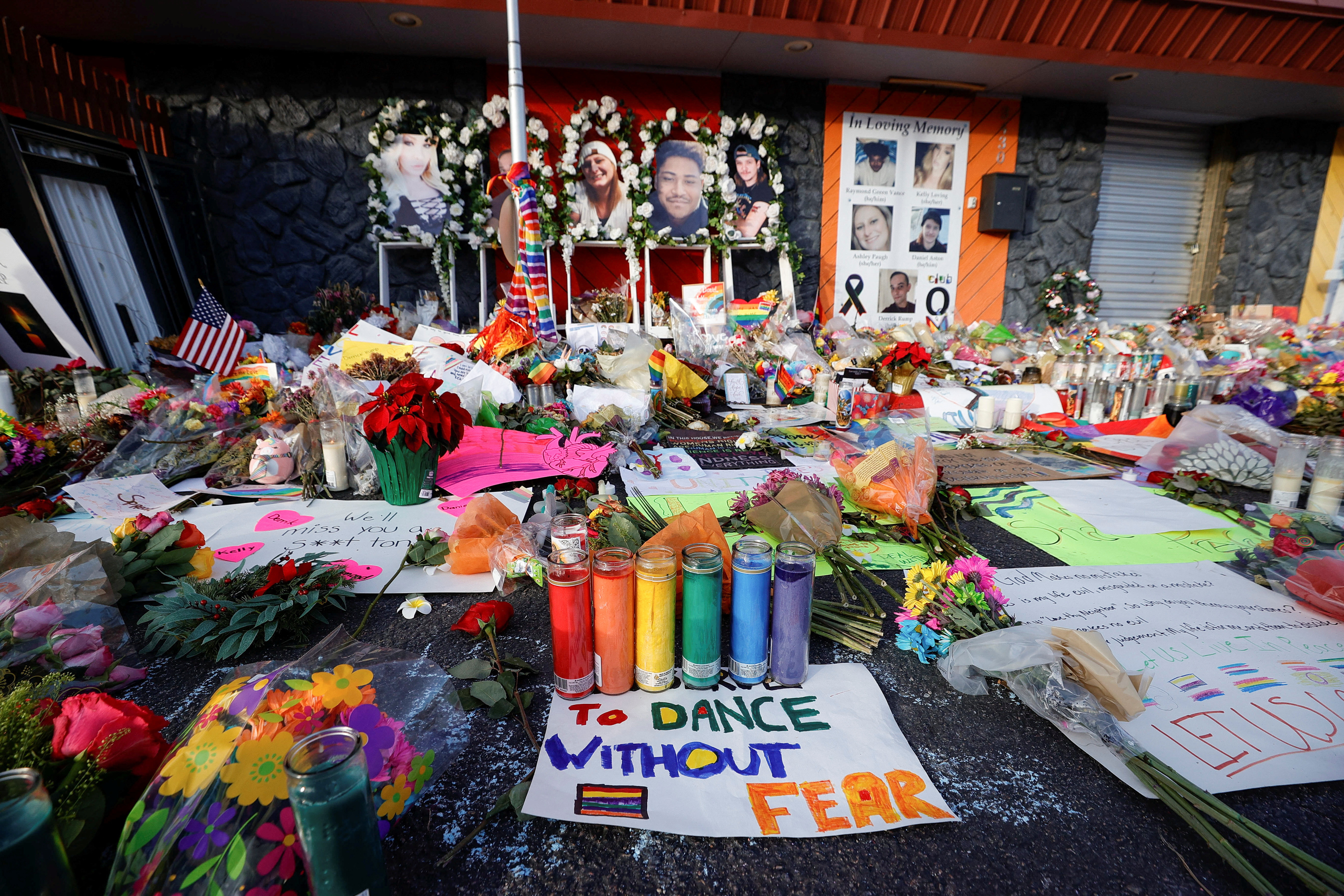
Flowers, candles, and mementos are left at a memorial after a mass shooting at LGBTQ nightclub Club Q in Colorado Springs, Colorado, U.S. November 26, 2022. REUTERS/Isaiah J. Downing

People look at flowers and mementos left at a memorial after a mass shooting at LGBTQ nightclub Club Q, in Colorado Springs, Colorado, U.S. November 26, 2022. REUTERS/Isaiah J. Downing


Categories
Selected Articles

Idaho police likely using investigative genetic genealogy in college students’ murders, expert says

THUMB-IDAHO-STUDENTS-NOV-17-2022.jpg?ve=

MOSCOW, IdahoAs the investigation into the murders of four University of Idaho students enters its fourth week, law enforcement is likely now trying to identify the killer through investigative genetic genealogy, a novel field that combines cutting-edge DNA analysis with traditional genealogical research. 

Authorities collected 113 pieces of physical evidence at the scene for testing by Idaho State Police Forensic Services, which have been “working 24/7 in the lab” to try to get results as quickly as possible. 

Investigators typically will first compare unknown DNA samples from the crime scene to the FBI’s Combined DNA Index System (CODIS), a database that contains genetic samples of known offenders, using traditional STR DNA analysis.

“It’s pretty quick to compare against CODIS. Had they gotten a match, I think they probably would have arrested by now, so I think we can assume that they are at least looking at using investigative genetic genealogy,” CeCe Moore, the chief genetic genealogist at Parabon NanoLabs, told Fox News Digital. 

lifting_finger_prints_04.jpg

“It just depends how quickly they learned they didn’t have a match in CODIS as to when that would have been done.”

RELATED: Idaho murders: Police search for white Hyundai Elantra near murder scene

If the traditional STR DNA analysis doesn’t come up with a match in CODIS, then investigators can analyze more than half a million DNA single nucleotide polymorphisms, or SNPs, to identify possible distant relatives of the unknown suspect.

Genetic genealogists can then reverse engineer the unknown person’s family tree using traditional genealogy and narrow it down to a potential suspect.

Once law enforcement has identified a suspect using genetic genealogy, it will generally try to secretly obtain a fresh DNA sample to confirm a lead. 

RELATED: Idaho murders: 25 to 40% of students chose not to return to campus, university says

For instance, investigators recently took a new look at the 1975 cold case murder of 19-year-old Lindy Sue Biechler in Pennsylvania using genetic genealogy. Male DNA was obtained from Biechler’s underwear but did not receive a hit in CODIS for decades. 

Moore and her team at Parabon Labs used genetic genealogy to analyze the DNA taken from the crime scene and develop 68-year-old David Sinopoli as the suspect. Investigators stealthily obtained fresh DNA from a coffee cup that Sinopoli threw in the trash in February, and it came back as a match for DNA taken from the crime scene. Sinopoli was arrested and is now facing homicide charges.

“They always need that extra step of collecting DNA, and it’s usually going to be surreptitious because they don’t want to tip someone off,” Moore said.

RELATED: Idaho murders: Slain student’s family plans to hire lawyer amid tensions with police

Dozens of law enforcement officers from the FBI, Idaho State Police and Moscow Police Department collected evidence at the off-campus home where Xana Kernodle, 20, Ethan Chapin, 20, Madison Mogen, 21, and Kaylee Goncalves, 21, were murdered Nov. 13.

Investigators can obtain DNA samples from stands of hair, skin cells or tissue left under the victims’ fingernails, but it is likely that the suspect’s blood could also have been at the scene.

“Typically, in cases I’ve worked with stabbings, if someone stabs enough times, the knife almost always slips,” Moore, who has helped solve more than 200 cold cases with Parabon Labs, said. “You almost always get the perpetrator’s DNA mixed in with the victim’s DNA.”

RELATED: Police address stalker rumor in University of Idaho murders investigation

The unsolved murders have left the Moscow community reeling. The university estimates 25-40% of students haven’t returned to campus since the killings.

Moscow Police Chief James Fry on Tuesday pledged to solve the murders, saying, “This case is not going cold.”

“We have tips coming in. We have investigators out every day interviewing people. We’re still reviewing evidence, we’re still looking at all aspects of this,” Fry told Fox News. “I said early on that no stone will go unturned, and I mean that.”

Categories
Audio Sources - Full Text Articles

This just keeps getting uglier for Donald Trump

48091a6f7d8c38f80599f1aaa4f36d29?s=100&d

Help support Palmer Report! Our articles are all 100% free to read, with no forced subscriptions and nothing hidden behind paywalls. If you value our content, you’re welcome to pay for it:

Pay $5 to Palmer Report:

Pay $25 to Palmer Report:

Pay $75 to Palmer Report:


Sign up for the Palmer Report mailing list

Help support Palmer Report! Our articles are all 100% free to read, with no forced subscriptions and nothing hidden behind paywalls. If you value our content, you’re welcome to pay for it:

Pay $5 to Palmer Report:

Pay $25 to Palmer Report:

Pay $75 to Palmer Report:

Sign up for the Palmer Report Mailing List.


With the former guy’s legal troubles mounting, right-wingers are mounting their ridiculous attacks on just about everything, since it’s getting harder to objectively play defense for Donald Trump. They’ve been desperately trying to accuse just about every Democrat of taking classified documents, or being complicit in the Hunter Biden nothingburger.

The problem is that not many people can make sense of the laptop scandal and Hunter is a private citizen anyway. It’s also a bit difficult to keep unearthing new details about a scandal that’s entirely manufactured by right wing pundits.


We’re beginning to understand why Republicans are focusing on this, however – as they continue to lose winnable elections. It turns out that Donald Trump was hiding more classified docs in a storage unit near his home in Mar a Lago – materials which were promptly turned over to the FBI.

It’s going to be harder and harder to claim that these were planted if it takes months for some of the documents to be discovered, all while intelligence agencies are still determining what was taken by the former guy – docs that he probably could’ve declassified on the morning of Jan 20, 2021 if they really weren’t that big of a deal.

Save Palmer Report! Our articles are all 100% free to read, with no forced subscriptions and nothing hidden behind paywalls. If you value our content, you’re welcome to pay for it:

Pay $5 to Palmer Report:

Pay $25 to Palmer Report:

Pay $75 to Palmer Report:

Write for the Palmer Report Community Section.

Help support Palmer Report! Our articles are all 100% free to read, with no forced subscriptions and nothing hidden behind paywalls. If you value our content, you’re welcome to pay for it:

Pay $5 to Palmer Report:

Pay $25 to Palmer Report:

Pay $75 to Palmer Report:

The post This just keeps getting uglier for Donald Trump appeared first on Palmer Report.

Categories
Audio Sources - Full Text Articles

Ex-prison warden convicted of sexually abusing inmates

The former warden of a federal women’s prison in California where inmates said they were subjected to rampant sexual abuse was convicted on Thursday of molesting inmates and forcing them to pose naked in their cells.

Ray Garcia was found guilty of eight charges and faces up to 15 years in prison. He was among five workers charged with abusing inmates at the federal correctional institution in Dublin, California, and the first to go to trial.

Garcia, 55, retired from his post last year after the FBI found nude photos of inmates on his government-issued phone. Garcia was charged with abusing three inmates between December 2019 and July 2021.

Prosecutors argued at trial that Garcia’s abusive conduct followed a pattern that started with compliments, flattery and promises of transfers to lower security prisons, and escalated to sexual assault.

An Associated Press investigation in February revealed a culture of abuse and cover-up that had persisted for years at the prison, about 21 miles (34 kilometers) east of Oakland. That reporting led to increased scrutiny from Congress and pledges from the federal Bureau of Prisons that it would fix problems and change the culture at the prison.

The trial has called into question the Bureau of Prisons’ handling of sexual abuse complaints from inmates against staff and the vetting process for the people it chooses to run its prisons.

All sexual activity between a prison worker and an inmate is illegal. Correctional employees enjoy substantial power over inmates, controlling every aspect of their lives from mealtime to lights out, and there is no scenario in which an inmate can give consent.

Garcia was in charge of staff and inmate training on reporting abuse and complying with the federal Prison Rape Elimination Act at the same time he was committing abuse, prosecutors say, and some inmates say they were sent to solitary confinement or other prisons for accusing employees of abuse.

Prosecutors say Garcia tried to keep his victims quiet with promises that he’d help them get early release. He allegedly told one victim he was “close friends” with the prison official responsible for investigating staff misconduct and couldn’t be fired. According to an indictment, he said he liked to cavort with inmates because, given their lack of power, they couldn’t “ruin him.”

Garcia is also accused of ordering inmates to strip naked for him as he made his rounds and of lying to federal agents who asked him if he had ever asked inmates to undress for him or had inappropriately touched a female inmate.

“We see inmates dressing and stuff … and if they’re undressing, I’ve already looked,” Garcia told the FBI in July 2021, according to court records. “I don’t, like, schedule a time like, ‘You be undressed, and I’ll be there.’”

Garcia was placed on administrative leave before retiring. He was arrested in September 2021.

Last month, Deputy Attorney General Lisa Monaco directed federal prosecutors across the U.S. to “consider the full array of statutes,” including the federal Violence Against Women Act in cases involving Bureau of Prisons employees who are accused of sexual misconduct.

In those cases, Monaco said prosecutors should consider asking judges for sentences that go beyond the federal guidelines if the sentence recommended in the guidelines isn’t “fair and proportional to the seriousness of the offenses.”

Of the four other Dublin workers charged with abusing inmates, three have pleaded guilty and one is scheduled to stand trial next year. James Theodore Highhouse, the prison’s chaplain, is appealing his seven-year prison sentence, arguing that it was excessive because it was more than double the recommended punishment in federal sentencing guidelines.

Categories
Audio Sources - Full Text Articles

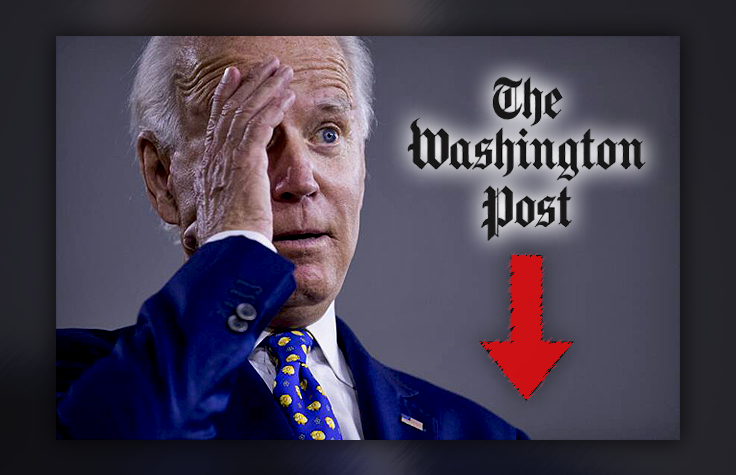
Report: Washington Post Lost Half a Million Subscribers Since Biden Took Office

Former president Donald Trump often said he was “the best thing to ever happen” to the Washington Post and other mainstream news outlets.

He was right.

The Wall Street Journal reports that the Jeff Bezos-owned publication has lost 500,000 subscribers since Trump left office in January 2021, which amounts to a decline of roughly 20 percent. The Post is on track to lose money in 2022 after years of profitability. The New York Times reported in August that the Post‘s business has “stalled” since President Joe Biden was sworn in, and layoffs are being discussed amid management’s frustration with “numerous low performers in the newsroom.”

Trump called it as early as December 2017, when he predicted that “newspapers, television, all forms of media will tank if I’m not there because without me, their ratings are going down the tubes.” The Post is hardly the only media outlet suffering in the post-Trump era. BuzzFeed, Gannett, and CNN announced significant layoffs this month in an effort to cut costs.

The bottom line: Media outlets (and the anti-Trump grifters at the Lincoln Project) stand to financially benefit if Trump wins the Republican presidential nomination in 2024. Assess their coverage of the GOP primary with this in mind.

The post Report: Washington Post Lost Half a Million Subscribers Since Biden Took Office appeared first on Washington Free Beacon.

Categories
Audio Sources - Full Text Articles

Palestinian President Threatens Return to Terrorism

Palestinian president Mahmoud Abbas indicated the Palestinian Authority may turn to terrorism, saying “armed resistance” against Israel could commence any day.

“I do not endorse armed resistance at the moment, but I may change my mind later,” President Mahmoud Abbas said in a recent Arabic-language interview translated into English on the Elder of Ziyon website, a blog that tracks Israeli-Palestinian issues. “I do not adopt military resistance at this time, but it is possible that I change my mind tomorrow or after tomorrow, or any time.”

Abbas’s comments come at a troubling time for his Palestinian Authority governing body, which is the weakest it has been in decades. The Iran-backed Hamas terror group, which controls the Gaza Strip, has been challenging Abbas’s power, and several armed faction groups have also joined the fray in recent months. The challenge to Abbas’s rule threatens to topple a fragile security framework with Israel that has been vital to stopping terror attacks on the Jewish state. Abbas’s most recent remarks are likely to inflame an already dangerous situation, according to Middle East observers.

“The assessment right now is that we have not seen this much unrest in the West Bank in pretty much 15 years,” Jonathan Schanzer, a former terrorism finance analyst at the Treasury Department who now works on Middle East issues at the Foundation for Defense of Democracies think tank, told the Washington Free Beacon.

Abbas “would be unwise to unleash additional chaos in the West Bank,” Schanzer said. “If things escalate too far, it is highly likely he will be among the most prominent casualties.”

A return to terrorism would also shatter any hopes the Biden administration has of reigniting a long-stalled peace process between Israel and the Palestinians.

Abbas during the interview blamed Israel for any potential change in policy, saying the Jewish state’s efforts to thwart terrorism are overly aggressive.

“If Israel continues with its actions, I will cancel the security agreement with it. Why continue?” Abbas asked. “Why am I committed to security coordination? And we can breathe without security coordination. Before that, we were breathing, and our people were fighting the occupation.”

The Palestinian Authority is losing power across the West Bank, its onetime stronghold. Israeli forces assess that the PA has already lost control of two key cities—Jenin and Nablus.

Small faction groups are also rising up to challenge Abbas’s rule in the West Bank.

In Nablus, an armed resistance group dubbed the Lion’s Den has been leading attacks on Israeli targets. Al Jazeera in an October report described the group as “changing the face of Palestinian resistance.”

Terrorist groups like the Lion’s Den are not directly affiliated with Hamas or Abbas’s Fatah party, but they appear to get support from both.

This has posed significant challenges for Israel, which must decide whether to enter militant-occupied cities to clear out the terror factions and risk further upsetting Abbas or allow the groups to operate in favor of preserving security agreements with the Palestinian leader.

The shifting landscape has also provided an opening for Iran, which is increasing its support for Hamas in the Gaza Strip and for Hezbollah in Lebanon. Israel has noted a significant uptick in Iranian weapons-smuggling to Hezbollah, which then transfers the arms into the West Bank—an area typically immune from such activities due to Abbas’s strict control on the territory.

Iran’s goal is to weaken Abbas, who is 87 years old. When the Palestinian leader dies, the power vacuum will become even greater, leaving a clear opening for Iran’s assets in Hamas.

To this end, Iran has created so-called nerve centers in Lebanon and in the Hamas-controlled Gaza Strip, according to Schanzer. The goal is to foment unrest and create security flashpoints with Israel, as well as to erode support for Abbas.

While these efforts have garnered few headlines in the West, Israeli security services have become increasingly concerned.

“The situation could potentially go from bad to worse,” said Schanzer. “Israeli officials right now are signaling that the West Bank is the least stable of the security issues that they’re tracking through the transition” to the incoming government run by Benjamin Netanyahu.

The post Palestinian President Threatens Return to Terrorism appeared first on Washington Free Beacon.

Categories
Audio Sources - Full Text Articles

A Shameful Prisoner Swap

Not three years ago, Brittney Griner refused to take the floor when the WNBA played the national anthem before tipoff. “I think we should take that much of a stand,” she said at the time, arguing that “basketball doesn’t mean anything in a world where we can’t just live. We can’t wake up and do whatever we want to do.” Such is the plight, she said, of being black in America.

Yet it was in part Griner’s race, as well as her sexual orientation—she is a lesbian—that made her detention by Russia in February a high-profile news story and turned her case into a cause célèbre for activists and journalists, but we repeat ourselves.

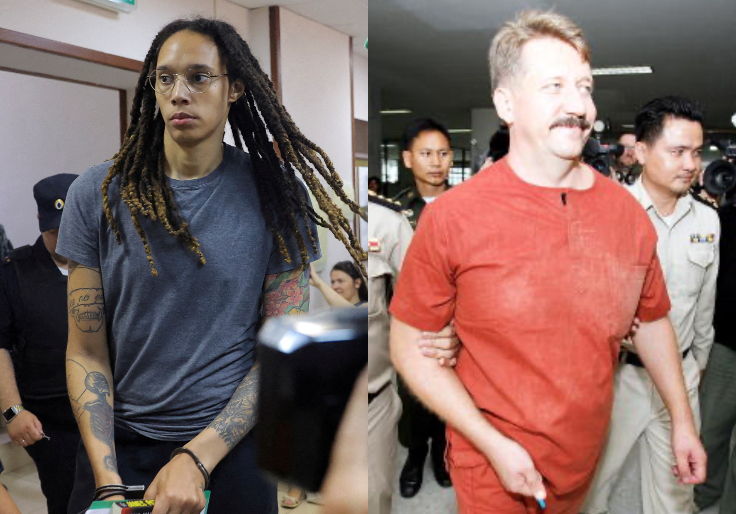
It is also why the Biden administration on Thursday struck an ill-advised deal to trade Griner’s freedom for that of Viktor Bout, an arms dealer and weapons smuggler who was convicted in 2011 of conspiring to murder American citizens. Not included in the deal was Russia’s release of Paul Whelan, a white, cisgender, heterosexual former Marine arrested in late 2018 on trumped-up charges. For all of Griner’s complaints about being black in this country, she’s gotten far better treatment than her white counterpart.

Whelan told CNN in a phone interview Thursday from a remote Russian penal colony that “I am greatly disappointed that more has not been done to secure my release, especially as the four-year anniversary of my arrest is coming up. I was arrested for a crime that never occurred.”

Then there are the merits of the deal itself. Griner will be greeted as a hero when she touches down in the United States, but the Russian who will walk free is a dangerous thug who has earned his nickname: “The Merchant of Death.” His release will do grievous harm to American national security—he was convicted for attempting to sell weapons to Colombian terrorists who would have used them to target American troops—and Politico reports that Pentagon officials are already raising the specter that his release will fuel “conflicts across the world.” Griner is no hero.

So how did this happen? The Russians concluded correctly that the Biden administration’s foreign policy is best understood through the lens of “antiracism.” The concept, popularized by Ibram X. Kendi, justifies new discrimination to account for historic discrimination. The decision to exchange a lesbian millionaire of color for a notorious arms trafficker at the expense of a Caucasian cisgendered Marine is consistent with this administration’s values. After all, Biden on his first day in office signed an executive order to advance racial equity throughout the federal government.

The problem with this approach is that it aims to remedy an abstract, historical injustice by perpetrating a tangible injustice in the present. Biden’s approach to negotiations should have been guided by the facts of Griner’s and Whelan’s cases and by the national interest. He was instead guided by identity politics and “antiracism.” Paul Whelan is paying the price.

The post A Shameful Prisoner Swap appeared first on Washington Free Beacon.

Categories
Audio Sources - Full Text Articles

Prisoner Swap for Griner Was Biden’s Second, But White House Says They Must Remain Rare

Since the start of his presidency, Joe Biden has been wary of prisoner swaps. Whenever the prospect of negotiating the exchange of those held in the US for Americans held overseas was broached, members of his administration would exhibit reluctance, according to a person involved in such discussions. For some of the families of Americans detained abroad, it was a frustrating obstacle.

Then came a breakthrough last February, just as Russia was about to launch a tank blitz toward Ukraine’s capital, Kyiv. Russian officials signaled through intermediaries that they were willing to talk about the release of former U.S. Marine Trevor Reed, who had been arrested in a Moscow hotel in 2018, held on espionage charges, and then fallen seriously ill in Russian detention. Reed’s failing health made getting to a deal even more urgent. Russian officials agreed in April to allow Reed to return home in exchange for the Biden Administration’s release of Konstantin Yaroshenko, a Russian pilot and convicted drug smuggler.

[time-brightcove not-tgx=”true”]

The exchange for Reed created a new opening in Biden’s approach to hostage negotiations. It marked the beginning of the administration’s acknowledgement that swapping prisoners for Americans wrongfully held in autocratic countries was another tool that could be used in securing their release. While critics of such exchanges say they incentivize the kidnapping of Americans, others involved in such delicate diplomatic efforts argue the evidence on that is thin and that such hardline policies ignore the plight of Americans currently held.

In July, the Biden administration put another offer on the table with Moscow: release of the convicted Russian arms dealer Viktor Bout in exchange for the return of basketball star Brittney Griner and former Marine Paul Whelan. Griner, a basketball star, was arrested at a Moscow airport in February for having cannabis oil in her luggage. She was sentenced to nine years imprisonment after pleading guilty to drug charges, and was recently transferred to a Russian penal colony. Whelan was arrested in a Moscow hotel in December 2018 during a trip to Russia for a friend’s wedding. After what he has called a “sham trial,” he was convicted of espionage in June 2020 and sentenced to 16 years in prison.

For months, Russia rejected the exchange offer. Then, a few weeks ago, a counteroffer arrived. Russia was willing to do a swap for Bout, but only for Griner’s release.

Read more: A Long Line of Cold War Trades Set the Stage for Brittney Griner’s Release

Amid the news of Griner’s release on Thursday, the Biden White House stressed that foreign governments should not assume that swaps will be a common part of negotiations to secure the release of Americans detained overseas.

“Given how extremely rare this is, any inference that somehow this has become the norm would be mistaken—I don’t think governments around the world would be wise to draw that inference.” said a senior administration official on Thursday. “But in the rare case, when there is an imperative to bring Americans home, which is a real priority for the President, sometimes there are no alternatives left,” the official said.

Biden’s use of prisoner swaps does not mark a shift in US policy from the previous administration. In December 2019, the Trump administration secured the release of Princeton graduate student Xiyue Wang, who Iranians had charged with espionage and imprisoned for three years, by releasing an Iranian stem-cell scientist Masoud Soleimani, who had been arrested in 2018 for trying to export research materials without a license. The next year, Iran released American Michael White, a U.S. Navy veteran, in exchange for the release of Majid Taheri, also known as Matteo Taerri, an Iranian-American doctor who had been charged with violating U.S. sanctions. Near the end of his presidency, Donald Trump also approved of the Afghanistan government releasing 5,000 Taliban prisoners as part of his 2020 deal to set a timeline for the U.S. withdrawal from Afghanistan.

Paul Whelan’s family was told on Wednesday that the US was close to securing Griner’s release, but that Paul would be left behind. The communication was a courtesy the Biden administration didn’t extend to the Whelans before Russia announced the release of Reed in April. Paul Whelan’s twin brother David Whelan said on Thursday in a statement to ABC News that the fact that Paul wasn’t part of the latest deal is “a public disappointment for us” as well as “a catastrophe for Paul.” David Whelan also said, “The Biden Administration made the right decision to bring Ms. Griner home, and to make the deal that was possible, rather than waiting for one that wasn’t going to happen.”

After Griner’s release on Thursday, Paul Whelan spoke to CNN on the phone from the Russian penal colony where he is being held. “I am greatly disappointed that more has not been done to secure my release, especially as the four-year anniversary of my arrest is coming up,” Whelan said, “I was arrested for a crime that never occurred.” Whelan told CNN that in recent weeks he was “led to believe that things were moving in the right direction, and that the governments were negotiating and that something would happen fairly soon.”

White House officials acknowledged that disappointment. “Through every step of the process, we have sought to bring Paul Whelan home and that will not change—that will continue to be our commitment,” White House Press Secretary Karine Jean-Pierre said Thursday. “Regrettably, due to the nature of the totally illegitimate charges they levied against Paul, the Russians are treating this situation differently.” The senior administration official said that any jubilation felt on Thursday about the release of Griner is “very much tempered” by the awareness of the “unacceptable” circumstances of Whelan’s imprisonment in Russia.

In July, Biden announced new steps to improve how the U.S. handles and prevents Americans from being held overseas. In an executive order, Biden announced more tools to sanction mid-level bureaucrats involved in wrongful detention of Americans overseas, and to do more to warn American travelers about what countries pose a danger of detaining Americans for use as negotiating pawns.

Biden also directed federal agencies to increase the amount of intelligence information they share with families about what the U.S. knows about the health and location of their loved ones and what steps the U.S. is taking to secure their release. Biden’s executive orders were designed to build on the 2020 Robert Levinson Hostage Recovery and Hostage Taking Accountability Act, named after Levinson who disappeared in Iran in 2007.

The State Department has begun flagging countries that show a pattern of wrongful detentions with a “D” in its public travel warnings. That indicator joins the current designation of “K” for countries where Americans are at higher risk of kidnapping.

“Something every American should take from this situation is that no American is safe in places under Russian jurisdiction or influence,” said Senator Jim Risch of Idaho, the top Republican on the Senate Foreign Relations Committee. “It must be clear that Paul Whelan should have been part of this deal; he is a Marine who fought for our country, and he is a hero.”

Along with U.S. government officials, former New Mexico Governor Bill Richardson and experienced negotiators at the Richardson Center for Global Engagement have been working closely with Griner’s family toward her release, which included many trips to Moscow and the region, as well as meetings with officials at the Russian embassy in Washington, according to a person familiar with the talks. Those talks included conversations to release Paul Whelan, as well as three other Americans including Grady Kurpasi, a retired Marine and Iraq War veteran, who was last seen in April fighting alongside Ukrainians in a volunteer force in southern Ukraine. “Often, the price we pay for bringing our fellow Americans home to their families is unseemly, but it is the right thing to do,” said Richardson in a statement. “We remain very concerned for Paul Whelan and committed to continue to work on his safe return, as we have been for the last four years,” Richardson said.

Mickey Bergman, the vice president and executive director of the Richardson Center, was involved in the talks over Griner’s release and said he doesn’t see the trade a sign of a major shift in the Biden Administration’s willingness to do more swaps. It is “case by case,” Bergman says. “It’s not the first nor last trade.”

Categories
Audio Sources - Full Text Articles

Saved Web Pages – Daily Report at 9 p.m. [Inoreader digest]

1636973850.png

Saved Web Pages – Daily Report at 9 p.m.

created by Michael Novakhov  •  Dec 08 2022

The most notable news articles in full text version.
Current Page:
https://www.inoreader.com/stream/user/1006407045/tag/web-pages/view/html

German Chancellor Olaf Scholz said the world faced a “Zeitenwende” or “an epochal tectonic shift” in…
dw.com 11h

The world is facing a Zeitenwende: an epochal tectonic shift. Russia’s war of aggression against Ukraine…
foreignaffairs.com 11h

A key Russian airbase used to launch bombing strikes on Ukraine has been struck by an unknown attacker,…
michael_novakhov.newsblur.com 12h

Fight clubs, neo-Nazi soccer hooligans, and motorcycle gangs serve as conduits for the Kremlin’s influence…
theatlantic.com 12h

get the free app By Andres Triay, Pat Milton, Margaret Brennan, Christina Ruffini, Steven Portnoy,…
cbsnews.com 12h

Congressman Jim Jordan tells Fox News that the FBI is purging conservative employees: The FBI is allegedly…
powerlineblog.com 14h

A seven-count indictment was unsealed today in federal court in Brooklyn charging Andrii Derkach with…
justice.gov 15h

You can unsubscribe from those emails at any time.

Inoreader. Take back control of your news feed. Follow us on Twitter and Facebook.
Innologica Ltd. 35 Akad. Boris Stefanov str., 1700 Sofia, Bulgaria

The News And Times Information Network – Blogs By Michael Novakhov – thenewsandtimes.blogspot.com
WP Radio
WP Radio
OFFLINE LIVE