Categories
Audio Sources - Full Text Articles

Many kids are struggling. Is special education the answer?

The COVID-19 pandemic sent Heidi Whitney’s daughter into a tailspin.

Suddenly the San Diego middle schooler was sleeping all day and awake all night. When in-person classes resumed, she was so anxious at times that she begged to come home early, telling the nurse her stomach hurt.

Whitney tried to keep her daughter in class. But the teen’s desperate bids to get out of school escalated. Ultimately, she was hospitalized in a psychiatric ward, failed “pretty much everything” at school and was diagnosed with depression and ADHD.

As she started high school this fall, she was deemed eligible for special education services, because her disorders interfered with her ability to learn, but school officials said it was a close call. It was hard to know how much her symptoms were chronic or the result of mental health issues brought on by the pandemic, they said.

“They put my kid in a gray area,” said Whitney, a paralegal.

Schools contending with soaring student mental health needs and other challenges have been struggling to determine just how much the pandemic is to blame. Are the challenges the sign of a disability that will impair a student’s learning long term, or something more temporary?

It all adds to the desperation of parents trying to figure out how best to help their children. If a child doesn’t qualify for special education, where should parents go for help?

“I feel like because she went through the pandemic and she didn’t experience the normal junior high, the normal middle school experience, she developed the anxiety, the deep depression and she didn’t learn. She didn’t learn how to become a social kid,” Whitney said. “Everything got turned on its head.”

Schools are required to spell out how they will meet the needs of students with disabilities in Individualized Education Programs, and the demand for screening is high. Some schools have struggled to catch up with assessments that were delayed in the early days of the pandemic. For many, the task is also complicated by shortages of psychologists.

To qualify for special education services, a child’s school performance must be suffering because of a disability in one of 13 categories, according to federal law. They include autism, attention-deficit/hyperactivity disorder, learning disabilities like dyslexia, developmental delays and “emotional disturbances.”

It’s important not to send children who might have had a tough time during the pandemic into the special education system, said John Eisenberg, the executive director of the National Association of State Directors of Special Education.

“That’s not what it was designed for,” he said. “It’s really designed for kids who need specially designed instruction. It’s a lifelong learning problem, not a dumping ground for kids that might have not got the greatest instruction during the pandemic or have major other issues.”

In the 2020-2021 school year, about 15% of all public school students received special education services under federal law, according to the National Center for Education Statistics.

Among kids ages 6 and older, special education enrollment rose by 2.4% compared with the previous school year, according to federal data. The figures also showed a large drop in enrollment for younger, preschool-age students, many of whom were slow to return to formal schooling. The numbers varied widely from state to state. No data is available yet for last year.

While some special education directors worry the system is taking on too many students, advocates are hearing the opposite is happening, with schools moving too quickly to dismiss parent concerns.

Even now, some children are still having evaluations pushed off because of staffing shortages, said Marcie Lipsitt, a special education advocate in Michigan. In one district, evaluations came to a complete halt in May because there was no school psychologist to do them, she said.

When Heather Wright approached her son’s school last fall seeking help with the 9-year-old’s outbursts and other behavioral issues, staff suggested private testing. The stay-at-home mom from Sand Creek, Michigan, called eight places. The soonest she could get an appointment was in December of this year — a full 14 months later.

She also suspects her 16-year-old has a learning disability and is waiting for answers from the school about both children.

“I hear a lot of: ‘Well, everyone’s worse. It’s not just yours,’” she said. “Yeah, but, like, this is my child and he needs help.”

It can be challenging to tease out the differences between problems that stem directly from the pandemic and a true disability, said Brandi Tanner, an Atlanta-based psychologist who has been deluged with parents seeking evaluations for potential learning disabilities, ADHD and autism.

“I’m asking a lot more background questions about pre-COVID versus post-COVID, like, ‘Is this a change in functioning or was it something that was present before and has just lingered or gotten worse?’” she said.

Sherry Bell, a leader in the Department of Exceptional Children at Charleston County School District in South Carolina, said she is running into the issue as well.

“In my 28 years in special education, you know, having to rule out all of those factors is much more of a consideration than ever before, just because of the pandemic and the fact that kids spent all of that time at home,” said Bell.

The key is to have good systems in place to distinguish between a student with a lasting obstacle to learning and one that missed a lot of school because of the pandemic, said Kevin Rubenstein, president-elect of the Council of Administrators of Special Education.

“Good school leaders and great teachers are going to be able to do that,” he said.

The federal government, he noted, has provided vast amounts of COVID relief money for schools to offer tutoring, counseling and other support to help students recover from the pandemic.

But advocates worry about consequences down the line for students who do not receive the help they might need. Kids who slip through the cracks could end up having more disciplinary problems and diminished prospects for life after school, said Dan Stewart, the managing attorney for education and employment for the National Disability Rights Network.

Whitney, for her part, said she is relieved her daughter is getting help, including a case manager, as part of her IEP. She also will be able to leave class as needed if she feels anxious.

“I realize that a lot of kids were going through this,” she said. “We just went through COVID. Give them a break.”

___

Sharon Lurye in New Orleans contributed to this report. The Associated Press education team receives support from the Carnegie Corporation of New York. The AP is solely responsible for all content.

Categories
Selected Articles

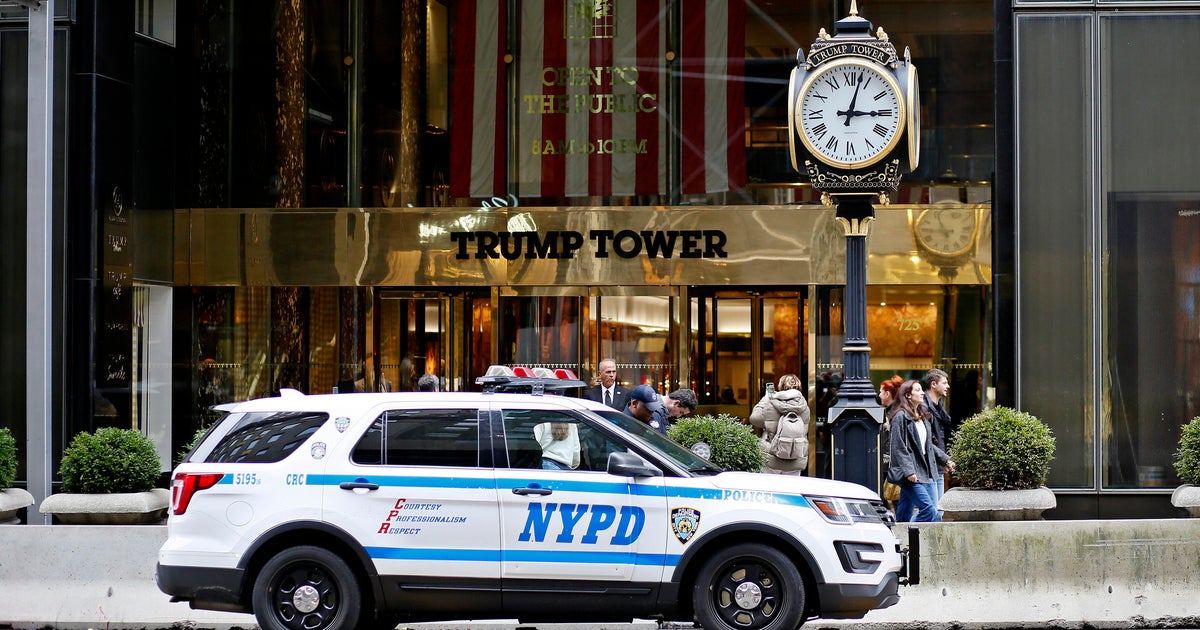
Trump Organization companies found guilty on all charges in tax fraud trial in New York

gettyimages-1436213970.jpg

By Graham Kates

Updated on: December 6, 2022 / 5:55 PM / CBS News

A jury in New York has found two Trump Organization companies guilty on all charges of tax fraud and other crimes. The verdict on 17 criminal counts was announced in court Tuesday afternoon.

The jury began deliberations Monday around noon, after testimony and closing arguments wrapped up in the six-week trial.

The two Trump Organization companies, called the Trump Corporation and Trump Payroll Corporation, were indicted in July 2021, along with the company’s longtime chief financial officer, Allen Weisselberg, and accused of using a variety of methods to reduce payroll liability from executive salaries through untaxed bonuses and luxury perks worth millions. 

Weisselberg pleaded guilty in August and agreed to testify against the company as part of a deal with prosecutors. He is expected to face a five-month jail sentence.

Former President Donald Trump was not charged in the case, but Manhattan District Attorney Alvin Bragg has said Trump remains under investigation. The office’s probe began in 2018 under Bragg’s predecessor, Cyrus Vance Jr. The investigation initially targeted hush-money payments made by former Trump lawyer and fixer Michael Cohen during the 2016 presidential campaign to adult film star Stormy Daniels, but later widened to include the corporate tax fraud charges.

Cohen was rarely mentioned during the trial, but Trump’s name was invoked frequently by both sides. 

Weisselberg spent several days on the stand testifying about the tax schemes. He and two witnesses who received immunity during prior grand jury proceedings — current company controller Jeffrey McConney and outside accountant Donald Bender — described a series of methods used by Trump Organization executives to avoid taxes, and payroll liability, on large bonuses and luxury benefits. 

Jurors were told about an internal “clean up” conducted in 2017 at the Trump Organization after Trump became president. The company hired an outside lawyer to examine its tax practices. Her review led the company to cease many of the practices that led to these criminal charges, multiple witnesses testified.

The Trump Organization’s lawyers said Trump and his company were “betrayed” by Weisselberg, and they accused Bender of failing to protect the company from Weisselberg. 

“Weisselberg did it for Weisselberg,” the lawyers said repeatedly, a phrase a prosecutor later called their “mantra.”

Prosecutors said Weisselberg was one of several executives who received large annual bonus checks, signed by Trump and logged as if they were payments to independent contractors, and luxury perks such as high-end apartments, private school tuition and cars that were not reported as salary.

And Manhattan Assistant District Attorney Joshua Steinglass said during his closing argument that Trump knew about it. 

“The fact is this was sanctioned, and that the practice was known to Mr. Trump,” Steinglass said.

Defense attorneys said Trump was unaware of the schemes playing out beneath him, while prosecutors said he signed off on them. 

The Trump Organization could face up to $1.6 million in fines. Sentencing is expected to take place on Jan. 13, 2023.

Alan Futerfas, an attorney for the Trump Organization, said the company will “certainly” file an appeal. 

In a statement, the Trump Organization pointed to Weisselberg’s testimony that he’d “betrayed” the company’s trust and “acted ‘solely’ for his ‘own personal gain’,”  and said: “The notion that a company could be held responsible for an employee’s actions, to benefit themselves, on their own personal tax returns is simply preposterous.” 

Manhattan D.A. Alvin Bragg praised the jury and called the verdict “a very just result.” 

“The former president’s companies now stand convicted of crimes. That is consequential. It underscores that in Manhattan, we have one standard of justice for all,” Bragg told reporters outside the courtroom.

New York Attorney General Letitia James has indicated the jury’s findings could have bearing on a civil case being pursued by her office. Her office conducted a parallel civil investigation and assigned two prosecutors to work on the Manhattan District Attorney’s probe. While the criminal case is tightly focused on executive compensation, the civil case — filed in September — accuses the company, Trump and three of his children of a widespread, yearslong effort to commit fraud and manipulate property valuations.

The company and the Trumps deny all allegations in that case, which is scheduled to go to trial in October 2023.

In a statement following Tuesday’s verdict, James said, “I commend Manhattan District Attorney Alvin Bragg and his team for their successful prosecution of the Trump Organization, and I was proud to assist in this important case. This verdict sends a clear message that no one, and no organization, is above our laws.”

Categories
Audio Sources - Full Text Articles

U.S. to increase rotational military presence in Australia

2022-12-06T22:53:56Z

The United States will increase the rotational presence of its forces in Australia, including bomber aircraft and fighter jets, U.S. Defense Secretary Lloyd Austin announced on Tuesday after annual talks between the two allies.

Washington sees Canberra as a vital partner in its efforts to push back against China in the Indo-Pacific and analysts say Australia could have a crucial logistical role to play in the defense of Taiwan against any move by Beijing to reclaim the strategic, self-administered island.

“What we’ve agreed to do is to increase rotations of air, land and sea forces, these are rotational forces obviously, to Australia,” Austin told a news conference after the annual AUSMIN talks that included the two nations’ foreign ministers.

Austin did not provide details on when there would be an increase in the rotations or how many troops, ships and aircraft it would involve.

Austin added that the two countries also agreed to “invite Japan to integrate into our force posture initiatives in Australia.”

Australia’s Northern Territory is already host to frequent military collaborations with the United States. Thousands of U.S. Marines rotate through the territory annually for training and joint exercises, started under former President Barack Obama.

The United States is planning to deploy up to six nuclear-capable B-52 bombers to an air base in northern Australia, a source familiar with the matter told Reuters in October, amid heightened tensions with China. read more

Last year, the United States, Britain and Australia created a security deal, known as AUKUS, that will provide Australia with the technology to deploy nuclear-powered submarines, riling China.

Australia has said it needs the long range and stealth capability of nuclear-powered submarines, which would carry conventional weapons.

A Pentagon report on China last week said Beijing was making a diplomatic push to criticize and “subvert” AUKUS. “PRC officials have inaccurately framed AUKUS as an act of nuclear proliferation,” it said.

Canberra has said the Non-Proliferation Treaty (NPT) that Australia is party to does not prohibit nuclear propulsion.

The White House coordinator for the region, Kurt Campbell, said earlier this year that “moving forward, everything we do of consequence in the Indo-Pacific, we will do with Australia.”

China is Australia’s largest trading partner and the top market for exported iron ore, but Canberra has grown concerned about Beijing’s military ambitions in the South Pacific after it struck a security pact with the Solomon Islands this year.

A meeting between Australian Prime Minister Anthony Albanese and Chinese President Xi Jinping last month at the G20 was a step towards normalizing ties but would not bring a shift in Canberra’s defense policy, Australian diplomats said. read more

Related Galleries:

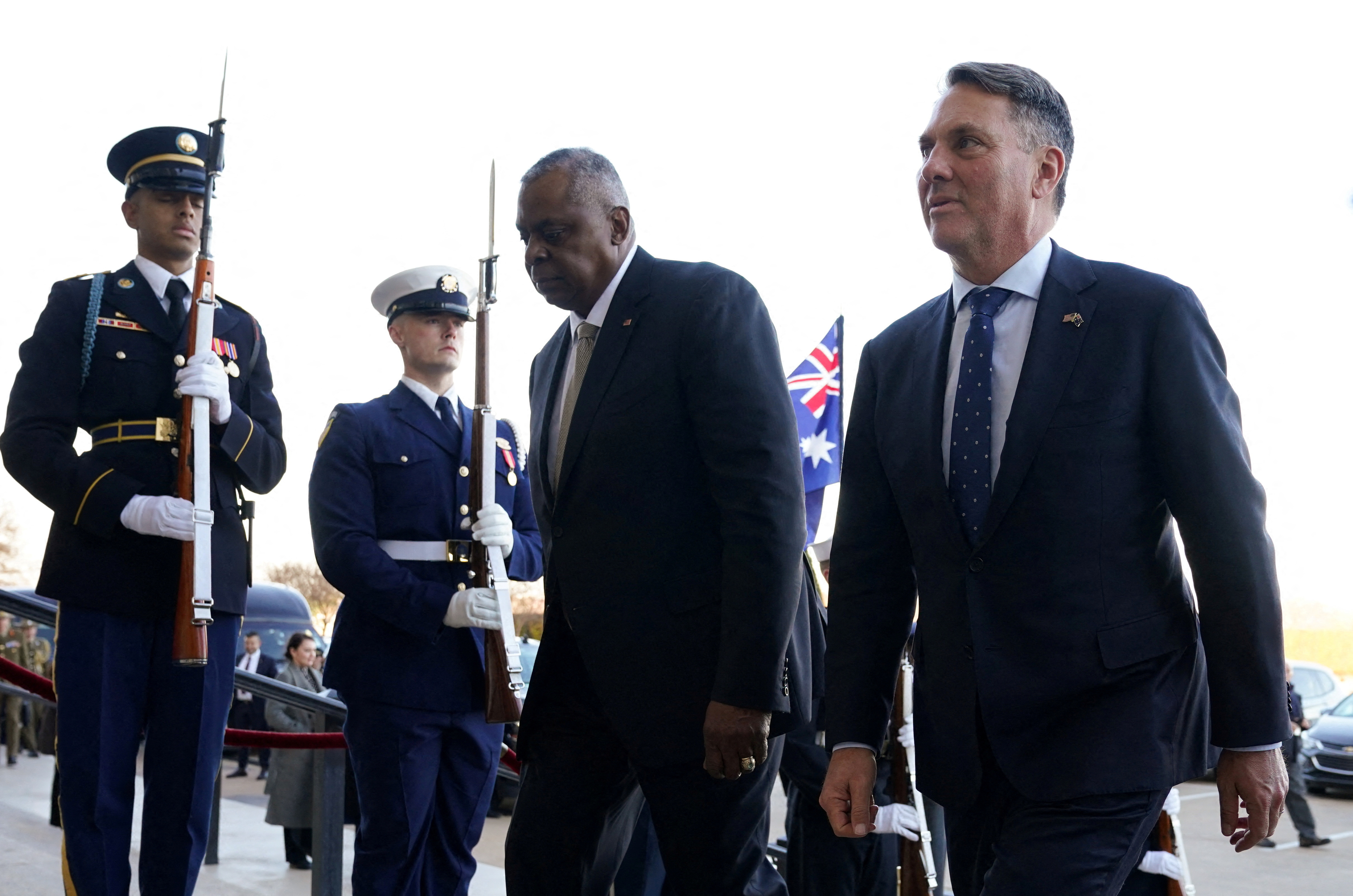
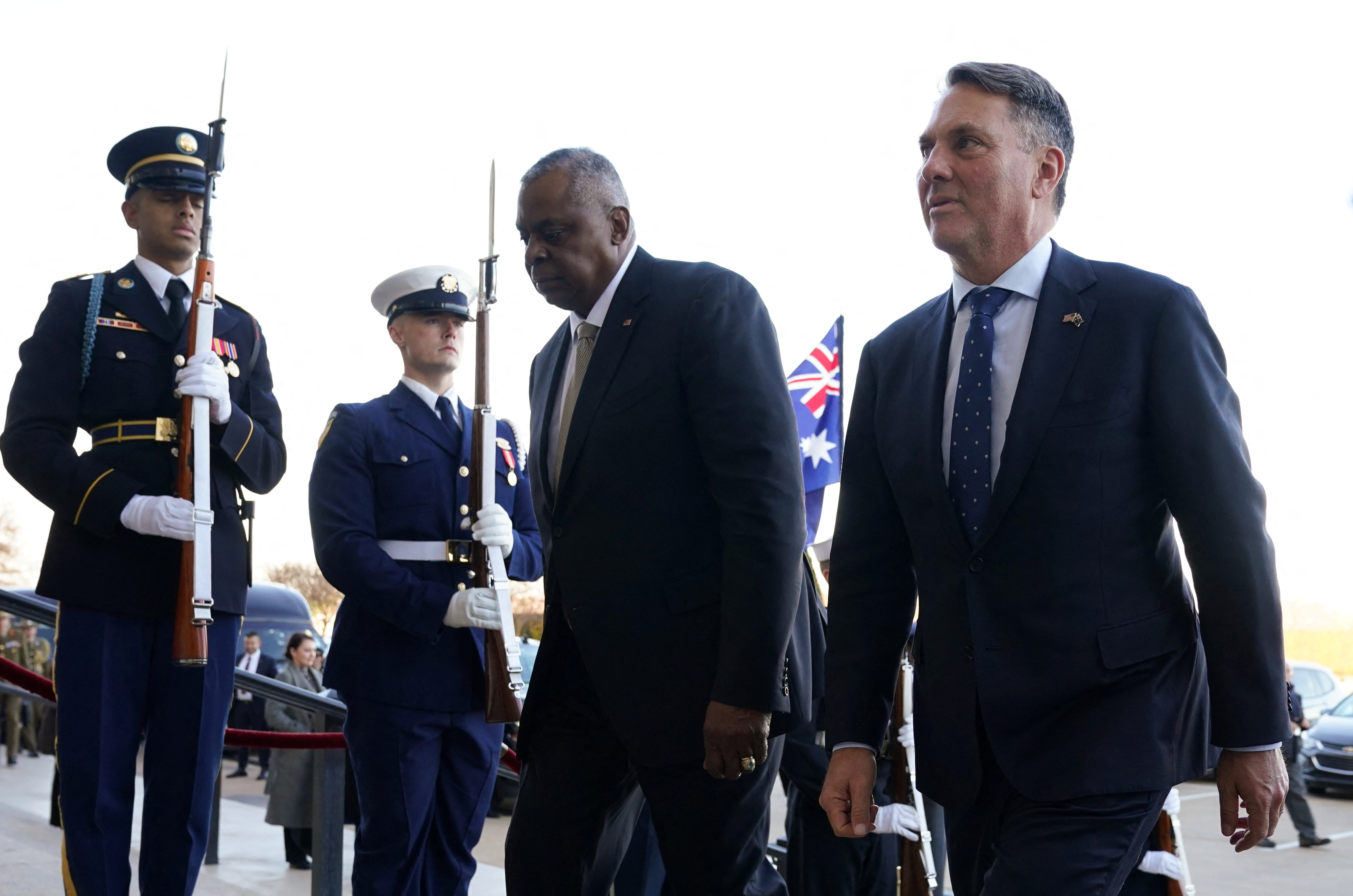
U.S. Defense Secretary Lloyd Austin escorts Australian Defense Minister Richard Marles into the Pentagon for their meeting in Washington, U.S., December 5, 2022. REUTERS/Kevin Lamarque/File Photo

U.S. Defense Secretary Lloyd Austin escorts Australian Defense Minister Richard Marles into the Pentagon for their meeting in Washington, U.S., December 5, 2022. REUTERS/Kevin Lamarque

U.S. Defense Secretary Lloyd Austin and Australian Defense Minister Richard Marles meet at the Pentagon in Washington, U.S., December 5, 2022. REUTERS/Kevin Lamarque
Categories
Audio Sources - Full Text Articles

Special Report: SPECIAL REPORT In France, minority communities decry a surge in police fines

2022-12-06T22:35:51Z
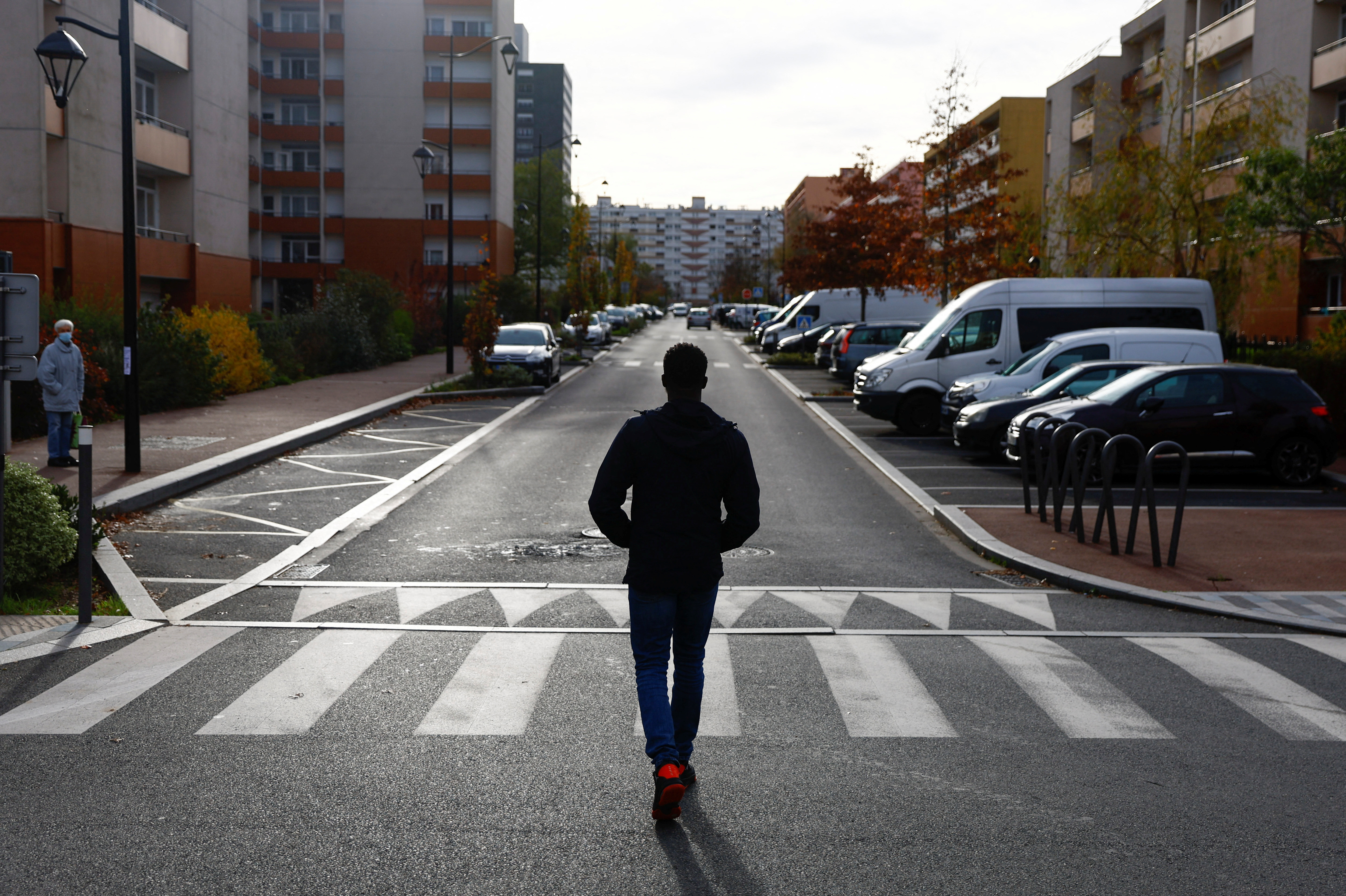
A man walks on a street near residential apartment buildings in Epinay-sous-Senart near Paris, France November 8, 2022. REUTERS/Gonzalo Fuentes

Mohamed Assam went to buy groceries at a supermarket close to his home near Paris one April afternoon in 2020. By the time he returned, he had incurred more than 900 euros in fines for nine different infractions without once, he said, coming into contact with a police officer.

The 27-year-old from the Paris suburb of Epinay-sous-Senart said he learned of the fines about a week later, when he received notifications in the post. His alleged offences, which he is contesting, include violating COVID-19 lockdown rules and lacking correct headlights on his quad bike, according to the notices he received from an interior ministry agency reviewed by Reuters.

“It was a surprise, a bad surprise,” said Assam. He now owes thousands of euros in total for fines accrued since 2019, including late payment fees, according to Assam and his lawyer.

French President Emmanuel Macron – facing criticism from rivals who accuse him of being soft on drug dealers and other offenders – has implemented a string of policies aimed at curbing urban crime. Those include greater authority for police to issue fines – a power police have seized upon.

Nationwide, the number of non-traffic related fines has grown by more than six times – to 1.54 million last year from 240,000 in 2018, according to the interior ministry agency for fines. In 2020, when the country underwent multiple COVID-19 lockdowns, the number surpassed 2 million.

Proponents say the fines reduce the burden on the justice system by keeping minor infractions out of court. Critics say the penalties allow police to dispense sanctions at their own discretion, without proper accountability. Some lawyers and rights advocates say this power has resulted in police targeting poorer people and those from ethnic minority backgrounds, leaving some people saddled with hefty debts.

French laws strictly limit the collection of data about an individual’s race or ethnicity, which makes it difficult to determine exactly how the fines impact ethnic minority groups, but the census does collect some figures on immigrants, based on place of birth and nationality. A Reuters review of census-related and some fine-related police data from across France reveals that police have fined people at higher rates in areas with the heaviest percentages of immigrants.

“There is systemic discrimination,” said Alice Achache, a lawyer representing some Paris residents who are challenging fines.

President Macron has previously said there is no “systemic racism” in the French police. His office declined to comment for this report, as did the national police. The interior ministry did not respond to questions. Police in other countries such as the United States and Britain have faced accusations of over-policing and over-sanctioning of minority communities.

In Epinay-sous-Senart, Assam’s town, a Reuters review of data from more than two years of police reports recording incidents involving at least one fine found more than 80% of those incidents occurred in two adjacent neighborhoods where residents say many ethnic minority families live. Of the 478 police reports that recorded fines from April 2018 to July 2020, 403 were from that part of town, according to the local police data, which Reuters obtained via a freedom of information request. The vast majority of the people fined had Arab or African surnames, the data showed.

More than one-third of Epinay-sous-Senart residents ages 25 to 54 are of non-European immigrant background, as are more than half of the town’s children, according to 2017 census data compiled by France Strategie, a government think tank.

The heavy concentration of fines in parts of the town where immigrants live fits a pattern that has played out across France, according to the Reuters review. Police issued 58 COVID-related fines per 1,000 population in the five Paris districts with the highest concentration of residents with non-European backgrounds, based on France Strategie’s figures. That is about 40% higher than the rate of other areas, where police issued almost 42 fines per 1,000 people. read more

Nationwide, the rate of pandemic-related fines in areas where official statistics show a high concentration of immigrants was 54% higher than in other areas between mid March and mid May 2020 during the country’s first nationwide lockdown.

Police also sometimes issue fines remotely and fine the same people repeatedly, including on occasion multiple times within minutes, according to fine recipients and defense lawyers. The burden of these remote and repeat fines falls heavily on minorities, these people say, adding to their suspicion police are targeting ethnic groups.

Issuing fines remotely is a breach of police procedures for non-traffic infractions, according to several legal specialists. Philippe Astruc, the public prosecutor in Rennes, runs the office responsible for processing fines that individuals nationwide dispute. He said police shouldn’t issue a fine without stopping the rule breaker, except in the case of certain road-related rule breaches.

Despite the rules, some lawyers representing fine recipients say remote fining occurs. Achache, the Paris lawyer, said that police know the names of individuals because they regularly conduct identity checks and recipients sometimes don’t even know they’re being fined at the time of the alleged infraction, she said.

Proving bias in fining practices is difficult, some scholars say. Other factors that could explain the geographical disparity in fine rates, sociologists said, include greater concentration of police patrols or higher crime rates in certain areas.

Aline Daillere, a sociologist researching policing at Paris Saclay University, said the Reuters analysis shows “certain categories of the population are very frequently fined,” mostly young men from poorer neighborhoods who are – or are perceived to be – minorities. One possible explanation, she said, is that police are targeting minority populations. But it’s not possible to prove discrimination, she said, without data showing that police treat people of varying ethnicities differently. Such data doesn’t exist.

Augustin Dumas, the municipal police chief of Epinay-sous-Senart until the summer of 2020, denied targeting a particular area or section of the population, saying police responded to complaints by inhabitants. “If someone is doing something wrong, you need to act,” said Dumas, now an elected official in a nearby town.

Macron, who came to power five years ago on a centrist platform and was re-elected this year, has toughened his stance on law and order amid stiff competition from the right. Rights advocates say his government has chipped away at civil liberties while giving greater powers to authorities, such as the ability to close mosques without trial.

The expanded police powers include the right to issue on-the-spot fines. Several new finable offences have been added since 2020, including drug use and loitering in building hallways. The government is seeking to add more police fines as part of a broader security bill. Lawmakers are due to vote on the legislation this month.

The proposed expansion of fines is aimed at providing “efficiency and simplicity,” Interior Minister Gerald Darmanin told the upper house of parliament in October. During another debate in the lower house in November, Darmanin denied racial profiling by police in issuing fines.

The new fines the government is proposing, which include penalties for offences like graffiti and stealing petrol, would be marked on a person’s criminal record, unlike fines for minor infractions such as making noise, littering or breaking lockdown restrictions. Either way, what troubles some critics is the lack of judicial oversight.

Justice is being taken out of the courtroom and conducted on the streets, without safeguards such as right to a defense, said Daillere, the sociologist. “If we don’t go in front of a judge, what stops a police officer from giving out a sanction even if there isn’t an infraction?”

NEIGHBORHOOD IN THE CROSSHAIRS

Born in France to parents from Morocco, Assam said police have stereotyped and “preconceived ideas” about him and his friends of immigrant origin. He said police frequently stop them, which leaves him feeling less than equal to his fellow citizens. “We are regular people like everyone else, we are French, we are proud of being French,” said Assam, over coffee in a neighborhood cafe early this year.

Epinay-sous-Senart sits around 30 kilometers southeast of central Paris with a population of just over 12,000. To the east of the town’s historic quarter is a zone developed in the 1960s, where some people who migrated from France’s former African colonies settled.

Assam lives in this newer part of town in an area known as ‘Les Cineastes,’ a series of modern apartment blocks served by a cafe and a few shops. It was in this and an adjacent neighborhood where police issued the vast majority of fines over the more than two-year period Reuters reviewed.

Epinay-sous-Senart’s rate of violent and non-violent crime is lower than the average for other towns in the same department and the greater Paris region, interior ministry figures for 2021 show.

Dumas, appointed municipal police chief in 2017 by the town’s then center-right mayor, told Reuters his goal was to tackle anti-social behavior and drug dealing.

Some people were fined multiple times, Reuters found. The 478 police reports Reuters reviewed involved a total of 185 people. About one-fifth of the recipients were fined in three or more incidents, according to the police data Reuters obtained. Reuters also examined the contents of the police reports, which revealed some people received multiple fines for the same incident. The reports also showed many fines were issued under local decrees banning outdoor gatherings and allowing police to stop people in specified areas.

Hassan Bouchouf received fines on more than two dozen occasions, according to the town’s fine data. The 37-year-old factory worker told Reuters the police would either tell him to move on or fine him whenever they would see him and his friends socializing outside, even when they had moved to the nearby woods.

“Who am I disturbing?” he said. “Am I waking up the squirrels?”

Bouchouf owes the treasury more than 20,000 euros for fines received between 2017 and 2020, according to a treasury summary dated Aug. 9.

Dumas made no apology for issuing repeat fines. He said people who were fined repeatedly had committed repeated infractions.

The Essonne police department didn’t respond to questions about the fines received by Assam and Bouchouf.

Epinay-sous-Senart’s police have been less active in issuing fines since the arrival of a new mayor and police chief in the summer of 2020, according to the mayor, two police officers and more than a dozen residents interviewed by Reuters. The mayor’s office in Epinay-sous-Senart didn’t respond to requests for data for this period.

Damien Allouch, the town’s center-left mayor elected in June 2020, told Reuters that police continue to issue fines where necessary but said anti-social behavior can be addressed through other means. “Sometimes discussion is enough,” he said.

Allouch didn’t respond to questions about the earlier police data Reuters obtained from the municipality.

Georges Pujals, who served as mayor until 2020 and appointed Dumas, denied there had been discrimination by police. He said that during lockdown, police were applying COVID-related rules set by the government and that a core group of people who received multiple fines were well known to police. He added that municipal police officers carry out their law enforcement duties under the supervision of the public prosecutor.

Assam’s fines led to an even deeper tangle with the police.

After learning of the April 2020 fines, Assam verbally confronted Dumas on the street later that same month, according to both men and a witness. Dumas says Assam threatened him; Assam says he merely insulted Dumas. Both men told Reuters there was no physical violence. The following morning, police arrested Assam at his house, according to Assam.

In November 2020, the Court of Evry found Assam guilty of violence and threats against an official, according to a court document. Assam is appealing a six-month suspended prison sentence, said his lawyer, Clara Gandin, and his appeal is due to be heard in December. Gandin said that police harassed young people in the neighborhood and that she intends to argue that this provocation justifies a lighter sentence.

Separately, Assam has contested the nine fines from his supermarket trip, plus four others from April and May 2020, on various grounds, including that he wasn’t stopped by officers in all cases and that police reports contained insufficient detail, Gandin said. In late November, a police tribunal canceled two of the fines, both COVID-19 related, according to Gandin. He continues to challenge the other 11 fines, which include several related to the quad bike he drove on his supermarket trip.

Reuters found at least 45 people in Epinay-sous-Senart and elsewhere in the greater Paris region who say they were fined without any contact with a police officer, according to recipients and their lawyers. The fines were issued for antisocial behavior, such as making noise, and lockdown breaches between 2017 and 2021, according to the treasury summaries and fine notices shared with Reuters or the lawyers. Almost all of the individuals were immigrants or descendants of immigrants based on their names.

Assam complained about remote fines during a police interview following his April 2020 arrest, according to him and a person close to the local public prosecutor’s office. That prompted a review by the prosecutor’s office, which found that police had issued fines to Assam remotely, that person said.

The local public prosecutor’s office said it couldn’t comment on Assam’s case. But it told Reuters that after reviewing a 2020 complaint about remote fines, the local prosecutor sent mayors a letter to remind police of the rules. The letter, reviewed by Reuters, said that lockdown-related “fines can only be issued after direct contact with the person.”

“This confirms that the prosecutor is perfectly aware that there has been remote fining” and the fines are “not legal because they cannot be issued without physical contact,” Gandin, Assam’s lawyer, told Reuters.

The criticism over police fines comes amid broader allegations of discrimination by police. One flash point has been police identity checks.

In a significant ruling, the Paris Court of Appeal in 2021 found discrimination was behind police identity checks of three high school students – French nationals of Moroccan, Malian and Comorian origin – at a Paris train station in 2017. Each individual received 1,500 euros in compensation, plus legal costs, the court said at the time.

Last year, Assam and more than 30 other Epinay-sous-Senart residents filed a complaint with the French state’s rights watchdog, the Defenseur des Droits, about the town police’s approach to fines during the pandemic.

Remote fining constitutes “systemic discrimination” by police towards young men of North African or Subsaharan African origin, said the April 2021 submission, prepared by Gandin and other lawyers. It alleges police engaged in remote and repetitive fining, which it described as “police harassment.”

Complaints about police fines have mounted since then. In March, about 60 residents from three Paris neighborhoods filed a joint complaint to the Defenseur des Droits with similar allegations. The watchdog is investigating about 10 complaints alleging improper police fines, mostly from Paris, according to a person familiar with the matter. The organization can make policy recommendations and help challenge rights violations but doesn’t have the power to cancel court or administrative decisions, a watchdog spokesperson said.

Claire Hedon, head of the Defenseur des Droits, declined to comment on the probes. But she said the problem with fines is that they can be issued arbitrarily and are difficult to challenge. “The principle of justice is to be able to appeal,” she said.

Debts accrued as a result of fines can continue to weigh heavily on individuals, lawyers say.

After a period of unemployment, Assam recently said he found a job in sales, speaking in early November. He said he continued to receive letters about his court proceedings as well as notices from the authorities saying they will send bailiffs or seize money he owes from his bank account. The warnings leave him stressed, he said.

“Letters come to the house, I don’t even open them anymore,” he said.

Categories
Audio Sources - Full Text Articles

Ronaldo benched for World Cup match against Switzerland

LUSAIL, Qatar (AP) — Cristiano Ronaldo was dropped from the starting lineup for Portugal’s match against Switzerland on Tuesday in the round of 16 of the World Cup.

The move came a day after his coach expressed frustration about his team captain’s attitude in the last game. Gonçalo Ramos, who plays for Portuguese club Benfica, started in Ronaldo’s place at Lusail Stadium.

Ronaldo jogged onto the field in pregame to loud cheers at Lusail Stadium. He was grouped with the substitutes and kicked the ball around in light drills. João Cancelo, a fullback who started all three matches of the group stage, was also dropped from the starting lineup.

The benching came after Ronaldo showed obvious displeasure at being removed from the game against South Korea on Friday.

The 37-year-old striker opened the tournament with a goal against Ghana to become the first player to score in five different World Cups. But he was ineffective in Portugal’s final two games of group play and was pulled midway through the second half of a 2-1 loss to South Korea.

Ronaldo’s body language indicated the superstar was annoyed at being taken out of the game — something Portugal coach Fernando Santos remained silent about for nearly three days.

Finally in his Monday news conference, Santos conceded Ronaldo’s attitude in the game against South Korea was the one distraction — of many — that had pushed him too far.

Before Portugal’s first match of the World Cup, Ronaldo cut ties with Manchester United and is reportedly being wooed by a Saudi Arabian team with the promise of an exorbitant paycheck, and a poll in Portugal showed that fans in his home country wanted the superstar dropped from the lineup.

“I didn’t like it, not at all. I really didn’t like it,” Santos said Monday of Ronaldo’s poor attitude at being taken out of the game against South Korea. “We fixed that in-house and that’s it.”

Portugal defender Rúben Dias, meanwhile, pleaded with Portuguese media to help “create unity” in the camp instead of division. It was Portuguese daily O Bola’s poll that showed fans at home had tired of Ronaldo and preferred he didn’t play against Switzerland.

It’s not unprecedented for Ronaldo to get less playing time because the aging superstar has faded of late. He barely played in the Premier League for United through the first half of the season, and Santos dropped him from the Portugal lineup for a Nations League game against Spain in March.

With Ronaldo, Portugal has advanced to the round of 16 of the World Cup in four of his five tournaments, but he’s never played in a World Cup final. Portugal in 2006 lost to France in the semifinals — the deepest Ronaldo has ever reached at the World Cup.

Although he’s scored in five tournaments, he has only eight total goals in 20 World Cup matches. His 118 goals in international play is a world record for men, but Ronaldo has never scored in the knockout stage of the World Cup.

Lionel Messi, Ronaldo’s greatest rival over the years, has scored three goals so far in this World Cup and helped Argentina reach the quarterfinals. Messi has nine career World Cup goals, and like Ronaldo, has never won the tournament.

___

AP World Cup coverage: https://apnews.com/hub/world-cup and https://twitter.com/AP_Sports

Categories
Audio Sources - Full Text Articles

Ukraine’s strategy to combat Putin’s winter offensive: ‘We need to win this war as soon as possible’

The temperatures are frigid this time of year in Kyiv, Ukraine. But almost 50 % of the region’s civilians are with no heat or electric power as Russian air strikes cripple the nation’s electricity infrastructure. 

“You really don’t have water, you do not have heating. It’s not possible to are living like this. And that’s what Putin tries to do to Ukrainians,” Ukrainian Parliament Member Oleksiy Goncharenko advised Fox News Digital. 

As the ground hardens and the snow starts to slide, the Ukraine war enters a winter season offensive — with Russians knocking down far more ability crops than military bases in a change that can make Ukraine’s civilians the focus on. 

Goncharenko life in Odesa, which is bearing the brunt of Russia’s strikes and is relying on backup strength source to continue to keep the city operating. 

 man views destroyed Russian tanks outside Bucha on Dec. 5, 2022 in Bucha, Ukraine. Ukrainian officials expect a new wave of Russian bombing this week, with previous rounds targeting critical infrastructure and causing massive water and power cuts, including in the capital Kyiv.

 man views ruined Russian tanks outside the house Bucha on Dec. 5, 2022 in Bucha, Ukraine. Ukrainian officials assume a new wave of Russian bombing this week, with earlier rounds targeting important infrastructure and creating significant h2o and electrical power cuts, including in the cash Kyiv.

(Jeff J Mitchell/Getty Photographs)

UKRAINE States 60 OF 70 RUSSIAN MISSILES STRUCK DOWN AMID BARRAGE OF STRIKES

“My spouse, my two little ones are with no electrical power, without water, without almost everything. The maintenance procedure is in progress. So we hope that the circumstance will improve,” stated Goncharenko “But we know that Russia again can assault. And sad to say, I feel it would take place.”

Ukrainians are retaliating by bringing the fight to Putin. On Monday, Ukraine reportedly strike two Russian military services bases 300 miles previous the border, in the coronary heart of enemy territory. On Tuesday, Ukraine employed drones to strike an oil facility 80 miles from Ukraine.

“Thousands of Ukrainians are killed. Our country is devastated. The attacks are arranged from Russian territory,” mentioned Goncharenko. “It is very clear that we have all the suitable.”

But this approach has its cracks — western allies have been cautious to provide Ukraine with weapons that can achieve Moscow. 

The Wall Street Journal completely claimed Monday that the U.S. modified the superior Himars rocket launchers so they do not have the lengthy-variety skill to fireplace into Russia. The U.S. furnished Ukraine with at the very least 20 Himars rocket launchers in June.

“We are not enabling Ukraine to strike at the rear of outside of its borders,” claimed Condition Division Spokesperson Ned Cost on Tuesday. “All the things we are carrying out, every thing the entire world is executing to assist Ukraine is in support of Ukraine’s independence. Its sovereignty, its territorial integrity is preserved. It is not encouraging Ukraine to strike outside of its borders.” 

PUTIN Holds COUNCIL Conference ON DOMESTIC Protection Next 3 AIRBASE ‘EXPLOSIONS’

A M142 High Mobility Artillery Rocket System (HIMARS) takes part in a military exercise near Liepaja, Latvia September 26, 2022.

A M142 Substantial Mobility Artillery Rocket Method (HIMARS) requires component in a military work out near Liepaja, Latvia September 26, 2022.

(Reuters)

“With extra weaponry, we can finish this war incredibly swiftly, and that will not be escalatory, due to the fact if [so] this bloodshed will go on for a long time,” stated Goncharenko. “Really don’t forget about that for Russians, it is not a war against Ukraine. It’s the war against the West lifted by the United States. And Putin … says it definitely overtly.”

As Ukraine is creating its have weapons arsenal, Russia is sneaking by Western sanctions to build their have weapons in current months. A report from Conflict Armament Research (Vehicle) investigators said remnants of the missiles shot into Kyiv on Nov. 23 were being produced among July-September 2022 and Oct-November 2022. 

“Which is why sanctions are so significant, since we see the Russians are already applying recently downed missiles. So it indicates that from one point of watch, their shares are seriously by now empty. So they are employing missiles which are just made,” mentioned Goncharenko. “We need to keep on this work to finally near all the holes which Russia tries to use to prevent sanctions.”

Kids Acquire Center Phase IN UN Conference ON RUSSIA’S WAR IN UKRAINE: ‘WORLD Absent MAD’

In this handout photo taken from video released by Russian Defense Ministry Press Service on Wednesday, Oct. 26, 2022, a Yars intercontinental ballistic missile is test-fired as part of Russia's nuclear drills from a launch site in Plesetsk, northwestern Russia.

In this handout image taken from video launched by Russian Protection Ministry Press Assistance on Wednesday, Oct. 26, 2022, a Yars intercontinental ballistic missile is take a look at-fired as component of Russia’s nuclear drills from a start web page in Plesetsk, northwestern Russia.

(Russian Defense Ministry Push Support through AP)

As Ukraine is displaying extra willingness to hit inside of Russia’s border, the Ukrainian govt has a laundry record of air defense missiles, from National State-of-the-art Area-to-Air missile technique (NASAMS) to ammunition and drones. 

“If we would have in March weaponry that we acquired in May perhaps, we would finish every thing in April for the gain of the total world and unquestionably of Ukraine,” said Goncharenko. “Our state would not be so intensely devastated. 1000’s of people today would be alive. So it is really not a query of economic climate. It is really not a problem of cash. It truly is the issue that we need to have to win this war as soon as attainable.”

Click Here TO GET THE FOX Information App

Lacey Christ is a Producer with Fox News @ Night time. You can observe her on Twitter: @lacey_christ1

Lacey Christ is a producer with “Fox News @ Night.”

Source connection

The post Ukraine’s strategy to combat Putin’s winter offensive: ‘We need to win this war as soon as possible’ appeared first on Ukraine Intelligence.

Categories
Audio Sources - Full Text Articles

Stocks slide, dollar up as market eye central bank rate policies

2022-12-06T22:18:00Z

Global stocks posted a third straight day of losses and the dollar rose on Tuesday as the market weighed how long the Federal Reserve would keep interest rates high and “restrictive” to the U.S. economy.

Stocks on Wall Street fell, with all sectors in the red with the exception of utilities (.SPLRCU). The major bourses in Europe also declined as concerns mounted about a global slowdown before a raft of major central bank rate decisions next week.

MSCI’s all-country world index (.MIWD00000PUS), a gauge of stock performance in 47 countries, fell 1.26% to mark its third down day in a row after hitting a three-month high last week.

The dollar gained against the euro, yen, British pound and Canadian dollar, among other major currencies.

Treasury yields fell, but more at the long end of maturities than the short end, which deepened the inverted yield curve, a market indicator of a looming recession. The gap between yields on two- and 10-year notes was -83.7 basis points.

The market needs to recognize that a recession most likely is a reality, not just a hypothetical scenario, and that valuations need to go lower, said Jason Pride, chief investment officer of private wealth at Glenmede in Philadelphia.

“During recessions, markets on average price at a discount to fair value, which they have not yet done,” Pride said. “There is not a single instance in which a market has bottomed before the recession started.”

Data released on Monday showing U.S. services industry activity unexpectedly picked up in November and last week’s robust U.S. payrolls report have raised doubts about how soon the Fed might ease monetary policy. The Fed aims to slow growth by reducing credit and money available for banks to lend.

Futures show the market expects the Fed’s peak terminal rate to rise to 4.974% next May, but by December 2023 to have fallen to 4.534% on speculation the Fed will cut rates to help the economy rebound from an expected slowdown.

“We believe we hit the lows already and it’s not going to be a straight line up, but a choppy road ahead,” said King Lip, chief investment strategist at BakerAvenue Wealth Management in San Francisco.

“We’re in the minority in terms of our forecast because a lot of the colleagues we’ve been speaking to are much more pessimistic,” he said.

Among the biggest drags on the benchmark S&P 500 index was Meta Platforms Inc (META.O) after European Union regulators ruled its Facebook and Instagram units should not require users to agree to personalized ads based on their digital activity.

Wall Street also was led lower by other megacap stocks, including Microsoft Corp (MSFT.O) and Amazon.com Inc (AMZN.O).

The Dow Jones Industrial Average (.DJI) fell 1.03%, the S&P 500 (.SPX) slid 1.44% and the Nasdaq Composite (.IXIC) dropped 2%. In Europe, the STOXX 600 index (.STOXX) closed down 0.58%.

The dollar rose as investors waited for next week’s expected 50 basis points rate hike by the Fed.

The euro fell 0.24% to $1.0466, while the yen weakened 0.21% at 137.03 per dollar.

Euro zone government bond yields fell after two European Central Bank officials signaled inflation and rates may be close to peaking in the run-up to a raft of major central bank decisions.

The ECB, the Bank of England and the Fed all meet next week to discuss monetary policy. The Reserve Bank of Australia on Tuesday offered a glimpse of decisions to come after raising interest rates to decade highs and sticking with a prediction of more hikes ahead.

All eyes will be on the release next Tuesday of November’s U.S. consumer price index data, which will provide insight into the pace of inflation.

The yield on U.S. 10-year notes fell 6.6 basis points to 3.533%.

Oil prices fell in a volatile market as the dollar stayed strong and economic uncertainty offset the bullish impact of a price cap placed on Russian oil and the prospects of a demand boost in China.

On Monday, crude futures recorded their biggest daily drop in two weeks.

U.S. crude futures fell $2.68 to settle at $74.25 a barrel, while Brent settled down $3.33 at $79.35.

U.S. gold futures settled up 0.1% at $1,782.40 an ounce.

Related Galleries:

Traders are pictured at their desks in front of the DAX board at the stock exchange in Frankfurt, Germany July 29, 2015. REUTERS/Remote/Pawel Kopczynski

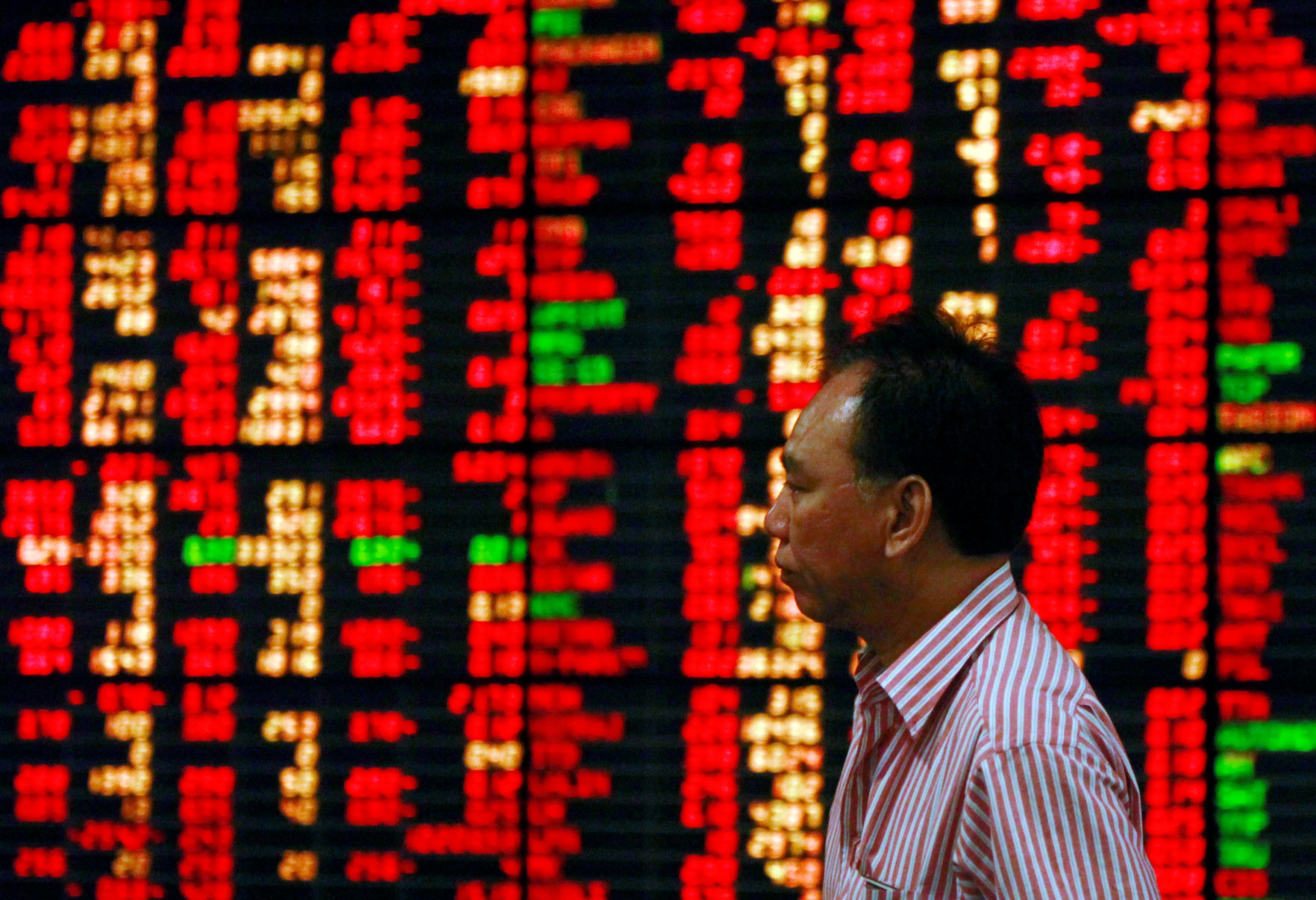
A Thai investor walks past an electronic board displaying live market data at a stock broker’s office in central Bangkok August 9, 2011. REUTERS/Chaiwat Subprasom/Files

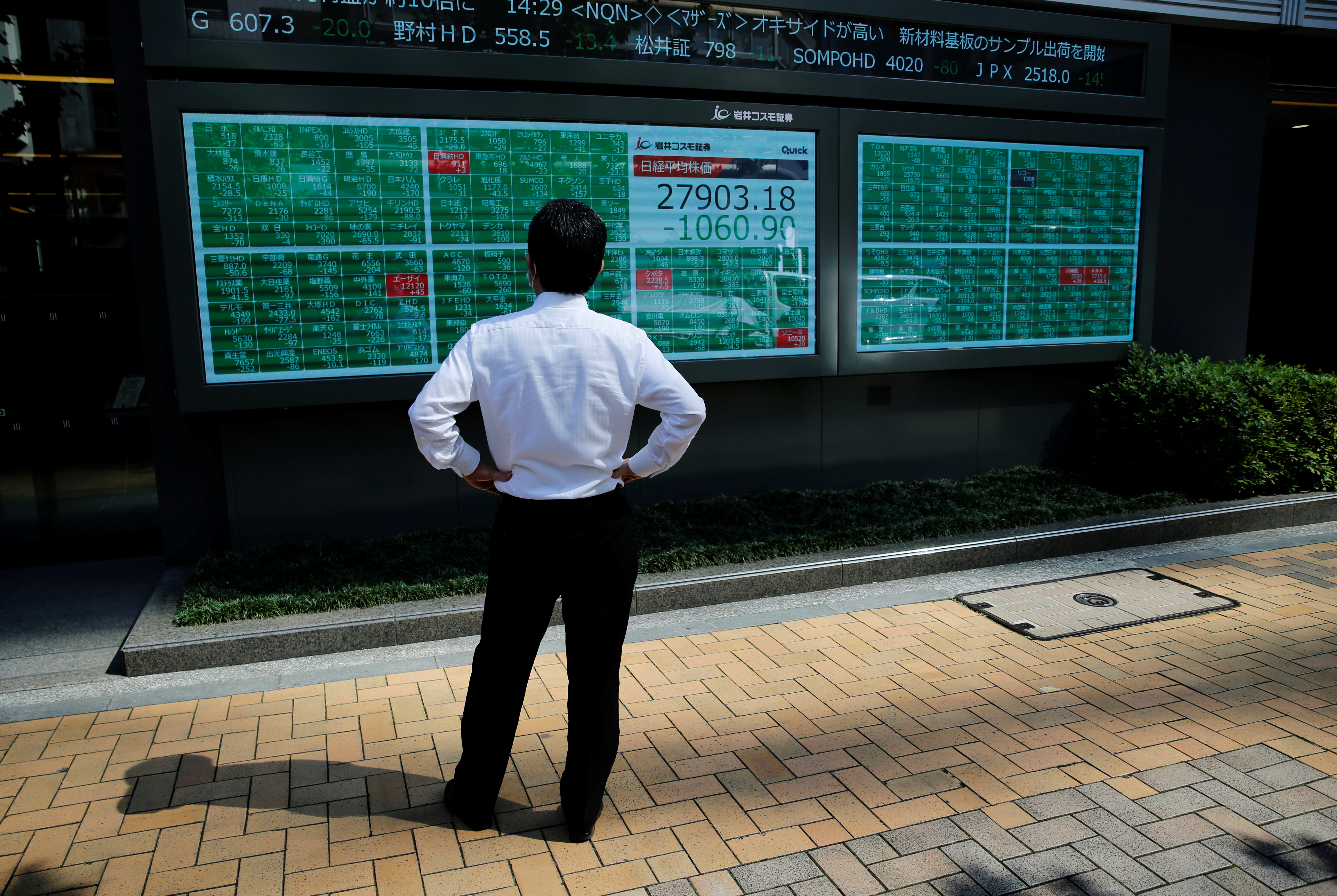
A man watches an electric board showing Nikkei index outside a brokerage at a business district in Tokyo, Japan, June 21, 2021. REUTERS/Kim Kyung-Hoon/File Photo

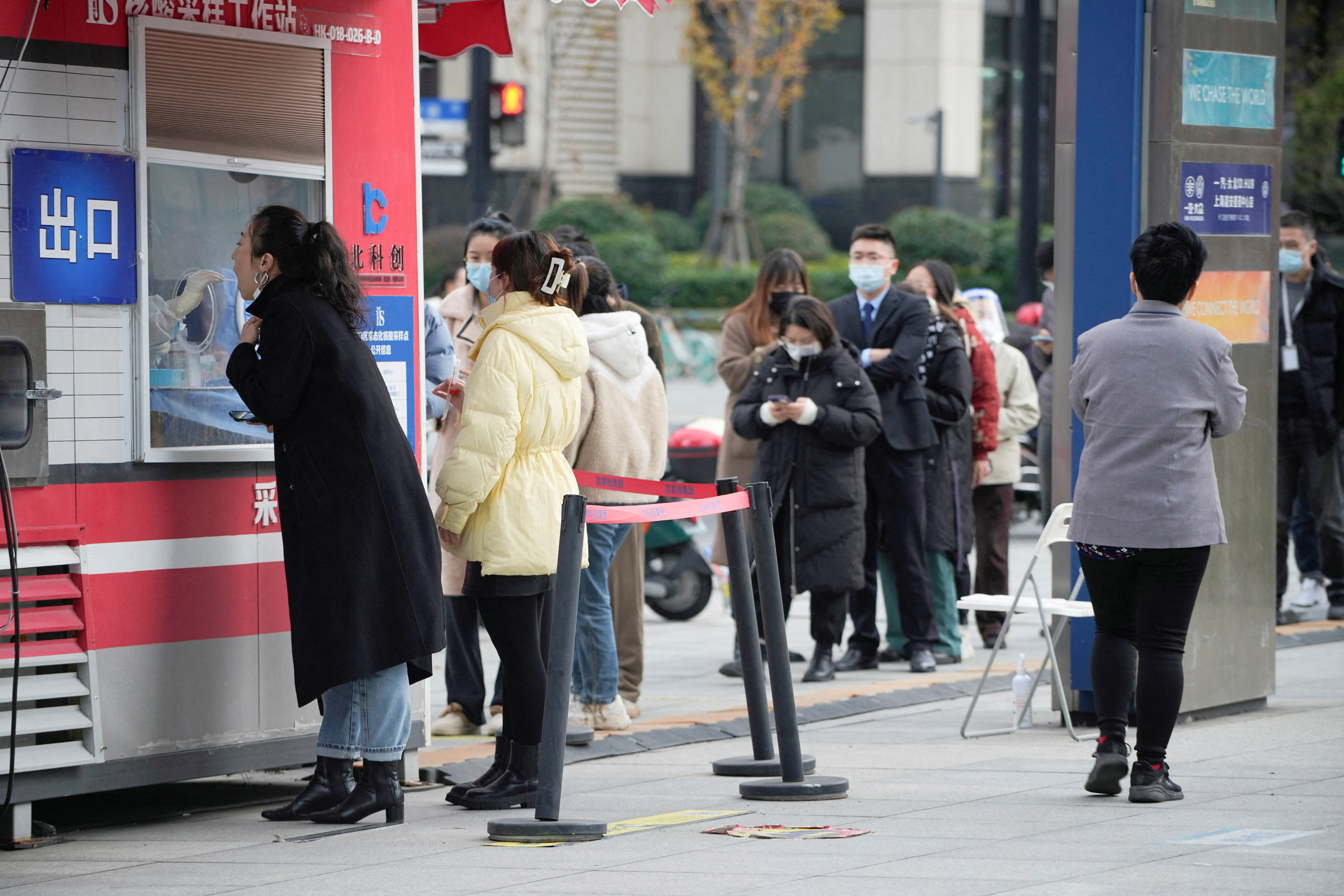
A woman gets tested at a nucleic acid testing site, as coronavirus disease (COVID-19) outbreaks continue in Shanghai, China, December 5, 2022. REUTERS/Aly Song/File Photo
Categories
Audio Sources - Full Text Articles

U.N. chief urges strong global nature deal to end “orgy of destruction“

2022-12-06T22:11:57Z

As countries prepare to negotiate a new global agreement to protect Earth’s environment, the head of the United Nations warned there was no time to lose.

“Humanity has become a weapon of mass extinction,” U.N. Secretary-General Antonio Guterres told delegates to the COP15 biodiversity summit at an opening ceremony on Tuesday in Montreal.

“This conference is our chance to stop this orgy of destruction,” he said.

More than 1 million species, especially insects, are now threatened with extinction, vanishing at a rate not seen in 10 million years. As much as 40% of Earth’s land surfaces are considered degraded, according to a 2022 U.N. Global Land Outlook assessment.

Negotiators hope that the two-week U.N. summit yields a deal that ensures there is more “nature” — animals, plants, and healthy ecosystems — in 2030 than what exists now. But how that progress is pursued and measured will need to be agreed by all 196 governments under the U.N. Convention on Biological Diversity (CBD).

Ahead of the talks beginning in earnest on Wednesday, observers warned that the process was already looking like a struggle. Three days of pre-summit talks that ended Monday failed to deliver a clean draft agreement for negotiation ahead of the summit’s close on Dec. 19.

“Some progress has been made, but not so much as needed or expected,” CBD executive secretary Elizabeth Maruma Mrema told a news conference Tuesday. “I don’t feel the delegates went as far as we had expected.”

More than 10,000 participants, including government officials, scientists and activists, are attending the summit amid calls by environmentalists and businesses to both protect natural resources and halt the loss of species.

Canadian Prime Minister Justin Trudeau stressed the need for countries to protect 30% of their land and waters by 2030 – a key request of the United Nations. He also said Canada would put $350 million toward international biodiversity finance.

“There are lots of disagreements between governments,” Trudeau said. “But if we can’t agree as a world on something as fundamental as protecting nature, then nothing else matters.”

The U.N. biodiversity talks, held every two years, have never garnered the same attention as the world’s main environmental focus – the annual U.N. talks on climate change. But there is increasing awareness that protecting nature and controlling climate change go hand-in-hand.

Healthy ecosystems such as forests and seagrass beds are key to controlling global warming. At the same time, rising global temperatures are increasingly threatening many ecosystems as well as species unable to adapt quickly or to move to cooler climes.

Overall, the U.N. hopes to persuade all countries to pledge to put at least 30% of their land and sea areas under conservation by 2030 – a target often referred to as the “30-by-30” goal. Currently, only about 17% of the world’s land area falls under some sort of protection, while less than 8% of the global ocean is protected.

Another 22 potential targets are also being considered, from curbing pesticide use to canceling some $500 billion in subsidies for activities that cause damage to nature.

But the draft deal is still riddled with bracketed phrases – indicating a lack of agreement, negotiators said. While previous iterations of the agreement had about 900 brackets, that number ballooned up to about 1,400 during the discussion in the days ahead of COP15.

Some of the toughest areas include whether to include efforts to curb climate-warming emissions, whether to impose a deadline for phasing out pesticides, and how to ensure poor nations will have the funding needed to restore degraded areas.

Even the 30-by-30 goal gets tricky in the details, given that some nations hold vast land or ocean areas teeming with wildlife, while others do not. Some indigenous groups have also pushed against the goal, which they see as potentially threatening their land rights.

Indigenous protesters and allies disrupted Trudeau’s speech on Tuesday, beating drums and unfurling a banner that read “Indigenous genocide = ecocide. To save biodiversity, stop invading our lands.”

Trudeau is one of the only world leaders expected to attend the summit. Negotiators have said that the absence of most world leaders could make it tougher to reach an ambitious agreement.

China was due to hold the summit in the city of Kunming but postponed the event four times from its original date in 2020 due to COVID before agreeing to hold the talks in Montreal.

Montreal police have put up a 3-meter (10-foot) fence around the downtown summit venue, Palais des congres, and are preparing for thousands of student protesters expected to swarm the Montreal’s streets to demand a strong deal to protect nature.

Related Galleries:

Atlantic Puffins are seen among the daisies on Skomer Island, Pembrokeshire, Wales, Britain July 16, 2019. REUTERS/Rebecca Naden/File Photo

An aerial view of soil erosion near Arusha, January 20, 2012. Overgrazing and unusually intense rains have severely impacted the fragile ecosystem around Arusha. Picture taken January 20, 2012. REUTERS/Stringer/File Photo

An aerial view shows a tract of Amazon jungle burning as it is cleared by farmers in Itaituba, Para, Brazil September 26, 2019. REUTERS/Ricardo Moraes/File Photo

A hammerhead shark swims close to Wolf Island at Galapagos Marine Reserve August 19, 2013. REUTERS/Jorge Silva/File Photo

A hammerhead shark swims close to Wolf Island at Galapagos Marine Reserve August 19, 2013. REUTERS/Jorge Silva/File Photo
Categories
Audio Sources - Full Text Articles

Trump-backed Walker challenges U.S. Senator Warnock in Georgia runoff

2022-12-06T22:23:45Z

Democratic Senator Raphael Warnock and Republican football legend Herschel Walker faced off on Tuesday in a final election that will determine whether Democrats can expand their razor-thin majority in the U.S. Senate and solidify Georgia as a battleground state in the next presidential election.

Democratic Senator Raphael Warnock and Republican former football star Herschel Walker faced off on Tuesday in a runoff vote that will determine whether Democrats can expand their razor-thin majority in the U.S. Senate and solidify Georgia as a battleground state in the next presidential election.

The race is also a last test of Donald Trump’s clout with voters as he seeks the Republican nomination to challenge President Joe Biden in 2024. The former president had a mixed record in his most competitive endorsements for Congress in the November midterm elections, including Walker.

Walker’s campaign has been plagued by repeated policy gaffes and a variety of allegations, including claims by former girlfriends that he encouraged them to get abortions, although he has campaigned for the procedure to be outlawed. He has denied the accusations.

Retired firefighter Keith Fields, 58, showed up an hour before polls opened in Smyrna to cast his ballot for Walker because of his stance on immigration, taxes and abortion without exceptions.

“It’s not so much Herschel as the man – but I do like the man – but I’m also voting for the policies that he is going to vote for,” Fields said.

The runoff set early voting records in Georgia in a race that has become the most expensive of the 2022 U.S. midterm election season, with more than $400 million spent so far. The contest went to a runoff after neither candidate secured 50% of the vote in the Nov. 8 first round.

A victory by Warnock would give Democrats a 51-seat majority in the 100-seat Senate, which would make it slightly easier to advance Biden’s nominees for judicial and administrative posts.

While most legislation would still require Republican support, Biden’s Democratic Party would be able to more easily pass bills that are high priorities.

The individual power of Democratic senators Joe Manchin and Kyrsten Sinema to block Democratic-led legislation, as they have done in the past, would be diluted if Warnock voted with the rest of his caucus.

A Walker win, on the other hand, would mean that the Senate would be back to the 50-50 split of the past two years.

On a wider scale, a Warnock victory could solidify Georgia as a battleground in presidential elections. It also would be another midterm defeat at the polls for a protege of Trump, who spurred Walker to run.

The U.S. Justice Department said it was sending monitors to polling places to ensure Georgia complies with federal voting rights laws. The department has expressed concerns about possible violations of voting rights in Georgia.

Polls close at 7 p.m. (0000 Wednesday GMT). At least 1.87 million people cast their votes before Election Day, equal to 47% of the Nov. 8 turnout.

Turnout was steady, with wait times averaging one minute across the state, said Gabe Sterling, a state election official. “We will exceed 1 million today on top of the 1.9 million already cast,” he said on Twitter.

Analysts say the early votes likely tilted Democratic, which a strong Election Day turnout by Walker’s Republican supporters would offset.

“We should not rest on our laurels. The job is not done. The truth is my opponent could still win this election,” Warnock told a crowd in Norcross, Georgia, on Tuesday.

Warnock is pastor of the historic Atlanta church where assassinated civil rights leader Reverend Martin Luther King Jr. preached. Both Warnock and Walker are Black.

Along with the abortion claims, former girlfriends have accused Walker of domestic abuse. He has also faced accusations that he maintains his primary residence in Texas, not Georgia.

Walker has denied the charges, but they may have discouraged some Republican voters. Warnock edged him 49.44% to 48.49% in November, even as Republican Governor Brian Kemp and other statewide Republican candidates easily won re-election.

Cobb County resident Guri Ben-Hashal, 60, who works in real estate, said he cast a vote against Walker. “I feel that Herschel Walker is unsuitable for the job, to say the least,” he said.

At a diner in Marietta, Walker deflected questions about his character, which Warnock has made a centerpiece of his campaign.

“Right now I put my character up against Raphael Warnock any day,” Walker said on Tuesday.

Georgians deserve a senator “who will listen to women,” Warnock told supporters as he spoke about abortion rights.

This is the third Senate runoff in two years in the divided state – and the second for Warnock, who first won the seat in a runoff in January 2021. Republicans won a narrow majority in the U.S. House of Representatives in the Nov. 8 election, but fell short of the “red wave” that some in the party had forecast, despite flagging approval ratings for Biden.

In a Reuters/Ipsos poll finished on Tuesday, Biden’s approval rating dipped to 38%, down 2 points from a week earlier. The poll has a credibility interval — a measure of precision — of 4 percentage points either way.

While Biden did not campaign for Warnock, former President Barack Obama rallied for him in Atlanta last week, urging voters, “Let’s finish the job!”

Related Galleries:

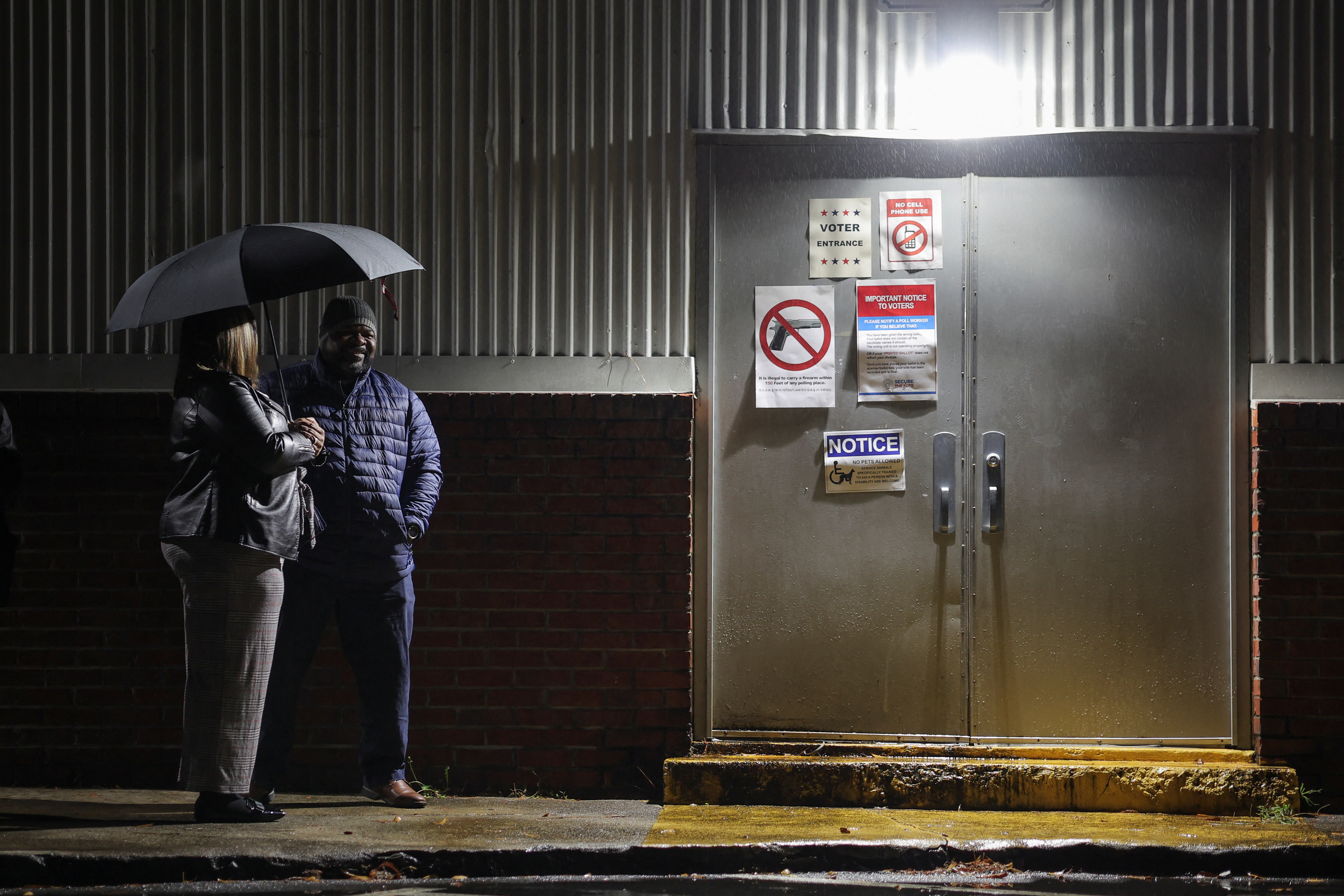
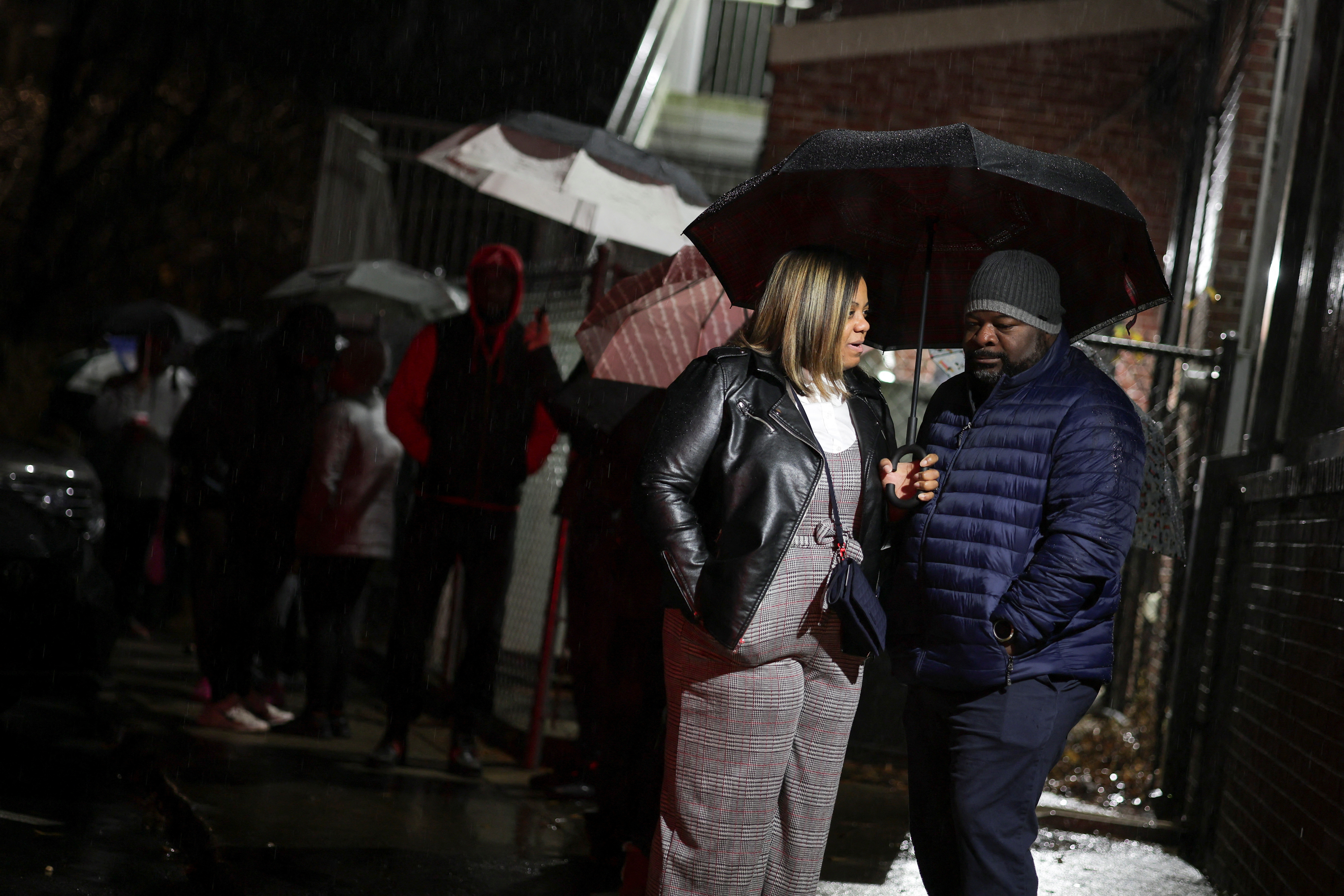
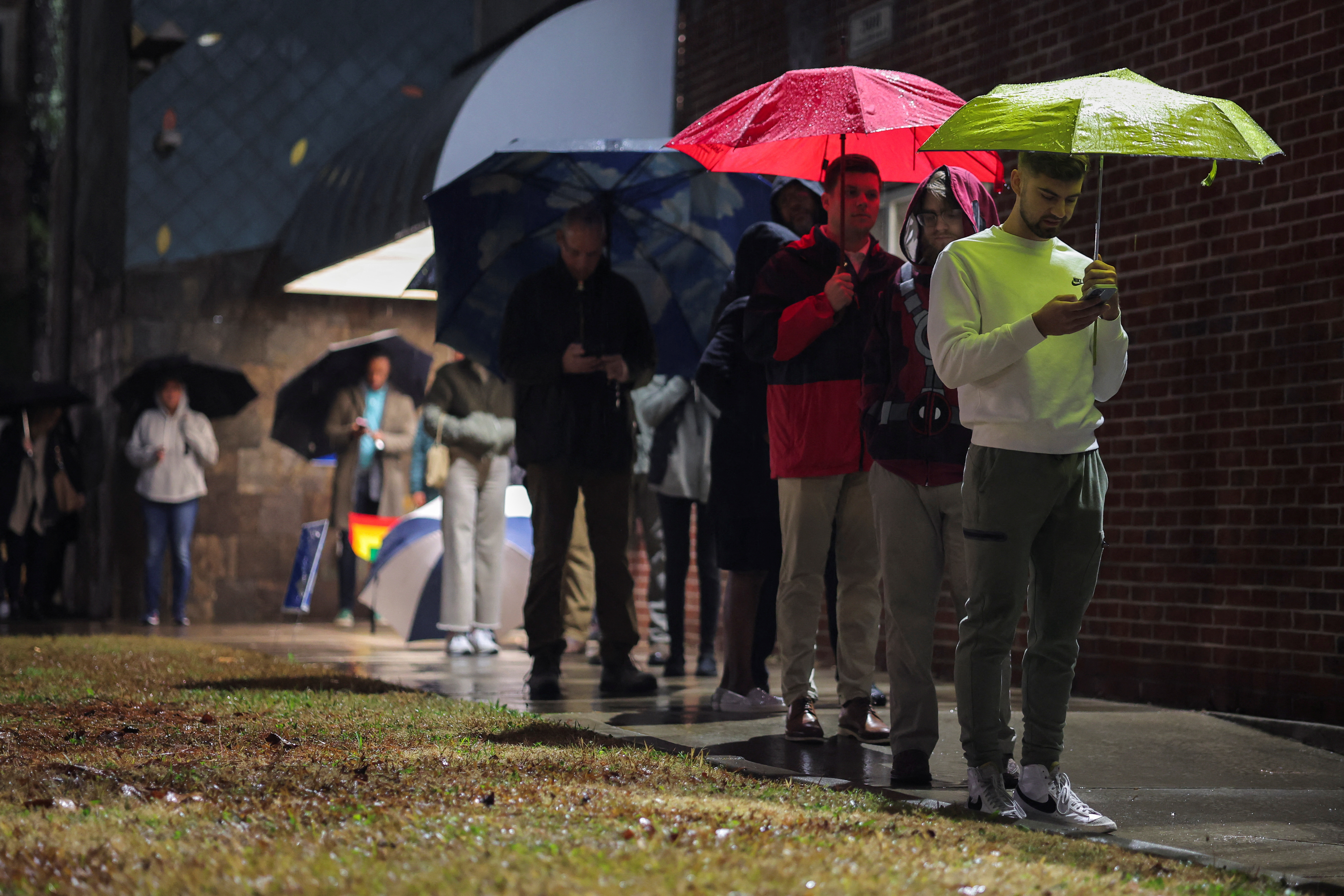
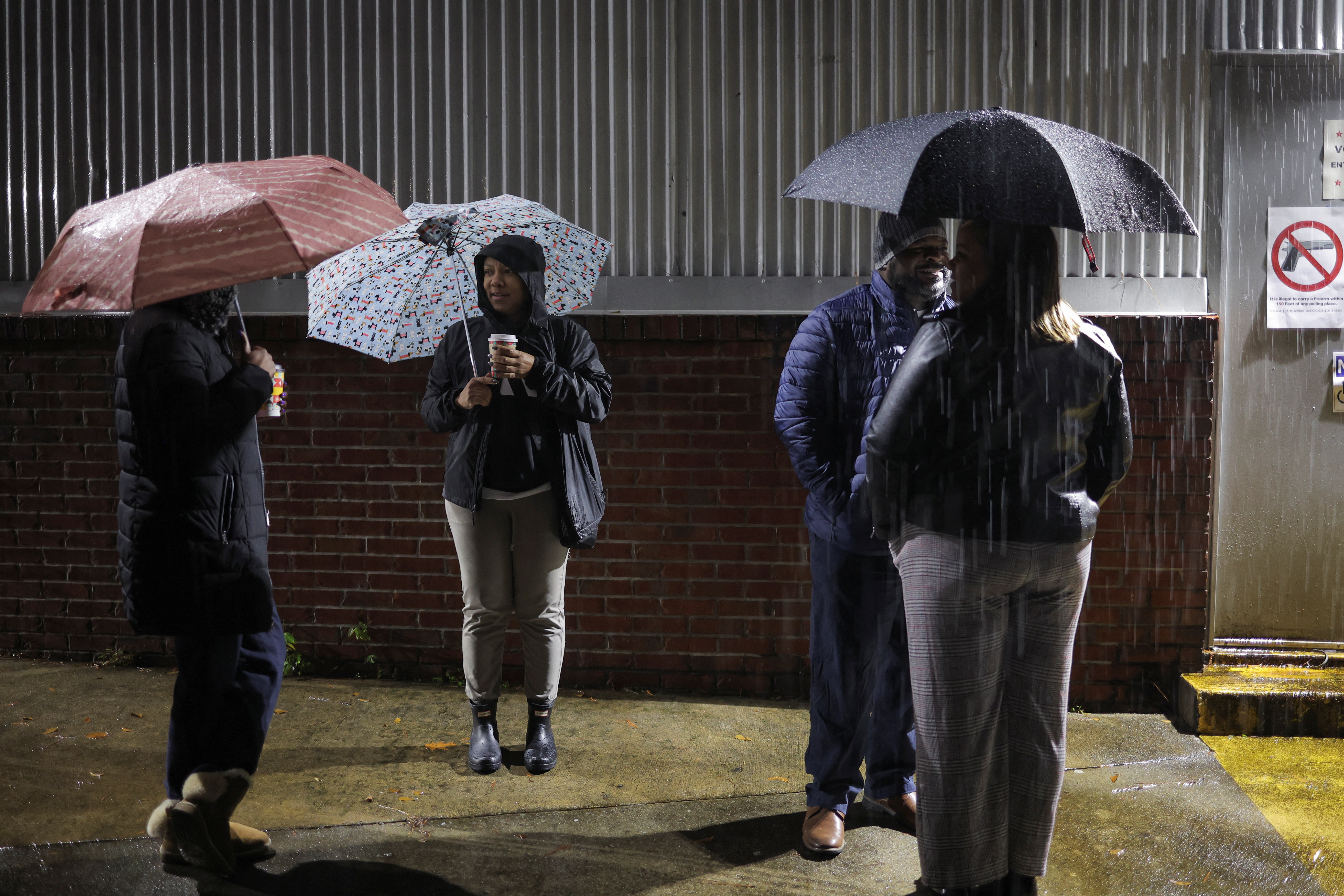
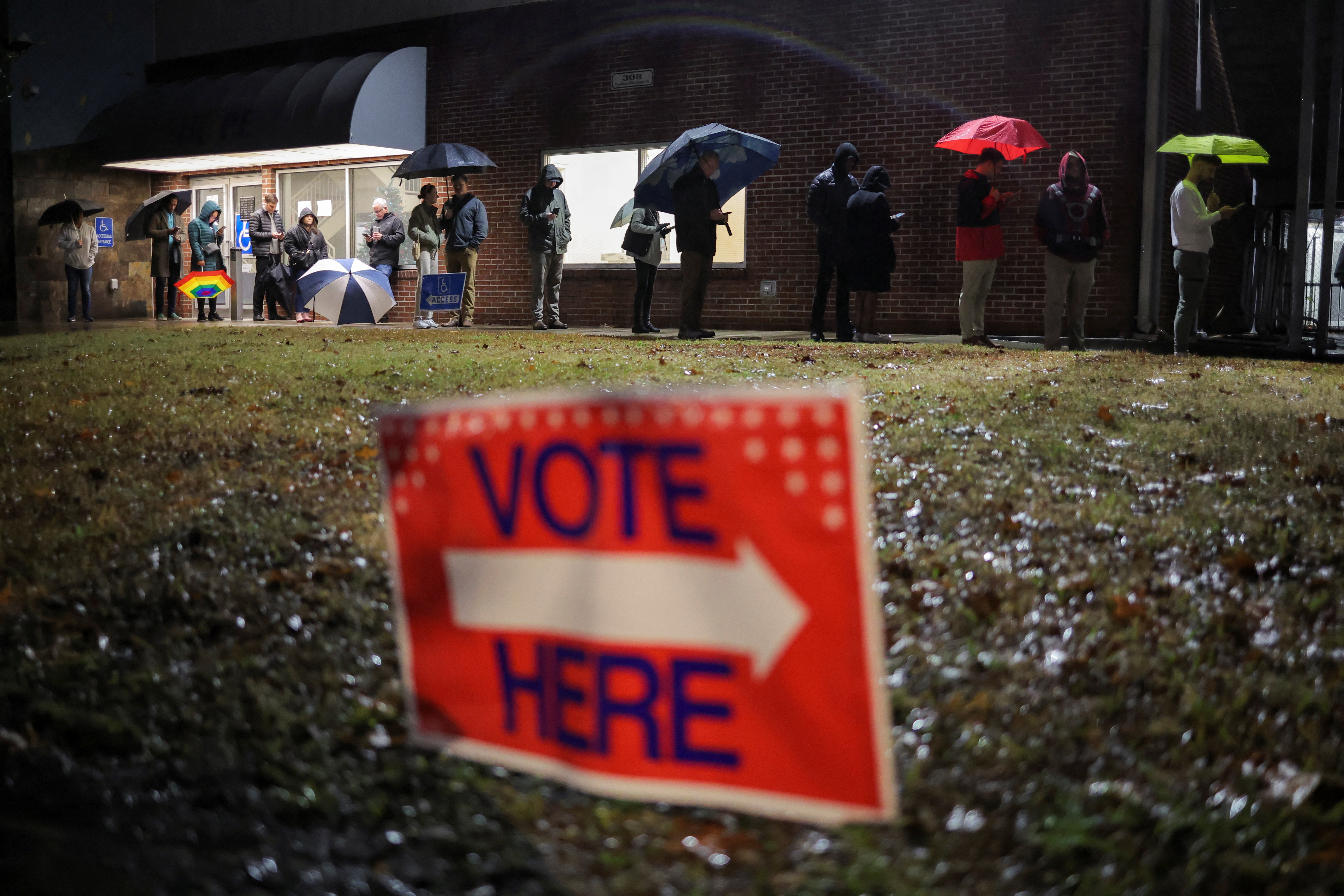
Local residents wait in line to cast their ballot during the runoff U.S. Senate election between Democratic Senator Raphael Warnock and his Republican challenger Herschel Walker in Atlanta, Georgia, U.S., December 6, 2022. REUTERS/Carlos Barria

Local residents wait in line to cast their ballot during the runoff U.S. Senate election between Democratic Senator Raphael Warnock and his Republican challenger Herschel Walker in Atlanta, Georgia, U.S., December 6, 2022. REUTERS/Carlos Barria

Local residents wait in line to cast their ballot during the runoff U.S. Senate election between Democratic Senator Raphael Warnock and his Republican challenger Herschel Walker in Atlanta, Georgia, U.S., December 6, 2022. REUTERS/Carlos Barria

Local residents wait in line to cast their ballot during the runoff U.S. Senate election between Democratic Senator Raphael Warnock and his Republican challenger Herschel Walker in Atlanta, Georgia, U.S., December 6, 2022. REUTERS/Carlos Barria

Local residents wait in line to cast their ballot during the runoff U.S. Senate election between Democratic Senator Raphael Warnock and his Republican challenger Herschel Walker in Atlanta, Georgia, U.S., December 6, 2022. REUTERS/Carlos Barria

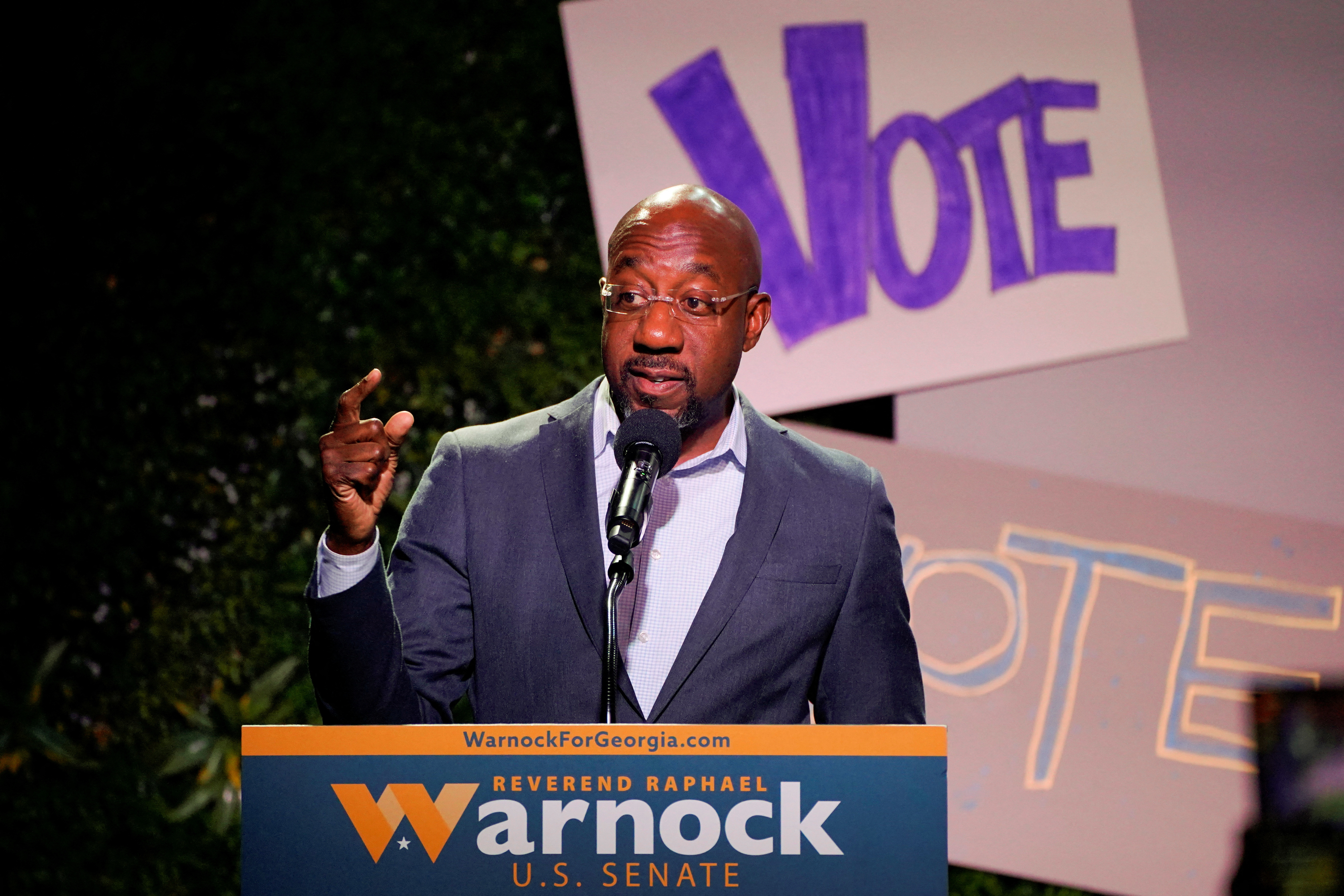
Reverend Raphael Warnock, Democratic Senator for Georgia, speaks during his final midterm runoff election campaign rally in Atlanta, Georgia, U.S., December 5, 2022. REUTERS/Cheney Orr


Categories
Audio Sources - Full Text Articles

Factbox: What legal problems does U.S. presidential candidate Trump face?

2022-12-06T22:07:33Z

Former U.S. President Donald Trump speaks at a rally to support Republican candidates ahead of midterm elections, in Dayton, Ohio, U.S. November 7, 2022. REUTERS/Gaelen Morse/File Photo

Donald Trump’s legal woes deepened on Tuesday when his real estate company was found guilty of carrying out a 15-year-long criminal scheme to defraud tax authorities, further coloring the former U.S. president’s 2024 re-election campaign.

Following Tuesday’s verdict, the New York state judge set a sentencing date for Jan. 13. The Trump Organization – which operates hotels, golf courses and other real estate around the world – faces up to $1.6 million in fines over the conviction.

The company had pleaded not guilty. Trump himself was not charged in the case.

While the fine is not expected to be material for a company of the Trump Organization’s size, the conviction by a jury could complicate its ability to do business by spooking lenders and partners.

Allen Weisselberg, the company’s former chief financial officer, had pleaded guilty and was required to testify against the Trump Organization as part of his plea agreement.

A lawyer for the Trump Organization, Alan Futerfas, vowed to appeal the verdict.

The special counsel overseeing two federal investigations has issued grand jury subpoenas to local election officials in Arizona, Michigan and Wisconsin as part of an inquiry into efforts to overturn the Republican former president’s loss in the 2020 U.S. election.

The subpoenas also sought communications involving a list of Trump’s attorneys during the 2020 campaign including Rudy Giuliani, John Eastman, Sidney Powell, Justin Clark, Jenna Ellis and Cleta Mitchell.

U.S. Attorney General Merrick Garland on Nov. 18, three days after Trump announced his 2024 presidential run, appointed Jack Smith special counsel to take over two Justice Department investigations. The other investigation focuses on Trump’s handling of sensitive government documents after leaving office.

The Justice Department is investigating a failed attempt by Trump allies to overturn the 2020 results by submitting batches of phony slates of electors – for the state-by-state system that determines presidential election winners – to the U.S. National Archives and trying to block Congress from certifying Democrat Joe Biden’s election victory.

The Justice Department is conducting a criminal investigation of Trump for retaining government records, including some marked as classified, after leaving office in January 2021.

FBI agents carried out a court-approved Aug. 8 search of Trump’s Mar-a-Lago estate. About 100 documents marked as classified were among the thousands of records seized. Investigators also are investigating possible obstruction of the probe.

Trump has accused the Justice Department of engaging in a partisan witch hunt.

A U.S. appeals court on Thursday dealt a blow to Trump, reversing a judge’s appointment of an independent arbiter to vet documents seized by the FBI from his Florida home and allowing all of the records to be used in a criminal investigation of the former president.

New York Attorney General Letitia James said in a civil lawsuit filed in September that her office uncovered more than 200 examples of misleading asset valuations by Trump and the Trump Organization between 2011 and 2021.

James, a Democrat, accused Trump of inflating his net worth by billions of dollars to obtain lower interest rates on loans and get better insurance coverage.

James is seeking to permanently bar Trump and his children Donald Jr., Eric and Ivanka Trump from running companies in New York state, and to prevent them and his company from buying new properties and taking out new loans in the state for five years.

James also wants the defendants to hand over about $250 million that she says was obtained through fraud.

Trump has called the attorney general’s lawsuit a witch hunt. A lawyer for Trump has called James’ claims meritless.

In a Manhattan federal court complaint, the former Elle magazine columnist E. Jean Carroll accuses Trump of battery at the Bergdorf Goodman department store in Manhattan 27 years ago and of lying by denying that he raped her.

Carroll, 78, brought the battery claim on Nov. 24 under New York’s Adult Survivors Act, a new law giving sexual assault victims a one-year window to sue alleged abusers, even if the statute of limitations has expired.

Trump, 76, has denied raping Carroll or knowing her at the time, and said she was “not my type.” His first denial in June 2019 prompted her to sue for defamation five months later.

Both sides are awaiting appeals court decisions addressing Trump’s argument that he was legally immune from Carroll’s first lawsuit because he had spoken in his capacity as president.

Carroll is seeking unspecified damages. To support her battery claim, she said Trump caused her lasting psychological harm, and left her unable to sustain a romantic relationship.

The chairman of the U.S. House of Representatives committee investigating the Jan. 6, 2021, attack on the U.S. Capitol by Trump supporters said on Tuesday that the panel had decided to make criminal referrals to the Department of Justice.

A referral does not necessarily mean that the Justice Department, which is conducting its own investigation of the riot, will decide to file charges.

The Democratic-led House Select Committee has spent more than a year investigating the attack on the Capitol after the then-Republican president gave a fiery speech falsely claiming that his defeat by Biden was the result of fraud.

Five people including a police officer died during or shortly after the riot and more than 140 police officers were injured. The Capitol suffered millions of dollars in damage and then-Vice President Mike Pence, members of Congress and staff ran for their lives amid the chaos.

A subcommittee of the panel has been studying whether to issue criminal referrals for Trump and some of his closest associates.

A special grand jury was empanelled in May for a Georgia prosecutor’s inquiry into Trump’s alleged efforts to influence that state’s 2020 election results.

The investigation focuses in part on a phone call Trump made to Georgia Secretary of State Brad Raffensperger, a Republican, on Jan. 2, 2021. Trump asked Raffensperger to “find” enough votes needed to overturn Trump’s election loss in Georgia.

Legal experts said Trump may have violated at least three Georgia criminal election laws: conspiracy to commit election fraud, criminal solicitation to commit election fraud and intentional interference with performance of election duties.

Trump could argue that his discussions were constitutionally protected free speech.

In a separate lawsuit, a California federal judge said on Oct. 19 that Trump knowingly made false voter fraud claims in a Georgia election lawsuit, citing emails the judge reviewed.


WP Radio
WP Radio
OFFLINE LIVE