Categories
Audio Sources - Full Text Articles

Barry Jones Is Spending Another Holiday Season on Death Row. Could It Be His Last?

More than six months have passed since the U.S. Supreme Court reinstated Barry Jones’s conviction and death sentence despite evidence of his innocence. In that time, Arizona has executed two more of Jones’s neighbors — three total in 2022. It has been “a very difficult time,” Jones’s longtime attorney Cary Sandman told a federal judge in September. At 64, having spent nearly half his life behind bars for a crime he insists he did not commit, Jones has struggled to find reasons to be hopeful.

Now there may be light at the end of the tunnel. On December 6, a settlement conference will take place at the federal courthouse in downtown Tucson. Jones will be transported from death row to attend. Unlike past hearings in his case, the proceedings will be closed to the public, comprising a series of negotiations between Jones’s legal team and attorneys representing the state. The Pima County Attorney’s Office, which first prosecuted Jones in 1995, will also attend.

Such meetings are common in civil disputes, which are frequently resolved through mediation. But they are unusual in death penalty cases. The decision to undertake the negotiation was made at a hearing earlier this year, where U.S. District Judge Timothy Burgess encouraged both parties to try to find a way to end the protracted legal fight. “I do think it would be in everybody’s best interest, including society’s best interest, if we can resolve this case,” Burgess said.

Burgess has presided over Jones’s case since 2016. Recently retired as the chief U.S. district judge for Alaska, he was appointed to the case due to a conflict of interest: One of Jones’s attorneys at trial had since become a federal magistrate judge, leading Arizona’s federal district judges to recuse themselves. The settlement conference will be overseen by a different Alaska judge, who will act as a mediator.

Jones was sent to death row in 1995 for killing and sexually assaulting his girlfriend’s 4-year-old daughter, Rachel Gray. The evidence against him was thin, based on a narrow time frame during which Jones was seen taking trips with Rachel in his work van the day before she died. At an evidentiary hearing in 2017, lawyers for Jones exposed Pima County investigators’ rush to judgment and presented powerful exculpatory evidence that his trial lawyers had failed to uncover. Most crucially, they called expert witnesses who said that Rachel’s fatal injuries could not have been inflicted so close to her death. In 2018, Burgess vacated Jones’s conviction. If not for the failures of his trial attorneys, Burgess wrote, there was “a reasonable probability that his jury would not have convicted him of any of the crimes” that sent him to death row.

Burgess ordered Arizona to retry or release Jones. Instead, the state attorney general appealed the decision all the way to the U.S. Supreme Court, arguing that under the federal Antiterrorism and Effective Death Penalty Act, Burgess should never have granted Jones the hearing that allowed him to present the new medical evidence. In a 6-3 ruling reversing the court’s own precedent, the justices agreed.

The decision was devastating for Jones, his family, and his legal team. It also dealt a huge blow to countless incarcerated people who had received poor lawyering at trial and in state post-conviction proceedings. In an article for the journal of the New York Bar Association, Sandman wrote that the decision “established a new precedent that will insulate many wrongful convictions and constitutionally tainted death sentences from federal review.” He called on Congress to reverse the ruling — and vowed to keep fighting for Jones.

Among those who have expressed dismay at the Supreme Court’s ruling is an unlikely voice: Rachel Gray’s older sister, Becky, who testified against Jones at his 1995 trial. In a two-part episode of the podcast “Conviction” released last month, Becky, now in her late 30s, told producers that she had begun to question Jones’s guilt after reading The Intercept’s coverage of the case. “For so long I hated this guy, and he could very well have been innocent,” Becky said. “And now, thanks to the Supreme Court, there’s not even anything that can be done.”

Becky’s recollections of Jones were consistent with what many others have shared with The Intercept and Jones’s legal team over the years. She described her mother, Angela Gray, as physically abusive — Gray was sentenced to eight years in prison for child abuse following Rachel’s death — while recalling Jones as patient with Rachel. “If she wanted to talk about anything, he would stop what he was doing and he would sit there and talk to her,” Becky said. Her little sister liked to watch Jones work in his van, she said. “I’m pretty sure she probably knew how to rebuild the transmission.”

A few days before Thanksgiving, lawyers representing the Innocence Network sent a letter to the Pima County Attorney’s Office. “We are writing to provide our perspective on the state’s ethical duties as it approaches the upcoming settlement conference,” the letter read. It noted Burgess’s conservative credentials; a former U.S. attorney appointed to the federal bench by George W. Bush, Burgess reviewed dozens of petitions from incarcerated people challenging their convictions and sentences during his tenure, granting relief in only one case: Jones’s.

More importantly, the letter emphasized the evidence that convinced Burgess to overturn Jones’s conviction in 2018. “While the state may have been largely unaware of much of that evidence when it made its initial charging decision and at the time of trial, its current knowledge of the evidence … triggers the ethical obligations of prosecutors to correct erroneous convictions and seek exoneration when there has been a miscarriage of justice.” This obligation is especially important when a person’s legal options have been effectively exhausted, the letter went on. Prosecutors “are duty bound by their professional ethics, and hopefully most would feel bound by their own conscience, to take affirmative action to correct the taint of an unjust conviction.”

Until now, the Pima County Attorney’s Office has declined to intervene, insisting that there is little it can do as long as Jones’s case remains in the hands of the Arizona attorney general. On Thursday, the new head of the Pima County Conviction and Sentencing Integrity Unit, Brad Roach, maintained that the attorney general retains jurisdiction in the case. But he acknowledged that “there have been serious questions raised” and said that his office is committed to a just outcome. The Pima County attorney is “happy to do whatever it takes to make sure justice is done in this case.”

In the meantime, Jones is spending another holiday season on death row. On Thanksgiving the prison served him turkey and a piece of pie. During a visit two days later, his daughter, Brandie, broke the news that Jones’s 35-year-old nephew had recently died. He put on a strong face, she said. “But I could see that deep down it was hurting him more than he was letting on.” Although Jones does not seem optimistic about the settlement conference, it could be his best chance of reuniting with his family in the coming year. “I’m trying to keep his hopes up.”

The post Barry Jones Is Spending Another Holiday Season on Death Row. Could It Be His Last? appeared first on The Intercept.

Categories
Audio Sources - Full Text Articles

OPEC+ heading for no policy change in Sunday talks – sources

2022-12-04T10:04:21Z

An OPEC sign is seen on the day of OPEC+ meeting in Vienna in Vienna, Austria October 5, 2022. REUTERS/Lisa Leutner

OPEC+ is poised to stick to its oil output targets when it meets on Sunday, four OPEC+ sources said as the alliance gathers after the Group of Seven (G7) nations agreed a price cap on Russian oil.

OPEC+, which comprises the Organization of the Petroleum Exporting Countries (OPEC) and allies including Russia, angered the United States and other Western nations in October when it agreed to cut output by 2 million barrels per day (bpd), about 2% of world demand, from November until the end of 2023.

Washington accused the group and one of its leaders, Saudi Arabia, of siding with Russia despite Moscow’s war in Ukraine.

OPEC+ argued it had cut output because of a weaker economic outlook. Oil prices have declined since October due to slower Chinese and global growth and higher interest rates.

On Friday, G7 nations and Australia agreed a $60 per barrel price cap on Russian seaborne crude oil in a move to deprive President Vladimir Putin of revenue while keeping Russian oil flowing to global markets.

Moscow said it would not sell its oil under the cap and was analysing how to respond.

Many analysts and OPEC ministers have said the price cap is confusing and probably inefficient as Moscow has been selling most of its oil to countries like China and India, which have refused to condemn the war in Ukraine.

OPEC met virtually on Saturday without Russia and allies and did not discuss the Russian price cap, sources have said.

“We will keep production as it is,” one of the sources said on Sunday. OPEC+ begins talks at 1100 GMT with a meeting of the advisory Joint Ministerial Monitoring Committee (JMMC) panel, followed by the full ministerial conference.

Categories
Audio Sources - Full Text Articles

Quentin Tarantino’s Cinema of Vibes

If you’ve ever listened to Quentin Tarantino talk—while on a late-night couch, say, or when he’s visiting a podcast—you will recognize the tone and cadence of the writing in Cinema Speculation. The book feels less typed out than dictated, as if he finally has the captive audience he’s always yearned for and he’s got a lot of things to get off his chest.

I mean this in the best way possible, as Quentin Tarantino is one of the most interesting filmmakers on the planet. He’s an inveterate raconteur, less conversationalist than lecturer, one whose head is overflowing with trivia about which Los Angeles dives were playing which cut-rate exploitation pictures at what point in his childhood. And much of the book’s early going is concerned with those dives and those exploitation flicks, as well as the cineaste’s own earned bravado.

“Because I was allowed to see things the other kids weren’t, I appeared sophisticated to my classmates,” he says after recounting being taken to the theater by his folks (and, later, his mom and her suitors) to see films like M*A*S*H and The French Connection as a tween. “And because I was watching the most challenging movies of the greatest movie-making era in the history of Hollywood, they were right, I was.”

Again, if you’re familiar with the man’s voice, you can practically hear him saying those lines, perhaps emphasizing “because” in each sentence, eyebrows arching and voice inflecting a notch higher on the “they were right.” It’s almost eerie. I loved every page of it.

Cinema Speculation is part memoir, part critical essay, part lament for a past that has departed. Early on he discusses his mother’s theory of violence onscreen—that the act itself is less important than the context in which it occurs—and notes that “this would be a conversation I would have for the rest of my life,” this push and pull between decency and outrage, between scolds who think you shouldn’t blow a guy’s head off in the back of a car and cineastes who appreciate the dark humor in it.

This book is for the appreciators; the scolds can go stew somewhere else.

There are two keys to understanding Tarantino’s body of work in this book, two passages that turn the tumblers and help you make sense of his artistic project. Passage the first:

Bullitt is about action, atmosphere, San Francisco, [director Peter] Yates’ great location photography, Lalo Schifrin’s jazzy score, and Steve McQueen, his haircut and wardrobe.

Nothing else matters.

Tarantino has always been a master of the Cinema of Vibes, of making sure what we’re watching onscreen looks cool and composed. Vincent Vega cruising in his convertible as he zones out on some high-grade heroin while The Centurions’ “Bullwinkle Part II” plays in the background; Bobby Womack’s “Across 110th Street” playing as Jackie Brown drives out of Max Cherry’s life; the melodramatic strings and vocals of “Malagueña Salerosa” after the Bride has been reunited with her daughter at the end of Kill Bill Vol. 2. Some folks criticized Once Upon a Time … in Hollywood for being extravagantly long; certainly, we didn’t need shot after shot of Brad Pitt driving through late-1960s Los Angeles, did we? But this misses the (or at least a) point of the film, which was to re-create that city’s vibe, to suffuse you in it, to see what was lost when the horror of the Manson murders infected La La Land.

The next section comes from a chapter in which Tarantino gushes about the Sylvester Stallone film Paradise Alley—the movies he chooses to praise, the movies he chooses to damn are always amusing—and why it would be impossible for modern audiences to stumble onto Rocky today and receive it the way it was received on initial release. Passage the second:

But the real reason that the film Rocky could never have the impact it did in 1976 is because to have that same impact, you had to live through the tough, gritty, downbeat, pessimistic films of the early seventies to be floored by the feel-good catharsis of Rocky. You had to live in a world where a movie like Papillon was a Hollywood blockbuster.

When even crowd-pleasing comedies like The Longest Yard included the brutal death of characters.

In a Hollywood that had forsaken the Old Hollywood happy ending as bullshit propaganda from “the Man“.

When the senseless death of your hero at the climax was the vogue (Easy Rider, The New Centurions, Electra Glide in Blue, Hustle). When even popular audience movies like Three Days of the Condor counted on a certain amount of cynicism and paranoia from the popcorn eaters.

Consider that passage in the context of Tarantino’s body of work. Ever since Reservoir Dogs—a movie that echoed early-’70s cynicism, with its tragic Mexican standoff ending, and thus played perfectly with the early-’90s Sundance set trying to recapture the spirit of New Hollywood—Tarantino has made movies in which the “good guys,” such as they are, “win.” Sometimes that victory is mixed (in Pulp Fiction one of our black-suited hitmen buys it on a toilet, while the one who pledged to walk the righteous path lives on) or bittersweet (again, Jackie Brown driving out of Max’s life). More recently these victories have been gloriously bloody and done in a way that either literally (in the case of Inglourious Basterds and Once Upon a Time … in Hollywood) or figuratively (Django Unchained) rewrites history.

It will be amusing to see how many podcasts this book spawns; I can envision some brave soul attempting to do an episode on every—single—movie Tarantino mentions, even in passing. But one of the joys of Cinema Speculation is seeing the artistic underpinnings of Tarantino’s work; he’s a master of pastiche, and these are the raw materials.

It’s fun to read Tarantino push back against the notion that Dirty Harry is some brand of fascist agitprop while simultaneously understanding the law-and-order appeal it held for audiences (“it is also a plea for New Laws for New Crimes. The serial killer phenom to be exact”). He has an intuitive sense of what works and why, as in his criticism of The Getaway’s choice of actor for the villain (“it’s not that he’s a bad actor or gives a bad performance. It’s more I find his performance physically repellent. … It’s still a movie. I still should want to watch the movie and enjoy it”).

And in one of the nicest chapters of the book, Tarantino sings the praises of Kevin Thomas, the Los Angeles Times’s second-string critic whose focus on genre films was both generous and serious-minded. “It would appear most critics writing for newspapers and magazines set themselves up as superior to the films they were paid to review,” Tarantino writes. “Which I could never understand, because judging from their writing, that was clearly not the case.” Thomas, however, had a keen and discerning eye; a good review from him could help a director get out of Roger Corman’s ghetto and into the world of “real” movies. Praise for movies like Caged Heat, The Howling, and Nomads helped a bevy of Hollywood talents (respectively: Jonathan Demme, Joe Dante, and John McTiernan) get going.

Filmmaker, audience, and critic: We all have our part to play. And some of us, like Mr. Tarantino himself, can play all three parts just about perfectly.

Cinema Speculation

by Quentin Tarantino

Harper, 400 pp., $35

Sonny Bunch is culture editor of the Bulwark, where he hosts the podcasts Across the Movie Aisle and The Bulwark Goes to Hollywood, and is a contributing columnist at the Washington Post.

The post Quentin Tarantino’s Cinema of Vibes appeared first on Washington Free Beacon.

Categories
Audio Sources - Full Text Articles

Tales from the Bo Zone

Sportswriter Bill Simmons once responded to a reader mailbag question with a new phrase: “The Tyson Zone,” the collection of celebrities about which one could hear any story and believe it to be true. Simmons listed, alongside Tyson, famous folks like Andy Dick, Paris Hilton, and Tara Reid (this was 2004). In the years since, the Zone has expanded to include the likes of Tom Cruise, Rip Torn, and Donald Trump.

The exploits of Tyson Zone entrants must be, for the celebrity to qualify for induction, unrelated to that member’s profession. Athletes on the list like Dennis Rodman and Ricky Williams are known for their colorful personal lives rather than mythical in-game performance. A new title, then, must be created for legendary feats like Babe Ruth’s called shot, Michael Jordan’s flu game, and Mickey Mantle’s 660-foot home run.

After reading Jeff Pearlman’s The Last Folk Hero: The Life and Myth of Bo Jackson, one might be compelled to name that club “The Bo Zone.”

Pearlman is no stranger to larger-than-life characters and stories that may be too good to be true. Though his 2014 book Showtime: Magic, Kareem, Riley, and the Los Angeles Lakers accurately reflected real-world events, the cable television show for which it serves as inspiration, Winning Time: The Rise of the Lakers Dynasty, has drawn criticism from former players for alleged looseness with the truth.

But, just as many reviewers believe the show’s possible factual discrepancies are more exciting than the truth, the stories Pearlman relays about Bo Jackson are worth believing simply because they are amazing. And Pearlman knows Bo.

To understand what Bo Jackson was, Pearlman contends, it is important first to understand what Bo Jackson was not. An undisciplined hitter and oft-unmotivated running back with an Iversonian aversion to practice and a penchant for taking himself out of some of the biggest games of his college football career, Jackson was not, as sports fans would say, a gamer. He did not have a killer instinct, he was not a mainstay in the playoffs, and he did not have a long, Hall of Fame-worthy career in either sport he played professionally.

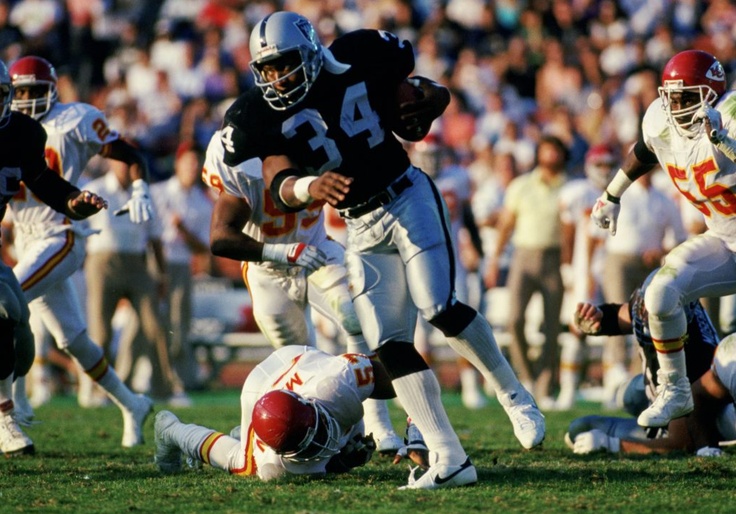
The Last Folk Hero is not a book about an athlete. It’s a book about a superhero. A man who, despite never lifting weights with any regularity, could bench press more than anyone else on the Los Angeles Raiders.

Who stood waist-deep in a pool and jumped, flat-footed, out onto the pool’s edge.

Who threw a football 140 feet in the air and hit the New Orleans Superdome scoreboard.

Who destroyed the legend of Brian “The Boz” Bosworth, a cult figure in his own right, by carrying him into the end zone to score a touchdown.

Who was so dominant the Tecmo Super Bowl developers made his virtual rendering virtually unstoppable.

Near the biography’s beginning, Pearlman recounts an anecdote that encapsulates his titular hero. On a September 1991 flight from Southern California back to Chicago, an engine on the 737 carrying the White Sox players and coaches caught fire. Fittingly, there are two competing versions of what happened next.

Former professional baseball player Joey Cora—in a story several teammates back up—remembers Jackson exiting the cockpit, swaggering toward the back of the plane, and letting everyone on board know they’d be alright.

Backup catcher Matt Merullo told Pearlman a different story, this one also confirmed by members of the ’91 White Sox. In this edition, Jackson—whose hip had famously deteriorated to the point where doctors thought he might never be able to walk again—burst into a dead sprint toward the front of the plane and helped land it himself.

No, those two stories could not both be true. But, Pearlman argues, those two stories were Bo Jackson.

Consider Jackson’s stunning 1989 laser from the warning track to home plate, gunning down Harold Reynolds. All available videos open with Seattle Mariner Scott Bradley at the plate, roping a double into left field. The tape shows Jackson fielding the ball off the wall, then Reynolds rounding third base and heading for home. It shows a ball coming flying out of nowhere, and the Kansas City Royals’ catcher tagging Reynolds out at the plate.

It does not show Jackson throwing the ball.

Pearlman is absolutely fine with this. In fact, as he says, it only magnifies the supernova that was Bo Jackson. The Last Folk Hero is meticulously researched, with hundreds of interviews and an impressive amount of Alabama high school sports statistics. But for all the information packed between its covers, how much actually did happen is ambiguous, and Pearlman himself acknowledges as much numerous times over his book’s almost-500 pages.

The ambiguity is what makes things interesting. It’s what makes Jackson’s “Last Folk Hero” moniker fit as snugly as the Superman costume he wore for a college photo shoot.

It’s what places him squarely inside The Bo Zone.

The Last Folk Hero: The Life and Myth of Bo Jackson

by Jeff Pearlman

Mariner Books, 496 pp., $29.99

Zach Kessel is a student at Northwestern University’s Medill School of Journalism, where he serves as president of the campus Alexander Hamilton Society chapter.

The post Tales from the Bo Zone appeared first on Washington Free Beacon.

Categories
Audio Sources - Full Text Articles

Michael Novakhov retweeted: Разведка США предсказала дальнейшее снижение темпов войны в Украине: bbc.in/3Hq9Zv5

Michael Novakhov retweeted:

Разведка США предсказала дальнейшее снижение темпов войны в Украине:

bbc.in/3Hq9Zv5

Categories
Audio Sources - Full Text Articles

idahomurders.org/cbmiwmh0dhbzoi…

idahomurders.org/cbmiwmh0dhbzoi…
Categories
Audio Sources - Full Text Articles

idahomurders.org/cbmie2h0dhbzoi…

idahomurders.org/cbmie2h0dhbzoi…
Categories
Audio Sources - Full Text Articles

idahomurders.org/layout-of-hous…

idahomurders.org/layout-of-hous…
Categories
Audio Sources - Full Text Articles

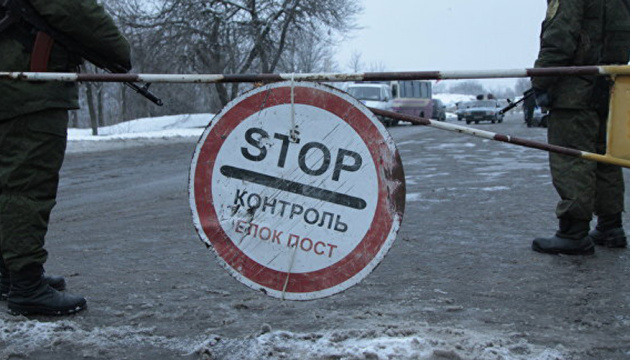
Occupiers blocking movement of civilians through Vasylivka checkpoint in occupied Zaporizhia region

630_360_1670142272-916.jpg

Russian troops for quite a few days blocked a convoy of civilian vehicles from crossing through a checkpoint in occupied Vasylivka, Zaporizhia location, where people today have been subjected to comprehensive checks and even beaten.

That is according to Melitopol Mayor Ivan Fedorov, Ukrinform experiences.

“The occupiers for nearly two days held hostage civilians who ended up making an attempt to pass via the enemy checkpoint in Vasylivka. But this terror was followed by one more terror. As civilians expended the evening in Vasylivka, out in the cold, 8 autos were being never ever allowed to cross,” the mayor wrote.

According to Fedorov, some people today were being deported towards Zaporizhia, some were taken to the commandant’s office environment of occupied Melitopol prior to getting returned to Vasylivka.

Study also: Russia seeks talks to reduce political stress on Kremlin, get ready a different offensive

“The orcs used a complete inspection to all people, checking them also nervously. Actual physical force was applied to some peaceful, unarmed inhabitants – they ended up crushed with rifle butts,” he added.

Following two times of unprovoked terror, individuals had been forced to return to Zaporizhia.

It was earlier noted that on December 2, the Russians forced people today who were touring from Zaporizhia to guidance their households in occupation to expend the night on the roadside in sub-zero temperatures.

Source link

The post Occupiers blocking movement of civilians through Vasylivka checkpoint in occupied Zaporizhia region appeared first on Ukraine Intelligence.

Categories
Audio Sources - Full Text Articles

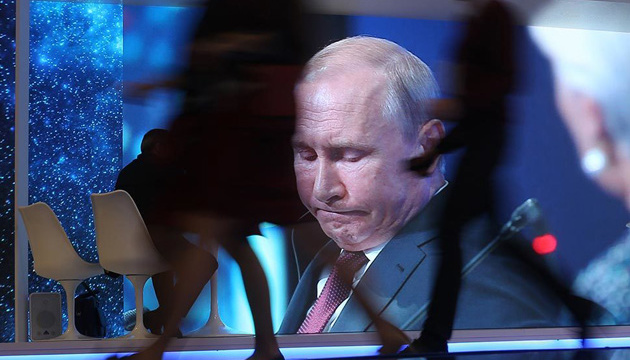
“Increasingly difficult” for Moscow to maintain even tacit public approval of war

630_360_1581672301-180.jpg

Given that Russia is unlikely to make any significant gains on the battlefield in the following number of months, it will be significantly tricky for the Kremlin to preserve even tacit Russian approval of the war on Ukraine.

That is according to a summary the British Ministry of Protection posted on Twitter Sunday, Ukrinform experiences.

In accordance to update, modern polls show that general public guidance for the “unique navy procedure” (which is how the war is referred to in Russia – ed.) is shrinking substantially.

British intelligence cites data gathered by Russia’s Federal Safety Support for domestic use and posted by impartial Russian media, which demonstrate that 55% of Russians favor peace talks with Ukraine, and only 25% support continued conflict.

Examine also: Chance of Belarus army’s participation in Russia’s war on Ukraine stays very low – ISW

These effects are reliable with the details of the Oct survey, when 57% of the respondents declared the require for negotiations, while in April, about 80% of Russians supported a navy procedure versus Ukraine.

“Despite the Russian authorities’ efforts to implement pervasive control of the details surroundings, the conflict has become significantly tangible for a lot of Russians considering that the September 2022 ‘partial mobilisation’. With Russia unlikely to realize important battlefield successes in the next a number of months, preserving even tacit acceptance of the war among the inhabitants is possible to be ever more difficult for the Kremlin,” British intelligence explained.

Read also: Putin’s war is lead to, not result of NATO enlargement – Austin

In a prior update by the British Ministry of Protection, it was documented that the offensive of Russian troops around Bakhmut, inspite of the limited operational benefit of this city and considerable Russian losses, may possibly reveal that the capture of Bakhmut has develop into primarily a symbolic political goal for Russia.

Source link

The post “Increasingly difficult” for Moscow to maintain even tacit public approval of war appeared first on Ukraine Intelligence.

WP Radio
WP Radio
OFFLINE LIVE