How did the expression “our answer to Chamberlain”? 🚩 our answer to Chamberlain expression 🚩 Different eng.kakprosto.ru/how-846270-how…

 The Brooklyn Times - bklyntimes.com
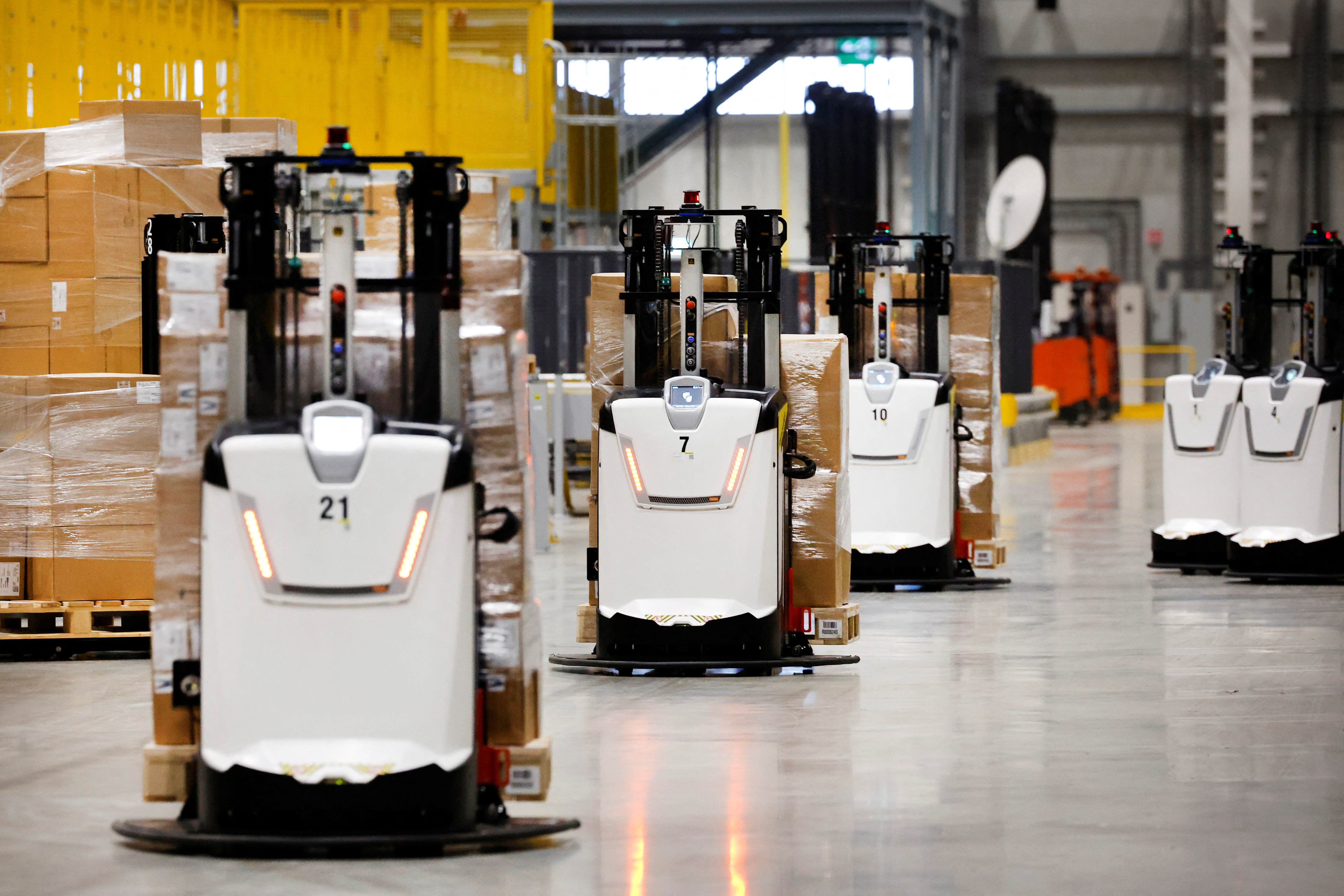
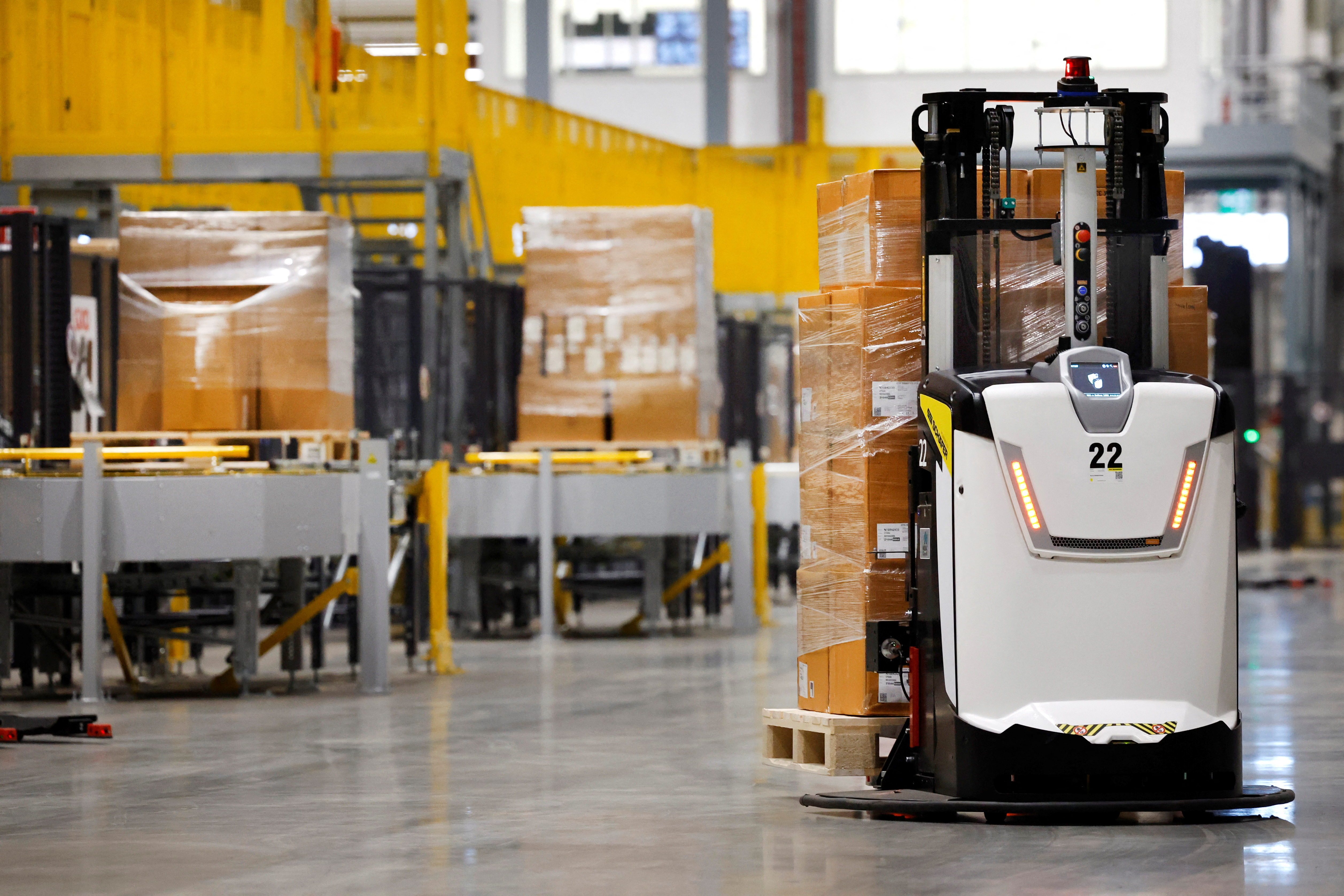
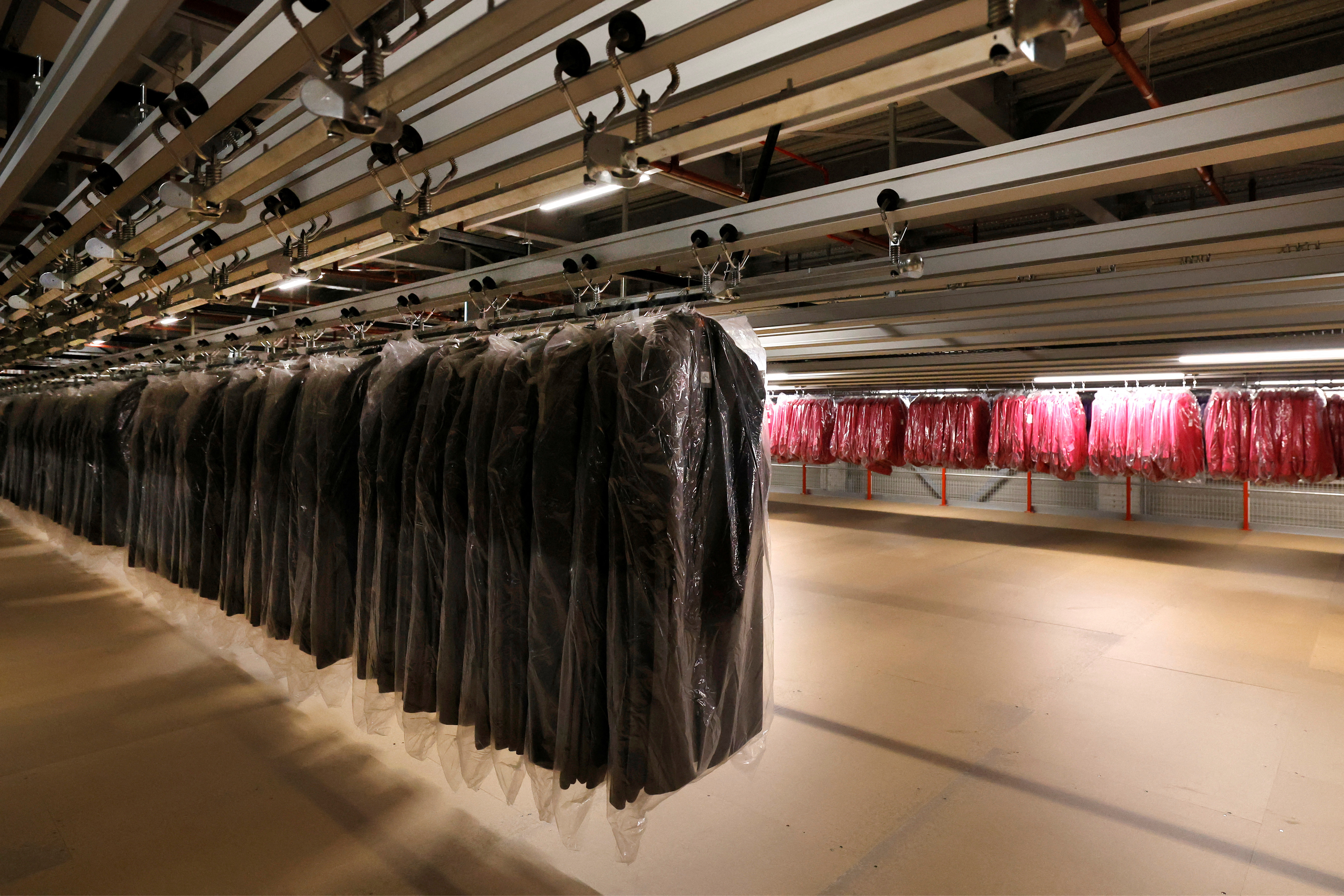
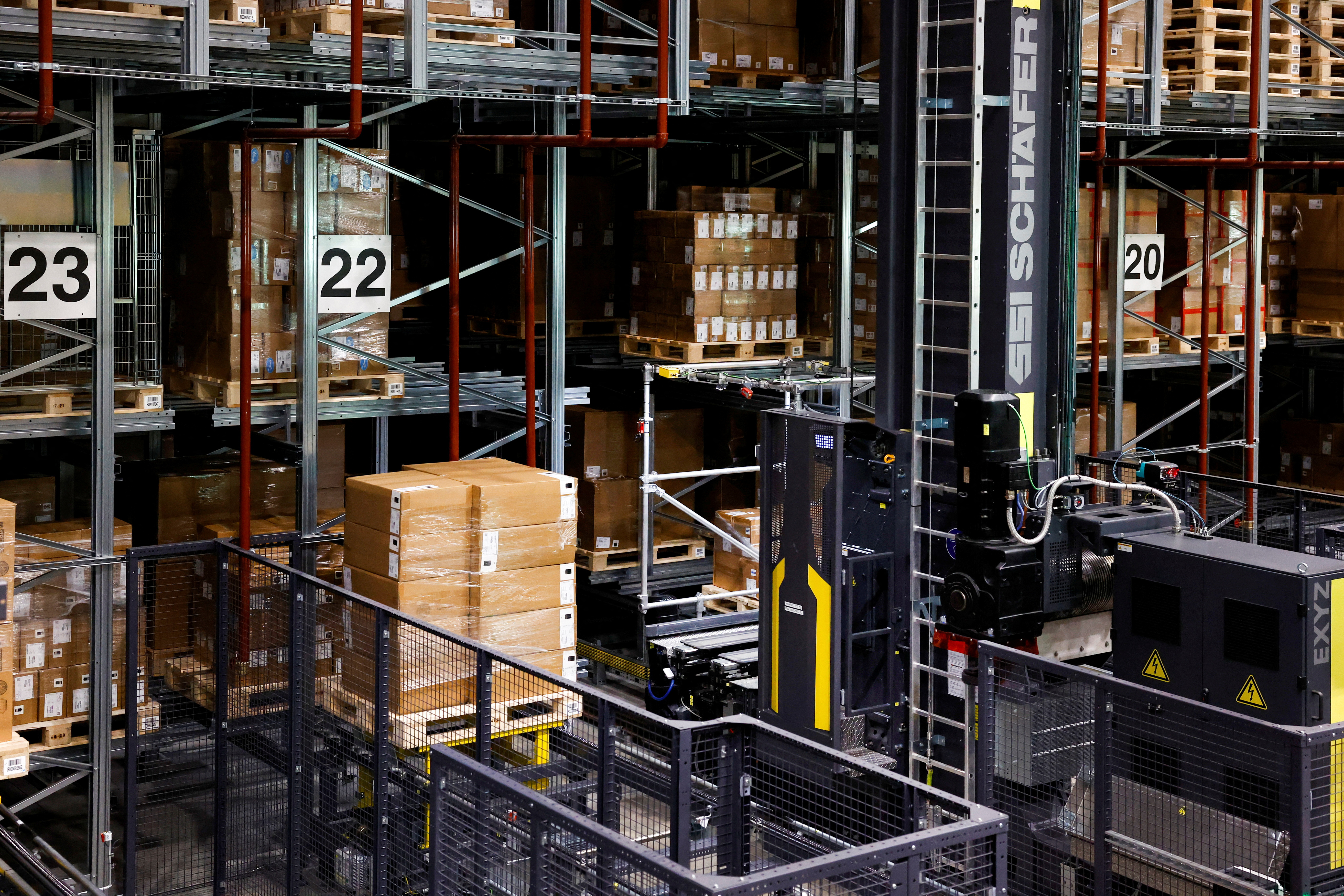
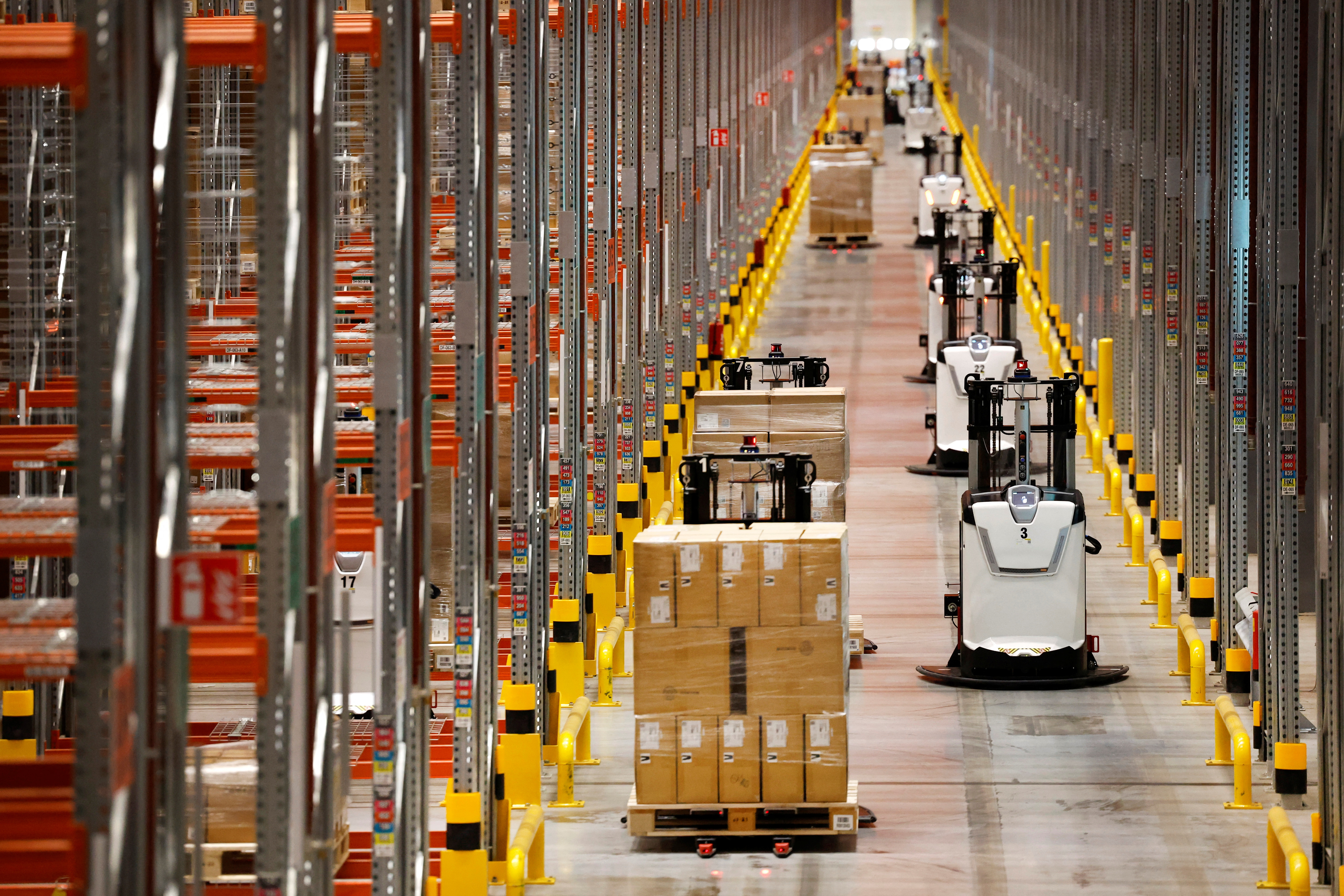
At a vast warehouse in the southern Dutch city of Roosendaal, automated cranes and driverless vehicles silently stack clothes for the French and Italian stores of retailer Primark, reducing the need for hard-to-come-by labour.
With goods packed more densely up to its roof, the new warehouse, which spans the size of over 15 football fields, reduces the need for extra sites – and workers – leading in time to a lower cost base.
While retail has been slower to adopt automation than sectors such as autos and electronics, it has been picking-up the pace – from the introduction of basic self check-out tills in stores to the use of robots and AI in supply chains.
Now tight labour markets, rising wages and consumer spending pressure are forcing the industry to go further.
Global installations of industrial robots grew 31% in 2021 year-on-year, while sales of service robots rose 37%, with the retail sector a significant driver of both, according to the International Federation of Robotics.
Mark Shirley, head of logistics at Irish-founded Primark, said the 25 million euros ($26 million) investment in the Roosendaal site’s automation would deliver an 8 million euros per year benefit from year four, in addition to savings from not having to lease another warehouse.
He estimates the use of automated cranes rather than manual fork lift trucks has increased the site’s efficiency by 80%.
And crucially, the use of autonomous vehicles means the company no longer has to compete in the extremely tight Dutch labour market, a challenge felt in many advanced economies.
“When you take the industry as a whole, people are moving that way to mitigate their labour risks,” Shirley told Reuters.
He estimates the retail industry is 40% automated, but sees that jumping to 60-65% over the next three to four years.
The march of the robots can be seen in fashion stores and food shops globally as an industry that employs millions grapples with the cost of rising wages, energy and raw goods.
On top of that, customers are reining in spending, with Amazon (AMZN.O), the world’s biggest online retailer, warning that shopping budgets were tight, particularly in Europe.
Across the region different retailers are taking different approaches. Carrefour (CARR.PA), Europe’s largest food retailer, has vowed to cut costs and simplify its ranges while Tesco (TSCO.L), Britain’s biggest, has accepted a hit to its profits.
In clothing, Zara-owner Inditex (ITX.MC) has been hiking prices to counter soaring costs while Primark-owner AB Foods (ABF.L) said the low-cost fashion retailer would limit price increases, despite inflation hitting double-digits in many of its markets, because customers could not afford to pay any more.
That makes automation even more important.
While processes at online retailers are largely automated, vast parts of a traditional retailer’s operations are still carried out manually, according to consultants at McKinsey.
“We’re at a stage where technology is getting better and cheaper and the case for automation in some of those areas just becomes much more compelling,” said Anita Balchandani, who leads their consumer practice in Britain.
Looking at the fashion industry, McKinsey expects fashion companies to double investment in technology from 1.6% to 1.8% of their revenue in 2021 to between 3.0% and 3.5% by 2030.
It says those fashion brands which fully integrate digital processes could cut by half the time it takes to get a product to market. That in turn could lead to an 8% rise in the sales of full-price goods, and a 20% drop in manufacturing costs.
Those same forces are driving automation in the food retail sector, with companies investing in cleaning robots, electronic shelf edge labels, and in technology that helps them understand real time stock levels and manage replenishment.
British online grocery pioneer Ocado (OCDO.L) is riding the wave, selling its automated warehouses and lightweight robots to retailers in the United States, Europe and Asia, hoping to eventually automate the entire process from farm and factory gate to a shopper’s fridge.
At the Walmart (WMT.N) owned Sam’s Club chain in the United States almost 600 robots developed by Brain Corp both clean store floors and scan shelves to check stock levels and prices.
“Retailers are saying ‘robots are the future,'” Michel Spruijt, Brain Corp’s chief revenue officer, told Reuters, adding that the shift could “free up workers from tedious” tasks. His company also provides robotics for Schnucks, Kroger, Carrefour and Albert Hypermarkets.
The renewed focus on automation provides opportunities for logistics groups, robotics firms and the likes of Amazon.
While it has grabbed headlines with stores using cameras to remove the need for a checkout till, its Amazon Web Services unit also worked with groups including Adidas and Zalando to quickly scale-up popular products and drive sales.
Some trade unions have, however, pushed back on automation. Shopworkers’ union USDAW in the UK said employers were all too often wasting money on technology that does not work properly and were not providing the necessary training.
And some caution that given fast changing markets large scale automation won’t work for everyone.
Dan Myers, UK and Ireland managing director of freight firm XPO Logistics, said retailers investing tens of millions of pounds for a payback of up to a decade needed to be certain their business model would not change in the meantime.
“There is always a trade off between the agility and flexibility of a human approach versus the efficiency of an automated approach,” he said.
($1 = 0.9703 euros)
Islamic State (IS) militant leader Abu al-Hassan al-Hashemi al-Quraishi, who was killed in mid-October in Syria, blew himself up after he and his aides were surrounded by local fighters in the town of Jasem, fighters involved in the clash told Reuters.
The U.S. military said on Wednesday he was killed in an operation carried out by the rebel Free Syrian Army (FSA) in northwestern Deraa province.
The province was brought under the control of the Syrian army following Russian- brokered reconciliation agreements in 2018 that gave control of southern Syria back to Damascus.
Quraishi and his aides had been discovered in a secret hideout in a house, said the sources, who included Syrian Free Army fighters, and relatives of comrades who died in clash, as well as residents of Jasem.
“The leader and a companion blew themselves up with suicide belts after our fighters succeeded in storming their hideout,” said Salem al Horani a resident of Jasem and former fighter who participated in the siege of the three houses where the IS cell was discovered.
The FSA had received backing from the West and Gulf states until they withdrew support in 2018, but its fighters remained in the area after the reconciliation deals under which they handed over heavy weapons but were allowed to keep light arms.
Islamic State has selected Abu al-Hussein al-Husseini al-Quraishi as its new leader, said a spokesman for the group. He said Quraishi was killed while “fighting enemies of God”, without elaborating.
Islamic State emerged from the chaos of the civil war in neighbouring Iraq and took over vast swathes of Iraq and Syria in 2014. Former IS caliph Abu Bakr al-Baghdadi declared an Islamic caliphate from a mosque in the northern Iraqi city of Mosul that year and proclaimed himself caliph of all Muslims.
Islamic State’s brutal rule, during which it killed and executed thousands of people in the name of its narrow interpretation of Islam, came to an end in Mosul when Iraqi and international forces defeated the group there in 2017.
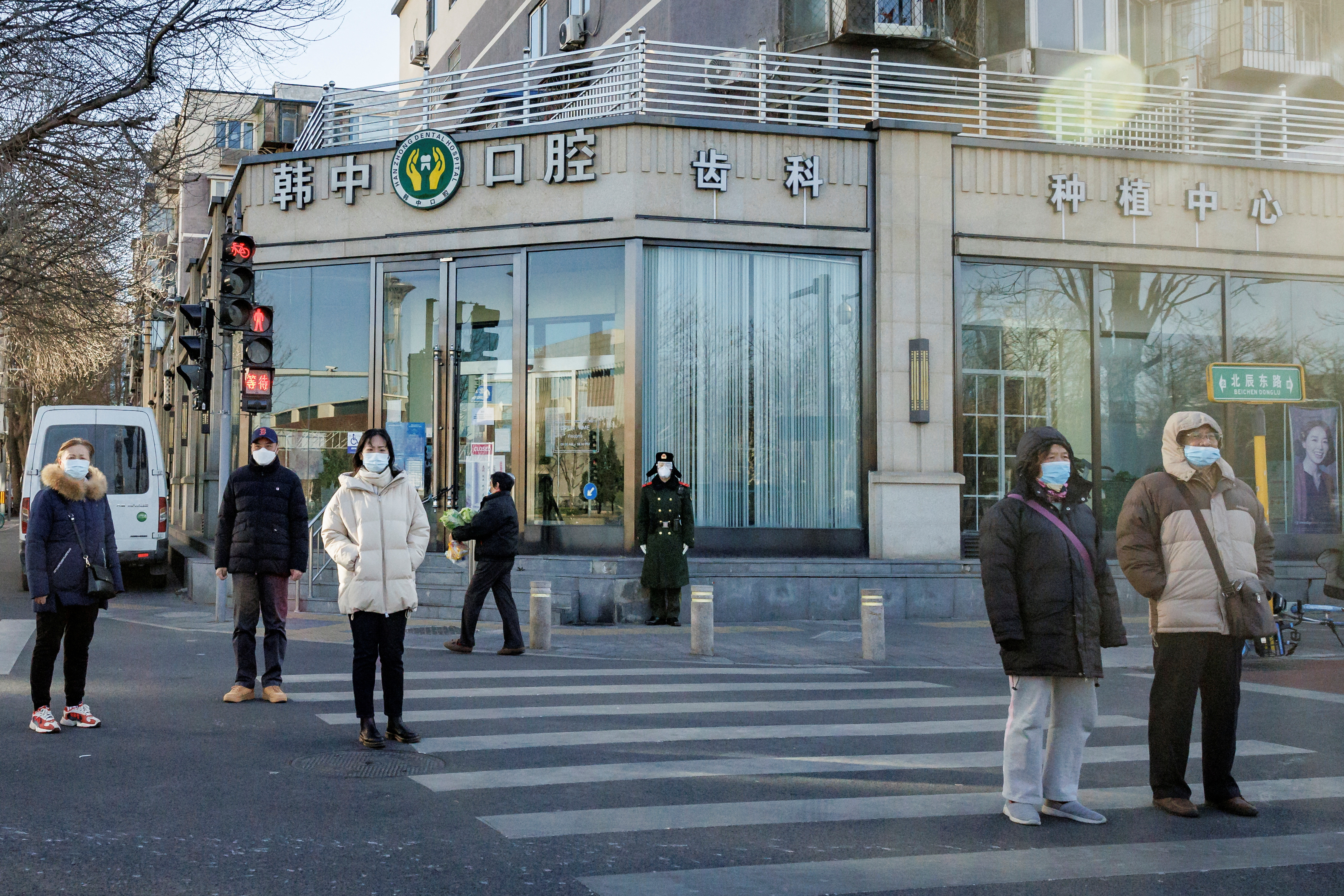
China will allow some people who test positive for COVID-19 to quarantine at home, among supplementary measures to be announced in coming days, two sources with knowledge of the matter told Reuters.
Home isolation for the infected would be a significant change in China’s quarantine protocols. Earlier this year, entire communities were locked down, sometimes for weeks, after even just one positive case was found. Last month, new and easier quarantine rules required just the lockdown of affected buildings.
Not all positive cases will be allowed to quarantine at home unconditionally, one of the sources told Reuters on Thursday, adding that pregnant women, the elderly and people with underlying illnesses will qualify to isolate at home.
Close contacts of the cases will also be allowed to isolate at home if their home environment meets certain conditions, the sources said.
Authorities will also step up antigen tests for the new coronavirus and reduce the frequency of mass testing and regular nucleic acid tests, the two sources said.
The National Health Commission did not immediately respond to a Reuters fax seeking comment.
Rare public protests against China’s ultra-stringent coronavirus restrictions, which includes throwing positive cases into centralised quarantine facilities for days, have erupted in some Chinese cities such as Shanghai, Guangzhou and Beijing since the weekend.
The demonstrations have become a show of public defiance unprecedented since President Xi Jinping came to power in 2012. Vice Premier Sun Chunlan, who oversees China’s counter COVID efforts, on Wednesday urged further “optimisation” of testing, treatment and quarantine policies.
National health officials said this week authorities would respond to “urgent concerns” raised by the public and that COVID rules should be implemented more flexibly, according to a region’s conditions.
Prominent nationalist commentator Hu Xijin said in a social media post on Wednesday that many asymptomatic carriers of coronavirus in Beijing were already quarantining at home.
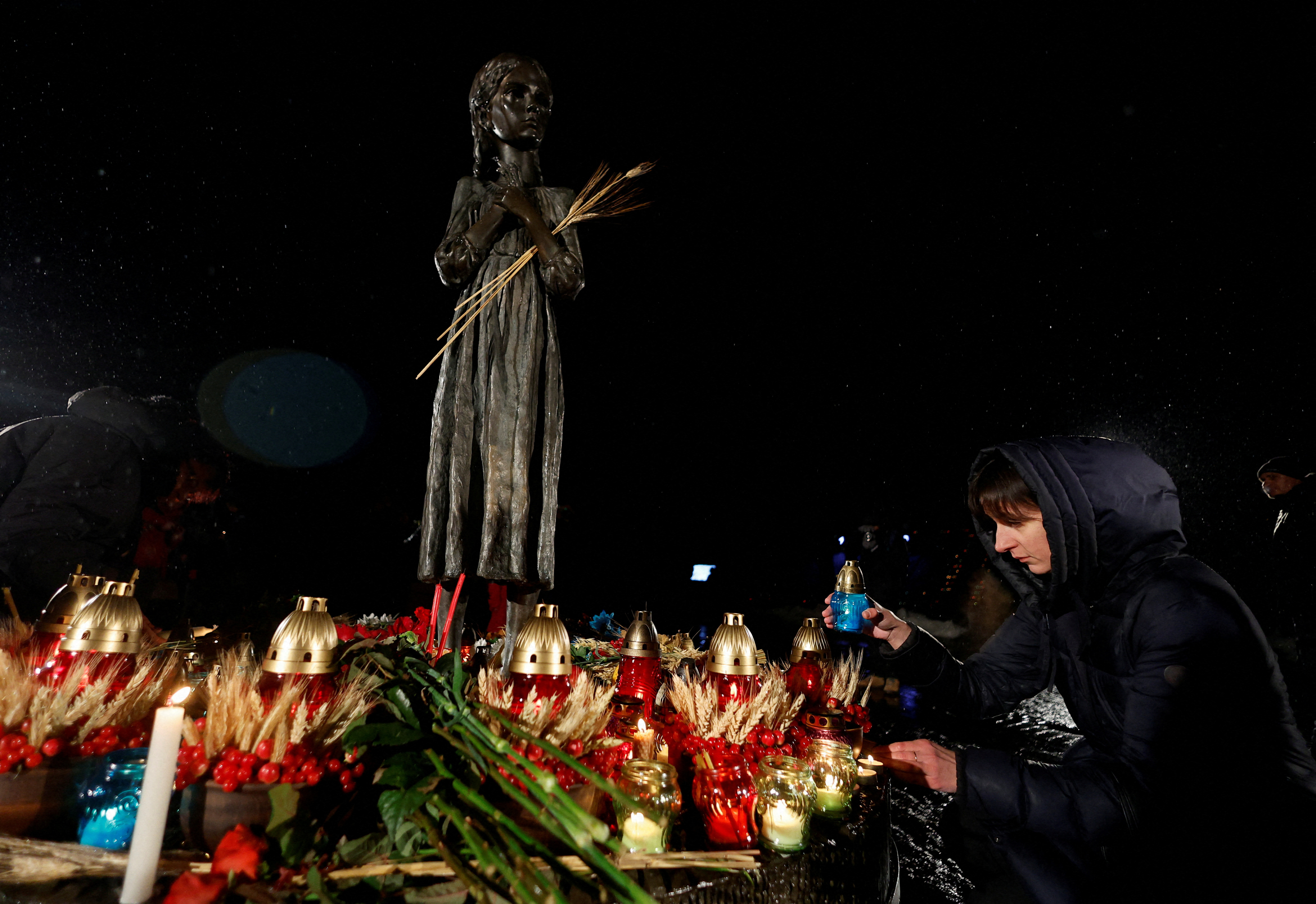
Russia said on Thursday the German parliament’s move to recognise the 1932-33 famine in Ukraine as a Soviet-imposed genocide was an anti-Russian provocation and an attempt by Germany to whitewash its Nazi past.
In a decision welcomed by Ukrainian President Volodymyr Zelenskiy, German lawmakers passed a resolution on Wednesday declaring the death by starvation of millions of Ukrainians – the Holodomor – was genocide.
In November 1932, Soviet leader Josef Stalin dispatched police to seize all grain and livestock from newly collectivised Ukrainian farms, including the seed needed to plant the next crop. Millions of Ukrainian peasants starved to death in the following months from what Yale University historian Timothy Snyder calls “clearly premeditated mass murder”.
Russia on Thursday rejected the claim that this was a genocide and said millions of people across other parts of the Soviet Union, including in Russia, also suffered.
“There is another attempt to justify and push forward a campaign – being planted in Ukraine and sponsored by the West – to demonise Russia and to pit ethnic Ukrainians against Russians,” Russia’s foreign ministry said in a statement.
“The Germans are trying to rewrite their history … downplay their own guilt and muddy the memory of the unprecedented nature of the countless crimes committed by Nazi Germany during World War Two,” it added.
The ministry accused the German parliament of “reviving the fascist ideology of racial hatred and discrimination and attempting to absolve itself of responsibility for war crimes” by passing the declaration.
Several European countries, including the ex-Soviet Baltic States, also recognise the Holodomor as a genocide.
For Ukrainians, the Holodomor forms a central part of the country’s identity as an independent nation state, and proof of historical injustices inflicted upon Ukrainians by leaders in Moscow.
Zelenskiy said the German parliament’s resolution was a “decision for justice, for truth” and an “important signal to many other countries of the world that Russian revanchism will not succeed in rewriting history.”
The image of a wartime Kyiv might be very distorted in the imaginations of people living abroad – regular massive missile attacks, residential areas destroyed by rockets, and people hiding in shelters – and is difficult to reconcile with most people’s idea of a normal life.
However, life goes on and millions of Ukrainians continue to live, work and even occasionally play in Ukraine despite all odds.
Kyiv Post celebrates seven totally normal things you can do in wartime Kyiv.
You can have McDonald’s in wartime Kyiv.
To the great surprise of people living abroad, McDonald’s restaurant chain still operates in Kyiv. In the capital and other large Ukraine cities, you can have your fav juicy Big Tasty or Big Mac menu. Missiles don’t fly over the capital around the clock, therefore, after the end of another massive shelling, people come out of shelters and continue to live their lives. What could be better for restoring the nervous system than a juicy cheeseburger with French fries?

Photo credit: instagram.com/arni_the_maltipoopsik/

Photo credit: instagram.com/luminasomnio
BUT
The fast food chain resumed its work in Ukraine not that long ago, at the end of September. At first, there were only three restaurants operating in Kyiv, and your order could be placed only through a delivery window using an intermediary, particularly Glovo or Bolt delivery service.The queues were literally kilometers long. One could have spent at least an hour waiting for an order. Now there are dozens of their restaurants operating in Ukraine, however, some menu items are still missing.
You can go to the cinema in wartime Kyiv
Despite difficult times for the Ukrainian movie business, which began with the COVID-19 pandemic and continues due to a full-scale war, cinemas in Kyiv are still working. New films are released on schedule. Some even gather a full house.

Photo credit: instagram.com/elena_gavazhko/

Photo credit: instagram.com/sorokina.a._/
BUT
Your movie show may be interrupted unexpectedly: during an air raid, all viewers are asked to leave the cinema hall. You will not be allowed to finish watching the movie even after the raid ends. But remember to save the ticket – you get to attend any other session on another day for free.
You can go shopping in wartime Kyiv.
Almost all major shopping centers in Kyiv are operating, which is logical as investors and businessmen do not want to go bankrupt. Moreover, the malls are not empty at all – on the weekend you can find them overcrowded.
Surprisingly, the longest queues can be found in stores with household goods. Despite the war, people are still willing to decorate their homes for Christmas, buy new towels, wine glasses, and soft pillows for the bedroom.

Katya and Natasha. Photo credit: Сhris York.

Photo credit: instagram.com/iryna.vynnychenko/
Clothing and electronics stores are also doing well. Despite huge problems with electricity and regular blackouts, people are optimistic about victory: They buy huge plasma TVs, food processors, and other devices that simplify our lives.
BUT
Not all boutiques in shopping malls have resumed their work since Feb. 24. Inditex, the largest fast-fashion group worldwide, has not yet returned to the Ukrainian market and probably won’t be back until the end of the war.
This has given impetus to the development of Ukrainian clothing and footwear brands. Many of them doubled, if not tripled, their pre-war profits. To support domestic products, as well as the very limited presence of global mass-market brands in the Ukrainian market, buyers increasingly prefer to wear local manufacturers.
You can go to a restaurant in wartime Kyiv (sometimes by candlelight).
The restaurant industry is undoubtedly going through very difficult times. During two years of pandemic, restaurateurs claimed that they found themselves in a situation worse than ever. Could they have imagined then that COVID-19 wasn’t actually the worst-case scenario?

Photo credit: instagram.com/kiddo_ukr/
In the first months after the start of the full-scale invasion, restaurants suspended their work. Restaurant owners pondered how to adapt to the new wartime reality. Many were able to reform the business and stay afloat, but many were forced to close down.
There are still more survivors than losers. Moreover, as in the pre-war period, competition in the restaurant sector is extremely high. Accordingly, service is at its highest level.

Photo credit: Alisa Orlova
Kyiv institutions have survived COVID-19, massive shelling, curfew, and reduced solvency of the population. The next call in line is a blackout. But even this challenge is accepted by restaurateurs with alacrity – using electric generators and candles.
BUT
Curfew figuratively killed many bars and nightclubs. Working at night became just impossible. During the war, bakeries, coffee shops, and fast food places became the most popular and growing configuration. After all, such places don’t require large investments to launch.
In Kyiv, you can go to children’s tournaments or a birthday party.
Life goes on despite the war and regular missile attacks. Children study, grow up and attend sports clubs and educational classes. Here, for example, is a photo from a chess tournament for children.

Chess tournament. Photo credit: Aleksandra Klitina.
And these are from a birthday party celebrated in the Kyiv center: Children just gathered in the basement to play video games and to eat burgers from McDonald’s.

Photo credit: Aleksandra Klitina.
BUT
Children’s activities are held mainly in basements or shelters: Their safety comes first.
You can work in the office in wartime Kyiv (and work literally under fire).
Business centers are still operating in Kyiv (those that have not yet been destroyed by Russian missiles). For example, Kyiv Post editorial is still working from their offices in the center of Kyiv. To be honest, there are a number of advantages: a generator, no power outages, and a coffee machine. But the main drawback is damage to critical infrastructure nearby. Russian missiles have already hit neighboring residential houses more than once.

Kyiv Post’ correspondents Anna Neplii, Aleksandra Klitina, and Marichka Palamarchuk. Photo credit: Aleksandra Klitina.
BUT
Not all office workers have a place to go. The 101 Tower office center, which is located next door to the Kyiv Post editorial office, looks like this now.

“101 Tower” business center in Kyiv, destroyed after Russian missile attack on Oct.10. Photo by AFP.
After the rocket attack on Oct.10, it was, in fact, completely destroyed. The main office of Samsung Electronics Ukraine and Samsung R&D suffered, in particular. The Microsoft office was also damaged as a result of the shelling. Fortunately, none of the employees of these companies were in the office at the time of the shelling.
You can listen to a street musician playing, even during an air raid alarm.
Kyiv residents have adapted so well to the war during the last nine months that neither air raid alarms nor ongoing rocket attacks can make them change their plans. If they find themselves drinking a cup of coffee in the park while listening to street musicians, hardly anything could make them go and hide in the shelter.
BUT
This part of the article goes without a but. The music on the streets of Kyiv will not subside under any circumstances.
However, Kyiv is fortunate in comparison with other Ukrainian cities, like Kherson, Zaporizhzhia or Mykolaiv. Not to mention Mariupol. So it is worth noting that not all Ukrainians are able to enjoy their lives against all odds. Sometimes the odds are too hard to overcome.
The post 7 Totally Normal Things You Can Still Do in Wartime Kyiv appeared first on Kyiv Post.
LOS ANGELES (AP) — A judge declared a mistrial Wednesday after jurors said they were hopelessly deadlocked at the trial of “That ’70s Show” actor Danny Masterson, who was charged with three rapes.
Los Angeles Superior Court Judge Charlaine F. Olmedo had ordered the jurors to take Thanksgiving week off and keep deliberating after they told her on Nov. 18 that they could not come to a consensus about the rape allegations after a monthlong trial in which the Church of Scientology played a supporting role.
Masterson, 46, was charged with the rape of three women, including a former girlfriend, in his Hollywood Hills home between 2001 and 2003. He pleaded not guilty and his lawyer said the acts were all consensual. All three women were members of the church at the time, and Masterson remains one.
“I find the jurors hopelessly deadlocked,” Judge Charlaine Olmedo declared after inquiring whether there was anything the court could do to move them closer to reaching a unanimous decision.
Jurors said they had voted seven times Tuesday and Wednesday without being able to reach consensus on any of the three counts.
The jury foreman said only two jurors voted for conviction on the first count, four voted for conviction on the second count and five voted to convict on the third count.
Jurors were forced to start deliberations from scratch on Monday when two had to be dismissed because they came down with COVID-19. They deliberated for two days but still could not reach verdicts.
The result was a serious setback for prosecutors, and for the three women who said they were seeking long overdue justice.
The proceedings took place amid a flurry of cases on both coasts with #MeToo connotations, including the Los Angeles trial of Harvey Weinstein just down the hall from Masterson’s. In New York, Kevin Spacey won a sexual misconduct conduct lawsuit brought by actor Anthony Rapp in New York, and a jury ordered director and screenwriter Paul Haggis to pay $10 million in a civil case there.

Password management solution LastPass disclosed a new security breach, the attackers had access to a third-party cloud storage service using information stolen in the August 2022 breach.
The impacted cloud storage service is GoTo, it is currently shared by both LastPass and its affiliate.
The company launched an investigation into the incident with the support of cyber security firm Mandiant and notified law enforcement.
“We have determined that an unauthorized party, using information obtained in the August 2022 incident, was able to gain access to certain elements of our customers’ information. Our customers’ passwords remain safely encrypted due to LastPass’s Zero Knowledge architecture.” reads the notice of security incident published by the company.
The company pointed out that customers’ passwords were not compromised due to LastPass’s Zero Knowledge architecture.
In August, LastPass disclosed a security breach, threat actors had access to portions of the company development environment through a single compromised developer account and stole portions of source code and some proprietary technical information.
At the time of the security breach, the company engaged a leading cybersecurity and forensics firm to investigate the incident. LastPass confirmed that the data breach did not compromise users’ Master Passwords.
In an update published in September, the company revealed that the threat actors had access to its systems for four days during the August hack.
Follow me on Twitter: @securityaffairs and Facebook and Mastodon
|
|
(SecurityAffairs – hacking, password)
The post Lastpass discloses the second security breach this year appeared first on Security Affairs.
Advertisements – Advertising at The News And Times – advertising-newsandtimes.com | WE CONNECT!
Audio | Video | Top News | On Twitter | Security | FBI | Capitol Riot | JOSSICA | Trump | Russia | Putin | Russia – Ukraine War | Covid-19 | Brooklyn NY | Puerto Rico | World
September 3, 2026 3:46 pm
The News And Times | Featured Posts | All Articles | Current News | Selected Articles | Shared Links | Opinions | In My Opinion | Sites | Blogs | Links | Twitter | Facebook

Contact Form | Blogs | Sites | News Reviews | Links | Advertising
All The News That’s Fit To Web