Categories
Audio Sources - Full Text Articles

Breaking silos between think tanks and youth groups for climate change action in Africa

By Ede Ijjasz-Vasquez, Aloysius Uche Ordu

Africa is the world’s youngest region, and its young population is seen as both a crisis and an opportunity. Youth unemployment is front and center in the minds of African policymakers and is a topic of much discussion and research.

At the same time, Africa is one of the most vulnerable regions to climate shocks, given the dependency of food production on rain-fed agriculture and pastoralism. Forecast scenarios predict that Africa will face a myriad of impacts caused by a rapidly changing climate as the number of days per year with life-threatening temperatures above 41ºC increases and the incidence of floods surges, driven by sea level rises in coastal areas.

Climate change will significantly and adversely impact youth employment, especially in the informal sector. Most youths in Africa live in rural areas and work in agriculture—the economic sector set to be most affected by climate change. Furthermore, Africa has the fastest urbanization rate worldwide. Urban youth livelihoods will be impacted by climate in their places of work (often their homes in informal settlements), and subsequently their employment opportunities.

The youth of 2030 will be in their peak earning period by 2050, when some of the worst impacts of climate change are projected to hit the continent. In the absence of effective social protection programs, today’s youth must start saving, by age 40, for old age. A worsening economy and livelihood opportunities due to climate change will be a drag on their economic opportunities and savings.

Breaking the silos between think tanks and youth groups

Despite these worrying predictions, Africa’s think tanks and research institutes have not studied in sufficient detail, the nexus between climate change and youth challenges on the continent. There have been few cross interactions or partnerships between think tanks and youth organizations in the climate space. “Elevating youth voices on climate action”—a new project of the Africa Growth Initiative at Brookings—intends to contribute to addressing this gap and breaking the silos between these two groups. As a start, the project will have the following five objectives:

  1. Identify existing opportunities and gaps in Africa’s youth-led climate action.
  2. Strengthen the capacity of youth organizations across the continent through access to the latest evidence, research, and policy options on climate change in Africa, generated through collaborative research work with Africa’s think tanks.
  3. Provide think tanks access to the local knowledge and activism platforms of Africa’s youth groups in the climate change space.
  4. Enable Africa’s youth to effectively engage with the highest level of decisionmakers through partnerships with think tanks.
  5. Strengthen cross-country learning or regional exchanges across Africa, between networks of think tanks and youth groups leading to stronger positions and more favorable policy outcomes in international climate dialogues, and continental youth-led programs for climate action.

The journey to COP27 and beyond

In the run up to the 27th United Nations Climate Change Conference (COP27), AGI collaborated with partner think tanks in Uganda (Economic Policy Research Centre), Kenya (Kenya Institute for Public Policy Research and Analysis), Ghana (Africa Center for Economic Transformation), and Botswana (Botswana Institute for Development Policy Analysis) as the first phase of this project. These partners worked with youth organizations on national policy papers related to youth and climate change. The resulting four policy papers were prepared for discussion at a youth dialogue, organized by the Global Center on Adaptation in partnership with the African Development Bank during COP27. More than 50 youth representatives from across Africa participated. A policy note titled “Climate Change and Youth in Africa” is forthcoming.

These policy papers demonstrated the benefits of breaking the silos between think tanks and youth organizations. The perspectives from both sides enriched the analysis and identified opportunities for action, in ways neither side alone could have achieved. The intention is to replicate this same approach with more think tank partners and youth organizations across the region, and to expand the number of countries participating in the platform for stronger and broader participation at COP28 in 2023.

Main findings

The policy papers review climate change challenges at the country level, climate action programs or policies that benefit the youth, and existing youth-led climate action activities. Based on this analysis, the youth groups and think tanks identified gaps and opportunities where youth organizations can leverage new or existing programs funded by governments and development partners to scale up climate action. In addition, the policy papers propose priority actions for different stakeholders (national and local governments, academia, international organizations, and the private sector) to tackle climate change.

The four policy papers highlight similar climate challenges, from agriculture and food security to floods and impacts on youth employment and school attendance. At the same time, the results show that there is a vibrant community of youth organizations engaged in climate action, from climate-smart agriculture and digital farming services to waste recycling and climate change education and advocacy.

The analyses recognize that many youth-led ventures are carried out on a small scale due to challenges including limited access to financial resources, low demand, and a lack of technical capacity. For example, in Kenya, youth are the most excluded and disadvantaged group in accessing financing, as revealed by the FinAccess 2021 Survey report.

To deal with the issues of scale and coordination, youth organizations are forming umbrella groups. For example, in Ghana, the Local Conference of Youth (LCOY), under the umbrella of YOUNGO, aims to boost youth climate action locally and create input for the international UNFCCC Conference of Youth.

The overarching policy recommendations across the four countries include placing young people at the core of strategies for financing climate change actions and improving access to new and emerging technologies required to adopt and develop innovative, climate-smart agriculture by young agro-entrepreneurs. The idea of providing business incubation support to startups focused on climate action programs and solutions, such as solid waste management, clean energy, and climate-friendly technologies, was also a common theme.

The reports also propose the creation of climate-related, umbrella youth groups to enhance visibility and to strengthen the capacity of youth organizations for advocacy and mobilization. Other proposals include finding avenues for collaboration between youth associations and national or local governments to develop and implement practical climate adaptation solutions that meet specific sociocultural demands.

Finally, for Uganda, the private sector was singled out as a strong enabler for youth groups through commitments to corporate social responsibility and environmental, social, and governance (ESG); affordable green financing credit facilities to support young entrepreneurs, especially in the agribusiness sector; and raising awareness on climate challenges among young employees and clients.

Looking ahead, the AGI project “Elevating youth voices on climate action” plans to expand the ongoing initiative to more African countries and to deepen partnerships and dialogues in preparation for COP28 to be held in the United Arab Emirates.
global_south_africa_2022_climate_protest
fblike20.png pinterest20.png twitter20.png email20.png rss20.png  
Categories
Audio Sources - Full Text Articles

Google links three exploitation frameworks to Spanish commercial spyware vendor Variston

ss7-surveillance.jpg?fit=600%2C375&ssl=1

Google’s Threat Analysis Group (TAG) linked three exploitation frameworks to a Spanish surveillance spyware vendor named Variston.

While tracking the activities of commercial spyware vendors, Threat Analysis Group (TAG) spotted an exploitation framework likely linked Variston IT, a Spanish firm.

Officially, Variston claims to provide custom security solutions and custom patches for embedded system.

The experts reported that the framework includes exploits for n-day vulnerabilities in Chrome, Firefox and Microsoft Defender, the company also provides a collection of tools to deploy a malicious payload to a target device.

The vulnerabilities in Google, Microsoft and Mozilla exploited by the company were fixed in 2021 and early 2022. TAG’s research suggests that the above issues were utilized as zero-days in the wild by the surveillance vendor.

TAG discovered the Heliconia framework after receiving an anonymous submission to the Chrome bug reporting program.

The submitter reported three different exploitation frameworks, instructions, and an archive that contained source code. Their names in the bug reports are “Heliconia Noise,” “Heliconia Soft” and “Files.” The researchers noticed a script in the source code that includes clues pointing to the possible developer of the exploitation frameworks, Variston IT.

“Although the vulnerabilities are now patched, we assess it is likely the exploits were used as 0-days before they were fixed.” reads the analysis published by Google.

  • Heliconia Noise: a web framework for deploying an exploit for a Chrome renderer bug followed by a sandbox escape
  • Heliconia Soft: a web framework that deploys a PDF containing a Windows Defender exploit
  • Files: a set of Firefox exploits for Linux and Windows.

The Heliconia Noise web framework is used to deploy a Chrome renderer exploit, followed by a Chrome sandbox escape and agent installation. The Chrome renderer exploit supports Chrome versions 90.0.4430.72 (April 2021) to 91.0.4472.106 (June 2021) and trigger a V8 deoptimizer issue fixed in August 2021.

The Heliconia Soft web framework exploits the CVE-2021-42298 remote code execution vulnerability in Microsoft Defender that was fixed on November 2021. The exploit is triggered when the victim downloads a specially crafted PDF file, which is scanned by Windows Defender.

Heliconia Files framework delivers a Firefox exploit chain for Windows and Linux. It leverages CVE-2022-26485 remote code execution in Firefox, the bug was addressed by Mozilla in March 2022.

“TAG’s research has shown the proliferation of commercial surveillance and the extent to which commercial spyware vendors have developed capabilities that were previously only available to governments with deep pockets and technical expertise. The growth of the spyware industry puts users at risk and makes the Internet less safe, and while surveillance technology may be legal under national or international laws, they are often used in harmful ways to conduct digital espionage against a range of groups.” TAG concludes. “These abuses represent a serious risk to online safety which is why Google and TAG will continue to take action against, and publish research about, the commercial spyware industry.”

Follow me on Twitter: @securityaffairs and Facebook and Mastodon

Pierluigi Paganini

(SecurityAffairs – hacking, Variston)

The post Google links three exploitation frameworks to Spanish commercial spyware vendor Variston appeared first on Security Affairs.

Categories
Audio Sources - Full Text Articles

As Putin retreats in Ukraine, he is also losing Kazakhstan

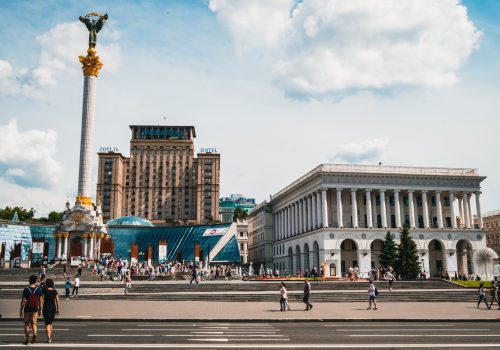
Russia’s carefully choreographed political talk shows are notorious for their anti-Ukrainian invective, but in late November the target was Kazakhstan. “We must pay attention to the fact that Kazakhstan is the next problem, because the same Nazi processes can start there as in Ukraine,” commented one pundit on the prime time Evening with Vladimir Solovyov show. Russian officials subsequently criticized this thinly veiled threat, but many observers noted that in the tightly controlled world of Kremlin propaganda, such sensitive statements are unlikely to have been made without some form of prior approval.

The incident highlights rising concern in the Kremlin as the invasion of Ukraine continues to erode Russia’s position elsewhere in the former Soviet Empire. The most prominent shift since the onset of the invasion has been in relations with Kazakhstan, which has demonstrated its desire to distance itself from an increasingly isolated Moscow and pursue a more assertive multi-vector foreign policy with closer ties to China, Turkey, and the West.

Subscribe to UkraineAlert

As the world watches the Russian invasion of Ukraine unfold, UkraineAlert delivers the best Atlantic Council expert insight and analysis on Ukraine twice a week directly to your inbox.

2015-08-20T120000Z_1614809784_GF10000177

  • Name

    First

    Last

  • Email*
  • Comments
    This field is for validation purposes and should be left unchanged.

Kazakhstan has traditionally been one of Russia’s closest allies. Due to a combination of factors such as common history, security cooperation, economic integration, and one of the world’s longest shared borders, there is little chance of a complete collapse in bilateral ties. Nevertheless, Kazakhstan has adopted a principled position in relation to the current war and has underlined that it does not approve of Russia’s attack on Ukraine.

Kazakh President Kassym-Jomart Tokayev made his position particularly clear during the annual Saint Petersburg International Economic Forum in June. Seated on stage alongside Russian President Vladimir Putin, Tokayev declared that Kazakhstan had no intention of recognizing the independence of the so-called Luhansk and Donetsk People’s Republics in eastern Ukraine. The move was widely seen as a very deliberate and very public snub to Putin and the Russian invasion of Ukraine.

Tokayev’s comments in Saint Petersburg came following a series of moves signaling Kazakhstan’s decision to step away from Russia. Since the invasion began in February, Kazakhstan has chosen to abstain rather than back Russia during a number of key UN votes on the war. The Kazakh government has also vowed to strengthen energy cooperation with Europe at a time when Putin was hoping to use his stranglehold on oil and gas supplies to pressure European leaders into abandoning their support for Ukraine.

In a highly symbolic move, Kazakhstan canceled the country’s annual Victory Day celebrations in May. This gesture angered many in Moscow, where official reverence for the Soviet role in World War II is regarded as an indication of continued political loyalty to Russia.

As the invasion of Ukraine has escalated, so has the critical rhetoric from Kazakh officials. When hundreds of thousands of Russians fled to Kazakhstan in September in order to avoid mobilization into the Russian army, Tokayev vowed to provide humanitarian assistance. In a stinging rebuke, he said most of the fleeing men had been forced to leave Russia due to the “hopeless situation” in the country, before condemning Putin’s attempts to annex four partially occupied Ukrainian provinces.

As Russian influence recedes, Kazakhstan is moving forward with a more assertive foreign policy of its own. In recent weeks, this has seen the Chinese and German leaders both visiting the Central Asian country. On November 11, Tokayev participated in the Summit of the Organization of Turkic States in neighboring Uzbekistan, where he again stressed the importance of strictly observing the UN Charter. In a further blow to Moscow, Kazakhstan has already begun to enhance the Trans-Caspian international transport route, which bypasses Russia and travels through China, Kazakhstan, the Caspian Sea, Azerbaijan, Georgia, and on to Europe via Turkey.

Russia is likely to fall further behind as other countries take advantage of Putin’s rapidly unraveling invasion of Ukraine to gain influence in Central Asia. Kazakhstan is now actively strengthening ties with two of Russia’s main Eurasian competitors, China and Turkey. During a May visit to Ankara, Tokayev signed an agreement on deepening security sector cooperation and joint development of military drones.

China is likely to emerge as the biggest winner from the shifting geopolitical balance of power in Central Asia, with Beijing understandably keen to emphasize its support for Kazakhstan. During a September visit to the Kazakh capital, Chinese President Xi Jinping spoke of China’s “strong support to Kazakhstan in protecting its independence, sovereignty, and territorial integrity.”

Looking ahead, Kazakhstan faces the challenging task of maneuvering between the Russian bear and the Chinese dragon. Russia looks set to remain an important power in Central Asia and a key partner for Kazakhstan, but Moscow will now longer be able to dominate the region as it once did. Putin’s invasion of Ukraine has already led to historic changes in Central Asia and sparked a push by Kazakhstan to pursue a more independent foreign policy.

For now, there is no question of Kazakhstan adopting an adversarial approach to Russia or choosing to side exclusively with Moscow’s rivals. Any such moves could have potentially disastrous consequences for the country’s security and independence. However, it is increasingly clear that as a result of Putin’s failing Ukraine invasion, Russian influence in Kazakhstan and the wider Central Asia region is in decline and has receded to levels not witnessed for over a century.

Kamila Auyezova is a research analyst who focuses on geopolitical and climate issues in Eurasia. You can find her on Twitter @KAuyezova.

Further reading

The views expressed in UkraineAlert are solely those of the authors and do not necessarily reflect the views of the Atlantic Council, its staff, or its supporters.

The Eurasia Center’s mission is to enhance transatlantic cooperation in promoting stability, democratic values and prosperity in Eurasia, from Eastern Europe and Turkey in the West to the Caucasus, Russia and Central Asia in the East.

Follow us on social media
and support our work

The post As Putin retreats in Ukraine, he is also losing Kazakhstan appeared first on Atlantic Council.

Categories
Audio Sources - Full Text Articles

Liberals Are Furious NYC Mayor Wants to Take Dangerous Mentally Ill People Off The Streets

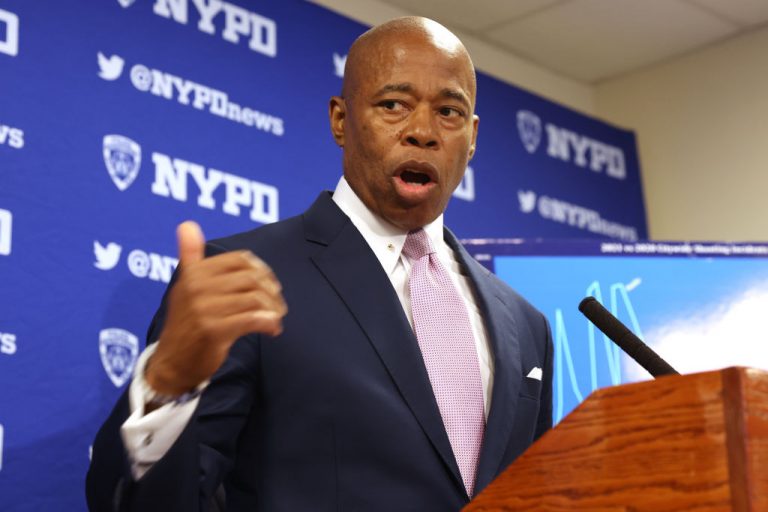
New York City mayor Eric Adams (D.) on Tuesday empowered police to remove potentially dangerous mentally ill people from the street and commit them to psychiatric institutions, infuriating liberal groups who say the policy would cause “trauma.”

Adams signed an order instructing police to take mentally ill people into custody for psychiatric evaluations at hospitals. Liberal groups were quick to slam the effort, claiming the mayor’s approach would cause “trauma,” the New York Times reported. A New York City council member went as far as to suggest that police presence causes mentally ill people to become dangerous.

“The Mayor’s attempt to police away homelessness and sweep individuals out of sight is a page from the failed Giuliani playbook,” said Donna Lieberman, executive director of the New York chapter of the ACLU.

But New York City Police Department commissioner Keechant Sewell and other city officials welcomed the effort, saying it will resolve a lingering homelessness crisis, which posed a danger to citizens on public transportation this year.

“The NYPD works day and night to improve the quality of life of all New Yorkers, especially our city’s most vulnerable populations,” Sewell said in a statement. “This deserves the full support and attention of our collective efforts.”

The shift comes as crime in New York City approaches its highest level in decades, with a number of high-profile offenses in 2022 caused by mental illness. Just days after Adams’s inauguration, a homeless man with schizophrenia shoved a woman in front of an oncoming train, killing her. In April, a black nationalist, who had related his history of mental illness on social media, shot 10 people in a Brooklyn subway car.

More than 3,000 people live on the streets of New York City, according to a January report. Many are mentally ill.

Adams’s order broadens officers’ authority to remove potentially dangerous mentally ill individuals. Until now, police had only apprehended those who made an “overt act” likely to cause imminent harm—a legal standard that Adams’s office called a “persistent myth” among city law enforcement.

The directive empowers officers to follow existing state laws, which instruct police to apprehend anyone who appears to be mentally ill and is likely to cause harm. Adams said officers had been reluctant to fully enforce the law because they misunderstood its reach. It also forces hospitals to retain the mentally ill until their condition improves or they receive a long-term plan for treatment.

Left-wing activists have hobbled police efforts to handle dangerous mentally ill offenders—an approach supercharged after the police killing of George Floyd in 2020. The backlash led to police budgets being defunded in some cities and low morale causing officers to leave departments in droves.

Before running for mayor, Adams served in the NYPD, where he retired with the rank of captain. In a June poll, 56 percent of New Yorkers said the city was headed in the wrong direction under Adams’s leadership.

The post Liberals Are Furious NYC Mayor Wants to Take Dangerous Mentally Ill People Off The Streets appeared first on Washington Free Beacon.

Categories
Audio Sources - Full Text Articles

CCP Propagandist Increases Spending in ‘Woke’ Billionaire’s Magazine 

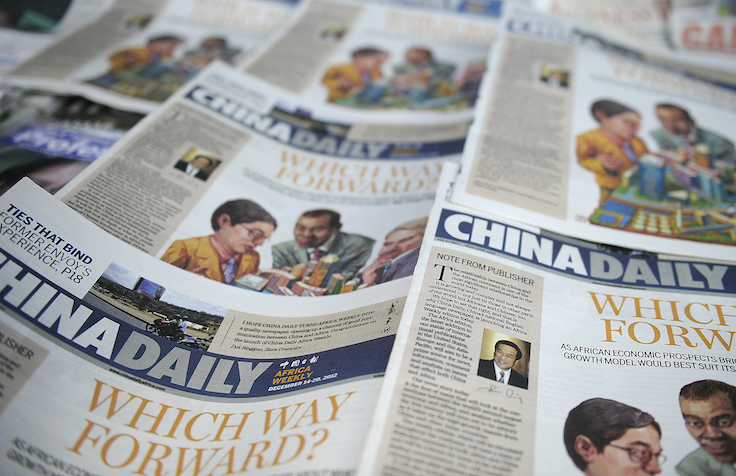
China Daily

A Chinese Communist Party mouthpiece ramped up its spending in Time, the iconic American magazine owned by left-wing activist billionaire Marc Benioff.

China Daily spent $656,885 to publish propaganda in Time from May 1 to Oct 31, according to disclosures under the Foreign Agents Registration Act. That’s up from the $649,603 that China Daily paid the magazine in the previous six month period. Since 2020, Time has published articles in its print magazine and online promoting Chinese culture, Beijing’s climate change initiatives, and China’s technology as part of a content-sharing deal with China Daily.

Benioff, a prominent Democratic donor who visited President Joe Biden with his family at the White House earlier this year, began an aggressive push into the Chinese market soon after buying Time in 2018. In 2019, Benioff’s software company Salesforce struck a deal with Chinese tech giant Alibaba to provide cloud computing services for the company in China.

Time is strengthening its relationship with China Daily amid heightened scrutiny of the Chinese Communist Party’s efforts to influence American audiences through propaganda. The Department of Justice in 2020 required China Daily and other state-controlled media agencies to begin disclosing details of their content-sharing deals with American outlets. According to the latest filings, China Daily increased payments to Time as the propaganda agency cut spending in four other outlets—USA Today, Foreign Policy, Financial Times, and the Los Angeles Times—from $900,540 to $586,860.

Many of the China Daily articles at Time are human interest stories about life and culture in China. But others promote Chinese state-owned companies that the United States has blacklisted for aiding China’s military and its repressive surveillance state.

Last year, Time published a story which touted technology from DJI, a Chinese drone maker that the United States government has blacklisted over its surveillance of Uyghurs. One article about the Beijing Olympics highlighted contributions from China Aerospace Science and Industry Corp., a state-owned enterprise that makes missiles for the Chinese military.

Benioff’s expansion into China has opened him up to allegations of hypocrisy. The billionaire, who has been dubbed “Tech’s Woke CEO,” has been a vocal critic of conservative policies at home while ignoring China’s dismal human rights record. In 2019, he announced that Salesforce would no longer do business with any company that sells certain types of firearms or ammunition magazines. In September, he threatened to shut down operations in states that restrict access to abortion.

“If you’re going to discriminate against our employees, we’re not going to set up shop there,” Benioff told CNN. “We have to be for equality, we have to be for dignity, we have to be for the equality and dignity of every human being.”

Meanwhile, Benioff has heaped praise on China for its handling of the coronavirus pandemic and Beijing’s efforts to fight climate change. In 2018, he said China was “leading the way” in electric vehicle manufacturing. He praised China’s response to the coronavirus early in the pandemic, saying that “China has done an amazing job eliminating the virus from their country.” Since then, mounting evidence suggests that the Chinese government lied about the origins of the virus. And this month, citizens across China have risen up against Beijing over its draconian “zero-Covid” policies.

While Time lends its platform to the CCP, another Benioff company has cracked down on American conservative groups. Slack, a popular instant messaging service owned by Salesforce, banned the Federation for American Immigration Reform from its services in June for violating its terms of service, the Washington Free Beacon reported.

A Slack spokesman told the Free Beacon it banned the group, which supports restrictions on illegal immigration, because it violated the company’s policy forbidding incitement of hatred or violence and that the nonprofit is “affiliated with a known hate group.”

Time did not respond to a request for comment.

The post CCP Propagandist Increases Spending in ‘Woke’ Billionaire’s Magazine  appeared first on Washington Free Beacon.

Categories
Audio Sources - Full Text Articles

A US-China War Should Be Unthinkable

Share

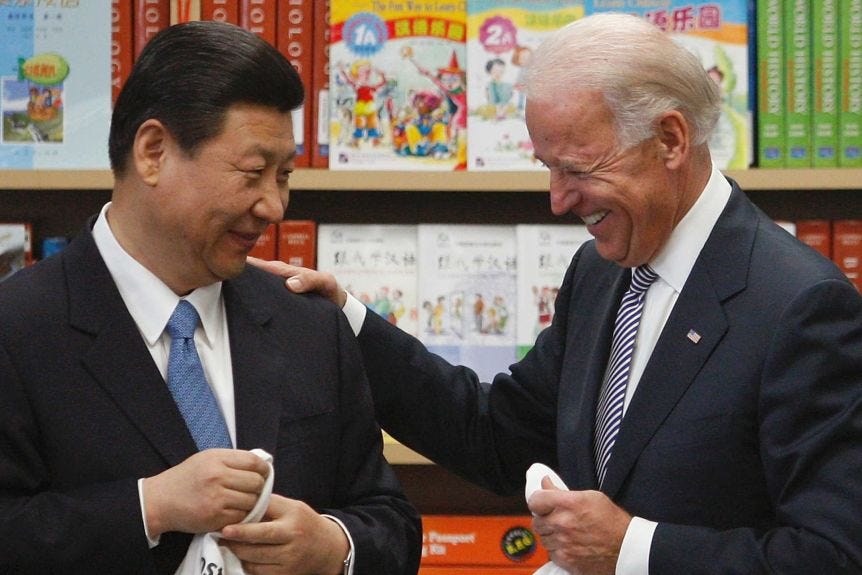
When Xi Jinping met Joe Biden for their summit talks on the sidelines of the G20 meeting in Bali earlier this month, the Chinese leader waited for the U.S. president to come to him. 

The 69-year-old Xi  had planted himself squarely in front of a stand of Chinese and American flags outside the hotel conference room where the talks would take place. 

From there, Xi calmly watched as Biden trotted  across the hotel lobby toward his counterpart and vigorously shook his hand for the waiting cameras. 

Xi seemed to be pointedly demonstrating “li,” an ancient Confucian ritual of proper conduct in the emperor’s court, which in this case was a signal to all that Biden was coming to him as a supplicant.

Unattributed photo of Xi and Biden in Bali via Ini.com Indonesia.

The tableau made me think back to the China I lived in as a foreign correspondent in the early 1980s, when the country was just beginning its eventual rise to the status of a global economic and military superpower.  Back then, China’s paramount leader Deng Xiaoping was eager to fuel his country’s growth via trade with America. So he toned down Beijing’s criticism of the United States, which had reached hysterical levels in previous years. Moreover, it would never have crossed Deng’s mind to try to diminish the stature of Ronald Reagan or George H.W. Bush in a public forum, if only because China was so far from being able to challenge the United States. 

“Deng’s foreign policy was based on ‘hide your strength and bide your time’ principle,’” David Shambaugh, director of the China Policy Program at George Washington University noted in 2021.

How times have changed. Since Xi took power in 2012, China has grown full of itself, despite its many problems. When I visited in 2016, its foreign affairs officials and think tankers brimmed with a confidence bordering on bravado vis-a-vis the United States. Regarding the U.S. Navy’s so-called “freedom of navigation” forays off their shores, they would tap on maps of the Pacific and point to California and then  ask,  “What are you doing way over here?” Then they would ask me to imagine the American reaction if Chinese warships cruised up and down the California coast on similar exercises. The message was clear: American hegemony over the western Pacific was past its sell date. And China had both the grounds and, soon, the means to push us out. Under Xi, Chinese officials and party-owned news media were likewise pushing strong nationalist themes.  

Subscribe now

Around the same time, America also was voicing an increasingly militaristic attitude toward our trade imbalances with China and Beijing’s territorial claims to the South China Sea. Former President Donald Trump took advantage of this sentiment, slapping stiff tariffs on Chinese imports and igniting a trade war. While the FBI began making increasingly shrill  warnings about Chinese spies,  Trump deliberately pressed China’s hottest buttons, raising Taiwan’s diplomatic profile and proposing the sale of more and better weapons to the breakaway island’s government. He even blamed the Covid-19 epidemic on Beijing. 

Under Biden, the fundamentals haven’t changed.  With anti-China sentiment still strong on Capitol Hill and among ordinary Americans, he has erased the deliberate ambiguity on Taiwan that Nixon and Mao worked out in 1972, declaring Washington will defend Taiwan if it is attacked.  Biden has also annoyed Beijing by announcing the sale of $1.1 billion in weapons to Taiwan. A bill proposing another $10 billion in weapons sales to Taiwan has strong bipartisan support. 

Poking the Dragon

As a measure of anti-China sentiment on Capitol Hill, Senate Foreign Relations Committee Chairman Bob Menendez (D-NJ)  has even proposed that arms sales to Taiwan be treated as those to a non-NATO ally.  Let’s not forget that since Washingtin and Beijing formally established diplomatic relations in 1979, Washington severed its diplomatic recognition of Taiwan and agreed that the island is part of China.  

U.S.-China relations are now at their lowest point in years.  Powerful hawkish forces on both sides seem to be pushing the world’s two largest economies  inexorably toward a military conflict that would be catastrophic for both —and the world—a possibly apocalyptic clash in which neither can realistically expect a quick, clean win.

Hardliners on China in the Biden administration and in Congress would do well to remember that in annual war games conducted by Washington think tanks over the past several years, the United States has repeatedly lost to Chinese forces in simulated confrontations over Taiwan and the South China Sea.  In the most recent war game, conducted in August by the Center for Strategic and International Studies, U.S. forces intervening in a Chinese attack on Taiwan suffered  enormous losses to  ships, aircraft and personnel while succeeding only in fighting Chinese forces to a standstill. 

We don’t know what Chinese generals or the politburo have learned from their own war games, but I’d guess that they understand that an invasion of deeply anti-communist, well-armed Taiwan would not be a cake walk.  Russia’s experience in Ukraine has to be a lesson in that.  Sending squadrons of Chinese war planes into Taiwanese airspace, presumably to test the reaction times of its air defenses, may be nerve-wracking, but victory can never be achieved only from the air. It will take ground troops. Meanwhile, Being can expect its  invasion to produce a severe disruption of its trade and diplomatic relations with its Asian neighbors and Europe, not to mention the United States. 

Fortunately, there are signals from both sides that they recognize the extremely perilous state of their relations and are moving to stabilize them, even as they gear for greater competition on the world stage. 

At their Bali summit, Biden and Xi pledged more frequent communications. They agreed that U.S. Secretary of State Antony Blinken will travel to Beijing for follow-up talks.

Meanwhile, the Wall Street Journal reported that a few days before the summit, Xi sent a group of senior policy advisers and business executives to New York to meet with their American counterparts. The facilitator of the meeting was  insurance executive Maurice “Hank” Greenberg, 97, whom officials in Beijing regard as a trusted old friend from his successful business dealings in China over the years. Greenberg, the CEO of the insurance and investment firm C.V. Starr & Co., kept the White House informed about the contacts. 

According to the Journal, the two delegations discussed ways the two countries could peacefully deal with the Taiwan issue, as well as possible cooperation on North Korea and Russia’s invasion of Ukraine. The Chinese delegation offered to host a follow-up meeting in China next year.

That’s good, but talk is cheap. Both governments need to find ways to cool the cold war rhetoric and implement some confidence-building steps to restore greater trust and good will in their relations.  

Here’s an idea: Xi’s “zero covid” lockdown policy has obviously backfired in a major way. He’s facing waves of protests from ordinary Chinese, some of whom are even calling for Xi’s resignation and the end of communism.  The Biden administration could renew its offer to provide China with America’s mRNA Covid-19 vaccines, which have proven to be far more effective than China’s home-grown variety. An effective nationwide vaccination campaign in China would end the need for lockdowns and let the Chinese go back to work, helping revive both China’s economy and our own.  As Xi is fond of saying, that would be a win-win.

Not that Xi is likely to accept such an offer, which would be a threat to his pride and perhaps weaken him in the eyes of his politburo. And I wouldn’t be surprised if Washington’s China hawks shot down such a proposal without a major concession from Xi. 

And that’s the problem. 

It’s time for both sides to find a way to change course. Because the one they’re on now is leading to a conflagration nobody should want.

Give a gift subscription

Categories
Audio Sources - Full Text Articles

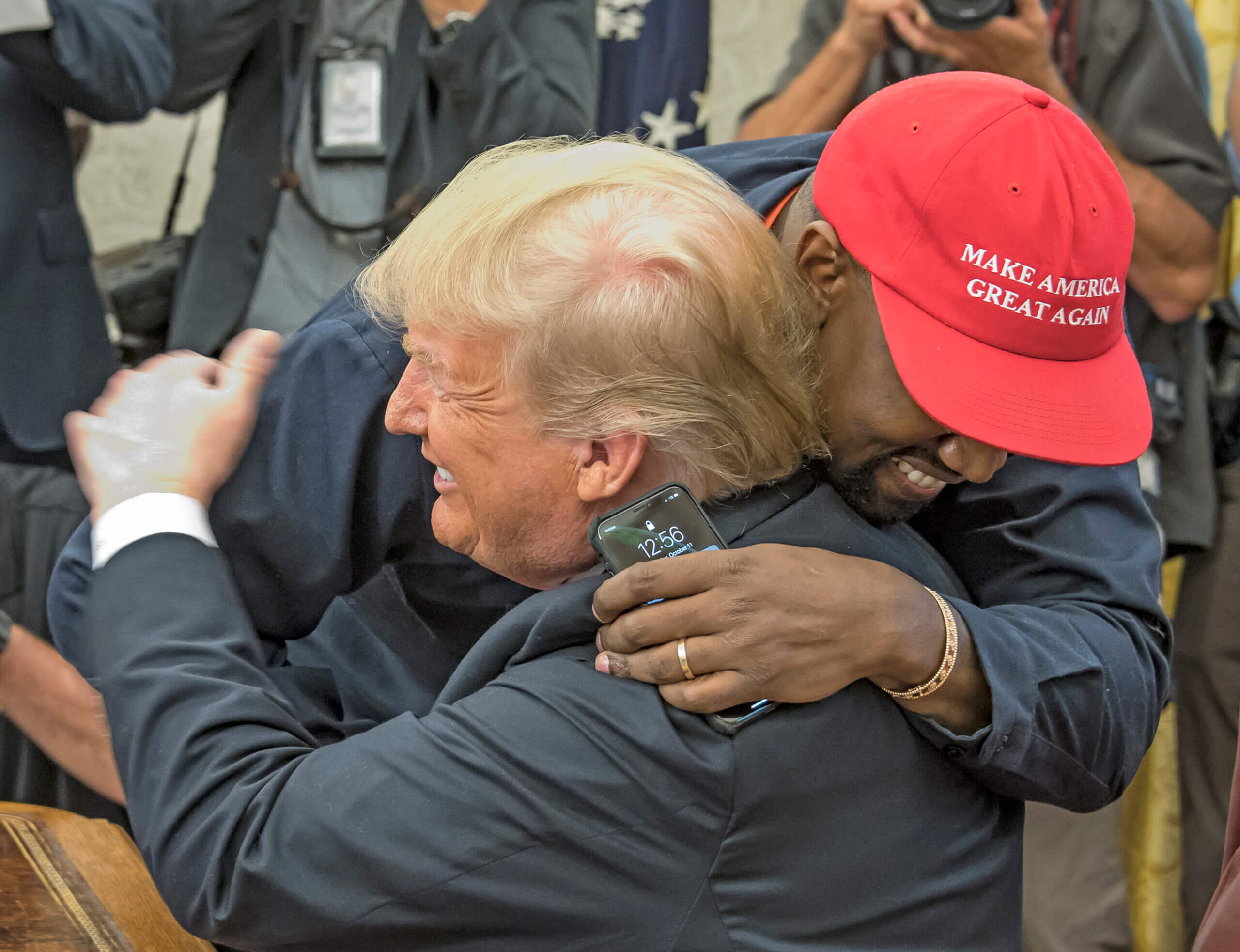
Did Kanye punk Trump? NBC reports he was ‘ambushed’ into dinner with Nick Fuentes

GettyImages-1059657306-scaled.jpg

Donald Trump was “ambushed” by Kanye West and alt-right pundit Milo Yiannopoulos into having dinner with white supremacist Nick Fuentes, according to an account of the dinner by NBC News

“Trump was totally blindsided,” an unnamed source described as a Trump “confidant” told NBC. “It was a setup.”

Trump had arranged to dine with West, who has changed his legal name to Ye, on Nov. 22 at Mar-a-Lago because he thought “it would be fun” for the club’s members, NBC reported, quoting an unnamed source also described as a “confidant.”

Report: West got in with no ID

When West arrived in a car with Fuentes, they were waved in by security even though Fuentes was not on the guest list and did not show an ID, according to an Associated Press story.

Trump was supposed to meet with West in the club library, the AP said, but instead Trump headed to the club’s public patio dining area.

Fuentes told NBC that everyone in the dining room clapped as Trump entered. “He greeted us, and he invited Ye into dinner and Ye said that he wanted to bring us with him to the table,” Fuentes said. 

NBC quoted Yiannopoulos as claiming that he was “the architect” of the dinner plan. Yiannopoulos said he had enlisted a 2016 Trump campaign adviser, Karen Giorno, to drive West and Fuentes to Mar-a-Lago. Giorno then became “an accidental member” of the dinner party, along with a fourth person at the table identified as a parent of a student from West’s now-closed private school in California, Donda Academy.

“The master troll got trolled,” an unnamed source described as a “longtime Trump adviser” told NBC. “Kanye punked Trump.”

Trump later told Fox News Digital that he had “never heard of” Fuentes: “I had no idea what his views were and they weren’t expressed at the table in our very quick dinner, or it wouldn’t have been accepted.” But NBC said others at “the crowded members-only club figured out his identity.”

A West-Trump ticket?

NBC reported that Trump became angry as West criticized him for doing too little to pay legal bills for those arrested in the Jan. 6 riots. West informed Trump of his own plan to run for presidency, and suggested that Trump be his running mate. Trump, in turn, attacked West’s ex-wife Kim Kardashian. 

Fuentes said he praised Trump as “my hero” but told NBC that he warned the former president at the dinner that he might not win in 2024. 

Yiannopoulos told NBC that he arranged the dinner “just to make Trump’s life miserable,” knowing that news of the dinner would leak. Yiannopoulos also said he “wanted to show Trump the kind of talent that he’s missing out on by allowing his terrible handlers to dictate who he can and can’t hang out with.”  

“He has systematically repeatedly neglected, ignored, abused the people who love him the most,” Yiannopoulos said.

The post Did Kanye punk Trump? NBC reports he was ‘ambushed’ into dinner with Nick Fuentes appeared first on The Forward.

Categories
Audio Sources - Full Text Articles

Chinese and Russian Warplanes Patrol the Pacific in a Show of Strengthening Military Ties

In a show of growing military ties, Russian and Chinese strategic bombers flew a joint patrol over the Pacific Ocean on Wednesday that ended when the warplanes landed in each other’s airfields for the first time.

During an eight-hour mission, Russian Tu-95 “Bear” bombers and Chinese H-6K bombers flew over the Sea of Japan and the East China Sea in a flight path that triggered South Korea and Japan to scramble fighter jets in response.

The Russian defense ministry later issued a statement saying that no foreign airspace was violated during the flight and the bombers acted in accordance with the provisions of international law. China’s Defense Ministry described the patrols as a “routine” annual exercise between the two nation’s militaries.

[time-brightcove not-tgx=”true”]

The bomber patrol is the latest example of strengthened defense collaboration between the two countries in recent years and follows a series of large-scale joint military drills this year as the pair face increased tensions with the United States over Russia’s war in Ukraine and China’s threats against Taiwan. A senior U.S. defense official told reporters Monday before the joint China-Russia bomber patrol took place that their shared military exercises are often “a means of signaling their closer alignment and sending a message to the U.S. and to other countries.”

But while Beijing and Moscow share aspirations to push the U.S. from its hegemonic role over world affairs, a formal alliance between the two nations will prove challenging to sustain.

Read More: U.S. Unveils Strategy for Nuclear Threats from China and Russia

Three weeks before Russia’s Feb. 24 invasion of Ukraine, Chinese President Xi Jinping and Russian President Vladimir Putin announced a deepening strategic alignment with one another in the coming years. In a lengthy Feb. 4 joint statement, they declared a “new era” of partnership in which cooperation would have “no limits” on a range of issues, including trade and defense.

Yet months later, some boundaries have become apparent. Unlike other world powers, China chooses not to condemn Russia’s blood-soaked military actions in Ukraine and has blamed the U.S. and its NATO allies for provoking Moscow into launching an assault on its smaller neighbor, while denouncing efforts to punish Russia through crippling economic sanctions. But China has failed to come to Russia’s aid in the war as Moscow struggles with diminishing weapon stocks. Meanwhile, the U.S. continues to funnel billions of dollars in aid to support Kyiv and has sent thousands of American troops into surrounding countries, principally in Poland, to deliver on-the-ground guidance to Ukrainian forces.

“China doesn’t provide Russia with any weapons for the Ukraine fight, despite Moscow’s pleas,” says Michael O’Hanlon, a military analyst at the Brookings Institution, a think tank in Washington. “We may make too much of the existing partnership and, as a result, so demonize them both that we push them together.”

In October, the Biden Administration unveiled a new defense strategy that puts the U.S. military on a Cold War-footing with both Russia and China, detailing a plan to confront two nuclear peer-adversaries for the first time in history with a multi-year build-up of modernized weaponry, enhanced foreign alliances, and a top-to bottom $1.2 trillion overhaul of the American nuclear arsenal. It characterizes China as a long-term “pacing challenge” with its growing power projection in the Pacific region, while deeming Russia to be an immediate “acute threat” amid its ongoing war with Ukraine.

Read More: Inside the $100 Billion Mission to Modernize America’s Aging Nuclear Missiles

China “still seems to see a lot of value in their partnership with Russia,” the senior defense official said. “Of course, it’s going to be an area of keen interest for us and other observers in Europe and elsewhere. We’ve seen (China) continue to support Russia diplomatically and to amplify a lot of their propaganda and disinformation. And so those are areas of particular concern.”

On Wednesday, the Pentagon released its “2022 China Military Power Report,” an annual assessment that found Beijing could have 1,500 nuclear warheads by 2035, up from its current 400, if they continue to expand their stockpile at the present pace. While the American stockpile now stands around 4,000 warheads, the U.S. is limited to 1,550 deployable weapons under a bilateral treaty known as New START with Russia. The landmark treaty, which the Biden Administration extended for five years with Putin, remains in force until February 2026.

A future President may choose not to renew the agreement or negotiate a follow-on. In that case, there could be a push—particularly from Republicans—to double the U.S. nuclear arsenal to match both Russia’s and China’s stockpiles, opening the door for an unprecedented arms race. It remains to be seen how united those two nations will stay going forward, but the prospect is one that Americans are increasingly concerned about, according to Pew Research. Although China and Russia still don’t have a formal military alliance, the evolving military exercises and joint patrols serve as a key way the two nations can strengthen bilateral defense ties.

Categories
Audio Sources - Full Text Articles

Wall Street ends sharply higher after Powell comments

2022-11-30T21:23:20Z

Wall Street ended sharply higher on Wednesday after Federal Reserve Chair Jerome Powell said the central bank might scale back the pace of its interest rate hikes as soon as December.

The S&P 500 rallied from an earlier loss and the Nasdaq jumped after the release of Powell’s remarks prepared for delivery at the Brookings Institution think tank in Washington.

Powell also cautioned that the fight against inflation was far from over and that key questions remain unanswered, including how high rates will ultimately need to rise and for how long.

“(The market) has waited with bated breath, looking for that clarification in terms of duration and extent of Fed tightening. And anything that gives hope to the idea the Fed is becoming less hawkish is viewed as a positive for stocks, at least on a short-term basis,” said Chuck Carlson, Chief Executive Officer at Horizon Investment Services in Hammond, Indiana.

Bets that the Fed will reduce the size of its rate hikes, as well as recent data pointing to a mild cooling in inflation, led the benchmark S&P 500 index (.SPX) to its second straight month of gains.

The CME FedWatch Tool showed futures traders seeing a 75% chance that the Fed will raise interest rates by 50 basis points at its December meeting, up from a 65% chance before Powell’s comments were released. The FedWatch tool now shows a 25% chance of a 75 basis point increase.

Nvidia (NVDA.O) rallied more than 8%, Microsoft (MSFT.O) jumped 6.2% and Apple (AAPL.O) climbed 4.9%.

Tesla Inc’s (TSLA.O) shares surged 7.7% after China Merchants Bank International said Tesla’s sales in China in November were boosted by price cuts and incentives offered on its Model 3 and Model Y.

The S&P 500 climbed 3.09% to end the session at 4,079.97 points.

The Nasdaq gained 4.41% to 11,468.00 points, while Dow Jones Industrial Average rose 2.18% to 34,589.24 points.

The Philadelphia Semiconductor index (.SOX) surged 5.85%, trimming its loss in 2022 to about 28%.

Volume on U.S. exchanges was heavy, with 15.0 billion shares traded, compared to an average of 11.1 billion shares over the previous 20 sessions.

For November, the S&P 500 climbed 5.4%, the Dow added 5.7% and the Nasdaq increased 4.4%.

An ADP National Employment report showed private employment increased by 127,000 in November, below expectations of 200,000 jobs, suggesting demand for labor was cooling amid high interest rates.

“The ADP employment number not meeting expectations fits into the narrative that the Fed will have room and start slowing down its rate hikes, and that definitely benefits interest rate sensitive assets,” said Keith Buchanan, a portfolio manager at Globalt in Atlanta.

The Labor Department’s closely watched nonfarm payrolls data is due on Friday. A report showed U.S. job openings falling to 10.334 million in October, against 10.687 million in the prior month.

Another reading showed the U.S. economy rebounded more strongly than initially thought in the third quarter.

The S&P 500 remains down about 14% so far in 2022, while the Nasdaq index (.IXIC) has lost about 27%.

Biogen Inc (BIIB.O) jumped 4.7% after its experimental Alzheimer’s drug slowed cognitive decline in a closely watched trial.

Advancing issues outnumbered falling ones within the S&P 500 (.AD.SPX) by a 24.1-to-one ratio.

The S&P 500 posted 24 new highs and 1 new low; the Nasdaq recorded 117 new highs and 167 new lows.

Related Galleries:

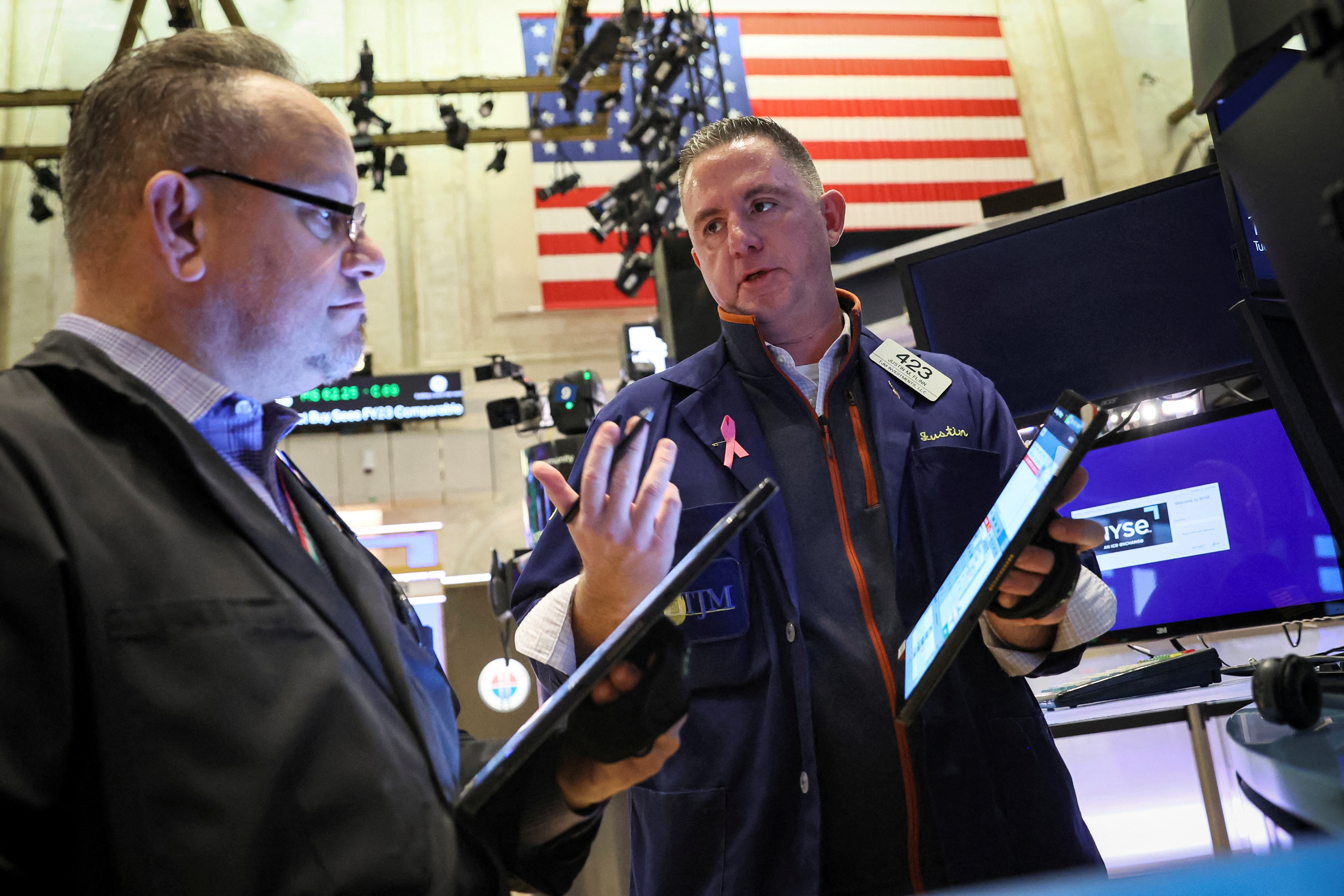
Traders work on the floor of the New York Stock Exchange (NYSE) in New York City, U.S., November 22, 2022. REUTERS/Brendan McDermid

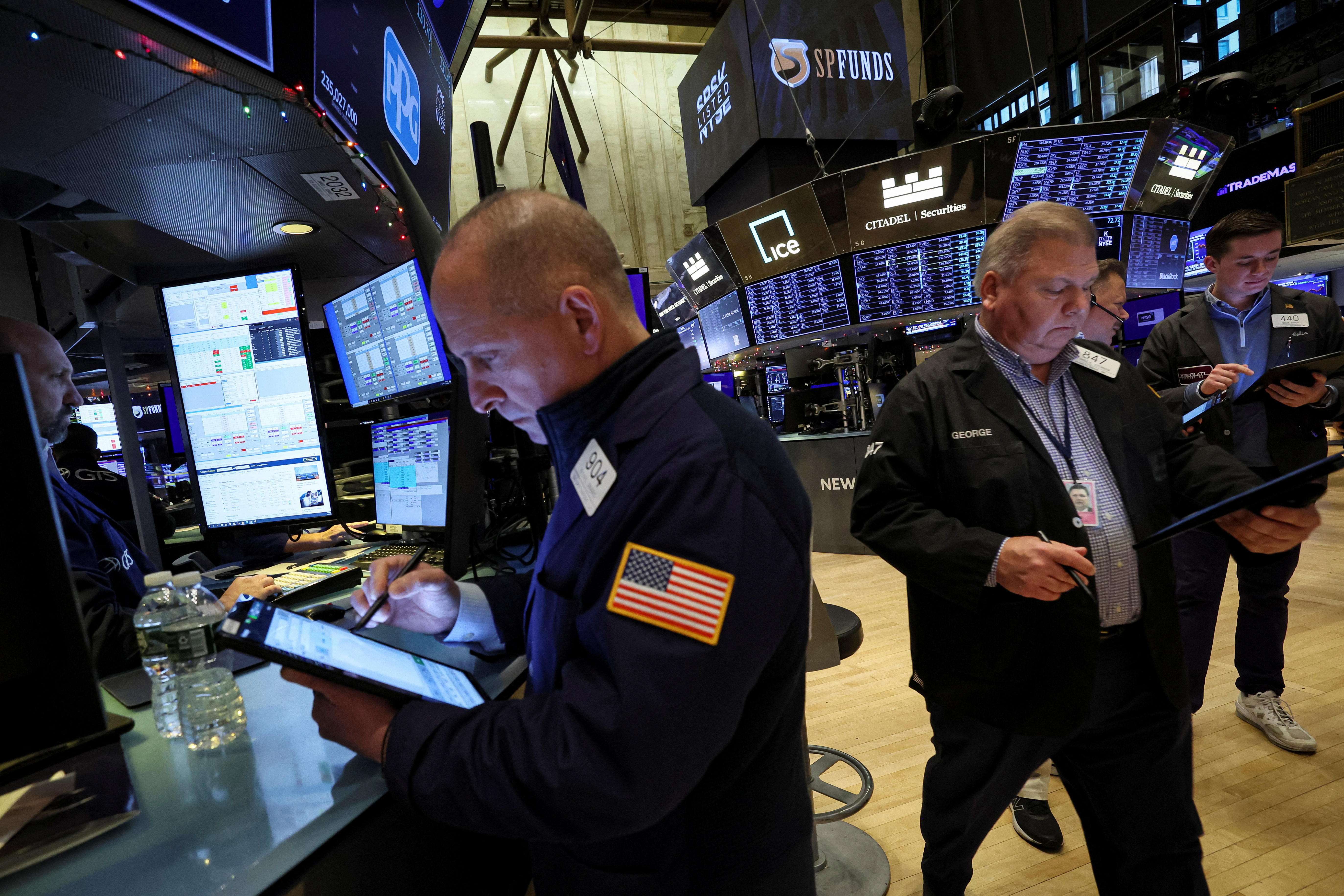
Traders work on the floor of the New York Stock Exchange (NYSE) in New York City, U.S., November 29, 2022. REUTERS/Brendan McDermid
Categories
Audio Sources - Full Text Articles

Islamic State says its leader was killed, names successor -audio message

2022-11-30T15:36:42Z

CAIRO (Reuters) -Islamic State (IS) militant leader Abu al-Hassan al-Hashemi al-Quraishi was killed in fighting, its spokesman said in an audio message posted on an affiliated Telegram channel, another heavy blow to a group that once struck fear across the Middle East.

IS has selected Abu al-Hussein al-Husseini al-Quraishi to as its new leader, the spokesman added. He said Abu al-Hassan al-Hashemi al-Quraishi was killed while “fighting enemies of God”, without elaborating.

No details about the new IS leader were given in the audio.

The spokesman urged Islamic State members in all countries to pledge allegiance to the new leader, adding that “he is one of the loyal sons of the (Islamic) state”.

“This doesn’t mean the group is finished, but for now it is a shadow of its former self, they are hollowed out in terms of their leadership and their ability to carry out attacks,” said Hassan Hassan, author of a book on Islamic State.

“They don’t have iconic, charismatic leaders any more, and they haven’t carried out any major attacks recently.”

The White House welcomed the news that Abu al-Hassan al-Hashemi al-Quraishi had been killed, National Security Council spokesman John Kirby told reporters.

“We’re still working our way through that,” Kirby said when asked about reports of the death.

Islamic State announced Abu al-Hassan al-Hashemi al-Quraishi as its new leader in March after the death of predecessor Abu Ibrahim al-Hashemi al-Quraishi.

The latter Quraishi was the brother of slain former IS caliph Abu Bakr al-Baghdadi, according to two Iraqi security officials and one Western security source.

Both Quraishi and Baghdadi died by blowing themselves and family members up during U.S. raids on their hideouts in northern Syria.

Islamic State emerged from the chaos of the civil war in neighbouring Iraq and took over vast swathes of Iraq and Syria in 2014. Baghdadi declared an Islamic caliphate from a mosque in the northern Iraqi city of Mosul that year and proclaimed himself caliph of all Muslims.

Islamic State’s brutal rule, during which it killed and executed thousands of people in the name of its narrow interpretation of Islam, came to an end in Mosul when Iraqi and international forces defeated the group there in 2017.

Since the peak of its power seven years ago, when it ruled millions of people in the Middle East and frightened the world with deadly bombings and shootings, Islamic State has slipped back into the shadows.

Its remaining thousands of militants have in recent years mostly hid out in remote hinterlands of fractured Iraq and Syria, though they are still capable of carrying out significant insurgent-style attacks.

WP Radio
WP Radio
OFFLINE LIVE