Categories
Saved Web Pages

Biden Celebrates Beating the Odds, but He Faces a New Challenge

09dc-biden-sub1-facebookJumbo.jpg

President Biden appeared to have the best midterms of any president in 20 years, avoiding the “shellacking” his predecessors endured. But even a narrow Republican majority could transform his presidency.

  • Send any friend a story

    As a subscriber, you have 10 gift articles to give each month. Anyone can read what you share.

    Give this articleGive this articleGive this article
President Biden, wearing a blue suit, holds a microphone while looking at a reporter asking a question into a microphone, which was held by a White House staffer.

President Biden scored the best midterm result of any president in 20 years, avoiding a predicted Republican surge.Credit…Doug Mills/The New York Times

Peter Baker
Nov. 9, 2022Updated 7:05 p.m. ET

WASHINGTON — President Biden on Wednesday celebrated avoiding the “giant red wave” that many had anticipated in this week’s midterm elections and reaffirmed that he intends to run again in 2024, even as he vowed to work across the aisle with ascendant congressional Republicans.

While the president appeared to have beaten the historical odds by minimizing his party’s losses, he still faced the sobering prospect of a Republican-controlled House for the next two years even if Democrats hold the Senate, jeopardizing his ambitious legislative agenda and presaging a new era of grinding conflict with subpoena-powered opponents.

But at a post-election news conference at the White House, a cheerful Mr. Biden appeared energized by the better-than-expected results, calling it “a good day for democracy” while signaling no course correction and acknowledging no mistakes.

“I’m not going to change,” he said. While open to cooperation with Republicans, he defiantly said he would block any efforts by the opposition to unravel the accomplishments of his first two years. “I have a pen that can veto,” he said, making a signing motion with his hand.

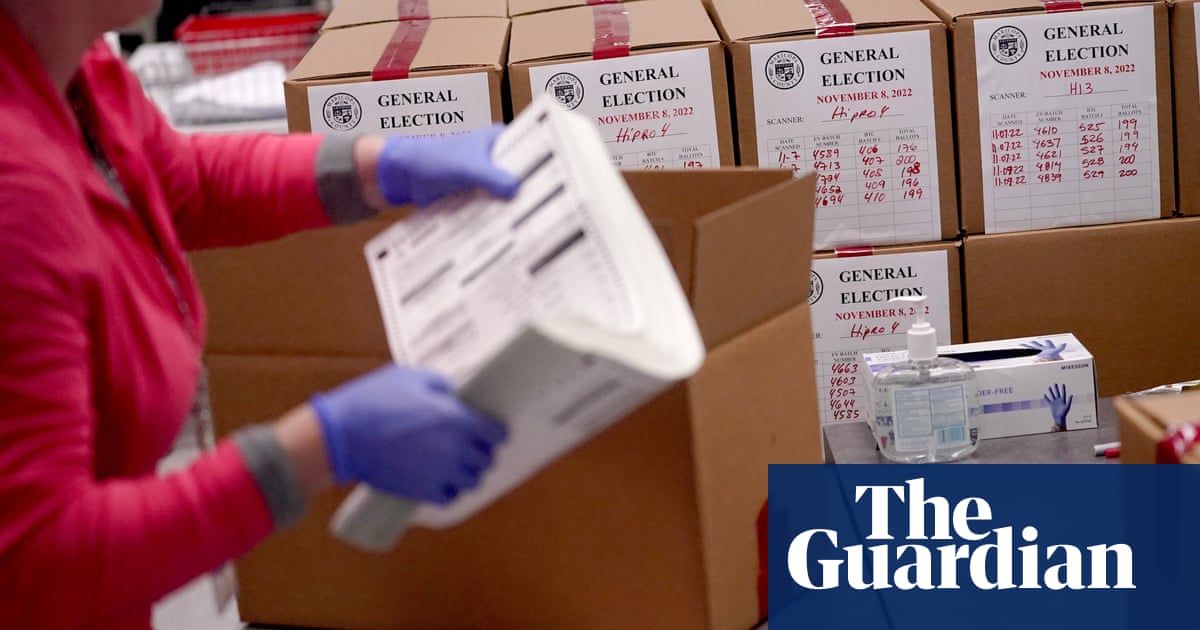
The mixed results from the midterm elections will take days or weeks to unfold as counting continues in key states and a Senate runoff looms in Georgia. It may take even longer to determine definitively what those results will mean for the rest of the Biden presidency. By any measure, Mr. Biden scored the best midterm result of any president in 20 years, avoiding the Republican surge that many strategists in both parties predicted, even as it could leave him with a more hostile Congress and uncertain prospects for advancing his priorities for the remainder of his term.

The elections were not a clear mandate for Mr. Biden, but neither were they the repudiation that many of his predecessors endured during midterms. An aging president sometimes seen as frail and hobbled by the highest inflation in four decades, an overseas war roiling energy markets and anemic poll numbers somehow overcame expectations anyway — another chapter in Mr. Biden’s lifelong narrative of stubborn resilience in the face of adversity.

The results may encourage him to seek re-election and could for now quiet dissenting voices within his party that have been agitating for another standard-bearer in 2024 as he approaches his 80th birthday later this month. He has some breathing room to think it over without feeling rushed because former President Donald J. Trump may jump into the race as soon as next week. Mr. Biden indicated that he would talk it over with his family during the holidays and announce a decision “early next year.”

“Our intention is to run again,” he said. “That’s been our intention regardless of what the outcome of this election was.”

He added: “This is ultimately a family decision. I think everybody wants me to run, but we’re going to have discussions about it. And I don’t feel any hurry one way or another to make that judgment, today, tomorrow, whenever, no matter what my predecessor does.”

Asked if polling that shows most voters would rather he not run again would have any influence on his decision, he said crisply, “It doesn’t.” What would be his message to the doubters? “Watch me.”

Card 1 of 4

Much remains uncertain. For the second Election Day in a row, election night ended without a clear winner. Nate Cohn, The Times’s chief political analyst, takes a look at the state of the races for the House and Senate, and when we might know the outcome:

The House. The Needle suggests the House is leaning towards Republicans, but the G.O.P. is nowhere close to being called the winner in several key races, where late mail ballots have the potential to help Democrats. It will take days to count these ballots.

The Senate. The fight for the Senate will come down to four states: Wisconsin, Nevada, Georgia and Arizona. Outstanding ballots in Nevada and Arizona could take days to count, but control of the chamber may ultimately hinge on Georgia, which is headed for a Dec. 6 runoff.

How we got here. The political conditions seemed ripe for Republicans to make big midterm pickups, but voters had other ideas. While we wait for more results, read our five takeaways and analysis of why this “red wave” didn’t materialize for the G.O.P.

Even as the elections lifted Mr. Biden’s spirits, they undercut Mr. Trump, who watched with frustration as key allies went down to defeat and his own strongest rival for the next Republican nomination, Gov. Ron DeSantis, scored an impressive landslide victory in Florida. Exit polls showed that even a not-popular Mr. Biden retains more public support than his predecessor.

The president conceded that Mr. Trump’s supporters retain enormous influence and will be a challenge for him. “I don’t think that we’re going to break the fever for the super-mega MAGA Republicans,” he said. But he expressed hope that he can find common ground with the rest of the Republicans, whom he called “decent, honorable people.”

“As I have throughout my career, I’m going to continue to work across the aisle to deliver for the American people,” he said. “And it is not always easy, but we did it in the first term.” To those Republicans planning to investigate his administration and even his family, he said, “Good luck in your senior year, as my coach used to say.”

Mr. Biden acknowledged that the midterm elections were not a sign of satisfaction by the public. “The voters were also clear that they are still frustrated,” he said. “I get it. I understand it has been a really tough few years in this country for so many people.”

Mr. Biden spoke a day before he is scheduled to leave town for an overseas trip that will allow him to emphasize his role as a world leader floating above domestic troubles. He is set to head to a series of meetings with international leaders in Egypt, Cambodia and Indonesia with more wind at his back than anticipated, allowing him to avoid the perception of a president in trouble back home.

In his news conference, Mr. Biden repeatedly returned to two themes: that Tuesday’s elections showed a renewed level of civility in the political process, and that they should reassure American allies and adversaries that the democratic process is alive in the United States.

He recalled his first Group of 7 summit in 2021, held in a British coastal resort, and remembered telling the assembled world leaders “that America is back. And one of them turned to me and said, for how long? For how long?”

But Mr. Biden may return from his overseas trip to a reality that is less heady than the Democratic exuberance now rippling through the party. If Republicans pick up the handful of seats needed to secure the House, as currently projected, not only would they be able to block Mr. Biden’s top legislative initiatives, but they would also be empowered to try to force the president to make concessions in some policy areas through the power of the purse.

While Mr. Biden remains armed with his veto pen, as he said, the road to keeping government doors open and avoiding default on the national debt could run through Representative Kevin McCarthy of California, the Republican leader aiming to become speaker. Just as ominous for the White House, Representative Jim Jordan of Ohio, the hard-charging firebrand Trump ally set to take over the House Judiciary Committee, would have subpoena power to investigate the Biden administration.

The road to keeping government doors open and avoiding default on the national debt could run through Representative Kevin McCarthy of California, the Republican leader aiming to become speaker.Credit…Doug Mills/The New York Times

Democrats are in a better position to hold onto the Senate, but it will come down to a few outstanding races and possibly could wait until a Dec. 6 runoff election in Georgia. The loss of the Senate would not only further complicate Mr. Biden’s legislative aspirations but also hinder his efforts to confirm officials to his administration and judges to the federal bench, even possibly a Supreme Court justice, should a vacancy emerge.

The historical headwinds Mr. Biden faced as he went into Tuesday night were powerful. Only three times since the first congressional elections after World War II has inflation been as high as it is today heading into a national vote — in 1974, 1978 and 1980 — and in all three cases, the party of the incumbent president lost between 15 and 48 seats in the House.

How we get live election results. We report vote totals provided by The Associated Press, which collects results from states, counties and townships through a network of websites and more than 4,000 on-the-ground correspondents. To estimate how many votes remain to be counted, our team of data journalists and software engineers gathers vote tallies directly from the websites of election officials and compares these with our turnout expectations.

Given that history and Mr. Biden’s weak approval ratings, the possibility that the Republican pickups in the House this year could be held to about a dozen seats looked like a victory, especially compared with the losses of recent presidents. Bill Clinton’s Democrats lost 54 House seats in 1994, George W. Bush’s Republicans lost 31 seats in 2006 (a “thumping,” he called it), Barack Obama’s party lost 64 seats in 2010 (a “shellacking”) and Mr. Trump’s Republicans lost 42 seats in 2018.

“The political graveyards are full of those who underestimated him,” Paul Begala, who was a top adviser to Mr. Clinton, said of Mr. Biden. “How many times in 2020 did they count him out?” Or, he added, dismiss his chances of pushing through legislation that he eventually passed? “Politics is an uncertain business. But one constant remains: Joe Biden will be underestimated.”

For Mr. Biden, there could be an advantage in having Republican control on Capitol Hill, enabling him to use the opposition as a foil much as Mr. Clinton and Mr. Obama did after their midterm defeats. Both of those presidents employed a mix of confrontation and compromise to rebound from those losses and go on to win re-election two years later.

Aides to Mr. Biden insist there are potential areas of cooperation even with today’s Trump-dominated Republicans, focusing on issues that are at the top of both parties’ priority lists, like combating the opioid crisis, imposing new regulations on major technology companies and fighting crime.

And some Republicans signaled on Tuesday night that they would like to find discreet areas of common ground. “If it’s a divided government, maybe something good can come of it,” Senator Lindsey Graham, Republican of South Carolina and one of Mr. Trump’s closest allies, told NBC News.

But the historical pattern of bipartisan deal making may be less relevant in an age of extremes. Although Mr. Biden has a history of working across the aisle, the next House Republican conference will be even more dominated by allies of Mr. Trump. And if Mr. Trump campaigns for the White House, he seems likely to goad those members to resist the sitting president at every turn.

“Before, one could read such a midterm as a sign that the country wanted cooperation among both parties rather than rule by one,” said Russell Riley, a presidential scholar at the University of Virginia’s Miller Center. “That hardly seems plausible now — either in theory or in practice. The result of a divided government now is more akin to putting armed gladiators in the arena.”

Watching election news coverage at a bar in Washington on Tuesday. Credit…Kenny Holston for The New York Times

And Mr. Biden would face pushback from some in his own party if he concedes too much in their view in the interest of bipartisanship. “Voters sent a clear message that working people are hurting and demanding more action not less,” Representative Pramila Jayapal, Democrat of Washington state and head of the Congressional Progressive Caucus, said on Wednesday. “That is the big takeaway from last night, whether or not we keep the House.”

As it stands, Mr. Biden already has a lot of work to be done, without Congress, just putting into effect the legislation he passed in his first two years, including trillions of dollars in spending on infrastructure, climate change, health care, manufacturing and other areas. As aides envision it, Mr. Biden could spend much of the next two years crisscrossing the country for ribbon-cutting ceremonies.

But the confrontation part of the Clinton-Obama strategy may yet be the formula he turns to. “In terms of Biden’s hopes of getting re-elected, he knows from experience that losing a midterm election positions the president to become a counterpuncher — as Obama did in 2011-2012 and Clinton did in 1995-1996,” said Michael Nelson, a political science professor at Rhodes College and author of several books on modern presidents. “It would help if the Republicans overplayed their hand as they did in those two prior cases.”

David E. Sanger contributed reporting.

Categories
Saved Web Pages

Senate control still a toss-up as key midterm races remain uncalled

5086.jpg?width=1200&height=630&quality=8

Control of the US Senate was still up in the air on Wednesday as several hotly contested seats remained uncalled and the fierce race between Georgia’s Democratic incumbent senator Raphael Warnock and his Republican challenger Herschel Walker moved to a runoff.

Warnock is narrowly leading Walker, but neither candidate will be able to clear the 50% threshold needed to win outright after the polls closed on Tuesday and avoid a 6 December runoff, said Georgia’s top elections official, Brad Raffensperger.

The Associated Press has not yet called the Georgia race, though several major broadcast networks had projected a runoff before Raffensperger.

The Democrats entered the midterms with the slimmest of advantages in the Senate, which was evenly divided 50-50, though Vice-President Kamala Harris’s tie-breaking vote in effect gives them control of the chamber.

Warnock won his current partial term over then Republican incumbent Kelly Loeffler during a runoff in 2020 which helped decide the upper congressional chamber’s balance of power. Like Loeffler was, his opponent this time is backed by Donald Trump, though the ex-president’s former adviser Kayleigh McEnany on Wednesday questioned whether he should campaign alongside Walker after other candidates that he endorsed underperformed or lost on Tuesday.

Warnock – a senior minister at Atlanta’s historic Ebenezer Baptist church – unsuccessfully sought to win outright by portraying Walker as unfit for office, alluding to allegations that the Republican candidate was violent against his ex-wife and paid for two past sexual partners to terminate pregnancies despite publicly claiming to oppose abortion rights.

“I’ll work with anybody to get things done for the people of Georgia,” Warnock said as the prospect of a runoff with Walker came into focus.

Walker, for his part, aimed to cast Warnock as a rubber-stamp vote for the Joe Biden White House. Warnock, the former football star contended, has “forgotten about the people of Georgia”.

The contest between Warnock and Walker is one of a handful of unresolved midterm Senate races that could determine control of the chamber. Eyes across the nation were also on Nevada and Arizona on Wednesday.

In Nevada as of midday on Wednesday, with about 77% of the votes counted, Democratic incumbent Catherine Cortez Masto was trailing her Republican rival Adam Laxalt, 47.2% to 49.9%.

Cortez Masto is the first Latina senator. Laxalt is a former state attorney general who aided Trump’s efforts to overturn the 2020 election.

Both candidates have urged patience as residents wait to hear the outcome of the race and several other close elections, which could take days.

Democratic Senator from Nevada Catherine Cortez Masto arrives at a campaign event.Democratic Senator from Nevada Catherine Cortez Masto arrives at a campaign event. Photograph: Caroline Brehman/EPA

“The votes are still being counted. We know this will take time and we won’t have more election results for several days,” Cortez Masto said at an election night gathering. “I am confident in the campaign that we have built to win.”

Laxalt said he was confident the results would favor him, telling supporters : “We are exactly where we want to be in this race.”

Meanwhile, Arizona’s Democratic incumbent Mark Kelly was ahead of his Republican challenger, Blake Masters, 51.4% to 46.4%, with 45% of the vote counted.

Kelly, a former astronaut and husband of ex-congressional representative Gabby Giffords, was elected to office in a 2020 special election that delivered both of Arizona’s Senate seats to Democrats for the first time in 70 years.

This year, he has a sizable edge among early votes cast in crucial Maricopa and Pima counties, but he is likely to see his lead tighten as more votes are tallied.

Masters, a venture capitalist endorsed by Trump, struggled throughout his campaign as he waffled between professing far-right ideologies and dialing back his most extreme views.

Once a Republican bastion, Arizona has recently become a closely watched swing state where close races can take weeks to tabulate. State law gives officials until 28 November to tally ballots.

Voters were expected to weigh economic concerns above most other issues. Phoenix, one of the fastest growing US cities, also has the highest inflation rate in the country. Kelly tried to distance himself from Joe Biden, whom six in 10 Arizona voters blame for inflation, according to AP VoteCast, an expansive survey of more than 3,200 voters in the state.

The parties by Wednesday had split key races in Pennsylvania and Wisconsin.

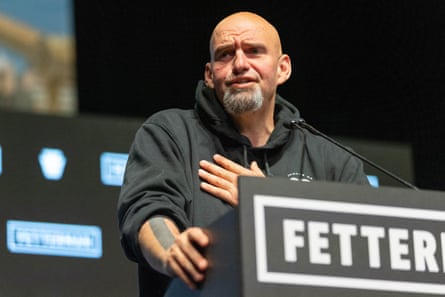
John Fetterman speaks during his midterm elections night party in Pittsburgh, Pennsylvania.John Fetterman speaks during his midterm elections night party in Pittsburgh, Pennsylvania. Photograph: Quinn Glabicki/Reuters

Pennsylvania’s Democratic lieutenant governor, John Fetterman, won a Senate seat up for grabs in his state over the Trump-backed Republican television personality Dr Mehmet Oz. An outgoing Republican held the seat, representing a flip in the Democrats’ favor.

In the meantime, Republican incumbent Ron Johnson held off a challenge from his Democratic opponent, Mandela Barnes.

As for the US House, many races there were still too close to call on Wednesday.

Vulnerable Democratic incumbents such as Virginia’s Abigail Spanberger and Michigan’s Elissa Slotkin scored narrow wins, keeping the party’s hopes alive of either retaining control of the lower congressional chambers or limiting Republican gains significantly more than initially predicted.

Maanvi Singh and Dani Anguiano contributed reporting

Categories
Saved Web Pages

2022 New York state legislative general election results

open-graph.png

Democrats in the state Legislature are in for a close fight, as early returns on election night showed several incumbents in extremely tight races – including several potential surprise upsets.

While few of the state Legislature’s most competitive races were called as of 1 a.m. on Wednesday – and Suffolk County had yet to report any results – early tallies showed Democratic incumbents including state Sens. James Skoufis, Elijah Reichlin-Melnick, Pete Harckham, and Assembly Members Stacey Pheffer Amato, Mathylde Frontus and Peter Abbate Jr. with tight margins.

Democratic Assembly Member Steven Cymbrowitz and state Sen. John Brooks, meanwhile, trailed their Republican opponents by much more drastic margins.

With results slowly trickling in, these races are still in flux and a clear picture of the Legislature’s makeup is not yet evident. But much of the potential trouble for Democrats came from pockets of Brooklyn and the Lower Hudson Valley, where the party appeared to have underperformed.

After gaining a supermajority in the state Senate in 2020, Democrats have dominated the state Legislature. But initial election results show that Republicans have a good chance at picking off some of that edge. In their attempt to do so, Republican candidates have largely campaigned on inflation and crime – the top two issues for most voters heading to the polls.

After a chaotic redistricting process that led to a court-appointed special master redrawing new state Senate maps, Republicans are in a comparatively better position than the maps proposed by Democrats. However, compared to the previous maps based on the 2010 census, the Republican Party still finds itself in a tough position heading into Election Day – with many of their safe seats turned competitive. Long Island is home to several contentious races and a key battleground that Republicans are hoping to win. The new state Senate maps created lots of competitive races – pitting incumbents against one another, the potential for political comebacks and several open seats. And while the Assembly doesn’t have as many competitive races, there are still a few worth keeping an eye on.

These Democratic candidates have been declared as winners in the following state Senate races: Kevin Thomas (6), James Sanders Jr. (10), Michael Gianaris (12), Jessica Ramos (13), Leroy Comrie (14), Julia Salazar (18), Roxanne Persaud (19), Zellnor Myrie (20), Kevin Parker (21), Simcha Felder (22), Jabari Brisport (25), Andrew Gounardes (26), Brian Kavanagh (27), Liz Krueger (28), José M. Serrano (29), Cordell Cleare (30), Robert Jackson (31), Luis Sepúlveda (32), Gustavo Rivera (33), Andrea Stewart-Cousins (35), Jamaal Bailey (36), Shelley Mayer (37), Neil Breslin (46), Brad Hoylman (47), Samra Brouk (55), Kristen Gonzalez (59), Sean Ryan (61), Timothy Kennedy (63).

These Republican candidates have been declared as winners in the following state Senate races: Alexis Weik (8), Andrew Lanza (24), Dan Stec (45), Mark Walczyk (49), Joseph Griffo (53), Pamela Helming (54), Thomas O’Mara (58), Patrick Gallivan (60), Robert Ortt (62).

In addition to the competitive races that City & State New York is tracking on election night, these are the likely Democratic state Senate winners – with their district numbers in parentheses – of races that aren’t expected to be close: Toby Ann Stavisky (11), Joseph Addabbo (15), John Liu (16), Nathalia Fernandez (34), Rachel May (48).

These are the likely Republican state Senate winners of races that aren’t expected to be close: Dean Murray (3), Peter Oberacker (51), George Borrello (57).

For third-party abbreviations below, WFP is the Working Families Party, CON is the Conservative Party, IND is the Independence Party and MFP is the Medical Freedom Party.

Click here to view the statewide general election results and the congressional election results.

State Senate

1st District

Suffolk County

Incumbent: Anthony Palumbo (R)

Anthony Palumbo (R, CON): 54.83%

Skyler Johnson (D, WFP): 42.30%

With 208 of 211 election districts reported

2nd District

Suffolk County

Incumbent: Mario Mattera (R)

Mario Mattera (R, CON): 56.66%

Susan Berland (D, WFP): 40.85%

With 269 of 270 election districts reported

4th District

Suffolk County

Incumbent: Vacant, Republican Phil Boyle retired on Oct. 21

Monica Martinez (D, WFP): 49.18%

Wendy Rodriguez (R, CON): 46.85%

With 198 of 201 election districts reported

5th District

Nassau County

Incumbent: John Brooks (D)

Steven Rhoads (R, CON): 59.03%

John Brooks (D, WFP): 37.86%

With 257 of 257 election districts reported

7th District

Nassau County

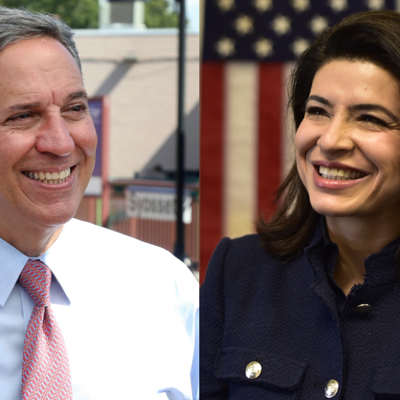
Incumbent: Anna Kaplan (D)

Jack Martins (R, CON): 51.98%

Anna Kaplan (D, WFP): 45.45%

With 264 of 264 election districts reported

9th District

Nassau County

Incumbent: Vacant, Todd Kaminsky (D) resigned on July 29

Patricia M. Canzoneri-Fitzpatrick (R, CON): 53.84%

Kenneth Moore (D, WFP): 42.09%

With 246 of 246 election districts reported

17th District

Bensonhurst, Bay Ridge and Sunset Park, Brooklyn

Incumbent: 

Iwen Chu (D, WFP): 48.30%

Vito LaBella (R, CON): 47.70%

With 123 of 123 election districts reported

23rd District

North Shore of Staten Island and Coney Island, Brooklyn

Incumbent: Diane Savino (D), who is not seeking reelection

Jessica Scarcella-Spanton (D): 49.01%

Joseph Tirone (R, CON): 46.38%

With 162 of 162 election districts reported

38th District

Rockland County

Incumbent: Elijah Reichlin-Melnick (D)

Bill Weber (R, CON): 49.29%

Elijah Reichlin-Melnick (D, WFP): 45.81%

With 286 of 286 election districts reported

39th District

Hudson Valley

Incumbent: James Skoufis (D) running in the 42nd District

Rob Rolison (R): 51.30%

Julie Shiroishi (D, WFP): 44.84%

With 261 of 261 election districts reported

40th District

Westchester, Putnam and Rockland counties

Incumbent: Pete Harckham (D)

Pete Harckham (D, WFP): 53.26%

Gina Arena (R): 46.74%

With 350 of 355 election districts reported

41st District

Hudson Valley

Incumbents: Sue Serino (R), Michelle Hinchey (D), who were redistricted into the same seat

Michelle Hinchey (D, WFP): 51.63%

Sue Serino (R, CON, IND): 46.94%

With 297 of 297 election districts reported

42nd District

Orange County

Incumbent: James Skoufis (D)

James Skoufis (D, WFP): 48.95%

Dorey Houle (R, CON): 47.76%

With 275 of 275 election districts reported

43rd District

Rensselaer, Washington and Albany counties

Incumbent: Daphne Jordan (R), who dropped out due to redistricting

Jake Ashby (R, CON): 51.39%

Andrea Smyth (D, WFP): 45.47%

With 255 of 255 election districts reported

44th District

Saratoga and Schenectady counties

Incumbent: James Tedisco (R)

James Tedisco (R, CON): 55.98%

Michelle Ostrelich (D, WFP): 41.87%

With 248 of 248 election districts reported

50th District

Onondaga and Oswego counties

Incumbent: John Mannion (D)

Rebecca Shiroff (R, CON): 49.29%

John Mannion (D, WFP): 48.97%

With 289 of 289 election districts reported

52nd District

Tompkins, Cortland and Broome counties

Incumbent: Fred Akshar (R), running for Broome County sheriff

Lea Webb (D, WFP): 49.82%

Richard David (R, CON): 48.41%

With 222 of 222 election districts reported

56th District

Monroe County

Incumbent: Jeremy Cooney (D)

Jeremy Cooney (D, WFP): 52.73%

Jim VanBrederode (R, CON, IND): 44.95%

With 0 of 340 election districts reported

Assembly

District 15

Northeastern Nassau County

Incumbent: Michael Montesano (R), who is running for Nassau County District Court judge

Jake Blumencranz (R, CON): 55.47%

Amanda Field (D): 40.33%

With 112 of 112 election districts reported

District 21

Malverne, Lynbrook and Rockville Centre, Nassau County

Incumbent: Judy Griffin (D)

Judy Griffin (D): 48.33%

Brian Curran (R, CON): 48.85%

With 117 of 117 election districts reported

District 23

Howard Beach and Rockaway, Queens

Incumbent: Stacey Pheffer Amato (D)

Tom Sullivan (R, CON): 49.24%

Stacey Pheffer Amato (D): 48.44%

With 105 of 105 election districts reported

District 30

Elmhurst and Woodside, Queens

Incumbent: Brian Barnwell (D), who is not seeking reelection

Steven Raga (D): 54.55%

Sean Lally (R, MFP): 39.63%

With 70 of 70 election districts reported

District 45

Gravesend and Brighton Beach, Brooklyn

Incumbent: Steven Cymbrowitz (D)

Michael Novakhov (R, CON): 58.20%

Steven Cymbrowitz (D, IND): 38.25%

With 54 of 54 election districts reported

District 46

Bay Ridge, Fort Hamilton and Coney Island, Brooklyn

Incumbent: Mathylde Frontus (D)

Alec Brook-Krasny (R, CON): 49.11%

Mathylde Frontus (D, WFP): 46.32%

With 76 of 76 election districts reported

District 49

Dyker Heights, Bath Beach, Bensonhurst and Borough Park, Brooklyn

Incumbent: Peter Abbate Jr. (D)

Lester Chang (R, CON): 50.29%

Peter Abbate Jr. (D): 45.61%

With 52 of 52 election districts reported

District 63

Mid-Island, Staten Island

Incumbent: Michael Cusick (D), who is not seeking reelection

Sam Pirozzolo (R, CON): 53.54%

Vincent Argenziano (D, I): 44.22%

With 77 of 77 election districts reported

District 73

Upper East Side, Manhattan

Incumbent: Dan Quart (D), who is not seeking reelection

Alex Bores (D, WFP): 71.08%

David Casavis (R): 25.10%

With 71 of 71 election districts reported

District 90

Yonkers

Incumbent: Nader Sayegh (D)

Nader Sayegh (D, Fair Deal): 47.97%

Michael Breen (R, CON): 46.89%

With 163 of 166 election districts reported

District 97

Rockland County

Incumbent: Mike Lawler (R), who is running for Congress in the 17th District

John McGowan (R, CON): 61.35%

Eudson Tyson Francois (D): 30.33%

With 106 of 106 election districts reported

District 99

Orange and Rockland counties

Incumbent: Colin Schmitt (R), who is running for Congress in the 18th District

Christopher Eachus (D): 47.52%

Kathryn Luciani (R, CON): 47.47%

With 100 of 100 election districts reported

District 113

Saratoga, Warren and Washington counties

Incumbent: Carrie Woerner (D)

Carrie Woerner (D): 51.22%

David Catalfamo (R, CON): 46.99%

With 110 of 110 election districts reported

District 135

East Rochester and Pittsford

Incumbent: Jennifer Lunsford (D)

Jennifer Lunsford (D, WFP): 54.41%

Joseph Chenelly (R, CON): 44.10%

With 0 of 148 election districts reported

Categories
Saved Web Pages

The Guardian view on the US midterm results: the red wave that wasn’t | Editorial

3500.jpg?width=1200&height=630&quality=8

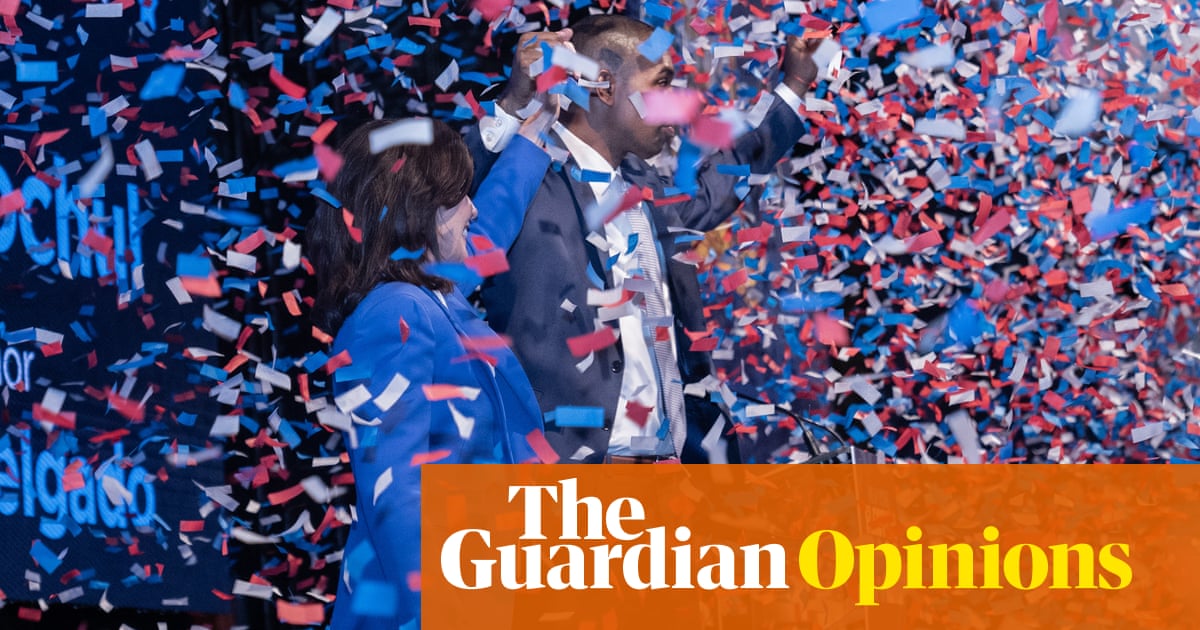
Some setbacks count almost as good news. Clearly, the Democrats have lost ground in the midterms. While it may be weeks before control of the Senate is determined, if Georgia goes to a runoff, the Republicans still appear likely to take the House, though more narrowly than hoped. They will use control to mire the administration in legislative deadlock and committee investigations. High-profile Democrats such as Stacey Abrams in Georgia and Beto O’Rourke in Texas were also easily defeated.

But this was “definitely not a Republican wave, that is for darn sure”, the senator Lindsey Graham acknowledged as early results came in on Tuesday night. The sense of the GOP falling short is not just about pre-poll punditry. Joe Biden may be on track for the best performance by an incumbent in the midterms since 2002, when George W Bush enjoyed extraordinary popularity in the wake of September 11. Mr Biden’s approval ratings are mediocre at best, thanks in large part to high inflation. Yet the president appears to have done markedly better than Barack Obama did in 2010 on similar figures.

It was also a bad night for Donald Trump, expected to declare his 2024 candidacy this week. There will be an increased Maga caucus in the House (giving Kevin McCarthy, currently minority leader, a headache). But while the former president’s support may be critical in primaries, it looks less helpful in general elections. True, JD Vance won his Senate race in Ohio; but the Democrat John Fetterman flipped Pennsylvania, defeating Mehmet Oz, and in Michigan, the governor Gretchen Whitmer saw off the challenge from Tudor Dixon. Two Republican victories were almost as unwelcome to Mr Trump: the re-election of Georgia’s governor, Brian Kemp, who defied his pressure to overturn the results in the state in 2020, and especially the landslide in Florida for Ron DeSantis, seen as the most likely challenger for the presidential nomination – as Mr Trump’s threats to the governor show.

In many ways the Democrats’ performance looked more like the result of a vote against Republican extremism than a vote of confidence in Mr Biden’s party. Inflation was the top issue for voters, but abortion came close behind – and outranked it in Pennsylvania. Despite GOP candidates’ last-minute attempts to blur their hardline anti-abortion stances, as they realised their unpopularity, voters turned out to defend women’s right to autonomy and healthcare. California, Michigan and Vermont supported ballot measures that effectively prevent state legislators enacting bans. In North Carolina (a key destination for people from anti-abortion states), Republicans did not get the supermajority they sought in the state house, which would have allowed them to enact a total or six-week abortion ban. Protecting democracy was another key concern for voters. An alarming number of election deniers won races; some will now oversee future votes. But many others were rejected.

Overall the results are a fillip for Democrat morale and, despite Mr Biden’s relatively low profile in this campaign, strengthen his position in his party (though according to one exit poll, only 30% of voters said they wanted him to run again in 2024; 67% said they didn’t). He will also retain precious authority in international dealings. All this is a relief. But after one of the most ferociously fought elections, with a staggering $16.7bn spent, the US’s challenges and divisions are as glaring as ever.

Categories
Saved Web Pages

Putin’s top security official visits Iran as Russia seeks precision weapons.

merlin_215044842_3e3c48e3-9ff3-4584-9d7f

The visit comes as Western and Ukrainian officials warn that Russia is trying to secure high-tech Iranian missiles and drones to deploy on the battlefield.

  • Send any friend a story

    As a subscriber, you have 10 gift articles to give each month. Anyone can read what you share.

    Give this articleGive this articleGive this article
People protesting outside Iran’s Embassy in Kyiv, the Ukrainian capital, after Russia used Iranian-supplied explosive drones to attack the center of the city last month.

People protesting outside Iran’s Embassy in Kyiv, the Ukrainian capital, after Russia used Iranian-supplied explosive drones to attack the center of the city last month.Credit…Brendan Hoffman for The New York Times

  • Nov. 9, 2022, 1:22 p.m. ET

The Kremlin’s top security adviser arrived in Tehran late Tuesday amid growing signs that advanced Iranian weapons are being used on Ukrainian battlefields.

Russian and Iranian state news agencies described a visit by Nikolai Patrushev, the head of Russia’s National Security Council, as a routine trip to discuss joint projects.

“In Tehran, Patrushev will hold regular Russian-Iranian security consultations,” read a report by Russia’s state-run TASS news agency.

Mr. Patrushev, a hardline ally of President Vladimir V. Putin, is the latest senior Russian official to visit Iran since the start of the war. His visit comes as Western and Ukrainian officials warn that Russia is trying to secure Iranian precision-guided missiles and drones to lift its flagging military fortunes in Ukraine.

The prolonged war has decimated Russia’s weapon stocks, forcing it to turn to its few remaining allies, such as Iran and North Korea, to try countering the flood of Western military hardware to Ukraine, these officials said. Last week, the Pentagon claimed that North Korea is covertly supplying a “significant number” of artillery shells to Russia. North Korea has denied the reports.

For its part, Iran has indicated that it planned to sell ballistic missiles to Russia. It has also denied selling attack drones since the start of the war, though the wreckage of them has now been found many times in Ukraine, and social media accounts associated with the Iranian security services have boasted of their use there.

Ukrainian officials claim that advanced Western air-defense systems have allowed them to partly neutralize Russian rockets and drones, but they warn that they have little defense against Iranian ballistic missiles.

Maj. Gen. Kyrylo Budanov, head of Ukraine’s defense intelligence directorate, has said delivery of Iranian missiles could happen by the end of November.

“It’s a serious threat because Iranian missiles, unlike Russian ones, are quite high-precision, very high-speed, and those features have been battle-proven,” he said in a recent interview with the War Zone, an online publication focused on military matters.

Iranian weapons have played a large role in Tehran’s proxy conflicts in Yemen and Syria, raising fears that its growing involvement in Ukraine could heighten tensions with Washington.

“When we see Iranian ballistic missiles being employed on the battlefield in Ukraine, we will do what we can to illuminate that,” a Pentagon spokesman, Brig. Gen. Pat Ryder, said on Tuesday.

Categories
Saved Web Pages

Can the FBI Be Saved from Itself—And Can We Be Saved from the FBI?

For the last half century, Americans have told themselves a pleasant story about the Federal Bureau of Investigation. It goes like this: Yes, there were abuses during the long tenure of FBI Director J. Edgar Hoover. But that was decades ago. After painful and revelatory hearings in the 1970s, Congress formed permanent select committees in the House and Senate to scrutinize the bureau and the intelligence community. The Justice Department issued new guidelines for the wiretapping authority that the FBI had arrogated to itself. The Foreign Intelligence Surveillance Act, or FISA, created a secret court to approve warrants to eavesdrop on American citizens. After the scandals exposed in the 1970s, or so the story goes, the FBI was reformed, reformed itself, and has earned its place as perhaps the most famous agency in the federal government and the best-known law-enforcement organization on earth.

A wonderful story. If only it were true. In fact, a half century after Hoover died in office, the FBI is mired in scandal again—and the record shows it has continued to conduct itself in highly questionable ways throughout the decades following Hoover’s passing. And while no director since Hoover has accumulated the power he held and wielded over Washington in his time, the bureau remains a threat to both the civil liberties of its targets and the democratic health of the republic.

Over the past six years in particular, we have learned that FBI officials routinely deceive not only the public but also the institutions designed to protect the public from FBI overreach. Agents lie to supervisors. Supervisors lie to judges. FBI directors mislead Congress. And almost no one is ever punished.

Recent reports from the Justice Department inspector general  found that field agents routinely fail to verify the facts they submit to the surveillance court in their warrant applications. Another report found that most FBI officials ignore the prohibition on contact with the media. In September, a Los Angeles judge accused the bureau of misleading the court in a search-warrant application it used to seize the contents of 1,400 safe-deposit boxes at strip-mall bank, many of which belonged to innocent citizens. Earlier in 2022, Congress learned that the lead agents investigating Larry Nasser, the USA Gymnastics doctor who serially abused gymnasts under his care, lied to their superiors about his lack of culpability even though they had evidence of his crimes, which delayed justice for his victims and allowed Nasser to continue his predations. One of the agents was allowed to retire with his full pension.

A month before the 2020 presidential election, the Justice Department and FBI announced the arrest of 13 members of the Michigan-based Wolverine Watchmen, which made it seem that the FBI had disrupted a near-miss kidnapping of Michigan’s governor, Gretchen Whitmer. Except, as Buzzfeed first reported, FBI informants and undercover agents “had a hand in nearly every aspect of the alleged plot, starting with its inception.” In April, the Justice Department lost its first trial, with the jury acquitting two of the plotters and failing to reach a verdict on two others. 

Also in the run-up to the 2020 election, the FBI warned Facebook and Twitter that Hunter Biden’s infamous laptop might have been the creation of a Russian disinformation effort, thus echoing a public statement to that effect issued by more than 50 former senior national-security officials and most of the media. Those warnings, recently confirmed on Joe Rogan’s podcast by Facebook founder Mark Zuckerberg, were a major reason why social-media companies took unprecedented steps before the election to throttle the distribution of and censor a New York Post exposé on the laptop.

Here’s the thing: The FBI’s own agents would later confirm the authenticity of emails from that laptop in their own investigation of Hunter Biden and his associates, according to the New York Times. 

Senior FBI officials caught lying or violating the rules in recent times have mostly evaded punishment. The ones who signed the fraudulent surveillance warrants relating to former Trump campaign aide Carter Page have paid no legal or reputational price for their actions. Earlier this year, the only FBI official convicted for the deception of the FISA court during Russiagate, a lawyer named Kevin Clinesmith, had his law license restored by the District of Columbia Bar. A senior FBI analyst who was referred for administrative discipline because of the Page warrant, Brian Auten, also managed to play a key role in the Hunter Biden probe in 2020. He threw up roadblocks in the investigation by denigrating accurate information about Biden’s relationship to a state-owned bank in China as Russian disinformation.

_____________

The last time the FBI faced a crisis in confidence comparable to the present was before 9/11. The mood was captured in a Time cover from April 28, 1997. It featured a package of stories under the heading: “What’s Wrong with the FBI?” In 1996, the FBI leaked that a security guard named Richard Jewell, who had discovered a backpack filled with pipe bombs at a parking lot at the 1996 Olympic Games in Atlanta, was actually a suspect in the bombing he foiled. For the next 80 days, the press picked Jewell’s life apart based on the anonymous whispers of the FBI and Atlanta police. He was innocent, though he was haunted and dogged by his trial by media. He died a decade later, a broken man of 44. Two years before his passing, the real bomber confessed.

The FBI’s relationship with Congress also took a nosedive around the same time. The bureau was unable to produce some 40,000 pages of documents requested by Congress with regard to the investigation into the 1995 white-militia bombing at the Alfred P. Murrah building in Oklahoma City—leading to wild speculation about what had happened to those papers. To get a sense of the public distrust of the bureau in those years, a 1999 poll found that 61 percent of Americans believed that the bureau’s agents had set the Branch Davidian compound ablaze—the home of the cult run by David Koresh—in Waco, Texas, in 1993. That was not the case. But the public’s confusion was understandable. Following the standoff, the lead agent at Waco told the press the FBI had used no pyrotechnics that day, when in fact it had.

In a parallel to the present day, the FBI also played a role in investigating the president—and details of the ongoing investigation into Bill Clinton’s presidential fundraising and even Hillary Clinton’s dealings in Whitewater were routinely leaked. Ongoing FBI investigations fed media scandals. Sound familiar?

The biggest blow to the FBI’s reputation was in the one area where Hoover excelled: counterintelligence. The FBI botched the investigation into nuclear scientist Wen Ho Lee so badly that the Justice Department had to settle for a minor conviction for mishandling a few classified documents, when initially the Bureau’s agents were sure that Lee was a full-blown spy for China. (FBI leaks about Lee led to a $1.5 million settlement paid to him in 2006.)

In the fourth week of George W. Bush’s presidency, the FBI arrested Robert Hanssen, one of its own agents, for spying for the Soviet Union. The damage was staggering. Hanssen had committed his treason undetected for more than 20 years. And yet there had been multiple red flags the FBI ignored. At one point, a crude hacking program was found on Hanssen’s computer, which Hanssen explained away to his colleagues as a way to recover the forgotten access code to an office printer. His own brother-in-law, also an FBI agent, once recommended that Hanssen be investigated after he learned from Hanssen’s wife that she had found a pile of cash in their dresser. Nothing happened. Hanssen himself was placed in charge of the mole hunt—in other words, he was given the job of finding…himself. To make matters even worse, for years the FBI pursued an innocent CIA officer its agents wrongly believed had been responsible for what they would later learn was Hanssen’s espionage.

All of this was the backdrop to a Senate Judiciary Committee hearing on “restoring the public’s trust in the FBI” on June 20, 2001. Even allies of the FBI could no longer defend its incompetence and dishonesty. Senator Chuck Grassley was blunt and withering in his assessment. “My father taught me the FBI could do no wrong,” he said. But the Iowa Republican no longer believed that. He said the presumption that the FBI “acted with integrity was shaken.” Senator Chuck Schumer offered this: “Sometimes you owe it to a friend to look him in the eye and tell him the hard truth. And that truth is this. The FBI has made mistake after mistake after mistake, and many of us are wondering now if those are random mistakes, or if it’s not something deeper.”

This was as close as the FBI came to receiving the kind of congressional scrutiny that had led to post-Hoover changes. In short order, two phenomena emerged and together they derailed the possibility of any significant reforms. They were 9/11 and Robert Mueller.

_____________

In the weeks and months after September 11, 2001, the FBI was simultaneously blamed and rewarded for the attacks. The bureau was blamed for failing to connect the dots; there was enough raw information in its hands for the FBI to have figured out the plot before it was executed. It was criticized for not sharing the intelligence it had with the CIA (which was also blamed for not sharing what it had with the FBI). As Thomas Kean, the Republican co-chair of the 9/11 Commission, said with exasperation at a 2004 hearing: “This is an agency that just does not work.”

And yet, as an institution, the bureau ended up making out like a bandit. Congress gave the FBI vast new authority to spy on potential terrorists inside America. The Patriot Act allowed the FBI to compel phone companies, banks, and employers to hand over records on a suspect while barring these institutions from publicly acknowledging they were under orders from the FBI. Prohibitions on intelligence-sharing between the FBI and other agencies (the CIA in particular) were lifted. At the same time, technological breakthroughs afforded the U.S. government the ability to collect more communications than at any time in its history. In previous eras, the FBI had to break into office buildings and doctor’s offices to steal files. In the new millennium, the bureau—with the help of the National Security Agency—could hoover up such data from the Internet’s wires.

It was the fallout from the investigation of Zacarias Moussaoui, sometimes known as the “20th hijacker,” that provided them with some of these new powers. FBI agents had arrested him less than a month before 9/11 in Minneapolis. The local agents wanted a surveillance warrant on Moussaoui to examine his computer and communications. But their managers at headquarters determined there was not enough probable cause to apply for the warrant.

From one perspective, the Moussaoui case could have served as a condemnation of FBI incompetency. The judgment that there was insufficient probable cause was just that—a judgment. They still could have taken the matter to a judge; the judge could have granted the warrant; and 9/11 may have been prevented.

But that is not the way it was read. Instead, the Moussaoui case became the primary example in the argument that it was time to do away with the so-called “wall” between intelligence and criminal investigations. After 9/11, the wall was agreed to be a luxury America could no longer afford. FBI Special Agent Coleen Rowley, who would later testify before Congress that her investigation into Mousaoui had been stymied by overly cautious managers, wrote in a 2002 letter to Mueller that excessive restrictions on intelligence collection before 9/11 had created a chilling effect when it came to domestic counterterrorism investigations.

Perhaps. But the fact is, the FBI had already figured out how to game the system. In two major counterterrorism investigations before 9/11, FBI agents had obtained warrants for criminal investigations by pretending they were intelligence investigations. At the time, the bar for getting a warrant in an intelligence investigation from the FISA court was much lower than the one for a criminal investigation, where eventually any application would have to withstand cross-examination in a courtroom.

A 2004 inspector general report explained what happened: “While different agents were assigned to the criminal and intelligence investigations, they were not kept separate from each other. Instead, the criminal agents worked on the intelligence investigation, and the intelligence agents worked on the criminal investigation. This meant that, contrary to what had been represented to the FISA Court, agents working on the criminal investigation had not been restricted from the information obtained in the intelligence investigation.”1

The FBI was not just in the habit of deceiving the FISA court. An internal FBI memo from April 21, 2000, found that field agents often ignored limitations in the surveillance warrants themselves. The memo found that agents in one case videotaped a meeting when the FISA warrant had specifically prohibited video recording. In another case, agents continued to intercept an email address after the warrant’s authorization had expired. In a third case, agents kept a wiretap on a cellphone after the phone number had ported to a new customer. As a 2003 report from the Senate Judiciary Committee concluded, those errors had had nothing to do with bureaucratic confusion over the “wall” between intelligence and criminal investigations.

Even though the bureau was under enormous pressure after 9/11 to pursue domestic terrorists with greater urgency, the FISA scandals of 1999 and 2000 could not be ignored. So in response, an FBI agent and lawyer named Michael Woods developed a new protocol for surveillance warrant applications. The Woods Procedures now required the bureau to verify all facts presented in a FISA warrant application and keep them in a separate file. The Woods file, as it came to be known, was supposed to aid the lawyers and judges reviewing warrant applications to determine whether the assertions were “scrupulously accurate.”

It turns out that the Woods Procedures, like constitutions for Third World police states, sound great on paper and mean nothing in practice. An inspector general audit in 2021 concluded that the FBI was not complying with the Woods Procedures. Out of 7,000 FISA warrants between 2015 and 2020, 179 had missing or incomplete Woods files. In other instances, the actual files had numerous errors. A subsequent review done by the FBI’s own management found that most of the errors were not material to the actual application, meaning they were typos or incorrect dates and spellings. But in what was likely the most serious case of malfeasance, the review of the FISA warrants for Carter Page found that the FBI had conned the surveillance court to such a degree that the court had to revoke two of the warrants. As the inspector general concluded, “the FBI did not faithfully comply with its Woods Procedures or meet its ‘scrupulously accurate’ standard.”

It’s a near miracle that the FBI managed to survive the scandals of 2001. In short order, the agency had been exposed as having employed one of the worst spies in American history and having failed to grasp the details of the 9/11 plot despite having arrested one of the plotters. And on top of that, Congress learned in this same period that the oversight of FBI domestic surveillance was anemic. So how did the bureau manage to rebuild itself and become even more powerful?

The answer is Robert Mueller. The Hanssen case alone proved such a humiliation that Director Louis Freeh resigned abruptly on June 1, 2001, with more than two years left to complete his 10-year term. He told no one of his decision until he announced it. That gave the Bush administration and Congress a tight window to find a replacement. As a result, Mueller did not officially start his job as the new FBI director until right before 9/11. You can’t blame the new boss for the failures of the last one.

Under Mueller’s leadership, the FBI expanded its surveillance of Americans, since it had been tasked with preventing acts of mass terrorism. In fairness, Mueller succeeded in a sense. There has not been another 9/11 since 9/11. But the cost of this security was to make domestic surveillance more routine than it should have been—and to lead the FBI into areas in which they seemed to be incepting terrorist plots themselves to root out Americans attracted by the prospect. Outside analysis of U.S. domestic counter-terrorism prosecutions since 9/11 has found that half of the cases brought by the Justice Department relied on informants and FBI assets.

Because the wall between intelligence and criminal investigations had been demolished, the FBI now had the authority to deploy informants at the earliest stage of an investigation, before there had been any indication that there was any kind of plot to prevent.

Reasonable people can disagree over whether these tactics are defensible during a national emergency like the first years after 9/11. Having the FBI lurking in many online chat rooms and Islamic bookstores may have deterred acts of terror. But it’s been more than 20 years now that the FBI has surveilled and penetrated the Muslim American community. And as the recent cosplay kidnapping plot against Governor Whitmer shows, these tactics are now used against right-wing extremists. Is this the new normal for the FBI’s counterterrorism mission, or will we look back at Mueller’s transformation of the bureau the way we cringe at the memory of Hoover’s COINTELPRO operations in the 1960s and 1970s?

_____________

During Mueller’s first four years in office, an ambitious prosecutor named James Comey was the No. 2 at the Justice Department. They became friends and allies in 2004. That’s when they concluded that elements of a National Security Agency program, known as Stellar Wind, lacked an adequate legal basis. The NSA was collecting and storing the digital data of millions of Americans, and the entire process was done without any oversight from the surveillance court created by FISA.

Everything came to a head on March 10, 2004. Attorney General John Ashcroft was recovering from pancreatitis in a hospital, and White House counsel Alberto Gonzales and chief of staff Andrew Card came to Ashcroft’s bed. They needed his signature on an order certifying the legality of the surveillance program, which the president had to reauthorize every 45 days.

Ashcroft not only agreed with Comey; he had already empowered his deputy to be the acting attorney general. Comey had already informed the White House he would not be certifying the program. Nonetheless, Card and Gonzales made their melodramatic move and asked for Ashcroft’s sickbed signature. Ashcroft rebuked them, and pointed to Comey, whose supposed defiance of the White House turned him into a hero for many Democrats who loved the idea of anyone “standing up” to the Bush White House.

Comey and Mueller won the day. But this proved a pyrrhic victory for Comey worshippers who falsely believed he was some kind of tribune for civil liberties. (One of them was a soon-to-be senator named Barack Obama.) The eventual compromise struck in the wake of the Ashcroft hospital scene was that the FISA court would oversee Stellar Wind. It did. In 2013, NSA contractor Edward Snowden leaked general FISA warrants that had been used to collect all customer telephone metadata from Verizon.

That same year, Obama nominated Comey to be his FBI director. Comey lasted four years, and he will be remembered for overseeing a bureau that systematically ignored the basic safeguards created to ensure the integrity of the FISA process. Not only that; a team of agents handpicked by Comey’s deputy knowingly conned the FISA court so they could go on a fishing expedition and eavesdrop on Carter Page, an adviser to Donald Trump’s 2016 campaign. In other words, the man who was supposedly responsible for bringing the NSA’s mass surveillance in line with the FISA process ended up exposing that process as a toothless ritual, a sham.

Why should we be so concerned with FISA courts anyway? For the answer to that question, we must travel back to 1975—just after Watergate and during the first year of the Church Committee hearings in the Senate that exposed the bureau’s dirtiest secrets, along with those of the NSA and the CIA. American trust in government in general and the FBI in particular was at a nadir.

In Enemies, a history of the bureau, Tim Weiner tells this story about President Gerald Ford’s attorney general, Edward Levi. An agent named Paul Daly asked for Levi’s signature to install a wiretap without a court order. Levi asked Daly for some time to consider the request, because, Levi said, “the agents might get caught going in.” Daly responded that the secret microphone had already been installed.

This was how Levi learned that the FBI felt entirely free to break into an American citizen’s home or office without approval from a court or even the Justice Department. He was furious. The official story the FBI had been telling the public and the Justice Department was that most of the domestic espionage operations, known then as “black bag jobs,” had been forbidden by Hoover at the end of 1966.

For decades, the bureau had made an interesting and corrupt distinction between intelligence gathering and criminal investigations. If the fruits of a break-in or a wiretap were never to be presented as evidence in a court, then the Justice Department allowed the FBI to wiretap people. This resulted in extraordinary and historic abuses of power. Hoover himself infamously once hosted a meeting with leading female reporters in Washington to share the fruits of the FBI’s surveillance of Martin Luther King, namely, his adulterous affairs. Even so, by the mid-1960s Hoover saw the writing on the wall; he then sought to bring the FBI’s domestic spying in line with court dictates.

Many of his underlings did not. In October 1972, five months after Hoover died in office, acting director Patrick Gray ordered break-ins against Palestinian-American groups across the country—and the next month, black-bag jobs against the friends and families of 26 Weather Underground fugitives. These decisions eventually led to the first and only Justice Department indictments of senior FBI officials: Gray deputies Mark Felt and Edward Miller.

Felt later went on CBS’s Face the Nation and defended his decision to order the break-ins against the Weather Underground, saying that someone needed to take responsibility for keeping the country safe and that sometimes the rights of a few must be violated to secure the rights of many. Felt was giving voice to a thorny dilemma. On the one hand, some American citizens were plotting terror without a connection to a foreign power, and the only way to find out about their activities and prevent them from going ahead was to use wiretaps. On the other hand, the power to spy on American citizens without a court warrant had been abused time and again by the FBI.

Writing in this magazine in June 1978, James Q. Wilson explained the dilemma as follows: “Terrorism and espionage are ominous facts of life, drawing equally on ‘domestic’ and ‘foreign’ persons with little regard for the niceties of citizenship. Just as there has been a ‘clear and present danger’ test by which to judge the scope of the First Amendment’s guarantee of free speech, there may also have to be such a test in judging the Fourth Amendment’s prohibition against unreasonable searches. It ought to be possible for Congress to devise such a test and create independent machinery to apply it without having to defend the increasingly dubious proposition that foreign agents are of necessity more dangerous than domestic terrorists.”

Two months after Wilson’s article appeared, Congress created the FISA court system. Henceforth, if the FBI wanted to spy on an American it suspected of terrorism or espionage, it had to get a secret court to approve the warrant. But it turned out it was shockingly easy to turn the court into a rubber stamp.

_____________

Mark Felt is today best known as Deep Throat, the Washington Post’s long-secret source for Watergate. The conventional view is that Felt’s leaks during Watergate were heroic because he was exposing a greater evil: a sitting president who hired former spooks and G-men to spy on his political opposition. Now, there is no defending Nixon’s skullduggery or the deceptions that led to his demise. But it’s also constitutionally perilous as a precedent to have senior bureaucrats in the FBI believing it is right and proper for them to use their access to state secrets to wage a political war against an elected president.

Here it’s worth comparing Felt with Comey. When Comey leaked his own notes of private conversations with President Donald Trump to a law-professor friend, who in turn passed them on to the New York Times, he believed he was updating the Felt playbook for the late 2010s.

But there was a difference. Felt’s leaks advanced the truth by undermining the false denials of Nixon’s White House—and even though not every detail Felt shared and confirmed about the FBI’s investigation into Watergate was accurate, most of it was. Not so with Comey’s leaks, which were deeply misleading. For example, the notes made it appear that Trump was trying to interfere in an ongoing investigation into Mike Flynn, his former national-security adviser. As I detailed in the June 2020 issue of COMMENTARY, at the time of Comey’s conversation with Trump, the lead agents investigating Flynn had already recommended closing the investigation altogether. After FBI agents interviewed Flynn weeks before the Trump-Comey conversation, they had briefed the Justice Department with their conclusion that Flynn had not knowingly lied in their conversation with him and that there was no evidence that he was a Russian asset.

What makes Comey’s leaks more sinister than Felt’s is that Comey was peddling misinformation, partial facts that weave a false narrative. He sought to create the public impression that the bureau had accumulated significant evidence that Trump and his top advisers were compromised by Russia. But in point of fact, his own investigators were finding no corroboration for this scenario other than the opposition-research document—the Steele dossier—that had been compiled by Trump’s 2016 opponent. Felt’s leaks corrected the misleading denials from a White House that was trying to shut down the FBI’s investigation into Watergate. Comey’s leaks advanced an untruth.

Leaks have been part of the FBI’s playbook for managing its public image since Hoover took over the bureau in 1924. He worked with journalists as well as Hollywood to make sure the FBI was portrayed as an agency staffed by nonpartisan patriots. Hoover’s second-in-command, Clyde Tolson, even vetted the actors for the 1960s ABC television series FBI to make sure no one on the show had a criminal background or was a member of the Communist Party. Hoover would recommend changes to scripts.

Sometimes, the FBI’s narrative management was more sinister. When an FBI informant in the Ku Klux Klan was involved in the murder of a white civil-rights worker named Viola Liuzzo in 1965, Hoover and his underlings spread the rumor that Liuzzo had been a member of the Communist Party and a heroin addict, and had abandoned her children to have sex with African-American men.

Hoover famously employed a team of ghost writers—known informally as the “correspondence unit”—to send letters to friendly journalists, occasionally sharing gossip and tidbits, giving the impression that the scribes were part of Hoover’s inner circle. The greatest public-relations coup for the correspondence unit involved one of the founders of the American Civil Liberties Union, Morris Ernst. In 1950, when the FBI was routinely bugging the homes and offices of suspects it was investigating without a warrant, Hoover’s ghostwriters persuaded Ernst to write an essay for Reader’s Digest, the largest-circulation magazine in America, titled “Why I No Longer Fear the FBI.” Ernst wrote: “Those who feared the bureau—as I once did—will be glad to know the facts. The FBI is unique in the history of national police. It has a magnificent record of respect for individual freedom. It invites documented complaints against its agents. It has zealously tried to prevent itself from violating the democratic process.”

Ernst’s assurances sound like a punch line today. This is the same FBI that spied on Martin Luther King, uncovered his adultery, and then, in a poison-pen letter, threatened to expose it if he didn’t kill himself. This is the same FBI that routinely broke into offices and private homes before getting permission to turn on a wiretap from the Justice Department. How could a civil libertarian allow himself to be played like that?

And yet, history tends to rhyme. While the FBI today doesn’t have the ACLU writing defenses of its respect for civil liberties, it does have plenty of water carriers in the liberal media. They are the former FBI and Justice Department officials who have become a ubiquitous presence on cable news and social media.

Just to choose one out of hundreds of examples, consider Asha Rangappa’s essay for the website Just Security from March 6, 2017, titled “It Ain’t Easy Getting a FISA Warrant: I Was an FBI Agent and Should Know.” Rangappa is a former FBI counterintelligence agent, a senior lecturer at Yale, and a reliable defender of the FBI’s leadership. In the essay, she explains that there are so many layers of oversight before a surveillance warrant is even submitted to the FISA court that it’s understandable the court has approved nearly all of them in recent years. But we know now authoritatively that the FISA process was not rigorous at all, thanks to the investigative work of the Justice Department’s inspector general, Michael Horowitz. But we didn’t get the first of Horowitz’s scathing reports on FISA abuse until the end of 2019. For most of the Trump years, the conventional wisdom among journalists, members of Congress, and the broader legal community was that FISA warrants went through what Rangappa called in her piece “extreme vetting.”

The typical way that officials shape the narrative about their bureaucracy is of course through the time-honored practice of leaking. It happens all the time in Washington and nearly everyone does it, including the FBI. But FBI leaking is different from, say, leaks from a powerful senator or the Department of Energy. To begin with, the FBI is the one institution in government that is supposed to investigate leaks of classified information. This gives the Bureau extraordinary power over other parts of the national-security state. This means that every now and again, powerful generals such as David Petraeus or James Cartwright will be pursued by the bureau’s anti-leak team. But FBI leakers are themselves almost never punished.

Case in point: Even after the Justice Department’s inspector general caught former FBI deputy director Andrew McCabe lying about his own efforts to soften stories about the bureau’s decision not to investigate the Clinton Foundation before the 2016 election, he still got his pension restored and is now into his fourth year in a second career as a CNN analyst. In 2021 the inspector general concluded that in 2016 there was “a cultural attitude at the FBI that was far too permissive of unauthorized media contacts.” Looking at the stream of detailed stories about FBI investigations into Trump and his allies, there is little evidence that the culture of 2016 has changed.

_____________

In 1976, as the Church Committee was wrapping up its business, Senator Barry Goldwater, a Republican whose libertarian streak led him to be supportive of the groundbreaking oversight, expressed a fascinating bit of regret. He told an NBC interviewer that he thought the committee went too far in exposing assassination programs of the CIA and had not gone far enough in delving into the wiretapping of American citizens by the FBI.

Goldwater’s reasoning was that the CIA’s dirtiest deeds were on orders from elected American presidents. The assassinations, coups, and acts of political warfare were part of a nasty cold war, where the adversary was playing even dirtier. The FBI’s abuses, however, went straight to the heart of our constitutional republic. The fact that Hoover could order a powerful domestic intelligence service to put Americans under the microscope because of what they believed was the equivalent of enforcing a regime against a kind of thought crime. Anti-war groups in the 1960s were not agents of foreign powers, nor were the civil-rights leaders of the era. But many of these Americans were treated like domestic enemies without a scintilla of due process.

Goldwater’s point stands today as well. The checks on the FBI’s domestic intelligence operations are anemic. This is because intelligence work and policing undermine each other. The bureau’s intelligence responsibilities led to the creation of a part of the FBI bureaucracy that literally adopted and perfected the tactics of criminals—whether it was the break-ins and buggings of the Hoover era or the hacking of cyber sleuths today.

Police collect evidence with the expectation that it will have to withstand scrutiny in a court of law. Spies sort through rumor and secrets to learn what an adversary is trying to hide from view. With that in mind, it would be better to take the spies out of the national police force. The FBI as it stands should not be an organization that both surveils national-security threats and works on domestic policing. Congress should create a new domestic-intelligence entity similar to the MI5 in the United Kingdom. This way the FBI can focus on solving crimes, while the new agency could focus on preventing acts of terror and rooting out spies.

A second key reform would be to hold senior officials accountable. The last time a senior FBI official was actually indicted was in the late 1970s. Felt and Miller ended up being convicted for violating the rights of associates and members of the Weather Underground in 1980 by a jury, and for their misbehavior they received small fines and no jail time. In 1981, President Reagan pardoned both men, and their reputations were soon rehabilitated. Felt would go on to testify before Congress on domestic security matters and occasionally offer his opinion on television news shows.

If no one is punished for deceiving the FISA court and failing to consistently adhere to the Woods Procedures, then what is the point of having a FISA process at all? Today, the FBI leaders who presided over Russiagate—Comey, McCabe, and Peter Strzok—are feted like resistance heroes, with sinecures at cable news networks, elite universities, and Washington think tanks. What lesson will others draw from this, except that there are no consequences for abusing authority against the right political targets?

Finally, the fourth estate should reconsider the Watergate precedent. More often than not, leaks about ongoing investigations end up serving as an excuse to air damaging allegations about public figures the reporters themselves do not have the goods to back up. That was the story of the Steele dossier, which was shopped to journalists before the 2016 election, but became a story only after a senior official leaked to CNN that the dossier was briefed to Obama and Trump during the presidential transition. The allegations on their own were too thin to publish, but stories about the FBI examining the allegations set off the first of a thousand news cycles.

In 1947, Harry Truman was convinced that Hoover was building a dangerous secret police force in the FBI. He wrote to his wife Bess, “Edgar Hoover would give his right eye to take over and all Congressmen and Senators are afraid of him. I’m not and he knows it. If I can prevent it, there’ll be no NKVD or Gestapo in this country.”

Truman did not stop Hoover. Neither did other presidents who came after him. It took Hoover’s death, Watergate, and the Church Committee to reform the FBI. Fifty years later, many of those reforms have themselves been defanged or twisted beyond recognition. New ones are needed.

1 These deceptions so bothered Judge Royce Lamberth that he barred the supervising agent who made these claims from appearing before the surveillance court, thereafter. Nearly 20 years later, the FISA court would do the same to the supervisory FBI agents who vouched for the warrant applications to spy on Carter Page.

We want to hear your thoughts about this article. Click here to send a letter to the editor.
Categories
Saved Web Pages

A biography that may change your mind about J. Edgar Hoover – WP Review

ANbyha2MvLeKarLUvuPlHUT8wqRI_GjvSyfvy0lO

On Oct. 7, 1964, President Lyndon Johnson’s longtime aide Walter Jenkins walked into the YMCA near the White House after a party at the Newsweek magazine office and had sex in the bathroom with a homeless Army veteran. The vice squad arrested Jenkins, booked him and released him. A week later, the story made headlines on the eve of the presidential election that pitted Johnson against Republican Barry Goldwater. By then, a near-suicidal Jenkins had checked into George Washington University Hospital and the Republicans were “punching hard,” writes Beverly Gage in “G-Man,” her masterful account of the life and controversial career of FBI Director J. Edgar Hoover. The Goldwater campaign demanded to know if Jenkins’s conduct had compromised national security. Forced to act, Johnson ordered Hoover, his old friend and onetime neighbor, to investigate the scandal. Hoover was annoyed. This was politics, and for decades he had tried to insulate the FBI from partisan politics. But he did what he was told to do by his president.

It turned out that Jenkins, the father of six children, had been arrested in the same bathroom five years earlier. Johnson was astonished that Jenkins could have hidden his proclivities. Hoover was not. He thought such temptations were commonplace. Four days into the investigation he told Johnson that Jenkins had been under enormous stress and required medical attention. The FBI chief had already sent a bouquet of flowers to Jenkins’s hospital room. Attached was a sympathy card wishing him a speedy recovery. “With less than two weeks to go before the election,” Gage writes, “Hoover issued a report absolving Jenkins of any national security violations,” and on Election Day, Johnson rolled to victory in one of the nation’s biggest presidential landslides.

In Gage’s biography, Hoover emerges as a strangely tortured man who wielded power within the Justice Department for an astonishing 48 years. His response to Jenkins revealed a softer side and, Gage explains, raised an “innuendo that Hoover might have more in common with Jenkins than he wished to acknowledge.” In a memo, Hoover wrote that he liked Jenkins and felt sorry for him. “It is a pitiful case,” he observed, “and I think it is time for people to follow the admonition of the Bible about persons throwing the first stone and that none are without sin.”

Hoover’s story illustrates the unique power of biography to enter the life of another human being. The genre can provoke a rare response: It can persuade one to change one’s mind. This magical leap can happen when a good biographer is able to seduce the reader into understanding another soul. “G-Man” is Gage’s first biography, and she turns out to be a marvelous biographer.

After reading Gage, I have changed my mind about Hoover. He is not the caricature villain I thought I knew when I came of age in the turbulent 1960s. Hoover was a man of profound contradictions. While he had enough empathy to send flowers to Jenkins, he also orchestrated the FBI’s notorious COINTELPRO intelligence operations against civil rights leaders and antiwar activists, wiretapped Martin Luther King Jr. and many other private citizens, and enabled the rise of a deeply racist conservative movement that is still poisoning the American body politic. Gage provides proof that Hoover was no rogue elephant, acting entirely on his own. Instead, we learn that Hoover invariably did what he did with the full knowledge of the men he served in the White House and Congress. It was President Franklin Roosevelt who first authorized Hoover to use wiretaps to collect domestic political intelligence. And Hoover regularly briefed the White House and Congress on COINTELPRO.

No loose cannon, Hoover was actually the consummate cautious bureaucrat, the keeper of the files — really more of an uptight, puritanical librarian. Indeed, his first job out of college and law school was at the Library of Congress, where his mentor Herbert Putnam taught him the power and magic of the library’s catalogue of 50,000 index cards. According to Gage, Hoover used his skills as a librarian to become a master politician, managing to ingratiate himself through eight presidential administrations.

Gage is a professor of 20th-century American history and the Brady-Johnson professor of grand strategy at Yale University. Last year, she resigned as director of Yale’s Grand Strategy program when a donor tried to influence its curriculum. Her first book was “The Day Wall Street Exploded: A Story of America in Its First Age of Terror,” about the 1920 dynamite attack on Wall Street that killed 38 people. It was published in 2009, and ever since then Gage has been working on Hoover.

Scholars have long anticipated this volume, the first new biography of Hoover in nearly 30 years. Back in the 1950s, Fred Cook wrote a series of investigative pieces attacking the FBI, and in 1964 he published “The FBI Nobody Knows.” But the first real biography did not come out until 1987, when Richard Gid Powers published “Secrecy and Power.” This was followed a year later by Athan Theoharis’s “The Boss.” Both were very good pieces of scholarship but were less than full biographies. In 1991, Curt Gentry came out with “J. Edgar Hoover,” another muckraking account of Hoover’s career. And then in 1993, the British author Anthony Summers published “Official and Confidential,” a colorful biography that made headlines with its thinly sourced accounts of Hoover’s alleged cross-dressing at a private party in New York.

Gage’s biography now becomes the definitive work, not only because it is deeply biographical about the man but also because the author was able to tap into such previously classified sources as the records of Operation Solo, the Venona intercepts of Soviet cable traffic, Hoover’s office logs and appointment books, and most important, the reprocessed version of Hoover’s “Official and Confidential File.” This new material is simply stunning, and Gage uses it to write a highly nuanced — sometimes even sympathetic — account of the man. Hoover was a racist who spent much of his career trying to break the Ku Klux Klan. He believed that bringing Southern lynch mobs to justice would shore up faith in federal power. By the 1940s, he had become the “darling of the New Deal establishment,” Gage writes. While Hoover hounded American communists, the leftist journalist I.F. Stone conceded that he used his power to face down Joe McCarthy. Hoover thought of Richard Nixon as a personal friend and political soul mate, but he hated John Birchers and Second Amendment absolutists.

Hoover was complicated — and never more so than in his personal life. Gage is brilliant in showing us who the man was without using any labels. He was a dedicated “bachelor” who had no use for women. Drawing on “an extraordinary cache of letters,” Gage shows Hoover “by turns funny, tender, solicitous, and flirtatious” in his correspondence with a young FBI agent, Melvin Purvis. By the mid-1930s, he had transferred his affections to Clyde Tolson, who became Hoover’s associate director. “Where Hoover went, Tolson went too,” writes Gage. “Not only to the office, but to the nightclub and the racetrack, on vacations and out for weeknight dinners, to family events and White House receptions. They were in essence a couple.” Gage does not pretend to be in their bedroom, but by the end of his life, when Hoover became the nursemaid to an ailing Tolson, there was no doubt of the enduring love between these two men. The biographer has succeeded in humanizing the public image of the coldhearted secret police chief.

And yet, the biographer is also relentless in her judgments. She has to be. After all, Hoover did many deplorable things. On Jan. 6, 1964, FBI agents installed a wiretap in a room occupied by Martin Luther King Jr. at Washington’s Willard Hotel. They were searching for evidence against the “clerical fraud and Marxist,” as the FBI’s domestic intelligence chief, William Sullivan, put it in a memo. And they apparently got it. Gage does not have the tapes; those are under court-ordered seal until 2027. But she quotes from a written summary of the recordings, first obtained by the historian David Garrow. A sex orgy is described, involving King and a dozen other people. A Baptist minister is reportedly heard raping a woman. Gage reports that Hoover predicted that the Willard tapes would “destroy” King and used a racial epithet that, she observes, says “far more about Hoover’s own moral failings than about King’s.”

Hoover undertook the wiretapping with the full knowledge of the White House; both Johnson and Attorney General Robert F. Kennedy had authorized the electronic surveillance. On Jan. 14, 1964, Hoover sent a veteran agent, Cartha “Deke” DeLoach, to brief the White House. Johnson’s aide, Jenkins, read the FBI memo on the Willard tapes “word for word” and described King’s behavior as “repulsive.” Jenkins suggested that the news should be leaked to the press — but not before LBJ passed his landmark civil rights bill. Hoover, of course, obliged, and later that year he told a roomful of reporters, “I consider King to be the most notorious liar in the country.”

“G-Man” is a very sad story. Hoover’s highest ideal was the nonpartisan public servant, dedicated to burnishing the notion that the federal government was a force for good. And yet by the ’60s, Gage shows, Hoover’s reactionary instincts prevailed, and his actions helped to sow distrust of the federal government from both the right and the left. In the end, he was a “confused, sometimes lonely man.” Gage concludes, “We cannot know our own story without understanding his, in all its high aspiration and terrible cruelty, and in its many human contradictions.”

This book is an enduring, formidable accomplishment, a monument to the power of biography.

Kai Bird is a Pulitzer Prize-winning historian and director of the Leon Levy Center for Biography. He is working on a biography of Roy Cohn.

J. Edgar Hoover and the Making of the American Century

Viking. 837 pp. $40

Post Link

Categories
Saved Web Pages

How not to estimate the likelihood of nuclear war

2022-10-15T000000Z_1044395719_MT1ABCPR82

As Russia retaliated for Ukraine’s destruction of the Kerch Bridge by launching strikes on energy facilities and civilian targets in Kyiv, commentators returned to the question of whether events were escalating, and whether the world was inching closer to the brink of nuclear war. Probability estimates by these observers have, unsurprisingly, mushroomed as well.

On the high end, these estimates ranged from 10-20 percent to an overly precise 16.8 percent to 20-25 percent for “some analysts.” Some of these headline-grabbing estimates are likely inflated to create a sense of urgency and put pressure on policymakers to take action, rather than to showcase the ability to carefully craft probability estimates. The difference between estimates may simply reflect the prominence of each nuclear scenario in each analyst’s mind.

Here, we lay out the debate over the probability of nuclear use, outlining flaws in current estimates. We offer an alternative approach that focuses on thinking broadly across multiple scenarios and minimizing the rewards of using nuclear weapons, to minimize the possibility of nuclear war.

Can you put a number on the likelihood of nuclear use?

Predicting the future is hard, and estimating the probability of future events is no exception. Estimating the probability of future events like ones that have occurred many times before is already difficult enough, since — in a complex world — it is difficult to determine which factors decreased or increased the probabilities for past events. For example, the possible causes of Russia’s attacks on Ukrainian civilians span across international, domestic, and psychological explanations.

Trying to estimate the probability of nuclear use is just as difficult — if not more so.  Nuclear scholar and Russian forces expert Pavel Podvig argued along these lines in Newsweek and on Twitter, publicly asserting that nuclear strikes are so rare, it is impossible to calculate their frequency and therefore meaningless to translate that frequency into a probability. Director of the Global Catastrophic Risk Institute Seth Baum noted that Podvig was critiquing frequentist approaches to calculating, which infer how likely an event is to happen based on a sampling of past similar events. He argued that instead, Bayesian approaches – which rely on subjective probabilities that get updated when new information is presented – could be a more helpful way of thinking across multiple different nuclear scenarios, as Baum himself has done in a working paper. Superforecasting, when ordinary people cultivate their intuitive sense for prediction, and which relies in part on good Bayesian updating, is one such approach to nuclear scenarios; Baum’s co-author and superforecaster Robert de Neufville argued in March that there was a 4% chance of at least one fatality from nuclear use by July 1, 2022.

What’s going on here? Is Baum correct that Bayesian approach is the right way to think about nuclear use? And is this war of the nerds helpful in understanding how to avoid nuclear war?

Podvig and Baum are correct that frequentist approaches are definitely not useful here. Estimating the likelihood of a future nuclear war based on how often past nuclear wars occurred is not appropriate, given how rare past nuclear weapons use is.

Bayesian approaches are useful for thinking about adjusting one’s own subjective estimate of probability, but not for informing the actual probability of Putin deciding to use a nuclear weapon. What’s more, there is no way of adjudicating between subjective estimates, and consequently no way of coming up with a combined estimate overall. Even people with the same information may have wildly different guesses: Former U.S. President John Kennedy estimated the odds of nuclear war during the Cuban Missile Crisis to be between one in three and one half, but former U.S. National Security Advisor McGeorge Bundy thought it was one in 100.

Even approaches that attempt to deal with this problem of competing subjective estimates, such as a team of superforecasters working together, cannot work here, since they rely heavily on good estimates of the base rate of an event occurring, which is similarly difficult. As RAND economist Alain Enthoven said to a senior Air Force general, “General, I’ve fought just as many nuclear wars as you have.” Moreover, there is no one in the Kremlin turning the dial up or down, creating an objective change in the probability of nuclear weapons use.

Related Books

We are also likely to overestimate the likelihood of nuclear war when those estimates are informed by public behavior, because we can’t see the private behavior that would decrease our estimates. Russian leaders have good reasons to make multiple public threats. By increasing other countries’ perception that Russia is willing to use nuclear weapons, the Kremlin increases Russia’s bargaining leverage (although this can also create a commitment trap, where a country that has threatened to use nuclear weapons could be forced to do so in order to remain credible). This means that when numerous threats are made over time, subjective estimations of the probability of nuclear war act as a ratchet, even when the exact same statements are repeated. These estimations cannot take into account unobserved private efforts that are being made to decrease the chance of war.

While we tend to think of nuclear escalation as a ladder, it can be more like an escalator or a vortex, or even a roller coaster. What looks like a terrifying downhill rush towards nuclear war may be balanced out by private counters that slow momentum and return it to level ground: The anticipation of the danger of nuclear use leads actors to try to overcome it. Such recalibrations may be better carried out privately. As U.S. Secretary of State Jake Sullivan noted, “We have communicated to the Russians what the consequences would be, but we’ve been careful in how we talk about this publicly, because from our perspective we want to lay down the principle that there would be catastrophic consequences, but not engage in a game of rhetorical tit for tat.”

It is a mistake for analysts to ascribe a statistical probability for the likelihood of nuclear war, instead of a relative claim (such as “very” or “more than yesterday”). They should also be accompanying estimates with their confidence in the estimate. Yet, many foreign policy experts appear to be far too confident in their assessments. Making a useful probability assessment is impossible under conditions of uncertainty, when we are lacking information about the variety of possible outcomes or the probability of those outcomes.

Instead of focusing on numbers, think about possibilities

A possibilistic approach, which takes for granted that something might happen but with a likelihood that cannot be determined, is more appropriate here, just as it is when thinking about other high-impact future events. The origins of thinking about the possibility of nuclear war in this way are found in early game theory approaches (economic studies of interacting choices where the outcome of a country’s action depends upon other people’s actions), which offered frameworks that allowed us to think clearly about conditions for nuclear war. But these kinds of approaches can also mislead us if we think we can actually estimate probabilities, or that the estimates we produce must be universally accepted.

Rather than provide punditry on the probability of Putin’s use of nuclear weapons, we should consider pathways that lead to war and reduce the possibility of going down those pathways. In arms control, this means eliminating particularly destabilizing weapons systems; here, it means minimizing the reward of using nuclear weapons. Apocalyptic scenarios have no reward. Yet, limited-use scenarios that help to achieve Putin’s goals may appear to him to do so, even though such strategies are high variance and are essentially “gambling for resurrection” when an actor feels like they are losing and are calculating from the “domain of losses.”

Public and private actions that decrease any apparent value of limited use of nuclear weapons for Putin should, consequently, be the main focus. Since nuclear weapons offer no great advantage for tactical use due to the dispersal of forces on the modern battlefield, use is more likely to be to demonstrate resolve and preserve his strength at home and abroad to counter existential threats to his regime. Consequently, there must be assurances that NATO does not intend to threaten his regime now, and intimations that it may do so if nuclear weapons are used. Western leaders have been careful to state that they do not seek regime change, and should continue to do so. Carefully crafted statements that their war aims and means may change if nuclear weapons are used will help to minimize any benefits Putin might perceive from nuclear use. For example, NATO Secretary General Jens Stoltenberg stated that “Any use of nuclear weapons would fundamentally change the nature of the conflict, and have severe consequences.”

So, if an expert offers you a probabilistic assessment of the likelihood of nuclear war breaking out, you should be very skeptical. Smarter questions and answers should instead focus on scenario-driven approaches that offer different pathways useful for reducing or eliminating certain scenarios. Even though we do not think that quantifying the probability of nuclear use is useful for informing U.S. policy, thinking about how to reduce the possibility of the most salient potential pathways to nuclear use is the best approach.

WP Radio
WP Radio
OFFLINE LIVE