Categories
Audio Sources - Full Text Articles

Live updates: Russia’s war in Ukraine

150325082152-social-gfx-cnn-logo-hp-vide

Fifteen individuals in Ukraine’s southern city of Kherson have been killed and 35 were being hurt, together with one baby, from Nov. 20 to 25, according to an update from the Kherson Civil Military Administration on Saturday

“The enemy keeps shelling de-occupied territory round the clock,” it stated.

The metropolis of Kherson has suffered the optimum number of assaults, with medical center people and patients of the Kherson Regional Establishment for Psychiatric Treatment evacuated.

Authorities in Kherson are urging residents to go away the not too long ago liberated town, a great deal of which remains with out electrical power, in advance of temperatures plunge even further.   

Russian troops renewed the shelling just after Moscow’s troops were being compelled to retreat from the west lender of the Dnipro River.

The regions of Zmiivka, Beryslav, Tokarivka, Mykilske, Antonivka, Chornobaivka, Bilozerka and Veletenske have also been impacted, Kherson authorities mentioned.

Resource hyperlink

The post Live updates: Russia’s war in Ukraine appeared first on Ukraine Intelligence.

Categories
Audio Sources - Full Text Articles

Ukraine Seeks Investors in London – Takeaways

investment-1-e1668752185687-456x304-1.jp

Spirits were high at the Sixth Annual Investment Roadshow, held on Nov. 17 in London’s Canary Wharf. But while was praise lavished on the Ukrainian banking sector and the resilience of Ukrainian businesses in the face of on-going Russian attacks, private investment into Ukraine must clearly still be fought for.

The Roadshow was a showcase of Ukraine’s economic and business achievements under heavy duress. Sigma Software group, which managed a restructure during the war, opening twelve offices in the European Union (EU) was one of the success stories. Another success story was Intellias, whose CEO Vitaly Sedler spoke about swiftly relocating the workforce to western and central Ukraine from as early as 9 a.m. on Feb. 24, and achieving 70 percent growth in the past year.

Head of Ukraine’s National Bank, Kateryna Rozhkova, was quick to offer reassurance that macroeconomic prospects for Ukraine are stable. Despite anticipating a high budget deficit, she expressed confidence that “next year’s budget does not need any additional monetary financing”.

Rozhkova spoke of a high current level of inflation with a further increase expected next year but was confident in the Bank’s monetary controls to keep Ukraine’s war-time economy on a stable footing. She reported: “Inflation is 26.6% but remains under control. We expect it to reach around 30% by the end of this year. Our tight monetary policy will give us the possibility to manage this.”

Positive messages

The Roadshow provided an opportunity for Ukrainian businesses to seek out foreign investors, as much as it served as a platform to question Ukrainian officials. The issue of insurance appears to be a sticking point for many investors into Ukraine.

Speaking on foreign currency exchange and insurance for businesses, Rozhkova said: “At the beginning of the war, we introduced a lot of restrictions on the FX [foreign exchange] market, but we are adjusting policy and restrictions all the time. We are working at opening the possibility for reinsurance in hard currencies. We have started talking about rebuilding insurance-reinsurance programs during the war and understand that macro stability is the most important factor”.

Representing a large investor in Ukraine, Matteo Patrone is managing director of the Eastern Europe and Caucasus at the European Bank of Reconstruction and Development (EBRD). He drew attention to the bank’s work and encouraged private sector investment.

Patrone said: “We provided Naftogaz with 300 million euros for the winter. We anticipate a large donation in the field next week”.

He also announced another fund for Ukrenergo to be finalized next week, describing it as “partly a grant, partly a loan”, although no sums were specified.

Speaking of EBRD’s focus, Patrone added: “What we are building is more and more investment financing, like the Ukrenergo reconstruction, and this will be the focus next year in more and more sectors”. He affirmed the bank’s commitment, referring to delivering “1.5 billion euros by the end this year; and next year the same if not more.”

Private sector investment key to future recovery

Reflecting on the importance of the economy for Ukraine during the war, Patrone said “We have to think of [the next] 12-18 months, not 10 years… the leadership of the country is pushing us to win the war on the economic front in the next 10-12 months”.

In Patrone’s opinion, private sector investment has to be the driving factor of Ukrainian reconstruction. He said: “It is impossible to overstate the role of the private sector in reconstructing the economy. You are not going to get [the funds] without the private sector.”

His sentiments regarding the importance of private sector investment in Ukraine’s reconstruction was shared by Lisa Kaestner of the International Financial Corporation, a World Bank Group member.

Kaestner estimated reconstruction costs would amount to $350 billion, stating “there is no way the public sector can fill that gap.”

With poverty being very much on the agenda of the World Bank, Kaestner estimated GDP contraction to be 35 percent, inflation 30 percent, and export reduction 60% percent. She added that “the World Bank works on reducing poverty and these numbers can lead to a large issue of poverty in Ukraine.”

Despite the fall in GDP and high inflation rates relative to peace time rates, Kaestner praised the resilience of the private sector in Ukraine. “In June, 30 percent of businesses shut down, but recent surveys say 11 percent, so some companies have moved and adjusted.” However, she did report that 75 percent of businesses are operating below capacity, referring to them as “resilient but in need of support.”

The World Bank does not usually invest in conflict zones due to higher risks, but taking into account a real risk of poverty, together with public and private sector performance since February 2022, Kaestner said:

“Taking a look at the resilience of the private sector and the resilience of the government, we would like very much to put our own finances in Ukraine, leveraging private investment and mirroring what the EBRD is doing. We are looking to leverage around 50 percent of our investment… We are being fully transparent – we are actively fundraising”, She added that the World Bank is focusing particularly on the agricultural and financial sectors in terms of reconstruction efforts.

On the topic of Ukraine’s resilience and planned funds for reconstruction, former Governor of the National Bank of Ukraine, Valeria Hontareva, said “I am not worried about Ukrainian macro [economics]. Our supporters, donors and partners are feeding Ukraine this year and have committed to the next. We need to focus on reconstruction.”

Moving to the nature of investment needs, Hontareva asserted: “We are committed to a free economy, not state capitalism.”

Hontareva praised Ukraine’s banking sector and its performance during the war, a motion that was also picked up by ERBD’s Head of Financial Institutions Francis Malige, who said “Banks are not meant to work in war time…only nobody told them”.

Voicing a word of warning, Hontareva said:

“For colleagues from Ukraine, we need to be reasonable. [Consider] the magnitude of the figures – 750 billion, 300 billion – it is impossible to think of that in the context of the world economy, World Bank capital or EBRN capital. What is important is the need to confiscate Russian frozen central bank reserves. We need to use these reserves for recovery. We need to change sovereign immunity for the aggressor country”.

Stepan Stepanenko is a Research Fellow with the Henry Jackson Society, London

The post Ukraine Seeks Investors in London – Takeaways appeared first on Kyiv Post.

Categories
Audio Sources - Full Text Articles

Australia beats Tunisia 1-0 to revive its World Cup campaign

AL WAKRAH, Qatar (AP) — Australia only needed to avoid defeat to stay in the World Cup. The Socceroos did more than that in a 1-0 win over Tunisia on Saturday.

Mitchell Duke gave Australia the lead midway through the first half with a header and Australia went on to register its first win at soccer’s biggest event since a victory over Serbia back in 2010.

The result means Australia still has a chance to qualify for the round of 16, despite losing 4-1 to defending champion France in their opening match.

France and Australia lead Group D with three points each, while Denmark and Tunisia have one point each.

France was playing Denmark later.

In the final round of group games on Wednesday, Tunisia plays France and Australia meets Denmark.

After a scrappy start from both sides, Australia went ahead with a play out of the back from its goalkeeper. Duke collected the goalkeeper’s pass near mid-field and made a quick touch to set Craig Goodwin down the left flank and Duke then sprinted forward to nod Goodwin’s deflected cross into the far corner.

Duke celebrated by making a ‘J’ with his fingers in a tribute to his son, Jaxson, who was in the stands.

The goal quieted the large contingent of red-clad Tunisia fans among the crowd of 41,823 inside Al Janoub Stadium, and sent the small pockets of Australian supporters dressed in yellow into delirium.

Tunisia impressed when it held European Championship semifinalist Denmark to a 0-0 draw in its opener but only occasionally threatened against Australia until the Aussies sat back and defended toward the end.

Australia had also gotten off to an early 1-0 lead over France in its opener but then was outplayed in a loss which it blamed on a series of defensive errors.

There were fewer errors this time, and some timely interventions, too – none bigger than a last-gasp sliding clearance from center back Harry Souttar to block Mohamed Dräger’s dangerous shot shortly before halftime.

Tunisia is still seeking to advance from the group stage for the first time in its sixth World Cup appearance but now needs to beat France.

During the second half, Tunisia fans held aloft a large Palestinian flag with the words, “Free Palestine” printed on it.

___

AP World Cup coverage: https://apnews.com/hub/world-cup and https://twitter.com/AP_Sports

___

Andrew Dampf is at https://twitter.com/AndrewDampf

Categories
Audio Sources - Full Text Articles

Emboldened Biden, Democrats keep pushing assault weapons ban

WASHINGTON (AP) — When President Joe Biden speaks about the “scourge” of gun violence, his go-to answer is to zero in on assault weapons.

America has heard it hundreds of times, including this week after shootings in Colorado and Virginia: The president wants to sign into law a ban on high-powered guns that have the capacity to kill many people very quickly.

“The idea we still allow semi-automatic weapons to be purchased is sick. Just sick,” Biden said on Thanksgiving Day.

After the mass killing last Saturday at a gay nightclub in Colorado Springs, he said in a statement: “When will we decide we’ve had enough? … We need to enact an assault weapons ban to get weapons of war off America’s streets.”

Such a move is still far off in a closely divided Congress. But Biden and the Democrats have become increasingly emboldened in pushing for stronger gun controls — and doing so with no clear electoral consequences.

The Democratic-led House passed legislation in July to revive a 1990s-era ban on assault weapons, with Biden’s vocal support. And the president pushed the weapons ban nearly everywhere that he campaigned this year.

Still, in the midterm elections, Democrats kept control of the Senate and Republicans were only able to claim the slimmest House majority in two decades.

The tough talk on guns follows passage in June of a landmark bipartisan bill on guns, and it reflects steady progress that gun control advocates have been making in recent years.

“I think the American public has been waiting for this message,” said Sen. Chris Murphy, D-Conn., who has been the Senate’s leading advocate for stronger gun control since the massacre of 20 children at a school in Newtown, Connecticut in 2012. “There has been a thirst from voters, especially swing voters, young voters, parents, to hear candidates talk about gun violence, and I think Democrats are finally sort of catching up with where the public has been.”

Just over half of voters want to see nationwide gun policy made more strict, according to VoteCast, an extensive survey of more than 94,000 voters nationwide conducted for The Associated Press by NORC at the University of Chicago. About 3 in 10 want gun policy kept as is. Only 14% prefer looser gun laws.

There are clear partisan divides. About 9 in 10 Democrats want stricter gun laws, compared with about 3 in 10 Republicans. About half of Republicans want gun laws left as they are and only one-quarter want to see gun laws be made less strict.

When politicians talk about assault weapons, they usually mean semi-automatic rifles that can fire 30 rounds fast without reloading. By comparison, most New York Police Department officers carry a semi-automatic handgun that shoots 15 rounds.

Once banned in the United States, the high-powered firearms are now the weapon of choice among young men responsible for many of the most devastating mass shootings. Congress allowed the restrictions first put in place in 1994 on the manufacture and sales of the weapons to expire a decade later, unable to muster the political support to counter the powerful gun lobby and reinstate the weapons ban.

When he was governor of Florida, current Republican Sen. Rick Scott signed gun control laws in the wake of mass shootings at Marjory Stoneman Douglas High School and a night club in Orlando. But he has consistently opposed bans on assault weapons, arguing like many of his Republican colleagues that most gun owners use their weapons lawfully.

“People are doing the right thing, why would we take away their weapons?” Scott asked as the Senate was negotiating gun legislation last summer. “It doesn’t make any sense.”

He said more mental health counseling, assessments of troubled students and law enforcement on campus make more sense.

“Let’s focus on things that actually would change something,” Scott said.

Law enforcement officials have long called for stricter gun laws, arguing that the availability of these weapons makes people less safe and makes their jobs more dangerous.

Mike Moore, chief of the Los Angeles Police Department, the country’s third-largest, said it just makes sense to talk about guns when gun violence is rising nationwide, and consider what the government can do to make the streets safer. He is grateful Biden is bringing it up so much.

“This isn’t a one-and-done,” Moore said of the shooting in Colorado Springs. “These things are evolving all the time, in other cities, at any moment another incident happens. It’s crying out for the federal government, for our legislators, to go out and make this change,” he said.

Over the past six months there has been a supermarket shooting in Buffalo, New York; a massacre of school children in Uvalde, Texas; and the July Fourth shooting of revelers in Highland Park, Illinois.

On Tuesday, six people were shot dead at a Walmart in Virginia.

The legislation that Biden signed in June will, among other things, help states put in place “red flag” laws that make it easier for authorities to take weapons from people judged to be dangerous.

But a ban on assault-style weapons was never on the table.

A 60-vote threshold in the Senate means some Republicans must be on board. Most are are steadfastly opposed, arguing it would be too complicated, especially as sales and varieties of the firearms have proliferated. There are many more types of those weapons – and many more of the weapons themselves – today than in 1994, when the ban was signed into law by President Bill Clinton.

“I’d rather not try to define a whole group of guns as being no longer available to the American public,” said Republican Sen. Mike Rounds of South Dakota, who is a hunter and owns several guns, some of them passed down through his family. “For those of us who have grown up with guns as part of our culture, and we use them as tools — there’s millions of us, there’s hundreds of millions of us — that use them lawfully.”

In many states where the bans have been enacted, the restrictions are being challenged in court, gaining strength from a Supreme Court ruling in June expanding gun rights.

“We feel pretty confident, even despite the arguments made by the other side, that history and tradition as well as the text of the Second Amendment are on our side,” said David Warrington, chairman and general counsel for the National Association for Gun Rights.

Biden was instrumental in helping secure the 1990s ban as a senator. The White House said that while it was in place, mass shootings declined, and when it expired in 2004, shootings tripled.

The reality is complicated.

The data on the effectiveness is mixed and there is a sense that other measures that are not as politically fraught might actually be more effective, said Robert Spitzer, a political science professor at the State University of New York-Cortland and author of “The Politics of Gun Control.”

Politically, the ban sparked a backlash, even though the final law was a compromise version of the initial bill, he said.

“The gun community was furious,” Spitzer said.

The ban has been blamed in some circles for the Democrats losing control of Congress in 1994, though subsequent research has shown that the loss was likely more about strong, well-funded conservative candidates and district boundaries, Spitzer said.

Still, after Democrat Al Gore, who supported stricter gun laws, lost to 2000 White House race to Republican George W. Bush, Democrats largely backed off the issue until the Sandy Hook shooting in 2012. Even after that, it was not a campaign topic until the 2018 midterms.

Now, gun control advocates see progress.

“The fact that the American people elected a president who has long been a vocal and steadfast supporter of bold gun safety laws — and recently reelected a gun sense majority to the Senate — says everything you need to know about how dramatically the politics on this issue have shifted,” said John Feinblatt, president of Everytown for Gun Safety.

___

Associated Press writer Nuha Dolby contributed to this report.

___

Follow AP’s coverage of gun politics at https://apnews.com/hub/gun-politics

Categories
Audio Sources - Full Text Articles

Russia“s war on Ukraine latest news: Harsh winter looms as Russian strikes hobble Ukraine“s power capacity

2022-11-22T19:47:14Z

Russian drones hit Dnipro early on Wednesday (November 9), damaging a warehouse and wounding four workers, according to Ukraine officials.

Ukraine’s government appealed to people to conserve energy amid relentless Russian strikes that have halved the country’s power capacity, as the United Nations health body warned of a humanitarian disaster in Ukraine this winter.

* Ukraine’s national power grid operator said the damage dealt to Ukrainian power-generating facilities by Russian missile attacks was “colossal” but he dismissed the need to evacuate civilians.

* The Kremlin said no substantive progress had been made towards creating a security zone around Zaporizhzhia nuclear power plant in southern Ukraine, once again accusing Kyiv of shelling at the plant and risking a nuclear incident.

* There are no immediate nuclear safety or security concerns at the Russian-held Zaporizhzhia reactor complex despite shelling at the weekend that caused widespread damage, the U.N. atomic watchdog said after its experts toured the site.

* Moscow and Kyiv blame each other for repeated shelling in the immediate area of the facility.
CONFLICT

* Battles continued to rage in the east, where Russia has sent some of the forces it moved following its withdrawal from around the city of Kherson in the south. Moscow is pressing an offensive of its own along a stretch of frontline west of the city of Donetsk, held by its proxies since 2014.

* “The enemy does not stop shelling the positions of our troops and settlements near the contact line (in the Donetsk region),” the General Staff of the Ukrainian Armed Forces said.

* Russian air defences repelled two drone attacks in Crimea, annexed from Ukraine in 2014, including one targeting a thermal power station near Sevastopol, the home port of Russia’s Black Sea fleet, the regional governor said.

* Russian shelling hit a humanitarian aid distribution centre in the town of Orihiv in southeastern Ukraine, killing a volunteer and wounding two women, the regional governor said.

* Reuters could not independently verify the battlefield accounts.

* Ukraine’s SBU security service and police raided a 1,000-year-old Orthodox Christian monastery in Kyiv as part of operations to counter suspected “subversive activities by Russian special services”, the SBU said.

* Russia’s Orthodox Church condemned the raid as an “act of intimidation”.

* Russian President Vladimir Putin will in the coming days meet the mothers of reservists called up to fight in Ukraine, the Kremlin said.

* Chancellor Olaf Scholz said Germany must be ready for the situation in Ukraine to escalate but that his recent trip to China was worth it alone for spelling out the two countries’ joint stance against using nuclear weapons.

* Disbursement of $4.5 billion in U.S. economic aid for Ukraine will begin in the coming weeks, Treasury Secretary Janet Yellen said.

“Stock up on warm clothes, blankets, think about options that will help you wait a long outage. It’s better to do it now than to be miserable.” –Sergey Kovalenko, the head of YASNO, which provides energy for Kyiv.

Related Galleries:

Light is seen inside an apartment in a residential building during a power cut amid Russia’s attack on Ukraine, in Kyiv, Ukraine November 20, 2022. REUTERS/Valentyn Ogirenko

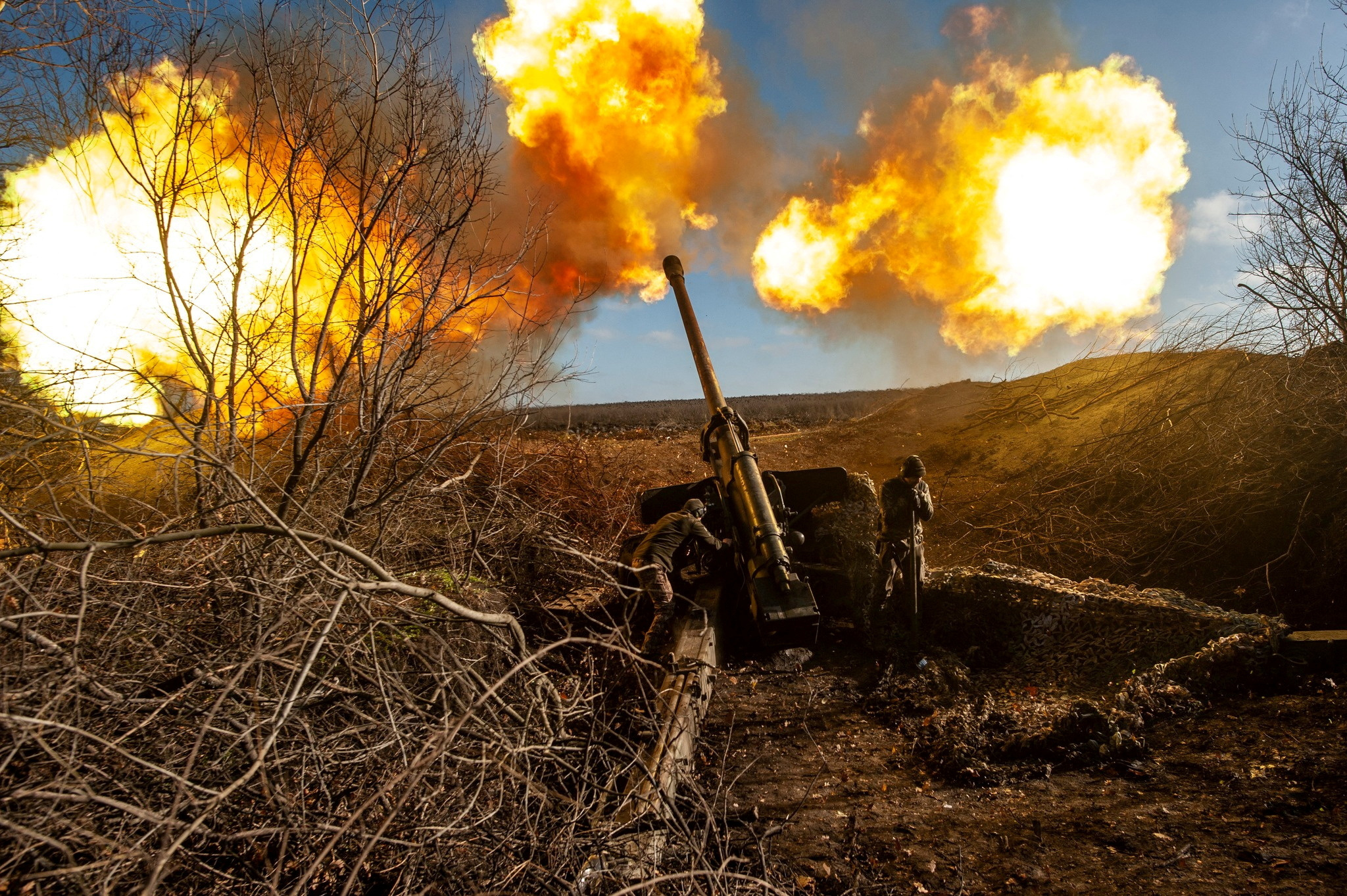
Ukrainian servicemen fire a 130 mm towed field gun M-46 on a front line, as Russia’s attack on Ukraine continues, near Soledar, Donetsk region, Ukraine, in this handout image released November 10, 2022. Iryna Rybakova/Press Service of the 93rd Independent Kholodnyi Yar Mechanized Brigade of the Ukrainian Armed Forces/Handout via REUTERS ATTENTION

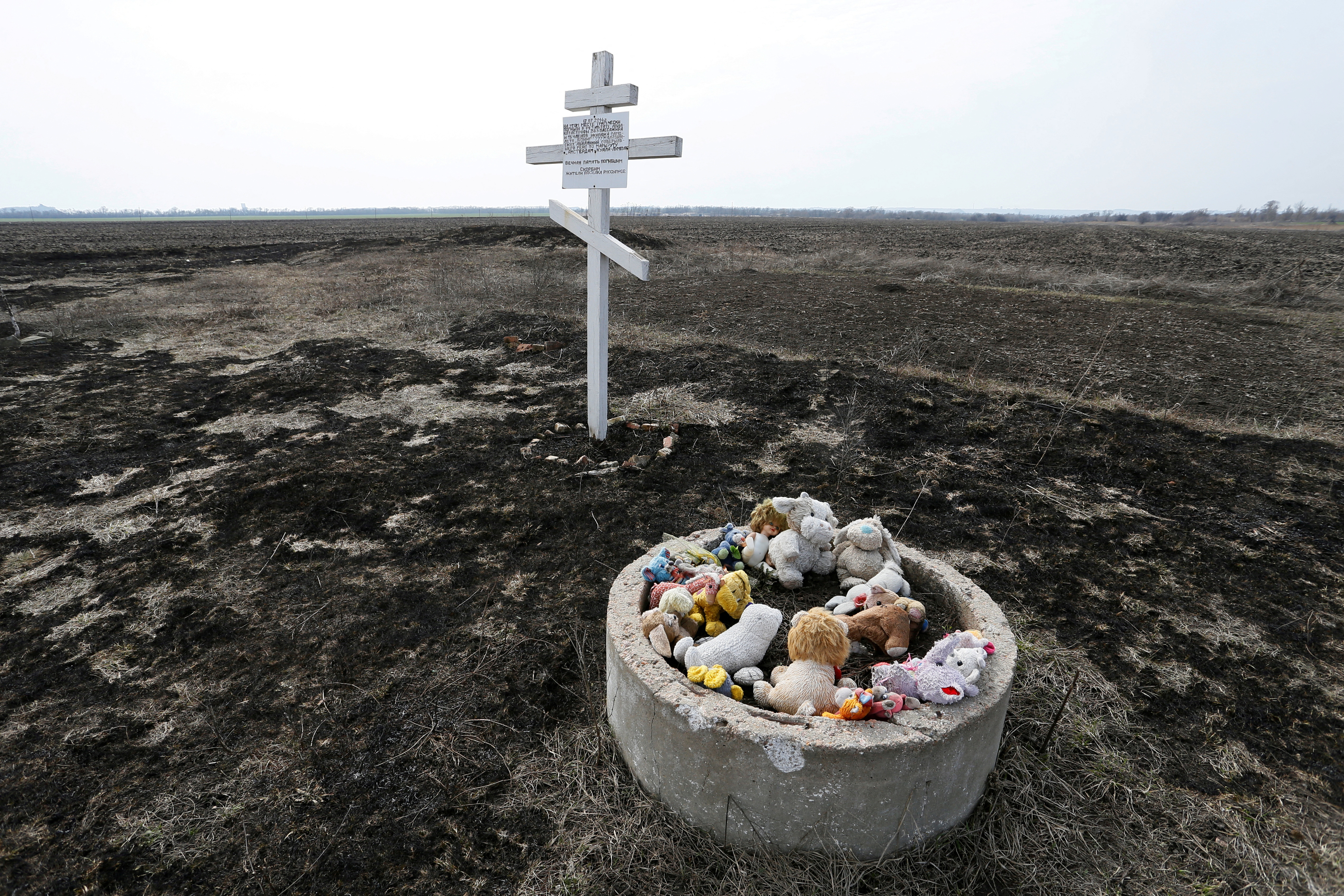
Toys are placed near the cross in memory of victims of Malaysia Airlines Flight MH17 plane crash in the village of Rozsypne in Donetsk region, Ukraine March 9, 2020. REUTERS/Alexander Ermochenko

A boy waves a national flag as he celebrates after Russia’s retreat from Kherson, in central Kherson, Ukraine November 13, 2022. REUTERS/Valentyn Ogirenko

A grain ship carrying Ukrainian grain is seen in the Black Sea, amid Russia’s attack on Ukraine, near Ukrainian port of Odesa, Ukraine November 2, 2022. REUTERS/Serhii Smolientsev

Police officers stand at a blockade after an explosion in Przewodow, a village in eastern Poland near the border with Ukraine, November 16, 2022. REUTERS/Kacper Pempel

A hearse drives past a police blockade after explosions in Przewodow, a village in eastern Poland near the border with Ukraine, November 16, 2022. REUTERS/Kacper Pempel

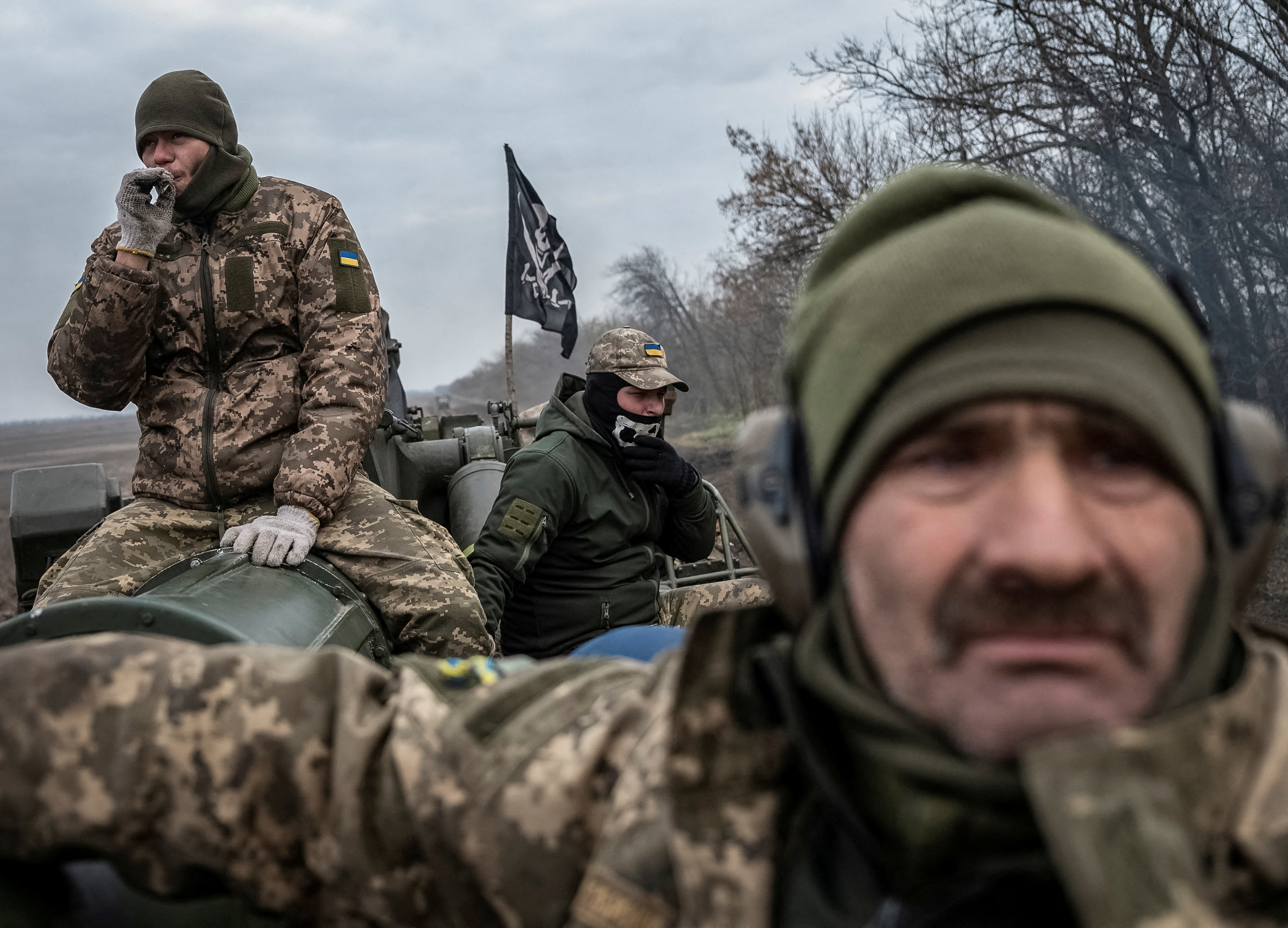
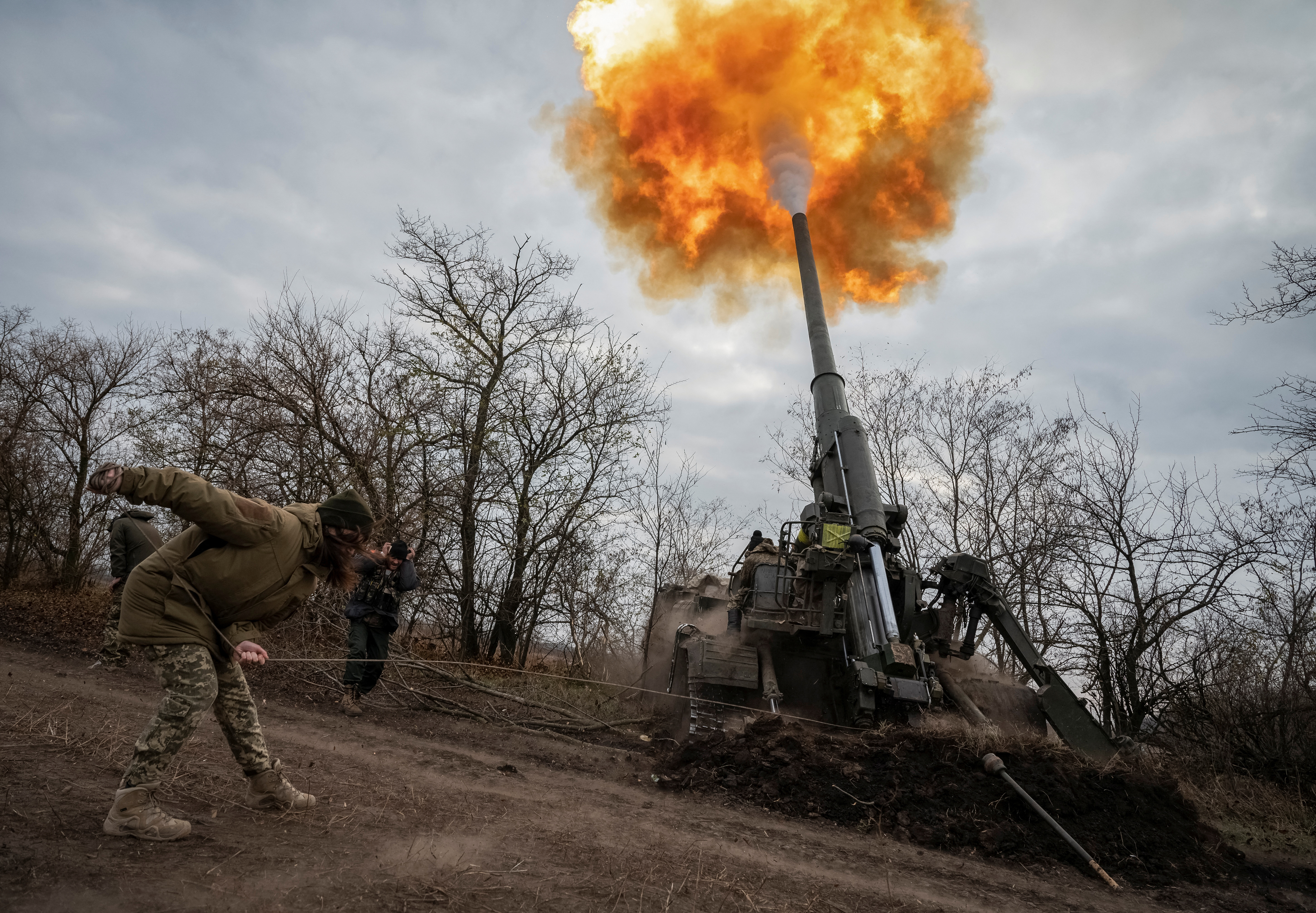
Ukrainian servicemen ride a 2S7 Pion self-propelled gun, as Russia’s attack on Ukraine continues, near a frontline in Kherson region, Ukraine November 9, 2022. REUTERS/Viacheslav Ratynskyi

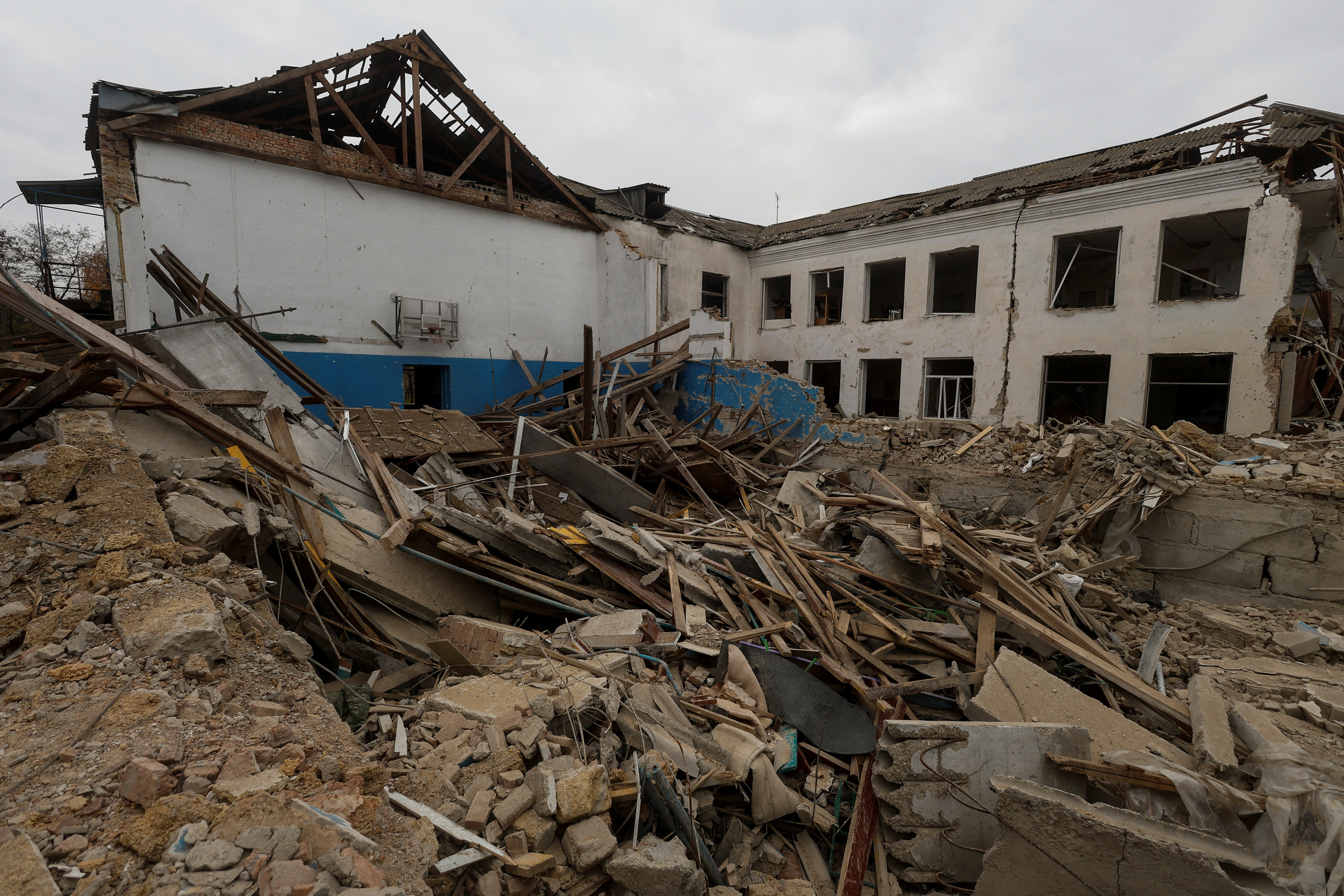
A view shows a building of a local school destroyed during a Russian missile attack in the village of Novooleksandrivka, in Kherson region, Ukraine November 9, 2022. REUTERS/Valentyn Ogirenko

Ukrainian servicemen fire a 2S7 Pion self-propelled gun at a position, as Russia’s attack on Ukraine continues, on a frontline in Kherson region, Ukraine November 9, 2022. REUTERS/Viacheslav Ratynskyi

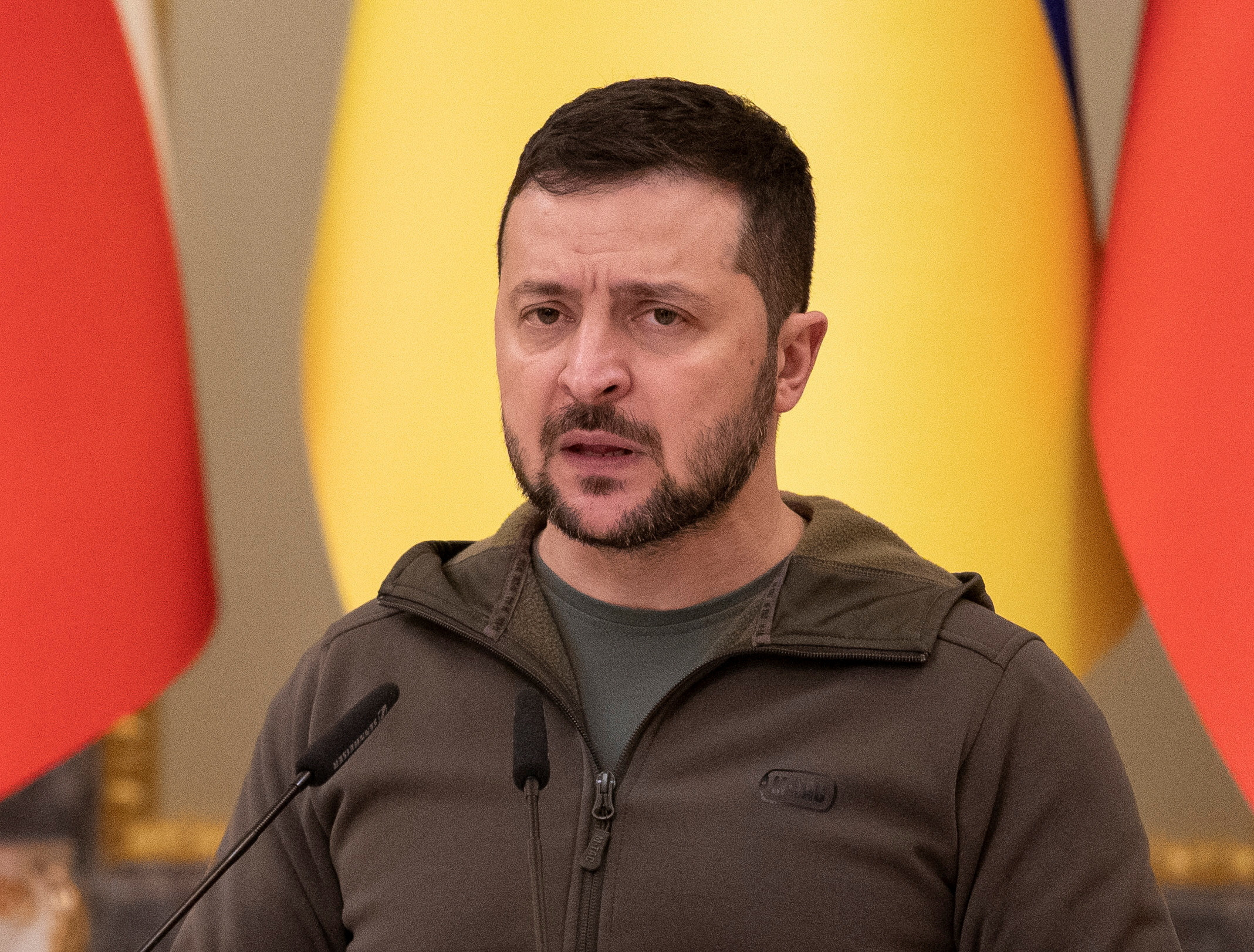
Ukraine’s President Volodymyr Zelenskiy speaks during a joint news conference with Czech Prime Minister Petr Fiala (not seen), as Russia’s attack on Ukraine continues, in Kyiv, Ukraine October 31, 2022. REUTERS/Viacheslav Ratynskyi

Combine harvesters load a truck with wheat in a field near the village of Tomylivka, as Russia’s attack on Ukraine continues, in Kyiv region, Ukraine August 1, 2022. REUTERS/Viacheslav Ratynskyi/File Photo


Categories
Audio Sources - Full Text Articles

Protests erupt in Xinjiang and Beijing after deadly fire

2022-11-26T07:46:43Z

(Reuters) – Public anger in China towards widening COVID-19 lockdowns across the country erupted into rare protests in China’s far western Xinjiang region and the country’s capital of Beijing, as nationwide infections set another record.

Residents in China’s vast Xinjiang region gathered to protest and call for the end of strict COVID-19 prevention measures, according to footage seen on social media.

Crowds took to the streets on Friday night in Xinjiang’s capital of Urumqi, chanting “End the lockdown!” and pumping their fists in the air, after a deadly fire on Thursday triggered anger over their prolonged COVID-19 lockdown according to videos circulated on Chinese social media on Friday night.

Videos showed people in a plaza singing China’s national anthem with its lyric, “Rise up, those who refuse to be slaves!” while others shouted that they wanted to be released from lockdowns.

Reuters verified that the footage was published from Urumqi, where many of its 4 million residents have been under some of the country’s longest lockdowns, barred from leaving their homes for as long as 100 days.

In the capital of Beijing 2,700 km (1,678 miles) away, some residents under lockdown staged small-scale protests or confronted their local officials over movement restrictions placed on them, with some successfully pressuring them into lifting them ahead of a schedule.

A crucial spark for the public anger was a fire in a high-rise building in Urumqi that killed 10 on Thursday night, whose case went viral on social media as many internet users surmised that residents could not escape in time because the building was partially locked down.

Urumqi officials abruptly held a news conference in the early hours of Saturday to deny COVID measures had hampered escape and rescue, but internet users continued to question the official narrative.

“The Urumqi fire got everyone in the country upset,” said Sean Li, a resident in Beijing.

A planned lockdown for his compound “Berlin Aiyue” was called off on Friday after residents protested to their local leader and convinced him to cancel it, negotiations that were captured by a video posted on social media.

The residents had caught wind of the plan after seeing workers putting barriers on their gates. “That tragedy could have happened to any of us,” he said.

By Saturday evening, at least ten other compounds lifted lockdown before the announced end-date after residents complained, according to a Reuters tally of social media posts by residents.

A separate video shared with Reuters showed Beijing residents in an unidentifiable part of the city marching around an open-air carpark on Saturday, shouting “End the lockdown”.

The Beijing government did not immediately respond to a request for comment on Saturday.

Dali Yang, a political scientist at the University of Chicago, said the comments from authorities that the residents of the Urumqi building had been able to go downstairs and thus escape was likely to have been perceived as victim-blaming and further fuelled public anger.

“During the first two years of COVID, people trusted the government to make the best decisions to keep them safe from the virus. Now people are increasingly asking tough questions and are wary about following orders,” Yang said.

Xinjiang is home to 10 million Uyghurs. Rights groups and Western governments have long accused Beijing of abuses against the mainly Muslim ethnic minority, including forced labour in internment camps. China strongly rejects such claims.

China defends President Xi Jinping’s signature zero-COVID policy as life-saving and necessary to prevent overwhelming the healthcare system. Officials have vowed to continue with it despite the growing public pushback and its mounting toll on the world’s second-biggest economy.

China said on Friday it would cut the amount of cash that banks must hold as reserves for the second time this year, releasing liquidity to prop up a faltering economy.

The next few weeks could be the worst in China since the early weeks of the pandemic both for the economy and the healthcare system, Mark Williams of Capital Economics said in note this week, as efforts to contain the current outbreak will require additional localised lockdowns in many cities, which will further depress economic activity.

For Friday, the country recorded 34,909 daily local cases, low by global standards but the third record in a row, with infections spreading numerous cities, prompting widespread lockdowns and other curbs on movement and business.

Shanghai, China’s most populous city and financial hub which endured a two month lockdown earlier this year, tightened testing requirements on Saturday for entering cultural venues such as museums and libraries, requiring people to present a negative COVID test taken within 48 hours, down from 72 hours earlier.

Categories
Audio Sources - Full Text Articles

This Foreign Company Wants To Mine Massive Amounts of Lithium in Nevada. First, It Must Overcome Its China Problem.

A Canadian company hopes to use Biden administration loans to open the largest lithium mine in North America. But first, it must convince government officials and prospective partners that it’s adequately decoupled from its top shareholder: a Chinese enterprise led by known Chinese Communist Party members.

Lithium Americas—whose largest shareholder is Chinese mineral giant Ganfeng Lithium—earlier this month announced its intention to split the company into two separate entities, a move that comes as it works to obtain a Biden administration loan to fund “the majority” of its lithium mining project in northern Nevada. The company told the Washington Free Beacon it expects the separation to ease “geopolitical” concerns from government officials and investors over its relationship with Beijing-tied Ganfeng, given that the split would decouple Lithium Americas’ Nevada mine from its more controversial mining projects in South America, which Ganfeng holds direct ownership stakes in. But leading China hawks in the Republican Party are not satisfied with the separation, prompting them to sound the alarm over Lithium Americas’ potential to receive federal funding.

That dissatisfaction stems from the fact that under the proposed split, shareholders will receive stakes in both Lithium Americas’ North American and South American entities proportional to their current holdings. Because Ganfeng is the only entity that owns more than 10 percent of Lithium Americas’ shares, it will remain the largest shareholder of both companies following the split, a Lithium Americas official confirmed to the Free Beacon. As a result, Ganfeng will still have a sizable financial interest in Lithium Americas’ mine unless it decides to divest—financial interest that has former secretary of state Mike Pompeo calling the split a “half measure” that is “nowhere near enough to guarantee that the CCP will not have any amount of control over a key source of America’s lithium supply.”

“Until we know that no CCP-controlled shareholder is involved in this project, the Treasury Department should not allow it to move forward,” Pompeo told the Free Beacon. Rep. Mike Waltz (R., Fla.) and Sen. Tom Cotton (R., Ark.) echoed Pompeo’s sentiment, with Waltz calling Lithium Americas’ separation plan a “shell game” and Cotton urging President Joe Biden’s Energy Department to “do its due diligence and not fall prey to any trickery orchestrated by Ganfeng.”

It’s unclear whether Lithium Americas’ corporate split will convince the Biden administration, which did not return a request for comment, to award the company a loan. A Lithium Americas official told the Free Beacon the company expects to receive a final decision on its loan application in the near future, meaning it could receive federal funding before it finalizes its separation plan next year. “It definitely won’t be far,” the official said of the Biden administration’s loan decision. “We have gone through the entire Department of Energy process.”

Should Lithium Americas obtain a Biden administration loan, the company still may not be in the clear when it comes to federal oversight. Waltz told the Free Beacon that a Republican-controlled House could investigate loan recipients as they work to avoid a repeat of the Obama administration’s failed green energy loans, which went to a number of startups—including an electric battery maker—that went on to declare bankruptcy. 

“There will absolutely be efforts—they’re already underway. Now that we’ll have subpoena power, we’ll shine a big spotlight on it,” Waltz said of House Republicans’ plans to conduct energy-related investigations. “I think the next two years we’ll be investigating, getting to the bottom, having hearings, putting on a spotlight. And then we’ve got to win the Congress and the White House to actually start rolling some of this stuff back.”

Lithium Americas plans to break ground on its mining site in northwestern Nevada, which is home to tens of thousands of tons of lithium, next year. The project is a clear priority for the Biden administration as it works to promote electric vehicles, which require large amounts of lithium for their batteries. Those batteries, however, are almost impossible to source from the United States—China controls roughly 60 percent of the world’s lithium resources and dominates the electric battery supply chain in general.

In an attempt to undermine that dominance, the White House in December 2021 announced $17 billion in federal loans to “support the domestic battery supply chain,” a move Democratic Nevada senator Catherine Cortez Masto said would “benefit national security by leveling the playing field with China.” Lithium Americas applied for such a loan in April, but the company’s deep ties to the very same nation the White House hopes the loan program will deter—China—have plagued its plot to obtain federal funds. Beyond its status as Lithium Americas’ largest shareholder, Ganfeng has a tight relationship with China’s state-owned banks, which helped the company fund mining projects in South America and Australia. 

Ganfeng’s executives also have extensive ties to Beijing, the Free Beacon reported in September. Ganfeng president Li Liangbin, for example, serves on a number of Chinese Communist Party-aligned committees and advisory boards, and executive vice president Wang Xiaoshen—who serves on Lithium Americas’ board—got his start in the lithium sector through Chinese state-owned enterprises. Lithium Americas acknowledged in an interview with the Free Beacon that Xiaoshen’s role on the company’s board prompted questions from investors following media reports.

This is not the first time Ganfeng’s sizable stake in Lithium Americas has sparked concern from federal officials. Following the Free Beacon‘s September report, Cotton wrote a letter to Energy Secretary Jennifer Granholm demanding “strict oversight regarding potential federal funding of CCP-owned or -controlled entities.”

“As the government continues to invest in battery supply chain programs, it is critical that DOE ensure taxpayer funding does not go to corporations with CCP ties and does not increase U.S. mineral dependence on China,” Cotton wrote. “Ganfeng and any other Chinese entities with CCP ties should divest their stakes in Lithium Americas before the company is offered this loan.”

The post This Foreign Company Wants To Mine Massive Amounts of Lithium in Nevada. First, It Must Overcome Its China Problem. appeared first on Washington Free Beacon.

Categories
Audio Sources - Full Text Articles

Analysis: What in the Actual F— Is Wrong With These People?

You can’t make this up. Earlier this month, some dough-faced dork named Sam Bankman-Fried—an MIT grad and son of Stanford law professors—vaporized the GDP of a small country after successfully conning the entire world of so-called educated elites.

All of them. The freaks in Silicon Valley, the freaks on Wall Street, the freaks in Hollywood, and the freaks in Washington. Even (or especially) the journalists who are supposed to be holding everyone accountable. The smartest, most enlightened professional experts and self-appointed moral referees.

Bill Clinton. Tony Blair. The Democratic Party. Larry David. Tom Brady. Fortune magazine. Andrew Ross Sorkin. CNBC. The bald guy from Shark Tank. BlackRock, the $10 trillion investment firm where former Obama aides go to get rich and serve as “Global Head of Sustainable Investing.”

They all vouched for Bankrupt-Fraud and his blockchain stonk machine. Like they vouched for Elizabeth Holmes and her magic blood box. Like they vouched for Michael Avenatti and his bullshit litigation racket. The Lincoln Project. OZY Media. Stacey Abrams.

These are people who demand to be taken seriously. You know the type. You’ve probably heard them ranting about gullible rubes being duped by “misinformation,” or denouncing half the country as irredeemably stupid, unserious, and uncultured.

Shockingly enough, most normal Americans are starting to suspect our elite overlords are full of shit, and the elite overlords are freaking out. This lack of fealty to their expertise is not merely misguided, we are told. It’s an existential crisis imperiling American democracy.

This raises an interesting question: What in the actual f— is wrong with these people?

Bankman-Fried was the next J.P. Morgan. They actually said that. Of course they did. They adored his dorm-room bong-rip attire and corresponding philosophy—”effective altruism”—through which their capitalist sins can be absolved by attending charity galas and buying hideous art at silent auctions. Better yet, they can start a charitable foundation to avoid paying the tax rates they are constantly trying to raise on everyone else. Giving money to Democrats is also encouraged.

Time and time again, the unwashed masses of non-experts have watched the elite overlords get scammed by charismatic frauds, or team up to incinerate multiple Powerball jackpots—or in one case the entire global economy—only to shrug it off as a “whoopsie” and repeat.

They’ve been mocked as morally depraved by the same people who partied with Harvey Weinstein and attended his political fundraisers. The same people who hobnobbed with Jeffrey Epstein—before and after his conviction for sex crimes.

They’ve been lectured at for driving SUVs and complaining about gas prices by millionaires who fly around the world on leather sofas in private jets with nicknames like “Air F— One” and “Lolita Express,” and shamed for being unable to afford an electric car that costs more than their annual salary.

They’ve been denounced as racist and subjected to corporate diversity training by woke weirdos who say “Latinx” and hyperventilate about “Jim Crow on steroids” when voter turnout is through the roof. The same people who attack successful black conservatives as angry, ignorant traitors.

They were told it was totally unreasonable to want their children to go back to school during the pandemic by the same experts who said mass public gatherings were safe as long as they were supporting a righteous left-wing cause.

They were called “out of touch” by the same political gurus who touted Beto O’Rourke, Elizabeth Warren, and Pete Buttigieg as the next generation of transformative leaders.

And they wonder why no one takes them seriously anymore.

To hell with these people.

The post Analysis: What in the Actual F— Is Wrong With These People? appeared first on Washington Free Beacon.

Categories
Audio Sources - Full Text Articles

Taiwan opposition wins big in local vote as president“s China threat bet fails

2022-11-26T12:19:59Z

Polls opened in Taiwan on Saturday (November 26) in local elections that President Tsai Ing-wen has framed as being about sending a message to the world on the island’s determination to defend its democracy in the face of China’s rising bellicosity.

Taiwan’s main opposition party the Kuomintang (KMT) stomped home to victory in local elections on Saturday as President Tsai Ing-wen’s efforts to frame the vote as being about showing defiance to China’s rising bellicosity failed to pay off.

The elections for mayors, county chiefs and local councillors are ostensibly about domestic issues such as the COVID-19 pandemic and crime, and those elected will not have a direct say on China policy.

But Tsai, who leads the ruling Democratic Progressive Party (DPP), had recast the election as being more than a local vote, saying the world is watching how Taiwan defends its democracy amid military tensions with China, which claims the island as its territory.

The KMT was taking the lead or claimed victory in 13 of the 21 city mayor and county chief seats up for grabs, including the capital Taipei, compared to the DPP’s five, broadly in line with expectations and similar to the results of the last local elections in 2018.

Both the DPP and KMT, which traditionally favours close ties with China though strongly denies being pro-Beijing, had concentrated their campaign efforts in wealthy and populous northern Taiwan, especially Taipei, whose mayor from the small Taiwan People’s Party could not run again due to term limits.

“I have let everyone down,” the DPP’s Taipei mayor candidate Chen Shih-chung told supporters, adding he has offered his “sincere” congratulations to the KMT’s Wayne Chiang in a telephone call, and urged people to continue to support Tsai.

“I know this election’s results have greatly disappointed everyone, but we can’t despair. In the past, the DPP has lost Taipei’s elections many times, but we’ve never been defeated. We must wipe our tears and stand up again.”

China carried out war games near Taiwan in August to express anger at a visit to Taipei by U.S. House Speaker Nancy Pelosi, and its military activities have continued, though on a reduced scale.

The election took place a month after the 20th congress of China’s Communist Party, where President Xi Jinping secured an unprecedented third term in office – a point Tsai repeatedly made on the campaign trail.

The KMT has accused Tsai and the DPP of being overly confrontational with China, and focused its campaign on criticising the government’s response to the COVID-19 pandemic, especially after a surge in cases this year.

Focus will now turn to the 2024 presidential and parliament election, which Tsai and DPP won by a landslide in 2020 on a pledge to stand up to China and defend Taiwan’s freedoms.

Tsai’s second term in office runs out in 2024 and she cannot stand again as president because of term limits.

Related Galleries:

People line up to cast their votes on election day in Taipei, Taiwan, November 26, 2022. REUTERS/Ann Wang

Staff prepare the ballot box ahead of election day in Taipei, Taiwan, November 26, 2022. REUTERS/Ann Wang

People line up to cast their votes on election day in Taipei, Taiwan, November 26, 2022. REUTERS/Ann Wang

Taiwan President Tsai Ing-wen casts her vote at a polling station during local elections in New Taipei City, Taiwan, November 26, 2022. REUTERS/Carlos Garcia Rawlins

Staff prepare the ballot box ahead of election day in Taipei, Taiwan, November 26, 2022. REUTERS/Ann Wang

Taiwan’s President Tsai Ing-wen attends a campaign rally of the Democratic Progressive Party (DPP) ahead of the local elections, in Taipei, Taiwan November 25, 2022. REUTERS/Carlos Garcia Rawlins

Supporters of Wayne Chiang, Taipei mayoral candidate of the oppositions party Kuomintang (KMT), attend a rally ahead of the election in Taipei, Taiwan, November 25, 2022. REUTERS/Ann Wang
Categories
Audio Sources - Full Text Articles

Biden: We Pay Tribute to Holodomor Victims, Honor Brave Ukrainian People

1-17.jpeg

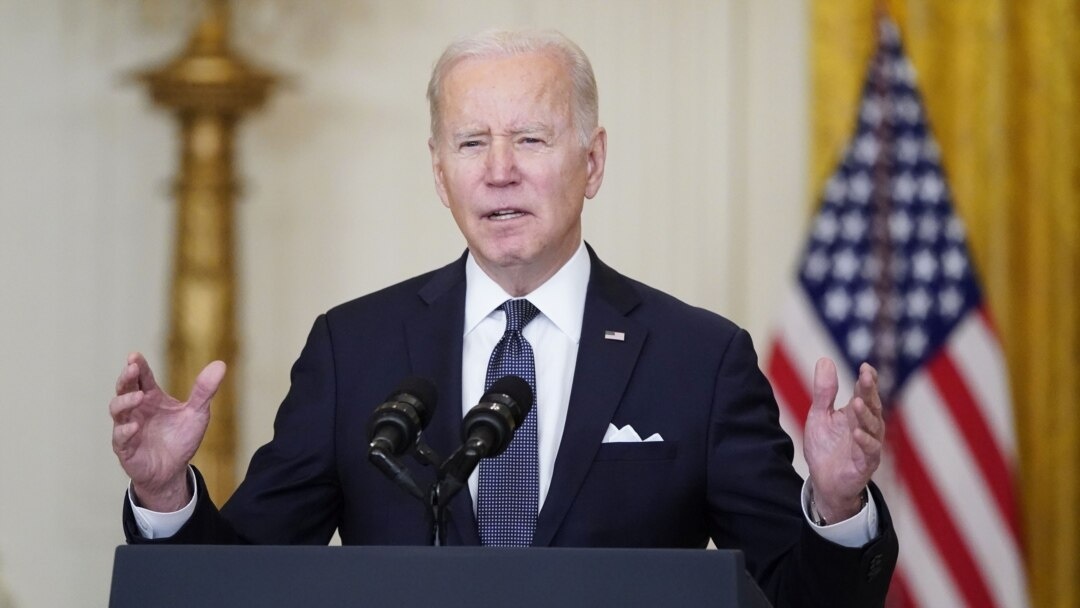
On the anniversary of the Holodomor, U.S. President Joe Biden said that the United States honors the memory of all those who died in this senseless tragedy and pays tribute to the resilience of the Ukrainian people, who survived devastation and tyranny, in order to eventually create a free and democratic society.

“Even as the brave Ukrainian people continue to defend their democracy and freedom from Russia’s brutal aggression, we pause to also honor the victims of past injustices and horrors inflicted on Ukraine,” he said.

“This November marks the anniversary of the Holodomor — “death by hunger.” During his regime, Joseph Stalin imposed harsh and repressive policies on Ukraine, including creating a deliberate famine in 1932-1933 that caused millions of innocent Ukrainian women, men, and children to perish. We commemorate all the lives lost in this senseless tragedy, and we pay tribute to the resilience of the Ukrainian people who endured devastation and tyranny to ultimately create a free and democratic society,” the U.S. president stated.

“This month, we remember the victims of the Holodomor. We reaffirm our steadfast commitment to Ukraine’s sovereignty and territorial integrity. And we honor the brave Ukrainian people who continue to courageously resist Russia’s assault on their democracy,” he added.

The post Biden: We Pay Tribute to Holodomor Victims, Honor Brave Ukrainian People appeared first on Kyiv Post.

WP Radio
WP Radio
OFFLINE LIVE