Categories
Saved Web Pages

ID Theft, Fraud, Prison: The Wild Life of a Bishop Robbed at the Pulpit

00nyc-bishop10-facebookJumbo.jpg

Bishop Lamor Whitehead, who was robbed during a service at his church, returned on Sunday to deliver a sermon.

Bishop Lamor Whitehead, who was robbed during a service at his church, returned on Sunday to deliver a sermon.Credit…Victor J. Blue for The New York Times

The police said Bishop Lamor Whitehead was robbed of a fortune in jewelry, the crime caught on camera. But the focus soon turned to him and his past run-ins with the law.

Bishop Lamor Whitehead, who was robbed during a service at his church, returned on Sunday to deliver a sermon.Credit…Victor J. Blue for The New York Times

Michael Wilson
  • Aug. 4, 2022, 5:00 a.m. ET

Inside his makeshift church in Brooklyn, seated in a chair that looked more like a throne and dressed in a slim-cut, banana-yellow suit by Gucci, Bishop Lamor Whitehead prepared to deliver the sermon his followers had been waiting a long week to hear.

It had been seven days since the obscure little congregation, Leaders of Tomorrow International Ministries, was robbed by three armed and masked men during a service on July 24, the heist caught on a livestream video. The robbers relieved Bishop Whitehead and his wife of many chains, rings, watches and other jewelry — the total value of which is in dispute, but is estimated to be as high as $1 million — and escaped outside on Remsen Avenue.

Bishop Whitehead rose.

“The devil didn’t want me back in this pulpit,” he said solemnly. “God said, ‘You can’t take his life. You can touch his material things. But you can’t touch his soul.’”

Then he re-enacted the robbery. Twice.

ImageBishop Whitehead re-enacted the robbery during his service on Sunday.

Bishop Whitehead re-enacted the robbery during his service on Sunday.Credit…Victor J. Blue for The New York Times

In the wake of the brazen heist, attention has focused on Bishop Whitehead, a friend of Mayor Eric Adams with a felony identity theft conviction in his past. Why, some wondered, would a preacher with a tiny congregation have a small fortune in jewelry on his person? And his immediate reaction during the robbery, as if practiced, has led to questions about whether he knew the robbers were coming — a suggestion he dismissed as ludicrous.

“It’s being said because people can’t believe that this happened,” he said. Asked about whether the jewelry was insured, he dismissed the question as “legal.”

The robbery was just the beginning of a very bad week for Bishop Whitehead. When two pastors from Atlanta, speaking on the livestream talk show “Larry Reid Live,” laughed at his church’s slapdash design, he joined the show as it was in progress and flew into a rage, mocking a female pastor’s weight and using an anti-gay slur.

At the same time, troubles from his past were coming to the surface, including the time he spent in prison and the lawsuits he faced in New York accusing him of walking off with large amounts of money from people he knew. Court records from New Jersey show that Bishop Whitehead owes more than $400,000 in judgments to a construction company that built his house and the credit union that financed his Mercedes-Benz and Range Rover — revelations that he has dismissed as victim-shaming, even racist.

In the wake of the robbery, Bishop Whitehead faced questions about his history and his flashy style, but the congregation at his church expressed support.Credit…Victor J. Blue for The New York Times
The bishop’s congregation meets in a humble space above a Haitian restaurant in Brooklyn.Credit…Victor J. Blue for The New York Times
Bishop Whitehead held a news conference outside the church last week, but declined to answer questions about his own legal history.Credit…Victor J. Blue for The New York Times

“I’m a miracle — I’m not supposed to be here today,” he said from the altar on Sunday. “Everybody wants to talk about what the tabloids are talking about and forget about the miracle.”

In interviews, Bishop Whitehead simultaneously declined to discuss his past legal troubles and invited renewed scrutiny. “The reason people can’t figure me out is because they’re trying to figure me out the wrong way,” he said. “What you see is what you’ll get.”

In Brooklyn, Bishop Whitehead’s roots run deep.

On the night of June 14, 1978, police officers stopped a motorist for having a suspended license. He protested, a table of fruit was overturned and as more officers arrived, a big man with a gun on his hip approached. His name was Arthur Miller, the driver’s brother and a respected businessman in the neighborhood, leading job fairs and founding community groups.

Mr. Miller had been trying to defuse the situation, but the officers zeroed in on the gun — legally owned and licensed. One put Mr. Miller in a chokehold. He collapsed, according to news accounts at the time, foaming at the mouth when officers loaded him into a squad car. His legs were sticking out a window when it pulled away, and he was pronounced dead at a nearby hospital. His death led to protests and a march to City Hall.

Mr. Miller left several children. The youngest, with his mother’s last name, was a baby: Lamor Miller Whitehead.

“Growing up as a young man on the mean streets of Brooklyn was not easy,” the bishop would write on his church’s website years later. “Being raised in a single-parent home, without a father, and expected to survive in a world that was designed for him to fail in.”

He did not fail. He attended Eastern New Mexico University, where he studied accounting and videography, and returned to Brooklyn, where he went to work as a mortgage broker in Manhattan.

But soon after, Mr. Whitehead would set his life on a much different course.

In 2005, a woman called the Suffolk County Police Department and said someone had bought a motorcycle in Brooklyn in her name, using all her personal information.

A few days later, an officer pulled over a man driving the same motorcycle at a traffic stop. The driver was 27-year-old Lamor Whitehead.

What followed was a lengthy investigation that uncovered what the police described as a sprawling identity theft and fraud operation set up and run by one person: Mr. Whitehead, whose girlfriend had access to customers’ credit reports through her job at a Long Island car dealership.

Using personal data he pulled from her computer — she kept her login information on a piece of paper at home — Mr. Whitehead stole the identities of at least a dozen people. He took out loans in their names and bought cars and motorcycles, according to his indictment in Suffolk County in 2006.

“He was living the high life,” a Suffolk County detective said at the time.

Preparation for a trial took months. In the interim, rather than lay low and work on his case, Mr. Whitehead pulled off more frauds, court records indicate.

He was still working as a mortgage broker out of an office in the Empire State Building around 2005, when a symphony conductor named Maximo Bragado-Darman and his son, Julio Bragado-Young, entered his office and hired him to help them close on a brownstone in Harlem. The deal was completed.

Later, Mr. Whitehead reached out to the elder client privately with a business proposal. If you loan me $200,000, Mr. Whitehead explained, I can pay you back in a month, along with an extra $25,000, according to a lawsuit that followed.

The conductor, trusting the young man who had smoothly executed the Harlem deal, took out a line of credit on his home, gave him the money and kept it a secret from his family, planning on surprising them with good news when the windfall came in, his son said.

Instead, he was forced to share bad news: Mr. Whitehead was not going to pay him back.

“It was almost guaranteed he was going to make money on this,” Mr. Bragado-Young said, referring to his father. Of Mr. Whitehead, he said: “He’s a disgusting human being. You can quote me on that.”

For Mr. Whitehead, a steady four-year run of fraud came crashing down. He filed for bankruptcy in 2006, citing as income the $10,000 a month he was earning as a mortgage broker.

The real hammer came down in 2008 — Mr. Whitehead’s trial date had finally arrived for the identity theft charges. Prosecutors spent several days laying out their case, linking Mr. Whitehead to the crimes through phone records and the evidence found in his house and car. He was convicted of 17 counts, mostly identity theft, and sentenced to 10 to 30 years in prison.

When a lawsuit brought by the symphony conductor was filed that fall, Mr. Whitehead was served his copy in Sing Sing Correctional Facility. The lawsuit led to a judgment for the conductor of $306,000.

Five years later, in July 2013, Mr. Whitehead was released with a glowing behavioral record. And as soon as weeks later, the Leaders of Tomorrow Ministries was born, “with the support of 43 people who believed and met in his home for Bible study,” according to his biography online.

“I have a calling and I had to do what I had to do,” he said in an interview this week. “As soon as I came home, it was on.”

Services on Sunday were sparsely attended.Credit…Victor J. Blue for The New York Times

Mr. Whitehead became Bishop Whitehead, and he has proved himself to be a gripping orator with what appears to be a deep knowledge of his worn Bible and an ability to summon chapter and verse with ease. He can place his audience in a state of rapt silence one moment and loud singing and clapping the next.

“The bishop’s very relatable,” said Chantelle Vickers, 38, a member of the church and a pastor-elect. “He’s from the streets of Brooklyn. He’s not like other pastors.”

She heard the widespread criticism of all the jewelry the “bling bishop” was wearing when he was robbed. “Rappers, singers, the way they attract people, that’s what he’s doing,” she said. “People want to know how you got all that. Once you get here, you see he is teaching God.”

This philosophy, broadly known as the prosperity gospel, arose within African American religious traditions and emphasized the material benefits of maintaining a relationship with God, said the Rev. Dr. David Latimore, director of the Betsey Stockton Center for Black Church Studies at Princeton Theological Seminary.

It’s natural that someone preaching that God provides material wealth would himself bear evidence of that, he said. And yet, to him, Bishop Whitehead’s abundance seemed excessive. “While this is not the only example of displays of affluence within churches as a part of this approach to preaching, I want to argue that this is an extreme example,” he said.

At the end of his lengthy sermons, Bishop Whitehead picks up a stack of empty envelopes and invites worshipers to “sow” with donations, starting at $1,000 or $500. When there are no takers, the suggested amounts decline. At a recent service, the first envelopes left his hand when he arrived at $150. It’s unclear, of course, how much a person actually places in the envelope.

With only 25 or so people at services on Sunday, attendance was lower than normal — understandable a week after an armed robbery. But even with a crowd twice that size, it seems unlikely that donations would be high enough to pay for a fraction of the jewelry that was stolen.

Bishop Whitehead appears to have a deep knowledge of scripture, summoning chapter and verse with ease. Credit…Victor J. Blue for The New York Times
Espousing what is known as the prosperity gospel, Bishop Whitehead preaches that God will provide abundance for those who give to the church.Credit…Victor J. Blue for The New York Times
Members of the bishop’s church have defended him against criticism, and said his flashy style helps bring people to the congregation.Credit…Victor J. Blue for The New York Times

He has said he does not make money in his role as bishop, and it is unclear how he earns a living. But court filings suggest it does not seem to be working very well.

In 2019, Bishop Whitehead stopped making his monthly payments on a Mercedes-Benz and a Range Rover in New Jersey, according to a lawsuit that ended with a $68,000 judgment against him.

That same year, he wrote a $164,000 check to the company that built his home in Paramus, N.J. It bounced, according to a lawsuit.

In 2020, when a woman who had recently visited the church was recovering from surgery, Bishop Whitehead offered to help her buy a new home. The woman, Pauline Anderson, sent him $90,000 that she had withdrawn from her retirement account, according to a lawsuit.

“I am a man of integrity and you will not lose,” he texted her. She asked for her money back, but he said it was too late — it had already been invested.

At the same time, according to the lawsuit, Bishop Whitehead was in contract to buy a palatial, $4.4 million house in Saddle River, N.J., with a pool, a gym and a wine cellar.

In church on Sunday, Bishop Whitehead dismissed Ms. Anderson from the pulpit as a liar: “That’s what the enemy wants you to believe.”

Later, when asked about his income streams in an interview, Bishop Whitehead was vague. “I’m in real estate investment and a pastor,” he said. “I don’t like digging into all that other stuff.”

He continued: “Everybody sues people, from here on out. It is what it is,” he said. “My church was robbed. I was robbed. I’m the victim.”

His lawyer, Brenden Kombol, said he met Bishop Whitehead a few months ago, and only learned of the ongoing litigation in the press last week.

He offered one nugget of information regarding the stolen jewelry: “I’ve been told that they were at least partially insured,” he said.

Mayor Adams has long called the bishop a friend. “The bishop lost his dad — Arthur Miller was his name — during a police incident,” he said last week. “I have always maintained relationships with people who have gone through traumatic experiences.” At the same time, he rejected the bishop’s call that preachers be armed in church.

The robbery remains under investigation. Whatever its outcome, one thing is certain, as Bishop Whitehead told his flock on Sunday morning.

“Now the world knows our name,” he said. “It don’t get no bigger than that.”

Hurubie Meko, Tracey Tully and Michael Rothfeld contributed reporting. Susan C. Beachy and Kirsten Noyes contributed research.
Categories
Saved Web Pages

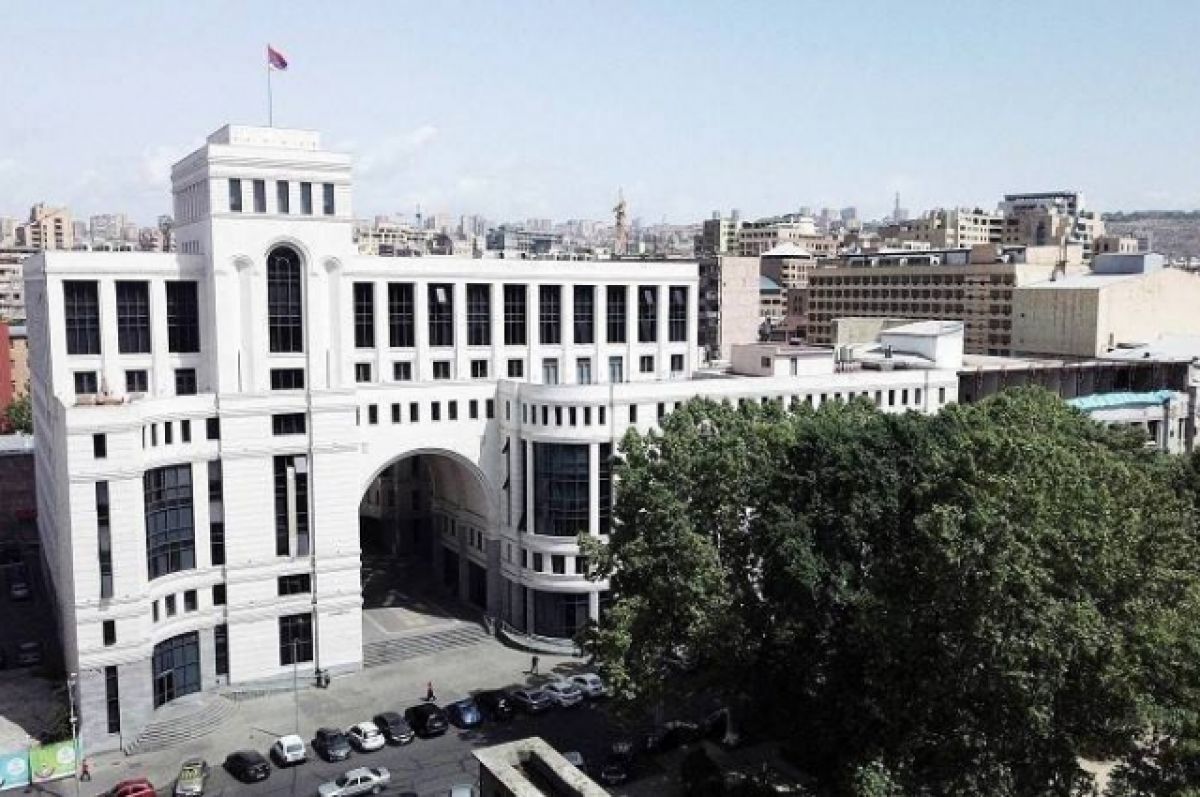
МИД Армении выступил с осуждением агрессии Азербайджана

05a6de65b9779b6f8509c23075bff88f.jpeg

МИД Армении обвинил Азербайджан в нарушении трехстороннего соглашения о прекращении огня в Нагорном Карабахе, в результате чего погибли и были ранены несколько военнослужащих.

«3 августа вооруженные силы Азербайджана, в очередной раз нарушив трёхстороннее заявление от 9 ноября 2020 года руководителей Армении, России и Азербайджана о прекращении огня в зоне нагорно-карабахского конфликта, предприняли агрессию в зоне ответственности российских миротворческих сил, вследствие чего есть жертвы и раненые», – говорится в заявлении.

В министерстве указали, что Ереван предпринимает шаги по достижению мира и стабильности в регионе, однако Баку продолжает политику запугивания населения Нагорного Карабаха.

МИД Армении выступает против односторонних попыток Азербайджана по изменению правового статуса Лачинского коридора, который соединяет территорию Армении и Нагорного Карабаха.

«Республика Армения, вновь подтверждая свою приверженность повестке установления мира и стабильности в регионе, призывает международное сообщество принять меры, направленные на пресечение агрессивного поведения и действий Азербайджана и запуск необходимых для этого международных механизмов», – указано в заявлении.

Ранее в Минобороны РФ заявили, что азербайджанские вооруженные силы нарушили режим прекращения огня в зоне Нагорно-Карабахского конфликта. После этого в непризнанной республике объявили частичную мобилизацию. В Баку в эскалации конфликта обвинили армянских военных.

Categories
Saved Web Pages

Heil Trump! Heil Putin! Heil Schroeder! Heil New Abwehr! Heil the old whore Admiral Canaris, the Grandfather of the Modern World Order! “Donald Trump kept a book of Hitler’s speeches by his bed”

ANbyha3VUZZTh_dmxZmbNHTMVRJZE4x5CK6318i3

“Donald Trump kept a book of Hitler’s speeches by his bed” – This is the explanation of his oratorical style and very posiibly, his mentality. – M.N. – In my Opinion – Post


Does Donald Trump speak German?

But the point of this question is, if he speaks German. I think, he does speak some German; it is very likely that he had a German nanny, and it is possible that he read Hitler’s speeches in German. 


Another part  of this question is: Does Melania Trump speak German? She is from the German-Slovenian family, and it is very likely that she does. 


I wonder, what do they discuss in German (just like the old Russian Royalty-Nobility) during their daily, three hours long, private family meals?


FBI, could you please publish the transcripts?


Or would you need the separate subpoenas for that?


Michael Novakhov


6.1.19
_____________________________________________________

TL;DR ::: Of course not, the man can barely use English.


I was not under the impression that POTUS 45 (I no longer write out his name) might be capable of speaking or writing English. I have read many times that his family pretended to be of Swedish immigrant extraction to avoid anti-German prejudice during the world war 2 period. Surprises me because his father was an out and out convicted member of the KKK whose personal supremacist convictions (forgive the word play) brought him to march in robes and be fined 500$ in 1927, back when 500$ was a lot of money and not the kind of cash a loser would have to get out of jail-


main-qimg-6f19ea8abd68d3b5e419b20f3833db


607 views · View 7 Upvoters

Trump was born just after World War II, at a point in history where any German his parents even knew would have been best kept to themselves. During his formative years, it’s unlikely anyone would put much effort into teaching him the language of a country we’d just defeated after years of war that cost hundreds of thousands of American lives.


It’s been reported that as an adult, Trump studied the oratorical style of Adolf Hitler, and had a book containing his collected speeches, but the book was almost certainly an English translation. I wouldn’t expect Trump to know much German beyond “Sieg Heil!”


1.1k views · View 6 Upvoters

It’s been reported that as an adult, Trump studied the oratorical style of Adolf Hitler, and had a book containing his collected speeches

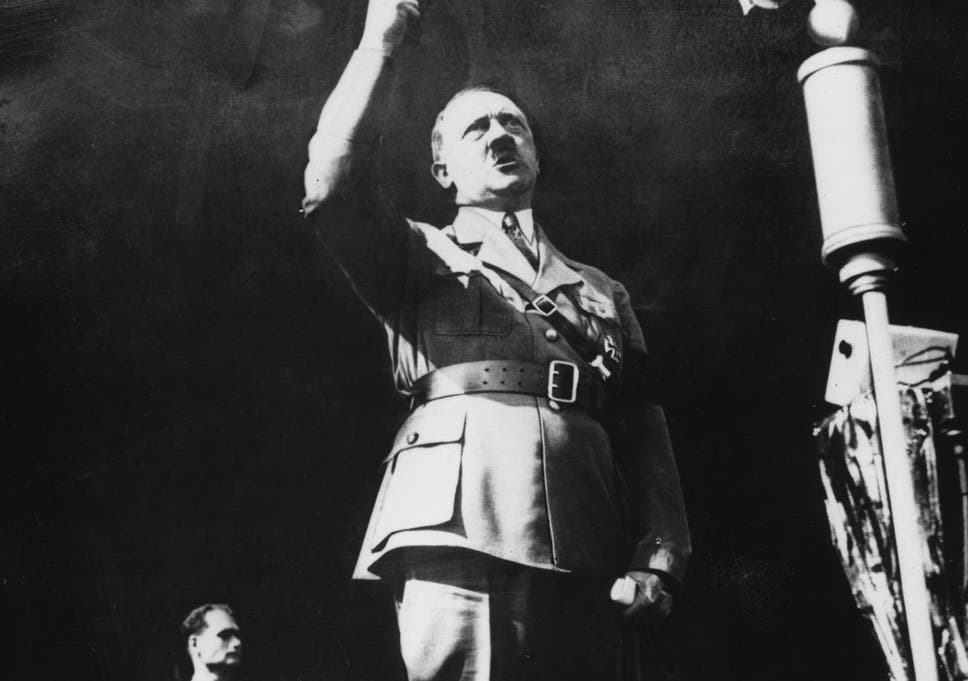
Dec 8, 2015 – Adolf Hitler addresses a crowd at a rally in 1941 ( Getty Images ) … time to time her husband reads a book of Hitler’s collected speeches, My … prolific orators, building a genocidal Nazi regime with speeches that … “People were most willing to follow him, because he seemed to have the ….. Report Comment.


Hitler’s collected speeches, My New Order

My New Order has attracted the attention of the press with the rise of Donald Trump as candidate for President of the United States 


because his first wife Ivana Trump revealed that Donald Trump reads a book of Hitler’s collected speeches, My New Order, which he keeps in a cabinet by his bed. It can be seen that there are clear similarities between the speeches of Trump and the speeches of Hitler. Here are examples: They repeat themselves constantly, saying the same things over and over again. They never admit they have made a mistake nor do they ever take anything back. To any criticism, they respond by insults and name calling. They use a low form of language, with simple sentences even a person with the lowest level of education or with no education at all can understand. Another contrast is the sheer volume of words. Hitler gave a thousand speeches and spoke millions of words. Hitler communicated almost entirely through his speeches. Hitler’s speeches were long, usually one and a half to two hours long. Trump made one of the longest speeches ever to accept the Republican Party nomination for President of the United States. His speech lasted one hour fifteen minutes. Trump communicates almost entirely through his speeches and through his tweets. Tweets are short 140-character messages. He almost never uses emails. Trump never gives an analysis or a logical justification for his views. Hitler is similar. Trump has written nothing. His one book, “The Art of the Deal”, was written by a ghostwriter. Similarly, Hitler only wrote “Mein Kampf”. One can see from the foreword here by Raoul de Roussy de Sales there are clear similarities between the speaking style of Hitler and that of Trump. “To use constantly and untiringly the same arguments and to pound into the heads of his listeners the same formulas is part of Hitler’s oratorical technique.” “Hitlers speeches are weapons as much as part of his strategy of conquest as more direct instruments of warfare. Hitler is past master of throwing up verbal smoke screens to conceal his intended moves. He knows equally well the effectiveness of massive oratorical assaults that shake the nerves of his victims and opponents and break down their resistance. He knows how to give pledges that will be broken later but will serve temporally to divide and confuse and to create the illusion of Security. He uses insults and lies in the same manner as his generals use Stuka planes and tanks to break the respectable but often weak front of his adversaries. He contradicts himself constantly but his contradictions often produce the effect of a psychological pincer-movement which crushes the best defenses of logic and ordinary morality.” “The Greatest Anthology of Broken Promises Ever Compiled”. Hitler made and then broke treaties. Trump is speaking of breaking our treaties with NATO countries, and with Japan and South Korea. This book is a collection of speeches made by Hitler during the 20,s and 30,s in which he affirmed his Anti Antisemitism, his desire for World Domination, and his contempt of efforts by the rest of the world to stop him. The original book, published in 1941, is 1008 pages long. This is too long to be published in soft cover, so it has been divided into to volumes. The first volume is Hitler’s speeches from the rise to power, 1918 to 1933 to the bloodless annexations Annexation of Austria and the Dismemberment of Czechosolvakia.


Adolf Hitler addresses a crowd at a rally in 1941

Donald Trump kept a book of Hitler’s speeches by his bed, according to his ex-wife


Hitler was one of history’s most prolific orators, building a genocidal Nazi regime with speeches that bewitched audiences

In the Vanity Fair article, Ivana Trump told a friend that her husband’s cousin, John Walter “clicks his heels and says, ‘Heil Hitler,” when visiting Trump’s office.


Categories
Saved Web Pages

What New World Order? The Case For A Stronger Germany

german-chancellor-angela-merkel-s-tradem

-Analysis-

BERLIN — History’s grand plan, if it has one, doesn’t usually allow for repetition. The kaleidoscope of the past brings up endless new iterations of victory and defeat, triumph and agony, and allows us only a glimpse into the uncertainty of the future and the ambiguity of the past.

New world powers are coming to the fore, and the post-war world order — first the Cold War, then the Pax Americana — is disappearing. As the influence of NATO, which for many decades gave Europeans a sense of safety through its ability to deter and defend, begins to wane, the promise of protection from the United States is also disappearing.

It’s been a long time since Germany’s future, and that of Europe as a whole, has looked so uncertain. Around three decades ago, the Cold War was finally declared over as the United States and the USSR came to a mutual understanding. But that has not meant that global power relations are now smooth sailing.

The seismic changes of 30 years ago did not come about in an organized manner but through a process that Yale historian Paul Kennedy, in his master’s thesis on world powers, calls “competitive decline.” After the end of the second Iraq War, it seemed possible that a new world order may be established with America at the head, leading and bankrolling a global alliance against all troublemakers, but this was not achieved.

No new world order has appeared.

Instead we have lived through the collapse of nation states, civil wars, terrorism and religious fanaticism, alongside old-fashioned scourges such as droughts, mass poverty and epidemics. Sooner or later these will erode the foundations of what little prosperity and political security remains.

The long nuclear peace of the last 30 years of blissful ignorance is over. Gone too is the strategic stability that the Cold War provided. Even without the coronavirus pandemic sweeping the globe, the world stage offers chaos. And that makes it all the more important, for reasons of survival, to inject a little predictability, long-term perspective and strategic restraint back into international power relations.

For the foreseeable future, we are in a worse situation than we have been in a long time. While Washington, Moscow, Beijing and other centers of power — the nuclear order that sprang up after World War II — are in decline, no new world order has appeared.

This is where Germany comes into play. A new world order is sorely needed, and Germany, which flourished under the Pax Americana and, against all expectations, became a late-blooming, 20th-century success story, must play its part in establishing one.

Whether it will have a chance to draw on this experience is, to say the least, uncertain. When it comes to security and protection, Germany needs to learn how to stand on its own two feet and make a respectable contribution on the world stage, even if this means a bit of pain, financial cost and a few disagreements.

image.jpg?id=27070679&width=980

Map of the Holy Roman Empire during the 16th century — Source: Friedrich Wilhelm Putzger/Wikimedia Commons

On a campaign trip to Trudering, in Upper Bavaria, Angela Merkel said that Germany could no longer rely on its old friends. Ever the cautious pragmatist, she was careful, nevertheless, not mention which new ones she had in mind. While telephones around the world are ringing off the hook, the German chancellor is remaining tight-lipped. That may be wise. Sometimes the situation and tactics require a politician to hold back.

But what is true for most countries is not true for Germany. The country is right in the middle of things — not just of Europe, but also of the global situation. Or, as Henry Kissinger liked to say, Germany is the wrong size: too big for Europe, too small for the world.

Enduring incompleteness

The best way to understand Germany’s role is as a half-hegemony: neither one thing nor the other. But this was also the situation for the Holy Roman Empire of the German Nation, an empire that lasted for centuries by constantly renewing itself. It went against all classical thinking about how to structure a state, but it would be absurd to deny the legitimacy of an empire that lasted nearly 1,000 years.

Half-hegemony has been Germany’s situation since time immemorial. It has marked the country’s history, shaping its fate and that of its neighbors. In order to understand the present, it’s vital to see it from a historical perspective — even now, in the fourth decade since reunification.

Germany became the stage for wars that spread across the world.

To do that, we must look back to the Holy Roman Empire and its role in shaping Europe. It wasn’t an empire in the traditional sense, but a peaceful way of life for central Europe. Imperial rule had to be reaffirmed every time the emperor’s successor was chosen by the seven prince-electors: the “pillars of the empire,” as they were known. Not much was achieved through violence; it was money and gold that held sway.

While the European kingdoms around Germany were developing early modern states, Germany continued in a situation of enduring incompleteness, with a constitution that, like a Gothic cathedral, was a continual work-in-progress. As a consequence, during the Age of Discovery this unity broke down, peace agreements didn’t hold, and Germany became the stage for wars that spread across the world.

The Thirty Years’ War (1618-1648) branded Germans with a very real sense of “German angst.” But after the Peace of Westphalia brought an end to the war, the empire clung on for another 150 years, while its neighbors established colonies overseas.

Not strong enough to attack others, but powerful enough to defend itself, the Holy Roman Empire was a stabilizing force in Europe. For a few decades, Austria and Prussia shared the hegemony. The Austro-Prussian War of 1866 saw Austria defeated and Prussia’s influence expanded. The wisdom of the old empire failed and the rise of nation states began.

Above all, half-hegemony is a balancing act. After a shaky start, Bismarck succeeded at it, whereas his successors, enthralled by new technological developments and Germany’s rise on the world stage, failed. At the end of World War II, General Charles de Gaulle summed up Europe’s catastrophes since 1914 as “the Thirty Years’ War of our century.”

Thanks to the Pax Americana, this was not the last word on the subject. But now America has nothing left to offer. And there is nothing in today’s world to suggest that something better is on the horizon. Freedom is the recognition of necessity. It’s time for the country in the middle of Europe, together with others, to have another go at half-hegemony.

Categories
Saved Web Pages

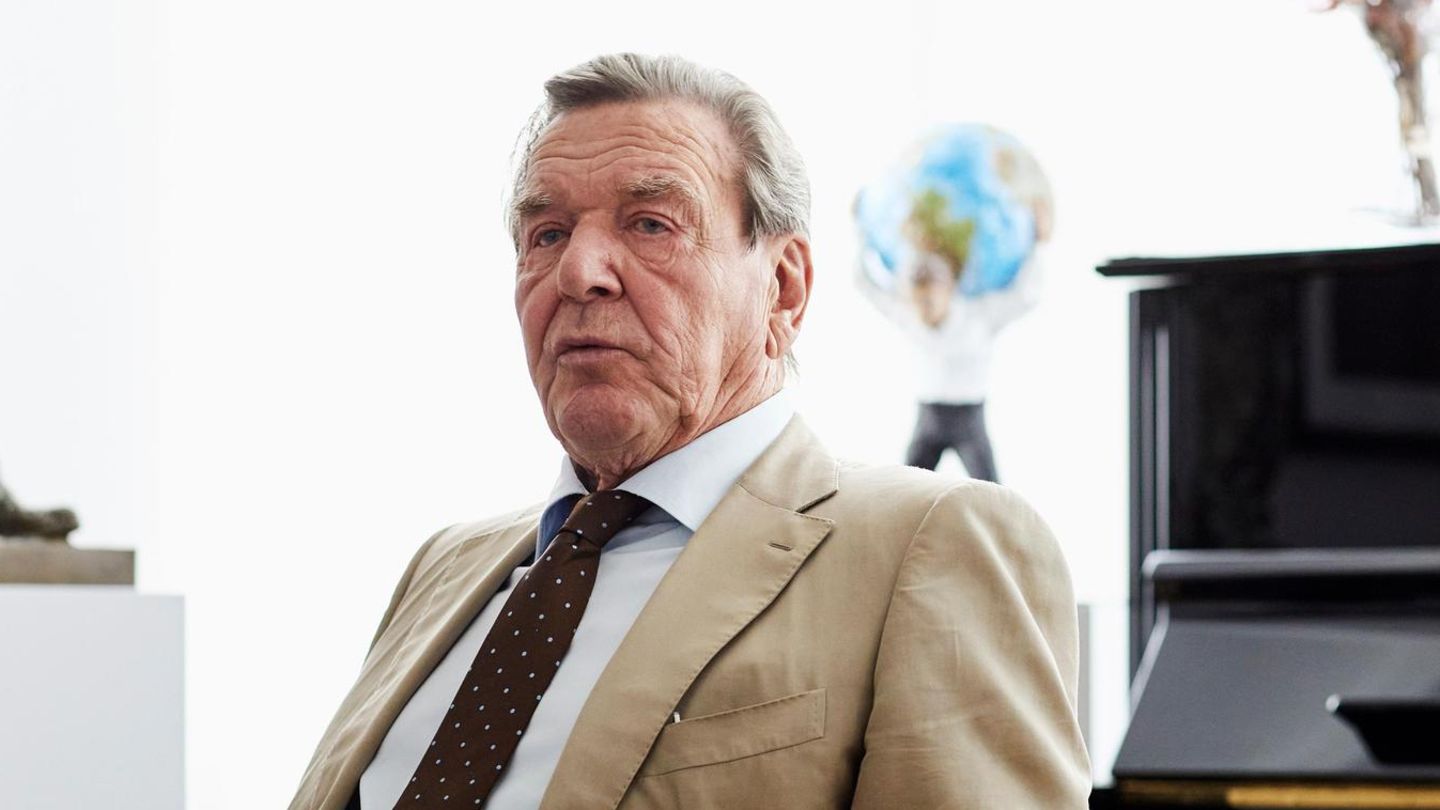
Altkanzler Gerhard Schröder: “Warum soll ich mich entschuldigen?” (stern+)

gerhard-schroeder-aufmacher.jpg

von Gregor Peter Schmitz sowie von Nikolaus Blome

03.08.2022, 05:57 11 Min. Lesezeit

Erstmals spricht Gerhard Schröder in einem Interview mit stern und RTL/ntv über die Gaskrise, seine Treue zu Wladimir Putin und einen möglichen Weg, den Krieg zu beenden.

Es ist später Nachmittag, die Interviewer sind gerade am Hauptbahnhof in Hannover angekommen, als das Telefon klingelt. Gerhard Schröder am Apparat. Sagt der Altkanzler noch ab, weil ihm ein Gespräch zu diesem Zeitpunkt doch zu heikel erscheint?

Aber nein, Schröder ist bester Laune und gesprächsbereit, er hat nur ein Problem: Was soll er seinen Gästen zu essen anbieten? Seine Frau ist noch in Südkorea, er hat nichts im Haus. Sashimi vielleicht? Später stellt sich heraus: Der von Schröder geschätzte Japaner hat geschlossen, aber Pizza geht ja immer. Die Sicherheitsleute, die ihn seit Jahren begleiten, übernehmen die Bestellung.

Categories
Saved Web Pages

Former chancellor of Germany claims that after meeting Putin peace in Ukraine can be possible

Screenshot-2022-08-03-125647_62ea234b672

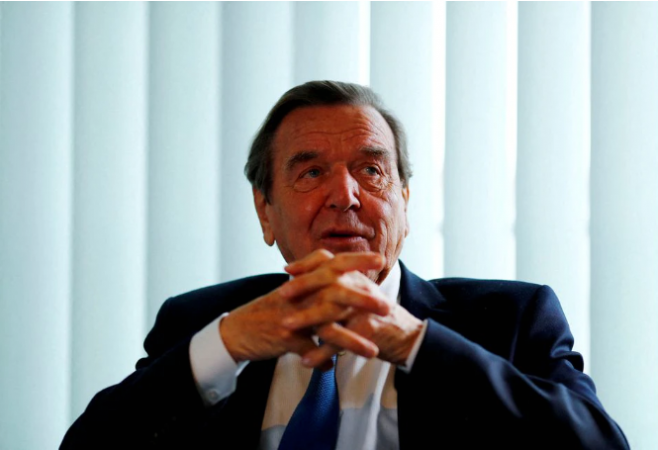
Germany: Germany’s controversial former chancellor Gerhard Schroeder confirmed that he held a meeting with Vladimir Putin in Moscow last week and insisted the Kremlin was ready for talks to end the conflict in Ukraine.

“The good news is that the Kremlin wants a negotiated solution,” Schroeder said in an interview with the German magazine Stern, published on Wednesday. The former leader of the Social Democratic Party claimed that despite being a “mistake”, Russia’s invasion of its neighbor could be solved.

He referred to a UN-mediated agreement between Moscow and Kyiv to unblock Ukrainian grain exports, saying “the first success is the grain deal, perhaps it can be gradually extended to a ceasefire.”

From 1998 to 2005, Schroeder oversaw Europe’s largest economy. She has faced criticism at home and abroad for maintaining a close personal relationship with Putin and working lucrative jobs for state-owned energy companies in Russia.

Many of Moscow’s demands from the conflict were echoed in the former leader’s plan for a settlement. Schroeder argued that Ukraine’s claim to the Crimean peninsula, which Russia annexed in 2014, and its aspirations to join NATO, should be abandoned.


The solution to the Crimean crisis, according to Schroeder, “cannot be found in 99 years, as in Hong Kong, but in the next generation.”

Although the Russian minorities there should be given special rights, the eastern Donbass should remain part of Ukraine.

Schroeder suggested that both sides should make concessions and suggested that Turkey could act as a mediator.


Schroeder, who attempted to speak to Putin a few weeks into the conflict, reiterated that he would stay with Putin, saying he could be “useful”.

The Kremlin threatened to break diplomatic ties with Washington if the US called it a state sponsor of terrorism at the time of Schroeder’s interview.

Russian Foreign Ministry spokeswoman Maria Zakharova called the proposed designation “stupid” and against international law.


She announced on Tuesday that “the logical consequence of such a move becomes a break in diplomatic relations.” Washington runs the risk of eventually crossing the point of no return, which will be followed by all consequences. Washington should fully understand this.

A non-binding resolution urging Secretary of State Antony Blinken to designate Russia as a state sponsor of terrorism was approved by the Senate last week. Ukraine’s President Volodymyr Zelensky has urged the US to use the designation.

However, Blinken objected to the plan, claiming that the proposed restrictions were similar to existing restrictions.

The US is reportedly directly involved in the conflict in Ukraine, along with arming Kyiv, according to accusations made by Russia.


According to the Russian Defense Ministry, Vadim Skbitsky, deputy head of Ukraine’s military intelligence, told Britain’s Telegraph newspaper that Washington was involved in the conflict, which is run by Putin’s ally.

Skibitsky told the newspaper that although US officials were not directly providing information on the targeting, US and Ukrainian intelligence officials had consulted prior to the attacks and that Washington had effectively vetoed the targets.


The Russian Defense Ministry said in a statement on Tuesday that all this “indisputably proves that Washington, contrary to the claims of the White House and the Pentagon, is directly involved in the conflict in Ukraine.”


“All Kyiv-sanctioned rocket attacks on civilian infrastructure and residential areas in populated areas of the Donbass and other regions, resulting in mass killings of civilians, are directly attributable to the Biden administration,” the statement said.

The White House and the Pentagon did not immediately respond to the ministry’s claims.


The Pentagon denied Moscow’s claim that Russia had destroyed six US-made HIMARS missile systems since the start of the Ukraine war. Russia often claims that it has killed HIMARS but has never provided evidence.


Ukraine and the West regularly accuse Russia of carrying out destructive missile attacks on civilian targets. Both sides argue that civilians were deliberately targeted.

According to Ukraine’s Zelensky, despite receiving weapons from the West, his nation’s forces are still unable to overcome Russian advantages in heavy weapons and manpower.

This is especially noticeable in the Donbass during the war. There, it’s just hell. It is beyond description.

Some of the fiercest fighting in the war has taken place in the Donbass, Ukraine’s traditional industrial stronghold in the east.


On 24 February, as part of what it refers to as a “special military operation”, Russia sent thousands of troops to Ukraine. It is depicted as an indiscriminate war of invasion by Kyiv and the West.


Igor Vishnevsky, deputy director of the Russian Foreign Ministry’s Department of Non-Proliferation and Arms Control, denied all claims. “unprovoked aggression” at a UN conference on Tuesday. Moscow, he continued, was of the opinion that nuclear war “must never be fought.”

Alexander Trofimov, a Russian diplomat, told the UN that Moscow would only use nuclear weapons in response to a conventional or weapons of mass destruction attack that endangered the survival of the Russian state.


According to Trofimov, a senior diplomat in the Russian foreign ministry’s non-proliferation and arms control division, “neither of these two hypothetical scenarios is relevant to the situation in Ukraine.”

First shipment from Ukraine carrying ‘corn and hope’ en route Lebanon

Oil Crisis: India steps up diplomacy to buy oil from Russian Far East

Alina Kabaeva Vladimir Putin’s rumored girlfriend is subject to US sanctions because of the conflict in Ukraine

Categories
Saved Web Pages

De nouvelles sanctions américaines contre la Russie

23485337lpw-23485366-article-jpg_8930344

La nouvelle a été annoncée par Washington, mardi : de nouvelles sanctions économiques à l’encontre de la Russie ont été prononcées, informe l’Agence France-Presse. Elles concernent notamment les entreprises et oligarques russes proches du président Vladimir Poutine. Parmi eux, Andrey Guryev, fondateur de l’entreprise de fertilisants PhosAgro, « proche associé » de Vladimir Poutine et ancien membre du gouvernement russe. Ses avoirs ont été gelés par le Bureau de contrôle des avoirs étrangers (Ofac). Ce dernier possède la plus grande propriété privée londonienne, située derrière le palais de Buckingham.

À LIRE AUSSIL’incroyable histoire des « soldats de la musique » ukrainiens

Son yacht, qui lui a coûté 120 millions de dollars et acheté en 2014, est, lui aussi, visé par Washington. Selon le Trésor américain, le navire « aurait désactivé son appareil de géolocalisation afin d’éviter la saisie ». Son entreprise n’est, quant à elle, pas concernée par les sanctions. Les transactions liées aux engrais et autres produits agricoles restent ainsi autorisées.

Le sidérurgiste Magnitogorsk également visé par les sanctions

« Les alliés de Poutine se sont enrichis et ont financé des modes de vie opulents », a déclaré la secrétaire américaine au Trésor, Janet Yellen.

La ministre a affirmé que « tous les outils à la disposition du Trésor seront utilisés pour s’assurer que les élites russes et les soutiens du Kremlin sont tenus responsables de leur complicité dans une guerre qui a coûté d’innombrables vies ».

Le fils d’Andrey Guryev, qui, de son côté, fait déjà l’objet de sanctions par plusieurs pays, est lui aussi visé par les sanctions de Washington.

À LIRE AUSSIMaghreb : bons baisers de Poutine

Sur la liste du Trésor, on retrouve également le sidérurgiste Magnitogorsk (MMK), « l’un des plus grands producteurs d’acier au monde » et « l’un des plus importants contribuables de Russie ». Deux de ses filiales et son actionnaire principal, l’oligarque Viktor Rachnikov, sont aussi mentionnés sur la liste. De la même manière que l’ex-gymnaste et ancienne membre de la Douma Alina Kabaeva, à la tête d’un groupe de médias « pro-Kremlin ». Cette dernière est déjà présente sur la liste noire de l’Union européenne. Ses avoirs américains ont ainsi été gelés.

Des restrictions de visas

Le Département d’État a, quant à lui, annoncé des restrictions de visas à l’encontre de 893 responsables russes et 31 responsables étrangers. Et cela, pour leur rôle joué dans la guerre ukrainienne.

Figurent également sur la liste noire de Washington trois oligarques, des entreprises publiques russes, ainsi que « 24 entités russes liées à la défense et à la technologie ».

À LIRE AUSSIViktor Bout, un si commode marchand de canons

Categories
Saved Web Pages

Russia says United States is directly involved in Ukraine war

NOYKPMUDORM3XHQYGD75VOS36Q.jpg

LONDON, Aug 2 (Reuters) – Russia on Tuesday said that the United States, the world’s top military power, was directly involved in the conflict in Ukraine because U.S. spies were approving and coordinating Ukrainian missile strikes on Russian forces.

Russia’s invasion of Ukraine has triggered the most serious crisis in relations between Russia and the West since the 1962 Cuban Missile Crisis, when many people feared the world was on the brink of nuclear war.

Russia’s defence ministry, headed by a close ally of President Vladimir Putin, said Vadym Skibitsky, Ukraine’s deputy head of military intelligence, had admitted to the Telegraph newspaper that Washington coordinates HIMARS missile strikes.

Register now for FREE unlimited access to Reuters.com

“All this undeniably proves that Washington, contrary to White House and Pentagon claims, is directly involved in the conflict in Ukraine,” the defence ministry said.

U.S. President Joe Biden has said he wants Ukraine to defeat Russia and has supplied billions of dollars of arms to Kyiv but U.S. officials do not want a direct confrontation between U.S. and Russian soldiers.

Russia said the Biden administration was responsible for missile attacks on civilian targets in areas controlled by Russian-backed forces in eastern Ukraine.

“It is the Biden administration that is directly responsible for all Kiev-approved rocket attacks on residential areas and civilian infrastructure in populated areas of Donbas and other regions, which have resulted in mass deaths of civilians,” the defence ministry said.

Russia and the West frame the conflict in Ukraine very differently.

Putin calls it a “special military operation” aimed at preventing what he says is a Western attempt to use Ukraine to threaten Russia and at protecting Russian speakers from persecution from dangerous nationalists in Ukraine.

The 69-year-old Kremlin chief increasingly casts the conflict as an existential battle with the West whose outcome will reshape the global political order.

Kyiv and its Western backers say Putin’s claims are without foundation and that there is no justification for waging an unprovoked war against a sovereign state whose borders Russia recognised.

Russian Defence Minister Sergei Shoigu, who sometimes holidays with Putin in the Russian wilderness, said the operation in Ukraine was going to plan with Russian and Russian-backed forces pushing back Ukrainian forces in the eastern Donetsk region.

“After taking control of the territory of the Luhansk People’s Republic, the Donetsk People’s Republic is being liberated as planned,” Shoigu told top generals.

He said the settlements of Hryhorivka, Berestove, Stryapivka, Pokrovske, Semyhirya and Novoluhanske had been taken recently, including the largest thermal power plant in Europe.

Neither Russia nor Ukraine discloses its losses.

U.S. intelligence estimates that some 15,000 Russians have been killed so far in Ukraine – equal to the total Soviet death toll during Moscow’s occupation of Afghanistan in 1979-1989.

Ukrainian losses are probably a little less than that, U.S. intelligence believes, according to U.S. estimates. Neither Ukraine nor Russia has given detailed estimates of its own losses.

Register now for FREE unlimited access to Reuters.com

Reporting by Reuters; editing by Guy Faulconbridge and Nick Macfie

Our Standards: The Thomson Reuters Trust Principles.

Categories
Saved Web Pages

Ayman al-Zawahiri: How US spies found al-Qaeda’s top man in Kabul

By Matt Murphy
BBC News

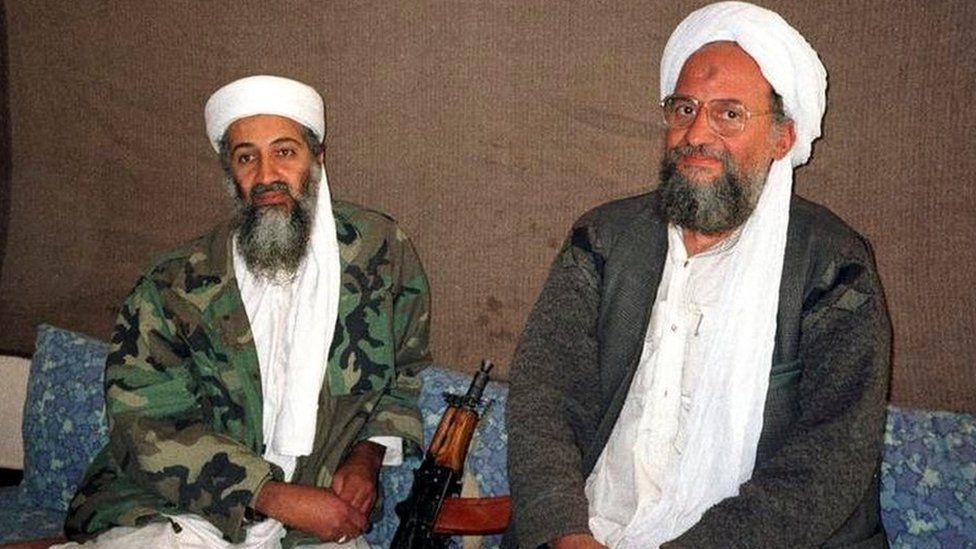
Osama Bin Laden and Ayman al-Zawahiri - 2001Image source, Reuters

Image caption,

Zawahiri (R) was considered Bin Laden’s right-hand man and then became al-Qaeda’s leader

Last year, during the chaotic US withdrawal from Afghanistan, President Joe Biden pledged his administration would not allow the new Taliban-led regime to make the country a safe-haven for terrorists.

The remarks were intended to indicate that, as far as Mr Biden’s White House was concerned, the decades-old war on terror was far from over.

Almost a year later, the president’s top security advisers approached him and suggested that intelligence officials may have located the leader of al-Qaeda, Ayman al-Zawahiri, in Afghanistan.

Identifying a high-value target

In background briefings, senior administration figures told reporters that they believed Zawahiri had returned to Afghanistan in the past year, following the collapse of the Western-backed government.

US spies had been carefully watching Afghanistan ever since the US withdrawal for signs that al-Qaeda leaders were slowly filtering back into the country, an adviser to Mr Biden said.

Image source, AFP

Image caption,

It’s unclear what happened to Zawahiri’s body in the wake of the strike

Zawahiri is said to have settled in a large compound with high, protective walls, in downtown Kabul with his wife and daughter.

The neighbourhood Zawahiri chose, a relatively well-to-do area called Choorpur, was home to foreign embassies and diplomats under the previous administration. Now, most of the Taliban’s senior officials live in its plush surroundings.

In early April, CIA officers first briefed Mr Biden’s advisers, and then the president himself, informing him that they had identified a network supporting the al-Qaeda leader and his family through multiple streams of intelligence, according to the briefings.

The spies had slowly established patterns of behaviour from the house’s residents, including the unique mannerisms of a woman that spies identified as Zawahiri’s wife.

Officials said they had recognised her use of terrorist “tradecraft”, which she used in an attempt to avoid leading anyone to her husband’s safehouse in Kabul.

They observed that after arriving at the house, Zawahiri never personally left the premises. But they did note his habit of appearing periodically on a balcony overlooking the property’s walls for short periods of time.

Plotting an historic raid

For Mr Biden, the opportunity to kill one of America’s most wanted men was fraught with risk.

Zawahiri was living in a dense residential neighbourhood, and the drone strike that accidentally killed 10 innocent people in Kabul, including an aid worker and seven children during the final days of the US presence in Afghanistan, will undoubtedly have played on his mind.

Throughout May and June, the US leader was focussed on the war in Ukraine and pushing through landmark legislation on gun control and climate change. But secretly a “very small and select” group of top intelligence officers began preparing several options to present to him.

Mr Biden had tasked intelligence officers with ensuring that civilians – including Zawahiri ‘s family and Taliban officials – weren’t accidentally killed in the attack.

On 1 July, Mr Biden gathered several top officials, including CIA Director William Burns and Director of National Intelligence Avril Haines, for a briefing.

Mr Biden was said to be “deeply engaged in the briefing and immersed in the intelligence” as he and his advisers gathered around a scale model of Zawahiri’s home that intelligence officials had constructed and brought to the White House.

“He was particularly focused on ensuring that every step had been taken to ensure the operation would minimise that risk,” a senior adviser said.

Mr Biden asked for information about the building’s structure and how a strike could affect it, before flying to Camp David for a weekend break.

Over the next few weeks, officials met at the White House situation room – a bunker-like command centre below the White House set up to allow the president to monitor crises at home and abroad.

They methodically planned the operation, trying to anticipate any questions the president could ask.

Meanwhile, a small team of lawyers came together to assess the legality of a strike, ultimately concluding that Zawahiri was a legitimate target based on “his continuing leadership role in al-Qaeda and his participation and operational support for al-Qaeda attacks”.

On 25 July, after convening his team one final time and asking his top advisers for their views, Mr Biden authorised the strike.

Taliban leaders scramble as US strikes

At 06:18 local time (01:38 GMT), two hellfire missiles fired by a drone smashed into the balcony of Zawahiri ‘s home, killing the al-Qaeda leader. Members of his family were unharmed, intelligence officials said.

In the aftermath of the raid, the windows of the house appeared to have been blown out, but astonishingly little other damage seemed to have been done.

There are suggestions a little-known version of the Hellfire missile was used, one without an explosive warhead. This version – called the AGM-114R9X – instead deploys six blades which swing out from the side of the missile as it approaches the target.

It is the kinetic energy from this multi-bladed weapon’s speed that causes the destruction, as they slice through whatever they hit and minimises collateral damage.

Thousands of miles away in Washington, the president was informed of the strike’s success.

On Sunday, the Taliban’s ministry of the interior told the local Tolo news outlet that a rocket strike had hit an empty house, causing no casualties. They refused to provide additional details at the time.

But the Biden administration said soon after, fighters from the Haqqani network, an ultra-violent wing of the Taliban, rushed Zawahiri’s family away from the site and engaged in a broader effort to cover-up his presence.

When a BBC reporter arrived at the house on Monday morning a Taliban cordon sharply brandished him away, aiming rifles at him and insisting that there was “nothing to see”.

Image caption,

This is the suspected location of the strike in Kabul

US officials said “multiple streams of intelligence” had confirmed Zawahiri ‘s death, but emphasised that no American personnel were on the ground in Kabul. They refused to elaborate as to how they had confirmed the attack’s success.

Intelligence agencies jealously guard the identities of their spies, and James Clapper, a former director of national intelligence under President Obama, told the BBC that former US allies in Kabul may have provided some information.

It’s unclear what happened to Zawahiri’s body in the wake of the strike. Biden administration figures said the US had made no effort to retrieve Zawahiri’s remains, as they did in the wake of the raid that killed Osama Bin Laden.

Special forces retrieved Bin Laden’s body to confirm his identity, before burying it at sea to prevent his grave becoming a shrine to Islamists.

However, given the Taliban have cleaned the area, it is possible his remains have been retrieved.

As Mr Biden’s television address from a balcony of the White House beamed around the world, Taliban leaders issued a sharp condemnation of the US incursion into their territory. But their comments made no mention of Zawahiri.

There will now be speculation about how much knowledge senior Taliban leaders had about Zawahiri’s presence in Kabul and what assistance they might have been providing.

One resident told the BBC that Taliban fighters had been guarding the street and that the presence of “non-Afghan residents” was common knowledge among locals.

The suggestion seems likely to raise tricky questions for Taliban leaders.

Media caption,

Biden on Zawahiri killing: ‘Justice has been delivered’

Additional reporting from Chris Partridge on the Hellfire system

Categories
Saved Web Pages

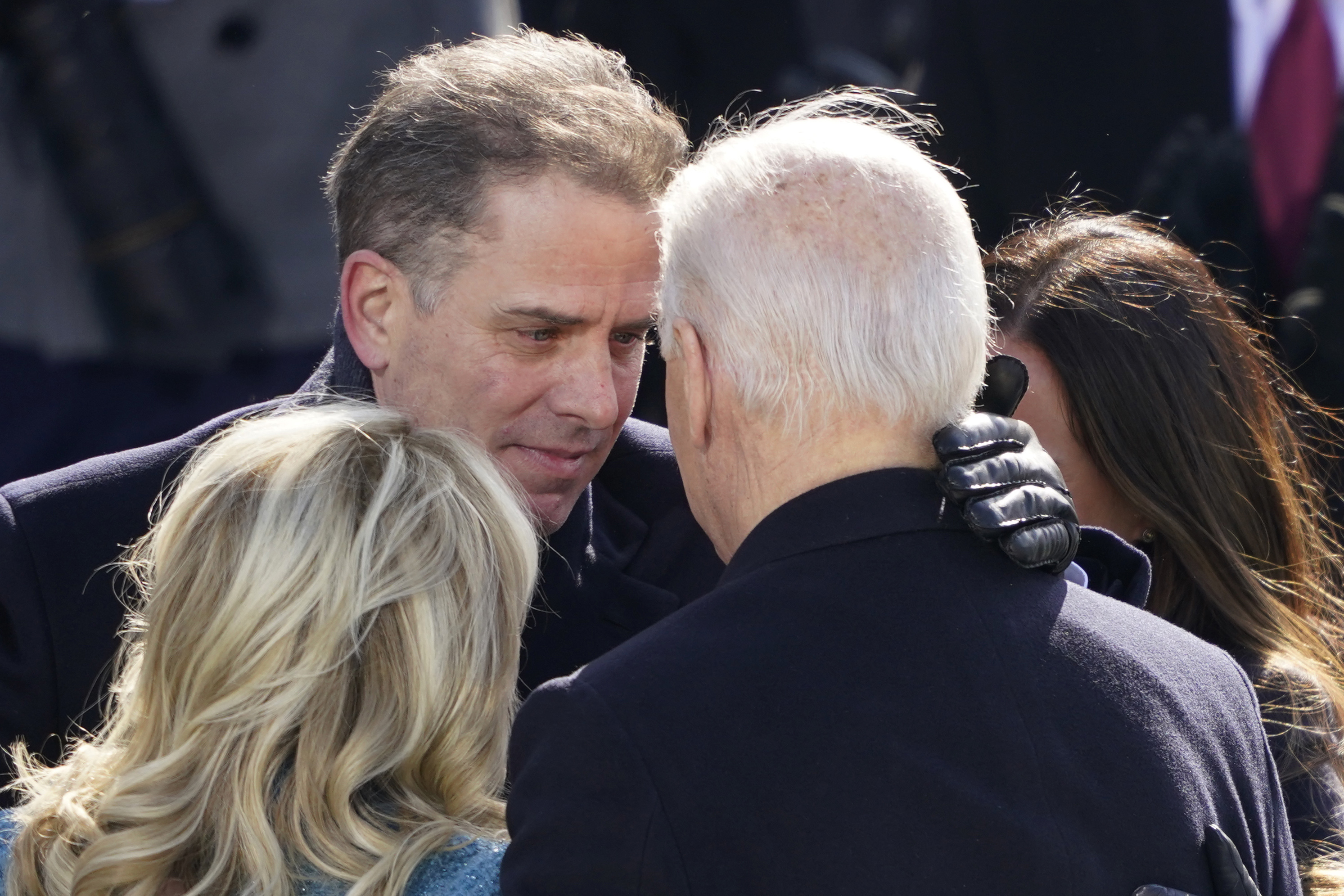
Erosion of public trust mounting for FBI as allegations of partisanship emerge in Hunter Biden probe

Hunter_Biden_Taxes_14076.jpg-eed83.jpg

Sen. Charles E. Grassley’s accusation of partisan interference by top FBI officials in the Hunter Biden probe is the latest crisis of credibility for the nation’s premier law enforcement agency, making its job of collaring crooks that much more difficult.

The Iowa Republican made the accusation in the middle of an embarrassing summer for the storied bureau, which has been struggling to shake off complaints of political bias since the 2016 presidential election.

In May, the criminal trial of former Hillary Clinton campaign attorney Michael Sussmann laid bare multiple mistakes and subterfuge by FBI officials investigating accusations of links between Russians who interfered in the 2016 election and members of President Trump’s campaign.

Former FBI agents said they fear the bureau’s woes will seep into its critical terrorism and organized crime investigations. They worry that informants will be less willing to come forward or that jurors may not give an agent testifying at trial the same expectation of truth they once would have.

“There is no greater backbone for any law enforcement organization than having the trust of the American people,” said Lewis Schiliro, a former head of the agency’s New York office. “It’s through the trust of the people that you get cooperation from witnesses and victims, the credibility to testify on the witness stand, and even the ability to infiltrate terrorist organizations.”

FBI Director Christopher A. Wray will get a chance to explain Thursday when he testifies before the Senate Judiciary Committee. The FBI did not respond to multiple requests for comment by The Washington Times about its loss of public trust.

SEE ALSO: Whistleblower reveals FBI wrongly labeled Hunter Biden evidence as disinformation

A Rasmussen poll released this year showed plunging public support for the FBI. The survey found that 47% of likely U.S. voters had an unfavorable view of the bureau, including 26% who had a “very unfavorable” impression.

About 46% of respondents said they had a favorable view of the FBI, down from 60% in the same survey in May 2020.

The poll showed that 46% of voters viewed the FBI as President Biden’s “personal Gestapo,” and 50% said the president was influencing the FBI.

That lack of confidence is reflected in jury rooms across the country. The number of convictions in FBI-led investigations has dropped by 4% over the past five years and 14% over the past 10 years, according to data from Syracuse University.

Kevin Brock, a former FBI assistant director of intelligence, said the erosion of public trust is the “inevitable legacy” of former FBI Director James B. Comey and Deputy Director Andrew McCabe. He said accusations that they mishandled the Trump-Russia probe and the investigation into Mrs. Clinton’s use of a private email server gave rise to public suspicion of the bureau across the political spectrum.

“These allegations [of political taint] are going to persist and will hurt the FBI because they will lose the trust of the American people,” he said. “They’ve already lost a large swath of the American people.”

The accusations against the bureau this summer have revived complaints of top FBI officials’ partisan ties and other embarrassments from the Trump era.

Mr. Grassley revealed last week that FBI whistleblowers told lawmakers that FBI officials inaccurately labeled verified evidence in the Hunter Biden case as disinformation, grinding the probe to a halt.

Current and former “highly credible whistleblowers” within the FBI told Congress that agents conspired to discredit the probe against the president’s son.

The agent in charge of the probe, Timothy Thibault, has come under fire for reported partisan social media posts, including retweeting anti-Trump groups and criticizing Republicans.

Sen. Ron Johnson, Wisconsin Republican, accused the FBI on Sunday of extreme political bias. He accused Mr. Wray, who was appointed by Mr. Trump, of slow-walking the Hunter Biden investigation.

“I’m not shocked, but it’s outrageous that the FBI would be tipping the scales of justice the way they’re doing,” he said in a Fox News interview.

“I have no faith in Christopher Wray conducting this investigation, but it’s important that the American public understand the FBI had Hunter Biden’s laptop in December 2019. They certainly saw the evidence of what I think is criminal activity on that laptop,” Mr. Johnson said.

Mr. Johnson suggested that the FBI obstructed Senate Republicans’ 2020 probe into Hunter Biden’s foreign business dealings.

The FBI faced two weeks of humiliating testimony in the trial of Mr. Sussmann, who was acquitted in May of lying to the agency about his ties to the Clinton campaign when he offered a false tip about the Trump Organization’s ties to Russia.

The trial revealed that FBI leaders concealed from field agents that information provided by the Clinton campaign triggered the investigation. An agent testified that a “typo” led other agents to believe that the anti-Trump accusations were based on a referral from the Justice Department, not from a Clinton campaign attorney.

The agent also testified under oath that he is under an internal FBI investigation for withholding key evidence in the Trump-Russia probe.

As the bureau tries to navigate away from political scandal, a series of self-inflicted wounds have raised questions of competency.

A group of 90 women, including several U.S. Olympic team gymnasts, has filed a $1 billion lawsuit against the FBI for its botched investigation into former Team USA doctor Larry Nassar, allowing him to continue to sexually abuse them.

The Justice Department released a report that found USA Gymnastics contacted the FBI twice about Nassar, but the FBI did not take any action. Nassar abused about 70 women and girls from the time the FBI was first told of the accusations in July 2015 to December 2016, when he was arrested.

The FBI has also come under fire for failing to follow up on a tip about mass shooter Nikolas Cruz in 2018. Roughly six weeks after the tip, Cruz fatally shot 17 students and injured more at Marjory Stoneman Douglas High School in Parkland, Florida.

Last year, prosecutors charged FBI agent Eduardo Valdivia with attempted second-degree murder in a shooting aboard a Washington Metropolitan Area Transit Authority train after a five-month investigation by Montgomery County State’s Attorney John McCarthy. Mr. Valdivia has pleaded not guilty, and the case is pending.

A recent Justice Department inspector general’s report found that two FBI officials “engaged in unprofessional conduct by exhibiting favoritism in granting promotions.”

“It’s not helping,” Mr. Brock said of the spate of black eyes for the bureau. “Parkland was a horrible FBI breakdown in processes, and the gymnast case was a real failure on the part of the FBI. Those things might have had less of an impact a few years ago as isolated mistakes, but in this environment, everything the FBI does is now being amplified by both sides of the political spectrum for leverage.”

The former agent said it would take major overhauls for the bureau to win back the public’s confidence.

Mr. Brock called on FBI brass to be more transparent in politically tinged cases to prevent second-guessing and finger-pointing by lawmakers and the public.

He said the bureau should acknowledge when agents are working on major cases like the Hunter Biden probe and make a public pledge to rigorously document that bureau procedures are followed. He said increasing transparency is a difficult balance because the bureau needs to keep mum about witnesses and evidence. Still, he said, it will pay off in the long run.

“No one is saying increasing transparency is easy, but the risk is that there will be a substantial loss in confidence and the FBI will become ineffective,” he said.

Mr. Schiliro said Congress should stop making the FBI director a politically appointed position and instead have the person appointed by a bipartisan panel for a 10-year term.

“As long as we have politically appointed FBI directors, their loyalty becomes more political than to the FBI as an institution. It needs to be independent,” he said.

• Jeff Mordock can be reached at jmordock@washingtontimes.com.

WP Radio
WP Radio
OFFLINE LIVE