Categories
Saved Web Pages

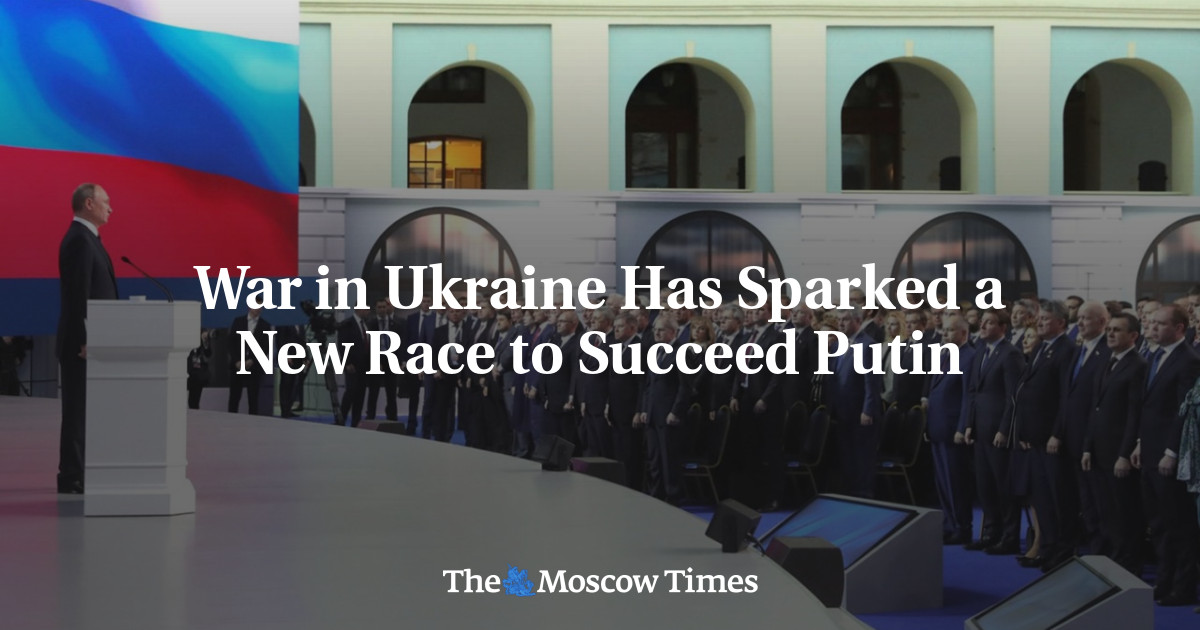
War in Ukraine Has Sparked a New Race to Succeed Putin

78530__b2e24be544db7d4b0c786348fe6bfc95.

The war in Ukraine and ensuing sanctions have failed to cement Russia’s power vertical or unify the country’s influential business and political groups. Had President Vladimir Putin gotten the swift victory he was clearly counting on when he launched his “special operation,” he would have solidified his position as ruler, but as the conflict drags on, the elites are being forced to think of their future and to try to find their place within it.

Putin himself demonstrates no intention to step down but looks increasingly relegated to the past. The elites and potential successors are watching his every military move, but they can already see that he has no place in their postwar vision of the future. His sole remaining function in their perception of the new era of peace will be to nominate a successor and leave the stage.

The war has, therefore, set in motion a public race of the successors. In recent years, political maneuvering in Russia was kept in the shadows, but in this new era, loud proclamations and high-visibility political gesturing are again the norm. It is as though an active election campaign is already under way, with bureaucrats and functionaries within the ruling party doing their best to get into the limelight and even attacking one another. Until recently, such behavior was almost unthinkable: the presidential administration worked in silence, while high-status functionaries at the ruling United Russia party restricted themselves to making promises on social policies.

 Former president, ex-prime minister, and deputy chair of the Security Council Dmitry Medvedev has been particularly busy making statements. His over-the-top, hardline comments on foreign policy issues and insults hurled at Western leaders often look comical, but the role he’s trying to play is clear. It blends tough isolationism with populism, firmly placing the blame for internal woes on the shoulders of external enemies.

Another politician newly making loud gestures is the first deputy chief of staff and curator of the Kremlin’s political bloc Sergei Kiriyenko, who has now been given responsibility for overseeing the breakaway republics in the Donbas. He has become one of the new era’s highest profile politicians, though previously—ever since he became a presidential envoy in the early 2000s—he had never demonstrated any inclination for the limelight.

But now Kiriyenko has taken to wearing khaki and talking loudly of fascists, Nazis, and the unique mission of the Russian people. He headlines public events, and in the Donbas he unveiled a monument to “Granny Anya,” the elderly woman the Russians tried to turn into a symbol of the “liberation” of Ukraine. He is clearly emphasizing his status as curator of the self-proclaimed Donetsk and Luhansk “people’s republics” (DNR and LNR): something done by neither of his predecessors in that role, Vladislav Surkov and Dmitry Kozak. 

Media reports have stressed that those taking up administrative jobs in the Donbas republics are alumni of the school for governors, Kiriyenko’s brainchild. And though Kiriyenko isn’t directly involved in the military campaign, he has clearly managed to carve out a niche for himself in Putin’s martial agenda.

The speaker of the State Duma, Vyacheslav Volodin, is another front-runner in the battle of the hawks. Since his transfer from the Kremlin (as first deputy chief of staff) to the State Duma, Volodin has stepped up his public profile, making numerous provocative statements that are guaranteed to be picked up as sound bites. Now he is redoubling his efforts, backing a ban on foreign words on shopfronts and calling for the death penalty to be kept in the DNR and LNR.

Other influential bureaucrats have adopted a very different strategy, choosing to steer as far away from the subject of the “special operation” as their position allows. That silence is in itself a political gesture.

Prime Minister Mikhail Mishustin and Moscow Mayor Sergei Sobyanin, both regarded as contenders for Putin’s succession prior to the war, have been notably tight-lipped about the “special operation” in Ukraine. Sobyanin toed the line by appearing at a rally in support of it at Moscow’s Luzhniki stadium in March, and traveled to the LNR in June, but he has yet to be spotted in army fatigues or to call for Nazism to be crushed. Mishustin, meanwhile, has avoided the subject of the war entirely.

The rational explanation for their silence is that war is a temporary affair, and relations with the West and even with Ukraine will, at some point and somehow, have to be restored. When that time comes, those who haven’t insulted “hostile countries” or directly participated in the military campaign will be better placed to go about that.

Remaining silent has its own risks, however. If Putin eventually requires complete commitment from all bureaucrats on the Donbas and military issue, the fact that they remained silent could be held against them.

This is all reminiscent of the situation in 2007, when Putin’s second term as president was coming to an end and he could not run for a third consecutive term under the constitution. There were two candidates for the role of successor: first deputy prime ministers Sergei Ivanov and Dmitry Medvedev. Ivanov positioned himself as a conservative and authoritarian, while Medvedev played the role of a liberal modernizer oriented toward the West.

The winner, Medvedev—who claimed back then that “freedom is better than non-freedom”—genuinely strayed from Putin’s beaten track, drawing closer to the West. He spoke sincerely about continuing his presidential career, but quickly folded when Putin wanted to return to the presidency in 2012.

Following Putin’s reelection in 2018, the issue of succession again arose, only to be cut short when Putin changed the constitution to reset the clock on presidential terms, enabling him to run for two more terms from 2024. Now the Russian elite is again looking around for a successor, but in this new era of political gestures, it is the potential successors who have fired the starting pistol, rather than Putin.

The two strategies—loud gestures and resounding silence—reflect the different approaches and assumptions of those who use them. The hawks operate on the basis that the successor will be chosen by Putin, so they mimic his behavior in their attempts to win his favor, indicating that they will preserve his legacy loyally. “After Putin there will be Putin,” Volodin once said.

Those remaining silent are counting on a different succession scenario, whereby the new leader is selected by the elites. As a rule, in this scenario, bets aren’t placed on the most popular potential candidate: they’re not backing anyone who likes to get up on the podium and flex. Instead, technocrats who are capable of taking into account the interests of various groups will become the leading candidates. A “new Putin” could start a redistribution of influence and property, and the elites have little interest in that.

The 2022 version of the successors’ race is a virtual event, of course. Putin hasn’t announced the start of casting and clearly isn’t planning to leave his job: the presidential administration is preparing for elections in 2024, and it goes without saying who will be in the central role. The war and potential annexation of further territories will remove the need for Putin to come up with a manifesto of any kind. He wants to go into the election as the man who defeated Nazism (irrespective of the actual results of the invasion) and as a historic figure who doesn’t need to make any promises to his people.

Nevertheless, the interest shown in the succession race by the most senior members of the elites—not to mention the enthusiasm of its participants—demonstrates that the system wants to discuss (and see) a post-Putin future. It might seem that the extreme circumstances of wartime should banish any thoughts of what will come later. But whatever that future looks like, there appears to be less and less room in it for Putin.

This article was originally published by the Carnegie Endowment for Peace.
Categories
Saved Web Pages

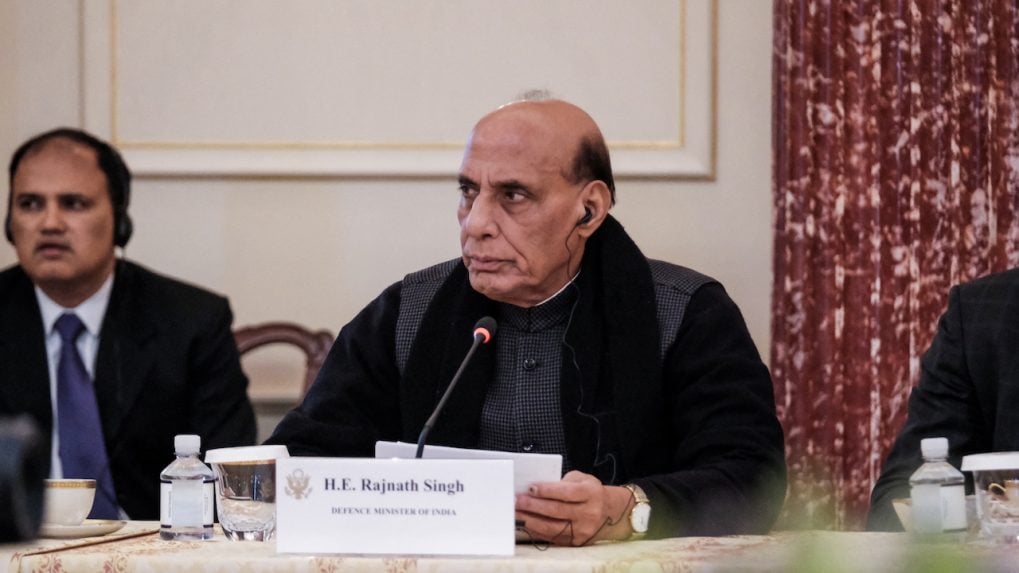
Rajnath Singh thanks Russian defence minister over detention of IS bomber planning to target India

twoplustwo2-1019x573.jpg

Read Time2 Min(s) Read

Profile image

Russia’s Federal Security Service (FSB) said on Monday that it detained the Islamic State terrorist from a Central Asian country who underwent special training to carry out a suicide attack against a member of India’s leadership elite for offensive comments on the Prophet.

Defence Minister Rajnath Singh on Wednesday thanked his Russian counterpart Sergey Shoigu over Russian authorities detaining an alleged Islamic State (IS) terrorist who was planning to target a key Indian politician from the ruling party. Singh conveyed his appreciation to Shoigu when he exchanged pleasantries with the Russian defence minister at a conclave of the Shanghai Cooperation Organisation (SCO) in Tashkent.

“During the exchange of pleasantries with Russian Defence Minister Sergey Shoigu this morning, Rajnath Singh conveyed his deep appreciation and thanks for arresting in Moscow a terrorist who was planning attacks in India,” the defence ministry said.

Russia’s Federal Security Service (FSB) said on Monday that it detained the Islamic State terrorist from a Central Asian country who underwent special training to carry out a suicide attack against a member of India’s leadership elite for offensive comments on the Prophet.

It said the foreign national was recruited by one of the Islamic State’s ringleaders as a suicide bomber sometime between April and June 2022 while he was in Turkey.

“The Federal Security Service has identified and apprehended in Russia a member of the outlawed (by the Russian Federation) Islamic State international terrorist organisation. The detainee is a native of a Central Asian country who planned to commit a terrorist attack against a member of India’s ruling circles by blowing himself up,” the FSB said.

Also Read: Congress leader Jaiveer Shergill resigns as national spokesman, says decision making influenced by ‘self-serving interests’

Categories
Saved Web Pages

U.S. intelligence chief to conduct risk assessment of recovered Mar-a-Lago materials

107101002-1660050089431-gettyimages-1242

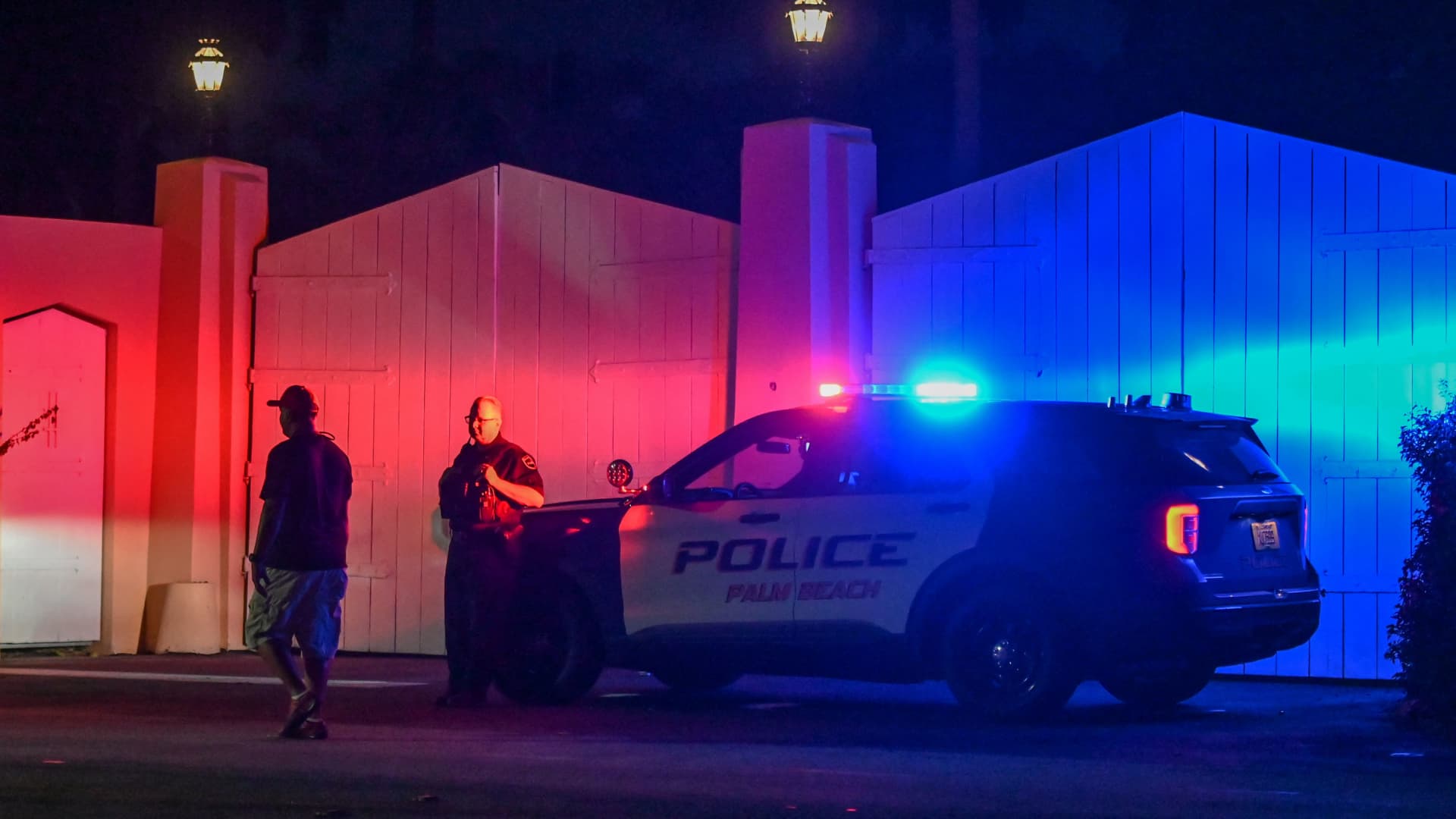
A police car is seen outside former US President Donald Trump’s residence in Mar-A-Lago, Palm Beach, Florida on August 8, 2022.

The U.S. intelligence community will assess the potential risk to national security of disclosure of materials recovered during the Aug. 8 search of former President Donald Trump’s Florida residence, according to a letter seen by Reuters.

The letter dated Friday from National Intelligence Director (DNI) Avril Haines to House Intelligence Committee chair Adam Schiff and Oversight Committee chair Carolyn Maloney also said the Justice Department and DNI “are working together to facilitate a classification review” of materials including those recovered during the search.

Schiff and Maloney said in a joint statement they were pleased the government was “assessing the damage caused by the improper storage of classified documents at Mar-a-Lago.” Politico reported the letter earlier.

The Justice Department on Friday disclosed that it was investigating Trump for removing White House records because it believed he illegally held documents including some involving intelligence-gathering and clandestine human sources — among America’s most closely held secrets.

Haines said DNI “will also lead an Intelligence Community (IC) assessment of the potential risk to national security that would result from the disclosure of the relevant documents” including those seized.

The Justice Department on Friday released a heavily redacted affidavit that underpinned the FBI’s extraordinary search of Mar-a-Lago in which agents seized 11 sets of classified records including some labeled “top secret” as documents that could gravely threaten national security if exposed.

In the affidavit, an unidentified FBI agent said the agency reviewed and identified 184 documents “bearing classification markings” containing “national defense information” after Trump in January returned 15 boxes of government records sought by the U.S. National Archives. Other records in those boxes, according to the affidavit, bore handwritten notes by Trump.

Schiff and Maloney said the Justice Department release Friday “affirms our grave concern that among the documents stored at Mar-a-Lago were those that could endanger human sources. It is critical that the IC move swiftly to assess and, if necessary, to mitigate the damage done.”

The search was part of a federal investigation into whether Trump illegally removed and kept documents when he left office in January 2021 after losing the 2020 election to President Joe Biden and whether Trump tried to obstruct the probe.

Trump, a Republican who is considering another presidential run in 2024, has described the court-approved search at the Mar-a-Lago estate in Palm Beach as politically motivated, and on Friday again described it as a “break-in.”

Categories
Saved Web Pages

Latest Developments in Ukraine: August 29

01630000-0aff-0242-578c-08da89b6f3c6_w12

For full coverage of the crisis in Ukraine, visit Flashpoint Ukraine.

The latest developments in Russia’s war on Ukraine. All times EDT.

9:20 a.m. Ukraine’s armed forces have started an offensive action on several fronts in the south of the country, a military spokesperson said, launching a much-anticipated counteroffensive to regain the Kherson region from invading Russian forces, RFE/RL reported.

“Today we started offensive actions in various directions, including in the Kherson region,” Ukrainian public broadcaster Suspilne cited Southern Command spokesperson Natalya Humenyuk as saying. She confirmed the news minutes later at a briefing.

Russia captured swathes of southern Ukraine in the first phase of its February 24 invasion. Ukraine has been pledging for weeks now to conduct a major counteroffensive to retake land and has used Western-made, long-range weapons to hit Russian supply lines.

Humenyuk said that Ukraine’s recent strikes on Russia’s southern logistical routes had “unquestionably weakened the enemy,” adding that more than 10 Russian ammunition dumps had been hit over the last week.

However, she declined to disclose more details about the new offensive.

9:00 a.m.: Ukraine’s President Volodymyr Zelenskyy accused Russia on Monday of economic terrorism by trying to prevent European nations from stocking up on gas ahead of a winter when the impact of soaring energy bills is set to hit households and businesses hard, according to Reuters.

How to respond to the rise in gas prices, which has been made worse by a squeeze on supplies from Russia, is top of the political agenda across the continent as autumn approaches.

Zelenskyy spoke in a video address to an energy conference in Norway. His comments come as Russia’s Gazprom plans maintenance this week that will halt gas flows along the Nord Stream 1 pipeline that links Russia and Germany via the Baltic Sea.

The outage has fueled fears that Russia is curbing supply to put pressure on Western nations opposed to its invasion of Ukraine, a charge Moscow denies.

8:30 a.m.: Swedish Prime Minister Magdalena Andersson has promised to provide a further $46.75 million in military assistance to Ukraine to help it defend itself against Russia’s ongoing invasion, RFE/RL reported.

Speaking to journalists after meeting in Stockholm with Ukrainian Foreign Minister Dmytro Kuleba on Monday, Andersson said that a total additional aid package to Ukraine will reach about $94 million, when funds for the armed forces and the reconstruction of the country are combined.

“Borders must never be changed by force or war,” Andersson said.

Kuleba thanked Sweden for its support since Russia launched its unprovoked invasion of Ukraine in late February, adding that the best way to save Ukrainian lives is to supply it with weapons such as howitzers and shells.

“As long as the war continues, we will be asking for more weapons”,” Kuleba said at the press conference.

6:05 a.m.: Speaking at an oil and gas conference in Norway via video link, Ukrainian President Volodymyr Zelenskiyy said Monday that Russia is trying to prevent European nations from filling their gas storages enough to cope with the coming winter, Reuters reported.

5:45 a.m.: The director-general of the International Committee of the Red Cross, Robert Mardini, is in Ukraine this week to take stock of the ICRC’s humanitarian activities, the ICRC said in a statement on Monday.

While in Ukraine, Mardini will “meet Ukrainian communities supported by the ICRC, including family members of prisoners of war,” the statement said, adding that he “will reiterate our [the ICRC’s] long-standing commitment to helping all victims of the international armed conflict in Ukraine.”

The ICRC said Mardini has plans to travel to Russia, tn an effort to continue the humanitarian organization’s work on “bilateral discussions on humanitarian issues.”

Mardini is scheduled to hold a news conference for the media on August 31.

5:15 a.m.: Germany will keep up its support for Ukraine’s defense for as long as it takes, and it will send state-of-the-art weapons to Kyiv in the coming weeks, Reuters reported Monday, citing Chancellor Olaf Scholz’s text of a speech prepared for delivery.

Apart from sending advanced air defense, radar systems or drones, Germany could assume special responsibility in terms of building up Ukraine’s artillery and air defense capacities, Scholz said during his visit to the Czech capital.

5 a.m.: Ukrainian Foreign Minister Dmytro Kuleba told reporters Monday in Stockholm that the international community should be united in demanding Russia’s withdrawal from Ukraine’s Zaporizhzhia nuclear power plant, saying that is the only way to ensure security at the site. The plan is situated near the front line of Russia’s invasion of Ukraine.

“We expect from the mission a clear statement of facts of violation of nuclear safety protocols. We know that Russia is putting not only Ukraine but also entire world at threat, at risk of nuclear accident,” Kuleba said.

4:30 a.m.: Russia’s top security agency has identified a second Ukrainian who it alleges was involved in the killing of the daughter of a Russian nationalist ideologue, The Associated Press reported.

The FSB said that Bogdan Tsyganenko helped prepare the killing of Darya Dugina, the daughter of Alexander Dugin, who was described by some in the West as “Putin’s brain.”

The FSB charged that Tsyganenko provided the main suspect with a fake ID and fake license plates and helped her assemble an explosive device that was planted in Dugina’s car.

Dugina died when a remotely controlled explosive device planted in her SUV blew up on the night of August 20 as she was driving on the outskirts of Moscow.

4:15 a.m.: Swedish Prime Minister Magdalena Andersson said on Monday Sweden would provide a further $46.75 million (500 million crowns) in military assistance to Ukraine to help it defend itself against Russia’s invasion, Reuters reported.

Andersson told reporters after hosting Ukraine’s Foreign Minister Dmytro Kuleba for talks that her government would provide a total additional aid package of 1 billion crowns, both military and civilian assistance, to Ukraine.

Kuleba called on Sweden to provide the country with weapons such as howitzers and shells. “As long as the war continues, we will be asking for more weapons,” Kuleba told reporters.

4 a.m.: The Group of Seven’s Non-Proliferation Directors’ Group on Monday welcomed a trip by the U.N. nuclear watchdog to Ukraine’s Zaporizhzhia nuclear plant and reiterated concerns about the safety of the plant under the control of Russian armed forces, according to Reuters.

“We reaffirm that the Zaporizhzhya Nuclear Power Plant and the electricity that it produces rightly belong to Ukraine and stress that attempts by Russia to disconnect the plant from the Ukrainian power grid would be unacceptable,” it said in a statement.

A team from the U.N. nuclear watchdog headed on Monday to the plant, captured by Russian troops in March but run by Ukrainian staff, and will reach it later this week.

3 a.m.: Ericsson said on Monday it will gradually wind down business activities in Russia over the coming months as the Swedish telecom equipment maker completes its customer obligations, Reuters reported.

The company, which suspended its business in Russia indefinitely in April, said it has about 400 employees in Russia and it would provide financial support to affected employees.

2 a.m.:

1 a.m.: European Union defense and foreign ministers, meeting in Prague this week, will discuss options for setting up an EU military training mission for Ukrainian forces and also look into calls by some members to ban Russian tourists from entering the bloc.

Several EU countries have been training Ukrainian troops for a while, mainly enabling them to operate weapons Western nations are delivering to Ukraine to help its fight against Russia’s invasion.

It is not clear yet where an EU training program could be based and what mandate it might have, EU diplomats told Reuters ahead of the defense ministers’ meeting on Monday and Tuesday.

The bloc’s foreign policy and security chief, Josep Borrell, has given few details of his plans so far, merely stating such a program would not be based in Ukraine but in neighboring countries. Reuters has the story.

12:05 a.m.: The head of the U.N.’s atomic energy agency said it has a team on the way to visit Ukraine’s Zaporizhzhia nuclear power plant where there has been weeks of international concern that the facility could be hit and cause a radiation leak.

International Atomic Energy Agency Director General Rafael Mariano Grossi tweeted that he is leading the team that will be at the power plant “later this week.”

“We must protect the safety and security of #Ukraine’s and Europe’s biggest nuclear facility,” Grossi said.

The IAEA said the mission will focus on assessing physical damage at the plant, determining the functionality of safety and security systems, evaluating staff conditions and performing “urgent safeguards activities.”

Russia has controlled the plant site since early in its six-month invasion, but the plant has been operated by Ukrainian engineers.

Despite numerous attacks in the area that Russia and Ukraine have blamed on each other, Grossi said Ukraine had told it that “all safety systems remained operational and there had been no increase in radiation levels.”

Some information in this report came from Reuters.

Categories
Saved Web Pages

French MEP says Russia has become a fascist state

630_360_1584614170-738.jpg

That’s according to Raphaël Glucksmann, a French MEP, who spoke at a press conference set up by Guildhall, Ukrinform reports.

“Ukrainians are showing us not only courage but also dignity (…). The worst thing on Earth today is Russian fascism and the crimes that have been conceived by the regime that Russia’s had for the past 20 years. And in fact, what the Ukrainians are doing is crucial for yourself, but it is also crucial for the whole of Europe, because if Putin is not defeated, if the Russian fascists are not defeated in Ukraine, Europe will not know peace anymore,” said the MEP.

Read also: Zelensky, Macron discuss situation at front, Russia’s nuclear terrorism at ZNPP

“The problem we’re having now is much deeper than just a problem with Putin plus some hundred people around him. It’s a problem with the (Russian – ed.) society, which has become fascist and there’s support for the war. Those who don’t support it actively, have an illusion that their country can invade Ukraine, rape children, kill people, destroy cities, and at the same time they can live a normal life. We should break this illusion. If you want a normal life, you should stop the war,” concluded Raphaël Glucksmann.

Earlier, the MEP called for recognizing Russia a terrorist state, saying that the Russian Federation finances terrorism, carries out terrorist acts in Ukraine and around the world, and therefore should be recognized as a terrorist state. The European Parliament, he said, would support such move.

Categories
Saved Web Pages

Scholz supports EU membership for Kyiv

102810.jpg

PRAGUE: German Chancellor Olaf Scholz on Monday pledged emphatic backing for Ukraine and other hopefuls to join the European Union, but stressed that enlarging the bloc to “30 or 36” members would require reforms.

Scholz said he was “committed to” having the six nations of the western Balkans, Moldova, Georgia and Ukraine accede to the EU.

But as the bloc widened, each member’s veto right would have to go, he added, with a transition to a “majority voting” system so as not to slow EU decision-making down.

Russia’s invasion of Ukraine on February 24 was already putting the system of unanimity to the test, at a time when swift action was all the more necessary.

“Let’s seek compromises together. I could imagine, for example, starting with majority voting in areas in which it is particularly important that we speak with one voice — in sanctions policy for example, or on issues relating to human rights,” the German leader said.

He also said that member states were not faced with only two options of voting yes or no, but can also adopt “constructive abstention.”

In the speech on his vision for the bloc at Charles University in the Czech Republic’s capital Prague, Scholz also underlined that the war in Ukraine has laid bare the “uncoordinated shrinkage of European armed forces and defense budgets,” which has to be rectified with “coordinated growth.”

This meant greater cooperation between European businesses on armaments projects, joint manufacturing and procurement.

Germany, he said, will be ramping up “very significantly” on its air defense system, and also design it in a way that it could also be a shield for European neighbors from the Baltics to Scandinavia.

Scholz did not give details about the system, but he had in March revealed plans to purchase an Israeli anti-missile shield system that could also offer protective cover for neighboring EU states.

While that will be a long-term project, Berlin was already coordinating with the Netherlands on a “division of labor” on arming Ukraine, the chancellor said as he urged other allies to join in the coordination.

“I can, for example, imagine that Germany would assume special responsibility in terms of building up Ukraine’s artillery and air defense capacities,” he said, vowing support for Kyiv for “as long as it takes.”

Categories
Saved Web Pages

Ukrainian forces begin ‘shaping’ battlefield for counteroffensive, senior US officials say

220828173003-ukraine-military-0828-super

exp GPS 0828 John Kirby Ukraine war six months in_00061119

(CNN)Ukrainian forces have begun “shaping” operations in southern Ukraine to prepare the battlefield for a significant Ukrainian counteroffensive, two senior US officials briefed on the intelligence told CNN.

Shaping operations are standard military practice prior to an offensive and involve striking weapons systems, command and control, ammunition depots and other targets to prepare the battlefield for planned advances.

The US believes the Ukrainian counteroffensive, which has long been anticipated, will include a combination of air and ground operations.

Ukraine indicated Monday morning that the actions were underway.

“Yes, (Ukrainian forces) have started the offensive actions in several directions on the South front towards liberating the occupied territories,” Natalia Humeniuk, a spokesperson for Ukraine’s Operational Command South, told CNN, adding, “All the details will be available after the operation is fulfilled.”

The plans come as Russia’s war in Ukraine has passed its six-month mark, with US assessments indicating that Russia has been able to deploy fewer units to the frontlines than initially thought, according to a senior US official.

The official said many of the existing units — which Russia organizes into Battlefield Tactical Groups, or BTGs, comprising infantry, tanks, artillery and air defense — are deploying below strength, some even at half their normal manpower. The US has also been observing Ukrainian forces benefiting from the use of US- and NATO-supplied HIMARS mobile rocket launchers, which have allowed Ukraine to strike and destroy targets in Russian-held territory.

CNN reported last week that US and European officials say Ukraine has successfully used a method of resistance warfare developed by US special operations forces to fight back against Russia and bog down its vastly superior military. The Resistance Operating Concept was developed in 2013 following Russia’s war with Georgia a few years earlier but its value was only realized after Russia’s invasion of Ukraine’s Crimean peninsula in 2014. It provides a blueprint for smaller nations to effectively resist and confront a larger neighbor that has invaded.

Neither Ukrainian nor US officials are revealing the main targets of the expected counteroffensive. In recent weeks Ukrainian forces have been making advances around the key southern city of Kherson, which is currently occupied by Russian forces. Kherson is considered crucial to the control of Ukraine’s southern coast and access to the Black Sea.

Ukrainian and Russian forces have also been engaged in intense fighting in recent days around the nuclear power plant — Europe’s largest — in the city of Zaporizhzhia.

Ukraine’s nuclear operator Energoatom said Friday that the plant had been reconnected to Ukraine’s electricity grid a day after the plant went offline for the first time in its history.

CNN’s Oleksandra Ochman, Kostan Nechyporenko, Hira Humayun, Darya Tarasova, Michelle Velez, Oren Liebermann and Julia Kesaieva contributed to this report.

Categories
Saved Web Pages

German leader outlines vision for bigger, more coherent EU

German Chancellor Olaf Scholz delivers a speech at the Charles University in Prague, Czech Republic, Monday, Aug. 29, 2022. (AP Photo/Petr David Josek)

PRAGUE (AP) — German Chancellor Olaf Scholz called Monday for a growing European Union to agree on a series of changes that would help it overcome internal divisions and stand up to external rivals such as Russia and China.

In a wide-ranging speech at Charles University in Prague, Scholz said the EU must make itself “fit” for future enlargement from 27 to 30 — or even 36 — nations by taking more decisions by majority vote, rather than requiring unanimity on all issues that has in the past allowed individual member states to veto key decisions.

“We have to remember that swearing allegiance to the principle of unanimity only works for as long as the pressure to act is low,” Scholz said, arguing that Russia’s invasion of Ukraine was a wake-up call for the EU to change the way it takes decisions.

Scholz suggested allowing majority decisions on pressing issues such as sanctions or human rights policy, with those unwilling to explicitly back a vote having the option to abstain without blocking unanimity.

The German leader also backed calls to reconsider the composition of the European Parliament, which currently has 751 deputies, to prevent it becoming “bloated” through future expansion. A similar reform of the way each member state is represented in the bloc’s executive Commission could see commissioners share responsibility in certain areas, he said.

With Europe lagging behind global rivals when it comes to digitalization and space exploration, Scholz said the EU could become a global leader in the transition to a greener economy that would also help it become less dependent on foreign energy suppliers.

In his address, Scholz repeatedly cited the threat posed to the EU by Russia under its authoritarian president, warning that “any disunity among us, any weakness, is grist to (Vladimir) Putin’s mill.”

“We must close ranks, resolve old conflicts and find new solutions,” he said, noting that the bloc needs to overcome long-running tensions among its members on the issues of migration and fiscal policy.

Scholz’s speech echoed proposals made in recent months by French President Emmanuel Macron. But it is likely to be received warily by smaller countries that fear reforming the EU’s unwieldy decision-making processes to allow more votes to pass with two-third majorities could see their concerns ignored.

Tensions have also flared in recent years between the European Commission and the governments of Hungary and Poland, with Brussels accusing those countries of breaching the bloc’s fundamental values and the principle of rule of law.

Scholz appealed for unity in the face of mounting pressure from outside.

“When, if not now, will we overcome the differences that have hobbled and divided us for years?” he asked.

Categories
Saved Web Pages

Walerij, der Starke: Dieser General schenkt der Ukraine Hoffnung

e923f9d100e179af11bb2df481fc0be6,ac82c3c

Er ist der General, der Putins Truppen die Stirn bietet: Walerij Saluschnyj (49), Oberbefehlshaber der Streitkräfte der Ukraine.

Er gilt als Patriot und erfahrener Kampfoffizier, stellte seine Führungsqualitäten und seinen militärischen Scharfsinn während der russischen Invasion 2014-2015 unter Beweis. Seither genießt er höchstes Ansehen in der Truppe.

Lesen Sie mit BILDplus alles zum General, der der Ukraine Hoffnung schenkt.

Categories
Saved Web Pages

Document Inquiry Poses Unparalleled Test for Justice Dept.

26Trump-takeaways-facebookJumbo.jpg

What had started as an effort to retrieve national security documents has now been transformed into one of the most challenging and complicated criminal investigations in recent memory.

  • Send any friend a story

    As a subscriber, you have 10 gift articles to give each month. Anyone can read what you share.

When the F.B.I. searched Mar-a-Lago this month, federal agents recovered 11 sets of classified material.

When the F.B.I. searched Mar-a-Lago this month, federal agents recovered 11 sets of classified material.Credit…Josh Ritchie for The New York Times

Katie Benner
Aug. 29, 2022, 3:00 a.m. ET

WASHINGTON — As Justice Department officials haggled for months this year with former President Donald J. Trump’s lawyers and aides over the return of government documents at his Florida home, federal prosecutors became convinced that they were not being told the whole truth.

That conclusion helped set in motion a decision that would amount to an unparalleled test of the Justice Department’s credibility in a deeply polarized political environment: to seek a search warrant to enter Mar-a-Lago and retrieve what prosecutors suspected would be highly classified materials, beyond the hundreds of pages that Mr. Trump had already returned.

By the government’s account, that gamble paid off, with F.B.I. agents carting off boxloads of sensitive material during the search three weeks ago, including some documents with top secret markings.

But the matter hardly ended there: What had started as an effort to retrieve national security documents has now been transformed into one of the most challenging, complicated and potentially explosive criminal investigations in recent memory, with tremendous implications for the Justice Department, Mr. Trump and public faith in government.

Attorney General Merrick B. Garland now faces the prospect of having to decide whether to file criminal charges against a former president and likely 2024 Republican candidate, a step without any historical parallel.

Remarkably, he may have to make this choice twice, depending on what evidence his investigators find in their separate, broad inquiry into Mr. Trump’s efforts to reverse the outcome of the 2020 election and his involvement with the Jan. 6 attack on the Capitol.

The department’s Jan. 6 investigation began as a manhunt for the rioters who attacked the Capitol. But last fall it expanded to include actions that occurred before the assault, such as the plan to submit slates of electors to Congress that falsely stated Mr. Trump had won in several key swing states.

This summer, prosecutors in the U.S. attorney’s office in Washington began to ask witnesses directly about any involvement by Mr. Trump and members of his inner circle, including the former White House chief of staff Mark Meadows, had in efforts to reverse his election loss.

For all his efforts to distance the department from politics, Mr. Garland cannot escape the political repercussions of his decisions. How he handles Mr. Trump will surely define his tenure.

It is still unclear how either case will play out. Prosecutors working on the investigation into Mr. Trump’s handling of classified information are nowhere near making a recommendation to Mr. Garland, according to people with knowledge of the inquiry. Court filings describe the work as continuing, with the possibility of more witness interviews and other investigative steps to come.

Card 1 of 6

Numerous inquiries. Since former President Donald J. Trump left office, he has been facing several civil and criminal investigations into his business dealings and political activities. Here is a look at some notable cases:

Georgia election interference case. Fani T. Willis, the Atlanta-area district attorney, has been leading a wide-ranging criminal investigation into the efforts of Mr. Trump and his allies to overturn his 2020 election loss in Georgia. This case could pose the most immediate legal peril for the former president and his associates.

New York State civil inquiry. Letitia James, the New York attorney general, has been conducting a civil investigation into Mr. Trump and his family business. The case is focused on whether Mr. Trump’s statements about the value of his assets were part of a pattern of fraud or were simply Trumpian showmanship.

So far, Mr. Garland has signaled that he is comfortable with owning all of the decisions related to Mr. Trump. He has resisted calls to appoint a special counsel to deal with investigations into the former president. In his first speech to the department’s 115,000 employees last year, he expressed faith that together they could handle any case. “All of us are united by our commitment to the rule of law and to seeking equal justice under law,” he said.

Over the course of this year, as prosecutors sought to understand how sensitive government documents ended up at Mr. Trump’s Florida resort, they began to examine whether three laws had been broken: the Espionage Act, which outlaws the unauthorized retention or disclosure of national security information; a law prohibiting the mishandling of sensitive government records; and a law against obstructing a federal investigation.

By summertime, the investigation into Mr. Trump’s handling of classified information had started to yield compelling indications of possible intent to thwart the law, according to two people familiar with the work. While there was not necessarily ironclad evidence, witness interviews and other materials began to point to the possibility of deliberate attempts to mislead investigators. In addition to witness interviews, the Justice Department obtained security camera footage of various parts of Mar-a-Lago from the Trump Organization.

What we consider before using anonymous sources.
How do the sources know the information? What’s their motivation for telling us? Have they proved reliable in the past? Can we corroborate the information? Even with these questions satisfied, The Times uses anonymous sources as a last resort. The reporter and at least one editor know the identity of the source.

The heavily redacted affidavit explaining the government’s desire for a search warrant said that the Justice Department had “probable cause to believe that evidence of obstruction will be found at” Mar-a-Lago, and that “the government has well-founded concerns that steps may be taken to frustrate or otherwise interfere with this investigation if facts in the affidavit were prematurely disclosed.”

But a decision about whether to charge Mr. Trump over attempts to obstruct the investigation, or his handling of sensitive national security information, would involve a variety of considerations.

At the heart of the case would be evidence uncovered by the F.B.I., which is still trying to understand how and why government records made their way to Mar-a-Lago and why some remained there despite repeated requests for their return by the National Archives and a later subpoena from the Justice Department.

But the highly classified nature of some of the documents retrieved from Mar-a-Lago and the possible evidence of obstruction are only some elements that will go into any final decision about pursuing a prosecution.

Career national security prosecutors will conduct a robust analysis of whether that evidence persuasively shows that laws were broken. That process will include a look at how the facts have been applied in similar cases brought under those same laws, information that prosecutors examined when they investigated former Secretary of State Hillary Clinton and the former C.I.A. director David H. Petraeus.

In the case involving Mrs. Clinton’s use of a private email server, for instance, officials in the national security division asked prosecutors to dive deep into the history of the Espionage Act. At issue was whether her handling of classified information indicated she had engaged in gross negligence. One compelling case of gross negligence that they did find, involving a former F.B.I. agent, included far more serious factors. After examining past examples, they found that her case did not meet that standard. In the end, the consensus was not to charge Mrs. Clinton.

But Mr. Trump’s case presents the additional question of obstruction of justice, and the possibility that evidence could show that he or his legal team defied the Justice Department to hold onto documents that belonged to the government.

That in some ways echoes a previous obstruction inquiry conducted by Robert S. Mueller III, the special counsel who examined whether Russia interfered in the 2016 election. His final report showed that Mr. Trump tried to curtail, or even end, the special counsel inquiry as he learned more about it. But Mr. Mueller declined to say whether Mr. Trump had broken the law, allowing the attorney general at the time, William P. Barr, to clear Mr. Trump of that crime.

There is no way to know whether the Justice Department has facts regarding obstruction that meet its standard of prosecution, which is evidence that would “probably be sufficient to obtain and sustain a conviction.”

But the Justice Department’s own legal filings have thrust the question of obstruction into public view. Should Mr. Garland find that there is not enough evidence to indict Mr. Trump, the Justice Department under two successive administrations will have chosen not to recommend prosecuting Mr. Trump for that crime.

If Mr. Garland chooses to move forward with charges, it will be a historic moment for the presidency, a former leader of the United States accused of committing a crime and possibly forced to defend himself before a jury of his fellow citizens. It is a process that could potentially unfold even as he runs again for the White House against an incumbent whose administration is prosecuting him.

That, too, runs huge risks for the department’s credibility, particularly if the national security threat presented by Mr. Trump’s possession of the documents, inevitably disclosed at least in part during the course of any trial, do not seem substantial enough to warrant such a grave move.

Mr. Garland and his investigators are fully aware of the implications of their decisions, according to people familiar with their work. The knowledge that they will be scrutinized for impropriety and overreach, they say, has underscored the need to hew to the facts.

But a decision to prosecute — or to decline to prosecute — has political implications that Mr. Garland cannot escape. And no matter of judiciousness can change the fact that he is operating within an America as politically divided as it has been in decades.

Mr. Trump’s supporters have viewed any investigative steps around the former president as illegitimate attacks by a partisan Justice Department that is out to get him. And his detractors believe that any decision not to prosecute, no matter the evidence, would show that Mr. Trump is indeed above the law.

WP Radio
WP Radio
OFFLINE LIVE