Categories
Saved Web Pages

Russia’s Ukraine invasion won’t be over soon

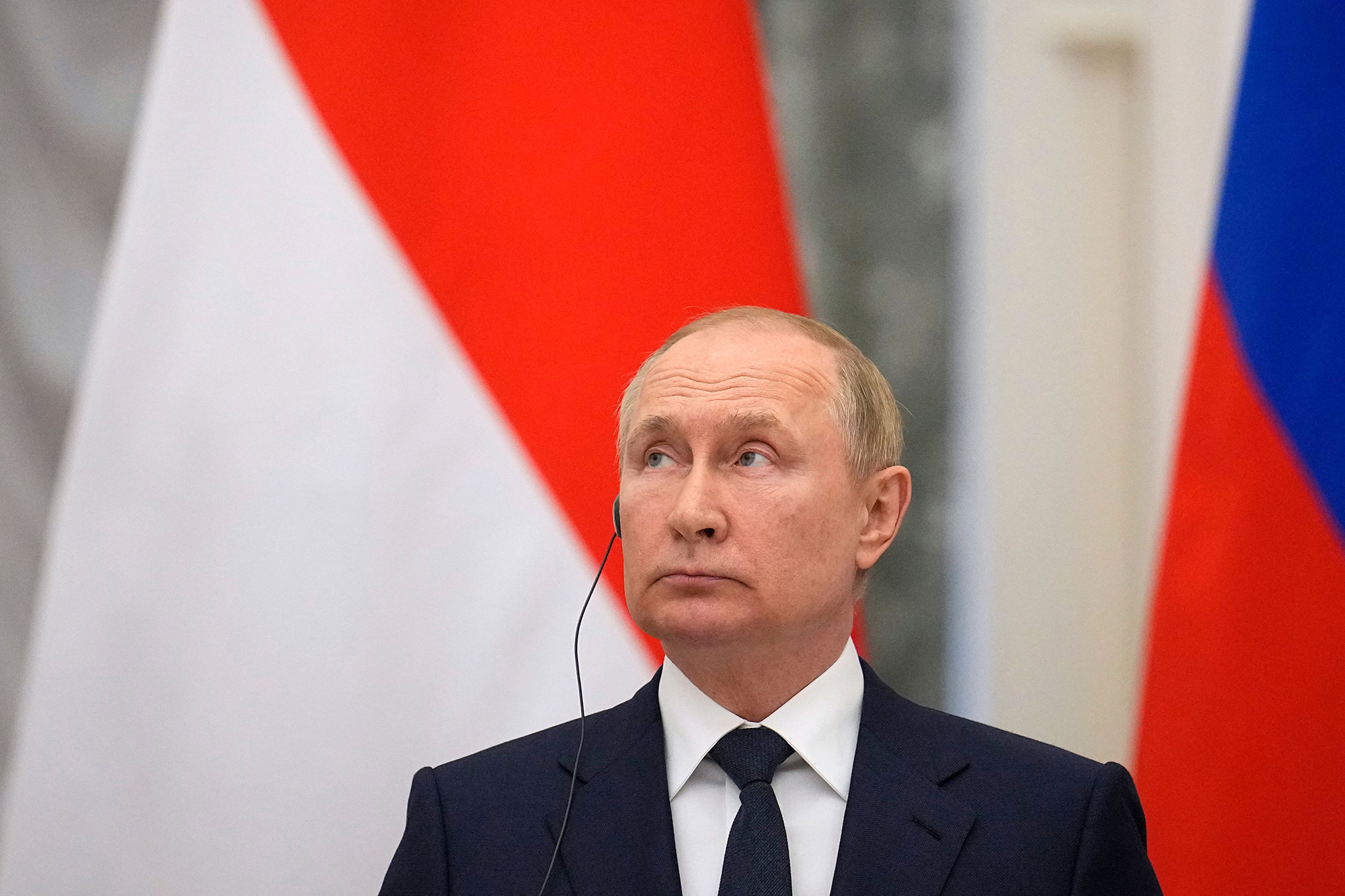
388669940-1024x683.jpg

As Russia’s war in Ukraine becomes a quagmire of attrition, Western leaders are slowly coming to two realisations about Vladimir Putin’s intentions.

First, Russia’s war against Ukraine won’t be over soon, and is likely to grind on for the foreseeable future.

Second, it’s pointless to try to imagine a future in which relations with Moscow are characterised by anything other by mutual mistrust and hostility.

In spite of this, there is still the chance that Russia’s invasion falls off the international radar through a Western inability to deal with hard realities.

Putin’s war of expansion

In an interview with a German newspaper, NATO Secretary General Jens Stoltenberg estimated the war could take years, rather than months.

Patrick Sanders, the incoming chief of the British Army, has claimed the UK’s armed forces need to be oriented around fighting a ground war with Russia.

And after an awkwardly frosty hug with President Volodymyr Zelenskyy, even French President Emmanuel Macron, whose calls to Putin have annoyed Kyiv and who previously warned Putin must not be humiliated, has voiced his unequivocal support for Ukraine.

These epiphanies are long overdue. There’s no point in dreaming up elaborate diplomatic “off ramps” for Putin when it’s abundantly clear he sees no need for them.

Doing so also denies Ukraine agency in determining how the war ends, and presupposes a post-conflict European security order can meet both Russian and Western requirements. As witnessed prior to Russia’s invasion on February 24, the Kremlin isn’t content with anything short of regaining something close to the geo-strategic footprint of the USSR.

Obsessed with territorial aggrandisement, and having cynically cultivated a fetish for militarism in Russian society, Vladimir Putin recently admitted as much when he compared himself to Peter the Great, noting “now it’s our turn to get our lands back”.

At the very least, Putin’s words should put to bed the vastly overstated claim that the enlargement of Western security structures somehow forced Putin to invade Ukraine. This is clearly a war of Russian expansion, not NATO expansion.

Yet some Western security policymakers and commentators remain incapable of letting go of victor’s guilt over how the fledgling Russian state was treated following the USSR’s collapse.

While such sentiments are to an extent defensible, the West’s strategic failings nonetheless pale in comparison to Putin’s long history of internal repression, political warfare against external foes, nuclear threats, and brutality against those whose continued independence irk him.

Putin waiting the West out

Another reason the West should avoid the temptation of hand-wringing is because now is the most dangerous time in Ukraine’s efforts to repel the Russian invasion.

By its own estimation, Ukraine’s forces are outgunned ten-to-one by Russian artillery in the Donbas region. However, Ukraine has no option but to keep fighting, both for national survival and because suing for peace now – given what we know about the barbarism inflicted on Ukrainians by Russian invaders – would mean a swift end for Zelenskyy’s government.

Having initially failed to capture Kyiv in a poorly conceived and executed dash for the capital, Russian forces have adopted their typical approach to offensive operations – massive unguided fires in both urban and rural environments. That curtain of bombardment allows its military to advance, albeit painfully slowly.

This suits Putin just fine, at least for the moment. He has no incentive to go to the negotiating table since the limited territory he has seized from Ukraine so far cannot be spun as a great victory either at home or abroad.

His military calculus is simple: to continue capturing territory and destroy as much of Ukraine’s infrastructure as possible.

It also dovetails with his strategic calculus, which is to simply wait the West out. Previously – in Chechnya, Georgia and Crimea – he has correctly anticipated that Western tolerance for protracted confrontation is low, and it can be counted on to de-escalate.

Will the invasion fall off the radar?

Yet although Western elites are gloomily coming to the understanding Putin cannot somehow be managed, there remains a significant danger the conflict falls off the international radar, or that Western leaders waver as the conflict drags on.

We can already see some of this happening: in the tendency of the Western media to grasp at straws over Putin’s reputed ill-health, and in Germany’s egregious vacillation over allowing heavy weapons destined for Ukraine to transit its territory.

For his part, Zelenskyy is acutely aware of this. It’s why he has maintained the pressure on European nations to match words with deeds.

It’s also why he now expects something in return for the popularity sugar hit European leaders get from photo opportunities after taking the increasingly well-worn path to Kyiv to meet him.

3 reasons to meet Ukraine’s military requests

Meeting Ukraine’s requests for heavy weapons and ammunition is in the interests of NATO members for three reasons.

  1. It’s critical to show Putin that escalation comes with real costs: something Western leaders have shied away from for decades.
  2. It’s increasingly likely neither Ukraine nor Russia will be happy with any eventual settlement to the war, and a “frozen” conflict leaves Russia the chance to try again in future. Ukraine’s armed forces have performed far above expectations in denying the Kremlin the chance to “win”, at least in terms of its original ambitions. But although Kyiv’s desire to recapture all its lost territory – including Crimea – is unsurprising, there’s no realistic prospect of that without military assistance far beyond its requests.
  3. A third reason for the West to meet Ukrainian hardware needs concerns the credibility of NATO’s and the EU’s assertions they protect international order and shared values. No matter how the war ends, a profoundly damaged Ukraine will take decades to rebuild.

And while it’s currently fashionable for Western leaders to proclaim how much they are doing to help, the reality is they’re safely watching Ukraine fight a major power.

With that track record, it would be completely understandable for those in other nations that might need Western security assistance in future to have little confidence in obtaining much more beyond noble sentiments, and bare minimum support.

Matthew Sussex, Fellow, Strategic and Defence Studies Centre, Australian National University

This article is republished from The Conversation under a Creative Commons license. Read the original article.
Categories
Saved Web Pages

NATO to boost troops on high alert to over 300,000 -Stoltenberg | SaltWire

nato-to-massively-increase-high-readines

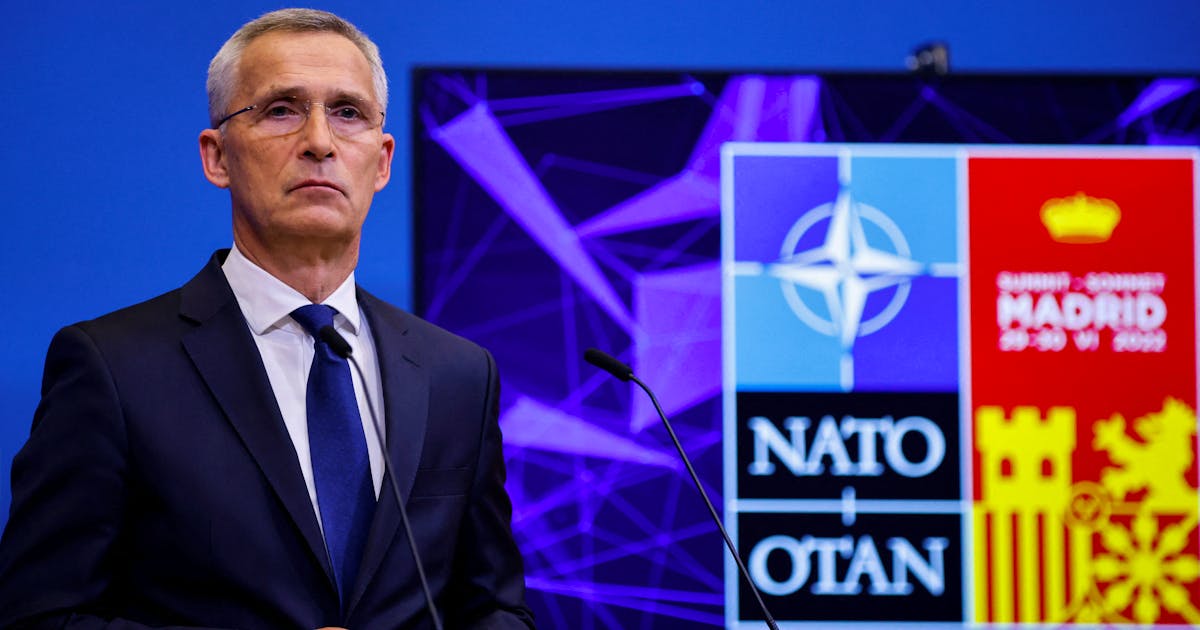
BRUSSELS (Reuters) – NATO will boost the number of troops on high alert by more than sevenfold to over 300,000, its secretary-general said on Monday, as allies prepared to adopt a new strategy describing Moscow as a direct threat four months into the Ukraine war.

Russia’s February invasion of Ukraine has sparked a major geopolitical shift in the West, prompting once neutral countries Finland and Sweden to apply to join NATO and Ukraine to secure the status of candidate to join the European Union.

“Russia has walked away from the partnership and the dialogue that NATO has tried to establish with Russia for many years,” NATO Secretary-General Jens Stoltenberg said in Brussels ahead of a NATO summit later this week in Madrid.

“They have chosen confrontation instead of dialogue. We regret that – but of course, then we need to respond to that reality,” he told reporters.

The June 28-30 NATO summit comes at a pivotal moment for the alliance after failures in Afghanistan and internal discord during the era of former U.S. President Donald Trump, who threatened to pull Washington out of the alliance.

Stoltenberg said NATO in future would have “well over 300,000” troops on high alert, compared to 40,000 troops that currently make up the alliance’s existing quick reaction force, the NATO Response Force (NRF).

The new force model is meant to replace the NRF and “provide a larger pool of high readiness forces across domains, land, sea, air and cyber, which will be pre-assigned to specific plans for the defence of allies,” a NATO official said.

Stoltenberg said NATO combat units on the alliance’s eastern flank nearest Russia, especially the Baltic states, are to be boosted to brigade level, with thousands of pre-assigned troops on standby in countries further west like Germany as rapid reinforcements.

“Together, this constitutes the biggest overhaul of our collective deterrence and defence since the Cold War,” he said.

The NATO official, who spoke on condition of anonymity, said the moves would enable NATO to respond with more forces at short notice should the need arise.

The official added that the precise scale and composition of the force was still being worked on and that the transition was planned for completion in 2023.

At the summit, NATO will also change its language on Russia from the current wording, enshrined at its Lisbon summit in 2010, describing Moscow as a strategic partner.

“I expect the allies will state clearly that Russia poses a direct threat to our security, to our values, to the rules-based international order,” Stoltenberg said.

At the same time, Stoltenberg dampened hopes for a break-through at the summit to overcome Turkey’s opposition to the membership bids of Sweden and Finland.

“I will not make any promises or speculate about any specific time lines. The summit has never been a deadline,” said Stoltenberg, who is scheduled to meet the leaders of all three countries in Madrid on Tuesday.

(Reporting by Sabine Siebold and Marine Strauss, editing by Mark Heinrich)

Categories
Saved Web Pages

OneCoin’s ‘Cryptoqueen’ Ruja Ignatova Wanted By FBI Amid Scam Claims

1656697487-fbi.jpg

The Federal Bureau of Investigation has officially added Ruja Ignatova, also known as the “Cryptoqueen,” to its ten most-wanted list.

The FBI said in a press release Thursday it is offering a reward of as much as $100,000 for information leading to Ignatova’s arrest.

Ignatova founded OneCoin, an alleged $4 billion cryptocurrency Ponzi scheme, in 2014.

Ignatova traveled the world and attended conferences touting OneCoin as a “Bitcoin killer,” but investigators found that in reality OneCoin did not have any blockchain technology behind it.

The US issued a federal warrant for Ignatova’s arrest in 2017.

Ignatova vanished that same year. According to the FBI’s press release Ignatova travelled from Sofia, Bulgaria to Athens, Greece in October 2017.

It gave no further information on sightings of her since then, but gave the United Arab Emirates, Bulgaria, Germany, Russia, Greece and Eastern Europe as places she might travel to.

The FBI said on Ignatova’s wanted page that she is “believed to travel with armed guards and/or associates.” It added she may have had cosmetic surgery to alter her appearance.

In March 2019 Ignatova’s brother Konstantin, who had taken over OneCoin in her absence, was arrested. Konstantin Ignatova plead guilty to charges including money laundering and fraud in November 2019.

Ignatova was previously added to a Europol list of Europe’s most wanted people in May 2022.

Categories
Saved Web Pages

The Secrets of Covid ‘Brain Fog’ Are Starting to Lift

COVID-Brain-Fog-Science-ScienceSource_SS

Allison Guy was having a great start to 2021. Her health was the best it had ever been. She loved her job and the people she worked with as a communications manager for a conservation nonprofit. She could get up early in the mornings to work on creative projects. Things were looking “really, really good,” she says—until she got Covid-19.

While the initial infection was not fun, what followed was worse. Four weeks later, when Guy had recovered enough to go back to work full-time, she woke up one day with an overwhelming fatigue that just never went away. It was accompanied by a loss of mental sharpness, part of a suite of sometimes hard-to-pin-down symptoms that are often referred to as Covid-19 “brain fog,” a general term for sluggish or fuzzy thinking. “I spent most of 2021 making decisions like: Is this the day where I get a shower, or I go up and microwave myself a frozen dinner?” Guy recalls. The high-level writing required for her job was out of the question. Living with those symptoms was, in her words, “hell on earth.”

Many of these hard-to-define Covid-19 symptoms can persist over time—weeks, months, years. Now, new research in the journal Cell is shedding some light on the biological mechanisms of how Covid-19 affects the brain. Led by researchers Michelle Monje and Akiko Iwasaki, of Stanford and Yale Universities respectively, scientists determined that in mice with mild Covid-19 infections, the virus disrupted the normal activity of several brain cell populations and left behind signs of inflammation. They believe that these findings may help explain some of the cognitive disruption experienced by Covid-19 survivors and provide potential pathways for therapies.

For the past 20 years, Monje, a neuro-oncologist, had been trying to understand the neurobiology behind chemotherapy-induced cognitive symptoms—similarly known as “chemo fog.” When Covid-19 emerged as a major immune-activating virus, she worried about the potential for similar disruption. “Very quickly, as reports of cognitive impairment started to come out, it was clear that it was a very similar syndrome,” she says. “The same symptoms of impaired attention, memory, speed of information processing, dis-executive function—it really clinically looks just like the ‘chemo fog’ that people experienced and that we’d been studying.”

In September 2020, Monje reached out to Iwasaki, an immunologist. Her group had already established a mouse model of Covid-19, thanks to their Biosafety Level 3 clearance to work with the virus. A mouse model is engineered as a close stand-in for a human, and this experiment was meant to mimic the experience of a person with a mild Covid-19 infection. Using a viral vector, Iwasaki’s group introduced the human ACE2 receptor into cells in the trachea and lungs of the mice. This receptor is the point of entry for the Covid-causing virus, allowing it to bind to the cell. Then they shot a bit of virus up the mice’s noses to cause infection, controlling the amount and delivery so that the virus was limited to the respiratory system. For the mice, this infection cleared up within one week, and they did not lose weight.

Coupled with biosafety regulations and the challenges of cross-country collaboration, the security precautions required by the pandemic created some interesting work constraints. Because most virus-related work had to be done in Iwasaki’s laboratory, the Yale scientists would take advantage of overnight shipping to fly samples across the country to Monje’s Stanford laboratory where they could be analyzed. Sometimes, they would need to film experiments with a GoPro camera to make sure that everybody could see the same thing. “We made it work,” Monje says.

Categories
Saved Web Pages

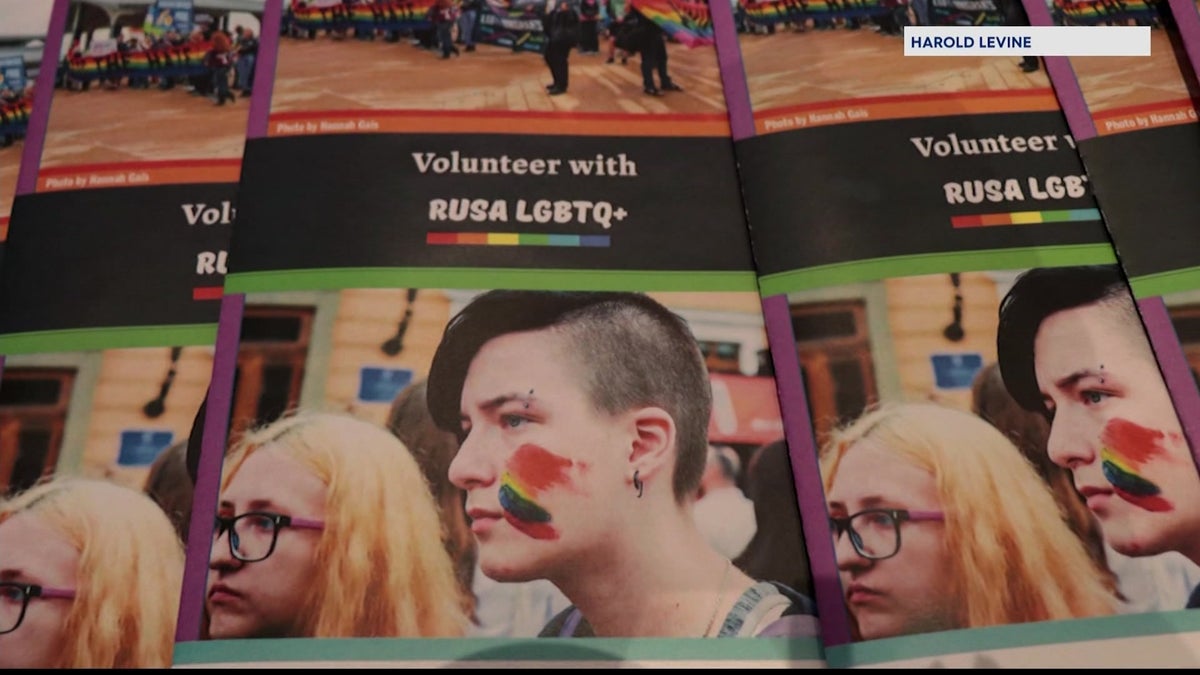
‘We are a community of immigrants’ – Russian-speaking LGBTQ+ group wants to help refugees in NYC

55623ba0-d341-4487-afcb-276f338791f2.jpg

A Russian-speaking LGBTQ+ group is looking to provide resources and support for refugees and asylum seekers in New York City.

Violette Matevosian is the development coordinator for RUSA LGBTQ. Matevosian left Russia in 2020 and sought asylum in the U.S. and founded the inclusive network in New York.

“We are a community of immigrants. We are a community of refugees and asylum seekers, and we have to support the other people like the Ukrainians because they are the most vulnerable right now,” says Matevosian.

RUSA organizes events and concerts to raise awareness for the Russian-speaking LGBTQ+ community like the Pride Parade in Brighton Beach in May.

They also offer free legal support and housing to help those seeking refuge.

Categories
Saved Web Pages

“We’re watching Russia wither before our eyes,” former US defense chief says

inbound2943299066739567682.jpg

Former US Defense Secretary James Mattis criticized Russia’s war in Ukraine, calling it “immoral” and “operationally stupid,” while speaking Friday at the Seoul Forum 2022.

“We have a saying in America, we say that nations with allies thrive, nations without allies wither and we’re watching Russia wither before our eyes right now,” Mattis said.

When asked what military lessons could be taken from the war so far, the former US Marine said: “One is don’t have incompetent generals in charge of your operations.”

He also called Russia’s military performance “pathetic” and decried “the immoral, the tactically incompetent, operationally stupid and strategically foolish effort” of its campaign in Ukraine.

Mattis spoke of previous US efforts to try and bring Russia into the “community of nations,” but said that was not possible with Vladimir Putin as leader.

“The tragedy of our time is that Putin is a creature straight out of Dostoevsky. He goes to bed every night angry, he goes to bed every night fearful, he goes to bed every night thinking that Russia is surrounded by nightmares and this has guided him,” he said.

Putin had removed anyone from his circle that would disagree with him, so he “probably thought that the Ukrainian people were going to welcome him,” Mattis added.

Categories
Saved Web Pages

British Defense Intelligence Update, July 1, 2022 – KyivPost – Ukraine’s Global Voice

fwj1rjowaaai1gd1.jpg

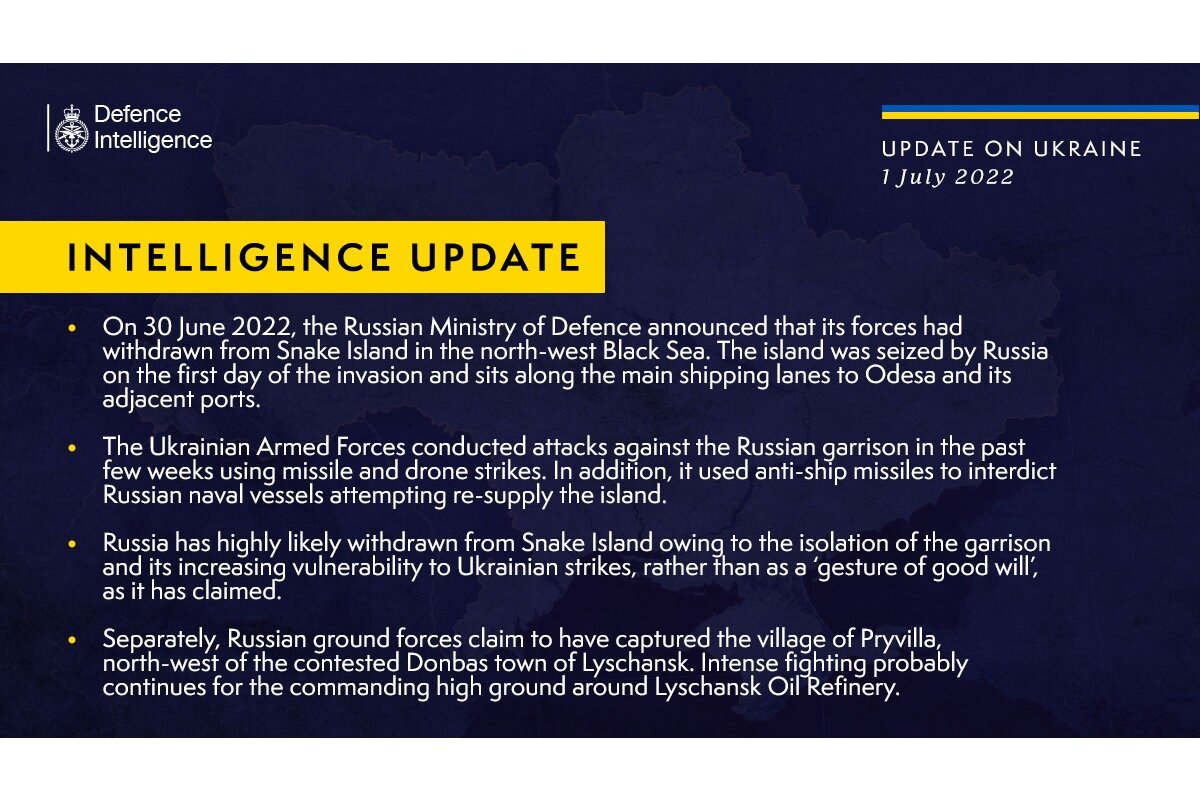
  • On 30 June 2022, the Russian Ministry of Defence announced that its forces had withdrawn from Snake Island in the north-west Black Sea. The island was seized by Russia on the first day of the invasion and sits along the main shipping lanes to Odesa and its adjacent ports.
  • The Ukrainian Armed Forces conducted attacks against the Russian garrison in the past few weeks using missile and drone strikes. In addition, it used anti-ship missiles to interdict Russian naval vessels attempting re-supply the island.
  • Russia has highly likely withdrawn from Snake Island owing to the isolation of the garrison and its increasing vulnerability to Ukrainian strikes, rather than as a ‘gesture of good will’, as it has claimed.
  • Separately, Russian ground forces claim to have captured the village of Pryvilla, north-west of the contested Donbas town of Lyschansk. Intense fighting probably continues for the commanding high ground around Lyschansk Oil Refinery.

Found a spelling error? Let us know – highlight it and press Ctrl + Enter.

Categories
Saved Web Pages

Europe will not rest until Ukraine prevails

630_360_1656664664-294.jpg

At minimum 17 individuals ended up killed and dozens wounded Friday in missile strikes on Ukraine’s Odesa area, a day soon after Russian troops abandoned positions on a strategic island in a key setback to the Kremlin’s invasion.

The news came just after NATO leaders wrapped up a summit in Madrid, with US President Joe Biden saying $800 million in new weapons for Ukraine.

“We are going to stick with Ukraine, and all of the alliance are likely to adhere with Ukraine, as extended as it normally takes to make sure they are not defeated by Russia,” he said.

But Russian Foreign Minister Sergei Lavrov as opposed surging diplomatic tensions to the Cold War, telling reporters: “As far as an Iron Curtain is worried, basically it is presently descending… The method has begun.”

There was a glimmer of hope even so, when Indonesian President Joko Widodo, who visited Moscow on Thursday immediately after a journey to Kyiv, explained he had offered Russian President Vladimir Putin a concept from their Ukrainian counterpart, Volodymyr Zelensky.

Neither aspect has disclosed what was in the observe.

Hrs following the summit finished, missiles had been fired at an condominium creating and recreation centre in the southern region of Odesa, a strategic flashpoint that is property to Ukraine’s historic port city of the exact same identify.

The nine-storey apartment making was partly wrecked, leaving 14 individuals lifeless and 30 wounded, such as numerous children, the unexpected emergency products and services explained.

3 persons, like a youngster, have been killed and a person wounded in the attack on the recreation centre, they stated.

The strikes, in the Bilhorod-Dnistrovsky district, had been launched by aircraft that flew in from the Black Sea, stated Odessa armed service administration spokesman Serhiy Bratchuk.

“The worst circumstance circumstance performed out and two strategic aircraft came to the Odessa area,” he explained in a Tv set interview, incorporating they experienced fired “very weighty and very powerful” missiles.

Bratchuk urged people today not to put up on the net details about the rescue procedure.

– ‘Goodwill gesture’ –

The early Friday strikes arrived a day after Russian troops abandoned their positions on Snake Island, off the coastline of Odessa.

The island experienced grow to be a image of Ukrainian resistance in the very first times of the war, when the rocky outcrop’s defenders told a Russian warship to “go f*ck yourself” soon after it referred to as on them to surrender — an incident that spurred a defiant meme.

It was also a strategic focus on, sitting apart shipping and delivery lanes around the port of Odessa. Russia experienced attempted to put in missile and air defence batteries when under fireplace from drones.

The final decision to abandon Snake Island “changes the problem in the Black Sea noticeably,” Zelensky mentioned in his each day address Thursday.

“It does not yet assure stability. It does not but warranty that the enemy will not return. But it currently considerably limits the actions of the occupiers.”

British Key Minister Boris Johnson cited Snake Island as he warned the Russian president that any eventual peace offer would be on Ukraine’s terms.

“We’ve found what Ukraine can do to push the Russians again. We have viewed what they did close to Kyiv and Kharkiv, now on Snake Island,” Johnson said.

The Russian defence ministry statement described the retreat as “a gesture of goodwill” meant to exhibit that Moscow will not interfere with UN efforts to organise guarded grain exports from Ukraine.

But Ukraine officials claimed it as a acquire.

“They generally downplay their defeats this way,” Ukraine’s Overseas Minister Dmytro Kuleba reported on Twitter.

In peacetime, Ukraine is a major agricultural exporter, but Russia’s invasion has broken farmland and witnessed Ukraine’s ports seized, razed or blockaded — threatening grain importers in Africa with famine.

Western powers have accused Putin of using the trapped harvest as a weapon to boost force on the intercontinental neighborhood, and Russia has been accused of stealing grain.

– ‘Direct threat’ –

On Thursday, a ship carrying 7,000 tonnes of grain sailed from Ukraine’s occupied port of Berdyansk, said the regional chief appointed by the Russian profession forces.

Evgeny Balitsky, the head of the professional-Moscow administration, reported Russia’s Black Sea ships “are making certain the security” of the journey, introducing that the port had been de-mined.

Individually, the Russian defence ministry stated its forces are keeping extra than 6,000 Ukrainian prisoners of war who have been captured since the February 24 invasion.

The conflict in Ukraine dominated the NATO summit in Madrid this week, as the alliance officially invited Sweden and Finland to be a part of, and Biden announced new deployments of US troops, ships and planes to Europe.

Russian missiles continued to rain down in other places in Ukraine and a United Nations official explained Thursday that 16 million persons in Ukraine have been in will need of humanitarian assist.

In the southern town of Mykolaiv, rescuers located the bodies of seven civilians in the rubble of a destroyed setting up, unexpected emergency providers reported.

The city of Lysychansk in the jap Donbas region — the latest aim of Russia’s offensive — is also facing sustained bombardment.

The problem in Lysychansk — the last key town the Russians will need to just take in excess of in the Lugansk area — was “extremely difficult” with relentless shelling creating it impossible to evacuate civilians, regional governor Serhii Haidai claimed.

“There is a whole lot of shelling… The Russian army is approaching from distinct instructions,” he said in a video clip posted on Telegram.

Discovered a spelling error? Permit us know – spotlight it and press Ctrl + Enter.

Categories
Saved Web Pages

Ukraine war: Russian missile strikes kill 19 in Odesa region

The child killed at the holiday resort was a 12-year-old boy, said Kyrylo Tymoshenko, deputy head of President Volodymyr Zelensky’s office. He added that three people, including two children, were still under the rubble.

WP Radio
WP Radio
OFFLINE LIVE