Categories
Michael Novakhov - SharedNewsLinks℠

Russia Orchestrates School Shooting, Bombing in Ukraine by Recruiting Vulnerable Teens, Ukraine Says


Michael_Novakhov
shared this story
.

The Security Service of Ukraine (SBU) said it had prevented a series of planned attacks targeting schools in central and southern regions that involved minors who were allegedly recruited by Russian operatives.

The SBU and the National Police said two local school students were identified in the Kirovohrad and Odesa regions, where they were allegedly preparing attacks on their own schools.

JOIN US ON TELEGRAM

Follow our coverage of the war on the @Kyivpost_official.

According to the SBU’s Thursday press release, the minors were recruited through Telegram and TikTok channels used by Russian intelligence to target young people. One such channel, identified as “ETERSSA,” was described as part of a broader effort to systematically recruit Ukrainian minors.

Authorities said recruiters used psychological manipulation, including promises of achieving “justice,” protecting relatives, or punishing alleged wrongdoing, to draw the students into criminal activity.

In the Kirovohrad region, a 15-year-old student was allegedly instructed to assemble an improvised explosive device (IED) using commonly available materials. The plan, according to the SBU, involved detonating the device inside his school during a break between classes.

The agency said he was also instructed to bring a firearm and a knife to attack survivors after the explosion.

The SBU said it intervened before the attacks and documented the suspect’s communication with his Russian handler. During a search, authorities recovered an IED, components used to build it, a firearm, and digital evidence.

Other Topics of Interest

Can Ukraine Set a New Standard in International Law?

Russia’s war on Ukrainian culture goes beyond the destruction of heritage sites. It targets memory, language and identity – and Ukraine is seeking to make international law recognize the full extent of that harm.

In a separate case in the Odesa region, another student was identified at the recruitment stage. Authorities said Russian operatives had planned to send him a package containing a firearm and a knife, allegedly intended for use in an attack on fellow students.

The agency said the minors were also encouraged to take their own lives afterward in what it described as Russia’s attempt to eliminate witnesses.

The 15-year-old suspect in the Kirovohrad region has been served a notice of suspicion – a legal step in Ukraine preceding formal charges – for plotting a terrorist act. If convicted, he faces up to 10 years in prison with confiscation of property.

The SBU said the investigation is ongoing.


Kyiv Post

Kyiv Post is Ukraine’s first and oldest English news organization, reporting since 1995. Its international reach – 97% of readers are outside of Ukraine – make it truly Ukraine’s global voice.

Categories
Michael Novakhov - SharedNewsLinks℠

Witkoff and Kushner hold Ukraine talks after meeting Putin


Michael_Novakhov
shared this story
.

US envoys Steve Witkoff and Jared Kushner held “encouraging” talks in Kyiv on Sunday during their first official visit to Ukraine, but made no breakthrough toward ending Russia’s war in Ukraine

Despite the renewed diplomatic push, Moscow and Kyiv remain divided over key issues, particularly territorial concessions. Kushner acknowledged the challenge, saying the US was working “behind the scenes” to create the conditions for a possible deal.

“It’s a very, very hard problem, but we’re going to try,” Kushner said.

As Ukraine’s airspace remains closed due to the conflict, the pair arrived in Kyiv by train from Poland, having held talks with Russian President Vladimir Putin in Moscow a day earlier.

Putin had declared a three-day ceasefire to ensure the envoys’ safety.

Ukraine peace push? Trump envoys hold talks with Kremlin

Video Player is loading.

Current Time 0:00

Duration 0:00

Remaining Time 0:00

Zelenskyy: We will need a ‘winter package’

Ukrainian President Volodymyr Zelenskyy held three rounds of talks with the US envoys, the final one joined by national security advisers from the United Kingdom, France and Germany.

After meeting with Witkoff and Kushner, Zelenskyy said the talks focused on military aid, including Patriot missile systems and other weapons Ukraine will need in the coming months. He said Kyiv was seeking “serious volumes” of US support, with backing from its European partners.

“If the war drags on until winter — and that is how things currently look — we will need a ‘winter package’,” he said.

The Ukrainian president also expressed gratitude that representatives of European nations were in Kyiv.

“Here we are all on the same side,” he said.

What did Russia say about Moscow talks?

Momentum by US President Donald Trump to end the four-and-a-half-year-old conflict has stalled in recent months after talks with Putin at the Kremlin in January failed to produce a result.

Despite hopes of a breakthrough with the Russian leader on Saturday, there were no announcements after the meeting.

Putin’s foreign policy adviser Yuri Ushakov described the Moscow talks as constructive, frank, and useful but didn’t discuss specific outcomes.

Ushakov said the talks also focused on economic issues and potentially large Russia-US projects.

During previous talks, negotiators have struggled to bring both sides together on a range of key issues, including the future of the industrial Donbas region of eastern Ukraine.

Russian President Vladimir Putin, right, greets U.S. President Donald Trump's envoys Steve Witkoff, second left, and Jared Kushner at the Kremlin, in Moscow, Russia, on September 5, 2026.

The US and Russia have been discussing tie-ins for months to try and end the warImage: Sputnik/Kremlin Pool/AP Photo/picture alliance

Ukraine war escalating in recent months

For Ukraine, hard security guarantees from its European allies and Washington are crucial to deterring Russia ​from further aggression.

Kyrylo Budanov, Zelenskyy’s chief of staff, told the New York Times last weekend that he did not expect the fighting to end before spring 2027.

He also predicted further Russian strategic air strikes on Ukraine this winter.

The war has escalated in recent months, with Putin seeking the complete conquest of Donbas and Russian drones targeting the Ukrainian capital.

Meanwhile, Ukraine has focused its drone attacks on Russia’s energy sector. It has also targeted online retailers deep inside Russia to try and bring the war home to the public.

Edited by: Darko Janjevic, Dmytro Hubenko

Don’t let the algorithm hide the news. If you rely on our team for trusted reporting, please take a moment to select us as your Preferred Source on Google by clicking here and hitting the “star” or “preferred” button, so you’ll always see our verified news first.

Categories
Michael Novakhov - SharedNewsLinks℠

Witkoff and Kushner, in a first, visit Ukraine for peace talks


Michael_Novakhov
shared this story
.

President Trump’s envoys Steve Witkoff and Jared Kushner arrived in Kyiv on Sunday for diplomatic talks aimed at resuming negotiations between Russia and Ukraine.

Why it matters: Kushner and Witkoff traveled to Kyiv right after talks with Russian President Vladimir Putin in Moscow. This is Witkoff and Kushner’s first trip to Ukraine despite months of negotiating with both sides and multiple trips to Russia.

  • Sunday also marked the highest-level visit by a U.S. official to Ukraine since Trump started his second term.

Driving the news: U.S. and Russian officials offered positive assessments of Kushner and Witkoff’s three-hour meeting with Putin on Saturday.

  • “Kushner and Witkoff are making an effort, and we are making progress,” a Russian official said.
  • A White House official said Witkoff, Kushner and Putin discussed “plans for next steps, which will be announced in the coming weeks.”
  • Witkoff, Kushner and their team left Moscow on Saturday night, landed several hours later in Poland, and then traveled by land to Kyiv.

Zoom in: Ukrainian President Volodymyr Zelensky discussed Ukrainian preparations for continuing the war through the winter, a source familiar with the meetings said. Kushner and Witkoff stressed they want a breakthrough before winter, the source said.

  • Zelensky later confirmed that the possibility of the war continuing through the winter was discussed.
  • “We very much hope that we will be able to reach agreements with our American partners, and we are counting on the support of our European partners if the war continues in winter — and this is how it appears at the moment,” he said.
  • Witkoff and Kushner met twice with Zelensky and his senior advisers. National security advisers from the U.K., France and Germany joined a third meeting.

  • After the second meeting with Zelensky, Trump’s envoys said they were “encouraged by the substantive discussion” and looked forward to making more progress.

What they’re saying: A second source who participated in Sunday’s talks said the meetings “went well” and that Kushner and Witkoff want to work with the parties on a “refreshed” peace proposal.

  • “Things may move in a good direction if there’s a follow-up by all parties involved,” the source said.

Editor’s note: This story has been updated with additional details throughout.

Categories
Michael Novakhov - SharedNewsLinks℠

Ukraine war latest: Putin meets US envoys after ordering 72-hour pause of strikes on Kyiv


Michael_Novakhov
shared this story
.

Putin meets US envoys

Vladimir Putin has commenced a meeting with US envoys Steve Witkoff and Jared Kushner, according to the Kremlin.

The Russian president said they have a difficult situation to address during negotiations.

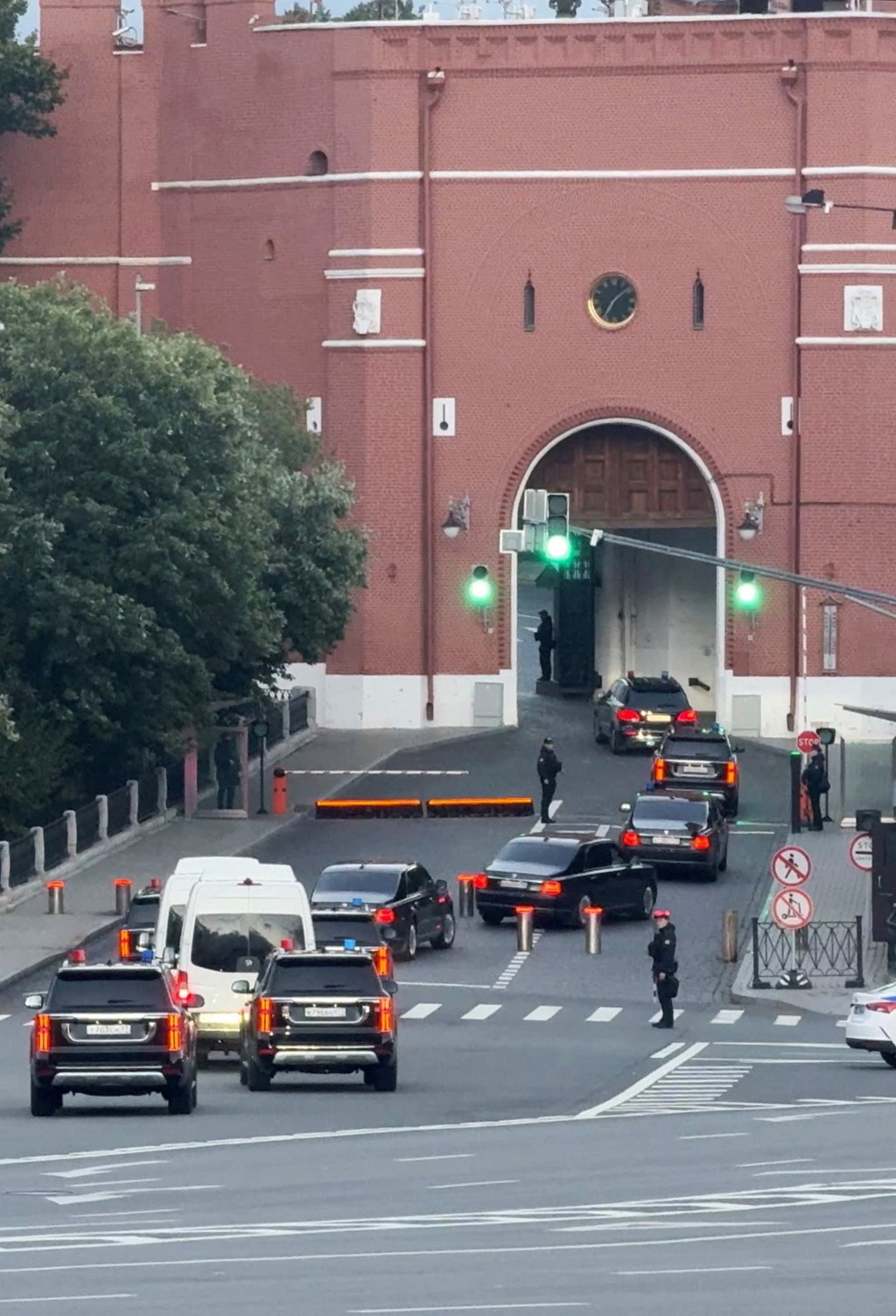
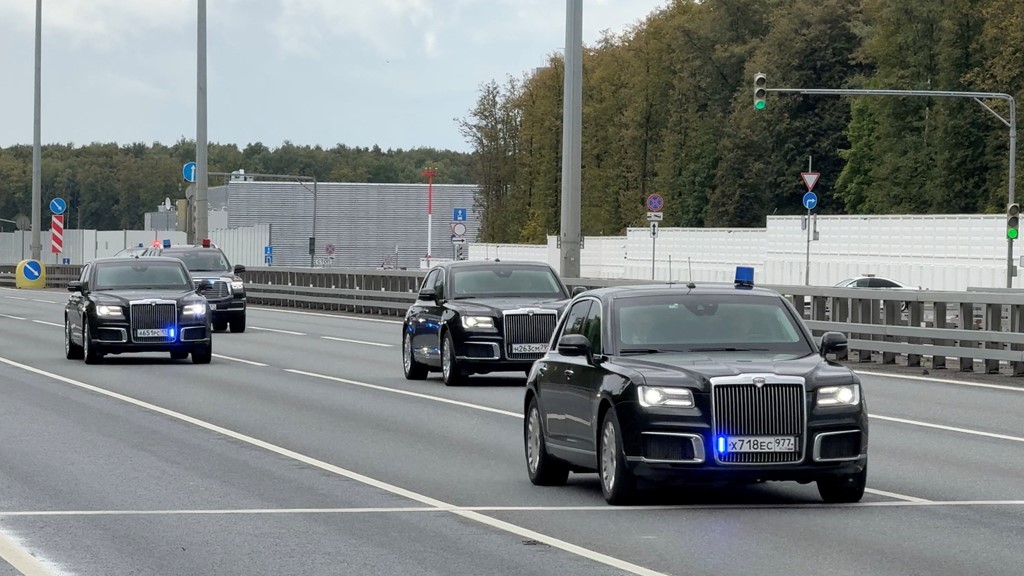
US motorcade arrives at Kremlin

Donald Trump’s envoys have arrived at the Kremlin, Russia, according to state media.

Steve Witkoff and Jared Kushner were accompanied by Kirill Dmitriev, Russia’s economic cooperation chief, Tass reported.

A meeting with Vladimir Putin “may take place”, the agency said.

Reuters

Analysis: Trump’s peace envoys expected in Kyiv for first time – but don’t expect more than handshakes

Tomorrow will be the first time Steve Witkoff and Jared Kushner have visited Ukraine, says Moscow correspondent Ivor Bennett.

By contrast, this weekend marks Witkoff’s ninth visit to Moscow.

Bennett says he doesn’t expect much in terms of substantial progress.

“I very much doubt we’ll see any because on the main issue of territory, the two sides still remain miles apart.”

Russia does “increasingly want” an end to the war, as Vladimir Putin feels more economic and political pressure, but there’s no sign of compromise.

“Despite this sudden flurry of diplomatic activity this weekend I think we won’t be seeing any more than just handshakes.”

US stands by NATO members facing acts of hybrid war, says ambassador

Washington’s NATO envoy says the US will stand by ‌countries dealing with actions of hybrid war.

NATO members should not tolerate it, said Matthew ​Whitaker,

Whitaker said last month’s ​attempted drone attack at Germany’s Leipzig/Halle ‌Airport, which Berlin has blamed on Russia, was more ​worrying than other recent incidents NATO members have faced due to Russian drones targeting Ukraine ​that strayed off course.

“If we ⁠can identify who’s doing it — ​which Germany did — we
make sure ​we express strongly that is unacceptable ​and we will
not tolerate it,” Whitaker ⁠said.

Critical infrastructure, including energy assets, could be targeted and should be monitored by national ⁠authorities, he added.

The response to these ​challenges is primarily national, but the United ​States supports countries when they are dealing with these acts, he ‌said.

Analysis: Trump’s envoys will likely return home with nothing but air miles

By Ivor Bennett, Moscow correspondent

After months of inactivity on the peace process, suddenly some movement. But what does it mean? And will there be a breakthrough?

We’re used to seeing Donald Trump’s peace envoys in Moscow (this is Steve Witkoff’s ninth visit to Russia) but not Kyiv, which they’ll visit for the first time tomorrow.

That’s significant and could reflect the changing relationship between the US president and Volodymyr Zelenskyy. 

Having previously favoured Russia’s arguments, perhaps the White House is now more open to Ukraine’s point of view. We’ll see.

(L-R) Jared Kushner, Kiril Dmitriev and Steve Witkoff

Both sides ‘feel the pressure’

I think the visits definitely reflect a growing desire on both sides for an end to the fighting. 

The war has escalated in recent months and it’s come at a cost for both Moscow and Kyiv

On the Ukrainian side, Russian strikes are having an increasingly devastating effect because of a lack of interceptor missiles.

Civilian casualties are mounting, and high-profile sites are vulnerable. 

Only yesterday, a Russian drone hit the headquarters of Ukraine’s security services in downtown Kyiv.

On the Russian side, the consequences are rising as a result of Ukraine’s long-range drone attacks. 

Hits on oil refineries have caused fuel shortages and forced Russia to start importing petrol (practically unheard of for an energy superpower), while the targeting of sites belonging to the country’s biggest online retailers has disrupted a major logistics network and damaged the consumer economy.

So both sides are feeling the pressure, and have appeared to signal to the US in recent weeks that they want it to re-engage with the peace process.

But does that mean this time will be any different? Is a deal imminent?

Trump speaking in the White House yesterday evening

Trump optimism v territorial divide

Donald Trump sounds hopeful, but then again he always does. He claimed yesterday to have a fresh proposal to end the war.

Whatever it is, though, I’m sceptical it’ll work, because the two sides remain miles apart on the key issue of territory.

Russia still wants all of the Donbas region, including land its forces are yet to occupy. 

But for Ukraine, that’s a non-starter, having fought so hard to defend it.

And there’s no sign of compromise – yesterday, the Kremlin described its position as “unshakeable”.

So despite the flurry of diplomacy this weekend, I think it’s unlikely Donald Trump’s envoys will be returning home with anything other than air miles.

Watch Bennett’s analysis here as well…

Ukraine ‘ready’ for limited ceasefire to begin as Moscow and US officials begin negotiations

US envoys have begun working with Moscow officials, says Volodymyr Zelenskyy, having himself spoken with Donald Trump’s team.

He says their conversation marks the moment Ukraine is “ready to observe a ceasefire in airstrikes against the cities involved in the negotiation process”. 

“From now through the end of Saturday, as well as on Sunday and Monday, Ukraine is ready to refrain from strikes on Moscow, and we expect the Russians to do the same regarding Kyiv.”

Russian presidential spokesperson Dmitry Peskov, however, has said it would cease attacks on Kyiv for three days “starting at midnight today”.

Zelenskyy said the plan for diplomatic engagements in Kyiv with US officials this weekend had been signed off.

“We are waiting for Steve Witkoff and Jared Kushner and are ready for a substantive conversation.”

Timeline: Russia has hammered the Ukrainian capital this summer

Earlier today, a spokesperson for the Kremlin said Vladimir Putin had ordered a halt to attacks on Kyiv from midnight for 72 hours.

It comes as part of the US-led efforts to negotiate an end to the war.

Envoys Jared Kushner and Steve Witkoff are in Moscow today and will travel to Kyiv tomorrow.

But this summer, Russia has relentlessly hammered the Ukrainian capital.

Facing a severe air defence shortage, Russia’s ballistic missiles especially have repeatedly found their target, killing dozens.

The below timeline runs through many (but not all) of the Russian attacks on Kyiv since the beginning of May.

Trump envoys stop off for lunch on their way to Putin meeting

Ahead of meeting with the Russian president, Jared Kushner and Steve Witkoff stopped off for lunch in central Moscow.

State news pictured them getting something to eat on Trubnaya Street with Putin’s investment envoy Kirill Dmitriev.

They are due to meet Putin himself later.

Latest from the frontlines

Much of the most impactful fighting at the moment, takes place in the air.

Ukraine has found recent success with a long-range drone campaign, while Russia has bombarded its cities with ballistic missiles.

Due to an air defence shortage, Ukraine currently finds itself unable to knock the missiles out the sky.

Among all this, fighting on the ground continues.

Russia is making grinding, but slow, gains, but has not scored a significant win in some time.

Analysis: ‘No sign Russia is willing to compromise – as hopes for peace not high’

While Donald Trump may be confident that his envoys’ trip to Moscow and Kyiv may prove fruitful, our Moscow correspondent Ivor Bennett is sceptical. 

Bennett said there was “no sign that the fundamental obstacles to peace” had been removed ahead of the latest round of talks.

He said these were: 

  • Territorial issues in Ukraine’s occupied east,
  • And security guarantees for Ukraine’s future in the event of any possible peace.

Bennett added there was no sign Russia was willing to compromise, pointing to its continued demands for the entire Donbas region – even though it hasn’t conquered all of it.

He went on:

“Despite this flurry of diplomacy we’re seeing in Moscow today, and we’ll see in Kyiv tomorrow, I have to say that hopes are not high that it’ll amount to much. But let’s see what happens.”

Russia says Kyiv strikes will halt at midnight – Ukraine is warning of drone attacks right now

As we reported, a Kremlin spokesperson has said Vladimir Putin has ordered that no strikes be carried out on Kyiv for 72 hours, from midnight tonight.

However, while Moscow may be trying to show it is engaging in peace efforts, Ukraine is warning of possible drone attacks right now.

After carrying out overnight attacks on Ukraine, Russian strikes appear to be continuing throughout the day.

Since 1.30pm in the UK, Ukraine’s air force has repeatedly warned of Russian drones. It said they were over the following regions:

  • Dnipropetrovsk
  • Poltava
  • Vinnytsia
  • And Rivne

Want more from our experts on defence, conflicts and national security?

Tap here to register your interest for Sky News Defence Insider – launching with a free trial soon.

Putin orders no strikes on Kyiv for three days – as spokesperson confirms he’ll meet Trump envoys

Vladimir Putin has ordered that no strikes are carried out on Kyiv for three days starting from midnight, his spokesperson has said.

Dmitry Peskov confirmed to state news agency TASS that the Russian leader would meet with Jared Kushner and Steve Witkoff today as well.

Peskov said:

“Indeed, such information was received from the Ukrainian side. Russian president and supreme commander-in-chief Putin issued an order to hold off on strikes on Kyiv for three days, starting at midnight today. This is due to the preparation and conduct of American contacts in Kyiv.”

This comes after Volodymyr Zelenskyy said Ukraine would carry out no attacks during the duration of the visit from Washington and called on Russia to do the same.

Initially, Russia appeared to ignore the request from yesterday evening, carrying out attacks overnight.

Top Russian official dubs Trump envoys ‘Moscow peacemakers’

The top Vladimir Putin official who welcomed Jared Kushner and Steve Witkoff at Vnukovo Airport this morning has dubbed them both “Moscow peacemakers”.

Kirill Dmitriev shared images of himself shaking Kushner’s hand (see our previous post for more) and a link to Reuters coverage of the meeting.

Russia frequently tries to paint itself as having close ties to the US and plays up such meetings.

The US envoys have previously visited Moscow but are yet to visit Kyiv – with their first trip planned for tomorrow.

In pictures: Putin and Trump officials meet on the tarmac in Moscow

Here are some of the latest images from Moscow.

Donald Trump’s envoys, his son-in-law Jared Kushner and Steve Witkoff, have arrived in the Russian capital, as we reported previously.

They were greeted by Vladimir Putin’s investment envoy Kirill Dmitriev and pictured shaking hands and talking.

All pics: Reuters

Analysis: ‘Don’t hold out hope for Trump’s latest peace efforts’

Our military analyst Sean Bell has grim tidings regarding peace talks due to take place this weekend and into early next week.

He isn’t holding out much hope for the US-led efforts. Speaking with presenter Samantha Washington, he said:

“I think it’s far more likely that Putin will be waiting to see whether Trump is going to sell out Ukraine, and what efforts he can bring to bear to push pressure on to President Zelenskyy. I don’t hold that much hope at this stage.”

Watch Bell’s latest analysis above.

Motorcade carrying envoys and top Putin official leaves airport

The US envoys have been loaded into a motorcade and have left the airport.

Trump’s son-in-law Jared Kushner and Steve Witkoff were met by Vladimir Putin’s investment envoy Kirill Dmitriev.

They then left the airport and are now heading towards Moscow.

Pics: Reuters

US envoys land in Moscow

Donald Trump’s envoys have landed in Moscow.

Both TASS and RIA reported on the landing.

Similarly, according to Flight Radar data, a US Air Force special aircraft with tail number SAM934 landed at Vnukovo Airport this morning.

According to the tracking site, it left Miami International Airport and made a stop in Helsinki on the way over.

‘Bringing with them a proposal’

Donald Trump dispatched his envoys for another visit to Moscow and their first to Kyiv, this weekend.

Previously, the US president said: “They are bringing with them a proposal to end the war.”

Little detail is known about the trip.

But Volodymyr Zelenskyy said they would visit Kyiv tomorrow and Ukraine would refrain from striking Russia during the visit. Russia, meanwhile, attacked Ukraine overnight.

Previous diplomatic efforts to end the war have proven unsuccessful and made little progress.

Ukraine strikes Russian radar systems yesterday

Ukraine’s military has said it launched a series of short-range strikes on Russian targets yesterday.

Among the sites hit were a radar station and targets in Bryansk, Pogar and Zlynka, its army said in a statement this morning.

An “electronic warfare system” was also among the targets hit, it added.

The attacks took place yesterday and Volodymyr Zelenskyy said Ukraine wouldn’t attack during the US envoys’ visit, something he reiterated this morning.

Zelenskyy accuses Russia of attacking airports to interfere with peace efforts

We’ve heard from Volodymyr Zelenskyy for the first time today.

The Ukrainian president said Russia hit two Ukrainian airports overnight, in Kyiv and Boryspil.

These attacks were described as “deliberate” and were the “first time in a while” that Ukraine’s airports had been hit.

Zelenskyy said:

“Clearly, these Russian strikes on the airports are a reaction to the discussions and preparations for the possibility of the US side using an aircraft to travel to Ukraine and land at Kyiv Airport or Boryspil Airport.”

He added that Ukraine had “taken note of this Russian move” and implied it would respond next week.

Zelenskyy also appeared to double down on Ukraine not carrying out attacks during the visit of the US envoys.

The aftermath of overnight Russian attacks

Categories
Michael Novakhov - SharedNewsLinks℠

Putin and Zelenskyy issue threats as strikes rock Ukraine, Russia


Michael_Novakhov
shared this story
from Al Jazeera – Breaking News, World News and Video from Al Jazeera.

Putin accuses Zelenskyy of ‘terrorism’, while Ukraine warns foreign airlines against using Russian airspace.

Russian drone attacks across Ukraine have killed at least one person and wounded more than a dozen others, as Volodymyr Zelenskyy and Vladimir Putin threatened to escalate the conflict.

Between Tuesday and Wednesday, Ukrainian authorities reported attacks in the capital, Kyiv, in the southern city of Odesa and in eastern Dnipro, where the body of a man was retrieved from under rubble.

The air war between Russia and Ukraine has intensified as the conflict stretches into its fifth year following Moscow’s invasion of its neighbour. The front line in eastern and southern Ukraine remains largely deadlocked, and US efforts to negotiate a peace settlement have yet to produce a path to peace.

Russian President Vladimir Putin and Ukrainian President Volodymyr Zelenskyy exchanged threats late on Tuesday over what their next steps might be.

Zelenskyy warned foreign airlines that the skies over Russia are not safe for flights due to Ukrainian long-range drone attacks, saying that “Russian airspace will effectively be closing”. He said Ukrainian military pressure aims to compel Russia to accept peace negotiations.

Putin accused Zelenskyy of “state terrorism” and said: “We don’t negotiate with terrorists.”

At a late-night news conference on the sidelines of the Shanghai Cooperation Organisation summit in Kyrgyzstan, Putin also addressed reports that the Ukrainian military had used British-made drones to strike targets inside Russia.

Asked whether Russia would strike British military facilities if the UK government continues to provide Ukraine with weaponry, Putin declined to rule it out. With a small smile, he told reporters it was “a military secret”.

China and North Korea, meanwhile, have provided military support for Russia, as has Iran in previous years.

The Russian and Ukrainian leaders’ comments came as European officials weigh their response to the latest in what they say is Moscow’s campaign of continental sabotage and disruption aimed at weakening European support for Ukraine. Germany on Tuesday blamed Russia for an attempted attack at Leipzig/Halle airport last month using a drone laden with explosives.

Odesa power outage

Russia fired 174 attack drones, about half of them jet-powered drones that are hard to stop and are increasingly being deployed by Moscow, as well as two ballistic missiles and two plane-launched missiles at Ukraine overnight, according to the Ukrainian Air Force.

Officials in the southern Ukraine region of Odesa reported that the attack damaged a 24-storey residential building, destroying apartments on several floors and wounding eight people, including a child.

Odesa office buildings and two educational facilities were also damaged, Serhiy Lysak, head of the Odesa city military administration, said. The barrage also caused a power outage that halted electric-powered public transport, the city council said.

A man and a woman were wounded by shrapnel in morning attacks on the Kyiv region, according to Tymur Tkachenko, head of the regional military administration.

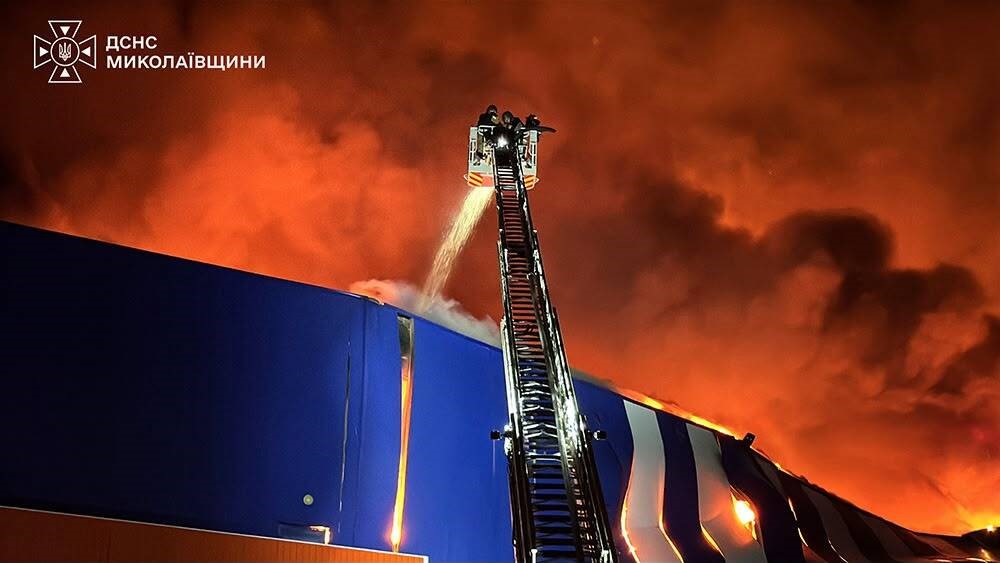
It was the seventh straight day Kyiv came under attack, although the latest barrage wasn’t as heavy as in previous days. The assault started a fire at a warehouse, officials said. Russian forces have targeted civilian facilities in what Ukrainian officials say is an effort to disrupt daily life and sap public morale.

A fire broke out at an educational facility and a medical practice was also damaged, the Kyiv city military administration said.

Meanwhile in Russia, air defences destroyed 130 Ukrainian drones overnight, the Defence Ministry said on Wednesday. The drones were shot down over 11 Russian regions, as well as the annexed Ukrainian peninsula of Crimea and the Black Sea, it said.

Ukrainian drone attacks killed two people in Russia’s Belgorod border region and wounded 16 more, acting governor Aleksand Shuvaev said. Ukrainian forces hit the region 140 times over the course of 24 hours, he said.

Ukraine’s domestically developed long-range drones have repeatedly targeted Russia’s oil sector, hoping to dent the economy and the warehouses of online retailers to make the Russian public feel the effects of war.

Categories
Michael Novakhov - SharedNewsLinks℠

Why Polish solidarity with Ukraine is in ruins


Michael_Novakhov
shared this story
.

Anna Husarska is a journalist and policy analyst.

In August, a few blocks from my temporary home in the historic center of Odesa, Ukraine, a Russian ballistic missile hit a 19th-century building. It was still smoldering when I recorded a 15-second plea into my phone’s camera, in my native Polish.

“I am Anna. This house in Odesa was bombed,” I said. “Let’s crowdsource for power banks for Ukraine.”

I sent it to a friend in Warsaw who posted it to her Facebook page, where she has 1,400 “friends.” Within 48 hours, my video generated a whopping 955 comments, 950 of them anti-Ukrainian — almost all in Polish and many obscene. I was shocked by the quantity, but sadly not by the tone.

I regularly shuttle between Poland and Ukraine; as a volunteer with the nongovernmental organization Assist Ukraine, I deliver donated cars to Ukrainian servicemen. When I am in Warsaw, I see that attitudes since the start of the war have changed.

Where did Polish solidarity go? In the aftermath of the full-scale invasion of Ukraine by Russia in 2022, Poles opened their country to their neighbors. Nine million Ukrainians came through the border; I was there and remember the spontaneous crowds with sandwiches and thermoses, free rides and accommodation. Back then, 78 percent of Poles supported military aid — and indeed it poured into Ukraine from, and through, Poland.

That was then.

Today a majority of Poles criticize military help to Ukraine and 52 percent no longer want to admit refugees. Most Ukrainians who chose Poland — linguistically, culturally and geographically close to them — as a safe haven are bewildered and some are planning to move to another country.

Resentment plays a part. Ukrainians are seen as competing on the Polish labor market — and Ukrainian women on the dating market as well. Polish farmers resented that Ukraine could export its grain to the European Union tariff-free, and they blocked its trucks on the border. Many Poles seem to believe that Ukrainian refugees are a drain on the budget, even though they are in fact net contributors.

You often hear it said in Warsaw (and Washington too) that Ukrainians are not grateful enough. In my opinion, the whole of Europe should be grateful to Ukrainian fighters for stopping Russians in their tracks. The Poles should be most grateful of all.

Poland also cannot accept that some figures from Ukraine’s nationalist past — Stepan Bandera in particular — remain in its pantheon, their likeness on coffee mugs and T-shirts. Many Poles see them as toxic characters.

The two countries’ painfully entangled past is a source of friction. In 1943, members of the nationalist Ukrainian Insurgent Army, known by its Ukrainian acronym, UPA, massacred Polish civilians. Poland claims there were 100,000 victims of the “Volhynia genocide.” Ukraine disputes this number, refers to the killings as the “Volhynia tragedy” and points out that thousands of Ukrainians died in reprisals. In spite of the ongoing war with Russia, Ukraine allows Polish historians to carry out exhumations on its territory.

Poland’s president, Karol Nawrocki, never visited Kyiv. When he received his Ukrainian counterpart Volodymyr Zelensky in Warsaw last year, he handed him two volumes on Volyhnia. This is a bit like welcoming German Chancellor Friedrich Merz with a coffee-table book on Auschwitz.

Last May, Zelensky bestowed on a Ukrainian special forces unit the name “Heroes of the UPA.” The UPA fought the Soviets in and after World War II, and remain a potent symbol for Ukrainians. Within days, a furious Nawrocki stripped Zelensky of Poland’s highest state honor. The famous Polish dissident Adam Michnik declared Nawrocki’s gesture a “shame and disgrace.” Michnik was almost alone in his protest. Most Polish politicians supported Nawocki’s decision or remained silent. A serving Polish minister now says Ukraine will not be admitted to European Union if it “comes with Bandera on the banner,” and the Polish opposition’s candidate for prime minister called for all military aid to be suspended.

Social media is perhaps the ultimate exacerbator of discord. Poland’s deputy digital minister said recently that Russian ​disinformation exploded across social and official Russian media in the wake of the presidential spat. This poison was then amplified on Polish networks. Press Club Poland, which monitors perceptions of the Ukrainian community on social media, saw the proportion of negative posts rise from 15 percent in May to 22 percent in June, before spiking to 49 percent in July. Another prominent think tank reports that Polish-language anti-Ukrainian content increased by more than 250 percent on X, Facebook, Instagram, TikTok and YouTube since May. This is part of what must have come my way in those 950 comments.

Some analysts suggest that much of this filth may well be bot-generated, designed to give the impression that the intensity of the animosity is greater than it is. But when prominent figures and organizations on the Polish far-right are regularly sharing it with their followers, the line between a foreign influence campaign and domestic politics becomes blurred.

On Aug. 15, Prime Minister Donald Tusk singled out the right-wing opposition politicians for turning voters against Ukraine, and made the case for Poland helping its neighbor. “Polish-Ukrainian relations can be debated, but no one can doubt that supporting Ukraine in the war with Russia is for our security,” he said. “We do it for ourselves, for Poles, and for no one else.”

Many of my worried Polish friends felt a bit better hearing his words. Perhaps Tusk’s appeal to self-interest can reach those who have been poisoned. But there is no easy recipe for how to repair bilateral relations and save a crucial alliance against a dangerous common enemy.

I will soon take my 53rd trip to Ukraine, driving a donated car from Helsinki to Kharkiv. And I continue to raise funds to buy power banks and tourniquets. It’s the least I can do to help. If the Ukrainians prevail in their struggle, their monumental sacrifice will have kept my country safe.

Categories
Michael Novakhov - SharedNewsLinks℠

EU to hit back at Russia after drone attack as Germany probes new sabotage cases


Michael_Novakhov
shared this story
.

  • Summary
  • European Commission chief vows more pressure on Russia
  • EU and NATO accuse Russia of recklessness
  • Germany blames Russia for attempted airport drone attack
  • EU members call for new sanctions on Russia
  • Russia denies involvement and says it will respond

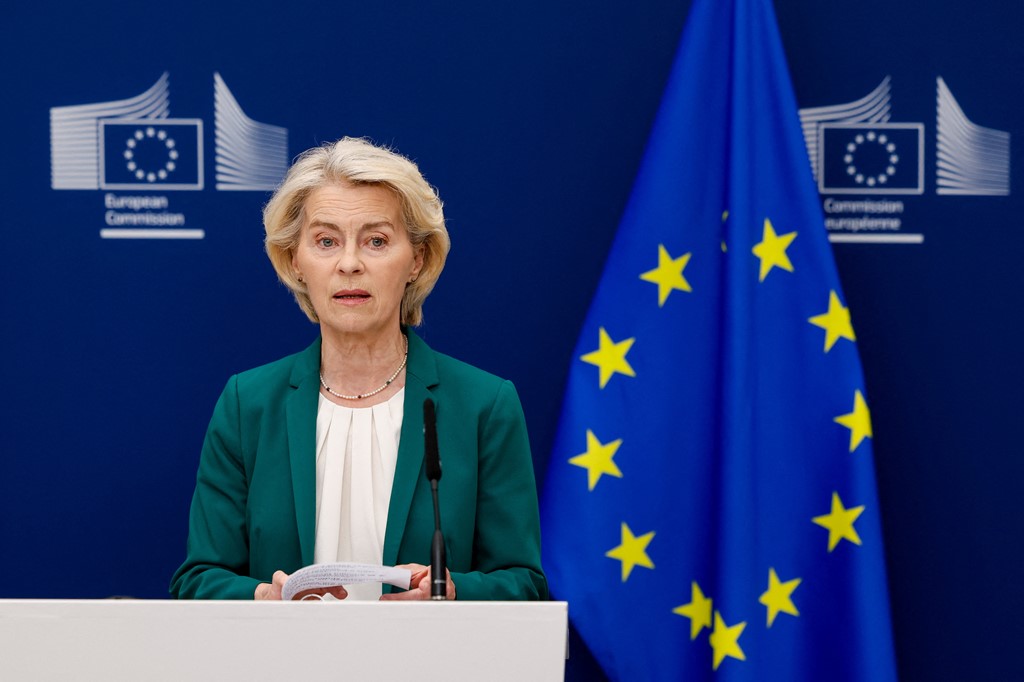
BRUSSELS/BERLIN, Sept 2 (Reuters) – European ​Commission chief Ursula von der Leyen vowed on Wednesday to increase pressure on Russia, including with new sanctions, after an attempted drone attack at Leipzig/Halle Airport in ‌Germany that she said showed Moscow’s growing “recklessness”.

Airport workers last month found a drone laden with explosives and a detonator at the airport, an important civilian freight and NATO logistics hub in eastern Germany that is also a base for several giant Ukrainian Antonov An-124 cargo planes.

The Reuters Daily Briefing newsletter provides all the news you need to start your day. Sign up here.

Germany blamed Moscow for the attack, characterising it as part of hybrid warfare meant to intimidate and cause divisions in countries that have rallied around Ukraine since Russia’s ​2022 invasion.

Russia denies involvement. It says it will respond to what its foreign ministry spokesperson called “anti-Russian action”, and summoned Germany’s top diplomat in Moscow.

“Europe and NATO will not just maintain our ​pressure on Russia; we will increase it, and we will not stop – not until Russia stops bombing and killing innocent children, men and ⁠women in Ukraine,” von der Leyen said in Brussels after a meeting with NATO Secretary General Mark Rutte.

“Europeans are faced with the hard truth that this is the new normal. ​We have to step up, and that means being ready to respond to Russia’s recklessness faster and better.”

The full scope of new sanctions was not immediately clear.

EU foreign policy chief Kaja Kallas ​said the bloc was working on sanctions related to Russia’s military complex, and France’s foreign minister called for action against Russia’s so-called “shadow fleet” of ships accused of circumventing energy sanctions.

Rutte said more drones and missiles had crossed into NATO airspace on Europe’s eastern flank, and there was an increase in malign activities including the Leipzig attack.

“If Russia thinks we will be divided by the threat, or if they think we will ​be deterred from supporting Ukraine, they are mistaken,” he said.

The EU and several EU member states summoned Russian embassy officials. Germany said it would close Russia’s consulate general in Bonn ​and terminate its agreement with the Russian House cultural centre in Berlin.

TWO SUSPECTS IDENTIFIED, MEDIA OUTLETS SAY

Details of two Leipzig attack suspects were reported by German media outlets Sueddeutsche Zeitung, NDR and WDR.

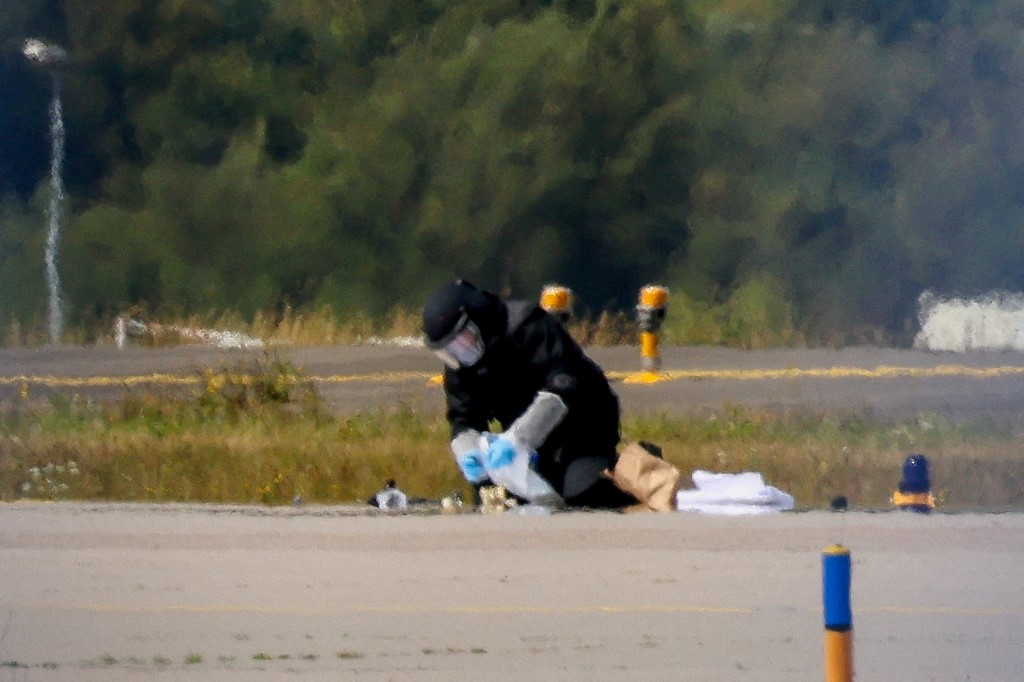
A police officer in protective clothing works at Leipzig/Halle Airport in Schkeuditz, Germany, August 5, 2026, after the police said explosives experts examined a drone near a runway, and after a DHL cargo aircraft hit an unknown object as it was climbing away from the airport overnight, prompting an unscheduled landing in… Purchase Licensing Rights, opens new tab Read more

Investigators have identified ‌the logistics ⁠coordinator and instructor behind the attack, the outlets reported.

The man, Russian-born but holding a Latvian passport, was believed to have ties to Russian intelligence, they said. He is thought to have flown into Berlin in late July and driven a rental car towards Leipzig. Two days before the failed drone attack, the suspect left Germany by plane, they reported.

The second suspect was a man from Belarus who also holds a Russian passport and is thought to have entered the country on an Italian tourist visa obtained in Minsk, the outlets said.

Germany’s Public Prosecutor General ​did not immediately respond to a request for ​comment. Russia also did not immediately comment ⁠further on the case.

GERMANY PROBES SABOTAGE CASES

As the EU prepared its response, Germany was grappling with two new suspected sabotage cases within 24 hours.

In the first, authorities were investigating vandalism at a substation in the western state of North Rhine-Westphalia (NRW) that prompted lignite power plant units with 4,200 megawatts (MW) ​in combined capacity to go off the grid.

In the other, also on Tuesday, devices carrying conductive material damaged power lines at one of ​the most critical high-voltage ⁠nodes in the eastern state of Brandenburg.

NRW’s interior minister said the work of foreign powers or left-wing extremists could not be ruled out.

Brandenburg’s interior minister, Jan Redmann, said there appeared to be parallels between the attacks but that investigations were at an early stage.

The incidents come at a sensitive time as the far-right Alternative for Germany (AfD), which calls for closer ties to Moscow, is topping polls before ⁠a state election ​this weekend.

Lawmaker Alexander Throm, an interior policy expert from Germany’s ruling conservatives, said it was striking that such ​incidents were occurring before elections.

“The clear goal is to unsettle the public. Of course, that is a goal shared not only by Russia but also by others, such as left-wing extremists,” Throm told Reuters.

Additional reporting by Bart H. ​Meijer, Padraic Halpin, Conor Humphries, John Irish, Dominique Vidalon, Charlotte Van Campenhout, Lili Bayer, Christoph Steitz, Matthias Inverardi and Miranda Murray; Writing by Matthias Williams; Editing by Sudip Kar-Gupta and Timothy Heritage

Our Standards: The Thomson Reuters Trust Principles., opens new tab

Categories
Michael Novakhov - SharedNewsLinks℠

Putin says he won’t deal with Ukrainian ‘terrorists’ but praises U.S. mediators


Michael_Novakhov
shared this story
.

Russian President Vladimir Putin showered praise on U.S. envoys Steve Witkoff and Jared Kushner early Wednesday, saying they were “always welcome” in Moscow, but accused Ukraine of “state terrorism,” adding that “one does not negotiate with terrorists.”

Putin’s remarks, at a 3 a.m. news conference in Bishkek, Kyrgyzstan, following a regional security summit — and Russia’s intensifying drone and missile strikes on Kyiv — suggested that he sees little chance of a deal to end his war in Ukraine.

In recent days, Trump administration officials have seemed to make an effort to reengage with Moscow. CIA Director John Ratcliffe visited Moscow to meet with counterparts in Russian intelligence. And Treasury Secretary Scott Bessent welcomed Russian Finance Minister Anton Siluanov at a Group of 20 finance ministers’ meeting in North Carolina.

Bessent used the gathering in part to seek support for a new U.S. pressure campaign against Iran called “Operation Economic Outcast” — the latest effort by the Trump administration to force the Iranians to reopen the Strait of Hormuz, a narrow waterway vital to oil shipments.

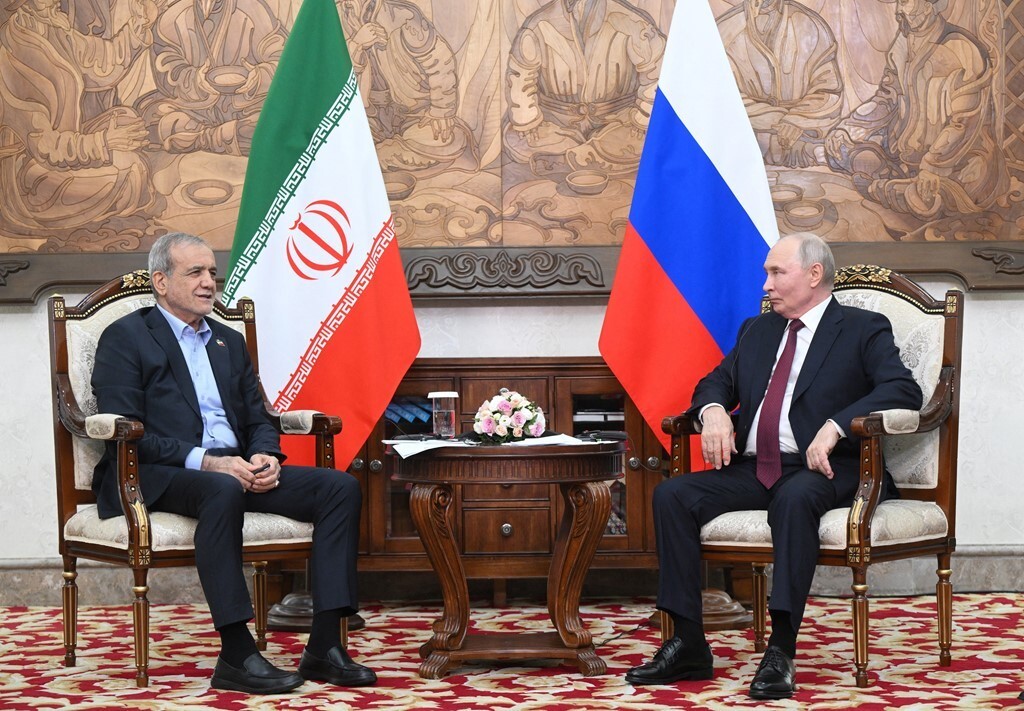
But at the meeting in Bishkek, a gathering of leaders of the Shanghai Cooperation Organization that included Iranian President Masoud Pezeshkian, Putin pledged continued support for Tehran. At the news conference Wednesday, he also vowed that Russia would keep pummeling Ukraine and dismissed a warning by Ukrainian President Volodymyr Zelensky that Russia’s skies are no longer safe for aviation because of Ukrainian drones.

“If this has been voiced, it amounts to nothing less than a call for state terrorism,” Putin told reporters. “And I would point out that they are asking us to resume negotiations and requesting face-to-face meetings. One does not negotiate with terrorists.”

In response to a question about Ratcliffe’s visit, Putin said contacts between intelligence services are routine and continued “even during the most difficult times of the Cold War, and all the more so now.”

It was the first time Putin had publicly addressed Ratcliffe’s appearance in Moscow, the first known visit to Russia by a CIA director since late 2021, shortly before Putin ordered the full-scale invasion of Ukraine. The visit came after new U.S. intelligence indicated the Kremlin views Washington as weakened by the Iran war, potentially seeing an opening to escalate provocations against U.S. interests or allies.

Putin said that peace talks on Ukraine are “frozen to a certain extent” but that Moscow would welcome “someone who could bring some positivity to the process.”

“That said, we are perfectly comfortable working with people we know well and whom we generally trust — individuals close to President Trump,” Putin continued. “In my view, they are sincere people who strive to imbue our work with concrete substance.”

He added: “President Trump trusts them, which is crucial. … That is why Mr. Kushner and Mr. Witkoff are always welcome guests here, and we enjoy working with them.”

The comments followed a familiar pattern. In response to Washington’s on-again, off-again attempts to draw Moscow back to the negotiating table, Putin showed little appetite to move away from his maximalist goals in Ukraine or his military campaign to achieve them.

Putin lashed out at Ukraine’s threats to devastate the Russian economy, suggesting that Kyiv has little interest in negotiations.

“We need some people to talk to — provided they realize they want to resolve issues peacefully — rather than simply ‘destroying’ our economy ‘in 40 days,’ ‘bringing Russia to its knees,’ or dealing us ‘yet another strategic blow,’” he said.

Putin’s appearances after major international events have become one of the few remaining venues for media access to the Russian president, albeit one that is tightly staged.

At the news conference, Putin also dismissed rumors that Russia would undertake a new general military mobilization. Rumors of a mass conscription, perhaps after parliamentary elections in Russia this fall, have swirled against the backdrop of an intensifying war in Ukraine. Putin called the speculation nonsense.

On Tuesday, hours before Putin spoke, Germany formally blamed Russia for an attempted drone attack at Leipzig/Halle Airport early last month, where a device packed with military-grade explosives was found next to a Ukrainian cargo plane. The airport is also used by European and NATO military aircraft.

In retaliation, Germany moved to shut down a Russian Consulate in Bonn and the Russia House in Berlin. The Kremlin has denied any involvement in the incident, saying Germany provided no evidence and accusing Berlin of “proceeding down a path of further escalation.”

Dmitry Medvedev, a former Russian president who is more recently known for provocative statements on social media, threatened Germany with a “direct strike” on its military production facilities over the Leipzig accusations.

Germany’s leaders, Medvedev, who now serves as deputy chair of Russia’s security council, wrote, “deserve a direct strike on all German military equipment production facilities … and quite possibly on several other locations in Berlin as well.”

Last week, Russia warned it could strike British military targets inside and outside Ukraine in response to Kyiv’s use of long-range British Storm Shadow cruise missiles against targets inside Russia.

Maria Zakharova, the spokesman for Russia’s Foreign Ministry, said Britain was “one step away” from becoming legally complicit in what she called “terrorism” against Russian civilians, warning of “inevitable catastrophic consequences” unless London changes course.

Asked in Bishkek whether Russia was seriously considering strikes on British military facilities, Putin said it was “a military secret.”

Zelensky issued his warnings during his nightly address on Tuesday, saying that “the safe days in Russia’s skies are over.”

“Today, we want to warn every airline that uses Russian airspace, every insurer and everyone who still uses Russia’s key airports: Russian airspace is becoming completely unsafe,” he said.

Russian authorities, he added, “are not properly informing people about this” — but Russian airspace, in effect, is closing, “the war started by Russia is closing its skies.”

Categories
Michael Novakhov - SharedNewsLinks℠

Putin Embarrassed on Battlefield as Troops Trapped


Michael_Novakhov
shared this story
from The Daily Beast Latest Articles.
World

“They do not want to go there because it means death,” a Ukrainian commander said.

Russian President Vladimir Putin

MAXIM SHEMETOV/POOL/AFP via Getty Images

Sign Up for Our Beast Digest Newsletter

Get our top stories delivered straight to your inbox.

By clicking “Sign Up” you agree to our

Terms of Use

and

Privacy Policy

.

Vladimir Putin has been dealt a fresh battlefield blow as Ukraine says it trapped around 2,500 Russian troops on a strategic Black Sea peninsula.

Ukrainian troops said Moscow’s forces on the occupied Kinburn Peninsula had become largely isolated as drone attacks and remotely laid mines made it increasingly difficult to bring in ammunition, fuel and food, according to Radio Free Europe/Radio Liberty’s Crimea.Realities

Isabel van Brugen

Got a tip? Send it to The Daily Beast here.

Categories
Michael Novakhov - SharedNewsLinks℠

Ukraine war latest: Russia responds to Zelenskyy’s civil aviation threat


Michael_Novakhov
shared this story
.

Ask a question or make a comment

Want more from our experts on defence, conflicts and national security?

Tap here to register your interest for Sky News Defence Insider – launching with a free trial soon.

Kyiv urges ICAO to stop flights from using Russian airspace

Ukraine ‌has urged ​the
International Civil Aviation ​Organisation ‌to ​prevent member
states from using ​Russian ⁠airspace.

That’s ⁠according to ‌a letter from
the ‌government to ICAO, which has been seen by the Reuters news agency. 

It comes as Russia’s transport minister Andrei Nikitin said Moscow will not allow Ukraine to seriously disrupt its civil aviation operations despite Zelenskyy’s threat (see post at 10:41).

Zelenskyy warned airlines and insurance companies yesterday that the presence of Ukrainian drones had made Russian airspace dangerous to use, adding it was effectively closed.

Nikitin said the threats were being taken “into account” and Russia is “constantly improving flight safety and airport security requirements”.

Flightradar24 data showed today there were disruptions at Moscow’s main airport while ‌some airlines cancelled flights – though they did not give a reason for doing so.

Britain is ‘better’ prepared at repelling a potential Russian attack after renewed threat

In the wake of the attempted drone attack in Leipzig and subsequent condemnation of Russia by Germany and its partners, Europe is now on guard about possible escalation by Moscow.

In our latest Q&A on the Ukraine war, military analyst Michael Clarke was asked whether Russia could target British airports:

Could Russia target UK airports, as they did in Germany? Is Heathrow at risk?
Ronald

In his response, Clarke said “yes”, adding that cyber attacks and sabotage were possible.

He added that Russia could attempt to distance itself from events by “paying other people to do it, paying dissident groups to do it or kids to do it”.

“All of us in Europe are at a bigger risk now of these sorts of events,” Clarke said.

A police officer in protective clothing works at Leipzig/Halle Airport

But he said the “good news” for the UK is that “we are pretty well better than anyone else in Europe at detecting this and stopping it”.

That’s despite Clarke admitting that Russia “would like to target us more than anyone else” and the UK having “some egregious failures in the past”.

“We’ve lived with these sort of threats over the last 50 or 60 years… we’ve had threats on the go in Britain since the mid-1960s,” he added.

“We’re actually better at counterterrorism and counter-sabotage than most other countries; we’re more geared up to it and I think our airports are much more vigilant.”

But Clarke said it’s important that the UK continues “being good and lucky” to avoid a possible “mass casualty event”.

Want more from Michael Clarke and other experts on defence, conflicts and national security? Click here to register your interest for Sky News Defence Insider – launching with a free trial soon.

YouTube

This content is provided by YouTube, which may be using cookies and other technologies.
To show you this content, we need your permission to use cookies.
You can use the buttons below to amend your preferences to enable YouTube cookies or to allow those cookies just once.
You can change your settings at any time via the Privacy Options.


Unfortunately we have been unable to verify if you have consented to YouTube cookies.
To view this content you can use the button below to allow YouTube cookies for this session only.

Zelenskyy discusses Leipzig incident with German chancellor

Volodymyr Zelenskyy has discussed the attempted attack on the airfield in Leipzig with Friedrich Merz, describing last month’s incident as “yet another Russian escalation”.

The Ukrainian president said it was “important that Germany responded” and that Merz has briefed him on the measures taken by Berlin.

“For my part, I assured him that Ukraine is ready to help – with expertise, experience, or in other areas where Germany may need it,” he added.

“Our teams are already finalising the text of the Drone Deal, and this will, among other things, definitely provide both Germany and Ukraine with additional defense capabilities.”

Zelenskyy said Ukraine will receive air defence packages this month from Germany – with Berlin itself describing the country as “Ukraine’s biggest supporter”, including in the military sphere.

Russian attack leaves 350,000 Ukrainian families without power

More than 350,000 families were temporarily without power after Russia attacked energy infrastructure in the southern Ukrainian region of Odesa (see post at 9:29).

That’s according to Ukraine’s largest private investor in the country’s energy sector, DTEK.

The company said it has restored electricity to 177,000 households so far. 

“The enemy also damaged a DTEK Odesa Grids production site, including transport and office buildings,” it added in a Telegram post.

“Energy workers are doing everything possible to restore power to homes as quickly as possible.”

Large Russian oil refinery shut down after drone attack, sources say

One of Russia’s largest oil refineries has stopped crude processing after a drone attack at the end of last month damaged facilities, two industry sources told the Reuters news agency.

Alexander ‌Drozdenko, governor of the northwest Russian region of Leningrad, said a fire broke out in an industrial zone in the town of Kirishi following a drone raid. He did not provide details about the damage or the name of the facility. 

But according to sources, the attack on 30 August damaged two operating primary crude distillation ​units at Surgutneftegaz’s Kirishinefteorgsintez (KNIEF). 

Damage to one unit represented 40% of the plant’s total capacity and another unit represented 8%, while two other units were offline at the time of the attack.

As a result, the refinery has suspended all crude processing
operations, according to the sources.

Surgutneftegaz did not immediately respond to ​a
Reuters request for comment.

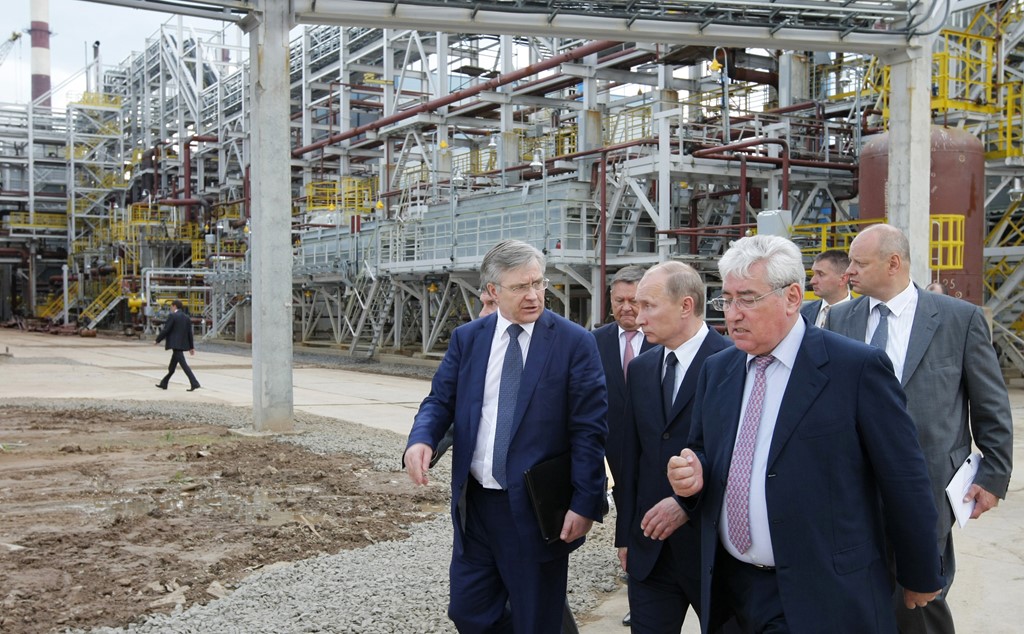
Vladimir Putin at the refinery in 2011

Moscow has grown ‘increasingly reckless’ in its war with Ukraine

NATO Secretary General Mark Rutte says Russia has “grown increasingly reckless” in its war with Ukraine.

He declares the alliance stands in “full solidarity with Germany” alongside the European Union.

“We are working around the clock to make sure that we are prepared to keep our people safe,” he adds.

Rutte says Russia should know Europe won’t be divided by threats.

“Our support to Ukraine is clear,” he adds.

That includes providing funds as well as “vital air defence”.

The news conference has now ended.  

Reuters

Europeans must face ‘harsh truth’ of Russian attacks outside of Ukraine, EU says

The European Commission president is continuing, warning Russia that if the attack was intended to stop support for Ukraine, it hasn’t worked. 

Standing alongside NATO Secretary General Mark Rutte, Ursula Von der Leyen says: “We are united, Europe and NATO will not just maintain our pressure on Russia, we will increase it.”

“We will not stop, not until Russia stops bombing and killing innocent children, men and women in Ukraine,” she adds.

Von der Leyen says repeated incursions in European airspace and interference with critical infrastructure mean “Europeans are faced with the harsh truth that this is the new normal”.

“We must treat our everyday infrastructure as frontline targets and protect them accordingly,” she adds.

“We will support any member state Russia targets.”

Attempted Leipzig drone attack could have resulted in deaths, Von der Leyen says

European Commission President Ursula von der Leyen said that if the attempt to attack cargo planes at Leipzig Airport had been successful, it would have “resulted in enormous damage” and possibly deaths.

She added that it was an attack “using military-grade material” and carried out by Russian operatives on European Union soil.

“We will not tolerate it,” she said.

“We stand in full solidarity with Germany.”

Reuters

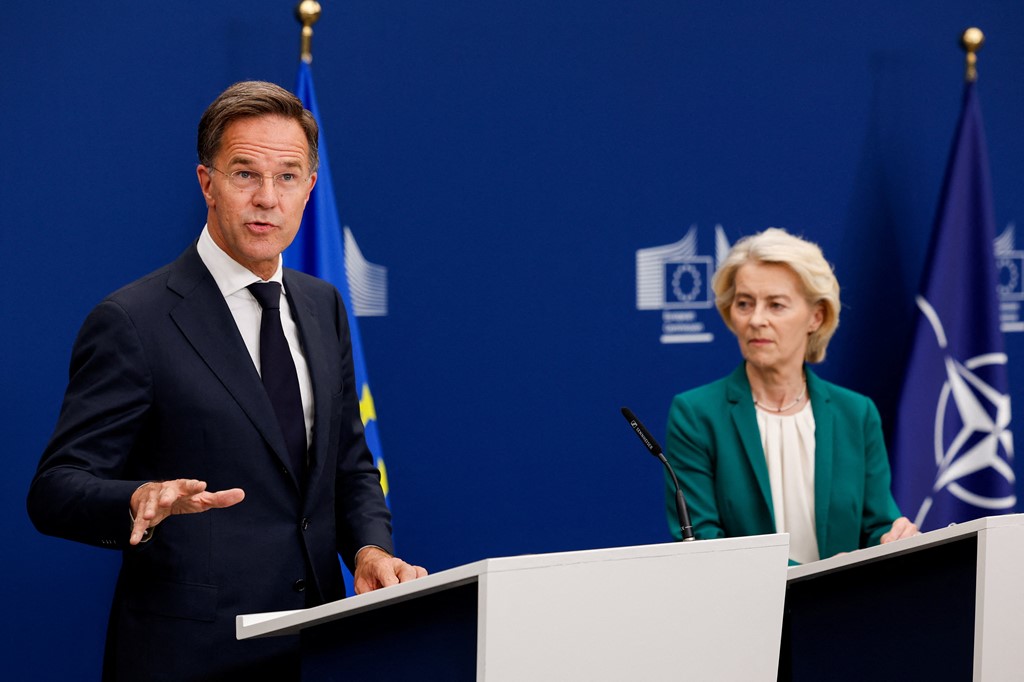
Von der Leyen and Rutte speak in Brussels

European Commission president Ursula von der Leyen is speaking with visiting NATO secretary general Mark Rutte during a joint news conference in Brussels.

The two leaders are discussing their joint response to Moscow’s hybrid threats after Germany concluded that Russia was behind an attempted drone attack in Leipzig last month.

Watch the news conference here… 

YouTube

This content is provided by YouTube, which may be using cookies and other technologies.
To show you this content, we need your permission to use cookies.
You can use the buttons below to amend your preferences to enable YouTube cookies or to allow those cookies just once.
You can change your settings at any time via the Privacy Options.


Unfortunately we have been unable to verify if you have consented to YouTube cookies.
To view this content you can use the button below to allow YouTube cookies for this session only.

Has a ‘secret Russian missile programme’ been helping Iran?

Iran has been getting secret help from Russia to develop supersonic cruise missiles, according to a new report by the Financial Times.

The newspaper says the secret missile programme has been running for years to help Tehran with the technology required for advanced cruise missiles. 

The FT says the programme is codenamed C430L, and some of Russia’s most experienced missile specialists have been assigned to help Iran develop a new class of weapon capable of threatening US aircraft carriers and other warships.

The Kremlin did not respond to requests for comment on the FT story, the paper says.

The Iranian government, contacted through its London embassy, also did not respond to the FT’s questions, the paper adds.

But its report points out that Vladimir Putin told his Iranian counterpart Masoud Pezeshkian yesterday that Moscow was “trying to give you the help you need in this difficult period” during the war with the US and “supplying you with the goods you need”, without elaborating.

Pezeshkian and Putin yesterday

Is Iran-Russia collaboration new?

The exposure of the secret programme is significant, but it’s also evidence of close strategic ties between Russia and Iran, which were already known. 

Shahed attack drones have been provided to Russia by Iran for Moscow’s war in Ukraine for years.

Ukraine and Western officials have also accused Russia of helping Iran during its war with the US and Israel by providing satellite imagery, drone support and weapons components.

What is the ‘secret missile programme’ for?

The main purpose of C430L is to help Iran to develop a ramjet propulsion system, an engine that allows a cruise missile to sustain flight at several times the speed of sound, the FT report says.

Missile and military experts said the technology was almost certainly intended for anti-ship and land-attack cruise missiles.

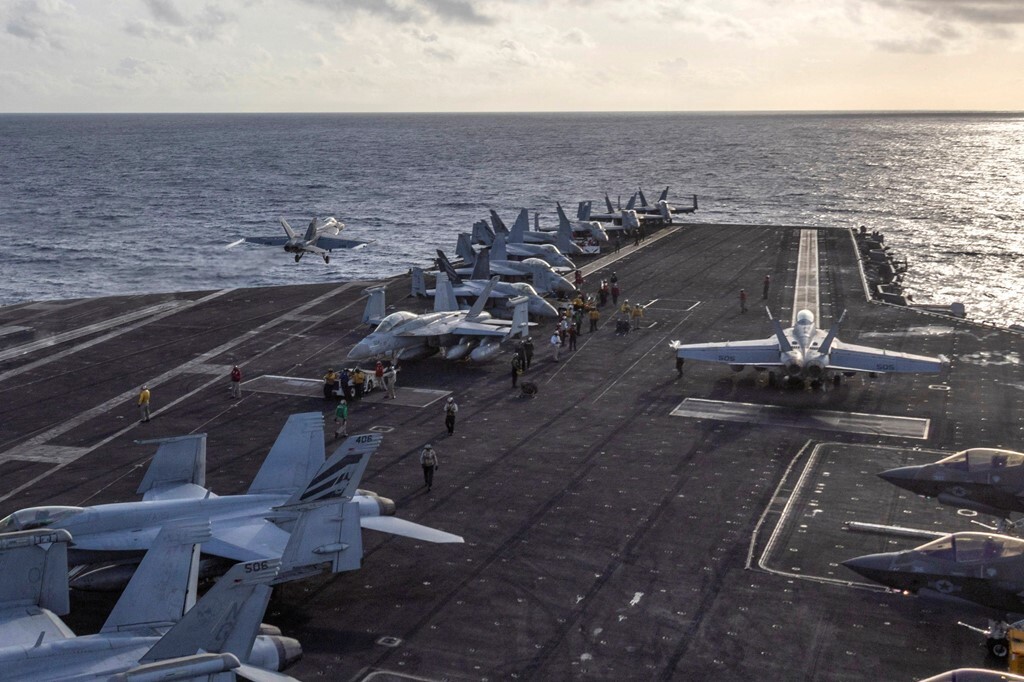
A US aircraft carrier in the Iran war

“For the Iranians, this would give them a qualitatively new strategic weapon system that could threaten US Navy vessels,” Jim Lamson, a former Iran-focused military analyst with the CIA, tells the FT.

Supersonic cruise missiles combine speed with the ability to fly at low altitude, shortening the time available for sophisticated air and missile defences to detect and engage them, the FT report adds. 

It says this is especially relevant for Iran in the Gulf, where the US and its regional allies operate advanced land- and sea-based defensive systems.

‘Clearance from the very top’

“This is the transfer of a highly strategically sensitive military technology from Russia that the Iranians have wanted to acquire for decades,” said Fabian Hinz, an expert on Iranian missiles and senior analyst with Conflict Armament Research, a UK-based weapons-tracing organisation.

“A programme like this would require political clearance from the very top in Russia.”

Russia won’t allow Ukraine to disrupt civil aviation operations, minister says

Moscow will not allow Ukraine to seriously disrupt its civil aviation operations despite a threat by Volodymyr Zelenskyy, Russia’s transport minister has said.

Zelenskyy warned airlines and insurance companies yesterday that the presence of Ukrainian drones had made Russian airspace dangerous to use, adding it was effectively closed.

“Of course, we are preparing for this ​and taking all these
threats ⁠into account,” Andrei Nikitin said, according to the Interfax news agency.

“We are ⁠constantly improving flight safety and airport security requirements, and we ‌have solutions for all of this. We have solutions for all the threats ‌that terrorists are voicing.”

He added that his department is working in “close contact” with the defence ministry and the Russian National Guard.

“I believe ​that we
will not allow any significant ⁠disruption to civil aviation.”

Vladimir Putin said yesterday Zelenskyy’s
warning sounded ⁠like Ukraine intended to ​commit “state
terrorism” and Moscow would find a way to respond.

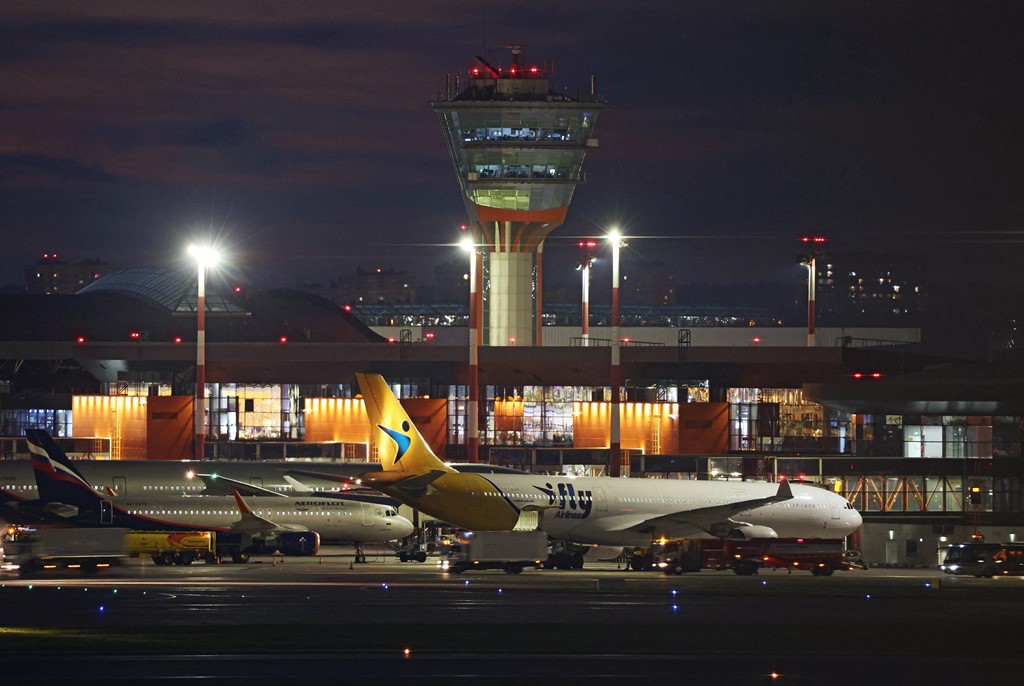
Planes parked at Sheremetyevo International Airport outside Moscow in July

Ukraine calls for discussion over using Russian frozen assets

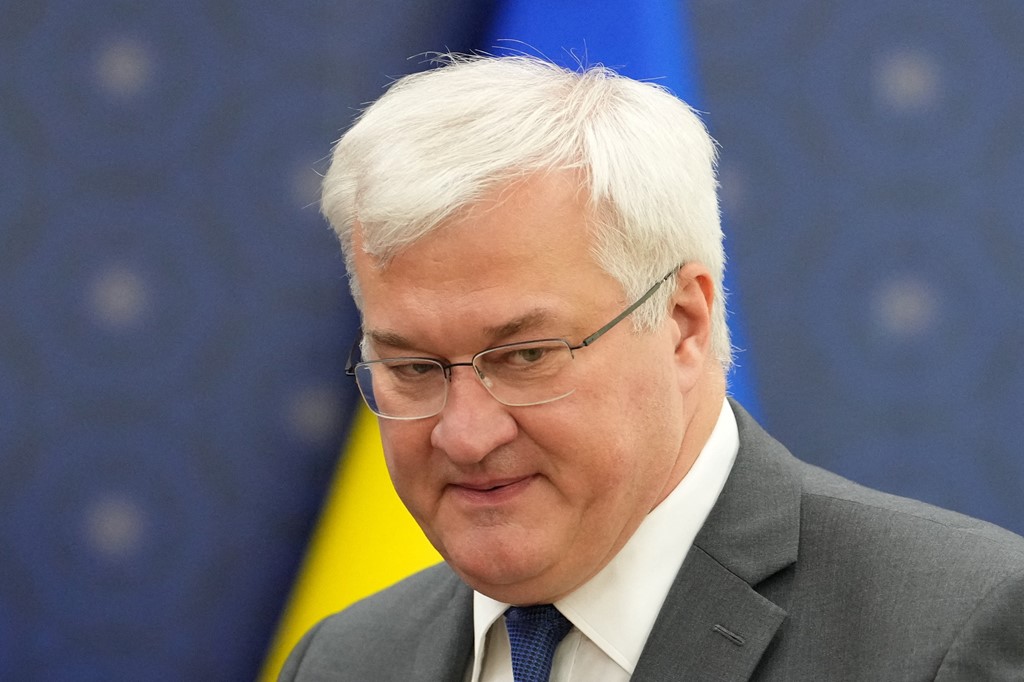
Ukraine’s foreign minister has said it was time to restart talks on using frozen Russian assets for the country.

Andrii Sybiha said in a meeting of foreign ministers in Ireland: “I ​think this is a fair approach to ​start ⁠[a] serious discussion [on] how ⁠we could use immobilised frozen ‌assets.” 

Four European Union countries – ⁠the Netherlands, Poland,
Spain ​and Sweden – late last month ​urged the bloc ⁠to reopen
discussion on using ⁠Russia’s frozen assets ​for Ukraine. 

Belgium, where the majority of the funds are held, blocked the initiative to fund Ukraine using more than €200bn in Russian central bank assets held in the EU under sanctions.

But a coalition of states wrote to the European Commission to call for work to restart on the concept, four people briefed on the document told the Financial Times.

Andrii Sybiha

Explosions heard in Kyiv after Russian attacks

At least three large explosions rocked the centre of Kyiv today, witnesses have told the Reuters news agency.

Authorities in Ukraine’s capital issued an air raid alert earlier in reaction to a drone threat, adding that air defence units were repelling the attack.

A column of black smoke rose from a neighbourhood near the national university building, according to reports.

Kyiv mayor Vitali Klitschko wrote on Telegram that four people were injured in the city after Russia’s attacks.

He said two were hospitalised and the other two were receiving medical assistance. 

Russia attacked energy infrastructure in Odesa, Ukrainian transmission operator says

Moscow carried out a “massive” missile and drone attack on Ukraine’s energy infrastructure in the country’s southern Odesa region overnight.

That’s according to transmission system operator Ukrenergo.

The company said on Telegram that a substantial number of its consumers in the region were left without electricity.

It added that there were new power cuts in four other regions.

Washington and Moscow see grounds for financial ties, Russian minister says

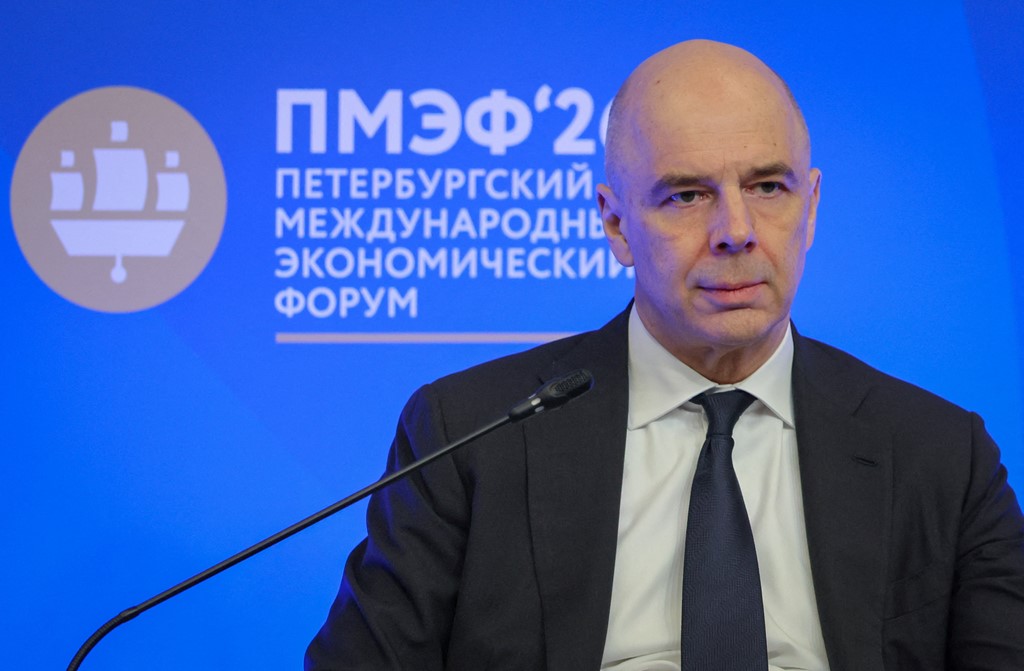
Dialogue between Washington and Moscow should continue to seek common ground in economics, according to Russian finance minister Anton Siluanov, who was quoted by the Interfax news agency.

He added that it would make it easier for the two countries to then discuss political issues.

Asked about ‌a meeting with US treasury secretary Scott
Bessent, the Russian minister ⁠said both ​countries ​agreed ​there are
grounds for ⁠improving financial ties ⁠despite complications, Interfax reported. 

Anton Siluanov

Attempted Leipzig attack looks like state-sponsored terrorism, EU says

The alleged Russian attempted drone attack in Leipzig had all the hallmarks of state-sponsored terrorism, according to the EU’s foreign policy chief Kaja Kallas.

She said Europe needs to coordinate on what more can be done due to Moscow’s escalation of attacks in Ukraine.

The German government said yesterday that it had concluded
Moscow was responsible ‌for the attempted drone attack last
month.

Speaking before an informal gathering of ⁠European foreign
ministers in ​Ireland, Kallas added that work ​is ongoing on
1,600 sanctions ⁠listings related to Russia’s military complex
and “maybe ⁠there are more ​to be added”.

Welcome back

Good morning and welcome back to our live coverage of the war in Ukraine.

The European Union says last month’s attempted drone strike in Leipzig had all the hallmarks of state-sponsored terrorism after Germany concluded Moscow was responsible.

Meanwhile, Russia carried out a “massive” missile and drone attack on Ukraine’s energy infrastructure in the southern Odesa region, according to a state-owned transmission system operator.

We’ll have more details on those strikes shortly – stay with us for live updates throughout the day.

‘Military secret’ if Russia planning to strike UK sites, Putin says

It’s a “military secret” how Russia will respond to the UK’s decision to provide Ukraine with Storm Shadow blueprints.

That was Vladimir Putin’s response to a question on whether Russia was weighing up possible strikes on British military sites.

He made no further comment, but it comes as tensions escalate between the two countries.

Russia said last week that the UK was “playing with fire” after Andy Burnham approved letting Ukraine access classified long-range cruise missile tech.

The prime minister had a rather glib response while visiting Kyiv… 

‘The enemy will crumble’

Elsewhere, giving his fullest remarks on the war in weeks, the Russian president acknowledged that Ukraine’s strikes inside his country have inflicted real damage – in particular when they use drones.

However, he said that Russia continued to make advances on the battlefield.

“I have no doubt ⁠the enemy will crumble,” Putin added, without explaining how that would happen.

‘Utter nonsense’ mobilisation order

Reports from The Economist recently said that Putin was mulling a mobilisation of between 300,000 and 400,000 soldiers – leaving the orders to local governments to avoid backlash.

He’s rubbished those and other similar reports as “utter nonsense”, denying a new mobilisation order. 

It’s worth noting, though, that according to The Economist, the first mobilisation order never expired.

Pics: Reuters

Ukraine threatening ‘state terrorism’

Meanwhile, Volodymyr Zelenskyy issued a warning to civilian airliners using Russian airspace, saying “the safe days in Russia’s skies are over”.

X

This content is provided by X, which may be using cookies and other technologies.
To show you this content, we need your permission to use cookies.
You can use the buttons below to amend your preferences to enable X cookies or to allow those cookies just once.
You can change your settings at any time via the Privacy Options.


Unfortunately we have been unable to verify if you have consented to X cookies.
To view this content you can use the button below to allow X cookies for this session only.

He meant that Ukrainian drones would effectively halt the safe use of air traffic routes over the countries.

Putin said, however, that those comments sounded like “state terrorism” and vowed a response.

He also said that Russia was open to “concrete” talks on settling the Ukraine conflict ​if new momentum could be injected.

Russia and Ukraine exchange strikes on energy infrastructure

Russia and Ukraine have been exchanging strikes on energy infrastructure in their latest series of attacks.

A Russian drone and missile attack damaged a thermal power plant in Ukraine’s southern Odesa region, state energy company Naftogaz said.

Meanwhile, a Ukrainian attack damaged oil-processing units at Russia’s Novatek Ust-Luga complex.

WP Radio
WP Radio
OFFLINE LIVE