Categories
Audio Sources - Full Text Articles

Australian Turnell freed in Myanmar, arrives in Thailand -Australian government

2022-11-17T14:28:46Z

Australian economist Sean Turnell was freed from prison in Myanmar on Thursday and has arrived in Thailand, Australian Prime Minister Anthony Albanese said on Thursday.

Turnell was a former adviser to deposed Myanmar leader Aung San Suu Kyi.

“I’ve just spoken to Sean Turnell, who has been released from 650 days of unfair, unjust imprisonment in Myanmar. And he has now landed and is well in Bangkok. He will travel overnight to Australia to be with his family,” Albanese told reporters in Bangkok, where he was attending an APEC summit.

Albanese thanked prime ministers Prayuth Chan-ocha of Thailand and Hun Sen of Cambodia for keeping pressure on Myanmar’s ruling military to release Turnell.

He said Turnell had told him “people have been wonderful”, referring to the Australian public who had supported the campaign for his release. “He was in amazingly good spirits,” Albanese added.

He said Turnell had also told him he had drawn hope from the Australian crest of an emu and kangaroo printed on the tote bags containing food delivered to his prison cell. “They (emu and kangaroos) don’t go backwards,” Albanese said.

A diplomatic source had earlier told Reuters that the Australian economist as well as a former British ambassador, Vicky Bowman, were freed from prison in Myanmar.

Categories
Audio Sources - Full Text Articles

Jeremy Hunt hikes taxes, squeezes spending to restore markets“ faith in UK

2022-11-17T14:39:22Z

British finance minister Jeremy Hunt announced a string of tax increases and tighter public spending in a budget plan on Thursday that he said was needed after the blow dealt to the country’s fiscal reputation by former prime minister Liz Truss.

Outlining a 55 billion-pound plan – almost half from tax rises – to fix the public finances, Hunt said the economy was already in recession and set to shrink next year as it struggles with inflation forecast to average 9% this year and 4% in 2024.

Britain’s budget watchdog said rising prices would further erode people’s wages and reduce living standards by 7% by April 2024 – the year a national election is expected – wiping out growth over the eight years to 2022. Millions of Britons are already struggling with a cost of living crisis.

The tax burden would hit 37.1% of GDP, its highest sustained level since World War Two, at the end of its five-year forecast period, the OBR said, up from 33.1% in the 2019-20 tax year.

But Hunt said he could not avoid painful fiscal medicine – although much of it will not kick in immediately – if Britain is to build on the recent restoration of calm in financial markets.

“Credibility cannot be taken for granted and yesterday’s inflation figures show we must continue a relentless fight to bring it down, including an important commitment to rebuild the public finances,” he told parliament.

British inflation was 11.1% in October, a 41-year high.

Sterling was down almost 1% against the dollar and 0.2% against the euro after Hunt spoke, as investors assessed the scale of belt-tightening, which looked more severe than anything planned by other big rich economies.

“There still is concern about the long-term health of the UK economy, whether there will be enough in what (Hunt) is saying for longer-term growth prospects,” Susannah Streeter, senior markets analyst at Hargreaves Lansdown, said.

Hunt announced changes that will mean more people pay basic and higher-rate income tax, and lowered to 125,000 pounds the threshold at which people pay the top 45% rate, as well as cutting tax-free allowances for income from dividends.

He froze until 2028 a threshold at which employers start to pay social security contributions, which will cost companies more.

A levy on energy companies’ profits of will rise to 35% from 25% from Jan. 1 until 2028, and a new temporary 45% tax will be imposed on electricity generators, to raise a total of 14 billion pounds next year, Hunt said.

Public spending would grow more slowly than the economy but rise in overall terms, he said.

A scaled-back version of the existing cap on energy costs would cost just under 13 billion pounds next year, about half what was planned by former finance minister Kwasi Kwarteng.

But pensions and welfare benefits would rise in line with inflation, a major expense for the public finances after the surge in price growth this year.

Paul Johnson of the Institute for Fiscal Studies think tank said Britain would be spared big spending cuts over the next two years, with tax increases also limited in the short term, but that real pain would come after the likely 2024 election.

Hunt said forecasts from the independent Office for Budget Responsibility (OBR) laid out “starkly the impact of global headwinds on the UK economy”.

It now expects gross domestic product to contract by 1.4% next year compared with its projection in March for growth of 1.8%. Since then, Britain’s economy has struggled with inflation, a slowing global economy and a bout of financial market turmoil during Truss’s brief term as prime minister.

The OBR forecasts GDP growth of 1.3% in 2024 and 2.6% in 2025, compared with previous forecasts of 2.1% and 1.8% respectively. It sees inflation at 9.1% in 2022, up from its March forecast of 7.4%, and at 7.4% next year, up from 4.0%.

The opposition Labour Party said the Conservative Party was failing to learn the lessons of past attempts to fix the public finances without a clear plan for economic growth.

“This government has forced our economy into a doom-loop where low growth leads to higher taxes, lower investment and squeezed wages with the running down of public services, all of which hits economic growth again,” opposition Labour Party finance spokeswoman Rachel Reeves said.

But Hunt and Sunak say their plan will restore investor confidence after Truss’s failed experiment with unfunded tax cuts, which cost her her premiership after just 50 days in Downing Street.

Her policies sent the pound to an all-time low against the U.S. dollar, threatened chaos in the housing market and forced the Bank of England to intervene to prop up the bond markets.

The only Group of Seven economy yet to recover its pre-pandemic size, Britain had suffered a decade of near-stagnant income growth even before COVID struck.

Hunt had warned prior to Thursday’s announcement that he could only slow a rise in borrowing costs by showing investors that Britain’s 2.45 trillion-pound ($2.91 trillion) debt mountain will start to fall as a share of GDP.

Thursday’s forecasts by the OBR showed that target would be met in the 2027/28 financial year.

Related Galleries:
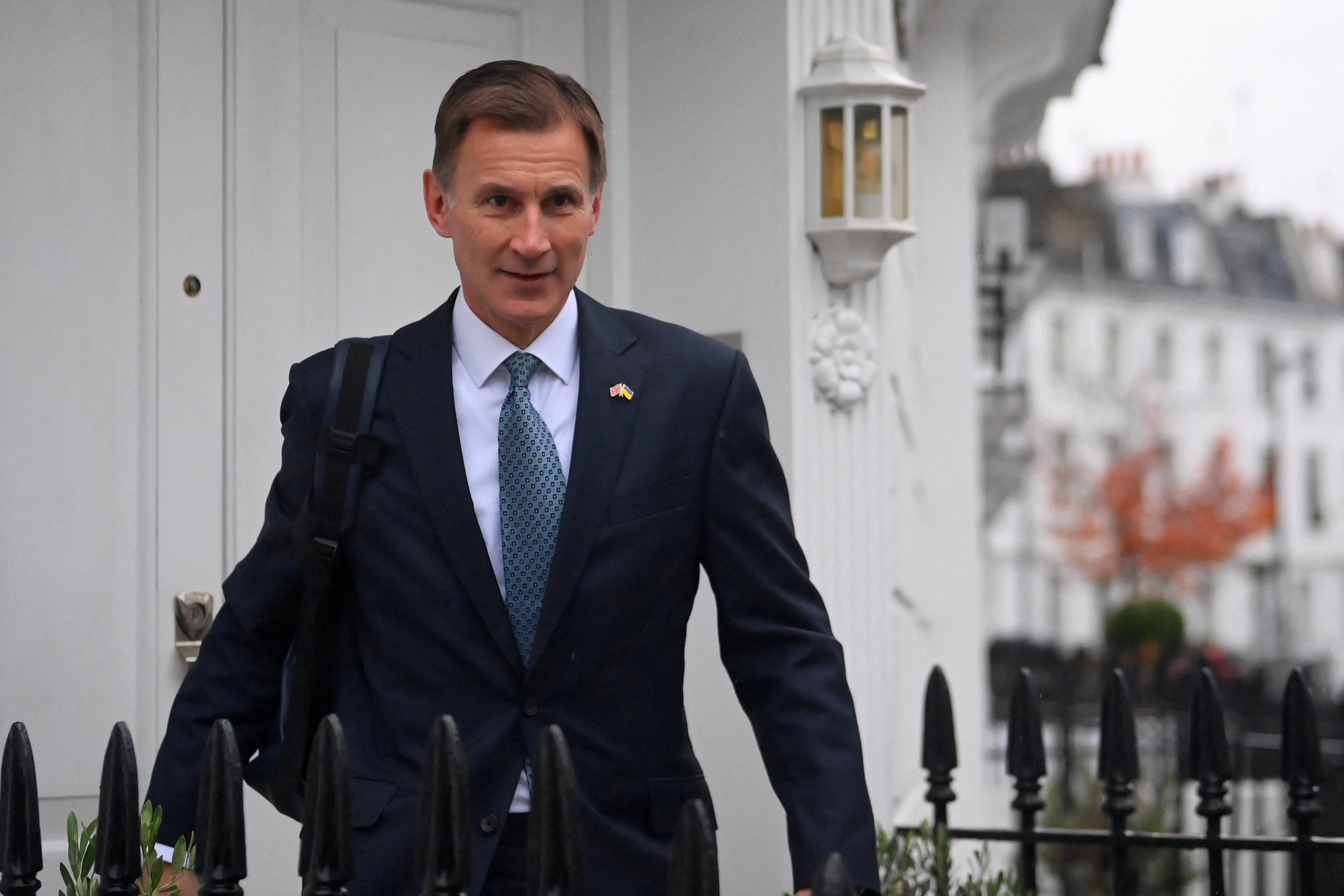
British Chancellor of the Exchequer Jeremy Hunt leaves his home, in London, Britain, November 17, 2022. REUTERS/Toby Melville
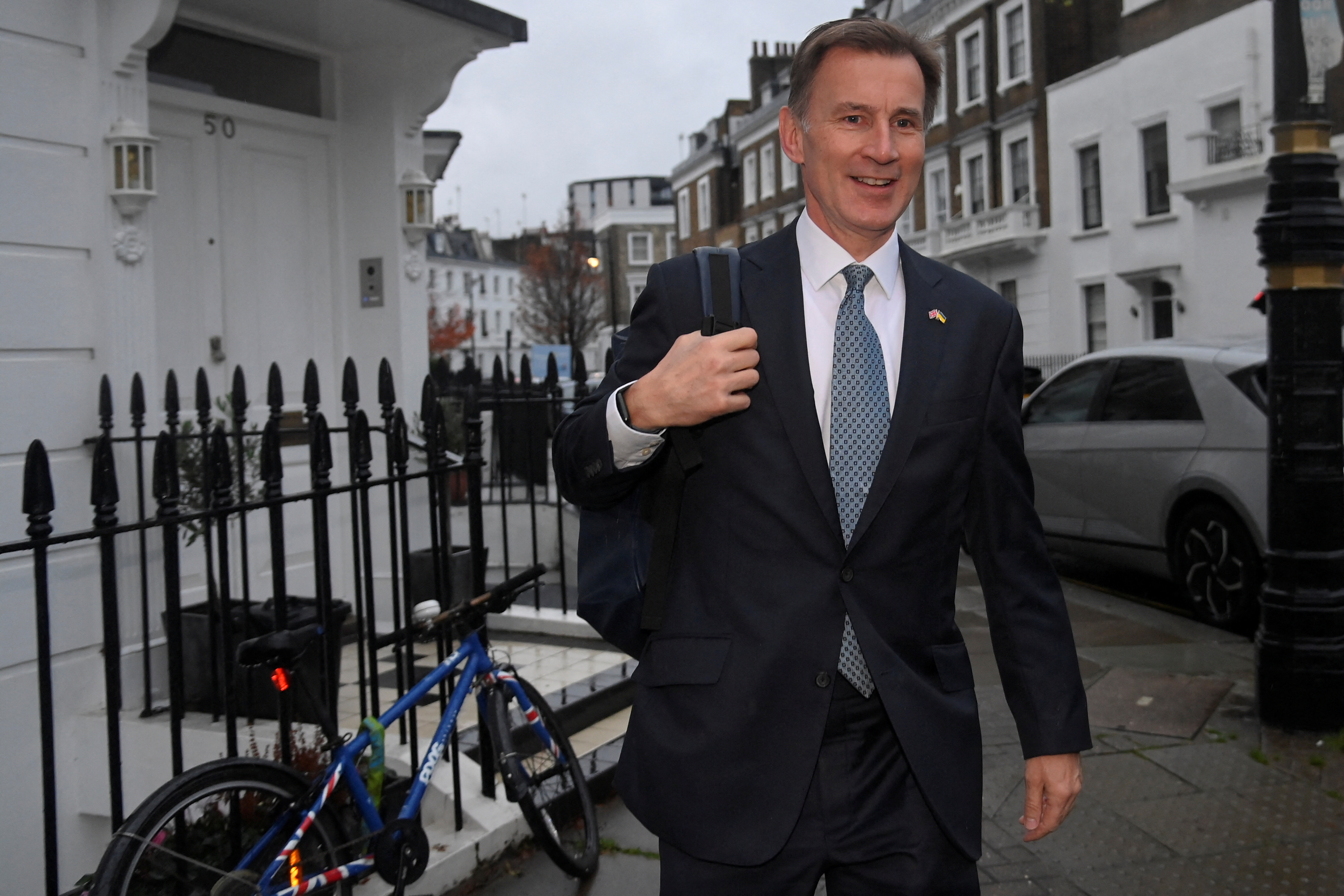
British Chancellor of the Exchequer Jeremy Hunt leaves his home, in London, Britain, November 17, 2022. REUTERS/Toby Melville
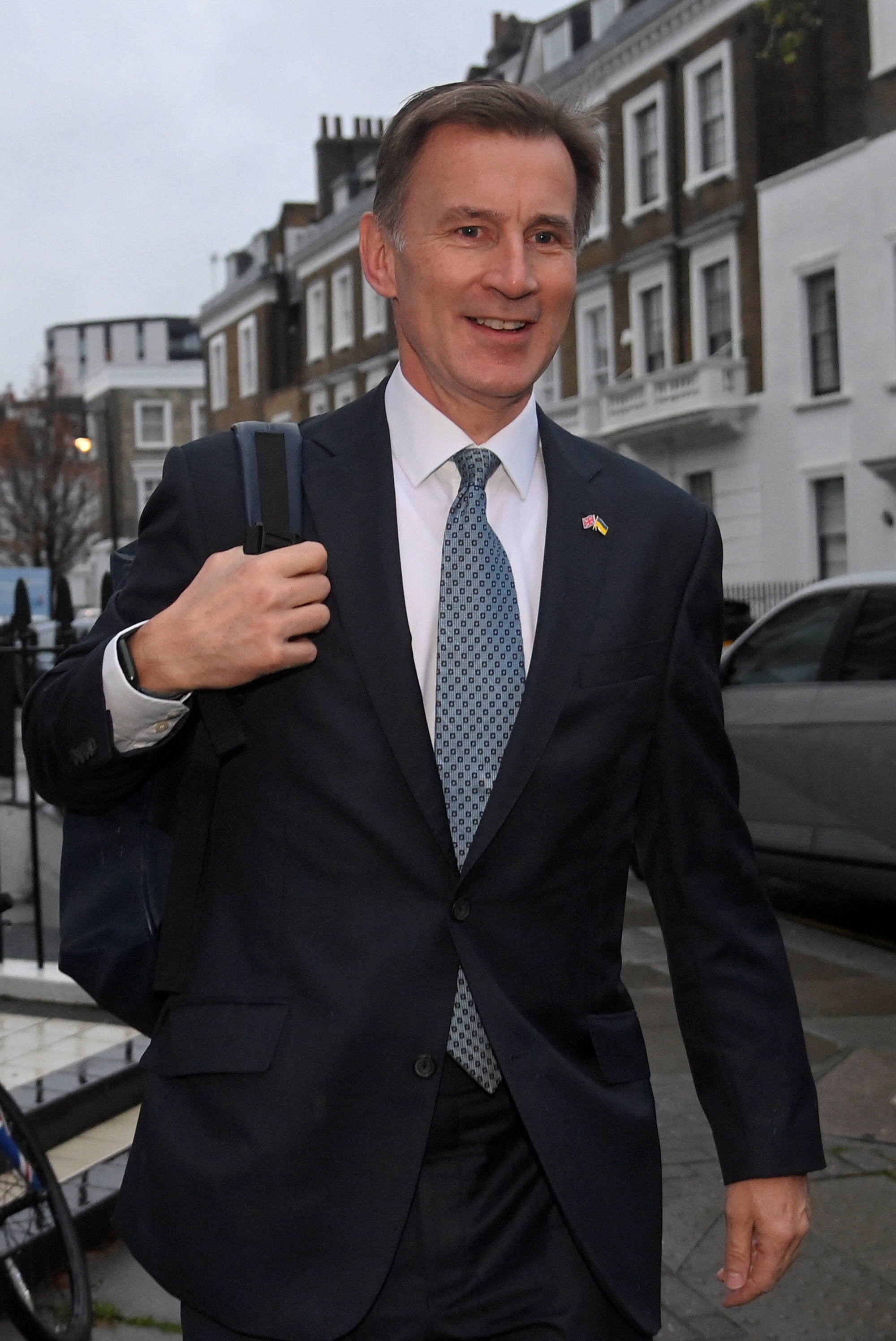
British Chancellor of the Exchequer Jeremy Hunt leaves his home, in London, Britain, November 17, 2022. REUTERS/Toby Melville
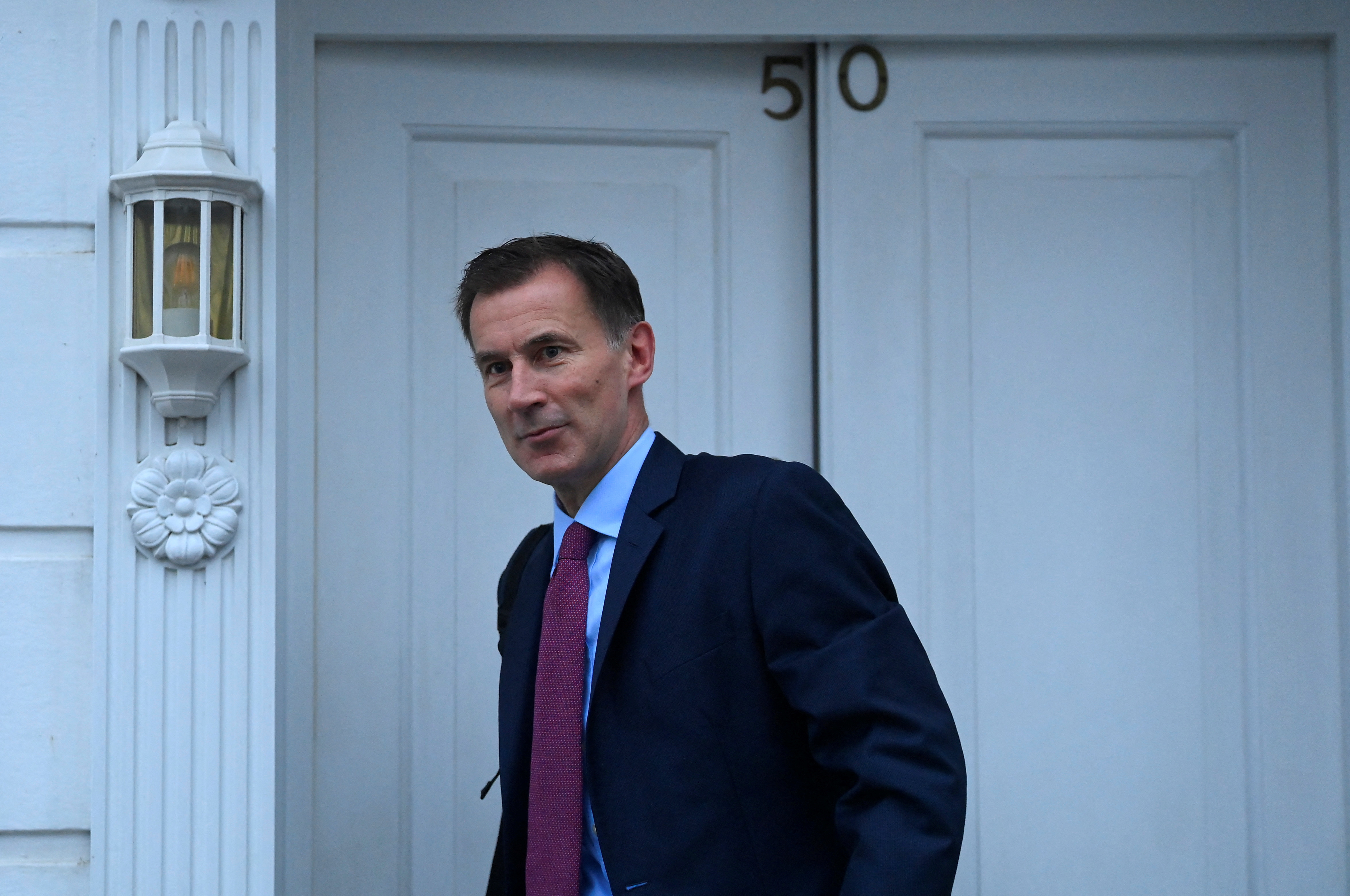
British Chancellor of the Exchequer Jeremy Hunt leaves his house in London, Britain, November 16, 2022. REUTERS/Toby Melville
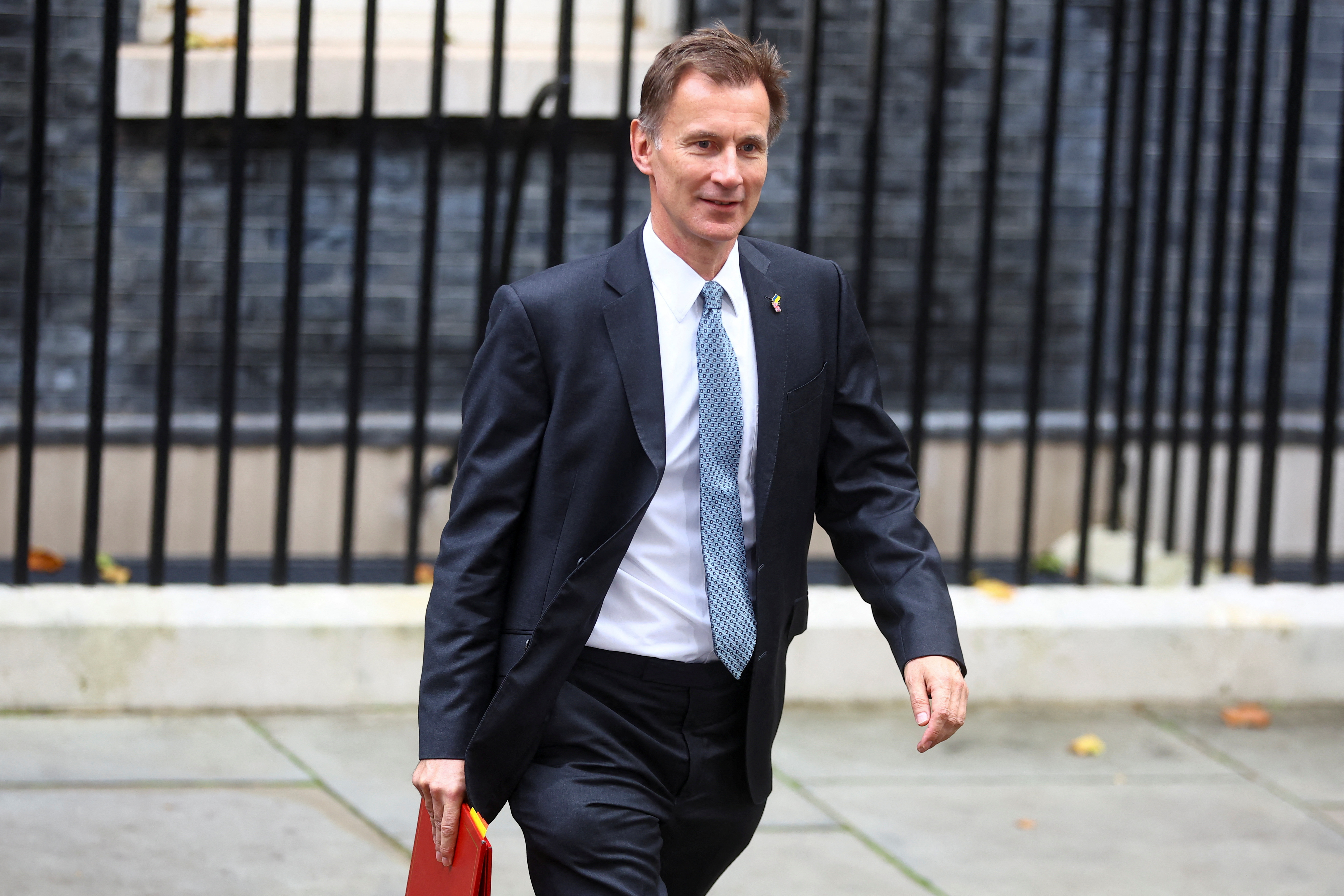
British Chancellor of the Exchequer Jeremy Hunt walks outside Number 10 Downing Street on the day of a cabinet meeting, in London, Britain, October 26, 2022. REUTERS/Hannah Mckay

Categories
Audio Sources - Full Text Articles

Petito lawsuit against Brian Laundrie’s estate resolved

(NewsNation) — A final judgment for $3 million has been reached in the wrongful death lawsuit filed by Gabby Petito’s family against her boyfriend Brian Laundrie’s estate.

Judge Hunter W. Carroll ruled in favor of the plaintiff, Petito’s mother Nichole Schmidt, as the administrator of her daughter’s estate.

The lawyer for Schmidt, Pat Reilly, said in a statement that Brian Laundrie didn’t have $3 million — that’s an arbitrary number. But any money the Petito family does receive will go to the Gabby Petito Foundation, which supports organizations trying to locate missing people, as well as provide aid to organizations that help victims of domestic violence.

“Joseph Petito and Nichole Schmidt wish to turn their personal tragedy into a positive,” Reilly said. “It is their hope that Gabby’s foundation will bring these important issues into the forefront of the public.”

A trial originally scheduled for December 2022 will not happen.

Petito, 22, vanished while on a cross-country road trip with Laundrie in a converted camper van. The trip was well-documented on social media until it abruptly ceased, allegedly somewhere in Wyoming. On Sept. 19, her body was found just outside Grand Teton National Park in Wyoming.

A Teton County coroner said Petito died by strangulation three to four weeks before her body was found.

Laundrie was at the center of a nationwide search after Petito vanished, a search that ended when his remains were found in October 2021, after more than a month of searching a 24,000-acre Florida nature reserve. A month later, authorities confirmed he’d died of a self-inflicted gunshot wound to the head.

Earlier this year, the FBI confirmed Laundrie claimed responsibility for Petito’s death through written statements discovered in a notebook that investigators found near Laundrie’s remains.

Another lawsuit, filed by Petito’s family against the Laundrie family, accusing them of knowing their son killed Petito and working to help him flee the country, is still underway.

If you or someone you know needs help, resources or someone to talk to, you can find it at the National Suicide Prevention Lifeline website or by calling 1-800-273-8255. People are available to talk to 24×7.

This story is developing. Refresh for updates.

Categories
Audio Sources - Full Text Articles

Zelensky Still Has Doubts About Missile that Hit Poland

000_32ng9yz.jpg

On Thursday, Nov. 17, at the Bloomberg New Economy Forum conference, Ukraine’s President Volodymyr Zelensky said that Ukrainian experts would investigate the circumstances of the missile crash in Poland.

According to Zelensky, confirmation that Ukrainian specialists would participate in the investigation of the missile crash was received on Wednesday, Nov. 16.

“Until the investigation is completed, we cannot say which missiles or their parts fell on the territory of Poland. However, we’ve seen pictures of the diameter of the crater – it could not be a result of the parts of anti-missile systems,” he said.

On Nov.16, Zelensky called for Ukraine’s allies to share all the data held on the missile that landed in Poland.

“We want to establish all the details, each fact. That’s why we need… access to all the data that our partners have about the explosion,” Zelensky said in his nightly address.

He recalled that on Nov. 15, Russia fired more than 100 missiles at the territory of Ukraine. Zelensky thanked the world for the support and provision of air defense systems and for the fact that Ukraine is not blamed for the fall of the missile and the death of people in Poland. However, he added, no one knows precisely what happened on Nov. 15.

“I don’t know what happened. We don’t know for sure. The world does not know. But I am sure that there was a Russian missile, I am sure that we fired from air defense systems,”  Zelensky stressed.

On Nov. 17, Jakub Kumoch, head of the International Policy Bureau, said that there is a lot of evidence that one of the missiles that were supposed to shoot down the Russian missile did not hit the target.

“The self-destruct system did not work, and this missile led to a tragedy.”

A missile struck the Polish village of Przewodow, near the Ukrainian border on Nov. 15, killing two people.

President Zelensky said that the missile was Russian but Kyiv’s allies said the explosion was likely caused by a Ukrainian air defense missile launched to intercept Russian attacks.

Poland, U.S. and NATO stressed that Moscow was ultimately to blame for attacking Ukraine. The Kremlin said it had “nothing to do with the incident.”

The post Zelensky Still Has Doubts About Missile that Hit Poland appeared first on Kyiv Post.

Categories
Audio Sources - Full Text Articles

Mar-a-Lago Model Prosecution Memo

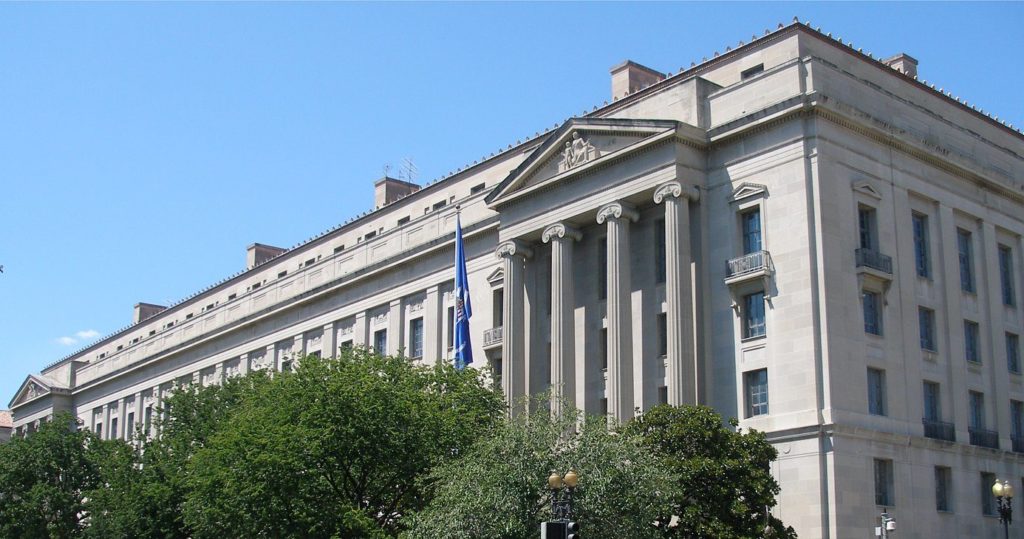
DOJ-IMAGE.jpg

This model prosecution memorandum (or “pros memo”) assesses the potential charges against former President Donald Trump emanating from his handling of classified documents and other government records since leaving office on January 20, 2021. It includes crimes related to the removal and retention of national security information and obstruction of the investigation into his handling of these documents. The authors have decades of experience as federal prosecutors and defense lawyers, as well as other legal expertise. Based upon this experience and the analysis that follows, we conclude that there is a strong basis to charge Trump.

Before indicting a case, prosecutors prepare a pros memo that lays out admissible evidence, possible charges, and legal issues. This document provides a basis for prosecutors and their supervisors to assess whether the case meets the standard set forth in the Federal Principles of Prosecution, which permit prosecution only when there is sufficient evidence to obtain and sustain a prosecution. Before a decision is made about this matter, prosecutors will prepare such a memo.

But such a DOJ memo will be confidential, in part because it will contain information derived through the grand jury and attorney work product. Since that document will not be publicly available, we offer this analysis. Ours is likely more detailed than what DOJ may prepare internally. But, given the gravity of the issues here, our memo provides a sense of how prosecutors will assemble and evaluate the considerations that they must assess before making a prosecution decision.

Our memo analyzes six federal crimes:

Mishandling of Government Documents

1. Retention of National Defense Information (18 U.S.C. § 793(e))

2. Concealing Government Records (18 U.S.C. § 2071)

3. Conversion of Government Property (18 U.S.C. § 641)

Obstruction, False Information, Contempt

1. Obstruction of Justice (18 U.S.C. § 1519)

2. Criminal Contempt (18 U.S.C. § 402)

3. False Statements to Federal Investigators (18 U.S.C. § 1001)

Based on the publicly available information to date, a powerful case exists for charging Trump under several of these federal criminal statutes.

Methodology

In considering prosecution of a former president, we begin with the standard articulated by Attorney General Merrick Garland: “upholding the rule of law means applying the law evenly, without fear or favor.”[1] In other words, this case must be evaluated for prosecution like any other case with similar evidence would be, without regard to the fact that the case is focused on the conduct of a former president of the United States. This memo accordingly includes a balanced assessment of this particular case, and a thorough review of past DOJ precedents for charging similar cases. Those past cases show that to decline to bring charges against Trump would be treating him far more favorably than other defendants, including those who were charged for less egregious conduct than his. “All Americans are entitled to the evenhanded application of the law,”[2] Garland has stated, and we are guided by the values underlying those words as well.

This model prosecution memo is, however, limited in an important sense. Throughout the memo, we draw as much as possible on the unusual amount of factual information provided by the government in its court filings. We do not, however, have visibility into the full volume of information the Justice Department has assembled. That means we could be missing important facts, including exculpatory evidence, that may inform DOJ’s decision-making process. We may be unaware of admissibility issues with some of the evidence. And equally true, the evidence could be better or more extensive than what is available in the public record.

What’s more, by necessity, we at times rely on news reports from investigative journalists whereas the actual prosecution memo would instead rely on direct evidence the federal investigators have collected. For that reason, we do not reach an ultimate charging decision. Instead, we stop at noting that there is a strong basis to charge based upon the public record, and that charges would be called for by Department precedent in like cases.[3] 

The model prosecution memorandum is available below as a SCRIBD file and also as a separate PDF.

Also, to hear more about the memo from some of its co-authors check out the Just Security podcast. A conversation with Andrew Weissmann, Joyce Vance, and Ryan Goodman.


Just Security Mar a Lago Model Prosecution Memorandum November 2022 by Just Security on Scribd


– – – – – – –

  1. Department of Justice, Attorney General Merrick Garland Delivers Remarks (Aug. 11, 2022), https://www.justice.gov/opa/speech/attorney-general-merrick-garland-delivers-remarks.
  2. Department of Justice, Attorney General Merrick Garland Delivers Remarks (Aug. 11, 2022), https://www.justice.gov/opa/speech/attorney-general-merrick-garland-delivers-remarks.
  3. Two of the authors of this model prosecution memo, Norman Eisen and Fred Wertheimer, were among the counsel for amici supporting DOJ’s position in litigation before the U.S. District Court for the Southern District of Florida, and the U.S. Court of Appeals for the Eleventh Circuit, related to the criminal investigation mentioned in this report. For more information, please see (https://democracy21.org/category/news-press/press-releases).

x

The post Mar-a-Lago Model Prosecution Memo appeared first on Just Security.

Categories
Audio Sources - Full Text Articles

Disrupting Violent Extremists’ ‘Free Spaces,’ Online and Off

FacebookviaEasternNewMexicoNews.png

Editor’s Note: Domestic extremism today involves the mixing of many elements, making counterterrorism far more difficult. National Defense University’s R. Kim Cragin uses the case of the so-called New Mexico Civil Guard to explain how white supremacist and anti-government elements can interact in one organization. She also illustrates how groups use both virtual and physical spaces to organize themselves and plan attacks. 

Daniel Byman

***

Several commentators have observed that the white power and anti-government movements have started to blend somewhat. For example, the “Unite the Right” rally that took place in Charlottesville, Virginia, in August 2017 was organized by well-known leaders of the white power movement but also was attended by anti-government militias. Journalists noted at the time that some participants wore militia and neo-Confederate patches on their clothes. This pattern has repeated itself since. As we try to understand how Americans become involved in violent extremism, we must acknowledge the fluidity between white power and militia movements. Equally important, we also need a better understanding of how these extremists take advantage of virtual and physical “free spaces,” where they can interact freely and without judgment, to recruit new members.

The self-described New Mexico Civil Guard (NMCG) exemplifies this fluidity. In June 2020, several hundred people gathered outside the Albuquerque Museum to demonstrate and advocate for the removal of a statue of the Spanish conquistador Juan de Oñate. This demonstration was not unusual. But it occurred in the midst of the Black Lives Matter (BLM) demonstrations and other protests against the public display of statues honoring Confederate figures, so the June 2020 event attracted counterprotesters, including the NMCG. Its members can be seen in videos of the protest carrying weapons and dressed in camo and tactical helmets with “NMCG” on them. It is also clear from the videos that the situation escalated quickly, culminating in a counterprotester shooting and critically injuring a protester. While NMCG members were not directly involved in the shooting, they contributed significantly to the overall chaos and escalation.

At the time of the protest, the NMCG was only three months old, but it had already accumulated 150 members. That’s a relatively fast rate of recruitment. The organization accomplished this by drawing members from existing white power and anti-government militia groups, as well as by capitalizing on both virtual and physical free spaces.

On March 12, 2020, three months before the de Oñate statue protest, Bryce L. Spangler (aka Bryce Provance) created the NMCG Facebook page. According to press interviews, Spangler intended to use the NMCG to protect private property in the wake of the BLM protests. Two days later, on March 14, Spangler posted a call-to-arms or “muster” on the Facebook page. This muster invited potential volunteers to gather in person and sign up for the NMCG:

The purpose of this muster is to summon, organize, and train the Militia of NM. The role of the Militia is to defend the Constitution of the United States, the laws, the property of and the citizens of NM and the United States of America and above all to serve our neighbors in any time of need[.]

Spangler had a history of involvement with the white power movement prior to creating the NMCG, specifically with neo-Nazi skinheads. But not all of the NMCG’s members came from this movement. This can be seen in NMCG social media. The NMCG was divided into several different geographic “companies,” each overseen by a different person. These so-called company commanders maintained their own Facebook pages. Each company page provides insight into the variety of worldviews held by NMCG members. Curry Company featured boogaloo movement iconography on its page, while Bernalillo Company displayed images associated with the Three Percenters. Others reflected ties to the Proud Boys. The NMCG clearly felt welcoming to members of both the white power and anti-government militia movements.

Having created the NMCG, Spangler and his so-called company commanders used social media to promote their ideas and attract new members. But the NMCG did not rely solely on social media for its recruitment. They also sponsored in-person field training events. These events often combined social activities, such as barbeques, with weapons training. Sometimes these were only for NMCG members, but at other times NMCG trained with friends or neighboring militias. Once individuals joined the NMCG, Spangler and his company commanders, in turn, used social media to mobilize NMCG members to participate in rallies and counterprotests. Then, at the rallies, NMCG members would take the opportunity to identify and approach prospective new recruits in person.

This iterative pattern of recruitment—virtual spaces, physical spaces, virtual spaces—is not unique to the NMCG. Adam Fox and Barry Croft also recruited men from both virtual and physical free spaces for the October 2020 plot to kidnap Michigan Gov. Gretchen Whitmer. The 15 men arrested for the plot—seven of whom have been convicted for their roles—came from the Boogaloo Bois, Three Percenters, and Michigan Militia. Some were discovered by Fox and Croft through the Wolverine Watchmen Facebook group. Others met at rallies against coronavirus restrictions. Fox and Croft also used a combination of weapons training, surveillance activities, and regular communications over encrypted apps to solidify members’ commitment.

The NMCG and Wolverine Watchmen illustrate that demarcation between white power and anti-government free spaces is permeable. Further, violent extremists have developed methods of using virtual and physical free spaces to reinforce each other as they recruit new members. While it is important to mitigate the spread of violent extremism in virtual spaces, it is simply not enough. Counterextremism efforts should incorporate ways of breaking up the iterations or making the spaces that are available for organizing and recruitment, both on and offline, fewer and further between.

Fortunately, successful examples of this approach exist. In July 2020, soon after the de Oñate statue protest, the district attorney of New Mexico’s Bernalillo County filed a civil complaint against the NMCG and 14 of its members. The complaint argued that New Mexico law forbids the formation of unregulated paramilitary groups and that the NMCG was in violation of the law because it presented itself as an adjunct to the state’s military. This civil complaint occurred in tandem with efforts by Facebook to shut down the pages of multiple paramilitary groups, including the NMCG. In October 2022, a judge agreed and issued an injunction against the NMCG, prohibiting the group from organizing or operating in public.

The local government’s response to the NMCG is a potential model for those interested in minimizing the recruitment of individuals by domestic violent extremist groups. Critically, the response combined efforts to minimize the NMCG’s outreach in both virtual and physical spaces. It was also reinforced by the precedent set by another successful lawsuit against three militias with members present at the 2017 Unite the Right rally. These lawsuits, combined with other efforts in virtual spaces to challenge extremism, demonstrate that it is possible to disrupt violent extremists’ use of physical and virtual spaces to recruit new members. Policymakers just need to commit to pursuing these groups with all the tools available.

Categories
Audio Sources - Full Text Articles

The Lawfare Podcast: Jed Purdy on Democratic Renewal

American democracy might look healthier in light of last week’s midterms, but there’s still a lot of skepticism across the political spectrum about how it’s doing. From the right, would-be authoritarians cast doubt on elections and on the very idea of liberal democracy. But even those who reject this authoritarian impulse are frequently uncomfortable with the messiness of democratic politics, instead preferring an anti-politics of technocratic decision-making.

Jedediah Purdy, a law professor at Duke Law School, wants to defend democracy from its critics and its skeptics. In his new book, “Two Cheers for Politics: Why Democracy Is Flawed, Frightening—and Our Best Hope,” he argues that democratic renewal is both desirable and, most importantly, possible. Lawfare senior editor Alan Rozenshtein sat down with Jed to talk about the book, get his thoughts about the state of American democracy, and chart the path toward a healthier democratic future.

Categories
Audio Sources - Full Text Articles

Can Oblique Intent Trigger an Armed Attack and Activate Article 5 of NATO?

19309784789_0e17ef7d9f_k.jpg

The recent fall of a missile in Polish territory, killed two people and caused initial discussions about whether the incident was the result of a Russian attack on Ukraine that should trigger Article 5 of the North Atlantic Treaty. The particular article reads:

The Parties agree that an armed attack against one or more of them in Europe or North America shall be considered an attack against them all and consequently they agree that, if such an armed attack occurs, each of them, in exercise of the right of individual or collective self-defence recognised by Article 51 of the Charter of the United Nations, will assist the Party or Parties so attacked by taking forthwith, individually and in concert with the other Parties, such action as it deems necessary, including the use of armed force, to restore and maintain the security of the North Atlantic area.

Hours after the attack, Russia denied responsibility for the missile. The latest U.S. stance on the situation is that the missile was not launched by Russia, thus no armed attack occurred and Article 5 of the North Atlantic Treaty should not be activated. While the prospects for further escalation have been averted for now, the recent incident offers an opportunity to clarify grey areas of the international legal stance related to the conditions surrounding an attack that can ultimately trigger Article 5.

A clear legal position has yet to be formulated about whether Article 5 can be triggered in cases of an accident. What happens if one country (A)—while pursuing armed conflict against another country or armed group (B)—inflicts damage and harm upon a third country’s civilians and infrastructure (C)? In this case, to the extent that an armed attack needs intention to be substantiated and such intention is lacking regarding the use of force taking place against the interests of the third party, no armed attack has occurred and thus, there is no latitude for discussion on whether Article 5 should or should not be activated. Of course, based on the articles governing state responsibility for internationally wrongful acts, state C harmed by state A’s use of force is still eligible to ask A for compensation for any damages it may have caused. But this is on a tort law level and not an international criminal law one or inside a framework engaging jus ad bellum.

A more interesting question in light of the recent incident that has also not been addressed so far in NATO or legal circles, is whether oblique intent—or what is referred to as dolus eventualis in international criminal law—can substantiate an armed attack consequently leading to the triggering of Article 5. This would practically mean that an attack would not only be asserted if state A wants to perpetrate it against a third country, but also when state A knows and accepts that an attack against state B may eventually also harm state C. 

Jus ad bellum does not differentiate between direct and oblique intent when it speaks about the need for an attack to be intentional. In the realms of international criminal law, Article 30 of the Rome Statute establishing the mens rea required for international crimes to be asserted, has been read by scholars as able to accommodate also dolus eventualis. Along these lines, even oblique intent can give rise to an armed attack able to trigger Article 5.

This conclusion can be contested, though, on the following grounds: First, the question should not be whether oblique intent can substantiate the existence of an armed attack in abstract—which it can—but whether it can substantiate the existence of an attack of such magnitude and importance that it is able to trigger the right to self-defense. On this, I believe it cannot. Scholars have pointed out how border incidents can qualify as armed attacks but not always as armed attacks that are able to trigger the right to self-defense. As the International Court of Justice has held, such an attack requires an intensity in its actus reus component. It could be argued that the same threshold should also be required for the mens rea component. Use of force may constitute an armed attack even in cases where the attacker shows indifference to the damage and harm caused to a third party, Butm such armed attack will not be enough in this specific case to give the third party the right to self-defense or to trigger NATO’s Article 5.

The second reason why oblique intent should not lead to Article 5, is embedded in the wording of the article itself. Use of force under Article 5 is meant to be undertaken so the alliance can restore and maintain the security of the North Atlantic area. If Russia did not wish in the first place to disrupt this security by attacking NATO territory, any indifference toward the implications for Poland of an attack on Ukrainian infrastructures, should not be able to trigger Article 5. Here, the question is if the response should be the same in case of one isolated attack or under a scenario of recurrent attacks following the same oblique intent pattern. In other words, could it be argued that if Russia started waging sporadic attacks against Ukraine, inflicting casualties and damage on Polish soil, that this situation would pose no threat to NATO security and could thus not beget the need for NATO to resort to Article 5? Although I do not believe that there is a conclusive answer at present to this question, such a case of recurrent attacks would lead in my opinion NATO leaders closer to approving the activation of the Article 5 mechanism. 

The third reason why  oblique intent cannot give rise to an armed attack for the purposes of self-defence or for Article 5 is more teleological and policy-oriented. If third parties could lawfully resort to force against states or non-state actors that did not intend to harm them in the first place, this would create two difficult situations on a legal and on an operational basis. On a legal basis, international law would then broaden the scope of actors able to resort to armed force instead of reducing it. Such a development would run contrary to the U.N. Charter’s objectives, as the latter are embedded in Article 1, regarding the preservation of world peace and security. On an operational basis too, states would be called to keep military operations against the borders of a specific country out of fear of being held accountable if the results of any military activities or targeting operations were to spill over into a third country. This could cause severe operational issues. For example, in cases of small countries where by definition the distance of their center from bordering countries is not large as well as in cases where armed groups operate exactly from the border area and focus their military operations there, as has been the issue with Israel and the Hezbollah. 

In the context of the armed conflict in Ukraine, the question of whether states can or cannot undertake military activities in certain bordering areas has wider ramifications on other potential ideas, such as a NATO-imposed no-fly zone over Ukraine.  The current conflict and the latest incident in Poland show how carefully the international community should consider whether or not to apply any international law paradigms.

Categories
Audio Sources - Full Text Articles

Infantino unopposed to get 4 more years as FIFA president

FIFA president Gianni Infantino is getting four more years in charge of soccer’s governing body after no candidate stepped up to challenge him.

FIFA said Thursday the 52-year-old Swiss lawyer was the only person to enter the race by the time the deadline passed overnight — exactly four months before election day on March 16 in Kigali, Rwanda.

Infantino won a five-candidate race in 2016 to replace Sepp Blatter, and was re-elected unopposed in 2019. He’s now set to stay in the job beyond the 2026 World Cup in the United States, Canada and Mexico.

Infantino’s upcoming re-election to the $3 million-per-year job may not be his final term in office. FIFA rules allow him to run again to stay in power for another World Cup cycle until 2031.

A quirk of FIFA’s statutes means the first three years of Infantino’s presidency — when he completed an unfinished term started by Blatter — does not count against the 12-year limit agreed to in reforms passed during a prolonged corruption crisis before his first election.

Outside of soccer, one political threat to Infantino’s leadership is an investigation by two special prosecutors in Switzerland into his three undocumented meetings with then-attorney general Michael Lauber in 2016 and 2017 during American and Swiss federal investigations of soccer officials.

It is currently unclear how that case, which is being overseen by the Swiss parliament, is proceeding or how much jurisdiction it has over Infantino as a private citizen who could be accused of having sought an advantage from a public official. He has denied all wrongdoing.

Infantino’s current term in office, which started in June 2019, saw FIFA dip into its $2 billion-plus reserves and oversee emergency legal measures to help stabilize soccer through the COVID-19 pandemic.

The global health crisis almost entirely shut down World Cup qualifying games in 2020. The final tournament in Qatar starts on Sunday.

Infantino did not get approval for the biggest idea in the current presidential term — doubling the number of men’s World Cups to every two years in a planned overhaul of the calendar for national teams. That plan was blocked last year by the continental soccer bodies of Europe and South America, UEFA and CONMEBOL, who teamed up to threaten a boycott of a biennial World Cup.

Tensions persist between FIFA and the two traditionally powerful continents, though they declined to propose or publicly support a challenger. Candidates need pledges from five federations and to have been active in a formal soccer role for at least two of the past five years.

Infantino has shored up his voting base in the 54-member Confederation of African Football, which has been led since March 2021 by his close ally, South African mining magnate Patrice Motsepe.

The 2026 World Cup in North America, the first with 48 teams instead of 32, will hugely raise the tournament records for attendance and revenue for FIFA, which is on track to earn nearly $7 billion in its four-year commercial cycle tied to the World Cup in Qatar.

Infantino has consistently staked his presidency on raising FIFA’s income to steer more money toward federations worldwide. He wants other countries to close the gap on Europe and South America, which have provided every team to play in all 21 World Cup finals.

Europe and South America will field competing bids to host the 2030 World Cup, which is set for a vote by FIFA members in 2024.

Ukraine was added in October to the co-hosting bid by Spain and Portugal, while 1930 host Uruguay is part of a centenary celebration bid with Argentina, Chile and Paraguay.

Infantino still needs to pass an integrity and eligibility check carried out by a FIFA-appointed review panel chaired by a judge from India, Mukul Mudgal. That should be a formality in the weeks ahead.

___

AP World Cup coverage: https://apnews.com/hub/world-cup and https://twitter.com/AP_Sports

Categories
Audio Sources - Full Text Articles

Kherson euphoria highlights the folly of compromise with the Kremlin

Last week’s liberation of Kherson produced some of the most iconic scenes since the beginning of the Russian invasion. The arrival of Ukrainian troops in the city sparked wild celebrations from a civilian population brutalized by eight months of Russian occupation. “This is what liberation looks like. This is what liberation feels like,” commented CNN’s Nic Robertson in one of many memorable reports from the city. Sky News correspondent Alex Rossi described the atmosphere as “euphoric” as he was mobbed by joyous locals cheering Russia’s retreat.

Despite harsh conditions and a lack of basic amenities in Kherson, the party began almost as soon as news of the Russian military withdrawal was confirmed. Speaking to AFP, one Kherson resident summed up the mood in the liberated city. “We have no electricity, no water, no heating, no mobile or internet connection. But we have no Russians! I am extremely happy. We can survive anything but we are free.”

This footage should be compulsory viewing for anyone who still believes in the possibility of a negotiated settlement with Putin’s Russia. Despite overwhelming evidence of the Kremlin’s genocidal agenda in Ukraine, opinion pieces continue to appear with depressing regularity in the international media arguing that the time has come for Ukraine’s Western partners to pressure the country into peace talks.

The authors of such articles typically acknowledge Russia’s criminality before emphasizing the alleged inevitability of compromise. The wave of emotion that swept Kherson following the city’s liberation is a timely reminder for advocates of appeasement that compromising with the Kremlin actually means condemning millions of Ukrainians to the horrors of Russian occupation.

Subscribe to UkraineAlert

As the world watches the Russian invasion of Ukraine unfold, UkraineAlert delivers the best Atlantic Council expert insight and analysis on Ukraine twice a week directly to your inbox.

2015-08-20T120000Z_1614809784_GF10000177

  • Name

    First

    Last

  • Email*
  • Name
    This field is for validation purposes and should be left unchanged.

At this point, it is no longer possible for any honest observer to deny knowledge of Russian war crimes in occupied Ukraine. In every single liberated region of the country, Ukrainian forces have encountered the same grim revelations of mass graves and torture chambers along with accounts of abductions, executions, sexual violence, and forced deportations involving millions of victims.

Meanwhile, the methodical Russian bombardment of cities such as Mariupol is believed to have killed tens of thousands of Ukrainian civilians. Attempts to document these atrocities are still at an early stage, but United Nations inspectors have already confirmed that Russia has committed war crimes against the Ukrainian civilian population.

Russian occupation forces have also made no secret of their desire to eradicate all traces of Ukrainian national identity. Wherever the Kremlin has established control, the Ukrainian language has been suppressed and the Ukrainian currency phased out. Access to Ukrainian media has been blocked. Teachers have been brought in from Russia to indoctrinate Ukrainian schoolchildren. At the same time, Kremlin officials and regime propagandists have explicitly declared their intention to extinguish Ukrainian statehood and proclaimed their genocidal denial of Ukraine’s right to exist. This is the ghoulish reality that so-called foreign policy realists believe Ukraine must be made to accept.

Russia currently occupies around 20% of Ukraine. Any peace agreement reached in the near future would inevitably involve ceding some or all of this territory to Moscow for an indefinite period. Millions of Ukrainians would then face a desperate future. Many would make the agonizing choice to flee their homes for free Ukraine, leaving behind their former lives and worldly possessions. Those who remained would be forced to adopt a Russian imperial identity or risk savage repression if they continued to resist.

Despite the risks involved, resistance would likely continue. The outpouring of emotion in liberated Kherson highlighted the strength of Ukrainian national feeling in occupied areas of the country and made a mockery of the idea that Moscow enjoys the support of the local population. Just weeks before Putin’s troops retreated from Kherson, the Kremlin claimed 87% of residents had voted in favor of joining Russia. The widespread public jubilation that greeted Russia’s withdrawal vividly illustrated the absurdity of that figure.

Nor is it clear exactly what everyone is so afraid of. Ukraine has already shattered the myth of Russia’s military invincibility and has successfully liberated more than half the territory occupied since the invasion began nearly nine months ago. Putin’s once vaunted army is demoralized and decimated, while the Russian dictator himself is an international pariah. His energy weapon has been partially disarmed and he has recently been forced to distance himself from earlier attempts at nuclear blackmail following rebukes from China and stern warnings from the United States. It makes no strategic sense whatsoever to offer Putin a face-saving peace deal at this point.

For now, there is little public indication that Western leaders are listening to calls for a return to negotiations. Instead, they remain insistent that any decision to resume diplomatic efforts can only be made by Ukraine. However, as the war drags on and the economic costs for Ukraine’s partners continue to mount, the voices currently pushing for Ukrainian concessions will grow louder.

As the war enters a potentially decisive period, it is vital to keep in mind that any compromise would come with crippling costs. For Ukraine, it would mean betraying and abandoning millions of citizens. For Western leaders, it would mean empowering Putin while sacrificing the foundational values of the democratic world. The problems posed by an aggressive and revisionist Russia would be unresolved, but the West’s position would be significantly weaker.

Nobody wants peace more than the Ukrainians themselves. Their country has been devastated by Russia’s invasion and their population left deeply traumatized. Thousands have been killed and millions have been forced to flee. Nevertheless, Ukrainians also understand that Putin must be defeated before peace can return to Europe. All they ask for is the continued support of their international partners. One way to demonstrate this support is by ending unhelpful appeals for a premature peace.

Peter Dickinson is Editor of the Atlantic Council’s UkraineAlert Service.

Further reading

The views expressed in UkraineAlert are solely those of the authors and do not necessarily reflect the views of the Atlantic Council, its staff, or its supporters.

The Eurasia Center’s mission is to enhance transatlantic cooperation in promoting stability, democratic values and prosperity in Eurasia, from Eastern Europe and Turkey in the West to the Caucasus, Russia and Central Asia in the East.

Follow us on social media
and support our work

The post Kherson euphoria highlights the folly of compromise with the Kremlin appeared first on Atlantic Council.

WP Radio
WP Radio
OFFLINE LIVE