The latest price hike for New York commuters comes about a month before the mayoral election, which has centered around affordability concerns.
 The Brooklyn Times - bklyntimes.com
The MTA board made it official Tuesday, formally voting to approve its plan to raise the NYC subway and bus fare by 10 cents in January.
Per the approval, made during the board’s monthly meeting on Sept. 30, a ride on the subway or bus will increase from $2.90 to $3; reduced fare rides would increase from $1.45 to $1.50.
The express bus fare will increase by a quarter, from $7 to $7.25, and the reduced fares during off-peak hours will jump from $3.50 to $3.60.
The MTA board also voted “yes” to lower the price of its seven-day subway and bus fare cap.
Per the approval, the unlimited OMNY fare cap price will be slashed by $1. The current $34 cap will increase to $35, rather than the originally proposed two-dollar increase to $36.
Under the cap, customers pay for 12 rides within a seven-day period; all subsequent rides are free. At the proposed base fare, no rider would pay more than $35 in a week. Reduced-fare customers would pay no more than $17.50 in a week
The decision to lower the original fare cap followed a six-week public comment period. Janno Lieber, MTA chair and CEO, said fares account for about 30% of the agency’s operating budget, compared to 50% before the pandemic, attributing the decrease to Albany lawmakers’ increased MTA funding, which helped reduce the fare hike.
“This governor and this legislature stepped up so we did not have to change our pattern of small incremental fare increases and go to a massive fare increase like is going on in Philadelphia right now,” Lieber said. “We have 2% a year instead of 20% or 15%, which is what New Jersey just went through.”
Additionally, the board approved all one-way mobile and paper commuter rail tickets for the Long Island Rail Road and Metro-North to expire at 4 a.m. the following day instead of the original proposal from July, which included a four-hour validity window on the tickets.
Meanwhile, tolls on most MTA bridges will increase from $6.94 to $7.46.
Commuters have mixed reactions to paying more for transit.
Omar Vera, a commuter who spoke at the meeting, criticized the increases.
“For many people, this is becoming unaffordable for the hikes to keep happening,” he said. “At the very least, this shouldn’t be every two years. Give it some time for people to make more wages or salary, and then maybe you can put in a fare hike that is appropriate for the people”
But Adam Schmidt, a transportation associate at the Citizens Budget Commission (CBC), spoke in support of the fare and toll hike.
“Reasonable, predictable biennial increases are the appropriate way to support the MTA’s ongoing operations while protecting riders and drivers from significant, unexpected price hikes,” he said. “Let’s be clear, these fare and toll increases are essential. Reducing them, even modestly, from the original amount does not serve the MTA’s finances well.”
The post MTA board approves 2026 fare increase; shrinks cost of subway and bus fare cap first appeared on The Ocean Avenue News – oceanavenuenews.com.
GOV. KATHY HOCHUL OPENED AN ARTIST CALL FOR THE RUTH BADER GINSBURG MEMORIAL.
The post Artists Competition opens to design Ruth Bader Ginsburg Memorial appeared first on Brooklyn Eagle.
The post Artists Competition opens to design Ruth Bader Ginsburg Memorial first appeared on The Ocean Avenue News – oceanavenuenews.com.
The $3 billion Coney Island casino plan along Surf Avenue will not advance to the Gaming Facility Location Board.
The post ✰PREMIUM <br>‘No Casino’ vote ‘comes as no surprise’ to committee members appeared first on Brooklyn Eagle.
The post ✰PREMIUM ‘No Casino’ vote ‘comes as no surprise’ to committee members first appeared on The Ocean Avenue News – oceanavenuenews.com.
ICE agents assaulted amNewYork’s own Dean Moses, and allegedly attacked another journalist, on Tuesday morning as they were documenting the ongoing arrests of individuals attending immigration court proceedings at 26 Federal Plaza in Lower Manhattan.
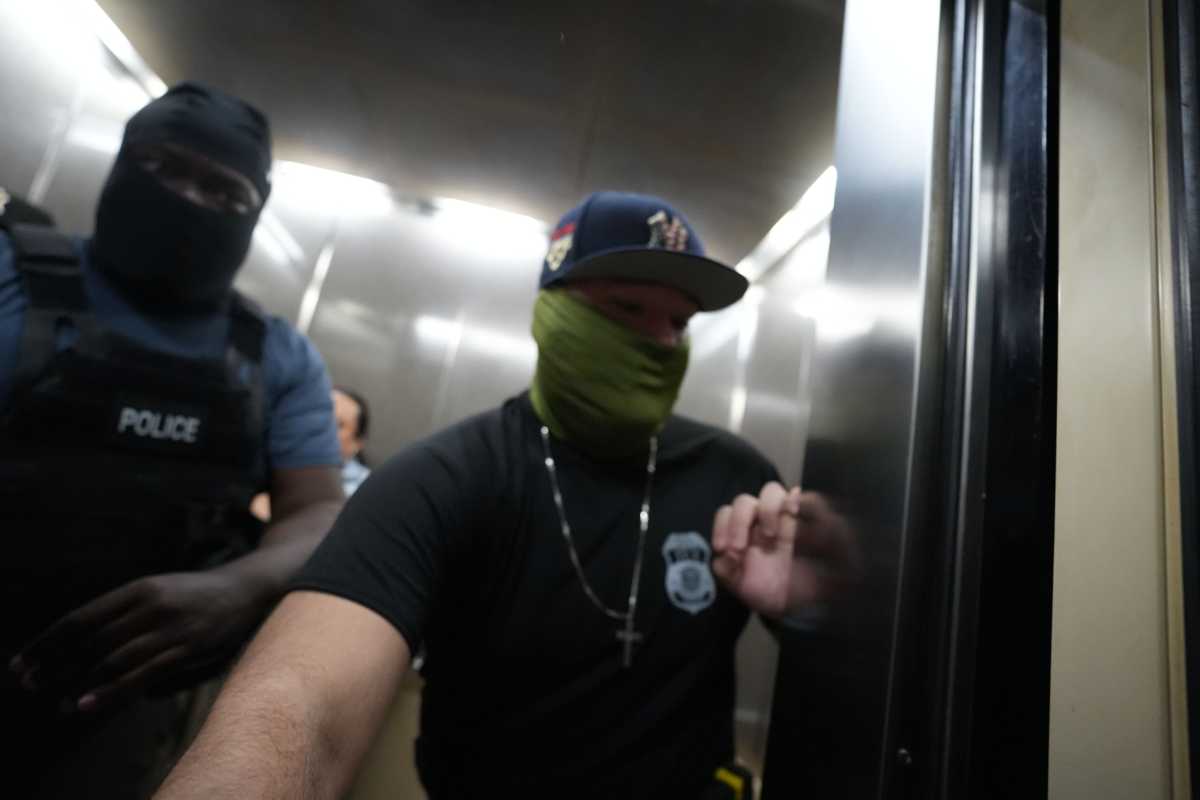
Masked officials grabbed Moses, the police bureau chief of amNewYork, as he went to photograph them apprehending an immigrant inside a public elevator at around 10:15 a.m. on Sept. 30.
The chaos occurred five days after an ICE agent was caught on camera violently shoving a woman to the ground after she pursued her husband, who had been arrested after a court appearance. ICE suspended the yet-to-be-identified agent on Friday, but he reportedly returned to work on Monday, according to CBS News.
As he has done for months, Moses and other photojournalists — exercising their First Amendment rights to freedom of the press — were on the 12th floor of 26 Federal Plaza observing the actions of masked ICE agents outside immigration courtrooms, where many individuals have been taken into custody after attending court-mandated hearings.
ICE agents paced the 12th-floor hallway on Tuesday morning and briefly followed a woman after she exited a courtroom. They suddenly stopped pursuing her and allowed the woman to head toward an elevator bank, where she boarded an arriving lift.
“A couple of seconds after she goes into the elevator, two ICE agents go in after her,” Moses said. “They never identified themselves, they didn’t ask for her papers or her ID.”
Moses said he then went into the public elevator to document the apparent arrest in progress when the ICE agents suddenly turned their attention to him.
“I walked into the elevator behind them, and they started screaming at me, ‘Get the f–k out,” he said. “Then they pushed me, grabbed me by my arms, and started pulling me out of the elevator. I tried to hold on, but I got shoved out.”
Moses snapped a photo of them after they pushed him out of the lift. It’s impossible to see who they are because of the face and head coverings they were wearing at the time.
During the episode, Moses said, a second photojournalist outside the elevator — Olga Fedorova, a freelancer working for the Associated Press — was shoved to the floor by another ICE agent. In the process, another photojournalist directly behind Fedorova fell to the floor hard.
The journalist, identified as L. Vural Elibol of the Anadolu Agency, had hit his head on the back of the floor near the elevator bank, and appeared seriously injured.
“People immediately started screaming because he was seriously injured,” Moses said of the chaotic scene. “He was semiconscious, but he didn’t move from the position for 35 to 40 minutes.”
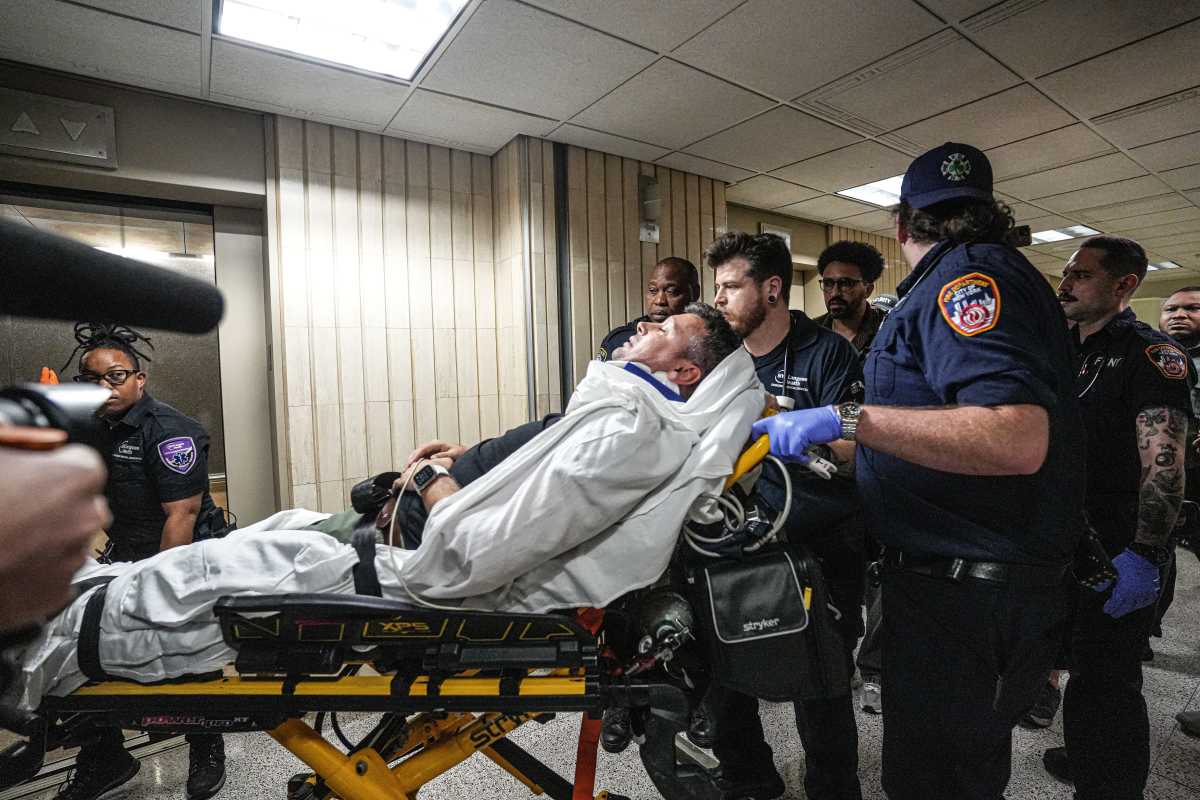
The Department of Homeland Security (DHS) called for medical assistance and a nurse came by to provide preliminary treatment to Elibol. EMS put a neck brace on him, then loaded him onto a stretcher and took him to a local hospital for treatment; he is expected to make a recovery.
amNewYork reached out to the DHS for comment about the incident, and is awaiting a response.
The chaos drew swift rebuke from City Comptroller Brad Lander, who was brutally arrested at Federal Plaza in June.
“Another violent attack by an ICE officer on a civilian at 26 Federal Plaza—this time on a journalist, who had to be carried out on [a] stretcher,” Lander wrote on X. “Another attack on the First Amendment, our neighbors, and our democracy.”
amNewYork reached out to DHS for comment about Tuesday’s episode, and is awaiting a response.
As for Moses, he said he suffered minor pain in his underarms and shoulder from being manhandled by ICE agents. While he said he is okay, he indicated he would be seeking a medical examination to rule out any serious injuries.
Moses, however, remains determined to continue covering the proceedings at 26 Federal Plaza, but said he was not surprised that things came to a head Tuesday.
“There has been tension definitely rising there over the months, and it’s not just between ICE and the photographers. It’s between ICE, photographers and other staff members,” he said. “It’s also among the immigrants who go there. It’s reached such a boiling point, I’m surprised this hasn’t happened sooner.”
Footage taken by @Steffikeith this morning of ICE agents shoving photographers on assignment at 26 Federal Plaza. One journalist has been hospitalized. pic.twitter.com/sOo6XAMWJP
— Molly Crane-Newman (@molcranenewman) September 30, 2025
The post ICE agents assault amNewYork reporter at Federal Plaza immigration court; another journalist seriously injured after shove first appeared on The Ocean Avenue News – oceanavenuenews.com.
More money → Your pockets.
Inflation refund checks are in the mail.
— Governor Kathy Hochul (@GovKathyHochul) Sep 30, 2025
The astronomical fall began last week with the dawn of the autumnal equinox. But the cloud cover says otherwise, as the parching weather still continues to torment New Yorkers. While the leaves are procrastinating the senescence, fall flavors and genres have already started filling menus and “to be read” (TBR) lists with pumpkin spice and spooky reads.
New York City is home to 122 independent bookstores — the most in the country. In the age of doomscrolling and e-commerce, walking into a neighborhood shop for a new read is a rare but much-needed experience.
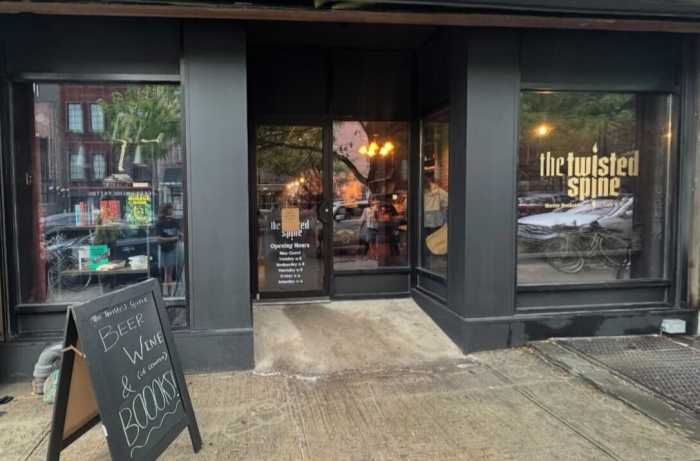
This autumn, a new arrival in Williamsburg is bringing chills with it. On Grand Street, Twisted Spine — a horror bookstore “straight from the grave” — opened Sept. 6. It’s billed as the city’s first horror-only bookstore, dreamed up by co-owners Jason Mellow and Lauren Komer.
Mellow is a full-time musician. Komer works as a health specialist for the National Institute on Aging.
The story begins when Komer was pursuing her Ph.D. in neuroscience at Cornell, often spending late nights in the lab running experiments. To pass the time, she picked up a hobby: listening to horror podcasts. That pastime led the doctoral student down a rabbit hole of horror literature, and soon she and her partner, Mellow, were scouring the city for a solid selection of horror books.
“To our surprise, we couldn’t find much, as most bookstores only had a few shelves, or the horror genre was often mixed with suspense and thriller books,” Mellow said. “So at that time, we joked about starting a horror bookstore as a fun thing to do on the side.”
What began as a joke turned into a year of planning and hosting pop-up events across the city last fall. They connected with community groups like the Brooklyn Horror Society, and a few hundred people showed up for their author events — all of which sold out.
“It was a huge success, and we realized from the first day itself that there is a strong hunger for horror books in New Yorkers. It got to the point where we were getting emails from authors and publishing agents requesting to do events, and we explained that we didn’t have a physical space to do it,” Mellow said.
Things snowballed from there, the two said, as the growing demand for horror fiction became clear. Mellow and Komer had originally planned to open a brick-and-mortar shop in four to five years, saving money from their full-time jobs. Crowdfunding wasn’t part of the plan.
But the success of the pop-ups — combined with the economic climate — pushed them to accelerate. They launched a Kickstarter campaign to tackle the financial challenges of opening a new business in New York, from signing a lease to building out the space and covering inventory costs.
Kickstarter, a crowdfunding platform launched in 2009, was built to bring creative projects in art, music and games to life with financial support. Unlike traditional investment models, it doesn’t offer equity, interest or returns to backers. Instead, contributors receive rewards, from exclusive merchandise to copies of the product, in exchange for their support.
Since its start, more than $400 million has been raised for publishing projects, making it the fifth-most funded category after games, technology, design and film and video. A similar model helped launch Lofty Pigeon Bookstore in Kensington in September 2023.
Mellow and Komer combined their Kickstarter campaign with other financing, including community loans, personal savings and lines of credit.
“It’s always a bit nerve-racking to ask anyone for money especially, due to the economic concerns these days, so we didn’t know what to expect so, going forward kept our expectations tempered,” Mellow said. “With the help of the Kickstarter community, we were able to surpass our goal of raising $25,000 in a week, collecting a little more than $42,000 dollars to cover the opening costs of the brick-and-mortar launch. The support from the crowdfunding campaign was truly humbling as there were people contributing from all around the country and authors donating books for the initiative. We finished the crowdfunding campaign with a fundraising trivia night that was held in-person at a bar in Brooklyn.”
Independent bookstores have spent the last 25 years fighting the internet age, the rise of e-commerce and the dominance of social media. While bookstores must sell books at publisher-set prices, online retailers can undercut them, creating margins that physical shops can’t match. Still, independent bookstores have seen a resurgence in recent years, particularly since the pandemic.
“What Amazon will never be able to do is offer any sort of sense of belongingness in a physical realm of community,” Mellow added. “When you come to Twisted spines or any other independent bookstore, the books here are curated by real people not AI, who can give you TBR recommendations based on your personal interests and not based on five star anonymous reviews.”
The store offers more than horror fiction. Its café serves spooky treats and coffee in skull mugs, while its merchandise reflects collaborations with friends and local artists.
“Our logo T-shirt was designed by a friend of Lauren’s, and the skull T-shirt and postcards were designed by my childhood best friend. We are lucky to have people in our lives who are creative and are willing to come together and share their talents with us,” Mellow said.
But like many small businesses, Twisted Spine has also felt the sting of recent U.S. tariffs.
“It definitely impacted us because there were several goods that we imported from abroad ahead of the launch,” Mellow said — the store’s skull mugs are made in Thailand, its coffee machine and equipment come from Italy and the coffee beans are imported from Columbia. “There is a small business based in Montreal that has been unable to send to us the haunted house shaped candles due to these trade tensions. The only thing that is spared from tariffs are the actual books, which are mainly made in America.”
Twisted Spine has a packed October lineup that includes author events, spooky story time for children in partnership with the Brooklyn Public Library, community horror movie nights and a silent book club that encourages screen-free reading and discussion. The owners say nothing like it exists in New York — and they’re ready to carve out a space for horror readership in the city this fall.
The post Crowdfunding fuels Twisted Spine, city’s first horror bookstore, for a brick-and-mortar launch first appeared on The Ocean Avenue News – oceanavenuenews.com.
Trump’s Military Policy Shift g.co/gemini/share/83e857ed86…
Trump Administration Declares End to “Woke” Policies in Contentious Address to Military LeadershipQuantico, VA – In a highly anticipated and widely scrutinized address to the nation’s top military leaders on September 30, 2025, President Donald Trump and his Defense Secretary, Pete Hegseth, declared a fundamental shift in U.S. military policy, emphatically signaling an end to what they termed “woke” practices and a renewed focus on a “warrior ethos.”1 While the specific date of the user’s query, January 30, 2025, did not correspond with a major televised address to the military, the September gathering at the Marine Corps Base in Quantico encapsulated the administration’s transformative and often controversial approach to the armed forces.
The unprecedented assembly of hundreds of generals and admirals from across the globe served as the backdrop for a series of sweeping policy announcements and a forceful articulation of the Trump administration’s “America First” military doctrine.2
Key Themes and Policy Pronouncements
The central theme of the speeches delivered by both Trump and Hegseth was the unequivocal rejection of diversity, equity, and inclusion (DEI) initiatives within the military.3 Hegseth, a former Fox News contributor and a vocal critic of previous administrations’ social policies, announced several new directives aimed at refocusing the military on combat readiness and lethality.4 These included:
Overhaul of Physical Fitness Standards: A return to what was described as the “highest male standard” for all combat roles, effectively ending gender-neutral fitness requirements.5
Revision of Disciplinary and Grooming Standards: A loosening of rules regarding hazing and a review of what constitutes “toxic leadership,” with an emphasis on empowering commanders.6
Elimination of “Woke” Ideologies: A broad condemnation of critical race theory and other diversity-focused training, which the administration argued have undermined military cohesion and effectiveness.
Emphasis on a “Warrior Ethos”: A recurring call for a return to traditional military values and an unapologetic focus on warfighting capabilities.7In his address, Donald Trump echoed and amplified these themes, asserting that the U.S. military had been “hamstrung by woke policies.” He pledged a significant increase in the military budget, proposing $1 trillion for 2026, and spoke of expanding the Navy.8 Trump also reiterated his intention to rename the Department of Defense back to the “Department of War,” a move he argued would better reflect its primary mission.9
Analysis and Assessments
The Quantico address was met with a mixture of praise and sharp criticism. Supporters lauded the administration’s efforts to depoliticize the military and restore its focus on combat effectiveness. They argued that the previous emphasis on social issues had created a “distraction” and that the new policies would strengthen the armed forces.
Critics, however, expressed deep concern over the potential consequences of these changes. Military analysts and former officials warned that the abrupt reversal of policies could alienate a significant portion of the force, particularly women and minority service members. The perceived politicization of the military leadership, with an implied threat to the careers of those who did not align with the new direction, was also a major point of contention. The sight of the nation’s top military brass in a highly charged political event raised alarms about the erosion of the traditional non-partisanship of the U.S. military.10
The tone of the event was also a subject of analysis. Reports from the event indicated that while Trump and Hegseth delivered fiery speeches, the reaction from the assembled military leaders was largely muted and stone-faced, in keeping with the military’s tradition of remaining apolitical.11
Significance of the Address
The Quantico speech is widely seen as a landmark moment in the Trump administration’s relationship with the U.S. military. It represented the culmination of a long-stated ambition to reshape the armed forces in line with a more nationalistic and culturally conservative vision.
The significance of the address can be summarized in several key points:
A Definitive Policy Shift: The speech marked a clear and decisive break from the policies of previous administrations, both Democratic and Republican, which had moved towards greater inclusivity in the military.
A Challenge to Military Culture: The administration’s pronouncements directly challenged the existing culture within the Pentagon and the broader military establishment, setting the stage for potential friction between civilian and uniformed leadership.12
Reinforcement of the “America First” Doctrine: The emphasis on national interest above all else and a skepticism of “nation-building” efforts abroad are central tenets of Trump’s foreign and military policy.13
A Precursor to Broader Changes: The speech was viewed by many as a signal of more significant changes to come, potentially impacting everything from promotions and assignments to the military’s role in domestic affairs.In conclusion, the address at Quantico on September 30, 2025, served as a powerful and unambiguous declaration of the Trump administration’s intent to fundamentally remake the United States military. The long-term impacts of these changes on military readiness, morale, and civil-military relations will continue to be a subject of intense debate and analysis.Trump Administration Declares End to “Woke” Policies in Contentious Address to Military Leadership
— Michael Novakhov (@mikenov) Sep 30, 2025
Advertisements – Advertising at The News And Times – advertising-newsandtimes.com | WE CONNECT!
Audio | Video | Top News | On Twitter | Security | FBI | Capitol Riot | JOSSICA | Trump | Russia | Putin | Russia – Ukraine War | Covid-19 | Brooklyn NY | Puerto Rico | World
September 3, 2026 7:14 pm
The News And Times | Featured Posts | All Articles | Current News | Selected Articles | Shared Links | Opinions | In My Opinion | Sites | Blogs | Links | Twitter | Facebook

Contact Form | Blogs | Sites | News Reviews | Links | Advertising
All The News That’s Fit To Web