
“The Coney made its presentation; it’s not something that had enough community buy-in” brooklyneagle.com/articles/2…
— Brooklyn Eagle (@BklynEagle) Sep 30, 2025
Day: September 30, 2025


RT @mmpadellan: FUN FACT: There was NO government shutdown under President Biden, not ONE. trump had two in his 1st term.
Biden was a MUCH…
— Michael Novakhov (@mikenov) Sep 30, 2025
RT @World_Affairs11: BREAKING:
Putin says Ukraine must forget to be member of NATO, otherwise, it will suffer alot ahead. https://t.co/2A0…
— Michael Novakhov (@mikenov) Sep 30, 2025
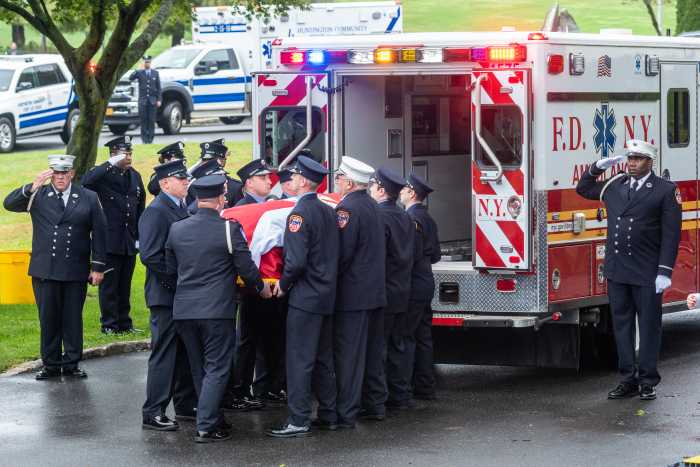
FDNY ambulances are taking longer to reach life-threatening medical emergencies for the fourth consecutive year, according to the city’s latest Mayor’s Management Report, with union leaders blaming chronic understaffing and a lack of investment by City Hall.
The data show ambulances took an average of 11 minutes and 21 seconds to respond to life-threatening emergencies in fiscal year 2025 — up 29 seconds from 2024 and nearly two minutes longer than in 2021, when the average was 9 minutes and 34 seconds.
Oren Barzilay, a 30-year FDNY EMS veteran and president of Local 2507, which represents 4,500 emergency medical technicians, paramedics and fire inspectors, told Brooklyn Paper that although call volume has consistently increased since the COVID-19 pandemic, EMS workers are still operating with the same level of resources.
He said City Hall has failed to invest in meeting the higher demand.
In fiscal 2025, the city’s “street doctors” handled 1,615,531 emergency medical incidents — 227,488 more than in 2021, averaging about 4,400 calls a day. Life-threatening emergencies dropped slightly, by 2%, from 633,361 to 620,467, but the volume remains well above 2021’s total of 515,558.
“The records show that [the numbers] go up by 1,000s of calls every year. Yet we are still working with the same amount of resources when they anticipate 1.2 million calls, and something has to give,” Barzilay said. “When you don’t add the manpower and ambulances to the streets due to the demand, [increased response time] is the result.”
He said the response times in the Mayor’s Management Report don’t tell the full story.
“They’re posting what the average [response time] is, which is 11, but they’re not telling you that sometimes people wait 20 to 30 minutes for the high-priority calls and sometimes hours for the low-priority calls,” Barzilay said.
According to Barzilay, the EMS attrition rate is 70%. The department loses about two members a day, with many EMTs and paramedics staying only three to five years before moving on to higher-paying city jobs.
Barzilay largely attributes the turnover to low pay.
“We are the lowest-paid employees of New York City. Meanwhile, firefighters, police officers and sanitation workers make twice as much as what we make. I have men and women that live in shelters, live in their cars,” Barzilay said. “It’s poverty wages, and they don’t want to fix it, so they lose manpower on a daily basis.”
Local 2507 has long raised concerns about pay disparities between EMS workers, FDNY firefighters and NYPD officers. A rookie EMT’s salary starts at $39,386, or about $18 an hour, compared with $45,196 for a rookie firefighter. After five years, FDNY EMS workers often reach a top salary of about $59,000, while firefighters can make around $110,000.
While the union has the support of the City Council, it has been locked in a three-year fight with City Hall for a new labor contract, despite Mayor Eric Adams’ 2021 campaign pledge to address the pay gap.
Barzilay also noted that EMTs and paramedics — who the city has not recognized as a uniformed emergency service — face the same dangers as police officers and firefighters. In 2022, veteran FDNY EMS Lt. Allison Russo was stabbed to death while on duty in Queens, and in 2017 EMT Yadira Arroyo was run over and killed in the Bronx by a patient who stole her ambulance.
“They’re exposed to deadly communicable diseases on a daily basis, and sometimes they are infected by those diseases, which nobody wants to acknowledge,” Barzilay said. “We go on the same calls that the police officers go to, shootouts or stabbings. You have all these people responding to the same 911 call, making twice as much as you. Once [EMTs] realize that there’s no future here, they leave. And that’s the biggest obstacle.”
Jasiah Canelo, an FDNY EMT since 2003 and assigned to EMS Station 13 in Washington Heights, told Brooklyn Paper he has always loved helping people. He became an EMT after a friend died in a motorcycle accident and said response times have worsened because of chronic understaffing.
The work, he said, opened his eyes to what is “really going on in the world.”
“It’s definitely a positive when we get to do our jobs and help people,” Canelo said. “But it’s opened my eyes to how much really goes on in the world because you’re seeing someone dead in front of you, or really hurt, or going through a lot of pain? Sometimes you’re the last person that the person who just died comes in contact with, so that’s definitely opened my eyes a lot.”
Canelo, who works the 12-hour night shift, said retention problems stem not only from low pay but also from the crushing workload. Sometimes only two basic life support EMT units cover a station even when demand calls for more, especially at high-volume locations.
“Sometimes we don’t have the bodies to put people on a truck. I’m doing 6, 7, 8, 9, 10 jobs at night, and I’m coming home with a check that sometimes it’s not even enough to pay all my bills,” Canelo said. “We’re overworked and understaffed.”
In addition to the dangers EMTs face — including one call where a patient who reportedly overdosed chased them with a hypodermic needle — the job is physically punishing. Workers often carry patients down multiple flights of stairs when elevators aren’t available.
“Aside from [the job] being mentally taxing, it is also physically taxing,” Canelo said. “We’re seeing all this traumatic stuff. We’re dealing with extremely high call volumes, and we’re dealing with [extremely challenging] people. Some of these people want to stab [and] kill us. And we still show up to our shift every day.”
Like many of his colleagues, Canelo said he is an EMT “with all his heart” and wants to keep working because the job is fulfilling.
“But financially, it doesn’t make sense. If I stay, I’ll be working till I’m 60, [and] I wouldn’t be able to pay the bills. Right now, it’s even difficult for me to pay the bills,” Canelo said. “So I don’t see myself being here long term, but I would love to be here long term.”
In a statement to Brooklyn Paper, the FDNY and City Hall said more EMS staff were on duty each month in the past fiscal year than in the previous 25 years. The department said it is hiring EMTs as quickly as its training capacity allows, noting that a class of 245 EMTs and trainees recently began training.
Other initiatives to reduce response times include the Hospital Liaison Officer pilot (HLO) program, where EMS crews transfer patients with non-life-threatening conditions to HLO teams to speed ambulance turnaround; telehealth technology that directs 911 calls for non-urgent conditions to NYC Health + Hospitals providers; deployment of 13 paramedic response units in high-volume areas; and a public service campaign to educate New Yorkers on when to call 911.
“While the increase in emergency response times is the result of several factors beyond our control, including a drastic increase in outer-borough traffic congestion and higher call volumes, we continue to address this issue by improving coordination with hospitals, enhancing efficiency in high-volume areas, and leveraging telehealth technology to streamline care. We take this issue extremely seriously and will continue to take steps to keep New Yorkers safe,” the statement said.
The post ‘Something has to give’: FDNY ambulance response times rise for fourth year, union blames staffing crisis first appeared on The Ocean Avenue News – oceanavenuenews.com.
Trump “de-woked” the US Miilitary google.com/search?q=Trump+%2…
AI Mode
Trump removed the “woke” ideology and directions of the US Military, and threatened to fire the generals he does not like “on the spot”, especially the fat ones.Trump also explicitly stated his intention to fire military officials he dislikes “right on the spot”. The remarks were made during an unusual meeting of hundreds of top military leaders at Marine Corps Base Quantico.Reports published on September 30, 2025, confirm that President Donald Trump, along with Defense Secretary Pete Hegseth, declared an end to what they call “woke” ideology in the U.S. military
Policy changes and rhetoric regarding “woke” policies
Abolishing DEI: In January 2025, Trump signed executive orders to abolish all Diversity, Equity, and Inclusion (DEI) programs within the Department of Defense and the Department of Homeland Security.
Focus on merit: The administration has repeatedly emphasized a return to what it calls a “merit-based” system, claiming that “woke” policies had prioritized political correctness over combat readiness.
End of “politically correct” culture: During the Quantico meeting, Hegseth told the assembled generals and admirals that “the era of politically correct, overly sensitive, don’t-hurt-anyone’s-feelings leadership ends right now”.
Disbanded student clubs: In February 2025, West Point disbanded numerous student clubs focused on diversity in response to the executive orders, including the Asian-Pacific Forum Club and the National Society of Black Engineers Club.
Threat to fire generals
“Right on the spot”: When asked by reporters about firing officials, Trump stated, “If I don’t like somebody, I’m going to fire them right on the spot”.
Loyalty over protocol: The threat to remove military leaders for ideological reasons rather than performance reflects a growing focus on loyalty within the administration. Defense Secretary Hegseth also warned leaders to “resign” if they do not agree with the administration’s new direction.
Comments on overweight generals
“Fat generals and admirals”: During his address, Hegseth explicitly criticized “fat generals and admirals,” stating that it’s “completely unacceptable” to see overweight senior military leaders.
Increased fitness standards: Hegseth announced that all service members, regardless of rank, must meet strict fitness standards, including passing physical fitness tests twice a year. He also announced new “grooming standards,” including restrictions on beards.
Potential military changes and concerns
Using cities as training grounds: Trump repeated his calls to use “dangerous cities” like Chicago and Portland as military training grounds, saying, “we’re going to straighten them out one by one”.
Weakening hazing protections: Reports indicate that the administration is loosening disciplinary rules and weakening protections against hazing and bullying, which some fear could lead to more military suicides.
Renaming the Pentagon: In September 2025, Trump signed an executive order to rename the Department of Defense to the “Department of War,” though it still requires congressional approval.
The remarks regarding military leadership and policy come as the administration pushes for a significant reorientation of priorities within the military, emphasizing a shift toward what it calls a “warrior ethos”.— Michael Novakhov (@mikenov) Sep 30, 2025