Categories
Audio Sources - Full Text Articles

Ukrainian police rescue six-year-old girl from besieged Bakhmut

2023-02-01T11:09:19Z

Ukrainian police staged a risky rescue mission in the besieged eastern city of Bakhmut this week to evacuate a six-year-old girl who had become separated from her pregnant mother.

Young Arina was found living with her grandparents in a run-down apartment building in Bakhmut, which has been pummelled by Russian forces in heavy fighting.

After trudging through snow to reach Arina, with artillery fire echoing in the distance, policeman Pavlo Dyachenko and two colleagues in combat gear drove Arina to the nearby city of Sloviansk to be reunited with her mother, Halyna Danylchenko.

“A shell exploded in our yard!” Arina, clutching a large white teddy bear, told her mother after they hugged.

“I heard that a shell exploded in your yard, that’s why I got so worried,” said Danylchenko, who is 24 and eight months pregnant.

They are among millions of people who have been displaced since Russia’s invasion on Feb. 24 last year.

Dyachenko said there were still about 200 children living in Bakhmut. The city was home to about 70,000 people before the war but officials say only a few thousand residents now remain.

“We’re meeting the families that are still there and talk to them, trying to convince them to agree to be evacuated, either the whole family or the children. Because children must live in a peaceful environment,” he told Reuters.

He had to gently coax Arina into leaving Bakhmut, calmly explaining the dangers of remaining.

“Are there any other children you can play with here?” Dyachenko asked the young girl after finder her in Bakhmut.

“No”, she replied, and started to cry.

“You’re supposed to be in a safe place. Do you understand?”, another officer said. “Do they shoot and shell a lot here?”

Arina nodded in reply.

One of the officers then put a bright orange helmet on her head, explaining: “This is for when we go outside, so that nothing can hit your head.”

They left the building to the sound of shelling, got into a waiting van and left for safety.

Related Galleries:

A mother Halyna, 24, hugs her daughter Arina, 6, after her evacuation from front line city of Bakhmut, amid Russia’s attack on Ukraine, in Sloviansk, Donetsk region, Ukraine January 31, 2023. REUTERS/Oleksandr Ratushniak

Policemen help Arina, 6, dressed in children’s bulletproof vest and helmet during her evacuation from front line city of Bakhmut, amid Russia’s attack on Ukraine, in Donetsk region, Ukraine January 31, 2023. REUTERS/Oleksandr Ratushniak

Grandmother Olha hugs her granddaughter Arina, 6, while saying goodbye before her evacuation from front line city of Bakhmut, amid Russia’s attack on Ukraine, in Donetsk region, Ukraine January 31, 2023. REUTERS/Oleksandr Ratushniak

A policeman persuades local residents Olha and her granddaughter Arina, 6, to evacuate from front line city of Bakhmut, amid Russia’s attack on Ukraine, in Donetsk region, Ukraine January 31, 2023. REUTERS/Oleksandr Ratushniak

Arina, 6, reacts before her evacuation from front line city of Bakhmut, amid Russia’s attack on Ukraine, in Donetsk region, Ukraine January 31, 2023. REUTERS/Oleksandr Ratushniak
Categories
Audio Sources - Full Text Articles

U.S. states struggle to share dwindling waters of Colorado River

2023-02-01T10:59:15Z

The Colorado River, which provides drinking water to 40 million people in seven U.S. states, is drying up, straining a water distribution pact amid the worst drought in 12 centuries, exacerbated by climate change.

California split from the six states of Arizona, Colorado, Nevada, New Mexico, Utah and Wyoming on Tuesday in the face of a U.S. government deadline to negotiate their own supply cuts or face possible mandatory cutbacks by the federal government.

“What happened today was a step forward,” said Kevin Moran, a water policy specialist at the Environmental Defense Fund.

“Six of the seven basin states are playing catch-up to reduce water use from the Colorado River, which is absolutely critically needed after 20 years of drought and the impacts of climate change,” Moran told Reuters.

When the states struck their agreement 100 years ago, it envisaged the river could provide 20 million acre-feet of water a year. An acre-foot (1,233 cubic meters) of water is generally considered enough to supply two urban households per year.

But over the last two decades, the actual flow has dwindled to 12.5 million acre-feet on average, leaving state water managers with more rights on paper than existing supply.

California receives the largest allotment, 80% of which is consumed by its $50-billion agricultural industry.

Many experts see its decision to sit out the agreement as fuelling the chances that the water fight will end up in the nation’s highest courts.

“We have a situation where some of the water rights holders in California are saying, ‘We’re not willing to give up more water, and we think we have legal rights and we’re willing to go to court if we have to’,” said David Hayes, a lecturer at Stanford University Law School.

“And there’s not enough time to litigate these issues,” added Hayes, a former top climate aide to President Joe Biden.

He saw a need for drastic conservation efforts to protect reservoirs from overuse and drought worsened by climate change, a situation that if left unchecked could threaten supply from the Hoover Dam to the city of Las Vegas or California.

Although California was deluged for weeks from late in December by seven atmospheric rivers that dumped up to 30 inches (76 cm) of rain over some areas, little of that reached the Colorado River basin.

Despite predictions for more such atmospheric rivers, of growing size and frequency, California cannot solve its long-term crisis without major investments to capture more storm water, restore flood plains and recycle wastewater.

A report in the journal Nature last year found 2000-2021 to be the driest 22-year period for southwestern North America in at least 1,200 years.

“Something will have to give,” said Sharon Megdal, director of the University of Arizona’s Water Resources Research Center,

as temperatures rise, mountain snows melt faster in spring, and the state lacks capacity to store the runoff.

A letter signed by the six states showed they all recognised the need for a change in operating procedures for the Colorado River and deliveries from it, she added.

“I think people would like to believe that we can somehow figure out a way to keep these economic activities, keep our kind of economies and livelihoods, going,” Megdal said.

“But it’s going to be a drier future.”

Related Galleries:

An aerial view of Lake Powell is seen, where water levels have declined dramatically as growing demand for water and climate change shrink the Colorado River in Page, Arizona, U.S., November 19, 2022. REUTERS/Caitlin Ochs

A canal filled with Colorado River water flows past a field of spinach in Imperial Valley, California, U.S., December 5, 2022. REUTERS/Caitlin Ochs

A dry spillway at Hoover Dam, and stairs ending on a cliff are seen next to the growing ring around Lake Mead, where water levels have declined dramatically to lows not seen since the reservoir was filled after the construction of Hoover Dam, as climate change and growing demand for its water shrink the Colorado River and create challenges, in Boulder City, Nevada, U.S., April 17, 2022.
Categories
Audio Sources - Full Text Articles

Tyre Nichols funeral draws civil rights leaders, U.S. vice president

2023-02-01T11:02:47Z

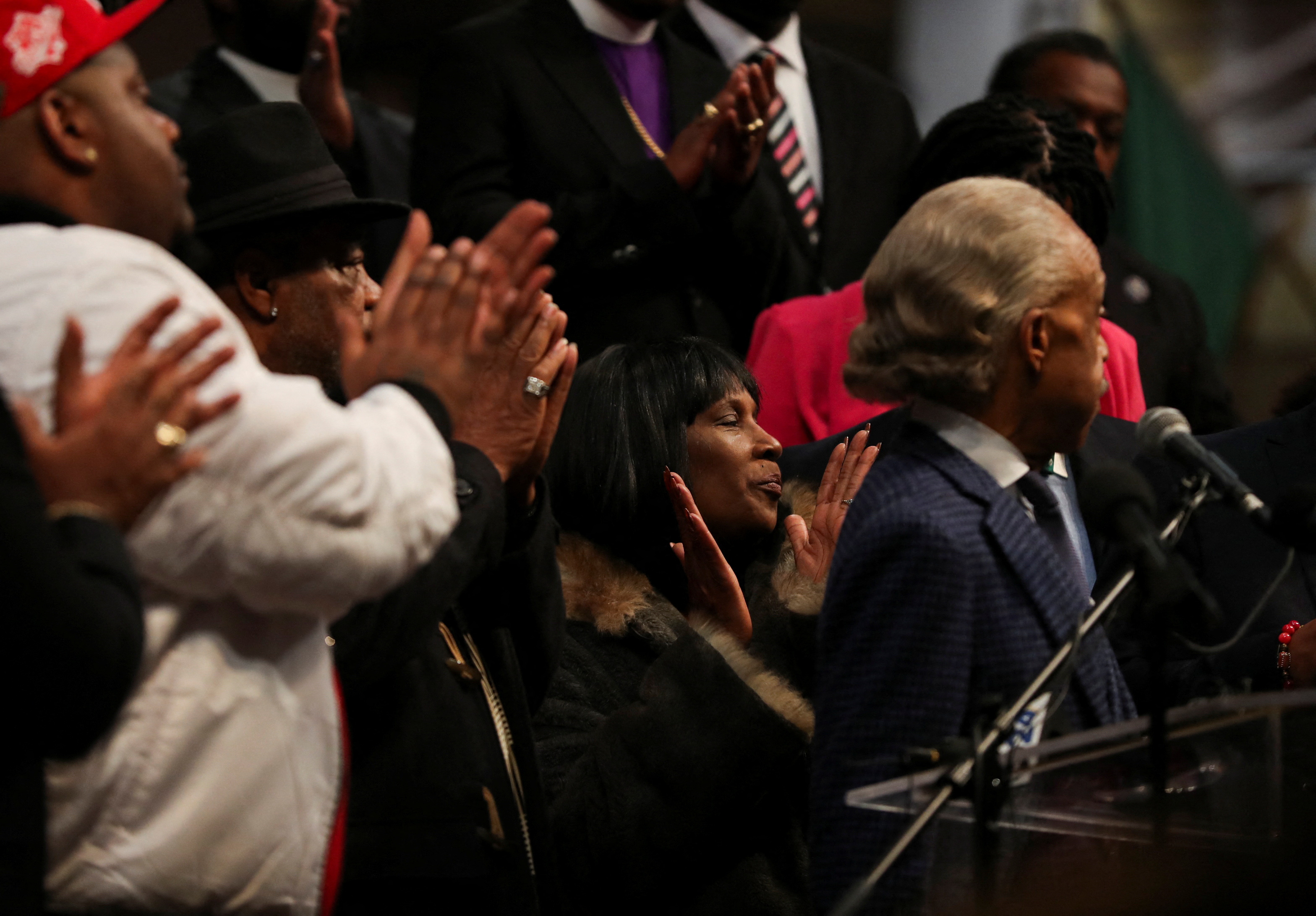
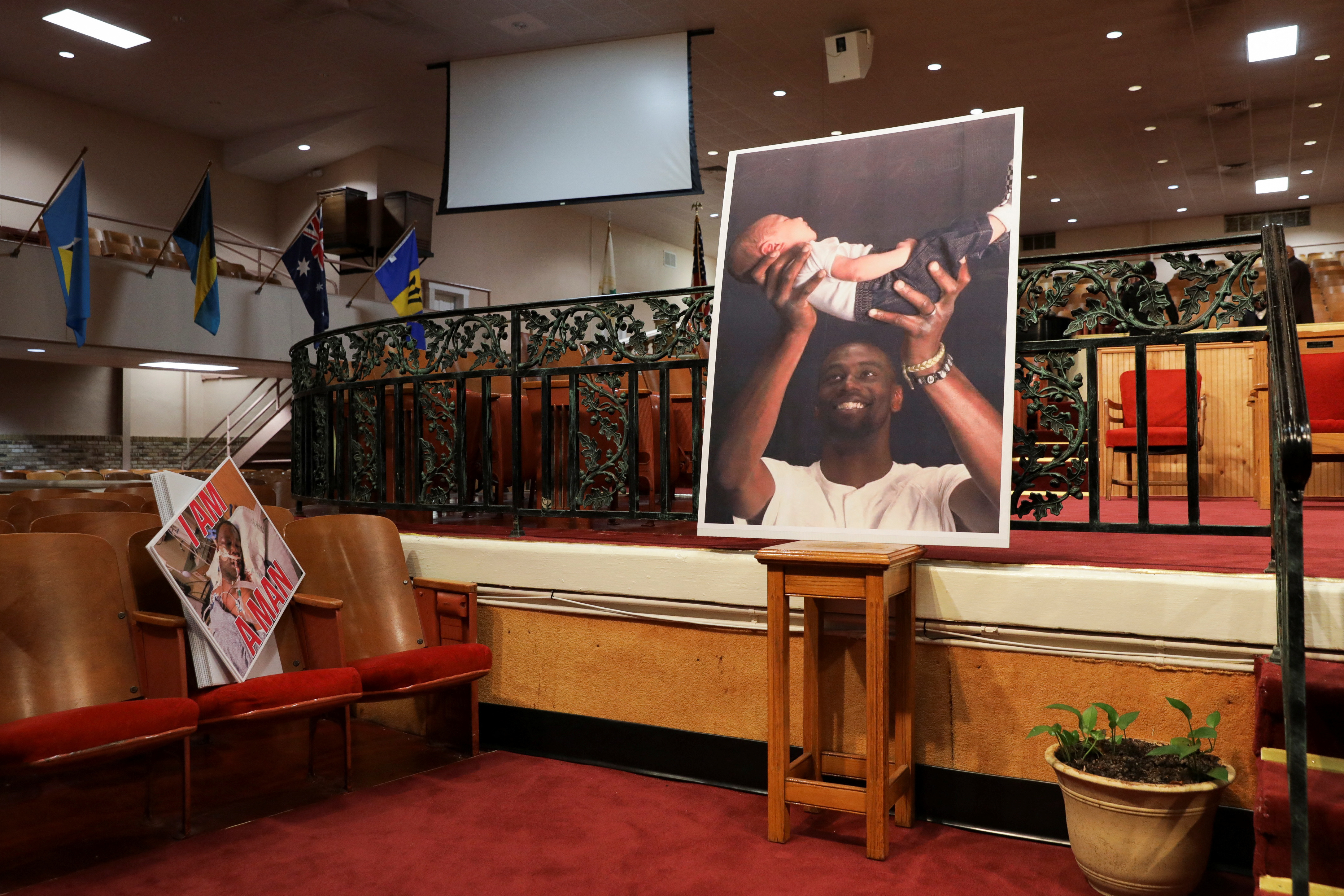
Family and friends of Tyre Nichols will pay their final respects on Wednesday to the Black 29-year-old father whose fatal encounter with Memphis police last month transformed him into the new face of the U.S. racial justice movement.

The Rev. Al Sharpton will eulogize Nichols, and another prominent civil rights leader, attorney Ben Crump, will deliver a “call to action” during a funeral at the Mississippi Boulevard Christian Church in Nichols’ adopted hometown of Memphis.

Among those planning to join the mourners was U.S. Vice President Kamala Harris, whom Crump said the Nichols family invited. Harris spoke with Nichols’ mother, RowVaughn Wells, in a private telephone call on Tuesday, he said.

Relatives of Breonna Taylor and George Floyd, two other African Americans whose deaths in 2020 at the hands of police in Louisville, Kentucky, and Minneapolis, became rallying cries for the Black Lives Matter movement, were also invited to attend.

Nichols, a FedEx worker who skateboarded and studied photography, died on Jan. 10 while hospitalized for injuries he sustained three days earlier when beaten by Memphis police who pulled him over on his way home, an incident that Crump has branded a “police lynching.”

The Memphis Police Department subsequently fired five of the officers, who also are Black, and prosecutors charged them last week with second-degree murder, assault, kidnapping, official misconduct and oppression.

Two other officers implicated in the events leading to Nichols’ death have been relieved of duty – effectively suspended – and are under investigation. Two paramedics and their on-scene supervisor were dismissed on Monday from the city fire department, while two Shelby County sheriff’s deputies have been suspended.

Police video of the confrontation released by the city on Friday showed officers dousing Nichols with pepper spray and pummeling him with punches, kicks and baton blows as he cried out for his mother. One officer was seen firing a Taser stun gun at Nichols when he attempted to flee.

The footage ends showing Nichols was left handcuffed, bloodied and slumped against the side of a police vehicle for nearly a quarter-hour before receiving medical attention.

The chief of police, Cerelyn Davis, has called the conduct seen in the video “inhumane” and said investigators have not substantiated that Nichols was driving recklessly when he was pulled over, as arresting officers asserted at the time.

Civil rights advocates and lawyers for Nichols’ family have condemned the beating as the latest case of an African American brutalized by a racially biased law enforcement system that disproportionately targets people of color, even when officers involved are non-white.

Protests stemming from Nichols’ death have been peaceful and relatively restrained in Memphis, a majority-Black city on the Mississippi River whose racial history was indelibly marked by the 1968 assassination of the Rev. Martin Luther King Jr. during his visit there to support a local garbage workers’ strike.

Sharpton paid tribute to Nichols during a Tuesday night news conference – a kind of preamble to the funeral – at the historic Mason Temple church in Memphis where King delivered his famous “I’ve Been to the Mountaintop” speech on the eve of his murder.

“What happened to Tyre Nichols here is a disgrace to this country,” Sharpton told reporters, flanked by Nichols’ mother and his stepfather, Rodney Wells. “People from around the world watched the videotape of a man, unarmed, unprovoked, being beaten to death by officers of the law.”

Crump initially praised the city and local authorities for swift action in investigating the Nichols beating and bringing criminal charges, but in recent days suggested police had been less than candid with Nichols’ mother.

Nichols, who grew up in Sacramento, California, and moved to Memphis early in the COVID pandemic in 2020, was remembered by friends and family as an affable, free-spirited guy who loved skateboarding and recently enrolled in a photography class.

He had a 4-year-old son and took a daily supper break from his FedEx job to join his stepfather and co-worker for meals prepared by his mother at home, where he lived.

Antonio Romanucci, another lawyer for his family, has said Nichols also was a strong supporter of Black Lives Matter, a cause for which he gave his life, “and essentially what that makes him is a martyr.”

Related Galleries:

A view of a picture of Tyre Nichols during a news conference held by the family members of Nichols, the Black man who was beaten by Memphis police officers during a traffic stop and died three days later, at Mason Temple: Church of God in Christ World Headquarters, in Memphis, Tennessee, U.S., January 31, 2023. REUTERS/Alyssa Pointer

RowVaughn Wells, mother of Tyre Nichols attends a news conference held by family members of Tyre Nichols, the Black man who was beaten by Memphis police officers during a traffic stop and died three days later, at Mason Temple: Church of God in Christ World Headquarters, in Memphis, Tennessee, U.S., January 31, 2023. REUTERS/Alyssa Pointer


Categories
Audio Sources - Full Text Articles

Factbox: U.S. House Republicans“ many proposals for spending cuts in debt-ceiling debate

2023-02-01T11:12:07Z

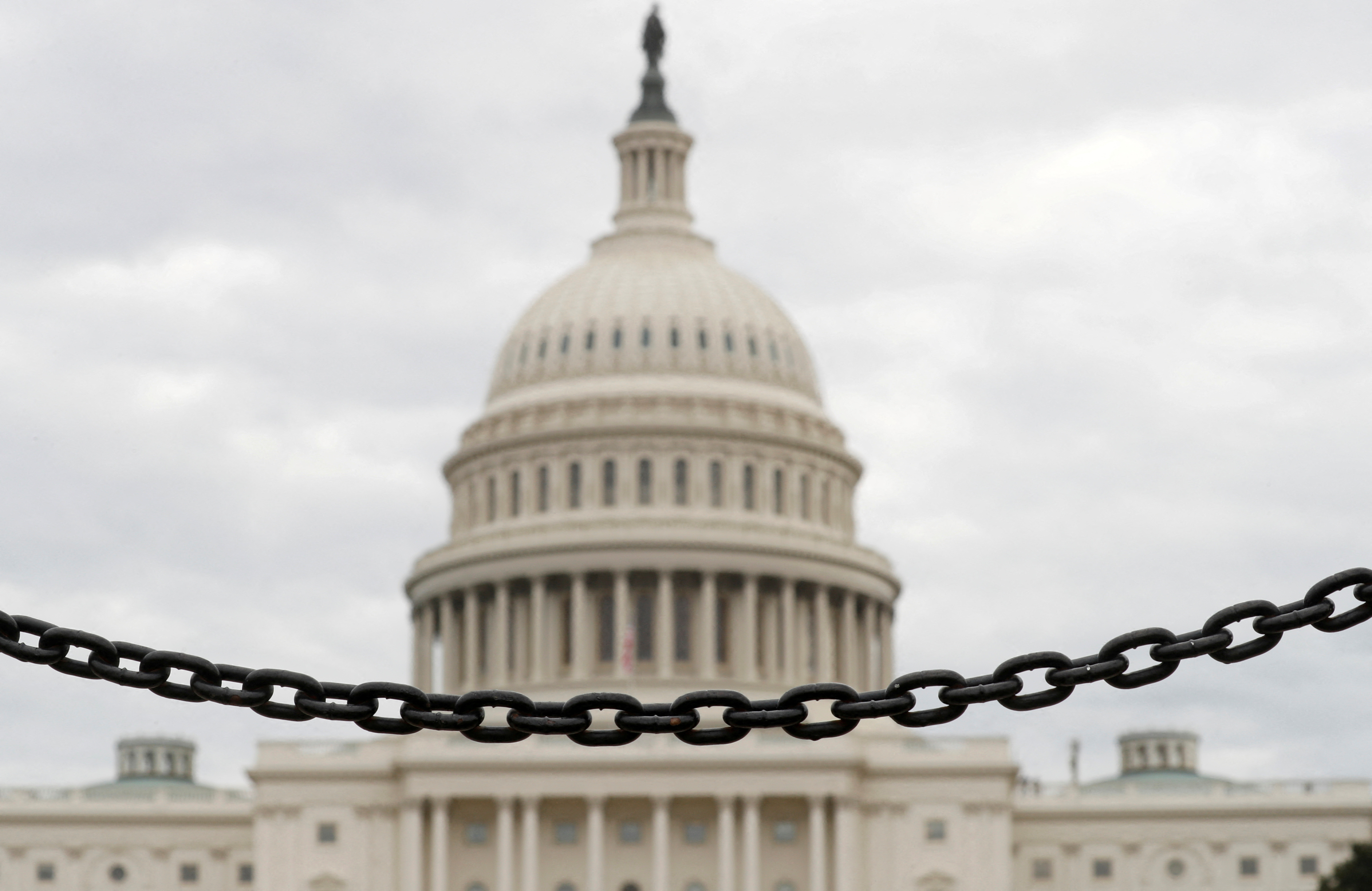
The dome of the U.S. Capitol is seen beyond a chain fence during the partial government shutdown in Washington, U.S., January 8, 2019. REUTERS/Kevin Lamarque/File Photo

Republicans who control the U.S. House of Representatives say any increase in the United States’ $31.4 trillion debt ceiling should be paired with spending cuts, but so far are not unified on any specific demands.

Here are a few proposals Republicans have floated ahead of House Speaker Kevin McCarthy’s Wednesday meeting with Democratic President Joe Biden:

McCarthy has said that Republicans will not try to scale back the two largest benefit programs: Social Security, which provides payments to retirees and the disabled; and Medicare, the health insurance program for seniors.

That is a shift from previous budget negotiations, when Republicans suggested raising the retirement age and partially privatizing Medicare.

It also places almost one-third of the budget off limits. Social Security accounted for 17% of federal spending in the 2021 fiscal year, while Medicare accounted for 13%, according to the nonpartisan Congressional Budget Office.

Republicans have traditionally supported robust military spending, and some House lawmakers including Kay Granger and Tom Cole, the heads of the powerful Appropriations and Rules committees, have said that defense cuts should be off the table. That would leave another 11% of the federal budget off limits.

McCarthy has proposed capping annual “discretionary” spending on agencies such as the Defense Department and the Food and Drug Administration at the levels that were in place in the fiscal year that ended Sept. 30, 2022: $782 billion for defense, and $689 billion for domestic programs.

That would amount to a cut of 9% for defense and 7% percent for non-defense programs from the levels in place now, according to CBO estimates. Those cuts would broaden in the years to come as spending would not keep pace with inflation, population growth or the size of the economy.

These cuts would not apply to benefit programs, like federal workers’ pensions and unemployment insurance.

Chip Roy, a leader of the far-right House Freedom Caucus, has called for keeping defense spending at current levels and cutting non-defense spending to $661 billion, the level in place in the 2019 fiscal year.

As with McCarthy’s proposal, that would effectively amount to deeper cuts in the years to come.

Don Bacon, a moderate Republican, has called for keeping spending growth in line with inflation, rather than pushing for cuts that likely will not win support in the Democratic-controlled Senate.

Brian Fitzpatrick, another moderate, advocates a bipartisan proposal that would change the debt ceiling from a fixed dollar amount to a percentage of national output. That would force budget cuts if federal borrowing exceeded a set share of the economy, but he has not said what that limit should be. Washington’s debts are currently equivalent to about 125% of one year of production across the U.S. economy.

Nancy Mace, another moderate, has called for the government to reduce its spending by a certain percentage every year, though she has not provided details.

Some conservatives have said that the Treasury Department could “prioritize” some payments over others when the debt limit is reached. Under this idea, Treasury would make interest payments to bondholders to avoid roiling financial markets, and perhaps pay the salaries of the military but not civilian federal workers.

Treasury Secretary Janet Yellen has said her department does not have the technical capacity to pull this off.

This option, favored by Biden and his Democrats, has received backing from some Republicans, notably Patrick McHenry, who chairs the Financial Services Committee.

In December, he said he believes that serious discussions about cutting spending are needed but he opposed having those talks in the context of the debt limit debate.

Some hardliners, such as Tim Burchett and Andy Biggs, have said they will vote against raising the debt ceiling, no matter what provisions are attached. That could make it difficult for McCarthy to round up support for any compromise that can win support from Biden and the Democratic-controlled Senate.

Categories
Audio Sources - Full Text Articles

Russia says it wants to keep New START nuclear treaty, despite U.S. friction

2023-02-01T10:54:54Z

Kremlin spokesman Dmitry Peskov attends a news conference of Russian President Vladimir Putin after a meeting of the State Council on youth policy in Moscow, Russia, December 22, 2022. Sputnik/Valeriy Sharifulin/Pool via REUTERS

Russia said on Wednesday it wanted to preserve its last remaining nuclear treaty with the United States despite what it called a destructive U.S. approach to arms control.

The United States on Tuesday accused Russia of violating the New START treaty by refusing to allow inspections on its territory.

Kremlin spokesman Dmitry Peskov told reporters it was necessary to preserve at least some “hints” of continued dialogue with Washington, “no matter how sad the situation is at the present time”.

“We consider the continuation of this treaty very important,” he said, describing it as the only one that remained “at least hypothetically viable”.

“Otherwise, we see that the United States has actually destroyed the legal framework” for arms control, he said.

New START came into force in 2011 and was extended in 2021 for five more years. It caps the number of strategic nuclear warheads that the United States and Russia can deploy, and the deployment of land- and submarine-based missiles and bombers to deliver them.

Together, Russia and the United States account for about 90% of the world’s nuclear warheads. The future of New START has taken on added importance at a time when Russia’s invasion of Ukraine has pushed the two countries closer to direct confrontation than at any time in the past 60 years.

Last week, atomic scientists assessed that the “Doomsday Clock” – a symbolic gauge of how far humanity stands from possible annihilation – was closer to midnight than ever before.

Moscow in August suspended cooperation with inspections under the treaty, blaming travel restrictions imposed by Washington and its allies after the invasion, but said it was still committed to complying with the provisions of the treaty.

A State Department spokesperson said on Tuesday that Russia had a “clear path” for returning to compliance by allowing inspection activities, and that Washington remained ready to work with Russia to fully implement the treaty.

“The New START Treaty remains in the national security interests of the United States,” the spokesperson said.

Talks on resuming inspections were due to take place in November in Egypt, but Russia postponed them, and neither side has set a new date. Moscow accused Washington of refusing to discuss a broader agenda of “strategic stability”.

On Monday, Russia told the United States that the treaty could expire in 2026 without a replacement because it said Washington was trying to inflict “strategic defeat” on Moscow in Ukraine.


Categories
Audio Sources - Full Text Articles

Dissent Episode Three: How an Adoption Case Could Unravel Tribal Sovereignty

The Supreme Court is hearing a case that could dismantle the Indian Child Welfare Act, also known as ICWA. The law was passed in 1978 to combat a history of forced family separation in the United States and prevent the removal of Native children from their communities. But now, in Haaland v. Brackeen, ICWA could be completely overturned. In the third episode of Dissent, host Jordan Smith is joined by Rebecca Nagle, a journalist, citizen of the Cherokee Nation, and host of the podcast “This Land.” Smith and Nagle break down the case and its broad implications for laws based on tribes’ political relationship with the U.S. government.

Transcript coming soon.

The post Dissent Episode Three: How an Adoption Case Could Unravel Tribal Sovereignty appeared first on The Intercept.

Categories
Audio Sources - Full Text Articles

In a shift, Hebrew College will now admit and ordain rabbinical students whose partners are not Jewish

(JTA) — Hebrew College will begin admitting and ordaining rabbinical students in interfaith relationships, according to new admissions standards revealed on Tuesday.

The decision makes the pluralistic seminary outside of Boston the second major rabbinical school in the United States to do away with rules barring students from dating or marrying non-Jews. The Reconstructionist Rabbinical Seminary was the first to do so in 2015.

Hebrew College’s decision comes amid an increasingly competitive marketplace for rabbinical students and after decades of rising rates of intermarriage by American Jews.

Rabbi Sharon Cohen Anisfeld, Hebrew College’s president, announced the policy change in an email to students and graduates on Tuesday evening. She said the decision, which followed a year and a half of review, came amid a broad revision of the seminary’s “guiding principles for admission and ordination.”

Those new guiding principles were published on the admissions page of Hebrew College’s website late Tuesday, replacing different language that had included the partner policy. “We do not admit or ordain rabbinical students with non-Jewish partners,” the page had previously said, adding that applicants whose partners were in the process of converting would be considered.

“This is a really exciting moment for Jewish communities everywhere,” said Jodi Bromberg, the CEO of 18Doors, a nonprofit that supports interfaith families. “We all will get to benefit from Jewish leaders in interfaith relationships who have been sidelined from major seminaries up to now.”

Hebrew College has set aside time on Wednesday for its roughly 80 rabbinical students and others to process their reactions about the change, which Anisfeld had previously said she expected to be intense no matter the decision. She declined to comment late Tuesday, saying that she was focused on communication with members of her community.

“This has not been a simple process and, in addition to the strong feelings raised by the policy itself, there have been complex feelings about various stages of the process we’ve undertaken over the past year,” Anisfeld wrote in a message to students in October, in a series of emails obtained by the Jewish Telegraphic Agency.

Hebrew College’s policy change reflects a longstanding and sometimes painful dynamic in American Jewish life: While an estimated three-quarters of non-Orthodox Jews who marry do so to non-Jews, few traditional rabbinical schools have been willing to train or ordain rabbis in interfaith relationships. Their policies are rooted in Jewish law, known as halacha, which prohibits marriages between Jews and non-Jews. But they also reflect widespread anxiety among American Jews over whether high rates of intermarriage threaten the future of Judaism, and whether rabbis must model traditional practices in their families.

At Hebrew College, which launched its rabbinical school 20 years ago, the prohibition against interfaith relationships had been the only admissions requirement rooted in Jewish law beyond the rule that applicants must be considered Jewish according to at least one Jewish movement. There was no requirement that rabbinical students keep kosher or observe Shabbat.

When the school’s leadership first solicited feedback from students a year ago, several took aim at what they said was hypocrisy in the approach to Jewish law.

“This is the one area of students’ halachic life where I am acutely aware that the school does not trust us, does not think we are capable of navigating our own personal lives, and does not believe that the choices we may make for ourselves have the capacity to expand and enrich our Jewish practice,” wrote one student, according to a collection of anonymous comments shared among students at the time.

A chuppah at a Jewish wedding. More than 60% of American Jews who have married in the last decade have done so to non-Jewish partners, according to a 2021 study from the Pew Research Center. That proportion rises to nearly 75% for non-Orthodox American Jews. (Scott Rocher via Flickr Commons)A chuppah at a Jewish wedding. More than 60% of American Jews who have married in the last decade have done so to non-Jewish partners, according to a 2021 study from the Pew Research Center. That proportion rises to nearly 75% for non-Orthodox American Jews. (Scott Rocher via Flickr Commons) Image by

Most of the 15 comments that students and graduates shared with their peers called for doing away with the ban on interfaith student relationships, often citing the benefits of having Hebrew College-ordained rabbis reflect the families they are likely to serve.

“We should be training rabbis for the Jewish community that exists and that we want to cultivate, not the one we wish existed or that existed in the past,” one student wrote. “Having intermarried rabbis could do a lot of good: perhaps having role models for a fulfilling, active, intermarried Jewish can help people feel welcomed, not just grudgingly tolerated after the fact — and can increase the likelihood that those intermarried couples want to raise Jewish children.”

Several students and graduates wrote that the policy as it stood incentivized students to obscure their relationships, denying them dignity and preventing their mentors and teachers from fully supporting them. Several suggested that prohibiting students in interfaith partnerships could have a disproportionate effect on queer Jews and Jews of color.

At least one person argued against changing the policy, instead suggesting that the school strengthen enforcement and clarify expectations about other Jewish practices and values.

“By changing the policy Hebrew College is sending the message to the Jewish world that love-based marriages are more sacred than the covenant with which we made at Sinai,” that student wrote, referring to the moment in Jewish tradition when God first spoke to the Israelites. “However, by not changing the policy Hebrew College is affirming that students learn the art of lying. Therefore, my suggestion is to keep the policy but change the ethics on how it is enforced.”

Those comments followed a two-day workshop, facilitated by experts in conflict resolution, about the policy a year ago. The experience was challenging for many of those in attendance, according to the student comments.

“The pain of the need to hide was on full display during Winter Seminar, and I found myself wondering if I could remain in a community whose first response was anything other than to seek healing for the hurt that the policy has inflicted,” one wrote at the time.

With tensions high, an initial deadline to decide about whether to keep the policy came and went last June. In late October, Anisfeld wrote to students with an update. A special committee including both rabbinic and academic faculty members had been meeting regularly since July, she said, and would be presenting their recommendation by the end of January.

Last week, she said in her message to students and graduates on Tuesday, Hebrew College’s board approved the policy change and admissions principles revisions.

The decision could renew pressure on other rabbinical schools amid steep competition for students. Several non-traditional rabbinical schools that do not have a requirement about the identities of students’ spouses have grown in recent years, while Hebrew College; the Reform movement’s Hebrew Union College; and the Jewish Theological Seminary and the Ziegler School of Rabbinic Studies in the Conservative movement all shrunk. Hebrew College recently completed a move to a shared campus after selling its building under financial duress.

“We continue to hear from folks who want to be rabbis and up until this moment had really limited choices,” said Bromberg. “I can’t help but think that this will have a really positive impact on the enrollment in Hebrew College’s rabbinic program.”

The pressure could be especially acute for Hebrew Union College, the Reform seminary with three campuses in the United States. (Because of declining enrollment, the school is phasing out its Cincinnati program.) HUC does not admit students in interfaith relationships, even though the Reform movement permits its rabbis to officiate at intermarriages and to be intermarried themselves.

That policy, which the movement reaffirmed after extensive debate in 2014, has drawn resentment and scorn from some who say it is the only thing holding them back from pursuing Reform ordination.

“All my life, my community had told me that no matter who you are or who you love, you are equal in our community and according to the Divine. But now it feels like I’ve been betrayed, lied to, misled,” Ezra Samuels, an aspiring rabbinical student in a queer relationship with a non-Jewish man, wrote on Hey Alma in 2020, expanding on a viral Twitter thread.

But even the Conservative movement, which bars rabbis from officiating at intermarriages and only recently began permitting members of its rabbinical association to attend intermarriages, is grappling openly with how to balance Jewish law and tradition against the reality around interfaith relationships.

The movement recently held a series of online meetings for members of its Rabbinical Assembly to discuss intermarriage, sparking rumors that the movement could be headed toward policy changes. That’s not the case, according to movement leaders — though they say other shifts may be needed.

“There are no proposals at present to change our standard,” said Rabbi Jacob Blumenthal, the CEO of the RA and United Synagogue of Conservative Judaism, the movement’s congregational arm. “But there is a conversation about what are the ways that we can provide more pastoral guidance to colleagues, especially around moments of marriage.”

The Pew study found new high rates of intermarriage in the Jewish community. (iStock/Getty Images)The Pew study found new high rates of intermarriage in the Jewish community. (iStock/Getty Images) Image by

Keren McGinity, the USCJ’s interfaith specialist, previously directed the Interfaith Families Engagement Program, a now-defunct part of Hebrew College’s education school. She declined to comment on the internal conversations underway within the Conservative movement. But in 2015, she argued in an op-ed that the Jewish world would benefit from more rabbis who were intermarried.

“Seeing rabbis — who have committed their careers, indeed their lives to Judaism — intermarry, create Jewish homes and raise Jewish children should convincingly illustrate how intermarriage does not inhibit Jewish involvement,” she wrote, citing her research on intermarried couples.

That argument got a boost two years ago, when a major survey of American Jews found that most children of intermarried couples were being raised Jewish. And on Tuesday, McGinity said she was glad to hear that Hebrew College was dropping its partner requirement, which she said she knew had caused students to leave the program in the past.

“The decision to admit rabbinical students who have beloveds of other faith backgrounds is a tremendous way of leading in the 21st century, illustrating that interpartnered Jews can be exemplars of Jewish leaders,” she said.

She added, “Knowing my colleagues, I can only imagine the hours and hours of thought that went into this decision.”

This article originally appeared on JTA.org.

The post In a shift, Hebrew College will now admit and ordain rabbinical students whose partners are not Jewish appeared first on The Forward.


Categories
Audio Sources - Full Text Articles

Over 70 U.S. legal scholars warn against ‘speed and scale’ of Israel’s judicial overhaul

GettyImages-1246419184-1.jpg

This article originally appeared on Haaretz, and was reprinted here with permission. Sign up here to get Haaretz’s free Daily Brief newsletter delivered to your inbox.

Prominent legal scholars in the United States have joined the opposition to the Benjamin Netanyahu government’s proposed judicial reforms, in a public statement saying that they are “deeply worried” that the reforms as proposed “will seriously weaken the independence of the judiciary, the separation of powers and the rule of law” in Israel.

The statement has been signed by over 70 U.S. law professors – including the former deans of Harvard and Yale Law Schools – and continues to collect more signatures “by the minute,” according to Prof. Oren Bar-Gill, a Harvard University law professor, one of the three Israeli scholars teaching in the U.S. behind the initiative, together with his Harvard colleague, Prof. Jesse Fried, and Prof. Amos Guiora, who teaches law at the University of Utah.

Bar-Gill noted that the scholars who signed the letter reflect the full spectrum of opinions on judicial activism, including those who have criticized the current system in Israel in the past.

“We don’t all see eye-to-eye on many things, but we came together on a very basic level. Even if some of us think there is a need for change, the scorched earth approach presented by (Justice Minister) Yariv Levin is so dangerous and scary, that we must say something. So we tried to come up with a statement that everyone could sign on to, but still sends a strong message that what is going on here is scary and unacceptable,” Bar-Gill said.

Prominent signatories include Prof. Martha Minow, who served as dean of Harvard Law School between 2009 and 2017, and now holds the title of 300th Anniversary University Professor at the university, and Robert Post, Sterling Professor of Law at Yale Law School, who also served as dean from 2009 until 2017. Also signing from Yale is Prof. Alan Schwartz, one of the fifty most cited law professors of all time and a past president of the American Law and Economics Association.

The letter declares that “we, law professors in the United States who care deeply about Israel, strongly oppose the effort by the current Israeli government to radically overhaul the country’s legal system.”

The reforms, which, according to the letter would make it “almost impossible” for the Supreme Court to invalidate legislation, limit judicial review and curtail the independence of government legal advisers, the letter reads, would damage the “safeguards that have contributed to Israel’s flourishing over the last 75 years, helping it weather severe security, political and social challenges. Weakening them would pose a dire risk to freedom of expression, to human and civil rights, and to efforts to reduce corruption, making it harder for Israel to survive such challenges going forward.”

The letter notes that some of the scholars signed to it “believe that the Israeli Supreme Court has over-reached in important respects and would support a scaling back of its power to review legislation and executive decisions. Others believe that the legal status quo need not be changed.”

But even the critics of the existing situation, it says are opposed to the “speed and scale” of the reforms as proposed.

“We hope for Israel’s sake that it chooses a wiser path,” the letter concludes.

The post Over 70 U.S. legal scholars warn against ‘speed and scale’ of Israel’s judicial overhaul appeared first on The Forward.

Categories
Audio Sources - Full Text Articles

U.S. opposes settlement expansion, annexation, Blinken says in Jerusalem

GettyImages-1246671450.jpg

This article originally appeared on Haaretz, and was reprinted here with permission. Sign up here to get Haaretz’s free Daily Brief newsletter delivered to your inbox.

U.S. Secretary of State Antony Blinken said the United States opposes any moves that run counter to efforts for a two-state solution, including settlement expansion, moves towards annexation, demolitions and evictions, and changes to the status quo at holy sites, in a press conference summing up his two-day visit to Israel and the West Bank on Tuesday.

Blinken said he had discussed “constructive ideas and practical steps” to lower the flames during his meetings with officials in Egypt, Israel and the West Bank, and added that he asked senior members of his team to “stay on in the region and continue discussions on how these steps might actually be advanced.”

The officials remaining in Israel are Barbara A. Leaf, Assistant Secretary of State for Near Eastern Affairs and Hady Amr, Special Representative for Palestinian Affairs.

Their presence could complicate efforts to “strengthen” settlements which were approved by Israel’s cabinet following two terror attacks in Jerusalem that left seven dead. The attacks followed an army raid in Jenin that devolved into clashes, killing nine Palestinians.

“We support measures that promote peace and that expand the horizon of hope,” Blinken said, adding that the Biden administration was consistent in its statement that “no side will take unilateral steps.”

“All sides must take steps to prevent further escalation and restore calm” instead, he said, noting that the U.S. pledged $50 million in new funding for the United Nations Relief and Works Agency (UNRWA), bringing the two-year total to nearly $940m.

Invoking Russia’s war in Ukraine, Blinken said “Tehran’s deepening ties with Moscow and the sophisticated weaponry that they’re exchanging to enable one another’s aggression are among the many reasons that we raised with Israel the importance of providing support for all of Ukraine’s needs: humanitarian, economic and security.”

Earlier on Tuesday, Blinken met with Palestinian President Mahmoud Abbas in Ramallah, where the two discussed surging violence in the West Bank and Jerusalem, with Abbas laying the blame on Israel.

In a statement, Abbas called for the “cessation of Israeli aggression and the implementation of signed agreements,” and reiterated his prevailing demand for an end to Israel’s occupation.

Abbas also condemned Israel’s “policy of unilateral measures” listing settlement construction, annexation, daily West Bank raids and home demolitions.

“We are ready to act with the U.S. administration and the international community to return to political dialogue aimed at ending the occupation and establishing a Palestinian state within the 1967 borders, with East Jerusalem as its capital,” Abbas said.

Blinken, who is the second senior U.S. official to visit Israel this month since U.S. National Security Advisor Jake Sullivan’s visit, also met with Prime Minister Benjamin Netanyahu, President Isaac Herzog, Foreign Minister Eli Cohen, Defense Minister Yoav Gallant and leader of the opposition Yair Lapid. Notably, Blinken also met with civil society leaders in Israel.

The post U.S. opposes settlement expansion, annexation, Blinken says in Jerusalem appeared first on The Forward.
Categories
Audio Sources - Full Text Articles

Ozzy Osbourne cancels 2023 European tour dates, cites injury

Hard rock legend Ozzy Osbourne announced the cancellation of his 2023 tour dates in the U.K. and continental Europe.

Osbourne issued a statement early Wednesday saying damage to his spine suffered in an accident four years ago will prevent him from touring.

“I am honestly humbled by the way you’ve all patiently held onto your tickets for all this time, but in all good conscience, I have now come to the realization that I’m not physically capable of doing my upcoming European/UK tour dates, as I know I couldn’t deal with the travel required,” Osbourne said.

The 74-year-old Grammy winner and former vocalist for the metal band Black Sabbath said “my singing voice is fine” but said he remained physically weak following three operations, stem cell treatments, physical therapy and Hybrid Assistive Limb treatment, which uses a robotic exoskeleton to help improve movement and balance.

He thanked his family, fans, band and crew members and fellow metal pioneers Judas Priest.

“Never would I have imagined that my touring days would have ended this way,” Osbourne said. “My team is currently coming up with ideas for where I will be able to perform without having to travel from city to city and country to country.”

Ticket refunds will be available at the point of purchase, the statement said.

Osbourne previously cancelled tour dates in Europe and North America in 2019 due to health problems, including a “bad fall” in which he said he injured vertebrae in his neck.

The singer, who enjoyed solo success after leaving Black Sabbath, announced in 2020 that he had been diagnosed with Parkinson’s disease, a nervous system disorder that affects movement.

Osbourne and the other three members of Black Sabbath were inducted into the Rock and Roll Hall of Fame in 2006. Osbourne and his family, including his wife, Sharon, and two of his three children were the stars of their own reality show called “The Osbournes.”

WP Radio
WP Radio
OFFLINE LIVE