Categories
Audio Sources - Full Text Articles

Google just introduced Bard, a new rival and competition for ChatGPT

CEO of Alphabet and Google Sundar Pichai in Warsaw, Poland on March 29, 2022.Google CEO Sundar Pichai unveiled Bard, the tech giant’s ChatGPT competitor in a blog post on Monday.

Mateusz Wlodarczyk/NurPhoto via Getty Images

  • Google just released Bard, its competitor to ChatGPT.
  • Google CEO Sundar Pichai said Monday that Bard is now open to “trusted testers” and the public in a few weeks. 
  • The technology is powered by LaMDA, a large language model Google unveiled in May 2021.

Less than a month after the artificial intelligence chatbot ChatGPT was introduced to the world, Google’s management issued a “code red” over the technology. Amid the threat that the buzzy new tool posed to Google’s search business, CEO Sundar Pichai redirected several teams at the company to developing and launching the company’s own AI products, Insider reported. 

On Monday, Pichai unveiled its Bard AI service in a blog post on Google’s website, which he described as “an experimental conversational AI service.” In other words, it’s Google’s new competitor to ChatGPT. 

Starting Monday, Pichai said Bard will be opened up to “trusted testers” and will be made widely available to the public in the coming weeks. 

Chatbots like ChatGPT and Bard are trained on enormous amounts of textual data. 

As Insider’s Sindhu Sundar reported, ChatGPT is “powered by large amounts of data and computing techniques to make predictions to string words together in a meaningful way.” 

Bard is powered by LaMDA, a language model trained on dialogue that Google announced in May 2021. 

In a video embedded into the post that demonstrates how Bard works, a user asked the bot a question like “what new discoveries from the James Webb Space Telescope can I tell my 9 year old about.” In turn, Bard responded with colorful facts like, “In 2023, the JWST spotted a number of galaxies nicknamed ‘green peas.'” 

Pichai noted that Bard will draw on information from the web to provide “fresh, high-quality responses.”

However, Pichai noted that Google is releasing Bard with a “lightweight model version of LaMDA.” It’s a smaller model that he said requires “significantly less computing power.”

It’s possible that Google is being cautious with Bard’s debut because it’s aware of the issues that come with “untested AI,” The Verge noted. Research has shown that unregulated large language models have been known to churn out hate speech. 

Google did not immediately respond to Insider’s request for a comment.


Read the original article on Business Insider
Categories
Audio Sources - Full Text Articles

The 10 Best Rihanna Performances of All Time

Rihanna is finally returning to music, seven years after releasing her last album, ANTI. Since then, she’s been busy with many different ventures, including her wildly successful makeup brand, Fenty Beauty, a skincare line called Fenty Skin, a lingerie and fashion brand, Savage X Fenty, and on top of all that becoming mother to a baby boy. The 34-year-old mogul has had her hands full, but now she’s marking her return to music by taking the biggest stage in the world: The Super Bowl Halftime Show.

[time-brightcove not-tgx=”true”]

Rihanna’s official return to music came with the release of Marvel’s Black Panther: Wakanda Forever, for which she contributed two songs to the soundtrack, “Lift Me Up” and “Born Again.” The former received nominations for both a Golden Globe and an Academy Award for Best Original Song.

The announcement that Rihanna would perform at this year’s game came a few years after she declined to perform at the Halftime Show back in 2019, as a stance of solidarity with Colin Kaepernick, who had begun kneeling during the national anthem in 2016 as a form of protest against racial injustice and police brutality. “I couldn’t dare do that. For what?” she told Vogue back in 2019, “Who gains from that? Not my people. I just couldn’t be a sellout. I couldn’t be an enabler. There’s things within that organization that I do not agree with at all, and I was not about to go and be of service to them in any way.”

Now, though, she’s just days away from appearing in the coveted performance slot, with many fans hoping more new music and possibly a tour will soon follow. As we look forward to the show, two TIME writers look back at Rihanna’s best live performances, ranking the top 10 in descending order.

10. BRIT Awards, 2016 – “Consideration” and “Work” with SZA and Drake

The longtime chemistry between Rihanna and Drake worked to full effect during her 2016 performance at the BRIT Awards, where she opened a magnetic show with a rendition of “Consideration,” along with a sweet cameo by SZA, who was not only featured on the song, but co-wrote it. The real action came later, however, when Rihanna launched into a sultry rendition of “Work,” her all-white fringed ensemble glowing under the soft pink and blue lights of the stage, in an homage to the visuals of the song’s music video. Adding to the heat of the performance was a surprise appearance by Drake, who managed to deliver his verse on the track without getting distracted—a pretty major feat, considering that Rihanna was dancing up on him throughout, much to the delight of the audience.

9. Saturday Night Live, 2015 – “Bitch Better Have My Money”

Rihanna’s 2015 performance of “Bitch Better Have My Money” during her fifth appearance on Saturday Night Live had the production level of a sketch on the show, thanks to its impressive and versatile set design, which featured a moveable car (complete with a wife being held hostage in the backseat) and a veritable storyline of its own. She began the performance cruising in her “car,” following the narrative of the song as depicted in its memorable music video, before launching into a choreographed routine with her backup dancers and, finally, indulging in some enthusiastic air guitar with her band for an SNL performance that went above and beyond the program’s usual pared-down offerings.

8. MTV Video Music Awards, 2012 – “Cockiness” and “We Found Love”

Rihanna and boyfriend A$AP Rocky have been linked for years, but they first sparked relationship rumors during Rihanna’s 2012 performance at the MTV Video Music Awards, where she performed “Cockiness,” an interlude off her 2011 album Talk That Talk. The song had just gotten a remix with one of the most popular rappers that year—enter A$AP Rocky. The two got very close on stage and seemed comfortable after he surprised the crowd by joining in the performance. After they showed off their flirty chemistry, Rihanna took back the stage to perform her dance/EDM hit “We Found Love,” with Calvin Harris, in a DJ booth on location. Rihanna’s choreography and vocals remained on par as she sang and danced through the high-energy performance.

7. MTV Video Music Awards, 2016 – “Work,” “Rude Boy” and “What’s My Name”

While many people might remember the 2016 MTV VMAs as the event where Rihanna memorably rejected Drake while he was presenting her with the Michael Jackson Video Vanguard Award, it’s worth revisiting the four high-energy performances she gave that night in honor of her lifetime achievement merit—all with different themes and costume changes. One of the most arresting moments of the night was her dancehall-inspired performance, where, clad in fishnets and a durag, she performed a medley of “Work,” “Rudeboy,” and “What’s My Name,” mixed with reggae beats and the Beenie Man classic “Who Am I.” The performance was an apparent homage to her Caribbean roots, a cultural throughline of her discography, and featured choreography that, fittingly, felt more like a night out at a dancehall than a rehearsed routine.

6. Victoria’s Secret Fashion Show, 2012 – “Diamonds” and “Phresh Out the Runway”

In the lead-up to the release of her seventh studio album, Unapologetic, Rihanna was tapped to perform at the 2012 Victoria’s Secret Fashion Show—an annual event whose decline happened in parallel with the rise of Rihanna’s own annual Savage X Fenty shows, which feature a diverse set of models. The 2012 show featured high-profile musical performances while the supermodels strutted down the runways. While the event’s organizers knew Rihanna would give an electrifying performance, they might not have expected her to outshine the models. For her first performance, she sang “Diamonds” and immediately took control of the stage as the gates opened and the Victoria’s Secret Angels fluttered around her. When she returned to give the night’s final performance, Rihanna performed a new song, aptly named “Phresh Out The Runway.” As the song finishes and the final model exits, she takes the chance to strut down the runway while making direct eye contact with the camera, dripping swagger and confidence.

5. Diamond Ball, 2014 – “Pour It Up” (Orchestral Version)

The Diamond Ball is a star-studded event that, before the pandemic, Rihanna used to put on every year with her Clara Lionel Foundation. At the inaugural Diamond Ball in 2014, Rihanna was introduced by Brad Pitt before taking the stage to perform “Pour It Up.” But this version was unlike any of the others she’d done in the past. There is no official video of her performance, so the best version is from an attendee’s cellphone video. Instead of the booming bass, claps, and persistent hi-hats, she switches the backing track out for a full live orchestra with a conductor and drummer for an epic rendition of the stripper anthem.

4. London Paralympic Closing Ceremony, 2012 – “Princess of China” with Coldplay/ “We Found Love,”/ and “Run This Town”

Over her nearly two-decade-long career, Rihanna has collaborated with the biggest stars in the world, from Jay-Z, Calvin Harris, and Pharrell Williams to Drake and Coldplay. On their 2011 album, Mylo Xyloto, the latter band enlisted the Bajan singer’s fierce vocals the track “Princess of China.” In September 2012, Coldplay, Rihanna, and Jay-Z gathered in London to perform at the closing ceremony for the Paralympic games. Rihanna starts the performance with a theatrical entrance. She’s donning a fire-truck red ensemble as she sails across the field on a weathered ship before meeting Chris Martin and the band on stage. She then delivers a sensual performance with the frontman as they sing and caress each other. The song ends, and she gets airlifted while singing a piano version of her smash hit collaboration with Calvin Harris, “We Found Love,” before the full EDM beat drops. The stadium erupts into a euphoric dance club as the song reaches its peak.

3. AOL Sessions, 2010 – “Russian Roulette”

2010 saw Rihanna’s public persona change. She opened up about the abuse she experienced at the hands of her ex-boyfriend, Chris Brown. Her musical direction shifted from fun, frilly pop girl on Good Girl Gone Bad to the darker, gloomier Rated R. That album explores themes of anger, hurt, and pain through songs like “Stupid in Love” and “Cold Case Love.” During the album promotion cycle for Rated R, Rihanna, then 22, appeared on the “AOL Sessions” to deliver an outstanding performance of her emotional single “Russian Roulette.” In addition to stellar vocals, she shows off a commanding stage presence that would only improve in the years to follow.

2. Rock in Rio, 2015 – “Unfaithful,” “Love the Way You Lie,” and “Take a Bow”

Rihanna is no stranger to delivering a high-energy performance with choreography and singing, but her ballads show the true power of her voice. Her voice is simply captivating when she stands at the microphone and gives all she has, as exemplified by her 2015 headlining performance at Rock in Rio. She asked the crowd, “Do y’all like my slow sh-t?” before delivering a medley of stripped-down versions of her ballads, starting with “Unfaithful.” She sings the chorus with gusto and ease, seamlessly transitioning into “Love the Way You Lie” and singing a condensed version before ending with “Take a Bow,” where she adds a few runs and doesn’t miss a single note. This performance is an excellent example of her mastery over a medley and ability to keep the crowd entertained even when she slows things down.

1. Billboard Music Awards, 2016 – “Love on the Brain”

Ask any member of the Navy, Rihanna’s militantly loyal fan base, which live performance embodies the essence of the superstar and they’ll direct you to her show-stopping, passionate rendition of the ballad “Love on the Brain” at the 2016 Billboard Music Awards. Bathed in green light on a moody, minimalist and slightly post-apocalyptic stage, she delivered powerhouse vocals while swathed in a green fur stole and a pair of matching sunglasses, making for a musical (and visual) moment that stole the show and proved that just like the song, when it comes to Rihanna, we just can’t get enough.

Categories
Audio Sources - Full Text Articles

All the Places Suspected Chinese Spy Balloons May Have Been Spotted

The alleged Chinese spy balloon that was shot down after traversing the continental U.S. has raised questions about whether other airships like it have floated into other countries’ airspace in the past.

At least four other governments have reported additional instances of possible surveillance balloons. U.S. Defense officials also reported multiple previous sightings of these devices in recent years.

But, few details are publicly known about many of these sightings. These balloons typically fly much higher than aircraft; the most recent balloon in the U.S. was hovering at an altitude of 60,000 ft.—nearly twice the altitude of most commercial aircraft.

[time-brightcove not-tgx=”true”]

Experts note that it can be hard to detect these kinds of balloons if you’re not looking for them. Unlike missiles and airplanes, military radar operators like the U.S. Northern Command and the North American Aerospace Defense Command (NORAD) aren’t as attuned to picking up inflatable airships.

Other Balloon Sightings
Lon Tweeten–TIMEThe alleged Chinese spy balloon has sparked numerous reports of other balloon sightings around the world.

Here’s what we know about the other possible spy balloon sightings.

Other U.S. incursions

General Glen VanHerck, commander of U.S. Northern Command and the North American Aerospace Defense Command (NORAD), confirmed Monday the Chinese government previously sent surveillance balloons above the U.S. that went undetected. “Every day as a NORAD commander, it’s my responsibility to detect threats to North America,” he said at a briefing. “I will tell you that we did not detect those threats. And that’s a domain awareness gap that we have to figure out.”

Despite acknowledging that there were other possible incursions, the Pentagon has released few details, including specifics of when they happened.

Rep. Michael Waltz (R-Fla.), a member of the House Armed Services Committee, told the Washington Post that lawmakers and military officials spoke on Saturday to discuss previous instances of similar surveillance balloons in the U.S. During the Trump Administration, a Chinese spy balloon reportedly made its way to Texas and Florida, military officials said Sunday. Another such balloon made it to Guam. One crashed off the coast of Hawaii four months ago, Fox News reported.

Balloon reported over Latin America

U.S. officials also said Friday that a Chinese balloon had been spotted somewhere over Latin America but did not specify an exact location.

Colombia’s military said Feb. 4 that it had spotted a balloon-like object in its airspace. Local media in Costa Rica reported that hundreds of people had spotted a balloon in the sky on Feb. 2 that was similar to the one the U.S. identified over Montana.

Over Canada

Canada flagged on Feb. 2 that it was tracking a “potential second incident.” The balloon shot down by the U.S. had previously been in Canadian airspace before arriving in the U.S.

In the most recent incident in the U.S., a Chinese spy balloon was spotted about 60,000 feet over Billings, Montana on Feb. 1. It passed through Alaska and Canada, as well as parts of Idaho and Missouri, before the military shot it down above the Atlantic Ocean off the South Carolina coast.

Balloons reported in Asia

The balloon controversy in the U.S. has raised the alarm in Taiwan, which has been under increasing pressure from flights by Chinese People’s Liberation Army aircraft. Taiwan is a self-ruled island that China claims as its own territory. Some Taiwanese lawmakers are calling for official investigations into whether Chinese spy balloons could be used to surveil Taiwan.

Taiwan’s Central Weather Bureau Director-General Cheng Ming-dean has said that they saw a similar balloon in Taipei in September 2021 and possibly in March 2022, too, according to the Taipei Times.

In Japan, officials are looking into whether reports of a flying object in June 2020 was a spy balloon, a government spokesman said Monday, Kyodo News reported.

Categories
Audio Sources - Full Text Articles

Few State of the Union Speeches Have Had Lower Stakes Than This One

This article is part of The D.C. Brief, TIME’s politics newsletter. Sign up here to get stories like this sent to your inbox.

For much of the political world, the State of the Union speech and attached spectacle—the applause, the hyperbolic rejoinders, the over-hyped pronouncements about its significance—will be an unrivaled event, the political equivalent of the Super Bowl, the Oscars, or even a royal wedding. But the spin could hardly be further from the reality. For President Joe Biden on Tuesday night, the stakes for his address are as low as the expectations.

[time-brightcove not-tgx=”true”]

Harsh? You betcha’. True? Even more so.

For the first time in his presidency, Biden is going before a divided Congress, where House Republicans seem determined to oppose the White House at every turn and Senate Democrats, unwilling to change that chamber’s rules to allow a simple majority to govern, are always in search of GOP collaborators. Meanwhile, Biden is on the cusp of announcing his re-election campaign—or not, maybe—meaning any of the two dozen or so potential Republicans chasing their party’s nomination will be cheering on obstruction and sabotage from afar. Put simply: there isn’t a whole lot of reason to think much of anything Biden proposes on Tuesday can become law in this environment, especially as Republicans open a pile of investigations into Biden in the hopes of denting his hopes for a second term.

The White House is looking to use the speech—likely Biden’s biggest platform of the year—to offer Americans a distinct contrast between two visions of government: one of steady leadership and one of tyranny-by-fringe minority. House Republicans, in particular, have had a rocky start to the 118th Congress, taking five full days of balloting to select Speaker Kevin McCarthy as their leader and spending the first stretch with power taking steps to appease their base. Biden plans to say such extremism at home is as much of a threat as it is abroad, while offering an outstretched hand for any GOP support he can find.

That twin track is shaping up to be the White House’s message heading into reelection mode. Biden made mainstream-over-extreme messaging a cornerstone of his successful 2020 bid, and outside advisers say he’ll do the same for much of the 17-plus months until Election Day 2024. Given the continued influence of the likes of Rep. Marjorie Taylor Greene on the House agenda, Biden may find that strategy goes over even better this time around and can build on a road-tested message honed during the less-bad-than-expected 2022 cycle.

Still, Biden isn’t one to blow the doors off any room with polished delivery or lofty rhetoric. The President is a grind-it-out guy, and Tuesday’s speech is going to be another installment in his masterclass in governing by adulting. He is expected to address China’s latest spying-gone-wrong balloon, as well as his order for a U.S. missile to shoot it down. Biden is ready to tell lawmakers that they simply must raise the nation’s borrowing limit and that he won’t negotiate on that previously routine move. Advisers say Biden will also once again propose an assault-weapons ban and policing reforms, and those same advisers expect that once again those ideas will go nowhere, even in the wake of more mass shootings and police atrocities in recent weeks.

Expectations around Washington for the speech are fairly low, which befits a tough environment for the White House. U.S. support for the ongoing defense of Ukraine has dipped across all partisan lines, inflation is proving high and stubborn, and fears of a recession are pronounced. The Covid pandemic is still killing more than 400 people per day in the United States—four times as many as die in auto accidents. While unemployment is at a 53-year low, Biden’s potential crowing about that alone could leave him seemingly out-of-touch with a country whose credit card is maxed-out without a plan to increase the borrowing limit, trips to the grocery store are bringing unmatched costs, and interest rates are on the rise.

On top of those headwinds from Republicans, he doesn’t exactly enjoy much of a push from his fellow Democrats, either. Just 37% of Democrats told The Associated Press poll that they wanted Biden to seek another term, down from the 52% who said the same before November’s elections that beat expectations. Among all adults, a paltry 22% say Biden should run again, down from 29% last year. Those doubters’ biggest concern: the 80-year-old Biden’s age.

Regardless, those closest to Biden expect him to fully join the race in the coming weeks. As he calls around with old pals and traditional allies, Biden sounds every bit the candidate and seems to believe he alone can deny Donald Trump a return to power. But White House aides are careful to say no decision has been made, and that Biden is still sounding out friends for their advice. But as long as Biden is publicly signaling he will seek a second term, Democrats are locked in a holding pattern of sorts—unwilling to challenge their incumbent, all the while ignoring problems with the broader brand. But the possibility of a second Biden term also puts most Republican cooperation on ice, all but guaranteeing Tuesday’s State of the Union to be something of a snooze.

Make sense of what matters in Washington. Sign up for the D.C. Brief newsletter.

Categories
Audio Sources - Full Text Articles

Italy, France and Singapore Warn of a Spike in ESXI Ransomware

ESXi ransomware targeted thousands of VMware servers in a global-scale campaign, security experts and international CERTs warn.

Thousands of computer servers have been targeted by a global ransomware hacking attack targeting VMware (VMW.N) ESXi servers.

ESXi is VMware’s hypervisor, a technology that allows organizations to host several virtualized computers running multiple operating systems on a single physical server. The Computer Emergency Response Team of France (CERT-FR) was the first to notice and send an alert about the attack. Italy’s National Cybersecurity Agency (ACN) and Cyber Security Agency of Singapore have also issued warnings for organizations to take immediate action to protect their systems.

Notably, this promptly comes after the publication of a report about the Nevada Ransomware group uncovered by Resecurity last week, which released a modified locker supporting ESXi as well. Resecurity released an extensive report on ransomware, as well as described the affiliate network managed by the actors.

ESXi ransomware

The ​French cloud provider OVHcloud also published a report linking this massive wave of attacks targeting VMware ESXi servers to the Nevada ransomware operation: “According to experts from the ecosystem as well as authorities, they might be related to Nevada ransomware and using CVE-2021-21974. Investigations are still ongoing to confirm those assumptions,” OVHcloud CISO Julien Levrard said. “The attack is primarily targeting ESXi servers in versions before 7.0 U3i, apparently through the OpenSLP port (427).”

Resecurity has noted that the Nevada Ransomware group has multiple affiliates which could essentially be utilizing a customized version of the locker or its modifications generating different extensions. For example, in some of the episodes of the same campaign, the ransomware encrypts files with the .vmxf, .vmx, .vmdk, .vmsd, and .nvram extensions on compromised ESXi servers, then creates a .args file for each encrypted document with metadata (likely needed for decryption) – that’s why the researchers called it ESXiArgs Ransomware.

The attack exploits a heap-overflow vulnerability in VMware ESXi and is tracked as CVE-2021-21974 which was patched in February 2021. The vulnerability affects the Service Location Protocol service and allows an attacker to remotely exploit arbitrary code. VMware designated the vulnerability as “critical,” meaning it could be used by attackers to remotely execute any code they wanted on a vulnerable system and take full control of it.

Follow me on Twitter: @securityaffairs and Facebook and Mastodon

Pierluigi Paganini

(SecurityAffairs – hacking, ESXi ransomware)

The post Italy, France and Singapore Warn of a Spike in ESXI Ransomware appeared first on Security Affairs.

Categories
Audio Sources - Full Text Articles

Nielsen lays out goal for Falcons D: Just get stops

FLOWERY BRANCH, Ga. (AP) — At the start of his first week at the Atlanta Falcons practice facility, new defensive coordinator Ryan Nielsen said he’s not willing to commit to a 4-3 or 3-4 as the base alignment of his multiple schemes.

“Let’s just stop people,” Nielsen said Monday.

Nielsen, the former co-defensive coordinator for the New Orleans Saints, was hired by Atlanta on Jan. 27 to replace Dean Pees, who retired at 73.

Nielsen, 43, takes over a unit which ranked 27th in total defense, allowing 362.1 yards per game. Atlanta ranked 31st with 21 sacks.

Atlanta’s defense gained momentum in Pees’ second and final season, allowing no more than 25 points in the final nine games of a 7-10 season and under 20 points in five of the last six games.

Nielsen said he wants to build on Pees’ work, not start over.

“Dean has done a great job here,” Nielsen said. “We don’t want to just blow everything up and start all over again. We’re going to take what we’ve done well here the last couple of years and implement some new things, put in some new ideas and just kind of marry it.”

A chronic weak spot on defense has been the pass rush. Atlanta ranked 31st with 21 sacks after finishing last in 2021.

Nielsen, who also coached the Saints defensive line, has had success in helping to devise successful pass rushes. He joined the Saints staff in 2017, and New Orleans finished in the top 10 in sacks in five of his six seasons.

The search for an edge rusher could rank near the top of the Falcons’ needs during free agency and the draft.

“We’ll get it going,” said Nielsen when asked about the pass rush.

Nielsen joined coach Arthur Smith, general manager Terry Fontenot and the coaching staff at the East-West Shrine Bowl in Las Vegas last week. Fontenot worked 18 years with the Saints before he was hired by Atlanta in 2021.

“Obviously, Terry and I have a relationship in the past, so that part was easy,” Nielsen said, adding the leadership with Falcons owner Arthur Blank, Fontenot and Smith was important in his decision to leave New Orleans.

“It’s the right fit,” Nielsen said. “Ownership, head coach, general manager who see a lot of things the same. The way this program is going, the organization and how guys play. Definitely the right fit and the place I want to be.”

Nielsen said there’s no need to classify his defense as a four-man or three-man front because it will employ principles of each scheme.

“You guys can call it whatever you want to call it,” he said.

“We’re going to be multiple in what we do and it may look 3-4 but it also may look 4-3,” Nielsen said.

When announcing Nielsen’s hire, the Falcons said three defensive assistants will not return next season: defensive line coach Gary Emanuel, outside linebackers coach Ted Monachino and secondary coach Jon Hoke.

Smith hired former Green Bay defensive backs coach Jerry Gray as assistant head coach for defense last week.

___

AP NFL: https://apnews.com/hub/nfl and https://twitter.com/AP_NFL

Categories
Audio Sources - Full Text Articles

Salman Rushdie gives first interview since 2022 stabbing

NEW YORK (AP) — Months after being stabbed repeatedly as he prepared to give a lecture, Salman Rushdie is blind in his right eye, struggles to write and, at times, has “frightening” nightmares.

But, he said during his first interview since the attack, he still has a feeling of gratitude.

“Well, you know, I’ve been better,” he told The New Yorker’s David Remnick during an interview published Monday. “But, considering what happened, I’m not so bad.”

“The big injuries are healed, essentially,” Rushdie went on to describe. “I have feeling in my thumb and index finger and in the bottom half of the palm. I’m doing a lot of hand therapy, and I’m told that I’m doing very well.”

Remnick, who spoke with Rushdie both in person at his agent’s office in Manhattan and via Zoom, wrote that the Booker Prize-winning author had lost more than 40 pounds (18 kilograms) and mostly reads through an iPad so he can adjust the lighting and font size.

“There is scar tissue on the right side of his face,” Remnick wrote. “He speaks as fluently as ever, but his lower lip droops on one side. The ulnar nerve in his left hand was badly damaged.”

Rushdie, 75, lived in hiding for years after Iran’s Grand Ayatollah Ruhollah Khomeini issued a fatwa in 1989 calling for his death because of the alleged blasphemy of the novel “The Satanic Verses.” But he had long since moved about freely, with minimal security, and did not feel any sense of risk last August about appearing at the Chautauqua Institution, a nonprofit education and retreat center in western New York.

Rushdie was on stage when approached by a young man dressed in black and carrying a knife. The alleged assailant, Hadi Matar, has pleaded not guilty to charges of assault and attempted murder. During his New Yorker interview, Rushdie referred to Matar as an “idiot,” but otherwise said he felt no anger.

“I’ve tried very hard over these years to avoid recrimination and bitterness,” he said. “I just think it’s not a good look. One of the ways I’ve dealt with this whole thing is to look forward and not backwards. What happens tomorrow is more important than what happened yesterday.”

The interview came out on the eve of the publication of Rushdie’s new novel, “Victory City,” which he completed a month before he was attacked. Featuring a protagonist who lives to be 247, “Victory” is a characteristically surreal and exuberant narrative about an imagined ancient poem that has received highly favorable reviews, with The Washington Post’s Ron Charles writing that “Rushdie’s magical style unfurls wonders.”

Rushdie had been silent for months on social media, but now tweets on occasion and even responds to insults. When a tweeter last week told him he was living a “disgraceful life,” Rushdie answered, “Oh, another fan! So pleased.”

During his interview, he noted ruefully that sales for his book had soared after the stabbing, as if he were more popular when in danger.

“Now that I’ve almost died, everybody loves me,” he said. “That was my mistake, back then. Not only did I live but I tried to live well. Bad mistake. Get 15 stab wounds, much better.”

On Monday, he tweeted a picture of himself, staring directly into the camera lens — his face thinner than in photos from before the stabbing, his right eye covered by a dark lens in his glasses frame.

He is otherwise still trying to recover. Rushdie has written that he initially had difficulty writing fiction after the fatwa, and he is having a hard time now, saying that he will sit down to work and “nothing happens,” just a “combination of blankness and junk.”

One project he may attempt: a follow-up to his 2012 memoir “Joseph Anton,” which he wrote in the third person.

“This doesn’t feel third-person-ish to me,” Rushdie said of a possible sequel. “I think when somebody sticks a knife into you, that’s a first-person story. That’s an ‘I’ story.”

Categories
Audio Sources - Full Text Articles

Soviet Jewry protest leaders in San Francisco secretly recruited help from Jews for Jesus, FBI file says

(JTA) – Organizers of protests on behalf of Soviet Jewry in San Francisco in the early 1970s might have bolstered crowds by secretly recruiting participants from Jews for Jesus.

The explosive revelation that Jewish leaders turned to a Christian missionary group for help appears in a 1973 FBI memo that the Jewish Telegraphic Agency recently obtained through a freedom of information request.

The FBI file details an apparent relationship between Martin Rosen, the founder of Jews for Jesus, and Joel Brooks and Harold Light, two prominent San Francisco Jewish leaders at the fore of local efforts in the movement to get Soviet authorities to end restrictions on the emigration of the country’s Jewish population. The relationship outlined in the declassified memo has not appeared in scholarship on the Soviet Jewry movement, nor is it known to activists of the movement who were interviewed by JTA. Light, Brooks and Rosen are deceased.

If the FBI’s intelligence is accurate, a successful and cherished social movement that unified much of the global Jewish community in common purpose for decades relied at least to some extent in San Francisco on the support of a group, rejected by nearly all of that community, whose mission is to proselytize to Jews.

“The first thing I thought of was, I’m reading something from ‘The Twilight Zone’ — in my many years in the Soviet Jewry movement, I don’t know if I’ve seen a document as strange as this,” said Morey Schapira, who served in leadership positions in the Student Struggle for Soviet Jewry, the Bay Area Council for Soviet Jews, and the Union of Councils for Soviet Jews. “The idea of working with a slimy group like Jews for Jesus, it’s beyond my comprehension.”

The public can request any FBI files that may exist pertaining to deceased individuals. An FBI memo relating Rosen arrived last November in response to one of about 50 freedom of information requests on prominent figures in recent Jewish history submitted by JTA almost two years ago. Most of JTA’s requests are still pending. TO DOWNLOAD THE FBI FILE, CLICK HERE.

Dated May 24, 1973, and written by an FBI informant whose name was redacted by staff at the U.S. National Archive, the memo focuses on Brooks, who was the Northern California director of the American Jewish Congress for about 30 years starting in 1967.

“[Brooks] has heavily utilized the services of the young Jews in the Jews for Jesus group,” the informant wrote. “[He] has used these services to turn out people in his Soviet Jewry demonstrations.”

The informant also cites Brooks as saying that Light, leader of the Bay Area Council for Soviet Jewry, used members of Jews for Jesus in a “hush-hush way” to distribute leaflets and participate in demonstrations.

The memo spells out why such an arrangement would be best kept out of the public eye.

“All of this, of course, is secret, because organized Jewish groups, and the various rabbinical councils have proclaimed that Jews for Jesus are no longer Jews but have become apostates, and should not be palled around with, nor buried in Jewish cemeteries,” the informant writes.
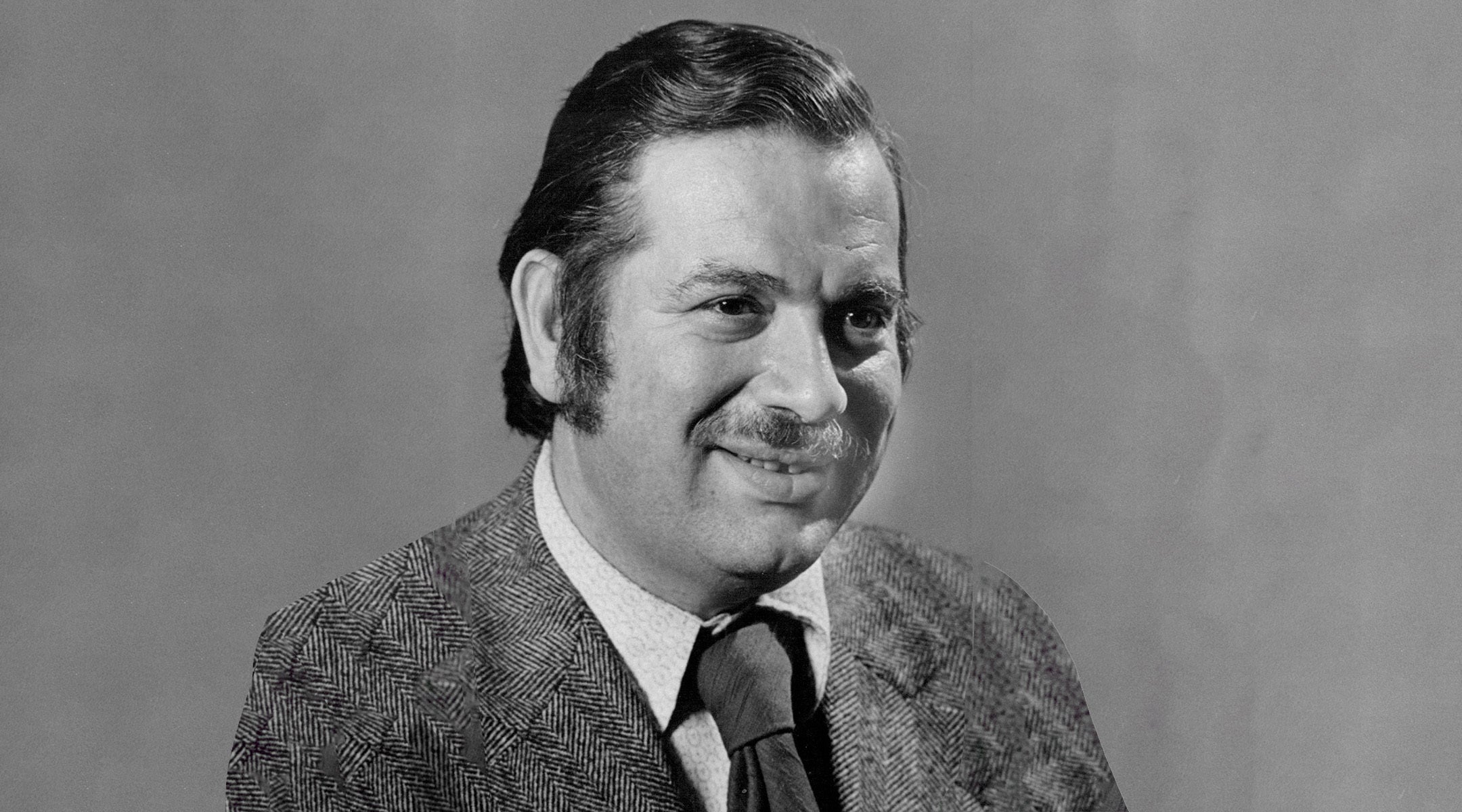
Martin RosenMartin “Moishe” Rosen, founder of Jews for Jesus in 1975. (Denver Post via Getty Images) Image by

The upside for Rosen was obvious: His group would gain a foothold in a popular Jewish movement, offering a potential avenue toward legitimacy and a pool of possible recruits. In his 1974 memoir, titled “Jews for Jesus,” Rosen openly discussed being accepted into the movement by Jewish organizers, but he did so without naming Brooks, Light or any others.

He wrote that Jews for Jesus were invited because of their reputation as the “best qualified, best disciplined demonstrators in the San Francisco community. We’ve had more experience than other Jewish groups and are familiar with the applicable laws and regulations.”

Rosen’s group committed to not use the demonstrations as an opportunity to evangelize and didn’t bring any Christian literature or wear outfits that would identify them, according to the memoir.

“Many Jews for Jesus believe in the freedom of Soviet Jewry just as strongly as any other Jews, and we want to be as effective as possible when we demonstrate to support that cause,” Rosen wrote. 

To Schapira, who led the Bay Area Council for Soviet Jews for years and knew both Brooks and Light, however, it’s unclear why the Soviet Jewry movement would have wanted or needed Jews for Jesus. Schapira didn’t recall it ever being especially difficult to turn out demonstrators organically. There didn’t seem to be a need to resort to secret deals.

“If you look at the picture of the rallies in those days, they even had people like [American folk music legend] Joan Baez,” Schapira said. “They developed a relationship with her and she would come to the rally and bring her guitar and sing songs for freedom.”

He added, “If we needed an instant rally, we were a grassroots organization and we could produce 10 or 12 people, which might be enough to send a message to the Russians and get some publicity in the local papers.”

At least a few people in the Bay Area’s Jewish community caught wind of the secret relationship between Brooks and Jews for Jesus at the time, according to the memo.

Stephanie Rodgers was a coordinator of the Jewish Defense League, an extremist right-wing Jewish group that was under heavy FBI surveillance. Founded by Rabbi Meir Kahane, the JDL applied its often violent tactics to resist Jews for Jesus’ public campaign to convert Jews. Rodgers visited Brooks’ office ahead of a planned demonstration in front of the Soviet consulate in San Francisco and asked about his connection to Rosen and Jews for Jesus, according to the memo.

After Brooks explained how they had been useful, Rodgers “smiled and was very pleasant on the surface,” the memo says. But at the demonstration, Rodgers and a group of other JDL activists showed up even though they said they would stay away, and they found Rosen in the crowd and proceeded to attack him and “kicked him in the groin.”

JDL regularly disrupted Jews for Jesus events; the organization would ultimately claim responsibility for firebombing a bus operated by Jews for Jesus in Brooklyn and abducting an adherent. In the Bay Area, where both groups were active, tensions were particularly high; the Jewish Defense League would sue the local Jews for Jesus chapter over what it charged was the group’s misuse of the JDL’s name and imagery.

Brooks, meanwhile, had more affable ties with Jews for Jesus. It’s unclear how or when Rosen and Brooks developed a relationship, but Brooks noted in a July 25, 1972, letter he wrote to the office of the American Jewish Congress in New York that their ties had started “some time ago.” The letter is found in the records of the Northern California branch of the American Jewish Congress, which are archived at the University of California Berkeley’s library.

A prominent advocacy group in its heyday, the American Jewish Congress — not to be confused with the American Jewish Committee — took a more liberal political stance than that of Jewish establishment groups on many issues.

Brooks had learned that his organization’s national headquarters wanted to undertake a study of Jews for Jesus and he wished to provide insight. He was under no illusion about the group’s objective: “The sole aim of these men is to enlist new converts to Christianity,” Brooks wrote in the letter.

“Through contact with Rosen I have developed a great deal of insight into how his organization operates, their source of funding, budget, etc. which I wish to share with you,” he added.

Then as now, members of Jews for Jesus and other Messianic groups felt unfairly rejected by the Jewish world, arguing that their Christian beliefs should have a place in the community.

In the early 1970s, when Jews for Jesus’ conversion drive was prominent and well funded, Brooks was perceived as more lenient, according to the foreword to the 2017 book “Converging Destinies: Jews, Christians, and the Mission of God.”

“Brooks tried to keep some of us connected to the Jewish community and Jewish life,” Calvin J. Smith wrote in the foreword. “I remember going with another Jew for Jesus to a Jewish consciousness raising session he held at a home in Marin County in the early 1970s.”

Glenn Richter was one of the founders of the Student Struggle for Soviet Jewry and operates as a walking encyclopedia of the movement.
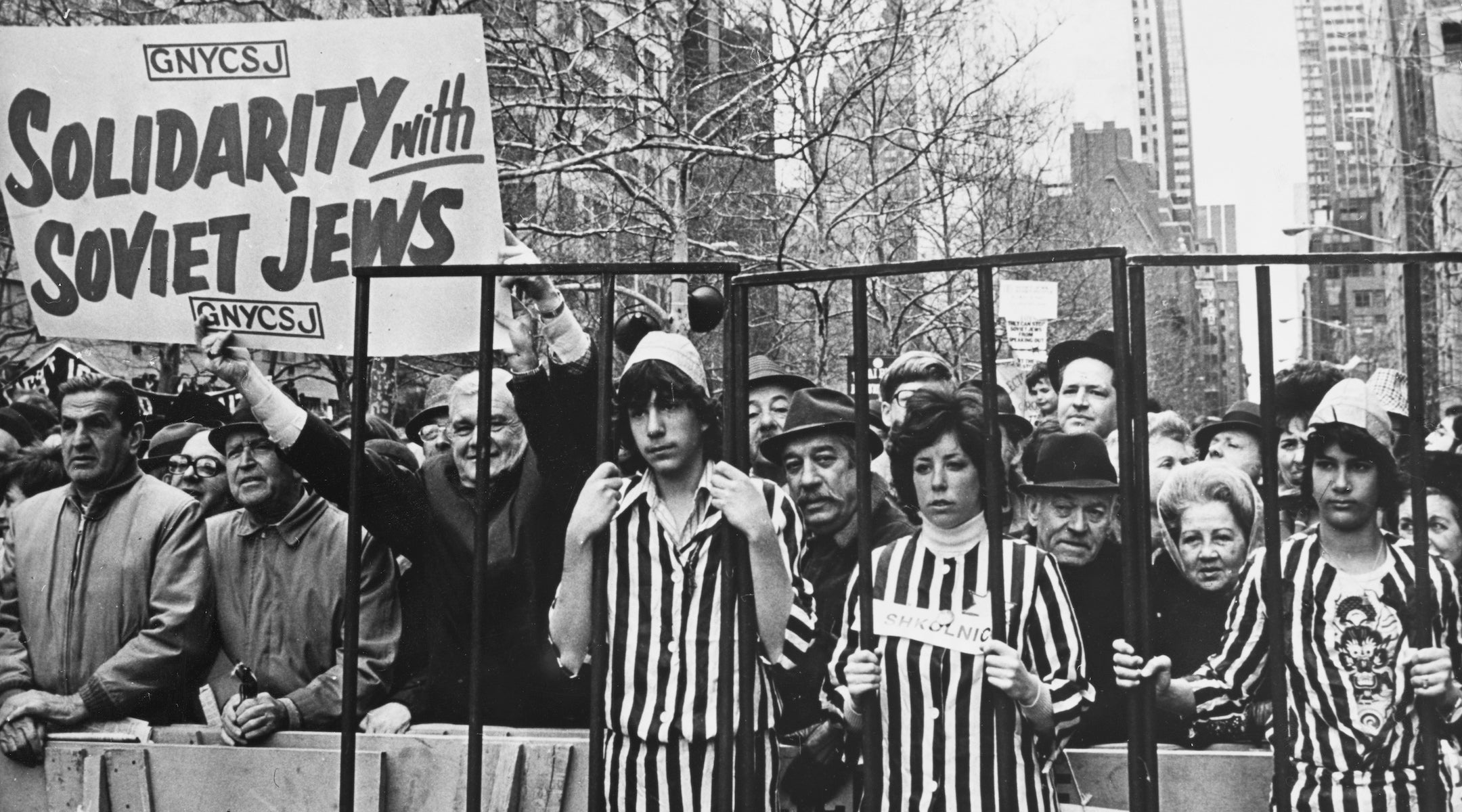
DemonstrationProtestors dressed as prisoners behind bars, alongside a man holding a placard reading “Solidarity with Soviet Jews,” stand together with members of New York’s Jewish community as they take to the streets during the Solidarity Sunday for Soviet Jewry demonstration in protest at the Soviet Union’s treatment of Jewish people, in New York City, April 18, 1975. (Images Press/Keystone/Hulton Archive/Getty Images) Image by

He said the movement did collaborate with many Christians outside of Jews for Jesus. For example, he said there were Scandinavians, who, on weekend trips to Leningrad (today St. Petersburg), brought in Jewish material that was banned in the Soviet Union. Others set up safe houses in Finland in expectation of fleeing Soviet Jews. And the International Fellowship of Christians and Jews raised millions of dollars from evangelicals to help transport Soviet Jews to Israel.

“Of course, among these goodhearted souls are those who have conversion of Jews in mind, but I suspect most have wanted to fulfill their prophecy of ingathering Jews to Israel so that a Christian messiah could return,” Richter said.

In his eyes, Jews for Jesus represented a red line.

“Our Student Struggle for Soviet Jewry office on Manhattan’s West 72nd Street was down the block from a church with a Jewish Messianic constituency, and we would never, ever, try to work with them,” Richter said.

Andrew Esensten contributed research to this story. 

This article originally appeared on JTA.org.

The post Soviet Jewry protest leaders in San Francisco secretly recruited help from Jews for Jesus, FBI file says appeared first on The Forward.


Categories
Audio Sources - Full Text Articles

CARTOON: Who said life was a bowl of cherries?

לעסלי טערנערס קאַרטון דערמאָנט אונדז אַז נישט אַלץ אין לעבן איז יושרדיק.

Graphic by Lesley Turner

The post CARTOON: Who said life was a bowl of cherries? appeared first on The Forward.

Categories
Audio Sources - Full Text Articles

Report: Immigrant Asylum Seekers Fleeing NYC Squalor for ‘Safer’ Canada

What’s happening: New York City mayor Eric Adams (D.) is giving immigrant asylum seekers free bus tickets to Canada, and many of them are more than happy to leave the filthy, crime-riddled, Democratic-run city behind in search of a better life. According to the New York Post, the city’s migrants are fleeing toward the Canadian border at a rate of hundreds per day.

What they’re saying:

• “I wanted to live in New York because I thought it would be a better future for my daughters,” said Susy Sanchez Solzarno, 33, from Peru. “But as the days went by, I saw insecurity, many homeless people, many people who shout and are disrespectful, and many people on drugs. … I am going to Canada for the safety and future of my girls.”

• “A lot of the Americans used drugs [in New York],” said Manuel Rodon, 26, from Venezuela. “I feel like Canada will be safer. It is a much quieter country than America.”

Why it matters: Democratic politicians insist it is racist to oppose their preferred solution to the immigration crisis, which is to do nothing. It is also racist, they insist, to suggest that their own states should help ease the burden on border states overwhelmed by the influx of migrants under President Joe Biden by taking in migrants and bearing the cost of feeding and housing them.

As it turns out, sending these migrants to squalid cities such as New York and San Francisco—where Democratic leaders have done their best to encourage criminal activity, homelessness, and open-air drug use—is one of the most effective ways to persuade them to leave the United States out of fear for their family’s safety.

The post Report: Immigrant Asylum Seekers Fleeing NYC Squalor for ‘Safer’ Canada appeared first on Washington Free Beacon.

WP Radio
WP Radio
OFFLINE LIVE