Categories
Audio Sources - Full Text Articles

New York police abused demonstrators at George Floyd protest, report finds

2023-02-06T19:37:40Z

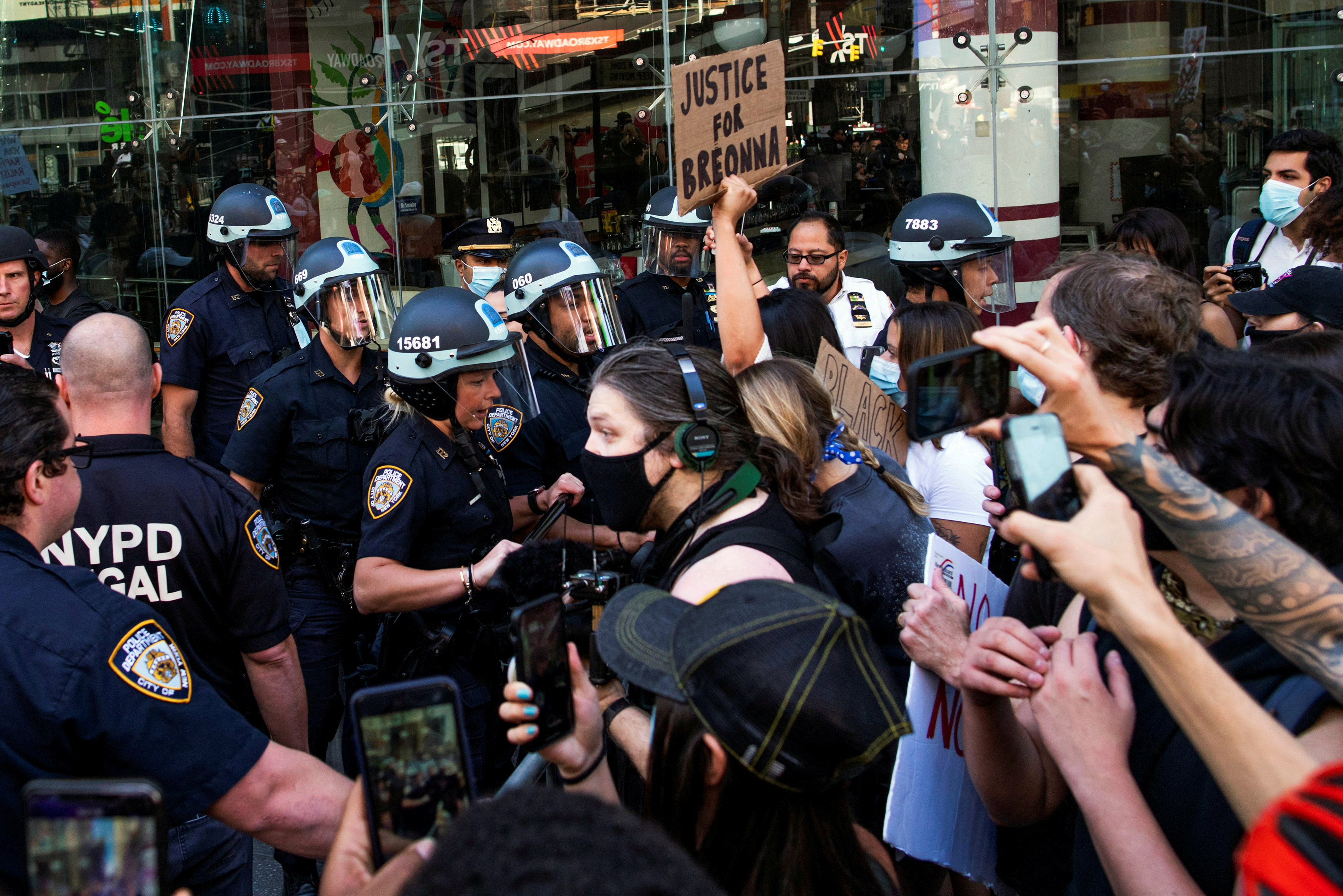
Demonstrators scuffle with NYPD police officers as they try to march trough Times Square during a protest against racial inequality in the aftermath of the death in Minneapolis police custody of George Floyd, in New York City, New York, U.S. June 14, 2020. REUTERS/Eduardo Munoz

An independent New York City police review board has recommended that the department punish dozens of officers for excessive use of force and other alleged misconduct during protests that followed the 2020 murder of George Floyd, according to a report released on Monday.

Among the complaints, officers were found to have used batons and pepper spray on peaceful protesters in 140 instances. Dozens of allegations of abuse of authority, including officers refusing to identify themselves, concealing their badges and making false or misleading statements, were also substantiated, the report by Civilian Complaint Review Board (CCRB) said.

More than 600, or 43%, of misconduct allegations were closed after officers could not be identified, raising a big obstacle in the board’s review, the report said.

“This report shows why the NYPD cannot continue to have a monopoly on discipline,” Molly Biklen, deputy legal director at the New York Civil Liberties Union, said in a statement. “When New Yorkers took to the streets calling for racial justice in 2020, the NYPD responded with violence.”

Thousands of protesters flooded New York streets for weeks in demonstrations against police brutality days after Floyd, a Black man accused of passing a counterfeit $20 bill, died when a white Minneapolis police officer pinned his neck to the ground with a knee for several minutes in May 2020. Smaller-scale protests continued into early fall.

The New York Police Department (NYPD) objected to many of the report’s findings, saying less than 15% of all allegations were substantiated. In a statement, it accused the board of exaggerating the extent of any misconduct, saying it involved less than 1% of 22,000 officers deployed during the protests.

The less that 15% substantiation rate of allegations against officers confirms “that the NYPD’s response to the protests during the summer of 2020 was largely professional, commendable, and responsive to the unique circumstances that were present at the time,” NYPD Acting Deputy Commissioner Carrie Talansky said in a statement.

Hundreds of officers were injured and the department had already implemented many of the 17 policy changes recommended by the board, NYPD said.

“Protests against police brutality bred more instances of police misconduct,” CCRB Interim Chair Arva Rice said in the report. “If this misconduct goes unaddressed, it will never be reformed.”

Of the 146 officers cited by the report, 89 of them should face internal charges, which can result in termination. The board recommended discipline, which can include the loss of vacation days, for the other 57 officers.

The board, composed of 15 members appointed by the mayor, city council and police commissioner, has the power to conduct administrative prosecutions, but the commissioner has final say over any discipline.


Categories
Audio Sources - Full Text Articles

The New Climate Taxes That May be Closer Than You Think

Last week, a group of Democratic lawmakers known for their climate policy advocacy gathered outside the U.S. Capitol building to call for a new tax on the immense profits earned by oil and gas companies since Russia invaded Ukraine last year. ExxonMobil, Shell and Chevron alone made more than $130 billion in profits in 2022 thanks to high prices, and the lawmakers argued that the U.S. should tax it and redistribute a cut back to consumers.

“We know truthfully how much money they made by gouging consumers,” said Sheldon Whitehouse, a Democratic senator from Rhode Island with a history of pushing for action to combat climate change. “We’re working to try to take that back.”

[time-brightcove not-tgx=”true”]

Taxes have always played a key role in climate policy. For decades, climate advocates pushed for a tax on carbon to penalize emissions. When that failed to gain traction, they switched gears to advocate instead for tax incentives to spur clean energy. Those two tax policies have dominated the debate over taxation and climate change. Now a new tranche of policies has entered the field. Politicians in Washington are pushing windfall profit taxes. Leaders in Europe have called for levies on high-emitting industries like aviation and shipping. Even the most ordinary of taxes—think of the personal income tax and corporate income tax—are now being linked to climate change in policy discussions in new and perhaps surprising ways.

For now, at least, the idea of a windfall tax is dead on arrival in Congress, where Republicans control the House of Representatives. But elsewhere, including some conservative-led countries, the policy is making progress. Which means it could eventually become one of several new tax tools for financing the green energy transition in the U.S. as well, as countries race to compete for the technologies of the future. “Contrary to what people might think, taxes have good days ahead,” says Lucas Chancel, an economist at the World Inequality Lab of the Paris School of Economics who studies environmental policy and inequality. “They are necessary tools and solutions to the climate crisis.”

Understanding the links between climate policy and taxation begins with the carbon tax. Carbon taxes, long considered the favorite climate policy tool by economists, require polluters to pay for the carbon they emit, pushing big companies to decarbonize while also raising money that can be used for anything from building clean energy projects to helping workers adjust to the transition.

But, despite years of effort and some promising first mover countries, the carbon tax failed to gain widespread acceptance. Positive incentives for renewable energy, on the other hand, were easier to enact. The U.S. has passed piecemeal renewable tax credits on and off since the 1990s, so it makes sense that tax credits played a central role in the Inflation Reduction Act (IRA), the Biden administration’s landmark climate law. The IRA contains more than $200 billion in tax credits, incentivizing everything from nuclear energy to electric vehicles. An analysis from Princeton University’s REPEAT Project shows that by 2025 annual additions of wind capacity could more than double while additions of solar capacity could quintuple. But, for all the IRA’s climate strengths, it didn’t address several core aims of the carbon tax, namely penalizing emissions and raising revenue from bad climate actors.

Almost like clockwork, as the prospects of a global carbon tax have dimmed, other levies entered policy discussions. In the U.S., Democrats have called for a windfall profits tax on the oil and gas industry, saying that companies are using high energy prices to enrich shareholders. Current proposals center on redistributing the profits to taxpayers, but other versions could exempt profits reinvested in clean energy, incentivizing a change in behavior.

While windfall tax proposals stand no chance in the current U.S. Congress with Republicans controlling the House, across the Atlantic, the ideas have taken off faster. The conservative government in the United Kingdom introduced a windfall tax on energy companies last year and is expected to raise around $80 billion with it. Frans Timmermans, the executive vice president of the European Commission, the European Union’s executive body, suggested at COP27, last year’s United Nations climate conference, that taxes on fossil fuels could be paired with taxes on aviation and shipping to raise revenue. “We should work with the United Nations Secretary General to dig into solutions for innovative sources of finance, including levies on aviation, shipping, and fossil fuels,” he told his counterparts at the conference.

Implementing these taxes at a global scale can seem far-fetched. But proposals to tax oil companies have a fundamental difference from failed carbon taxes: they’re easy to explain and politically popular. Polling for the League of Conservation Voters conducted last year by Hart Researchers found that 87% of Americans support a “crackdown” on oil firms. Even polls conducted by neutral parties suggest that Americans have broadly unfavorable views of oil and gas companies.

It’s not just politics that suggest the longevity of these new conversations at the intersection of climate and taxation. Sooner or later governments will likely need to generate more revenue to fund energy transition efforts. The International Energy Agency suggests that energy transition will require $4 trillion in annual investment in clean energy by 2030. A large share of that will come from the private sector, but analysts say that government funding will play a critical role laying the groundwork for the private sector.

To raise that money, some climate wonks have suggested simply relying on the most commonplace of taxes: the personal income tax and corporate income tax. Indeed, the Inflation Reduction Act requires large companies to pay a 15% minimum corporate tax, the most significant revenue raising provision. On Jan. 31, the World Inequality Lab, famed economist Thomas Pikkety’s research group, released a report arguing that such measures are critical to funding climate efforts, particularly for helping developing countries address climate change.

One obvious venue for those discussions to take place is amid the ongoing global discussions about a minimum corporate tax. The report argues that those talks can consider how to use taxation to finance developing countries’ climate needs. “The deal was about a 15% multinational tax rate,” says Chancel. “What about adding a few percentage points to this tax rate, and earmarking this to climate finance and climate adaptation in the Global South?”

The report also argued that developing countries should explore an income tax on their wealthiest citizens to fund their own climate efforts. Much like the rest of the discussion about future climate-linked taxes, it’s easy to dismiss this suggestion. Obvious challenges have prevented developing countries from implementing such policies in the past, including difficulty in data collection and enforcement and corruption, among others. But Chancel addresses these questions without hesitation. “In the beginning of the 20th century, we didn’t have any such thing as progressive income taxation in the US or in France or Western countries and opponents to progressive income taxation were saying exactly the same thing,” he says.

Indeed, it’s easy to dismiss the budding conversation at the nexus of climate and taxation with an eye roll. But politics can change quickly, and the conversations happening now may lay the groundwork for a new, climate-informed tax regime.

Categories
Audio Sources - Full Text Articles

What the Police Academy Gets Wrong About Training Future Officers

Kris Eggle and Margaret Anderson.

They are names that U.S. Park Rangers know well. For many Rangers, they were friends and coworkers. Rangers are a small cohort, and our paths cross frequently. For others, like me, their names are known specifically because we train to avoid their fate: being shot and killed in the line of duty.

On Jan. 29 2023, I did something that millions of people do: I vented on Twitter. I had watched the video of Tyre Nichols’ murder, as I’ve watched so many videos of excessive force, to see if, as a former law enforcement officer (LEO), I could see what went wrong.

[time-brightcove not-tgx=”true”]

But I saw the same thing I always see—a deeply rooted problem with training and culture. So, I poured my heart out to my small group of followers, most of whom know me personally, and spoke of losing the job I loved because I couldn’t stay quiet about those problems.

I left law enforcement almost 10 years ago and that doesn’t pain me, but seeing those same problems so prevalent after nearly a decade and after Trayvon, and Ferguson, and George Floyd and so many others, haunts me. So, I vented, put down my phone and went on a hike. I went to bed. Then I woke up to a tweet that had been viewed millions of times.

Suddenly, I found myself in the center of a national conversation about police brutality.

To be clear, I should never have found myself here. I am no one special. I said nothing new. I’ve heard my thoughts in rallies and at marches. My perspective as a white woman, and former law enforcement officer, is not the one that most needs to be heard in a conversation about the violence that disproportionately impacts Black, Latino, and Indigenous Americans. But as it’s been elevated and I’ve been given a platform, I’m trying to do some good with that. Because this problem is one we have to solve. We cannot pretend it doesn’t exist.

Read More: If We Want to Reduce Deaths at Hands of Police, We Need to Reduce Traffic Stops

So let me tell you what I know.

In the police academy, in my courses in Criminal Justice, I’ve studied the reports of line of duty deaths. I’ve watched the dashcam footage of traffic stops where officers are shot; read the completed investigations of deaths like Rangers Anderson and Eggle. As a National Park Ranger, those two in particular have been a constant in my education. Their murders shaped so much of how the National Park Service (NPS) trains its Rangers.

We study these deaths to find out how to prevent them, to determine what gaps in our training may have allowed this to happen. In our training, however, we are not shown videos like that of the shooting of Levar Jones on Sept. 4, 2014.

I watched the video of Jones being shot on the news just a few months after being dismissed from my third police academy, a day before graduation. Just a few months before being denied a repeal of that decision and being fired from the NPS. I thought, as I watched it, of the training exercise where, as officers, we were shown a different video of a man reaching towards his glove box for his registration, and instead pulling out a gun, firing six shots, killing the officer that stopped him, and then driving away. After the video and classroom instruction, the hands-on portion of that traffic stop course had involved a series of vehicle approaches wherein on every approach, the driver retrieved a weapon from their vehicle and shot at the officer in training. It quickly became a game within the class to see if the officer-in-training could beat the driver to the draw. Reaching into gloveboxes, center consoles, under their seats and visors, those playing the role of drivers always produced a firearm and immediately shot the officer before they reached the vehicle.

I wondered if the officer who shot Jones had received training like that.

The training law enforcement receives always reviews the video and investigation of line of duty deaths of officers and corrects itself to avoid further incidents, but I find more and more that we are studying the wrong videos. We correct the wrong things. We create a sense of dread and fear in officers in training. One that tells them over and over again, they will die if they aren’t aggressive first. We employ the likes of Dave Grossman to teach “Street Survival” courses that imagine opposing forces in our streets. The sheepdog and the wolf, predator and prey, hero and villain, us versus them, kill or be killed. A sense of righteous fury builds against the very community that LEO’s swear to serve and protect.

That ethos is echoed in the discussion of police reform as I realize there is no place for the likes of me—someone who believes in broad and sweeping reforms, who believes in diverting funding from weapons and equipment into social programs that address the root causes of crime and violence, but doesn’t believe that all cops are bad people or in the total abolition of the force. We stand on the two cliff faces, a yawning chasm of anger between us, fearful and saying our own names over and over again. Our names, the ones that align with our side. We are angry about Ranger Anderson, and cannot find space to be just as angry about George Floyd. We forget that we are supposed to take that risk and only meet force with the lowest level of force needed to stop the threat. That we protect the fourth amendment of our neighbors, and that includes their protection against an unwarranted seizure of their lives. Instead, we inflict trauma to avoid the possibility of having it inflicted upon us, and we are trained to believe that is necessary and good. After we are trained, our culture continues to reinforce that idea, and we shoot to prevent being shot.

Read More: Tyre Nichols’ Killing Is The Result of a Diseased Culture

I’ve been asked a lot, what can be done about it. I tell everyone the same thing—nothing fast. Long, boring, nuanced work that addresses the structural issues of American policing; uncomfortable discussions about the cultural issues in law enforcement; training that is standardized and reviewed by a diverse group of stakeholders; discipline and accountability for officers and departments; robust and continued investment in community care that addresses the root causes of crime that elevates instead of incarcerates our most at risk populations; divestment in the corporal system that spends it on higher walls and more weapons in an arms race with the streets.

We cannot keep adding to a list of names and silo ourselves, comforting the tribe we know while ignoring our neighbor’s pain. We have to start saying the words that admit we have a problem and we have to come to the table ready to listen. It won’t be enough at first. We can end qualified immunity and mandate de-escalation training today, and again it will not be enough, but at least we won’t be standing still on opposite sides of the canyon yelling into the void. At least, we’ll be moving forward.

Tyre Nichols, Breonna Taylor, George Floyd, Philando Castile, Sandra Bland, Tamir Rice, Eric Garner.

We must learn and change from their deaths, too.

Categories
Audio Sources - Full Text Articles

Russian court sentences popular cookbook author to 9 years in prison for spreading ‘false information’

A Moscow court on Monday sentenced a well known cookbook writer and blogger to nine decades in prison right after convicting her in absentia of spreading phony info about the country’s army. The trial was part of the Kremlin’s sweeping, months-extended crackdown on dissent.

The expenses towards Veronika Belotserkovskaya, who lives overseas, have been brought above her Instagram posts that the authorities alleged contained “deliberately bogus information about the use of the Armed Forces of the Russian Federation to demolish metropolitan areas and the civilian populace of Ukraine, such as children.”

Belotserkovskaya, whose Instagram profile says she was born in Odesa, a town in southern Ukraine, responded to the news of the sentencing by composing that she is, “on just one hand, perplexed, and on the other hand, of program, proud.”

Russia’s Investigative Committee introduced launching a scenario from Belotserkovskaya on March 16 2022, numerous months following Moscow’s troops rolled into Ukraine. It was the initial publicly-known scenario under a new law adopted earlier that thirty day period that penalized facts viewed as disparaging to the Russian army.

RUSSIA READIES AIR DEFENSES Above MOSCOW, Gives SHELTER MAPS TO BORDER Town In advance OF NEW 12 months

The Russian authorities issued an arrest order for the blogger in absentia, place her on a desired checklist and seized about $2.2 million really worth of her belongings.

She was also declared a “foreign agent,” a designation that implies supplemental govt scrutiny and carries potent pejorative connotations aimed at discrediting the recepient.

A famous blogger and cookbook author in Russia was sentenced to nine years in prison for spreading

A popular blogger and cookbook writer in Russia was sentenced to 9 several years in prison for spreading “fake details” about the country’s navy.

Belotserkovskaya by much has been handed the longest prison sentence underneath the new legislation and is the 2nd outstanding community figure to be sentenced in absentia.

RUSSIA INSTALLS AIR-Protection Techniques IN MOSCOW, AS US Emphasis Stays ON ‘SUPPORTING UKRAINE’

Last 7 days, a Moscow court docket sentenced Alexander Nevzorov, a tv journalist and former lawmaker, in absentia to 8 yrs in prison on the exact same costs. Nevzorov was accused of publishing “false data” on social media about the Russian shelling of a maternity hospital in the Sea of Azov port of Mariupol. Moscow has fiercely denied its involvement.

The journalist moved abroad following the begin of the Ukrainian conflict.

Click on Below TO GET THE FOX News App

In December, prominent opposition politician Ilya Yashin was sentenced to 8½ a long time in jail beneath the same law. Previously final calendar year, Alexei Gorinov, a member of a Moscow municipal council Yashin employed to chair, was sentenced to 7 yrs in jail for his vital remarks about the hostilities in Ukraine.

Another primary opposition determine, Vladimir Kara-Murza, is at this time in custody experiencing the similar fees.

Supply url

The post Russian court sentences popular cookbook author to 9 years in prison for spreading ‘false information’ appeared first on Ukraine Intelligence.

Categories
Audio Sources - Full Text Articles

Fox sells out Super Bowl ads: crypto out, alcohol in

NEW YORK (AP) — Fox says it has sold out all of its Super Bowl LVII ad space as of the end of January. The big game between the Kansas City Chiefs and the Philadelphia Eagles takes place on Sunday.

The Super Bowl is advertising’s biggest stage, with advertisers jockeying to get their products in front of the more than 100 million people that watch each year. Mark Evans, executive vide president of ad sales for Fox Sports, said a few ads went for more than $7 million for a 30-second spot. Most sold between $6 million and $7 million.

Anheuser-Busch remains the biggest advertiser with three minutes of national airtime. The beverage giant gave up its deal to be the exclusive advertiser this year, so Heineken, Diageo, Remy Martin and Molson Coors are also in the game. Other big categories advertising include packaged food like Doritos and M&Ms, movie studios and streaming services, automakers and tech companies, Evans said. Out this year: crypto companies.

Last year’s Super Bowl was dubbed the “Crypto Bowl” because four cryptocurrency companies — FTX, Coinbase, Crypto.com and eToro — ran splashy commercials. But in November, FTX filed for bankruptcy and its founder was charged in a scheme to defraud investors.

This year, two crypto advertisers had commercials “booked and done” and two others were ”on the one-yard line,” Evans said. But once FTX news broke, those deals weren’t completed.

Now, “There’s zero representation in that category on the day at all,” he said.

Evans said most Super Bowl ads sold much earlier than usual, with more than 90% of its Super Bowl ad inventory gone by the end of the summer, as established advertisers jockeyed for prime positions. But the remaining spots sold slower. Partly that was due to the implosion of the crypto space, as well as general advertiser concerns about the global economy, Evans said.

Categories
Audio Sources - Full Text Articles

Florida hospital taking expectant moms, delaying surgeries

TALLAHASSEE, Fla. (AP) — A major regional hospital system based in northern Florida resumed seeing patients at its clinical practices on Monday, days after a security problem forced it to take its IT network offline.

But Tallahassee Memorial Healthcare was still being forced to use paper documentation, and non-emergency surgeries and out-patient procedures were canceled on Monday.

Some emergency room patients were being diverted to other hospitals, but the hospital was accepting patients expecting babies, the health care system said in Sunday’s statement.

Information technology systems were taken offline as a security precaution on Thursday after Tallahassee Memorial Healthcare was hit by an apparent ransomware attack. It had the hallmarks of such an attack, but the hospital has characterized it as an “IT security issue” that it reported to law enforcement. Victims often, at least initially, decline to confirm ransomware attacks.

“Our teams are working around the clock in collaboration with outside consultants to investigate the cause of the event and safely restore all computer systems as quickly as possible,” the statement said. “IT security events take time to investigate and resolve. Our investigation is ongoing and, as is typical in such situations, we expect it will take some time to determine exactly what happened.”

The hospital system, headquartered in Tallahassee, provides health care across 21 counties in northern Florida, southern Georgia and southern Alabama, according to its website.


Page 2

TALLAHASSEE, Fla. (AP) — A major regional hospital system based in northern Florida resumed seeing patients at its clinical practices on Monday, days after a security problem forced it to take its IT network offline.

But Tallahassee Memorial Healthcare was still being forced to use paper documentation, and non-emergency surgeries and out-patient procedures were canceled on Monday.

Some emergency room patients were being diverted to other hospitals, but the hospital was accepting patients expecting babies, the health care system said in Sunday’s statement.

Information technology systems were taken offline as a security precaution on Thursday after Tallahassee Memorial Healthcare was hit by an apparent ransomware attack. It had the hallmarks of such an attack, but the hospital has characterized it as an “IT security issue” that it reported to law enforcement. Victims often, at least initially, decline to confirm ransomware attacks.

“Our teams are working around the clock in collaboration with outside consultants to investigate the cause of the event and safely restore all computer systems as quickly as possible,” the statement said. “IT security events take time to investigate and resolve. Our investigation is ongoing and, as is typical in such situations, we expect it will take some time to determine exactly what happened.”

The hospital system, headquartered in Tallahassee, provides health care across 21 counties in northern Florida, southern Georgia and southern Alabama, according to its website.

Categories
Audio Sources - Full Text Articles

trumpism – Google Search google.com/search?q=trump… post-gazette.com/opinion/Op-Ed/…

trumpism – Google Search google.com/search?q=trump… post-gazette.com/opinion/Op-Ed/…
Categories
Audio Sources - Full Text Articles

Factbox: FACTBOX Possible U.S. debt-ceiling workarounds to avoid default

2023-02-06T19:13:34Z

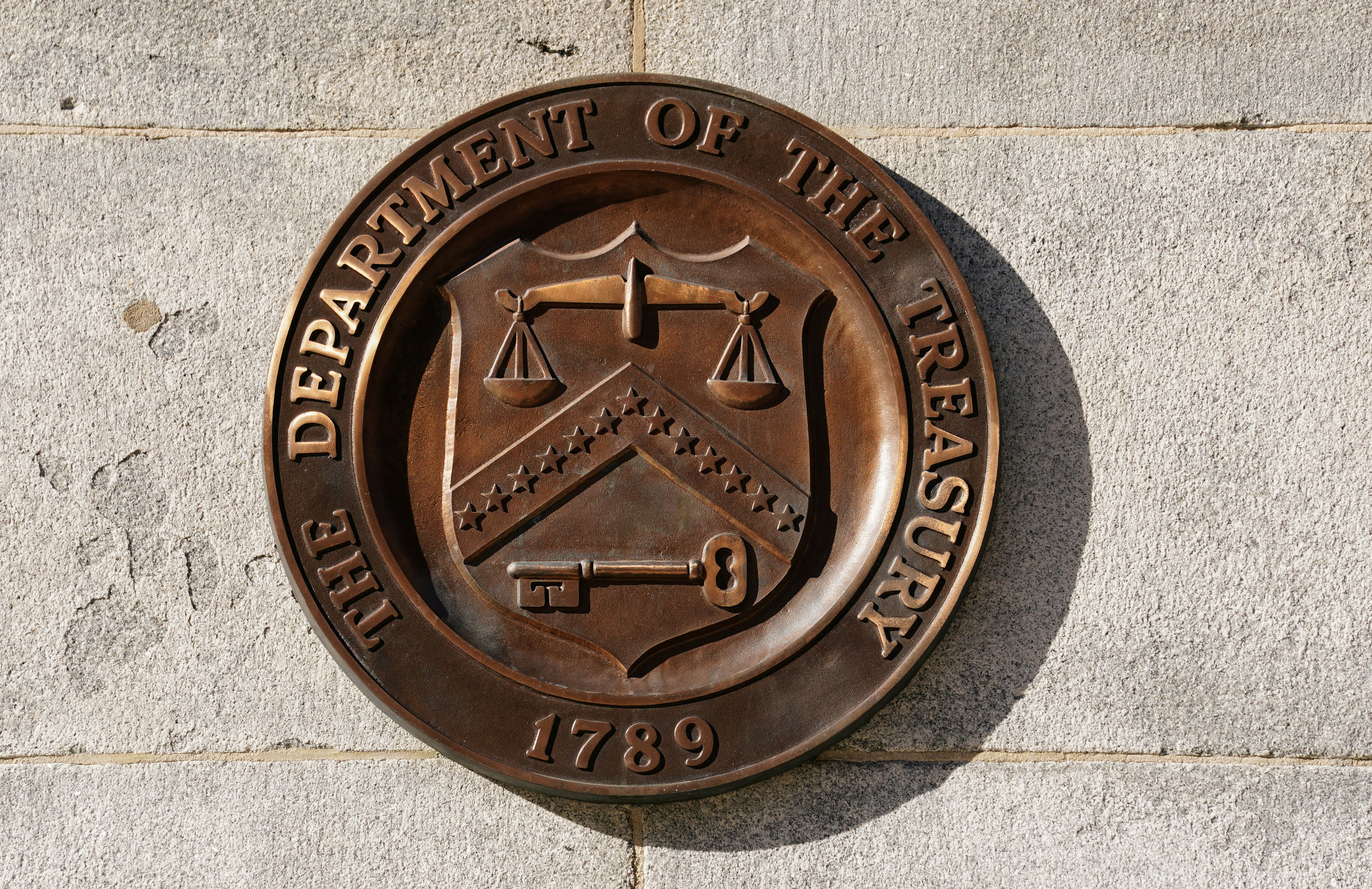
A bronze seal for the Department of the Treasury is shown at the U.S. Treasury building in Washington, U.S., January 20, 2023.  REUTERS/Kevin Lamarque

As Democratic President Joe Biden and House of Representatives Speaker Kevin McCarthy gird for a protracted battle over raising the United States’ $31.4 trillion debt ceiling, some observers have suggested possible workarounds to avoid disaster if the two sides do not reach a deal.

Here are some of their proposals:

Some commentators have said the U.S. Treasury could mint high-value platinum coins and deposit them in the Federal Reserve in exchange for cash, which would give the government more money to spend.

Critics say that could disrupt financial markets, as investors might be reluctant to buy U.S. bonds not backed by congressional action, or call into question the soundness of a political system that would resort to such unorthodox tactics.

Others say it could spur inflation or undermine the independence of the Fed. Furthermore, the law that authorized platinum coins envisioned them as commemorative items, not currency.

Government officials including Treasury Secretary Janet Yellen have repeatedly dismissed the idea as a gimmick.

Section Four of 14th Amendment to the U.S. Constitution, adopted after the 1861-1865 Civil War, states that the “validity of the public debt of the United States … shall not be questioned.” Historians say that aimed to ensure the federal government would not repudiate its debts, as some ex-Confederate states had done.

Some experts have suggested that Biden could invoke this amendment to raise the debt ceiling on his own if Congress does not act. That would almost certainly lead to prolonged legal wrangling, which could unsettle financial markets for the reasons outlined above.

Democrats and rank-and-file Republican allies in the House of Representatives could bypass McCarthy and force a vote on a “clean” debt ceiling increase, free of spending cuts or other conditions.

Because Republicans hold a narrow 222-212 majority in the House, only six of them would have to break with their party and side with Democrats in order to get the 218 votes needed to pass legislation.

This group could try to hijack an existing vote on another bill and substitute it with their preferred solution.

Alternatively, they could round up 218 signatures for a “discharge petition” to bypass legislative hurdles.

That takes time. Supporters must wait at least 30 days after they introduce their bill before they file their petition, and then must wait seven more legislative days after that.

If McCarthy or gatekeepers on the House Rules Committee still oppose the measure, supporters can still call it up for a vote — but only on the second or fourth Monday of the month when the chamber is in session.

That leaves only three possible dates for action in the first half of this year: March 27, May 22 and June 12.

Discharge petitions have only succeeded twice in this century, in 2002 and 2015.

Some have suggested that the Treasury Department could sell bonds at higher interest rates than those that are dictated by market conditions. Under this scenario, Treasury could earn $38 billion by selling $35 billion worth of bonds at 5%, rather than 3.5%, and use the proceeds to retire more of its debt, giving it more space to operate under the existing debt limit.

Analysts say this would leave Treasury on the hook for higher interest payments and unsettle the market for Treasury bonds, which serve as a bedrock for the global financial system.

Congress could vote to abolish the debt ceiling entirely, which would eliminate the need to vote on the issue periodically but also erode Congress’s authority on fiscal matters.

Yellen has endorsed the idea, but Biden has dismissed it as “irresponsible” and prominent liberal lawmakers like Senator Bernie Sanders have ruled it out. Attempts to abolish the debt ceiling have gotten no traction in Congress in recent years.

Sources: Moody’s Analytics; Congressional Research Service

(This story has been refiled to add the missing word ‘trillion’ in paragraph 1)


Categories
Audio Sources - Full Text Articles

Huge earthquake kills 2,700 in Turkey and Syria, bad weather worsens plight

2023-02-06T06:03:49Z

KAHRAMANMARAS, Turkey/DAMASCUS (Reuters) – A huge earthquake killed more than 2,700 people across a swathe of Turkey and northwest Syria on Monday, with freezing winter weather adding to the plight of the thousands left injured or homeless and hampering efforts to find survivors.

More than 500 people were killed and thousands injured on Monday, after a major earthquake of magnitude 7.8 struck central Turkey and northwest Syria, collapsing buildings and triggering searches for survivors in the rubble. Turkey’s Vice President Fuat Oktay said a the government had declared a “level four alarm,” which calls for international assistance.

The magnitude 7.8 quake brought down whole apartment blocks in Turkish cities and piled more devastation on millions of Syrians displaced by years of war.

It struck before sunrise in harsh weather and was followed in the early afternoon by another large quake.

“It was like the apocalypse,” said Abdul Salam al-Mahmoud, a Syrian in the northern town of Atareb. “It’s bitterly cold and there’s heavy rain, and people need saving.”

The second quake was big enough to bring down more buildings and, like the first, was felt across the region, endangering rescuers struggling to pull casualties from the rubble.

In Diyarbakir in southeast Turkey, a woman speaking next to the wreckage of the seven-storey block where she lived said: “We were shaken like a cradle. There were nine of us at home. Two sons of mine are still in the rubble, I’m waiting for them.”

She was nursing a broken arm and had injuries to her face.

The earthquake was the biggest recorded worldwide by the U.S. Geological survey since a tremor in the remote South Atlantic in August 2021.

Graphic: Strong earthquake hits Turkey – here

In Turkey, the death toll stood at 1,651, Health Minister Fahrettin Koca said, and 11,119 people were recorded as injured. At least 1,073 people were killed in Syria, according to figures from the Damascus government and rescue workers in the northwestern region controlled by insurgents.

Poor internet connections and damaged roads between some of the worst-hit cities in Turkey’s south, homes to millions of people, hindered efforts to assess and address the impact.

Temperatures in some areas were expected to fall to near freezing overnight, worsening conditions for people trapped under rubble or left homeless. Rain fell on Monday after snowstorms swept the country at the weekend.

Monday’s casualties already mark the highest death toll from an earthquake in Turkey since 1999, when a tremor of similar magnitude devastated the heavily populated eastern Marmara Sea region near Istanbul, killing more than 17,000.

President Tayyip Erdogan, who is preparing for a tough election in May, called it a historic disaster and the worst earthquake to hit the country since 1939, but said authorities were doing all they could.

“Everyone is putting their heart and soul into efforts although the winter season, cold weather and the earthquake happening during the night makes things more difficult,” he said.

In Syria, already wrecked by more than 11 years of civil war, the health ministry said 593 people had been killed and more than 1,326 injured. In the Syrian rebel-held northwest emergency workers said 480 people had died.

The United Nations says 4.1 million people, many of them displaced by the conflict and living in camps, depend already on cross-border humanitarian aid in northwest Syria and international support efforts are stretched and underfunded.

“Syrian communities are simultaneously hit with an ongoing cholera outbreak and harsh winter events including heavy rain and snow over the weekend,” U.N. spokesman Stephane Dujarric told reporters in New York.

In the government-controlled city of Aleppo, footage on Twitter showed two neighbouring buildings collapsing one after the other, filling streets with billowing dust.

Two residents of the city, which has been heavily damaged in the war, said the buildings had fallen in the hours after the quake, which was felt as far away as Cyprus and Lebanon.

In the Syrian government-held city of Hama, a Reuters journalist saw an apparently lifeless child carried from the ruins of a building.

‘NO ONE CAME OUT’

In the rebel-held town of Jandaris in Aleppo province, a mound of concrete, steel rods and bundles of clothes lay where a multi-storey building once stood.

“There were 12 families under there. Not a single one came out. Not one,” said a thin young man, his eyes wide open in shock and his hand bandaged.

Raed al-Saleh of the Syrian White Helmets, a rescue service in rebel-held territory known for pulling people from the ruins of buildings destroyed by air strikes, said they were in “a race against time to save the lives of those under the rubble”.

Syrian state television showed rescue teams searching for survivors in heavy rain and sleet. President Bashar al-Assad held an emergency cabinet meeting to review the damage and discuss the next steps, his office said.

In the Turkish city of Diyarbakir, Reuters journalists saw dozens of rescue workers searching through a mound of debris, all that was left of a big building, and hauling off bits of wreckage as they looked for survivors. Occasionally they raised their hands and called for quiet, listening for sounds of life.

Erdogan said 45 countries had offered to help the search and rescue efforts in Turkey.

The earthquake also halted operations at Turkey’s major oil export hub in Ceyhan and stopped key crude oil flows from Iraq and Azerbaijan. Authorities said the port of Iskenderun also suffered damage.

Turkey’s lira hit a record low of 18.85 in early trade and the country’s stocks tumbled around 5%, although both pared losses later with the currency ending the day flat and equity indexes closing 1.3%-2.2% lower.

In the Turkish city of Malatya, a rescue worker crawled into a collapsed building, trying to identify a survivor trapped under the wreckage, in footage released by Turkey’s Disaster and Emergency Management Authority (AFAD).

“What colour are you wearing? Are you wearing pink? Please take care of yourself for the moment, I cannot see anything else,” the rescue worker could be heard saying.

Categories
Audio Sources - Full Text Articles

U.S. House Speaker McCarthy to address debt ceiling ahead of Biden speech

2023-02-06T19:23:20Z

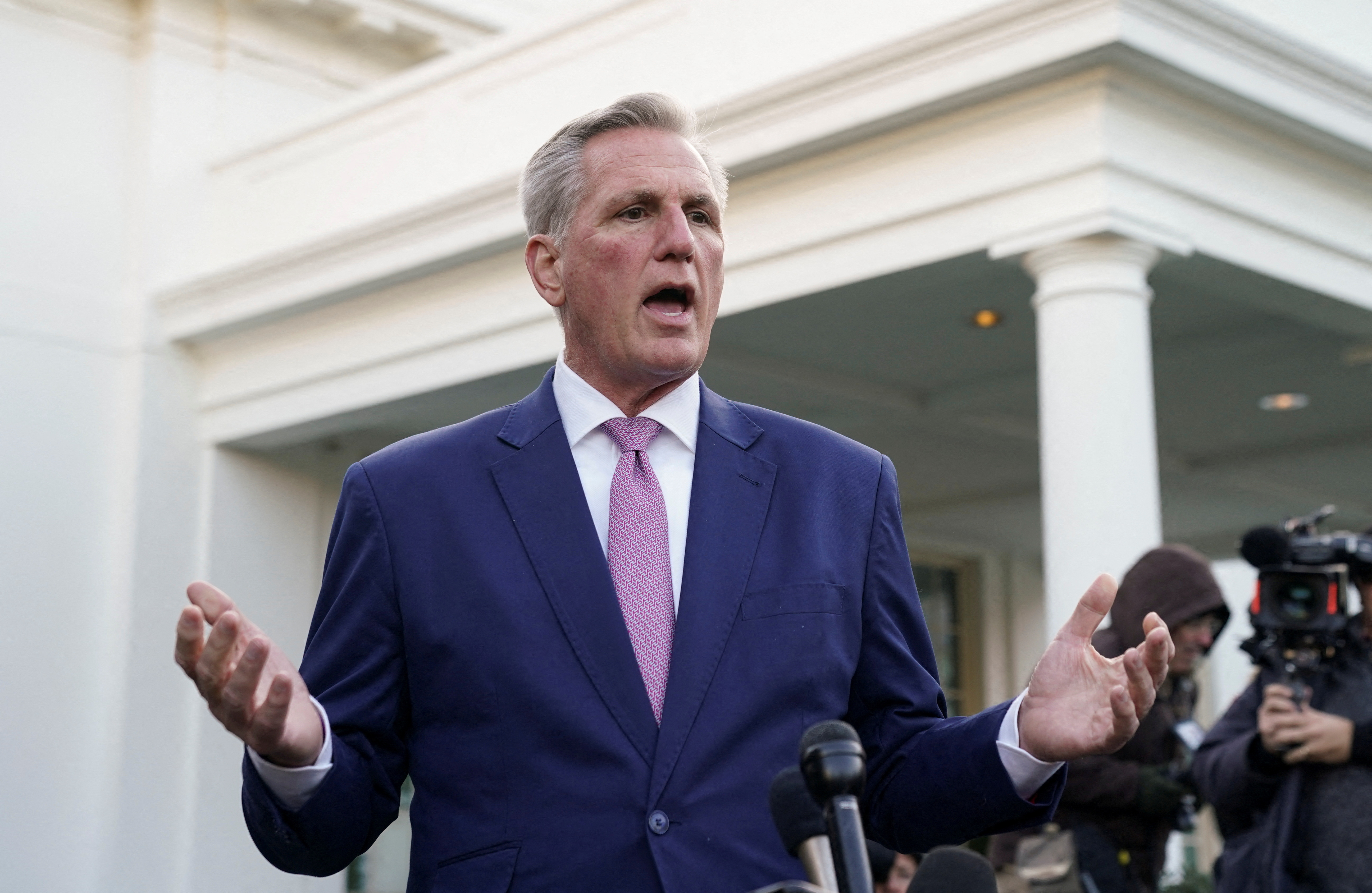
U.S. House Speaker Kevin McCarthy (R-CA) talks to reporters after he met with U.S. President Joe Biden to discuss the federal debt limit and spending, at the White House in Washington, U.S., February 1, 2023. REUTERS/Kevin Lamarque

Republican U.S. House Speaker Kevin McCarthy, locked in a standoff with Democratic President Joe Biden over raising the nation’s $31.4 trillion debt ceiling, plans to address the issue on Monday ahead of Biden’s annual State of Union address.

McCarthy, who has said he expects to meet with Biden a second time after sitting down with the president at the White House last week, plans to speak at 5:30 p.m. (2230 GMT) from his office in the House of Representatives.

The timing would allow him to get out in front of Biden on the debt ceiling, while reinforcing McCarthy’s role as the leading congressional negotiator in talks with the White House, according to a person familiar with the matter. His party holds a narrow majority.

House Republicans want to use the debt ceiling, which covers the costs of spending programs and tax cuts previously approved by Congress, as leverage to push spending cuts, after two years during which Biden’s Democrats controlled both the House and the Senate.

Biden is likely to address the debt ceiling, the U.S.-led pushback against Russia’s invasion of Ukraine, and his desire to overcome political divisions in the United States during his Tuesday night address to a joint session of Congress, which could give the president his largest television audience of the year.

Biden seemed to question McCarthy’s ability to keep Republicans in line last week, calling McCarthy “a decent man, I think,” but noting the concessions he made to become speaker in January. Those included changing a rule of the chamber to allow any member to call for a vote that would remove him.

Despite what appears to be a standoff, McCarthy emerged from a meeting with Biden last week saying he believed the two could find common ground.

A day later, McCarthy and Biden sat next to each other at the National Prayer Breakfast, and the speaker later told reporters that the president had agreed to meet again.

White House press secretary Karine Jean-Pierre said that the White House had been in touch with McCarthy’s staff on next steps. She declined to say when the two would speak again.


WP Radio
WP Radio
OFFLINE LIVE