Categories
Audio Sources - Full Text Articles

Kidney dialysis-related infection rates higher in U.S. minorities -report

2023-02-06T20:15:35Z

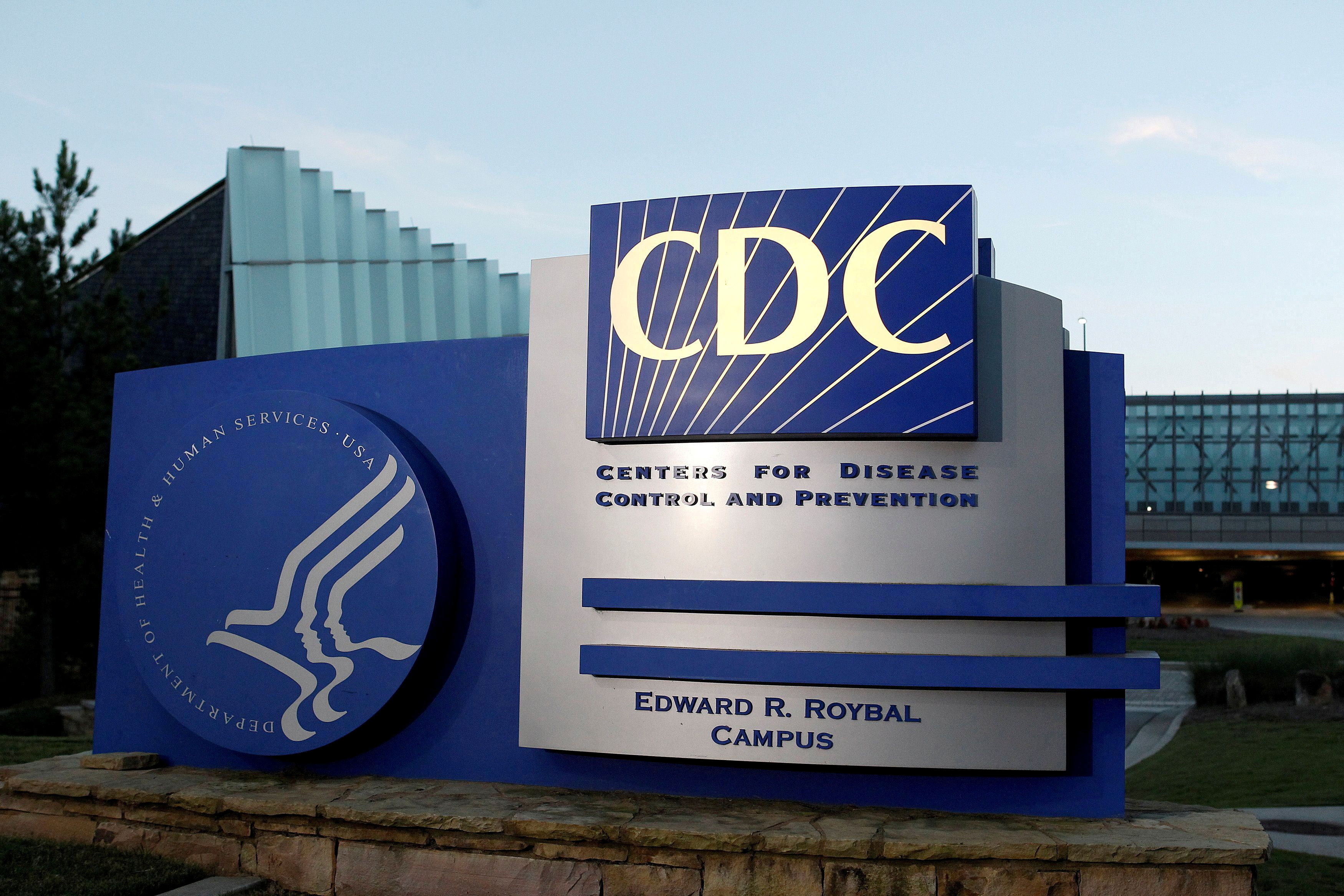
A general view of the Centers for Disease Control and Prevention (CDC) headquarters in Atlanta, Georgia September 30, 2014. REUTERS/Tami Chappell

Preventable bloodstream infections related to kidney failure treatment are more common in U.S. Blacks and Hispanics than in whites, according to a report from the Centers for Disease Control and Prevention (CDC) released on Monday.

Use of neck veins for administration of hemodialysis was the most important risk factor, but not the only one, researchers said in the CDC’s Morbidity and Mortality Weekly Report.

Using data from multiple national databases collected between 2017 and 2020, they estimated that potentially deadly Staphylococcus (or S.) aureus bloodstream infections occurred in 4,751 of every 100,000 Black patients receiving hemodialysis and 4,500 of every 100,000 Hispanic patients compared with 3,866 of every 100,000 white late-stage kidney disease patients receiving these treatments.

Roughly 40% of the infections were resistant to treatment with the antibiotic methicillin, the report found.

Patients whose kidney function falls below a certain level require a dialysis machine periodically to do the organs’ work of cleansing the blood.

The most significant risk factor for the serious and potentially deadly infection was administration of dialysis though a large “central vein” catheter in the neck.

Use of a central venous catheter for hemodialysis conferred a six-times-higher risk for S. aureus bloodstream infection compared to use of a port in the arm known as a fistula, the researchers found.

The highest use of central venous catheters was seen in Black patients ages 18 to 49.

Ideally, as kidney function deteriorates and patients get closer to needing dialysis, doctors recommend a surgical procedure to create the fistula, with an artery connected to a vein.

Without the fistula, dialysis must be administered via a catheter in a large central vein in the neck, which is associated with higher rates of complications, including infections, and should only be used temporarily.

Even after accounting for use of these catheters, the risk of S. aureus bloodstream infections was still higher in Hispanics than in whites.

“Central venous catheter use was the most important risk factor but didn’t entirely explain the higher risk in Hispanic patients,” said study leader Dr. Shannon Novosad, team lead for Dialysis Safety in CDC’s Division of Healthcare Quality Promotion.

There were also more S. aureus bloodstream infections in areas with higher poverty, crowding, and lower education levels.

“Overall these are complex relationships that deserve additional study,” Novosad said.

Her team called for research to help minimize central venous catheters use, address possible barriers to use of safer routes for hemodialysis access, and improve education of patients and healthcare providers.

“We need to focus interventions that we know work to prevent infections, specifically in these (high-risk) groups,” Novosad said.

Categories
Audio Sources - Full Text Articles

The quality of Republican hatred

robert-harrington.jpg

Help support Palmer Report! Our articles are all 100% free to read, with no forced subscriptions and nothing hidden behind paywalls. If you value our content, you’re welcome to pay for it:

Pay $5 to Palmer Report:

Pay $25 to Palmer Report:

Pay $75 to Palmer Report:


Support Palmer Report clicking here

Pay $5 to Palmer Report:

Pay $25 to Palmer Report:

Pay $75 to Palmer Report:


I don’t follow the Harry and Meghan spectacle. It’s not my thing. But certain of their peripheral issues penetrate my conscious mind from time to time — by osmosis if nothing else.

For instance, I comprehend the very human impulse to air dirty laundry in public. I’ve done a bit of it myself in the pages of Palmer Report over the years. So I get why Meghan and Harry feel the need to explain themselves to Oprah and the world and write books and make Netflix videos and so on, however unfortunate the backlash for that impulse may be. But it has occurred to me of late that there’s something more going on here, and this recent trauma among the British royals has an eerie resemblance to American politics and, specifically, Republican politics of bigoted hatred.

Permit me to explain. I recently learned from my wife that the huge tsunami of tabloid disdain and outright hatred for Meghan Markle didn’t begin until the media learned that she was half black. Meghan’s agent noticed this. He noticed that the hatred, extreme criticism and unhealthy interest in Ms. Markel’s pedigree began shortly after a photo of her mother, Doria Ragland, came to light. Ms. Ragland is a woman of colour.

All this reminded me that, back when he was President, Barack Obama was hated in certain quarters of the United States with a virulence that Joe Biden hasn’t remotely approached. Hatred towards people of colour these days is necessarily disguised as something else. But it always comes down to the same thing. Racial bigotry.

Of course, if the person in question is female and intelligent then the hatred also becomes misogyny and is even more intense on that account. I’m thinking of the recent successful effort to remove Minnesota congresswoman Ilhan Omar from the powerful foreign affairs committee. I’m thinking of the enormous fund of hatred (and death threats) that Alexandria Ocasio-Cortez routinely attracts.

I’m thinking of other things too. Permit me to wander afield again. Back in 1974, when I was a lad of 18, I read a remarkable biography called “Thomas Jefferson, an intimate history,” by Fawn M. Brodie. Ms. Brodie was the first to publish (but not the first to notice) in an important biography the rumour that Jefferson had had an ongoing affair with one of his slaves, Sally Hemings. The book was brilliant, and Ms. Brodie’s thesis about Sally Hemings was compellingly and superbly defended.

The book inspired a virulent (there’s that word again) backlash among traditional historians, notably Jefferson biographer Dumas Malone. You could feel the white hot rage smouldering in the pages of Malone’s review. It interested me at the time that Malone was perfectly fine with Jefferson’s dalliance with the very married white woman Maria Cosway. But he would not tolerate the suggestion that his very own Saint Thomas would ever — there’s no other word for it — “stoop” to conjugal relations with a single black woman.

Of course, Malone didn’t put it that way. He was far too clever. Such talk would have been anathema, even back in 1974. But I could not escape the impression that I was right about the source of Malone’s indignation. That and the fact that the controversial book in question was written by a woman. And that impression remains unchanged to this very day.

Of course, the science of DNA has placed the certainty of Jefferson’s crime beyond mere speculation. It is proven that he used his position of enormous power to have his way with a woman who had no choice, willing or not. But the critical reaction wasn’t about that. It wasn’t about poor Sally. She meant nothing to critics — less than nothing. It was all about Tom and his precious, bleeding reputation.

And not much has changed since. Can you imagine, even if she’d done absolutely everything right, Meghan Markle rising to the beloved status of, say, Diana, Princess of Wales? Of course not. Not in a million years. And if you imagine otherwise your imagination might have a touch of delusion.

What’s more, have you noticed how much more intense Republican hatred for Ilhan Omar is than it is for her white, male counterpart, Eric Swalwell? Notice that AOC is constantly criticised while Republican criticism for the likes of Swalwell and Adam Schiff is comparatively light. There can be no doubt that not only is bigotry alive and well in the world, it carries us all in a kind of tidal wave of influence. It is so prevalent that we hardly notice it, the way fish hardly notice water.

There is a hierarchy of disdain. Greta Thunberg gets a certain amount of it precisely because she’s female (and highly intelligent.) Kamala Harris gets a little more because she’s both female and a woman of colour. But the fund of hatred, nurtured mostly (though not exclusively) by Republicans, has its unmistakable roots in extreme bigotry and loathsome white supremacy.


Ordinary hatred of the garden variety kind passes to white men who rise to the “error” of being mere Democrats. The most viciously hated people on the Democratic side of the 118th Congress are members of the so-called “squad,” composed of nine people of colour, seven of whom are women. Disdain is a measurable quantity for which its intensity is a function of race and gender.

In short, we are a long, long way from enlightenment. Anyone who thinks racism has no influence in today’s politics and personal associations needs to rethink that position. And, as ever, ladies and gentlemen, brothers and sisters, comrades and friends, stay safe.

Support Palmer Report clicking here

Pay $5 to Palmer Report:

Pay $25 to Palmer Report:

Pay $75 to Palmer Report:

Support Palmer Report by clicking here

Pay $5 to Palmer Report:

Pay $25 to Palmer Report:

Pay $75 to Palmer Report:

The post The quality of Republican hatred appeared first on Palmer Report.

Categories
Audio Sources - Full Text Articles

Democrats sent by Kamala Harris’ advisors to praise her actually confided to the New York Times that they’d ‘lost hope in her’

Kamala HarrisVice President Kamala Harris speaks in front of President Joe Biden advocating for the passage of voting-rights legislation at the Atlanta University Center Consortium, on the grounds of Morehouse College and Clark Atlanta University on January 11, 2022.

AP Photo/Patrick Semansky

  • High-ranking Democrats confided in the New York Times that they’ve lost hope in Kamala Harris.
  • Harris’ aides expected the Democratic sources to speak well of her to the Times, but they didn’t.
  • The sources told the Times they don’t believe Harris has what it takes to be a leader of the party.

Dozens of Democrats anonymously told the New York Times that they’ve lost hope in Vice President Kamala Harris — and they were sent by Harris’ own people to speak about her with the Times.

“Even some Democrats whom her own advisers referred reporters to for supportive quotes confided privately that they had lost hope in her,” the Times reported as part of an article on the party’s confidence in Harris published on Monday.

The Times reported that the Democrat sources hold prominent positions in Capitol Hill and around the country, and some even helped get Harris on Biden’s 2020 presidential campaign ticket. Yet, they told the Times that they’ve started to doubt Harris’ ability to be a potential future leader of the Democratic party.

According to polling site FiveThirtyEight, Harris has a 39% approval rating, which is four percent lower than President Joe Biden’s 43.2% approval rating.

Read the original article on Business Insider
Categories
Audio Sources - Full Text Articles

Southwest Airlines reimbursed a couple for a $500 used car they bought to drive home after their flight was canceled

Canceled flight travelers line for booking in front of a Southwest Airlines sign at Denver International Airport in Denver, ColoradoSouthwest Airlines cancelled more than 16,000 flights in late December ba cause of severe weather and cascading network failures.

Hyoung Chang/Getty Images

  • A couple bought a used car to drive home after being stranded by Southwest flight cancellations.
  • The airline reimbursed the couple $500 for the car. 
  • Southwest canceled more than 16,000 flights in late December, and is still processing refunds. 

Over a month after its infamous operational meltdown, Southwest Airlines is being “really generous” as it processes requests for refunds and reimbursements, according to CEO Bob Jordan. 

“We’re being really generous, as you would expect,” Jordan told Axios. “We had an instance where a couple bought a $500 used car to drive home. We covered it and bought them a car, so to speak.”

That $500 is one part of the millions of dollars of reimbursements the airline is paying out after severe weather and cascading network failures led to the cancellation of more than 16,000 flights in December, stranding thousands of passengers.

The operational disruptions cost the airline around $800 million in the fourth quarter of 2022. 

Other refunds included giving out as much as 50 billion airline miles to affected customers. 

While some customers are benefitting from Southwest’s “generosity”, others have told Insider they’re still waiting for refunds a month after Secretary of Transportation Pete Buttigieg wrote a stern letter to Jordan telling Southwest Airlines to “provide prompt refunds” for all its canceled flights, in 7 to 20 business days.

Read the original article on Business Insider
Categories
Audio Sources - Full Text Articles

Kamala Harris’ aides needed to buy her new desk chairs because they weren’t the right size for a 5-foot-2-inch woman

Vice President Harris joins NARAL Pro-Choice America President, Mini Timmaraju and Groundswell Fund Senior Capacity Building Director, Julieta Garibay for a moderated discussion on reproductive rights at LBJ Presidential Library on October 08, 2022 in Austin, Texas.Vice President Harris joins NARAL Pro-Choice America President, Mini Timmaraju and Groundswell Fund Senior Capacity Building Director, Julieta Garibay for a moderated discussion on reproductive rights at LBJ Presidential Library on October 08, 2022 in Austin, Texas.

Rick Kern/Getty Images for NARAL Pro-Choice America

  • Kamala Harris’ aides had to replace the chairs in her office because they were too big for her. 
  • The chairs had been the right size for her predecessors, all men of average height, the New York Times reported.
  • Harris, the first female Vice President, stands at just 5-feet-2-inches tall. 

When they first arrived at the Office of the Vice President in 2021, Kamala Harris’ aides had to buy the nation’s first female VP all-new desk chairs because the ones already there were too big.

Current and former Harris aides revealed a series of hiccups the former senator has faced since stepping into office in a New York Times article published Monday. The piece detailed concerns that Harris had failed to establish herself as a political force within her party, 

Jamal Simmons, Harris’ former communications director, told the Times that he had to change all of the desk chairs in Harris’ office to suit her height.

The chairs already in the office were suited for the “average male height” of those who came before her, the Times reported. 

“She forces us to recalibrate our assumptions,” Simmons told the Times. 

Harris previously said she’d “proudly” run with Biden again in 2024 if he seeks reelection. But CNN previously reported that Harris and her allies felt sidelined by the White House and passed around an Onion article mocking her treatment.  

Read the original article on Business Insider
Categories
Audio Sources - Full Text Articles

The stock market rally is about to crumble, and investors should expect zero upside for equities through the end of the year, Goldman Sachs says

NYSE trader

Photo by Spencer Platt/Getty Images

  • The impressive year-to-date rally in the stock market is about to crumble, according to Goldman Sachs.
  • The bank said the S&P 500 has more downside than upside between now and the end of the year due to high valuations and weak earnings growth.
  • “The debt ceiling deadline later this year adds uncertainty to the path for US stocks,” Goldman said.

Goldman Sachs is growing more and more skeptical of the impressive year-to-date rally in the stock market, according to a Friday note.

The S&P 500 is up more than 7% year-to-date and eclipsed the all-important 4,000 price level two weeks ago. But according to Goldman, 4,000 is about as far as the S&P 500 is going to go between now and the end of the year.

That’s because a soft landing and above-trend growth is already priced into US stocks, and valuations are still at historically elevated levels.

“Even if a soft landing comes to fruition, as in our baseline forecast, such an outcome should not lead to substantial equity market upside,” Goldman Sachs’ chief US equity strategist David Kostin said.

Meanwhile, the S&P 500 currently trades at a forward price-to-earnings ratio of 18.4x, “and at an even higher ‘effective’ multiple if one accounts for the fact that most investors appear to expect earnings well below those of analyst estimates,” Kostin explained.

That means the current price-to-earnings multiple falls in the 87th percentile since 1976, according to the note.

“Valuations are elevated vs. history and will be constrained by an eventual rise in interest rates. Even avoiding recession, earnings are unlikely to grow substantially in 2023,” Kostin said.

Kostin expects S&P 500 earnings per share to flatline in 2023 and grow 5% in 2024. That’s compared to consensus estimates calling for 1% growth this year and 12% growth in 2024. “Based on our conversations, equity investors are largely aware that consensus estimates are too high,” Kostin said.

Kostin did raise his three-month S&P 500 price target to 4,000 from 3,600, but kept his year-end price target unchanged at 4,000. A decline to 4,000 represents potential downside of 3% from current levels.

While the stock market appears rich, there are plenty of alternative assets that appear attractive, according to Kostin, which include international stocks, fixed income, and cash.

Another unknown is the potential volatility related to the US debt ceiling. Legislators have until June to strike a deal to raise the borrowing limit or have the US default on its debt. That, combined with a potential recession, means US stocks aren’t a great deal to investors right now.

“The combination of limited upside in our base case and substantial downside risk if the economy dips into recession makes for a challenging distribution of outcomes for US equity investors, especially relative to the alternatives,” Kostin said.

In a hard-landing economic scenario, Kostin expects the S&P 500 to fall to 3,150, which represents potential downside of 24% from current levels.

Read the original article on Business Insider
Categories
Audio Sources - Full Text Articles

Marines Charged in Capitol Riot Got Highly Sensitive Spy Jobs After Jan. 6

A Marine charged with taking part in the January 6 insurrection at the U.S. Capitol was transferred into a highly sensitive intelligence assignment at the headquarters of the National Security Agency after the violent attempt to overturn the 2020 election results, Marine Corps officials have acknowledged. The Marine confessed to his role in the Capitol riot last summer during a security clearance interview, but was not charged until last month.

Following his alleged participation in the 2021 insurrection, Sgt. Joshua Abate, a special communication signals analyst, was assigned to the Marine Cryptologic Support Battalion, which acts as a liaison between the Marines and the NSA at Fort Meade. The transfer into the liaison unit after the Capitol riot placed Abate inside one of the most sensitive facilities in the entire U.S. government.

marines-still-embed-marked

From left to right, Micah Coomer, Joshua Abate, and Dodge Dale Hellonen are seen inside the U.S. Capitol building on Jan. 6, 2021.

Still: The Intercept/ITN, Getty Images


Two other Marines charged with entering the Capitol alongside Abate on January 6 were also given sensitive new intelligence assignments within the Marine Corps after the insurrection, according to statements from the Corps. Sgt. Dodge Dale Hellonen was assigned to the 3rd Marine Raider Support Battalion, which provides intelligence support to the Marine Forces Special Operations Command at Camp LeJeune, North Carolina. And Cpl. Micah Coomer was assigned to the Marines 1st Radio Battalion, which provides signals intelligence and electronic warfare support for the Marine Expeditionary Force based in Camp Pendleton, California. Like Abate, Hellonen and Coomer are highly trained in communications and signals intelligence.

The three Marines’ assignment to highly sensitive intelligence jobs after they allegedly joined in the January 6 riot has not been previously reported. All three were charged last month in connection with their roles as part of the violent mob that forced members of Congress to flee for their lives and delay certification of the 2020 election results. Abate, Hellonen, and Coomer are accused of offenses including trespassing, disorderly conduct, and illegal parading or picketing in a restricted building.

The Marine Corps initially released little information about the three men; the service provided only brief descriptions of their current assignments and did not publicly acknowledge that all were given new assignments after January 6. “We are aware of an investigation and the allegations,” the Corps wrote in its initial terse statement after the charges against the three Marines were made public. “The Marine Corps is fully cooperating with the appropriate authorities in support of the investigation.”

But after The Intercept independently discovered that all three Marines had been given new intelligence assignments following the insurrection, the Corps confirmed that they were all transferred to new roles after January 6, 2021, and provided information about their assignments at the time of the insurrection. Abate and Hellonen also received promotions in rank following the Capitol riot, according to the Corps.

The reassignments raise serious new questions about the ability of both the military and the U.S. intelligence community to identify right-wing extremists in their midst. Since the Capitol riot, the Pentagon has claimed that it has been trying to root out extremists, but there have been few signs that the problem has yet been reduced or even that the scale of the threat has been adequately measured. What’s more, the Pentagon’s efforts are now being impeded by congressional Republicans, who are seeking to block initiatives to oust right-wing radicals from the military. An early warning of Republican opposition came last summer, when the Senate Armed Services Committee voted in favor of legislative language designed to halt Pentagon attempts to counter extremist influence in the military’s ranks. Every Republican senator on the panel voted to block the anti-extremist training, and they succeeded when Maine independent Sen. Angus King joined them.

Now that Republicans control the House, they are vowing to go after what they call “woke” policies at the Pentagon; efforts to root out right-wing extremists are certain to be among their prime targets.

While Pentagon officials have talked extensively about the problem of right-wing extremism in the military, the U.S. intelligence community has so far been much more secretive about the issue. Intelligence officials have reported on the rising threat posed by white nationalism and right-wing domestic terrorism, but there is no public data on the extent of the problem within its ranks and little evidence that they are taking significant action to prevent the spread of extremism inside their own agencies.

Intelligence officials declined to discuss whether any investigation is being conducted to determine how Abate, Hellonen, and Coomer could be given such sensitive intelligence positions after allegedly participating in the January 6 mob. An NSA spokesperson declined to comment on Abate’s role at the Marines NSA liaison office and refused to say whether the NSA is conducting a counterintelligence investigation to examine whether Abate compromised any operations. A spokesperson for the Office of the Director of National Intelligence also declined to comment.

The three Marines are not the first with intelligence community links to be charged in connection with the January 6 insurrection. Last September, Hatchet Speed, a Navy reservist who had previously worked with the NAVWAR Space Field Activity at the National Reconnaissance Office, which operates the nation’s spy satellites, was charged after telling an undercover FBI agent that he had gone into the U.S. Capitol with members of the Proud Boys, an extremist group that was at the center of the insurrection.

It seems clear from interviews and court documents that investigators were slow to identify Abate, Hellonen, and Coomer. At the time of the insurrection, the three men were friends and were all assigned to the Marine Corps Information Operations Center at Quantico, Virginia, about 30 miles south of Washington. The center is involved in psychological warfare training and development for the Marines, among other functions.

On January 6, 2021, the three went to the U.S. Capitol together, entering the building at 2:20 p.m. through the Senate wing door, according to video footage and photographs taken during the attack. They were inside the Capitol for about an hour in the midst of the insurrection, according to the criminal complaint filed by the government in their case. Hellonen was carrying a yellow “Don’t Tread on Me” flag.

The three began roaming the halls with the mob that had flooded into the Capitol. At 2:32 p.m., they entered the Capitol rotunda, placed a red MAGA hat on a statue, and took photos with it, according to the complaint.

They continued to walk through the building, using their cellphones to take photos and videos.

The three got away without being immediately identified. Abate later said that “he heard how the event was being portrayed negatively and decided that he should not tell anybody about going into the U.S. Capitol Building,” according to the complaint.

Coomer was apparently the first to be identified by the FBI. On August 13, 2021, a federal search warrant was served on Facebook authorizing the search of the Instagram account of “mrcoomer08.” Coomer had posted photos from inside the Capitol on January 6 to his personal account, with the caption: “Glad to be apart [sic] of history.” In a separate Instagram conversation on January 31, 2021, Coomer said that “everything in this country is corrupt. We honestly need a fresh restart. I’m waiting for the boogaloo.”

“What’s a boogaloo,” the user he was talking to asked, according to the government’s complaint.

“Civil war 2,” Coomer replied.

In addition to acknowledging his involvement in the insurrection through his social media posts, Coomer was also identified by a witness in the Marines who picked him out of footage taken inside the Capitol, the complaint says.

It took investigators nearly another year to confront Abate about his presence in the Capitol that day. In June 2022, Abate was interviewed as part of his security clearance process, and admitted going into the U.S. Capitol during the insurrection with “two buddies.”

Abate said that as they walked through the rotunda, one of his friends smoked a cigarette and they “tried not to get hit with tear gas,” according to the complaint. Abate also admitted that he had decided to keep his involvement secret. When contacted by phone, relatives of Coomer and Hellonen declined to comment on the case. David Dischley, an attorney for Abate, said the next hearing in the case is scheduled for March 21 in federal court in Washington.

The post Marines Charged in Capitol Riot Got Highly Sensitive Spy Jobs After Jan. 6 appeared first on The Intercept.

Categories
Audio Sources - Full Text Articles

As non-Orthodox movements weaken, rabbi ponders what’s next in new book

schiffrabbi.jpeg

This article originally appeared in the Pittsburgh Jewish Chronicle and was reprinted here with permission.

Rabbi Danny Schiff’s new book, “Judaism in a Digital Age: An Ancient Tradition Confronts a Transformative Era” (Palgrave Macmillan), is part history, part prophecy — but most importantly, it’s a warning to act before it’s too late.

This is not a book to make its audience feel good. Rather, it’s a book urging us to take seriously the Jewish mandate to, as Schiff writes, “resume its role as an ideas generator” as the world is confronted by a host of moral dilemmas emerging from the innovations of the digital age.

The 225-page volume is a well-researched and thoughtful analysis of why the current iterations of non-Orthodox Judaism are losing strength in a post-modern age, and posits those movements will not be the Jewish vehicles relevant to a rapidly changing world and its accompanying challenges.

Schiff received ordination, as well as a master’s and doctorate in Hebrew Letters, from the Hebrew Union College – Jewish Institute of Religion, and is the Jewish Federation of Greater Pittsburgh’s community scholar.

He writes eloquently and clearly as he lays bare his theories on why Conservative and Reform Judaism continue to decline in affiliation, his tone never deviating from respectful. He credits Conservative and Reform Judaism with serving their purposes well for more than a century, explaining their significance as conduits easing Jewish integration into American society.

But, beginning around 1990, as technology started to advance at breakneck speed, the world shifted into what Schiff calls “a digital age” — and everything began to change.

“Modernity is over,” Schiff writes. “Its questions, its societal structures, and its struggles are passé. So is its Judaism. Sooner or later, Reform and Conservative Judaism will become entries in the history books, alongside modernity itself. …This assertion is not intended as a mark of disrespect for the movements of modernity. Quite the opposite. No movement lasts a thousand years — nor should it. Movements belong to a specific time that calls forth a particular response. They belong to a certain thought milieu. For any movement to retain relevance and galvanize hundreds of thousands of adherents well into a second century of existence is no small feat. It is an accomplishment worthy of admiration.”

This proclamation, essentially a death knell for Conservative and Reform Judaism, is jarring. But as Schiff dives into the hows and whys of the waning of modernity’s Judaism, any honest reader will be hard-pressed to disagree.

While thought leaders in the non-Orthodox movements have struggled to find ways to bolster affiliation and commitment for decades, Schiff proffers that their membership challenges are not due to their “institutions, programs, or procedures.”

“Fundamentally,” Schiff writes, “their challenge is one of ideas. The vitality of any enterprise is inseparable from the relevance, importance, and vibrancy of its core vision. The foundational ideas of the Conservative and Reform movements were crafted as cutting-edge concepts for a societal and intellectual milieu that existed when horses were the dominant mode of transportation. They were designed to enable Judaism to contribute its wisdom for uplifting humanity as effectively as possible within the realities of that period. Since then, the insights of that earlier age have been patched and tweaked to adapt to the conditions of the passing decades. It is, however, unrealistic to expect that ideas that are derivatives of a nineteenth-century response to modernity will be well calibrated to a vastly transformed epoch in which self-driving cars controlled by artificial intelligence ply the streets.”

Schiff writes with the conviction of one who has spent years pondering and researching the subject — which he has. And his words remain elegant and accessible even as he portends alarming advancements in artificial intelligence, gene editing and longevity that should be the stuff of science fiction but instead are real.

Judaism, he contends, “will need to grapple with the parameters of what it means to be human — and even whether there should be humans at all.”

The book gives a comprehensive reckoning of technological developments that began with the rise of the internet, integrating insights from respected futurists including Ray Kurzweil and Yuval Noah Harari, to conjure a map of where we are most likely headed — if we do not pause to decide if that is indeed where we want to go.

Judaism, Schiff submits, needs to have a seat at the table to weigh in on the moral implications of these advancements before they get out of hand.

“We bear responsibility for our world and its destiny,” he writes. “Our purpose is not to be passive observers of the cosmos but to be the keepers of life itself.”

And, Schiff writes, it will take a reimagined Judaism, relying on Jewish ideas, community and practice — rather than one obsessed with affiliation numbers — to carry us into the next century and beyond.

“Evaluating which elements will best enable Judaism to maximize its contributions in the decades ahead is a different task from assessing what it will take to reinvigorate a commitment to Judaism among a large number of Jews,” according to Schiff. “The first concern relates to how Judaism achieves its purpose. The second focuses on strategies for engaging Jews. While there is an understandable interest in the second question, the first is more consequential. After all, more than Jewish tradition has been concerned with keeping the majority of Jews Jewish, it has been devoted to making Judaism pertinent.”

The book is a must-read for anyone concerned about the future, not just of Judaism, but of the human race.

The post As non-Orthodox movements weaken, rabbi ponders what’s next in new book appeared first on The Forward.

Categories
Audio Sources - Full Text Articles

On a witty new TV show, American Jews lust after Israel — literally

Chanshi is a nice Jewish girl from a nice Brooklyn Chabad family. She’s engaged to a nice Chabad boy, Mendy. They’re looking at wedding halls. Except when we meet her, Chanshi is aboard a last-minute flight to Israel, fantasizing about making out with about a dozen Israeli soldiers, all while standing on top of a tank.

Many American Jews fetishize Israelis — look at the way participants on any Birthright trip lust after the soldiers. Lots of Israelis also fetishize Americans, probably because of all the horny tourists. And this reductive sexualization is the starting point for Chanshi, an incisive new comedy series from Israel’s HOT network, written by and starring Brooklyn native Aleeza Chanowitz. (The show just had its U.S. premiere at Sundance, and is looking for a distributor.)

Chanshi has always chafed against the constraints of her Hasidic life in Brooklyn; she has long dreamed of Israel, which she idealizes as a land of tall, dark Israeli men, all of whom are waiting to jump her bones. So, without telling her parents or, really, her fiancé, she hops aboard a flight shortly before her own wedding is due to take place.

Upon landing, she shows up, unannounced on the doorstep of her high school best friend Noki, another good Orthodox girl who made aliyah years ago and is about to get married. It’s the first moment, of many, that Chanshi comes up against the way that the realities of Israel don’t quite match up with her fantasies. Noki does not live a life full of flirtation and hot sex, but instead lives within the insular, Anglo bubble of olim, or immigrants to Israel. And it’s just as religious a world as where Chanshi came from. But, undeterred, she decides to make aliyah and sets out to find her imagined Israel.

That opening fantasy; Chanshi kisses each man, with plenty of tongue, on her way off the tank. Photo by HOT

Chanshi bounces back and forth between this American religious bubble and the Israel of Israelis, neither of which is quite what Chanshi expects. And despite the fact that the show is something of a screwball comedy — Chanshi’s attempts to flirt with passing soldiers by licking tahini off her lips are peak cringe — its depictions of each community are true to life, with instantly recognizable details.

There’s the stumbling, painfully American-accented Hebrew of the olim and the fascination with IDF soldiers. The group of kippah srugah men — meaning they’re wearing crocheted kippahs, associated with religious Zionism in Israel — watching a nature documentary in their Nachlaot apartment, popping sunflower seeds between their teeth. A scene at the Israeli Ministry of the Interior, known for its endless lines and callous clerks, vividly brought back a time when I sobbed sitting on the Jerusalem sidewalk after attempting to navigate a visa appointment there. (Chanshi, upon learning she has to prove she’s Jewish to make aliyah, replies in confusion, “But I’m so Jewish.”)

But it’s in Chanshi’s hunt for her racially loaded ideal of “tall dark Israeli men” that the show delivers its most penetrating commentary on Israeli-American relations. After inviting herself into the house of a strange man she says looks “like a dark sexy Arab,” she aggressively tries to kiss him. When he shoves her off, saying he’s religious and shomer negiah, meaning he doesn’t touch the opposite sex, she flatly tells him it’s not true. After all, she calls the dark Israeli men of her dreams —  and we all know she means Mizrahim — “dark meat, because they’re delicious.” She imagines them as strong, powerful, in some way primitive, and even though she’s drawn to that image, it’s hardly human. She’s never considered that they could be as religious as she is. (Or at least as religious as she is supposed to be.)

It’s a deft and witty presentation of the Ashkenazi superiority complex that plagues both American and Israeli Judaism. And it’s one of many scenes that showcase the diversity that is actually present in Israel, subverting stereotypes of both the sabra soldiers and sequestered Haredim.

If you’ve never set foot in the dank lobby of the Israeli Ministry of the Interior or thought about the meaning of a crocheted kippah, don’t worry; Chanshi has plenty for you, too. Though the show is from Israeli directors — Aaron Geva and Mickey Triest — and an Israeli network, it’s as much for and about American Jews as it is Israelis. At least half of it is in English and much of the cast is American, including Henry Winkler, aka the Fonz.

For better or worse, Israeli and American Jews are inextricably intertwined — a fact that Chanshi embodies in both its plot and its production. Yet still, we often don’t truly see each other.

The post On a witty new TV show, American Jews lust after Israel — literally appeared first on The Forward.

Categories
Audio Sources - Full Text Articles

Pentagon Won’t Explain Misleading Statements About Trump-Era Chinese Spy Balloons

The Department of Defense won’t identify the Pentagon official who this weekend told reporters that the Trump administration let three Chinese spy balloons fly over the country without noting the critical fact that these incidents went undetected by the military.

The “senior defense official” told journalists in a background conference call Saturday that Chinese government surveillance balloons “transited the continental United States briefly at least three times during the prior administration.” Democrats seized on the Pentagon’s disclosure to defend President Joe Biden amid outcry that China’s balloon was allowed to travel unimpeded for several days across the continental United States, only to see the claim fizzle less than 24 hours later when other anonymous officials said the balloons were discovered only after former president Donald Trump left office.

“This information was discovered after the prior administration left,” an official told the Wall Street Journal on Sunday. A senior administration official said the same to CNN, but did not describe when or how those previous intrusions were uncovered.

The initial statement from the “senior defense official” gave no indication that the military failed to detect the balloons, putting Trump’s administration in a much different situation than Biden’s.

Chinese “government surveillance balloons transited the continental United States briefly at least three times during the prior administration and once that we know of at the beginning of this administration, but never for this duration of time,” the unnamed official said, according to a transcript of the briefing.

The discrepancy comes amid revelations that the Biden administration withheld information from the public about the balloon out of concerns that the disclosure would derail Secretary of State Antony Blinken’s planned visit to China. The administration was forced to acknowledge the balloon only after a newspaper in Billings, Mont., spotted it last week. Air Force fighter planes on Saturday afternoon shot down the balloon off the coast of the Carolinas.

The identity of the senior defense official could signal whether the Pentagon is also helping Biden combat the public relations crisis over the balloon. A Pentagon spokesperson denied the Washington Free Beacon‘s request to identify the senior official, or say whether the individual is a political appointee or career employee.

“As the briefing was conducted on background, we are only attributing remarks to a senior defense [official] and senior military officials,” a Pentagon spokesperson told the Free Beacon.

The senior defense official made the remarks about the Trump-era intrusions in a conference call with reporters from CNN, the Associated Press, the Washington Post, the New York Times, the Wall Street Journal, CBS, Fox News, and Reuters. A transcript of the call shows that the reporters asked follow-up questions, but none about the three previous intrusions.

The post Pentagon Won’t Explain Misleading Statements About Trump-Era Chinese Spy Balloons appeared first on Washington Free Beacon.

WP Radio
WP Radio
OFFLINE LIVE