Categories
Audio Sources - Full Text Articles

Small California town wonders if restored floodplain prevented disaster

2023-02-04T11:14:04Z

When devastating floods swept California last month, the community of Grayson – a town of 1,300 people tucked between almond orchards and dairy farms where the San Joaquin and Tuolumne rivers converge – survived without major damage.

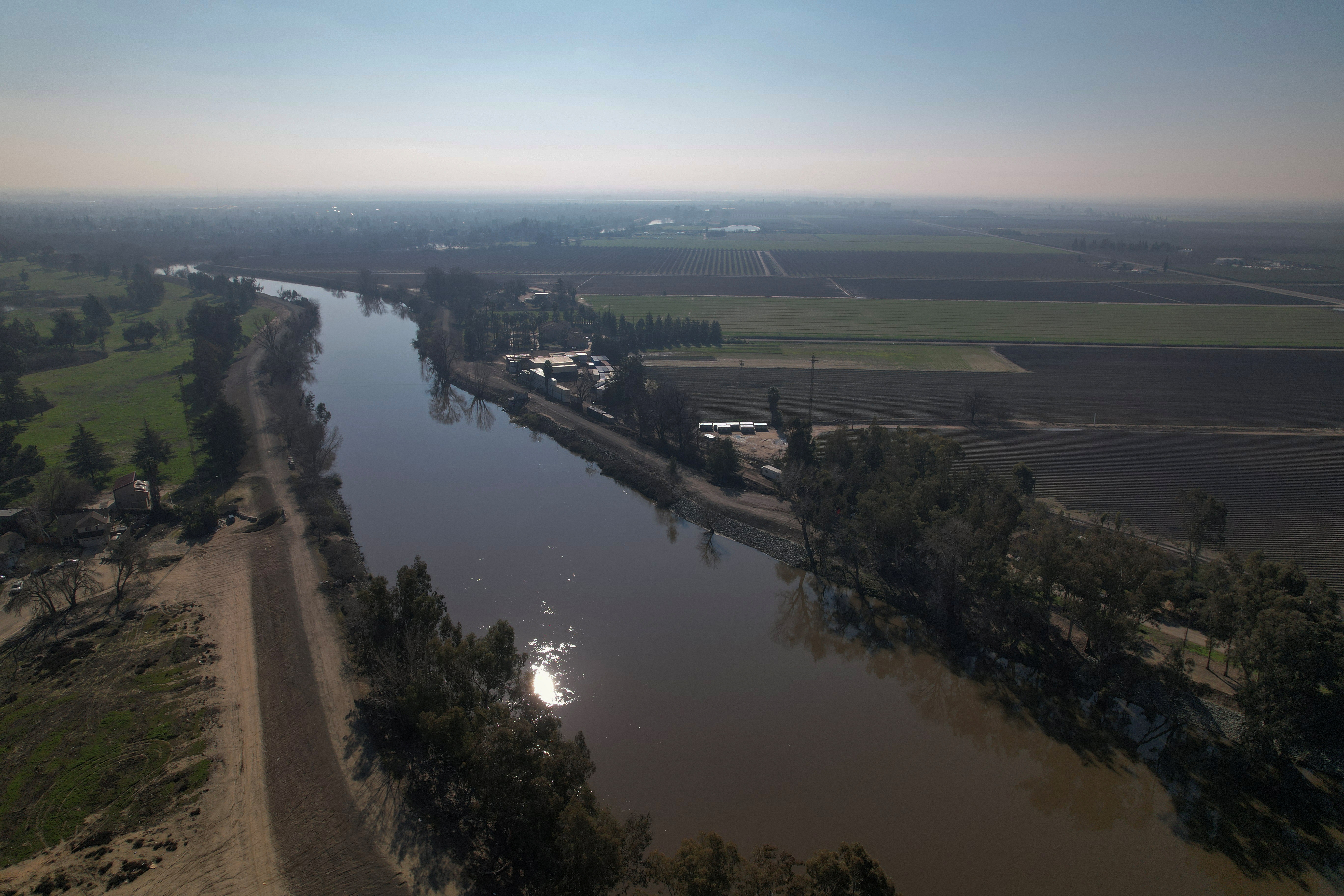
In the minds of some townspeople and experts, that was thanks partly to the 2,100 acres (850 hectares) of former farmland just across the San Joaquin that have been largely restored to a natural floodplain.

Advocates for floodplain restoration say it can help solve California’s dual dangers of flooding and drought, replenishing groundwater for future drought relief while protecting towns from the catastrophic flooding that scientists predict will come with climate change. Restoration also improves wildlife habitat.

“It performed exactly as planned,” said Julie Rentner, president of the non-profit organization River Partners, which bought the land off private owners and has revived much of the natural landscape, enabling floodwaters that had once been confined by levees to meander across the plain, recharging the aquifer below.

The $50 million project was funded mostly by federal, state and local grants, Rentner said. Last month came the first major test since the landscape was reshaped by degrading levees, creating swales and, with the help of about 40 volunteers from town, exchanging invasive plant species for native ones.

One of the volunteers was David Guzman, who works in an almond processing plant and lives right up against a slough of the San Joaquin River.

“It was really scary, man, the river coming up all that time. But all that work we’ve done, planting out back here, I think it did help with the water,” Guzman said.

Just last year, Guzman and his neighbors had to evacuate as wildfire tore through the dried-out slough, a reminder of the extremes created by climate change.

“We’re afraid of water and we’re afraid of fire,” said Emerita Brambila, 80, a neighbor who also lives on the river’s edge.

It is impossible to determine for certain that the floodplain saved Grayson. Years of drought had also drained the river of its fury. But some experts say floodplain restoration can help spare adjacent towns, and they envision a day when a proliferation of projects will prevent wider flooding throughout the state.

“That is our future and I think we will get there eventually. We just might see a lot of pain before that happens,” said Carson Jeffres, senior researcher for the Center for Watershed Sciences at UC Davis.

River Partners has restored 20,000 acres (8,100 hectares) on 200 sites over 25 years at a cost of $185 million, and has identified another 100,000 acres for floodplain restoration across the San Joaquin Valley. Other NGOs and the state also restore floodplains.

Future drought relief or flood protection may take years to measure, but the fish have benefited from the January storms already.

At the Willow Bend floodplain along the Sacramento River, amid the sparsely populated farmland of Colusa County, another recent restoration was just tested for the first time. Jeffres’ team found the floodplain teeming with native fish that had exited the fast-moving river, enabling them to fatten up and rest before returning. Among them were threatened spring-run salmon.

“It’s a little bit like a Field of Dreams. If you build it, they will come,” Jeffres said.

But there are limits. Many potential projects are blocked by development. The city of Stockton, population 322,000, is built on an expansive inland delta. More sites lie on land occupied by California’s $50 billion agricultural industry, which consumes 80% of the state’s water.

For example, levees failed in the town of Wilton, on the Cosumnes River near Sacramento, cutting off Highway 99. While there is restoration downstream of Wilton, Jeffres said there are several good candidate sites upstream that could have prevented flooding, but on private land.

Severe as the recent storms were, bombarding California with half a year’s precipitation in three weeks, the rain amounted to less than half what could fall with a potential ARkStorm, said Daniel Swain, a UCLA climate scientist and co-author of the ARkStorm 2.0 report published last year.

The biblical-sounding name stands for Atmospheric River 1000. Such a megastorm would likely exceed that of the Great Flood of 1862, which inundated an area 300 miles (480 km) long and 20 miles (32 km) wide in California’s Central Valley. The valley lies west of the north-south Sierra Nevada mountain range and includes the smaller San Joaquin Valley.

An 1862-like event could cause $1 trillion in damage, Swain said. The worst-case scenario has about a 1% likelihood of happening next year and the chances grow incrementally in subsequent years “because our climate is making it more likely over time,” Swain said.

There is also a lesser ARkStorm scenario that would still be one-fourth to one-third greater than the recent downpour.

“I don’t know when the decade is going to come for extreme flooding. It could be this decade. It might not happen until 2050, although I’d put my money on it being closer to this decade than 2050,” Swain said.

Swain, who is unconnected to River Partners, said he was “baffled” to see flood protection cuts in Governor Gavin Newsom’s 2023-24 budget proposal published in January, coincidentally amid peak flooding.

At least for now, $40 million in floodplain restoration spending was cut that would have funded nine River Partners-led projects throughout the San Joaquin Valley, an area especially vulnerable to the drought/flood dynamic.

“The funding specific to the San Joaquin Valley could be restored if general fund conditions improve,” Lisa Lien-Mager, a senior advisor for the California Natural Resources Agency, told Reuters by email, citing the recent storms as “a prime example of why we need to invest in these solutions.”

The Central Valley Flood Protection Plan drawn up by a state agency in December calls for investing $360 million to $560 million per year on flood management while saying the state is spending about $250 million annually.

Along with the cuts to the San Joaquin Valley projects announced in January, the governor increased flood spending elsewhere by $202 million for the current three-year budget window to reach the bottom end of that range. The sums compare with $5 billion to $7 billion in losses that Moody’s RMS estimated from the recent storms.

Much of the Central Valley was once a vast wetlands until 20th Century engineering bent nature to its will, rerouting the diluvial menace through dams, concrete irrigation channels and flood-control projects.

While enabling economic boom, the colossal reconfiguration also presaged today’s predicament of endangered fish and salinated soil.

Restored floodplains stand to improve water quality in towns like Grayson, where the groundwater is so polluted by nitrates that water authorities must treat it by ion exchange.

The mostly Latino town is so poor that kids used to play soccer in the graveyard, until a community center was built in 2005, and the water is so unpleasant that many people buy water from a machine at the One Stop Market for $2.50 per five-gallon jug.

“There could be more services, but we live out here in the middle of these orchards,” said John Mataka, 71, a retired drug and alcohol counselor and one of the restoration volunteers. He said those who donated their labor to the project that day “were laughing and having a good time. It brought a sense of importance to the community.”

Related Galleries:
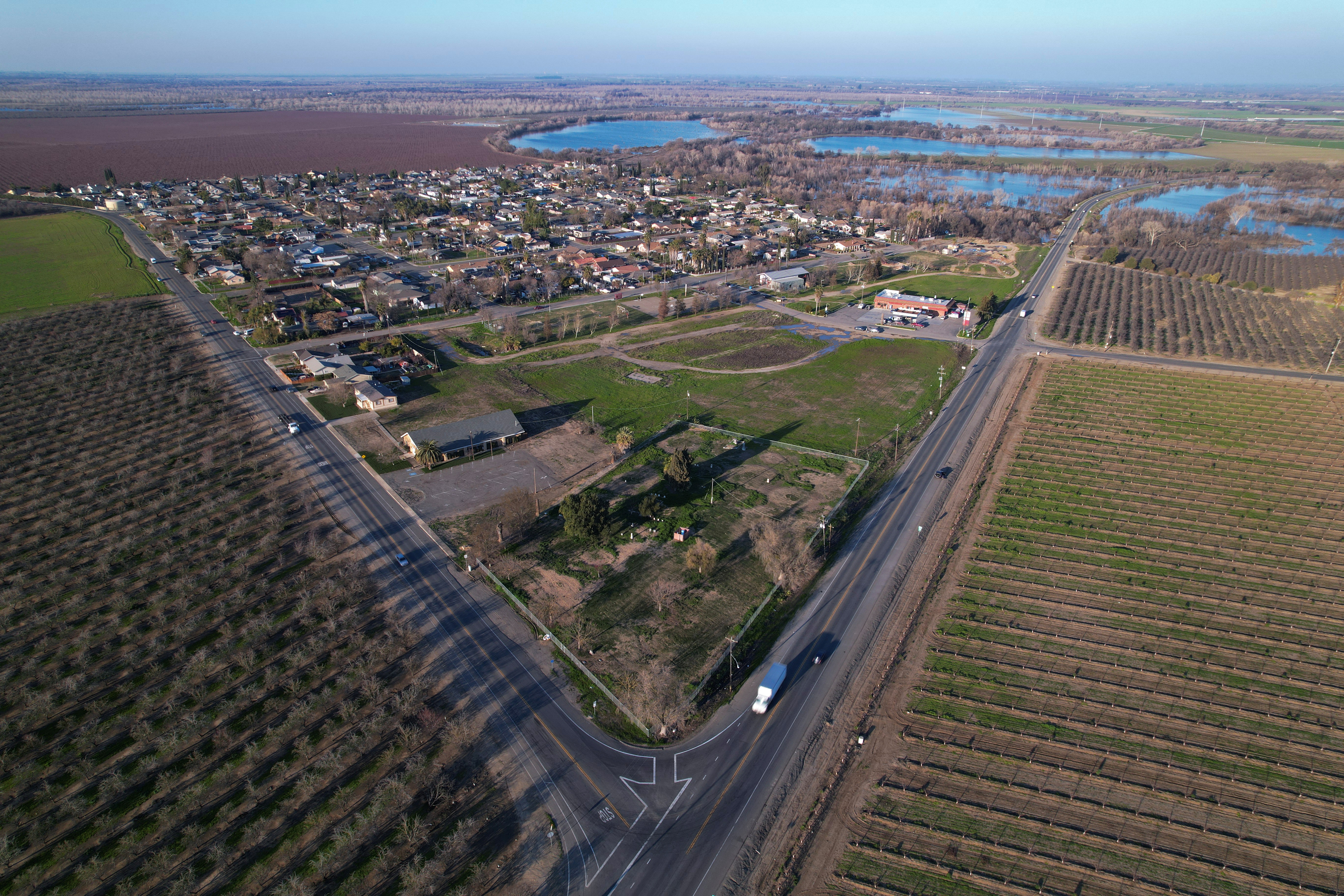
An aerial view shows the town of Grayson near floodwaters from the San Joaquin River in Grayson, California, U.S., January 25, 2023. REUTERS/Nathan Frandino

Julie Renter, president of the non-governmental organization River Partners, speaks at former farm land that has been restored to a floodplain near Grayson, California. U.S. January 25, 2023. REUTERS/Nathan Frandino

An aerial view shows homes in the town of Grayson near flood waters from the San Joaquin River in Grayson, California, U.S., January 25, 2023. REUTERS/Nathan Frandino

The San Joaquin River is seen cutting through residential, industrial, and agricultural lands in Stockton, California, U.S., January 26, 2023. REUTERS/Nathan Frandino

The San Joaquin River is seen cutting through residential, industrial, and agricultural lands in Stockton, California, U.S., January 26, 2023. REUTERS/Nathan Frandino
Categories
Audio Sources - Full Text Articles

Footage shows the moment Greenpeace activists scaled a Shell oil platform that was being transported in ‘rough conditions’ in the Atlantic

Greenpeace climate justice activists approaching Shell platform.Greenpeace climate activists approaching Shell platform.

Chris J Ratcliffe / Greenpeace

  • Greenpeace activists used ropes to climb aboard a ship carrying a Shell oil platform.
  • Four activists have been aboard the vessel in a protest against climate devastation for five days.
  • This week, Shell announced a record $39.9 billion in profits made last year.

Four environmental activists remain firmly planted on an oil platform belonging to Shell in the Atlantic Ocean after dramatic footage showed the protesters scaling earlier this week aboard. 

The video, released by Greenpeace on Tuesday, shows a tense moment where an activist is swinging from a rope above the ocean over the sound of gusts of wind and waves crashing. In the recording, someone is heard saying, “totally ok,” as they ascended the White Marlin, a ship carrying Shell’s oil and gas platform.

—Greenpeace USA (@greenpeaceusa) February 2, 2023


The 400-foot platform is a “critical piece of equipment” for Shell that will enable the company to unlock eight new wells in the Penguins oil and gas field located in the North Sea by the Shetland Islands, according to the international environmental organization.

On board, the four activists — Carlos Marcelo Bariggi Amara from Argentina; Yakup Çetinkaya from Turkey; Imogen Michel from the UK, and Usnea Granger from the US — displayed a banner that read “Stop Drilling. Start Paying” in a peaceful protest “against the climate devastation around the world caused by Shell and the wider fossil fuel industry.”

The four tracked the White Marlin as it sailed north of the Canary Islands aboard Greenpeace’s Arctic Sunrise ship. They were accompanied by two other activists who were not able to clamber onto the ship. 

Yeb Saño, the executive director of Greenpeace Southeast Asia, failed to onboard but remains on the Arctic Sunrise —  which is following the White Marlin. Saño explained they were taking action because “when Shell extracts fossil fuels, it causes a ripple of death, destruction, and displacement around the world, having the worst impact on people who are least to blame for the climate crisis.”

“So we will take them on at sea, at shareholder meetings, in the courtroom, online, and at their headquarters. We won’t stop until we get climate justice. We will make polluters pay,” he added. 

As of Friday, the protestors were still on top of the platform and had “enough supplies of food, water, and all-weather equipment to keep them going for days,” a Greenpeace spokesperson told Insider in an email. 

Climate justice activists on the Shell oil platform.Climate activists on the Shell oil platform.

Greenpeace

The protest coincides with the energy giant announcing its highest-ever earnings on Thursday, with a reported profit of $39.9 billion in 2022, more than double the company’s profits a year earlier. The profits come after a skyrocketing price of natural gas after Russia’s invasion of Ukraine. 

A spokesperson from Shell said, “the new floating vessel will allow production from the Penguins field to continue to provide the necessary energy that the UK needs,” the spokesperson said in an email to Insider. 

Projects like the Penguins oil field are “entirely consistent with a net zero pathway as modeled by the UK’s independent Climate Change Committee,” they added. 

The company said the protest was a safety concern, given the “number of people boarding a moving vessel in rough conditions.”

The activists, however, are experienced climbers who have “undergone thorough training to take part in this action,” a Greenpeace spokesperson said, adding they take safety “very seriously.” 

Research from the International Energy Agency said there should be “no investment in new fossil fuel supply projects” for a net-zero energy solution to be reached by 2050

Read the original article on Business Insider
Categories
Audio Sources - Full Text Articles

U.S. warns Turkey on exports seen to boost Russia“s war effort

2023-02-04T10:47:45Z

The United States warned Turkey in recent days about the export to Russia of chemicals, microchips and other products that can be used in Moscow’s war effort in Ukraine, and it could move to punish Turkish companies or banks contravening sanctions.

Brian Nelson, the U.S. Treasury Department’s top sanctions official, visited Turkish government and private sector officials on Thursday and Friday to urge more cooperation in disrupting the flow of such goods.

In a speech to bankers, Nelson said a marked year-long rise in exports to Russia leaves Turkish entities “particularly vulnerable to reputational and sanctions risks”, or lost access to G7 markets.

They should “take extra precaution to avoid transactions related to potential dual-use technology transfers that could be used by the Russian military-industrial complex,” he said in a copy of the speech issued by the Treasury.

In the meetings in Ankara and Istanbul, Nelson and a delegation highlighted tens of millions of dollars of exports to Russia that raised concerns, according to a senior U.S. official who requested anonymity.

“There is no surprise…that Russia is actively looking to leverage the historic economic ties it has in Turkey,” the official said. “The question is what is the Turkish response going to be.”

NATO member Ankara opposes the sweeping sanctions on Russia on principle but says they will not be circumvented in Turkey, urging the West to provide any evidence.

Western nations applied the export controls and sanctions after Moscow’s invasion nearly a year ago. Yet supply channels have remained open from Hong Kong, Turkey and other trading hubs.

Citing Russian customs records, Reuters reported in December that at least $2.6 billion of computer and other electronic components flowed into Russia in the seven months to Oct. 31. At least $777 million of these products were made by Western firms whose chips have been found in Russian weapons systems.

Ankara has balanced its good ties with both Moscow and Kyiv throughout the war, held early talks between the sides and also helped broker a deal for grain shipments from Ukraine.

The trip by Nelson, the Treasury’s undersecretary for terrorism and financial intelligence, is the latest to Turkey by senior U.S. officials aiming to ramp up pressure on Ankara to ensure enforcement of U.S. curbs on Russia.

The pressure has brought some changes.

Turkey’s largest ground-service provider, Havas, told Russian and Belarusian airlines it may stop providing parts, fuel and other services to their U.S.-origin aircraft, in line with Western bans, Reuters reported on Friday citing a Jan. 31 letter from the company.

In September, five Turkish banks suspended use of the Russian Mir payment system after the U.S. Treasury targeted the head of the system’s operator with new sanctions and warned those helping Moscow against skirting them.

Nelson urged the Turkish bankers to conduct enhanced due diligence on Russian-related transactions, and noted in the speech that Russian oligarchs continue to buy property and dock yachts in Turkey.

In separate talks with Turkish firms, Nelson “urgently” flagged the way Russia is believed to be dodging Western controls to re-supply plastics, rubber and semi-conductors found in exported goods and used by the military, the official said.

The person added that after taking steps last year to press Russia to end the war, the U.S. focus is now “on evasion and particularly evasion in third countries that we are seeing”.

Nelson delivered similar messages in the United Arab Emirates and Oman this week, the Treasury said.

Categories
Audio Sources - Full Text Articles

Ukraine Returns 116 Defenders in POW Swap

231b4f84fafed044cb0d4a5e707695eb.jpeg?w=

Ukraine has completed another round of prisoner of war exchange with Russia.

Categories
Audio Sources - Full Text Articles

Dozens of soldiers freed in Russia-Ukraine prisoner swap

KYIV, Ukraine (AP) — Dozens of Russian and Ukrainian prisoners of war have returned home following a prisoner swap, officials on both sides said Saturday.

Top Ukrainian presidential aide Andriy Yermak said in a Telegram post that 116 Ukrainians were freed.

He said the released POWs include troops who held out in Mariupol during Moscow’s monthslong siege that reduced the southern port city to ruins, as well as guerrilla fighters from the Kherson region and snipers captured during the ongoing fierce battles for the eastern city of Bakhmut.

Russian defense officials, meanwhile, announced that 63 Russian troops had returned from Ukraine following the swap, including some “special category” prisoners whose release was secured following mediation by the United Arab Emirates.

A statement issued Saturday by the Russian Defense Ministry did not provide details about these “special category” captives.

___

Follow AP’s coverage of the war in Ukraine: https://apnews.com/hub/russia-ukraine

Categories
Audio Sources - Full Text Articles

Occupied Sievierodonetsk turned into ashes

630_360_1654801905-676.jpg

Russian aggression turned the city of Sievierodonetsk, Luhansk location, into ashes.

“This is what the symbol of the non permanent regional center looks like now. In June, the residents of Luhansk area had been stunned by the news that the Ice Palace burned down as a outcome of a ruscist attack. A fifty-12 months record was burned,” Serhiy Haidai, Head of the Luhansk Regional Armed forces Administration, posted on Telegram, publishing a online video of the Ice Palace in Sievierodonetsk.

In accordance to him, the invaders deliberately pummeled the Ice Palace with shells and also destroyed quite a few “iconic structures that were being the legends of Sievierodonetsk.”

“The burned-out metropolis is barely alive, the orcs are mocking the local inhabitants by not furnishing regular living ailments. [People live] without having electricity, gas, h2o source, mobile conversation, health care, instruction… but with heating points, simulated repairs, flooded apartment blocks… and sweet propaganda. ‘Russian world’ in all its glory,” the governor emphasised.

As noted, Russian troops captured Sievierodonetsk in the summer season of 2022.

ol

Source link

The post Occupied Sievierodonetsk turned into ashes appeared first on Ukraine Intelligence.

Categories
Audio Sources - Full Text Articles

ChatGPT seconds Warren Buffett’s and Michael Burry’s tips on what it takes to be a good investor – the bot lists patience and discipline among 6 must-have traits

AI stock photoChatGPT has ballooned in popularity over recent months.

Yuichiro Chino

  • Insider’s Zahra Tayeb asked ChatGPT what traits make for a good stock investor. 
  • The buzzy AI bot chucked out 6 virtues that lead to investor success, including patience and discipline. 
  • Its advice mirrored that of top investors like Warren Buffett, but failed to identify other key traits vital to investor success. 

ChatGPT, the new buzzy chatbot developed by artificial intelligence company OpenAI, is the world’s latest obsession for its human-like responses. 

The bot, which bagged a $10 billion investment from Microsoft, has shown a capacity for a range of tasks such as writing stock storieslayoff emails, and even dating-app messages. The craze around it has even boosted investor appetite for AI stocks, sending shares in names like Nvidia and Ambarella soaring. 

Earlier this week, I put the human mimic-like tool to the test to see what all the fuss was about. I enjoyed its conversational tone and was grabbed by the ease at which it churned out content, but its lack of empathy or decision-making skills ultimately made it easy for me to remember it’s just a robot. 

As a frequent writer on the US equities market, I sought out to ask the AI tool what character traits make for a good stock investor. Here’s what it chucked at me. 

ChatGPT’s 6-part tip on traits that make for a successful stock investor

  1. Patience: Investing in the stock market often requires a long-term perspective and the ability to withstand short-term volatility.
  2. Discipline: Developing and sticking to a well-thought-out investment strategy can help investors avoid impulsive decisions based on emotions.
  3. Objectivity: Being able to separate personal opinions and emotions from investment decisions can lead to more rational and informed investment choices.
  4. Perseverance: Investing in the stock market can be a challenging and sometimes frustrating experience, but having the determination to stay the course and stick to a strategy can lead to long-term success.
  5. Open-mindedness: Keeping an open mind to new information and being willing to adjust your investment strategy in light of new developments can help you stay ahead of the curve.
  6. Attention to detail: Careful research and attention to detail can help investors identify the best investment opportunities and avoid costly mistakes. 

ChatGPT then cautioned none of its advice can guarantee success. “Having these traits does not guarantee success in the stock market, but they can help investors make better decisions and navigate the ups and downs of the market more effectively,” it said. 

The bot’s tips impressed me, given it mirrored the advice of top investors like Warren Buffet and “Big Short” fund manager Michael Burry. Like ChatGPT, Buffett says self-discipline and keeping emotions in check is key for investors.

The Berkshire Hathaway CEO – often considered a role model in the investing world – has also showcased the virtues highlighted by ChatGPT, according to the “Richer, Wiser, Happier” author William Green. Green noted that Buffett’s phenomenal success was steeped in qualities like patience and having an open mind.

He gave the example of Buffett, who for decades brushed off technology as outside of his circle of competence, then injected $36 billion into Apple between 2016 and 2018. Its stake has blown up in value to about $134 billion today. 

Meanwhile, Gabriel Colominas, a buy-side equity analyst at Gesiuris Asset Management and a Burry expert, has said the investor showcased virtues like perseverance through his ability to withstand pressure and possess the deep conviction needed to stay the course.

He used the example of Burry’s iconic bet against the mid-2000s housing bubble, which was mocked by Wall Street, only for the legendary investor to be proven right. 

However, chatGPT didn’t have all the answers. For instance, the bot failed to identify other key traits underpinning Buffett’s success like dedication, humility and simplicity. 

David Shayer, CEO of Vantage Markets UK, told Insider that while ChatGPT picks up on specific personality traits of successful investors, it misses others.

“I think there are some characteristics missing here, which ChatGPT, or perhaps AI in general, doesn’t yet understand fully when it comes to the human psyche,” Shayer said. 

“ChatGPT has missed the more daring side of a good stock trader’s personality, or attitude to risk. They have to be willing to be speculative and have a certain amount of intuition on where markets might go. However, similar to ChatGPT’s discipline, they also tend to be highly independent individuals. There’s a lot to learn in trading and it can get complicated, so they have to be proactive in learning,” he added. 

Read the original article on Business Insider
Categories
Audio Sources - Full Text Articles

I thought my financial analyst job for a tech company was my dream career, but I hated it. Here are the 3 signs that told me it was time to quit

Dayana SabatinDayana Sabatin said she knew it was time to quit her tech job when Sundays started to make her feel sick.

Courtesy of Dayana Sabatin

  • Dayana Sabatin left a six-figure tech job after six months because she was miserable.
  • She said she was offered a raise to stay, but still refused and moved to LA to start a new career.
  • Sabatin says there were a few key signs that it was time to move on, like dreading Sundays.

It’s been nearly five years since I left my six-figure tech job in Seattle and made my way to Los Angeles to create a life for myself as a writer and content creator.

I don’t regret a single choice I’ve made since then — I’m in the midst of growing my YouTube channel, writing a novel, and writing self-help articles online. I’m significantly happier and I wake up with a sense of purpose and fulfillment now that I never experienced when I worked my 9-to-5.

But it wasn’t always this way

Five years ago, I was working as a financial analyst at a tech company, with a $100,000 salary. I was stuck in a cubicle, sitting in long and pointless meetings, commuting upwards of three hours a day round-trip, and feeling more miserable than I’d ever felt before. I saw what my life was going to look like in 20 to 30 years, and the thought terrified me. 

I thought that career was what I wanted— I worked my butt off to get my foot in the door in the tech field, with no college education and only an internship under my belt.

But after multiple interviews and a few weeks of working, I realized I had made a huge mistake. I was lucky enough that I didn’t have a ton of school debt, but I felt like the amount of time I had wasted was worth more than money.

After six months, I was done. I realized I had two options: keep climbing the corporate ladder and remain miserable, or take a risk.

I gave my boss my notice. The promises of a raise if I stayed lingered in the air, but I had made up my mind. I was moving to LA. I was ready to do something different.

Here are a few signs you should pay attention to if you’re trying to figure out if it’s time to quit your job.

1. You regularly approach your work with dread

Do you start every week counting down the days until Friday? Do you count down the minutes to 5 o’clock everyday? Are you someone who hates Sundays because you get anxious over the idea of seeing your full email inbox?

I used to live for the weekend. Actually, I lived for Friday nights and Saturdays because Sunday was too overwhelming. The idea of getting ready for another miserable week literally made me sick.

Maybe you started out in your job with high spirits, but over the last few months or years, it’s worn you down so much that you don’t even recall what it’s like to wake up on a weekday and actually be happy.

If you find yourself regularly dreading your workdays, it might be time to seriously reconsider your options. Life is way too short to force yourself to stay in an environment that consistently brings you misery.

2. You’re not growing

You’re either frustrated because there’s zero way to grow and evolve within your company, which is a good enough reason to leave, or alternatively, you simply don’t like the trajectory you’re on.

I was in the second boat — there was room for financial growth within my role, but that wasn’t good enough for me. I’d still be doing the same thing, just with a bigger job title and a few more operational responsibilities. The work would remain repetitive and mundane.

It’s like if you’re a beginner working out at the gym with 10 pound dumbbells; initially, the workout will feel challenging, and you’ll probably feel really good — but if you don’t diversify your training or consistently go up in weight, you’ll eventually hit a plateau and stop improving. 

If you’re starting to notice that your profession isn’t serving you or allowing you to grow and innovate, then that’s a good sign to move on.

3. You’re reading this article

If you’re here right now, you probably have a gut feeling that your 9-to-5 isn’t right for you, and you’re looking for someone to validate your feelings.

I get it — I needed the same. I scoured blogs of people writing about their experiences when they quit their jobs; I watched YouTubers talk about how they got their “dream” jobs right out of college, only to find out they hated them.

Maybe you’re telling yourself, “I’m just curious,” as you fall into a rabbit hole on Quora. But if you were truly happy and thriving within your professional life, would you be weighing the pros and cons of staying?

When I was in your shoes, I just needed someone to tell me that it was okay to feel the way I was feeling. It’s okay that the job you thought you’d love isn’t actually suited for you — and it’s okay to start over.

Finding the courage to make a change can open new doors

I didn’t have a step-by-step plan of what would happen once I moved to LA, but I took it day by day. Once I got here, I started networking and meeting new people, which allowed me to discover my passion for writing about self-improvement and relationships. 

I now know that a change of environment and lifestyle can help open doors — ones that have the power to change your life for the better. 

Read the original article on Business Insider
Categories
Audio Sources - Full Text Articles

A New York man got a package from a funeral home in the mail. Inside were the cremated remains of a man he’d never met.

Twitter thread indie musician ashesHamilton Leithauser first explained the story in Twitter

Twitter/Screenshot

  • A New York musician found the cremated remains of a man he’d never met in his mailbox.
  • ‘It’s just sort of shocking,’ Hamilton Leithauser told ABC 7. 
  • The New York Post later tracked down the man’s son, after the ashes were returned to a funeral home. 

When New York musician Hamilton Leithauser made a routine check of his mail last week, he was stunned by a package containing the ashes of a man he had never met. 

“It’s just sort of shocking. I’m like, ‘What am I supposed to do with these?” Leithauser told The New York Post. “This was a person. You have to show a little respect.”

Leithauser, who received the ashes Tuesday, ABC7NY reported this week, explained in a Twitter thread that he later learned the ashes were the remains of a man who died in 2017.

He contacted the funeral home that sent the remains, he told ABC7NY, but to no avail.

Leithauser told ABC7NY, “I think he said, ‘don’t you examine your packages before you open them,’ and I said, ‘don’t you check the address before you mail someone’s dead body,’ I think that’s the last thing I said and then he hung up on me.”

Insider contacted the funeral home for comment, but a representative said he had never heard of a package containing ashes sent to Leithauser. 

The New York Post on Thursday identified the deceased as Dwight Walter, and tracked down his son, Lamant Hall, 

“Shame on them,” Hall told the Post. “To see his ashes misplaced like that is heartbreaking.”

Someone was eventually sent to Leithauser’s home to retrieve the ashes, according to ABC7NY.

The Post reported that Hall and his brother picked out an urn for their father when he died. “For all these years, I thought my father was safe and sound. Come to find out … he’s been shipped around and neglected by the funeral home that said they were gonna take care of him,” he told the Post. “I’m at a loss for words.”

It was unclear why the ashes weren’t picked up after Walter died, the Post reported. 

“I thought everything went smoothly after the funeral. My brother took care of everything,” Hall added

Read the original article on Business Insider
Categories
Audio Sources - Full Text Articles

A Google engineer found out she had been laid-off while she was on vacation when her boss sent her a LinkedIn message

Google LondonA Google engineer found out she had been laid off while on vacation via a LinkedIn message from her manager

View Pictures/Getty Images

  • A former engineer at Google told Insider she was laid-off while on vacation with her family. 
  • She found out about being laid off via a message on LinkedIn from her manager. 
  • The firm cut perks and increased work pressure in the months leading up to the layoffs, she said. 

A Google engineer of five years said she found out she had been laid-off while on vacation after getting a LinkedIn message from her manager. 

The former employee — who asked to remain anonymous over fears speaking to the media could hurt her future job prospects — said that she was on a vacation with her family and had not checked any of her work emails.

Her identity and termination by Google have been verified by Insider.

“I had some friends randomly text me checking in but I thought they just wanted to know how my vacation was,” she told Insider in an interview. “It didn’t occur to me that they were checking to see whether or not I had been laid off. Nobody told me that happened, I was just blissfully unaware.”

The engineer said that she ended up checking one of her two personal emails, when she realized that her manager had sent her a message on LinkedIn. 

“I was like ‘oh my gosh.’ There’s no reason why he would try to contact me on LinkedIn,” she said. “‘Why would you not email me or send me a message on chat? There’s so many other ways you can reach me.’ 

“So I knew immediately. My heart just dropped when I saw that.”

Her manager apologized in the message he sent to her and informed her that she had been laid off, she said. The manager said he had no other way of contacting her and her termination notice had been sent to her second personal email at 5:00 a.m. which she rarely checks. 

Insider reviewed a copy of the employment termination notice she received. 

“It was like a whirlwind of emotion because I just couldn’t contact anybody,” she said. “Also to have it happen not on your terms and have it be abrupt with no closure and no explanation was really hard” 

She added: “I think it’s hard to give so much of your time and energy to building something for somebody else and make them money off your work only to just be brushed off and let go that easily.” 

She was one of 12,000 people to be laid off by Google in a major cost-cutting effort by the tech giant. CEO Sundar Pichai sent an email to staff on January 20 saying employees were being let go globally across various divisions and functions. 

The former employee told Insider that “morale was really low already” before the layoffs because of cuts to perks, as well as increased pressure to perform well, so she hadn’t been planning to stay at the firm much longer. 

However, the way the tech giant had executed the layoffs was “horrible.”

“I know it’s hard to do a layoff on that scale, but I feel really confident that they could have come up with a better way to do it to at least give people some dignity and some notice,” she said. 

She said that she heard that a current employee who had avoided layoffs resigned in the aftermath because they were upset with the company’s handling of the matter. 

“People are really really upset with how this happened and I think everybody, even the top performers, are really on edge after this,” she added.

Read the original article on Business Insider
WP Radio
WP Radio
OFFLINE LIVE