Categories
Audio Sources - Full Text Articles

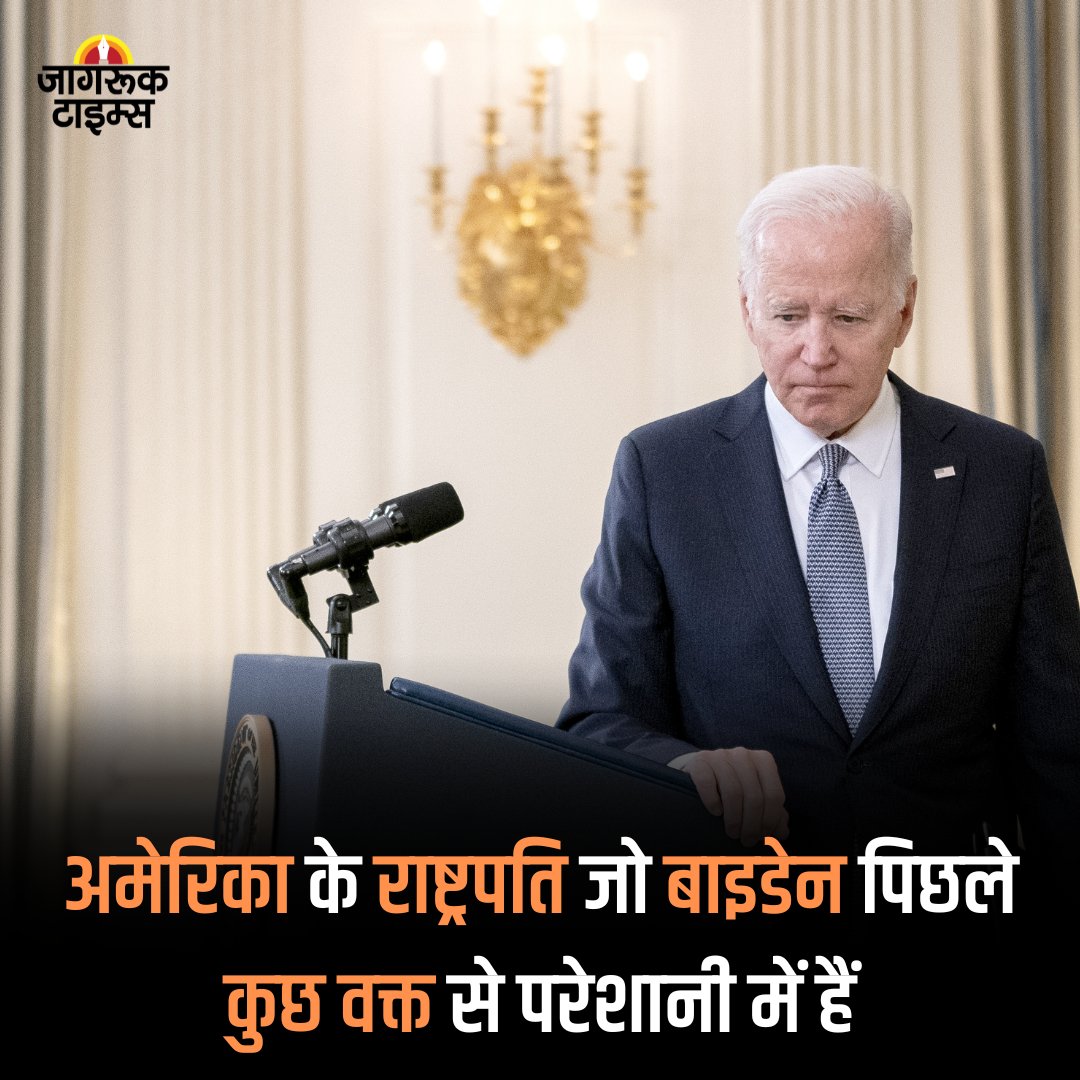
Michael Novakhov retweeted: अमेरिका के राष्ट्रपति जो बाइडेन पिछले कुछ वक्त से परेशानी में हैं। उनके निजी घर और दफ्तर पर FBI की छापेमारी में ढाई दर्जन से ज्यादा गोपनीय दस्तावेज मिले हैं। डोनाल्ड ट्रंप के घर से तो 11,000 से अधिक सरकारी दस्तावेज बरामद किए गए थे #America #joebiden #FBI #Raid #breakingnews

Michael Novakhov retweeted:

अमेरिका के राष्ट्रपति जो बाइडेन पिछले कुछ वक्त से परेशानी में हैं। उनके निजी घर और दफ्तर पर FBI की छापेमारी में ढाई दर्जन से ज्यादा गोपनीय दस्तावेज मिले हैं। डोनाल्ड ट्रंप के घर से तो 11,000 से अधिक सरकारी दस्तावेज बरामद किए गए थे

#America #joebiden #FBI #Raid #breakingnews

FoHpg4yagAAqqyY.jpg:large

Categories
Audio Sources - Full Text Articles

Michael Novakhov retweeted: #FBI: “Before he moved on to other positions at FBI headquarters, McGonigal’s career had begun in New York, where he worked closely with James Kallstrom — the right-wing ideologue who headed the New York office for decades.” Charlie McGonigal and 2016 creators.com/read/joe-conas…

Michael Novakhov retweeted:

#FBI:

“Before he moved on to other positions at FBI headquarters, McGonigal’s career had begun in New York, where he worked closely with James Kallstrom — the right-wing ideologue who headed the New York office for decades.”

Charlie McGonigal and 2016

creators.com/read/joe-conas…

Categories
Audio Sources - Full Text Articles

Michael Novakhov retweeted: #FBI FBI Putin and political – sexual scandals – Google Search google.com/search?q=Putin…

Michael Novakhov retweeted:

#FBI FBI

Putin and political – sexual scandals – Google Search google.com/search?q=Putin…

Fnk4_DfWYAAXFCh.jpg:large

Categories
Audio Sources - Full Text Articles

Michael Novakhov retweeted: #FBI #NYT #Trump #McGonigal #Elections2016 The NYT should tell readers whether it helped crooked FBI agents get Trump elected in 2016 thenewsandtimes.blogspot.com/2023/01/the-ny…

Michael Novakhov retweeted:

#FBI #NYT #Trump #McGonigal #Elections2016

The NYT should tell readers whether it helped crooked FBI agents get Trump elected in 2016 thenewsandtimes.blogspot.com/2023/01/the-ny…

FntwgNtWQAEXAXd.png:large

Categories
Audio Sources - Full Text Articles

Michael Novakhov retweeted: #FBI FBI: Investigate this and other relevant connections! #DouglasLeff McGonigal, Guerriero, Leff – Google Search google.com/search?q=McGon…

Michael Novakhov retweeted:

#FBI FBI:

Investigate this and other relevant connections!

#DouglasLeff

McGonigal, Guerriero, Leff – Google Search google.com/search?q=McGon…

FnjfY98X0AAVV-L.png:large

Categories
Audio Sources - Full Text Articles

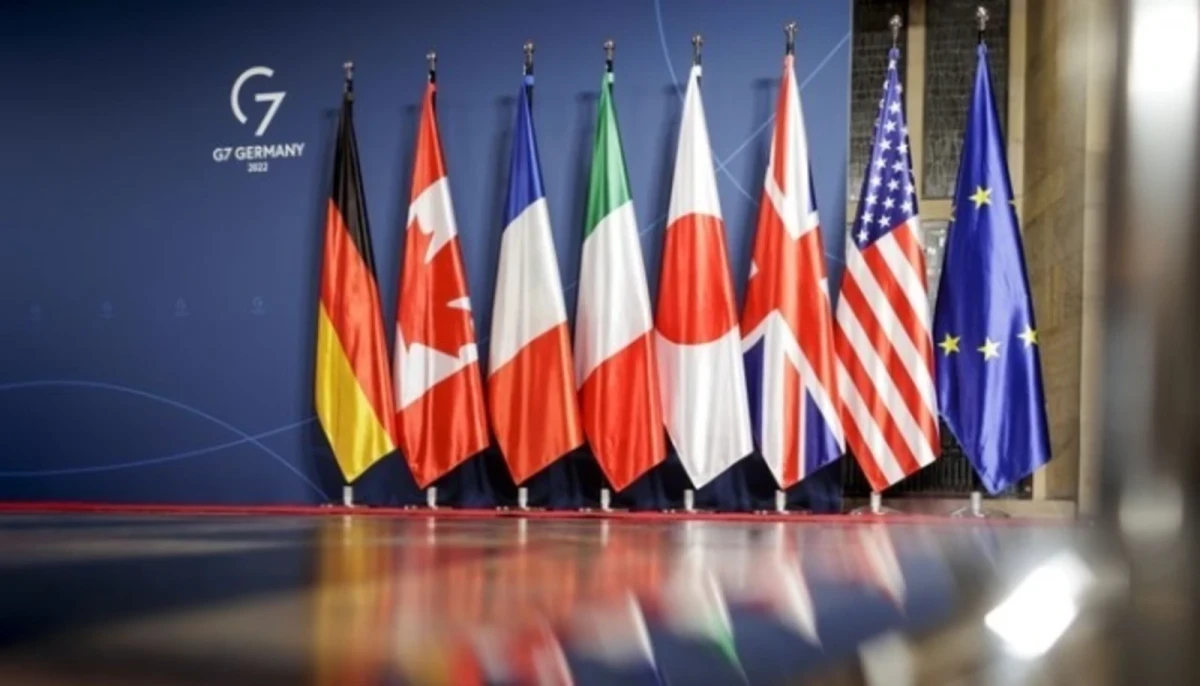
EU, G7, Australia Reach Deal on Price Caps for Russian Fuel

6f1f0e06fac43793ceb3e49602e3789e.webp?w=

The caps involve two price levels, $100 per barrel for more expensive fuel and $45 on lower-quality products.

Categories
Audio Sources - Full Text Articles

Texas power woes linger as Arctic air heads for New England

AUSTIN, Texas (AP) — As rising temperatures offered some hope for frustrated Texans shivering in their homes days after losing power in a deadly winter storm, another wave of frigid weather was taking aim Friday at the northern U.S.

An Arctic cold front was expected to move from Canada into the northern Plains and Upper Midwest and sweep into the Northeast. Wind chills in some areas could dive below minus 50 Fahrenheit (minus 45 Celsius).

In Austin, city officials compared the damage from fallen trees and iced-over power lines to tornadoes as they came under mounting criticism for slow repairs and shifting timelines to restore power.

“We had hoped to make more progress today,“ said Jackie Sargent, general manager of Austin Energy. ”And that simply has not happened.”

Across Texas, more than 250,000 customers lacked power early Friday, which was down from 430,000 on Thursday, according to PowerOutage.us.

The failures were most widespread in Austin. Impatience was rising there among about 126,000 customers two days after the electricity first went out, which for many also meant no heat. Power failures affected about 30% of customers in the city of nearly a million at any given time since Wednesday.

By Thursday night, Austin officials backtracked on early estimates that power would be fully restored by Friday evening, saying the extent of the damage was worse than originally calculated and they could no longer predict when all the lights would be back on.

For many Texans, it was the second time in three years that a February freeze caused prolonged outages and uncertainty over when the lights would come back on. Temperatures were in the 30s Fahrenheit (minus 1 to 3.8 Celsius) Thursday with wind chills below freezing.

Unlike the 2021 blackouts in Texas, when hundreds of people died after the state’s grid was pushed to the brink of total failure because of a lack of generation, the outages in Austin this time were largely the result of frozen equipment and ice-burdened trees and limbs falling on power lines. But the differences were little comfort to Austin residents and businesses that also lost power for days two years ago.

The freeze has been blamed for at least 10 traffic deaths on slick roads this week in Texas, Arkansas and Oklahoma.

In a briefing Thursday with the federal Weather Prediction Center, New Englanders were warned that wind chill — the combined effect of wind and cold air on exposed skin — in the minus 50s Fahrenheit (minus 45 to minus 50 Celsius) “could be the coldest felt in decades.”

The strong winds and cold air will create wind chill “rarely seen in northern and eastern Maine,” according to an advisory from the National Weather Service office in Caribou, Maine.

Jay Broccolo, director of weather operations at New Hampshire’s Mount Washington observatory, which for decades held the world record for the fastest wind gust, said Thursday that wind speeds could top 100 mph (160 kph).

“We take safety really seriously in the higher summits,” Broccolo said, “and this weekend’s forecast is looking pretty gnarly, even for our standards.”

___

For more AP weather coverage: https://apnews.com/hub/weather

Categories
Audio Sources - Full Text Articles

Chicago Blocks Release of Inspector General Report Prompted by “Somebody” Podcast

“I don’t want to jump to a conclusion. I want to arrive at one.”

Shapearl Wells uttered those words during our first meeting at the Invisible Institute almost six years ago. She would repeat them several times over the years we worked together investigating the murder of her 22-year-old son, Courtney Copeland. We recounted the course of that investigation in the podcast “Somebody,” a 2021 Pulitzer Prize finalist, hosted by Wells.

Copeland was murdered by an unknown assailant on March 4, 2016. A bullet pierced his back as he sat in his car on Chicago’s Northwest Side. He managed to drive to a nearby police station where he flagged down an officer, then collapsed on the ground. Some 13 minutes passed before an ambulance departed for a trauma center. Copeland’s heart stopped en route. When the ambulance arrived at the hospital, he was in police handcuffs, according to the paramedic run sheet and the ER nurse who received him.

What Wells wanted, above all, was to learn everything she could about the last moments of her son’s life. She was haunted by the thought that he died alone, handcuffed and frightened with no one to comfort him.

Her quest, with the support of the Invisible Institute, necessarily focused on the role of the police at the scene — How had they responded? Had they done everything they could to minister to Copeland? — and on the quality of the investigation by the detectives assigned to the murder case.

Wells’s dogged pursuit of those questions prompted the City of Chicago Office of Inspector General to undertake its own official inquiry. The OIG’s quarterly report issued early last year included a summary of that investigation. The full results, however, have not been released, and a Freedom of Information Act request for them by the Invisible Institute was denied by the city’s Department of Law.

According to the summary, the OIG recommended that two officers be disciplined: the lead detective on the case and the senior officer at the scene, a sergeant.

On the basis of audio captured by Wells and provided to investigators, the OIG found that the detective was “disrespectful” in his interactions with her.

Because the detective had retired prior to the completion of its investigation, the OIG recommended that the Chicago Police Department refer his name to the Department of Human Resources for placement on the “ineligible for rehire list.” CPD disagreed. It took the position that the detective’s behavior did not rise to the level that would warrant being placed on the list.

With respect to the sergeant, the OIG found that the handcuffing of Copeland was not properly documented and that he had failed to ensure, as required by policy, that the officer who placed Copeland in handcuffs accompany him to the hospital. As a result, there was no one aboard the ambulance who could unlock the cuffs at the hospital, and the trauma team had to wait for officers to arrive before they could work on Copeland.

CPD disagreed that the preponderance of evidence established that Copeland was handcuffed and declined to discipline the officer beyond giving him a reprimand.

The OIG summary does not answer the question of central importance to Wells: Why did the police handcuff Copeland? Would a young white professional falling mortally wounded out of a late-model BMW in front of the station have been subjected to the same treatment as her Black son? Presumably, the full report would shed some light on this question, but the city has not seen fit to release it.

There is, however, one recommendation in the summary that is revealing as to the current state of police reform:

OIG recommended that CPD review its policy regarding the provision of first aid to injured persons to ensure that it complies with a recent change in state law, and to further examine the existing contrast in CPD policy between a mandatory duty to provide first aid to those injured by a CPD use-of-force and a non-mandatory duty to provide first aid to all other injured persons.

In other words, CPD policy at the time of the Copeland incident was that officers were required to provide first aid to those they had shot or otherwise injured but not to those who, having been injured, sought their aid.

This policy anomaly is absurd on its face. It also reflects the dynamics of scandal-driven reform: Government responds to public outrage over a particular incident by bolting a fix onto the dysfunctional machinery of policing rather than developing coherent policies that arise from first principles. The core value here is stated plainly as the first provision of CPD’s directive on use of force, which was twice revised in the course of reform efforts following the police murder of Laquan McDonald:

The Department’s highest priority is the sanctity of human life. The concept of the sanctity of human life is the belief that all human beings are to be perceived and treated as persons of inherent worth and dignity, regardless of race, color, sex, gender identity, age, religion, disability, national origin, ancestry, sexual orientation, marital status, parental status, military status, immigration status, homeless status, source of income, credit history, criminal record, criminal history, or incarceration status. Department members will act with the foremost regard for the preservation of human life and the safety of all persons involved.

What better way to act on that principle than to equip and require police officers to provide first aid under any and all circumstances when someone is injured?

Even more telling is the fact that after the OIG pointed out the policy anomaly and CPD agreed to review the matter, it appears that the department has taken no action to revise the directive. Despite repeated inquiries, CPD’s news affairs desk was unable to say whether the policy will be revised. And the directive itself, as it appears on the CPD website, shows no revision.

Again, the full OIG report might illuminate the larger policy considerations, but the city has withheld it from the public. A final act of disrespect to Wells, this is part of a larger pattern. Despite significant advances in transparency in the post-Laquan McDonald era, the city continues to exercise information control with respect to OIG investigations, largely neutralizing their essential function.

Under an ordinance Mayor Lori Lightfoot pushed through in 2019, the corporation counsel — the city’s chief lawyer, who reports to the mayor — has “sole discretion” over whether to release OIG investigations. The only OIG reports the city has released during the Lightfoot administration deal with issues that arose under the previous administration, while reports of great immediate interest to the public have been withheld.

For example, the city is yet to release the OIG’s report on its handling of the botched police raid of the home of social worker Anjanette Young in 2019. Nor has it released the OIG’s report on the debacle that ensued when the city approved permits for the implosion of a coal company smokestack that resulted in massive pollution in a predominantly Hispanic neighborhood in 2020.

As disturbing as those instances of official secrecy are, nothing more tellingly dramatizes the character of the Lightfoot administration’s stance on transparency than Shapearl Wells not being able to read the report on the investigation she inspired.

The post Chicago Blocks Release of Inspector General Report Prompted by “Somebody” Podcast appeared first on The Intercept.

Categories
Audio Sources - Full Text Articles

Two large-scale accidents at Odesa substation leave city in blackout

630_360_1675496537-292.jpg

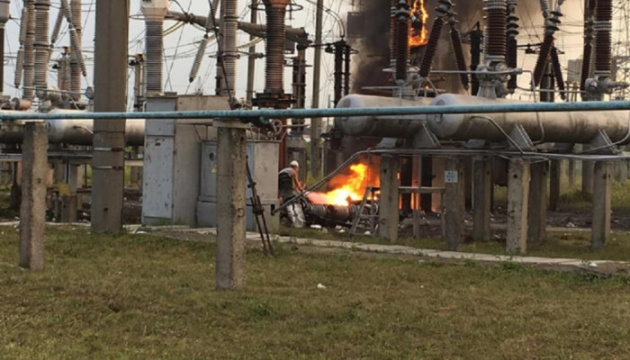
Two major incidents happened at an Odesa electrical substation inside of 24 several hours, which prompted an crisis electrical power shutdown in the regional center and part of the district.

This was introduced on Fb by DTEK Odesa Electrical power Grids, Ukrinform stories.

“On the early morning of February 4, there was the 2nd large-scale accident in one day at the NEC Ukrenergo substation. In this regard, Odesa and section of the Odesa district are temporarily in blackout,” the assertion reads.

Browse also: Ukraine requires to broaden electric power imports from EU – PM Shmyhal

The company assured that electricity teams are undertaking measures to restore energy materials to essential infrastructure services.

It is noted that experts are working with the aftermath of the incident, and that electrical power supply will be restored straight away immediately after the perform is finished.

Picture from open up sources

Source link

The post Two large-scale accidents at Odesa substation leave city in blackout appeared first on Ukraine Intelligence.

Categories
Audio Sources - Full Text Articles

Why are Peruvian politics such a mess? Inside the halls of its Congress

2023-02-04T11:06:24Z
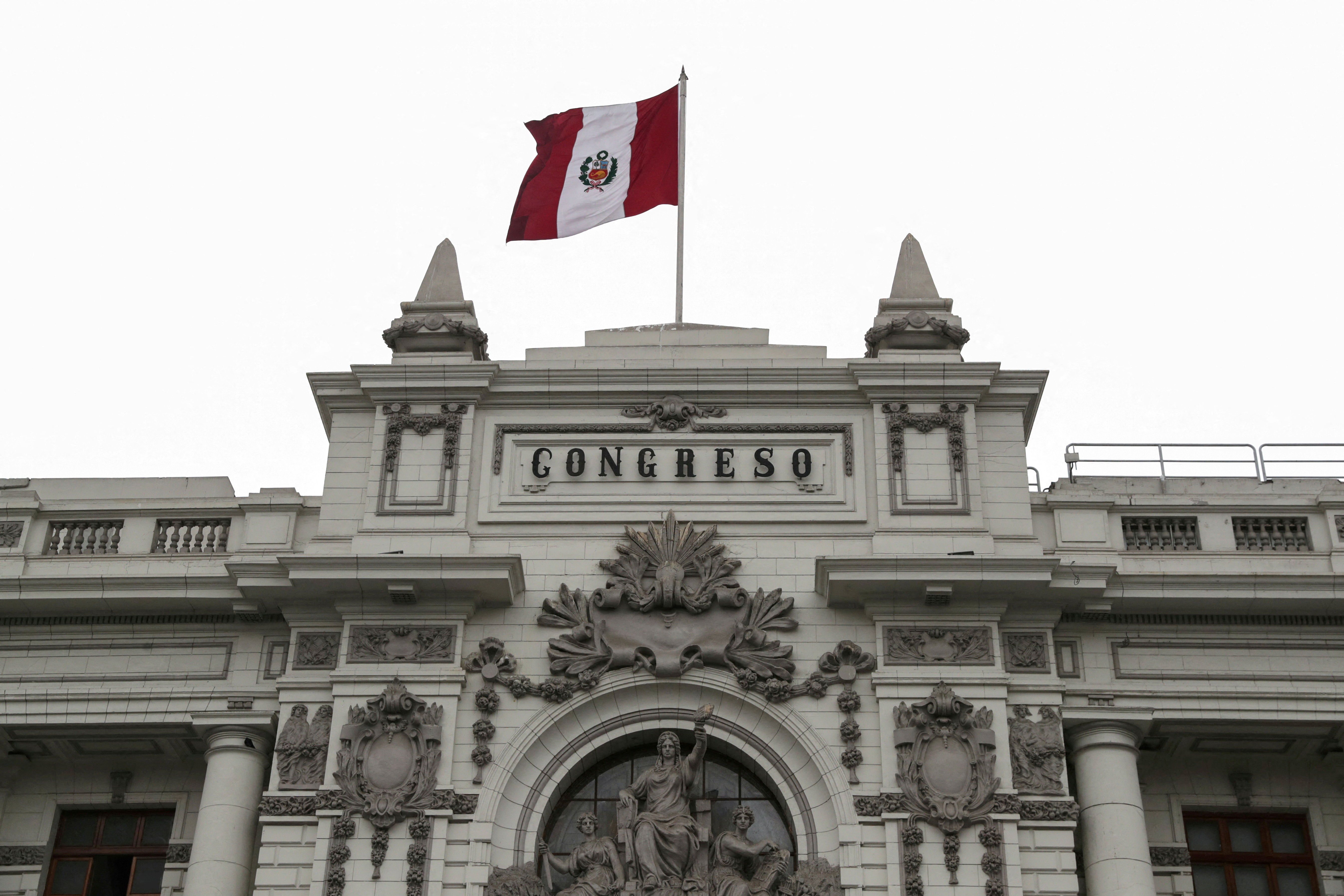
A view of the Congress building in Lima, Peru, September 30, 2019. REUTERS/Guadalupe Pardo

As deadly protests rage across Peru, a political battle is unfolding inside the halls of Congress, walled off from the streets by hundreds of police, armored vehicles and a maze of gates.

Lawmakers are at loggerheads over whether to hold a snap election this year following the Dec. 7 ouster of leftist President Pedro Castillo part-way through his term, an event that sparked weeks of protests that have seen 48 people killed.

Despite the violence, and despite polls that show the majority of Peruvians want the election brought forward, Congress appears to be in deadlock. At least three election bills have been rejected and others knocked back before being debated in the past week, with parties on the left and right apparently unable or unwilling to compromise.

“They fight like they’re in a street market,” said Juliana Gamonal, 56, a food delivery person in Lima. “We don’t have good leaders right now, everything is for their benefit, not for the people.”

Reuters spent the last week inside the 130-seat Congress in capital Lima, talking to lawmakers to ask why Peruvian politics seems to be in such a mess. Tensions between lawmakers were high, often boiling over into shouting matches.

A number of issues underpin the dysfunction.

Primarily, the Congress is unusually fragmented. It has 13 different voting blocs, caused in part by rules that allow a group of five lawmakers to easily create a new one. The two largest parties have just 24 and 15 seats respectively, making it hard to reach majorities needed for legislation.

“When there’s a greater number of factions, that doesn’t help when you have to discuss and reach agreements,” said Paul Gutierrez, congressman for the Magisterial bloc, a group of 10 legislators that broke off from far-left Peru Libre.

As mainstream political factions have weakened, disillusioned voters have turned to fringe parties – including a religious sect and Peru Libre – exacerbating the division.

Meanwhile, constitutional rules make it relatively easy to attempt impeachment – leading the fragmented blocs to use it to punish presidents they don’t like, something that has happened regularly in recent years.

Castillo was ousted in an impeachment trial in December that he sought to avoid by illegally dissolving Congress and ruling by decree, a failed move that led to his arrest on charges of “rebellion.”

It was the third attempt at the impeachment of Castillo since he took power in July 2021, and the seventh impeachment attempt in the last five years – which have seen six presidents.

Tania Estefany Ramirez, a congresswoman for main right-wing party Popular Force, was unapologetic, saying that safeguarding Peru from overspending and corruption was their priority.

“Regretfully we’ll always be the bad guys of the movie because we’re going to have our eyes on every sol, on every ministry that moves in our country,” she said.

But the political stalemates and street violence have weakened governance, hurt the economy, and put copper supply at risk in the world’s no. 2 supplier of the metal.

Disillusionment among voters has risen, and parliament now has an approval rating of just 7%. Angry protesters have demanded a Congress clear-out and snap elections.

To try to resolve the deadlock and appease the protesters, new President Dina Boluarte, who was Castillo’s deputy, has called for swift elections, urging Congress to move quickly.

Popular Force has put forward a bill, as has Peru Libre. But both were rejected, with some lawmakers reluctant to support the opposition and with disagreement as to whether the bill should include a referendum for a new constitution.

Flavio Cruz, a congressman for Peru Libre, blamed the right for “taking over” the state, but admitted Congress had failed the people by not reaching agreement.

“We have dysfunction of parliament, which should have kept harmony, unity, dialogue, agreement and consensus,” he said. “We have never had understanding between us. That is what the population is punishing. Our inability to agree.”

Days of closed-door talks have appeared to make little progress, with cliques holding their ground over red-line policies.

An exasperated Boluarte introduced her own bill, which called for elections in October and a new president taking office on Dec. 31. A congressional commission took up the bill Friday afternoon but shelved it on a technicality before it even reached debate.

Even if a deal is finally reached, a reset of Peru’s troubled political system is unlikely, analysts said.

“There is little agreement within political parties as to what to do,” said Peruvian political analyst Andrea Moncada.

“If we have elections in a year or by some miracle by the end of this year, the parties registered to participate are the same ones that are in Congress right now.”

WP Radio
WP Radio
OFFLINE LIVE