Categories
Audio Sources - Full Text Articles

New York wants Trump sanctioned over his ‘meritless’ claims, including that Trump Org doesn’t really exist

Letitia James, left. Donald Trump, right.New York Attorney General Letitia James, left. Former president Donald Trump, right.

Getty Images

  • NY’s attorney general on Tuesday asked a Manhattan judge to sanction Trump — again.
  • Trump, his family, and Trump Org made ‘meritless’ responses to NY’s 2022 fraud lawsuit, the AG says.
  • Trump claimed Trump Org can’t be named in the AG’s suit because it does not exist as a legal entity.

New York Attorney General Letitia James is demanding cash sanctions — again — from Donald Trump.

James is arguing this time around that Trump, his three eldest children, his top executives, and his company should be punished for making “improper,” “demonstrably false” and “meritless” claims in their recent answers to last year’s massive, $250 million fraud lawsuit.

Those claims include Trump’s argument — in blocks of text that repeat dozens of times throughout 5,000 pages of filings from Thursday — that the Trump Organization can’t be named in the lawsuit because it’s just a branding shorthand that doesn’t exist as a legal entity.

Lawyers for James filed a letter on Tuesday asking the Manhattan judge presiding over the looming lawsuit to consider sanctioning the Trump defendants and their lawyers “for their continued invocation of meritless legal claims.”

The Trump defendants’ filings from Thursday are “deficient in a host of ways,” wrote Kevin Wallace, senior enforcement counsel for the attorney general’s office, in asking for sanctions.

Trump and the other defendants denied even unimportant things that they’d admitted elsewhere, according to Wallace, and are playing dumb about things “plainly in their knowledge.” 

Wallace gave multiple examples. One of the most noteworthy involves the attorney general’s mention, in the 29th paragraph of her lawsuit, that Trump had remained de facto president of the Trump Organization during his four years in the White House.

On Thursday, Trump objected to the attorney general’s use of the words “Trump Organization,” and then blanket-denied everything else in the 29th paragraph.

But Trump has said elsewhere — and under oath — that he never stopped being president of the Trump Organization, even while president of the United States, Wallace wrote.

“The allegation that Mr. Trump was the ‘inactive president of the Trump Organization,” while in the White House, is taken directly from his own sworn testimony in Galicia v. Trump on October 18, 2021,” Wallace wrote.

That’s a reference to Trump’s deposition in a civil lawsuit brought in New York by a group of protesters, a case that settled in November.

“Well, I wasn’t active during the time I was at 1600,” Trump had said in that October 2021 deposition.

“I would say that I was an inactive president” of the Trump Organization, he explained. “And now I’m active again.” 

Asked if there was ever a time when he ceased being the president of the Trump Organization, the former president had answered, “Not to my knowledge, no.” 

Wallace also addressed the defendants’ multiple “boilerplate” denials of the Trump Organization’s existence as a legal entity.

“First, it does not directly respond to the allegations,” he wrote, “and instead operates as a deflection that the Defendants use to avoid answering direct factual allegations.” 

“Second, Eric Trump and multiple entity defendants, including The Trump Organization, Inc., and DJT Holdings LLC, have already admitted that approximately ‘500 separate entities collectively do business as The Trump Organization,’ Wallace wrote, quoting from prior legal filings.

“Third, Defendants’ own documents and practices demonstrate that the ‘Trump Organization’ is more than a mere ‘shorthand’ but in fact reflects how the business is organized, how its top executives are appointed, and how the business presents itself to outside parties like the public and courts.”

Fourth and finally, the judge presiding over the lawsuit, New York Supreme Court Justice Arthur Engoron, has already rejected that argument, according to Wallace.

The attorney general’s demand for sanctions will be heard Wednesday in Engoron’s Manhattan courtroom.

A lawyer for Trump did not immediately respond to a request for comment. 

Tuesday’s request for sanctions against Trump is the third for James’ office. 

The first — for failing to fully comply with James’ subpoenas —was approved by Engoron in May and is currently under strenuous appeal by Trump.

The second — for allegedly making “frivolous” claims against the attorney general’s office — was ultimately rejected by Engoron.

Read the original article on Business Insider
Categories
Audio Sources - Full Text Articles

The tech firms that are laying off workers will regret it because the cuts can leave lasting damage

Satya Nadella, CEO of Microsoft.Satya Nadella, CEO of Microsoft, has announced plans to cut 10,000 jobs, amounting to 5% of the company’s workforce.

Sean Gallup/Getty Images

  • Major tech firms including Google, Meta, and Amazon, have recently laid off staff.
  • But layoffs take the sheen off big tech firms’ brand image, experts told Insider.
  • Not only do the cuts hurt their reputations as employers, they also dent morale and innovation.

Tech firms that are slashing jobs and laying off staff are making a “major mistake” because future job candidates will remember how those organizations managed amid economic uncertainty and how they treated employees as they showed them the door, tech and strategy execs say. 

Big Tech companies including AmazonSalesforce, Spotify, and Meta, have shed tens of thousands of workers in recent weeks, citing a slowing economy. Google cut 12,000 staffers and Microsoft cut 10,000 jobs, amounting to 5% of its workforce.

In many cases, these firms have operated solely during tech’s bull run, raising huge amounts of cash, going public, and hiring expansively. For ambitious tech jobseekers, these companies were seen as employers of choice.

But the mass layoffs and the way they’ve been handled will remove some of that sheen, experts say. Not only will the layoffs hurt the companies’ brand reputations for future recruiting, they will also deflate the morale of remaining workers and dent innovation.

“Every time I see a notice in the news that such and such technology company has cut X percentage of their workforce, I don’t forget that,” Danny Allan, chief technology officer at software firm Veeam. “So you’re sending a message that also has a brand impact that you don’t necessarily want to be associated with.

“Employees remember and people looking for jobs remember how organizations acted during the economic downturn.”

Layoffs do more than strip people of their livelihoods

Research published in the Harvard Business Review shows that a layoff’s short-term cost savings to a company are obscured by the negative press, loss of institutional knowledge, reduced engagement, higher voluntary turnover, and lower innovation — all of which hit the company’s bottom line.

One possible explanation for recent spate of mass layoffs is irresponsible hiring, according to Richard Mabey, CEO of contract automation platform Juro, driven by firms over-extending during the boom times.

“The layoffs that are now happening seem to be, not in all cases but in some cases, corrections to that behavior of excess which has happened over the last couple of years, while money has been cheap and easy,” he said. 

Mabey said that cutting certain teams blindly will lead to slow growth in those areas, affecting future revenue negatively because it’s “short-term cash saving, medium-term pain.” 

Even if layoffs are financially sensible, they can hurt a company’s reputation and longer-term growth.

“One is simply the loss of innovation, cutting resources,” said Allan. “You’re cutting your investment in future technology, that’s number one. Number two, when you cut 10% of your workforce, you’re sending the message to your employees that we care more about money than we do about you. 

“And employees have a long memory, so if you’re cutting people that uncertainty is very disconcerting.” 

Clare DeNicola, a principal at the10company, a strategic communications consulting firm, told Insider that the recent tech layoffs are likely to harm these companies’ employer brands because of the way they’ve been mismanaged, which has drawn bad publicity.

One engineering manager at Google who’d been with the company for more than 16-and-½ years wrote on LinkedIn that he found out he’d been laid off via an automated account deactivation at 3 a.m. He said he hadn’t received any other “information” or “communication” about being let go. Even if he did receive communication, he was unable to access it because of the deactivation. Other accounts echo this experience.

“These seem to be particularly cold layoffs,” said DeNicola. “It’s surprising to me that these employers think it’s OK to do that.”There are steps they could have taken to make them more humane. 

A lesser brand and lower morale

Studies show that layoffs tend to raise surviving employees’ levels of stress and anxiety and to lower their morale and sense of job satisfaction. New research suggests layoffs might also push them out the door. Visier, a human-resources analytics company, found that when employees were laid off or terminated, the likelihood that their direct colleagues would quit was 7.7% higher than if those employees had remained. 

Instead of taking a hardline cutting and savings approach, tech firms should refocus on retaining loyal employees and cultivating talent, experts told Insider.

“The strength of the companies is on the talent you have as it’s a people-based world,” Allan said. “While it is true that we build technology, it’s also true that technology is written by people. So the long-term sustainable differentiation of any company is the strength of the people.”

He added: “Giving your employees confidence and clarity of what your future holds is probably the best thing that you can be doing during any kind of economic challenge.” 

Mabey agreed saying that “radical” honesty is the best approach. He gave an example of sharing Juro’s cash balance with the employees to show what the company is spending on. He said that it helped “give people the context of the realities of the tough things that are going on.” 

If layoffs are unavoidable then empathy is vital, both agreed. 

Mabey said: “It starts with understanding how extremely painful that is for an employee. It’s only a little bit painful for a company, and a little bit painful for a CEO.” 

Allan added: “I always say that employees are not resources to manage, they’re individuals to value. So if you do need to lay off employees, and sometimes you do and it’s the hardest part of my job, you want to help them land in a place that is good for them. 

“First of all, recognize they have a family and a life and are dependent on you for for for a paycheck, so help them to the maximum extent possible.”

An earlier version of this story appeared on November 15, 2022.

Read the original article on Business Insider
Categories
Audio Sources - Full Text Articles

Three women who were laid off from tech companies and startups share why they posted about their experiences on TikTok

Alejandra Hernandez headshotAlejandra Hernandez started posting on TikTok shortly after finding out she was part of Meta’s layoffs.

Cari Courtight Photography via Alejandra Hernandez

  • More people are posting on TikTok about being laid off or unemployed.
  • Three TikTok users share advice such as not disclosing secrets from your former employer.
  • They encourage anyone considering posting about their layoff to have a goal in mind.

In November, Facebook’s parent company, Meta, laid off more than 11,000 workers. Alejandra Hernandez was one of them. 

After just a few minutes of what she called a “quick breakdown,” the 37-year-old recruiting program manager picked up her phone, opened TikTok, began recording herself, and posted the clip.

With that share, Hernandez began documenting her unemployment. The result has been life changing, she told Insider. Her mental health has improved, and she’s inspired others who’ve lost their jobs, she said. 

“Posting on social media has honestly been not only therapeutic for me but has given me purpose,” Hernandez said. “If I didn’t film my days to share with others, I don’t know what I would be doing all day, to be honest with you.”

Hernandez has been offering followers a look inside her job hunt and working to build a wedding-planning business using TikTok. The wedding-planning account’s following has tripled to 31,000. She hasn’t booked clients but only recently received her business license. She said several people had expressed interest in hiring her as their wedding planner after seeing her TikToks.

@alejandra_n_h Any of my #metamates out there who are also still processing? I cant even wrap head around what has happened. #meta #metalayoffs ♬ original sound – Alejandra🤍Plus Size Creator

Hernandez is one of at least dozens of recently laid off workers using the platform to turn what was once often a quiet, lonely process of picking up the pieces of one’s career into a public display that’s, for some, leading to job opportunities, friendships, and a renewed sense of purpose.  

Some users are posting their layoff stories with the hashtag #LaidOff, which has 119 million views, #unemployed, which has 591 million views, or #unemployedlife, which has 14 million views. 

“I’ve had a ton of people comment on my videos saying how much my story has resonated with them and how they love following my journey because I keep pushing forward,” Hernandez said. “That’s been really awesome to hear.”

Hernandez and others shared their advice for anyone considering documenting their unemployment experience on TikTok.

Focus on building a community

Hernandez said the No. 1 goal of any TikTok post should be to build a sense of connection with your followers. 

Jane Yang, a 25-year-old UX designer in Washington, DC, who was laid off in November from a tech startup, agreed. Vlogging about unemployment on TikTok has helped her network, get job leads, and both give and find support. She said anyone making a TikTok video should focus on developing connections with followers. 

“When you’re creating content, it can be draining when you’re focused on gaining a massive following or views,” she told Insider via email. “It becomes unexciting and your sense of satisfaction is based on how other people value you. 

Yang, who has about 16,500 followers, added: “For me, building community means finding people who share similar goals and/or interests as you, people who understand or relate to you. It’s like building a group of friends who want to see each other grow.” 

Show the good and bad 

Hayley Bhereur, a 26-year-old marketer who was laid off in August from a nutrition startup in Toronto, posted on TikTok as a way to vent and connect with her followers. She made a post right after she was laid off. It shows her sobbing in her car and drew more than 185,000 views.

After making that video, Bhereur, who goes by Hayley Rebekkah on social media, continued posting about being out of work and the daily runs she went on to help her cope with unemployment. Since then, Bhereur told Insider her mental health had improved, in part, because her followers had been so supportive. She’s also gained more than 30,000 followers and said she’d made $10,000 from brand deals.  

Bhereur thinks her success has come from the fact that she shows the ups and the downs of what she’s gone through.

“I would absolutely say post to TikTok about your experience,” she said. “If you’re trying to build a community online, I think you have to show the good, the bad, and the ugly. Life is not perfect.” 

Of course, not everyone might see as much success as Bhereur has, but she and others said posting consistently to the platform about their lives made them more productive and feel more accomplished. 

“Posting gives me a sense of control over how I spend my time,” Yang wrote. “It helps me focus on what areas I want to grow and improve on, both professionally and personally.” 

For all the value they see in posting, Hernandez and Bhereur cautioned against doing so recklessly. Each said it’s best to not share conversations with your former employer, disparage the employer, or give out its private information.

Those restrictions aside, Bhereur said, the benefits of posting to TikTok outweigh the risks.

“Posting is so vulnerable,” Bhereur added, “but you never know what can come from it.”

Read the original article on Business Insider
Categories
Audio Sources - Full Text Articles

What does the Torah have to say about the Alec Baldwin case?

GettyImages-1345530836.jpg

Alec Baldwin unintentionally killed the cinematographer on the set of a movie, a situation about which the Torah has plenty to say.

When someone kills unintentionally — as Baldwin did in 2021 on the set of Rust, when he shot a gun he did not know was loaded and fatally struck Halyna Hutchins — the Torah prescribes a set of rules which seem to say that revenge against the killer is justifiable.

Baldwin, who was formally charged with involuntary manslaughter Tuesday, is not Jewish. His lawyer called the decision to prosecute “a terrible miscarriage of justice.” But what does Jewish law say about cases like his?

The Torah, in Exodus and again in Numbers, introduces arei miklat, commonly translated as cities of refuge, where someone who commits manslaughter can flee. To ensure their safety, that person must stay in that city until the death of the nation’s kohen gadol, or high priest, when the statute of limitations expires and revenge is no longer permitted. God instructs the Israelites to build six arei miklat, and appoints the Levites to administer them.

This obviously can’t apply to Alec Baldwin. Israel hasn’t had a kohen gadol since the Second Temple was destroyed circa 70 C.E., and we don’t know where those ancient cities were. But the Talmud does address the accidental killer who doesn’t go to a sanctuary city, and raises questions of revenge. Who may or must avenge the crime? 

The Sages are split on this. Discussing the cities of refuge in the tractate of Makkot (which is part of the aforementioned Talmudic order relating to damages), Rabbi Yosei HaGelili says that it is a mitzvah to avenge one’s relative, and that even non-relatives are allowed (but not commanded) to take revenge on the fleeing perpetrator outside of the arei miklat. Rabbi Akiva says the relative may take revenge, but it is not a mitzvah — and no one else can do it for them.

And, leading us back to where we started, Rabbi Eliezer says even the relative must settle the matter in court. Which is where the Baldwin case is now heading.

The post What does the Torah have to say about the Alec Baldwin case? appeared first on The Forward.

Categories
Audio Sources - Full Text Articles

IT Army of Ukraine gained access to a 1.5GB archive from Gazprom

IT Army of Ukraine claims to have breached the infrastructure of the Russian energy giant Gazprom and had access to a 1.5 GB archive.

The collective IT Army of Ukraine announced it has gained access to a 1.5 GB archive belonging to the Russian energy giant Gazprom.

The group of hacktivists announced the hack on their Telegram channel claiming that the archive contains more than 6,000 files of the companies of the Gazprom group.

The archive contains information related to financial and economic activities, reports on testing and drilling, along with implementation and adjustment of automated systems at the Koviktinsky well (Irkutsk region).

“The IT Army of Ukraine gained access to information on the activities of the largest filler of the state budget, and accordingly the main sponsor of terrorism and the invasion of Ukraine — Gazprom.” reads the announcement published on the Telegram channel. “The archive with a capacity of 1.5 GB contains more than 6,000 files of the “Gazprom” group of companies regarding financial and economic activities, namely reports on testing and drilling, implementation and adjustment of automated systems at the Koviktinsky well (Irkutsk region), which is considered one of the largest gas fields Russian federation.”

Gazprom

The IT Army of Ukraine also published a statement of confidentiality included in Gazprom’s agreement.

In April 2022, cybersecurity expert Jeff Carr told CyberNews that ​​cyber operators at the Main Directorate of Intelligence at the Ministry of Defense of Ukraine (GURMO) have been conducting computer network operations (CNO) against Gazprom.

“As a result of the breach, they were able to engineer a hack of the pipeline’s pressurization controls that would cause a pipeline to rupture, resulting in a fire.” reported CyberNews.

“It’s unlikely that the company [Gazprom] will acknowledge either the breach of their documents or the successful attacks against its SCADA [Supervisory Control and Data Acquisition] systems,” Carr said. He releases details on the Computer Network Exploitation attack along with samples of documents taken by GURMO’s cyber team.

According to Carr, GURMO was able to exfiltrate almost 1.5 TB of sensitive data from the company.

“The data includes administrative files for Gazprom management, communication requirements for the plants, maps, a massive 3,600 page .pdf on all of the requirements for construction of a new pipeline facility, a work order for an overhaul of the relay protection and automation devices, information on the assignment of the primary communications network of the pipeline as well as the digital radio-relay communication line (CRRL), and much, much more,” Carr added. “A person familiar with pipeline security told me that the typical focus is on the compressor stations where the attacker would change the set points for high and low pressure, and modify the flow rate measuring units,”

Follow me on Twitter: @securityaffairs and Facebook and Mastodon

Pierluigi Paganini

(SecurityAffairs – hacking, Gazprom)

The post IT Army of Ukraine gained access to a 1.5GB archive from Gazprom appeared first on Security Affairs.

Categories
Audio Sources - Full Text Articles

Ukraine on mission to ban Russia from Olympics, IOC says sanctions stand

2023-01-31T22:16:54Z

Ukraine hopes to secure the support of dozens of nations to ban Russian and Belarusian athletes from taking part in the 2024 Paris Olympics over Moscow’s 2022 invasion, the country’s sports minister said on Tuesday (January 31).

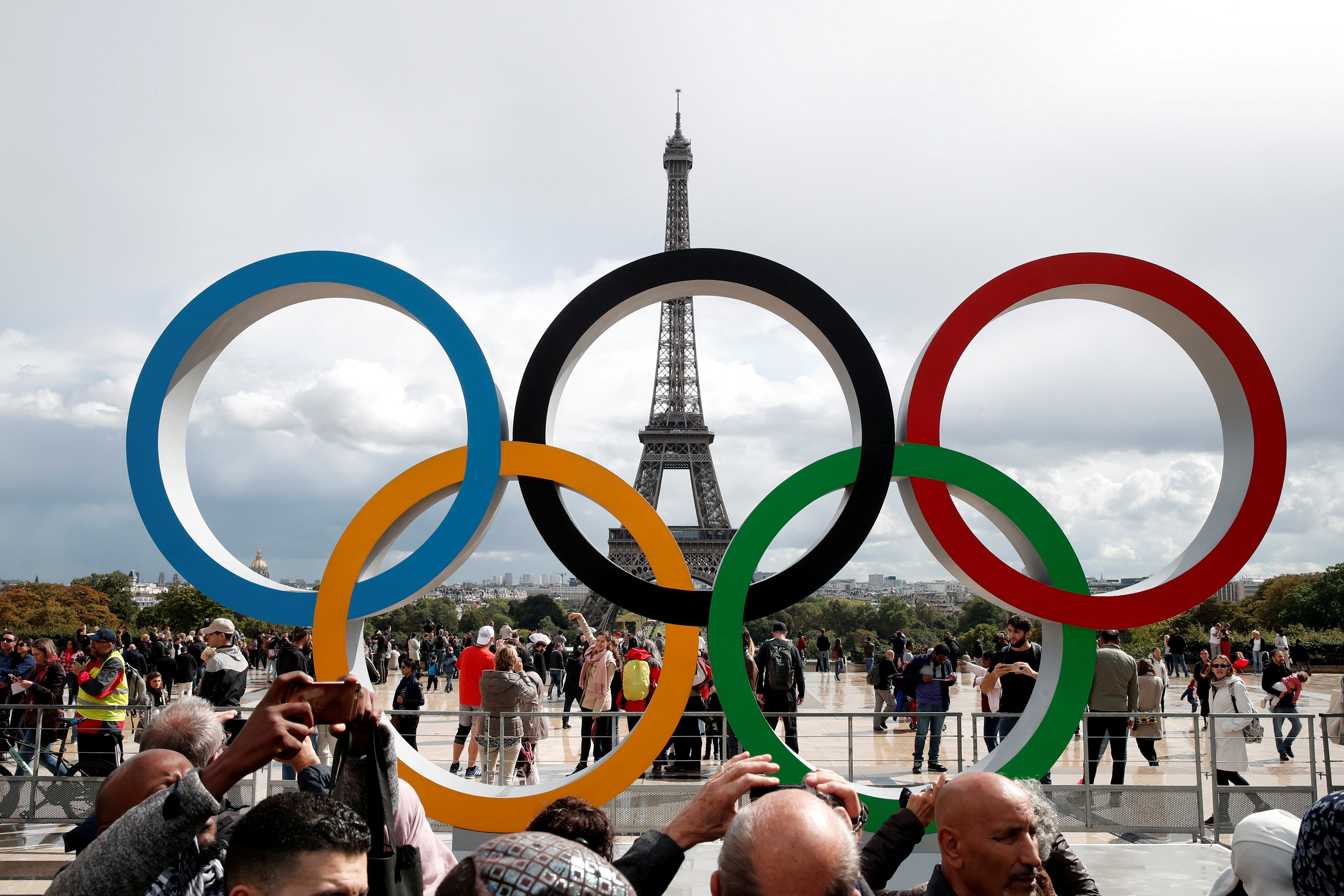
Olympic rings to celebrate the IOC official announcement that Paris won the 2024 Olympic bid are seen in front of the Eiffel Tower at the Trocadero square in Paris, France, September 16, 2017. REUTERS/Benoit Tessier

Ukraine hopes to secure widespread international support for banning Russian and Belarusian athletes from the Paris Olympics in 2024 due to Moscow’s invasion, the sports minister said on Tuesday.

Vadym Huttsait, 51, a former Olympic fencing champion, told Reuters the idea of allowing Russian and Belarusian athletes to compete as neutrals was unacceptable.

“It is impossible for us at a time when the full-scale war is going on, when our athletes, our soldiers are defending our homeland,” he said in his Kyiv office, beside a wall with portraits of athletes killed in the war.

Last week the International Olympic Committee said it was open to including Russian and Belarusian athletes as neutrals at the Games and opened a door to them competing in qualifiers, prompting an international campaign by Kyiv to keep them out.

Moscow said on Tuesday it would welcome any IOC moves to allow its athletes to compete in the Olympics. But hours later the IOC said it was standing by sanctions imposed against the countries over Russia’s invasion.

President Volodymyr Zelenskiy said in a video address on Tuesday that “Russian politisation of sport would invariably mean justification of terror”.

At least 220 Ukrainian athletes and coaches have died in the war, said Huttsait, who won an Olympic fencing team gold in 1992 for the so-called Unified Team, which comprised 12 of the 15 former Soviet republics. He also coached Ukraine’s winning team at the 2008 Games.

“Ukraine will unite with many countries … and it (Russians competing) will not be allowed,” he added, saying 40 nations had given Ukrainian athletes housing and training assistance abroad during the war.

There has been little public support yet from other nations for an outright ban on Russians at Paris.

The IOC’s initial recommendation to ban Russians and Belarusians has been applied by many sports federations.

But last week, it backed a proposal by the Olympic Council of Asia to allow them to compete in Asia, which could potentially include Olympic qualifying events.

Should that happen, Ukraine’s sporting authorities and athletes will face a “very difficult decision” whether to boycott Paris, Huttsait said.

“When we lose so many people, so many athletes, the lives of Ukrainians are more important to us than any medal at international competitions,” he said.

Ukrainian officials have turned on the IOC in recent days for promoting “violence, mass murders, destruction” with the idea of giving Russia a “platform to promote genocide.”

The IOC has called that defamatory and said such words do not promote constructive discussion.

Zelenskiy said “only the free world acting together can protect sport from those sports bureaucrats who for some reason are ready to close their eyes to reality.”

On Tuesday, former boxing champion Wladimir Klitschko called on IOC head Thomas Bach not to betray the Olympic spirit and become an “accomplice in this abominable war”.

Moscow is trying to turn the page on years of doping scandals after its teams were forced to compete without their flag or anthem at the Olympics and major international events.

Categories
Audio Sources - Full Text Articles

AP source: Texans hire DeMeco Ryans as head coach

HOUSTON (AP) — DeMeco Ryans has been hired as coach of the Houston Texans, a person with knowledge of the decision told The Associated Press on Tuesday.

The person spoke on the condition on anonymity since the hiring had not been announced.

The move gives him his first head coaching job and brings him back to the place where he started his playing career.

Ryans joins the Texans from the San Francisco 49ers, where he spent the past two seasons as their defensive coordinator.

He replaces Lovie Smith, who was fired after just one season where the team went 3-13-1.

Ryans led a 49ers defense that led the NFL this season by allowing just 300.6 yards a game.

San Francisco was particularly good against the run, ranking second in the league by holding teams to 77.7 yards. That’s a stark contrast to Houston’s run defense, which ranked last in the NFL by allowing 170.2 yards this season.

Ryans helped the 49ers to a 13-4 regular-season record and the NFC West title this season. San Francisco reached the NFC championship game before falling to Philadelphia on Sunday.

The 38-year-old Ryans was a linebacker who was a second-round pick of the Texans in 2006. He led the NFL with 126 solo tackles that season to win AP Defensive Rookie of the Year honors.

He spent his first six NFL seasons with the Texans where he was selected to the Pro Bowl in 2007 and 2009.

Ryans becomes the sixth coach in franchise history and the third in three seasons after David Culley also just lasted one year before being fired at the end of the 2021 season.

___

AP NFL: https://apnews.com/hub/nfl and https://twitter.com/AP_NFL

Categories
Audio Sources - Full Text Articles

The end of the Moroccan “model”: How Islamists lost despite winning

By Shadi Hamid

When it comes to the failures of Islamist movements during and after the Arab Spring, the case of Morocco’s Justice and Development Party (PJD) has often been treated as a success story. This success, of course, is relative, and the bar is low. But compared to, say, the Muslim Brotherhood in Egypt, the PJD seems to offer a much more promising model of how an Islamist party can adapt and evolve in challenging circumstances. Not only did the party survive, but it also reached an accommodation with the Moroccan monarchy and even rose to power. PJD leaders promoted this narrative as well, with one party official proudly telling a Western researcher in the wake of Egypt’s coup: “Now people should study us.”

While there were always weaknesses to these claims of Moroccan exceptionalism, they have only become more evident with time. Recent developments, including the PJD’s spectacular electoral defeat in 2021, suggest the need for a more careful assessment of what went right — and what went wrong — with Morocco’s Islamist experiment. To the extent that there still remains a Moroccan “model,” it may be better understood as a model of what not to do.

The PJD’s survival and (electoral) success

The PJD came out of the detritus of the Arab Spring intact, which is more than can be said for many of its Islamist counterparts elsewhere in the region. More than that, the PJD won large pluralities in consecutive parliamentary elections, both during and after the Arab Spring. Despite an electoral system designed to prevent any one party from dominating, the PJD won 27% of the seats in parliament in the November 2011 elections, with the center-right and pro-palace Istiqlal Party a distant second with 15%. And so began an unusual experiment: Morocco is one of a very small number of Arab countries to have ever had a democratically-elected Islamist prime minister — and the only Arab country where the experiment lasted as long as 10 years.

The PJD had been working towards this goal, slowly expanding its electoral reach while taking care not to threaten the king. This was important, as Morocco isn’t a democracy but an authoritarian monarchy that allows for electoral competition under clear constraints. For some time, the PJD took great care to avoid even the appearance of confrontation with the royal court. One might even say it took this nonconfrontational posture to an extreme (if such a thing as extremism in the name of nonconfrontation is possible).

Consequently, for years, the party had “lost on purpose,” something that various Islamist parties were known to do in the pre-Arab Spring period. Michael Willis was one of the first scholars to note the PJD’s peculiar electoral behavior in an article titled “The strange case of the party that did not want to win.” That was in 2002. When the PJD finally tried to win an election in 2011, it won. In the 2016 elections, it increased its share of the vote, winning 31.6% of the seats, before losing and returning to the opposition after the September 2021 elections. But is success primarily about winning elections — or does success, especially for a party with a distinct ideological or religious orientation, entail other things?

As Avi Spiegel, a leading scholar of Moroccan Islamism, notes with some frustration:

“We love measuring and tracking “democracy,” focusing on winners and losers, on horse races, victories, and defeats. We study these things, I suspect, because we are guided by the belief, perhaps even the zeal, that these outcomes matter — that the winners of elections actually win something. Yet, in authoritarian contexts — even post-Arab Spring contexts — does electoral success translate into success writ large?”

In other words, what does it really mean to “win” democratic elections in a country that isn’t even a democracy to begin with?

A decade in government

After 10 years as Morocco’s “ruling party,” the PJD had little to show for its trouble. Ostensibly in power, the party was powerless when it came to what mattered most: national economic strategy, international relations, defense, and internal security. On Islam, the very thing that animated the PJD’s founding, the party was similarly constrained. As Spiegel notes, “PJD officials still evoke religion, but almost never in opposition to the state.” In effect, the country’s largest opposition party stopped being an opposition party. This basic bargain — access, survival, and legalization in exchange for obedience — has been replicated to various degrees across the region, but Morocco is where the experience played out at length, reaching its natural conclusion.

Ultimately, the PJD was a casualty of its own success in more ways than one. The bargain with the monarchy wasn’t much of a bargain at all. In the 2021 elections, the party lost nearly 90% of its seats, one of the more remarkable electoral reversals in recent years anywhere in the world. The story of what went wrong is a long one, but a few factors are worth highlighting. The palace, growing concerned with Moroccan Prime Minister Abdelilah Benkirane’s folksy popularity, used the pretext of the PJD’s delay in forming a new government in 2017 to dismiss Benkirane and replace him with Saad Eddine Othmani, a markedly less popular and charismatic PJD figure. The PJD obliged under pressure from the king, but this capitulation triggered an internal crisis within the party. As Mohammed Masbah notes, “the PJD’s loyalty to the palace went so far that it was in the end fully coopted by it and thus alienated itself from its voters.” As a result, “on many occasions the PJD was on the verge of implosion.”

Morocco also faced a period of mounting economic crisis from 2017 to 2021, which put pressure on the PJD-led government to proceed with controversial subsidy cuts and raising the retirement age. The COVID-19 pandemic only made matters worse. For its part, though, the monarchy was insulated. The PJD was a convenient buffer. To the extent that the populace was angry, it had an easy target for its anger. The PJD was, after all, the titular head of government. And since direct criticism of the king and the institution of the monarchy is prohibited by law, Moroccans could instead express their dissatisfaction in the next elections. Another party would win, and then voters would have a new target, and so on. Masbah points out that, for the monarchy, this has been a longstanding and effective strategy: “The palace puts successive governments and other elected institutions, such as local and regional councils, at the frontline of public blame, and replaces them once they fail this function.”

Domestic policy was difficult enough. But the PJD was also blamed for foreign policy choices it had little control over. The decision to normalize relations with Israel as part of the Trump administration-brokered Abraham Accords came from the palace. It was simply the government’s job to execute — or at least accept — what had already been decided. For the rank-and-file of the PJD, a party that had long prioritized the Palestinian cause, this was tantamount to a betrayal. Yet PJD leaders were trapped. To oppose normalization would have meant resigning from government en masse. And this, in turn, would have necessitated a breach with the very king whom they had committed to obey.

The future of the Moroccan model

Today, the PJD, despite its success or perhaps because of it, is one of the region’s weakest Islamist parties (at least in electoral terms). Before the Arab Spring, it lost on purpose. After the Arab Spring, it lost by winning. This means that, for the time being, the monarchy has succeeded not only in neutralizing the country’s largest political party but rendered it irrelevant. The PJD was a useful buffer because it could provide the illusion of democratic progress without the substance. What happens, though, when the illusion is revealed for what it is?

This is not to suggest that Morocco will soon experience some sort of spontaneous mass uprising outside of the reach of the legal political parties — all of whom depend on the palace for their survival. But it does raise difficult questions about what Morocco’s experiment with managed electoral competition is meant to lead to, if anything at all. Or maybe it’s just this: more of the same, a cycle repeating itself, with nothing in the way of actual answers.

2021-09-08T161905Z_1312322464_RC2QLP994T
fblike20.png pinterest20.png twitter20.png email20.png rss20.png  
Categories
Audio Sources - Full Text Articles

RSS Pages – TNT News Reviews – 4:52 PM 1/31/2023 thenewsandtimes.blogspot.com/2023/01/rss-pa… twitter.com/i/web/status/1…

RSS Pages – TNT News Reviews – 4:52 PM 1/31/2023 thenewsandtimes.blogspot.com/2023/01/rss-pa… twitter.com/i/web/status/1…

Fn1TPVDWAAA-Suv.png:large

Categories
Audio Sources - Full Text Articles

RSS Pages – TNT News Reviews linkspagesnt.blogspot.com/2023/01/rss-pa… twitter.com/i/web/status/1…

RSS Pages – TNT News Reviews linkspagesnt.blogspot.com/2023/01/rss-pa… twitter.com/i/web/status/1…

Fn1TJHtXkAkaB4_.png:large

WP Radio
WP Radio
OFFLINE LIVE