Categories
Audio Sources - Full Text Articles

What a New Documentary Reveals About Pamela Anderson’s Life Off-Camera

In Pamela, a Love Story, the flashing lights of the paparazzi and lurid tabloid headlines that marked Pamela Anderson’s life during the early aughts are far removed from the quiet life she’s made for herself now, after retreating to her grandmother’s boathouse on the small island town of Ladysmith, British Columbia, where she grew up.

Helmed by director Ryan White and co-produced by one of Anderson’s sons, Brandon Lee, the film is a surprisingly gentle meditation on Anderson’s extraordinary life, going from her turbulent childhood, during which she suffered multiple abuses, to her discovery at a Canadian football game, to the dizzyingly meteoric fame that came after she became a Playboy model and television star via Baywatch in the 1990s and early 2000s. Her career and romantic relationships provide rich fodder for a modern fairy tale, a “Cinderella story on steroids,” as White refers to it. Anderson’s life appears to reach its apex once she falls in love with, marries, and starts a family with musician Tommy Lee, but that image is shattered once a stolen intimate home video of the couple becomes the Internet’s first viral moment.

[time-brightcove not-tgx=”true”]

While the film addresses the gross sexism and misogyny that cause upheaval Anderson’s life and career in the wake of the notorious tape, it’s less concerned with the pain of the past than it is the life that Anderson has built since, showcasing her resilience and the way she has leaned into being a mother, an activist, and a free-spirited artist—defining herself outside of the narratives foisted on her by the public.

Read More: Hulu’s Abysmal Pam & Tommy Is at Its Worst When Paying Lip Service to Feminism

White had not anticipated directing a documentary about Pamela Anderson; in his career he has shied away from covering celebrities, but he changed his mind after a Zoom meeting with Lee, who urged him to take a call with Anderson.

“I was born in 1981 and I had this image of Pamela in my head as the most famous person in the world to me when I’m coming of age,” White tells TIME. “She was like my Kardashian, my Marilyn Monroe. We had a two or three hour conversation and everything about her surprised me. That’s what I’m hoping for as this film comes out, that people will be really surprised about who the real Pamela Anderson is.”

Lee’s tells TIME his hope for the film is similar: “The real message here is that there is a real person underneath all of those experiences.”

The film draws on Pamela Anderson’s huge personal archive

White had a wealth of material to draw on for the film, thanks to Anderson’s faithful self-documentation. Throughout her adult life, Anderson has kept a journal, writing about everything from her career goals to her romantic relationships and family life; in one particularly bittersweet scene in the documentary, she writes a letter to her then-one-year-old son Dylan, following the incarceration of her then-estranged husband Tommy Lee. In addition to her journals are an archive of VHS tapes that document everything from home life with her sons and their childhood birthday parties to vacations with ex-husband Tommy Lee. For Brandon Lee, Anderson’s documentation comes from a very personal place.

“I think through the years after going through so much, she’s clung to a lot of her personal treasures and guarded them over the years,” he says. “They’re kind of her evidence to herself that over the years she had a wonderful family and a lot of fantastic moments.”

pamela-a-love-story-3
Courtesy of NetflixBrandon Thomas Lee and Pamela Anderson in ‘Pamela, a love story’

For years, Anderson stored the journals and tapes in a loft in the boathouse, not revisiting them until she offered all of the archive, without reviewing it, to White for the documentary, allowing him to not only use the archive for research but to use the material in the film. Upon being given access to the archive, White flew up to Ladysmith, where he filmed Anderson diving back into the old journals and tapes for the first time in years and later, in some of the sweetest moments of the film, reviewing home videos with her sons on a VCR and monitor that White got from a local pawn shop.

The extensive materials become the thruline of the film, showing the growth and evolution of Anderson throughout the years, from her childhood to present day. As such, handling the archive became one of the most crucial and important elements of the film’s production. When White began doing the research for the film back in Los Angeles after the first trip to Ladysmith, he tasked Lee with carrying the first shipment of tapes back to L.A. via a carry-on that couldn’t be put through the airport’s X-Ray machine, having each tape checked individually. Later, White actually drove a cargo van with much of the archive from Ladysmith to Los Angeles over the course of five days, lest he risk losing any of the archive by sending it via mail.

Anderson was hands-off when it came to her portrayal

The ethics of documentary filmmaking—especially when a subject or those close to a subject are involved, like Anderson’s son Brandon being a producer—can be tricky, but White found that while Anderson was an enthusiastic collaborator as a subject, she had zero interest in trying to control the edit or direction of the film, something he found refreshing, especially for someone with her level of fame, who might be concerned with how they were presented to the public.

“She’s very collaborative from an emotional level and an artistic level, but when it came to the filmmaking and editing conversation, she was very detached from the process, which appealed to me as a storyteller,” White said. “I thought, this is rare. Why is she not asking all of these really enterprising questions you would typically get out of someone?”

Read More: How Docu-Mania Took Streaming by Storm

White said Anderson’s openness to working with him and sharing the most vulnerable parts of her life with him as a key part of the trust he was able to exercise while making the film, pointing to her offering him her diaries and videos and allowing him to use what he wanted without consulting her first as one of the most outsize examples of this, as well as a particularly raw scene where she allows him to interview her in the bathtub while she reflects on the pain of being unable to make her marriage work with the father of her children, something that her son says he believes she was processing for the first time while on camera.

“This woman is, shockingly, for her stature of fame and celebrity, so vulnerable in the way she’s willing to work, to open up,” White said.

Lee said that his mother’s hands-off approach when it came to the film was a part of her respect for White’s craft as a filmmaker, seeing it as her way of being a true collaborator, modeling the behavior she hoped people would do for her when she was in the driver’s seat.

“If we’re at a photo shoot, she wants to be the subject, she knows she’s the art,” Lee says. “She does not want to step on the artist’s toes ever because she knows what that feels like. She definitely knows that from the process of writing her book; if someone stepped on her toes, it was a disaster, it was her process.”

pamela-a-love-story-2
Courtesy of NetflixPamela Anderson in ‘Pamela, a love story’

The goal of the documentary was not to correct the narrative

Toward the end of the documentary, Anderson’s world is upended once again when the Hulu series Pam & Tommy is set to release. White stresses that the documentary is in no way a response to the series; according to him, they began working on the documentary before they even knew that the series existed. For Anderson, who has not seen the series and has no plan to, the goal behind making the documentary was not to correct the narrative, but to tell her story authentically.

“From the beginning, both Pamela and I have said that this has nothing to do with taking the narrative back from that show—she never liked that type of messaging,” White says. “With her memoir and this film coming out, it is her getting to take her narrative into her own hands, but that was never her goal—they’re both artistic expressions that tell her story authentically, but she’s not trying to course correct how anyone else has told it.”

Categories
Audio Sources - Full Text Articles

Why Biden Ending the COVID-19 Emergency Could Doom Student Loan Forgiveness

President Biden’s plan to forgive up to $20,000 in student loan debt was already in crisis—tied up in legal challenges that have already reached the Supreme Court.

But the Administration’s announcement that it is ending the COVID-19 national and public health emergencies on May 11 could spell its doom, according to legal experts. The federal pause on student loan payments may also be in jeopardy.

At least 16 million Americans were approved for the program, but relief was put on pause by two separate federal court rulings, including by a judge from Texas who said the program was an “unconstitutional” use of power.

[time-brightcove not-tgx=”true”]

Biden’s legal justification for forgiving student debt relied on the HEROES Act, which allows the Department of Education to modify provisions of student loan programs to alleviate financial hardship borrowers might face during national emergencies.

The plan, announced in August, would impact 40 million Americans. It would forgive up to $10,000 of student loan debt for most borrowers, and up to $20,000 for those who went to college on Pell Grants. Only those earning less than $125,000 per year are eligible.

In a November court filing, U.S. Department of Education Undersecretary James Kvaal outlined the Administration’s argument, saying that unless the Administration is allowed to take action, there could be a “large increase in the amount of federal student loan delinquency and defaults as a result of the COVID-19 pandemic.”

But the Administration’s decision to end the public health emergency puts the crux of the Education Department’s argument at high risk, says Jed Shugerman, a professor who studies executive branch powers at Fordham Law School.

“It is possible in the wake of an emergency, that one would have a program to deal with the fallout of an emergency,” he says. “The problem is that the program is not tailored to the emergency.”

In order to have the authority to forgive student loans, the Education Department agreed that it would have to show that recipients of the program faced a strong financial burden as a result of COVID-19. While nearly 17 million Americans were unemployed at the height of the pandemic, workers in other industries—like streaming services or video conferencing businesses such as Zoom—thrived. Since borrowers were not required to provide evidence of a financial burden when applying for student loan forgiveness, the Administration’s argument is faulty, Shugerman says.

“The only excuse for not actually having any step to show a causation or correlation from the emergency would be if the emergency was still happening,” he adds.

The Supreme Court will hear oral arguments over student loan relief at the end of February.

What is the future of student loan forgiveness?

Experts tell TIME it’s increasingly likely the Supreme Court will strike down Biden’s loan forgiveness plan in the following weeks.

The best path forward would be to create a new plan that could be justified under the Higher Education Act of 1965, which aimed to increase access to college and university, says Shugerman.

Implementing a student loan forgiveness plan under that statute, while a better fit, would take longer. But experts say Biden could still pass some sort of relief for borrowers by the end of his term if the Administration acts promptly.

Student loan payments likely to resume

Experts tell TIME that the student loan payment pause could also run out as a result of Biden ending the COVID-19 emergency.

Student loan payments have been paused since March 2020. Payments were set to resume 60 days after the Education Department was allowed to implement the student loan forgiveness program, or when litigation around Biden’s student loan relief program ends.

“I don’t think it would be out of the question that if the case came down after May, the payment cost pause could extend a little bit longer,” Luke Herrine, Assistant Professor of Law at the University of Alabama tells TIME. “But the Biden Administration would have eliminated its justification for continuing to extend it much beyond what it takes to resolve the legal dispute.”

Other measures to forgive student loans

In the meantime, the administration is already considering structural changes to student loan plans. In early January, the Education Department announced new proposed regulations that could cut monthly payments in half for the 10 million borrowers enrolled in an income-driven repayment plan.

Those changes are not yet confirmed, but if the proposal goes into effect, Black, Hispanic, American Indian, and Alaska Native borrowers could see their lifetime payments per dollar borrowed cut by 50%. An earlier initiative announced in April said the Department of Education would conduct a one-time account adjustment that would extend borrowers’ payment histories to include credit for partial and late payments. Eligible borrowers would automatically see the adjustment on their account.

Categories
Audio Sources - Full Text Articles

Russia Expects a Visit From China’s Xi Jinping in the Spring, Ministry Says

The Russian government is anticipating a visit from Chinese leader Xi Jinping this spring, the Russian Ministry of Foreign Affairs said Monday.

“Through joint efforts in the coming year, Russia and China will be able to strengthen and advance bilateral interstate ties,” the ministry said in a statement. “As it is known, Russian President V.V. Putin invited Chinese leader Xi Jinping to a government visit in the spring. We are proceeding with the understanding that this will be the central event for the bilateral relationship in 2023.”

The meeting, which would be the second in-person meeting between Xi and Putin since the start of the Russian war in Ukraine last February, could signal a deepening of ties between the two states. As many countries have sanctioned Russia in response to the invasion, China is one of the countries credited with keeping the Russian economy afloat by continuing to maintain trade with Russia.

[time-brightcove not-tgx=”true”]

Read More: U.S. Four-Star General Predicts War With China By 2025

Meanwhile, the Chinese government has not yet confirmed Xi’s visit. In a statement to RIA News, a Russian state-owned news agency, Mao Ning, spokesperson for China’s Ministry of Foreign Affairs, said that “China and Russia maintain close cooperation at various levels to promote the development of bilateral relations and to contribute to the support of peace and development in the entire world.” TIME reached out to the Chinese and Russian ministries of foreign affairs for further comment.

Putin has publicly encouraged Xi to pay him a visit since at least December, when Putin invited Xi to visit Moscow in spring 2023 in a statement on Russian state television, Reuters reported at the time. “This will demonstrate to the whole world the strength of Russian-Chinese ties on key issues,” Putin said in the address.

In its statement discussing the meeting on Monday, Russia’s Ministry of Foreign Affairs echoed one of the main tenets of Russian foreign policy: the importance of strengthening alliances among non-western countries to counter growing alliances like NATO. Russia has used its concerns about NATO to justify the invasion of Ukraine, and in recent years, has criticized what it characterizes as encroachment on its borders, including its military presence in eastern Europe.

The ministry’s statement emphasized that a stronger relationship between Russia and China will build a “multipolar system of international relations,” as opposed to one dominated by the United States: “Together with others who are like-minded we consistently oppose the attempts of the United States to achieve global dominance by the promotion of the concept of ‘rule based order,’” the statement said.

Read More: What to Know About Notorious Russian Mercenary Organization ‘The Wagner Group’

Since the beginning of the war, China has walked a delicate balancing act, maintaining that it is neutral on the conflict in Ukraine while simultaneously keeping close ties with Russia and rejecting arguments to restrict trade. At times, this has threatened China’s fragile relationship with the U.S.

The U.S. State Department said in December that Washington is monitoring Beijing’s activity, Reuters reported. “Beijing claims to be neutral, but its behavior makes clear it is still investing in close ties to Russia,” the spokesperson said in a statement. And on January 24, Bloomberg reported that the Biden administration had accused companies owned by the Chinese state of assisting the Russian war in Ukraine, and that the administration is working to determine if the government in Beijing was cognizant of what was going on. Mao has denied China’s involvement, calling the U.S. accusations “paranoia,” Bloomberg reported.

Categories
Audio Sources - Full Text Articles

Stock Up on Free At-Home COVID-19 Tests While You Can

As of May 11, the COVID-19 pandemic will no longer be considered a national or public health emergency in the U.S., the Biden Administration announced on Jan. 30. That’s not only a symbolic move. It also means the government will stop footing the bill for things like COVID-19 tests, vaccines, and treatments, which could bring changes to many of the free programs U.S. residents have come to rely on throughout the pandemic.

For example, the end of the public health emergency may mean the end of the federal government’s free at-home test program, through which U.S. residents can periodically order antigen test kits. Medicare and private insurers will also no longer be required to cover free at-home tests each month, though some plans may choose to continue reimbursing some costs, with beneficiaries picking up the rest of the price out-of-pocket.

[time-brightcove not-tgx=”true”]

Read More: Why Rapid COVID-19 Test Results Are Getting More Confusing

For now, though, these programs are still up and running—so you can stock up on free at-home COVID-19 tests while they’re a sure thing. Each U.S. household can currently get four tests for free from the federal government, and Medicare and private insurance plans reimburse the costs of up to eight at-home tests per insured person per month. Between the two, an insured individual could receive more than two dozen free tests between now and May 11.

Those at-home kits expire, however, so your stash won’t last forever. But the U.S. Food and Drug Administration (FDA) has extended the expiration dates for many test kits, so their shelf lives may be longer than the packaging suggests. Current expiration dates are listed here on the FDA’s website.

Whether they’re reimbursed or not, at-home tests will remain for sale even after the public-health emergency expires, and labs and pharmacies will also still offer testing services—people may just have to pay for them going forward. It remains to be seen exactly how much lab tests will cost in the future, but some insured people may continue to have no out-of-pocket costs as long as they use in-network providers.

Categories
Audio Sources - Full Text Articles

The U.S. COVID-19 Public Health Emergency Ends in May. Here’s What Will Change

Almost since the emergence of COVID-19, the U.S. has treated the disease as both a national and public health emergency. That will end on May 11, 2023, the Biden Administration announced Jan. 30. The decision to end these important designations will have wide-ranging impacts on many health measures that Americans have come to take for granted over the past few years, including free vaccines, booster shots, tests, and treatments.

Declaring COVID-19 a public health emergency (PHE) in Jan. 2020 allowed the federal government—via a COVID-19 response led by the Department of Health and Human Services (HHS)—to access funds and resources to pay for everything from personal protective equipment such as masks, to tests and vaccines, and respond in other ways to the pandemic. Under the PHE, the government could also modify Medicare and Medicaid reimbursement policies to increase access to treatments and other resources critical to controlling the spread of COVID-19. Two months later, President Trump declared a national emergency surrounding COVID-19, which opened up additional funding for the response, including continued coverage for people under Medicaid and expanded funds for hospitals to care for COVID-19 patients.

[time-brightcove not-tgx=”true”]

The declarations allowed “a public health approach to health care during the pandemic,” says Dr. Josh Sharfstein, vice dean for public health practice and community engagement at the Johns Hopkins Bloomberg School of Public Health. “They helped a lot of people to get services. Now we’re going back to a health care approach to health care, and that brings all of the weaknesses of our system into play.”

Sharfstein notes that when the emergency declarations end, more than just access to COVID-19 services will be affected. The funding made available through the declarations made it possible to continue covering millions of people under Medicaid, even if their eligibility had changed; the Kaiser Family Foundation (KFF) estimates that anywhere from five to 14 million people could lose Medicaid coverage if states deem they are no longer eligible when this provision ends. “The majority of them are expected to be Black and Latino people, so there are concerns that health inequities will worsen,” says Dr. Jose Figueroa, assistant professor of health policy and management at the Harvard T. H. Chan School of Public Health.

Here’s what will else change when the national and public health emergencies end in May.

COVID-19 vaccines

COVID-19 vaccines and boosters will continue to be covered for people with private insurance when given by in-network providers, but according to an analysis by KFF, people may have to pay out-of-pocket if they get their shots from providers outside of their covered network.

People with Medicare will continue to receive free vaccines, which are covered under Medicare Part B through the CARES Act, a $2.2 trillion economic stimulus bill passed by Congress in 2020. Medicaid beneficiaries will also continue to receive free vaccines.

Uninsured people will no longer be able to access free vaccines through state Medicaid programs, which had received expanded federal funding to cover these services for the uninsured.

COVID-19 tests

Currently, people with private insurance or Medicare can order up to eight rapid at-home tests a month and get reimbursed for their cost. After the PHE ends, insurers may continue to cover COVID-19 tests, including the over-the-counter at-home kind, but only if they are distributed by a narrower pool of in-network providers.

Medicare beneficiaries will also have to start paying for a portion of any tests. Medicaid will continue to pay for COVID-19 tests that are ordered by a doctor, but each state will decide whether to cover at-home tests.

Read More: When Should You Use Home COVID-19 Tests? Here’s What Experts Say

COVID-19 treatments

Privately insured people will continue to receive coverage for COVID-19 treatments, including widely used antiviral therapies like Paxlovid.

People with Medicare Part D will be covered for antiviral treatments until the federal supply is depleted. After those doses are gone, beneficiaries will have to pay for a portion of this drug treatment.

Medicaid will reimburse only for treatments that are approved by the U.S. Food and Drug Administration (FDA). Whether medications that are under an emergency use authorization from the FDA are covered will vary state by state.

Emergency use authorizations (EUAs)

The dual emergencies aren’t the only ones in place to respond to COVID-19: The HHS Secretary also granted EUA power to the FDA to streamline availability of new COVID-19 drugs. The end of the dual emergencies does not affect the EUAs that the FDA granted to some COVID-19 vaccines and antiviral drugs like Paxlovid.

The emergency declaration behind the EUAs is issued by the HHS Secretary, and remains in effect until the Secretary decides to terminate it. If the emergency EUA declaration ends, then any medications authorized under it may no longer be available. The drugs would have to receive full FDA approval in order to make it to market again. In a statement, the FDA says that if that occurs, it would allow enough time for the transition to ensure that approvals of the drugs are forthcoming.

Telehealth

Most Medicare coverage of telehealth services that were expanded and allowed during the pandemic will end when the PHE concludes reports KFF. The only exceptions are permanent changes for beneficiaries seeking mental health and substance use help. For these services, providers from another state can treat patients in different states, and audio-only services are also permanently covered.

For Medicaid recipients, services and coverage will vary state by state.

Hospital care

The 20% increase in Medicare reimbursements that hospitals received for COVID-19 patients will end with the expiration of the PHE. This may indirectly affect patients hospitalized for COVID-19, who may see higher costs reflected in their medical bills.

With people having to pay for COVID-19-related health services, the virus could find new opportunities to spread, and potentially even morph into more disease-causing variants. “It means there will be less testing in this country, and likely less treatment because not everyone can afford it,” says Figueroa. “Will this change the trajectory of the pandemic? It’s something we are going to have to watch.”

Categories
Audio Sources - Full Text Articles

Criminal Minds

19121c5c768fb6ee35d5576afe2d9a7f?s=100&d

Help support Palmer Report! Our articles are all 100% free to read, with no forced subscriptions and nothing hidden behind paywalls. If you value our content, you’re welcome to pay for it:

Pay $5 to Palmer Report:

Pay $25 to Palmer Report:

Pay $75 to Palmer Report:


Help fund Palmer Report here

Pay $5 to Palmer Report:

Pay $25 to Palmer Report:

Pay $75 to Palmer Report:


Stephanie Ruhle of MSNBC asked a profound question on her show the other night. She was discussing the release of the Tyre Nichols video. She asked that age-old question: why. Why did these evil people DO this? Why, why, why.

I used to ask why about everything almost every hour. Perhaps you did as well. If one is born with an analytical brain, they are cursed by the need to know “why” about just about everything.

And I used the word cursed intentionally. Because seeking answers is a great thing, but sometimes it CAN indeed feel like a curse. Because sometimes there simply isn’t an answer.

I hate to boil it down to “some people are inherently bad,” but I do not see what other conclusions can be drawn. Take those “officers” in that horrific video. All of them lacked one thing, and that is a conscience — an ability to care about humanity.

But we can’t know why. Psychologists have been studying “why” for generations. Research has been done. Books have been written by millions trying to understand the criminal mind and the way it works.

We look for answers because we want a way out of the darkness — a way to understand these beasts wrapped in human clothing.

But we can’t understand them because we’re not like them. And we can’t get into their heads and their souls because they have not got any souls and their brains are dark places that we would never be able to identify with.

It would be a wonderful thing, would it not, if all of humanity were decent? Watching Ruhle talk last night, I could see that’s what she wants. So do I. And likely, so do you.

But human evil has been in existence since the beginning of time. And we can solve a lot of problems, but we cannot solve the criminal mind.


The movie ‘Clockwork orange” tried their hand at that. But in reality, we cannot unless some day, perhaps thousands of years from now, scientists will find a way — a solution to understand and stop the venom of barbarians. But that day, if it ever comes, is light years away.

A friend once told me not to ask ” why” so much, or I’d drive myself crazy. And yet I persist. We all want answers to what drives many to commit unspeakable acts of savagery. But those answers, for now, allude us, although we can speculate. In the end, though, it’s evident that some people are simply bad — they have no humanity. Let us be grateful that we do.

Help fund the Ruben Gallego 2024 Senate campaign here

Help fund Palmer Report here

Pay $5 to Palmer Report:

Pay $25 to Palmer Report:

Pay $75 to Palmer Report:

Help fund the Ruben Gallego 2024 Senate campaign here

Help fund Palmer Report here

Pay $5 to Palmer Report:

Pay $25 to Palmer Report:

Pay $75 to Palmer Report:

The post Criminal Minds appeared first on Palmer Report.

Categories
Audio Sources - Full Text Articles

U.S. readies $2 bln-plus Ukraine aid package with longer-range weapons -sources

2023-01-31T22:40:20Z

Javeline anti-tank missiles are displayed on the assembly line as U.S. President Joe Biden tours a Lockheed Martin weapons factory in Troy, Alabama, U.S. May 3, 2022. REUTERS/Jonathan Ernst

The United States is readying more than $2 billion worth of military aid for Ukraine that is expected to include longer-range rockets for the first time and other munitions and weapons, two U.S. officials briefed on the matter told Reuters on Tuesday.

The weapons aid is expected to be announced as soon as later this week, the officials said. It is also expected to include support equipment for Patriot air defense systems, precision guided munitions and Javelin anti-tank weapons, they added.

One of the officials said that a portion of the package, $1.725 billion, would come from a fund known as the Ukraine Security Assistance Initiative (USAI), which allows President Joe Biden’s administration to get weapons from industry rather than from existing U.S. weapons stocks.

The USAI funds would go toward the purchase of a new weapon, Ground Launched Small Diameter Bomb (GLSDB), which have a range of 94 miles (150 km). The United States has rebuffed requests for the 185-mile (297-km) range ATACMS missile.

The longer range of the GLSDB glide bomb could allow Ukraine to hit valuable military targets that have been out of reach and help it continue pressing its counterattacks by disrupting Russia further behind its lines.

Reuters first reported on Boeing Co’s (BA.N) proposal to field GLSDB for Ukraine in November.

The White House declined to comment.

In addition to the USAI funds, more than $400 million worth of aid was expected to come from Presidential Drawdown Authority funds, which allows the president to take from current U.S. stocks in an emergency.

That aid was expected to include mine-resistant ambush-protected vehicles (MRAPs), guided multiple launch rocket systems (GMLRS) and ammunition.

Categories
Audio Sources - Full Text Articles

Factbox: What ending the U.S. COVID health emergency means for your pocket

2023-01-31T22:47:24Z

The U.S. government on May 11 will end the COVID-19 Public Health Emergency (PHE) that allowed millions of Americans to receive vaccines, tests, and treatments at no cost during the pandemic.

As the government hands off to commercial channels, including private insurance and government health plans, most Americans, even those who have health insurance, should expect some out-of-pocket costs for those products. Here is who will pay for what and when:

Bearing the brunt of the PHE expiration will be the more than 27 million uninsured Americans, mostly adults under the age of 65, who will lose access to free COVID tests, vaccines and treatments.

The uninsured rate hit an all time low of 8% in early 2022, according to the latest available government data, but the U.S. Department of Health and Human Services estimates that about another 15 million people – one-third of them children – will lose their health coverage by next year.

Congress had required state Medicaid programs to keep people continuously enrolled during the emergency. That ends on March 31, with an unwinding period lasting through 2023 as outlined in the $1.66 trillion government spending “omnibus” bill President Joe Biden signed on Dec. 29.

Health officials say they are working on ways to help uninsured Americans with COVID-related costs but have so far provided no details.

As things stand, uninsured adults face paying full price for vaccines – which Pfizer (PFE.N)/BioNTech SE (22UAy.DE) and Moderna (MRNA.O) plan to quadruple from around $30 to $120 – tests, and treatments, which can cost hundreds of dollars.

Limited vaccine and test supplies might be available at no or low cost through community health centers, and treatments will remain free while government supplies last.

Most Americans will still be able to get vaccines at no cost. People enrolled in government or state health insurance programs such as Medicare and Medicaid will continue to pay nothing, and those with private or employer-provided health plans should have no cost if they stay in-network.

Uninsured children will retain access to free vaccines through the Vaccines for Children Program, but could be charged administrative fees.

People on Medicare or private insurance will face out-of-pocket costs for both laboratory and at-home over-the-counter COVID tests as soon the emergency ends.

Those in the Medicaid or CHIP programs for poor adults and children will start shouldering some of the costs in 2024, after which lab tests remain at zero cost as long as they are ordered by a physician. The cost of other testing services including at-home tests will vary by state.

The U.S. government has made COVID treatments like Pfizer’s oral antiviral Paxlovid available for free so far and will continue to do so while supplies last. After that, most people will be expected to pay some out-of-pocket costs.

There are no laws on how private insurance should cover COVID treatments.

This means some out-of-pocket costs for treatments insurers decide to cover and potentially full prices for those they do not. It also means people may be hit with higher insurance premiums if COVID treatment costs are substantial enough.

Medicare will continue to cover treatments, including those that receive Emergency Use Authorization (EUA) from the U.S. Food and Drug Administration, but beneficiaries will still face some costs.

Medicaid and CHIP beneficiaries will get FDA-approved treatments at zero cost until the second half of 2024, but it will be up to individual state Medicaid programs whether or not to cover those under an EUA rather than full formal approval.

Related Galleries:

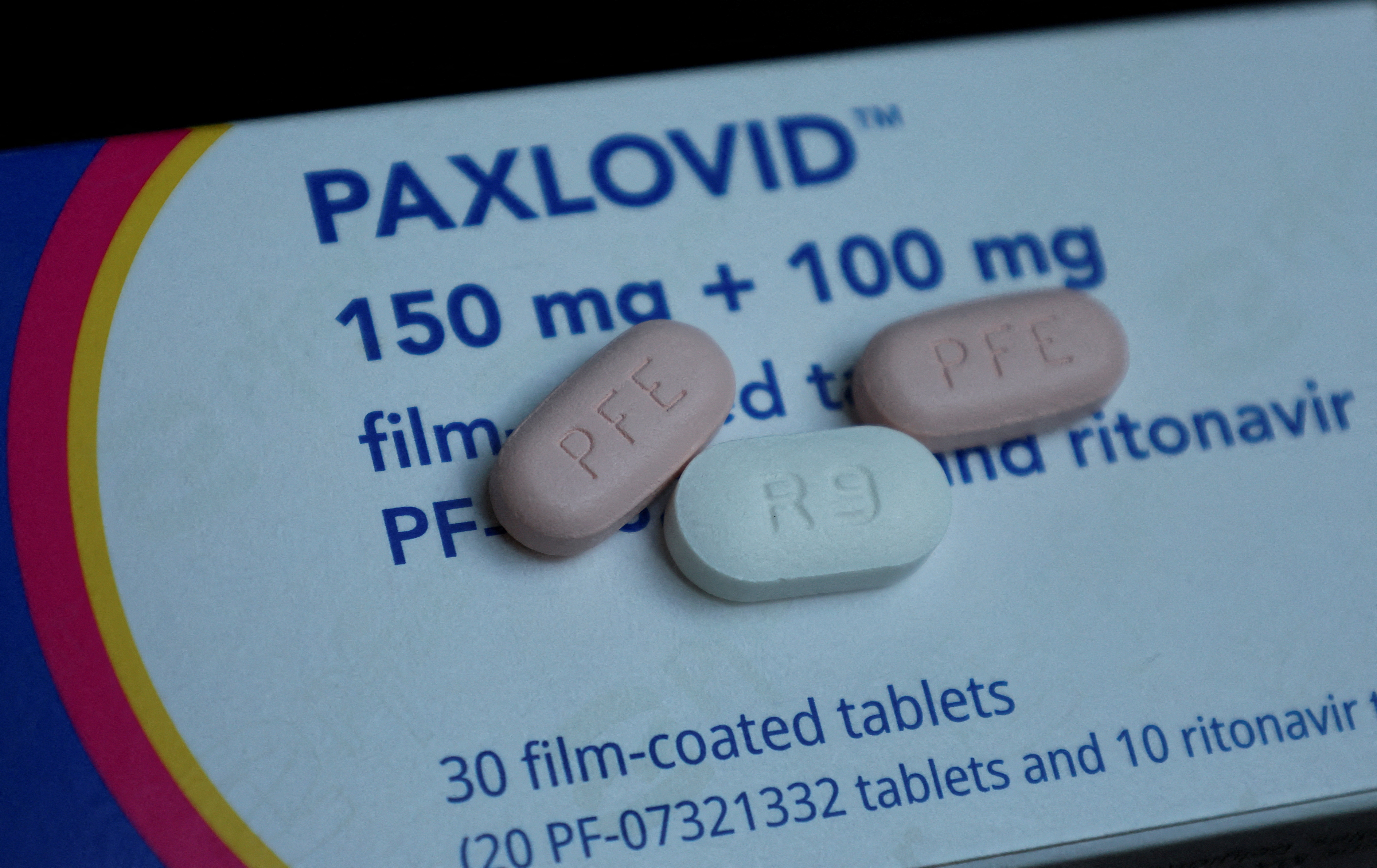
Paxlovid, Pfizer’s anti-viral medication to treat the coronavirus disease (COVID-19), is displayed in this picture illustration taken October 7, 2022. REUTERS/Wolfgang Rattay/Illustration

COVID-19 home test kits are pictured in a store window during the coronavirus disease (COVID-19) pandemic in the Manhattan borough of New York City, New York, U.S., January 19, 2022. REUTERS/Carlo Allegri
Categories
Audio Sources - Full Text Articles

Baldwin charged for “reckless handling“ of gun in “Rust“ shooting

2023-01-31T22:00:12Z

Actor Alec Baldwin and set armorer Hannah Gutierrez-Reed were charged with involuntary manslaughter on Tuesday for the fatal shooting of cinematographer Halyna Hutchins on the set of Western movie “Rust” in New Mexico in 2021, according to court documents.

District Attorney Mary Carmack-Altwies filed charges following months of speculation as to whether she had evidence that Baldwin showed criminal disregard for safety when a revolver with which he was rehearsing fired a live round that killed Hutchins.

Baldwin and Gutierrez-Reed were each charged with two counts of involuntary manslaughter. The most serious charge – which carries a potential sentence of five years in jail – would require prosecutors to convince a jury Baldwin was not just negligent but reckless in his use of a firearm.

A probable cause statement accompanying the charges names Baldwin as both an actor and producer on the movie and says: “On the day of the shooting alone, evidence shows that no less than a dozen acts, or omissions of recklessness, occurred in the short time prior to lunch and the time of the shooting, and this does not include the reckless handling of the firearm by Baldwin.”

The “30 Rock” actor has denied responsibility for the shooting, saying he cocked the revolver but never pulled the trigger and it was the job of Gutierrez-Reed and other weapons’ professionals to ensure it was unloaded.

Prosecutors could face long odds convincing a jury Baldwin is criminally liable, according to legal experts.

Gutierrez-Reed has said she checked the rounds she loaded into the gun were dummies before handing it to first assistant director Dave Halls. Halls handed it to Baldwin, telling him it was a “cold gun,” meaning it did not contain an explosive charge, according to police.

Halls has signed a plea deal for a misdemeanor charge and is expected to cooperate with the prosecution.

On Dec. 13 Halls testified to New Mexico’s worker safety bureau that Gutierrez-Reed handed the gun to Baldwin and that he never declared the Pietta reproduction Colt .45 a “cold gun.”

Industry-wide firearms safety guidelines instruct actors to assume a firearm is loaded with blank ammunition. Live ammunition is strictly forbidden on sets.

Related Galleries:

Actor Alec Baldwin departs his home, as he will be charged with involuntary manslaughter for the fatal shooting of cinematographer Halyna Hutchins on the set of the movie “Rust”, in New York, U.S., January 31, 2023. REUTERS/David ‘Dee’ Delgado

Actor Alec Baldwin departs his home, as he will be charged with involuntary manslaughter for the fatal shooting of cinematographer Halyna Hutchins on the set of the movie “Rust”, in New York, U.S., January 31, 2023. REUTERS/David ‘Dee’ Delgado

Actor Alec Baldwin departs his home, as he will be charged with involuntary manslaughter for the fatal shooting of cinematographer Halyna Hutchins on the set of the movie “Rust”, in New York, U.S., January 31, 2023. REUTERS/David ‘Dee’ Delgado

Actor Alec Baldwin departs his home, as he will be charged with involuntary manslaughter for the fatal shooting of cinematographer Halyna Hutchins on the set of the movie “Rust”, in New York, U.S., January 31, 2023. REUTERS/David ‘Dee’ Delgado

Actor Alec Baldwin departs his home, as he will be charged with involuntary manslaughter for the fatal shooting of cinematographer Halyna Hutchins on the set of the movie “Rust”, in New York, U.S., January 31, 2023. REUTERS/David ‘Dee’ Delgado

Actor Alec Baldwin appears in court in the Manhattan borough of New York City, New York, U.S., January 23, 2019. Erik Thomas/Pool via REUTERS
Categories
Audio Sources - Full Text Articles

Durenberger, former US senator from Minnesota, dies at 88

Former U.S. Senator David Durenberger, a Minnesota Republican who espoused a progressive brand of politics and criticized the GOP after his political career, died Tuesday at age 88.

Durenberger’s health had declined in recent months, his longtime spokesperson Tom Horner said. Horner told The Associated Press that Durenberger died Tuesday morning of natural causes. He was at his St. Paul home surrounded by family.

Durenberger, an attorney and former captain in the U.S. Army Reserve, won a U.S. Senate seat in 1978. He served three terms and championed health care reform. He pushed proposals to expand Medicare benefits, protect rights for disabled people and promote gender equity.

He was unanimously censured by the Senate in 1990 following a Senate Ethics Committee investigation into payments he received for book royalties and federal reimbursements for stays in a Minneapolis condo. In 1995, Durenberger also pled guilty to five misdemeanor charges related to the condo payments.

“If there is a smudge on the Seal of the United States Senate, or on the Star of the North, as we like to call our state, I will work my hardest to polish both back to brightness,” Durenberger told his Senate colleagues after his censure.

He decided not to run for reelection in 1994. Following his exit from politics, he worked with a number of initiatives focused on health care policy. As chair of the National Institute of Health Policy at the University of St. Thomas Opus College of Business, he addressed systemic health care problems.

As the Republican Party tilted toward fiscal conservatives focused on slashing government programs, Durenberger became a critic. He told a Minnesota political podcast in 2005 that Democrats are “better equipped to carry the day” on health care policy, though he said at the time he would not become a Democrat.

In the 2016 and 2020 presidential elections, he endorsed Democrats Hillary Clinton and Joe Biden over Donald Trump. And in 2018, he wrote a book with political reporter Lori Sturdevant titled, “When Republicans Were Progressive.” It mourned a nearly-extinct wing of the GOP in which lawmakers prided themselves on bipartisanship and sought to assist vulnerable people.

WP Radio
WP Radio
OFFLINE LIVE