Categories
Selected Articles

Trump from Michael_Novakhov (8 sites): The Trump Investigations Network: Michael Novakhov retweeted: 8:04 AM 1/31/2023 – Did James Kallstrom, a specialist in #FBI-FBI electronic surveillance, Trump’s “top fun boy”, a close associate of Giuliani & Co, pull the “Clinton emails & Weiner sexting show”, his last act of rage and revenge? thenewsandtimes.blogspot.com/2023/01/did-ja… youtube.com/watch?v=7ZVvUs…

Michael Novakhov retweeted:

8:04 AM 1/31/2023 – Did James Kallstrom, a specialist in #FBI-FBI electronic surveillance, Trump’s “top fun boy”, a close associate of Giuliani & Co, pull the “Clinton emails & Weiner sexting show”, his last act of rage and revenge? thenewsandtimes.blogspot.com/2023/01/did-ja… youtube.com/watch?v=7ZVvUs…

The post Michael Novakhov retweeted:

8:04 AM 1/31/2023 – Did James Kallstrom, a specialist in #FBI-FBI electronic surveillance, Trump’s “top fun boy”, a close associate of Giuliani & Co, pull the “Clinton emails & Weiner sexting show”, his last act of rage and revenge? thenewsandtimes.blogspot.com/2023/01/did-ja… youtube.com/watch?v=7ZVvUs… first appeared on The Trump Investigations Network.

7441751 The Trump Investigations Network

7771882 Trump from Michael_Novakhov (8 sites)

Categories
Selected Articles

Trump from Michael_Novakhov (8 sites): The Trump Investigations Network: 8:04 AM 1/31/2023 – Did James Kallstrom, a specialist in #FBI-FBI electronic surveillance, Trump’s “top fun boy”, a close associate of Giuliani & Co, pull the “Clinton emails & Weiner sexting show”, his last act of rage and revenge? thenewsandtimes.blogspot.com/2023/01/did-ja… youtube.com/watch?v=7ZVvUs…

8:04 AM 1/31/2023 – Did James Kallstrom, a specialist in #FBI-FBI electronic surveillance, Trump’s “top fun boy”, a close associate of Giuliani & Co, pull the “Clinton emails & Weiner sexting show”, his last act of rage and revenge? thenewsandtimes.blogspot.com/2023/01/did-ja… youtube.com/watch?v=7ZVvUs…

The post 8:04 AM 1/31/2023 – Did James Kallstrom, a specialist in #FBI-FBI electronic surveillance, Trump’s “top fun boy”, a close associate of Giuliani & Co, pull the “Clinton emails & Weiner sexting show”, his last act of rage and revenge? thenewsandtimes.blogspot.com/2023/01/did-ja… youtube.com/watch?v=7ZVvUs… first appeared on The Trump Investigations Network.

7441751 The Trump Investigations Network

7771882 Trump from Michael_Novakhov (8 sites)

Categories
Selected Articles

Putin’s War in Ukraine Pushes Ex-Soviet States Toward New Allies – Bloomberg

Putin’s War in Ukraine Pushes Ex-Soviet States Toward New Allies  Bloomberg
Categories
Audio Sources - Full Text Articles

Ending Selective Justice for the International Crime of Aggression

ICC-building-small-e1591394491368.jpg

There is a consequential blind spot in some of the analyses published at Just Security and elsewhere on the topic of Ukraine. The proposals to create an ad hoc tribunal to potentially prosecute President Vladimir Putin for the commission of the crime of aggression promotes nothing short of selective justice. For many people living outside the United States, this is not a simple legal nuance. It is potentially a matter of life or death.

Putin should be criminally investigated for this international crime. That much is clear. My point is, what institution will investigate other criminal acts of aggression? One example is the current Azerbaijan aggression against Armenia. What about the January 2020 U.S. attack in Iraq that killed Iran’s most senior military leader invoking a US Congress authorization to use military forces in Iraq, adopted in 2002 and still valid. International criminal justice should not apply just against enemies or outcasts.

A gaping problem: Ukraine accepted the International Criminal Court (ICC)  jurisdiction in 2014 and in 2022 the ICC Prosecutor opened an investigation against whomever committed genocide, crimes against humanity, and war crimes,  but he has no authority to investigate the Russians for the crime of aggression. In a recent article, Claus Kress, Stephan Hobe, and Angelika Nußberger explained the obstacle: Article 15 bis (5) of the Rome Statute, amended in 2010, establishes: “In respect of a State that is not a party to this Statute, the Court shall not exercise its jurisdiction over the crime of aggression when committed by that State’s nationals or on its territory.” Russia is not a state party; consequently, the ICC has no jurisdiction to investigate Russian nationals involved in the crime of aggression against Ukraine.

The proposal to create an ad hoc international tribunal to prosecute Russians (and perhaps also Belarusians) instead of removing the exceptional limits imposed on the ICC jurisdiction on aggression crime will consecrate selective justice. It is even more profound a case of this form of abuse of law, given that an existing international body stands ready and able to take up the case if only States implemented a structural fix.

The proper solution is to allow the ICC’s investigation of the crime of aggression regardless of the aggressor’s nationality. A simple revision of Article 15 bis (5) will achieve such a goal by deleting five words: “by that State’s nationals or.” Whether States like Ukraine then want to become a State party or accept the ICC jurisdiction for the crime of aggression committed on their territory would be up to them.

The Assembly of States Parties to the ICC could solve the problem by adopting a new text without the five words. Such a formula protects the states parties’ and respect non-parties sovereignty.

ICC’s Chief Prosecutor Karim Kahn made his perspective very clear during the last Assembly of States Parties. Regarding aggression crimes, he recognized “there is a gap” in the global legal architecture and proposed “to address it through the Rome Statute.” “We don’t want dilution, we want consolidation.”

The Rome Statute amendment “to consolidate” its work is legally and politically feasible. It will require a conference of the States parties, and the agreement of two third of the participants will suffice. There will be no veto power. The United States, the main promotor of the rule adopted in Kampala, China, and Russia, could not vote.

Kress, Hobe, and Nubberger properly identified France and Great Britain, the two Council permanent members and states parties, as the champions of the restrictive jurisdiction on aggression, and they also recognized that the “majority of States Parties, among them most of the African and South American States” have been against the “double consent” Imposed in the Kampala text.  The authors also outlined how the revision of the Kampala compromise might be diplomatically possible in light of the awakening that the war in Ukraine has produced. “It should give every State sufficient reason to reconsider prior preferences,” they wrote.

The European Parliament, Germany, and the Netherlands, a region and countries that led the creation of an independent ICC, are worried about Putin’s impunity and promoting the idea of alternative international mechanisms. I would like to help them to explore better options in future analysis.

The inclusion of the five words in the amendment adopted at Kampala in 2010 created an unjustifiable jurisdictional regime for the aggression crime – exempting many of the States who might be most likely to send their military abroad in manifest violation of the UN Charter.

Ukraine’s conflict is an opportunity to improve the Rome Statute and ensure that there will be no impunity for President Putin and whoever commits the crime of aggression in the future.

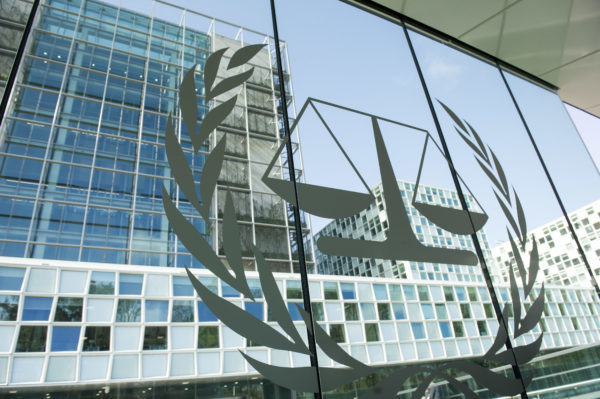
IMAGE: The ICC seal on a window at the International Criminal Court Building in The Hague (Getty)

The post Ending Selective Justice for the International Crime of Aggression appeared first on Just Security.

Categories
Audio Sources - Full Text Articles

Teach For America is shrinking—Is this cause for celebration?

By Ben Backes, Michael Hansen

Teach For America (TFA), the staffing organization that selectively recruits recent college graduates and midcareer professionals to teach in high-need schools for a two-year commitment period, has shrunk by nearly two thirds from its peak just ten years ago. TFA has long attracted its share of criticism for its operational model, with allegations that it reinforces disadvantaged students’ low access to qualified teachers and accelerates staff turnover in settings that need stability. On the other hand, the organization has also been praised for bringing individuals from elite backgrounds into the classroom, filling critical vacancies, and even initiating a new cadre of leaders in the nation’s education system.

In light of the pandemic and warnings of crises among the teacher workforce, how should we view TFA’s shrinking footprint? In this post, we update the evidence on TFA’s impact in public schools and situate the organization in the context of broader trends in the teacher workforce. We also include discussion of our own study of TFA in Miami-Dade County Public Schools. We argue that TFA has clearly had a positive impact on students and worry that its diminished stature creates space for less-rigorous and less-tested alternative certification programs to expand, possibly undermining teacher quality.

Reviewing TFA’s record

TFA’s history spans more than 30 years, famously born out of founder Wendy Kopp’s senior thesis at Princeton. From its founding cohort of nearly 500 corps members in 1990 to its peak at nearly 6,000 in 2013, the organization had only experienced meteoric growth. Since then, TFA’s retreat is hard to overlook.

These declines are happening despite the plethora of evidence documenting TFA’s efficacy. Multiple random assignment evaluations have been done on the program, showing TFA corps members are at least as good as—and in math, often better than—peer teachers in the same high-need schools. Several other studies have used rigorous empirical methods on administrative data across many different settings (and subjects). They all tell a similar story.

Our own study in Miami showed similar TFA performance advantages against peer teachers in the same schools in math and in English Language Arts, the latter of which is atypical in the TFA literature. TFA corps members also showed a modest improvement in other outcomes beyond test scores, such as students of TFA teachers being less likely to miss school from absences and suspensions. These improvements persisted one year after exposure to TFA, showing students may benefit in a variety of ways.

Principals in schools employing TFA corps members consistently report satisfaction at 80% or higher in recent waves of national surveys, including during the pandemic. Also, one survey found that 86% of these principals would hire another TFA corps member if they had a vacancy at their school. This squares with findings from our interviews of school administrators in Miami, where all expressed satisfaction and most would consider hiring TFA corps members again.

Some scholars have tried to open the black box of TFA’s operations to better understand what might be driving their performance advantage and concluded that it is primarily a story about the selection process. One examination found TFA’s highly selective screening process did a good job of selecting candidates prepared for both teaching in challenging settings and future leadership. Another found that much of the TFA advantage in math can be explained by measures such as college selectivity and teacher licensure scores. Another recent study found that a revamp of TFA’s selection process in 2005 created a stronger performance advantage among later cohorts.

Retention is still TFA’s Achilles Heel

The primary drawback to TFA is the limited two-year commitment. National estimates indicate just over half of TFA corps members leave their placement school once it’s fulfilled and about 15% remain in place at the five-year mark.

This low retention brings two disadvantages. First, teachers improve rapidly in the initial years of their careers, and the two-year commitment means that being in a TFA classroom is strongly associated with being exposed to a novice teacher. However, several different studies have found that the TFA advantage is large enough to offset the lack of experience, including ours in Miami, where post-commitment retention rates among corps members (around 25%) was significantly lower than national rates. Additionally, our analysis showed that corps members who stay beyond the two-year commitment were especially effective in their first two years.

Second, high turnover rates burden school administrators and students. Turnover imposes costs on schools both in the form of searching for replacements and in disrupted instruction, exacerbating inequalities. TFA’s retention rates are also lower than other teachers in high-poverty settings, though turnover in these settings is high even without TFA. New teachers also require support from school leaders and peer teachers, though TFA’s local offices provide considerable induction support to mitigate the burden on school personnel. Indeed, in our interviews, administrators did frequently cite low retention as the primary drawback of hiring TFA. However, this did not prevent these same administrators from reporting satisfaction with their overall TFA experience. Further, not all corps members leave after two years, with those who are older when they start being more likely to stay in schools long term, often eventually moving into school leadership roles.

Caution warranted for programs filling TFA’s void

Many principals have struggled to hire teachers in recent years, as schools have gone into overdrive to counter pandemic learning losses. Those in low-income schools have disproportionately experienced the most trouble filling vacancies–and especially in the STEM subjects in which TFA teachers appear to excel. The circumstances might be expected to represent a growth opportunity for TFA, but instead it is shrinking.

Why is that? Recent reporting on TFA points to recruiting challenges being the primary drag, with fewer candidates willing to undergo the selection process for a position in a relatively low-paying occupation in a high-need setting. Reports of stress and burnout during the pandemic have likely stymied interest, too. The article also notes TFA’s recruiting struggles are not unique, as other teacher residency and university-based alternative teacher preparation programs have faced similar drops in interest during recent years. Traditional university-based training programs have seen enrollment declines for more than a decade.

Who is filling the gap in teacher preparation if TFA and other legacy preparation programs are faltering? Often, a principal’s alternative to hiring from TFA is not a fully credentialed, traditionally trained teacher but rather one from a different (and much less selective) alternative route. Indeed, other alternative certification programs, especially for-profit programs, have been scaling to meet schools’ staffing demands, even as TFA has been shrinking (see figure 1). This is an important development, foreshadowing what may become a permanent shift in the workforce’s composition.

In contrast to TFA, however, many of these other programs are only minimally selective in their recruitment, and there is little evidence on how effective graduates are once they reach the classroom. For example, the rapidly expanding Teachers of Tomorrow program is the country’s largest for-profit alternative certification provider. Its growth accounts for most of the surge observed in Figure 1, and it has continued to expand in recent years (though the Title II data in Figure 1 do not extend beyond 2018 to provide exact figures). It is completely online and has received criticism for low program completion rates and academic rigor. We know of no evidence on how graduates of this program fare once they reach the classroom.

The experience of for-profit college students offers a cautionary, if imperfect, parallel to the rise of for-profit alternative certification. Leading up to and during the pandemic, for-profit college enrollments similarly surged even while more traditional institutions faced enrollment declines. These increases came despite the lower documented student outcomes for the sector, including lower graduation rates, lower employment outcomes, and higher student debt.

A warning sign that should prompt a policy response

Is the news of TFA’s diminished stature something that should be celebrated or dreaded? Many critics have long wished for TFA’s downfall, in favor of increasing professionalism among the teacher workforce. Though we, too, wish for a different teacher policy environment that would increase professional and financial rewards for those who lead our nation’s classrooms, we worry that TFA’s retreat may signal a turn for the worse as untested providers rush in.

Public perceptions of and young people’s interest in the teaching profession are near or at historic lows (spanning five decades). We suspect these new developments among alternative certification providers will only further these trends. Despite its drawbacks, TFA is an alternative certification model with an impressive record that we should be learning from, not shunning.


2012-08-16T120000Z_1538215903_GM1E88G10F
fblike20.png pinterest20.png twitter20.png email20.png rss20.png  
Categories
Audio Sources - Full Text Articles

Biden to release proposed U.S. budget plan on March 9 -source

2023-01-31T13:34:16Z

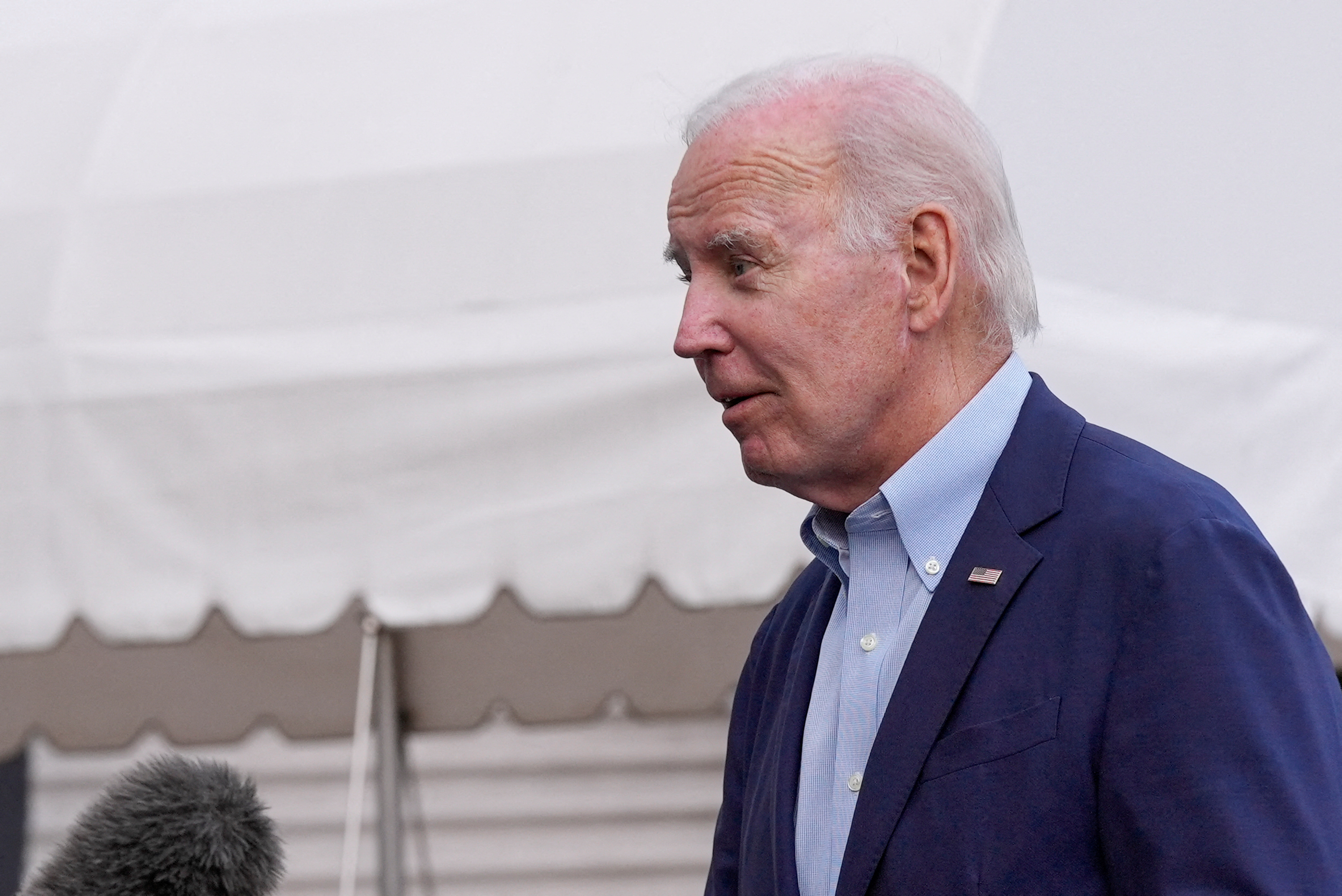
U.S. President Joe Biden talks with the media after arriving on the South Lawn at the White House in Washington, D.C., U.S. January 2, 2023. REUTERS/Ken Cedeno

U.S. President Joe Biden will put forth his proposed U.S. spending plan March 9, according to a source familiar with the White House plan.

Representatives for the White House had no immediate comment on the planned budget release.

News of the expected date comes as the Democratic president prepares to meet with House Speaker Kevin McCarthy, a Republican, on Wednesday at the White House to discuss the nation’s spending, including the looming debt ceiling.

McCarthy and his fellow conservatives have vowed to negotiate over any action to address the nation’s debt limit while Biden has said not raising the ceiling to pay for previously approved U.S. spending was a non-starter.

Asked what his message will be for the House’s top Republican, Biden told reporters on Monday: “Show me your budget, I’ll show you mine.”

While the U.S. president can propose a budget plan, Congress must pass any spending legislation. While Biden’s fellow Democrats narrowly control the Senate, Republicans took the majority in lower chamber this month after winning control in last year’s midterm election.

The showdown over the growing U.S. debt threatens to roil the global economy if the United States defaults. U.S. Treasury Secretary Janet Yellen has said the country may reach its debt limit as soon as June and has called on Congress to take swift action.

The Treasury Department has already started taking “extraordinary measures” to stave off a default until summer after hitting the U.S. government’s $31.4 trillion borrowing limit earlier in January.

Categories
Audio Sources - Full Text Articles

Spotify“s user growth beats estimates, expects 500 million listeners next quarter

2023-01-31T13:36:50Z

Spotify Technology SA (SPOT.N) on Tuesday reported fourth-quarter results that beat expectations for both active users and subscribers, and forecast the number of listeners would reach 500 million next quarter.

The number of monthly active users rose to 489 million in the quarter, beating Spotify’s guidance and analysts’ forecasts of 477.9 million.

Premium subscribers, who account for most of the company’s revenue, rose 14% to 205 million, topping estimates of 202.3 million, according to IBES data from Refinitiv.

The growth was driven by marketing campaigns and as more listeners signed up in countries such as India and Indonesia.

Apart from the forecast of half a billion users, Spotify also expects premium subscribers to reach 207 million in the current quarter and revenue of 3.1 billion euros ($3.35 billion). Analysts were expecting subscribers of 202 million and revenue of 3.05 billion euros.

Its quarterly revenue was 3.2 billion euros, above analyst estimates of 3.16 billion euros.

Spotify last year laid out plans to get 1 billion users by 2030 and to reach $100 billion revenue annually. It also promised high-margin returns from its costly expansion into podcasts and audiobooks.

The company has invested more than $1 billion in building out its podcast business which currently has more than 4 million titles.

But those investments have hit gross margins.

Last week Spotify announced plans to layoff 600 employees as it sought to control its operating expenditure that grew at twice the speed of its revenue last year.

In 2023, the company expects revenue to begin to grow faster than operating expenses, which have jumped due to headcount growth and higher advertising costs.

($1 = 0.9246 euros)

Related Galleries:

A man with Beats headphones listens to music on an iPhone in Los Angeles, California March 10, 2015. REUTERS/Lucy Nicholson

The Spotify logo is displayed on a screen on the floor of the New York Stock Exchange (NYSE) in New York, U.S., May 3, 2018. REUTERS/Brendan McDermid
Categories
Audio Sources - Full Text Articles

Ex-Indiana Gov. Daniels won’t seek state’s open Senate seat

INDIANAPOLIS (AP) — Former Indiana Gov. Mitch Daniels announced Tuesday that he wouldn’t seek that state’s open U.S. Senate seat next year, ending weeks of speculation about whether the longtime Republican figure would enter a possibly vicious GOP primary fight with a combative defender of former President Donald Trump.

The decision by the 73-year-old Daniels comes after U.S. Rep. Jim Banks announced Jan. 17 for the seat being vacated by GOP Sen. Mike Braun as he makes a 2024 run for governor.

“With full credit and respect for the institution and those serving in it, I conclude that it’s just not the job for me, not the town for me, and not the life I want to live at this point,” Daniels said in a statement released by a longtime adviser.

Supporters of Banks had already criticized Daniels as insufficiently conservative and an “old guard Republican,” signaling a line of attack for a nasty intraparty race in the GOP-dominated state.

Daniels, once considered a presidential contender with a conservative fiscal reputation, ended eight years as governor in early 2013 with high approval ratings. He stayed in the public eye of the state for the past decade as the high-profile president of Purdue University before stepping down at the end of December.

The decision by Daniels leaves Banks as the only declared candidate some 15 months ahead of Indiana’s 2024 primary.

Categories
Audio Sources - Full Text Articles

Analysis: All-Star reserve voting will lead to some snubbing

Brace yourself. There’s going to be some angry people in the NBA on Thursday night.

With good reason.

The votes from the coaches are now in, and on Thursday, the NBA will reveal the 14 players — seven from the Eastern Conference, seven more from the Western Conference — who got picked to be reserves for the All-Star Game.

They’ll join the pool of 10 starters: the Los Angeles Lakers’ LeBron James, Milwaukee’s Giannis Antetokounmpo, Dallas’ Luka Doncic, Boston’s Jayson Tatum, Brooklyn teammates Kevin Durant and Kyrie Irving, Golden State’s Stephen Curry, Cleveland’s Donovan Mitchell, Denver’s Nikola Jokic and New Orleans’ Zion Williamson.

And then the cries of snubbery will begin.

Let’s start dissecting this mess with the East. Philadelphia’s Joel Embiid is going to be an All-Star reserve, based on both common sense and the fact that NBA coaches wouldn’t dare anger one of the league’s most hard-to-guard players by not voting for him. Boston’s Jaylen Brown, New York’s Julius Randle and Miami’s Bam Adebayo all absolutely should be All-Stars.

That’s nine from the East. That leaves no more than three slots left for this group — Atlanta’s Trae Young, Chicago’s DeMar DeRozan and Zach LaVine, New York’s Jalen Brunson, Miami’s Jimmy Butler, Orlando’s Paolo Banchero, Indiana’s Tyrese Haliburton and Cleveland’s Darius Garland. And all eight of those guys, plus some others, are all worthy candidates.

“Tyrese Haliburton is an artist,” Pacers coach Rick Carlisle said earlier this season. “And you know, some people that have unconventional ways to be successful in this game, you have to just leave them alone and allow them to do what they do. His artistry is the way he gets the ball in the basket, the way he sees the game, the way he connects teammates and the special person that he is.”

Sounds like an All-Star. A lot of coaches can make similar arguments for their guys, and not be lying when they make them.

You can see how messy this is going to get.

It might be even worse out West. Sacramento’s Domantas Sabonis, Oklahoma City’s Shai Gilgeous-Alexander, Utah’s Lauri Markkanen, Memphis’ Ja Morant and Portland’s Damian Lillard should be locks for reserve nods. The only question on the Lakers’ Anthony Davis is if missing a bunch of games with injury will weigh on the minds of coaches; his numbers are more than good enough, except for that pesky games-played column.

If Davis and those five other players make it, that leaves one spot on the West roster. ONE.

Phoenix’s Devin Booker is averaging about 27 points a game. Minnesota’s Anthony Edwards is averaging about 25 points a game. Sacramento’s De’Aaron Fox is averaging about 24. Odds are, at least one of those guys will miss out on being picked Thursday night.

Maybe two. Maybe even all three.

Denver leads the Western Conference and should have more than one All-Star, so that suggests Aaron Gordon — who has been fantastic this season — will get a long look. An All-Star Game without Los Angeles Clippers teammates Paul George and Kawhi Leonard would make no sense, given how they’re playing this season. But that could happen. New Orleans’ CJ McCollum has averaged nearly 20 points per game in his career, is averaging a tick above that this season, and still hasn’t been an All-Star. Coaches had to have considered Phoenix’s Chris Paul for their ballots as well.

All we know for certain is there will be some very, very good players who didn’t make the cut.

There were 56 players who entered this week averaging at least 20 points per game; not all were officially qualified for the NBA scoring-leader list because they hadn’t played enough games to be eligible.

Simple math tells us this much: 56 players averaging 20 per game, and 24 spots on the All-Star rosters, means at least 32 of those guys are going to be on the outside looking in when the rest of the teams are revealed.

Put it this way: There will be enough “snubbed” guys out there that, if they were so inclined, they could all get together and play their own All-Star Game. And even then there would be a few players who wouldn’t make a squad.

Coaches had a tough job to do, narrowing all the worthy candidates for All-Star reserve nods down to seven players from their conferences. A few guys who are left out Thursday will still probably find their way to the game; if anyone who was selected can’t play because of injury — Williamson, for example, is currently out with a hamstring problem — then Commissioner Adam Silver will choose replacements.

It’ll be an interesting ballot reveal, for certain.

___

Tim Reynolds is a national basketball writer for The Associated Press. Write to him at treynolds(at)ap.org

___

AP NBA: https://apnews.com/hub/NBA and https://twitter.com/AP_Sports

Categories
Audio Sources - Full Text Articles

Russians strike Oleshky in Kherson region, damaging church

630_360_1675170500-537.jpg

The Russian army shelled a church in the town of Oleshky on the occupied remaining bank of Kherson location.

“Currently, the occupiers shelled a church of the Orthodox Church of Moscow Patriarchate in the town of Oleshky,” Oleshky Mayor Yevhen Ryshchuk posted on Telegram.

In convert, the Kakhovka city territorial group posted on Facebook that the Russians strike a Kakhovka gymnasium on the morning of January 30.

Personal residences nearby were harmed. No one was injured.

As claimed, the Russian military desires to develop a “grey zone” on both equally financial institutions of the Dnipro River, so they shell the temporarily occupied lender to pressure folks to depart.

The Armed Forces of Ukraine liberated the ideal-bank section of the Kherson location, including the metropolis of Kherson. A portion of the region found on the remaining financial institution of the Dnipro River is briefly captured by Russian troops.

ol

Source link

The post Russians strike Oleshky in Kherson region, damaging church appeared first on Ukraine Intelligence.

WP Radio
WP Radio
OFFLINE LIVE