Categories
Audio Sources - Full Text Articles

Explainer: What is driving the violence in eastern Congo?

2023-01-31T17:47:12Z

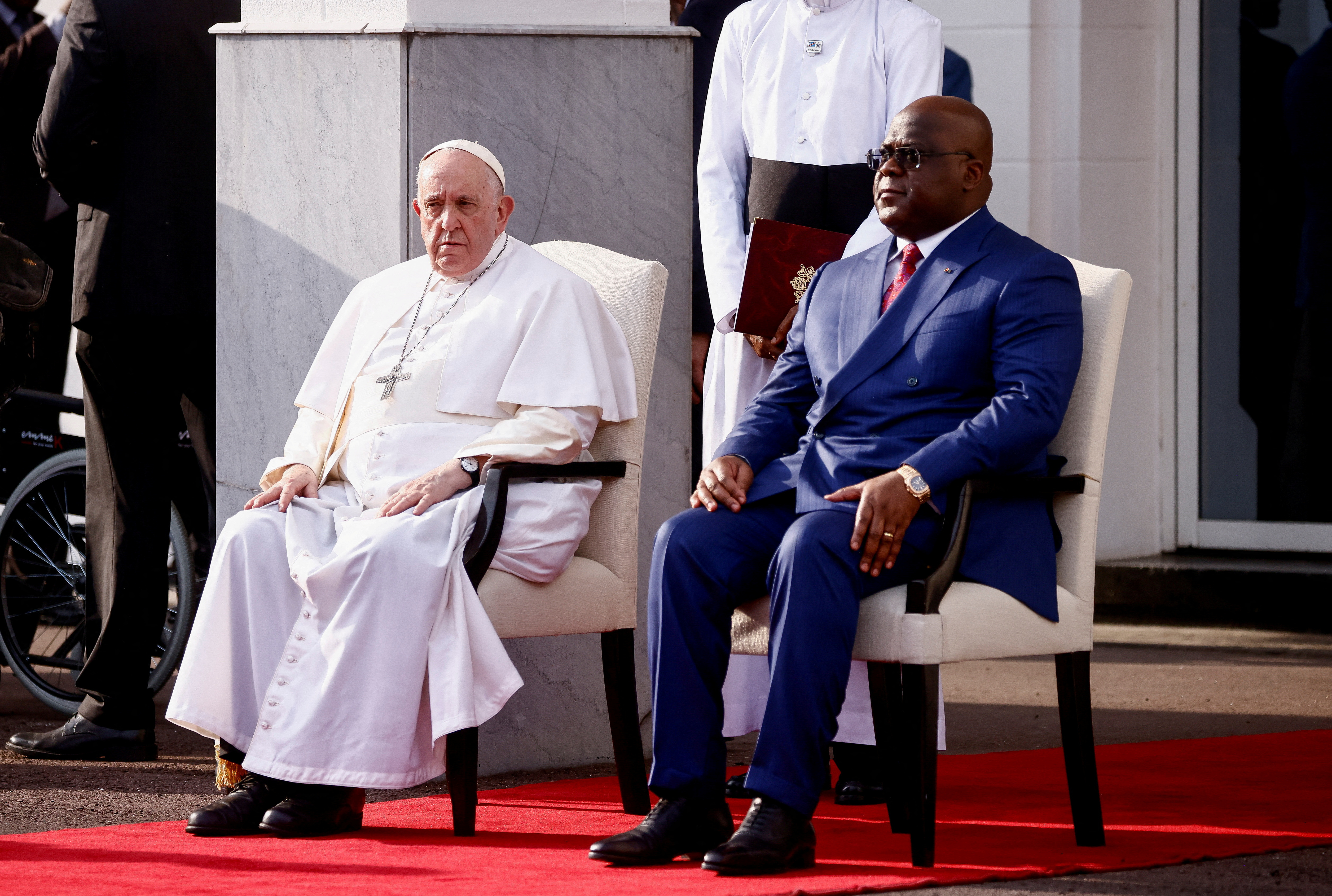
Pope Francis sits next to Democratic Republic of Congo’s President Felix Tshisekedi as he attends the welcoming ceremony at the Palais de la Nation on the first day of his apostolic journey, in Kinshasa, Democratic Republic of Congo, January 31, 2023. REUTERS/Yara Nardi

A focus of Pope Francis’ visit to the Democratic Republic of Congo is a meeting on Wednesday with around 60 victims of the decades of violence in the east of the country who have made the cross-country journey to see him.

The pontiff had hoped to travel to the eastern city of Goma but cancelled the stop following a resurgence of fighting in the mineral-rich region, where more than 120 armed groups are fighting for control of land and natural resources.

Millions have been killed, and millions more have been displaced by the violence in the east since the 1990s.

The conflict in Congo goes back decades, making it difficult to isolate a few causes, said Jason Stearns, director of the Congo Research Group. At the start, rebellions abroad with rear bases in Congo, local struggles over land, resources, and identity – especially over the status of groups speaking Rwandan languages, and the weakness of the Congolese state were the main causes, he said.

The state has a large responsibility because it has done little to dismantle, demobilize, or defeat any of the 120 armed groups in the east, he said.

Competition for control of the region’s rich natural resources has also contributed to the violence.

Pierre Boisselet from Kivu Security Tracker, which monitors unrest in the region, said: “The conflict has reached a stage where it seems to be self-sustaining because, over the decades, a class of professionals in violence has been formed, both among local and foreign armed groups and the states of the region.”

Myriad armed groups are involved in the violence, some with a few dozen members while others have hundreds of armed combatants, sometimes along ethnic lines. The most active in recent years include:

* The M23. The name refers to the March 23 date of a 2009 accord that ended a previous Tutsi-led revolt in eastern Congo. The group says the government has not kept its promise to fully integrate Congolese Tutsis into the army and government.

It seized swathes of territory in a resurgence since March 2022, displacing over 500,000 as they advanced to the gates of Goma, leading to the cancellation of the pope’s visit there.

* The Democratic Forces for the Liberation of Rwanda (FDLR), is an armed group run by mostly ethnic Hutus who fled Rwanda after taking part in the 1994 genocide. They are seen as M23’s main rival. Rwanda has accused Congo of using the FDLR a proxy, while Congo has accuse Rwanda of backing the M23. Both sides have denied the accusations.

* Fighters from the Cooperative for the Development of the Congo, commonly known as CODECO, are drawn mainly from the Lendu farming community, which has been in conflict with Hema herders. They are seen as one of the most violent against civilians. The United Nations peacekeeping mission in Congo blamed the militia for a mass grave with 49 bodies including 12 women and six children found on Jan. 19.

* Islamic State-linked militia, known locally as the Allied Democratic Forces (ADF) is another violent group operating in the region. It has killed and maimed scores in village raids and bombings. Islamic State has claimed responsibility for some of ADF’s violence. The group is suspected of killing 20 people in a raid last week, and 14 others in a church bombing.

Categories
Audio Sources - Full Text Articles

Few sanctioned Russian oligarchs disclose UK property, despite new law

2023-01-31T17:38:47Z

Following Moscow’s invasion of Ukraine last year, Britain trumpeted new legislation requiring property-ownership disclosure aimed at cracking down on Russian oligarchs and corrupt elites laundering illicit wealth.

Foreign companies holding UK property have until the end of Tuesday to identify their “beneficial owners” in a new public register, making Britain one of the first countries to do so. But a Reuters analysis of government data found that the people behind thousands of UK-property owning foreign companies remain veiled in secrecy.

More than 19,000 overseas companies had disclosed ownership of UK property as of Tuesday morning in Britain, according to data from Companies House, which runs the new register. That represents about two thirds of all the property-owning foreign companies, based on separate land-ownership records kept by Britain’s Land Registry.

About a quarter of the more than 19,000 companies that registered with Companies House didn’t identify any individual owners, many of which disclosed entities in countries known for business secrecy, such as the British Virgin Islands or Panama. Government guidance defines a beneficial owner as either an individual or an entity, such as a corporation or trustee.

Only four Russian nationals under British government sanctions appeared on the register as of Tuesday morning. They were: Vladimir Potanin, one of Russia’s wealthiest businessmen; Russia’s former first deputy prime minister Igor Shuvalov and his wife; and Alexander Frolov, the former chief executive officer of Evraz, a Russian steel and mining company.

Absent from the register as of Tuesday morning were some sanctioned Russians who have been linked to UK properties, including Roman Abramovich.

The Register of Overseas Entities is part of a wider economic crime law enacted last year that the government said would help prevent Russian oligarchs laundering money in UK property. The legislation leaves backers of Russian President Vladimir Putin “nowhere to hide” in Britain, then Prime Minister Boris Johnson said at the time.

Britain’s experience highlights the challenges for governments trying to increase transparency in an effort to combat the flow of illicit funds.

Reuters was unable to determine to what degree the shortfall in disclosure was due to the use of legitimate exemptions rather than property owners’ failure to comply with the rules or other reasons, such as companies having been dissolved. Transparency advocates, politicians and others have criticised the government for leaving loopholes that allow wealthy individuals to avoid making disclosures, such as through the use of trusts.

Downing Street referred requests for comment to the business ministry, which oversees Companies House, Britain’s public registry of companies.

The new disclosure requirement “is just one tool in the Government’s arsenal to crack down on money laundering by shining a light on the real owners of UK properties,” a spokesperson for the business ministry said. “The register is already working to flush out criminals and their ill-gotten wealth, with Companies House working closely with enforcement agencies to prepare cases against those who have not complied.”

Companies that fail to make accurate disclosures could face restrictions over selling their property, fines of up to 2,500 pounds a day, and individuals can be jailed for up to five years.

A British government official, who asked not to be named, said Monday that the level of compliance had been “disappointing.” Discussions within the government were under way to allocate around 20 million pounds for increased enforcement, added the official, who has knowledge of the government’s implementation efforts.

A spokesperson for Abramovich didn’t respond to requests for comment.

Potanin is president of metals giant Nornickel, or Norilsk Nickel. The company told Reuters a subsidiary holds a long-term lease for office premises in London and that Potanin filed the disclosure as the ultimate beneficial owner of Norilsk Nickel.

London-based representatives listed on the new register for Shuvalov and Frolov didn’t respond to requests for comment.

From the stuccoed mansions of London’s embassy district of Belgravia to the glass penthouses along the River Thames, the British capital’s high-end real estate has long attracted Russian and other wealthy foreign buyers.

That has included illicit funds. Transparency International UK, an anti-corruption campaign group, estimates 6.7 billion pounds – or about $8.3 billion – of dubious foreign money has poured into British property in total since about 2000, including 1.5 billion pounds from Russians accused of corruption or links to the Kremlin.

London’s luxury property market has resembled “a giant washing machine” for overseas laundered money in recent decades, said Jonathan Benton, former head of the UK’s National Crime Agency’s international corruption unit.

Benton said the new register is an important step towards transparency but that the legislation had “large and quite obvious holes” that leave corrupt, wealthy individuals able to find ways to avoid revealing what they own.

Among key exemptions: Beneficial owners are only required to register if they own more than 25% of the property-owning foreign company. And, in most cases, if foreign companies purchased the property before 1999 or hold UK property in a trust they don’t need to publicly disclose the beneficial owners. Where the beneficial owner is a trustee, the property holder must provide information to the government about the trust and people connected to it, though the information isn’t made public.

In a further limit to disclosure, those registering aren’t required to include the address of the property owned.

Successive British governments have received warnings about potential flaws since plans to introduce the register were announced seven years ago.

In 2019, a cross-party committee of politicians said the government should lower the threshold of ownership to force more people to declare the property they own and warned of the risk of the use of trusts to sidestep the rules. The City of London Police told the committee if trusts were excluded, “the process will be fairly pointless.”

Three government officials told Reuters that exemptions were included to avoid the reporting requirements being too onerous, such as for major overseas companies that have small ownership stakes in lots of different UK properties.

Among the dozens of Russian nationals who have submitted information to the register is Shuvalov, chairman of Russian state development bank VEB, who the British government has described as a “core part of Putin’s inner circle.” According to the new register, Shuvalov and his wife declared ownership of a UK-property owning entity called Sova Real Estate, based in Moscow.

Separate UK land-ownership records show Sova Real Estate purchased two apartments overlooking the River Thames for 11.4 million pounds in 2014. The following year, Russian opposition politician Alexei Navalny revealed that Shuvalov owned the properties.

Other high-profile Russians who have been linked to UK property didn’t appear on the register as of early Tuesday, including those sanctioned by Britain for connections to Putin and his government.

One property linked to Abramovich is a mansion on Kensington Palace Gardens, one of the world’s most expensive streets. Planning applications for the property have been made in the Abramovich name and land-ownership records show the property was purchased by a Cyprus-based company that provided as a contact a UK company that corporate filings show was ultimately controlled by Abramovich. Last year, Abramovich transferred control of the ultimate parent company to an associate, according to filings.

The Cyprus-based company, A. Corp Trustee Limited, wasn’t listed on Britain’s new property register as of Tuesday morning. Reuters was unable to independently confirm whether Abramovich currently owns property in Britain.

Two other Russian oligarchs who Britain has previously said are owners of millions of pounds worth of UK properties whose names also weren’t on the new register as of early Tuesday were billionaire businessman Alisher Usmanov and aluminium tycoon Oleg Deripaska.

Usmanov’s properties include Beechwood House in London’s leafy Highgate neighbourhood, the British government said in March last year when it announced sanctions against him.

Land ownership records show Beechwood House was purchased in 2008 by Isle of Man-based Hanley Limited for 48 million pounds. A listing on the UK’s new property register for Hanley Limited identifies the beneficial owner as a Swiss company called Pomerol Capital Sa.

A spokesman for the Russian businessman said: “Mr. Usmanov does not own the properties listed by you. The questions should be addressed to their owner.” Pomerol Capital did not respond to requests for comment. Reuters was unable to independently confirm whether Usmanov currently owns any property in Britain.

Deripaska was identified as the beneficial owner of a mansion in Belgrave Square in London High Court documents in 2007. Land ownership records show the house was purchased in 2003 by Ravellot Limited based in the British Virgin Islands. Ravellot also wasn’t on the new property register.

A spokesperson for Deripaska didn’t respond to requests for comment. A spokesperson had in a March 2022 statement said that the house belongs to members of the businessman’s family rather than to him personally.

Margaret Hodge, a lawmaker for the opposition Labour Party who has focused on anti-corruption, said Reuters’ findings show the government has failed to stop President Putin’s supporters “concealing their assets” in Britain.

Related Galleries:
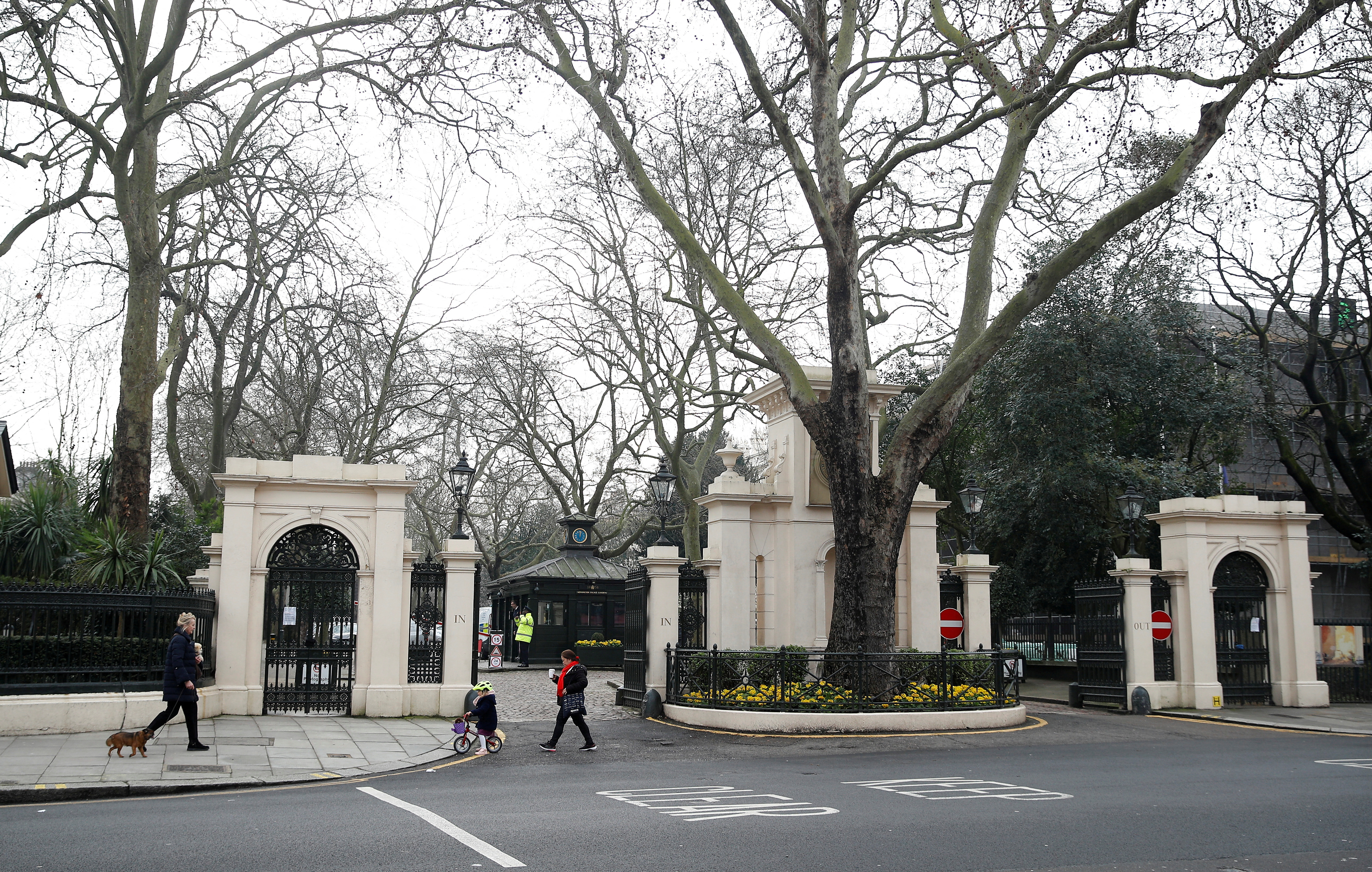
The entrance to Kensington Palace Gardens, where it is believed that Russian businessman Roman Abramovich owns an apartment, is seen in London, Britain March 3, 2022. REUTERS/Peter Nicholls/File Photo

Russian President Vladimir Putin (L) shakes hands with Russian businessman and founder of USM Holdings Alisher Usmanov during an awarding ceremony at the Kremlin in Moscow, Russia November 27, 2018. Sputnik/Alexei Nikolsky/Kremlin via REUTERS

A protestor tries to push away a ladder being used by police officers as they attempt to enter a building next to the mansion reportedly belonging to Russian billionaire Oleg Deripaska, who was placed on Britain’s sanctions list last week, as squatters occupy it, in Belgravia, London, Britain, March 14, 2022. REUTERS/Peter Nicholls

Russian tycoon Oleg Deripaska attends a session of the St. Petersburg International Economic Forum (SPIEF) in Saint Petersburg, Russia, June 3, 2021. REUTERS/Evgenia Novozhenina/File Photo

The entrance to Beechwood House, owned by Russian billionaire Alisher Usmanov, in London, Britain, March 4, 2022. REUTERS/Henry Nicholls/File Photo
Categories
Audio Sources - Full Text Articles

Biden takes infrastructure tour to New York City

2023-01-31T17:00:43Z

U.S. President Joe Biden delivers remarks touting Infrastructure Law spending to replace the Baltimore and Potomac railroad tunnel with the Frederick Douglass Tunnel project, as a train approaches during an event in Baltimore, Maryland, U.S., January 30, 2023. REUTERS/Kevin Lamarque

President Joe Biden traveled to New York City on Tuesday to tout new infrastructure funding for a critical underwater tunnel that connects Manhattan and New Jersey, an effort that has been mired for more than a decade in partisan bickering and ballooning budgets.

The New York visit is the second of three trips this week aimed at highlighting Biden’s bipartisan success in securing money to invest in the nation’s crumbling infrastructure at a time when congressional Republicans are threatening to block his economic agenda and shut down the government if he doesn’t agree to spending cuts.

For Biden, who is expected to announce a re-election bid in the coming weeks, the trips also offer him an opportunity to fine tune an economic stump speech.

Biden visited Baltimore on Monday to highlight the planned replacement of a 150-year-old tunnel and on Friday he will travel to Philadelphia where he will focus on replacing toxic lead pipes – both aided significantly by the $1.2 trillion infrastructure bill passed in 2021.

On Tuesday, Biden also will announce that the administration has awarded nearly $1.2 billion from the law’s new national infrastructure project assistance discretionary grant program for nine projects across the country, White House officials said.

The Hudson River tunnel project would repair an existing tunnel and build a new one for Amtrak and state commuter lines between New Jersey and Manhattan. The federal government, New York, and New Jersey will split the estimated price tag of $16.1 billion. Federal funding will pay for nearly half, while the two states will pick up the rest.

The tunnel slated for repairs is 112 years old and was damaged during Hurricane Sandy in 2012. Construction is slated to begin in 2024 and be completed by 2038.

The project was halted in 2010 by then-Gov. Chris Christie, a Republican, who declared New Jersey could not afford its share of a $2.5 billion hike in the original $8.7 billion cost. He was criticized for using those dollars instead to firm up the state’s budget.

Amtrak took it over in 2016 and it gained momentum, but was again derailed in 2018 when then-President Donald Trump’s fiscal budget called for an end to the federal program that was funding the project.

Biden plans to tout a $292 million grant from the Transportation Department for the Hudson River Tunnel project.

Senator Chuck Schumer, a Democrat from New York, said in a statement that the $292 million federal grant is the largest award from the Department of Transportation’s ‘Mega’ grant program and will ensure construction of a critical element of the project.

Categories
Audio Sources - Full Text Articles

Memorial held for former US Navy Seal killed in Ukraine

2023-01-31T16:55:09Z

Former U.S. Navy SEAL Daniel Swift, who was killed fighting for Ukraine, was commemorated in a memorial service in the western Ukrainian city of Lviv on Tuesday.

Lviv Mayor Andriy Sadovyi, who attended the service, said on Facebook that Swift had fought for Ukraine’s International Legion, and earned an award during his service.

“Sincere condolences to the family and eternal memory to the defender,” Sadovyi wrote.

According to a statement by the U.S. Navy, Swift deserted from the U.S. military in 2019, and was killed while fighting in Ukraine on Jan. 18.

The service, held at a Catholic church in Lviv’s historic centre, was attended by several dozen mourners, including Swift’s brother, Thomas.

Related Galleries:

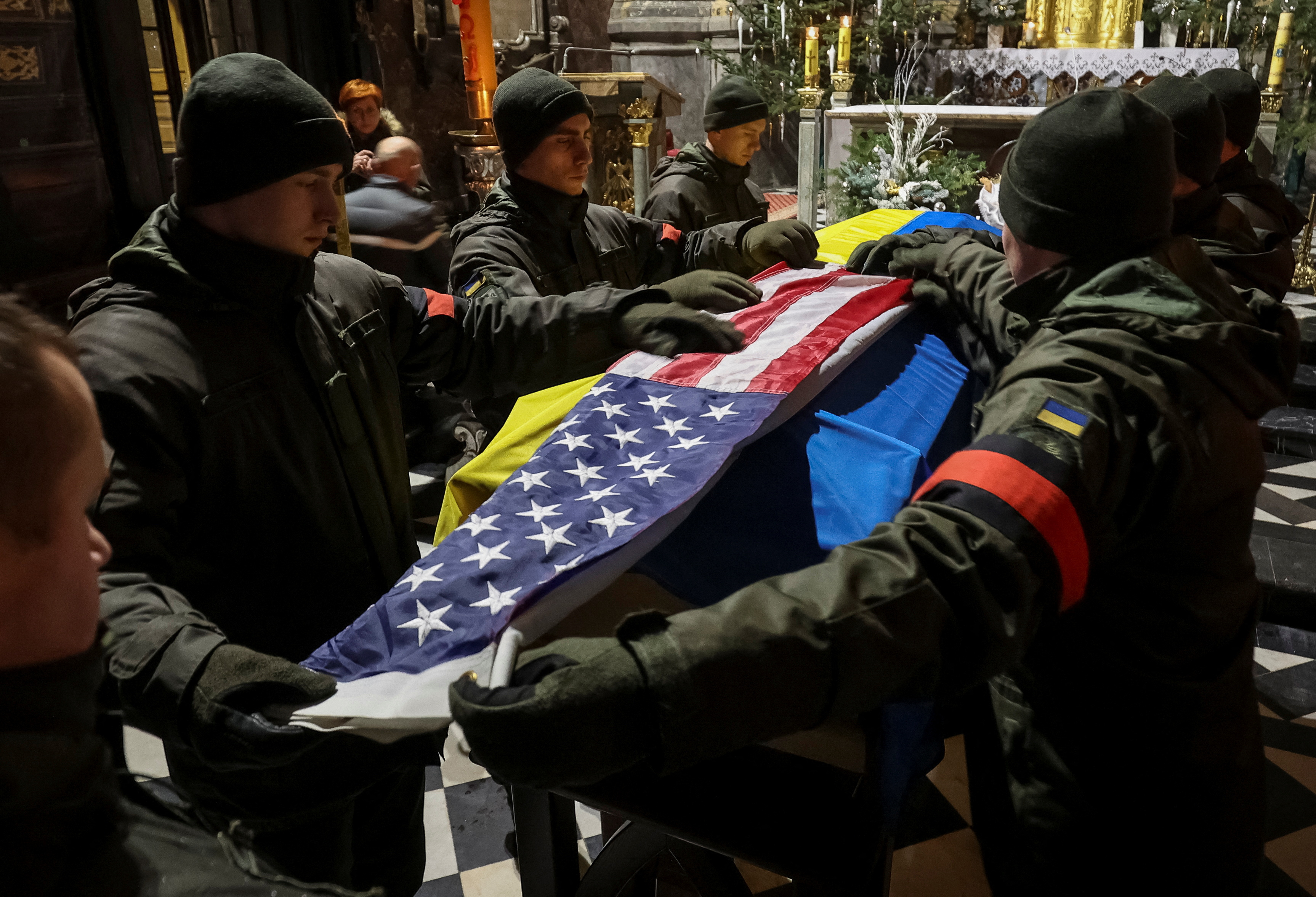
Ukrainian servicemen cover former U.S. Navy SEAL and Ukrainian international legion serviceman Daniel Swift’s coffin with American and Ukrainian flags, during a memorial ceremony after he was recently killed in a battle against Russian troops during a memorial service, as Russia’s attack on Ukraine continues, in Lviv, Ukraine January 31, 2023. REUTERS/Roman Baluk

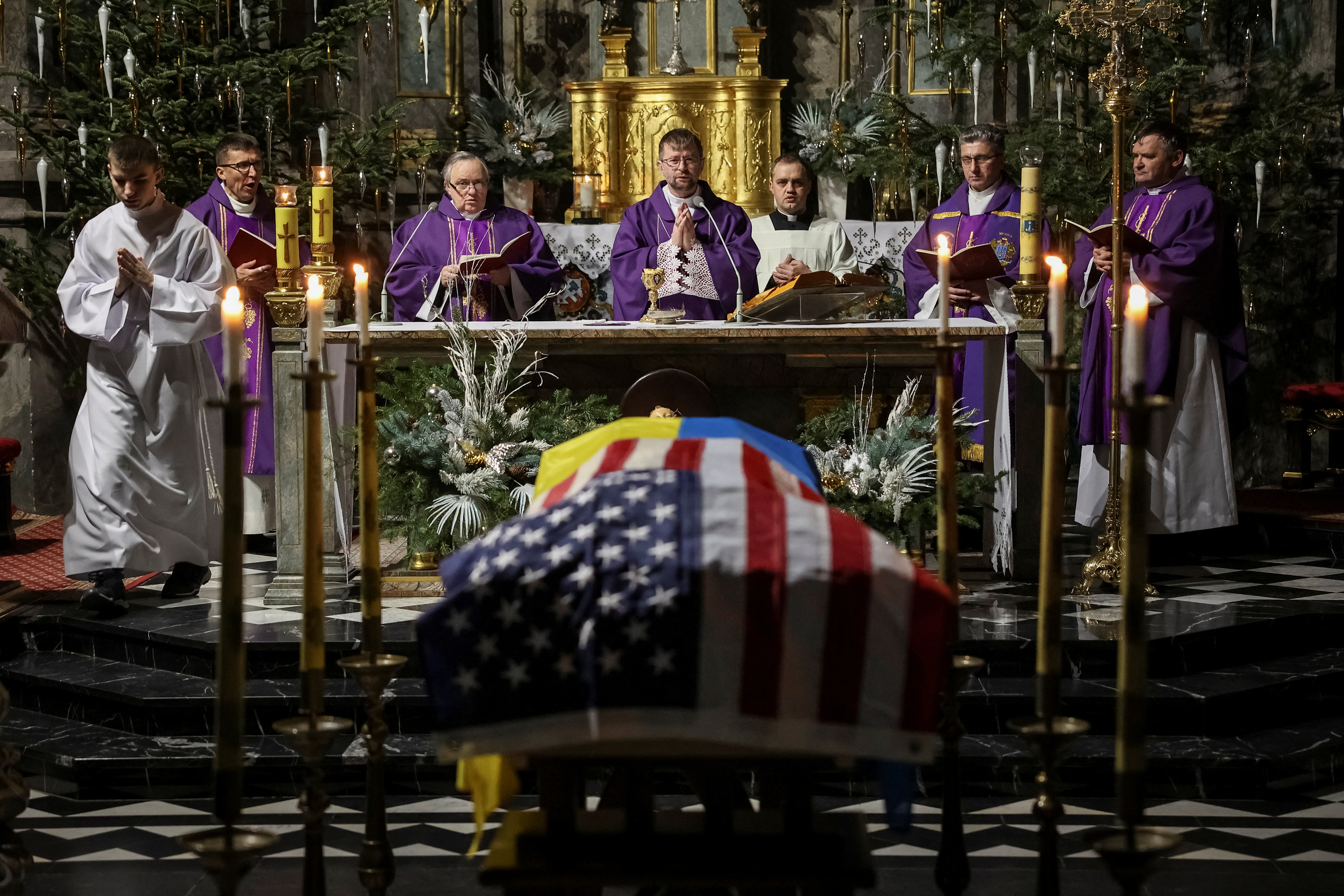
Priests attend a memorial service for a serviceman from the international legion of Ukrainian army, former U.S. Navy SEAL Daniel Swift, who was recently killed in fights against Russian troops, amid Russia’s attack on Ukraine, in Lviv, Ukraine January 31, 2023. REUTERS/Roman Baluk

People attend a memorial service for a serviceman from the international legion of Ukrainian army, former U.S. Navy SEAL Daniel Swift, who was recently killed in fights against Russian troops, amid Russia’s attack on Ukraine, in Lviv, Ukraine January 31, 2023. REUTERS/Roman Baluk

People attend a memorial service for a serviceman from the international legion of Ukrainian army, former U.S. Navy SEAL Daniel Swift, who was recently killed in fights against Russian troops, amid Russia’s attack on Ukraine, in Lviv, Ukraine January 31, 2023. REUTERS/Roman Baluk
Categories
Audio Sources - Full Text Articles

Apple workplace rules violate U.S. labor law, agency finds

2023-01-31T16:59:45Z

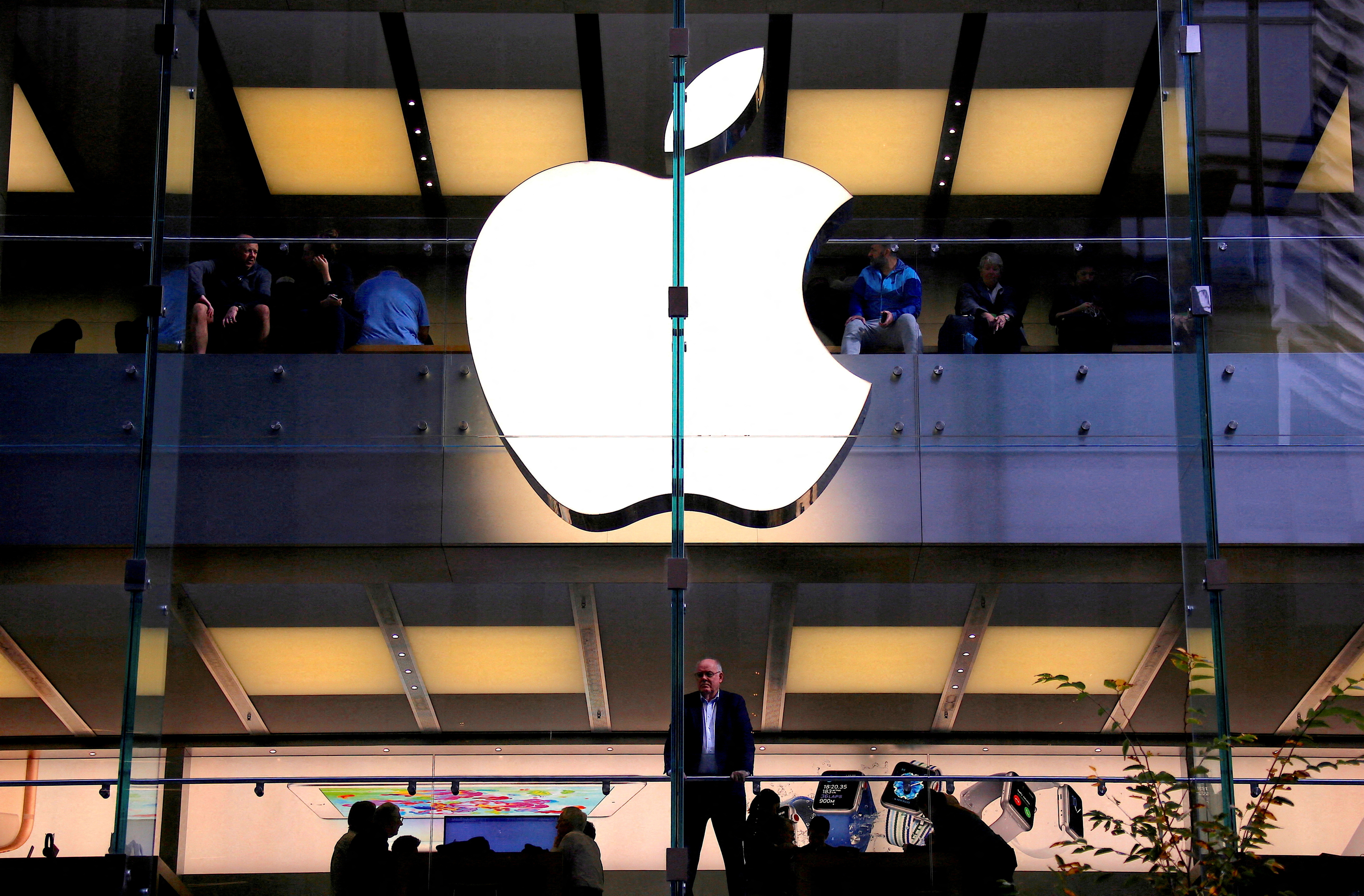
A customer stands underneath an illuminated Apple logo as he looks out the window of the Apple store located in central Sydney, Australia, May 28, 2018. REUTERS/David Gray

Apple Inc (AAPL.O) maintains workplace policies that unlawfully discourage employees from discussing working conditions, a U.S. labor agency has found.

The National Labor Relations Board will issue a complaint targeting the policies and claiming Apple executives made comments that stymied worker organizing unless the company settles first, an agency official said on Monday in an email reviewed by Reuters.

The official had sent the email to Ashley Gjovik, a former Apple senior engineering manager who filed complaints against the company in 2021.

The NLRB investigates charges filed by workers and unions and decides whether to issue formal complaints against companies. The agency can seek to strike down workplace policies and require employers to notify workers of legal violations.

Apple did not respond to a request for comment. The company has said it takes worker complaints seriously and thoroughly investigates them.

An NLRB spokeswoman did not immediately respond to a request for comment.

Gjovik in an email on Tuesday said she hoped the development will spur more Apple workers to speak up about working conditions and to organize.

In her complaints, Gjovik said various Apple rules, including those relating to confidentiality and surveillance policies, deter employees from discussing issues such as pay equity and sex discrimination with each other and the media.

Gjovik also cited a 2021 email from Apple Chief Executive Tim Cook that allegedly sought to stop workers from speaking to the press and said “people who leak confidential information do not belong here.”

Many tech companies have strict confidentiality policies designed to protect trade secrets.

U.S. labor law prohibits policies that could discourage workers from exercising their right to band together to improve working conditions.

Apple is facing several pending NLRB complaints, including one claiming the tech giant unlawfully required workers at an Atlanta retail store to attend anti-union meetings. Apple has denied wrongdoing.

Categories
Audio Sources - Full Text Articles

Ukraine tells Hungary “anti-Ukrainian rhetoric“ must stop

2023-01-31T17:01:15Z

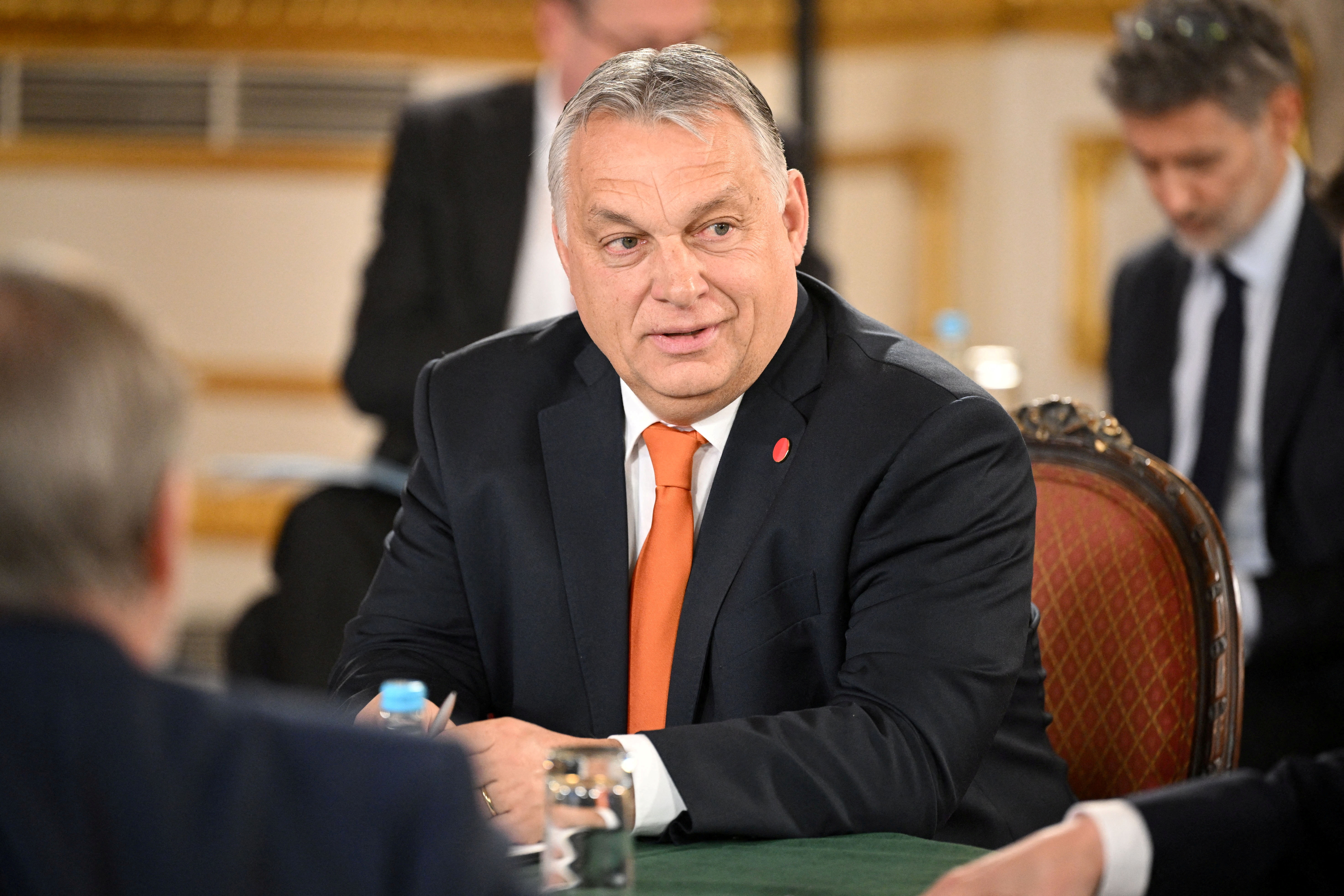
Hungary’s Prime Minister Viktor Orban attends a plenary session with leaders of the V4 group and hosted by Boris Johnson, who was then British prime minister, as part of the V4 + UK summit, at Lancaster House, in London, Britain March 8, 2022. Leon Neal/Pool via REUTERS/File Photo

Ukraine protested to Hungary’s ambassador on Tuesday over “disparaging” comments made by Hungarian Prime Minister Viktor Orban, and urged Budapest to stop what it called anti-Ukrainian rhetoric.

The envoy was summoned by the foreign ministry after its spokesperson said last week that Orban had told reporters Ukraine was a no man’s land and compared it to Afghanistan.

Ambassador Istvan Ijdjarto was delivered “a strong protest in connection with the recent disparaging statements of the Prime Minister of Hungary Viktor Orban,” the ministry said.

“It was emphasised to the Hungarian diplomat that the anti-Ukrainian rhetoric, which has been heard from the Hungarian leadership for a long time, is absolutely unacceptable and causes serious damage to Ukrainian-Hungarian relations.”

The ministry added: “The Hungarian side was urged to stop this negative trend in order to avoid irreparable consequences for the relations between the two countries.”

Hungary has criticised European Union sanctions on Russia over Moscow’s invasion of Ukraine, saying they failed to weaken Moscow meaningfully and risked destroying the European economy, and opted last year not to send weapons to Ukraine.

Kyiv complained to Hungary last year after Orban went to a football match wearing a scarf that it said depicted some Ukrainian territory as part of Hungary.

The two countries have also clashed in recent years over what Hungary said were curbs on the right of ethnic Hungarians living in Ukraine to use their native tongue, especially in education, after Ukraine passed a law in 2017 restricting the use of minority languages in schools.

Categories
Audio Sources - Full Text Articles

McDonald“s sales, profit top estimates as inflation persists

2023-01-31T17:16:17Z

Higher menu prices and customer visits boosted McDonald’s Corp (MCD.N) quarterly profit and sales above Wall Street estimates on Tuesday, but shares fell when the burger chain warned inflation will weigh on margins in 2023.

Shares of the burger chain fell about 2.6% to $263.84 in U.S. trading, after gaining about 6% in the last 12 months.

Investors are watching bellwethers like McDonald’s for any signs its customers are paring back spending. Consumer demand is key to determining whether the Federal Reserve’s monetary tightening will help cool the U.S. economy without causing a recession.

“Overall, the consumer, whether it’s in Europe or the U.S., is actually holding up better than… what I would have expected a year ago or 6 months ago,” Chief Executive Officer Chris Kempczinski said during a call with investors.

Even so, he said the Big Mac maker still expects a mild to moderate U.S. recession this year, with a deeper, longer recession in Europe.

Profit margins at company-operated restaurants were about 15% in the quarter because of higher labor, energy and commodity costs. The company said that full year 2023 company-operated margins will come in slightly lower than that.

McDonald’s is also the first major global restaurant brand to report quarterly earnings so far this year.

Investors are hoping that as costs for butter, dairy and other ingredients start to fall, some chains could forecast more profitable restaurant operations this year.

McDonald’s profits will also be pressured this year by its plans to invest up to $2.4 billion on capital expenditures, about half of which will go to build 1,900 new restaurants around the world.

Some of those will fund a big U.S. expansion, the chain’s first in 8 years.

But investors can “digest that and then start looking to 2024, and the potential to really leverage McDonald’s earnings growth,” said Gretchen Novak, senior portfolio manager at Charles Schwab, which holds about 0.71% of McDonald’s shares.

Like other fast-food chains, Chicago-based McDonald’s raised prices of its burgers and fries last year to keep up with surging commodity and labor costs.

The price hikes did not deter customers. Traffic rose 5% for full-year 2022, McDonald’s disclosed on Tuesday, as its meals remained less expensive than many competitors, drawing low-income consumers.

A Big Mac in New York City now costs about $5.39 – less than a $5.65 Venti Cappuccino at a nearby Starbucks.

Low-income consumers are spending less with each McDonald’s visit, but eating there more often, Kempczinski said.

By the third quarter, McDonald’s menu prices were 10% higher than the year before. It did not provide an update on higher menu prices on Tuesday.

The chain launched its Cactus Plant Flea Market Box – an adult version of its Happy Meal for kids – with menu items including its Big Mac and Chicken McNuggets, helping it post better-than-expected U.S. sales.

“McDonald’s is in the right place at the right time for being a market share gainer in this environment,” said Neuberger Berman analyst and portfolio manager Kevin McCarthy.

McDonald’s fourth-quarter global same-store sales also beat estimates with a 12.6% rise, compared with the average analyst estimate of an 8.6% increase, according to data from Refinitiv.

The company reported profit of $2.59 per share, an increase of 16%. Analysts on an average expected profit of $2.45.

McDonald’s U.S. comparable sales rose 10.3% in the quarter ended Dec. 31. Global revenue dropped 1% to $5.93 billion because of the impact of the stronger U.S. dollar against foreign currencies while in constant currencies, revenue rose 5%.

Related Galleries:

McDonald’s Crispy Chicken Sandwiches and fries are pictured in New York, U.S. March 30, 2021. Picture taken March 30, 2021. REUTERS/Hilary Russ

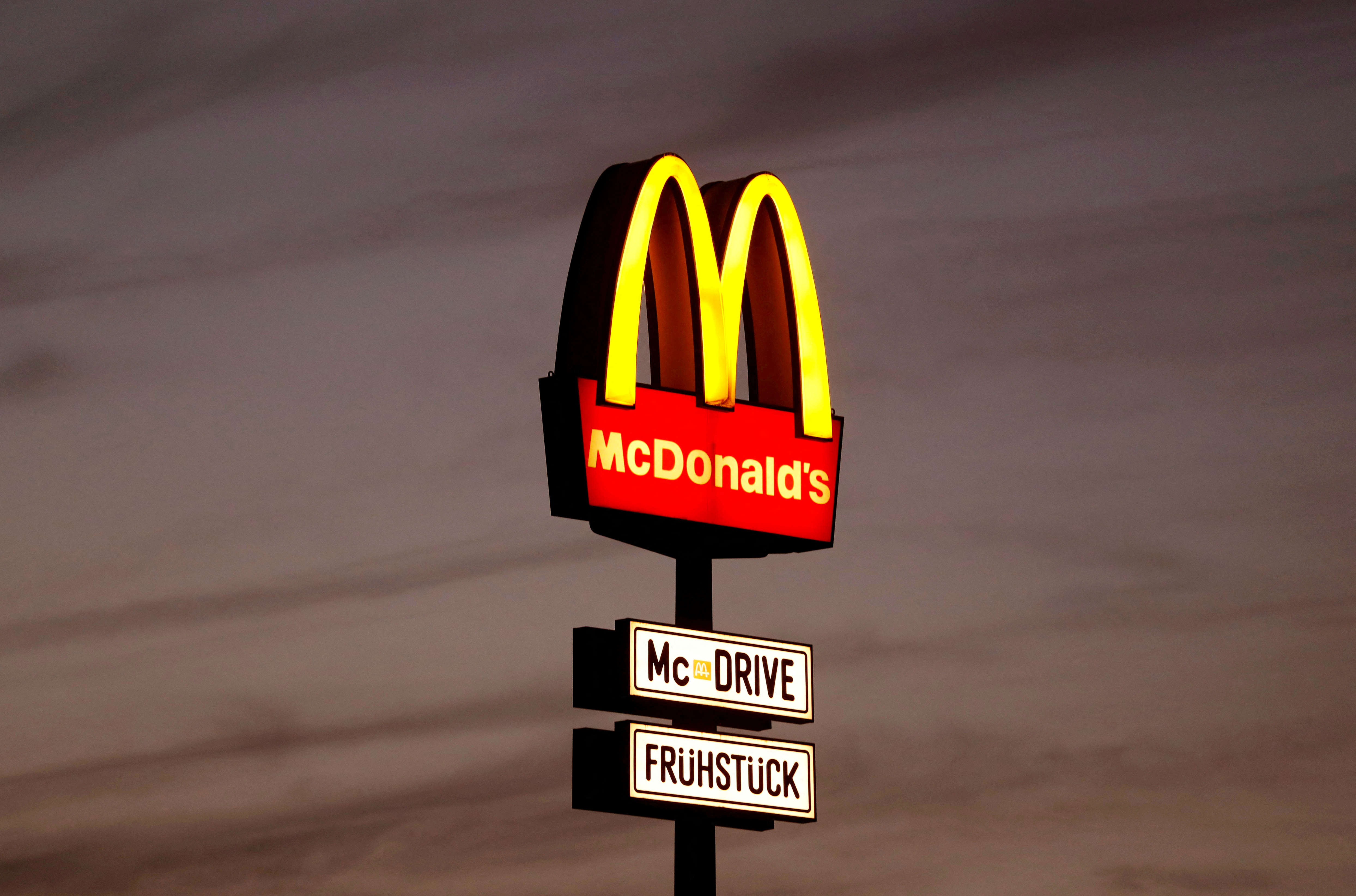
A huge advertisement for a branch of fast-food giant McDonald’s is seen on the outskirts of Berlin, Germany, April 22, 2016. REUTERS/Kai Pfaffenbach/File Photo

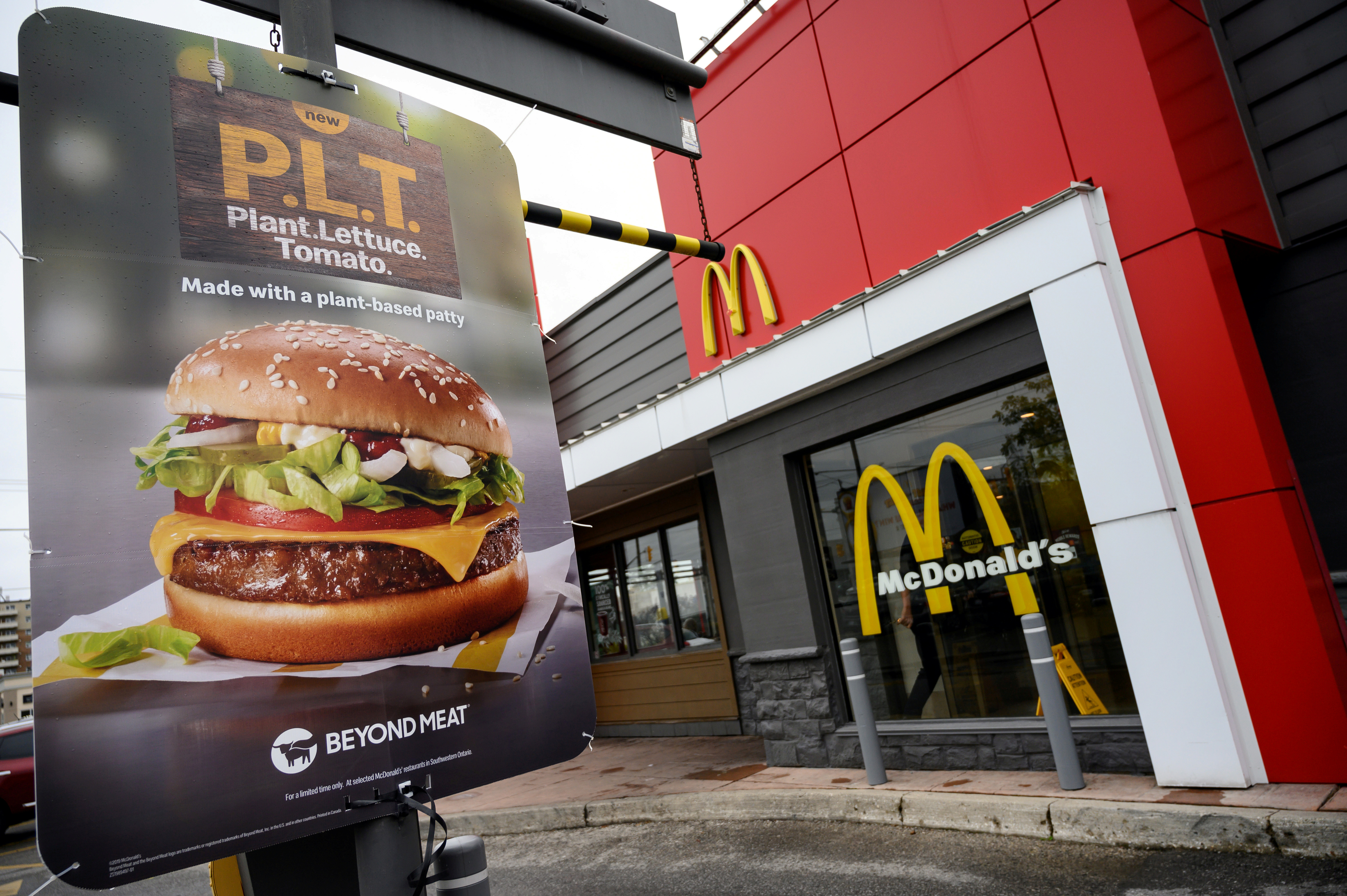
A sign promoting McDonald’s “PLT” burger with a Beyond Meat plant-based patty at one of 28 test restaurant locations in Ontario, Canada October 2, 2019. REUTERS/Moe Doiron
Categories
Audio Sources - Full Text Articles

Davos Man Has a People Problem

Categories
Audio Sources - Full Text Articles

Eliminate the Debt Ceiling

Categories
Audio Sources - Full Text Articles

The good guys strike back

lunacy.jpg

Help support Palmer Report! Our articles are all 100% free to read, with no forced subscriptions and nothing hidden behind paywalls. If you value our content, you’re welcome to pay for it:

Pay $5 to Palmer Report:

Pay $25 to Palmer Report:

Pay $75 to Palmer Report:


Help fund Palmer Report here

Pay $5 to Palmer Report:

Pay $25 to Palmer Report:

Pay $75 to Palmer Report:


This past Wednesday morning, a lawsuit was filed. It was filed by the makers of “the abortion pill.” And it was filed against states that are banning or trying to ban these pills. In this litigation, the company GenBioPro, argues that the FDA (Federal Food and Drug Regulations) has priority over states when it comes to the sales of these pills.


The lawsuit alleges that because the FDA approved the sale of these drugs, the states have no authority to ban them. They say the attempted bans violate interstate commerce. The litigation was filed in west Virginia and said the following: “federal law preempts West Virginia’s ban and restrictions. These laws impermissibly restrict patients’ access to Mifepristone.”

There is currently a massive demand for the abortion pill, which is why Republicans are scrambling to have it banned in red states. Anything to control a woman’s right to choose. It will be interesting to watch this litigation. How it is turned out will have a vast implications on abortion access.

Help fund the Ruben Gallego 2024 Senate campaign here

Help fund Palmer Report here

Pay $5 to Palmer Report:

Pay $25 to Palmer Report:

Pay $75 to Palmer Report:

Help fund the Ruben Gallego 2024 Senate campaign here

Help fund Palmer Report here

Pay $5 to Palmer Report:

Pay $25 to Palmer Report:

Pay $75 to Palmer Report:

The post The good guys strike back appeared first on Palmer Report.

WP Radio
WP Radio
OFFLINE LIVE