Categories
Audio Sources - Full Text Articles

Biden offers millions and hope for delayed Hudson River tunnel project

2023-01-31T18:36:25Z

U.S. President Joe Biden delivers remarks touting Infrastructure Law spending to replace the Baltimore and Potomac railroad tunnel with the Frederick Douglass Tunnel project, as a train approaches during an event in Baltimore, Maryland, U.S., January 30, 2023. REUTERS/Kevin Lamarque

President Joe Biden traveled to New York City on Tuesday to tout nearly $300 million in new spending for a critical underwater tunnel that connects Manhattan and New Jersey, an effort that has been mired for more than a decade in partisan bickering and ballooning budgets.

“While others tried to shut this down, I made clear this is a national priority,” Biden told a group of lawmakers and supporters gathered at a rail yard at the Hudson River tunnel, the nation’s busiest rail corridor.

The New York visit is the second of three trips this week aimed at highlighting Biden’s bipartisan success in securing money to invest in the nation’s crumbling infrastructure at a time when congressional Republicans are threatening to block his economic agenda and shut down the government if he doesn’t agree to spending cuts.

For Biden, who is expected to announce a re-election bid in the coming weeks, the trips also offer him an opportunity to fine tune an economic stump speech and upcoming State of the Union address that will boast about job creation and the resurgence of U.S. manufacturing.

“Wall Street is important but it didn’t build this country. The middle class built this country and union built the middle class,” Biden said.

Biden visited Baltimore on Monday to highlight the planned replacement of a 150-year-old tunnel and on Friday he will travel to Philadelphia where he will focus on replacing toxic lead pipes – both aided significantly by the $1.2 trillion infrastructure bill passed in 2021.

On Tuesday, Biden announced that the administration has awarded nearly $1.2 billion from the law’s new national infrastructure project assistance discretionary grant program for nine projects across the country, White House officials said.

He said the infrastructure bill represents the most significant investment in rail since the country created Amtrak five decades ago.

“Americans see these projects popping up across the country and it sends an important message that we’re gonna work together,” Biden said.

The Hudson River tunnel project, known as the Gateway Program, would repair an existing tunnel and build a new one for Amtrak and state commuter lines between New Jersey and Manhattan. The federal government, New York, and New Jersey will split the estimated price tag of $16.1 billion. Federal funding will pay for nearly half, while the two states will pick up the rest.

The tunnel slated for repairs is 112 years old and was damaged during Hurricane Sandy in 2012. Construction is slated to begin in 2024 and be completed by 2038.

The project was halted in 2010 by then-Gov. Chris Christie, a Republican, who declared New Jersey could not afford its share of a $2.5 billion hike in the original $8.7 billion cost. He was criticized for using those dollars instead to firm up the state’s budget.

Amtrak took it over in 2016 and it gained momentum, but was again derailed in 2018 when then-President Donald Trump’s fiscal budget called for an end to the federal program that was funding the project.

“After many false starts and obstacles placed in our path, Gateway is full speed ahead,” U.S. Senator Chuck Schumer, a Democrat from New York, said.

Categories
Audio Sources - Full Text Articles

Biden White House, McCarthy dig in ahead of debt meeting

2023-01-31T18:38:24Z

U.S. President Joe Biden and House Speaker Kevin McCarthy won’t come to their first meeting over raising the debt ceiling with any specific proposals to stave off a possible default, both sides indicated on Tuesday.

The Wednesday meeting between Biden and McCarthy is likely to serve as the opening bell for months of back-and-forth maneuvering over raising the United States’ $31.4 billion borrowing cap.

However, neither side is showing signs they’re willing to negotiate on anything just yet.

Failure to reach agreement could lead to a possible default on U.S. debt as early as June.

Biden will call on McCarthy to release a budget plan in the meeting and to commit to support the nation’s debt obligations, according to a White House memo seen by Reuters.

“Raising the debt ceiling is not a negotiation; it is an obligation of this country and its leaders to avoid economic chaos,” economic adviser Brian Deese and director of the Office of Management and Budget Shalanda Young wrote.

McCarthy, for his part, said Biden needs to be willing to make concessions in order to get a debt-ceiling hike though Congress.

“The first thing they should do, especially as the President of the United States, (is) say he’s willing to sit down and find a common ground and negotiate together,” McCarthy told reporters in the U.S. Capitol.

Republicans in the House of Representatives have said any debt-ceiling hike should be paired with steep spending cuts, but have yet to outline specifics. McCarthy has ruled out cuts to Social Security and Medicare, the two largest government benefit programs.

The White House says it will only discuss future spending cuts after the debt ceiling is raised.

Asked what his message will be for McCarthy, Biden told reporters on Monday: “Show me your budget, I’ll show you mine.”

Detailed proposals may not emerge for several weeks.

The White House has said it would release its budget proposal on March 9. House Republicans, meanwhile, will aim to produce their budget proposal in April, said House Republican Leader Steve Scalise.

“I hope the president meets his deadline just like we’re going to work to meet our deadline,” Scalise said at a news conference.

The White House has seized on the lack of consensus to highlight fringe proposals from some Republicans, including one that abolishes the Internal Revenue Service in favor of a higher sales tax and one that trims Social Security retirement benefits.

Unlike most other developed countries, the United States puts a hard limit on how much it can borrow, and Congress must periodically raise that cap because the U.S. government spends more than it takes in.

The debt ceiling increase is usually voted in on a bipartisan basis, but Republicans have used their leverage previously to win spending cuts.

A 2011 showdown between Democratic President Barack Obama and House Republicans took the country to the brink of default and prompted a first-ever downgrade of the country’s top-notch credit rating.

Veterans of that battle warn that the politics and math are tougher this time around, making it more difficult to find a resolution until the government is about to run out of money – or after it has.

“I think that the possibility of miscalculation runs higher today than it did in 2011,” said Neil Bradley, a former House Republican leadership aide who is now a top official at the U.S. Chamber of Commerce.

The showdown over the growing U.S. debt threatens to roil the global economy if the United States defaults.

The Treasury Department has already started taking “extraordinary measures” to stave off a default until summer after hitting the U.S. government’s $31.4 trillion borrowing limit earlier in January.

Related Galleries:

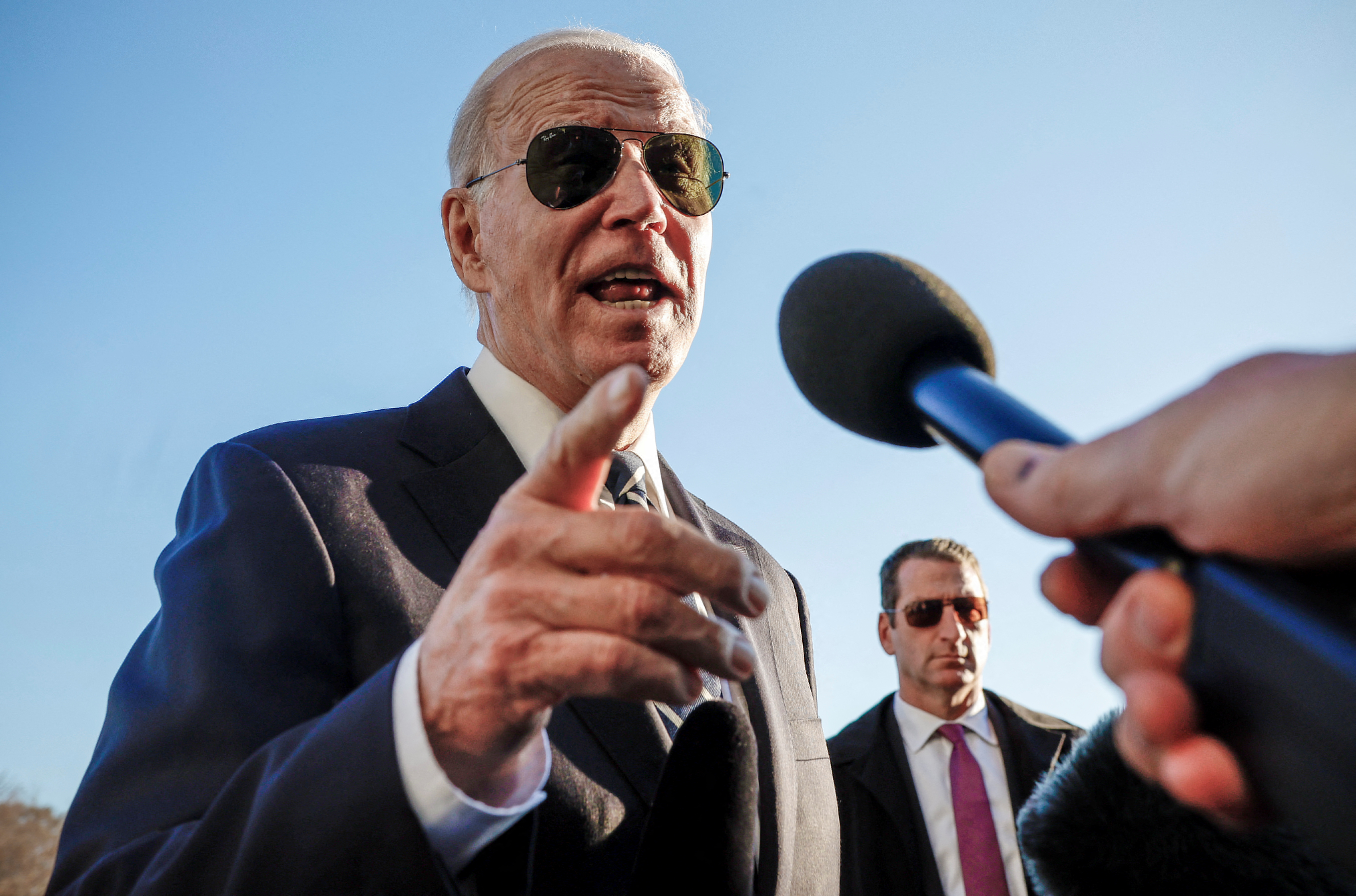
U.S. President Joe Biden speaks to the media after his arrival to the White House in Washington, U.S., January 30, 2023. REUTERS/Evelyn Hockstein

House Republican leader Kevin McCarthy speaks to reporters following a meeting with U.S. President Joe Biden and other congressional leaders at the White House in Washington, U.S., November 29, 2022. REUTERS/Kevin Lamarque
Categories
Audio Sources - Full Text Articles

Poland aims to get training time on Leopard tanks down to 5 weeks

2023-01-31T18:41:08Z

Poland aims to get training time on Leopard 2 battle tanks down to five weeks at a centre where Ukrainian soldiers are likely to be taught how to operate the Western battlefield workhorse against Russia’s invasion.

The village of Swietoszow in western Poland, near the German border, hosts one of just three Leopard training centres in Europe – the others are in Germany and Switzerland.

The Polish military declined to confirm where Ukrainian soldiers would be trained, but military experts said Swietoszow was the most likely location.

“It is possible or even likely that the training of Ukrainian Leopard 2 tank crews will take place in Swietoszow, but other locations cannot be ruled out,” said Jakub Pawlowski, military expert and deputy editor-in-chief of Defence24.pl.

A coalition of Ukraine’s Western supporters formed in January to provide Kyiv with German-made Leopard tanks, and on Jan. 20 Ukrainian Defence Minister Oleksii Reznikov said Ukrainian troops would be trained on Leopards in Poland.

At a training centre equipped with simulators, 14 crews of four personnel each can undergo instruction at once. Training on the Leopard – the vaunted modern battlefield tank used by many NATO member countries in Europe – has hitherto taken about 10 weeks but this could be reduced to five, instructors said.

“If we intensify training (by maximising the number of) instructors, our time and our weekends, we can train an entire crew in five weeks,” Major Maciej Banaszynski, Poland’s Leopard training centre commander, told Reuters on Tuesday.

“Leopard tanks are third-generation tanks. Their mobility on diverse terrain is better compared to Russian tanks,” said chief warrant officer Lukasz Setny, a senior Leopard instructor.

“A (Russian tank) is like having a new Fiat 26p rather than a second-hand Mercedes. It is easier and more comfortable to drive an old Mercedes than a new Fiat 126p,” he said.

Banaszynski said Polish instructors were running Leopard training courses for tank crews and for drivers. “In addition, we now run courses for mechanics for the arms, chassis and equipment accompanying Leopards,” he said.

The only tank Ukraine has so far used against Russia’s invasion has been the T-72 inherited from the former Soviet Union. But Poland’s Leopard trainers said it was not difficult to switch from operating old- to new-generation battle tanks.

Related Galleries:

A Polish army instructor wearing a white helmet talks to Polish soldiers during a Leopard 2 PL tank repair training in Swietoszow, Poland January 31, 2023. REUTERS/Kuba Stezycki

A Polish army instructor stands with Polish soldiers in front of a Leopard 2A5 in Swietoszow, Poland January 31, 2023. REUTERS/Kuba Stezycki

A Polish army instructor stands with Polish soldiers in front of a Leopard 2A5 in Swietoszow, Poland January 31, 2023. REUTERS/Kuba Stezycki

A Polish instructor trains Polish soldiers in the use of the MG3 machine gun, which is part of the armament of the Leopard 2 tanks, in Swietoszow Poland January 31, 2023. REUTERS/Kuba Stezycki

A Polish army instructor and Polish army soldier observe a Leopard 2 tank simulator training in Swietoszow, Poland January 31, 2023. REUTERS/Kuba Stezycki
Categories
Audio Sources - Full Text Articles

“Hands off Africa,“ Pope Francis tells rich world

2023-01-31T18:51:20Z

Pope Francis denounced the “poison of greed” driving conflicts in Africa as he began a visit to Democratic Republic of Congo on Tuesday, saying the rich world had to realise that people were more precious than the minerals in the earth beneath them.

Many tens of thousands of people cheered as he travelled from the airport into the capital Kinshasa in his popemobile, with some breaking away to chase it while others chanted and waved flags.

But the joyous mood, one of the most vibrant welcomes of his foreign trips, turned sombre when the 86-year-old pope spoke to dignitaries at the presidential palace. He condemned “terrible forms of exploitation, unworthy of humanity” in Congo, where vast mineral wealth has fuelled war, displacement and hunger.

“Hands off the Democratic Republic of the Congo. Hands off Africa. Stop choking Africa: it is not a mine to be stripped or a terrain to be plundered,” he said.

Congo has some of the world’s richest deposits of diamonds, gold, copper, cobalt, tin, tantalum and lithium, but those have stoked conflict between militias, government troops and foreign invaders. Mining has also been linked to inhumane exploitation of workers, including children, and environmental degradation.

“It is a tragedy that these lands, and more generally the whole African continent, continue to endure various forms of exploitation,” he said, reading his speech in Italian while seated. People listening to a French translation applauded repeatedly.

“The poison of greed has smeared its diamonds with blood,” he said, referring to Congo specifically.

Compounding the country’s problems, eastern Congo has been plagued by violence connected to the long and complex fallout from the 1994 genocide in neighbouring Rwanda.

Congo accuses Rwanda of backing the M23 rebel group fighting government troops in the east. Rwanda denies this.

“As well as armed militias, foreign powers hungry for the minerals in our soil commit, with the direct and cowardly support of our neighbour Rwanda, cruel atrocities,” said Congolese President Felix Tshisekedi, speaking just before the pope on the same stage on a hot, muggy afternoon.

The pope did not name Rwanda in his address or take sides in the dispute. A spokesperson for the Rwandan government was not immediately available for comment.

An estimated 5.7 million people are internally displaced in Congo and 26 million face severe hunger, largely because of the impact of armed conflict, according to the United Nations.

About half of Congo’s population of 90 million are Roman Catholics and the Church plays a crucial role in running schools and health facilities in Congo, as well as promoting democracy.

The pope criticised rich countries for ignoring the tragedies unfolding in Congo and elsewhere in Africa.

“One has the impression that the international community has practically resigned itself to the violence devouring it (Congo). We cannot grow accustomed to the bloodshed that has marked this country for decades, causing millions of deaths,” he said.

Tshisekedi made a similar point, saying: “While the international community has remained passive and silent, more than 10 million people have been horribly killed”.

First scheduled for last July, the trip was postponed because of a flare-up of a chronic knee ailment. The pope had originally planned to travel to Goma, in eastern Congo, but that stop was scrapped because of a resurgence in fighting between M23 rebels and government troops.

In an apparent reference to the M23 and other militias active in Congo’s eastern regions, the pope said the Congolese people were fighting to preserve their territorial integrity “against deplorable attempts to fragment the country”.

On Wednesday, Francis will celebrate Mass at a Kinshasa airport that is expected to draw more than a million people. He also will meet victims of violence from the east.

Francis will stay in Kinshasa until Friday morning, when he will fly to South Sudan, another country grappling with conflict and poverty.

In a first, he will be accompanied for that leg of his journey by the Archbishop of Canterbury, leader of the global Anglican Communion, and by the Church of Scotland Moderator. The religious leaders have described their joint visit as a “pilgrimage of peace” to the world’s youngest nation.

South Sudan gained independence in 2011 from predominantly Muslim Sudan after decades of conflict. Two years later inter-ethnic conflict spiralled into a civil war that killed 400,000 people. A 2018 deal stopped the worst of the fighting.

Related Galleries:

Pope Francis sits next to Democratic Republic of Congo’s President Felix Tshisekedi as he attends the welcoming ceremony at the Palais de la Nation on the first day of his apostolic journey, in Kinshasa, Democratic Republic of Congo, January 31, 2023. Simone Risoluti/Vatican Media/Handout via REUTERS

Pope Francis and Democratic Republic of Congo’s President Felix Tshisekedi sit on the stage during a meeting with authorities, leaders of civil society and the diplomatic corps at the Palais de la Nation on the first day of Pope Francis’ apostolic journey, in Kinshasa, Democratic Republic of Congo, January 31, 2023. REUTERS/Yara Nardi

People cheer as Pope Francis arrives for his apostolic journey, in Kinshasa, Democratic Republic of Congo, January 31, 2023. REUTERS/Justin Makangara

Pope Francis waves as he is welcomed by residents of Kinshasa (not pictured) he starts his apostolic journey, in Kinshasa, Democratic Republic of Congo, January 31, 2023. REUTERS/Luc Gnago REFILE – CORRECTING LOCATION

Residents of Kinshasa celebrate as they line the streets to welcome Pope Francis in Kinshasa, Democratic Republic of Congo January 31, 2023. REUTERS/Luc Gnago

Pope Francis arrives to board the papal plane ahead of his apostolic visit to the Democratic Republic of Congo and South Sudan, at Fiumicino airport in Rome, Italy, January 31, 2023. REUTERS/Remo Casilli

Priests line up as they wait for Pope Francis as he starts his apostolic journey, in Kinshasa, Democratic Republic of Congo, January 31, 2023. REUTERS/Luc Gnago

People walk next to the billboard of Pope Francis a day ahead of his arrival in Kinshasa, Democratic Republic of Congo January 30, 2023. REUTERS/Luc Gnago

Men work ahead of Pope Francis’ arrival at N’Dolo Airport, where he will attend a mass, in Kinshasa, Democratic Republic of Congo, January 30, 2023.REUTERS/Luc Gnago


Categories
Audio Sources - Full Text Articles

Imperial Oil reports higher fourth-quarter profit

2023-01-31T18:29:51Z

Canada’s Imperial Oil Ltd (IMO.TO) reported higher fourth-quarter profit on Tuesday, helped by increased refining margins amid elevated energy prices and tight global supplies.

Calgary-based Imperial, which is majority-owned by Exxon Mobil Corp (XOM.N), reported net income of C$1.7 billion, or C$2.86 cents per share, for the three months ended Dec. 31, up from C$813 million or C$1.18 per share, a year earlier.

Categories
Audio Sources - Full Text Articles

It was the biggest painting in the world — how could it just disappear?

Big. Big, big, big.

That’s what Gina Lollobrigida was in 1959 when she was the hottest, sexiest, most talked-about actress in the world. That’s what the movie Solomon and Sheba was too: a $6 million biblical spectacle directed by the legendary King Vidor, with grandiose sets, sumptuous costumes, and a star-studded cast. United Artists’ publicity budget alone for this extravaganza was $2 million (more than $20 million today).

But the biggest big was actually an oil painting, 40 feet wide and 11 feet high.

On a bitterly cold day in mid-November 1959 — before it wowed the Hollywood elite, before it toured the world, and before it mysteriously vanished — the largest single canvas oil painting in the world sat snugly behind red velvet curtains in the Grand Ballroom of Chicago’s 757-room Sherman Hotel. Clinks of glasses and murmurs of deal-making were heard in a haze of cigar smoke as models in clingy outfits inspired by the film mingled with married men. Everyone there agreed that UA’s costume designers had worked hard to get the very most out of the very least.
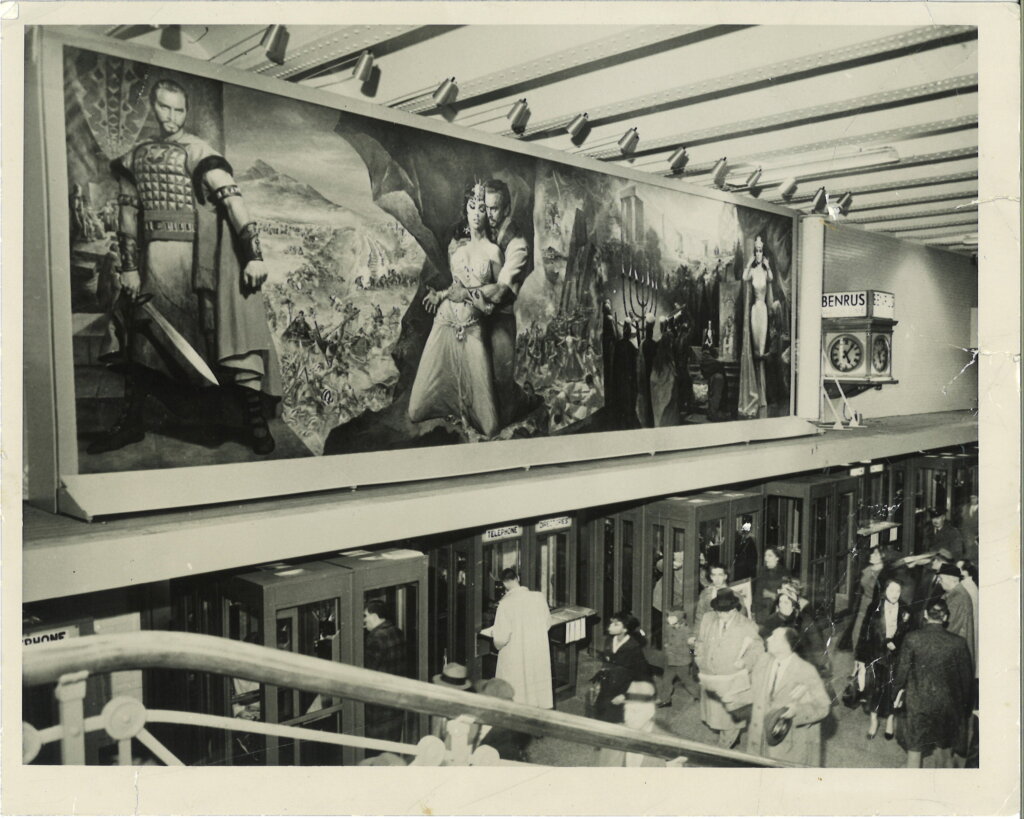
‘Solomon and Sheba’ was a 6-million-dollar biblical spectacle starring Yul Brynner and Gina Lollobrigida and directed by King Vidor. In New York City, it was displayed in Penn Station. Courtesy of Toby Shimin

The film had had its 70mm grand premiere at the Astoria Theatre in London on Oct. 27, and now the promotional team had devised an innovative strategy to generate buzz for the American release: a colossal traveling painting that would be revealed at the 11th annual Theater Owners of America convention. Entertainment reporters were awarded solid gold Tiffany medallions with their names engraved for “unbiased” reporting. Prior to the convention, photos had been leaked of The World’s Most Beautiful Woman sitting for the artist in his Greenwich Village studio.

Gina Lollobrigida as one half of Solomon and Sheba. Courtesy of Toby Shimin

The unveiling came after the last bite of cheesecake. United Artists’ 46-year-old vice president Max Youngstein stepped forward as the lights dimmed. This would be the mightiest motion picture ever made, he declared, the first live-action film to use Super Technirama 70, which would provide a more cinematic experience. Youngstein pulled a cord and revealed the colossal canvas, a rich tableau featuring Yul Brenner as Solomon, the Israelite king, preparing to enter battle, and Gina Lollobrigida as the seductive queen Sheba, in a moment of intimate contemplation. Applause broke out in the room.

The following day, the public was permitted into the hotel, allowing Chicagoans to see the canvas before anyone else in the country. It would travel around the U.S. for about half a year.

Italian bombshell Gina Lollobrigida died this month at 95, and her lusty portrayal of Sheba was forever captured in the movie and the mural. But what about the tortured artist who painted that mural? And what became of the mural itself?

How could the world’s largest oil painting just disappear?

The man behind the mural

Symeon Shimin was a 57-year-old bohemian Jewish man haunted by his past. Six feet tall, lean and mustached, Shimin had spent his early childhood in the Russian city of Astrakhan, a thriving hub of trade and industry at the mouth of the Volga river. Here, east met west, and he later recalled caravans of camels plowing through the streets and streetcars that ran on electricity. The Shimins were wealthy; he lived in a large three-story European-style house with his grandparents, parents, two younger brothers, an infant sister, his two uncles, and his family’s household staff.

The early 1900s in Europe were terrifying times for Jews, even those with money. Symeon’s father, Nachman, a skilled cabinetmaker with a store, used antiques as bribes to protect his family and friends from conscription. His vzyatki (kickbacks) did the trick.

Symeon left his childhood home for good at the end of May 1912. After two weeks of cramped train travel to Latvia, the family boarded their ship with their steerage class tickets at Libau on the Baltic Sea (now Liepāja). A band played marches as the vessel slipped out onto the open sea. It was only weeks after the Titanic crash, and onboard, passengers were still anxious and talking about the disaster. When the sea misbehaved, it didn’t help. But after 14 rough days, the SS Russia arrived in New York at 5 a.m. on Jun. 26, 1912. Symeon and his family were greeted by his uncles — jeweler Paul and the musical Eli, bachelors who had served as the advance party.

Symeon Shimin displays his work to an entourage led by Gina Lollobrigida. Courtesy of Toby Shimin

The lives the family had led before were privileged, but not anymore. After tickets and bribes, all 32-year-old Nachman had was $150. The family moved into a miserable Lower East Side railroad flat. Nachman Simkin became Nathan Simkin, and Symeon Shimin became Samuel Simkin on his first day of public school.

Although demoralized and determined to return to Russia, Nachman’s relatives urged him to try a new career. He opened a delicatessen in Bushwick, Brooklyn. On the second day of the operation, Symeon’s baby sister Chaye died of the lingering pneumonia she had contracted on the ship.

Symeon’s orthodox education at the cheder had been devoid of math and other essential skills, and when he entered first grade at the age of 10, he towered over his classmates. Bullies in older grades were eager to humiliate him, but one teacher gave up her lunch period to tutor him, and because he was such a quick learner, he skipped five grades in one semester.

Instead of playing a real instrument, Symeon carved a cross between a violin and a guitar out of wood, a Frankenstein of bow and strings. At 12, he finally dared to tell his parents he wanted to study music, but Uncle Eli, whom he idolized, had a fit. What was the point of being poor like him? The family needed a doctor or a lawyer! His parents agreed. The despondent child, who never had an interest in art, began drawing on brown paper bags from the delicatessen, and his sophisticated doodling stunned his family.

Symeon Shimin abandoned high school at 16 and apprenticed with a commercial artist. He received a scholarship to Cooper Union, where he studied for free.

While his family continued to use the anglicized name Simkin, at 21, he changed his name back to Symeon Shimin to reclaim his early Russian-Jewish identity. He used art school connections to get assignments to design Jazz Age magazine covers; one featured a lean-legged lady dancer on the January 1929 cover of Vanity Fair just months before the crash.

Although he dreamed of being a “real artist,” he was by no means the only tortured talent who relied on selling commercial art to make ends meet. Dutch stowaway Willem de Kooning also trained as a commercial artist and worked as a billboard painter and illustrator. Mark Rothko began commercially too.

Among Shimin’s many artistic compatriots as Willem de Kooning, seen here in his Long Island studio in 1967. Photo by Getty Images

Shimin befriended the titans of 20th-century American art, frolicking on the beach at Amagansett with the likes of Willem and Elaine de Kooning. At the same time, he forged close relationships with three frequently forgotten Jewish brothers, Raphael, Isaac, and Moses Soyer, whose realistic work better matched Shimin’s own.

During the late 1930s, he painted the stirring mural Contemporary Justice and the Child for the U.S. Department of Justice building in Washington, D.C. This work was commissioned by the Public Works Art Project and can be seen today on the third floor, behind the Great Hall.

Though he was a lifelong pacifist, when he was asked to do recruitment and war bond posters during World War II, he obliged, particularly since Eleanor Roosevelt was involved.

But mural commissions and government work weren’t enough, and he had to continue to rely on his commercial skills, even producing perhaps the most iconic film poster for Gone With the Wind. During one miserable stint in the early 1940s, he worked as Howard Hughes’ personal artist and soon learned that Hughes always wanted more cleavage in his work. As a result, he routinely painted two paintings for his eccentric boss. If Hughes didn’t like the first one, Shimin would whip out a second painting with more boob.

But when Hughes asked him to do some private pornography, Shimin had enough and returned to freelancing film posters. He quickly became one of the country’s highest-paid artists, but the fact that his money came from film posters, while his formerly broke old drinking buddies were commanding top fees at galleries like Betty Parsons, Sidney Janis, and Art of This Century, shamed him.

The artist confronts a dilemma

By 1959, Shimin faced an artistic dilemma that came in the form of two phone calls. In one, the Whitney Museum called asking if they could display a current work in progress, The Pack (1959), for their Annual Exhibition of American Art. The oil painting was based on his experiences of being attacked by a pack of thugs on a New York street after intervening in a helpless boy’s defense. Somewhere between abstract and realist, entangled figures appear to be metamorphosing into hyenas and jackals.

The second call came from United Artists offering an enormous commission for a mural for their upcoming blockbuster Solomon and Sheba and the poster for the movie.

Much of the film had been shot in Spain in 1958, but the original actor playing King Solomon, 44-year-old heartthrob Tyrone Power, had a heart attack after a Nov. 10 dueling scene and died five days later. Now, the studio had decided to reshoot the movie with Yul Brynner at the cost of an additional $2 million, and a sizable portion of that budget would flow directly to Shimin.

This news wowed Shimin’s new bride, Rosa Rosenblatt, a 35-year-old newly divorced copy editor. Yes, she wanted to encourage his art, but he owed alimony to two other wives, didn’t he? He decided to accept the commission and also finish his work for the Whitney.

After buying the largest available piece of blank canvas available in the world, he assembled a team of five assistants to help him with background and fill-in work. He also hired 10 live models. In a manner reminiscent of the Renaissance, Shimin and his team clocked over 4,000 hours. Reportedly, he worked for 145 days, using 472 brushes, as well as 215 pounds of paint. Shimin worked 16-hour days to complete the painting in time for its tour, as he was desperate to return to his “serious” art.

Lollobrigid contemplates Symeon Shimin’s work. Courtesy of Toby Shimin

By Oct. 4, 1959, the mural was nearly finished. That’s the day when 32-year-old Gina Lollobrigida and her posse came to Shimin’s West 11th Street studio, wearing a flowing pearly pink day dress tight at the bosom, a glamour girl’s civilian attire. The 57-year-old Shimin posed theatrically over the actress with a palette and easel. “I used some of the script and some still shots for ideas,” he told a reporter.

There was still, however, the question of how to get the mural out of his studio. On Nov. 7, the artist seemed near tears; ten teamsters had arrived at his Greenwich Village studio, but they couldn’t get the mural, rolled up and tucked in an enormous crate, out the door. As was the case with some of the giant abstract paintings of the day, the only way out was through the window. The mural was swung from the second-story window and lowered in a sling of ropes to a truck.

With the mural out of the way, Shimin went back to work on his painting for his upcoming Whitney show, where his work would be shown in December alongside that of Edward Hopper, de Kooning, Joan Mitchell, Georgia O’Keefe and Jasper Johns.

Meanwhile, the giant mural was on its way to Chicago for the TOA trade show with a quarter-million-dollar insurance policy. With two armored guards by its side, the canvas, along with its case, weighed half a ton. After Chicago, it would embark on a tour of other cities, including Boston’s South Station, Philadelphia’s 30th Street Station, and Pittsburgh’s Alcoa Building lobby, before arriving at New York City’s Penn Station on Dec. 2. It was displayed on the newly renovated Long Island Railroad level, where it was seen by 1 million commuters. Since the mural was too heavy to hang, it was placed on a platform adjacent to the clock.

Viewers stared in amazement. Al Bauer, a construction worker from North Merrick, and Mitch Cotton, a salesman from Syosset, said they wished they could take the mural home. A roving reporter spotted veteran Knicks player Ernie Vandeweghe, who expressed surprise at seeing Yul Brynner’s arms around an eight-foot-tall Lollo. “For that, they blew the whistle in our league,” he said.

“Choice Italian Dish Dominates the Station” was the headline of New York’s Weekend Sun.

Following its Christmas debut in New York, Shimin’s painting toured smaller American markets and Canada up until spring 1960. Though it would later be included in the 1978 book The Fifty Worst Films of All Time, Solomon and Sheba grossed over $12.2 million, thanks in large part to Lollo.

Gina was ecstatic about her payout. And, given his alimony bills, so was Shimin. Like many enmeshed in Hollywood, he hated the work but loved the money.

Soon, though, with the rise of television, big money for film promotion dried up. Shimin soon became desperate for work, and friends connected him to book projects that paid him enough to live on. And illustrating children’s literature did not offend him in the same way as painting va-va-voom.

Symeon Shimon made a living doing promotional posters for movies, like this one for Little Women. Courtesy of Toby Shimin

During this time, Symeon became a father again. Toby Shimin, Symeon’s second daughter from his third marriage, remembers him as an older parent smelling of turpentine. He was always in jeans, black turtlenecks, and corduroy.

Tonia Shimin, his older daughter, a dance professor, recalls much more, including the ugliness of the earlier divorce. Despite being 18 years apart, the half-sisters have always gotten along well. In separate phone interviews on different coasts, they described their father as warm with a magnetic personality — and a ladies’ man. (When he was in his 80s, he had a girlfriend in her 30s.)

Though he never became a household name as a “serious artist in museums,” he illustrated 57 children’s books, and won two prestigious Christopher Awards, for work exemplifying the “highest human spirit.”

Despite plans in his eighth decade for another serious painting themed on liberation, Shimin died of cancer in 1984 at 82. After the funeral, his daughters sorted through his belongings and surviving artwork, which did not include the mural.

And then it vanished

Years ago, Toby Shimin, a film editor I knew from the documentary world, told me about the World’s Largest Oil Painting, but she didn’t tell me the whole story about it until now, after Gina Lollobrigida’s death.

In 1960, the painting was rolled one last time over a steel tube, then encased in a larger, unique three-quarters-inch-thick plywood tube with a collapsible metal framework, all contained within an enormous plywood crate.

Did the artist know the painting’s whereabouts after that? Did he even know where it was stashed? From 1960 until 1983, Shimin’s mural was likely on the property of United Artists, who sold their company to MGM in 1981. But that’s just a guess. Even though his daughters have some of his finest paintings and an archive holds his children’s book artwork, no one in the family knew where the murals were.

In early 2019, Shimin’s grandson Shamus Donlon was internet surfing when he discovered a picture of the mural hanging in the Detour Gallery, a contemporary art gallery in Red Bank, New Jersey. But the photos had been taken a few weeks earlier, the mural had been put back into storage, and the owner was overseas. Tonia Shimin (not Toni), his mother, wanted to include the mural in a coffee table work, The Art of Symeon Shimin. The gallery assistant provided some excellent photos of the mural, but it was different from seeing it in person.

Was it doomed to remain in storage indefinitely? And where was it now?

How the World Tour stopped in New Jersey

Turns out that Solomon and Sheba are alive and well, and living in a crate in New Jersey.

I got a call back this week from Kenny Schwartz, 71, who owns the Detour Gallery. “When you grow up in pain,” he told me over the phone while he was driving home on the New Jersey Turnpike, “you find relief in acquiring things and opening boxes. I used to own a Jeep dealership and now own several restaurants. I’m a fucking nut, a compulsive entrepreneur. There’s so much stuff I’ve collected over the years. Some of it is on the wall, and the pricey stuff is in the vaults — singular. I got a Mary Cassatt, early Basquiat work, and what I think is the biggest collection of letters written by Billie Holiday.”

Gallery owner Kenny Schwartz acquired the mural in the 1980s. Courtesy of Laurie Gwen Shapiro

I laughed when he told me he had Lex Luthor’s dystopian paintings from one of the Batman movies in storage. “When I bought those, I was on a collecting high,” he said in his thick Brooklyn accent. “I’m sure they’re somewhere. Searching through all 6,000 artworks would take a long time. I may even have some Shimin paintings I got on eBay.”

Could he recall the day he bought the mural?

Yes and no.

“It was 40 years ago, probably around 1983,” he said. “Everything before I got clean from drugs and alcohol in 1987 is fuzzy. Man, I was so fucked up on something that day, who knows what, and I was a compulsive buyer at an auction. I peeked at this crazy crate and rolled out a bit of mural, just a few inches. Whatever it was, it was interesting, and I wanted it and didn’t want to draw attention to it and have other buyers interested. I was the only one bidding on it, and then I worried about how the hell I would get the thing home. Even though I was drinking, stoned, or possibly both, I called for a flatbed at the closest gas station. After I got it home, I stored it for 10 years, never hanging it until 2012 for a few weeks in Neptune, New Jersey.” This was in another one of his “crazy” spaces called American Antiques Company. It was briefly hung again in his gallery in Red Bank in 2017.

Schwartz said he keeps the mural in its crate in his gallery and covers it with marble. “It’s our coffee table!” Last month, when he read about Gina Lollobrigida’s death, the fact that he owned a mural with an eight-foot Gina didn’t even occur to him.

Schwartz also told me he believed this painting deserves to be seen by many people — maybe in an offshoot of Detour Gallery that he plans to open next year in Chelsea.

“I think I need a space with walls tall enough to hang the mural,” he said. “What do you think?”

So yes, God willing, it seems Gina Lollobrigida will take a final bow! And perhaps, though Symeon Shimin might be appalled to be remembered by a crass promotional stunt, it will finally draw more attention to his beloved serious art.

The post It was the biggest painting in the world — how could it just disappear? appeared first on The Forward.

Categories
Audio Sources - Full Text Articles

US probes complaints of parts flying off of Ford Explorers

DETROIT (AP) — The U.S. government’s road safety agency is investigating complaints that windshield trim panels can fly off of Ford Explorers while they’re traveling at highway speeds.

The National Highway Traffic Safety Administration says it has 164 complaints about the trim pieces detaching on 2011 through 2019 Explorer SUVs. The probe covers about 1.86 million vehicles.

The parts could hit the windshield of following vehicles or even a motorcycle rider, possibly causing loss of control and a crash, the agency said.

The agency doesn’t have any reports of crashes or injuries, according to a document posted Tuesday.

NHTSA says it will determine how often the problem happens and the safety consequences of the trim pieces flying off the vehicles.

The investigation could lead to a recall, but so far there hasn’t been one.

Ford says it’s working with NHTSA on the investigation.

Categories
Audio Sources - Full Text Articles

Democrats face a tough choice to confirm red state judges: Go through GOP senators or right over their heads

Lindsey Graham, Chuck SchumerSen. Lindsey Graham, R-S.C., left, and Senate Majority Leader Chuck Schumer, D-N.Y.

Tom Williams/CQ Roll Call

  • Senate Democrats want to ramp up the pace of federal judge confirmations this Congress.
  • But their task could grow challenging when it comes to filling vacancies in states with GOP senators.
  • By tradition, senators have essentially a veto power over district court nominees in their home states.

Senate Democrats are vying to confirm more of President Joe Biden’s nominees to the federal bench after he broke his recent predecessors’ records for judges appointed in their first two years in office. 

“This Congress, with an even larger majority, Senate Democrats will ramp up to a record pace and continue to make our courts more reflective of our country,” Senate Majority Leader Chuck Schumer said in a statement to Insider.

But even with a 51-seat majority, the task for Democrats could grow challenging as many of the 88 open judgeships — a number that’s expected to rise with new retirements — will require cajoling support from Republican senators, or jettisoning a century-old Senate practice that empowers them. 

By tradition, senators essentially have a veto over district judge nominees in their home states. Almost a third of the current vacancies are in states with at least one GOP senator, who could block some of Biden’s choices.

“I will not hesitate if I don’t think they ought to be on the federal bench,” GOP Sen. John Kennedy of Louisiana, where there are four district court vacancies, told Insider.

Biden has repeatedly expressed a strong commitment to reshaping the federal courts after former President Donald Trump dramatically shifted the judiciary to the right. Democrats see judicial confirmations as a defense against GOP attempts to repeal the Affordable Care Act, weaken gun restrictions or curtail voting rights through the bench.

“One of the really important things about having a balanced federal judiciary is ensuring that some of these awful, unpopular, radical things that the Republicans are trying to implement through the courts aren’t just sailing through,” said Justin Goodman, Schumer’s former communications director who is now an executive vice president at the public affairs firm SKDK.

Yet if Republicans balk at Biden’s nominees, Democrats will face increased pressure from the left to bury the Senate’s judicial-approval tradition to cement the president’s legacy on the bench. 

Both Senate Judiciary Committee Chair Dick Durbin, and the panel’s top-ranking Republican, Sen. Lindsey Graham, are hoping it won’t get to that point. 

“I’m not asking anybody to capitulate,” Graham said during a committee meeting last week. “I’m asking people to cooperate. And I’m hoping we can find some system that works.” 

Joe BidenPresident Joe Biden.

Drew Angerer/Getty Images

Judicial vacancies in Republican-led states

Since Biden became president, he’s appointed nearly 100 federal judges — more than Trump and President Barack Obama did in their first two years, according to the Federal Judicial Center. Biden’s nominees increased diversity on the historically homogeneous courts, most notably with the ground-breaking confirmation of Ketanji Brown Jackson, the first Black woman on the Supreme Court.

“Both, in terms of ethnicity, gender, and sexual orientation, and experience, no one has topped him. I mean, no one’s even close,” Carl Tobias, a professor at the University of Richmond School of Law, told Insider.

Now in a divided Congress, the table is set for Democrats to accelerate the pace of confirmations. The Senate, alone, confirms judicial nominees, and Democrats are expecting ample opportunity to focus on them since Republicans control the House and major legislative activity is less likely. The party is aiming for a year like 2019, when the GOP-led Senate confirmed 102 of Trump’s nominees to the bench after Democrats won the House.

But the Senate Judiciary Committee’s long-standing “blue slip” tradition could complicate Biden’s plans to transform the courts over the next two years. When considering district court vacancies, senators from that home state must return a blue sheet of paper with lines that say “approve” and “disapprove” for a nominee to receive a hearing and move forward in the confirmation process. 

The process, started in 1917, is meant as a courtesy to home state senators and to fulfill the president’s “advice and consent” constitutional obligation of the Senate. 

With GOP hostility toward Biden’s agenda and signs of hyperpartisanship in the Senate, he’s so far largely avoided potential blue-slip fights by nominating circuit court judges — who sit on one of 13 courts that hear challenges of district court decisions and whose nominations do not require blue slips to advance — and district court judges in states represented by his party. A senator can derail an aspiring federal judge simply by refusing to return the slip.

Democrats confirmed 28 circuit court judges and 68 district court judges in Biden’s first two years. Of the district court judges, the majority were in states with Democratic senators and only one nominee was confirmed in a state with two Republican senators: Iowa.

“President Biden’s gonna have a tougher time filling district court slots over the next two years because he’s already picked the low-hanging fruit of filling district court slots with two Democrat home state senators,” said Mike Davis, who previously served as chief counsel for nominations to former Senate Judiciary Chairman Chuck Grassley, an Iowa Republican.

Biden, a former Judiciary Committee chair himself, could continue to prioritize and appoint judges in Democratic-led states, which he’s widely anticipated to do. But if Democrats want to make good on their promise of restoring balance to the courts, experts say they must place judges in red states, where there are currently 28 open district court seats, including in Texas, Florida, Idaho and Wyoming. The sole pending nomination for those vacancies is in Mississippi.

“The real difference will come when you replace the Republican appointees with a Democrat who has very different experience and different views ideologically,” Tobias said. “[Biden] needs to get more of those.” 

John KennedyRepublican Sen. John Kennedy of Louisiana.

Graeme Jennings-Pool/Getty Image

‘Antiquated blue slip process’

Durbin, as judiciary chair, has the power to change the informal, blue-slip practice for district court confirmations, but committee staffers said it’s premature to discuss that option. 

At the moment, the top Democrat is reminding Republicans that his party returned 130 blue slips for district court nominees under Trump, including many in the second half of his administration. Democrats are hoping their GOP colleagues will do the same now that the roles are reversed. 

“It can be done if you’re willing to sit down and be reasonable on both sides of the table,” Durbin said during a committee work session. 

—Senate Judiciary Committee (@JudiciaryDems) January 25, 2023


Besides Graham, other Republicans senators have worked across the aisle on judicial confirmations. Durbin recently praised Sens. Mike Braun and Todd Young of Indiana for returning blue slips on Judge Matthew Brookman for a district spot in their home state, signaling a smooth confirmation process ahead.

Yet although some Republicans are cooperating, Durbin said, “so far we’ve only received 12 blue slips in the first two years from the Republican side.”

And some GOP members have threatened to withhold their support. 

Kennedy, the senator of Louisiana, successfully negotiated with Democrats on confirming a circuit court nominee last Congress. But he said the White House “hasn’t seemed to be in a real big hurry on the district court appointees.” 

“We have discussed some names, but the names that the White House has sent to me, I’m not going to support and they know that,” he told Insider. “I’m not looking for activists or ideologues. I’m looking for good lawyers who will make good judges.”

Sen. John Cornyn of Texas also griped that the White House has delayed talks on judicial nominations.

“We would like to maintain some cooperation and communication with the White House and certainly we’re not doing anything to slow this down,” he said in last week’s committee meeting. 

Durbin, seemingly trying to assuage Cornyn’s concerns, responded at the time: “It is definitely a two-way street. We’re asking members to try to cooperate but certainly the White House has to do the same.”

The White House has insisted that its goal is to consult with all senators of both parties to fill judicial vacancies in the remainder of Biden’s term. And while the administration could win over some hesitant Republicans, at least one has already opposed a Biden nominee. GOP Sen. Ron Johnson of Wisconsin initially approved Judge William Pocan for the state’s eastern district court, but then walked back his support, denying a blue slip and preventing him from advancing.

Despite Durbin’s pleas for bipartisanship, progressive advocacy and legal groups, who have celebrated Biden’s record on the federal courts, aren’t holding their breath that GOP senators will come around. 

“It’s time for the Senate to do away with the antiquated blue slip process, which is letting Republican senators tell President Biden who can and cannot become a judge,” Christopher Kang, chief counsel at Demand Justice, said in a statement to Insider. 

“With fewer and fewer vacancies remaining in blue states, President Biden needs to be able to appoint judges in red states to maximize his judicial legacy so Americans across the country will benefit from a diverse judiciary,” he added. “For him to do that, he needs Chairman Durbin to have his back.”

John Cornyn, Lindsey GrahamRepublican Sens. John Cornyn of Texas and Lindsay Graham of South Carolina.

Drew Angerer/Getty Images

Biden’s ‘partial legacy’ 

The blue-slip tradition has been a source of headaches for both Republicans and Democrats. The Obama White House voiced frustrations with the custom in 2014, when Democratic Sen. Patrick Leahy chaired the committee, because they thought Republicans were exploiting it by blocking nominees or using delay tactics. 

“This abuse is a significant constraint on the president’s selection of potential nominees and on his ability to quickly nominate individuals to fill long-standing vacancies,” Eric Schultz, then the White House deputy press secretary, told Gannett at the time.

Leahy required two positive blue slips from home-state senators for both circuit and district court nominees to advance. His successor, Grassley, however, announced a different standard for circuit court nominees during the Trump administration, saying a lack of two positive blue slips wouldn’t prevent a nominee from getting a hearing unless the White House failed to consult with home state senators. Graham, who followed Grassley, imposed a similar policy and, now, so does Durbin. 

It’s a powerful tool that senators don’t want to lose.

The blue slip is “the last thing pretty much left that makes senators very relevant” in the district judge nominating process, according to Graham, who chaired the committee from 2019 to 2021. He felt pressured to change the rule so Republicans could fill any vacancy they wished, and he warned that Durbin would now feel the heat from Democrats.

“I think it’s important we keep it,” Graham said.

The South Carolina Republican acknowledged that Democrats joined forces with Republicans when he was chairman, even if vacancies remained in three blue states under Trump and not many were filled in California. Graham encouraged his fellow GOP senators to create a process that would allow nominations to advance “in a reasonable fashion.”

Durbin has not yet signaled any urgency to abolish the tradition. But in the coming weeks and months, if Democrats fail to place judges in red states because of GOP holdouts, the party must decide whether to abandon blue slips to satisfy their agenda before Biden’s term ends.

Rakim Brooks, president of the Alliance for Justice, a left-leaning legal policy coalition, cautioned against Republicans blocking nominees in their home states and slowing down legal action in different parts of the country. “That just seems fundamentally unfair,” he said.

Brooks fears that Biden will only leave a “partial legacy” on the courts if Democrats fall short on this responsibility and continue to honor blue slips. Though he has faith that the party will make the right decision in the face of Republican opposition.

“I think they’ll come around, ultimately, to seeing that what they’re aiming to do just ultimately proves to be impossible,” Brooks said.

Read the original article on Business Insider
Categories
Audio Sources - Full Text Articles

Easing inflation worries lift Wall Street ahead of Fed decision

2023-01-31T18:04:07Z

Traders work on the trading floor at the New York Stock Exchange (NYSE) in New York City, U.S., January 27, 2023. REUTERS/Andrew Kelly

U.S. stocks rose on Tuesday as labor cost data indicated that the Federal Reserve’s aggressive approach to taming inflation was taking hold ahead of a decision by the central bank, while gains on the Dow were limited by weak earnings updates.

U.S. employment costs increased at their slowest pace in a year in the fourth quarter as wage growth slowed, bolstering expectations of the Fed slowing the pace of its interest rate increases.

“The report was a little lower than expected and that seemed to really spark a move in markets,” said Randy Frederick, managing director at Charles Schwab.

“It shows that the overall economy is slowing down, but it should be a positive overall because it means that the Fed’s actions to quell inflation are actually working.”

The Fed will decide on rates on Wednesday, with traders betting on a 25-basis-point hike (bps) at the end of the its two-day meeting, and a terminal rate of 4.9% in June.

Ten of the 11 major S&P 500 sector indexes were up, with consumer discretionary (.SPLRCD) rising 1.2% after a 7.2% gain in General Motors Co (GM.N).

The automobile conglomerate forecast stronger-than-expected earnings for 2023 and said it would cut $2 billion in costs.

United Parcel Service (UPS.N) jumped 4.2% on strong quarterly earnings, boosting the Dow Jones Transport Average index (.DJT).

Capping gains on the blue-chip Dow Jones Industrial Average (.DJI) was Caterpillar Inc (CAT.N), down 4.2% after reporting a drop in quarterly profit on higher manufacturing costs, while McDonald’s Corp (MCD.N) dropped 2.4% on warnings of short-term inflationary pressures.

“With additional earnings coming in this week, participants are a little concerned that the market got a little bit ahead of itself and so are a little cautious heading into the Fed meeting,” said Robert Pavlik, senior portfolio manager at Dakota Wealth.

At 12:05 p.m. ET, the Dow Jones Industrial Average (.DJI) was up 62.08 points, or 0.18%, at 33,779.17, the S&P 500 (.SPX) was up 22.13 points, or 0.55%, at 4,039.90, and the Nasdaq Composite (.IXIC) was up 97.78 points, or 0.86%, at 11,491.59.

PulteGroup Inc (PHM.N) jumped about 9%, lifting the PHLX Housing index (.HGX) to a 10-month high, after its quarterly earnings surpassed Wall Street expectations aided by higher house prices.

The S&P 500 and the Dow are set to end January higher for the first time since 2019, while the Nasdaq is up more than 9% as appetite for growth stocks bounced back.

Hopes of a downshift in the Fed’s policy has eased worries of pressured valuations for the rate-sensitive group.

As many as 165 S&P 500 companies have reported earnings for the fourth quarter. Earnings are expected to have fallen 2.4% for the quarter, compared with a 3% decline expected a day earlier, according to Refinitiv data.

Advancing issues outnumbered decliners by a 3.81-to-1 ratio on the NYSE and by a 2.88-to-1 ratio on the Nasdaq.

The S&P index recorded five new 52-week highs and no new low, while the Nasdaq recorded 62 new highs and 15 new lows.

Categories
Audio Sources - Full Text Articles

U.S. execs sound a note of caution even as earnings outstrip estimates

2023-01-31T17:59:52Z

The companies that produce goods at the heart of the U.S. consumer economy – SUVs, washing machines, heavy equipment and hamburgers – kept rolling along at the end of 2022.

But corporate executives on conference calls were guarded in their comments on Tuesday, noting solid demand while simultaneously pointing to the need to hold costs down in the face of higher inflation and expectations for economic growth to moderate – but not collapse.

“We’re not doing anything in anticipation of a recession,” said General Motors Co (GM.N) Chief Financial Officer Paul Jacobson told analysts on a call, after the company posted better-than-expected results and forecast a more upbeat 2023 than analysts expected. “Consumer demand is still holding up.”

Bellwethers including McDonald’s Corp (MCD.N), GM, Exxon Mobil Corp (XOM.N), appliance maker Whirlpool Corp (WHR.N) and delivery giant United Parcel Service Inc (UPS.N) posted results that exceeded estimates.

Right now, S&P 500 companies have reported a 4.5% year-over-year rise in revenue. That exceeds what was expected on Jan. 1, but is short of the previous year’s double-digit growth rates, and it is expected to slow in the first half of 2023, according to Refinitiv, motivating the cautious outlook.

“We want to be cautious. That’s why we are talking about a $2 billion cost-cutting program,” said GM’s Jacobson, who said those cuts are planned over two years.

GM is not alone. Exxon also said it would cut spending even after reporting a record $56 billion profit in 2022, and UPS exceeded estimates due in part to reducing expenses.

However, the hundreds of thousands of technology job layoffs announced by Microsoft Corp (MSFT.O), Intel Corp (INTC.O) and others are not being mirrored in the rest of the economy. That is a good sign for the broader economy, according to Lori Calvasina, equity analyst at RBC Capital Markets.

“We are optimistic this condition can remain in place given the strong levels of demand and backlogs that we continue to hear about from publicly traded industrial companies,” she wrote on Monday. Calvasina said the market’s recent performance may reflect expectations for a mild downturn followed by a solid recovery in 2024.

The S&P 500 is up 4.6% in January, the best first month for the index since 2019. U.S. economic growth came in at a better-than-expected 2.9% rate for the fourth quarter. It is early, but the Atlanta Federal Reserve Bank’s first-quarter GDP estimate is currently 0.7%.

The economy’s performance may depend on whether price pressures that have afflicted consumer and business spending start to wane. There is some evidence of that, as the core personal consumption expenditures (PCE) price index rose at a 5% year-over-year rate in December, the lowest since September 2021.

Still, that rate is pressuring margins, numerous executives said on Tuesday. Whirlpool Corp CEO Marc Bitzer said that “inflationary pressures remained stubbornly high” during the fourth quarter, and Caterpillar executives suggested pricing pressures will continue, after saying on the previous earnings call they expected them to moderate. Caterpillar Inc’s (CAT.N) fourth-quarter earnings dropped by 29%.

Even so, the feeling around the economy itself remains relatively positive.

“As we go into 2023, there is going to continue to be inflation,” said Christopher Kempczinski, McDonald’s CEO, on the company’s earnings call on Tuesday. “Do you reach a point where maybe it does start to materialize around the consumer? Certainly, consumer sentiment out there remains depressed in many markets. But we’re not seeing it right now.”

Related Galleries:

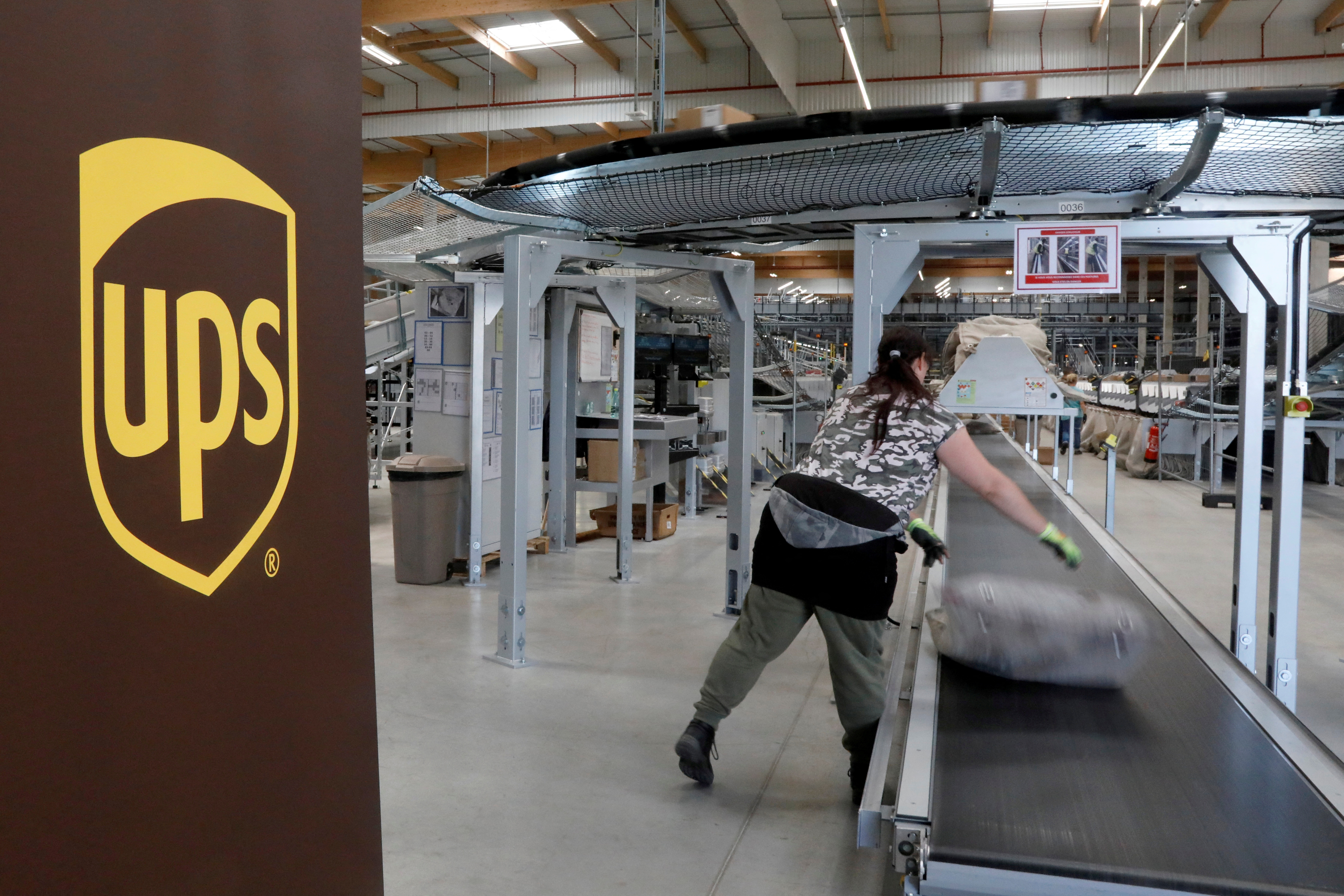
An United Parcel Service employee works at the new package sorting and delivery UPS hub in Corbeil-Essonnes and Evry, southern Paris, France, June 26, 2018. REUTERS/Charles Platiau

A view shows a sign outside a McDonald’s drive-thru restaurant in London, Britain, December 10, 2021. Picture taken December 10, 2021. REUTERS/May James

A logo of the Exxon Mobil Corp is seen at the Rio Oil and Gas Expo and Conference in Rio de Janeiro, Brazil September 24, 2018. REUTERS/Sergio Moraes

People visit the Caterpillar stand at the ‘Bauma’ Trade Fair for Construction Machinery, Building Material Machines, Mining Machines, Construction Vehicles and Construction Equipment in Munich, Germany, April 8, 2019. REUTERS/Michaela Rehle


WP Radio
WP Radio
OFFLINE LIVE