Categories
Audio Sources - Full Text Articles

ChatGPT parent OpenAI faces a blockchain rival as a new NFT project creates 3D avatars from text

ChatGPT faces a new blockchain rival in Polygon's CharacterGPT program.ChatGPT faces a new blockchain rival in Polygon’s CharacterGPT program.

Yuichiro Chino/Getty Images

  • OpenAI, the creator of the language bot ChatGPT and image generator Dall-E, could face competition from Polygon’s blockchain AI product, CharacterGPT. 
  • While Dall-E creates images, CharacterGPT is designed to generate a 3D avatar that can answer questions on the fly. 
  • Polygon has previously partnered with notable brands including Starbucks, Nike, and Walt Disney. 

OpenAI, the creator of the language tool ChatGPT and image generator Dall-E, could be facing some new, three-dimensional competition on the blockchain.

Polygon is working with Alethea AI to launch CharacterGPT, an artificial-intelligence-powered non-fungible token (NFT) project that describes itself as “the world’s first multimodal AI system.”

In an introductory video, the brand says users will be able to type in text to generate responsive characters with “unique personalities, identities, traits, voices, and bodies.” Users can mint the NFTs at mycharacter.ai

It remains to be seen whether CharacterGPT will gain the popularity of either ChatGPT or OpenAI’s bot-powered Dall-E, which attracts 1.5 million users a day.

The CharacterGPT blockchain product looks poised to more directly compete with Dall-E rather than ChatGPT, which generates text responses to typed questions. It has created massive interest through its ability to write convincing articles, cover letters, emails, and messages on dating apps.

Dall-E, for its part, has sparked controversy among artists who allege the platform draws from real-life creators, and can trick people with how realistic its high-quality images appear.

Meanwhile, Alethea AI says CharacterGPT will allow people to create “digital twins,” companions, virtual assistants, and parody figures, among other use cases, according to the company’s website.

“Generative AI is advancing at a rapid rate and has the potential to profoundly impact our lives in the coming years,” Polygon cofounder Sandeep Nailwal said in a statement. “I have seen firsthand how Alethea AI has developed this technology over the last few years and through their CharacterGPT AI engine, users will be able to create interactive characters in a matter of seconds.”

Read the original article on Business Insider
Categories
Audio Sources - Full Text Articles

The Guardian view on rugby union: a sport rich in drama is at a crossroads | Editorial

Many of its current travails are the result of issues left unresolved 30 years ago

Are we here to praise rugby union or to bury it? Over the past few days, the sport has been celebrating the “greatest try of all time” – the one scored by Gareth Edwards for the Barbarians against the All Blacks in January 1973 – and on Saturday the Six Nations championship begins, with Wales v Ireland at the Principality Stadium and England v Scotland at Twickenham. France play Italy in Rome on Sunday. These are matches to savour: clashes of styles, traditions, sporting cultures. That is the beauty of the Six Nations and why the competition, the pinnacle of rugby in the northern hemisphere, never fails to captivate. Sometimes the anthems seem to go on for longer than the matches – Ireland insist on singing two and Italy have a virtually full-scale Verdi opera – but that is as it should be. The theatre of the sport is everything.

But offstage there are worrying noises, and some suggest rugby union – the 15-player game, as opposed to the 13-player rugby league version – faces an existential crisis. That was the term used over the weekend by Nigel Walker, acting head of the Welsh rugby union (WRU), after allegations of a “toxic culture” of misogyny, racism and homophobia at the organisation, which led to the resignation of the WRU’s chief executive on Sunday.

The crisis in Wales is just one of an unprecedented set of challenges facing the sport. Safety concerns, with several former players showing symptoms of early-onset dementia, and in some cases threatening to sue the rugby authorities for negligence, have led to a rewriting of the tackle laws in an attempt to minimise head collisions. In England, that revision has turned into a shambles. The Rugby Football Union has declared that from 1 July in the amateur game, tackles must be made no higher than the waist, but in the professional game, upper-body contact will still be permitted. Critics argue the new law will make the situation worse, because it will lead to tacklers’ heads being what Ireland coach Andy Farrell calls “sitting ducks” for ball carriers’ knees. It also risks a bifurcation of the professional and amateur games.

All this comes on top of worries about the financial viability of professional rugby: two English Premiership clubs, Wasps and Worcester Warriors, went into administration last year; in Wales the regional structure introduced in the wake of professionalism – which has never been popular with fans – is tottering. Rugby became a fully professional sport only in the 1990s and aspired to take on the football juggernaut, but that was always hopelessly ambitious.

Many of the sport’s current travails are the result of issues left unresolved 30 years ago, when an amateur, mostly recreational game based on traditional rivalries attempted to become a global mega-sport. Rugby union lacks the simplicity of football at its best; its stop-start nature, the impenetrability of scrummaging and the arcane nature of the laws make it a challenge for spectators. It may have to accept it will always be more of a minority taste – a passionate game but not a mass market game. It needs to stay true to itself, improve its governance and meet the safety concerns of players and parents of potential players head on. It is essential for the sport that schools and amateur clubs go on playing rugby. The Six Nations is the resplendent icing on the rugby cake, but if the sport is not careful, there may soon be no cake.

Continue reading…

Categories
Audio Sources - Full Text Articles

U.S., India partnership targets arms and AI to compete with China

2023-01-31T19:15:33Z

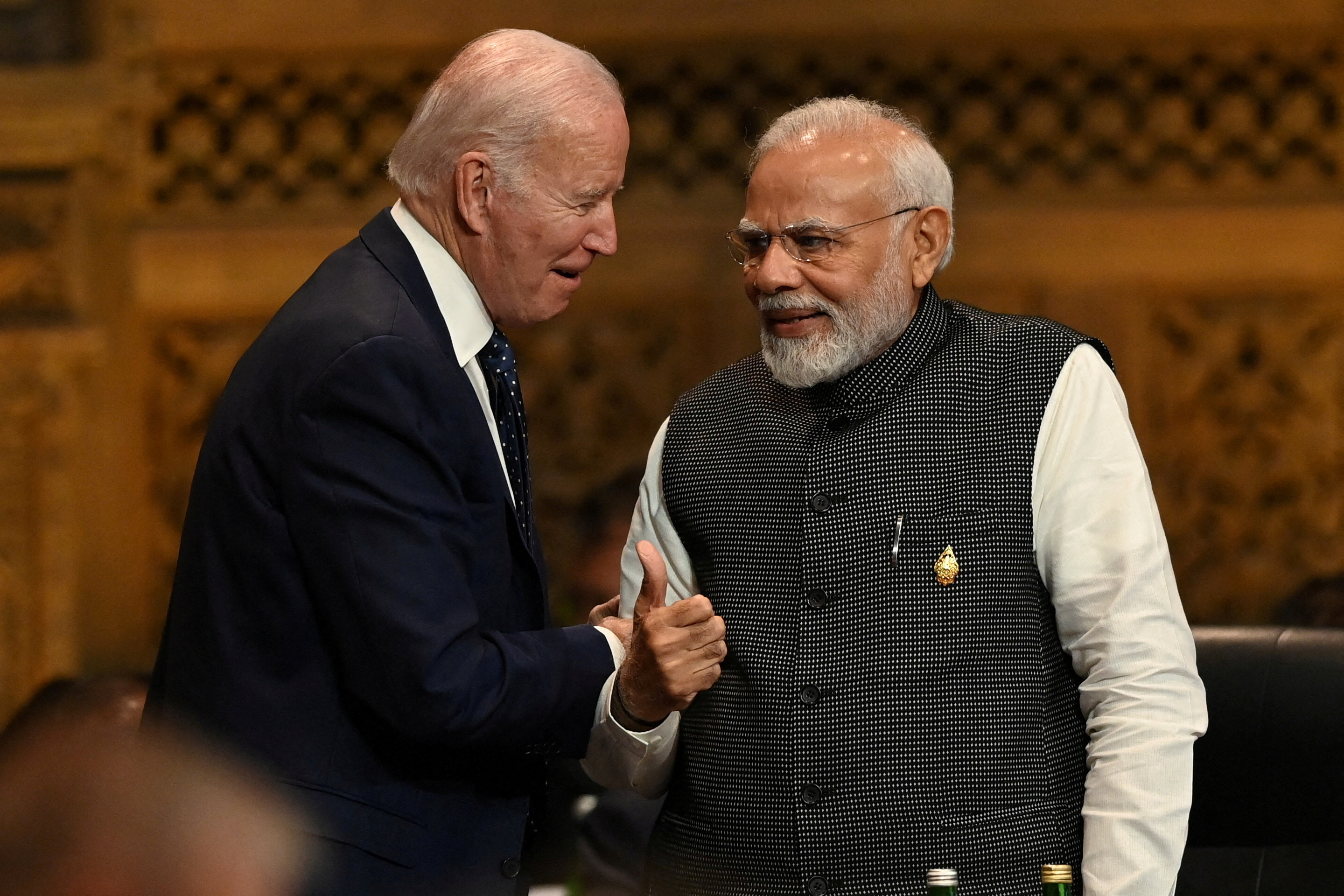
President of the U.S. Joe Biden speaks with Prime Minister of India Narendra Modi at the G20 Summit opening session in Nusa Dua, Bali, Indonesia, Tuesday, Nov. 15, 2022. PRASETYO UTOMO/G20 Media Center/Handout via REUTERS THIS IMAGE HAS BEEN SUPPLIED BY A THIRD PARTY. MANDATORY CREDIT./File Photo

The White House is launching a partnership with India on Tuesday that President Joe Biden hopes will help the countries compete against China on military equipment, semiconductors and artificial intelligence.

Washington wants to deploy more Western mobile phone networks in the subcontinent to counter China’s Huawei Technologies, to welcome more Indian computer chip specialists to the United States and to encourage companies from both countries to collaborate on military equipment like artillery systems.

The White House faces an uphill battle on each front, including U.S. restrictions on military technology transfer and visas for immigrant workers, along with India’s longstanding dependence on Moscow for military hardware.

Biden’s national security adviser, Jake Sullivan, and his Indian counterpart, Ajit Doval, are meeting with senior officials from both countries at the White House on Tuesday to launch the U.S.-India Initiative on Critical and Emerging Technologies.

“The larger challenge posed by China – its economic practices, its aggressive military moves, its efforts to dominate the industries of the future and to control the supply chains of the future have had a profound impact on the thinking in Delhi,” said Sullivan.

New Delhi has frustrated Washington by participating in military exercises with Russia and increasing purchases of the country’s crude oil, a key source of funding for Russia’s war in Ukraine. But Washington has held its tongue, nudging the country on Russia while condoning India’s more hawkish stance on China.

On Monday, Sullivan and Doval participated in a Chamber of Commerce event with corporate leaders from Lockheed Martin Corp, (LMT.N) Adani Enterprises (ADEL.NS) and Applied Materials Inc. (AMAT.O)

While India is part of the Biden administration’s signature Asian engagement project Indo-Pacific Economic Framework (IPEF), it has opted against joining the IPEF trade pillar negotiations.

The initiative also includes a joint effort on space and high-performance quantum computing.

General Electric Co, (GE.N) meanwhile, is asking the U.S. government for permission to produce jet engines with India that would power aircraft operated and produced by India, according to the White House, which says a review is underway.

Categories
Audio Sources - Full Text Articles

Wall Street rises after encouraging inflation data with Fed on deck

2023-01-31T19:13:30Z

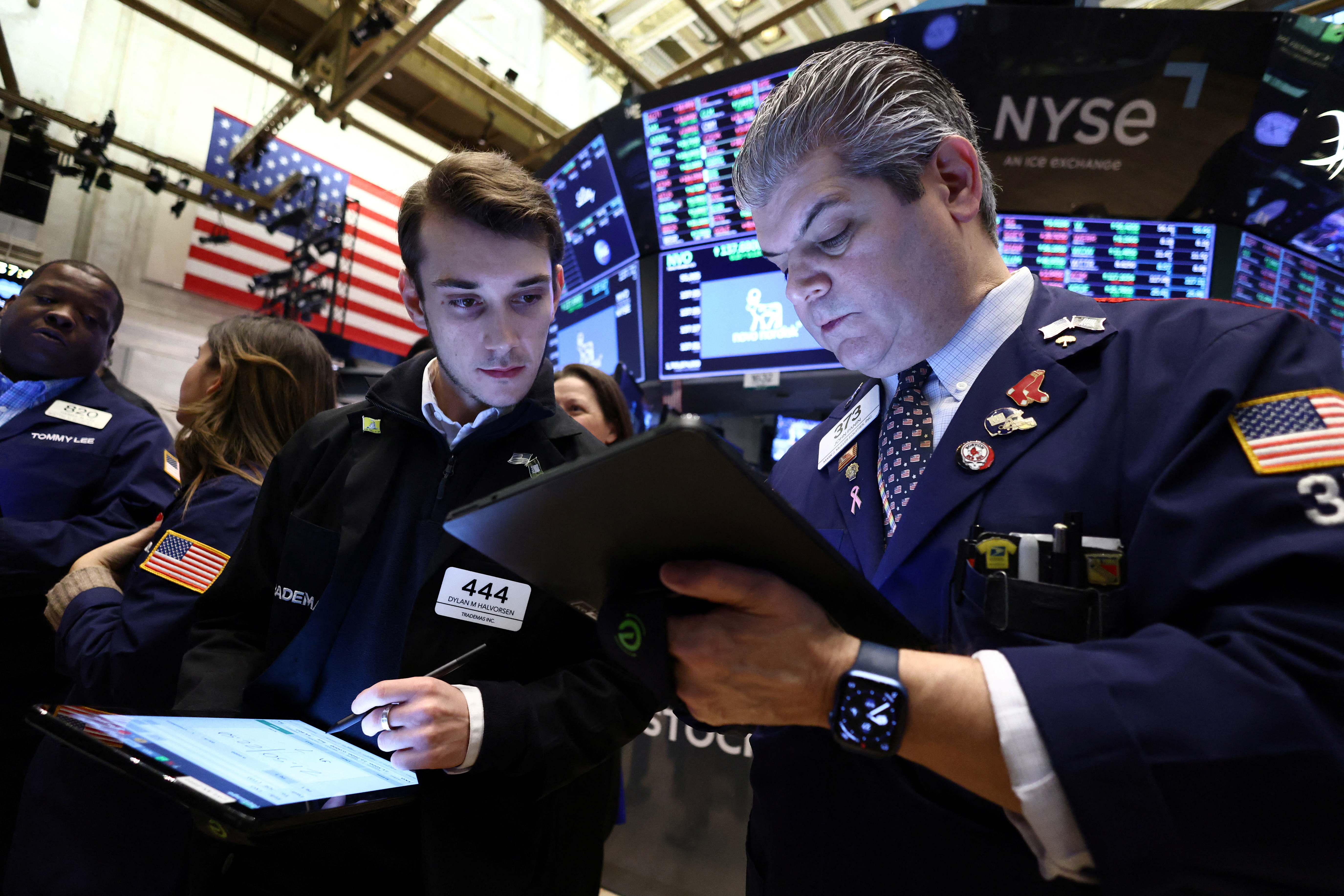
Traders work on the trading floor at the New York Stock Exchange (NYSE) in New York City, U.S., January 27, 2023. REUTERS/Andrew Kelly

Major U.S. stock indexes rose on Tuesday as labor cost data encouraged investors about the Federal Reserve’s aggressive approach to taming inflation a day ahead of the central bank’s critical policy decision.

Investors also digested a full plate of earnings reports, with share declines in Caterpillar (CAT.N) and McDonald’s (MCD.N) following their results capping gains on the Dow.

U.S. labor costs increased at their slowest pace in a year in the fourth quarter as wage growth slowed, Labor Department data showed. The U.S. central bank on Wednesday is expected to hike the Fed funds rate by 25 basis points, following a 2022 in which the Fed aggressively boosted rates to control soaring inflation.

“The fact that we have had goods inflation cooling, we have had housing cool, and the last shoe to drop is probably this labor services inflation – we may be getting early indications of that,” said Mona Mahajan, senior investment strategist at Edward Jones.

The Dow Jones Industrial Average (.DJI) rose 163.23 points, or 0.48%, to 33,880.32, the S&P 500 (.SPX) gained 29.51 points, or 0.73%, to 4,047.28 and the Nasdaq Composite (.IXIC) added 107.90 points, or 0.95%, to 11,501.72.

Gains were widespread, with 10 of the 11 S&P 500 sectors in positive territory, led by materials (.SPLRCM) and consumer discretionary (.SPLRCD). Utilities (.SPLRCU) were the lone sector logging a decline.

The S&P 500 was on track to post its first increase for the month of January since 2019, following a brutal 2022 in which the benchmark index sank 19.4%.

Aside from the Fed’s rate decision on Wednesday, Chair Jerome Powell’s news conference will be scrutinized for whether the rate-hiking cycle may be coming to a close and for signs of how long rates could stay elevated.

“Jerome Powell and team are probably looking at this easing of financial conditions that has happened over the last month, and we will see if they try to push back against it to any extent,” Mahajan said. “I don’t think they would want markets to move up too far, too fast either.”

In earnings news, Exxon Mobil Corp (XOM.N) shares rose 2% after the oil major posted a $56 billion net profit for 2022, setting not only a company record but a historic high for the Western oil industry.

United Parcel Service Inc (UPS.N) shares climbed 4.4% after its quarterly profit topped estimates, while General Motors Co (GM.N) shares jumped 8% after it forecast stronger-than-expected earnings for 2023.

Caterpillar Inc shares slumped over 3% as the machinery maker’s fourth-quarter earnings slid by 29%. McDonald’s shares slumped 1.8% after the burger chain warned inflation will weigh on margins in 2023.

A busy week for markets will also include reports in coming days from Apple Inc (AAPL.O), Amazon.com Inc (AMZN.O) and Alphabet Inc (GOOGL.O), central bank meetings in Europe and the monthly U.S. employment report.

Advancing issues outnumbered declining ones on the NYSE by a 4.28-to-1 ratio; on Nasdaq, a 3.11-to-1 ratio favored advancers.

The S&P 500 posted 6 new 52-week highs and no new lows; the Nasdaq Composite recorded 73 new highs and 19 new lows.

Categories
Audio Sources - Full Text Articles

New York attorney general calls for new sanctions against Donald Trump

2023-01-31T19:15:50Z

New York’s attorney general on Tuesday asked a judge to sanction former U.S. President Donald Trump, his adult children, the Trump Organization and their lawyers over their responses to her $250 million civil fraud lawsuit against them.

The lawsuit by Attorney General Letitia James last September accused the defendants of involvement in a decade-long scheme to manipulate asset values and Trump’s net worth, in order to induce banks and insurers to provide better terms.

On Jan. 26, the defendants filed formal “answers” where, as often occurs in similar lawsuits, they denied or claimed to lack sufficient knowledge about dozens of substantive accusations.

In a letter to the Manhattan judge overseeing the case, Arthur Engoron, James said many responses were “demonstrably false,” frivolous or otherwise improper. She said the Trumps should lose some of their defenses, as well as face sanctions.

“The court has already admonished defendants and their counsel for their continued invocation of meritless legal claims but exercised its discretion in not imposing such sanctions,” the letter said. “It does not appear that this point was taken.”

Lawyers for the Trump defendants did not immediately respond to requests for comment.

James said the improper responses included Trump’s objection to being labeled the “inactive president” of the Trump Organization during his White House term, though he had used that description in an October 2021 sworn deposition.

Trump’s daughter Ivanka was criticized by James for saying she did not know whether she had personally met with bankers, or could confirm the contents of her own emails.

James also rejected arguments by Donald Trump and his sons Donald Jr. and Eric that she lacked standing to sue and “acted contrary to the ancient and customary norms” governing prosecutors, saying Engoron had already rejected their contention that she was pursuing a political “witch hunt.”

Earlier in January, Donald Trump ended two legal challenges to James’ lawsuit, after a Florida judge imposed $937,989 of sanctions against him and his lawyer for filing a “completely frivolous” lawsuit accusing Hillary Clinton of trying to rig the 2016 U.S. presidential election.

Categories
Audio Sources - Full Text Articles

Court blocks New Jersey law that allows state to sue gun industry

2023-01-31T18:59:06Z

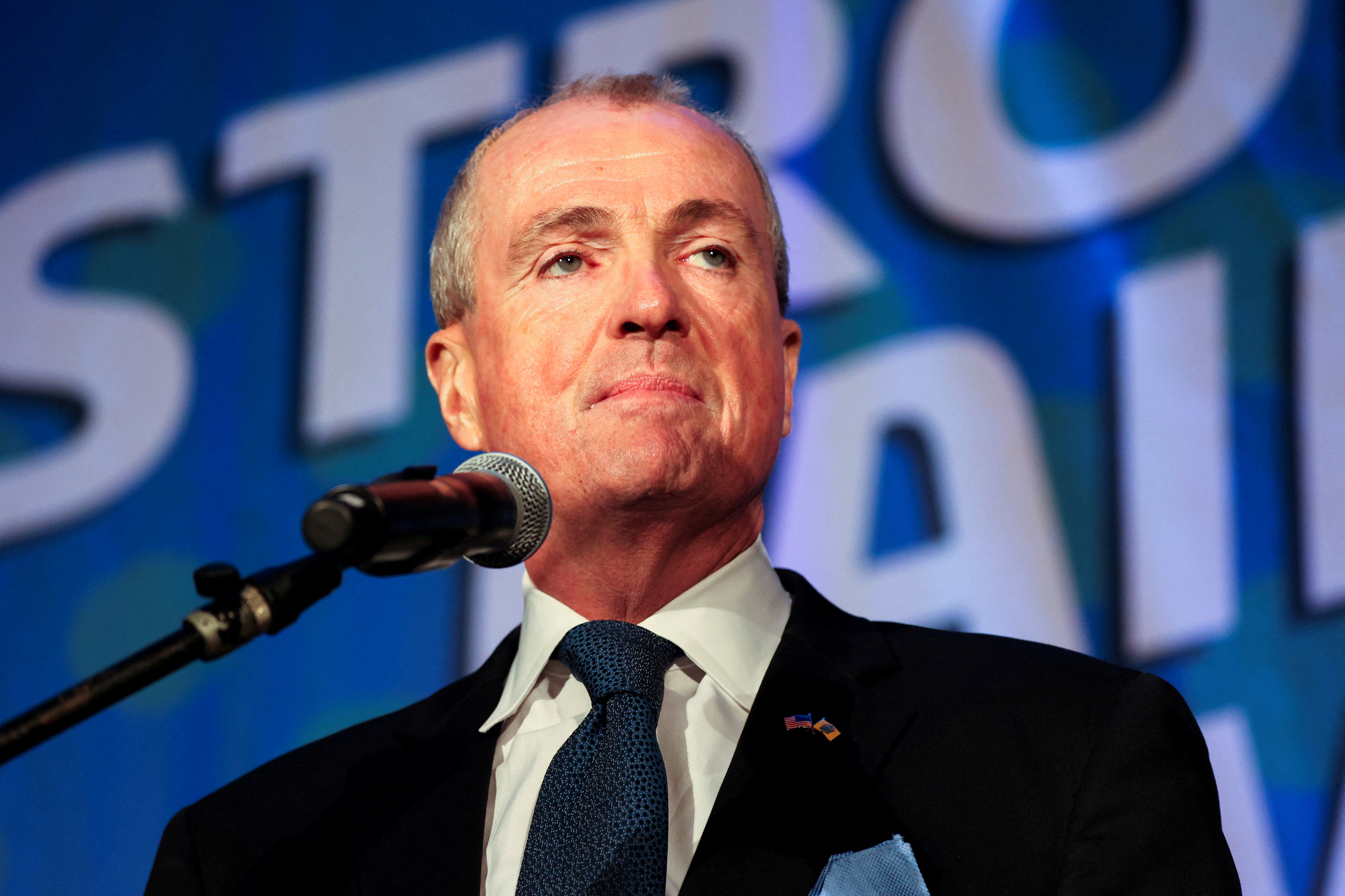
New Jersey Governor Phil Murphy addresses supporters at an election night event in Asbury Park, New Jersey, U.S., Nov. 3, 2021. REUTERS/Rachel Wisniewski

A federal judge on Tuesday blocked a New Jersey law authorizing the state’s attorney general to sue gun manufacturers and sellers for endangering public safety, finding it ran afoul of a federal law protecting the gun industry from such claims.

The preliminary order by U.S. District Judge Zahid Quraishi in Trenton, New Jersey, means the law cannot be enforced while the judge considers a legal challenge by the National Shooting Sports Foundation (NSSF), a gun industry group. It comes a day after a different judge struck down parts of a separate gun control measure in the state.

“NSSF wholeheartedly welcomes this decision,” said Mark Oliva, a spokesperson for the group.

A spokesperson for New Jersey Governor Phil Murphy said the governor was disappointed and confident the order would be reversed on appeal.

The now-blocked law, passed last June in the wake of a U.S. Supreme Court ruling expanding gun rights, allows the state attorney general to bring lawsuits accusing gun manufactures and sellers of creating a “public nuisance” that endangers health and safety – for example, through dangerous marketing or failing to prevent illegal trafficking.

Quraishi found that it was in “direct conflict” with the federal Protection of Lawful Commerce in Arms Act of 2005 (PLCAA), which shields gun makers and sellers from being sued over crimes committed with guns they legally sold.

The PLCAA has largely thwarted efforts to hold the gun industry legally responsible for gun violence, and Monday’s ruling is an early test of some Democratic-led states’ efforts to get around its shield. NSSF is also challenging similar laws in New York, where it lost its initial bid to block enforcement, and in Delaware.

Gun control has long been politically divisive in the United States, championed by Democrats and opposed by Republicans. Democratic President Joe Biden last June signed the first bipartisan national gun safety bill in 30 years, which was spurred by mass shootings in Texas and New York that killed more than 30 people, including 19 children at an elementary school.


Categories
Audio Sources - Full Text Articles

The Supreme Court takes up Section 230

By Tom Wheeler

On February 21 and 22, 2023, the United States Supreme Court is scheduled to hear arguments in cases involving the content moderation practices of social media platforms. The Court has also indicated that it could later address the First Amendment issues involved in conflicting Court of Appeals decisions regarding content moderation laws passed by Texas and Florida. The February oral arguments will, no doubt, be revealing. At this point, however, the fact that the Court has bifurcated the content moderation issue into questions of platform behavior and state authority could be telling as to the intentions of at least some of its justices.

About two percent of appeals to the Supreme Court are granted certiorari and heard by the justices. That the February cases have made it over that hurdle suggests at least some members of the Court might have something to say on an issue that has become a fixture in the culture wars (and the trigger for the Texas and Florida laws).

Although only one of the February cases explicitly mentions it, at the heart of the content moderation issue is Section 230 of the Communications Decency Act. For almost 30 years, Section 230 has been the foundation governing expression on digital platforms. The provision was enacted in 1996 at a time when the online experience was dominated by America Online (AOL), Prodigy, Compuserve, and similar services that ran commentary bulletin boards. The goal of Section 230 was to protect online platforms like these from liability for the third-party content that they distribute. In the intervening decades, technology has changed online experiences dramatically, and the U.S. Congress has failed to re-address existing and emerging policy issues considering those changes. It now falls to the Supreme Court to grapple with the statute based on the practices of 21st century social media.

Famously labeled “The Twenty-Six Words That Created the Internet,” Section 230 did not “create the internet” but rather allowed for the creation of the economic model of social media platforms. What the statute “created” was the protected monetization of users’ personal information through the application of software algorithms to target both advertisements and information and to sell access to those targets. This is a legitimate online activity. The question is whether technology and marketplace changes, since 1996, have also changed what society has a right to expect from the online platforms engaged in that activity.

The Section 230 Life cycle

The societal effects of Section 230 have gone through three stages. The original intent of Section 230, according to its authors, was to clarify the liability of online services for material published by others on their platforms. As online services evolved from bulletin boards to social media, however, the new social media companies took advantage of strict construction judicial interpretations to turn Section 230 from the protection of speech to the protection of a business model that profited from unfettered controversy. In its third phase, Section 230 has become a fixture in the culture wars.

Particularly when it comes to the culture wars incarnation, federal elected officials have used Section 230 as a tool for performance politics, but have done very little substantively. Concurrent with the lack of congressional action, the rigidity of Section 230’s black letter law has been interpreted by courts to short circuit the judicial capability to assess the application of common law principles, such as liability in light of new developments.

The Supreme Court appears primed to go where Congress and lower courts have feared to tread – and to do it in a bifurcated manner.

The February Cases

Scheduled for February arguments are two cases in which private citizens are challenging the behavior of social media companies. Both February cases involve social media’s relationship to terrorist activity.

In Gonzalez v. Google, the family of Nohemi Gonzalez alleges Google was complicit in the November 2015 ISIS attack in Paris that killed 130 people – among them Ms. Gonzalez. The plaintiffs submit the Google-owned service YouTube was used by ISIS to recruit and radicalize combatants in violation of the Anti-Terrorism Act (ATA) and Justice Against Sponsors of Terrorism Act (JASTA). In addition, they allege that, because YouTube sold advertising on the ISIS videos and shared the revenue with ISIS, the platform provided material support to terrorists. The Ninth Circuit Court of Appeals dismissed the suit, finding that Section 230 protected YouTube from liability for videos produced by someone else, and that the sharing of revenue was simply the normal course of business and not in support of a specific group or ideology.

In Twitter v Taamneh, relatives of Nawras Alassaf, who was killed in a 2017 ISIS attack in Istanbul, take a related, but different approach to assigning culpability. They allege that by allowing the distribution of ISIS material without editorial supervision, companies such as Twitter, Google, and Facebook (now Meta Platforms) aided and abetted ISIS’ activity in violation of the ATA and JASTA. Interestingly, the issue of Section 230 is not a part of the Taamneh appeal. Although it was raised by the companies, the lower court never reached a conclusion and thus assessment of Section 230’s applicability was not part of the Ninth Circuit’s decision. The Taamneh plaintiffs did raise the shared revenue issue, however. The appeals court reversed the district court’s dismissal, finding that Twitter (along with Google and Facebook) could face claims that by failing to identify and remove the ISIS video, their actions played an assistive role.

The decision of the Supreme Court to hold the state action cases in abeyance while moving forward with the cases dealing with online behavior perhaps suggests a judicial strategy. Specifically, will the Court seek to deal with the topic of online content in a manner that is orthogonal to the absolutist debate that habitually surrounds Section 230?

Do Algorithms Change the Nature of Liability?

It is asserted by the Gonzalez and Taamneh plaintiffs, and the United States Department of Justice in its brief, that the Section 230 assumption that the “provider or user of an interactive computer service” is simply transporting the work of a third-party does not reflect how the companies have utilized advances in digital technology.

In 1996, at the time of Section 230’s enactment, online platforms such as Prodigy or AOL operated bulletin boards that hosted information posted by third parties. Today, the major online platforms have built their business around algorithms that utilize data collected from each user to select which postings to share with which users. This algorithmic recommendation, it is argued, transforms the platforms from a Section 230-protected “interactive computer service” to an unprotected “information content provider.” The platform companies argue that “recommending” is actually “organizing” and there is no other way to present information to users.

The co-authors of Section 230, Senator (then-Rep.) Ron Wyden (D-OR) and former Rep. Chris Cox (R-CA), filed an amicus curiae brief with the Court in which they, among other things, assert that Section 230 anticipated recommendation algorithms and the ability to “filter, screen, allow, or disallow content” as well as “pick, choose, analyze, or digest content.” The authors explain, “[r]ecommending systems that rely on such algorithms are the direct descendants of the early content curation efforts that Congress had in mind when enacting Section 230.”[1]

The brief of the United States Department of Justice argued that the recommendation constitutes the site’s own conduct and is thus outside the protections developed for third-party content. “If YouTube had placed a selected ISIS video on a user’s homepage alongside a message stating, ‘You should watch this,’ that message would fall outside Section 230 (c)(1),” the brief argues. “Encouraging a user to watch a selected video [e.g., by placing it on the “Up Next” sidebar] is conduct distinct from the video’s publication (i.e., hosting).”

“In contrast, social media, although constructed on an open platform, is a closed business in which algorithms are programmed to maximize revenue by selecting points of view and targeting their audience.”

Whether or not algorithmic promotion changes the nature of an online platform, and thus its liability protection, will no doubt be one of the major issues addressed by the Court in the Gonzalez case. While there are credible arguments on all sides, one thing is certain, that such recommendation within a closed and controlled platform moves today’s online activities away from the metaphorical open public square.

Such algorithmic promotion also differs from the idealized public square in that it is a compensated service. The internet per se is a public square in which anyone can set up their soapbox and in which all the world’s information and opinions are readily available. In contrast, social media, although constructed on an open platform, is a closed business in which algorithms are programmed to maximize revenue by selecting points of view and targeting their audience. How such construction affects the liability protections of Section 230 will, no doubt, be a major question before the Court.

Tea Leaves

Choosing to hear the two terrorist-related appeals before jumping into the state authority issue perhaps provides the Court with the opportunity to redefine the debate on its own terms with its own solutions prior to dealing with the state legislation.

It is not as if some members of the Court have been shy about expressing their thoughts on the topic, including proposing their own ideas. Justice Clarence Thomas has been the most vocal in sharing his opinions. “We will soon have no choice but to address how our legal doctrines apply to highly concentrated, privately owned information infrastructure such as digital platforms,” he wrote in 2021.

But no one really knows how the Court might act. There are multiple directions in which the Court could go on the content moderation issue. Among the multiple possibilities are two that have been put forward by Justice Thomas; the other is going into practice in the European Union.

Paring Back Immunity

In a 2020 case in which the Court refused to hear an appeal whether Section 230 protected a software company against claims of anticompetitive conduct, Justice Thomas observed, “many courts have construed the law broadly to confer sweeping immunity on some of the largest companies in the world… Paring back the sweeping immunity courts have read into §230 would not necessarily render defendants liable for online misconduct. It would simply give plaintiffs a chance to raise claims in the first place.”

Should the Court adopt this approach, it would allow the business model of advertising-supported online platforms to continue. At the same time, however, it could necessitate pre-clearance activities that, while technology such as artificial intelligence might help achieve, would nonetheless add to costs, delay time to display, and impose other constraints that could change the user experience and corporate returns.

Common Carrier Status

Justice Thomas has also championed another approach. “There is a fair argument,” he concluded, “that some digital platforms are sufficiently akin to common carriers or places of accommodation as to be regulated in this [mandatory non-discrimination] manner.” How, and whether, the Court could “legislate” platforms to be common carriers is problematic. The fact that in both the Gonzalez and Taamneh cases the plaintiffs assert the platforms are a part of the communications infrastructure could, however, provide an opening to argue for this communications concept traditionally applied to telephone companies.

A challenge to this approach, however, might come from Justice Kavanaugh who, as a member of the Court of Appeals for the DC Circuit, dissented from the decision affirming the 2015 Obama FCC’s net neutrality order declaring internet service providers such as Verizon or Comcast to be common carriers, in part because “the net neutrality rule violates the First Amendment to the U.S. Constitution.” The judge who argued, “The rule transforms the Internet by imposing common-carrier obligations on Internet service providers and thereby prohibiting Internet service providers from exercising editorial control over the content they transmit to consumers,” could possibly have a difficult time prohibiting those that use the internet pathways from exercising editorial control.

European Union

In 2000, the European Union adopted the Electronic Commerce Directive. Like Section 230, the eDirective protected online platforms from liability for the passive retransmission of third-party content. In 2022, the EU’s Digital Services Act (DSA), while leaving the eDirective undisturbed, established a “duty of care” for online platforms, with the most expansive duties reserved for the largest platforms.

At the heart of the DSA are disclosure and transparency requirements, including disclosure of both algorithmic and human content moderation. In the case of recommendation algorithms, all platforms must describe how they work, and the largest platforms must provide a recommendation system that does not use individual profiling as its basis.

The DSA also establishes an ex-post “notice-and-action” requirement that upon receiving notice asserting illegal content, the platform must rapidly assess the claim and take appropriate action. For large platforms, the DSA also requires an ex-ante effort to assess the risks “stemming from the design, functioning and use of their services” and “deploy the necessary means to diligently mitigate the systemic risks identified.” Under the DSA, this could include content that may not be illegal but is deemed harmful (which could be problematic under the First Amendment).

The Game is Afoot

Regardless of what the Court decides, it can be counted on to ignite a firestorm of public debate and a call for congressional, rather than judicial decision-making. The Court’s decision(s), therefore, could end up as a challenge to Congress to overcome its fragmentation to deal with the matter.

Google, Verizon, Comcast, and Meta (formerly Facebook) are general unrestricted donors to the Brookings Institution. The findings, interpretations, and conclusions posted in this piece are solely those of the author and are not influenced by any donation.


[1] Interestingly, and somewhat quizzically, the authors’ brief contains a footnote that seems to suggest there could be “good” and “bad” algorithms that could affect the application of Section 230: “The discussion in this brief pertains only to the algorithmic recommendation systems at issue in this case. Some algorithmic recommendations are alleged to be designed and trained to use information that is different in kind than the information at issue in this case…to cause harms not at issue in this case.” (Back to top)


scotus_close_002.jpg?w=270
fblike20.png pinterest20.png twitter20.png email20.png rss20.png  
Categories
Audio Sources - Full Text Articles

Selected Articles Review at 11 a.m. – Former top FBI official charged with violating Russia sanctions | FBI agent arrested: ‘took Russian money, turned in by ex-girlfriend’ thenewsandtimes.blogspot.com/2023/01/select…

Selected Articles Review at 11 a.m. – Former top FBI official charged with violating Russia sanctions | FBI agent arrested: ‘took Russian money, turned in by ex-girlfriend’ thenewsandtimes.blogspot.com/2023/01/select…

Fn0rDW_aYAApjZf.png:large

Categories
Audio Sources - Full Text Articles

Tyre Nichols’ Killing Is The Result of a Diseased Culture

I did not want to watch.

As a people, we have witnessed the horrors of police violence again and again—so much so, that some of us are now immune, desensitized against the trauma. Others of us look away because, frankly, we are not. In the end, I could not turn away.

My own son, Joshua, is but a couple of years older and—but for time and a slight crossing of the stars—it could have been him on that pavement. Several years ago, my middle child was handcuffed in Atlanta with a weapon pressed against his back, after officers falsely accused him of stealing his own MacBook. He is alive today. But, I know things could’ve turned out much differently.

[time-brightcove not-tgx=”true”]

There can be no debate about the brutality that led to 29-year-old Tyre Nichols’ death. The video footage proves it: He was dragged from his car, assaulted, chased down, and brutally beaten by a gang of Memphis police officers. Like Josh, Nichols was a few blocks from home. In the aftermath, as Nichols lay incoherent, bleeding, and slumped against a police cruiser, the officers—now facing a slew of charges including second-degree murder, aggravated assault, and aggravated kidnapping—compared notes, got their stories straight, and complained about their shoes. None of them stopped to help him. No one rendered aid. They were thinking about themselves—their families, their careers, their tomorrows.

Read More: The Remarkable Response of RowVaughn Wells After Her Son Tyre Nichols’ Death

Ironically, just a short drive away, a man was shot dead on a motel balcony nearly 55 years ago. None of the officers involved in Nichols’ murder are old enough to know him, but, in so many ways, he knew them. Dr. Martin Luther King Jr., joined by Jesse Jackson, Andrew Young, Ralph David Abernathy, and others, was in Memphis on April 4, 1968, to support a sanitation strike. But, more than that, Dr. King was there because he was thinking about Nichols—and the five police officers who killed him.

It is a history, a context well worth knowing.

What happened before that day, what unfolded in this country in the centuries before he stepped foot onto that second-floor walkway, outside of room 306, is as important as the collection of every hour since. That is not only Black history; it is our nation’s history. The evolution of civil and human rights in this country—and the plight of marginalized communities—is central to who we are. But, who we are to become is inextricably tied to who we have been, and, as evidenced by the heinous beating death of Nichols, who we persist to be. To understand why five Black police officers would bludgeon and stomp an unarmed man, whose alleged traffic infraction couldn’t even be substantiated, until he was clinging to threads of life, one must first understand what brought them to that corner.

No matter how desensitized we become to its horrors, no matter how hard we struggle to look away, it is a history that defines and still confines us today. But some people, too many people, don’t believe that.

Conservatives like Florida Governor Ron DeSantis believe diverse perspectives, specifically those that offer experiences that run counter to the America he envisions, have no place in the classroom. To hear DeSantis, a likely 2024 GOP candidate for president, tell it, course work that acknowledges our nation’s troubled civil and human rights history should be criminalized—and he’s starting with teachers. Failure to appropriately police classroom libraries could result in a felony charge.

According to right-wing advocacy groups, teachers and librarians are using books to “groom” students. They fear that America’s schoolchildren are being indoctrinated with so-called leftist ideologies. For them, that means losing a centuries-long strangle-hold on what generations of children are taught to believe about our nation’s birth and what truly makes us exceptional. Conveniently, they’d rather us write off Nichols’s murder as an aberration perpetrated by a few bad apples, rather than examine the full of the barrel, the race-based policing policies that fueled that night. They rather cherry pick passages from some of Dr. King’s most famous speeches, fitting a narrative that conveniently shaves off the ugliness of our past, than to allow works by James Baldwin, Ta-Nehisi Coates, Toni Morrison, or Michelle Alexander anywhere near an American classroom.

I am reminded now of my own time in the classroom, and how teachers helped us put the world in context with diverse perspectives. Thanks, in part, to an 8th grade English teacher, Peggy Lewis-LeCompte, I had an expansive early education that included Twain, Homer, Whitman, Baldwin, and Giovanni. Looking back now, it is clear that she and other teachers of mine were trying to give me a fuller look at history and, in doing so, a closer look at myself. There were moments when she was the only thing standing between me and the streets. Today, someone like Mrs. LeCompte would be running the risk of handcuffs and a holding cell for handing me the “wrong” book. It would’ve ended her career.

This is a problem that extends past Florida. Notably, in March, Tennessee Governor Bill Lee passed his own book ban in the Tennessee State Legislature. Targeted books include those about the Holocaust, or that contain LGBTQ+ characters or themes. In Florida, DeSantis’ administration specifically struck down funding for AP African American history, saying such a class had no educational value.

DeSantis and Lee would be among the first to tell you that government overreach is something to be abhorred. That is, unless it’s a band of right-wing extremists doing the reaching. Across the country, their acolytes are winning school board seats, declaring a war on “woke,” then promptly firing superintendents and anyone else standing in the way of their march to re-colonize America’s school rooms. As prosecutions from the Jan. 6 insurrection shows, they are in the ranks of our nation’s law enforcement officers. And, yes, some of the people supporting those ideologies are Black.

I am under no delusion that a book would have stopped those officers from killing Nichols. Knowing one’s history did not stop a gang of undercover cops—some Black, some white—from accosting my son. What I do know is this: We can either choose to educate a new generation of children who will perpetuate the systems and beliefs that increase the likelihood of another Black man dying as he cries out for his mother. Or, we can choose to continue working to perfect this nation and preserve this republic by honoring the diverse perspectives that built it.

What happened to Nichols is the result of a diseased culture. Hiding from our past, whitewashing the roads that brought us here, won’t change that.

Categories
Audio Sources - Full Text Articles

First US-Mexico border hearing to focus on fentanyl, national security

WASHINGTON (NewsNation) — Rep. Jim Jordan (R-Ohio), chair of the House Judiciary Committee, plans to hold the panel’s first hearing Wednesday on security at the U.S.-Mexico border.

The committee’s hearing is expected to include at least three witnesses and, according to the panel, will cover “border security, national security, and how fentanyl has impacted American lives.”

The witnesses include:

  • Brandon Dunn, co-founder of the Forever 15 Project
  • County Judge Dale Lynn Carruthers of Terrell County, Texas
  • Sheriff Mark Dannels of Cochise County, Arizona

It’s one of the first hearings House Republicans have in the works after capturing a slim majority in the chamber and electing Rep. Kevin McCarthy (R-Calif.) House speaker.

Republicans have attacked President Joe Biden’s administration, and Secretary of Homeland Security Alejandro Mayorkas in particular, for border policies they say have led to a crisis.

Biden toured a stretch of the southern border on Jan. 9 and inspected a busy port of entry during his first trip to the region after two years in office. But it did little to satisfy critics from both sides, including immigrant advocates who accuse him of establishing cruel policies, not unlike those of his predecessor, Donald Trump.

McCarthy dismissed Biden’s visit as a “photo op,” saying on Twitter that the Republican majority would hold the administration “accountable for creating the most dangerous border crisis in American history.”

The number of migrants crossing the U.S.-Mexico border has risen dramatically during Biden’s first two years in office. There were more than 2.38 million stops during the year that ended Sept. 30, the first time the number topped 2 million, according to The Associated Press.

The Biden administration has pushed back on criticisms of immigration policy changes by urging Congress to pass a comprehensive reform package that would address longstanding issues.

The White House has accused the GOP of “playing political games and obstructing a real solution,” and called on Congress to “quit blocking the comprehensive immigration reform and border security measures President Biden proposed on his first day in office.”

The Associated Press contributed to this report.

WP Radio
WP Radio
OFFLINE LIVE