Categories
Audio Sources - Full Text Articles

American Library Association honors children’s book about shtetl life before the Holocaust

(JTA) — An illustrated book about an inspiring Holocaust survivor and two works of fantasy featuring dybbuks and Jewish demons have won this year’s top prizes in Jewish children’s literature.

The Sydney Taylor Book Awards are awarded annually to outstanding works of Jewish literature for children, as part of the American Library Association’s youth media awards and in conjunction with the Association of Jewish Libraries.

This year, the top winner in the picture book category was ““The Tower of Life: How Yaffa Eliach Rebuilt Her Town in Stories and Photographs” by Chana Stiefel, illustrated by Susan Gal. “Aviva vs. the Dybbuk” by Mari Lowe won in the middle-grade level. And “When the Angels Left the Old Country,” the debut novel by Sacha Lamb, garnered the young adult award.

Named in memory of Sydney Taylor, the author of the “All-of-a-Kind-Family” series that is being made into a TV show, the prestigious award “recognizes books that exemplify high literary standards while authentically portraying the Jewish experience,” according to the award committee announcement. 

As chair of the Sydney Taylor award committee for the past three years, Martha Simpson sees a growing diversity in Jewish children’s books. This year, they considered an array of new titles that portray global Jewish life, others that feature neurodiverse characters and LGBTQ kids and more set in Orthodox communities, she wrote in an email.

“There are many different ways to live a Jewish life,” Simpson said. “It’s wonderful that these stories are finally being written and published so that readers can see themselves and also learn about other experiences.”

The top picture book tells the story of Yaffa Eliach, who survived the Holocaust in hiding with her family after being expelled from their hometown of Eishyshok, a Polish shtetl (now in Lithuania) where she had helped in her grandmother’s bustling photography studio taking portraits of the Jewish villagers.

After immigrating to the U.S. and becoming a historian, Eliach set about a globetrotting journey to thousands of photographs and remembrances from Eishyshok’s Jewish families. Her ambitious project is now a centerpiece of the core exhibit at the U.S. Holocaust Memorial Museum in Washington, D.C. She died in 2016.
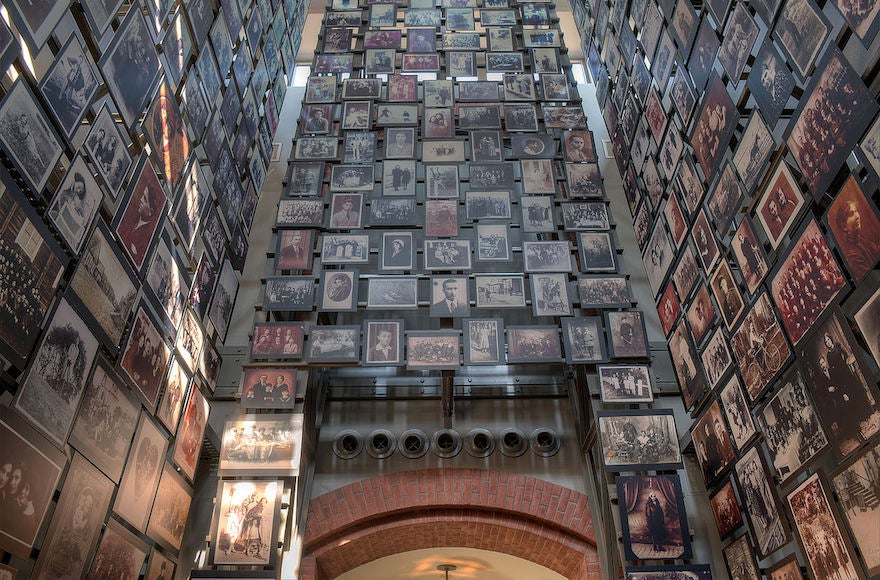
The Tower of Faces at the United States Holocaust Museum in Washington, D.C. (Wikimedia Commons)The Tower of Faces at the United States Holocaust Museum in Washington, D.C. (Wikimedia Commons) Image by

Gal, a previous Sydney Taylor winner and past recipient of the National Jewish book award, brings Eliach’s story to life through her richly colored illustrations interspersed with photographs of Eliach.

Lowe’s “Aviva vs. the Dybbuk” is a suspenseful coming-of-age novel about an introspective 11-year-old girl that opens a window into daily life in a tight-knit Orthodox Jewish community in New York. After the traumatic accidental death of her father, Aviva and her increasingly reclusive mother move into a small apartment above the old mikveh, the ritual bathing house where Aviva’s mother becomes the caretaker. A supernatural, troublemaking dyybuk, whom only Aviva can see, becomes Aviva’s confidant. The tale of resilience deals with grief, memory, the ups and downs of teen friendship, acts of antisemitic violence and the healing power of love and community. 

A demon named Little Ash and an angel named Uriel are the compelling otherworldly characters at center stage of “When the Angels Left the Old Country,” Lamb’s lyrically penned historical fantasy. As the page-turning drama unfolds, the pair of unlikely, centuries-old Talmud study partners, who take on human-like form, set out from their small Pale of Settlement shtetl and head to New York City on a quest to find the village baker’s missing daughter.

In their journey, they confront the perils faced by Jewish immigrants — a deceitful rabbi, probing Ellis Island officials, exploitative sweatshop bosses and the pushes and pulls of Jewish assimilation. Lamb, a 2018 Lambda Literary Fellow in young adult fiction, paints a richly textured tale of pathos and wit, filled with Jewish culture that explores gender identity and the bonds of friendship.

“Angels” took home two other ALA prizes, including the Stonewall book award for LGBTQ works for young readers.

In addition to the top winners, the Sydney Taylor committee named nine books as silver medalists and nine notable titles of Jewish content. Winners will be honored in June at the AJL’s digital conference. https://jewishlibraries.org/2023-digital-conference.

Other books with Jewish characters and themes also garnered several ALA awards including, “The Life and Crimes of Hoodie Rosen,” by Isaac Blum, which won the William C. Morris young adult debut award; and “Just a Girl: A True Story of World War II” by Lia Levi, illustrated by Jeff Mason, which won the Batchelder prize, adapted for young readers, and translated from its original in Italian.

Jewish children’s books recently recognized by the Jewish Book Council’s National Jewish book awards were “The Very Best Sukkah: A Story from Uganda” by Shoshana Nambi, illustrated by Moran Yogev, and the middle-grade novel “The Prince of Steel Pier” by Stacy Nockowitz.

Last week, the Association of Jewish Libraries announced separately that Omer Friedlander won the organization’s fiction prize for “The Man Who Sold Air in the Holy Land,” a collection of short stories set in Israel.

This article originally appeared on JTA.org.

The post American Library Association honors children’s book about shtetl life before the Holocaust appeared first on The Forward.

Categories
Audio Sources - Full Text Articles

Myanmar invited to regional military meeting co-chaired by United States

2023-01-30T20:43:36Z

The Myanmar military, which has been accused of ethnic cleansing against the country’s Muslim Rohingya minority, has been invited to take part in a regional military meeting co-chaired by the United States and Thailand, the U.S. military said on Monday.

Myanmar’s armed forces launched a military operation in 2017 that forced at least 730,000 of the mainly Muslim Rohingya from their homes and into neighboring Bangladesh, where they recounted killings, mass rape and arson. In 2021, Myanmar’s military seized power in a coup.

Last year President Joe Biden’s administration formally determined that violence committed against the Rohingya minority by Myanmar’s military amounted to genocide and crimes against humanity. The military has denied genocide, saying its crackdown was aimed at Rohingya rebels who had carried out attacks.

More than a million Rohingya are living in squalid camps in southern Bangladesh comprising the world’s largest refugee settlement, with little prospect of returning to Myanmar, where they are mostly denied citizenship and other rights.

The United States and Thailand are co-chairing the ASEAN Defense Ministers’ Meeting (ADMM)-Plus experts’ working group on maritime security and its associated activities.

A Pentagon spokesman said that the attendance is determined by Association of Southeast Asian Nations (ASEAN) member states.

“The United States continues to join the international community in responding forcefully to the military coup in Myanmar to urge the regime to end violence, release all those unjustly detained, and restore its path to democracy, to include through ADMM-Plus forums,” Lieutenant Colonel Marty Meiners, a Pentagon spokesman, said.

The news was first reported by Myanmar Now.

This is not the first time the United States has invited Myanmar to a military exercise. Myanmar attended the same forum virtually last year.

In 2017, the Pentagon invited Myanmar as an observer in a major multinational military exercise led by the United States and Thailand.

Categories
Audio Sources - Full Text Articles

Russian businessman goes on trial on U.S. hack-and-trade charges

2023-01-30T20:45:04Z

A Russian businessman with ties to the Kremlin made tens of millions of dollars trading on secret financial information obtained by hackers about multiple companies before it was public, a U.S. prosecutor said Monday at the start of his trial.

Vladislav Klyushin, 42, and his associates made nearly $90 million trading stocks based on yet-to-be-announced information about hundreds of companies stolen by hackers, Assistant U.S. Attorney Stephen Frank told a federal jury in Boston.

Klyushin, whose Moscow-based technology company M-13 did work for Russian President Vladimir Putin’s government, personally turned a $2 million investment into $21 million and brought other investors into the scheme, Frank said.

“The defendant had tomorrow’s news – tomorrow’s headlines -today,” Frank said in his opening statement. “And he exploited it for tens of millions of dollars in profit.”

But defense lawyer Maksim Nemtsev countered that Klyushin was already had no reason to cheat, after already gaining financial success through his business, and that the prosecution’s case was built on “gaping holes and inferences.”

“There’s nothing illegal about being Russian, about having wealth, about having an IT technology company that contracts with the government,” Nemtsev told the jury.

The three-week trial coincides with a low point in U.S.-Russia relations following Moscow’s invasion of Ukraine in February last year. And while the case against Klyushin predates the war, his connections to the Kremlin have long intrigued U.S. authorities.

Klyushin was arrested in Switzerland while on a ski trip in March 2021 and was later extradited. He has pleaded not guilty to charges of conspiracy, wire fraud, unauthorized access to computers, and securities fraud.

Prosecutors say Klyushin’s company, M-13, employed a former Russian military intelligence officer wanted by the U.S. government over allegations of involvement in hacking schemes aimed at interfering in the 2016 U.S. presidential election.

During Monday’s trial, Frank said that hacker, Ivan Ermakov, and others broke into the networks of two firms that help publicly traded companies file reports with securities regulators, Donnelley Financial Solutions (DFIN.N) and Toppan Merrill.

Hackers from 2018 to 2020 viewed and download yet-to-be-announced earnings reports for hundreds of companies including Tesla Inc (TSLA.O), Microsoft Corp and Kohl’s, which Klyushin and others used to trade before the news was public, Frank said.

“It wasn’t luck, and it wasn’t because of carefully financial research either,” Frank said. “The defendant cheated.”

Related Galleries:

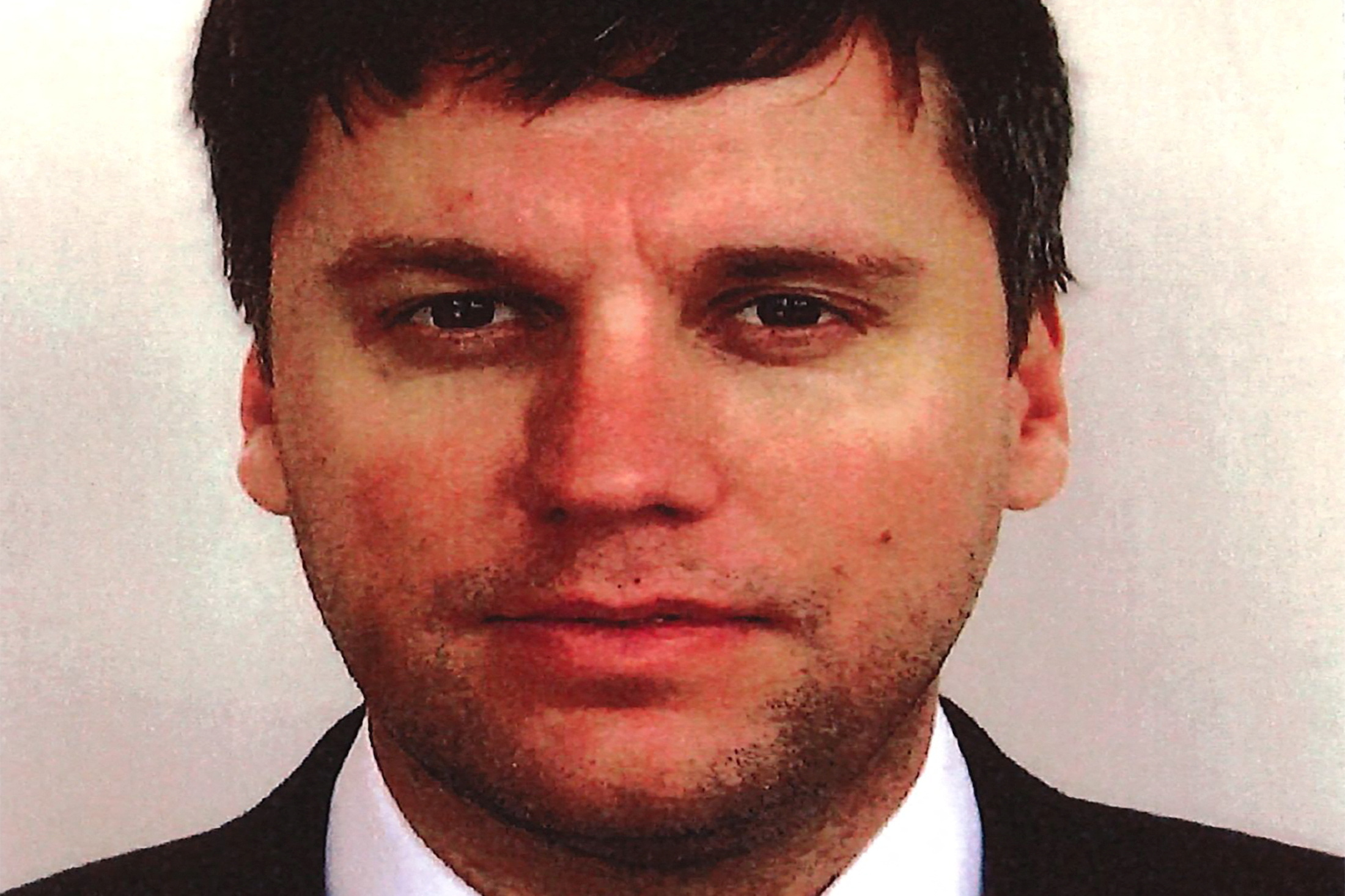
Vladislav Klyushin, an owner of an information technology company with ties to the Russian government, is seen in an undated photograph attached to a U.S. Department of Justice filing. U.S. Dept. of Justice/Handout via REUTERS

A general view of the Kremlin, St. Basil’s Cathedral and Zaryadye Park in Moscow, Russia December 5, 2022. REUTERS/Evgenia Novozhenina/File Photo

Vladislav Klyushin, an owner of an information technology company with ties to the Russian government, is seen in an undated photograph attached to a U.S. Department of Justice filing. U.S. Dept. of Justice/Handout via REUTERS
Categories
Audio Sources - Full Text Articles

Biden promotes Baltimore spending as Republicans try to force cuts

2023-01-30T20:47:22Z

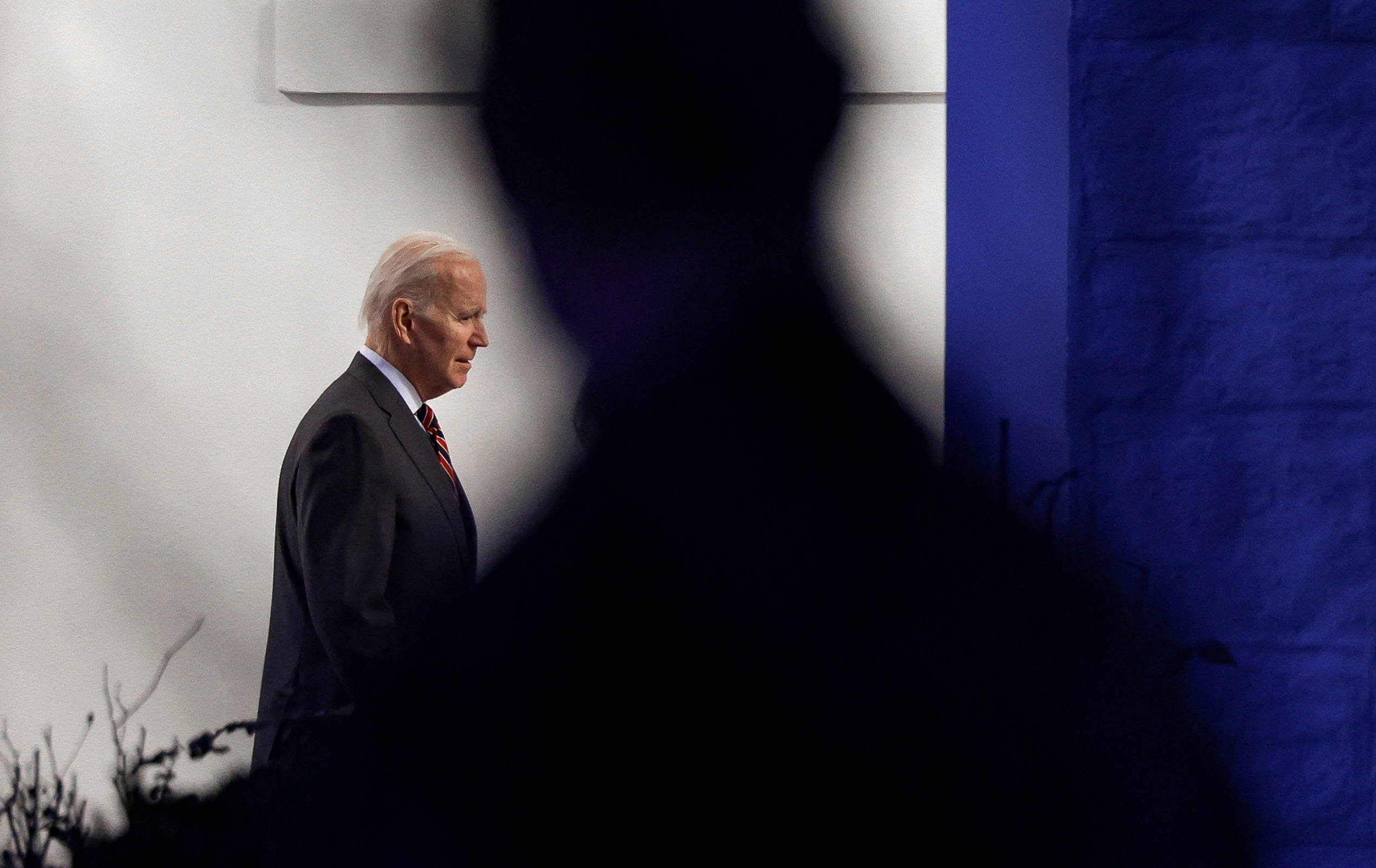
U.S. President Joe Biden walks along the colonnade at the White House before departing for Camp David in Washington, U.S., January 27, 2023. REUTERS/Evelyn Hockstein

U.S. President Joe Biden on Monday celebrated the planned replacement of a 150-year-old tunnel in Baltimore, burnishing his “builder-in-chief” credentials on friendly political territory, a sharp contrast to Washington’s partisan debt battle.

Biden’s administration will invest $4 billion to replace the Baltimore and Potomac Tunnel, part of the $1 trillion infrastructure law that passed Congress with bipartisan support and stands as one of the president’s biggest legislative victories.

“Having a 21st century rail system, that’s been long overdue in this country,” Biden said.

The U.S. Civil War-era tunnel is a major chokepoint for commuter and long-distance rail traffic on Amtrak’s Northeast Corridor, which connects Washington, New York and Boston. Biden noted that 2,200 trains ride through it daily, making it the busiest tunnel in the United States.

“Folks talk about how badly the Baltimore tunnel needs an upgrade. You don’t need me to tell you, I have been there and you have been there too,” Biden said, citing his years of riding Amtrak as a senator.

Trains that travel through the tunnel now at 30 miles per hour will travel at 110 mph when renovations are through, Biden said.

The new tunnel, named for Black abolitionist Frederick Douglass, is expected to cost $5 billion and be completed by 2032. Amtrak will rely on union labor, Biden noted.

“I know we can forge a path of building an economy where no one’s left behind,” Biden said. “That’s what this project is all about … it is about making things here in America again. It’s about good jobs.”

Biden, who is contemplating a 2024 re-election campaign, is eager to tout his bona fides as a bipartisan dealmaker who can ramp up infrastructure projects to reduce traffic congestion, improve safety, ease climate change, boost economic growth, halt inflation and create high-paying union jobs for people without college degrees.

In Washington, Biden faces a colder reality as Republicans, now in control of the House of Representatives, threaten to block his economic agenda, bog down his programs in investigations and prevent the raising of the debt ceiling to force spending cuts.

Biden is set for a face-to-face meeting on Wednesday with House Speaker Kevin McCarthy for talks in the debt standoff, which threatens to hurtle the United States into an unprecedented default.

Biden plans a similar event on Tuesday in New York related to that city’s Hudson Tunnel project. On Friday, he will highlight the infrastructure bill’s provisions replacing toxic lead pipes at an event in Philadelphia.

Categories
Audio Sources - Full Text Articles

Florida GOP leaders want to get rid of gun permits

TALLAHASSEE, Fla. (AP) — Saying gun owners don’t need a government permission slip to protect their God-given rights, Florida’s House speaker proposed legislation Monday to eliminate concealed weapons permits, a move Democrats argue would make a state with a history of horrific mass shootings less safe.

Republican leaders, including Gov. Ron DeSantis, have expressed support for the idea, so the bill should not have a problem passing in a legislature with a GOP a super-majority.

“What we’re about here today is a universal right that applies to each and every man or woman regardless of race, gender, creed or background,” Speaker Paul Renner said at a news conference.

Democrats immediately responded that the proposal could lead to more gun violence and accidents. They said that the bill supporters call constitutional carry will allow people to buy guns with no training or background checks.

“Untrained carry is what it is,” said Democratic Rep. Christine Hunschofsky, who was mayor of Parkland when a former Marjory Stoneman Douglas High School student fatally shot 17 students and faculty. “You are not making our communities, our schools or any places safer with this.”

Renner said law-abiding gun owners will take safety seriously.

“Anybody that is a gun owner and uses guns knows that safety comes first,” Renner said. “That’s important, but it’s not required. So the permit and all aspects of that permit will go away.”

Manuel and Patricia Oliver became advocates for tighter gun regulations after losing their 17-year-old son Joaquin in the 2018 massacre at the Parkland high school. They said with more people carrying guns without restrictions, Florida will become a more dangerous state.

“How about a little paperwork, some norms, before we take that step. It’s not right and it’s not protecting (the carrier) from anything. It is actually putting in danger a lot of people,” Manuel Oliver said.

Brevard County Sheriff Wayne Ivey said people who want to do harm to others won’t be stopped by the permit requirement.

“Criminals don’t get a permit. Not one of them. They don’t care about obeying the law. Our law-abiding citizens have that immediate right, guarantee and freedom to protect themselves,” Ivey said.

About half the states allow people to carry a gun without a permit, a movement that has been growing particularly among conservative states.

Florida handgun owners would still have to conceal their weapons in public, though there has been discussion to allow gun owners to openly carry weapons.

___

Associated Press writer Terry Spencer in Fort Lauderdale, Florida, contributed to this report.

Categories
Audio Sources - Full Text Articles

AI: World likely to hit key warming threshold in 10-12 years

The world will likely breach the internationally agreed-upon climate change threshold in about a decade, and keep heating to break through a next warming limit around mid-century even with big pollution cuts, artificial intelligence predicts in a new study that’s more pessimistic than previous modeling.

The study in Monday’s journal PNAS reignites a debate on whether it’s still possible to limit global warming to 1.5 degrees Celsius, as called for in the 2015 Paris climate agreement, to minimize the most damaging effects of climate change. The world has already warmed 1.1 or 1.2 degrees since pre-industrial times, or the mid-19th century, scientists say.

Two climate scientists using machine learning calculated that Earth will surpass the 1.5 degree (2.7 degrees Fahrenheit) mark between 2033 and 2035. Their results fit with other, more conventional methods of predicting when Earth will break the mark, though with a bit more precision.

“There will come a time when we call the 1.5C target for maximum warming dead, beyond the shadow of a doubt,” Brown University environment institute director Kim Cobb, who wasn’t part of the study, said in an email interview. “And this paper may be the beginning of the end of the 1.5C target.”

Stanford University’s Noah Diffenbaugh, a study co-author, said the world is on the brink of the 1.5-degree mark in “any realistic emissions reduction scenario.” Avoiding a 2-degree rise, he said, may depend on nations meeting zero-emissions goals by the middle of this century.

The artificial intelligence-based study found it unlikely that temperature increase could be held below 2 degrees Celsius, even with tough emissions cuts. And that’s where the AI really differs with scientists who had been forecasting using computer models that are based on past observations, Diffenbaugh said.

In a high-pollution scenario, the AI calculated, the world would hit the 2-degree mark around 2050. Lower pollution could stave that off until 2054, the machine learning calculated.

In contrast, the United Nations’ Intergovernmental Panel on Climate Change figured in its 2021 report that the same lower-pollution scenario would see the world pushing past 2 degrees sometime in the 2090s.

Cornell University climate scientist Natalie Mahowald, who wasn’t part of the Diffenbaugh study but was part of the IPCC, said the study makes sense, fits with what scientists know, but seems a bit more pessimistic.

There’s a lot of power in using AI and in the future that may be shown to produce better projections, but more evidence is needed before concluding that, Mahowald said.

Normally, climate scientists use a bunch of computer model simulations, some running hot and some cold, and then try to figure out which ones are doing the best job. That’s often based on how they performed in the past or in simulations of the past, Diffenbaugh said. What the AI does is more keyed to the climate system now, he said.

“We’re using this very powerful tool that is able to take information and integrate it in a way that no human mind is able to do, for better or for worse,” Diffenbaugh said.

Each year, government climate negotiators at a United Nations summit proclaim that they have managed to “keep 1.5 alive.” But with the latest study there’s a divide among scientists on how true that really is. Diffenbaugh said there’s been so much warming already that it really doesn’t matter how pollution is cut in the next several years, the world will hit 1.5, the AI figures.

Zeke Hausfather of the tech company Stripe and Berkeley Earth, who was not part of the study, agreed, saying it’s time to “stop pretending” that limiting warming to 1.5 degrees is possible. Some scenarios do see temperatures warming past the mark but then coming back down, something called “overshoot.”

Other scientists not involved with the study, such as University of Pennsylvania’s Michael Mann and Climate Analytics’ Bill Hare and Carl-Friedrich Schleussner maintain 1.5 is still alive. They say one rapid decarbonization scenario that Diffenbaugh didn’t examine shows the world can mostly keep under the threshold.

If the world can cut its carbon emissions in half by 2030 “then warming can be limited to 1.5 degrees” with a tiny overshoot and then reductions to get under the mark, Hare said.

Believing that the world can no longer keep warming below 1.5 “is a self-fulfilling prophecy,” Mann said. “In the end it’s easy to overinterpret the significance of a precise threshold like 1.5C warming. The challenge is to limit warming as much as possible.”

___

Follow AP’s climate and environment coverage at https://apnews.com/hub/climate-and-environment

___

Follow Seth Borenstein on Twitter at @borenbears

___

Associated Press climate and environmental coverage receives support from several private foundations. See more about AP’s climate initiative here. The AP is solely responsible for all content.

Categories
Audio Sources - Full Text Articles

Why Donald Trump’s Claim to the 2024 Nomination Is Far From Certain

This article is part of The D.C. Brief, TIME’s politics newsletter. Sign up here to get stories like this sent to your inbox.

Jennifer Dinsmore isn’t typically someone who stands in line for selfies with political candidates or maxes out her donations to campaigns. In fact, she says she had never before attended a campaign event until Saturday, when she stood outside a southern New Hampshire high school to welcome former President Donald Trump. Unable to get a ticket to be inside for Trump’s first stop on the 2024 campaign trail, the 47-year-old Dinsmore nevertheless wanted to make sure the ex-President knew he still had supporters ready to help his comeback.

[time-brightcove not-tgx=”true”]

“Oh, I support Trump 110%,” the mom of two told me as temperatures hovered in the low 40s and the nearby parking lot reached its capacity—and then some. “He took charge of the economy. He closed our borders. He made America safe. When President Trump was leading, there was no high inflation, no high gas prices. He has so much support out there that we are willing to give it another shot.”

But still, she can’t help but be curious about Florida Gov. Ron DeSantis, who is emerging as a looming threat to Trump in the primary. “But if DeSantis runs…” She trails off as nearby supporters continue to cheer Trumpist slogans and buy souvenir scarves and buttons. “DeSantis got it right down in Florida. The whole Critical Race Theory thing, the wokeness—it’s the right way to run a state,” Dinsmore says. “He’s going to be a tough one.”

And therein lies the challenge for Trump’s third presidential bid: many Republicans look back fondly on the Trump years but not necessarily on Trump himself. Trump no doubt remade the Republican Party, expanding its reach to parts of the country that didn’t exactly see themselves reflected in the political system while driving the establishment and moderate corners nutty. Trumpism guided a huge reset in this nation’s politics and remains a potent force. But Trump himself may no longer be the avatar of that ideology.

Talking with Republican activists, insiders, and donors this weekend in New Hampshire, it’s clear that the assumptions of inevitability coming out of Trump’s Florida headquarters may be flimsy. Sure, Trump remains the frontrunner for the nomination, but others have been in that spot before and failed. In the 2008 race, former New York Mayor Rudy Giuliani started with a double-digit national lead over his nearest rival for the nomination and watched that support reduced to one-third by the time the actual balloting started.

Locally, Trump has seen his standing slump from a post-White House high of 47% of New Hampshire Republicans favoring him as the nominee in 2024. In each of the four University of New Hampshire-Granite State Polls taken since, his support has dropped, down to 30%. DeSantis, meanwhile, continues to rise, posting a 42% plurality of support in the UNH-Granite State Poll.

To be sure, there remains a political eternity between now and the starting gun of the first primaries, and it’s still not even clear who will eventually join the race. DeSantis isn’t even expected to make his candidacy official until his legislative session wraps up in late May. Much like then-Texas Gov. Rick Perry found in 2011, DeSantis may start the race perceived as a rockstar until he starts to be truly tested.

Other possible Republican contenders, like former U.N. Ambassador Nikki Haley, are closer to announcing their next steps in coming weeks. But no one can boast any great certainty about the path to enough delegates to deny Trump the nomination. After all, Republican contests this year are expected to be winner-take-all affairs, meaning Trump could still bank delegates without ever winning a majority vote.

Then there’s the money. End-of-year campaign finance reports aren’t yet filed, but it’s widely expected that Trump will have an unrivaled kitty. Over the last two years, Trump’s main political committee spent $28 million to keep the machine going, and Trump’s fundraising ability is unrivaled on a national level with small-dollar donors—especially now that he can again have access to Facebook’s platform. Folks like former Vice President Mike Pence, former Secretary of State Mike Pompeo, and even current Sen. Tim Scott won’t be cash poor in their bids, but it’s tough to outshine a fundraising light blindness triggered by a Trump detonation.

Still, the uneven start of Trump’s campaign—announced back in November but only beginning in earnest now—is enough to give his die-hard fans reason to look around for other options. His speech here on Saturday was, as The D.C. Brief wrote that day, hardly the most articulate argument for another Trump era. His brand of politics is starting to grind mainstay Republicans like New Hampshire Gov. Chris Sununu, who skipped the state GOP convention and is considering the groundwork for his own presidential bid. “I’m not pro-Trump. I’m not anti-Trump. I’m just moving on,” said Sununu. “We just want the best normal candidate.”

And, in that, he might find plenty of kindred conservatives in New Hampshire—and beyond.

“I have a tremendous amount of respect for him, for what he’s done for the country,” John O’Brien, a 72-year-old retiree from Hudson, says of Trump. But can Trump win in 2024? I ask O’Brien as we stand near a life-size cutout of DeSantis in a hallway, where a pair of tables promoting a Draft DeSantis group and a separate Ron to the Rescue committee are handing out stickers. “Anyone can win,” O’Brien adds, saying he’s not being glib. “The country is so messed up, we need new leadership. To me, Trump’s the only one who’s done it, but I’m open to seeing others.”

And in that openness, the Republican Party may be in its early stages of breaking the Trump fever that took hold in 2015 and never really went away. It’s coming up on eight years of Trump controlling the GOP’s narrative and future, and in that time the party has lost the House, the Senate, and the White House. Sure, Republicans are now back in charge of the House, but barely, and with a fractured majority. As Republicans in New Hampshire and elsewhere begin thinking about the next chapter of their party and its leadership, the absolutism of Trump’s dominance is starting to flake, giving hope to candidates who could probably still go into a local Costco without being recognized. The better question is if the GOP rank-and-file can ever go into a polling location and recognize their party in a post-Trump era. In New Hampshire, there are at least sparks of that imagination.

Make sense of what matters in Washington. Sign up for the D.C. Brief newsletter.

Categories
Audio Sources - Full Text Articles

Bonkers Thriller The Watchful Eye Is Your New TV Addiction

A wealthy woman composes a suicide note by the light of a Christmas tree and then jumps out the window of her palatial Manhattan apartment. Six months later, her kindly widower hires a recent college grad to care for their little boy. It’s a live-in position; in this old-fashioned luxury building, The Greybourne, nannies get their own cramped, dusty quarters on the top floor.

It’s a premise fit for a 21st-century tale of gothic horror—a contemporary answer to Jane Eyre or The Turn of the Screw, perhaps. But it’s also only the tiniest tip of the iceberg that is The Watchful Eye, a wickedly addictive domestic thriller that debuts Jan. 30 on Freeform (episodes will hit Hulu the day after they air). First of all, the nanny is no innocent. A fraud and potential thief, Elena Santos (Mariel Molino) has a very specific agenda in mind before she ever sets foot in the home of Matthew Ward (Warren Christie) and his son, Jasper (Henry Joseph Samiri). But, savvy as she is, Elena isn’t quite prepared for the sinister ecosystem she encounters in The Greybourne, which is still largely occupied by the blue-blooded descendants of its namesake.

[time-brightcove not-tgx=”true”]

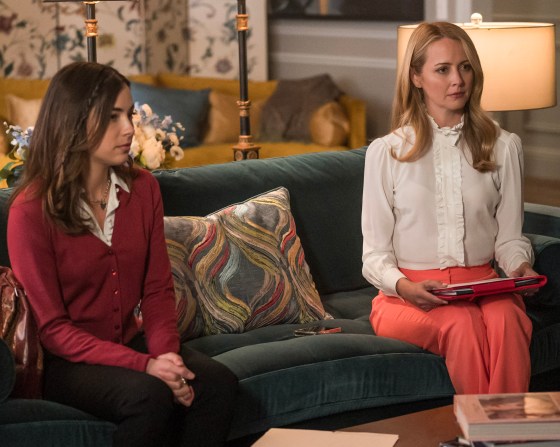
MARIEL MOLINO, AMY ACKER
Kailey Schwerman—FreeformMariel Molino, left, and Amy Acker in The Watchful Eye

Down the hall from the Wards lives Matthew’s sister-in-law Tory Ayres (the wonderful Amy Acker, in her best role in years), a control freak who seems to have it out for Elena from the moment they meet. “She’s one of those meddling Real Housewives types who smoke one cigarette a week,” Elena complains. Tory’s husband, Dick (Christopher Redman), is a smarmy creeper. Even more forbidding is Mrs. Ivey, a haughty matriarch—played by the sublimely typecast Kelly Bishop, essentially repurposing her performance as Emily Gilmore—who immediately clocks Elena’s lies. In this enclave of privilege, the only thing more fearsome than the machinations of the extended Greybourne clan are rumors of supernatural forces. Residents whisper about “mysterious deaths” and a “malevolent presence in the basement.”

Thankfully for Elena, she’s good at recruiting allies. Her boyfriend Scott (Jon Ecker) is her co-conspirator and confidant. She makes fast friends with fellow nanny Ginny (Aliyah Royale) and soon finds herself commiserating with a whole crew of extremely Gen Z childcare workers. For the rebellious teens in the building, Elena is a cool adult who can help clean up the youthful messes they make. Matthew seems like a decent guy, too, despite the company he keeps.

It’s a lot of characters. Whodunits with huge casts of eccentric suspects are having a moment right now (see: Only Murders in the Building, The Afterparty, Glass Onion, Kenneth Branagh’s Hercule Poirot reboots). But creator Julie Durk (Grace and Frankie) and showrunner Emily Fox (Zoey’s Extraordinary Playlist) have a more complex story to tell, and they use their enormous ensemble differently. Elena, who is not necessarily a good person, has her friends and antagonists, but every person in each camp knows a slightly different set of facts about who she is—and vice versa. Everyone has their own agenda and secrets, some innocuous, others malevolent. For viewers as well as characters, there’s not one central mystery, but dozens of potentially interrelated ones: Why did Allie kill herself? What does Elena really want, and why does she want it? Who even is she, really? What about every single other character’s backstory? Also: Is The Greybourne haunted?

MARIEL MOLINO, WARREN CHRISTIE
Kailey Schwerman—FreeformMariel Molino and Warren Christie in The Watchful Eye

Especially in the first few episodes, so much uncertainty facilitates twist after mind-blowing twist. What’s impressive is how organic most of these reveals feel, grounded as they are in genuine questions about each character’s motives. This is what sets Durk and Fox apart from a creator like Ryan Murphy, whose propensity to shock tends to come off as more nihilistic. They also avoid the post-BigLittleLies clichés of David E. Kelley, whose shows take place in similarly rarified social worlds, but whose rich, oblivious heroines have become interchangeable. The Watchful Eye is more reminiscent of a slightly older, soapier cohort of thrillers, such as Revenge and the original incarnation of Pretty Little Liars, that predated streaming’s demand for bingeable miniseries and were thus built to accommodate multiple seasons’ worth of intrigue.

Like those series, it runs the risk of repeating itself or jumping the shark after a few good years. None of the cast is at risk of getting an Emmy nomination, either; Molino and Acker are a lot of fun to watch, but most of the other performances are utilitarian at best. Bishop isn’t on screen nearly as much as I’d hoped. While most of the twists are smartly executed, a big one towards the end of the eight episodes I screened seemed thuddingly obvious. And although the dialogue is generally sharper and more culturally literate than it needs to be (“Solo cups for cognac? This isn’t the Fyre Festival!”), the show’s portrayal of Gen Z pieties panders a bit to Freeform’s young audience. “I can consent in three different languages,” a teenage boy tells his love interest.

Less an earnest critique or satire of wealth and nepotism than a self-aware product of ambient eat the rich sentiment, The Watchful Eye has no highbrow aspirations. It’s just a solidly built thriller, with a smartly assembled cast of characters and well-executed plot beats, whose brisk pace guarantees a consistently exhilarating watch. At a time when so many shows reach for prestige signifiers that exceed their grasp, that lack of pretense is as refreshing as it is fun.

If you or someone you know may be contemplating suicide, call the National Suicide Prevention Lifeline at 1-800-273-8255 or text HOME to 741741 to reach the Crisis Text Line. In emergencies, call 911, or seek care from a local hospital or mental health provider.

Categories
Audio Sources - Full Text Articles

MrBeast Says He’s Raising Awareness Over Preventable Blindness. Others Smell Yet Another Stunt

YouTuber MrBeast has gained a following of over 130 million subscribers in the 11 years he has been making videos on the platform. It took time for his audience to build, but as the lore goes, he gathered a group of friends to watch and study the successful tactics of other YouTubers and incorporated their findings into his own strategy. He found his audience by doing outrageous activities in videos and uploading them—see, for example, videos like “I spent 50 hours buried alive” and “$456,000 Squid Game in Real Life.”

[time-brightcove not-tgx=”true”]

His most recent video has a similarly eye-catching title. In “1,000 Blind People See For the First Time,” uploaded on Jan. 29, he documents the surgeries (and their emotional aftermath) of many people for whom he paid for a “10-minute surgery” to help them recover their vision. While most viewers hailed MrBeast a hero for providing these people the opportunity to get a surgery they couldn’t otherwise afford, others criticized the creator for using his good deeds as “content.”

MrBeast, born Jimmy Donaldson, is one of the most—and by many metrics the most—successful YouTubers in the platform’s history. He is the most subscribed individual and has the fourth-most subscribed channel of all time; his videos garner tens of millions of views within hours of being posted; and all of this is both fueled by and further fuels his rabid fanbase, numerous sponsors, and business ventures. In his newest video, which already has over 47 million views, he not only documents helping 1,000 people see again but is also recorded giving $10,000 to a few of them, $50,000 for college to a high school senior, and a Tesla to a young man whose blindness had prevented him from being able to drive.

Within hours, the video was met with the usual excitement and admiration in the comments section and on Twitter. “Dang, as a person with total blindness in one eye, this made me tear up, this is the most moving act of charity I’ve ever seen,” one person commented. Another tweeted, “People can hate on the high price of health care (I do more than anyone), but what MrBeast did here was astounding, powerful, and should only be respected.”

People can hate on the high price of health care (I do more than anyone), but what MrBeast did here was astounding, powerful, and should only be respected.

— CapCorgi (@CapCorgiTTV) January 30, 2023

Others took issue with the video, especially around the issues it raises regarding health care. Many people pointed out that the surgeries MrBeast is paying for out of his own pockets is what universal healthcare looks like. Some commented that the video further highlights the disparity between those who can afford healthcare in the U.S., and those who can’t. One Twitter user joked, “In one of the timelines, this tweet will be the beginning of MrBeast becoming president and finally bringing universal healthcare to the USA.”

A tweet he uploaded this morning, the day after he published his video, was met with both earnest calls for “MisterBeast for president” and opinions about the power of the pharmaceutical lobby. “I don’t understand why curable blindness is a thing,” he wrote. “Why don’t governments step in and help? Even if you’re thinking purely from a financial standpoint, it’s hard to see how they don’t [return of investment] on taxes from people being able to work again.”

I don’t understand why curable blindness is a thing. Why don’t governments step in and help? Even if you’re thinking purely from a financial standpoint it’s hard to see how they don’t roi on taxes from people being able to work again.

— MrBeast (@MrBeast) January 30, 2023

Others found the stunt inauthentic in its use of charity for views. “There is something so demonic about this and I can’t even articulate what it is,” one tweet reads. One of the replies to this tweet calls the video “charity porn.”

There is something so demonic about this and I can’t even articulate what it is pic.twitter.com/OSpgaUxnQK

— Lolo (@LolOverruled) January 29, 2023

A Twitter user with the handle @wapplehouse summarized a common criticism of MrBeast. “It’s the never-ending cycle of content creation that makes MrBeast feel insidious. The underlying notion that if the camera wasn’t on to feed the machine, nothing would happen. The dystopian thought we’re reliant on YouTube views instead of competent government for assistance.”

It’s the never ending cycle of content creation that makes Mr Beast feel insidious. The underlying notion that if the camera wasn’t on to feed the machine nothing would happen. The dystopian thought we’re reliant on YouTube views instead of competent government for assistance.

— Kristi YamaGuccimane (@wapplehouse) January 30, 2023

This is not the first time MrBeast’s intentions have been questioned. During the height of popularity for the Netflix series Squid Game, the creator gathered 456 people—a significant number from the show—to compete in a real-life Squid Game. Viewers quickly pointed out that the stunt completely missed the point of the series, which many read as a treatise against capitalism, or at the very least a critique of finding entertainment value in low-earning individuals competing for large sums of money.

Criticism notwithstanding, MrBeast, for now, is seemingly untouchable. His content-ification of good deeds continues to prove its worth in views—it’s up to his critics to decide whether or not to add to their numbers.

Categories
Audio Sources - Full Text Articles

The Remarkable Response of RowVaughn Wells After Her Son Tyre Nichols’ Death

As America reels from the impact of yet another Black man’s murder by police caught on camera, a valuable lesson in empathy and hope has come from perhaps the most unlikely source—the mother of the young man who never made it home.

In a series of interviews with Tyre Nichols’ mother, RowVaughn Wells, rightly praised Memphis police chief Cerelyn Davis for acting swiftly to arrest and charge his assailants. However, Davis’ claimed that, because the officers involved are all Black, “race is off the table.” This is not true: There can be no doubt that entrenched institutional racism lies at the heart of this case.

[time-brightcove not-tgx=”true”]

On that night those officers clearly made false assumptions about their victim’s inherent criminality and the threat he might pose to them based on the color of his skin. It is for the exact same reason that Black and Brown people are three times more likely than their white counterparts to be killed by law enforcement.

I do agree with Davis that groupthink—which occurs when collective decision-making is more concerned with protecting a group’s solidarity than with doing the right thing—likely played a role Tyre Nichol’s tragic death. Groupthink is almost always the enemy of common sense and often of decency, too. But when that groupthink is combined with institutional racism, the normalization of police brutality, and a shared sense of omnipotence, it can become deadly. It can turn a collection of cowardly bullies in blue uniforms into what the Nichols family’s attorney Antonio Romanucci has called “a pack of wolves.”

Read More: The Tyre Nichols Videos Demand Solemnity, Not Sensationalism

Although urgently required, police reform alone will not be enough to put an end to the excessive use of force against predominantly Black and Brown people. Bad police officers, regardless of color, come from society, too. To beat someone to a pulp for no reason, then mill around laughing and chatting while he lies bleeding and semi-conscious on the ground, you can’t just be a cog in a racist system—you also have to be able to see your victim as less than human. You have to know how to other him, differentiate him from your pack. You don’t need to join a police department to learn how to do this. On the contrary, America is now so deeply polarized it takes an exceptional amount of effort for any individual to rise above the division that surrounds us and truly see the humanity in all their fellow citizens.

That’s what makes RowVaughn Wells so special. In the most horrific of circumstances, she manages to feel pity, not hate, for her son’s murderers. She sees them as human beings, real people with real loved ones of their own. “I feel sorry for them,” she said, “because they have brought shame to their own families. They have brought shame to the Black community.”

Equally amazingly, this grieving mother has somehow found hope in the midst of what she calls her “nightmare.” She believes something “good and positive” will come out of Tyre’s death, something that will reflect the kind of person he was.

Listening to her, I wondered whether I would be capable of such grace if my own Black son had been killed on his way home, if I knew his last words had been to call for his dad.

If we want to stop this senseless culture of racist police brutality, we can’t afford to just admire Wells’ remarkable message of empathy and hope. We must go beyond waving placards—important as that is— and act on it.

As a society, we have to come together to heal our traumatized families and communities. We have to lobby the Senate to finally pass the George Floyd Justice in Policing Act. Moreover, we have to do everything in our power to oppose the use of gerrymandering tactics that are designed to disenfranchise Black and Brown voters, because when you take away someone’s right to vote you are deliberately dehumanizing them and diminishing our democracy.

It gets harder. We need an empathy revolution. This revolution starts when each of us turns our backs on hatred and division and actively places empathy at the very center of our national life. This starts with education—we cannot bow to political pressure to regulate what is taught in the classroom, as is being done in some states. Rather, we must teach all America’s children about its whole history so they know how much change has already been won and at what cost, and how much they still have to fight for. We must teach them to view every other person as a human being first and foremost, and how to value and celebrate their differences, including their ethnicity. Only then will the harmful social construct of race truly be off the table.

Teachers, faith leaders, elected representatives, and community leaders have a key role to play in the empathy revolution, but they can’t do it without the support of every citizen. Each of us has to resist the urge to demonize those we disagree with, those who don’t look like us, pray like us, love like us, or vote like us. Instead, we should seek those people out. We should talk to them, listen to them, and try to recognize their humanity, however much we may dislike their worldview. If Tyre Nichols’ mother can reject hate, surely we all can.

Maybe when we all think like this, like RowVaughn Wells, all police recruits, whatever the color of their skin, will enter the force with empathy already so built in to their characters that no amount of institutional racism will be able to contaminate their souls. No officer will mistake a uniform for a cloak of impunity or a badge for a license to abuse their power. They will see every law enforcement encounter as an encounter with a human being. No innocent young man will ever again have to die at their hands on his way home to his mother. And Tyre Nichols’ legacy will indeed be something truly positive.

WP Radio
WP Radio
OFFLINE LIVE