Categories
Audio Sources - Full Text Articles

Kamala Harris Subtly Emerges as Powerful White House Asset

This article is part of The D.C. Brief, TIME’s politics newsletter. Sign up here to get stories like this sent to your inbox.

As she started her closing cadence in front of an enthusiastic crowd, it was clear Vice President Kamala Harris was in her element—and remains both a misunderstood and potentially potent force in Democratic politics.

​​”Know this: President Biden and I agree, and we will never back down,” Harris said to applause in Tallahassee on Sunday, the 50th anniversary of the Roe v. Wade decision that once guaranteed the federal right to abortion. “We will not back down. We know this fight will not be won until we secure this right for every American.”

[time-brightcove not-tgx=”true”]

As Harris thundered through her remarks, with American flags behind her and supporters before her, she enjoyed that quality that has become all too rare in politics: credibility. Despite all of the political headwinds against her on the issue, Harris convinced many in the crowd that her promises were not only plausible, but within reach. “Congress must pass a bill that protects freedom and liberty,” she said.

The scheduled speech on a sleepy Sunday far from Washington—but in the backyard of both Florida Gov. Ron DeSantis and Donald Trump—would do little to move the national debate on federal abortion rights, which fell in June with a crash emanating from the Supreme Court. But Harris’ remarks and the reception—including 32 applause interruptions by the White House transcript’s count—served as a reminder that, even with plenty of bumps and detours during her first two years as a history-making Vice President, she still can bring the heat. And, in that, her fellow Democrats might slow their seemingly endless criticism of the first woman to hold the job, as well as the first person of Black or South Asian descent to earn it.

Harris, by all accounts, didn’t exactly launch her time as President Joe Biden’s understudy with ease. It seemed every quarter brought with it a new Harris Resets story in the political pages. In the administration’s early days, she largely filled her offices with veterans of the campaign—Biden’s, not hers. In fact, most of her high-profile aides from her Senate office and short-lived presidential bid scattered throughout the administration, landing perfectly admirable posts but not in her inner circle. The result was high turnover on her team, as well as a series of embarrassing stories about her treatment of aides.

Then, there was the scheduling challenge. Few Vice Presidents have had to contend with an evenly split Senate. Because of her ability to break tie votes in that chamber, Harris had to often make sure she was a quick motorcade from the Capitol. She has so far cast 26 such tied votes—or roughly 9% of all tie-breaking votes cast in the Senate since 1789. As such, she spent a ton of time in her office just off the Senate floor, often doubling as a deciding vote and informal congressional liaison to her former colleagues.

But, with Republicans now stuck at 49 votes, Harris’ 101st vote won’t be needed as often. (Of course, errant Democrats like Sen. Joe Manchin or Democrat-turned-independent Sen. Kyrsten Sinema can still gum up the math.) Now less encumbered by the Senate vote schedule, Harris is looking forward to getting back on the road, helping to sell the Biden team’s record and leading the charge on goals like securing voting rights and abortion rights—neither of which are likely to advance much under a Republican House—and selling the merits of legislation passed over the last two years, such as an infrastructure package and a climate change agenda.

Then there are questions of her future ambitions—always a fraught discussion that in D.C. can easily devolve into coded conversations about race and gender, two factors that simply cannot be ignored when it comes to Harris. Her defenders aren’t wrong to point out that the first woman of color in her role faces the double-whammy that separately dogged Barack Obama and Hillary Clinton. Harris’ original bid for the presidency ended before Iowa’s lead-off caucuses. By all accounts, she served as a capable and loyal running-mate.

Personally, Biden has great admiration for Harris, who served as state attorney general in California concurrent to the late Beau Biden’s time in the role in Delaware. As a former VP himself, Biden has sought to give Harris a portfolio commensurate with her talents, including the intractable troubles at the U.S.-Mexican border, voting rights, and abortion rights. Harris’ apologists grimly note those are all massive issues, each of them likely impossible for one person to significantly address; yet her boosters say they match Harris’ abilities to untangle knots.

Still, the relationship between Biden and Harris is complicated, made more so when Biden seemed like an uncertain contender in 2024. With Biden seemingly ready to launch his re-election bid, Harris’ dreams for a promotion are on ice. After all, no one challenges a sitting President with any meaningful success, especially not from inside the tent. But it does set up the test for Harris: if she is the party’s heir apparent—and not, say, Transportation Secretary Pete Buttigieg or Rep. Alexandria Ocasio-Cortez—Harris needs to rack up some successes to point to, whether they come due in 2024 or 2028. Biden may end up professing neutrality, but that gets tricky if he sees any suggestion of disloyalty.

All of which explains why Harris has made abortion rights a central piece of her political identity. Since Roe fell, she has met with leaders from 38 states, including lawmakers from 18 states. She’s been subtly making herself the voice with a megaphone no one can ignore.

During her speech on Sunday, Harris announced the Biden administration would protect access to mifepristone, the abortion pill. The Food and Drug Administration earlier this month finalized a rule that allows women to obtain abortion pills via telehealth consultations. Against this backdrop, Florida lawmakers are considering moving to ban abortions after 12 weeks—down from 15 there.

“Even in states that protect reproductive rights, like New Jersey, Illinois, Oregon, even there people live in fear of what might be next, because Republicans in Congress are now calling for a nationwide abortion ban,” Harris said. “Even from the moment of conception, the right of every woman in every state in this country to make decisions about her own body is on the line.”

“And I said it before and I will say it again,” she added. “How dare they?”

Such outrage over the fall of Roe powered Democratic candidates to unexpectedly strong showings in the midterm elections. Democrats defied history, holding steady in the Senate and only barely losing the majority in the House. Many point to her campaign travel schedule as proof that Harris played no small role in that accomplishment. By the time votes were being tallied, a full 27% of Americans counted abortion as the most important issue for their vote, second only to inflation. It was a surefire winner for Democrats, with those counting abortion as their most important issue breaking by a walloping 53 points. And among the broader public, according to exit polls, 59% of voters last year said abortion should remain legal.

If you’re Harris and seeing these numbers while still considering your next move, such data points are reason to lean-in on abortion rights. It has the added bonus of coming from a place of sincerity.

Make sense of what matters in Washington. Sign up for the D.C. Brief newsletter.

Categories
Audio Sources - Full Text Articles

FACT CHECK: Democrats ‘Can’t Negotiate’ With Hostage-Takers

Claim: “You can’t negotiate with people who take hostages.” 

Who said it:

Ron Klain, the soon-to-be-former White House chief of staff, according to a senior congressional Democrat who spoke to the Washington Post about the Biden administration’s approach to negotiating with Republicans over debt and spending cuts.

“This debate is simple: We want to do the responsible thing, and they want to take the entire American economy hostage to cut Social Security and Medicare,” said the member of Congress, speaking on the condition of anonymity to reflect private conversations. Klain told the lawmaker that the fight could result in substantial political benefits for the Democratic Party. “The point he was making was clear: You can’t negotiate with people who take hostages.”

Why it matters:

Given the rapid deterioration of President Joe Biden’s cognitive and physical health, Klain is arguably the most powerful man in the world. Mainstream journalists have a moral duty to fact-check his statements, but they’re only interested in speaking truth to power when Republicans are in charge. That’s why the Washington Free Beacon exists.

Context:

Klain’s successor, former Bain consultant Jeff Zients, oversaw the Biden administration’s COVID-19 response from January 2021 to April 2022. More than 570,000 Americans died on his watch.

Analysis:

The assertion that Democrats “can’t negotiate with people who take hostages” is contradicted by the evidence.

Last month, for example, the Biden administration negotiated with Russian dictator Vladimir Putin for the release of Brittany Griner, a WNBA player caught in the act of drug smuggling. In exchange for Griner, the United States agreed to release Viktor Bout, a.k.a. “the Merchant of Death,” a reviled arms dealer convicted of plotting to murder American citizens. Paul Whelan, a former Marine detained in Russia on bogus charges since 2018, remains in Putin’s custody.

President Biden and his Democratic predecessor, Barack Obama, willingly negotiated with the government of Iran, one of the most notorious hostage-takers in modern history. In 2016, the Obama administration sent a plane filled with $400 million in cash to Iran on the same day the terrorist regime released four American captives. Obama also negotiated with the communist regime in Cuba, securing the release of American hostage Alan Gross as part of a controversial deal to lift economic sanctions on the rogue island nation.

To our knowledge, House Speaker Kevin McCarthy (R., Calif.) has never taken an American citizen hostage to extract concessions from the U.S. government.

The post FACT CHECK: Democrats ‘Can’t Negotiate’ With Hostage-Takers appeared first on Washington Free Beacon.

Categories
Audio Sources - Full Text Articles

Raphael Warnock Buys Million-Dollar Townhouse As His Church’s Tenants Live In Squalor

Sen. Raphael Warnock (D., Ga.), who received a lucrative monthly housing allowance from his church during his first term in the Senate, will soon reside in a luxurious Capitol Hill townhouse as tenants of his ministry’s low-income apartment building continue to live in squalor.

At first glance, the $1,149,000 Washington, D.C., townhouse that Warnock purchased on Jan. 4 appears to be outside his means. The Georgia Democrat took out a $549,000 loan on the property, real estate records show, indicating Warnock put down a massive $600,000 down payment on the home. Warnock owned assets valued between $654,000 and $1,353,000 at the end of 2021, the bulk of which was tied up in his church’s pension plan. He also owed up to $600,000 on his Atlanta home in 2021, according to his latest available financial disclosures.

Fortunately for Warnock, he was also the beneficiary of a tax-free, $7,417 monthly housing allowance in 2021 from Ebenezer Baptist Church, where he continues to preach on occasion. The church also owns a pest-infected subsidized apartment building in Atlanta that moved to evict residents during the pandemic for as little as $28.55 in past-due rent, the Washington Free Beacon reported.

Ebenezer Baptist Church structured Warnock’s housing allowance as an employment benefit so that he could bypass the Senate’s $29,595 outside income limitation in 2021. It’s not known at this time if the church helped finance Warnock’s new Capitol Hill townhouse. Ebenezer did not return a request for comment.

Warnock’s new home is situated less than two miles away from the Capitol and comes equipped with a brand-new gourmet kitchen, a wine refrigerator, and a private backyard patio. The four-bedroom, four-bathroom home provides the “rare opportunity to experience a life of leisure and comfort,” a listing for the property boasts.

The townhouse also comes with a separate basement unit cordoned off with its own living area, bedroom, and bathroom. The Free Beacon inquired how much Warnock will rent his basement unit for. The senator’s office did not respond.

Warnock’s financial ties to the church and its low-income apartment became a sticking point for the Democrat during his reelection campaign in 2022. Warnock claimed during a debate with Republican challenger Herschel Walker that there had been no evictions from the building, but court records showed otherwise. Fulton County marshals carried out two court-ordered evictions on residents at the church’s property during the pandemic, one in August 2020 and the other in February 2022.

Warnock’s church owns 99 percent of the Columbia Tower apartment building in Atlanta through a network of shell companies linked to a charity that identifies the senator as its principal officer. The church tapped Columbia Residential, one of the nation’s leading eviction-filers, to manage the property on its behalf. The building is plagued by pests, maintenance problems, and filth, residents told the Free Beacon.

Columbia Residential dropped its eviction cases against five of the building’s residents a few days before Warnock’s runoff election in December, but only after the Free Beacon reported that it had been trying to evict a Vietnam War veteran who had already paid his back rent.

The post Raphael Warnock Buys Million-Dollar Townhouse As His Church’s Tenants Live In Squalor appeared first on Washington Free Beacon.

Categories
Audio Sources - Full Text Articles

Why Lula Accused Bolsonaro of ‘Genocide’ Against Brazil’s Yanomami People

Brazil’s President Luiz Inácio Lula da Silva has accused his predecessor, Jair Bolsonaro, of committing “genocide” against the Indigenous Yanomami people of the Amazon.

Lula blamed the former President for enabling thousands of gold miners in a nationally-protected territory where mining is banned. As illegal mining flourished during Bolsonaro’s tenure, a humanitarian crisis emerged in the territory they call home that is roughly the size of Maine. The miners have been accused of poisoning rivers with mercury and wrecking forests; the Yanomami depend on both for food sources. Activists have also accused miners of death threats and sexual violence.

[time-brightcove not-tgx=”true”]

“More than a humanitarian crisis, what I saw in Roraima was a genocide. A premeditated crime against the Yanomami, committed by a government impervious to the suffering of the Brazilian people,” Lula tweeted on Sunday, a day after visiting a clinic for Yanomami patients in Boa Vista. He accused the previous government of disregard and neglect for encouraging the “invasion of 20,000 illegal miners.”

Close to 30,000 Yanonami people live in Brazil’s Indigenous territory that spans Brazil and Venezuela. They maintain a way of life based on fishing, hunting, and fruit gathering.

Lula also told reporters during his visit that he will eliminate illegal mining in Brazil but did not offer further details on policies or programs to achieve the goal.


Bruno Kelly—ReutersA Yanomami man, right, stands near an illegal gold mine on Indigenous land in the heart of the Amazon rainforest, in Roraima state, Brazil, in April 2016. Illegal miners continue to plague the area, sawing down trees and poisoning rivers with mercury in their lust for gold.

Brazil’s Minister of Justice and Public Security Flávio Dino said last week that federal police would investigate the possibility of genocide and other crimes against the Yanomami people.

The accusation of genocide is controversial but critics of Bolsonaro say abuses against the Yanomami reflect his broader policies toward the environment.

They say Bolsonaro starved state institutions meant to protect Indigenous people and the environment. “That protection of Indigenous people and the environment was really just decimated under Bolsonaro,” says Amy Erica Smith, an associate professor of political science and expert on Brazilian politics at Iowa State University. “At the same time that he reduced authority and resources to these agencies to protect Indigenous people and the environment, he was also perceived as having… come down firmly on the side of illegal miners.”

Bolsonaro has denied responsibility and dismissed the accusation of genocide as a “left-wing farce,” according to The Guardian.

Read more: Lula’s Victory in the Brazil Elections Is a Win for the Planet

Public health advocates have been vocal in recent years about threats faced by the Yanomami community as a result of mining. A report “Yanomami Under Attack” by the São Paolo-based nonprofit Socio-Environmental Institute found that in the last four years of Bolsonaro’s government, the death of children who were aged five or younger jumped 29% compared to the previous government. The report also found that the region was responsible for half of Brazil’s malaria cases and that more than 3,000 children were malnourished. Images showing malnourished children recently surfaced in local news reports.

“The mining activity changes the soil, creating puddles which are favorable for the malaria mosquito, and other diseases as well. Many miners also bring diseases with them. It’s a sanitary and humanitarian crisis,” Estêvão Benfica, geographer and one of the Socio-Environmental Institute researchers, told the Associated Press.

The Minister of Indigenous Peoples, Sônia Guajajara, said the government’s priority is getting a handle on malaria, malnutrition, and other issues that the Yanomami people face. “Every 72 hours a child is dying from one of these illnesses, according to the information we’ve received,” she said.

Guajajar has called for the miners to be expelled within the next three months.

Categories
Audio Sources - Full Text Articles

Why India Is Using Emergency Laws to Ban a Documentary About Prime Minister Modi

Last Tuesday, the British Broadcasting Corporation released the first episode of “The Modi Question,” a two-part documentary series that tracks how the Indian Prime Minister Narendra Modi climbed the political ranks of the ruling Bharatiya Janata Party during his time as the Chief Minister of the state of Gujarat.

The documentary was originally broadcasted in the U.K., but it quickly generated hype in India after unauthorized video clips began circulating on social media platforms, reminding viewers of Modi’s controversial role in the 2002 Gujarat riots—and prompting the Indian government this week to block it from being aired on Indian platforms.

[time-brightcove not-tgx=”true”]

What is the documentary about?

The 59-minute documentary takes an in-depth look at the 2002 Gujarat riots—one of the worst outbreaks of religious violence in India since the country’s Independence in 1947. It traces how the riots erupted after a train carrying Hindu pilgrims in the northern state of Gujarat was set on fire and killed 59 people. The Muslim community was held allegedly responsible for the incident, leading to heightened retaliatory attacks and the deaths of over 1,000 Muslims.

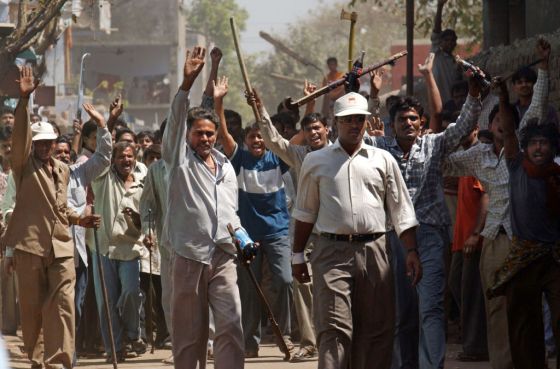
The riots took place under Modi’s watch, who at the time was Gujarat’s Chief Minister. Raw and chilling footage reveals how the police stood by as Hindu mobs attacked Muslims and religious attacks took hold of the state.


More from TIME


Why is the documentary so controversial?

In India and abroad, questions about Modi’s complicity in abetting the violence have generated controversy for decades, but the BBC documentary goes a step further in highlighting his role through expert commentary — it reveals that a previously unpublished report from the British Foreign Office held Modi “directly responsible” for the “climate of impunity” that enabled the violence and said it had “all the hallmarks of an ethnic cleansing.” The BBC also uncovers other memos by the British government and Western diplomats, including the former British Foreign Secretary, Jack Straw, who unequivocally criticizes Modi’s conduct at the time.

However, the documentary also features interviews with former BJP politicians who support Modi and strongly deny his involvement in the riots. They cite the Indian Supreme Court’s verdict in 2013, which stated that there was insufficient evidence to prosecute him.

Read More: How India’s Record-Breaking Population Will Shape the World

According to Kenneth Roth, the former executive director of the NGO Human Rights Watch, Gujarat has always been one of the most sensitive issues for Modi because he demonstrated “passivity in the face of large-scale ethnic violence.” But, Roth adds, Modi shows intolerance towards a range of criticism due to fear of reputational harm, and his reaction to this documentary is no different.

“People tend to assume that India is a democracy, that there’s nothing to worry about when it comes to free expression,” says Roth. “But Modi is not abiding by the requirements of free expression in the way that a Democratic leader should.”

Representatives for the BBC and India’s foreign affairs ministry did not immediately respond to TIME’s request for comment.

Hindu-Muslim Violence Rips Through Western India
Ami Vitale—Getty Images401733 09: A mob of Hindus wielding swords and sticks back off after Indian Rapid Reaction Force officers stopped them from attacking a small group of Muslims March 1, 2002 in Ahmadabad, India.

Can the government block the documentary from being aired in India?

Under the emergency powers granted by the country’s information and technology law, the Indian government has already issued orders to YouTube and Twitter demanding that they block any content related to the documentary from being published on their platforms.

Kanchan Gupta, a senior adviser to the Indian government, announced the news on Twitter on Saturday, calling the documentary “vile propaganda” which undermined “the sovereignty and integrity of India” and had the potential to “adversely impact India’s friendly relations with foreign countries.” The decision was backed by various Indian ministries, including the Ministry of External Affairs, which found the documentary pushed a discredited narrative, cast “aspersions on the authority and credibility” of the Supreme Court, and created “divisions among Indian communities.”

So far, YouTube and Twitter are complying with the Indian government’s orders. Over 50 tweets containing links to the documentary have been taken down, according to the Lumen database. They include tweets by Derek O’Brien, a member of the Indian Parliament, as well as Supreme Court advocate Prashant Bhushan and American actor and political activist John Cusack.

Media organizations and digital rights activists have long criticized the IT laws that enable the Indian government to censor social media content. The laws have been challenged in the Supreme Court, as well as multiple High Courts, with proceedings currently underway.

Read More: How Jacina Ardern Led With Her Humanity

What has the Indian response to the documentary and the government’s decision been?

Critics of Modi say the block affirms Modi’s ardent base of supporters, who have decried it as “colonial” and “white” propaganda. “The bias and lack of objectivity and frankly continuing colonial mindset are blatantly visible,” Arindam Bagchi, spokesperson for the foreign affairs ministry told reporters at a press conference last Thursday.

But according to Roth, the “principal victims” of Modi’s censorship are Indian citizens. Therefore, minimizing valid concerns raised about Modi in the documentary as colonial partisanship “shirks responsibility for his own intolerance of legitimate criticism.”

This is compounded by the fact that banning a documentary that was not otherwise popular in India has only invited more viewers, says Hartosh Singh Bal, the political editor of Indian magazine The Caravan, who also appears in the documentary as a commentator. “Frankly, the ban has been pretty stupid because it’s attracted far more attention to the documentary than would have been otherwise possible,” says Bal. He adds that it is now being screened across school campuses as “an act of resistance” among teenagers who previously viewed these events as a dated chapter in history.

“In some senses created far more awareness than the government could have expected,” adds Bal, noting that it has brought new relevance to the conflict.

While the events of 2002 catapulted Modi into his current position, Bal says he remains extremely sensitive about his international reputation and still wants to be viewed as a statesman. But clamping down on this documentary in what Bal calls a “ham-handed fashion” will only confirm the expectations of his fiercest critics.

Categories
Audio Sources - Full Text Articles

Chiefs’ Reid: Mahomes ‘going to play’ vs Cincy for AFC title

KANSAS CITY, Mo. (AP) — Chiefs coach Andy Reid said Monday that Patrick Mahomes will play in the AFC title game against the Bengals, and that the high ankle sprain the All-Pro quarterback sustained against the Jaguars last weekend is less severe than the one he played through during the 2019 season opener.

“He’s going to play,” Reid told a group of local reporters. “That’s his mindset.”

Mahomes was hurt in the first quarter of Saturday’s win over Jacksonville when pass rusher Arden Key landed heavily on his right ankle. Mahomes finished the drive but was hobbling badly, and Reid and the training staff forced him to get an X-ray — it came back negative — and do some agility testing at halftime before allowing him back in the game.

In the meantime, backup Chad Henne led the Chiefs on a 12-play, 98-yard touchdown drive in the 27-20 victory.

Mahomes played well in the second half, but the Chiefs dramatically altered their offense to account for his reduced mobility.

Mahomes rarely went under center and threw almost exclusively from the pocket, rather than scrambling to buy time and make the many off-schedule throws that have made him so dynamic over the years.

He still threw for 195 yards and two touchdowns, including the eventual clincher with about 7 minutes to play.

Mahomes said afterward that his ankle felt better than expected and he vowed to play in the AFC title game — the fifth consecutive one hosted by Kansas City and a rematch of last year’s game won by Cincinnati in overtime.

“Pain is pain,” Mahomes said. “You’re going to have to deal with it.”

Reid said it was too early to tell how much Mahomes will practice this week. The Chiefs typically spend Monday reviewing film and getting treatment, then the players get Tuesday off, before their first full practice on Wednesday.

“When we get to that Wednesday practice we’ll see where we’re at,” Reid said. “I’ve got to see how he feels.”

Asked whether Mahomes could play without practice, Reid replied: “Who the heck knows?”

“He’s done some amazing things with limited time,” Reid added. “I think so. He’s never had to do it.”

Mahomes sustained a similar ankle injury in the 2019 opener against Jacksonville, and Reid said “I think this one isn’t quite as bad as that one.”

In that case, Mahomes played the following week in Oakland, going 30 of 44 for 443 yards and four TD passes without an interception in a 28-10 win over the Raiders.

Regardless of whether Mahomes practices, Henne is likely to get more repetitions than usual. And while the quarterbacks have vastly different styles, Reid doesn’t believe they will dramatically alter the Chiefs’ game plan.

“We try to keep open communication with the quarterbacks as best we can,” he said. “We’ve had Chad here a while now. We know the plays he likes and doesn’t like. We also know the plays that Pat likes and doesn’t like. We try to blend it and make sure that we have plays that work for both of them.”

WHAT’S WORKING

The Chiefs proved they can take pressure off the quarterback with the ground game on Saturday night, running for nearly 5 yards per carry against Jacksonville. Isiah Pacheco had 95 yards rushing, much of it coming on Henne’s long scoring drive.

WHAT’S NOT

The Chiefs’ wide receivers struggled against the Jaguars, forcing the Chiefs to lean heavily on Travis Kelce, who had 14 catches for 98 yards and two scores. Kadarius Toney was their top wide receiver with five grabs for 36 yards, but nobody else in the group had more than two receptions or 29 yards.

STOCK UP

This is the time of the year Frank Clark makes good on his contract. The defensive end sometimes struggles during the regular season, but his sack against the Jaguars gave him 12 for his playoff career. That tied Hall of Famer Reggie White for fourth among all players since sacks became an official stat in 1982.

STOCK DOWN

Meanwhile, defensive tackle Chris Jones is still searching for his first career postseason sack. He had 15 1/2 in the regular season, third most in the league, but had just one tackle and one quarterback hit against the Jaguars.

INJURIES

Mahomes will dominate the conversation all week. Otherwise, the Chiefs came out of the divisional round healthy.

KEY NUMBER

14 — That’s the number of playoff touchdown catches for Kelce, which trails only Rob Gronkowski (15) and Jerry Rice (22) for the most in NFL history. Kelce has had at least one in each of his past four postseason games.

NEXT STEPS

The Chiefs have lost three straight to the Bengals, all since January 2022, including last year’s AFC championship game. That was the only one of the three played at Arrowhead Stadium, though just like the rest, the Chiefs wound up losing by a field goal. In that game, Kansas City blew a 21-3 lead in the 27-24 overtime defeat.

___

AP NFL: https://apnews.com/hub/NFL and https://twitter.com/AP_NFL

Categories
Audio Sources - Full Text Articles

It’s the GOP, Stupid: How the Party Gave Us a New Mexico Pol Accused of Hiring Assassins

FILE - Solomon Pena, center, a Republican candidate for New Mexico House District 14, is taken into custody by Albuquerque Police officers, Jan. 16, 2023, in southwest Albuquerque, N.M. Peña overwhelmingly lost a bid last fall for the New Mexico statehouse as a Republican and is accused of paying four men to shoot at the homes of four Democratic officials. (Roberto E. Rosales/The Albuquerque Journal via AP, File)

Solomon Peña is taken into custody in Albuquerque, N.M., on Jan. 16, 2023.

Photo: Roberto E. Rosales/The Albuquerque Journal via AP

The mounting forensic evidence of a direct connection between right-wing political violence and the Republican Party has a new patient zero whose case can be studied and dissected. His name is Solomon Peña.

Peña’s story is a case study in the close and direct links between Republicans and right-wing violence, even as party leaders try to deny them.

For those who haven’t been following him, Peña ran as a Republican for a seat in the New Mexico Legislature in November but was handily defeated by his Democratic opponent. Peña received only about 26 percent of the vote in his district, yet he refused to concede, and instead, like other Republican losers around the country, mimicked Donald Trump by complaining that he was the victim of election fraud.

“Trump just announced for 2024,” Peña tweeted on November 15, 2022. “I stand with him. I never conceded my HD 14 race. Now researching my options.”

Trump just announced for 2024. I stand with him. I never conceded my HD 14 race. Now researching my options. pic.twitter.com/sKVHhxG9Vq

— Solomon Pena for NM (@SolomonPena2022) November 16, 2022

Peña’s “options” were revealed last week, when he was arrested in connection with a series of shootings at the homes of four Democratic state officials in Albuquerque, including two involved in certifying the results in his race.

Peña, 39, is accused of leading a group that included four others who shot at the homes of the Democratic officials; in one case, bullets fired into the house of a Democratic state senator came close to hitting the official’s 10-year-old daughter. Peña allegedly paid the four accomplices and provided them with weapons; he’s also accused of personally participating in at least one of the drive-by shootings.

The Peña case is part of a surging wave of right-wing political violence that now arguably represents the biggest national security threat facing the United States. Academic researchers are finally catching up with the trend, and recording what has become obvious: The violence is overwhelmingly committed by extremists on the right rather than the left.

In 2022, an extensive historical study of acts of extremist violence, committed between 1948 and 2018, found that the likelihood that an act of violence was committed by a right-wing extremist was virtually equal to the chance that it was committed by an Islamist extremist, while the likelihood that such an act was committed by a left-wing extremist was far lower. The study, conducted by a research team co-led by University of Maryland criminology professor Gary LaFree, also analyzed global data related to acts of terrorism between 1970 and 2017, showing that attacks by left-wing extremists throughout the world were 45 percent less likely to result in fatalities than attacks by right-wing extremists.

Right-wing violence seems to have increased since the January 6, 2021, insurrection at the U.S. Capitol. In fact, Peña’s arrest came just weeks after the two leading members of a 2020 plot to kidnap Michigan Gov. Gretchen Whitmer were finally sentenced, and follows the October attack on Paul Pelosi, the husband of then-House Speaker Nancy Pelosi, as well as the August armed attack on the FBI’s Cincinnati office by a pro-Trump extremist angered by the FBI’s search of Mar-a-Lago in connection with Trump’s classified documents case.

What makes Peña’s case significant — and clarifying — is that the defeated candidate himself may have engaged directly in the violence. In other recent cases, Republicans have sought to dismiss acts of violence by claiming that there was no proof the criminals involved were motivated by their pro-Trump, Republican ideology. Republicans and conservatives have frequently pushed conspiracy theories to falsely assert that violence was actually committed by left-wing extremists, or, alternatively, was brought on by the victims themselves. In the aftermath of the attack on Paul Pelosi, for example, prominent conservatives embraced a wide variety of conspiracy theories, including claims that the assailant was Pelosi’s gay lover.

But it is not really possible to distance the Republican Party from Peña — or from his acts of violence. After all, the Republicans’ own candidate for a seat in New Mexico’s House of Representatives is now sitting in jail, and the evidence against him seems ironclad.

The Peña case underscores how the lies, propaganda, and conspiracy theories that now dominate the rhetoric of the Republican Party lead to violence, and that makes Peña’s story even more significant than that of George Santos, the first-term House representative and serial fabulist who has garnered far more national attention.

Solomon Peña, like so many others in the pro-Trump world, never succeeded at life. Demoted twice while serving in the Navy, he later was part of a group that drove cars into four different stores and robbed them, resulting in a string of smash-and-grab burglaries in Albuquerque that landed him in prison for almost seven years. He was released from prison in 2016 and remained on probation until 2021, just a year before he ran for the state legislature.

Peña embraced Trump’s MAGA cult and posted photos of himself on Twitter showing that he was in Washington on January 6, 2021, to support Trump’s false claims that he had actually won the 2020 election.

This is one of the last pictures I have of the Jan 06 trip. I lost that phone at the Trump rally in Phoenix, July 2021. Make America Great Again! pic.twitter.com/EJToLrD8md

— Solomon Pena for NM (@SolomonPena2022) November 14, 2022

Unlike Santos, Peña’s troubled past was well known during the 2022 campaign; his Democratic opponent sued to have him removed from the ballot because of his felony convictions. In September 2022, a court ruling allowed Pena to stay on the ballot, but the issue was fully covered in the New Mexico press.

Republicans, meanwhile, continued to back him, arguing that Peña deserved a second chance. “Please support Solomon Pena,” Michelle Garcia Holmes, a Republican congressional candidate in New Mexico, tweeted in October, after the court ruling allowing Peña to stay on the ballot. “He is the right choice!”

On November 9, the day after he was soundly defeated in the election, Peña tweeted: “I dissent. I am the MAGA king.”

Police say that, after his election loss, Peña went to the homes of the four Democratic officials and confronted them with his claims of election fraud. Soon after that, he escalated to allegedly enlisting a group of criminals to shoot at their homes.

During this post-election period, while he was publicly claiming election fraud, Peña was still moving up in Republican circles in New Mexico. Two days before his arrest, he was elected to posts as a county ward chair and a Republican Party State Central Committee member.

Following his arrest, the Republican caucus in the New Mexico House of Representatives issued a bizarre statement that did not mentioned Peña’s statehouse candidacy, instead criticizing the government for allowing him to have guns. In a statement that seemed to turn everything about the Peña case on its head, state Republican House leader Ryan Lane said, “This is yet another example of a convicted felon gaining access to firearms, which they are barred from owning or possessing, and using the weapon in a manner that causes public harm.”

The post It’s the GOP, Stupid: How the Party Gave Us a New Mexico Pol Accused of Hiring Assassins appeared first on The Intercept.

Categories
Audio Sources - Full Text Articles

In season 4 of ‘Fauda,’ Israeli tactics come under fire — and so do the show’s heroes

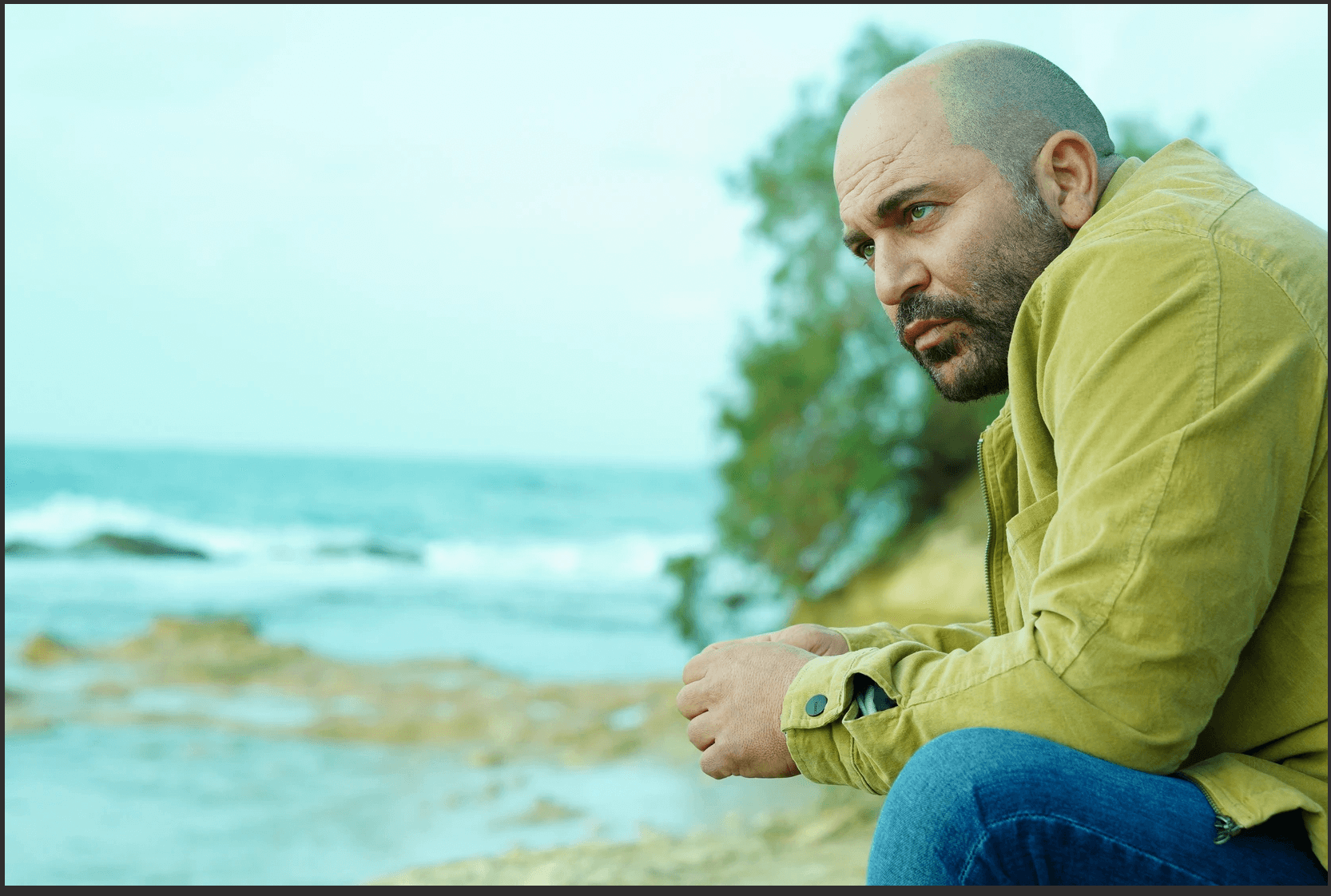
Screenshot-2023-01-23-at-12.10.09-PM.png

Each season of Fauda features a new director and writer and the same kind of fool-proof formula.

Co-creator and star Lior Raz’s Doron Kavillio is dragged back into the field, where he quickly disobeys orders. A major character dies or is captured and an informant flips. There is always some moment of moral crisis when an operation causes undue harm. Revenge, legacy and the harms of deceit are perennial themes. 

But Fauda’s durable formula has never been able to keep pace with the reality on the ground. Nor could this season, which began airing in Israel before the country’s last election, anticipate a fresh set of concerns about the fate of its democracy and nationalism timed almost exactly to the season’s American debut on Netflix. 

So while season four begins in Jenin, a West Bank city that is in the news almost daily for clashes between the IDF and militants, we spend little to no time in the occupied territories where Netanyahu’s government plans to expand settlements. Instead we are off to Belgium, to Syria and to Lebanon as Doron and company try to ferret out the location of their captured mentor and thwart a rocket attack. This season’s enemies, while once residents of the refugee camp in Jenin, are doing Hezbollah’s bidding. Hamas doesn’t appear at all — except when Doron and his undercover company are posing as members.   

The series, maligned by some for airbrushing the realities of the occupation while boasting a balanced view of the conflict, is still evasive in its ways, but director Omri Givon and writer Noah Stollman have added something new to the mix. This season, more than any other, considers the cost of combat on the aging unit and, in perhaps its most daring move, questions the wisdom of the IDF’s tactics.

In a briefing room scene, unit leader Eli (Yaakov Zada Daniel) talks back to his superiors, who advise against a risky raid to recover Captain Gabi Ayub (Itzik Cohen), who is a Hezbollah hostage. 

“You’ve sent agents to risk their lives based on a lot less intel,” Eli says, mentioning Gilad Shalit, who in 2011 was recovered in a prisoner exchange, only after “the whole IDF was sent in” to Gaza. (One of the prisoners exchanged for Shalit was Amir Abu Sarhan, the man who killed Lior Raz’s girlfriend, Iris Azulai, in 1990.)  Eli also brings up Ron Arad, an air force soldier believed captured in 1986 — and who was never found despite a massive investment of manpower. 

Interestingly, in the next episode, Hezbollah heavy Haj Ali also mentions Arad while describing what the IDF did to one of his men.

“We brought in doctors, psychiatrists but nothing helped,” he tells Ayub. “You stopped at nothing. You beat him up, tortured him, and why? To get intel about Ron Arad who’d been out of our hands for six years. You knew that, and yet, you humiliated him.”

Naturally, Haj Ali has little right to the moral high ground, but by having him invoke Arad, the show invites a more philosophical variation of Eli’s point: Too much was risked for no tangible reward. 

While we see Shin Bet command pushing for caution, refusing drone strikes near civilian populations, we also witness them striking those they’re interrogating with binders or fists.  

In the past, Doron’s unit chafed at restrictions, but in the new season the whole security apparatus may be taken to task for its excess. At least if viewed with some critical remove.

In a piece for Haaretz, Itay Ziv said that Fauda “has become one of the most important and few channels through which we can understand the enormous resources poured into the occupation undercover unit.” The ability for the war room to have eyes on great swathes of the Middle East or jam the mechanisms of boom gates across borders, point to what he calls a “spectacular waste, the subjugation of the best brains and institutions to chase after Arabs.” The show never directly makes a point about overdone surveillance, but does demonstrate how normal residents of Jenin fear the IDF leveling their homes or arresting their families.

Ziv doesn’t weigh in on the other major waste: that of the wreckage of Doron’s teammates’ home lives. But here is where the show feels less than credible, if all the more thrilling, for that compromise. 

The unit has finally hit a breaking point, even though it suffers no major casualties and largely succeeds in its mission du jour. This is of course the emphasis, even as sympathetic Palestinian characters — and one child — bear the brunt of their spycraft. To make their anguish feel earned, or to balance the ledger, the odds shift dramatically in the final episode.

Despite all those tremendous resources — the “predator” drone, the support of IDF soldiers — Doron and his team are in trouble. The showdown is as electrifying as it is improbable. It’s revealing little to say it could never happen but for a twinge of conscience (or protocol) over collateral damage. 

As always, Fauda plays with antiheroes and issues a pro forma critique of Israeli society, but the good guys are still the good guys.

The post In season 4 of ‘Fauda,’ Israeli tactics come under fire — and so do the show’s heroes appeared first on The Forward.

Categories
Audio Sources - Full Text Articles

U.S. says Finland, Sweden are ready to join NATO alliance

2023-01-23T19:54:12Z

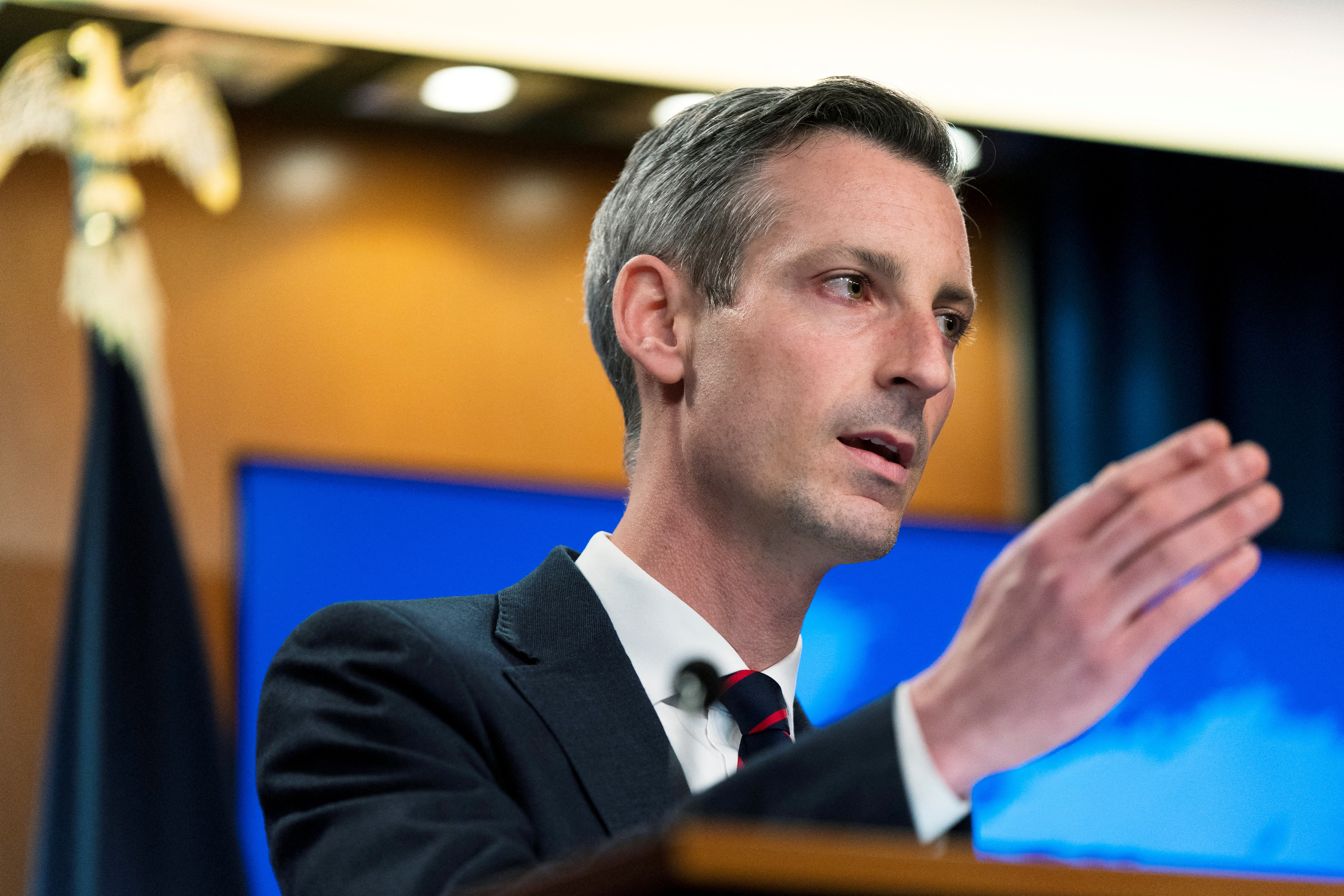
U.S. State Department spokesperson Ned Price speaks during a news conference in Washington, U.S. March 10, 2022. Manuel Balce Ceneta/Pool via REUTERS

The U.S. State Department on Monday said Finland and Sweden are ready to join the NATO alliance, after Turkish President Tayyip Erdogan said Sweden should not expect Turkey’s support for its membership after a protest near the Turkish embassy in Stockholm at the weekend including the burning of a copy of the Koran.

State Department spokesperson Ned Price told reporters that burning books that are holy to many is a deeply disrespectful act, adding that “something can be lawful but awful.”

Categories
Audio Sources - Full Text Articles

U.S. energy chief says Biden would veto House Republican bill on Strategic Petroleum Reserve

2023-01-23T20:08:36Z

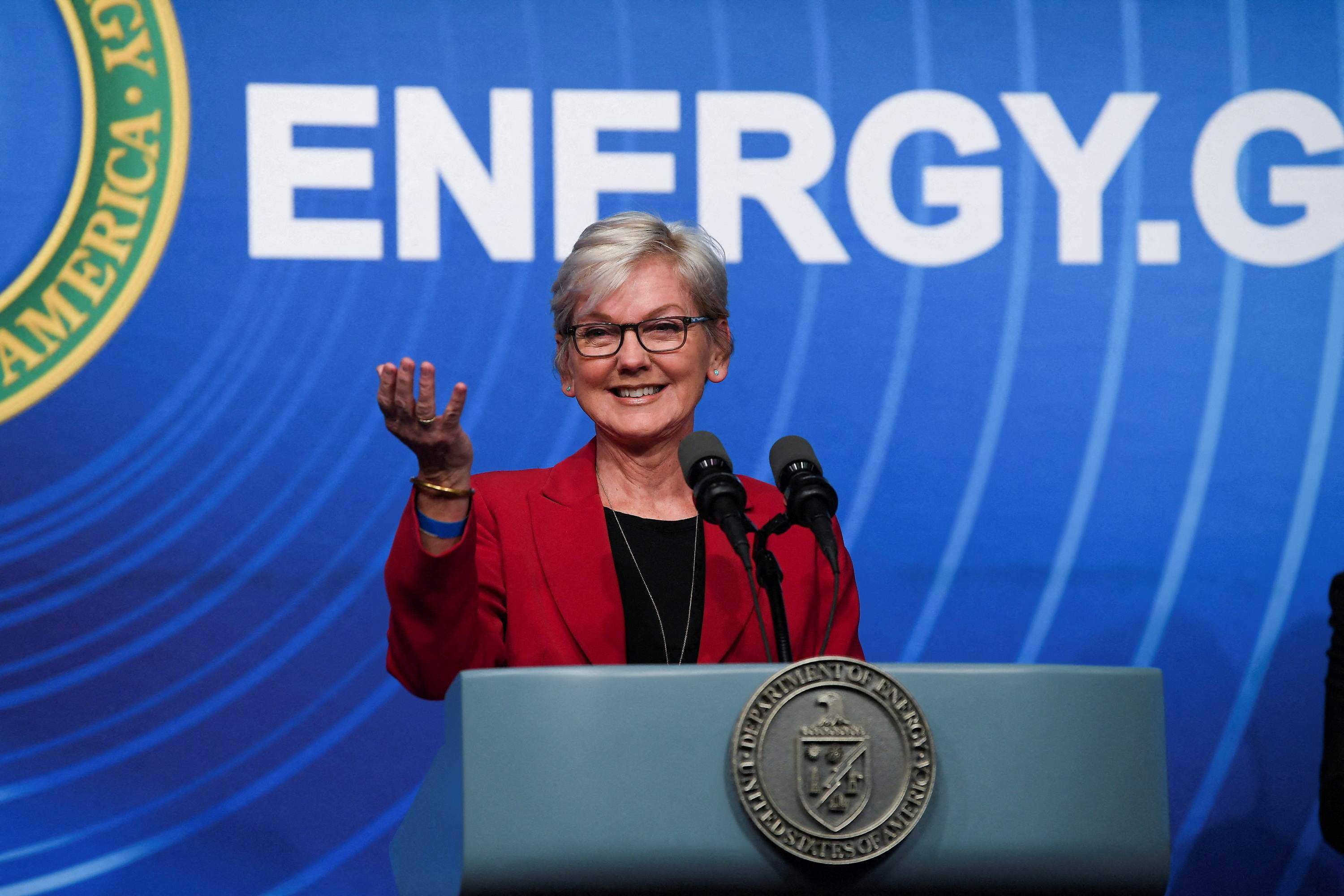
U.S. Secretary of Energy Jennifer Granholm hosts a U.S. Department of Energy news conference to announce that scientists at the Lawrence Livermore National Laboratory (LLNL) have made a breakthrough on fusion energy, the process that powers the sun and stars that one day could provide a cheap source of electricity in Washington, U.S., December 13, 2022. REUTERS/Mary F. Calvert/File Photo

U.S. Energy Secretary Jennifer Granholm said on Monday that President Joe Biden would veto a bill by House of Representatives Republicans on the Strategic Petroleum Reserve (SPR) if it passes the U.S. Congress.

In a letter last week, Granholm warned Republicans that limiting Biden’s authority to tap the nation’s oil reserves would undermine national security, cause crude oil shortages and raise gasoline prices.

Granholm said she has no concerns the United States will be able to refill the SPR and save taxpayers money.


WP Radio
WP Radio
OFFLINE LIVE