Categories
Audio Sources - Full Text Articles

Dow plunges 600 points as Fed officials say more rate hikes are needed to keep pulling inflation down

An apprentice engineer programming robots in a car factory.An apprentice engineer programming robots in a car factory

Monty Rakusen/Getty Images

  • US stocks tumbled after hawkish talk on rates from two Federal Reserve officials.
  • St. Louis Fed President James Bullard and Cleveland Fed President Loretta Mester each see the need for rates to rise to 5% or beyond.
  • The Dow plunged 600 points, and the S&P 500 ended lower for a second straight day. 

US stocks finished sharply lower Wednesday, reversing modest early gains, after two Federal Reserve officials stressed their desire to see more interest rate hikes aimed at tamping down on inflation.

The S&P 500 finished in the red for a second straight day, and none of its 11 sectors moved higher. Stocks rose earlier Wednesday after a drop in December retail sales and a deceleration in wholesale inflation underscored market expectations for the Fed to soften its rate-hike messaging. Retail sales fell 1.1%, and the PPI reading declined 0.5% month over month in December. 

But later, St. Louis Fed President James Bullard and Cleveland Fed President Loretta Mester each acknowledged an overall slowing trend of inflation but said more interest rate increases to 5% or beyond are needed to drag prices toward the central bank’s 2% target. The fed funds rate currently stands at 4.25%-4.5%. 

Here’s where US indexes stood at the 4:00 p.m. closing bell on Wednesday: 

Investors have been pricing in the potential for almost two rate cuts by the Fed, but the central bank is unlikely to make such moves this year, Tom Hainlin, global investment strategist at US Bank Wealth Management, told Insider. 

“We think Federal Reserve members and Chair [Jerome] Powell, in particular, have been very consistent in the messaging that they need to see inflation heading towards their desired rate with enough confidence that they would not only slow their rate hikes and pause them, but cut them,” he said. “We don’t see that as a 2023 feature – more of a 2024 feature.”

Hainlin said his firm is recommending defensive positions to its clients. “We think there’s still a slowdown coming in consumer spending and in business investment, which indicates to us we haven’t yet seen corporate profit estimates come down to a level we think they’re actually going to come in at.” 

Stocks may finish 2023 with a positive return, with the S&P 500 potentially landing at 4,275, said Hainlin. 

Here’s what else is happening today:

In commodities, bonds, and crypto:

Read the original article on Business Insider
Categories
Audio Sources - Full Text Articles

Putin’s desperate for a win, and he’s throwing troops at some of Ukraine’s toughest defenses to get it, former general says

A mortar crew fights on the outskirts of the city on January 13, 2023 in Bakhmut, Ukraine.A mortar crew fights on the outskirts of the city on January 13, 2023 in Bakhmut, Ukraine.

Photo by Serhii Mykhalchuk/Global Images Ukraine via Getty Images

  • Intense fighting between Ukraine and Russia has been taking place around the eastern city of Bakhmut. 
  • Putin has been sending troops into some of Ukraine’s most heavily defended areas, a former general said.
  • Mick Ryan argues the Russian leader is trying to get a win before the war’s one-year anniversary.

With the one-year anniversary of Russia’s invasion of neighboring Ukraine just weeks away, Moscow’s forces have yet to achieve their aims, despite paying a high cost in battle.

Russian President Vladimir Putin is “desperate for a victory of any kind” ahead of the milestone date, and he’s sending his troops into some of Ukraine’s most heavily defended areas to try to get it, a former Australian general said this week.

Fighting between Ukraine and Russia has intensified in recent weeks around Bakhmut, a city in eastern Ukraine’s Donetsk region. A few miles north of Bakhmut is Soledar, a smaller town where Russian forces and mercenaries belonging to the notorious Wagner Group paramilitary organization have focused their attention.  

Retired Maj. Gen. Mick Ryan, who served in the Australian military and as a strategist for the US Joint Chiefs of Staff, wrote that these urban areas don’t have much strategic utility, and the “massive Russian losses suffered for these towns are not justified by the minor gains they present.” 

Additionally, Russia is choosing to assault areas where Ukraine is at its strongest, Ryan said. The Donbas — which consists of the Donetsk and Luhansk regions — is where Ukrainian forces have battled Russian-backed separatists since 2014. Kyiv “has had eight years to prepare multiple, reinforcing defensive lines” there, he said.

Ukrainian soldiers shelter in the woods along a road outside of the strategic city of Bakhmut on January 18, 2023 in Bakhmut, Ukraine.Ukrainian soldiers shelter in the woods along a road outside of the strategic city of Bakhmut on January 18, 2023 in Bakhmut, Ukraine.

Spencer Platt/Getty Images

“Attacking areas where the enemy is strongest and best prepared is generally not recommended in war,” he said.

Ryan noted that Russia’s offensive underscores Putin’s desperation to notch a victory in any way, as the Russian armed forces have so far been unable to achieve any of Russian leadership’s major objectives during this campaign — which has been described by top Western officials and leaders as a failure.  

“Putin needs something before the one-year anniversary of his Ukraine invasion that he can portray to the Russian people as worthy of its costs,” the former general said, noting “Soledar and Bakhmut fit this bill.”

A senior US military official said last week that fighting around Bakhmut was “really severe and savage,” with thousands of rounds of artillery fire exchanged between the two sides. 

The British defense ministry wrote in a Wednesday intelligence update that Ukrainian forces this week had “highly likely” withdrawn from Soledar, just north of Bakhmut, ceding control to Putin’s troops and Wagner fighters.

In its daily briefing, the General Staff of the Ukrainian Armed Forces said Moscow’s main efforts now are focused on “conducting an offensive along the Bakhmut axis.” 

—Ministry of Defence 🇬🇧 (@DefenceHQ) January 18, 2023

The Institute for the Study of War, a Washington-based think tank, wrote in an analysis last week that Russian control of Soledar does not represent an “operationally significant development” that will necessarily lead to the capture of Bakhmut.

It said Russia has “overexaggerated” the importance of the town, which is not a worthwhile victory given the costs of fighting. 

Speaking to defense chiefs in Brussels on Wednesday, NATO Deputy Secretary General Mircea Geoană warned that Putin is preparing for a “long war,” and the military alliance should be prepared “for the long haul.”

“We need to ramp up our industrial capacity to manufacture weapons and ammunition and work closely with the defense industry to replenish our own stocks,” Geoană said, according to a transcript of his speech. “It matters for Ukraine and for our own deterrence and defense.”

Read the original article on Business Insider
Categories
Audio Sources - Full Text Articles

Russia’s foreign minister says West’s opposition to Russia’s war is like Hitler’s ‘final solution’

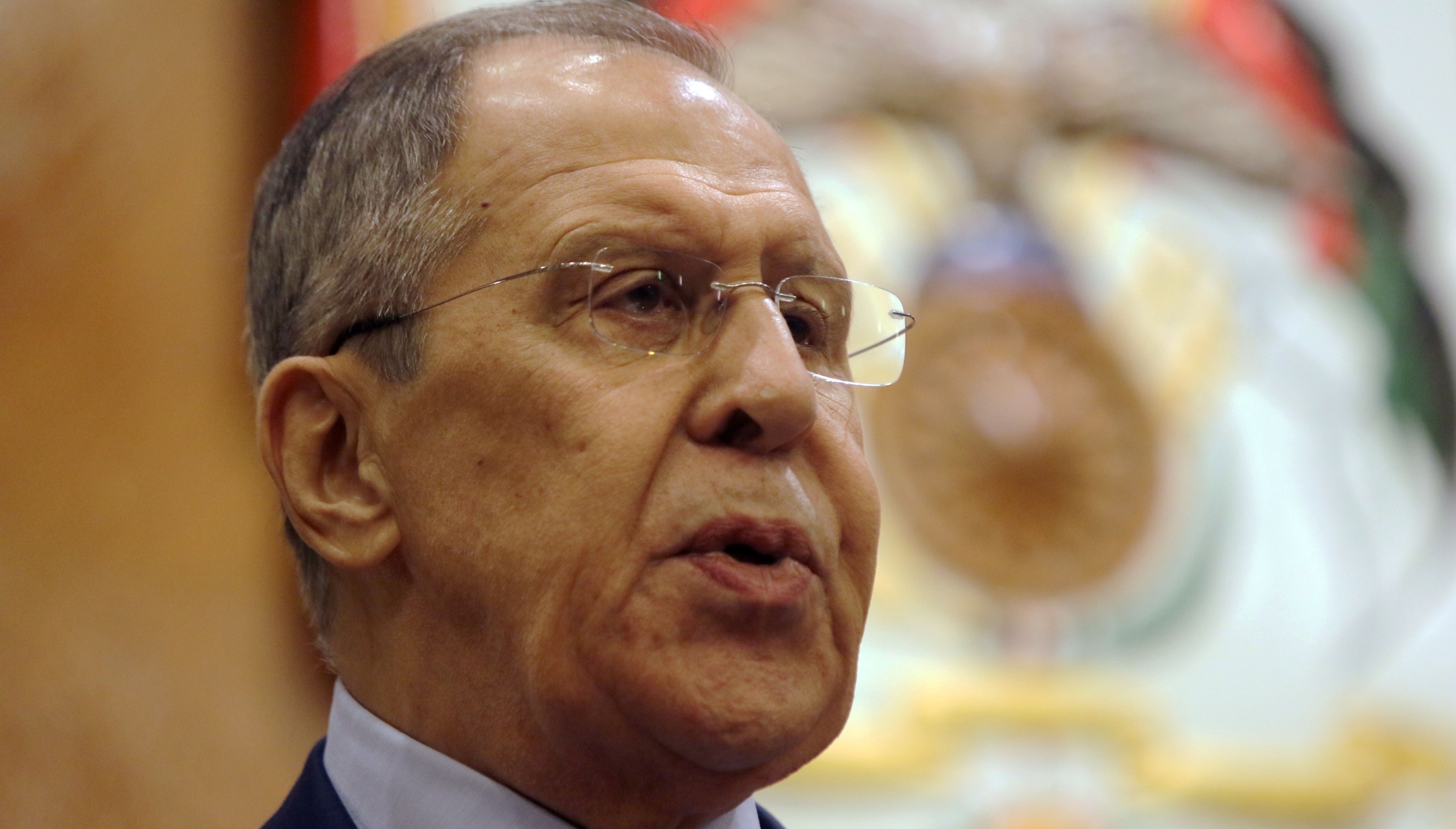
01-18-2023-Lavrov.jpg

(JTA) — Last year, Sergei Lavrov, Russia’s top diplomat, drew criticism after saying Ukraine’s Jewish president was like Hitler. Now he’s upped the ante: Western countries assisting Ukraine in repelling Russia’s invasion are seeking a “final solution.”

Lavrov made the comments Wednesday during an annual press conference with Russian media.

“The United States formed a coalition with almost all Europeans that are part of NATO, and also members of the European Union, and through Ukraine as a proxy, lead the war against our country, with the same exact goal: the goal of the final solution to the Russian question,” he said. “Just as Hitler wanted a ‘final solution’ to the Jewish question, now, if you read Western politicians, not only from the Baltics or Poland, but also those who are much more sane, they unequivocally say Russia must suffer a strategic defeat.”

U.S. and Israeli officials condemned the comparison. John Kirby, the Pentagon spokesman, told reporters the comparison was “truly offensive.”

Israel’s foreign ministry also decried the comments, according to a Times of Israel report. “Any comparison or relating current events with Hitler’s final solution plan for the extermination of the Jewish People distorts the historical truth, desecrates the memory of those who perished and the survivors and should be strongly rejected,” the ministry said, according to the report.

Lavrov drew similar criticism last year after he compared likened Ukrainian president Volodymyr Zelensky to Hitler. He said it was not wrong to accuse Zelensky, who is Jewish, of being like Hitler because, Lavrov said, citing a falsehood, Hitler had Jewish ancestors.

Naftali Bennett, then Israel’s prime minister, said after that episode that Russian President Vladimir Putin had apologized for Lavrov’s remarks, in what appeared to be a rare concession by Putin.

Lavrov’s new claim comes as Israel’s new far-right government, led by Prime Minister Benjamin Netanyahu, is seeking to pull Israel away from favoring Ukraine in the conflict. Israel has refrained from delivering military assistance to Ukraine, but the previous government led by Bennett and Yair Lapid proffered diplomatic and economic assistance to the besieged country.

This article originally appeared on JTA.org.

The post Russia’s foreign minister says West’s opposition to Russia’s war is like Hitler’s ‘final solution’ appeared first on The Forward.

Categories
Audio Sources - Full Text Articles

Orthodox pilgrimage to the grave of Kabbalah rabbi buried in Istanbul picks up after COVID slump

ISTANBUL (JTA) — Dozens of Orthodox Jews gathered on a hill overlooking the Bosphorus Strait. 

Above them, guarding the hilltop, stood a Turkish military base, and below sat the swanky Istanbul neighborhood of Ortaköy. Dominating the view was the 15th of July Martyrs Bridge, which connects Europe and Asia. On the Asian side of the Strait loomed the massive Çamlica Mosque.


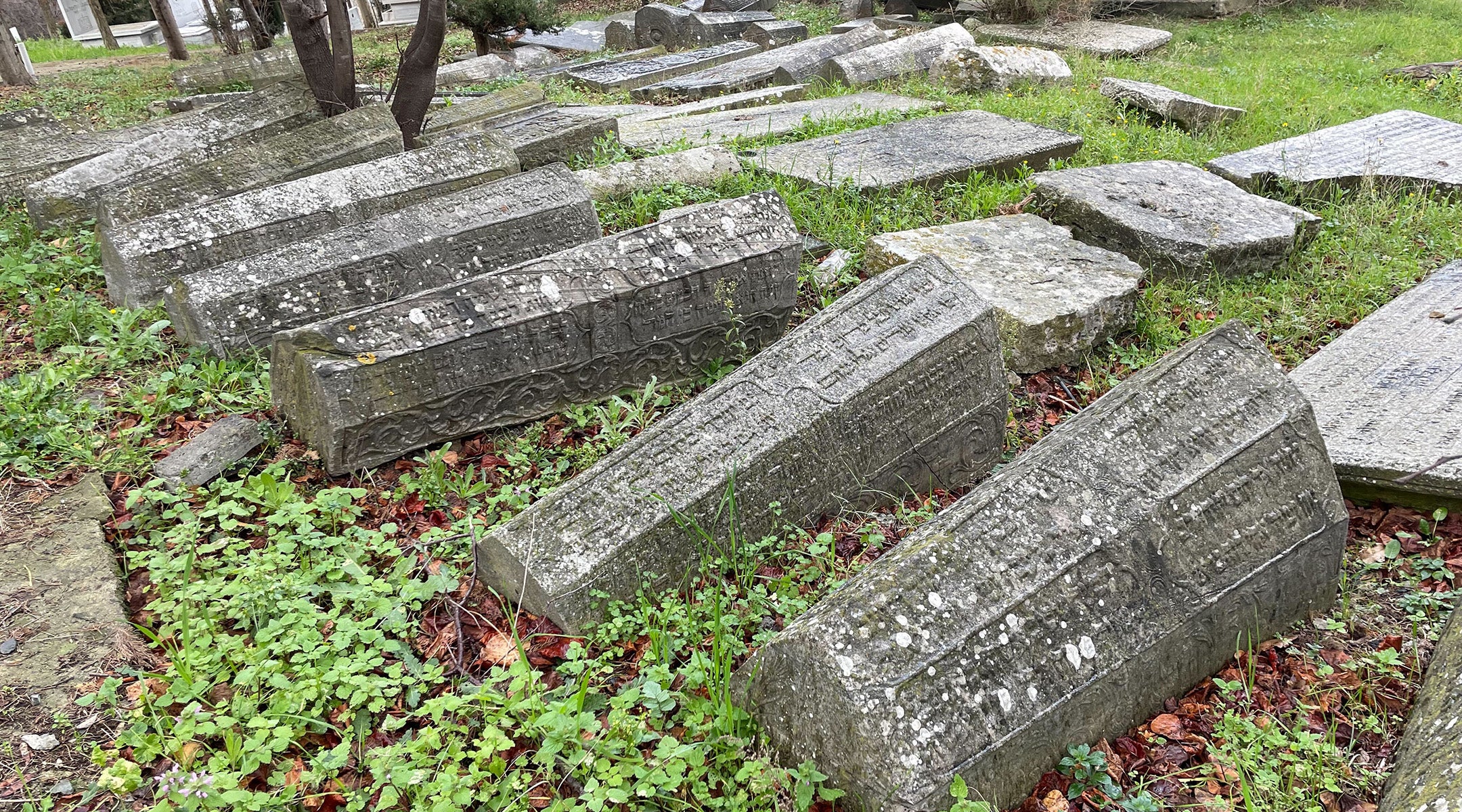
None of those sites were of interest to the crowd, however. The hill also contains one of Istanbul’s main Jewish cemeteries, and those gathered — who came from Turkey, the United States and Israel — were there to pay their respects on the yahrzeit, or death anniversary, of Rabbi Naphtali HaKohen Katz, an influential and prolific 17th-century rabbi who was devoted to Jewish mysticism.

Pilgrimages like this one, made by Orthodox groups of varying sizes to the grave sites of similarly revered Jewish figures across Europe, are far from uncommon and have spawned a cottage travel industry. Among the largest and most publicized is the annual pilgrimage to Uman, Ukraine, which brings tens of thousands to the grave of Rabbi Nachman of Breslov each Rosh Hashanah (not on the anniversary of his death). Another involves the grave of Rabbi Elimelech Weisbaum, an early Hasidic leader, in Lizhensk, Poland, in the early spring.

(David I. Klein)(David I. Klein) Image by

Yitzhak Friedman, a Hasidic Jew from Lakewood, New Jersey, who is currently studying in Israel, told the Jewish Telegraphic Agency that he and a few friends used the opportunity of Katz’s yahrzeit to rationalize a short trip to Istanbul.


“It was cheap tickets, we heard a lot of great things, so I had a nice jump over for two days,” he said.


Another group of Orthodox women from Israel said they had planned their trip similarly to coincide with the “hilulah” — using the Hebrew word for such a pilgrimage.


Though the pilgrimage to Uman has become a rowdy days-long affair, during which the influx of Orthodox Jews rent out most of the small city’s available apartments and hotel rooms, other pilgrimages, such as the one to Katz’s grave, have a more quiet and introspective atmosphere. The crowd on Tuesday took breaks from praying to eat at the cemetery’s synagogue, passing around whiskey and snacks.

Friedman said that he has made several similar journeys in the past year alone, including to Dynow, Poland, to the grave of Reb Tzvi Elimelech, another early Hasidic leader. He also spent more than 30 hours traveling to war-torn Ukraine to spend Rosh Hashanah in Uman, a practice that was strongly discouraged by both Israeli and Ukrainian rabbinic leaders this year.

The Jewish cemetery where Katz is buried offers a hilltop view of the city. (David I. Klein)The Jewish cemetery where Katz is buried offers a hilltop view of the city. (David I. Klein) Image by

Friedman said he had heard that a visit to Katz’s grave had helped people with various things, from finding “the right match” to having kids have kids to being cured from a sickness. He asked simply for “happiness” in his prayers.

He also attributed some of the effects of the grave to the fact that it is visited less than the one in Uman.

“It’s known that a tzaddik that very few people come to, his powers are much bigger,” Friedman said.


Another of the pilgrims, a Hasidic man from the Doroger sect in Bnei Brak, Israel, explained that he was a distant descendent of Katz, and that, though he was coming for the first time, he came to accompany his father who had been making the trip for 50 years.


Katz was born in 1649, in what is today Ostrovo, Ukraine, and at the age of 14 he was captured and sold into slavery by Tatars, a Turkic muslim group in Crimea and other parts of Southern Ukraine. But he escaped years later and returned to Ostrovo to become the community’s rabbi, later transferring to Posen in modern-day Poland, where he became a scholar of Kabbalistic literature.

But his struggles would not end with the Tatars. Later in life, Katz was called to Frankfurt, in today’s Germany, to serve the community there. When a fire broke out in the city in 1711, he was accused of using kabbalistic charms to stop it from being extinguished by natural means and imprisoned by the local leadership.


Upon his release, he fled to Prague — where he quarreled with another Kabbalah teacher devoted to Shabbetai Zevi, a false messiah — and later Wroclaw.

In past years, as many as 300 people at a time have visited the Istanbul cemetery. (David I. Klein)In past years, as many as 300 people at a time have visited the Istanbul cemetery. (David I. Klein) Image by

After a life filled with struggle in Europe, Katz tried to emigrate to the holy land but only made it as far as Constantinople, where he died in 1718, and was buried by the local Jewish community in the Ortaköy Cemetery.


Ever since, the grave has been a site of pilgrimage, explained Rabbi Mendy Chitrik, an Istanbul rabbi affiliated with the Hasidic Chabad-Lubavitch movement — and another distant descendent of Katz’s — who helped in the restoration of the grave in 2005. 

“Throughout the ages some great rabbis have allegedly made the pilgrimage,” Chitrik said, including the Baal Shem Tov — the founder of the Hasidic Judaism — Rabbi Nachman of Breslov and others.

“I have accompanied great rabbis who came anonymously to pray at his grave,” Chitrik added. “Some fly in for a day on private jets and leave.”


While some people come throughout the year, the most popular time to come is Katz’s yahrzeit, the 24th of Tevet on the Hebrew calendar. In past years, as many as 300 people came for the occasion, said Albert Elvaşvili, the president of the Ortaköy Jewish community which manages the cemetery.


However, he noted that attendance often rises and falls with the changes in Israeli-Turkish relations, much like general Israeli tourism to Turkey, which reached an all time high this year.

The biggest slump came during the COVID-19 pandemic, with only a handful of pilgrims coming the last two years. Now it seems that the tradition is once more back in force, with several buses of pilgrims from different countries and sects coming throughout the day.

“As relations with Israel and the Jewish people are coming to a better place, I believe there will be many more people coming in, and as Turkey becomes much more attractive for the Jewish and religious traveler, there will be many more opportunities for people to come,” Chitrik said. “Not just to the kever [grave] of Naphtali Katz on the 24th of Tevet, but to Rabbi Chaim Palachi in Izmir, on the 19th of Shevat, next month, and Rabbi Yehudah Rozanes, on the 26th of Nisan, and many other rabbis who are buried here in the important cemeteries of Turkey.”

This article originally appeared on JTA.org.

The post Orthodox pilgrimage to the grave of Kabbalah rabbi buried in Istanbul picks up after COVID slump appeared first on The Forward.

Categories
Audio Sources - Full Text Articles

Michael Novakhov retweeted: “And Jam Master J making all that sound, the turn tables may wobble but they don’t fall down!” 🎶 #Mmemberville #CannabisCommunity #StonerFam #cannabis #RUMDMC

Michael Novakhov retweeted:

“And Jam Master J making all that sound, the turn tables may wobble but they don’t fall down!” 🎶 #Mmemberville #CannabisCommunity #StonerFam #cannabis #RUMDMC

FmxJpZvaYAArfas.jpg:large

Categories
Audio Sources - Full Text Articles

inoreader.com/stream/user/10… inoreader.com/stream/user/10… youtube.com/watch?v=7vfIOP…

inoreader.com/stream/user/10… inoreader.com/stream/user/10… youtube.com/watch?v=7vfIOP…
Categories
Audio Sources - Full Text Articles

Chris Ford, champ as player, coach with Celtics, dies at 74

Chris Ford, a member of the Boston Celtics 1981 championship team, a longtime NBA coach and the player credited with scoring the league’s first 3-point basket, has died, his family announced in a statement. He was 74.

The family revealed the death through the Celtics on Wednesday. No official cause was given, but the statement said Ford passed away on Tuesday. The Press of Atlantic City reported he died in Philadelphia having suffered a heart attack earlier in the month.

“Chris was beloved by his family, friends, and teammates. He had a great love for his family, the city of Boston, the fans, and the entire Celtics family,” the family statement said. “He always showed humility and respect for all those that were fortunate enough to be a part of his life.”

Ford was voted the team’s MVP in his first season with Boston. He retired following the 1981-82 season and was an assistant coach for the Celtics for seven seasons from 1983 to 1990, helping coach former teammates Larry Bird, Kevin McHale and Robert Parish to two titles in 1984 and 1986 while serving under coach K.C. Jones.

He is one of four former Celtics to have won championships as both a player and coach, joining Bill Russell, Tom Heinsohn and Jones.

“As a player and coach, Chris Ford’s career spanned over a decade of Celtics basketball, and he made his mark every step of the way,” the Celtics said in a statement. “‘Doc,’ as he was affectionately known by his teammates, was a fundamentally versatile all-around guard. … The Boston Celtics sends their deepest sympathies to the Ford family and their many friends.”

Born in Atlantic City, New Jersey, Ford was drafted out of Villanova by the Detroit Pistons in 1972. He spent six seasons there before being traded to the Celtics. He averaged a career-high 15.6 points and 4.7 assists per game his first season in Boston in 1978-79. He opened the following season on Oct. 12, 1979, by sinking the first 3-point shot in NBA history in the first quarter of Boston’s win over the Houston Rockets.

Ford succeeded Jimmy Rodgers as Celtics coach and led the team for five seasons from 1990-91 through 1994-95.

He compiled a 222-188 record with four playoff appearances as Boston’s head coach, but his teams never advanced beyond the conference finals.

Ford also had a pair of two-year head coaching stints with the Milwaukee Bucks (1996-98) and Los Angeles Clippers (1998-2000). He began the 2003-04 season as an assistant for the Philadelphia 76ers and coached the final 30 games that season after Randy Ayers was fired.

___

AP NBA: https://apnews.com/hub/NBA and https://twitter.com/AP_Sports

Categories
Audio Sources - Full Text Articles

Wall St sinks after weak data, hawkish Fed comments

2023-01-18T21:49:50Z

Traders work on the trading floor at the New York Stock Exchange (NYSE) in New York City, U.S., January 5, 2023. REUTERS/Andrew Kelly

The S&P 500 and the Dow lost almost 2% on Wednesday, their biggest daily drops in more than a month, after weak economic data fueled recession worries while hawkish comments from Federal Reserve officials soured investor moods further.

Before the market opened, U.S. economic data showed retail sales and producer prices declined more than expected in December, while production at U.S. factories fell more than expected and November output was weaker than thought.

“It seems that investors are finally coming to the conclusion that getting inflation under control is not a free lunch and that all the tightening the Fed has had to do to get inflation moving in the right direction, comes with economic costs,” said Michael Reynolds, vice president of investment strategy at Glenmede.

“Investors may have had this false belief that this soft landing scenario was a higher probability event than it actually is.”

The Dow Jones Industrial Average (.DJI) fell 613.89 points, or 1.81%, to 33,296.96 and the S&P 500 (.SPX) lost 62.11 points, or 1.56%, to 3,928.86. The Nasdaq Composite (.IXIC) dropped 138.10 points, or 1.24%, to 10,957.01.

Wednesday’s decline was Nasdaq’s first loss in eight sessions while the S&P and the down both saw their biggest daily percentage declines since Dec. 15.

With Wall Street’s major averages showing gains so far for 2023, Sam Stovall, chief investment strategist at CFRA research, said some investors saw weak data as an opportunity to take profits.

“The market was overbought. Today’s economic data served as a trigger to initiate a profit taking spell and the groups with most profits to take have been the ones that have done best last year,” said Stovall.

The weakest sectors on Wednesday were the defensive consumer staples (.SPLRCD), down 2.7%, and utilities (.SPLRCU), which fell 2.4%. In comparison, the best performers were more growth heavy sectors such as communications services (.SPLRCL), down 0.9%, and technology (.SPLRCT), down 1.3%.

Earlier in the day, St. Louis Fed President James Bullard and Cleveland Fed President Loretta Mester stressed on the need to raise rates beyond 5% to bring inflation to heel.

And late in the afternoon, Philadelphia Federal Reserve President Patrick Harker said that he expects the Fed to raise rates a few more times this year although he reiterated earlier comments that he’s ready for the U.S. central bank to move to a slower pace of rate hikes due to signs of cooling inflation.

The Fed commentary also highlighted the disparity between the U.S. central bank’s estimate of its terminal rate and market expectations, which were of the rate peaking at 4.88% by June. Traders are now betting on a 25-basis point rate hike in February.

Investors are also focused on the fourth-quarter earnings season as a window into how corporate America is doing against the backdrop of higher interest rates.

Analysts now expect year-over-year earnings from S&P 500 companies to decline 2.6% for the quarter, according to Refinitiv data, compared with a 1.6% decline in the beginning of the year.

Moderna Inc (MRNA.O) shares rose 3.3% after reporting data which demonstrated the effectiveness of its respiratory syncytial virus (RSV) vaccine.

PNC Financial Services Group Inc (PNC.N) shares tumbled 6% after it missed estimates for its fourth-quarter profit.

Declining issues outnumbered advancing ones on the NYSE by a 1.88-to-1 ratio; on Nasdaq, a 1.98-to-1 ratio favored decliners.

The S&P 500 posted nine new 52-week highs and 2 new lows; the Nasdaq Composite recorded 78 new highs and 20 new lows.

On U.S. exchanges 11.76 billion shares changed hands on Wednesday compared with the 10.45 billion average for the last 20 sessions.

Categories
Audio Sources - Full Text Articles

Berlin will allow exports of German tanks to Ukraine if U.S. sends its tanks -source

2023-01-18T21:29:39Z

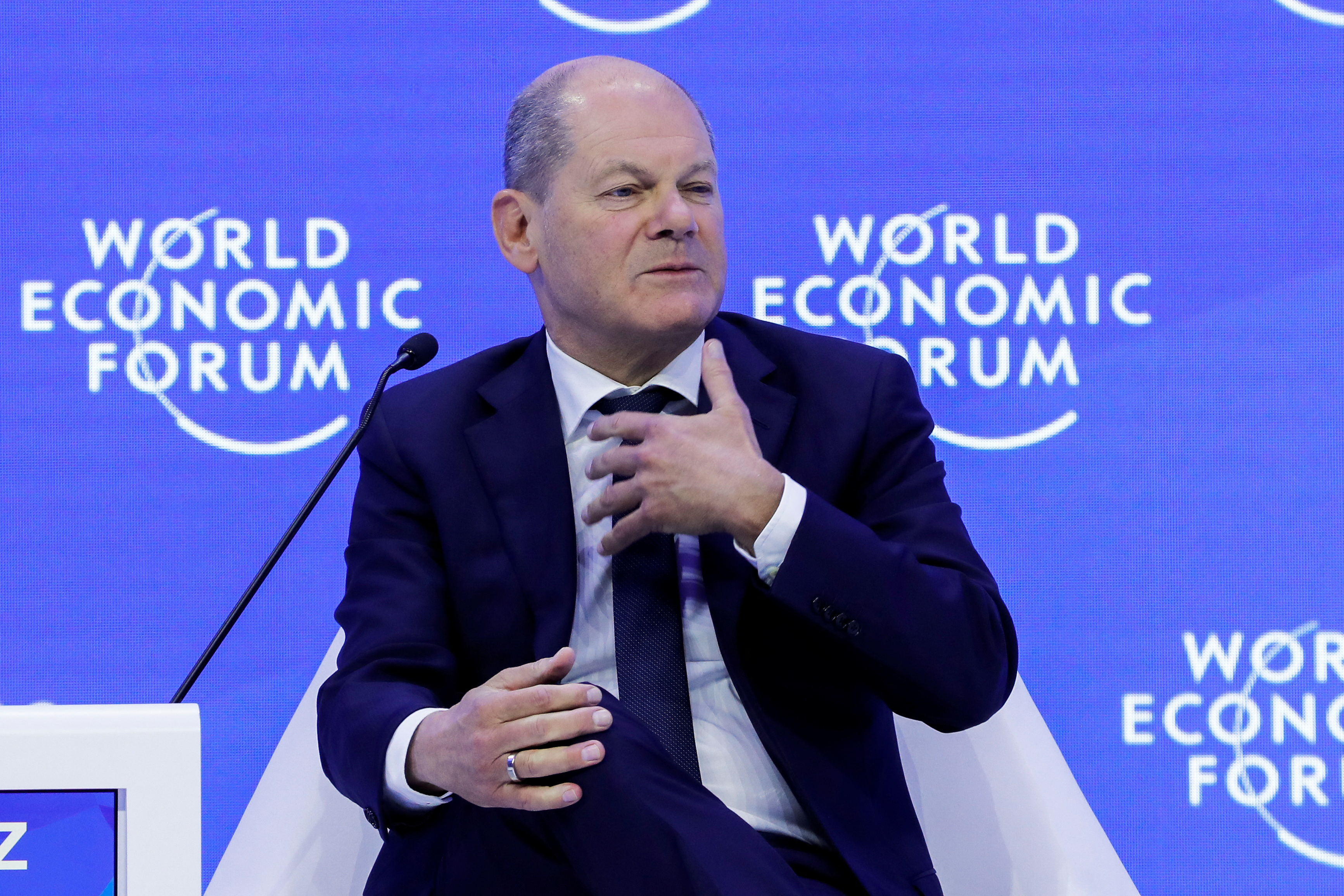
German Chancellor Olaf Scholz speaks during the World Economic Forum (WEF), in Davos, Switzerland, January 18, 2023. REUTERS/Arnd Wiegmann

Germany will allow German-made tanks to be sent to Ukraine to help its defense against Russia if the United States agrees to send its own tanks, a German government source told Reuters.

German Chancellor Olaf Scholz has stressed the stipulation several times in recent days behind closed doors, the person said, speaking on condition of anonymity.

Western allies will meet at a U.S. air base in Germany on Friday to offer more weapons for Ukraine.

Attention is focused in particular on Germany, which has veto power over any decision to send its Leopard tanks, fielded by NATO-allied armies across Europe and widely seen as the most suitable for Ukraine.

Polish President Andrzej Duda told attendees at an economic forum in Davos, Switzerland, on Wednesday that he was afraid Russia was preparing a new offensive in Ukraine within months and it was therefore crucial to provide additional support to the Kyiv government with modern tanks and missiles.

Poland and Finland have already said they will send Leopard tanks if Germany approves them.

Berlin says a decision will be the first item on the agenda of Boris Pistorius, Germany’s new defence minister.

Pistorius will host U.S. Defense Secretary Lloyd Austin on Thursday.

The United States has committed roughly $24 billion to help Ukraine defend itself against Russian forces.

U.S. officials, speaking on the condition of anonymity, said President Joe Biden’s administration is next expected to approve Stryker armored vehicles for Ukraine but is not poised to send its own tanks, including the M1 Abrams.

This week, Britain raised the pressure on Berlin by becoming the first Western country to send Western tanks, pledging a squadron of its Challengers, but the Leopards are seen as the best choice to supply Ukraine with a large-scale tank force.

The Wall Street Journal, citing senior German officials, first reported Berlin’s condition on tanks earlier on Wednesday. The publications Sueddeutsche Zeitung and Bild also had a similar reports.

Categories
Audio Sources - Full Text Articles

Ukraine Is Top of the Agenda in Davos. But Some Fear Support From Businesses Has Peaked

In 2023, TIME will once again recognize 100 businesses making an extraordinary impact around the world. Applications for the TIME100 Most Influential Companies of 2023 are open, now through March 1, 2023. Apply here.

Hello from the Magic Mountain of Davos, where the World Economic Forum is well underway. We’ll be bringing you the latest from this week’s gathering, including insights on the most-talked about issues, quote-worthy things said, and more. You can find our first installment here. You can also pick up a copy of TIME’s Davos special issue in the Congress Centre or read our stories here.

[time-brightcove not-tgx=”true”]

The last time the WEF convened in May, it was three months into the Russian invasion of Ukraine—a topic that, unsurprisingly, dominated the gathering. This year, as the war approaches its first anniversary, Ukraine remains very much top of mind. World leaders have seized on every opportunity to reiterate their support for Ukraine. “We are in it for as long as it takes,” European Commission President Ursula von der Leyen told Ukrainian First Lady Olena Zelenska on Tuesday, a refrain that has since been echoed by German Chancellor Olaf Scholz, U.S. Sen. Joe Manchin, and Swedish Foreign Minister Tobias Billström. Several members of the U.S. congressional delegation have been spotted wearing U.S. and Ukraine flag pins on their lapels.

Ukraine’s visibility extends beyond the forum’s main Congress Centre. On the promenade, Davos’s main thoroughfare, Ukraine House broadcasts images from the streets of war-torn Kherson. Russia House, previously a fixture on the promenade, is nowhere to be seen. Neither are any Russian officials.

Though Ukraine remains central to the outward facing narrative at Davos and in conversations among the geopolitically-inclined, some Davos attendees told TIME that the same cannot be said for the forum’s more corporate-minded settings. “When you get into meetings with corporate actors, it has not been my experience that Ukraine is the primary concern of the agenda,” Amnesty International secretary general Agnes Callamard told TIME. “There is a sense on the part of the corporate sector that they’ve done what needed to be done for Ukraine.”

Many, though not all, companies have suspended their operations in Russia. Others, such as Microsoft and Google, are providing humanitarian aid to the country. But for the war to end sooner rather than later, Ukrainian delegates told TIME, they need more support from the private sector—and not just after the war ends. “We really need the end and the victory to be this year,” says Ukrainian lawmaker Alona Shkrum, noting that neither Ukraine nor its partners can afford for this war to go on indefinitely. “We can win. We just need more weapons and more air defense.”

Businesses donating humanitarian aid is one thing; supplying funding for defensive weapons systems is quite another. But as some Ukrainians see it, donated laptops to support the education of Ukrainian children can only go so far in a country that barely has electricity, let alone schools that can be shielded from Russian shelling.

“It would be cheaper to buy the air defense systems and close the sky than to rebuild later,” says Ukrainian lawmaker Oleksandra Ustinova, who leads Ukraine’s temporary special commission on arms control. But understandably, she adds, “businesses don’t want to get into this.”


More from TIME


The Ukrainian delegation are not the only ones raising the issue of the war at Davos. Belarusian opposition leader Sviatlana Tsikhanouskaya, the first representative from Belarus to attend WEF in three decades, has spent the past few days reminding attendees that the crises in her home country and Ukraine are intertwined. “Belarus now is overlooked, we feel this,” Tsikhanouskaya told TIME, noting that so long as Belarusian dictator and Kremlin ally Alexander Lukashenko remains in power, and so long as Minsk continues to host Russian soldiers on its territory, “there will be a constant threat to our neighbors.”

Phrase of the day

Ukrainian First Lady Olena Zelenska has been quizzed about many things during her time in Davos, though perhaps nothing more so than the prospect of “Ukraine fatigue.”

“To be completely honest with you, I really have the fatigue of the questions about the fatigue,” Zelenska told TIME during a press briefing on Wednesday. Based on her experience at Davos, she added, “it seems like an exaggeration. And I think this may be a part of the information warfare because I think our enemy would be very happy if people were fatigued from Ukraine.”

Hot topic

ChatGPT and the potential of artificial intelligence (AI) have been hot topics at this year’s WEF. Microsoft chairman and CEO Satya Nadella extolled the virtues of GPT technology in conversation with WEF’s Klaus Schwab Wednesday. The company is reportedly mulling a $10 billion investment in OpenAI, the company behind ChatGPT.

But as a TIME investigation reveals, the workers in Kenya who helped make ChatGPT possible faced poor working conditions. The story of these workers demonstrates that for all its glamor and buzz, AI often relies on hidden human labor in the Global South that can be damaging and exploitative. These invisible workers remain on the margins even as their work contributes to billion-dollar industries.

Peak moments

  • German Chancellor Olaf Scholz pledged to continue supporting Ukraine “as long as necessary” amid calls for Berlin to authorize the export of German-made Leopard tanks to Kyiv. When asked by a Ukrainian delegate about Berlin’s “hesitancy,” Scholz said such decisions would have to be taken in coordination with “friends and partners.” Scholz also announced Germany’s ambition of attaining climate neutrality by 2045.
  • Ukrainian President Volodymyr Zelensky led a minute of silence in honor of the 14 people killed in Wednesday’s helicopter crash in Kyiv, including Ukrainian Interior Minister Denys Monastyrsky. “Tragedies are outpacing life,” Zelensky said afterwards. “The time the free world uses to think is used by the terrorist state to kill.” (Zelensky’s conversation with TIME Editor-in-Chief Edward Felsenthal was canceled in light of the crash.)
  • The promenade in Davos was lit up with rainbow colors at many venues on Wednesday evening in a show of support for the LGBTIQ+ community. “Pride on the Promenade” was launched by the Partnership for Global LGBTIQ+ Equality—a coalition of companies that is an initiative of Business for Social Responsibility, the U.N. Office of the High Commissioner for Human Rights, and the WEF—and GLAAD. Speaking at the launch, U.N. High Commissioner for Human Rights Volker Türk called for more “support and protection to human rights defenders and civil society, particularly in locations, and on issues, that currently receive little funding and attention.”


Courtesy of METAVisitors walk along the Rainbow Promenade in Davos.

Spotted at Davos

Amnesty International secretary general Agnes Callamard catching up with David Nabarro, the World Health Organization’s Special Envoy on COVID-19, in the forum’s bustling central lounge.

Looking ahead

  • South Korean President Yoon Suk Yeol will address the forum on Thursday at 5:30 a.m. ET.
  • Ukrainian President Volodymyr Zelensky will make a virtual address on a panel alongside former British Prime Minister Boris Johnson, Dutch Prime Minister Mark Rutte, BlackRock chairman and CEO Larry Fink, and others.

—With reporting by Ayesha Javed

WP Radio
WP Radio
OFFLINE LIVE