Categories
Audio Sources - Full Text Articles

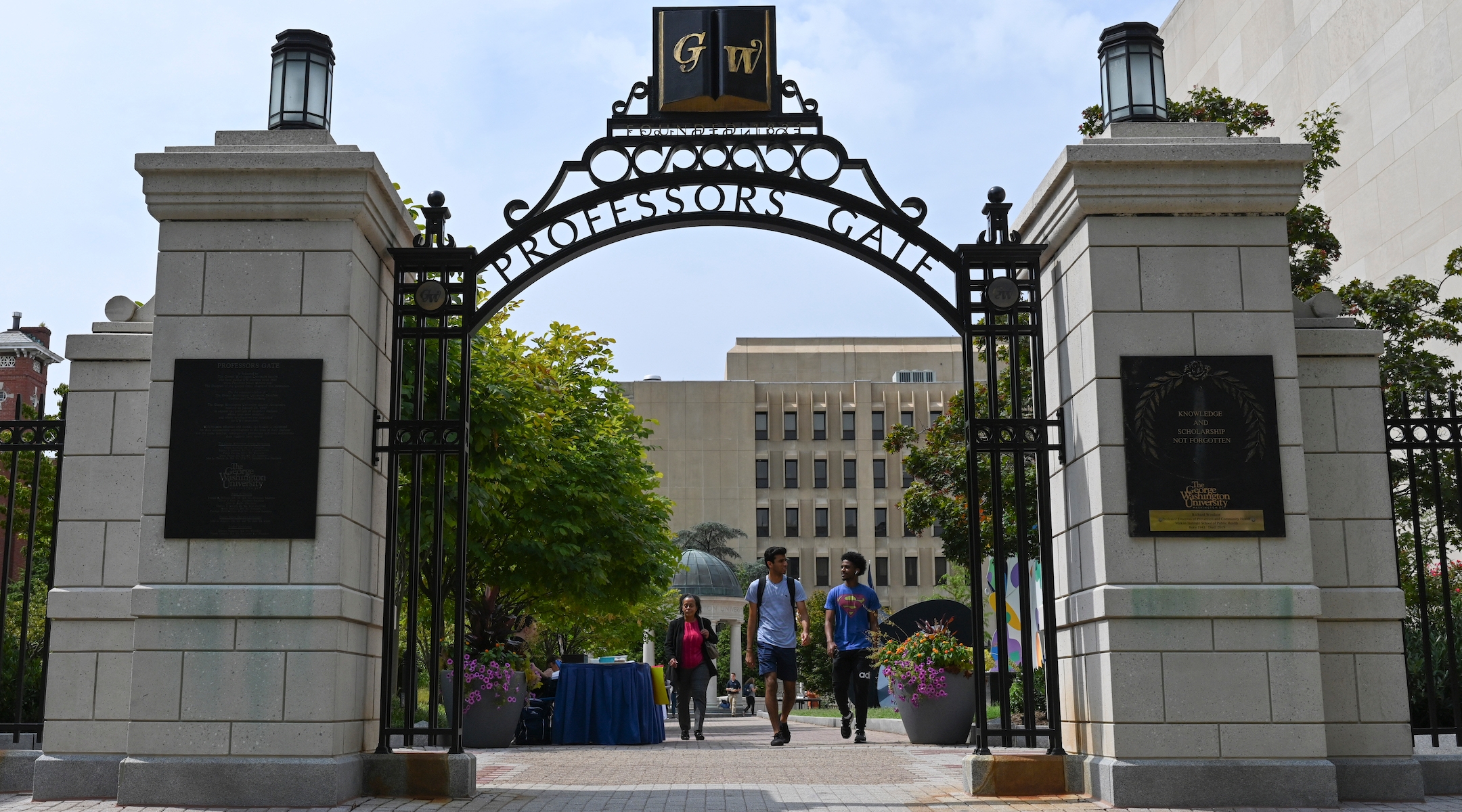
George Washington University opens investigation into allegations of a professor’s antisemitic harassment

GettyImages-1199299877.jpg

(JTA) – George Washington University says it has opened an investigation into whether a psychology professor displayed antisemitic behavior in her interactions with Jewish and Israeli students, in the latest row over the state of Jewish life at the university in Washington, D.C.

The investigation was prompted by a federal complaint filed by the pro-Israel watchdog group StandWithUs, which quoted graduate psychology students alleging that they had been targeted last fall by their professor due to “their Jewish and Israeli identities.” 

The group’s complaint, filed with the U.S. Department of Education’s civil rights office, quotes the professor, Lara Sheehi, as having told an Israeli student on the first day, “It’s not your fault you were born in Israel.” It goes on to allege that Jewish students felt targeted by a guest speaker Sheehi had brought into class, Hebrew University of Jerusalem Professor Nadera Shalhoub-Kevorkian, for comments she made advocating throwing stones at Israelis as a form of resistance. When students brought their concerns to Sheehi, the complaint alleges, she accused them of Islamophobia. 

Subsequent meetings with higher-ups at the university did not yield satisfactory results, the complaint said.

In a statement last week, GWU President Mark Wrighton said the university would be opening “an investigation by a third party” into the complaint’s “claims of discrimination and retaliation against unnamed students in a GW course.” A GWU spokesperson previously told the Forward that the university “strongly condemns antisemitism and hatred” and “also recognizes and supports academic freedom.”

The Department of Education has yet to weigh in on whether it will open its own investigation, as it has with similar complaints of campus antisemitism in recent years.

The university, whose Hillel opened a new kosher cafe this week, has been the flashpoint of several incidents, putting a spotlight on Jewish student life in the past couple years. Groups posted anti-Zionist flyers near the campus Hillel and Jewish students rallied in 2021 after vandalism at a Jewish fraternity that included damage to a replica Torah. 

But over the course of the 2021-2022 academic year, Jewish students across the political spectrum told the Forward they found claims of pervasive antisemitism on campus exaggerated. Some said they thought the frequent involvement of outside pro-Israel groups was counterproductive.

A graduate of the American University of Beirut, Sheehi is a professor of clinical psychology and the co-author of “Psychoanalysis Under Occupation: Practicing Resistance in Palestine.” The incidents described in the StandWithUs report allegedly took place in Sheehi’s required diversity training course for GWU’s psychology graduate students.

This article originally appeared on JTA.org.

The post George Washington University opens investigation into allegations of a professor’s antisemitic harassment appeared first on The Forward.

Categories
Audio Sources - Full Text Articles

Australian politician under fire for wearing Nazi uniform at 21st birthday party

1-18-23-Dominic-Perrottet.jpg

(JTA) — Dominic Perrottet, the premier of the Australian state of New South Wales and a leading member of the country’s center-right Liberal Party, is facing harsh criticism after news surfaced that he wore a Nazi costume during his 21 birthday party, nearly 20 years ago.

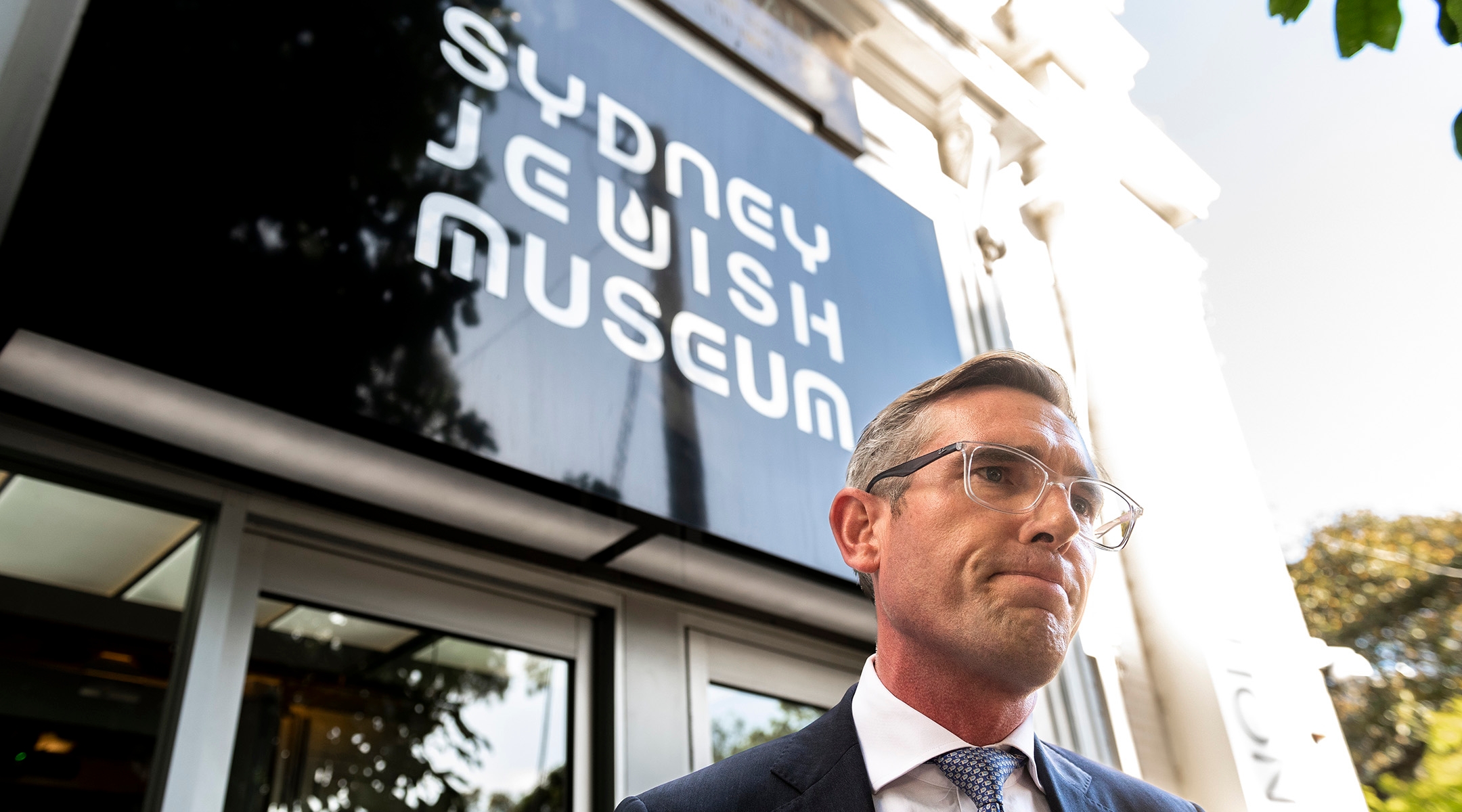
Perrottet apologized during a conference he called outside of the Sydney Jewish Museum last Thursday, but critics complained that he did not disclose the incident years earlier. He told the Australian Jewish News on Wednesday that he was “deeply ashamed” by the incident and claimed that he considered admitting to the act in 2021, while giving the museum $6.25 million of state funds, or while working to pass a ban Nazi symbols last year.

“I knew the hurt the truth of this terrible mistake that I made would bring, to particularly the Jewish community,” he said.

Perrottet has claimed that he did not know what the uniform was at the time but was educated about it by his parents after returning home from the party. The news has made headlines across Australia and beyond, and reports are swirling that Perrottet’s position could be in peril.

Around 50,000 Jews, including some 2,000 Holocaust survivors, live in the state of New South Wales, where Australia’s second-largest Jewish community, in Sydney, is located. 

“We’ve had members of the community in tears over this particular incident,” NSW Jewish Board of Deputies CEO Darren Bark told the ABC, Australia’s main broadcaster. 

But he also praised Perrottet.

“The premier has been a staunch supporter and friend of the NSW Jewish community throughout his time in public life,” Bark said, pointing out that perrottet had supported Holocaust education during his time in office. 

Perrottet told the Australian Jewish News that he is looking into creating an easier way for primary school students to report bullying and that he wants to allocate more funds for the Sydney Jewish Museum.

“My focus now is to really ensure that what occurred all those years ago becomes a force of good for our young people moving forward,” Perrottet said.

This article originally appeared on JTA.org.

The post Australian politician under fire for wearing Nazi uniform at 21st birthday party appeared first on The Forward.

Categories
Audio Sources - Full Text Articles

Documentary explores the ‘Talmudic’ relationship between writer Robert Caro and his famous longtime editor

(New York Jewish Week) — Bob Gottlieb, who as editor-in-chief of Simon & Schuster, Alfred A. Knopf and The New Yorker ushered into print some of the 20th-century’s most accomplished writers — Nora Ephron, Toni Morrison, Salman Rushdie, John Cheever and Ray Bradbury, to name a few — believes editing is a service job, one that should go unnoticed by the reader. 

And yet, it is the relationship between editor and writer that his daughter Lizzie Gottlieb, a documentary filmmaker, explores in her latest film, “Turn Every Page: The Adventures of Robert Caro and Robert Gottlieb,” which premiered at the Tribeca Film Festival in 2022 and is now screening at theaters across the country. 

Lizzie’s documentary sets out to explore the sometimes tense but ultimately caring relationship between her father, Bob, and one of his longest running authors, Robert Caro, who over the course of 50 years has produced “only” five major books: “The Power Broker,” a classic biography of urban planner Robert Moses, and four volumes of “The Years of Lyndon B. Johnson.”

Jews born and raised in Manhattan, Caro and Gottlieb have worked together since Gottlieb helped cut 350,000 words out of the first draft of “The Power Broker,” bringing it down to a book that ultimately ran 1,338 pages when it was published in 1974. 

The thing they squabble over most often? Semicolons, still. Or, maybe, Caro’s overuse of the word “looms.”

The film, seven years in the making, takes on the ways Moses shaped New York City, the mysteries of LBJ’s political power, the sausage-making of bestselling books and the idiosyncrasies of two workaholics. It is also a story of two now elderly men — Caro is 87, Gottlieb is 91 — in what Bob Gottlieb calls an “actuarial” contest to finish Caro’s highly anticipated fifth volume of his Johnson biography. 

“My dad and I are very close. We’re in constant contact with each other. If something funny happens, I call my dad. If something sad or confusing happens, I’ll call him. We’re just in each other’s lives all the time, so I didn’t feel that there was a secret I needed to uncover or something unexamined in our relationship,” said director Lizzie Gottlieb, who also teaches documentary filmmaking at the New York Film Academy. 

“But the one thing I really knew nothing about in his life was his relationship with Bob Caro,” she said. “Because it was so different from anything else, and it was so kind of private. So really, the whole movie is the process of me understanding something that I didn’t understand before.” 

The New York Jewish Week recently caught up with Gottlieb to talk about the making of the film, what it was like growing up in a high-profile family and how Jewishness impacts the work of the two men.


This interview has been lightly edited for length and clarity.
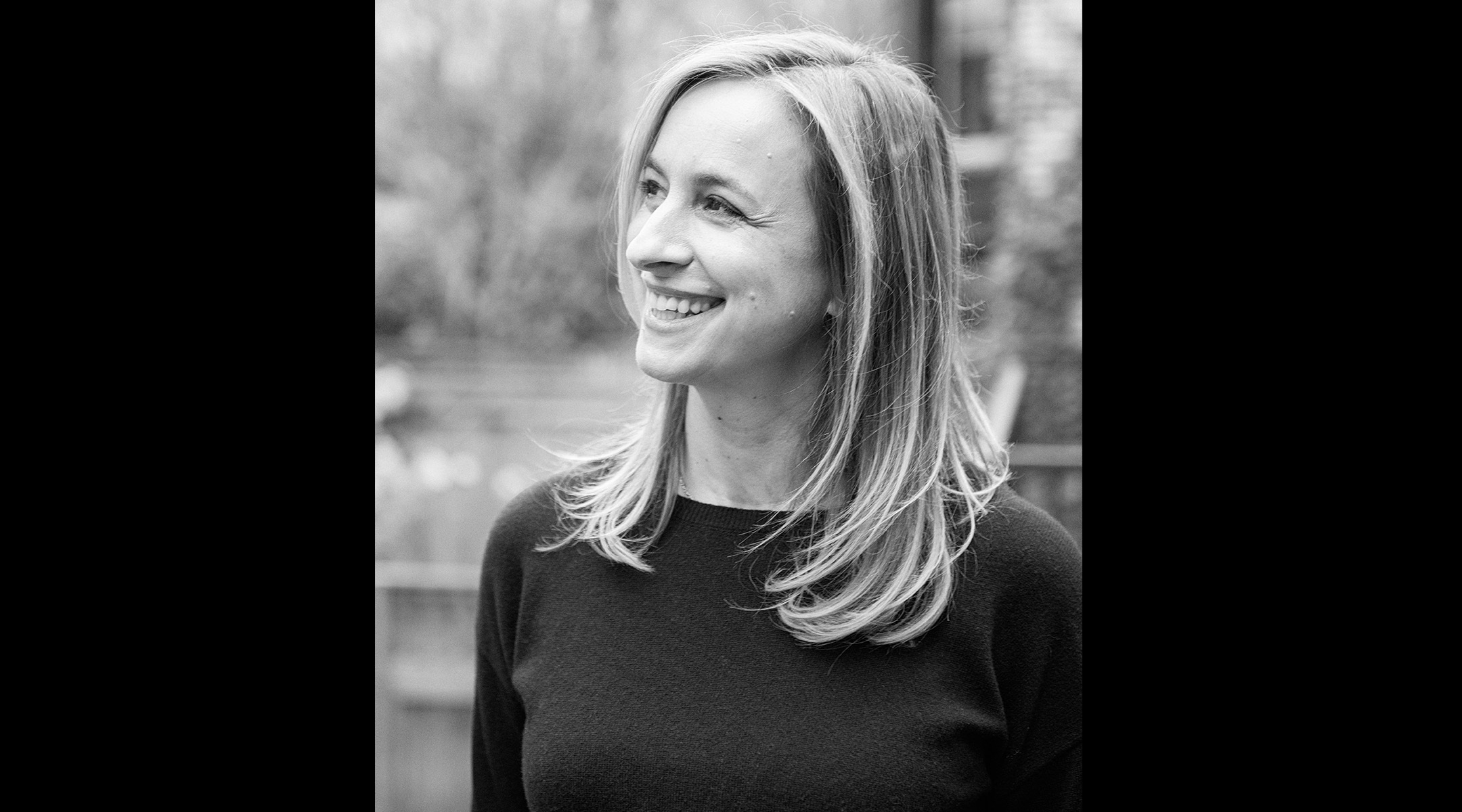
Lizzie Gottlieb is a documentary filmmaker who previously directed “Today’s Man” (2008) and “Romeo Romeo” (2012).

New York Jewish Week: You’ve been working on this movie for seven years. When did you realize you needed to make this movie and how did it get from start to finish?

For a long time, people would say to me, “You should make a film about your father.” I have an incredible father. He’s done a lot of great things. He’s interesting and funny. But I just thought, a film whose message is “look how great my dad is” is not a movie that anybody wants to see. 

And then my father was given some award and Bob Caro was presenting the award. Bob Caro gave a speech about working with my dad over what was then 45 years. He talked about how he needs him, and he respects him and how they’re so productive. Then he started talking about their arguments. Somebody in the audience asked what they fought about and he said, “We have very different feelings about the semicolon.” Everybody erupted into laughs and it just hit me like a bolt of lightning. I thought, “This is the movie, this is the story.”

I wanted a story that had forward momentum and had something big at stake. A film about two men in their 60s who had done a lot of great stuff is not that interesting. But a film about two men who are hovering around 90 and are still in it, and engaged in their work, who have a dedication and passion and are in a race against time to finish their life’s work, felt really, really compelling to me.

People say, “Are you sure you should be wasting [Caro’s] time with a movie? He needs to be writing.” My producer Jen Small said we should put on the poster, “No Lyndon Johnson books were harmed in the making of this film.”

Do you think you had a perspective that made you the best person to try and talk about their relationship and document it, or was it challenging to make the leap of them being willing to open up to you?

There was definitely a pursuit of them. I called my father and I was like, “I have the best idea ever. I’m going to make a film about you and Robert Caro.” He said, “No way. Absolutely not. Never. It would not be good for our relationship.”

I just kept pestering and pestering and pestering him. Finally, he said I could call Bob Caro but he would say no and of course Bob Caro did initially say no. Then he said that he’d seen another film of mine and I could come and speak to him. Eventually, Caro said, “I’ve never seen a film about a writer and an editor, and I think this could be meaningful. I don’t think anyone’s ever seen this before.” So he let me start, but he had this kind of hilarious condition, which was that he didn’t want to ever appear in the same room as my father. That seemed funny and a little maddening and sort of endearing. It also seemed like an irresistible challenge to try to make a buddy film where they don’t appear in the same room as each other. A woman came to a screening recently and she said, “It’s a love story, and they don’t get together until the last scene.”

They both say that somehow the making of this movie has brought them closer together and that they have developed a real friendship after 50 years. Maybe just having to articulate what their relationship has meant to each other has made them appreciate it more.

What was it like to grow up in your household, with your father as this major editor and your mother (actress Maria Tucci) on Broadway? 

I grew up in a really incredible household. My mother’s an actress, my father’s a publisher and editor. Our house was this kind of vibrant, boisterous household that was always filled with eccentric, incredible people — actors and writers. My dad’s writers would come for dinner and then my mother would go off and do a play on Broadway and then come back at midnight and make another dinner. It was incredible. So I feel that both of their work was kind of integrated into our life and into our family. All of his writers were really like family members, except for Bob Caro, who never came over and who I never met. I think that there’s something particular and peculiar about their relationship that they needed to stay apart and only come together over work. I guess that was something that intrigued me and that’s part of why I wanted to make the movie.
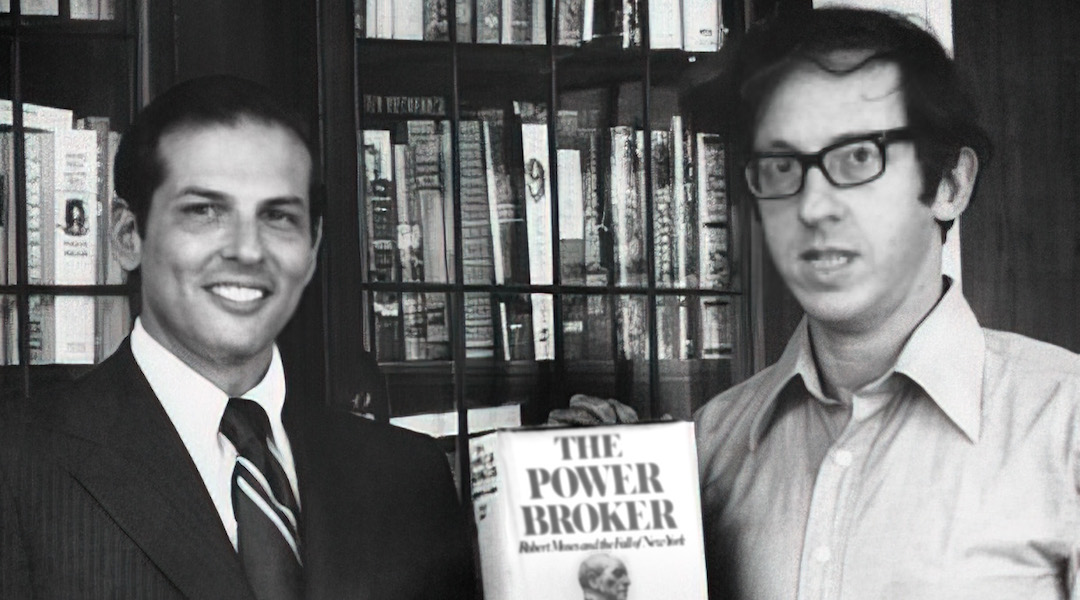
Two men standing by a bookcase

“Turn Every Page: The Adventures of Robert Caro and Robert Gottlieb” (Courtesy Tribeca Film Festival)

The Jewishness in the film is a bit more implicit, though you discuss it when talking about their upbringings. How do you think their Jewish identities have impacted their work?

I don’t want to presume to speak for either of them about their Jewishness. I know they both very strongly identify as New York Jews, which probably means something slightly different to each of them, but I think it’s essential to their definitions of themselves. Their humor may be particularly Jewish as well. David Remnick uses a word at the end of the movie, where he says Caro needs to have “sitzfleisch” in order to finish the book. It’s this Yiddish [and German] word that means the ability to sit for long, long periods of time and apply yourself to something. I think that that is something that these two guys have: It’s almost a Talmudic focus on their craft, and without that they wouldn’t be who they are. So to the extent that that’s a Jewish quality, I think that’s essential to their being, to their achievements. There’s something like a Talmudic scholar in going over all these things, the industriousness and the empathy as well, this sort of looking at a thing from all sides and dedicating yourself to this pursuit.

Bonus question: You briefly show the various eccentric collections your dad has, including plastic handbags and kitschy Israeli record albums from the ’60s and ’70s. What is that about?

Yes, he has a lot of collections. He also has a collection of macramé owls. There are many that are not in the movie. Maybe that’s a Talmudic thing as well, like a deep dive into whatever it is that is interesting to him. He says that every subject gets more interesting the deeper you get into it. When something strikes him as charming or funny or curious, he goes all the way with it. My mother doesn’t love them. There’s a little bit of a power struggle there, but he wins. You grow up with something and you don’t really think about it. But I knew I had to find a way to put this in the movie. People kept saying it’s irrelevant, it’s to the side, but I knew I had to because it’s so weird and says so much about him.

This article originally appeared on JTA.org.

The post Documentary explores the ‘Talmudic’ relationship between writer Robert Caro and his famous longtime editor appeared first on The Forward.
Categories
Audio Sources - Full Text Articles

Feds: Offshore wind not to blame for East Coast whale deaths

ATLANTIC CITY, N.J. (AP) — Federal environmental and energy officials moved Wednesday to quell a growing controversy over whether work done by the offshore wind power industry is killing whales in the northeastern U.S., saying there is no evidence this is happening.

In a hastily arranged briefing for reporters, the National Oceanographic and Atmospheric Administration, and the Bureau of Ocean Energy Management addressed a spate of whale deaths on the East Coast that some groups suspect may have been caused by site preparation work for offshore wind farms.

NOAA said there have been 14 whale strandings on the East Coast since Dec. 1, including humpback whales, which are common in the area, and some sperm whales, which are an endangered species.

The call came two days after the latest reported death, that of a humpback whale that washed ashore Monday on Assateague Island, Maryland. The death of that whale followed the deaths of seven whales in New Jersey and New York in a little over a month.

NOAA officials said they have been studying the phenomenon of humpback whales dying at elevated rates along the East Coast since January 2016. During that period, 178 of the animals have washed ashore dead between Maine and Florida.

Post-mortem examinations were able to be done on about half the animals, and of those, 40% showed evidence of “human interaction,” such as entanglement with fishing gear or being struck by vessels, said Lauren Gaches, a NOAA spokesperson. In other cases, the animals were too decomposed for an effective investigation.

In no case, authorities said, has a whale been proven to have been killed by offshore wind activity.

“I want to be unambiguous: There is no information supporting that any of the equipment used in support of offshore wind development could directly lead to the death of a whale,” said Benjamin Laws, deputy chief for permits and conservation with NOAA Fisheries Office of Protected Resources. “There are no known connections between any offshore wind activities and any whale strandings.”

The issue has become contentious since early last week when Clean Ocean Action, one of New Jersey’s leading coastal environmental groups, held a press conference in Atlantic City with resident groups and opponents of offshore wind to call on President Biden to investigate the seven dead whales discovered in New Jersey and New York since early December.

They also called for a temporary pause on ocean floor site preparation work for wind farms until the cause of the deaths could be established — something New Jersey’s Democratic governor, Phil Murphy, rejected.

Since then, other environmental groups and federal agencies have pushed back, saying there is nothing to link the deaths with survey work for offshore wind farms. On Tuesday, many of New Jersey’s main environmental groups held a press conference to support offshore wind and decry what they called the “false narrative” that offshore wind preparation is killing whales.

That prompted Clean Ocean Action to renew its call for a temporary moratorium on ocean floor exploration.

“Any industrial activity, especially reckless industrial development that is massive in scope, scale, magnitude, and speed, should be required to prove it is protective of the marine ecosystem,” the group said in a statement.

Brian Hooker, leader of a biology team with BOEM’s Office of Renewable Energy Programs, said the type of surveying work being done now off New Jersey and New York is not known to seriously harm whales.

The work is examining the ocean floor for the suitability of foundations for wind turbines and for laying cables between them and the shoreline, he said.

Such work involves multi-beam sound equipment, side-scan sonar, and so-called “cone penetration testing” in which a drill on top of a vessel presses a metal rod into the sea floor to test the friction and resistance of the soil.

None of those methods has been shown to seriously injure whales, Hooker said. But they do have the potential to affect the animals’ behavior, he added.

Under federal regulations, vessels conducting offshore wind activities must meet numerous requirements designed to look for and avoid marine mammals, including whales.

One requirement is that there be observers on board whose sole job is to look out for marine mammals. One observer must be aboard during daylight hours, and two at night, using night-vision equipment, Laws said.

Erica Staaterman, a bioacoustician with BOEM’s Center for Marine Acoustics, said surveying equipment used in offshore wind site preparation is different from that used in exploring for oil and gas in that the wind farm testing uses smaller, quieter equipment.

This type of equipment typically activates for a few milliseconds, and then is silent for 15 seconds. She, too, said there is no evidence of such testing being linked to whale strandings.

___

Follow Wayne Parry on Twitter at www.twitter.com/WayneParryAC

Categories
Audio Sources - Full Text Articles

Police seize bedding from Idaho stabbing suspect’s home

BOISE, Idaho (AP) — Investigators seized stained bedding, strands of what looked like hair and a single glove — but no weapon — when they searched the Washington state apartment of a graduate student charged with stabbing four University of Idaho students to death, according to newly unsealed court documents.

The search warrant for Bryan Kohberger ’s home and Washington State University office was unsealed by a Washington state judge on Tuesday. Kohberger is charged with four counts of first-degree murder and burglary in connection with the slayings of Madison Mogen, Kaylee Goncalves, Xana Kernodle and Ethan Chapin in the neighboring town of Moscow, Idaho.

Investigators did not find anything noteworthy in Kohberger’s office at WSU, where he was a teaching assistant and graduate student studying criminology. They took 15 things from his on-campus apartment, including a nitrite-type black glove, cuttings from a pillow with a reddish-brown stain, and a stained mattress cover.

The Washington State University Police Department searched the apartment Dec. 30, the same day Kohberger was arrested at his parent’s home in eastern Pennsylvania.

The Nov. 13, 2022, slayings of the four University of Idaho students left many in the community shaken and worried about the possibility of a repeat attack. Police released few details for weeks but repeatedly said they had not located the weapon used to commit the crime.

After Kohberger was extradited to Idaho, documents filed in the murder case showed that police found the sheath of a large knife near one of the victims. The knife itself, however, was nowhere to be found.

Investigators did not seize any weapon from Kohberger’s apartment, according to the search warrant. They did take several strands of “possible hair,” including one identified as a “possible animal hair strand.” They also took some store receipts, a tag from a company that makes coveralls and other work apparel, and two store receipts. The dust bin from a vacuum cleaner, a computer tower and a “Fire TV” stick were collected as well.

In the application for the search warrant, Moscow Police Sgt. Dustin Baker said investigators were seeking several kinds of potential evidence, including images of the stabbing victims or their home, data that might indicate an interest in planning murders or violence, anything with DNA and dark clothing and knives.

The court documents do not reveal if the items collected from Kohberger’s home contained any evidence related to the murder case.

Kohberger has not yet had the opportunity to enter a plea, and Latah County Magistrate Judge Megan Marshall has placed the attorneys and other people involved with the case under a sweeping gag order.

Kohberger is scheduled to have a preliminary hearing — where the judge will decide if there is enough evidence to justify the felony charges — on June 26.

Categories
Audio Sources - Full Text Articles

Biden State Dept Bars Use of Times New Roman Font, Citing ‘Disability Inclusion’

Secretary of State Antony Blinken on Tuesday instructed employees to ditch Times New Roman in official communications, saying the popular font undermines the department’s commitment to “disability inclusion.”

In a department-wide memo titled “The Times (New Roman) are a-Changin,” Blinken instructed employees to instead use Calibri font, which the secretary said is more legible to those with reading disabilities, the Washington Post reported. Serif fonts such as Times New Roman—which has decorative tails and feet—can cause “visual recognition issues for individuals with learning disabilities,” according to Blinken.

The secretary’s Office of Diversity and Inclusion recommended Calibri, the default font on Microsoft products, as an “accessibility best practice,” according to the memo.

Blinken’s font-change memo comes as the secretary of state prepares a February visit to China amid strained relations between Washington and Beijing. The families of American hostages detained in China have pressured Blinken to bring the prisoners home. Katherine Swidan, whose son is wrongfully imprisoned, said “enough is enough.”

“My message for Blinken is: say their names,” Swidan told Reuters. “They’re American citizens. They’ve been wrongfully detained.”

The department last changed fonts in January 2004 when it switched to Times New Roman from Courier New 12.

The post Biden State Dept Bars Use of Times New Roman Font, Citing ‘Disability Inclusion’ appeared first on Washington Free Beacon.

Categories
Audio Sources - Full Text Articles

NYC’s Top Prosecutor Lets Violent Jew-Haters Off Easy

Two men charged with battering a Jewish man will spend little to no time in jail for their role in the anti-Semitic hate crime, the Manhattan district attorney’s office told the Washington Free Beacon this week.

Manhattan’s top prosecutor, Alvin Bragg (D.), offered Waseem Awawdeh and Faisal Elezzi—two of four men charged with violently beating and pepper-spraying a Jewish man in 2021—reduced sentences as part of the plea deals, which will see Awawdeh spend six months in jail and Elezzi entering an intensive treatment program, according to the district attorney’s office. The four men allegedly participated in a gang attack on Joseph Borgen, who was beaten and called anti-Semitic slurs as he made his way to a pro-Israel demonstration.

The light sentences are generating anger among Jewish advocates who say it is unacceptable for New York City authorities to offer the men plea deals as violence against Jews surges to its highest levels in history. New York City has become a hotbed of anti-Semitic violence, with police reporting 263 separate attacks in 2022, an average of 1 incident every 33 hours, according to the Times of Israel. These numbers mark a sharp increase from 2020 and 2021 and come as anti-Semitic rhetoric bubbles into the mainstream via prominent figures like rapper Kanye West and basketball star Kyrie Irving.

Jewish advocates said Awawdeh’s plea deal of six months in prison is particularly offensive due to a claim that he reportedly made to jailers: “If I could do it again, I would do it again.”

Dov Hikind (D.), a former New York state assemblyman and the founder of Americans Against Anti-Semitism, an advocacy group, said that Bragg “is all about a perversion of justice. He has more pity, more concern for the perpetrators than the victims.”

Hikind, who is Jewish and works to galvanize the community against the rise in anti-Semitic hate crimes, said what is happening in New York City to Jews is “just beyond comprehension.” In November of last year alone, he said, citing figures from the New York Police Department, there were three times as many attacks on Jews as on all other ethnic categories combined.

Hikind’s organization, Americans Against Anti-Semitism, held a public demonstration on Wednesday outside the Brooklyn criminal courthouse to demand justice for Blake Zavadsky, a Jewish man who says that several men called him and his friend “dirty Jews” and punched him for wearing an Israel Defense Forces sweatshirt. On Thursday, a similar demonstration will be held for Borgen, the Jewish man attacked by Awawdeh and his allies.

“All we’re asking for is justice,” Hikind said. “We want [the district attorneys] to care more about victims of crimes than the perpetrators.”

An official in the Manhattan district attorney’s office said Awawdeh was offered a plea deal because he only attacked the victim with a crutch and did not use pepper spray, kick the victim, or punch him, as the other attackers did. No specific reason for Elezzi’s reduced sentence was given.

“Anti-Semitic hate has no place in Manhattan, and the office is requiring felony hate crime pleas and incarceration for three men charged in connection to this despicable attack,” a spokesman for the district attorney’s office told the Free Beacon.

Hikind described this rationale as “pretty sick” and said, “When it comes to Jew-hatred, it’s just treated differently than anything else.”

Canary Mission, an organization that tracks anti-Semitism online, also expressed outrage over the two plea deals.

The six-month sentence for Awawdeh, the organization said, “is completely unacceptable. The claim that he should get a lighter sentence downplays his hate-filled motivations and diminishes the brutality of his actions.”

“Given the rise in violent hate crimes against Jews in [New York City], we would expect an unrepentant and anti-Semitic criminal to be convicted to the highest degree,” Canary Mission told the Free Beacon.

The watchdog group recently published online profiles for the four charged attackers in the Borgen case, including Awawdeh, who has reportedly attended anti-Israel demonstrations in the past.

The other two individuals charged in the Borgen beating—Mohammed Othman and Mahmoud Musa—were not offered plea deals. They must plead to the highest charge and face a minimum of 3-and-a-half years and maximum of 15 years in prison, according to the Manhattan district attorney’s office.

The post NYC’s Top Prosecutor Lets Violent Jew-Haters Off Easy appeared first on Washington Free Beacon.

Categories
Audio Sources - Full Text Articles

‘Junji Ito Maniac’ brings 20 of the manga author’s horror stories to life — here’s how to watch the new anime series

When you buy through our links, Insider may earn an affiliate commission. Learn more.

a still from Junji Ito Maniac: Japanese Tales of the Macabre featuring a man with glasses sitting surrounded by flames“Junji Ito Maniac: Japanese Tales of the Macabre” features several of Ito’s most horrific stories.

Netflix

Fans of horror take notice: “Junji Ito Maniac: Japanese Tales of the Macabre” hits Netflix on January 19. Junji Ito is a prominent manga artist who has been writing spine-chilling stories for decades — and now they’re coming to the small screen as an animated collection.

“Junji Ito Maniac” features anime adaptations of some of the artist’s most disturbing tales from print, including “Tomie: Photo,” “The Hanging Balloons,” and more. In total, the series will include 20 stories from a variety of Ito’s mangas that have never been animated before.

Check out the trailer for ‘Junji Ito Maniac: Japanese Tales of the Macabre’

The show is animated by Studio Deen, whose previous works include “Junji Ito Collection,” “Higurashi no Naku Koro ni,” and “The Seven Deadly Sins: Wrath of the Gods.” The voice cast includes Riho Sugiyama, Daisuke Kishio, Rie Suegara, and more.

How to watch ‘Junji Ito Maniac: Japanese Tales of the Macabre’

You can watch “Junji Ito Maniac: Japanese Tales of the Macabre” exclusively on Netflix starting January 19. All 12 episodes will be available at that time, so you can watch at your own pace. 

If you have yet to join Netflix, Basic plans start at $7 a month with ads, or $10 a month without ads. Both Basic options offer 720p streaming and support for playback on one screen at a time.

For better quality playback, you’ll want at least Netflix Standard for $15.49 a month. This option gives you 1080p support and up to two simultaneous streams at a time. 

If you have a 4K TV, you may even want to opt for Netflix Premium at $20 a month. With this plan, you get up to Ultra HD streaming quality and support for up to four simultaneous streams at once.

Once you sign up, you can access Netflix on web browsers or via the Netflix app on smart TVs, streaming players, mobile devices, and gaming consoles from every major brand.

Is ‘Junji Ito Maniac’ based on a manga?

“Junji Ito Maniac: Japanese Tales of the Macabre” is based on 20 of Junji Ito’s horror stories from a handful of his manga. The plotlines of each tale aren’t necessarily connected. Instead they’re more like standalone scary stories — meaning you don’t have to enjoy them in any particular order.

Here’s a rundown of all the manga stories featured in the show:

  • “Tomie: Photo”
  • “The Bizarre Hikizuri Siblings: The Seance”
  • “Unendurable Labyrinth”
  • “Bullied”
  • “Where the Sandman Lives”
  • “The Long Hair in the Attic”
  • “The Hanging Balloons”
  • “Four x Four Walls”
  • “Intruder”
  • “Ice Cream Truck”
  • “Tomb Town”
  • “Library Vision”
  • “Headless Statue”
  • “The Story of the Mysterious Tunnel”
  • “Mold”
  • “Layers of Fear”
  • “The Thing That Drifted Ashore”
  • “Ally”
  • “Whispering Woman”
  • “Souichi’s Beloved Pet”

Unfortunately, many of the stories in “Junji Ito Maniac” are featured in manga collections and volumes that are unavailable for purchase in the US, like “Museum of Terror” volume three, “Souichi’s Diary of Curses,” or the “Horror World of Junji Ito” collection.

However, if you’re interested in seeking out the author’s other works, you can find plenty of manga titles from Junji Ito on Amazon.

What is Junji Ito known for?

Junji Ito is a horror manga artist with something of a cult following. He’s known for his grotesque and macabre tales with a dark, striking art style. Some of his most popular titles include “Tomie,” “Remina,” “Uzumaki,” and “Gyo.”

If you can’t stomach the horror in Ito’s work, you can also check out “Junji Ito’s Cat Diary: Yon & Mu,” a more lighthearted story in the artist’s signature style about living in a house with his wife and two cats.

Read the original article on Business Insider
Categories
Audio Sources - Full Text Articles

Trump claims documents found at Mar-a-Lago were empty folders labeled ‘classified’ that he’d kept because they’re ‘cool’

Donald TrumpFormer President Donald Trump.

Joe Raedle/Getty Images

  • Trump claimed that government records seized from Mar-a-Lago last year were empty folders marked “classified” or “confidential.”
  • He went on to say that he kept the “ordinary, inexpensive folders” because they were a “‘cool’ keepsake.”
  • The DOJ has released photographic evidence showing the roughly one hundred pages of classified records recovered.

Former President Donald Trump claimed Wednesday that the government documents the FBI recovered from Mar-a-Lago last summer were just empty folders marked “classified” or “confidential.”

“When I was in the Oval Office, or elsewhere, * ‘papers’ were distributed to groups of people & me, they would often be in a striped paper folder with ‘Classified’ or ‘Confidential’ or another word on them,” he wrote on his Twitter-esque social media site Truth Social. “When the session was over, they would collect the paper(s), but not the folders, & I saved hundreds of them.”

He added: “Remember, these were just ordinary, inexpensive folders with various words printed on them, but they were a ‘cool’ keepsake.” Trump also referred to the FBI as the “Gestapo” and “Trump Hating Marxist Thugs,” saying that perhaps they “took some of these empty folders when they Raided Mar-a-Lago, & counted them as a document, which they are not.” And he reiterated the false claim that the FBI “planted” evidence at Mar-a-Lago when it executed a search warrant at the property in August — a claim his lawyers have stopped short of repeating in court filings.

The former president’s claim that the FBI merely recovered empty folders from Mar-a-Lago is untrue, according to photos released by the Justice Department of materials seized from Trump’s south Florida estate.

Photo of documents seized by FBI at Mar-a-Lago strewn across the floor, with red circles and arrows pointing to the ones with classification markings.Documents seized by FBI at Mar-a-Lago.

Department of Justice

There is also no proof that the FBI planted evidence at Mar-a-Lago. Senior judge Raymond Dearie, who was shortly appointed “special master” in the case, repeatedly pressed Trump’s legal team to provide proof of his claim that documents were planted at his Florida home. They did not provide any such evidence, and a federal appeals court nullified Dearie’s appointment in December.

Trump on Wednesday also accused President Joe Biden, who’s facing his own federal investigation connected to his mishandling of classified information, of having violated the law.

“Biden is being treated so much better than me, I’m shocked (not really!),” Trump wrote on Truth Social. “Why aren’t they raiding his house, & how come his representatives and lawyers are allowed to work together with the Gestapo in looking for documents, when my lawyers & representatives were not allowed anywhere near the search. We weren’t even allowed to know what they took when they raided my home.”

Legal scholars and DOJ veterans have pointed out, however, that the feds were forced to execute a search warrant for Trump’s home because he resisted turning over thousands of pages of sensitive records over more than 18 months of negotiations between his legal team and the US government.

In Biden’s case, according to the White House and media reports, the president’s lawyers informed the National Archives immediately after discovering a cache of classified records at his old office at a Washington, DC, think tank in November.

Following that discovery, Biden’s legal team undertook an “exhaustive” search and uncovered a second batch of classified documents at another location, NBC News reported last week. The White House has said that the president was not aware of what information is contained in the documents and that he and his lawyers are cooperating with the Justice Department as it investigates Biden’s improper storage of government documents.

The development has put the Justice Department and Attorney General Merrick Garland in the unprecedented position of overseeing two concurrent special counsel investigations — one focusing on Trump, run by special counsel Jack Smith, and the other focusing on Biden, run by special counsel Robert Hur — into the current and former president’s handling of national security information.

But legal experts cautioned against conflating the two inquiries based on what’s currently known, saying that while the Biden matter should be scrutinized through a criminal and counterintelligence lens, there are key differences between it and the Mar-a-Lago documents case in terms of both scale and scope.

“This only seems like a big deal because of the Trump issue, when in fact it shares characteristics not with Trump’s fact set, but with all the other incidents the public never hears about,” Matt Miller, a former DOJ spokesperson under the Obama administration, told Insider last week.

Barbara McQuade, the former US attorney for the Eastern District of Michigan, also told Insider that Biden’s case appears to be different from Trump’s because it doesn’t appear to have “aggravating factors” — like obstruction of justice and willful violation of the law — that Trump’s does.

Read the original article on Business Insider
Categories
Audio Sources - Full Text Articles

10 ways to know if someone has blocked your number on an iPhone

woman with iphoneThere are a few different steps you can take to get a sense of whether someone has blocked your iPhone number.

Karl Tapales/Getty Images

  • To know if someone blocked you on iPhone, try sending both an iMessage and SMS message. 
  • You can also check if you’re blocked on social media apps, or try a different number or device. 
  • It’s hard to know for sure if you’re blocked, as it could also be Do Not Disturb or Airplane Mode.

Knowing your phone number is blocked is, if nothing else, a good way to know where you stand with someone.

While it’s likely not OK to go ahead and contact someone who blocked you without their consent, there are a few ways you could try to check if you’re blocked.

How to know if someone blocked you on iPhone

Finding out if you’ve been blocked on an iPhone (or Android, for that matter) isn’t a clean cut-and-dried process. There’s no definitive way to know if you’ve been blocked aside from the blocker telling you outright.

But to get a sense of whether you’re blocked, you could try several different methods and cross-reference your results.

Check the color of your texts

One way to get a sense of whether or not you’ve been blocked is to text the person. You can tell the difference between a regular SMS and an iMessage by looking at the message bubble – a green bubble means it’s an SMS, while a blue bubble means it’s an iMessage. 

iMessages are sent over the internet, and SMS messages are sent through your carrier. If one isn’t working, there may be a wider technical issue and it may be worthwhile to try the other.

Send them an iMessage

If the person you suspect has blocked you has an Apple device, you can try sending them a courteous iMessage. 

Whenever you send someone an iMessage, you’ll see the delivery status right below it. If you haven’t been blocked, the status will read “Delivered.” And if the person has enabled read receipts, it will later turn to “Read” once they open the message.

A picture of the Message app on iPhone, with a sent SMS showing the “Message Not Delivered” delivery status underneath it.Check to see if the SMS message was delivered or not.

Steven John/Insider

A red flag that you’ve been blocked is when you don’t see the delivery status or the read receipt at all. The message you just sent will still be in a blue bubble, but it will have no delivery status below it – not even a “Not Delivered.”

Quick tip: A quick way to tell if it’s a network problem behind your iMessage not going through, as opposed to being blocked, is that the Messages app may try to resend it as an SMS message instead. 

Send them an SMS message

When you send them an SMS and you get the “Delivered” notification underneath it, you weren’t blocked. If you get a notification like “Message Not Delivered” or you get no notification at all, that’s a sign of a potential block.

Quick tip: If you get an auto-generated response telling you why the message didn’t go through, you can relax. You wouldn’t receive an auto-response if the person blocked you.

Give them a phone call

Next, you could try calling the person. If the call goes right to voicemail or rings once (or a half ring) then goes to voicemail, that’s further evidence you may have been blocked.

Mask your number

After you’ve tried calling them a few times with no luck, then it’s time to hide your number when calling them. 

Call again, but this time dial *67 before you type in the phone number. If it rings through normally with this masked phone number (or if the person answers), then that almost definitely means your number was blocked.

Turn off Caller ID

Similarly, by disabling caller ID in your phone’s settings, you can see if it’s just your number that’s having issues connecting to the other device.

On iPhone, you can disable caller ID (assuming your carrier allows it) by opening your phone’s settings and navigating to Settings > Phone > Show My Caller ID and disabling it.

The Phone tab of the Settings app on iPhone, with Show Caller ID toggled off.You can turn Caller ID off and try calling the number.

Will Fischer/Insider

Try a different number or device

You may be able to call the person on a different number, or with a different phone entirely, to see if you get the same result. If you’re still unable to reach them, there may be a technical issue with the receiver’s phone.

Check if they’ve also blocked you on other messaging apps

If the person is set on blocking you, they will most likely block you in other places as well. For example, try looking for signs that you’ve been blocked on social media platforms like Facebook, Twitter, Instagram, and Whatsapp. 

If by any luck they haven’t blocked you there as well, they will see your message when they’re back online, but they may not respond. In that case, make the message you send them count, but be polite if you want to get to the bottom of why they blocked your texts and calls.

Try to wait out the issue

If you try to call someone and it goes right to voicemail, you might have been blocked. But on the other hand, the person’s phone might be turned off or have a drained battery, or they might simply be in Airplane Mode or Do Not Disturb mode.

The “Do Not Disturb” settings on an iPhone.iPhones have many ways to automatically block calls without blocking a number — the person you’re trying to call may just have one of these settings turned on.

Stefan Ionescu/Insider

Otherwise, they might have immediately sent you to voicemail because they were on another call, in class, or just didn’t want to talk at the moment.

Quick tip: If someone’s Do Not Disturb is preventing you from having urgent conversations, you may want to ask them to enable a feature known as Emergency Bypass, which lets your calls get through. Learn more about the iPhone’s Do Not Disturb settings here.

Likewise, a text message that isn’t delivered might be a result of poor cell service or occasional glitches in iMessage, not a fracture in your relationship. Wait a few hours, or even a day, and try to call or text again and see how it goes.

Respect their boundaries

If nothing else has worked so far, it’s likely that you’ve indeed been blocked. If that’s the case, it’s best to respect the boundaries of the person who blocked you by not contacting them further.

Read the original article on Business Insider
WP Radio
WP Radio
OFFLINE LIVE