Deputy Secretary of State Wendy Sherman met with President Zelensky
 The Brooklyn Times - bklyntimes.com
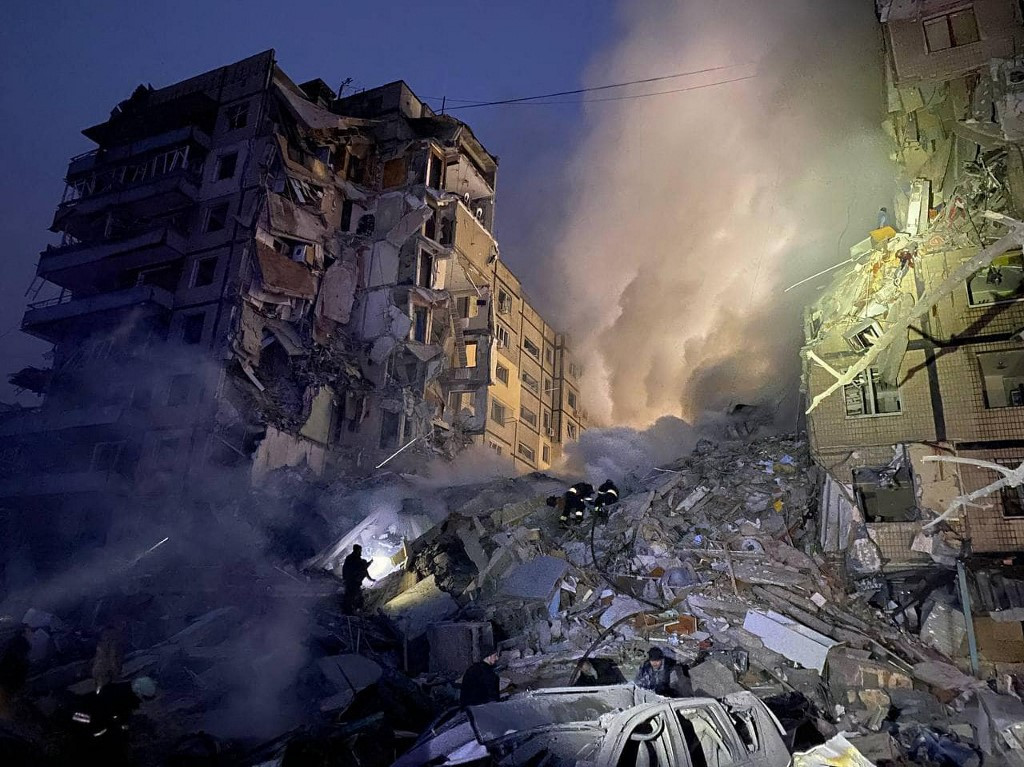
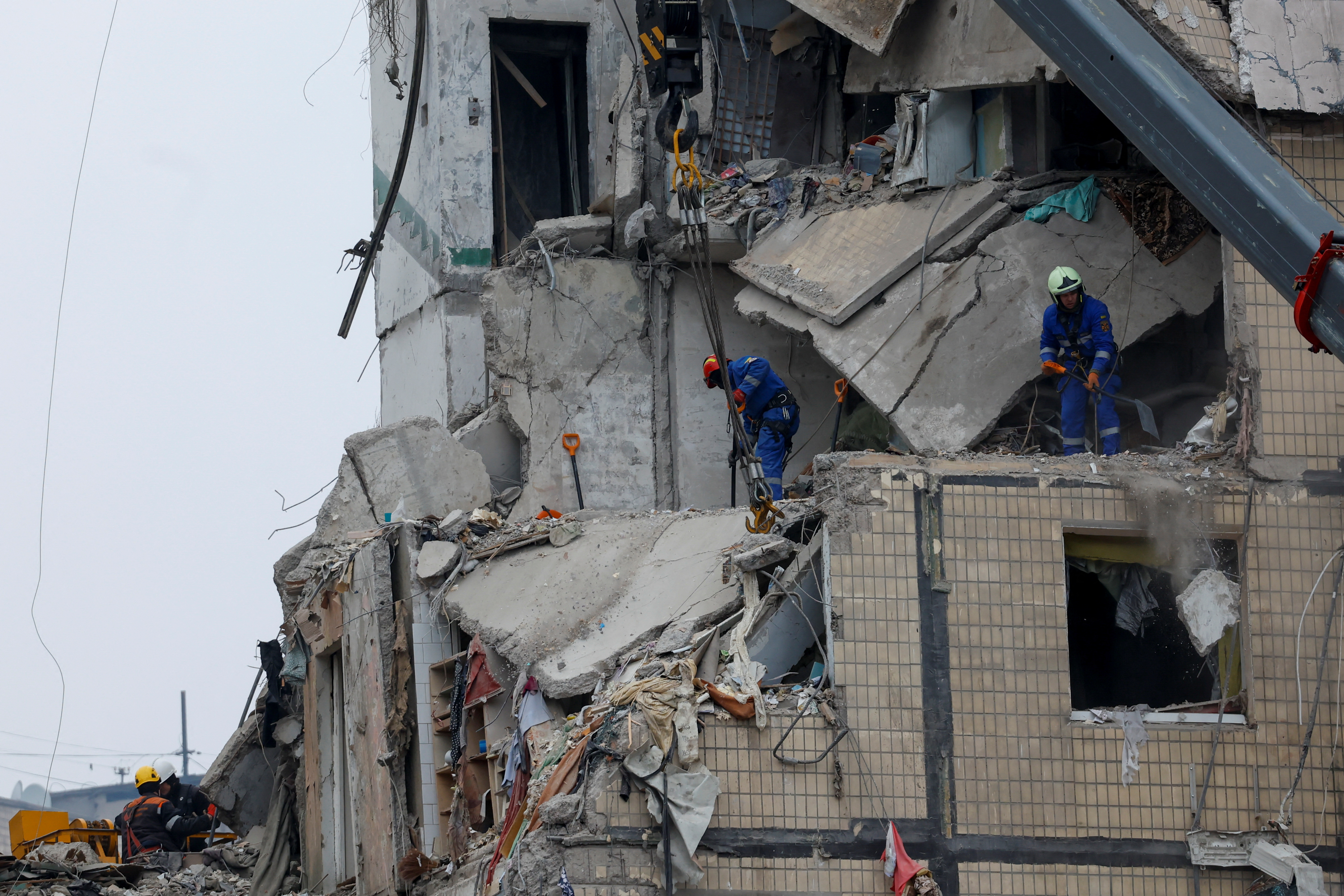
KYIV, Ukraine (AP) — The death toll from a weekend Russian missile strike on an apartment building in southeastern Ukraine climbed to 41 on Tuesday after the body of a child was pulled from the rubble, officials said.
Another 25 residents of the building city of Dnipro were still missing, according to Valentyn Reznichenko, the governor of the Dnipropetrovsk region, whose capital is Dnipro.
Emergency crews have cleared about 90% of the rubble during a 63-hour search since Saturday’s strike, he said.
There are 79 wounded people, he said, with 28 of them hospitalized and 10 in serious condition.
The latest deadly Russian strike on a civilian target in the almost 11-month war triggered outrage.
Ukrainian President Volodymyr Zelenskyy vowed to bring those responsible to justice, saying it’s “a fundamental task” for Ukraine and its Western allies.
“This strike at Dnipro, as well as other similar strikes, falls, in particular, under the jurisdiction of the International Criminal Court,” he said in a video address late Monday.
“And we will use all available opportunities — both national and international — to ensure that all Russian murderers, everyone who gives and executes orders on missile terror against our people, face legal sentences. And to ensure that they serve their punishment,” he said.
The U.K. Defense Ministry said Tuesday that the weekend barrage of long-range missiles, the first of its kind in two weeks, targeted Ukraine’s power grid.
But the ministry identified the missile that slammed into the Dnipro apartment building as an anti-ship missile that “is notoriously inaccurate when used against ground targets as its radar guidance system is poor at differentiating targets in urban areas.”
Similar missiles were used in other incidents that caused high civilian casualties, it said, including a strike on a shopping mall in Ukraine’s central city of Kremenchuk last June.
Such incidents have helped stiffen international support for Ukraine as it battles to fend off the Kremlin’s invasion. The winter has brought a slowdown in fighting, but military analysts say a new push by both sides is likely once the weather improves.
U.S. Deputy Secretary of State Wendy Sherman and other U.S. officials met in Kyiv with Zelenskyy on Monday, U.S. State Department spokesperson Ned Price said. They reiterated Washington’s “strong and steadfast commitment to Ukraine,” he said.
U.S. Army Gen. Mark Milley, chairman of the Joint Chiefs of Staff, on Monday visited Ukraine troops who are training at a military base in Germany under U.S. commanders.
More than 600 Ukrainian troops began the expanded training program at the camp the previous day.
“This is not a run of the mill rotation,” Milley told commanders. “This is one of those moments in time where if you want to make a difference, this is it.”
Ukraine’s first lady was also helping to cement Western support and acquire more foreign weapons, as she was scheduled to give a rare international address at the World Economic Forum’s annual gathering in the Swiss town of Davos.
Meanwhile, the head of the U.N. nuclear agency on Monday visited the South Ukraine Nuclear Power Plant and announced the organization’s permanent presence there to oversee operations and ensure safety.
Rafael Grossi, director general of the International Atomic Energy Agency, tweeted late Monday that the agency’s flag was flying over the power plant.
“We are here to stay to help ensure nuclear safety (and) security during ongoing conflict,” Grossi said, adding that “soon, IAEA will be permanently present” at all of Ukraine’s nuclear power plants.
Ukraine has a total of four nuclear power plants with 16 reactors. One of them, the Zaporizhzhia nuclear power plant, was taken over by Russian forces in the first months of the war and remains under their control.
___
Follow the AP’s coverage of the war at https://apnews.com/hub/russia-ukraine
DAVOS, Switzerland (AP) — The Latest on the World Economic Forum gathering in Davos, Switzerland:
Polish President Andrzej Duda is predicting that the German government will agree one day to send powerful Leopard tanks to Ukraine, citing Germany’s membership in NATO and rising public support for Ukrainians beleaguered by Russia’s war.
The Polish leader quipped during a panel at the World Economic Forum in Davos on Tuesday: “We don’t mention that Ukraine will win this war, we mention that Ukraine will not lose this war,” before chuckling.
His Lithuanian counterpart, Gitanas Nauseda, quickly replied: “I mention that Ukraine will win this war.”
Ukrainian President Volodymyr Zelenskyy have been clamoring for more supplies of Western weaponry like tanks and air defense systems nearly a year into the war.
Duda said it was an “important moment” that NATO members, like Britain have vowed to send modern tanks to Ukraine, which could affect the thinking of Chancellor Olaf Scholz’s government.
Scholz, who is speaking at Davos on Wednesday, has said Germany will “weigh every step carefully” and consult with its allies on further weapons deliveries to Ukraine.
Duda also said German public opinion was becoming “stronger and stronger and stronger” in favor of Ukraine, and he hoped that would result in the “very needed decision” to send Leopards to Ukraine.
___
KEY DEVELOPMENTS:
— Ukraine’s first lady to speak on the first big day in Davos
— Online conspiracy theories target World Economic Forum
— Business trusted most in a more polarized world, report says
— Anti-poverty group urges windfall tax on food company profits
Follow AP’s coverage of the World Economic Forum meeting at https://apnews.com/hub/world-economic-forum
Mergers and Acquisitions (M&A), you’ve probably heard the term before. An M&A is often associated with the “business world”; with industries such as finance, retail, technology, and more. But M&As are also common in the healthcare industry, and the question is how healthcare delivery organizations (HDOs) can manage the risks associated with the process – specifically, IT asset risks.
The outcome of a merger or acquisition is relatively the same; the entities involved are combined or absorbed into one another and, by legal definition, become the same organization. A string of benefits can come with an M&A, such as increased profitability, market strength, diversification of services, and acquisition of IT assets. However, the latter introduces cybersecurity complexities that must be managed for the process to go smoothly.
The Asset Problem
During the M&A process, the IT assets within those organizations transfer ownership and get absorbed into another system. In other words, an HDO’s asset inventory can drastically change overnight. And with new assets come new risks. However, the visibility gaps of existing cybersecurity tools mean these new assets go unmanaged.
When assets go unmanaged, so do their associated risks, and things can take a turn for the worse, especially when talking about the healthcare industry. Some consequences include threats to patient safety and the leaking of confidential data, both of which jeopardize an entity’s compliance efforts – another consequence in itself.
The healthcare industry is known to be heavily regulated due to its handling of highly sensitive information and the treatment of patients, so compliance must constantly be maintained. Yet, during the M&A process, compliance efforts are threatened as visibility gaps mean HDOs don’t actually know what risks they are undertaking when acquiring new assets. This presents opportunities for sensitive patient data to get leaked, as unmanaged assets may gain unauthorized access to certain parts of the network. Similarly, the acquisition of faulty or incompatible assets can compromise patient safety if they go unmanaged. Such assets can fail to operate as expected, which may interfere with the provision of patient care, such as delaying surgeries or patient diagnoses, should they fail to operate as expected.
Assessing that Asset Problem
An M&A should be a time for organizational improvement, not increased cyber security risks. So how does a healthcare entity going through the M&A process properly manage the influx of assets?
It all starts with comprehensive asset risk management, as this will provide organizations involved in an M&A with the necessary visibility to know what they are acquiring.
Next comes risk assessment and identification; healthcare organizations acquire risks along with assets. To keep their services up and running, HDOs must be aware of and manage the risks they are taking on when adding new assets to their network. With complete asset visibility, an asset risk management solution provides an accurate representation of each asset’s risk posture in the relevant business context so that security teams know exactly what to prioritize and how.
When all assets are visible and risk postures identified, HDOs can mitigate any suspicious assets that might impede their services. The goal for any M&A is to bring benefits to the organization in as smooth a process as possible. However, in order for this to happen, cybersecurity must be at the forefront, with asset risk management a fundamental part of the M&A process. Like installing a good suspension system on a car that you’re about to take off-roading, it will improve the quality and make sure you can focus on enjoying the ride.
About the author: Sepio
Follow me on Twitter: @securityaffairs and Facebook and Mastodon
(SecurityAffairs – hacking, Healthcare)
The post <strong>Managing Asset Risks During Healthcare M&As</strong> appeared first on Security Affairs.
Ukraine came a step closer on Tuesday to winning the fleet of Western battle tanks it hopes could turn the course of the war, after Germany said tanks would be the first item on the agenda of a new defence minister.
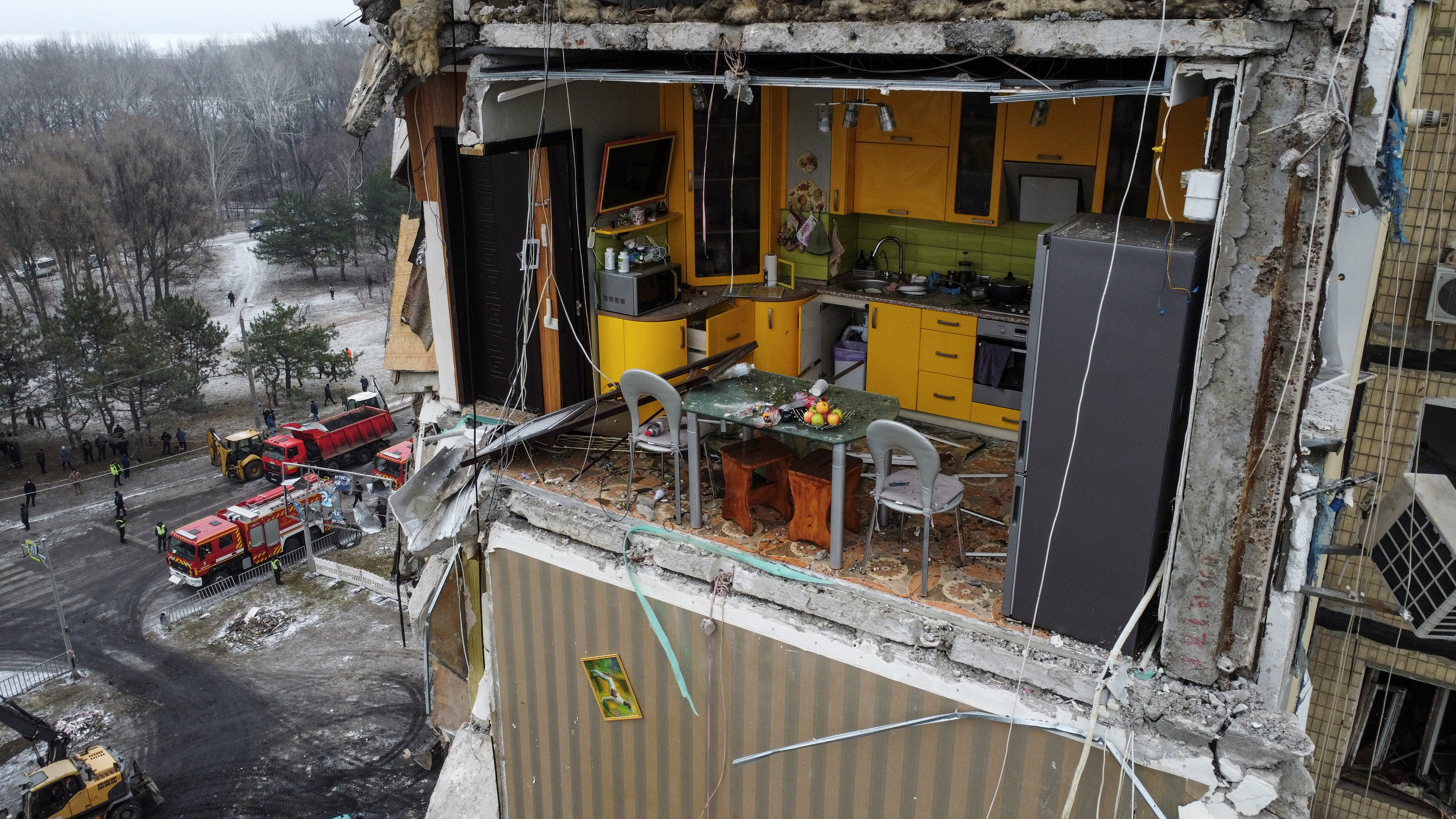
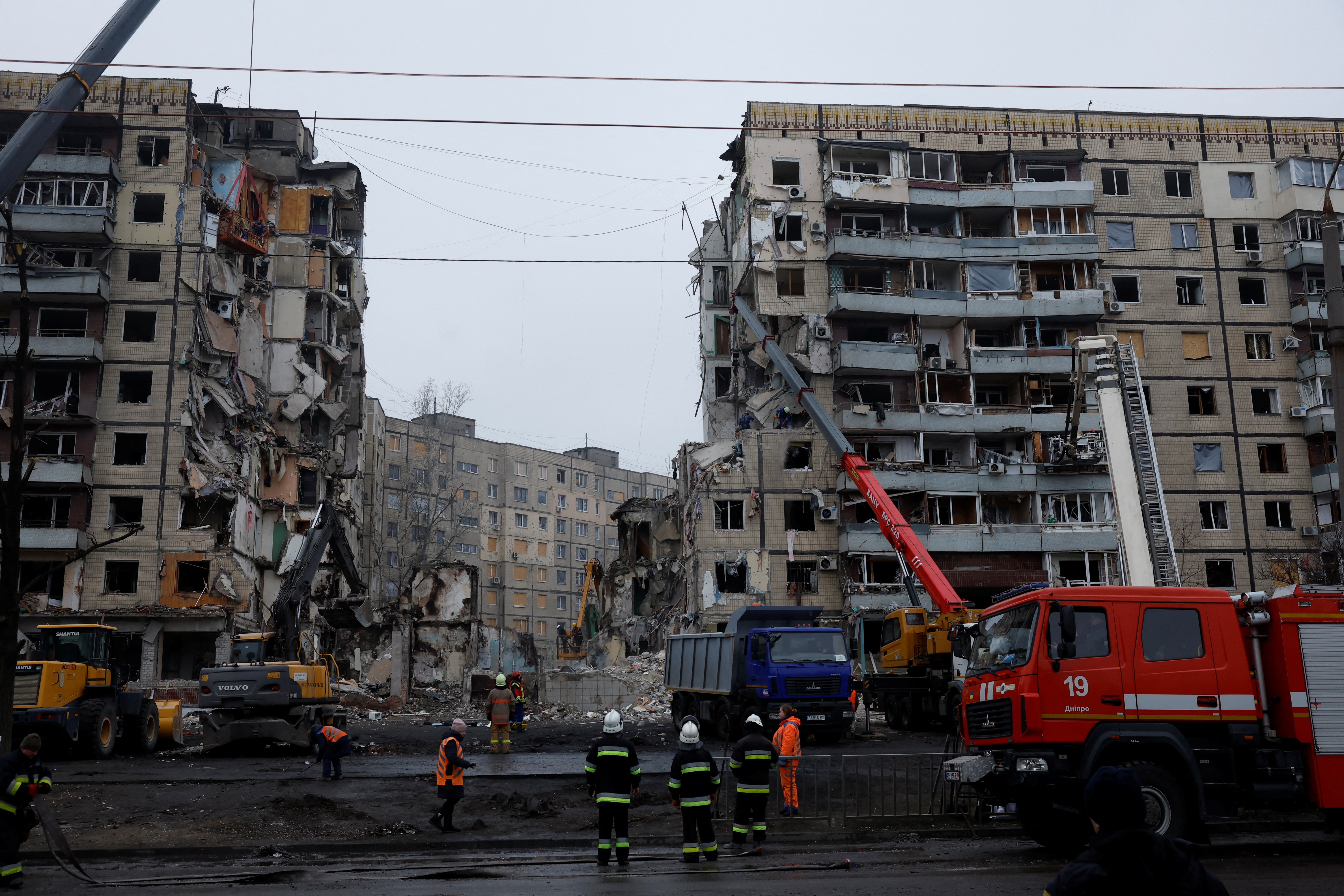
In the central city of Dnipro, the body of a child was retrieved from the rubble of an apartment block on Tuesday, raising the death toll to 41 in the deadliest attack for civilians of a three-month Russian missile bombardment campaign.
Dozens more people were still missing. Local officials said 79 people were wounded and 39 rescued from the rubble.
Nearly 11 months after Russia invaded, Kyiv says a modern fleet of Western battle tanks would give its forces the mobile firepower they need to drive Russian troops from their territory in decisive battles in 2023.
German-made Leopard battle tanks – the workhorse of armies across Europe – are widely seen as the only plausible choice to supply Ukraine with the large-scale tank force it needs. But they cannot be delivered without authorisation from Berlin, which has so far stalled on taking a decision.
With Western allies meeting at a U.S. airbase in Germany on Friday to pledge military support for Ukraine, Berlin is under intense pressure to lift its objections this week, in what would be one of the most consequential shifts in Western aid so far.
German Defence Secretary Christine Lambrecht quit on Monday, paving the way for Berlin to appoint a successor who can take a quick decision.
“When the person, when the minister of defence, is declared, this is the first question to be decided concretely,” German Economy Minister Robert Habeck told Deutschlandfunk radio broadcaster on Tuesday.
Germany has been cautious about approving tanks, saying it is concerned such a move could be seen as an escalation. Many allies say that concern is misplaced, with Russia showing no sign of backing down from its assault on its neighbour.
Britain broke the taboo over sending heavy tanks over the weekend, pledging a squadron of its Challengers. But it has too few for them to form the basis of a Ukrainian force. Washington’s Abrams tanks are also seen as inappropriate in large numbers because they run on jet engines that burn too much fuel to be practical for Ukraine.
That leaves the Leopards, which Germany made in the thousands during the Cold War and which are now fielded by armies across Europe. Poland and Finland have already said they would send Leopards if Berlin gave approval.
“All of this currently relies on the German government’s decisions – not only whether the Germans will supply their own Leopards, but whether or not they’ll give permissions to others. I would urge my German colleagues to do that,” British Defence Secretary Ben Wallace said on Monday.
Germany’s new defence minister is expected to host U.S. Defense Secretary Lloyd Austin on Thursday ahead of Friday’s big meeting of allies at Ramstein air base, where big pledges of new military support for Ukraine are expected.
Tens of thousands of people have been killed and millions driven from their homes since Russia launched what it calls a “special military operation” in Ukraine in February last year.
Ukrainian forces drove Russian troops back during the second half of 2022, but over the past two months the front lines have largely been frozen in place despite both sides enduring heavy losses in relentless fighting. Ukrainian officials say tanks would be key to breaking the stalemate.
Russia claims to have captured the small mining town of Soledar on the outskirts of the eastern city of Bakhmut last week. Kyiv has said it is still fighting there.
Moscow, meanwhile, has turned since October to a tactic of raining missiles down on Ukrainian cities far from the front, mainly targeting electricity infrastructure.
Russia says it aims to reduce Ukraine’s ability to fight; Kyiv says the attacks serve no military purpose and are intended to harm civilians, a war crime.
In Dnipro, local residents left flowers and cuddly toys at a makeshift memorial near the apartment block where so many died in the explosion during Russia’s wave of missile attacks on Saturday.
A soldier staggered away, wiping away tears, after laying flowers on the seat of a transport shelter turned into a temporary monument to the victims. A candle burned beside the growing pile of toys and bouquets.
“We came here to look, pay our respects. It is very tough, such a shame about lives lost,” said 63-year-old Viktoria.
Moscow denies intentionally targeting civilians and blamed Ukraine’s air defences for the missile that hit the apartments. Kyiv says it was hit by a notoriously inaccurate Russian anti-ship missile for which Ukraine has no defences.
President Volodymyr Zelenskiy said in his Monday night video address that the attack on Dnipro and Russia’s attempts to gain the initiative in the war underscored the need for the West “to speed up decision-making” in supplying weapons.
Russia attacked Ukraine in February last year, saying Kyiv’s close ties with the West created a security threat. Ukraine and its Western allies call it an unprovoked war to seize land and impose Russia’s will on its neighbour.


ANKARA, Turkey (AP) — Turkey and the United States will aim to smooth out a series of disagreements between the NATO allies when the Turkish foreign minister visits Washington this week. But expectations that outstanding issues can be resolved are low.
Mevlut Cavusoglu departs on Tuesday for a meeting with U.S. counterpart Antony Blinken on a rare visit by a top Turkish official. U.S. President Joe Biden ’s administration has kept its distance from Turkey because of President Recep Tayyip Erdogan ’s increasingly authoritarian direction and policies curbing rights and freedoms.
Positioned at the crossroads between East and West, Turkey remains strategically important for Washington. Last year, the Turkish government helped broker a crucial agreement between Russia and Ukraine that allowed millions of tons of Ukrainian grain to be transported to world markets, averting a food crisis amid the war.
NATO allies, however, frequently find themselves at odds over a number of issues, with the biggest disputes centering on Turkey’s purchase of Russian-made missiles and American support for Kurdish militants in Syria.
The acquisition of the S-400 air defense system in 2017 led to sanctions and Turkey being removed from the development program for the next-generation F-35 fighter plane. After losing out on the F-35, Ankara is currently trying to restock its F-16 fleet. But the deal faces opposition in Congress.
Cavusoglu sounded confident this week that the deal for the purchase of 40 F-16 jets as well as technology for the update of its existing fleet would overcome congressional hurdles.
“We have reached an agreement with the (Biden) administration, and it is important that the administration has emphasized that the agreement is not only important for Turkey but for NATO as well,” Cavusoglu told reporters. “If the administration stands firm … then there will be no problem.”
U.S. State Department deputy spokesman Vedant Patel responded Friday to media reports that the Biden administration is also seeking congressional approval for shipping F-35s to Greece, another NATO member and neighbor that is growing increasingly irritated by Ankara’s threats.
“Türkiye and Greece both are vital, vital NATO allies and we have a history of, of course, supporting their security apparatuses. But I’m just not going to get ahead of the process here,” Patel said using the name for Turkey preferred by Erdogan’s government.
In Syria, U.S. support for the Kurdish militant group YPG since 2014 has angered Ankara because of links between the YPG and the Kurdistan Workers’ Party, or PKK, which has waged a 39-year insurgency against Turkey and is listed as a terrorist organization by the U.S. and European Union.
Backing for the YPG has led senior Turkish officials to accuse Washington of ties to terror attacks such as November’s Istanbul bombing that killed six people.
U.S. concern over Ankara’s cozy relationship with the Kremlin has been reinvigorated by the war in Ukraine. Despite Turkey’s ties with Moscow producing breakthroughs such as the grain deal and prisoner swaps, Washington is worried about sanctions-busting as Turkish-Russian trade levels have risen over the last year.
Ankara’s feet-dragging over ratifying bids by Sweden and Finland to join NATO has added to friction between the allies.
Turkey’s recent attempts at rapprochement with Syria after a decade of bitter enmity has opened another break with the U.S. Following a meeting of Syrian and Turkish defense ministers in Moscow last month, the U.S. State Department reiterated its opposition to countries normalizing relations with Damascus.
On Thursday, the department’s main spokesman, Ned Price, said at a regular media briefing that “we have not seen that this regime in Damascus has done anything that would merit normalization or merit improved relations.”
“Anyone engaging with the regime should ask how that engagement is benefiting the Syrian people – again, a people that have borne the vicious brunt of what their own government has inflicted upon them,” Price added.
The U.S. military has also warned that a threatened Turkish operation against the YPG in northern Syria could destabilize the region and revive the Islamic State group.
In another long-standing dispute, the U.S. Supreme Court was due to hear the Halkbank case on Tuesday. The Turkish state-owned lender is accused of money laundering, bank fraud and conspiracy for allegedly helping Iran evade sanctions. Lawyers for the bank say the 2019 indictment is unlawful under the Foreign Sovereign Immunities Act.
___
Andrew Wilks reported from Istanbul. AP Diplomatic Writer Matthew Lee contributed to this report from Washington.
Ao menos quatro deputados federais apagaram das redes sociais mensagens de apoio aos atos de terrorismo praticados por bolsonaristas no dia 8 de janeiro. Depois que as postagens repercutiram mal, André Fernandes, Silvia Waiãpi, Eros Biodini – respectivamente do PL do Ceará, Amapá e Minas Gerais – e Clarissa Tércio, do PP de Pernambuco, bem que tentaram pular do barco golpista e repudiaram a depredação e violência, mas os prints já estavam eternizados.
Na noite anterior ao ato, o deputado cearense tuitou que estaria lá. Depois, em um vídeo no qual acusa o PT e o Psol de o denunciarem injustamente ao Supremo Tribunal Federal por “estimularem o golpismo e o terrorismo nas redes sociais”, Fernandes disse que pensava que seria apenas uma manifestação contra o presidente Lula, “algo comum em toda democracia” – exceto quando se trata de um protesto cujo objetivo é depor um presidente eleito por maioria dos votos por meio de uma intervenção inconstitucional.
No vídeo em que tenta limpar a própria barra, o deputado usou a estratégia bolsonarista de comparar manifestações legítimas da esquerda com os atos terroristas recentes, mas deixou de mencionar que comemorou quando os golpistas arrancaram a porta do gabinete do ministro do Supremo Alexandre de Moraes. No tuíte que apagou logo em seguida, ele postou a imagem e escreveu “quem rir vai preso”.
Já a deputada Clarissa Tércio apagou o vídeo em que exaltava a invasão aos prédios dos Três Poderes e, em seguida, postou o print de um tuíte do ex-presidente Jair Bolsonaro, também comparando manifestações legítimas da esquerda com os atos golpistas e se dizendo contra “qualquer ato de violência, vandalismo ou de destruição do patrimônio público, que venha ameaçar a nossa democracia”. Quando saiu a notícia da inclusão do seu nome no pedido de inquérito da Procuradoria-Geral da República, Tércio se defendeu, alegando que apenas postou um vídeo “pedindo oração” pelo país. O que as imagens mostram, porém, são os golpistas invadindo os prédios públicos.
Quem também apagou postagens foi a deputada Sílvia Waiãpi, assim como o colega Eros Biondini. Ela apagou três stories no Instagram em que comemorava a invasão dos golpistas. Em um deles, escreveu que os atos terroristas eram “o povo tomando o poder”. Embora tenha excluído as postagens, a deputada até agora não se manifestou contra os atos.
Já Biondini apagou do Facebook uma foto que mostrava os terroristas em Brasília com a legenda “a casa do povo”. Depois, postou que “os que invadem e destroem patrimônio público são criminosos e precisam ser identificados e punidos exemplarmente”, mas já era tarde demais.
A estratégia do deputado Evair de Melo, do PL do Espírito Santo, foi um pouco diferente. Em vez de apagar a postagem em que reproduzia a mentira da morte de uma idosa na quadra da Polícia Federal após a prisão de centenas de golpistas, ele apenas editou a legenda e disse que averiguaria depois a veracidade da informação. Embora a Polícia Federal já tivesse informado a verdade no dia anterior e o deputado tenha ido ao local onde estavam os detidos, ele não desmentiu a história no vídeo que publicou por volta das 16h do dia 10.
Para o deputado federal Carlos Sampaio, do PSDB paulista, a ficha parece ter caído aos poucos. Na manhã do dia 9, ele escreveu no Twitter que entendia e compartilhava a “indignação de milhões de brasileiros que consideram a eleição de Lula como um retrocesso absoluto”. Somente quatro horas depois, por volta do meio-dia, ele voltou ao Twitter para se contrapor ao absurdo dos acontecimentos de forma mais enfática e escreveu que “violência e depredação de patrimônio público não são aceitáveis”.
Já o deputado Joaquim Passarinho, do PL do Pará, aparentemente demorou para entender o que claramente estava acontecendo – atos terroristas contra um governo eleito democraticamente. Pouco antes da invasão começar, ele tuitou que “o povo na rua é democracia em essência”. Somente perto das 17h, o deputado repudiou a “invasão de prédios públicos e depredação”, lamentando que os golpistas estivessem “produzindo provas contra eles mesmos”.
O Coronel Chrisóstomo e o Gerenal Girão, respectivamente do PL de Rondônia e do Rio Grande do Norte, só fizeram um pronunciamento enfático contra o terrorismo após a reportagem do Intercept, que apontou os 46 deputados federais que apoiaram ou minimizaram os atos golpistas. Os nomes deles constam no levantamento.
O coronel postou um vídeo cerca de três horas depois que a reportagem foi publicada, dizendo que não apoia nem concorda com vandalismo. Até então, ele tinha apenas comparado os atos terroristas com manifestações da esquerda e dito: “a direita do Brasil sempre terá meu apoio total. Contem comigo”.
General Girão defendeu ‘aplicação rígida da lei’ contra vândalos, mas só depois de criticar a existência de medidas de segurança no dia 8.
Na tarde do dia 8, pouco antes de ter início a depredação, o General Girão não parecia tão contrário às manifestações golpistas, pois criticou as medidas de segurança que eram adotadas naquela ocasião e escreveu no Twitter que estavam “transformando a proximidade da Praça dos Três Poderes/Brasília numa fortaleza medieval. E tudo porque precisam afastar o povo, o verdadeiro soberano do Brasil”. As imagens que todos acompanharam mostram que a segurança, na verdade, foi insuficiente.
Após a publicação da reportagem do Intercept, o discurso do general mudou e ele até defendeu a “aplicação rígida da lei contra quem vandalizou e depredou os Três Poderes”, mas continuou passando pano para quem estava “há 70 dias acampadas pacificamente nos quartéis” – outro ato golpista.
O levantamento do Intercept ainda mobilizou seis parlamentares citados a se manifestarem publicamente. A deputada Bia Kicis, do PL do Distrito Federal, o Coronel Meira, do PL de Pernambuco, e o Tenente Coronel Zucco, do Republicanos do Rio Grande do Sul, repudiaram a inclusão de seus nomes entre os defensores ou simpatizantes disfarçados e alegaram que nunca defenderam depredação e atos de vandalismo. A classificação, porém, foi feita com base em manifestações públicas dos próprios parlamentares.
Todos os citados da reportagem defenderam, incentivaram ou ao menos tentaram justificar de alguma forma os atos terroristas – com ou sem violência e depredação, ainda se tratava de uma manifestação antidemocrática, pois pretendia invalidar uma eleição legítima.
The post Esses deputados estão fingindo nunca ter apoiado os terroristas após posts comprometedores appeared first on The Intercept.
Advertisements – Advertising at The News And Times – advertising-newsandtimes.com | WE CONNECT!
Audio | Video | Top News | On Twitter | Security | FBI | Capitol Riot | JOSSICA | Trump | Russia | Putin | Russia – Ukraine War | Covid-19 | Brooklyn NY | Puerto Rico | World
September 27, 2026 10:42 am
The News And Times | Featured Posts | All Articles | Current News | Selected Articles | Shared Links | Opinions | In My Opinion | Sites | Blogs | Links | Twitter | Facebook

Contact Form | Blogs | Sites | News Reviews | Links | Advertising
All The News That’s Fit To Web