Categories
Audio Sources - Full Text Articles

Meme-stock billionaire Ryan Cohen has built a stake in Chinese tech giant Alibaba worth hundreds of millions and is reportedly ready to push for share buybacks

ryan cohen millennial activist investor 4x3Billionaire meme-stock investor Ryan Cohen has built up a stake in Chinese tech giant Alibaba, according to a report.

Courtesy of Ryan Cohen; Chewy; GameStop; Olly Curtis/Future Publishing via Getty Images; Reddit; Samantha Lee/Insider

  • Ryan Cohen has reportedly built up a stake in Alibaba.
  • The meme-stock billionaire is privately calling for the Chinese tech giant to buy more of its own shares, according to the Wall Street Journal.
  • Cohen made billions trading meme stocks during the pandemic and is currently chairman of GameStop.

Meme-stock billionaire Ryan Cohen has built up a stake in Alibaba – and is reportedly pushing for the Chinese tech giant to plow more cash into buying back its own shares.

Cohen accumulated a stake in Alibaba worth hundreds of millions of dollars in the second half of 2022, according to a Wall Street Journal report that cited people familiar with the matter.

For months, Cohen has been privately pushing for the e-commerce firm to commit to spending an extra $20 billion for buying back its own shares, the publication said.

Buybacks tend to boost a company’s stock price because they signal to the market that the business feels its shares are undervalued.

Alibaba said on November 16 that it had spent $18 billion repurchasing its own shares in the third quarter of 2022 and was aiming to buy back $40 billion worth of shares in total, with the plan lasting until May 2025.

Alibaba shares are up 49% since the November announcement, and were trading at $117.01 as of Friday’s closing bell – but that’s still way below the record of just under $310 set in October 2020 as investors took advantage of low interest rates to pile into tech stocks.

Cohen made most of his wealth as the founder of the online pet store Chewy, which he sold for $3.35 billion in 2017.

He built up a stake in the video game retailer GameStop between August and December 2020, with his appointment as chair of the company’s board in January 2021 triggering a short-squeeze that saw shares rally 1,500% within two weeks.

Last year, he spent seven months building up a 12% stake in Bed Bath & Beyond – and then netted a $68 million profit when he dumped the entire stake in two days in August 2022.

Both Bed Bath & Beyond and GameStop are dubbed ‘meme stocks’ – meaning they’re considered to be overvalued by traditional analysts but have been popular with retail investors on forums like Reddit’s WallStreetBets.

Cohen’s success trading the two stocks has led to some calling him the “meme-stock king“.

Read more: Meme-stock billionaire Ryan Cohen explains why he bet on GameStop and dumped Bed Bath & Beyond in a new interview. Here are the 10 best quotes.

Read the original article on Business Insider
Categories
Audio Sources - Full Text Articles

I’m an extreme couponer. Here’s how I get the best deals on groceries and other items.

Kayla Burk with her overflow purchases

Courtesy of Kayla Burk

  • Kayla Burk, 27, is an extreme couponer who helps her 2 million followers on TikTok save money.
  • Insider asked Burk how she saves money on necessities and fun items, even with inflation.
  • “There’s never a shortage of good offers, and you can find them with preparation,” she says.

This as-told-to essay is based on a conversation with Kayla Burk, 27, an extreme couponer who helps her 2 million followers on TikTok save money. It has been edited for length and clarity. 

After watching a TV show about extreme couponing in 2013, I felt this urge to test out the tactics people were using to see if they could actually save me money. I went online, found a coupon for a loofah, and took it to Walmart to see if it worked. They actually paid me a few cents to buy the item. After that, I was hooked. 

At first, it was a hobby. I’d spend a couple of hours on Sundays searching for coupons online or in newspapers, then I’d head to stores to stockpile the best deals I could find.

For me, couponing grew from a hobby to something I couldn’t stop doing

In 2019, I made a coupon website, mostly for friends and family, who would ask me to post the best deals that I could find. After that, I made a TikTok account and posted videos about how people could save money on everything, from everyday items like soap to getting steep discounts at their favorite retail store.

Kayla Burk in a grocery store

Courtesy of Kayla Burk

These videos blew up, and I continued to post regularly. Today, I have more than 2 million followers on the account. 

In 2020, between the brand deals I was getting from coupon apps to the affiliate money I was making from my website, I was making enough income to do this full-time. 

I have stockpiles of certain items that will last me for years

While I don’t know how much much money extreme couponing has saved me over the years, I do have an entire drawer of just toothpaste and another of toothbrushes.

Now that I do this as a job, I make videos showing deals that I personally used coupons for, to prove what I’m showing is true. I end up with a lot of stuff I don’t need or won’t use, so I donate items to local shelters or let my friends and family grab what they need. 

Even during inflation, you can save money in so many different ways when you shop

There’s never a shortage of good offers out there, and you can find them with preparation. 

For example, download apps from the stores you shop at the most (ex: Target, Dollar General, etc.). That’s where you’ll find the specific coupons for that retailer. You can also search the brand’s website or a general website like Coupons.com.

Also download cashback apps, like Swagbucks or Shopkick, so when you buy something through the app, you can get money back on that item. Plus, some digital coupons will work on the cashback apps to help maximize how much you’re saving. 

I always look out for free food offers and expiration dates 

When it comes to inflation, people are focusing on the necessities. With some of the cashback apps, they often offer free food deals. When a brand has a new product that they want people to try, they’ll give it out for free through these apps to a limited number of people. 

Kayla Burk with items and a caption that says "$835 worth of stuff for $160!"

Courtesy of Kayla Burk

When it comes to more expensive food items, like meat, pay attention to the expiration date. Since stores can’t legally sell you expired food, they tend to heavily mark down items that are about to go bad so they don’t have to throw the food away. Grab these items at a low price and stick them in your freezer.

When items rarely go on sale, I’m strategic about them 

My brother is having a baby, and diapers are hard to get on sale. But sometimes, stores like Family Dollar have specials on certain days of the week where you can get $5 off $25.

When you see deals like this, that’s when you should stock up on the items that rarely are discounted. 

I created an email address just for couponing

With it, I signed up for all the offers, reward programs, and promotional emails that stores have. 

First of all, doing this lets you get savings sent straight to your inbox. Also, these stores pay attention to your shopping habits. If you haven’t bought something from them in a while, they often send an email with a discount — such as “$10 off anything on our website” — to get you to shop again. 

Sign up for everything, because you never know what random sale or coupon will be offered to you. 

I’m not afraid of clearance — and you shouldn’t be, either 

When a store starts to get new inventory in, they need to make room for those items, so they often put a lot of things they want to get rid of on clearance. 

Kayla Burk with a shopping haul

Courtesy of Kayla Burk

People often think clearance items are marked down because of something wrong. That’s not always the case. Often, you can find brand-new items that are “out of season” (for example: bathing suits during fall or winter) discounted for 70% to 90% off. 

Before you shop in store, look up their price-match policy

That way, if you find an item you want to buy, you can do a quick price search using ShopSavvy to see if it’s offered cheaper anywhere else. If the store does price match, a cashier will give it to you for the less expensive price. 

Plus, if you have that store’s credit card that offers you a recurring discount (for example, Target offers cardholders an extra 5% off their purchase) or you have an available coupon, you can stack that on top of the price match to save even more money. 

I’m pretty strict about not buying something that isn’t on sale

I do bend this rule to support small businesses or to pay for a service that involves someone’s time, like getting my nails done. 

Other than that, it’s rare I’ll pay full price for something — especially when I’m surrounded by savings. 

Read the original article on Business Insider
Categories
Selected Articles

Michael Novakhov retweeted: It’s not illegal to accidentally have classified documents. It’s illegal to take them and refuse to give them back. (via MaddowBlog) on.msnbc.com/3CSafzO

Michael Novakhov retweeted:

It’s not illegal to accidentally have classified documents. It’s illegal to take them and refuse to give them back. (via MaddowBlog) on.msnbc.com/3CSafzO

Categories
Selected Articles

Michael Novakhov retweeted: Генсек ООН Антониу Гутерриш назвал удар по дому в Днепре возможным военным преступлением. Он “осудил это нападение, заявив, что это – еще один пример предполагаемого нарушения законов войны”, отметила представитель офиса Гутерриша Стефани Трембле p.dw.com/p/4MHVS?maca=r…

Michael Novakhov retweeted:

Генсек ООН Антониу Гутерриш назвал удар по дому в Днепре возможным военным преступлением. Он “осудил это нападение, заявив, что это – еще один пример предполагаемого нарушения законов войны”, отметила представитель офиса Гутерриша Стефани Трембле p.dw.com/p/4MHVS?maca=r…

Categories
Audio Sources - Full Text Articles

The latest news on Russia“s war on Ukraine

2023-01-17T10:10:21Z

Ukraine came a step closer on Tuesday to winning the fleet of Western battle tanks it hopes could turn the course of the war, after Germany said tanks would be the first item on the agenda of a new defence minister.

* A former commander of Russia’s Wagner mercenary group who fought in Ukraine said he has fled to Norway and is seeking asylum in fear for his life after witnessing the killing and mistreatment of Russian prisoners brought to the frontline.

* Ukrainian presidential adviser Oleksiy Arestovych tendered his resignation on Tuesday after a public outcry over comments he made suggesting a Russian missile that killed at least 41 people in the city of Dnipro had been shot down by Ukraine.

* Russia said on Tuesday that its armed forces would undergo “major changes” from 2023 to 2026, including changes in its composition and administrative reforms.

* Russian-installed authorities in Ukraine’s eastern Donetsk region said on Tuesday they were in control of Soledar, repeating their earlier claim about the salt-mining town where intense fighting has taken place.

* NATO surveillance planes were due to arrive in Romania on Tuesday to bolster the military alliance’s eastern flank and help monitor Russian military activity.

* Germany’s allies on Tuesday ramped up the pressure on Chancellor Olaf Scholz to allow the supply of German-made Leopard tanks to Ukraine.

* Russia’s foreign intelligence chief, Sergei Naryshkin, said on Tuesday that another meeting with U.S. CIA Director William Burns was possible, the state-run TASS news agency reported.

* The head of the UN nuclear watchdog said he hoped to make progress on a safe zone deal around the Russian-controlled Zaporizhzhia plant in Ukraine, but stressed it was a tough negotiation.

* Russian and Belarusian flags have been banned from the Melbourne Park precinct during the Australian Open after a complaint from the Ukraine ambassador to the country.

Related Galleries:

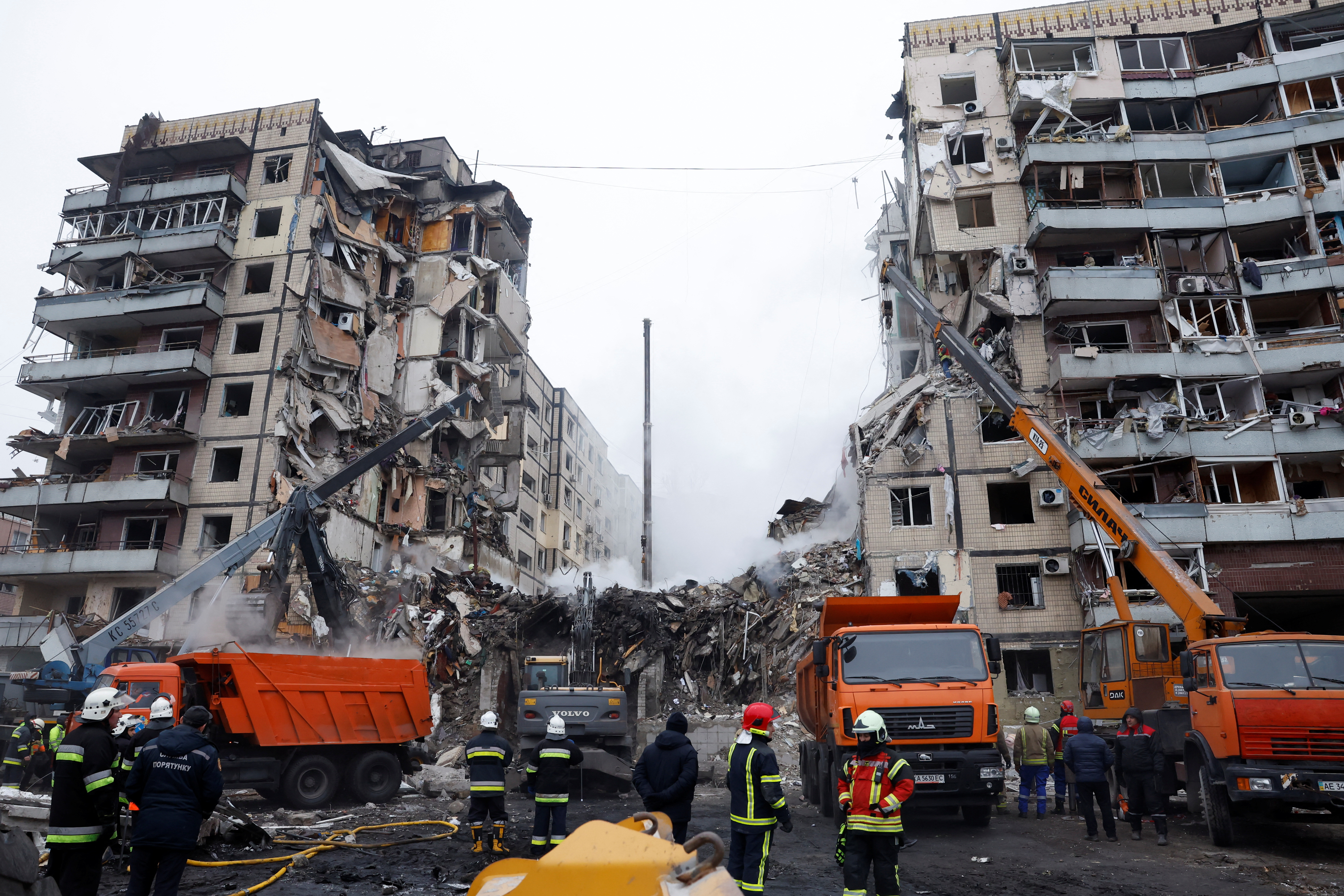
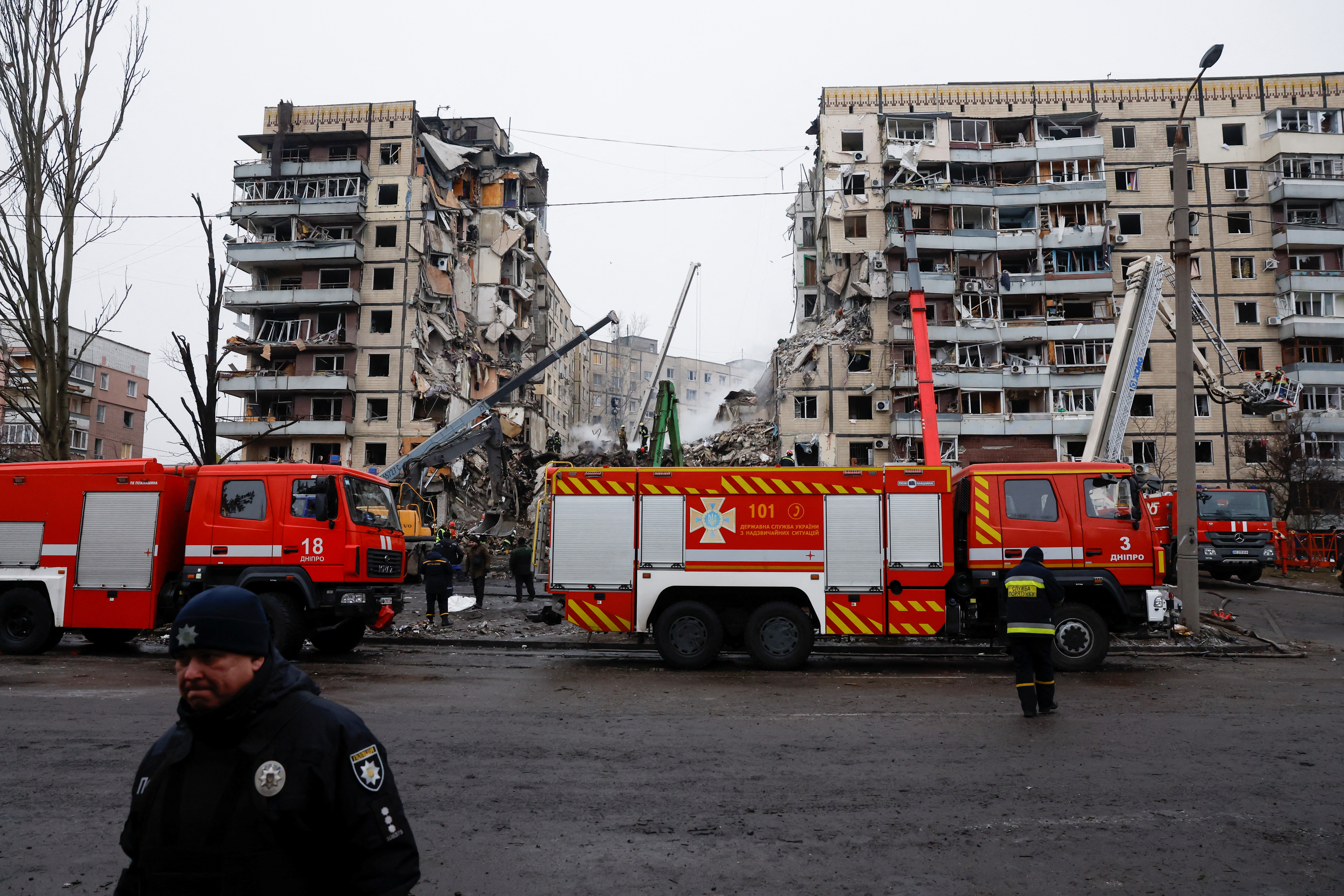
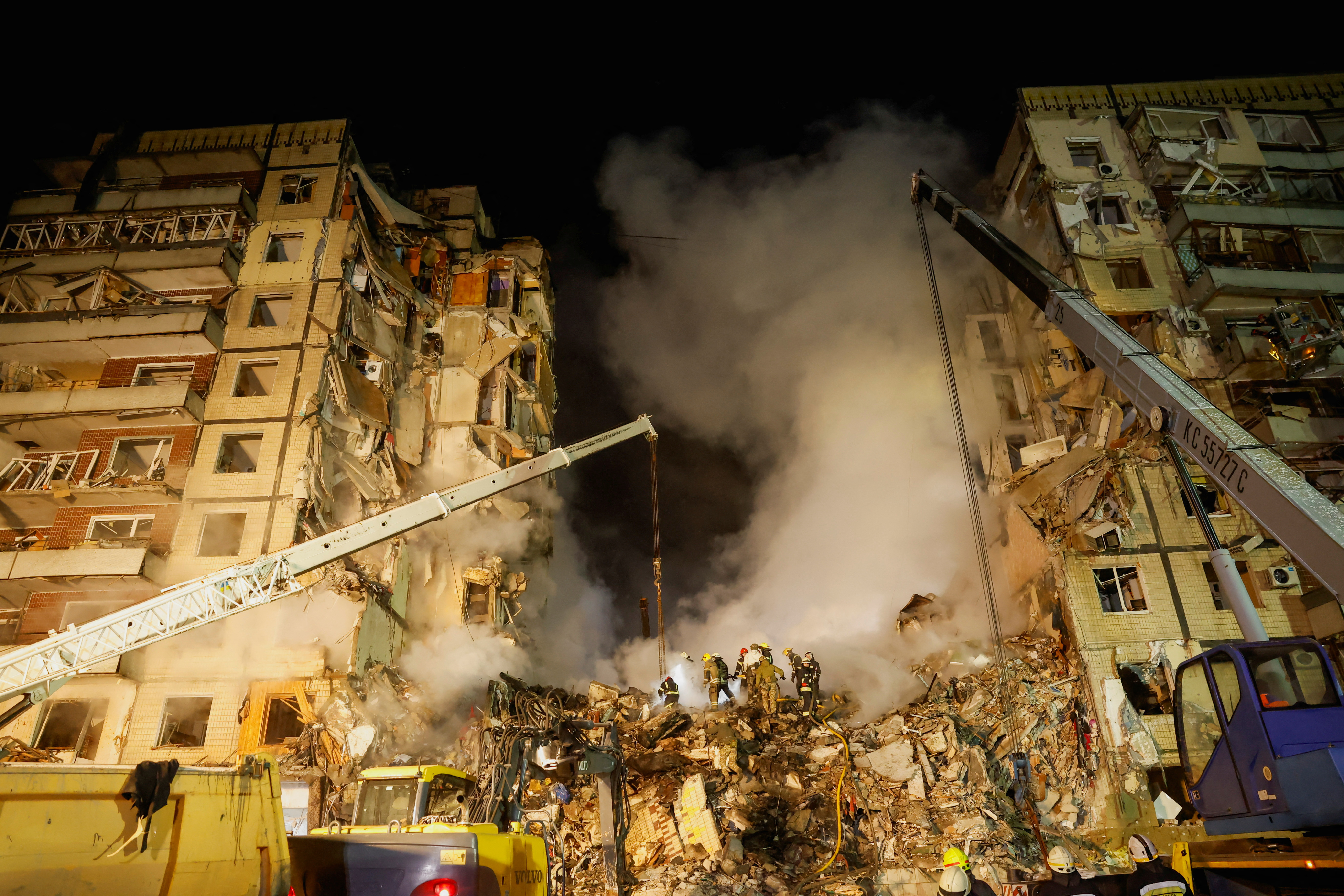
Emergency personnel work at the site where an apartment block was heavily damaged by a Russian missile strike, amid Russia’s attack on Ukraine, in Dnipro, Ukraine January 15, 2023. REUTERS/Clodagh Kilcoyne

Emergency personnel work at the site where an apartment block was heavily damaged by a Russian missile strike, amid Russia’s attack on Ukraine, in Dnipro, Ukraine January 15, 2023. REUTERS/Clodagh Kilcoyne

A local woman holds her cat rescued by emergency workers at the site where an apartment block was heavily damaged by a Russian missile strike, amid Russia’s attack on Ukraine, in Dnipro, Ukraine January 15, 2023. REUTERS/Yevhenii Zavhorodnii

Ukrainian servicemen fire a BM-21 Grad multiple launch rocket system towards Russian positions on a frontline near the town of Bakhmut, amid Russia’s attack on Ukraine, in Donetsk region, Ukraine January 15, 2023. REUTERS/Oleksandr Ratushniak

Ukrainian servicemen have coffee before moving to their position on a frontline near the town of Bakhmut, amid Russia’s attack on Ukraine, in Donetsk region, Ukraine January 15, 2023. REUTERS/Oleksandr Ratushniak

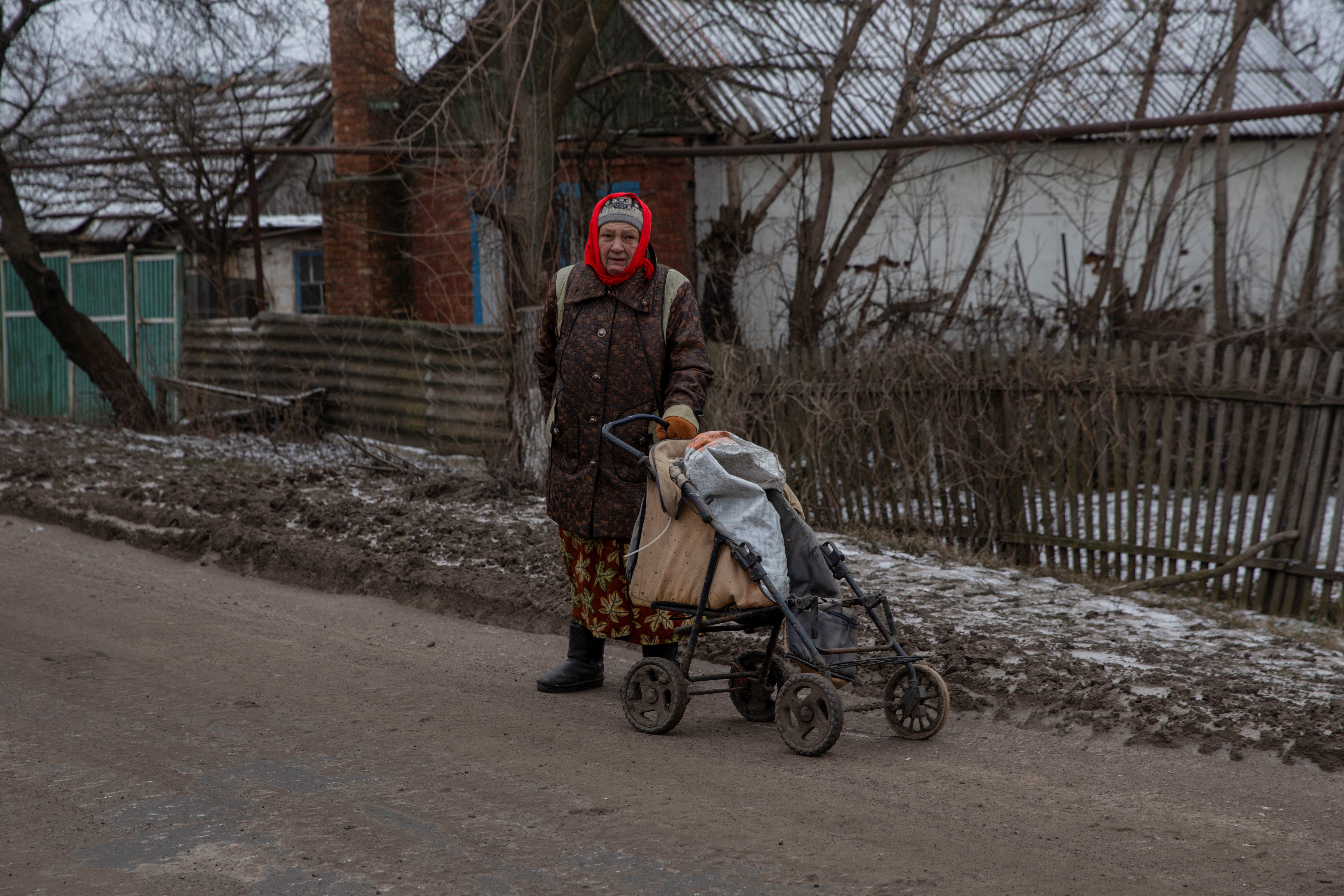
A woman pushes a stroller loaded with a sack of coal for heating her house, amid Russia’s attack on Ukraine, in the village of Nykyforivka, Donetsk region, Ukraine, January 15, 2023. REUTERS/Oleksandr Ratushniak

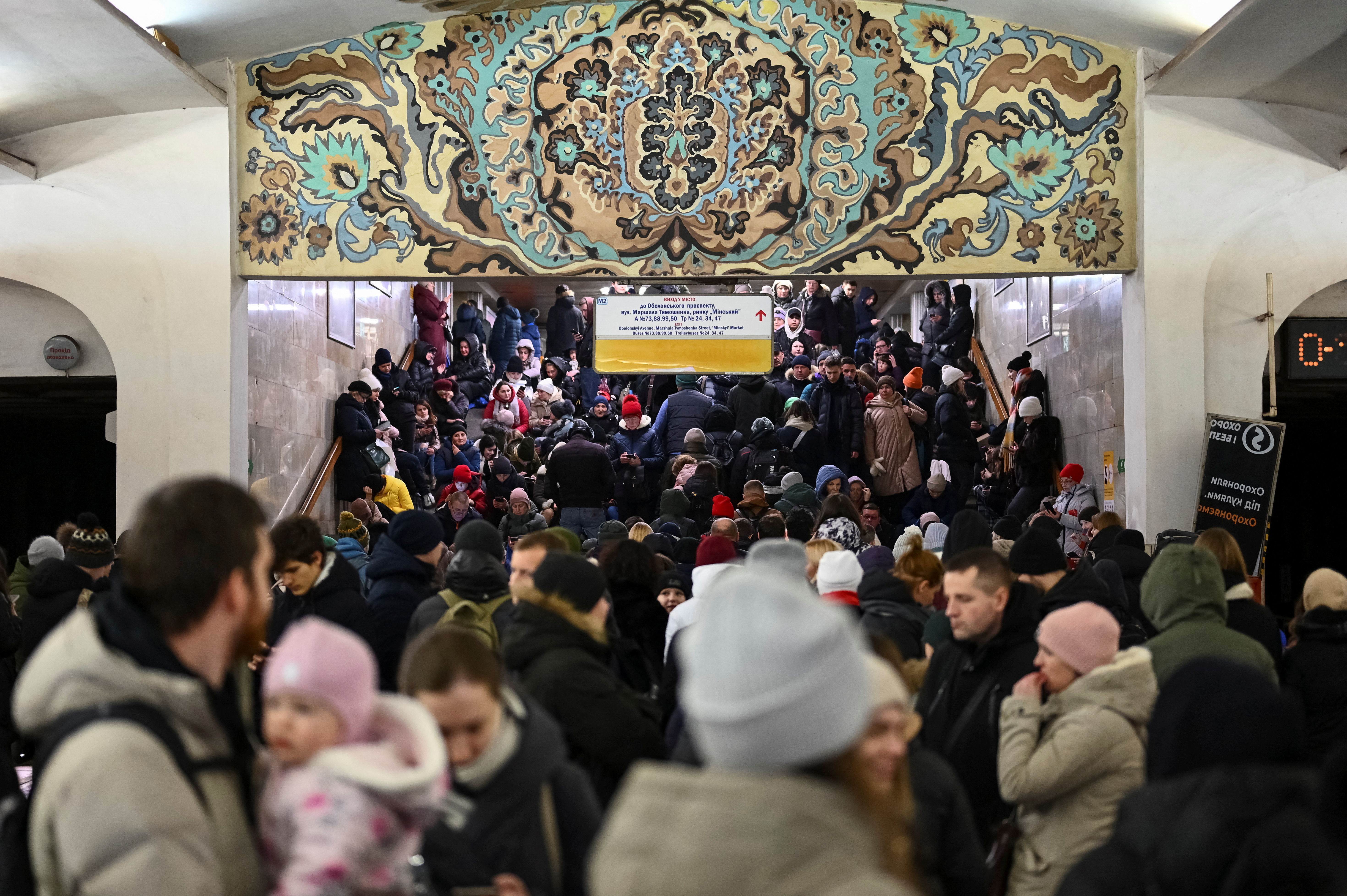
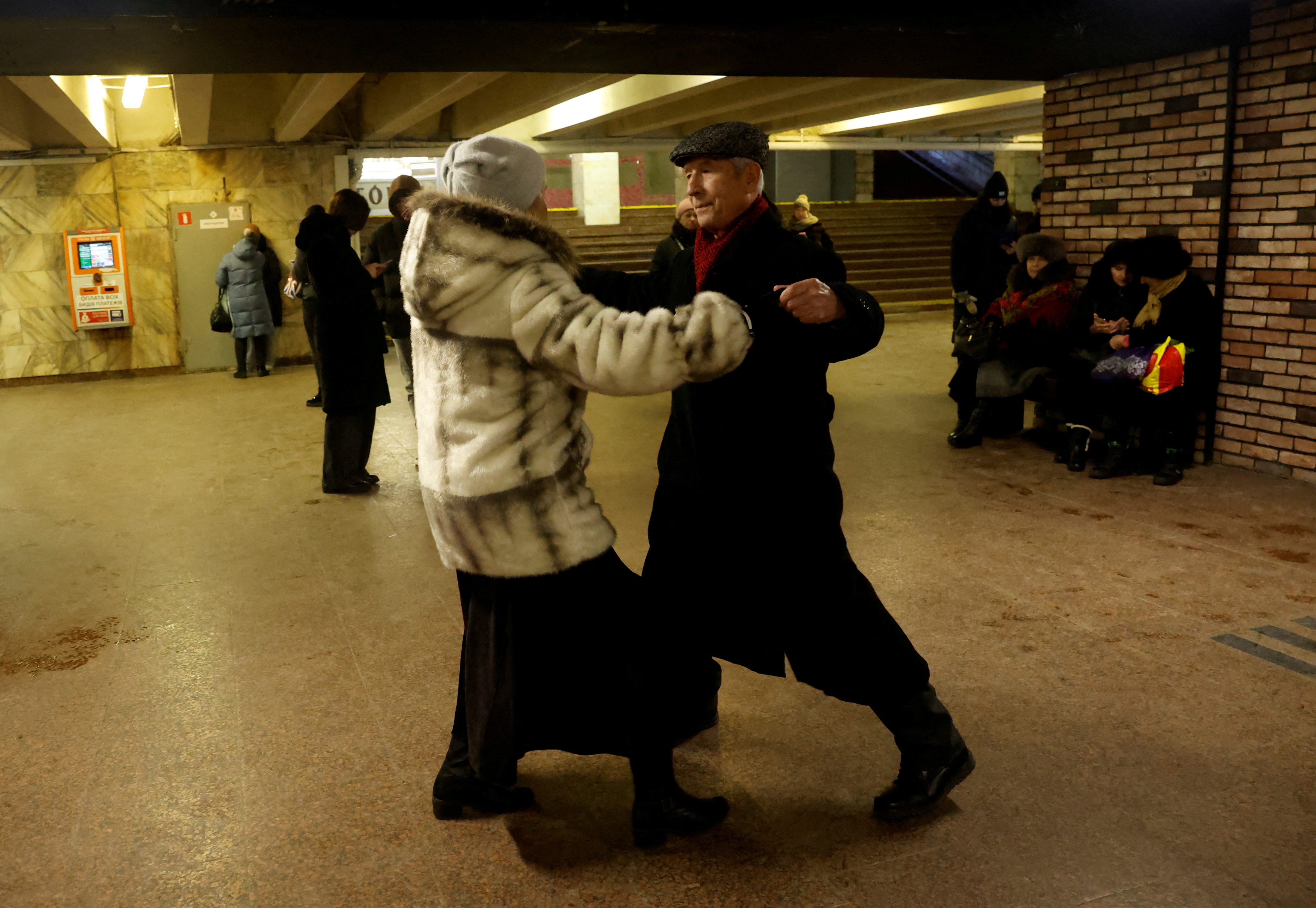
People take shelter inside a metro station during massive Russian missile attacks in Kyiv, Ukraine January 14, 2023. REUTERS/Viacheslav Ratynskyi

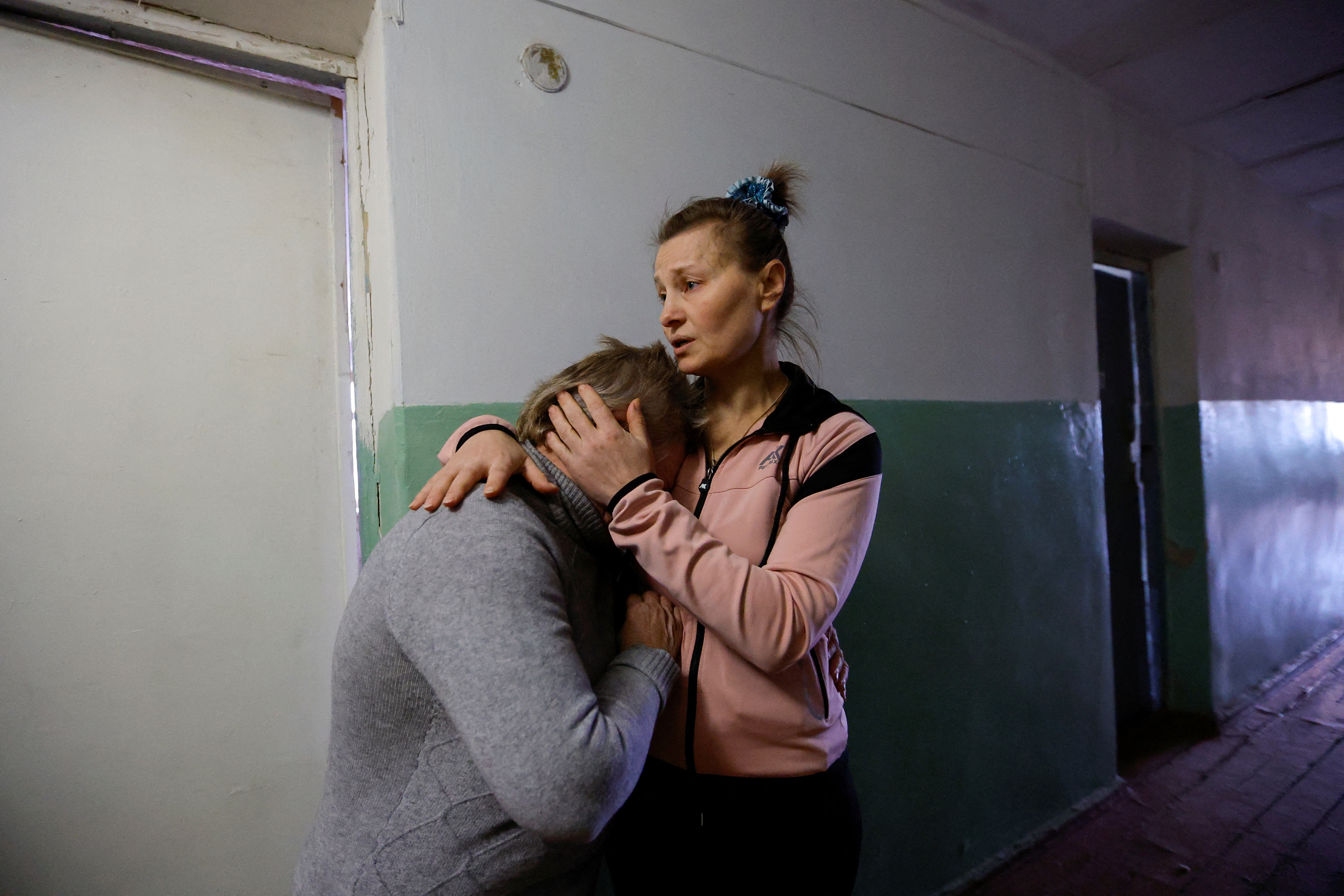
Natalya and Yelena, 65, who didn’t give their family names react while standing in a corridor of a temporary accommodation centre located in a local dormitory for civilians evacuated from the salt-mining town of Soledar in the course of Russia-Ukraine conflict, in Shakhtarsk (Shakhtyorsk) in the Donetsk Region, Russian-controlled Ukraine, January 14, 2023. REUTERS/Alexander Ermochenko

People dance to music as they take shelter inside a metro station during massive Russian missile attacks in Kyiv, Ukraine January 14, 2023. REUTERS/Clodagh Kilcoyne

Emergency personnel work at the site where an apartment block was heavily damaged by a Russian missile strike, amid Russia’s attack on Ukraine, in Dnipro, Ukraine January 15, 2023. REUTERS/Clodagh Kilcoyne

Emergency personnel work at the site where an apartment block was heavily damaged by a Russian missile strike, amid Russia’s attack on Ukraine, in Dnipro, Ukraine January 15, 2023. REUTERS/Clodagh Kilcoyne

A satellite view shows a closer view of exploding munitions, in Bakhmut, Ukraine, January 3, 2023. Satellite image 2023 Maxar Technologies./Handout via REUTERS

A satellite view shows destroyed apartment buildings and homes, in Soledar, Ukraine, January 10, 2023. Satellite image ?2023 Maxar Technologies./Handout via REUTERS
Categories
Audio Sources - Full Text Articles

Russia to make “major changes“ to armed forces from 2023 to 2026

2023-01-17T10:15:45Z

Russian Defence Minister Sergei Shoigu visits headquarters of East military group of Russian troops involved in Ukraine, at unidentified location in an image released January 17, 2023. Russian Defence Ministry/Vadim Savitsky/Handout via REUTERS

Russia said on Tuesday that it would make “major changes” to its armed forces from 2023 to 2026, promising to shake up its military structure after months of setbacks on the battlefield in Ukraine.

In addition to administrative reforms, the Defence Ministry said it would strengthen the combat capabilities of its naval, aerospace and strategic missile forces.

“Only by strengthening the key structural components of the Armed Forces is it possible to guarantee the military security of the state and protect new entities and critical facilities of the Russian Federation,” Defence Minister Sergei Shoigu said.

Kremlin spokesman Dmitry Peskov said the changes had been made necessary by the “proxy war” being conducted in Ukraine by the West, which has been sending increasingly heavy weaponry to Ukraine to help it resist Russian forces.

The defence ministry, which has faced sharp domestic criticism for the ineffectiveness of its drive to take control of large tracts of Ukraine, vowed in December to boost its military personnel to 1.5 million.

It has made numerous changes to its leadership in the 11 months of what it terms a “special military operation”, in which its forces initially seized large areas of southern and eastern Ukraine but have since suffered a series of painful defeats and retreats.

Last week, Shoigu appointed Army General Valery Gerasimov, the chief of the military general staff, to take charge of the Ukraine campaign.

The Defence Ministry said on Friday that it had taken control of Soledar – a small, salt-mining town in Ukraine’s Donetsk region that had for weeks been the focus of a Russian assault.

Categories
Audio Sources - Full Text Articles

Fear of Russian Defeat Should Not Dampen West’s Commitment to Ukraine’s Victory

0a1580b2ea339029475aee4c1a72a9bd.jpg?w=1

Paradoxically, while seeing a Russian victory as utterly unacceptable, the West is not yet providing Ukraine with the tools it needs to win in the fear of a Russian defeat.

Categories
Audio Sources - Full Text Articles

Germany to appoint regional official as defense minister

BERLIN (AP) — German Chancellor Olaf Scholz will appoint a regional official as the new defense minister following the resignation of the much-criticized Christine Lambrecht, the dpa news agency reported Tuesday.

The defense minister-designate, Boris Pistorius, is a member of Scholz’ Social Democrats, and has been serving as interior minister of Lower Saxony since 2013.

The 62-year-old Pistorius will have to steer the project of modernizing Germany’s military and oversee expanding weapons deliveries to Ukraine.

Pistorius will also quickly be thrown into the deep end of the new job. U.S. Defense Secretary Lloyd Austin is scheduled to visit Berlin this week and then host a meeting of allies at the Ramstein Air Base in western Germany. On Sunday, the German and French governments will hold bilateral talks that include a meeting of the countries’ joint security council.

Lambrecht had been defense minister since Scholz became chancellor in December 2021. Critics had long portrayed her as out of her depth.

Categories
Audio Sources - Full Text Articles

China“s first population drop in six decades sounds alarm on demographic crisis

2023-01-17T09:40:45Z

China’s population fell last year for the first time in six decades, a historic turn that is expected to mark the start of a long period of decline in its citizen numbers with profound implications for its economy and the world.

China’s population fell last year for the first time in six decades, a historic turn that is expected to mark the start of a long period of decline in its citizen numbers with profound implications for its economy and the world.

The country’s National Bureau of Statistics reported a drop of roughly 850,000 people for a population of 1.41175 billion in 2022, marking the first decline since 1961, the last year of China’s Great Famine.

That possibly makes India the world’s most populous nation. U.N. experts predicted last year India would have a population of 1.412 billion in 2022 though they did not expect the South Asian nation to overtake China until this year.

India, however, only collects population figures every 10 years and its latest census, originally scheduled for 2021, has been delayed due to the pandemic.

Long-term, U.N. experts see China’s population shrinking by 109 million by 2050, more than triple the decline of their previous forecast in 2019.

That’s caused domestic demographers to lament that China will get old before it gets rich, slowing the economy as revenues drop and government debt increases due to soaring health and welfare costs.

“China’s demographic and economic outlook is much bleaker than expected. China will have to adjust its social, economic, defense and foreign policies,” said demographer Yi Fuxian.

He added that the country’s shrinking labour force and downturn in manufacturing heft would further exacerbate high prices and high inflation in the United States and Europe.

“Economic growth will have to depend more on productivity growth,” added Zhiwei Zhang, chief economist at Pinpoint Asset Management.

Kang Yi, head of the national statistics bureau, dismissed concerns about the population decline, telling reporters that “overall labour supply still exceeds demand”.

China’s birth rate last year was just 6.77 births per 1,000 people, down from a rate of 7.52 births in 2021 and marking the lowest birth rate on record.

The number of Chinese women of childbearing age, which the government defines as aged 25 to 35, fell by about 4 million, Kang said.

The death rate, the highest since 1974 during the Cultural Revolution, was 7.37 deaths per 1,000 people, which compares with a rate of 7.18 deaths in 2021.

Much of the demographic downturn is the result of China’s one-child policy imposed between 1980 and 2015 as well as sky-high education costs that have put many Chinese off having more than one child or even having any at all.

The one-child policy and a traditional preference for boys have also created a deep gender imbalance. The latest data shows China with around 722 million males compared to 690 million females. The imbalance, which is more pronounced in rural areas, has led to fewer families being formed in recent years.

The data was the top trending topic on Chinese social media after the figures were released on Tuesday. One hashtag,”#Is it really important to have offspring?” had hundreds of millions of hits.

“The fundamental reason why women do not want to have children lies not in themselves, but in the failure of society and men to take up the responsibility of raising children. For women who give birth this leads to a serious decline in their quality of life and spiritual life,” posted one netizen with the username Joyful Ned.

Chinese netizens have also previously complained about pressure on newlyweds to have offspring as soon as possible, reporting regular calls from their local government asking when they can expect a pregnancy.

China’s stringent zero-COVID policies that were in place for three years have caused further damage to the country’s demographic outlook, population experts have said.

Local governments have since 2021 rolled out measures to encourage people to have more babies, including tax deductions, longer maternity leave and housing subsidies. President Xi Jinping also said in October the government would enact further supportive policies.

The measures so far, however, have done little to arrest the long-term trend.

Online searches for baby strollers on China’s Baidu search engine dropped 17% in 2022 and are down 41% since 2018, while searches for baby bottles are down more than a third since 2018. In contrast, searches for elderly care homes surged eight-fold last year.

The reverse is playing out in India, where Google Trends shows a 15% year-on-year increase in searches for baby bottles in 2022, while searches for cribs rose almost five-fold.

Related Galleries:

An elderly person holds a child near lanterns decorating a shop ahead of the Chinese Lunar New Year, in Beijing, China, January 15, 2023. REUTERS/Tingshu Wang
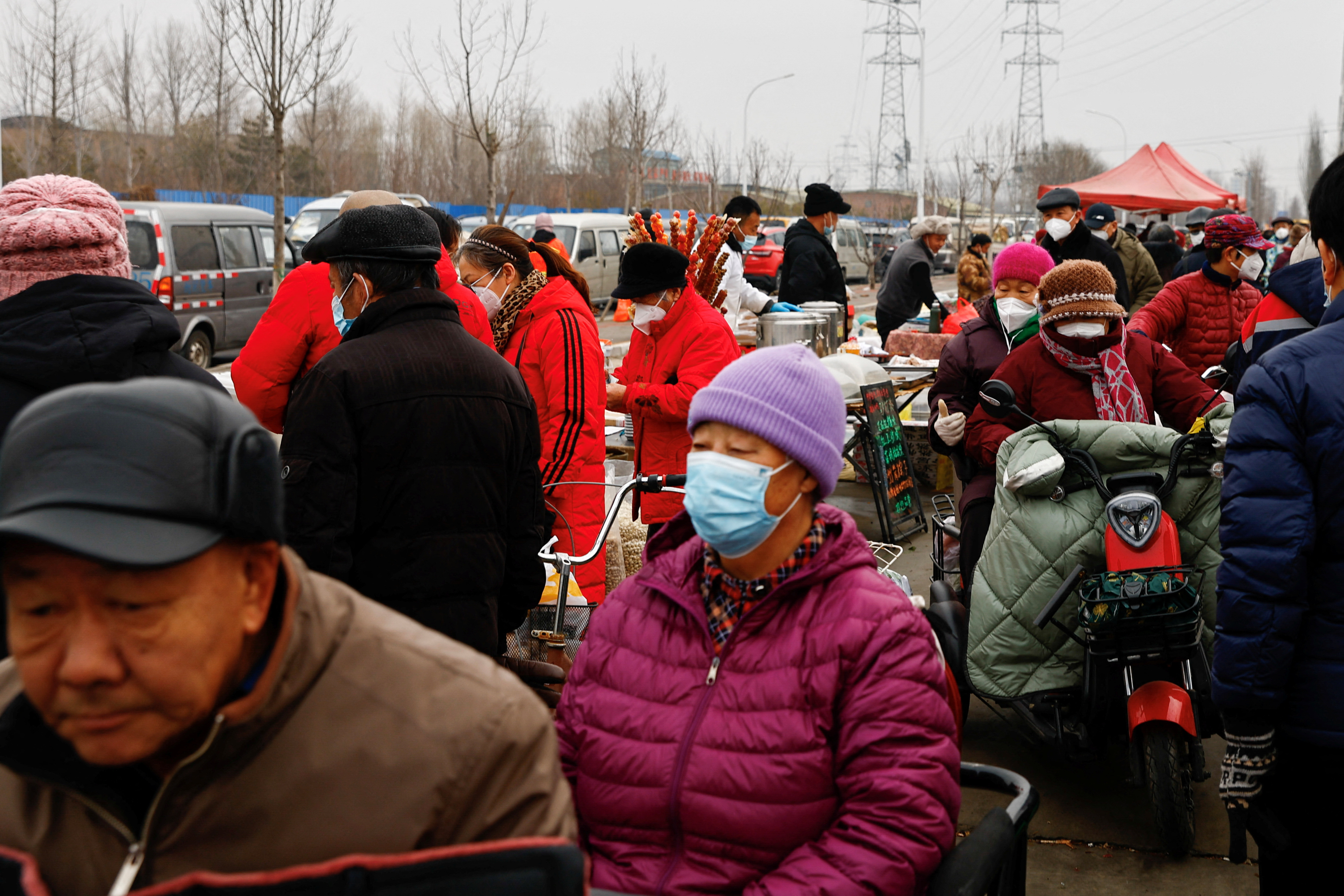
Elderly people shop ahead of the Chinese Lunar New Year at an outdoor market in Beijing, China January 13, 2023. REUTERS/Tingshu Wang
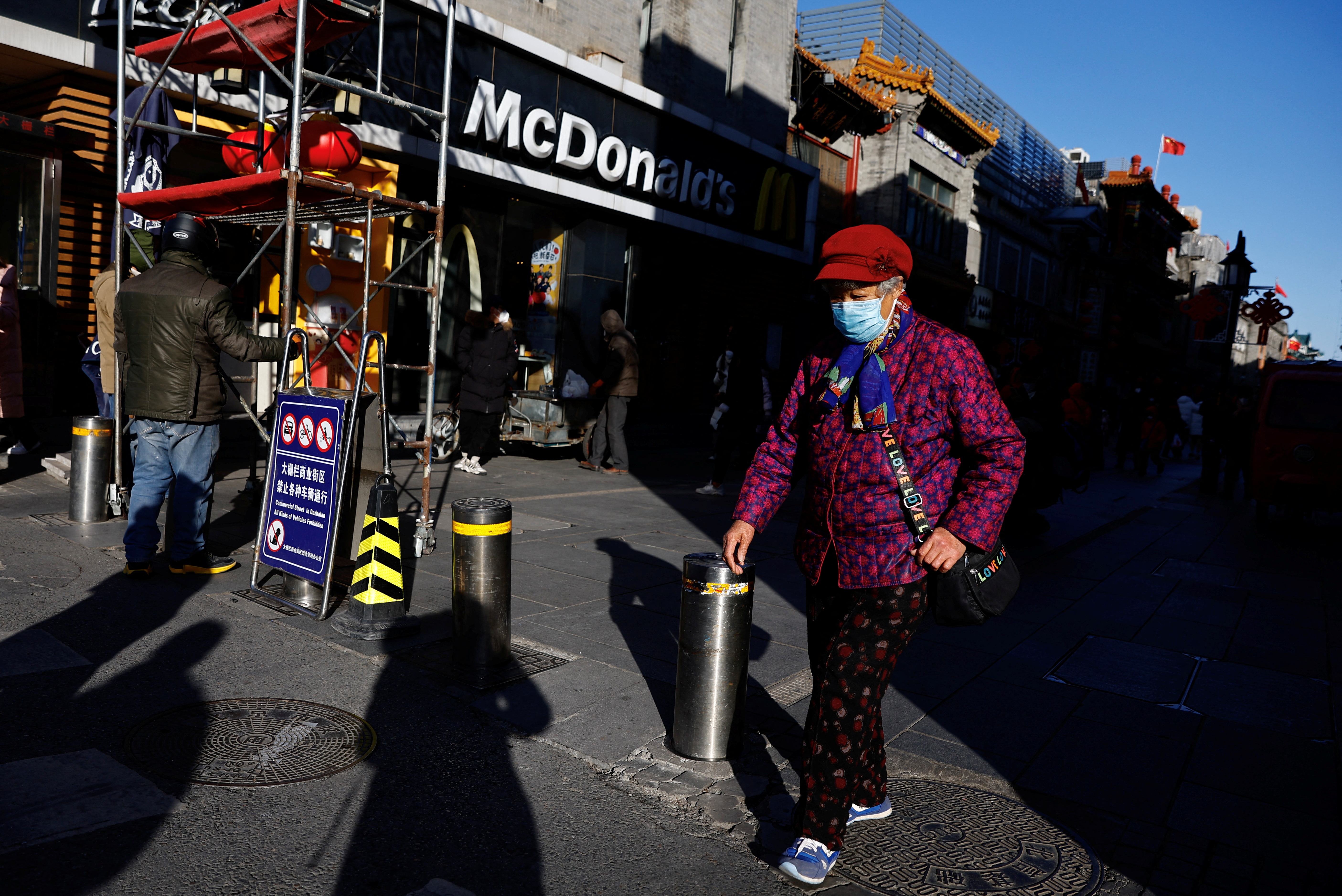
An elderly person walks past Qianmen street ahead of the Chinese Lunar New Year in Beijing, China January 15, 2023. REUTERS/Tingshu Wang
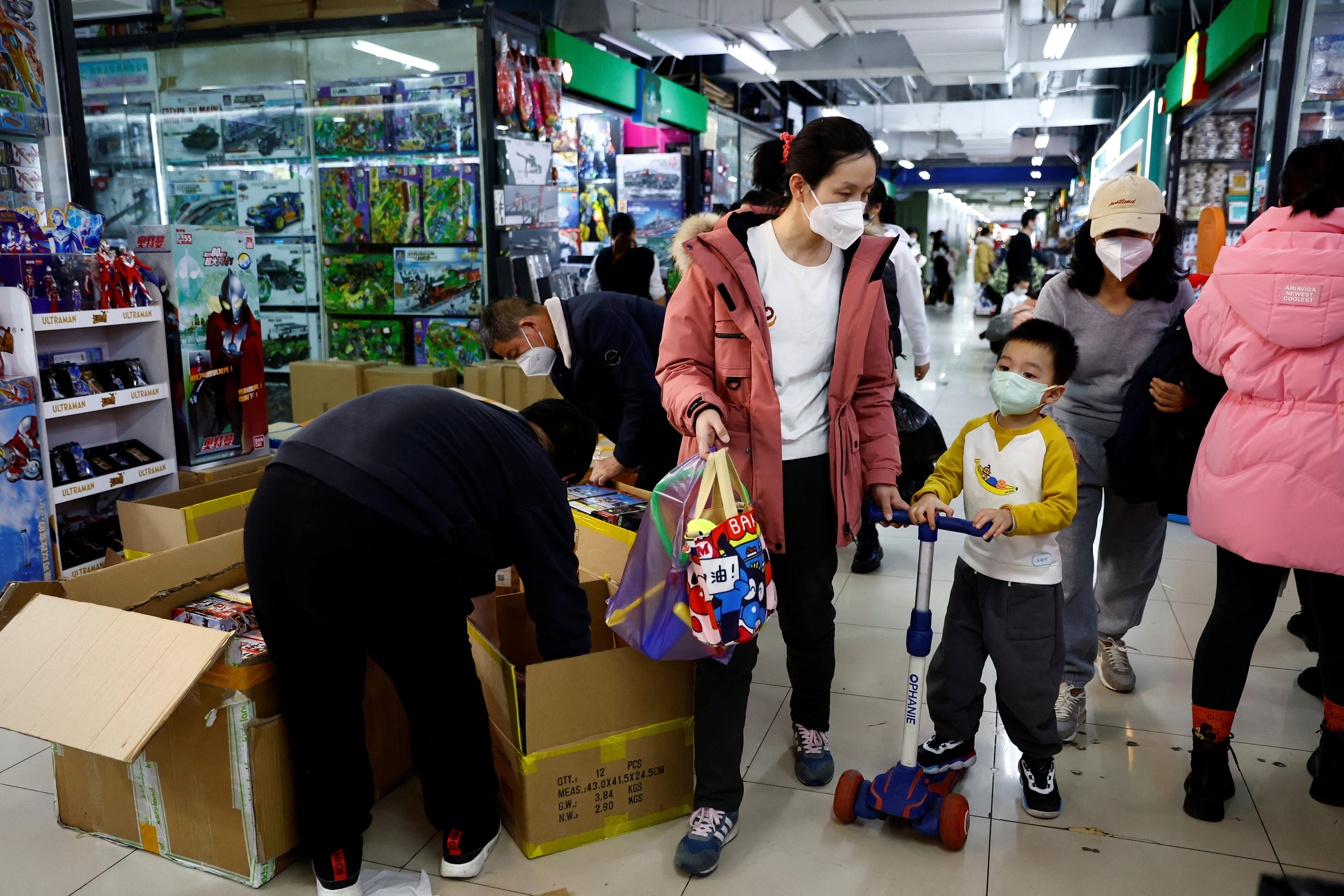
A woman and a child walk past workers sorting toys at a shopping mall in Beijing, China January 11, 2023. REUTERS/Tingshu Wang
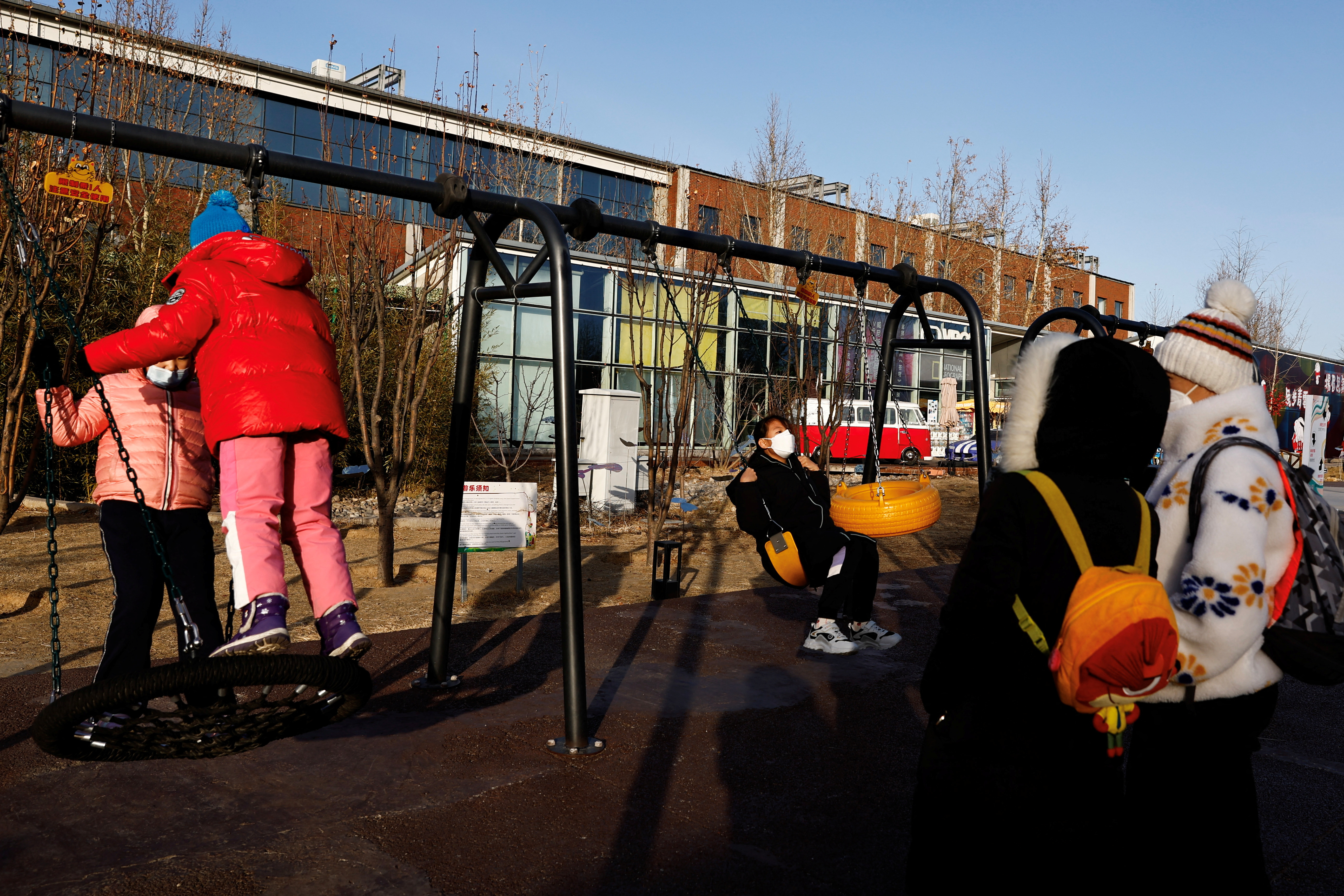
Children play on swings at an outdoor playground in Beijing, China January 14, 2023. REUTERS/Tingshu Wang

Categories
Audio Sources - Full Text Articles

China“s Lunar New Year travel to boost economy after COVID crunch

2023-01-17T09:45:51Z

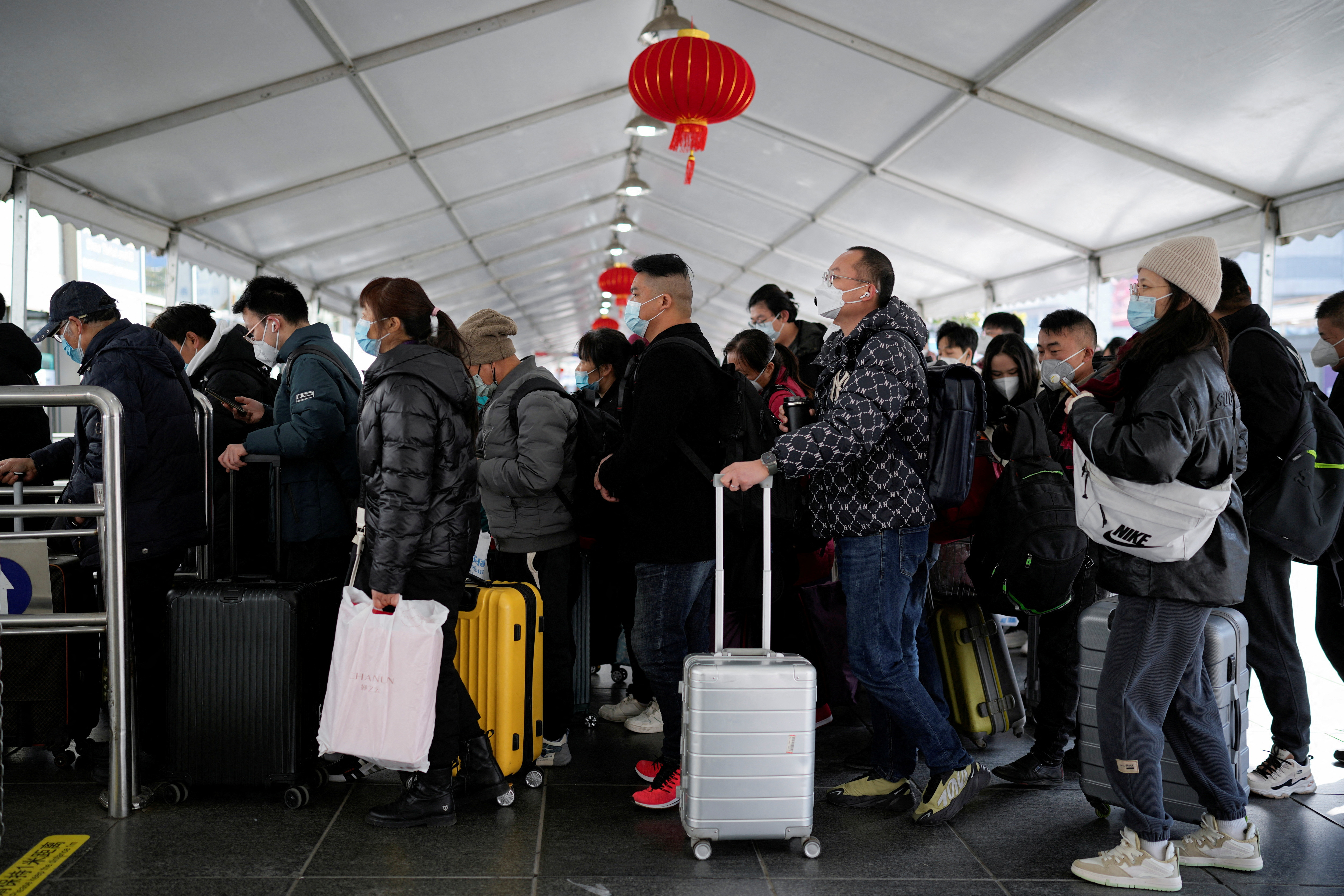
Urban workers crowded train stations across China’s largest cities on Tuesday as travel for Lunar New Year holidays hit high gear, an early sign of economic recovery as officials confirmed a plunge due to COVID-19 curbs.

The world’s second-largest economy slowed sharply in the fourth quarter, data showed on Tuesday, dragging 2022 growth down to one its worst performances in nearly half a century after three years of COVID restrictions and lockdowns.

With mass travel for the Lunar New Year possible for the first time in nearly three years after the relaxing of some of the world’s tightest COVID curbs, the economy stands to gain from hundreds of thousands of people a day spending more as they return to China’s hinterland.

While many analysts say a return to economic normality will be gradual as the impact of COVID weakens, some see the Lunar New Year as a welcome early consumption boost.

“Peak infections passed in major cities in January, and with the Spring Festival coming, tourism is back, and the signs of a recovery in consumption are obvious,” said Nie Wen, a Shanghai-based economist at the investment firm Hwabao Trust.

But with so many people on the move, health experts fear a deepening of the COVID outbreak, leaving the elderly in rural villages particularly vulnerable.

Despite authorities confirming a huge increase in deaths on Saturday – announcing that nearly 60,000 people with COVID had died in hospitals between Dec. 8 and Jan. 12 – World Health Organization (WHO) officials are seeking more accounting of death rates.

The WHO earlier welcomed Saturday’s announcement after last week warning that China was heavily under-reporting deaths from the virus.

Reuters reported on Tuesday that doctors in both public and private hospitals were being actively discouraged from attributing deaths to COVID.

Specifically, the U.N. agency wants information on so-called excess mortality – the number of all deaths beyond the norm during a crisis, the WHO said in a statement.

“This is especially important during periods of surges when the health system is severely constrained,” it said.

The WHO added that it would continue working with China to provide advice and support, but had not yet fixed another formal meeting with Chinese officials after WHO Director General Tedros Adhanom Ghebreyesus spoke with Ma Xiaowei, director of China’s National Health Commission, at the weekend.

The Ministry of Transport has estimated the rush will see a total of 2.1 billion passenger trips nationwide between Jan. 7 and Feb. 15 as many city dwellers make the most of their first chance for Lunar New Year trips to see extended family in home regions since the pandemic began.

Chinese officials jettisoned Beijing’s “zero COVID” policy – an approach previously championed by ruling Communist Party leader Xi Jinping – in early December, letting the virus run unchecked across its population of 1.4 billion people.

Those stringent policies have further damaged China’s demographic outlook, now at the start of a historic decline with government figures released on Tuesday showing the population fell for the first time in six decades.

State media reported that some 390,000 passengers were expected to travel from Shanghai train stations on Tuesday alone for what is known as the Spring Festival holiday – seen as the world’s largest annual mass migration before COVID.

As travellers moved through stations in Shanghai, China’s largest city, some expressed optimism despite the risks.

“I am not worried about the virus. Because we are young, our immunity is okay,” 37-year-old migrant worker Zhou Ning told Reuters outside the Shanghai Railway Station as he prepared to head back to his home area in Bazhong in the northeastern province of Sichuan.

“Back in my hometown, there are many people who have tested positive, but I am not worried about it.”

On a train leaving Shanghai, fellow migrant worker Feng Hongwei, aged 21, said he was “so happy, so excited” as he began a trek home to Puyang, Henan. “I haven’t seen my parents in two years”.

The holiday season has also sparked a revival in domestic air travel with more than 70,000 flights across China between Jan. 7-13, according to industry data reported by Shanghai Securities News on Monday. That is equivalent to more than 80% of the levels seen before the pandemic.

Related Galleries:

People walk with their luggage at a railway station during the annual Spring Festival travel rush ahead of the Chinese Lunar New Year, as the coronavirus disease (COVID-19) outbreak continues, in Shanghai, China January 16, 2023. REUTERS/Aly Song/File Photo

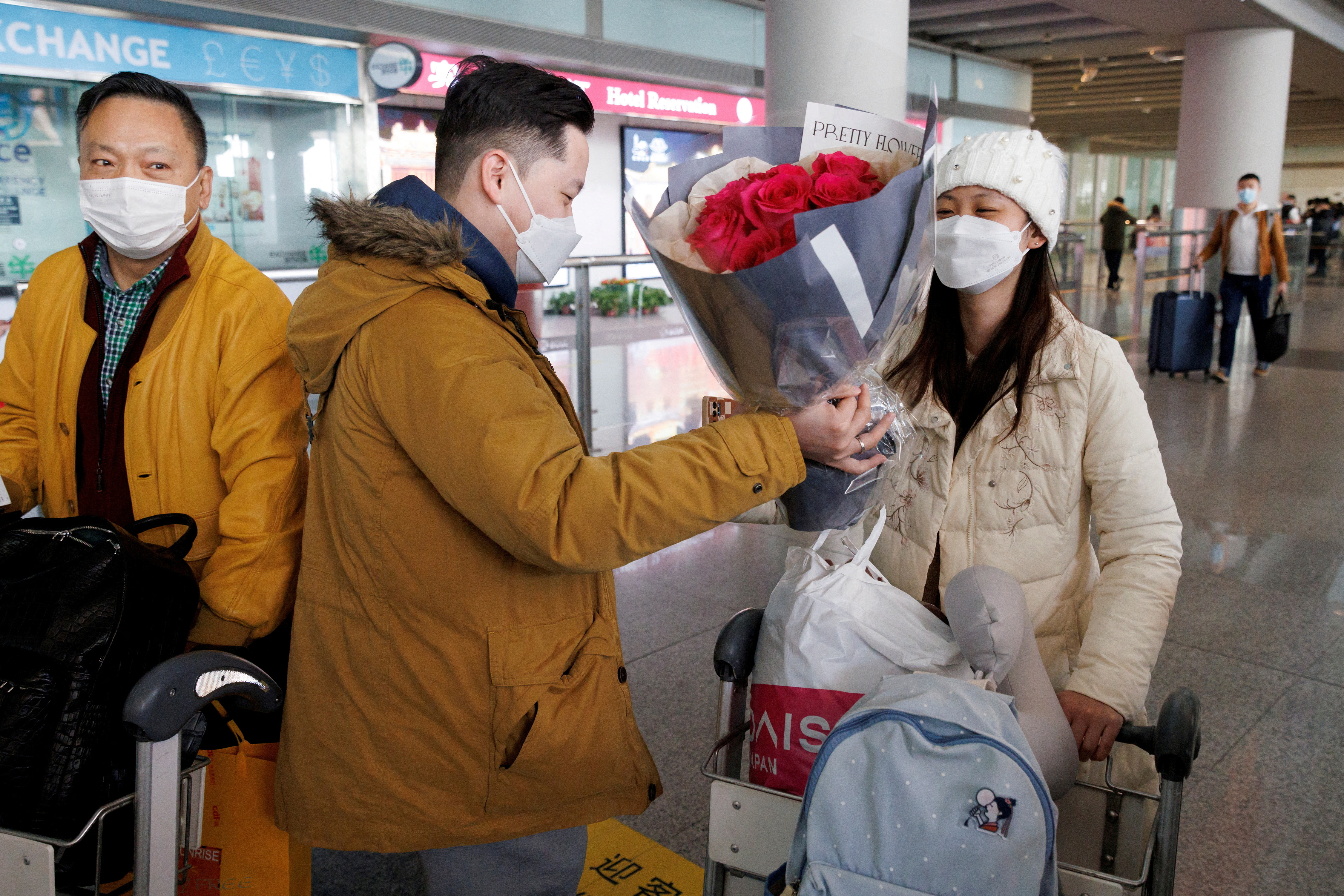
A man hands flowers to a woman after she came through the international arrivals gate at Beijing Capital International Airport after China lifted the coronavirus disease (COVID-19) quarantine requirement for inbound travellers in Beijing, China January 8, 2023. REUTERS/Thomas Peter

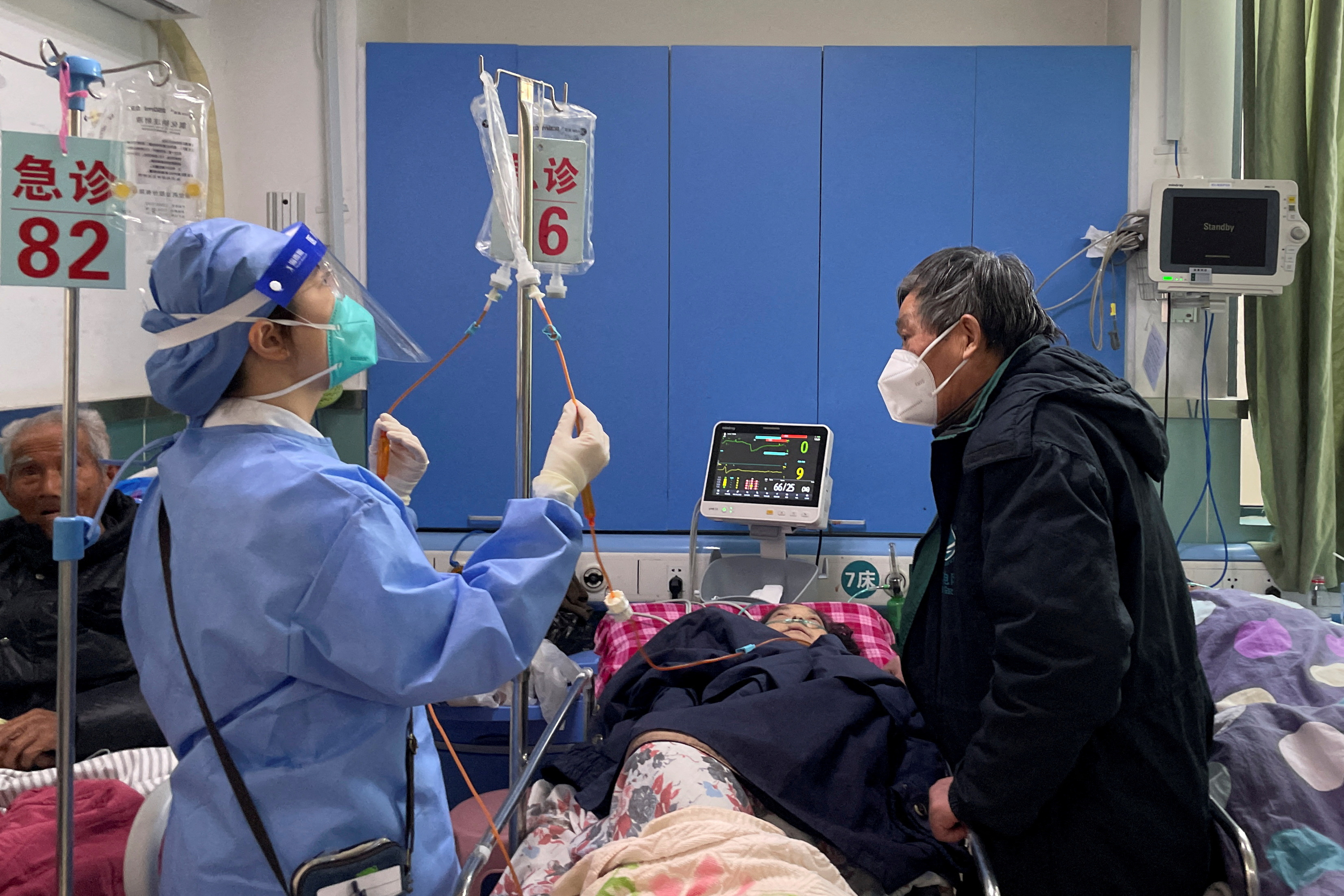
A medical worker checks the IV drip treatment of a patient lying on a bed in the emergency department of a hospital, amid the coronavirus disease (COVID-19) outbreak in Shanghai, China, January 5, 2023. REUTERS/Staff

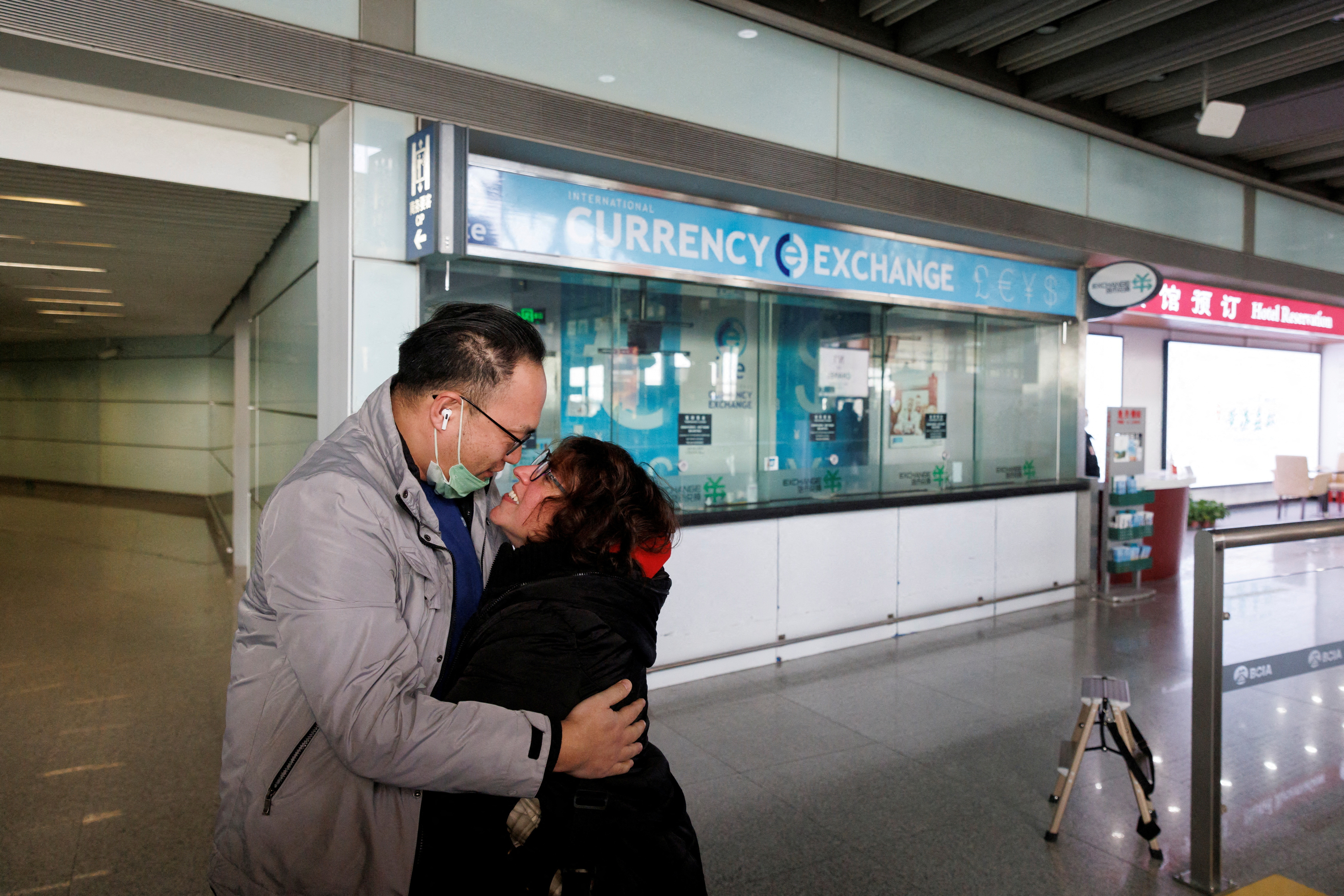
People embrace at the international arrivals gate at Beijing Capital International Airport after China lifted the coronavirus disease (COVID-19) quarantine requirement for inbound travellers in Beijing, China, January 8, 2023. REUTERS/Thomas Peter
WP Radio
WP Radio
OFFLINE LIVE