Categories
Audio Sources - Full Text Articles

Meet the Green Energy Group Behind the Study That’s Driving Calls To Ban Gas Stoves

The green energy group behind a study cited in Consumer Product Safety commissioner Richard Trumka Jr.’s call to ban gas stoves has partnered with the Chinese government to implement an “economy-wide transformation” away from oil and gas.

Colorado-based nonprofit Rocky Mountain Institute, which published the December study that attributes 13 percent of U.S. childhood asthma cases to gas-stove use, is hardly staffed by an objective group of scientists.

The organization is demanding “systemic change and economy-wide transformation” to address a climate crisis it says we must go to great lengths to avoid. In 2013, for example, the Rocky Mountain Institute joined forces with China’s National Development and Reform Commission—the government agency tasked with planning the communist nation’s economy—to produce a report that advised China to replace existing appliances and generators with “clean energy technologies.” The commission went on to set climate goals that included energy reduction targets. When local provinces in 2021 failed to meet those targets, the commission pushed them to implement electricity rations, prompting “dimmed traffic lights that cause chaos” and “half-cooked rice in rice cookers.”

The Rocky Mountain Institute is far from the first green energy group to advocate for the banning of gas stoves, which nearly 40 percent of U.S. homes use. But the nonprofit’s newfound influence reflects the Biden administration’s alignment with the left’s loudest climate activists. President Joe Biden has already proposed a natural gas phaseout in federal buildings, which would ban fossil-fuel equipment in new buildings by 2030. Leading green energy groups applauded the move, which will cost taxpayers millions of dollars annually, the Washington Free Beacon reported in December.

Beyond its public mission statement and work with the Chinese government, the Rocky Mountain Institute’s biases are reflected in its gas-stove study, academic leaders told the Free Beacon. The study—which spans just nine paragraphs—was based on a hodgepodge of different data and methodologies spanning various years and countries, ranging from 2019 U.S. Census data to conclusions from a 2018 analysis in Australia.

Structuring a study that way is questionable, according to Yale University professor of medicine Dr. Harvey Risch. Moreover, the conclusions of the institute’s study differs from what the organization is saying publicly.

“This paper does not do any research on possible association between residential natural gas use and risk of childhood asthma,” Risch told the Free Beacon. “It only calculates a percent of childhood asthma that could be attributable to residential natural gas use and risk of childhood asthma.”

That distinction is important, Risch said, particularly when calling for such a dramatic public policy proposal that would change how tens of millions of Americans prepare their food. The study was also ethically dubious, according to Risch, as its authors stated they held no conflicts of interest despite working for climate change activist groups. The Rocky Mountain Institute’s board, for example, is filled with executives at green energy corporations with a financial interest in banning the use of fossil fuels.

Also included among those board members is Wei Ding, the founder and chairman of the Chinese private equity firm Broad River Capital. Ding started the firm after serving as chairman of the China International Capital Corporation (CICC), a partially state-owned investment bank. Former CICC executives include Chinese leader Xi Jinping’s vice president and right-hand man, Wang Qishan, while the corporation’s website highlights its “deep participation in China’s economic reforms and development” and goal to “serve the nation.” The Rocky Mountain Institute also sits on the China Clean Transportation Partnership, a Chinese green energy nonprofit whose founding members include China’s National Development and Reform Commission and Ministry of Transport.

Sen. J.D. Vance (R., Ohio), who last week called on the Consumer Product Safety Commission to renounce any potential gas-stove ban, said he is alarmed by the institute’s ties to the Chinese Communist Party. The natural gas industry, Vance said, “is critical to our national security,” and its demise would be a boost to our adversary.

“Who benefits from all this? Communist China,” Vance told the Free Beacon. “I think it’s time for the chairman of the Consumer Product Safety Commission to answer some questions before Congress—under oath.”

In addition to the Rocky Mountain Institute’s green energy biases, the nonprofit’s lead authors on the study hold no formal advanced scientific training or education. Talor Gruenwald, who works as a researcher at the group, holds a master of international affairs. Brady Seals, who heads the institute’s “Carbon-Free Buildings” program, graduated with an MBA from the University of South Dakota.

Those facts didn’t stop multiple outlets from covering the study as a disturbing revelation and call for action. The Washington Post ran at least four stories on the study’s findings, with one alleging that gas-stove use “jump-starts childhood asthma.”

“But as more and more information emerges about the health risks—and as the Biden administration focuses in on electrifying household appliances across the country—the move from gas to electric may be a question not of ‘if,’ but of ‘when,'” one of the Post‘s stories concludes.

Trumka, whom Biden tapped as a top federal regulator in 2021, seemingly confirmed that assessment in a Thursday interview. After Trumka’s initial comment floating a gas-stove ban prompted widespread public backlash—and a walkback from the White House—the Democrat told CNN that any regulatory action on the appliance would be “forward-looking” and only apply to “new products.” “We are not looking to go into anyone’s homes and take away items that are already there,” Trumka said. “We don’t do that.”

Those comments likely disappointed the Rocky Mountain Institute, which did not return a request for comment. On Jan. 4, the group—which has pledged to continue its partnership with the Chinese government—explicitly advocated for the removal of existing gas stoves from private homes. “More than 12 percent of U.S. childhood asthma is preventable,” the group said, “if we remove gas stoves from homes and move towards electric stoves instead.”

The post Meet the Green Energy Group Behind the Study That’s Driving Calls To Ban Gas Stoves appeared first on Washington Free Beacon.

Categories
Audio Sources - Full Text Articles

Mafia Boss Who Was Italy’s Top Fugitive Arrested in Sicily

ROME — Italy’s No. 1 fugitive, convicted Mafia boss Matteo Messina Denaro, was arrested on Monday at a private clinic in Palermo, Sicily, after three decades on the run, Italian paramilitary police said.

Messina Denaro was captured at the clinic where he was receiving treatment for an undisclosed medical condition, said Carabinieri Gen. Pasquale Angelosanto, who heads the police force’s special operations squad.

In a police photo showing him sitting in a police van, Messina Denaro was wearing a brown leather jacket and white skull cap and his trademark tinted glasses. His face looked wan. He was taken to a secret location by police immediately after the arrest, Italian state television reported.

[time-brightcove not-tgx=”true”]

A young man when he went into hiding, he is now 60. Messina Denaro, who had a power base in the port city of Trapani, in western Sicily, was considered Sicily’s Cosa Nostra top boss even while a fugitive.

He was the last of three longtime fugitive top-level Mafia bosses who had for decades eluded capture.

Messina Denaro, who tried in absentia and convicted of dozens of murders, faces multiple life sentences.

He is set to be imprisoned for are two bombings in Sicily in 1992 that murdered top anti-Mafia prosecutors, Giovanni Falcone and Paolo Borsellino. Among other grisly crimes he was convicted of is the murder of a Mafia turncoat’s young son, who was strangled and his body dissolved in a vat of acid.

The arrest Monday came 30 years and a day after the Jan. 15, 1993, capture in 1993 of convicted “boss of bosses” Salvatore “Toto” Riina, in a Palermo apartment after 23 years on the run. Messina Denaro went into hiding in summer of that same year, as the Italian state waged a crackdown on the Sicilian crime syndicate following the murders of Falcone and Borsellino.

Italian Premier Giorgia Meloni tweeted that Messina Denaro’s capture is a “great victory of the state, which shows that it doesn’t surrender in the face of the Mafia.”

Italy’s Mafia boss who set the record for the longest time on the lam was Bernardo Provenzano, captured in a farmhouse near Corleone, Sicily, in 2006 after 38 years as a fugitive. Once Provenzano was in police hands, the hunt focused on Messina Denaro, but despite numerous reported sightings of the boss, he managed to elude arrest, until Monday.

That all three top bosses were ultimately arrested in the heart of Sicily while they conducted decades of a clandestine life won’t surprise Italy’s police and prosecutors. Law enforcement have long said that such bosses rely on contacts and confidentiality of fellow mobsters and complicit family members to move the fugitives from hideout to hideout, supply basic needs, like food and clean clothing and communication, and a code of silence known as “omerta.”

Categories
Audio Sources - Full Text Articles

T95 Android TV Box sold on Amazon hides sophisticated malware

Expert discovered that the T95 Android TV box, available for sale on Amazon and AliExpress, came with sophisticated pre-installed malware.

Security researcher, Daniel Milisic, discovered that the T95 Android TV box he purchased on Amazon was infected with sophisticated pre-installed malware.

Android TV box

This Android TV box model is available on Amazon and AliExpress for as low as $40.

The device came with Android 10 (with working Play store) and an Allwinner H616 processor. Milisic discovered pre-loaded malware into its firmware.

Milisic purchased the T95 Android TV box to run Pi-hole, which is a Linux network-level advertisement and Internet tracker blocking application.

After running the Pi-hole he noticed that the box was reaching addresses associated with malware campaigns.

Android TV box 2

“After searching unsuccessfully for a clean ROM, I set out to remove the malware in a last-ditch effort to make the T95 useful. I found layers on top of layers of malware using tcpflow and nethogs to monitor traffic and traced it back to the offending process/APK which I then removed from the ROM.” the expert wrote on Reddit.

“The final bit of malware I could not track down injects the system_server process and looks to be deeply-baked into the ROM. It’s pretty sophisticated malware, resembling CopyCatin the way it operates. It’s not found by any of the AV products I tried — If anyone can offer guidance on how to find these hooks into system_server please let me know here or via PM.”

The device uses an Android 10 operating system that was signed with test keys. The expert also discovered that it had the Android Debug Bridge (ADB) reachable through the Ethernet port.

The malicious code embedded in the firmware of the device acts like the Android CopyCat malware. The experts pointed out that all the AV products he tested were not able to detect the threat.

Milisic also devised a trick to block the malware using the Pi-hole to change the DNS of the command and control server, YCXRL.COM to 127.0.0.2.

He also created an iptables rule to redirect all DNS to the Pi-hole as the malware/virus/whatever will use external DNS if it can’t resolve.

“By doing this, the C&C server ends up hitting the Pi-hole webserver instead of sending my logins, passwords, and other PII to a Linode in Singapore (currently 139.162.57.135 at time of writing).” continues the expert.

Watch out, the solution proposed by Milisic doesn’t remove the malicious code or disable it, it just neutralizes it interfering with its operations.

In order to determine if s T95 Android TV Box has been infected, the researcher recommends checking the presence of a folder named:

/data/system/Corejava

and a file named

/data/system/shared_prefs/open_preference.xml?

Milisic was not able to test other devices from the same vendor or model to determine if their firmware was infected too.

“Don’t trust cheap Android boxes on AliExpress or Amazon that have firmware signed with test keys. They are stealing your data and (unless you can watch DNS logs) do so without a trace!” Milisic concludes.

Below are the cleanup instructions provided by the researcher on GitHub:

  • Reboot into recovery to reset the device or use the Reset option in the ‘about’ menu to Factory Reset the T95
  • When device comes back online, connect to adb via USB A-to-A cable or WiFi/Ethernet
  • Run the script (WiP!)

Follow me on Twitter: @securityaffairs and Facebook and Mastodon

Pierluigi Paganini

(SecurityAffairs – hacking, malware)

The post T95 Android TV Box sold on Amazon hides sophisticated malware appeared first on Security Affairs.

Categories
Audio Sources - Full Text Articles

Today, California is hammered by extreme weather. Tomorrow, it could be your area | Julia Scheeres

Even if disasters feel far away, we all live in the same planetary neighborhood. Can we unite in our response to the crisis?

I live in the Bay Area, famous for its mild weather, a place where climate change feels a bit abstract – the problem of people residing in distant lands. It’s easy to scroll through images of the increasing weather disasters – cyclones, tornados, blizzards, floods, mud slides, rising seas and wildfires – feeling horror but also a little smug at the luck of living in the land of year-round shorts and relentless sunshine.

But our luck changed on New Year’s Eve, when a line of killer storms began to assault California, soaking us with 24tn gallons of water, killing 19 people and causing more than 1bn dollars in damages.

Continue reading…

Categories
Audio Sources - Full Text Articles

Nepal finds black boxes of aircraft after deadliest crash in 30 years

2023-01-16T11:00:33Z

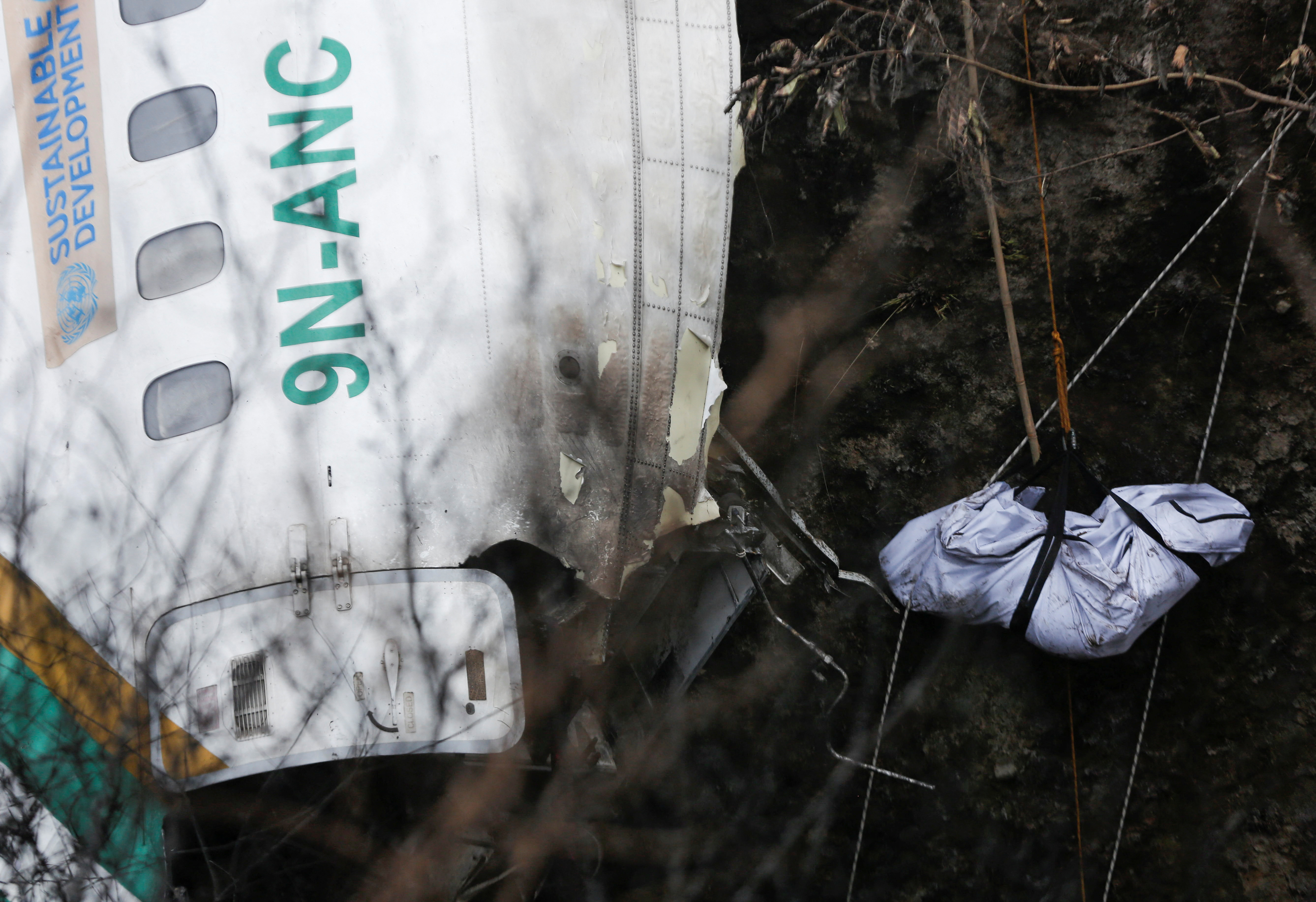
Indian families of the victims were inconsolable on Monday (January 16) as they received the news of their death and a pall of gloom descended on Alawalpur village as people closed shops to mourn the deaths of loved ones. At least 68 people were killed on Sunday (January 15) after the ATR 72 aircraft operated by Yeti Airlines crashed in the tourist city of Pokhara minutes before landing in clear weather.

Searchers found both the cockpit voice recorder and flight data recorder on Monday from a passenger flight that crashed killing at least 68 people in Nepal’s worst plane accident in 30 years, officials said.

The data on the recorders may help investigators determine what caused the Yeti Airlines ATR 72 aircraft, carrying 72 people, to crash in clear weather on Sunday just before landing in the tourist city of Pokhara.

Both recorders were in good shape and would be sent for analysis based on the recommendation of the manufacturer, Teknath Sitaula, an official at Kathmandu airport, told Reuters on Monday.

Under international aviation rules, the crash investigation agency of the country where the plane was designed and built, is automatically part of the investigation.

ATR is based in France and the plane’s engines were manufactured in Canada, by Pratt & Whitney Canada (RTX.N).

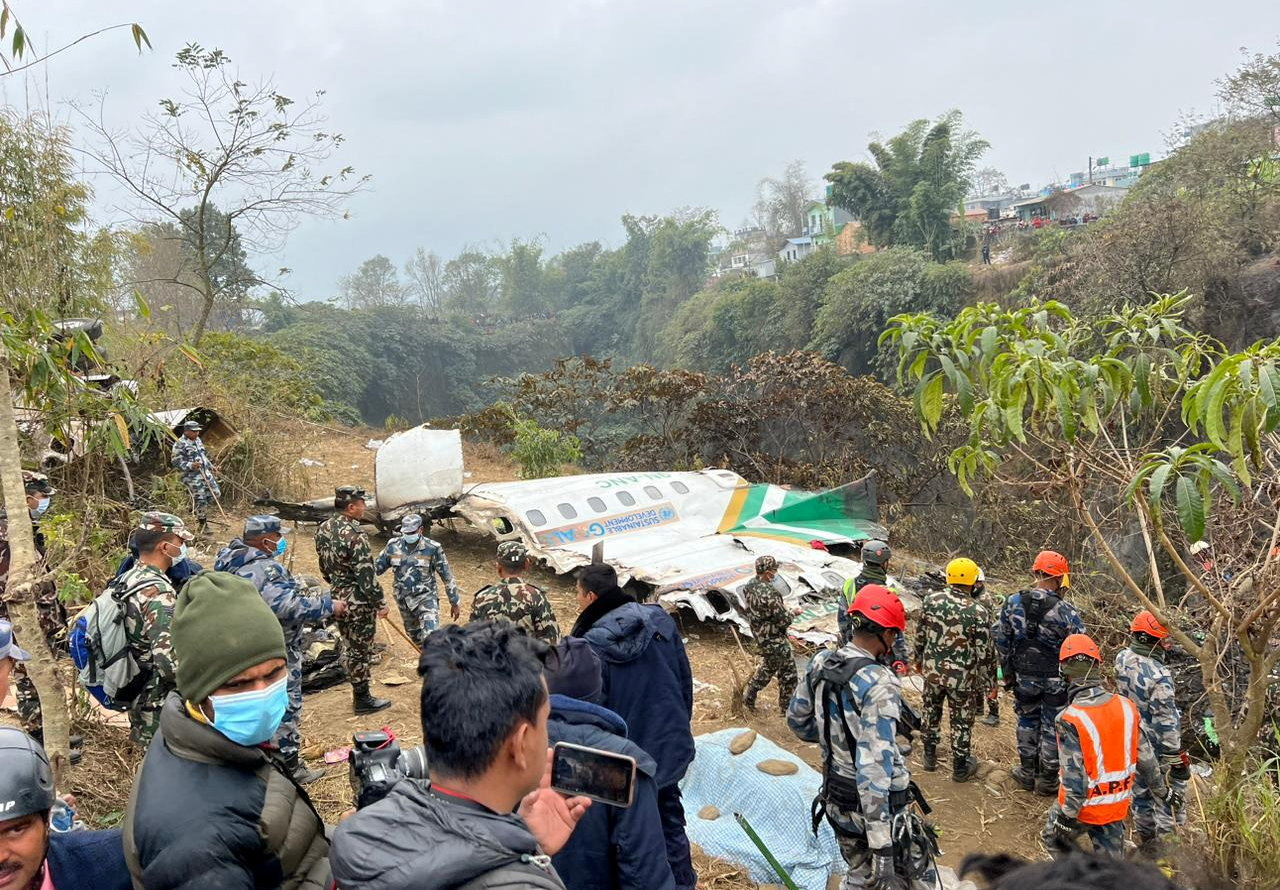
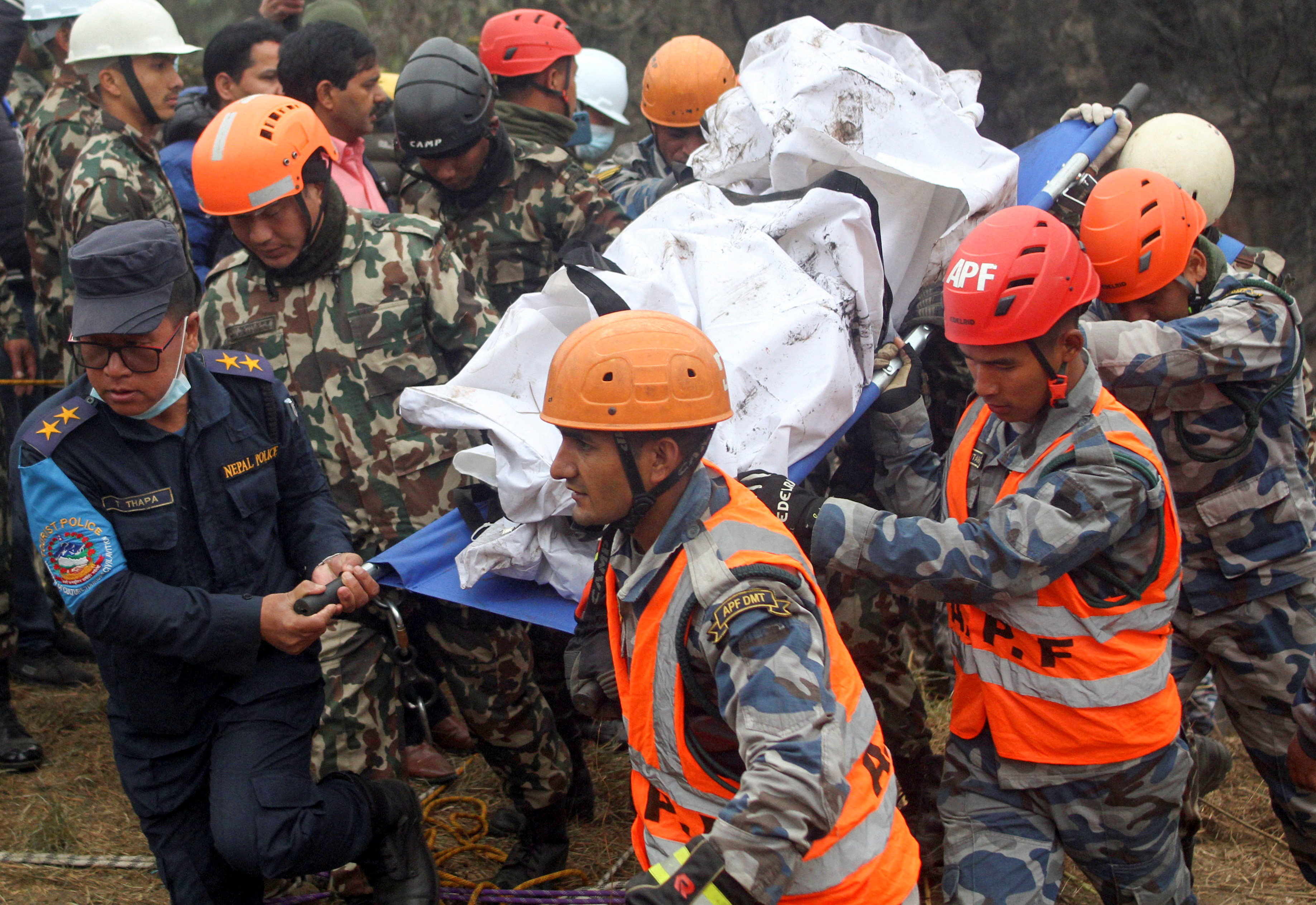
Rescuers were battling cloudy weather and poor visibility on Monday as they scoured a river gorge for passengers who are unaccounted for, more than 24 hours after the crash. Sixty-eight bodies have been recovered.

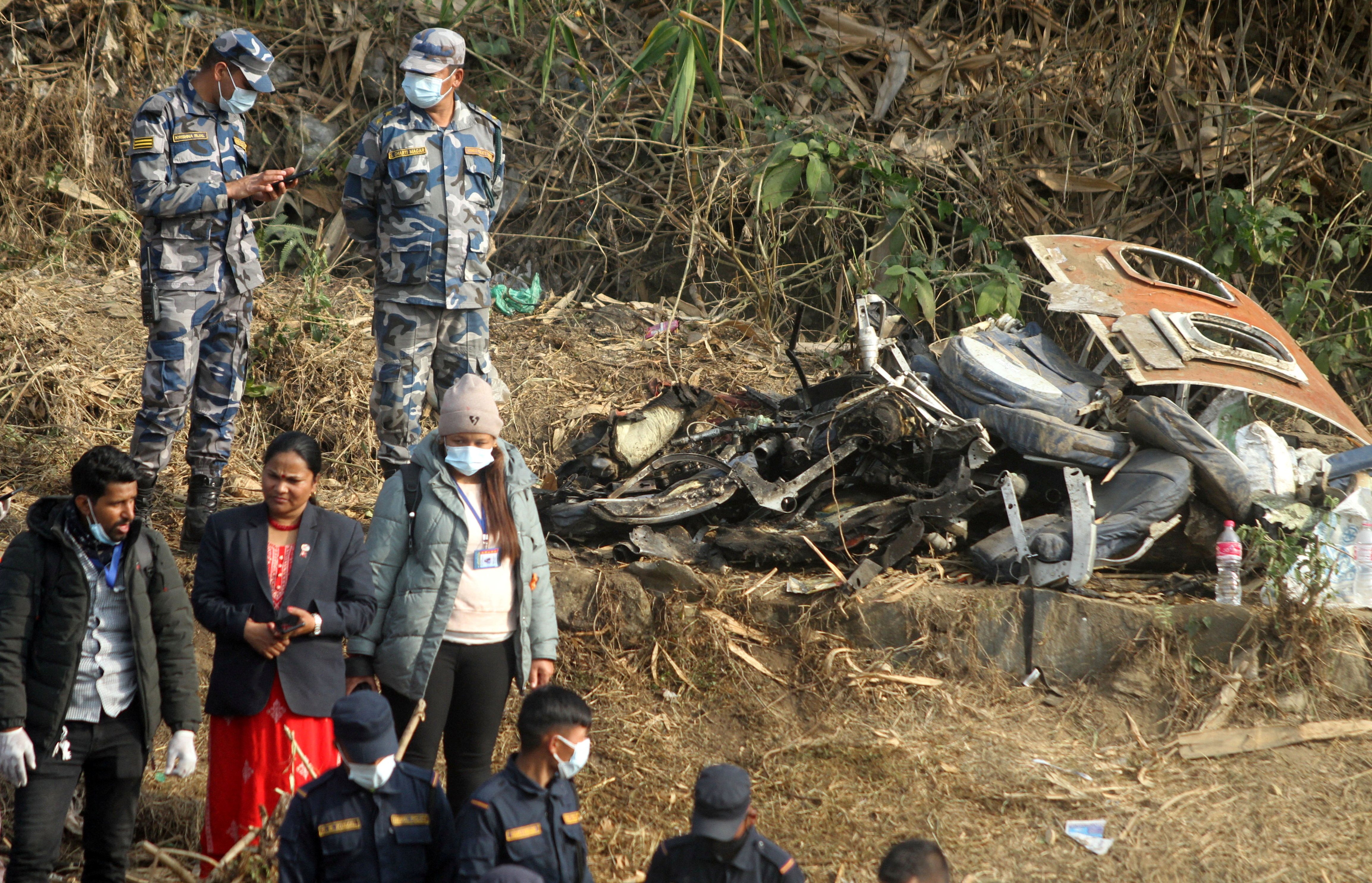
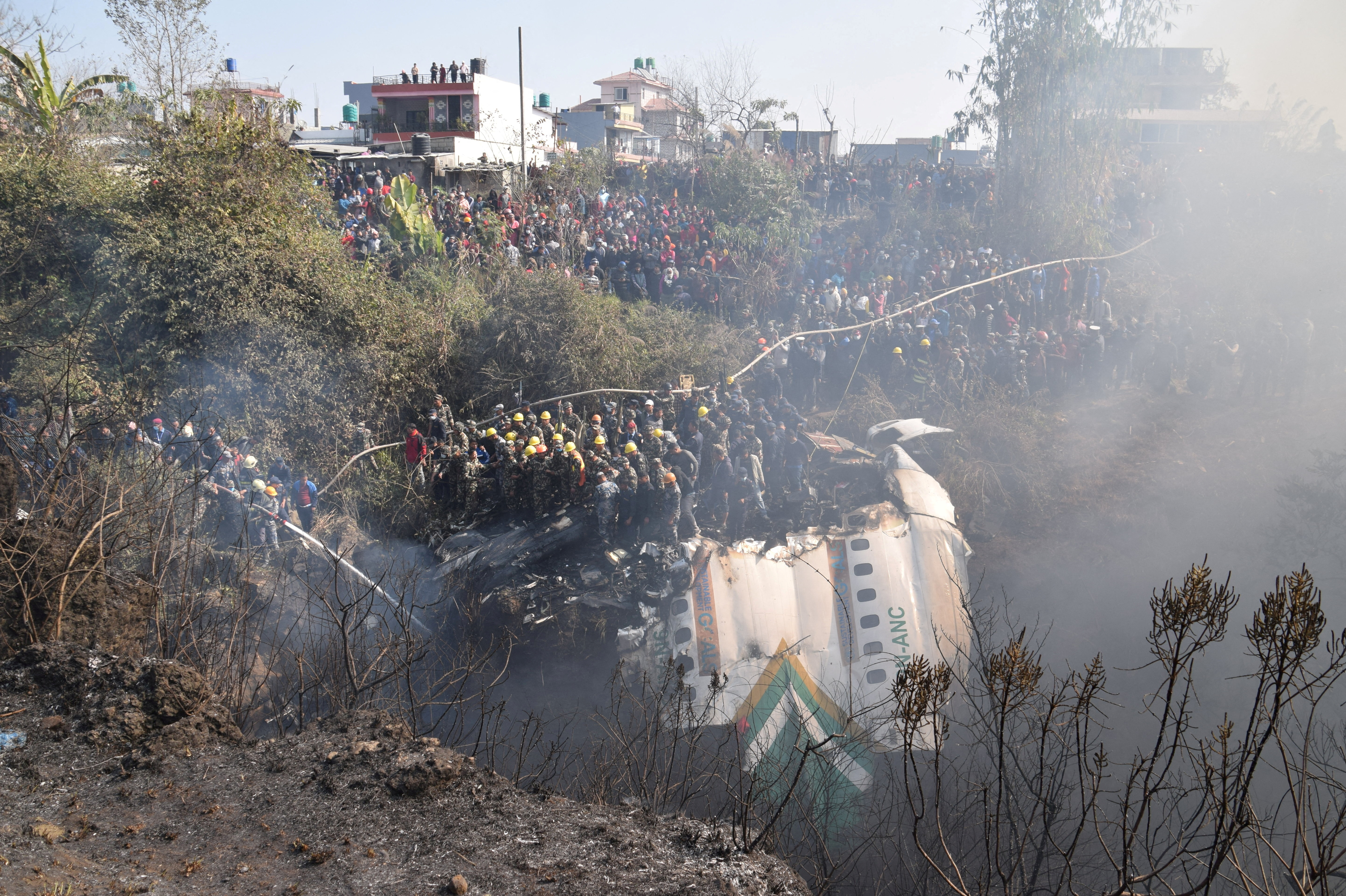
Reuters footage from the crash site showed rescuers looking at the charred remains of the plane near the gorge.

The plane, on a scheduled flight from Kathmandu to Pokhara, gateway to the scenic Annapurna mountain range, was carrying 57 Nepalis, five Indians, four Russians, two South Koreans, and one person each from Argentina, Ireland, Australia and France.

Pokhara police official Ajay K.C. said the search-and-rescue operation, which stopped because of darkness on Sunday, had resumed.

“We will search for the remaining four that are still missing,” he told Reuters. “It is cloudy now… causing a problem in the search.”

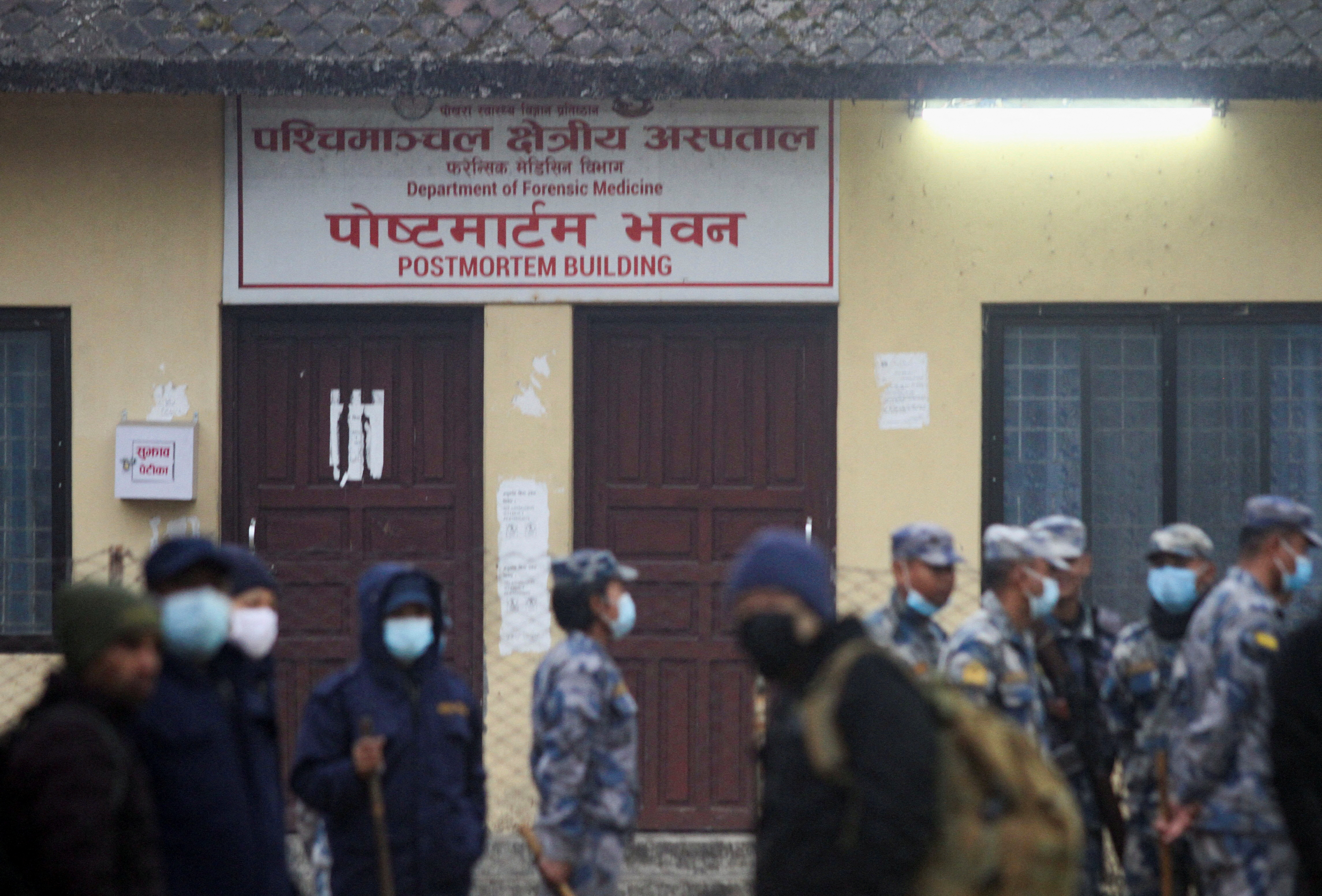
All the bodies had been sent to a hospital, he said. A spokesperson for Pokhara airport also said that the weather was hampering rescue efforts, but that clouds were expected to clear later in the day.

Minutes before the aircraft was to land on Sunday, the pilot asked for a change of runway, a spokesperson for Pokhara airport told Reuters on Monday.

“The permission was granted. “We don’t ask (why), whenever a pilot asks we give permission to change approach,” the spokesperson, Anup Joshi, said.

Sunday’s crash underlined the need for the government to split up the Civil Aviation Authority of Nepal (CAAN), which both regulates airlines and manages airports, experts said.

“The government must immediately separate the regulatory body and service provider by splitting the Civil Aviation Authority of Nepal (CAAN) which is doing both works now,” K.B. Limbu, an aviation expert and a retired pilot, told Reuters.

“This leads to a conflict of interests.”

Asked for comment, Sitaula, the Kathmandu airport official, denied that there was any conflict of interest in the functioning of CAAN.

“The regulatory and service provider (airport management) officials are separate and there is no cross-movement between the two bodies operating under the same organisation,” he said, referring to the CAAN.

There are nine domestic airlines in Nepal, including Yeti Airlines and its unit Tara Air. Yeti and Tara plane crashes have killed at least 165 people in Nepal since 2000 out of a total of 359, according to data from CAAN.

Another 75 people have died in helicopter crashes this century in Nepal, which is home to eight of the world’s 14 highest mountains, including Everest, and where sudden weather changes can make for hazardous conditions.

Experts say air accidents are usually caused by a combination of factors, and investigations can take months or longer.

Anju Khatiwada, the co-pilot of Sunday’s ill-fated aircraft lost her husband Dipak Pokhrel in a similar crash in 2006. Khatiwada’s remains have not been identified but she is feared dead.

Nepal has declared a day of national mourning on Monday and set up a panel to investigate the disaster and suggest measures to avoid such incidents in future.

Related Galleries:

A rescue team recovers the body of a victim from the site of the plane crash of a Yeti Airlines operated aircraft, in Pokhara, Nepal January 16, 2023. REUTERS/Rohit Giri

Rescue teams work to retrieve bodies from the wreckage of the crash of a Yeti Airlines operated aircraft, in Pokhara, Nepal January 16, 2023. REUTERS/Krishna Mani Baral

A rescue team recovers the body of a victim from the site of the plane crash of a Yeti Airlines operated aircraft on January 15, 2023, in Pokhara, Nepal January 16, 2023. REUTERS/Bijay Neupane

Security personnel stand guard outside the postmortem building, where bodies of victims in the plane crash of a Yeti Airlines operated aircraft on January 15, 2023 are being are kept, in Pokhara, Nepal January 16, 2023. REUTERS/Bijay Neupane

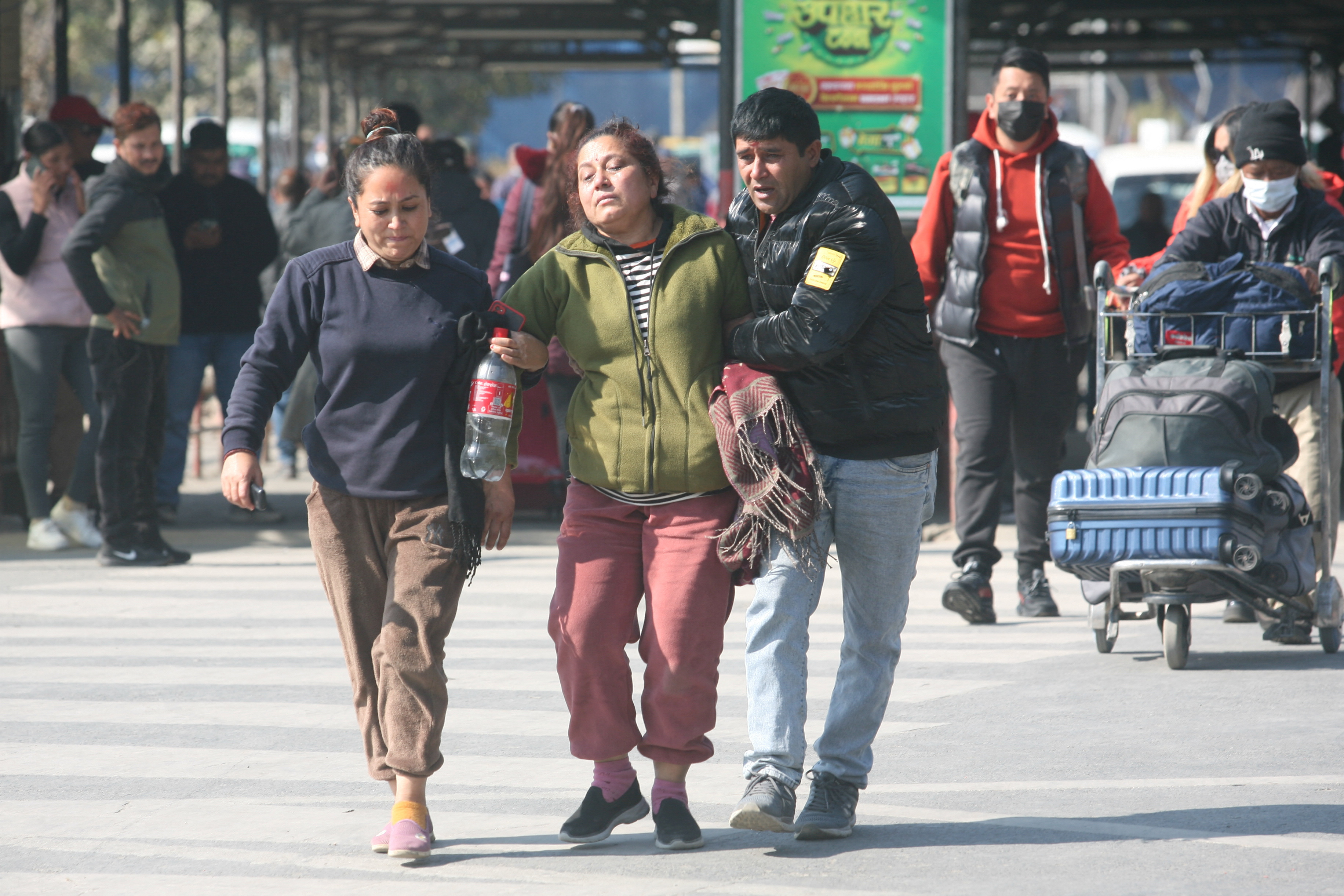
A family member of a victim of the aircraft that crashed in Pokhara is escorted as she mourns at the airport in Kathmandu, Nepal January 15, 2023. REUTERS/Dinesh Shrestha

People stand near the wreckage at the crash site of an aircraft carrying 72 people in Pokhara in western Nepal January 15, 2023. REUTERS/Bijay Neupane

Rescue teams work to retrieve bodies from the wreckage at the crash site of an aircraft carrying 72 people in Pokhara in western Nepal January 15, 2023. REUTERS/Krishna Mani Baral
Categories
Selected Articles

What is XBB.1.5, the new COVID variant? Infection Rate, Symptoms, Severity & More

what-is-new-xbb15-covid-variant.jpg

New Year and New Variant of COVID is in the block. According to the World Health Organization, the XBB.1.5, a descendant of the Omicron XBB subvariant, has started to increase in some parts of Europe (WHO). The CDC has recently estimated that as of Friday (January 14), XBB.1.5 was responsible for at least 43% of all COVID-19 cases across the US, up from 30% in the first week of January.

#COVID19 transmission is on the rise in your community again? Here is how you can assess and reduce your risk of infection ⬇️Get vaccinatedWear a maskAvoid crowdsOpen windows

Clean your hands pic.twitter.com/7cPSjasl9a

— World Health Organization (WHO) (@WHO) January 13, 2023

What is XBB.1.5, the latest COVID sub-variant?

The COVID-19 coronavirus Omicron strain, which is currently the most contagious variant of concern (VOC), contains a subvariant known as XBB.1.5. A record number of infections were caused by Omicron’s early-year spread worldwide. Unofficially known as Kraken, XBB.1.5 is a sublineage of XBB made up of two strains of the subvariant BA.2 and belongs to the XBB family. In the US, it was first discovered in October 2022. At least 38 nations have seen the spread of XBB.1.5, including Canada, Australia, Kuwait, Germany, and France.

The subvariant differs from its very similar predecessor XBB.1 only because of an additional mutation to its spike protein, claims Grace Roberts, a virologist at the University of Leeds in Britain. Notably, this extra spike protein is what opens the door for the virus to enter the cells of the body.

Also Read: How to get the third vaccine shot against Covid-19?

Is XBB.1.5 more infectious?

The “most transmissible subvariant detected yet” is XBB.1.5, according to Maria Van Kerkhove, WHO’s the technical lead on COVID-19, who made this statement on January 4. “The reasons for this are the mutations that are within this subvariant of Omicron allowing this virus to adhere to the cell and replicate easily,” she continued.

Experts claim that Kraken has an advantage over XBB due to the F486p mutation, which enables it to more effectively attach to the ACE2 receptor in cells, which is how COVID-19 spreads in humans.

The emerging XBB.1.5 variant, according to Maria Van Kerkhove, the WHO technical lead on Covid, is the most contagious form of the illness and clearly has a “growth advantage” over other SARS-CoV-2 strains, the virus that causes Covid. The XBB.1.5 spike protein mutation along with its already highly transmissible ancestor, the XBB variant, is currently thought to be the most probable cause of the disease’s transmissibility, according to the ECDC.

Can XBB.1.5 lead to severity?

According to the WHO, there is currently no solid proof that Kraken will cause more severe disease than its forerunners. The UN agency reported that XBB.1.5 did not “carry any mutation known to be associated with a potential change in severity” in an internal risk assessment published on January 11. However, it claimed that assessments of severity were ongoing.

The new subvariant presents “no cause to panic,” according to a report by AFP, and the University of Leeds virologist does not think that “any drastic action at present” is necessary. However, it is crucial for the nations to keep an eye on the development and spread of XBB.1.5.

What is BF.7, the new COVID variant?

What are the symptoms of the XBB.1.5 variant?

“Symptoms with XBB 1.5 appear to be similar to the earlier Omicron variants,” said Andrea Garcia, vice president of science, medicine, and public health for the American Medical Association (AMA), in a recent interview. “These symptoms can range from cold symptoms to shortness of breath and low oxygen levels that require emergency medical attention.” stated further.

She also noted that the signs and symptoms of Covid, which include people losing their sense of taste and smell, appear different than what was observed earlier in the pandemic due to the emergence and spread of new variants. While it still occurs occasionally, according to the AMA VP, it is now uncommon with the Omicron variant.

“The experts generally believe that the symptoms of Covid have become less severe over time. That could be because they tend to remain in the upper respiratory tract and don’t affect the lungs as much as earlier variants,” said Garcia. 

She continued by saying that immunity from vaccinations or previous infections is also to blame for people in the US reporting milder symptoms like a cough, congestion, and headache. However, because they can be mistaken for the flu or a cold, the AMA VP advises getting tested for covid if you experience any of the symptoms listed below:

  • Runny nose
  • Sore throat
  • Headache, cold
  • Sneezing
  • Joints pain
  • Upper back pain 
  • Pain in the neck

Also, it is better and wise to follow the precautionary methods like:

  • To be most protected from this new variation put on a mask.
  • Keep your distance from people because it is safer to avoid crowded places.
  • To prevent any kind of infection, wash your hands frequently or sanitize them.
  • For better ventilation during the day, keep your windows open.

Also Read: What are the two new COVID variants found in China?

Omicron poses a threat to public health even though it is less severe and requires fewer hospitalizations than earlier variants like alpha or delta, and vaccination is an essential defense against it. Therefore, abide by all safety precautions to protect yourself and your family.

Categories
Selected Articles

How much should you worry about Covid’s newly-dominant XBB.1.5 variant? – yourbigsky.com

How much should you worry about Covid’s newly-dominant XBB.1.5 variant?  yourbigsky.com
Categories
Selected Articles

COVID-19: ‘Kraken’ Subvariant XBB.1.5 Gaining More Ground … – Daily Voice

COVID-19: ‘Kraken’ Subvariant XBB.1.5 Gaining More Ground …  Daily Voice
Categories
Selected Articles

Washington should disclose epidemic info – Chinadaily.com.cn – China Daily

Washington should disclose epidemic info – Chinadaily.com.cn  China Daily
Categories
Selected Articles

What is XBB.1.5, the new COVID variant? Infection Rate, Symptoms, Severity & More – Jagran Josh

What is XBB.1.5, the new COVID variant? Infection Rate, Symptoms, Severity & More  Jagran Josh
WP Radio
WP Radio
OFFLINE LIVE