Michael Novakhov retweeted:
The United States’ message is clear: our investment in the U.S.-Japan alliance is paying huge dividends – from national security to economic issues.
And it will continue to do so for years to come.

 The Brooklyn Times - bklyntimes.com
Michael Novakhov retweeted:
The United States’ message is clear: our investment in the U.S.-Japan alliance is paying huge dividends – from national security to economic issues.
And it will continue to do so for years to come.
Michael Novakhov retweeted:
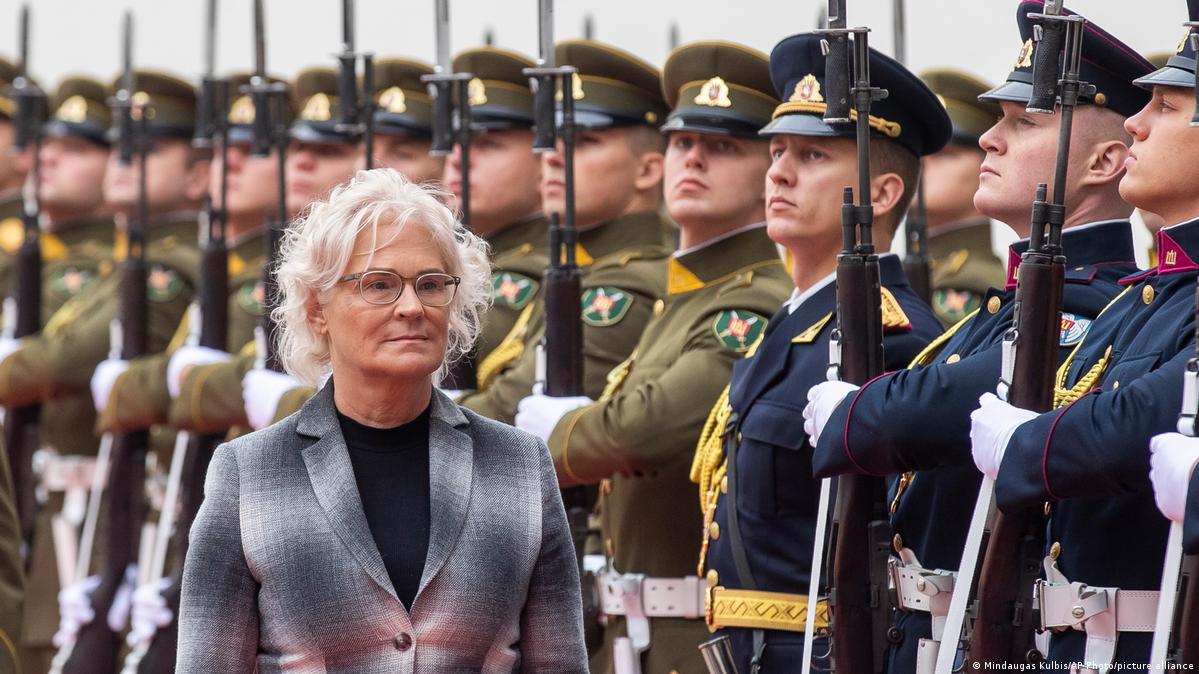
❗️Министр обороны ФРГ Кристине Ламбрехт намерена подать в отставку со своего поста, пишут сразу несколько немецких СМИ со ссылкой на осведомленные источники. По данным издания Süddeutsche Zeitung, это может произойти уже на следующей неделе
Alexi Rosenfeld/Getty Images
The Supreme Court has agreed to hear an appeal by a former mail carrier accusing the US Postal Service of religious bias, Reuters reports.
“Rural carrier associate” Gerald Groff, an evangelical Christian from Lancaster County, Pennsylvania, has said he was reprimanded for refusing to deliver Amazon parcels on Sundays.
As per Title VII of the Civil Rights Act of 1964, employers have to accommodate a worker’s religion unless it causes the business “undue hardship” – which the Supreme Court has previously ruled to be anything more than a minor cost, per Reuters.
Lower courts dismissed Groff’s claim that USPS violated the laws by refusing to give him each Sunday off, saying that doing so would “cause undue hardship” on the business, religious rights organization First Liberty reports.
Groff’s legal team appealed this ruling and has now succeeded in having it heard at the Supreme Court. Stephanie Taub, Senior Counsel at First Liberty, who supports Groff, said, “no American should be forced to choose between their religion and their job.”
When Groff joined the postal service in 2012, he did so with the understanding that it did not operate on Sundays.
However, in 2015, USPS started delivering packages for Amazon. NBC reports that accommodations were implemented for Groff until July 2018, when he was told he would sometimes have to pay parcels on Sundays if his shifts could not be swapped.
Reuters reports that Groff repeatedly did not show up for his Sunday shifts. His attitude caused resentment among his co-workers, with one carrier leaving their station and another quitting the Postal Service.
Groff received several disciplinary letters for not returning to work and resigned in 2019.
Getty Images
Some Tesla buyers who missed out on big price cuts that could have saved them thousands have lashed out at Elon Musk’s electric car maker.
A report by Bloomberg and social media posts pages suggest several owners were angry after Tesla announced big price cuts this week in a bid to sell more cars.
Bloomberg spoke to three recent buyers who all missed out on reductions of $10,000 for a Model 3 and $13,000 for the Model Y.
“I feel like I got duped. I feel like I got taken advantage of as a consumer,” Marianne Simmons told Bloomberg after paying more than $77,000 in September for a Model Y.
“Right off the bat, I’m out $13,306. It’s such a large reduction that it’s going to affect a lot of people who just bought a vehicle,” she said. Simmons told the outlet she’d never buy another Tesla as a result.
The cuts follow reductions first made in Asian markets that briefly left Teslas about 40% cheaper in China than the US. Reuters reported that the cuts sparked protests in some Tesla outlets in China.
Tesla has also slashed prices in European countries including France, Germany, and the UK.
Some who said they’d recently bought a Tesla appeared to vent their frustrations on a Facebook group in Britain.
“Feel a little short changed here as only collected my model 3 rwd in December it would be nice if Tesla could soften the blow in some way shape or form,” one user posted.
According to the Telegraph, another user posted: “I just picked up the car yesterday. What should I do? Go to Tesla and give back the car? I can’t believe after a few hours from picking up the car I lost £5k.”
Jack Bradham told Bloomberg that the black Model Y long-range edition Tesla now cost $12,000 less than the $69,000 he paid in December.
There is no indication yet that Tesla will reimburse recent buyers.
“There’s no one to contact. I called and tweeted to them, no response,” Bradham told Bloomberg.
James Baggott, editor-in-chief of Car Dealer magazine, told the Press Association news agency that UK Tesla buyers who placed orders at the old prices could cancel, but those who already had their cars were stuck.
“This will also have a big impact on used Tesla prices. Our research has found Tesla prices fell by more than a fifth last year and these new price cuts will have a severe negative impact on the used car market,” he added.
The Model Y and Model 3 were the two best-selling cars in the UK in December even before the price cuts.
A Model Y has been cut by £7,000 to about £45,000 ($55,000), while an entry-level Model 3 is now £8,100 cheaper at about £43,000 ($52,600), the Evening Standard reported.
They were the top two best-selling cars in the UK last month, with almost 16,400 registrations.
Tesla said in a statement to the Press Association that some costs had stopped rising, “giving us the confidence to pass these through to our customers.”
“As local vehicle production continues to increase and we gain further economies of scale globally, we are making Model 3 and Model Y even more accessible” in Europe, the Middle East and Africa, the company added.
Tesla didn’t immediately respond to a request for comment from Insider.
Yasser Chalid / Getty Images
One-third of Americans are wracking up a debt each night that they may never be able to pay back: sleep debt.
That’s where the concept of “catching up on sleep” comes in: You try to squeeze in extra hours of sleep on the days following a bout of poor sleep. For example, sleeping in on the weekends.
But do those extra hours of sleep actually protect you from the health risks of sleep deprivation?
Study results are mixed on the matter, but after checking out the research and chatting with some experts, we can say it seems possible to catch up on sleep, but it’s difficult to achieve.
Psychiatrist and sleep medicine expert, Dr. Alex Dimitriu, is of the mindset that you can catch up on sleep, but only if you haven’t let your sleep debt grow too great. By definition, one hour of sleep lost equals one hour of sleep debt.
“If the sleep debt is greater, the time to recover becomes markedly longer, and complete recovery may not be possible, so it’s important to not let sleep debt go too far,” Dimitriu, founder of Menlo Park Psychiatry & Sleep Medicine, told Insider.
Keeping your sleep debt in check is important because “long-term, not getting sufficient sleep can lead to medical problems such as obesity, cardiovascular disease, increased risk of cancer, and immune dysfunction,” said Dr. James A. Rowley, former president of the American Academy of Sleep Medicine Foundation.
Perhaps the most intriguing results of sleep debt and recovery time came from one small study that proposed for every one hour of sleep debt, a person would need four consistent nights of seven to nine hours of quality Zzzs to fully recover.
So, if you need seven hours of sleep per night but only get six during the work week you’d accumulate five hours of sleep debt come Friday. According to the study’s predictions, this means you’d need about 20 days of consistent quality sleep to fully recover.
So, sleeping in for a few hours on the weekend probably isn’t going to fix that.
“While one can make up an hour or two on weekends, one cannot make up getting insufficient sleep for the whole week just by sleeping those extra hours,” Rowley said.
That said, in 1963, a then-17-year-old stayed awake for 11 days for a science project. He dealt with temporary nausea and memory loss, but said that after sleeping 14 hours, he felt back to normal.
While that’s not an experiment that Dimitriu would like to see his patients or anyone else repeat, it’s worth noting that there’s more room for studies on how periods of extended sleep affects the health risks of people who are already chronically sleep deprived.
And if the weekend is the only time you can find for sleep, it’s “better to increase [sleep hours] on the weekend rather than not doing it at all,” biological psychology professor at Stockholm University told Insider’s Lyndsay Dodgson.
So what can you do if you’re like one-third of Americans who are getting fewer than six hours of sleep a night?
Paying back sleep debt is like paying back credit card debt: Try to pay all, or as much, of the total balance so that the debt doesn’t grow too large.
That means not waiting until the weekend to try and catch up on an entire week’s worth of lost sleep. Instead, if you miss an hour or two of sleep, try making up for it immediately the following day either with a nap — 20 to 30 minutes is best — or get a good night’s sleep the following evening.
Most important, however, is that you set a sleep schedule and stick to it. “Sleep loves regularity and rhythm,” Dimitriu said, because it keeps a consistent circadian rhythm.
Circadian rhythm, often called your internal clock, affects a whole host of important bodily functions including temperature regulation, hormone control, memory, focus, and — of course — sleep.
Keeping a consistent sleep schedule — aka going to bed and waking up at the same time every day — is one key way to maintaining a healthy circadian rhythm and, subsequently, a healthier you. That’s why sleeping in may not be the best option and brief naps could be better.
Of course, this is all easier said than done and not everyone can change their schedules to allow for more sleep.
For example, if you’re working night shifts, have multiple jobs, or need to get the kids out early in the morning, you’re more likely to have sleep debt, but have less flexibility to address it. Do the best you can to get as much sleep as possible.
“In those circumstances, even finding an extra 15 minutes per night can be a big difference,” Rowley said.
It may also be worth thinking outside the box. For example, a recent study found that when people switched from a 5-day work week to a 4-day work week, the percentage of those getting fewer than seven hours of sleep a night dropped from 42.6% to 14.5%.
However, you decide to try and pack in more sleep, just remember that sleep isn’t a luxury, it’s a necessity.
“Sleep should be considered the same as diet and exercise, one of the pillars of overall good health and should be prioritized just like they are,” Rowley said.
Courtesy of Kristin Vierra
The “digital nomad” dream of traveling around the world while working from your laptop has never been more in reach, as remote work becomes a permanent fixture in the US economy.
But virtual employees may be surprised to learn that just because their job is longer attached to an office, it doesn’t mean they can just pack up and work from wherever.
Who is to be blamed for breaking globetrotters’ hearts everywhere, you ask? Only the omnipotent buzzkill that has defined America from the start.
America’s tax structure is fundamentally at odds with nomadic living. The US is one of two countries around the world that levies taxes based on citizenship instead of residency, a system we only share with Eritrea (an East African nation about the size of Pennsylvania).
That means whether you’re a New Yorker who’s been working in Spain for a decade or a Californian backpacking through Asia for the next two years, you’re still required to report and file your taxes with the IRS.
“No matter where you work from, or how you work — freelancer or salaried employee — if you’re an American citizen, you always have to file and report your taxes,” Adam Nubern, who runs an accounting firm specializing in nomadic tax law, told Insider.
If you’re working abroad, you also have to determine if you’re considered a tax resident in that country too, and, if so, figure out if you’re eligible for any special benefits they might offer.
In the US, benefits exist to prevent having your income taxed twice such as the foreign income tax exclusion and foreign housing exclusion. But qualifying is not as easy as many remote workers expect it to be, Nubern said.
To start, you need to be physically outside the US for 330 days out of the year (and have the receipts to prove it).
On top of that, you have to demonstrate your “tax home” and “abode” are both in a foreign country which isn’t as simple as paying rent or owning a house. The IRS also takes socio-economic factors into consideration, meaning little things like having a storage unit, seeing a doctor, or voting in the US can disqualify you from the benefits.
“Learning the language, having a bank account, having family and friends and doctors in that place, those types of circumstances would be more favorable than moving countries month to month,” Nubern explained.
Kristin Vierra at the Torres Del Paine in Chile.
Courtesy of Kristin Vierra
Kristin Vierra, a remote work career coach and digital nomad of five years, told Insider she pays a specialist $500 to file her taxes because the rules can get so complex.
“In the US it was pretty straightforward when I worked full-time nine to five, but when I worked as a contractor and for a coaching company and was traveling, it added new complications,” she said. “I didn’t want to try to use TurboTax to do this.”
The web of rules isn’t confined to international travel. A similarly complex tax structure regulates remote employees who work across state lines. Over two dozen states require non-resident withholding after just one day working in the state, with varying rules for independent contractors and salaried employees.
“From a regulatory standpoint, even domestically hopping from state to state is just a massive cluster,” Nubern told Insider. “It’s atrocious.”
In the past, nearly all digital nomads have worked abroad on 90-day tourist visas, which is technically illegal, but most governments turn a blind eye to. More recently, countries have attempted to set up clearer tax rules, travel guidelines, and minimum income requirements through “digital nomad visas.”
While the visas are an important step forward in theory, most travelers who don’t stay in one place for more than a few months at a time view the paperwork as more work than it’s worth, Krystal Pino, founder of Nomad Tax and a digital nomad of six years, told Insider.
Pino noted that the new programs have helped companies better understand the legality of digital nomadism — but there’s still too much regulatory grey room for businesses to feel confident letting their remote employees travel internationally.
“There’s not enough information in the space for employers to feel completely covered from a standpoint of not being liable for taxes,” she told Insider. “So generally what we’ve seen is employers say ‘we don’t understand it, it’s not clear enough, so it’s just going to be a hard blanket no.'”
Adam and Lindsey Nubern worked out of a camper van for four years together. During their travels, they realized there was a huge demand for nomadic tax services.
Courtesy of Lindsey Nubern of NuventureTravels.com
Before dealing with the burden of taxes and visas, most remote workers need permission from their employer to work abroad first. But some travelers fed-up with what they believe are outdated and overly complicated laws are throwing out the rulebook entirely and traveling in secret.
“If you want to try to do this by the book, then you’re paying someone like me $225 an hour. Even if you’re a digital nomad and making $100k, the math doesn’t really add up,” Nubern said. “It takes a lot of hours to be compliant.”
But as corporations are beginning to be held liable for their rule-breaking employees, more companies are trying to properly define their international travel policies that may have been more lenient at the start of the pandemic. Even companies like Airbnb and Spotify, some of the first major companies to tout “work from anywhere” perks, have rules set in place against traveling to certain countries, or permanently moving abroad.
Instead of attempting to travel in secret, Vierra recommends doing research about the tax and visa guidelines of the regions you want to travel to and pitch the idea to your manager.
“If they could get this puzzle piece figured out, it’s not only good for remote workers in general, but it’s also good for the company,” Pino told Insider. “It’s so hard because it’s going to take a truly global effort — it’s really hard to get companies and countries on the same page about what it actually means to work without borders.”
Spencer Platt/Getty Images
This year will see the US economy either avoiding a recession or slipping into one, and there are ways investors can prepare, according to eToro investment analyst Callie Cox.
In an interview with Insider, she said the two biggest risks to monitor in 2023 include the Federal Reserve’s ability to tame inflation and the potential for a steep economic downturn.
Inflation has been cooling at a steady clip for several months, with the consumer price index up 6.5% year-over-year in December, down from 9.1% in June. But that’s still well above the Fed’s 2% target, and Cox said inflation for services is still up about 7% annually — which is too high for the Fed.
“The kicker here is that services inflation is the type of inflation that the Fed can best control through the job market,” she said. “It’s more demand-driven. So hot services inflation could give the Fed enough reason to keep rates high, and the longer rates stay high, the more likely we actually get that recession.”
If the Fed’s rate policy doesn’t crush growth, the labor market stays strong, and inflation continues to cool, then the economy can avoid a recession, Cox said.
Should this transpire, that would mean the market already reached its low in October 2022 and a bull market is already underway, she explained.
Cox sees this as a best-case scenario, but it would still pose a challenging landscape for investors because still-high interest rates would prevent growth sectors in the market from recovering.
The second, more painful scenario is a deep recession, she warned, with unemployment rising precipitously and earnings declining as much as 20%.
“But one bright spot of this scenario,” Cox said, “is that it would take care of the inflation problem because when demand drops, inflation comes down.”
Bonds can offer a stable investment during a downturn, she noted, and they can be a solid bet when inflation is slowing down and economic growth is minimal.
And as far as stocks, Cox likes a defensive positioning with consumer staples, utilities, energy, and pharmaceutical companies.
“I call these the markets’ comfort food, where even if a recession happens, you still need to eat food, you still need power, you can still get sick and take medicine,” Cox said. “These are more economically resistant sectors.”
She recommended defensive stocks to cushion a portfolio against negative market swings, while also loading up on quality risks, such as healthy tech companies with large balance sheets as well as rate-sensitive cyclical stocks like those in real estate and consumer discretionary.
“If we do hit a recession,” Cox said, “it’s a great time to slowly build up your risk appetite in anticipation of us getting through it.”
“The effects of the vaccine are marginal”. WHO Says It Doesn’t Fully Understand Who’s Dying From COVID-19 And Why. coronavirusalerts.net

Michael Novakhov retweeted:
The @WHO admitted to not having a “clear picture” of why people are dying from #COVID19, and called for more data sharing among nations, as #Beijing continues to see a mass spread of the virus while refusing to share accurate numbers. theepochtimes.com/who-says-it-do…
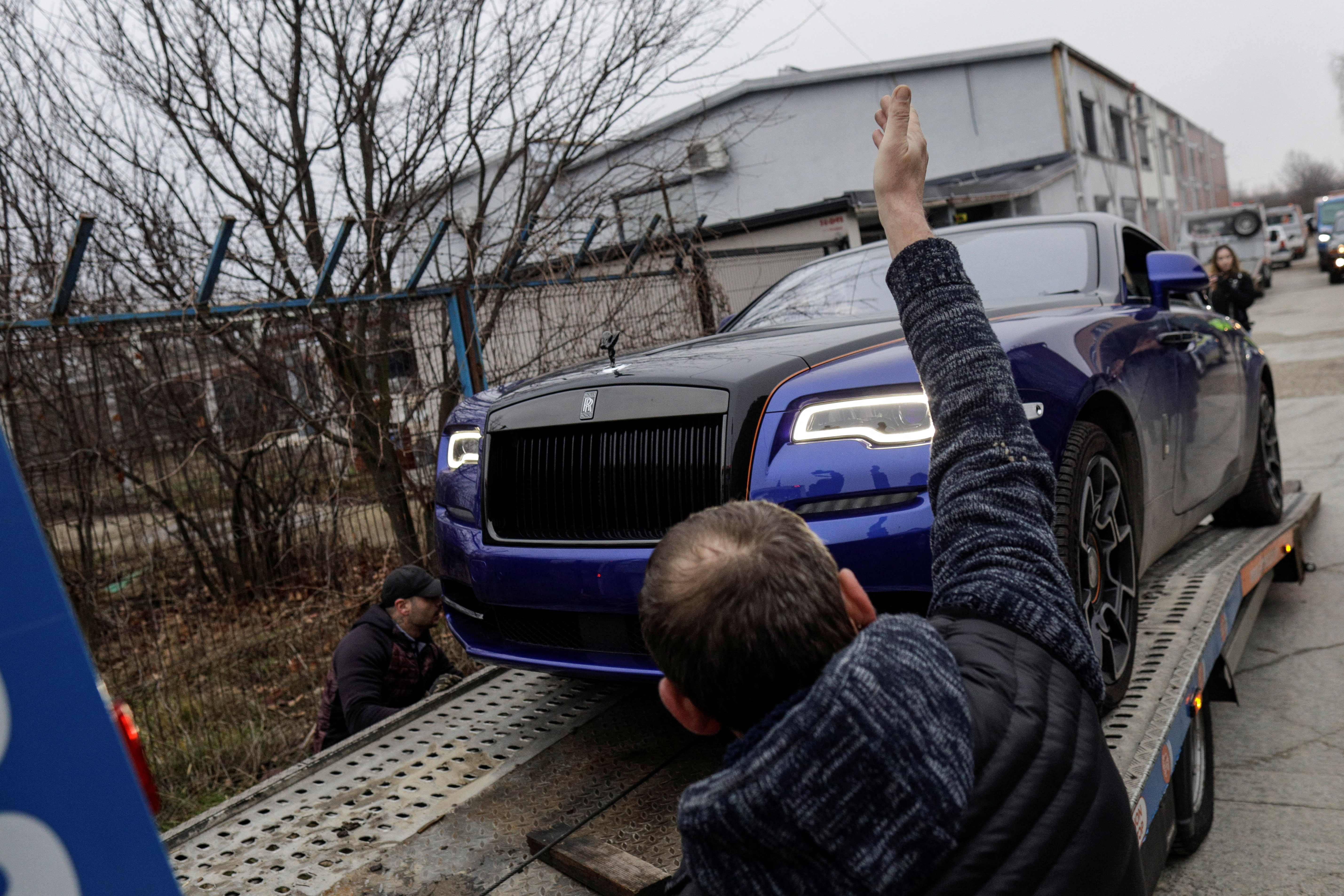
Romanian authorities started on Saturday to take away luxury cars seized as part of criminal inquiry into alleged human trafficking that led to the arrest of divisive internet personality Andrew Tate.
Romanian anti-organised crime prosecutors detained Tate, his brother Tristan and two Romanian female suspects on Dec. 29 on charges of forming a criminal gang to sexually exploit six women. They have denied wrongdoing.
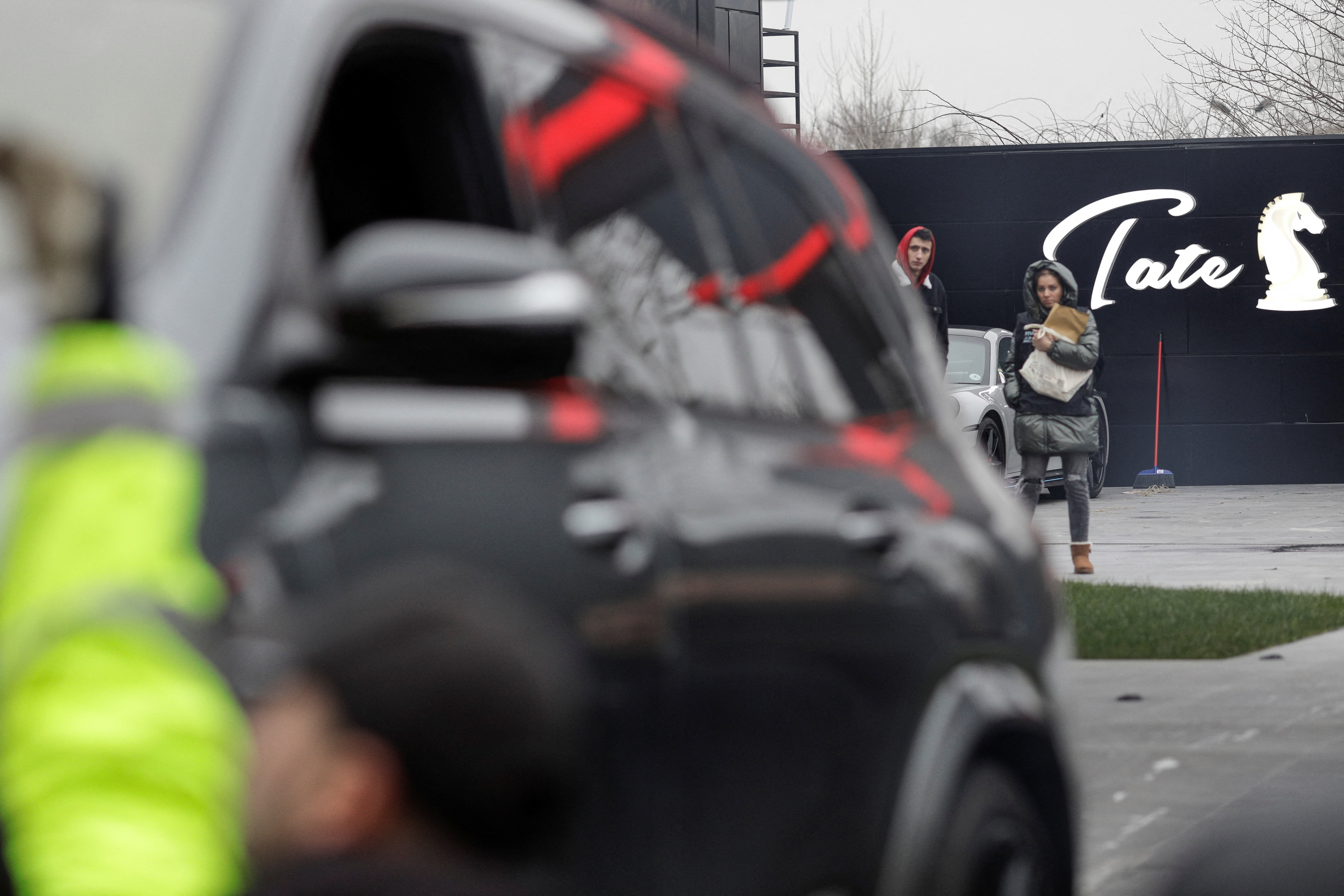
A Reuters reporter saw several cars, including a Rolls-Royce, BMW and Mercedes-Benz, being taken from the Tate compound on the outskirts of the capital, Bucharest, to be transported to a storage location.
Earlier this week, prosecutors told Reuters they had seized 15 luxury vehicles and more than 10 properties and homes belonging to the suspects in Bucharest and the counties of Prahova and Brasov to prevent the assets being sold or hidden.
Tate’s lawyer was not immediately available for comment.
The four suspects challenged their 30-day arrest warrant earlier this week, but the Bucharest court of appeals rejected the challenge and said they should remain in police custody.
Tate, a former contestant on the UK reality show Big Brother, gained notoriety for misogynistic remarks and hate speech.
His remarks got him banned from all major social media platforms, although his Twitter account became active again in November after Elon Musk acquired the platform.
Tate, who holds U.S. and British nationality, has said women are partially responsible for being raped and that they belong to men.

Advertisements – Advertising at The News And Times – advertising-newsandtimes.com | WE CONNECT!
Audio | Video | Top News | On Twitter | Security | FBI | Capitol Riot | JOSSICA | Trump | Russia | Putin | Russia – Ukraine War | Covid-19 | Brooklyn NY | Puerto Rico | World
September 7, 2026 6:43 am
The News And Times | Featured Posts | All Articles | Current News | Selected Articles | Shared Links | Opinions | In My Opinion | Sites | Blogs | Links | Twitter | Facebook

Contact Form | Blogs | Sites | News Reviews | Links | Advertising
All The News That’s Fit To Web