Categories
Selected Articles

Idaho murders suspect Bryan Kohberger’s DNA ‘found on knife sheath’

66242743-0-image-a-2_1672948736404.jpg

Published: 16:40 GMT, 5 January 2023 | Updated: 19:58 GMT, 5 January 2023

Idaho murders suspect Bryan Kohberger smiled during a brief court appearance today, that came as police and prosecutors revealed their bombshell case against him, including how his DNA was found on a knife sheath at the scene. 

Kohberger, 28, was denied bail today during a brief court appearance in Moscow shortly after an affidavit detailing prosecutors’ case against him was shared online.

Kohberger spent most of the 10-minute hearing looking directly at Judge Megan Marshall as she read him his rights and the five counts and answered ‘yes’ when asked if he understood each count.

At one point, Kohberger was pictured smiling at his lawyer Anne Taylor. It is unclear what prompted the grin, which comes six days after he shot to notoriety as America’s most infamous alleged mass-murderer.

Kohberger remained impassive throughout but briefly began rocking back and forth as the judge told him he was facing the death penalty. He will return to court on January 12 for a status hearing.

Idaho murders suspect Bryan Kohberger smiles at his attorney in court today as he is denied bail. Kohberger will return to court on January 12 

Kohberger is shown on in court on Thursday after being extradited to Idaho from Pennsylvania

Friday’s papers included details on how Kohberger’s DNA was found on a knife sheath close to the bodies of Maddie Mogen and Kaylee Goncalves.

The documents also detailed how a surviving roommate, Dylan Mortensen, came face-to-face with a masked man believed to be Kohbegrer in the hallway of their shared home around the time of the killings, shortly after 4am on November 13. 

Mortensen heard what she believed to be her roommates cries, left her room and saw a man in a black mask with bushy eyebrows. She froze with fear, and watched as he walked past, then waited six hours before calling cops. 

Further details on Kohberger’s alleged stalking of his victims was shared. His phone was found to have been in the vicinity of their Moscow home 12 times before the November murders, starting in mid-August.  

The family of Kaylee Goncalves were also in court, with her mother shaking her head and sobbing as the homicide charge related to her daughter was read out.

The Goncalves family leaving court on Thursday following the hearing. They said it was an ’emotional moment’ to come face to face with their daughter’s alleged murderer for the first time

After the hearing, their family attorney told reporters: ‘It was an emotional moment for the family seeing the defendant for the first time and the family will be in this for the long haul.’

Kohberger has been charged with four counts of murder and one count of burglary for the November 13 massacre.  

If convicted, he is facing the death penalty for the murders of Idaho students Maddie Mogen, Kaylee Goncalves, Xana Kernodle and Ethan Chapin. The 19-page probable cause affidavit released today, reveals the following bombshells about the case; 

  • Surviving roommate Dylan Mortensen saw Kohberger in a black mask 
  • She had heard cries and victim Goncalves say ‘there’s someone here’ 
  • Xana Kernodle ordered a DoorDash which arrived 20 minutes before the killing  
  • Kohberger visited the house at least 12 times before the murder
  • He turned his phone off on the night of the killings to avoid detection 
  • Mortensen told police the killer had ‘bushy eyebrows’ – which they noticed in Kohberger once they’d identified him

Below, DailyMail.com breaks down the key pieces of information from the court documents, and the questions that remain unanswered.  

KOHBERGER’S DNA FOUND ON KNIFE SHEATH THAT WAS A 99.9% MATCH TO TRASH AT HIS FAMILY HOUSE

The most damning piece of evidence is the fact that a DNA sample taken from Kohberger’s family’s home in Pennsylvania matched DNA found on the snap button enclosure of a knife sheath found at the murder scene. 

The sheath is described as ‘tan leather’ with the USMC (United States Marines Corps) and ‘KA-BAR’ insignia stitched on its exterior. 

A similar sheath can be purchased online for less than $20. 

According to Moscow PD Officer Brett Payne – a rookie who joined the force in 2020 – the sheath was found on a single bed next to the stabbed corpses of Maddie Mogen and Kaylee Goncalves. 

The documents describe a tan, leather knife sheath with a button snap and ‘KA-BAR’ and USMC’ insignias being found at the scene. Above, a similar sheath that is available for purchase online on eBay 

The 19-page affidavit details how Kohberger’s DNA was found on a knife sheath that was left at the crime scene. It was lying on the bed next to Maddie Mogen and Kaylee Goncalves 

‘I noticed what appeared to be a tan leather knife sheath laying on the bed next to Mogen’s right side (when viewed from the door). 

‘The sheath was later processed and had “Ka-Bar” ‘USMC” and the United States Marine Corps eagle globe and anchor insignia stamped on the outside of it. 

‘The Idaho state lab later located a single source of male DNA (suspect Profile) left on the button snap of the knife sheath,’ Payne wrote. 

That DNA sample was sent for lab processing and then onto the FBI’s genetic genealogy branch. 

Through extensive research of public DNA databases, a match led to Kohberger’s home.

Police had already zeroed in on Kohberger by linking his white Hyundai Elantra to the scene. 

On December 27, an undercover team of police seized trash from Kohberger’s family home in Albrightsville, Pennsylvania. 

On December 27, an undercover team of police seized trash from Kohberger’s family home in Albrightsville, Pennsylvania

A DNA sample from that trash returned a 99.98 percent match with the sample on the knife sheath.  

Cops obtained a sample of his DNA on December 27, when they stole trash from his family’s house in Albrightsville, Pennsylvania. 

That sample returned a 99.98 percent match with the sample found at the scene to Kohberger’s father. 

SURVIVING ROOMMATE DYLAN MORTENSEN SAW MAN IN BLACK MASK IN THE HOUSE 

Dylan Mortensen was awake at the time of the killings – around 4.20am – and that she saw a man in a black mask in the house. 

She told police she’d been at home and awoke to the sound of Kaylee Goncalves playing with her dog upstairs, on the third floor of the house. 

She then heard ‘cries’ and what she thought was Goncalves saying: ‘there’s someone here.’   

Kohberger, 28, is accused of murdering Maddie Mogen, Kaylee Goncalves, Xana Kernodle and Ethan Chapin on November 13 in the quiet, college town of Moscow, Idaho

Next, Mortensen said she heard a male voice saying ‘It’s OK. I’m going to help you.’ 

She opened her bedroom door, then saw a man in a black ski mask that covered his nose and mouth, walking ‘towards her’. 

Frozen, she told police she watched him leave through a sliding door, then she locked herself in her bedroom.   

It’s unclear why she did not call cops immediately; police did not attend the scene until the following afternoon. 

SHOE PRINT FOUND IN THE MUD OUTSIDE SLIDING DOOR USED ‘BY KOHBERGER’ 

A shoe print was found in the mud outside the murders house, just outside the sliding door that Mortensen said was used by the killer to escape. 

Police studied that shoe print and found a ‘diamond pattern’ which is consistent with the sole of a Vans shoe

Police studied that shoe print and found a ‘diamond pattern’ which is consistent with the sole of a Vans shoe. 

It’s unclear if Kohberger owns Vans  – the affidavit does not confirm the discovery of any shoe that has a sole print similar the one found at the scene. 

SURVEILLANCE CAMERAS FROM NEARBY HOUSES PICKED UP CRIES AND DOG BARKING

At 4.17am, a surveillance camera from a nearby house heard picked up faint sounds of ‘cries’ and a dog barking. 

The dog is the animal Kaylee Goncalves’ shared with her ex-boyfriend. 

The dog was found unharmed in an empty bedroom in the house when police arrived the next day. 

According to the affidavit: ‘At approximately 4:17 am, a security camera located at  112 King Road, a residence immediately to the northwest of 1122 King Road, picked up distorted audio of what sounded like voices or a whimper followed by a loud thud. 

‘A dog can also be heard barking numerous times starting at 4:17 am.

‘The security camera is less than fifty feet from the west wall of Kernodle’s bedroom.’ 

HOW WHITE HYUNDAI ELANTRA LED POLICE TO KOHBERGER FIRST

A white Hyundai Elantra was observed on surveillance cameras in the vicinity of the crime, around the relevant time frame, but the absence of a front license plate made it harder for police to track down its owner. 

The clue came from a cop in the University of Washington’s campus force. 

He had been on the lookout for any vehicles that matched the description given by Moscow cops, and honed in on Kohberger’s vehicle.

The white Hyundai Elantra that was seen in the area of the killings on the night in question. A University of Washington campus policeman was on the lookout for similar vehicles after the murders and noticed Kohberger’s car in the parking lot of his campus apartment 

Kohberger is a PhD criminology student.  

On November 29, police obtained surveillance footage from the parking lot of Kohberger’s apartment building, some 10 miles from the murder scene, in Pullman, Washington State. 

Moscow Police officers visited the parking lot to obtain a license plate for the vehicle. 

They ran a search, and found multiple incidents in which the car and its owner – Bryan Kohberger – had been pulled over multiple times in the past. 

With Kohberger’s name, police honed in on him and reviewed historic surveillance camera footage, along with phone records, going back several months.  

KOHBERGER STALKED THE VICTIMS’ HOUSE, VISTING 12 TIMES BEFORE THE MURDERS

A study of Kohberger’s phone records and surveillance camera footage from Pullman, WA – where he lived – and Moscow, ID – the murder scene – revealed that he visited the area 12 times at least before November 13, the night of the killings.    

Kohberger had to return to the state of Idaho to be formally charged and served with the search warrants that were used to secure his arrest. 

A police depiction of the route they believe Kohberger took on the night of the murders that was included in the case files 

Those documents are expected to be made public by the Idaho courts either during or after his appearance. 

Kohberger is a PhD student studying criminology. He lived eight miles from the murder scene in student housing on the University of Washington’s Pullman campus. 

Through his public defenders, he has protested his innocence. His family, who hid their faces during a court appearance in Pennsylvania earlier this week, also believe he is innocent. 

Kohberger’s attorney in Idaho previously revealed his eagerness to return to Idaho to learn more about the authorities’ case against him. 

After the November 13 killings, Kohberger and his father, Michael, drove 2,500 miles in a white Hyundai Elantra from Idaho to Pennsylvania. 

WHY DID IT TAKE SO LONG FOR ROOMMATE TO CALL POLICE? 

Dylan Mortensen, the surviving roommate, told police that she saw a masked man leave the house at approximately 4.20am. 

Dylan Mortensen, the surviving roommate, told police that she saw a masked man leave the house at approximately 4.20am. The first 911 call didn’t come in until just before noon

She had heard ‘cries’ coming from her roommates’ rooms, heard Kaylee saying ‘there’s someone here’, and had heard a man saying ‘it’s OK. I’m going to help you.’ 

What remains unclear is why Mortensen waited until after 11am to call 911 and report what she’d seen. 

She has not made any public remark since the murders. 

WHAT WAS THE MOTIVE AND DID HE KNOW THE VICTIMS? 

The two resounding questions that are not answered by the probably cause affidavit are did Kohberger know any of the victims, and what was his alleged motive? 

It was previously revealed that there were ‘connections’ being found between the victims, namely Goncalves, and the suspect, but those connections have not yet been made public. 

The probable cause affidavit lays out the evidence that led police to make an arrest but does not put forth the entire case against Kohberger. 

That will emerge during trial – if the case gets to that stage.  

Categories
Audio Sources - Full Text Articles

Iran hangs two men accused of killing security agent during protests

2023-01-07T13:20:36Z

Iran hanged two men on Saturday for allegedly killing a member of the security forces during nationwide protests that followed the death of 22-year-old Kurdish Iranian woman Mahsa Amini on Sept. 16.

The two men executed on Saturday had been convicted of killing a member of the Basij paramilitary force militia. Three others have been sentenced to death in the same case, while 11 received prison sentences.

“Mohammad Mehdi Karami and Seyyed Mohammad Hosseini, principle perpetrators of the crime that led to the unjust martyrdom of Ruhollah Ajamian were hanged this morning,” the judiciary said in a statement carried by the official IRNA news agency.

The latest executions bring to four the number of protesters officially known to have been executed in the aftermath of the unrest.

Amnesty International said last month that Iranian authorities are seeking the death penalty for at least 26 others in what it called “sham trials designed to intimidate protesters in the popular uprising that has rocked the country”.

It said all of those facing death sentences had been denied the right to adequate defence and access to lawyers of their choosing. Rights groups say defendants have instead had to rely on state-appointed attorneys who do little to defend them.

Amnesty said the court that convicted Karami, a 22-year-old karate champion, relied on forced confessions.

Hosseini’s lawyer Ali Sharifzadeh Ardakani said in a Dec. 18 tweet that Hosseini had been severely tortured and that confessions extracted under torture had no legal basis.

He said Hosseini was beaten with his hands and feet tied up, kicked in the head until he passed out, and subjected to electric shocks on different parts of his body.

Iran denies that confessions are extracted under torture.

Mahsa Amini died in custody in September after being arrested by morality police enforcing the Islamic Republic’s mandatory dress code laws. The protests that ensued represent one of the biggest challenges to the Islamic Republic since its establishment in 1979.

Supreme Leader Ayatollah Ali Khamenei on Saturday named hardline police official Ahmad Reza Radan as the new national police commander, state media reported.

Radan, who was placed under U.S. sanctions in 2010 for human rights violations, has frequently called for strict enforcement of the country’s Islamic dress code for women during his earlier police positions.

The Basij force, affiliated with Iran’s powerful Revolutionary Guards, has been behind much of the crackdown against protesters.

Iran, which has blamed the unrest on its foreign foes including the United States, sees its crackdown of protests as preserving national sovereignty.

The rights group HRANA said that as of Friday, 517 protesters had been killed during unrest, including 70 minors. It said 68 members of the security forces had also been killed.

As many as 19,262 protesters are believed to have been arrested, it said.

Iranian officials have said that up to 300 people, including members of the security forces, have died.

The first protester known to be executed was 23-year-old Mohsen Shekari on Dec. 8, less than three months after his arrest. He was accused of burning a trash bin, blocking a road, stabbing a member of the Basij militia with a machete and threatening public safety.

Majid Reza Rahnavard, 23, was hanged from a crane in public on Dec. 12 in the northeastern city of Mashhad, less than a month after his arrest. He was accused of stabbing to death two Basij members and wounding four other people in Mashhad.

Categories
Audio Sources - Full Text Articles

Rep. Marjorie Taylor Greene passed a phone with Donald Trump on the line to an anti-McCarthy rebel on the House floor

U.S. Rep. Marjorie Taylor Greene (R-GA) offers a phone with the initials "DT" to Rep.-elect Matt Rosendale (R-MT) in the House Chamber during the fourth day of voting for Speaker of the House at the U.S. Capitol Building on January 06, 2023 in Washington, DC.U.S. Rep. Marjorie Taylor Greene (R-GA) offers a phone with the initials “DT” to Rep.-elect Matt Rosendale (R-MT) in the House Chamber during the fourth day of voting for Speaker of the House at the U.S. Capitol Building on January 06, 2023 in Washington, DC.

Chip Somodevilla/Getty Images

  • Rep. Marjorie Taylor Greene passed a phone with Donald Trump on the line to a GOP rebel amid the House speaker crisis.
  • Kevin McCarthy was elected speaker of the House in the early hours of Saturday morning, ending days of chaos.
  • Reports said that Trump made several calls to McCarthy’s GOP opposers to help secure his victory.

In a dramatic moment caught on camera, Rep. Marjorie Taylor Greene passed a phone with Donald Trump on the line to an anti-Kevin McCarthy rebel on the House floor amid the speaker crisis on Friday night.

Greene posted a photo on Twitter of herself trying to pass her phone to fellow GOP Rep. Matt Rosendale with the former president’s initials “DT” appearing on the screen. 

In the image, Rosendale, who had been voting against McCarthy, appears to brush off the Georgia congresswoman.

Greene later confirmed to reporters that she had been on the phone with her “favorite president” but declined to elaborate on what he said.

McCarthy was finally elected speaker of the House in the early hours of Saturday morning, ending days of chaos and uncertainty.

The speaker election process, which stretched over five days and 15 ballots, was disrupted by a group of hardline conservatives who repeatedly voted against McCarthy.

The former president, who supported McCarthy’s speaker bid, reportedly made a series of well-timed calls to some of the GOP members who were opposing him.

—Maggie Haberman (@maggieNYT) January 7, 2023


The New York Times reported that Trump called Rep. Matt Gaetz, who was leading the anti-McCarthy faction, after his “present” vote on the 14th ballot cost McCarthy a victory. 

The paper noted that Trump’s call may have influenced Gaetz to agree to continue with another round of balloting, which McCarthy ultimately won.

CNN also reported that Trump called Rep. Andy Biggs, who then voted “present” on the 15th ballot rather than voting against McCarthy.

The final Republican holdouts switching to a “present vote” lowered the threshold of votes required to win and allowed McCarthy to secure the post.

While speaking to reporters after the House adjourned, McCarthy thanked Trump for his role in securing his victory.

“I don’t think anybody should doubt his influence. He was with me from the beginning,” McCarthy said.

He added the former president was “all in” and that “he would call me and he would call others” while “helping get those final votes.”

McCarthy had to make a series of concessions to the conservative bloc of opposers, including spending cuts and curbs on his leadership.

Trump posted a message in support of McCarthy on Truth Social shortly after the final ballot.

“The “Speaker” selection process, as crazy as it may seem, has made it all much bigger and more important than if done the more conventional way. Congratulations to Kevin McCarthy and our GREAT Republican Party!” Trump wrote.

Read the original article on Business Insider
Categories
Audio Sources - Full Text Articles

Americans got smaller raises in December — and it could be exactly what we need to avoid a 2023 recession

Woman shopping at a small businessQ4 is a profitable time for many business owners.

Klaus Vedfelt/Getty Images

  • Hiring remained strong in December, and wages grew — but not as much as they had been.
  • That’s good news, since the Federal Reserve has been trying to tame wage growth.
  • Cooling wage growth could mean the Fed won’t need to induce a recession to bring down inflation.

Americans were getting jobs and raises in December, and it’s good news all around for the economy.

The economy added 223,000 jobs in December, above the 200,000 payrolls economists surveyed by Bloomberg estimated, according to the latest report on employment from the Bureau of Labor Statistics. The unemployment rate came down, standing at a historically low 3.5%. At the same time, wages went up, but at a more moderate clip.

“Today’s job report showed that we can still have a robust pace of hiring, even as wages begin to stabilize back toward a more sustainable level,” Aaron Terrazas, chief economist at Glassdoor, told Insider on Friday.

All of that is good news for workers, and for the economy as a whole. The data is exactly what the Federal Reserve has been asking for — and means the central bank may not trigger a recession. The Fed has been trying to cool wage growth in an attempt to curb inflation, and it’s hiked interest rates seven times in 2022 to do just that. Friday’s data might show that the labor market has executed that successfully.

Nick Bunker, economic research director at job site Indeed, told Insider that he’s not sure how much Friday’s report will affect the Fed’s view, but it could indicate good news.

“If what we’re seeing in the average hourly earnings data is representative, or an indicator of what we might see for some other wage growth metrics or measures of wages moving forward,” Bunker said, “then that will be very much welcome news” to the Fed.

Bunker added that the Fed is “just waiting on wage growth to come down, and I think that will make them feel more comfortable about the labor market and its potential impact on inflation.”

Average hourly earnings increased 4.6% year-over-year in December, a small dip from the 4.8% year-over-year change in both October and November. It shows a continued decline from the highs seen last spring and summer. Bunker said that wage growth “is still robust but starting to moderate a little bit.”

Revisions to the earnings data as a result of BLS seeing more survey results from previous months was important in showing this cooling, especially because the data in October and November originally had higher readings. 

“If you looked at the average hourly earnings data at 8:29 a.m. this morning, you would’ve thought, okay, wow, there’s no clear signs of moderation in wage growth,” Bunker said on Friday, given the BLS report came out at 8:30 a.m. that morning.

And wage growth has slowed even more when looking at data from the most recent months, rather than just the year-over-year change. Julia Pollak, the chief economist at the job site ZipRecruiter, looked at annualized three-month moving average wage growth rates and told Insider that “with the revisions to the last two months of data, the November reading now is 4.4% and the December reading is 4.0%.”

Wage growth slowdown could help the Fed fight inflation — and still get workers raises

While uncertainty toward the future of the economy has dominated the Fed’s recent decisions, this latest jobs data might help the central bank reach its goal of lowering prices for Americans while avoiding an economic downturn. 

During the December Federal Open Market Committee (FOMC) meeting, when the Fed announced it would be raising interest rates by 50 basis points, Fed Chair Jerome Powell expressed concerns with the wage growth he had been seeing up to that point, and the challenges the growth presented to the bank’s goal of reaching the pre-pandemic 2% inflation level.

“We want strong wage increases,” Powell said. “We just want them to be at a level that’s consistent with 2 percent inflation. Right now, if you factor in productivity estimates, standard productivity estimates, wages are running, you know, well above what would be consistent with 2 percent inflation.”

“We will be looking for wages moving, you know, down to more normal levels where workers are doing well and, ultimately, their gains are not being eaten up by inflation,” he added.

And in the FOMC minutes from the December meeting, participants also expressed the importance of lowering wage growth to meet the 2% inflation level goal — and until that would happen, they said it will be necessary to continue tightening by raising interest rates. 

Not one participant said it would be appropriate to cut rates in 2023, but the latest data on diminishing wage growth could signal the Fed may continue to slow the hikes to fight rising prices.

Labor Secretary Marty Walsh said that this report “contradicts all those conversations” about a recession.

“You’re talking about 223,000 jobs added to the economy,” Walsh told Insider. “We’re seeing wage growth at 4.6% year-over-year. We’re seeing opportunities of good jobs being created, particularly with folks without college degrees.”

“The skeptics will say, well, there’s layoffs in the tech sector and different areas, a recession’s coming,” Walsh added. “I don’t necessarily qualify that as a recession.” 

For American workers, the latest data means that they might be able to have their cake and eat it too — wages going up as inflation slowly cools, but no recession on the other side.

“This does give hope that you can have the best of those both worlds,” Terrazas said.

Read the original article on Business Insider
Categories
Audio Sources - Full Text Articles

A ‘returns tsunami’ is about to deal a crippling blow to retailers

A worker pulls packages from a bin onto a conveyor belt at distribution facility

Justin Sullivan/Getty Images

  • Many retailers dealt with unusually high inventory levels in 2022, leading to big discounts during the holidays. 
  • But those inventory issues haven’t been solved yet, one analyst says, and won’t be until later this year. 
  • At the same time, retailers are bracing for a “returns tsunami” likely to hit in the next two weeks.

A tidal wave of returns is about to hit retailers already dealing with excess inventory.

Inventory glut was the theme of 2022 for retailers ranging from Nike to Nordstrom to American Eagle. Quarter after quarter, retailers — particularly in the apparel space — reassured Wall Street that they were working through the mountains of extra product they’d accumulated in 2022, the result of cooling consumer demand combined with a hangover from tangled supply chains.

And while heavy holiday discounting may have helped, industry experts say retailers are months away from fully easing their inventory issues — and that it’s time to brace for a record number of returns. 

A ‘returns tsunami’ could hit retailers in the next two weeks

FedEx packages

AP

The average consumer starts sending back holiday purchases in the first few weeks of January, which means retailers will start receiving them in another 10 to 14 days, according to Romaine Seguin, a former UPS executive and the CEO of Good360, a nonprofit that partners with retailers to donate returned items that can’t be resold. 

“It’s the calm before the storm, because right now the storm’s with the UPS stores and whoever’s taking all the returns,” she said. 

A December report from Insider Intelligence predicted that US shoppers would send back more than $279 billion worth of merchandise by the end of 2022, equivalent to 26.5% of consumer purchasing for the year. 

For this holiday season specifically, Rob Garf, vice president and general manager of retail at Salesforce, predicted a “returns tsunami” with more than 1.4 billion, or 13%, of orders getting returned, up 57% from last year. Returns-technology platform Loops Returns found that merchants who use its platform processed 133,000 returns on December 26 and December 27 alone, 33% higher than in 2021. 

“‘More returns than ever’ is the headline,” said David Sobie, vice president of Happy Returns, which helps process and consolidate returns for retailers. 

Why so many? Sobie chalked it up to the “one-in-a-generation shift” from shopping in person to shopping online, which has led to people “bracketing” their purchases, meaning they buy more than one color or size of an item at a time and return what they don’t want. A November Happy Returns consumer survey found that a third of shoppers planned to bracket heading into the holidays.

Retailers have been dealing with high inventory since spring 2022

Employee stands looking at shelves in back room of store

George Frey/Getty Images

But even before this “tsunami” of returns hits, retailers were already dealing with too much inventory. 

Products flew off the shelves in 2021 as shoppers, flush with stimulus money and craving a return to normalcy, drove over $6.5 billion in retail sales. Consumers were buying so much stuff that retailers placed bigger-than-usual orders for the following year. Combine those goods with all the product retailers ordered in 2021 that got stuck on a boat somewhere and arrived late, and by spring 2022, retailers were overrun with inventory — just in time for inflation to slow down consumer spending. 

By September, retailers were “drowning in inventory,” D.A. Davidson retail analyst Michael Baker wrote in a note at the time, with total retail inventories up 22% year-over-year.

So when the holidays rolled around, bargains abounded. Discounts on toys topped 34%, compared to 19% in 2019, while discounts on electronics reached 20% versus 8% pre-pandemic, drawing in shoppers and “helping retailers who were challenged with oversupply issues,” Vivek Pandya, lead analyst at Adobe Digital Insights, said in a statement. 

But according to Baker, even with all those discounts, retailers’ inventory troubles aren’t over quite yet. 

“I think they’ve made progress, I think we’re getting there,” Baker told Insider. “But I think, on average, retailers won’t be fully through the excess inventory at the end of the fourth quarter. My assumption is by the back half of 2023, we’re not gonna be talking about inventory overhang anymore.”

Read the original article on Business Insider
Categories
Audio Sources - Full Text Articles

The latest jobs report showed hiring was still strong but wage growth slowed. Here’s what that means for stocks and the Fed.

A man walks past a "Now Hiring" sign in New York City on July 8, 2022A man walks past a “Now Hiring” sign in New York City.

ANGELA WEISS/AFP via Getty Images

  • US stocks climbed after the December payrolls report, but analysts said hurdles remain for the market. 
  • Inflation is moving in the right direction with monthly wage growth slowing. 
  • But the Fed is likely to keep pushing back on expectations that it will cut interest rates this year. 

The mixed bag that was the December jobs report contributed to propelling US stocks higher this week, but analysts said a solid trend of equity gains may still be elusive while economic growth prospects and Federal Reserve policy this year remain in question. 

Stocks were poised to have a “good day” on Friday on data that showed inflation remained on a downward trend, Edward Moya, senior market analyst at Oanda, told Insider. The S&P 500, Nasdaq Composite, and the Dow Jones Industrial Average each finished the day higher by more than 2%. 

The Labor Department’s final monthly jobs report of 2022 showed continued strength in the labor market, with headline payrolls increasing by 223,000. That figure outstripped the 200,000 jobs expected in a Bloomberg survey of economists. 

But investors appeared to latch onto slowing wage growth for American workers as the Fed has been aggressively working to pull down inflationary pressures. Average hourly earnings rose by 0.3%, less than the 0.4% consensus estimate. Also, the unemployment rate fell to a 50-year low of 3.5%. 

Stocks climbed after the jobs report, which was joined by December services data from the Institute for Supply Management showing prices paid decelerated, another sign of easing inflation. 

While there’s been progress on inflation, it’s still well above the Fed’s 2% target. Moya said Fed policymakers are more than likely to keep telling markets more rate hikes are in store– a message not widely welcomed by equity investors. 

 “The Fed knows that there’s still a lot more work to be done. They’re going to have to stick to that script because the bond market shows yields going down – that puts them away from their tightening, that puts them away from their objective. We still have a lot more price declines to see before we can comfortably say, ‘Mission accomplished.’

Lower bond yields suggest traders expect the Fed to start cutting rates in 2023 in the face of a recession. The ISM report on Friday showed services activity, a key engine of the US economy, contracted for the first time since May 2020.  The 2-year, 5-year, and 10-year Treasury yields each dropped on Friday as bond prices rose. 

Minutes from the Fed’s meeting in December showed no policy makers expect to cut rates in 2023. 

Friday’s rally in stocks helped the S&P 500 and the Nasdaq Composite land their first weekly wins after four weeks of losses. 

“I don’t think we’re at a point yet where we’re ready to say that anything is really sustainable in one direction or the other at this point because there’s still so much mixed data coming in,” Thomas Martin, senior portfolio manager at Globalt Investments, told Insider.  

“That’s the big debate – what really is the chance of recession? Anecdotally, or intuitively, it feels like there’s a fairly wide range of expectations with regard to whether we’re going to even have a recession and how bad that recession will be,” he said. “The Fed itself is plus or minus zero for this year in [outlook] terms of GDP growth,” he said. 

Martin said a wide range of outlooks have emerged among strategists for where the S&P 500 will settle in 2023 after the index’s 19% slide last year. 

With a lag effect associated with rate increases, Martin said investors trying to work out whether there are enough offsetting factors for the world’s largest economy to experience just a mild recession after seven rate hikes from zero percent or if the economy is destined for a hard landing. 

This week’s ADP private payrolls report showed hiring was strong at small-and medium-sized businesses while there was a drop at large companies.  

“It’s kind of a bifurcation in the market, and you can see it anecdotally with the Amazon announcement of laying people off and a lot of layoffs in larger tech companies,” said Martin. 

On the inflation front, investors will get their next look at consumer prices on January 12 with the CPI report for December. 

Read the original article on Business Insider
Categories
Audio Sources - Full Text Articles

‘Ka-Bar’ ‘USMC’ and the United States Marine Corps eagle globe and anchor insignia – Idaho murders knife sheath – Google Search google.com/search?q=%27Ka…

‘Ka-Bar’ ‘USMC’ and the United States Marine Corps eagle globe and anchor insignia – Idaho murders knife sheath – Google Search google.com/search?q=%27Ka…

Fl3sGCbX0AIOlst.png:large

Categories
Audio Sources - Full Text Articles

Journalists detained over footage appearing to show South Sudan president wet himself

2023-01-07T12:51:09Z

South Sudan’s President Salva Kiir addresses the opening session of parliament in Juba, South Sudan August 30, 2021. REUTERS/Jok Solomun

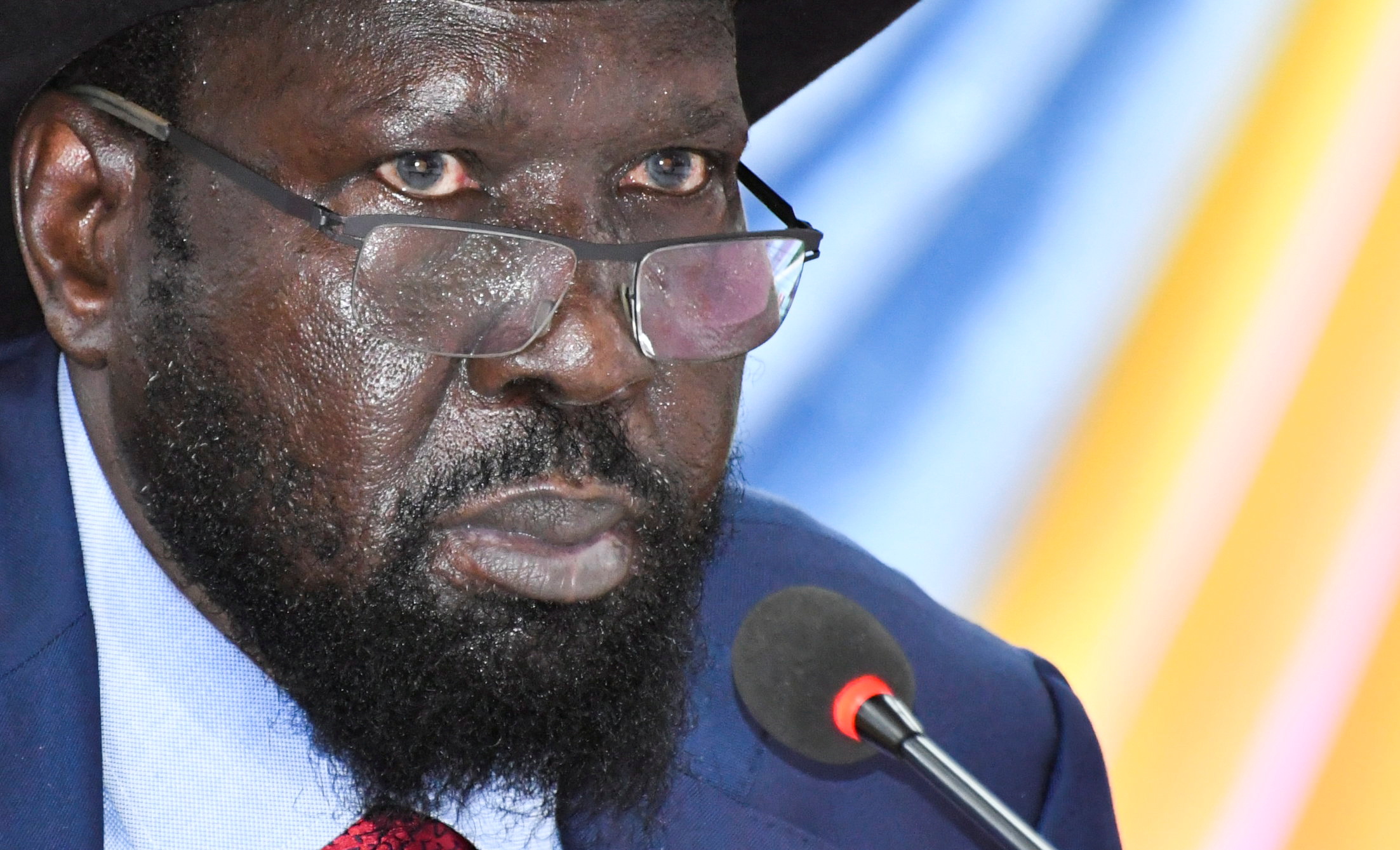
Six journalists in South Sudan have been detained over the circulation of footage showing President Salva Kiir appearing to wet himself at an official event, the national journalists union said on Saturday.
The footage from December showed a dark stain spread down the 71-year-old president’s grey trousers as he stood for the national anthem at a road commissioning event. The video never aired on television but subsequently circulated on social media.
The journalists, who work with the state-run South Sudan Broadcasting Corporation, were detained on Tuesday and Wednesday, said Patrick Oyet, president of the South Sudan Union of Journalists.
They “are suspected of having knowledge on how the video of the president urinating himself came out,” he told Reuters.
South Sudan Information Minister Michael Makuei and National Security Service spokesperson David Kumuri did not immediately respond to requests for comment.

Kiir has been president since South Sudan gained independence in 2011. Government officials have repeatedly denied rumours circulating on social media that he is unwell. The country has been embroiled in conflict for much of the past decade.

The detained journalists are camera operators Joseph Oliver and Mustafa Osman; video editor Victor Lado; contributor Jacob Benjamin; and Cherbek Ruben and Joval Toombe from the control room, Oyet said.
“We are concerned because those who are detained now have stayed longer than what the law says,” he added.
By law, South Sudanese authorities are allowed to detain suspects for only 24 hours before bringing them before a judge.
The incident “matches a pattern of security personnel resorting to arbitrary detention whenever officials deem coverage unfavorable,” said the sub-Saharan Africa representative for the Committee to Protect Journalists, Muthoki Mumo.

Categories
Audio Sources - Full Text Articles

Two people killed, 13 injured in Russian shelling of Bakhmut

630_360_1672127410-173.jpg

Two individuals were killed and thirteen far more were wounded as Russian troops shelled the town of Bakhmut, Donetsk region.

“According to the investigation knowledge, on January 6, the troops of the Russian Federation carried out another collection of artillery strikes on Bakhmut town and Bakhmut district,” the Prosecutor General’s Business office posted on Telegram.

A 66-12 months-aged guy and a 61-12 months-old female were killed as a final result of strong mortar attacks on residential neighborhoods. Thirteen additional people today been given mine blast and shrapnel injuries.

Non-public properties, condominium blocks, and other objects have been damaged and ruined.

Under the procedural assistance of the Donetsk regional prosecutor’s business office, pre-trial investigations have been introduced into violations of the legal guidelines and customs of war (Component 1, Part 2 of Artwork. 438 of the Legal Code of Ukraine).

Read through also: Border guards prevent Russia’s attack in the vicinity of Bakhmut, do away with commander

Prosecutors continue to choose all doable and acceptable steps to document war crimes fully commited by reps of the armed forces of the Russian Federation.

As reported, Russian troops killed two civilians and wounded 7 a lot more in Donetsk location on January 6.

ol

Source link

The post Two people killed, 13 injured in Russian shelling of Bakhmut appeared first on Ukraine Intelligence.

Categories
Audio Sources - Full Text Articles

America Is Lost in a Dark Forest, But There’s a Path Out

Sadly, in these not-so-United States, we have found our way deep into a dark forest, and the question before us is how do we find the path out of this dangerous thicket into which we have wandered? Our dire internal divisions are quite extraordinary and worrisome. And here I’m talking to you wherever you are on the political spectrum from MSNBC to Fox News. If you get up in the morning watching Morning Joe and you wrap it up with Rachel Maddow at night; or you start on the white couch over at Fox and you finish up with Sean Hannity—wherever you are on that spectrum, you ought to be concerned about the plummeting nature of our discourse with each other.

[time-brightcove not-tgx=”true”]

That division is the dark forest into which we have wandered, and the real challenge is that the world is not going to wait for us while we figure out how to escape. The world does not see us standing coherently together and facing the challenges and turbulence that roil the globe. This weakens us dramatically.

Consider the challenges: an ongoing global pandemic, a broken withdrawal from Afghanistan, Vladimir Putin rattling the saber of nuclear weapons, failing cyber security, fierce competition with Beijing, Iran moving apace toward a nuclear weapon, Kim Jong-un taunting with ballistic missile launches, terrorism still smoldering in many places, a damaged environment, on and on. The dangers are real, and the world will not wait while we figure out how to face these challenges together as a nation.

We must find practical ways to think through these problems and challenges or face dire consequences both internationally and here at home.

If I’ve brought you this far, you’re probably asking, “Well what do you think, Admiral? What can we do to find a path out of this Dark Forest? What are the tools we need? What should we do?

Counterintuitively, we should start by taking stock of some good news, even as we appropriately wring our hands and worry about all these external challenges and above all about our internal divisions. It’s good from time to time to step back and think about the advantages the United States of America enjoys.

Look at our geography, guarded left and right by vast oceans. We have benign neighbors to the north and south. We have the most powerful agrarian complex in the world, abundant arable land, fresh water. We have vast energy resources, both oil and gas and we’re rapidly building renewables. We have the most powerful and capable military imaginable. And we have multiple engines of innovation in Silicon Valley, Austin, Texas, Boston’s Route 128, many other places. All of that accrues to our advantage as we face these challenges.

Another advantage? Immigration. It helps us. Do we need to control our borders: yes, of course. But overall, immigration is a powerful engine for this country. I’ll give you one quick practical example—for 10 years as an Admiral, I visited over a hundred countries. In almost every country I would pay a courtesy call on the U.S ambassador. I saw two things that were identical at every U.S embassy: number one, each was guarded by U.S. Marines. Number two, every U.S embassy in every country has lines, around the block in some cases, of people who want to come to the U.S.

Think about that. Go to the Chinese Embassy, the Iranian Embassy, the Russian Embassy. Hundreds of thousands of Russians just left Russia to avoid being drafted into an unjust war. Yet we have millions who want to come and be part of who we are. That’s an extraordinary advantage and we should take advantage of all that potential productivity.

What else can we do? Above all, we must listen better. We need to listen to our allies in the world, and even to our opponents. But above all, we need to listen to each other. That’s our job as Americans. It doesn’t mean we’re always going to agree with allies, opponents, or each other, but we need to understand the positions of “the other.” This requires patience and an openness, a lack of arrogance and more humility. We could do worse than to reread George Washington’s “Rules of Civility.”

What else can we do? We can celebrate service.

Because I’m a veteran, people say to me all the time, “Thank you for your service.” I appreciate it deeply and so does every veteran. It is a kind and thoughtful comment. But there are so many ways to serve this country—certainly our military—but how about our diplomats, our CIA officers, our Peace Corps volunteers, our Department of Homeland Security and border patrol, our civil servants? How about our brave police and our intrepid firefighters? How about nurses on the front lines of COVID-19 for two years? How about our teachers? The starting salary of an American teacher in the Panhandle of my home state Florida is less than forty thousand dollars a year. Do you think she’s serving the country? I do.

So, here’s my point: the more we celebrate service, the more we incentivize it, through our tax system and through educational credits, for example, the more it will help us. Service is non-partisan. We don’t need a mandatory “national draft,” but we do need that idea of service to become inculcated in all that we do to help escape this dark forest

What else can we do? Education. When I finished 37 years in the military, I went to one of my life mentors, Bob Gates, and I said “Sir, what do you think I should do after the military?” He said: “Well, Stavridis, what kept you in the military for 37 years? Maybe that’ll give you a clue.” I realized that there were a lot of things I liked about the military and the Navy: I liked wearing a uniform, I liked serving my country, I liked deploying on operational missions, I like traveling the world. I liked all those things, but what I loved best was mentoring young sailors, helping guide the trajectory of their lives. I said that to Bob Gates, and he said, “You ought to be an educator, Jim.” So, I spent five years as Dean at Tufts University. I know that world. I have taught in classrooms. I’ve been a dean. Education can be a powerful part of the solution to the dark forest.

But where I think we ought to put more attention these days is on our community college systems. We are underweighting the use of this powerful resource. Community colleges, at very low cost, can give an education that can be scaled to a young person’s interest, and within two years they can graduate as a programmer, a maintenance supervisor, a nurse, an environmentalist: real skills that can be applied immediately and provide a good life financially and emotionally. It is a path out of the dark forest by addressing the kind of inequalities we see not just financially but educationally as well.

Another aspect of education is teaching all of us how to use the internet safely, particularly for the youngest among us.

That cell phone in your hand is a supercomputer: you can communicate point to point anywhere in the world, you can listen to any symphony ever recorded, you can watch any film ever made, you can access all the world’s knowledge. But you can also swim in a river of pornography and lies and bitter, false conspiracies. These smart phones are powerful and dangerous devices, and we often place one in the hand of a child in this country before they are twelve years old. Frequently, we do that with very little guidance and very few restraints. Education and computer internet literacy needs to be part of how we find our way out of this dark forest

What else can we do? We can innovate. We can develop and apply new technologies across the spectrum of our society. Innovation can help us address many of the ill-effects of the dark forest, from solving environmental challenges in ways that create new, fulfilling jobs to taking students out of traditional classrooms to developing equitable and accessible health care.

Another key is immigration reform. This is a big hard complicated problem. It begins with controlling our border—every sovereign state must control its border. But we must add to that fundamental key more thoughtful programs that can harness the power of immigrants who want to come here desperately and work and be among us.

Do we want them here? Think about the vast majority of those who make it to our borders. How much courage and true grit and determination does it take to grab your four-year-old’s hand put your two-year-old on your back and walk across six countries to get to our border? That’s the Hunger Games, and many of those people are the kind of folks I want on my team. We’ve got to figure out how to do that in a way that’s fair to those who have gone through every legal process, and much goes back to controlling the borders; but this could be an enormous engine for us that can help us as we come through the dark forest.

What else? Leadership matters. We need to search for and select leaders—across the political spectrum—who are willing to reach across the aisle and construct successful compromises. Think FDR or Reagan for the 21st century. Do we need a new political party, one that draws from both sides? Perhaps. As a nation we didn’t start with Republicans or Democrats, and my guess is we won’t end with them. But in the meantime, we need to find leaders from both parties with the willingness to bargain, compromise, and achieve constructive outcomes.

Final thoughts: all of this must be based on our values. If you haven’t stopped for a moment and thought about our values, it’s worth doing especially as I did, gazing at the sacred ground near Constitution Hall. Others have gone before us thinking about democracy, liberty, freedom of speech, freedom of religion, freedom of the press, gender equality, racial equality, about all our values. We have executed those values imperfectly, admittedly, but they are the right values. The values come to us from the ancient Greeks, from the East and the philosophy of the Buddha, and they arrived here in American via the European enlightenment. They come to us through our founding fathers, passing then through insurrections, a civil war, an emancipation, universal suffrage, and many other trials, challenges, failures and successes. Those values matter and we need to communicate those values to ourselves and to the world.

Sometimes when I say that people respond with “Oh Admiral, you’re right, you know it’s a war of ideas.” No, it’s not a war of ideas – it is a marketplace of ideas. Our ideas can compete in that marketplace, but we need to communicate them clearly, coherently, and boldly, without a shred of arrogance or self-righteousness, but with confidence as well.

How fast do we need to go to escape this dark forest? Very fast, but let me make a point using the physiognomy of the fastest thing on earth: the cheetah. It can go from zero to 60 miles an hour in three seconds, and it’s built for speed. The head is shaped like an ax so cuts through the air with almost no drag; it’s got powerful front legs; huge ribs to process all that oxygen; big back legs—built for speed. Except, instead of a tiny, decorative tail, the Cheetah has a huge tail. Why? The engineers among us will know: the cheetah needs that big tail so that when it accelerates and then tries to turn, the tail can counterbalance. Without that tail to stabilize, it would just go tumbling Into the dark forest. So, the point is yes we need to go fast; but we must keep the system in balance

I’m Greek American, of course, so I’m required to mention a Greek myth in everything I write. Think of Sisyphus and his boulder: we must be resilient. Our leaders must be resilient, and the boulder rolls down whoever you are, no matter if you are the most powerful person on Earth. The boulder rolled down on George W. Bush on 9/11; it rolled down and Barack Obama with the Great Recession; it rolled down on Donald Trump with the pandemic; it is rolling down on Joe Biden with inflation spiking and a war in Ukraine. The boulder rolls down. The measure of anybody is not whether the boulder never crushes you; the measure is do you get up put your shoulder behind it and continue the hard work. That resilience is what we need in our leaders and ourselves.

One of my great life mentors in addition to Bob Gates was General Colin Powell. If you look at his “Thirteen Rules,” four of them deal with hope and optimism. He said, “it will look better in the morning,” “optimism is a force multiplier,” and “it can be done.” Hope and optimism. So, if you remember nothing else from my words, I suggest you remember this quote: Napoleon, who knew a great deal about leadership, said “a leader is a dealer in hope.” Not in fear, not in chaos, not in anger.

Those are the kind of leaders we need. Whatever you do in life, be that kind of leader yourself, a dealer in hope. Seek others who lead in that way. Above all, be optimistic about this extraordinary country.

Adapted from a speech given by Admiral Stavridis in Philadelphia on October 7, 2022, within sight of Constitution Hall, the birthplace of American democracy. My remarks were entitled, “The Dark Forest,” an allusion to Dante’s Divine Comedy, of which the first volume is “The Inferno.” Dante begins his masterpiece ominously with the words, “Midway upon the journey of our life / I found myself within a forest dark / For the straightforward pathway had been lost.”

WP Radio
WP Radio
OFFLINE LIVE