Categories
Audio Sources - Full Text Articles

US to send Ukraine dozens of Bradleys in $2.85B aid package

WASHINGTON (AP) — The U.S. will send Ukraine nearly $3 billion in military aid, in a massive new package that will for the first time include several dozen Bradley fighting vehicles, U.S. officials said Thursday, in the Biden administration’s latest step to send increasingly lethal and powerful weapons to help Ukraine beat back Russian forces.

The aid — totaling about $2.85 billion — is the largest in a series of packages of military equipment that the Pentagon has pulled from its stockpiles to send to Ukraine. It is aimed at getting as much to the Ukrainian forces as possible during the winter months, before spring sets in and an expected increase in fighting begins.

An announcement is expected Friday, said the officials, who spoke on condition of anonymity because details of the package have not been publicly announced.

The Bradley fighting vehicles are medium-armored combat vehicles that can serve as a fortified troop carrier on the battlefield. It has tracks rather than wheels, but is lighter and more agile than a tank. It can carry about 10 personnel, and is seen as a critical way to move troops safely into battle.

Also included in the aid package will be HUMVEES, Mine Resistant Ambush Protected vehicles, or MRAPs, and a large amount of missiles and other ammunition.

The aid comes on the heels of Ukrainian President Volodymyr Zelenskyy’s dramatic visit to Washington last month, when he slipped secretly out of his war-torn nation for the first time to thank America and predict that 2023 would be a “turning point” in the conflict. In urging more support for his country’s war effort, he told Congress, “Your money is not charity,” and instead is ”an investment in the global security and democracy that we handle in the most responsible way.”

Zelenskyy and other Ukrainian officials have pressed Western leaders to provide more advanced weapons, including armored vehicles and Patriot missile batteries. The $1.85 billion aid package last month included for the first time a Patriot battery, the most advanced surface-to-air missile system the West has provided to Ukraine in the war effort. It also provided an undisclosed number of Joint Direct Attack Munitions kits, to modify massive bombs by adding tail fins and precision navigation systems so they can be guided to a target.

Categories
Selected Articles

Key takeaways from court documents in case against Bryan Kohberger and some questions that remain

12661525_010523-wpvi-idaho-murders-court

BOISE, Idaho — DNA allegedly found on a knife sheath recovered at the murder scene.

A roommate described a masked figure with “bushy eyebrows.”

Phone records showed the suspect was near the victims’ residence numerous times in the months before the killings.

Nearly two months after the killings of four University of Idaho students captivated the country and sowed fear in the small community of Moscow, Idaho, an affidavit released Thursday offered a look at the investigative work that went into identifying Bryan Kohberger as the suspect.

RELATED: Idaho murders timeline

The 28-year-old PhD student in criminal justice was extradited to Idaho Wednesday from his home state of Pennsylvania. Facing four counts of first-degree murder and one count of burglary, Kohberger did not enter a plea during his initial court appearance Thursday.

The suspect was arrested in Pennsylvania December 30, nearly seven weeks after Kaylee Goncalves, 21; Madison Mogen, 21; Xana Kernodle, 20; and Ethan Chapin, 20, were found fatally stabbed in an off-campus home.

Here are key takeaways from the court documents — which include the probable cause affidavit used to support Kohberger’s arrest and obtain a warrant — and some questions that remain.

Kaylee Goncalves, Ethan Chapin, Xana Kernodle and Madison Mogen were killed off campus at the University of Idaho.

DNA allegedly found on a knife sheath at the crime scene

Trash recovered from the Pennsylvania home of Kohberger’s family late last month and sent to the Idaho State Lab for DNA testing revealed that the “DNA profile obtained from the trash” matched a tan leather knife sheath found “laying on the bed” of one of the victims, according to the probable cause affidavit.

The DNA in the trash “identified a male as not being excluded as the biological father” of the suspect whose DNA was found on the sheath.

“At least 99.9998% of the male population would be expected to be excluded from the possibility of being the suspect’s biological father,” the affidavit said.

Roommate saw a figure dressed in black clothing and a mask

One of two roommates who were not harmed told investigators she saw a masked man dressed in black in the house the morning of the attack, according to the probable cause affidavit.

Identified in the document as D.M., the roommate said she “heard crying” in the house that morning and a male voice saying, ‘It’s OK, I’m going to help you.'”

Bryan Kohberger, who is accused of killing four University of Idaho students, is escorted to an extradition hearing at the Monroe County Courthouse in Stroudsburg, Pa.
AP Photo/Matt Rourke, Pool

D.M. told investigators she saw a “figure clad in black clothing and a mask that covered the person’s mouth and nose walking towards her,” according to the affidavit.

“D.M. described the figure as 5′ 10″ or taller, male, not very muscular, but athletically built with bushy eyebrows,” the affidavit said. “The male walked past D.M. as she stood in ‘frozen shock.'”

“The male walked towards the back sliding glass door. D.M. locked herself in her room after seeing the male,” according to the document, which said the roommate did not recognize the male.

Surveillance video pointed to a white sedan

Authorities reviewed local surveillance footage and were drawn to a white sedan, later identified as a Hyundai Elantra, according to the affidavit.

The vehicle was seen in the area around the home where the killings took place.

By November 25, local law enforcement had been notified to be on the lookout for the vehicle, the affidavit said.

Days later, officers at nearby Washington State University, where the suspect was a PhD student in criminal justice, identified a white Elantra and found it was registered to Kohberger.

Kohberger’s driver’s license information was consistent with the description the unharmed roommate gave investigators, according to the affidavit.

The document specifically noted Kohberger’s height and weight — 6 feet and 185 pounds — and that he has bushy eyebrows.

White Elantra at the Pennsylvania home of Kohberger’s parents

Kohberger received a new license plate for his Elantra five days after the killings, the affidavit said, citing records from the Washington State Department of Licensing.

At the time of Kohberger’s arrest last week, a white Elantra was found at his parents’ house in Pennsylvania, according to Monroe County Chief Public Defender Jason LaBar, who said Kohberger had gone home for the holidays.

Suspect’s phone used at least a dozen times near the students’ residence

Phone records show Kohberger’s phone was near the victims’ residence at least 12 times since June, according to the court documents.

“All of these occasions, except for one, occurred in the late evening and early morning hours of their respective days.”

Additionally, records show Kohberger’s phone was near the murder scene — 1122 King Road — between 9:12 a.m. and 9:21 a.m. — hours after the killings, according to the court documents.

A review of phone records showed Kohberger’s phone left his home at approximately 9 a.m. and traveled to Moscow, the affidavit said, and that the same phone traveled “back to the area of the Kohberger Residence … arriving to the area at approximately 9:32 a.m.”

Perspectives from the experts

Prominent Philadelphia defense attorney Fortunato Perri Jr. and retired FBI agent Laura Zartman are not involved in the case but both reviewed the newly unsealed affidavit.

Both agree DNA and the tracking of Kohberger’s phone were key to the investigation.

“Very quickly after that they got DNA from the Pennsylvania house — that’s when they could conclusively say ‘aha,” explains Zartman.

Cell phone tracking helped police solidify the movements of the white Hyundai Elantra near the victims’ homes on the night of the murders, and the weeks leading up to the crimes.

“It certainly could go to trial. I’ve seen cases with overwhelming evidence and the client still wants to have their day in court,” said Perri. “Although the investigation conducted was exhaustive it doesn’t look like it’s that sophisticated of a case to put forward to a jury.”

Suspect applied for a police internship in 2022

Kohberger applied for an internship with the Pullman Police Department in Washington in the fall of 2022, court documents show.

“Pursuant to records provided by a member of the interview panel for Pullman Police Department, we learned that Kohberger’s past education included undergraduate degrees in psychology and cloud-based forensics,” according to an affidavit.

“These records also showed Kohberger wrote an essay when he applied for an internship with the Pullman Police Department in the fall of 2022. Kohberger wrote in his essay he had interest in assisting rural law enforcement agencies with how to better collect and analyze technological data in public safety operations.”

Still, questions remain

Nearly two months after the killings, however, a number of questions remain.

It’s not clear why the unharmed roommate did not immediately call 911, or why the roommates were spared.

The motive for the crime also remains a mystery, and police have said they are still looking for the murder weapon.

The documents released Thursday shed no light on whether Kohberger had any other reason to be in the area at the time of the killings.

Why wasn’t Kohberger arrested until more than six weeks after the victims were found dead?

And authorities have not said publicly whether Kohberger knew any of the victims.

The-CNN-Wire & 2023 Cable News Network, Inc., a Warner Bros. Discovery Company. All rights reserved.

Categories
Audio Sources - Full Text Articles

High winds, torrential rains lash California, killing at least two

2023-01-06T04:38:26Z

A massive Pacific storm unleashed high winds, torrential rains and heavy snow across California for a second day on Thursday, knocking out power to tens of thousands of homes and disrupting road travel with flash floods, rock slides and toppled trees.

At least two fatalities have been reported since Wednesday, one of them a toddler killed by a fallen redwood crushing a mobile home in northern California.

And while the extent of flooding and property losses was less dire than many had predicted by the time the storm began tapering off late on Thursday, forecasters warned that more was soon to come.

The storm was powered by two overlapping phenomena – an immense airborne stream of dense moisture from the ocean called an atmospheric river, and a sprawling, hurricane-force low-pressure system known as a bomb cyclone.

The blast of extreme winter weather marked the third and strongest atmospheric river to strike California since early last week, with at least two more back-to-back storms forecast over the next several days.

The next was expected to arrive late on Friday, posing a renewed threat of flash flooding and mudslides in places now saturated from repeated downpours, the National Weather Service (NWS) said. The most vulnerable areas remained those in hillsides stripped bare of vegetation from past wildfires.

The San Francisco Bay area, the state capital Sacramento and surrounding region were still recovering from extensive flood damage, including levee breaches along the Cosumnes River, when the latest bout of showers hit.

The latest storm doused San Francisco with about 2 inches (51mm) of rain and the coastal mountains north and south of the city with 5 to 7 inches, according to meteorologist Rich Otto at the NWS Weather Prediction Center in Maryland.

Snow accumulations of a foot (0.3 meters) to 18 inches or more were measured in the Sierras, the weather service said.

High-wind advisories and gale warnings were posted up and down the state, as uprooted trees, already weakened by drought and poorly anchored in rain-soaked soil, knocked down power lines and blocked roadways.

Hazardous surf warnings were in effect for the state’s three northernmost coastal counties – Mendocino, Humboldt and Del Norte – where three-story waves pounded the shoreline and crashed over beaches. [nL1N33Q2LA]

HUMAN TOLL

Authorities have reported at least two weather-related deaths from the latest storm. A tree that crashed onto a trailer home overnight killed a 1- or 2-year-old boy, and a 19-year-old woman died when her car skidded off a partially flooded road into a utility pole on Wednesday.

Four other deaths have been attributed to the New Year’s weekend storm that swept northern California – three flood victims found in or near their cars and an elderly man found dead under a fallen tree.

As many as 180,000 homes and businesses, mostly in northern and central California, were without power early on Thursday, according to data by Poweroutage.us.

“This was one of the most powerful winter storms to hit our region in years,” said Megan McFarland, a spokesperson for Pacific Gas and Electric Company, the main utility for northern and central California.

Flooding, fallen trees and power lines left major roadways impassable in Point Arena and Gualala, two small Mendocino County coastal communities about 125 miles (201.17 km) north of San Francisco, which have experienced blackouts since Wednesday.

Farther north at Noyo Harbor in Fort Bragg, professional urchin diver Grant Downie said he moved his boat out of the water ahead of the storm as a precaution.

“The boat, insured or not, I feel safer with it on the truck getting hit by a tree than sinking in the water,” he said.

Crews in San Francisco spent the early morning hours clearing debris from felled trees that blocked roadways. The city’s fire department rescued a family trapped when a tree fell across their car.

Authorities advised Sonoma County residents near the Russian River between the wine country towns of Healdsburg and Jenner to evacuate their homes as the rain-swollen waterway neared flood stage.

Evacuation warnings were also issued in oceanside towns such as Santa Cruz. Officials shut down a 55-mile stretch of Route 1, a scenic coastal highway, due to flooding and debris. In Santa Barbara County, homes were ordered evacuated in three areas where hill slopes were left denuded by wildfires.

For Californians, the latest storms vividly illustrated the consequences of warmer sea and air temperatures wrought by climate change, producing atmospheric river storms with increasing frequency and intensity in the midst of extreme, multi-year drought.

While the Sierra snowpack, a major source of California’s water supply, was left at well above average for this time of year by the storms, much more will need to accumulate through winter to markedly diminish the drought, experts say.

Related Galleries:
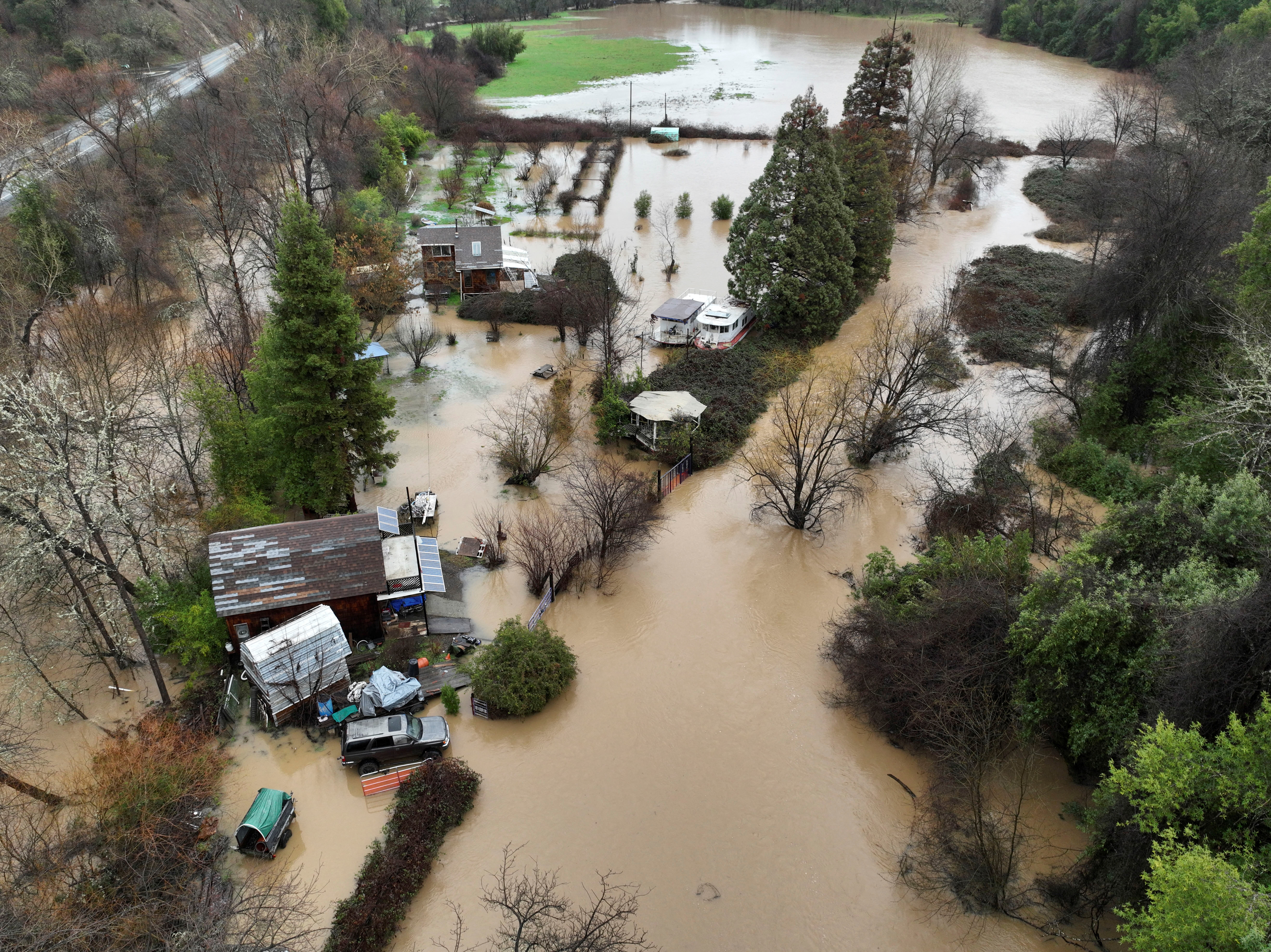
The view from a drone of flooded properties after rainstorms swelled Scotts Creek in Upper Lake, California, U.S., January 5, 2023. REUTERS/Fred Greaves
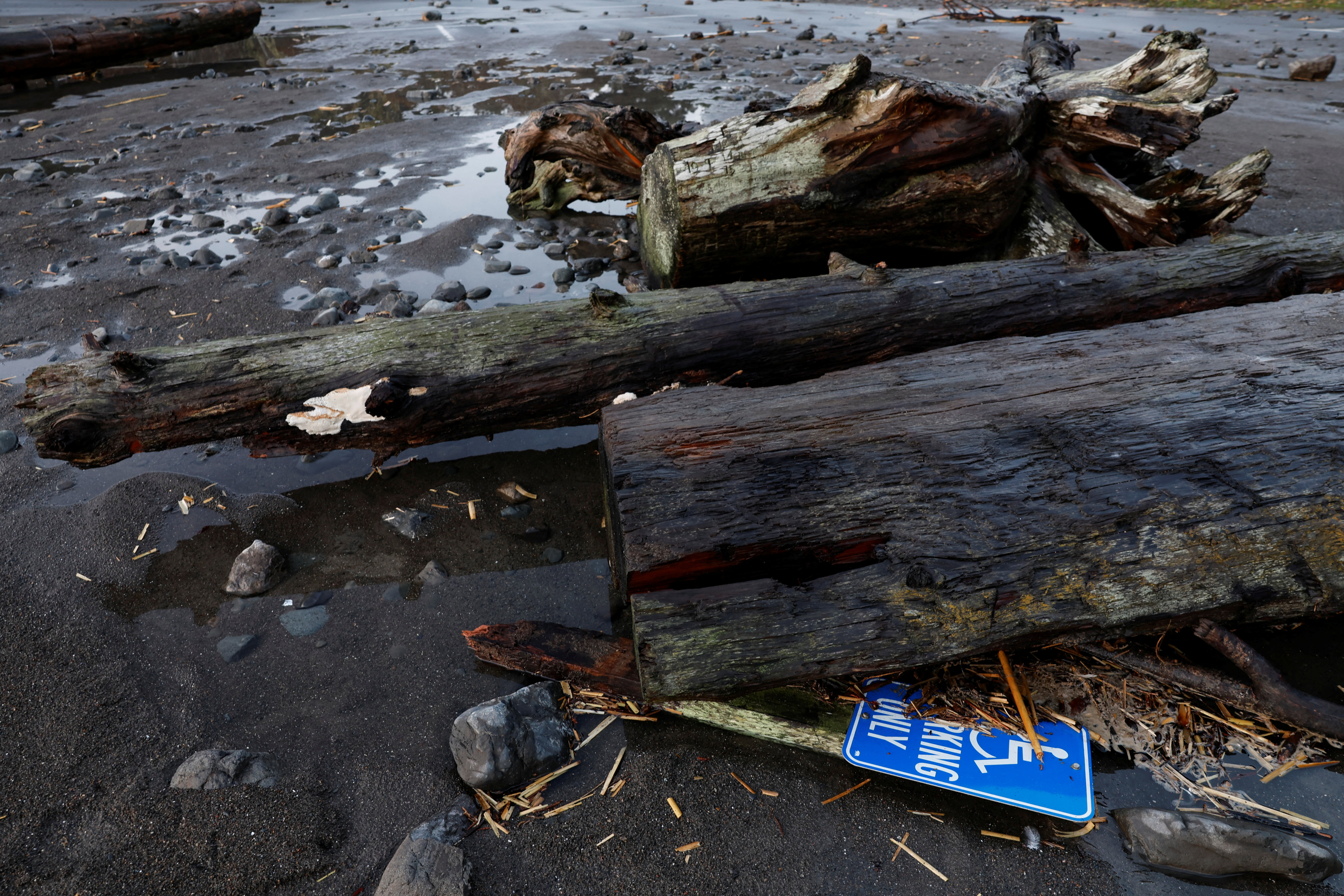
A handicapped parking sign crushed by driftwood tossed into the parking lot of Van Damme beach by high surf is seen following storms in Mendocino, California, U.S. January 5, 2023. REUTERS/Fred Greaves
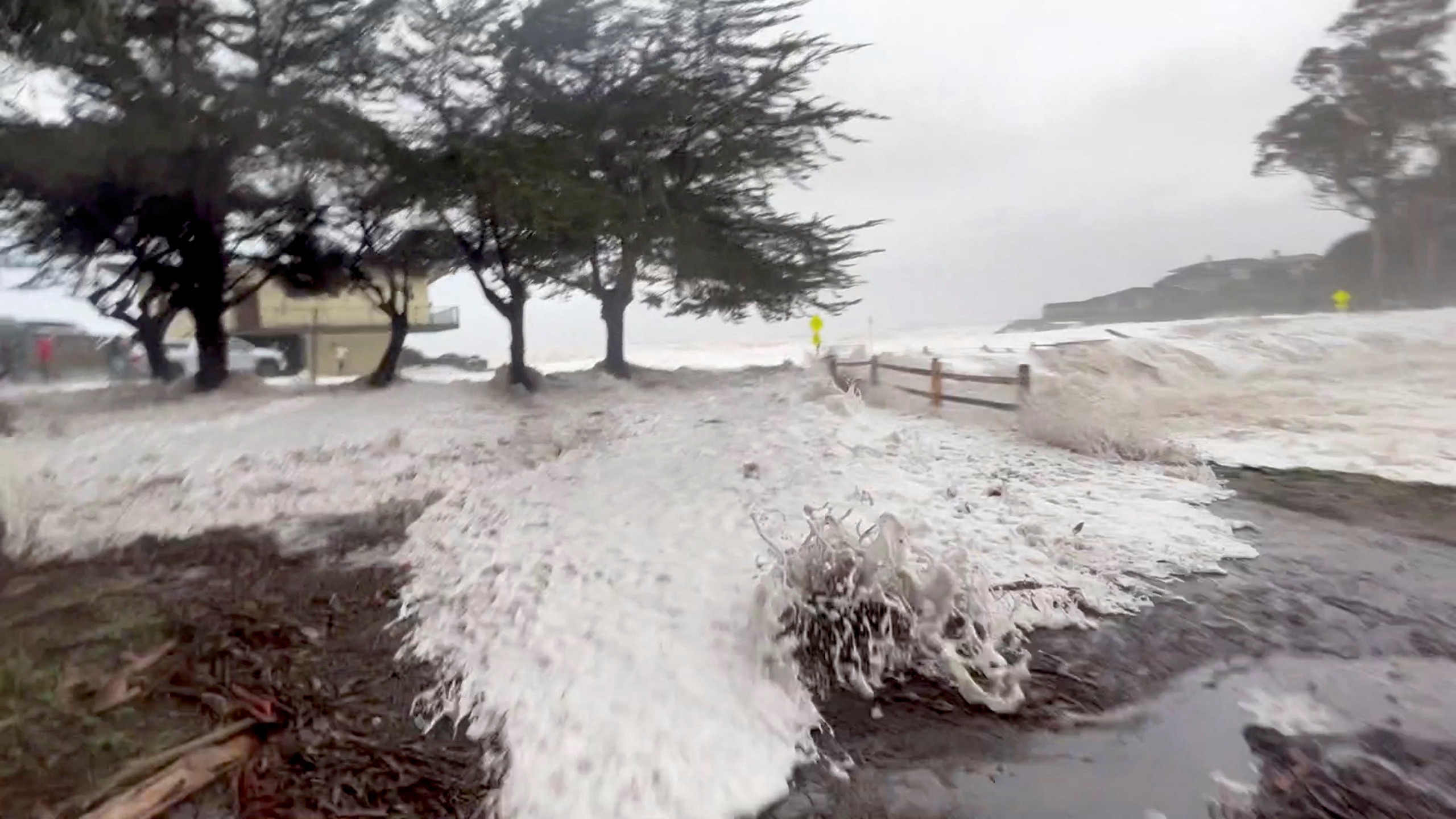
Waves brought by a massive Pacific storm rush ashore in Santa Cruz, California, U.S. January 5, 2023 in this still image obtained from social media video. Dane Nabal/via REUTERS

Local residents survey the area around the Guerneville bridge and the Russian River after a new bout of rainstorms threatened flooding in Guerneville, California, U.S. January 5, 2023. REUTERS/Peter DaSilva
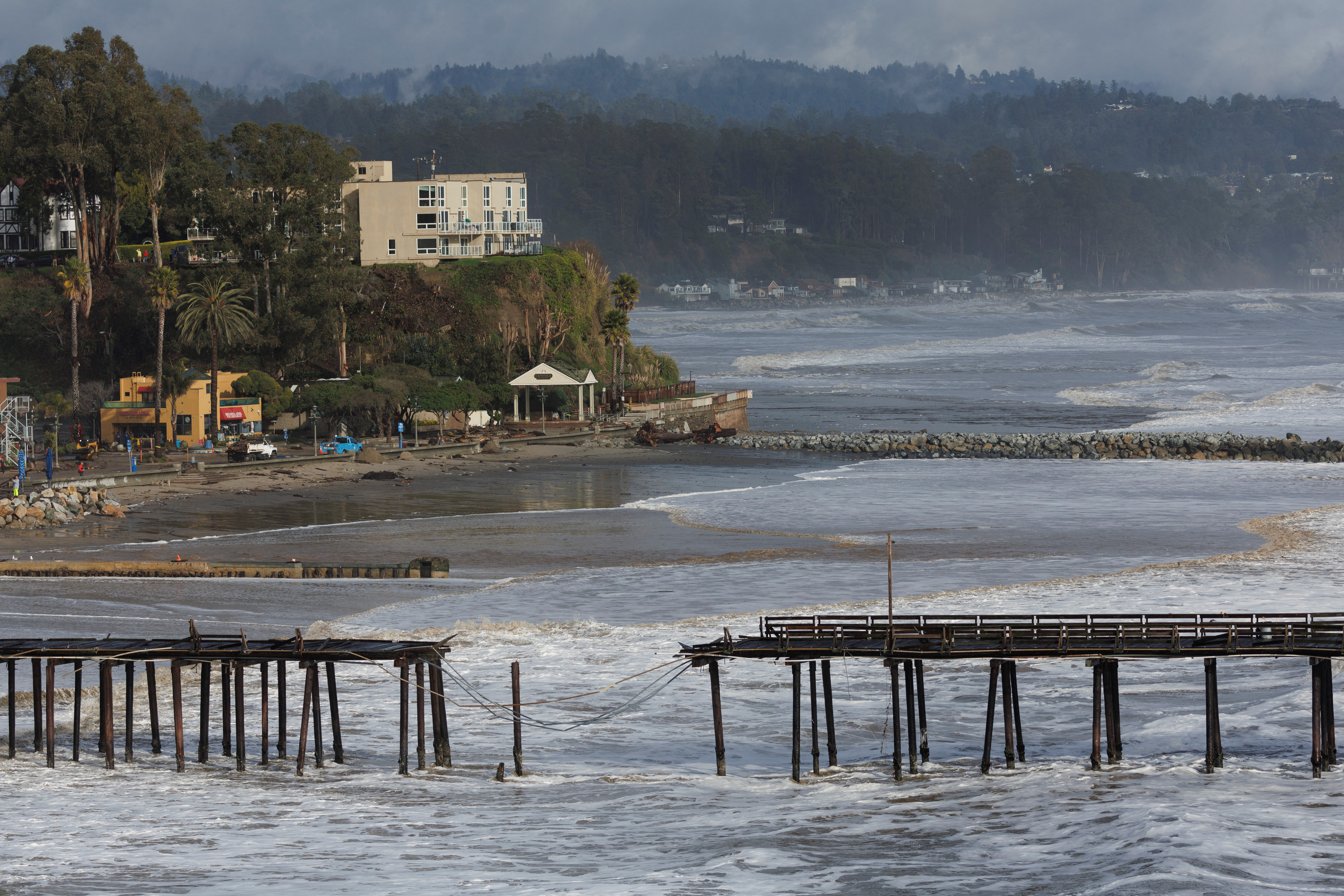
A damaged pier is seen after rainstorms known as “atmospheric river” slammed northern California, in Santa Cruz, U.S., January 5, 2023. REUTERS/Carlos Barria

Local residents look at the debris at a beach after rainstorms known as “atmospheric river” slammed northern California, in Santa Cruz, U.S., January 5, 2023. REUTERS/Carlos Barria
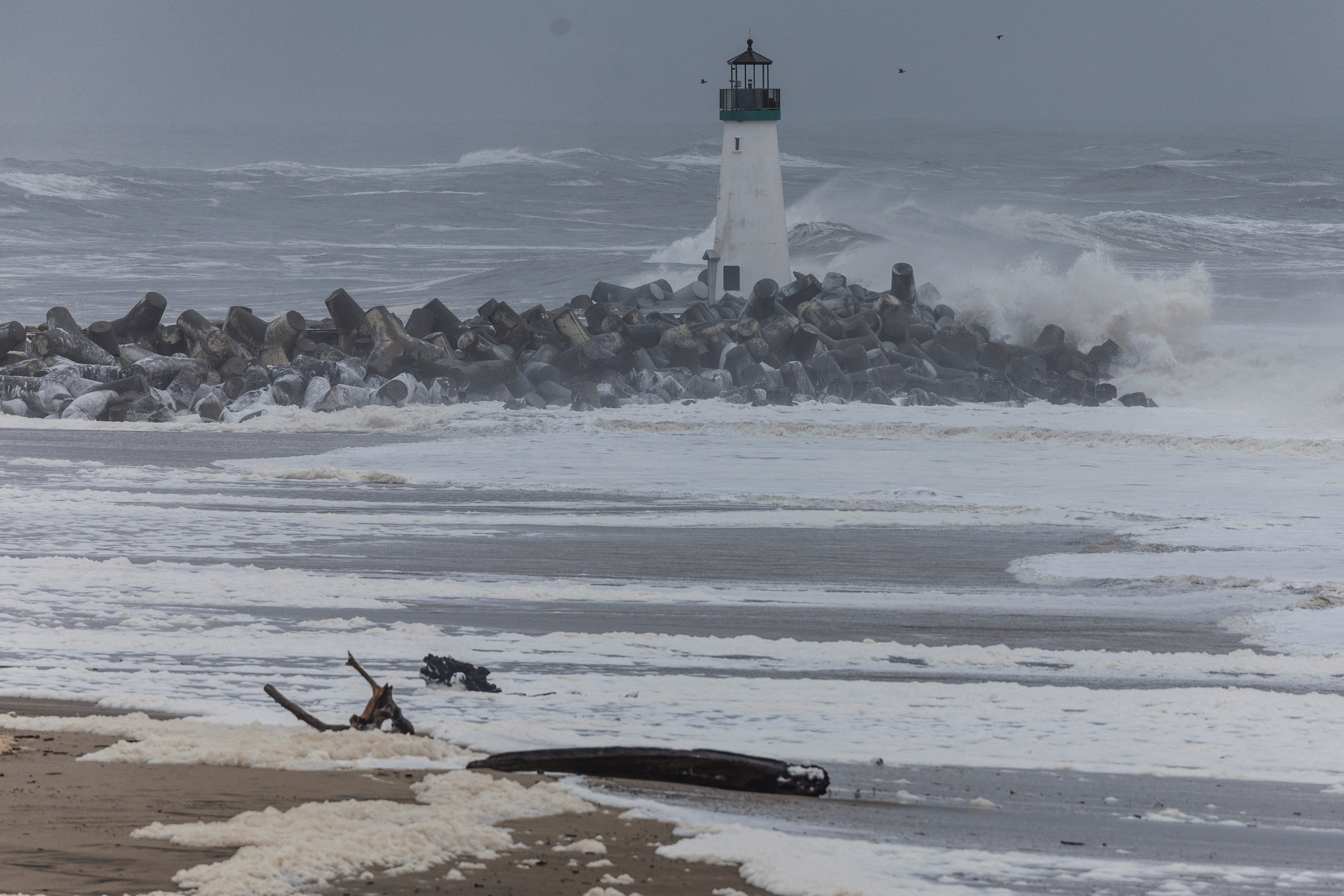
A lighthouse is seen after rainstorms known as “atmospheric river” slammed northern California, in Santa Cruz, U.S., January 5, 2023. REUTERS/Carlos Barria
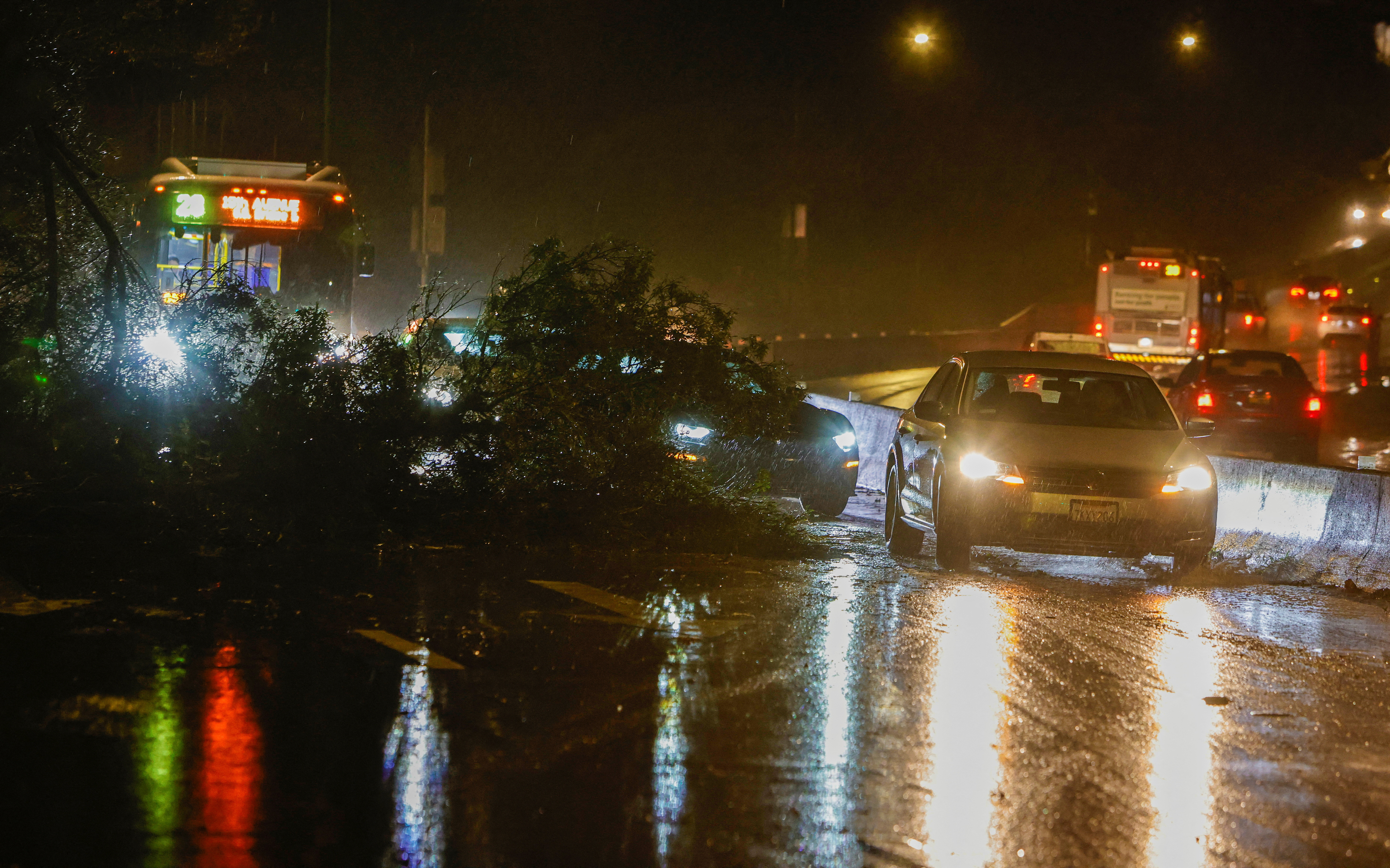
Traffic navigates around downed tree limbs along 19th Avenue after a new bout of rainstorms threatens to flood San Francisco, in California, U.S. January 4, 2023. REUTERS/Peter DaSilva
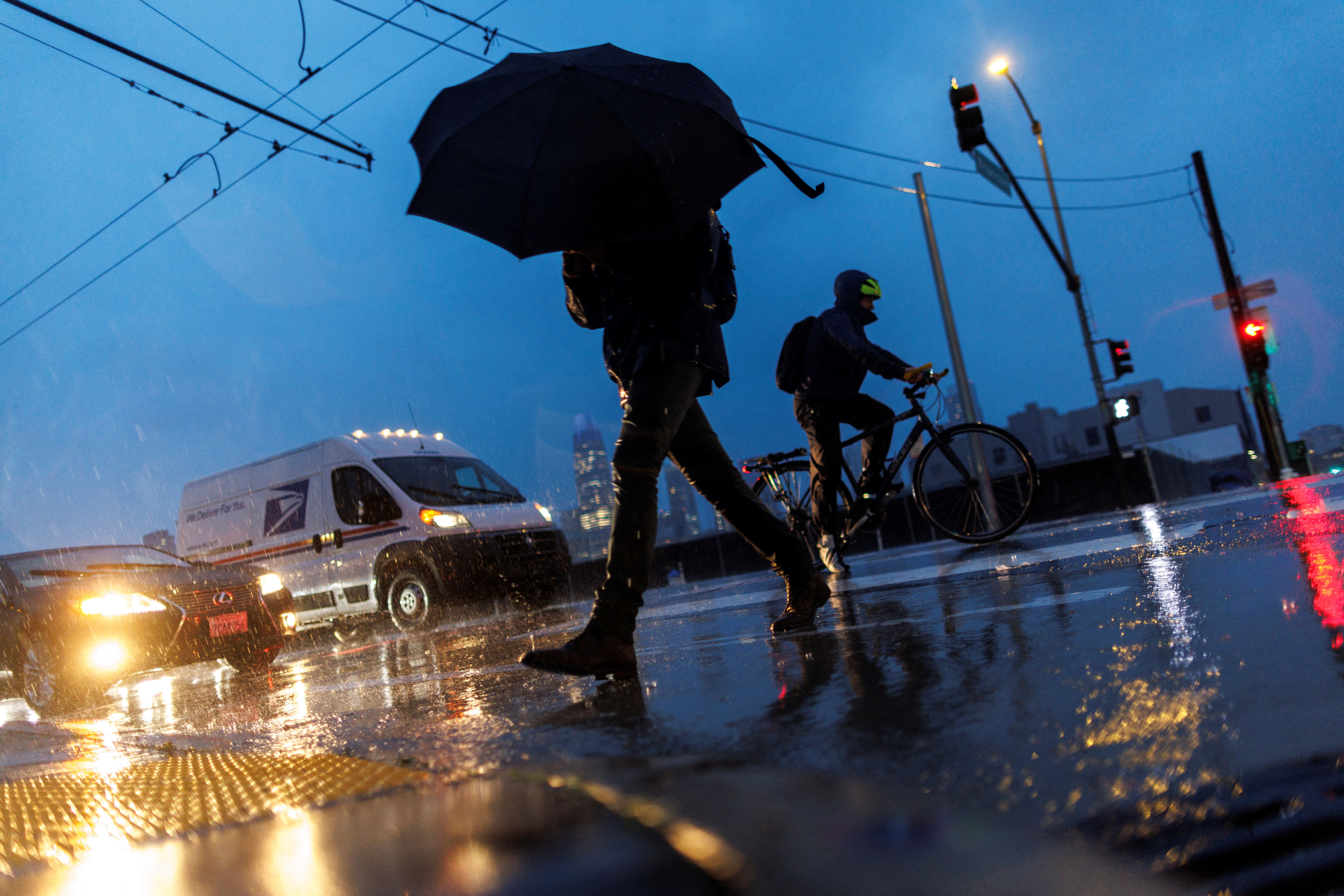
A local resident crosses a street as rainstorms hit the city of San Francisco, in California, U.S., January 4, 2023. REUTERS/Carlos Barria
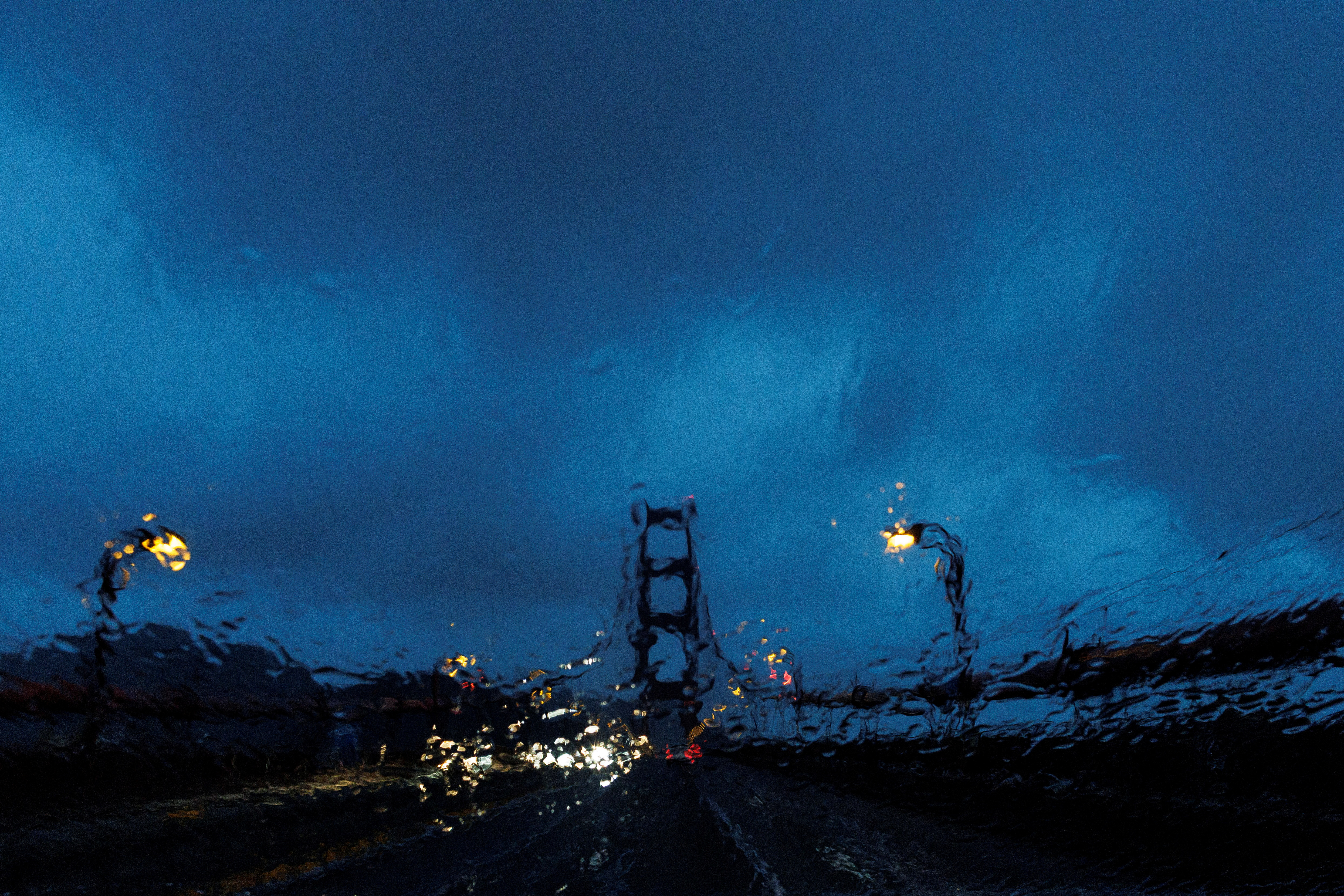
View of the Golden Gate Bridge in San Francisco as rainstorms known as “atmospheric river” slam northern California, U.S., January 5, 2023. REUTERS/Carlos Barria
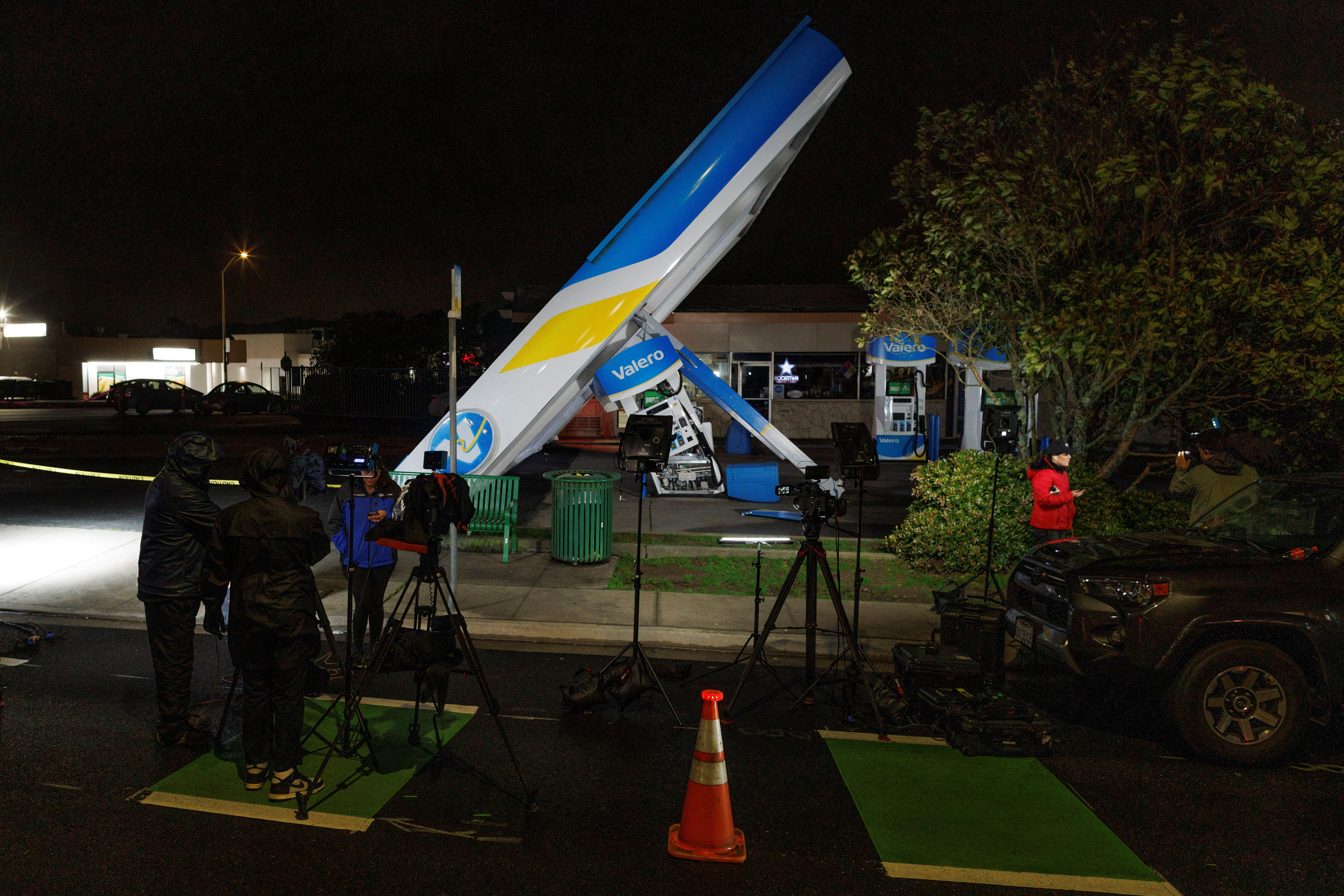
Television reporters stand by a damaged gas station in Daly City, after rainstorms known as “atmospheric river” slammed northern California, U.S., January 5, 2023. REUTERS/Carlos Barria


WP Radio
WP Radio
OFFLINE LIVE