
Categories
Selected Articles

COVID-19 and GI Symptoms

COVID-19 was initially considered a respiratory disease, but the severe acute respiratory syndrome coronavirus-2 (SARS-CoV-2) can lead to serious systemic consequences affecting major organs including the digestive system.1,2 Gastrointestinal (GI) symptoms such as diarrhea, loss of appetite, or nausea are common and can have many causes, so experiencing any of these doesn’t mean you have COVID-19. However, they can sometimes be early warning signs and often, but not always, accompany the usual symptoms of a COVID-19 infection. Although the information varies, as many as 50% of the hospitalized adults with COVID-19 reported at least one gastrointestinal symptom such as nausea, vomiting, abdominal pain, or diarrhea with variable onset and severity.1,2,3 Also, nearly a quarter of the children infected with the virus displayed GI symptoms.4 The majority of these are mild and resolve without requiring medical treatment.1,2 Nevertheless, it is clear that SARS-CoV-2 infects the GI tract. Typically, patients who have GI symptoms will also have the more common upper respiratory symptoms, such as a dry cough, fever, sore throat, or difficulty breathing. Sometimes, the GI symptoms will come first, and the respiratory ones will follow a day or so later.1,2 Interestingly, in about 20% of the cases, individuals with COVID-19 only exhibited GI related symptoms. Patients with digestive symptoms also had longer duration between onset of symptoms and viral clearance and were more likely to have a virus positive stool test.1,2,3

Symptoms common in both COVID-19 and seasonal flu include nausea, cough, fever, and fatigue.1,2,5 One of the major differences is that COVID-19 often leads to the loss of taste or smell, which is rare with the common flu.5 The transient loss of taste or smell is related to the virus infecting the cells that line our mouth through the receptor called angiotensin converting enzyme 2 (ACE2).1,3 Vomiting is also a more common symptom in COVID-19 compared to seasonal flu.

Does COVID-19 Transmit Through the Stool?

In the initial stages of the pandemic, there were worries about fecal-oral transmission of the disease since the genetic materials of the virus and actual live virus were found in the feces from infected patients.1 In some cases, the viral genetic materials were detected in the stool regardless of the gastrointestinal symptoms, as well as in feces after a negative nasal test.1,6 These observations suggest that the SARS-CoV-2 may actively infect and replicate in the GI tract. Despite these findings, scientists do not believe that fecal-oral transmission is a major route for the virus.6

How does COVID-19 Affect the GI Tract?

COVID-19 impacts and disrupts the GI system and affects the body in two primary ways. The first effect is that SARS-CoV-2 attacks the body by interacting with a receptor called angiotensin converting enzyme 2 (ACE2),1,3,7 which is present in many organs. They are common on the cells that line our body surfaces, such as the respiratory tract and especially the GI tract, where they are most prevalent.7,8 SARS-CoV-2 binds to ACE2 to facilitate its entry into epithelial cells. The virus enters epithelial cells by way of the spike protein on the viral coat, which is primed by the cellular transmembrane serine protease 2 (TMPRSS-2). This interaction may disrupt the barrier function by altering the role of various barrier proteins, such as ZO-1, occluding, and claudins,3,7 which may lead to virus-induced diarrhea. The disruption in barrier integrity might increase intestinal permeability, which then allows bacterial products and toxins into the circulatory system, further worsening the systemic inflammatory response. The resulting inflammation leads to the recruitment and activation of immune cells that could lead to a cytokine storm and organ failure.

SARS-CoV-2 binds to ACE2 receptors and then enters our organs, causing damage. In the GI tract, it affects the intestinal lining, leading to diarrhea, stomach upset, vomiting, and inflammation.9 Severe cases may even lead to obstructions, co-infections, or intestinal necrosis and organ failure.10

The other way COVID-19 affects the GI tract is by modifying the microbiome.10,11 Our gut microbiome is composed of trillions of bacteria and other microorganisms that help with metabolism, digestion, fighting infection, and mood regulation. Damage to the gut microbiome can lead to opportunistic infections, severe GI symptoms (pain, nausea, diarrhea), and even anxiety and depression.12

A study done in Hong Kong characterised the gut microbiome alterations in COVID-19.13 Infection led to a decrease in microbiome diversity (e.g., Faecalibacterium prausnitziiLachnospiraceae bacteriumEubacterium rectaleRuminococcus obeum, and Dorea formicigenerans), an increase in opportunistic pathogens (e.g., Clostridium hathewayiActinomyces viscosus, and Bacteriodes nordii), and a decrease in beneficial commensals. A six-month follow up study on patients with COVID-19 showed significant decreases in the richness of the gut microbiome across the acute, convalescence, and post-convalescence phases of the infection.9

Other studies have had similar findings and have linked the negative effects on gut bacteria to severe disease, opportunistic infections, and even symptoms of ‘long COVID’ (also known as post-acute sequelae of COVID-19).9,10 Studies are ongoing to determine whether any probiotics may be of benefit to prevent or reduce symptoms of COVID-19 infection.

COVID-19 and IBD

In the early stage of the pandemic, an international collaborative, the Surveillance Epidemiology of Coronavirus Under Research Exclusion (SECURE-IBD) database, came together to monitor outcomes of COVID-19 in IBD patients worldwide.2 Through this, many important findings have been made. Inflammatory bowel disease (IBD) patients are often on injectable immunosuppressants which may make them more susceptible to disease and infection.2 However, the database found that patients on potent immunosuppressants, such as the class of drug called TNF-alpha inhibitors (e.g., infliximab, adalimumab, and certolizumab), do not have to worry about an increase in infection risk.2 They also found that prevention is key.

Overall, there is currently no evidence for an increased risk or aggravated outcomes in patients with IBD11 and the prevalence is not higher in these patients as compared to the general population. However, patients that are having an acute flare of IBD may need to take more potent immunosuppressants. In that heightened state of inflammation and immune suppression, there is a higher risk for COVID-19 infection and severe outcomes.2

Evidence on the potential impacts of COVID-19 on chronic inflammatory conditions, such as IBD, continues to evolve. It is best to consult your doctor about these if you are immunocompromised.

Conclusion

SARS-CoV-2 has spread exponentially as a pandemic. It primarily causes severe respiratory symptoms but also affects the GI system in many patients. The importance of gut homeostasis and appropriate immune response toward viral infection has gained momentum during the COVID-19 pandemic.

Clearly, GI involvement is an important feature in some COVID-19 patients. Over the past few years, we have gained a large amount of knowledge and insights for understanding the GI effects of SARS-CoV-2 and the underlying pathogenesis. Current studies have begun to explore the use of probiotics as therapy for COVID-19 as well as looking at microbiome markers for vaccine efficacy.
Updated: 2022-11-24
1. Kariyawasam JC et al. Gastrointestinal manifestations in COVID-19. Trans R Soc Trop Med Hyg. 2021;115(12):1362-1388.

2. Bilal M et al. Coronavirus disease-2019: implications for the gastroenterologist. Curr Opin Gastroenterol. 2021;37(1):23-29.

3. Pola A et al. COVID-19 and gastrointestinal system: A brief review. Biomed J. 2021;44(3):245-251.

4. Lo Vecchio A et al. Factors Associated With Severe Gastrointestinal Diagnoses in Children With SARS-CoV-2 Infection or Multisystem Inflammatory Syndrome. JAMA Netw Open. 2021;4(12):e2139974.

5. Piroth L et al. Comparison of the characteristics, morbidity, and mortality of COVID-19 and seasonal influenza: a nationwide, population-based retrospective cohort study. Lancet Respir Med. 2021;9(3):251-259.

6. Moura IB et al. Can SARS-CoV-2 be transmitted via faeces? Curr Opin Gastroenterol. 2022;38(1):26-29.

7. Roy K et al. COVID-19 and gut immunomodulation. World J Gastroenterol. 2021;27(46):7925-7942.

8. Hikmet, F et al. The protein expression profile of ACE2 in human tissues. Molecular Systems Biology. (2020)16:e9610. https://doi.org/10.15252/msb.20209610.

9. Clerbaux LA et al. Mechanisms leading to gut dysbiosis in COVID-19: Current evidence and uncertainties based on adverse outcome pathways. Journal of Clinical Medicine. 2022;11(18):5400.

10. Soeselo DA et al. Bowel necrosis in patient with severe case of COVID-19. BMC Surgery. 2021;21(1).

11. Singh AK et al. Risk and outcomes of coronavirus disease in patients with inflammatory bowel disease: A systematic review and meta-analysis. United European Gastroenterol J. 2021;9(2):159-176.

12. Clapp M et al. Gut microbiota’s effect on Mental Health: The gut-brain axis. Clinics and Practice. 2017;7(4):987.

13. Yeoh YK et al. Gut microbiota composition reflects disease severity and dysfunctional immune responses in patients with COVID-19. Gut. 2021;70(4):698-706.
Photo: Tumisu | pixabay.com
This information is vetted by a number of healthcare experts and updated regularly to remain relevant. However, we cannot guarantee that all external links are current. We thank all of the content contributors who helped develop this page.
Categories
Audio Sources - Full Text Articles

Lula’s foreign policy? Encouraging a multipolar world | David Adler and Guillaume Long

Brazil’s president has long sought a multipolar global order and now pledges to ‘have relations with everyone’

For months, a sitting president with authoritarian sympathies sowed doubt in his country’s democracy. When he lost the election by a narrow margin, his supporters led a violent march on the capital in denial of the final result. But the institutions of democracy proved robust to these attacks. And on inauguration day, the rightful winner came to power in a peaceful ceremony.

Such parallels between recent presidential elections in the United States and Brazil are striking. Outgoing president Jair Bolsonaro endorsed Donald Trump and Trump endorsed Bolsonaro in return. Joe Biden did not go so far, but was quick to recognize the victory of incoming president Luiz Inácio Lula da Silva over noisy claims of fraud by his opponent. “America is back,” Biden said on the eve of his inauguration. “Brazil is back,” Lula said two years later.

Continue reading…

Categories
Audio Sources - Full Text Articles

The 10 most bizarre weapons of World War II

Great PanjandrumThe Panjandrum, a rocket-propelled explosive cart, was one of the more curious weapons to have come out of World War II.

British Government/Wikimedia Commons

  • World War II led to many successful innovations in technology — including weapons.
  • Some however were considered major flops.
  • From explosive rats to a 155-foot-long gun, here are some of the most bizarre weapons from WWII.

Unfortunately, war can drive innovation. During World War II, the world’s major powers set their sights on advancing technology, medicine, and communications in order to be efficient and fearsome in battle. Some of the advancements made in WWII were fundamental to modern technology — others, not so much.

Here is a look at some of the most bizarre, useless, and downright insane weapons developed on both sides during WWII.

1. A ship-mounted aerial mine rocket launcher

7 inch_UP_projectiles_HMS_King_George_V_IW_A_9451Crewman on HMS King George V with 7-inch UP Unrotated Projectile antiaircraft projectiles.

Royal Navy via Wikimedia Commons

The unrotated-projectile rocket launcher was an especially ill-conceived antiaircraft measure. Created to protect ships from enemy planes, the unrotated projectile was fired from a ship, and, upon reaching 1,000 feet in elevation, it would explode and disperse mines attached to parachutes via 400 feet of cable. 

The general idea was to create an aerial minefield wherein enemy planes would become ensnared in the mess of cables, pulling the mines into their fuselages and downing the plane. However, the mines, cables, and parachutes were all easily visible and enemy pilots had no trouble flying above or below the “aerial minefield”.

Here’s what the weapon looked like when launched:

unrotatedThe unrotated projectile firing and parachuting downward.

Youtube / This Is Genius

The undetonated mines would then be at the mercy of the wind, and they would often float back down toward the British ships that fired them.

“There are no records of UPs bringing down any aircraft. It’s entirely possible that this system injured or killed more Britons than enemies due to accidents, fires, etc,” according to a page dedicated to one of the battle cruisers that carried the weapon. 

2. Panjandrum

Great PanjandrumThe Panjandrum, a rocket-propelled explosive cart, was one of the more curious weapons to have come out of World War II.

British Government/Wikimedia Commons

To find a way to breach the German’s concrete defenses in Normandy, the British military devised a large carriage-like contraption called the Panjandrum — a name from a nonsense term coined by an 18th-century British playwright, according to Merriam-Webster.

The device was propelled by rockets attached along the rim of the two wheels. In the middle, a drum would be filled with explosives. According to Wired, the hope was that the Panjandrum could speed toward a concrete wall and blow a hole big enough for a tank to pass through.

But during testing, the device repeatedly lost control and veered off its intended path. In one testing incident, generals had to flee for cover and a cameraman was nearly moved down, according to “Pigeon Guided Missiles: And 49 Other Ideas that Never Took Off,” a book co-authored by James Moore and Paul Nero.

Карацупа_Н_Ф_1936 (1)Nikita Karatsupa, the Soviet Union’s most celebrated border guard, and his dog, Ingus, in 1936.

не указаны via Wikimedia Commons

3. Suicide bomb dogs

In 1942, Hitler’s Nazi infantry invaded Soviet Russia with German “Panzer” tanks.

The Russians, who had used military dogs since 1924, sought to turn their canine soldiers into antitank mines by strapping explosives around the dogs’ bodies.

During training, the dogs were starved and let loose on stationary Soviet tanks that had food hidden under them.

Once the dogs were underneath the tank they were trained to pull a detonator cord with their teeth. However, most dogs were unable to comprehend or execute the task while the sights, sounds, and smells of battle raged around them. 

The dogs would usually turn around and run toward their Russian handler, only to be shot and killed on sight.

4. Explosive rats

Explosive dummy rat.An explosive dummy rat that was sold at a Bonhams auction.

Courtesy Bonhams

Dogs were not the only unfortunate animal victims of experimental war weapons.

The Special Operations Executive branch of the British military also used dead rats that were filled with small explosives, according to Military History. The plan was to infest the German’s coal supply with the rats, which would then detonate once they were unknowingly shoveled into a broiler at a military base or of a steam engine.

The rats were not used as expected because the Germans discovered the device, but, according to The Guardian, they did cause some disruption. Records from the Special Operations Executive branch showed that the German’s discovery of the device prompted a massive search operation for more explosive rats, The Guardian reported.

5. The largest gun ever used in battle

hitler gustav railway gun

Screen grab

Eager to invade France, Nazi leader Adolf Hitler demanded a new weapon that could easily pierce the concrete fortifications of the French Maginot Line — the only major physical barrier standing between him and the rest of Western Europe.

In 1941, the year after France fell, German steelmaker and arms manufacturer Friedrich Krupp A.G. began constructing Hitler’s Gustav gun, according to the documentary “Top Secret Weapons.”

The four-story, 155-foot-long gun, which weighed 1,350 tons, shot 10,000-pound shells from its mammoth 98-foot barrel. 

The gun’s size was not only its source of strength but also its downfall.

The huge gun could only be transported via the rail system and was an easy target for Allied bombers flying overhead. The project was scrapped within a year.

6. Dummy paratroopers

Dummy paratrooperThe back of the decoy dummy, “Rupert.”

Courtesy Air Force Museum of New Zealand

As part of the Normandy landings in June 1944, the UK’s Royal Air Force and Britain’s Special Air Service carried out a deception operation to mislead the Germans away from the actual drop zones of Allied troops.

To do so, about 400 stuffed burlap mannequins were released outside the drop zones in Normandy and north of France, according to the Air Force Museum of New Zealand.

These figures, codenamed “Rupert,” were under half a meter tall, contained small explosives to destroy the dummy, and were attached with a noisemaker that mimicked the sound of a firing rile, according to the museum.

Actual British soldiers who were dropped with the dummies were told to allow some German troops to escape so that they could report the sightings of a massive drop of paratroopers.

The operation, codenamed “Titanic,” appeared to be a success as German records revealed that troops were directed to the area of the dummy drop, according to the New Zealand museum.

The US also had its own version of a dummy paratrooper, which can be seen in this declassified video:


7. V-3 cannon

v3The extremely long German V-3 cannon.

Bundesarchiv, Bild via Wikimedia Commons

The V-3 was the unnecessary younger sibling of the V-1 and V-2 rockets that pulverized London during the Blitzkrieg. 

Devised in the summer of 1944, the V-3 was designed to fire 300 nine-foot-long dart-shaped shells every hour. A series of secondary charges positioned along the 416-foot barrel was meant to speed up the projectile, which would hypothetically be able to reach London from well over 100 miles away in the French town of Mimoyecques. But when the V-3 finally became operational, the velocity of the shell was a mere 3,280 feet per second, which was estimated to be about half what was needed to reach London.

Hitler had authorized the production of 50 of these weapons, but before the original plans for the V-3 could be implemented, Allied forces bombed and destroyed the gun, despite Germany’s best efforts to hide the munitions under haystacks.

v3 rocket firing

youtube

In the end, only two miniature (if you can call 150-feet long miniature) versions of the gun became operational, with only a few shots ever fired to an unknown effect.

8. The Krummlauf curved barrel


To solve the conundrum of shooting a rifle while taking cover, the Germans created a curved barrel attachment that would allow soldiers to shoot their weapons around corners.

The device was called Krummlauf and gave a soldier the ability to shoot a weapon from within a tank, according to the Imperial War Museums.

But the attachment turned out to be highly impractical. The bullets often shattered in half before exiting the barrel and the attachment itself became distorted from the immense pressure after a few hundred rounds.

9. A mini “tank-like” remote-controlled demolition vehicle

Mini tanks goliath

Wikipedia

The Nazis’ Goliath tracked mine was anything but Goliath-like in stature. Known as the “Doodlebug” by American troops, the Goliath was run with a joystick operated by a controller. It had coiled within its compartments 2,145 feet of cable leading back to the controller. The mini-tank was powered by two electric motors, later replaced by gas burners, and able to carry more than 100 pounds of high explosives.

The Goliath was meant to slide under Allied tanks and deliver its explosive payload to their vulnerable undersides. However, it proved to be susceptible to cord-cutting, and later on, radio-controlled models were introduced. The Germans built 7,500 Goliaths during the war, which suggests that they met with some success. 

However, the real success of the Goliath was that it paved the way for radio-controlled weapons, which in our modern age are becoming the new mode of warfare.

10. The “Fugo” balloon bomb

Japanese balloon bombA Japanese balloon flying over North America.

Toronto Star Archives/Toronto Star via Getty Images

In November 1944, Japan released thousands of paper balloon bombs made out of the bark of the mulberry tree.

The balloons were “33 feet in diameter and could lift approximately 1,000 pounds,” according to J. David Rodgers, a Missouri University of Science and Technology professor.

“But the deadly portion of their cargo was a 33-lb anti-personnel fragmentation bomb, attached to a 64-foot long fuse that was intended to burn for 82 minutes before detonating,” he wrote.

The bombs were released into the Pacific jet stream, which would silently carry the large devices from Japan to the US without a pilot. The trip would take several days, NPR reported.

Despite releasing thousands of these devices, the balloon bomb turned out to be ineffective, not to mention resource intensive. It took 30 minutes to an hour to prepare one balloon and required about 30 men to do so, according to the Atomic Heritage Foundation.

During the war, there were only six reported casualties from the balloons, Rodgers wrote — a minister’s wife and five Sunday school students on a fishing trip who encountered one of the balloons near Bly, Oregon. Only a few hundred balloon bombs have been found.

Amanda Macias contributed to this report.

Read the original article on Business Insider
Categories
Audio Sources - Full Text Articles

More than 300 people live year-round in Death Valley, one of the hottest places on Earth. Here’s what it’s like.

deathvalleyfamilyplaygroundKids who live in Death Valley, California, enjoy the playground in the Cow Creek residential area.

Courtesy of Crystal Taylor

  • With average daytime temperatures of nearly 120 degrees in August, Death Valley is one of the hottest regions in the world.
  • More than 300 people call the area home, most of them employees of the National Park Service and local hotels. 
  • Two residents told Business Insider what it’s like to live in such extreme temperatures.

Death Valley reached a scorching 130 degrees on an August 2020 afternoon. That’s 54 degrees Celsius, or roughly the internal temperature of a steak. By September 2022, Death Valley shattered the world record for the hottest temperature recorded in the month of September, hitting 126 degrees.

Record-setting or not, most days in July and August feel like you’re walking into an oven, said Brandi Stewart, a year-round Furnace Creek station resident and the public information officer for Death Valley National Park.

“It’s pretty oppressive,” Stewart said. “You go outside and you just immediately feel it, you feel it on your skin. It’s dry; you don’t feel yourself sweat because it evaporates so quickly.”

Death Valley’s 300 to 400 year-round residents experience highs of 110 to 125 degrees Fahrenheit throughout August. At night, temperatures dip into the low 90s. Yet despite the scorching heat, residents manage to work, socialize, and even exercise outside. 

Stewart and Patrick Taylor, chief of interpretation and education for Death Valley National Park, told Business Insider what it’s like to live in one of the hottest places on Earth.

It takes time to get used to the heat 

Taylor’s first summer in Death Valley was “pretty hard,” he said.

When a body isn’t adjusted to extreme heat, high temperatures can overwhelm it quickly, causing profuse sweating and exhaustion before worse outcomes like heat stroke. Most human bodies adapt after a few weeks, though, primarily by sweating more, reducing core temperatures, and altering blood vessels to increase blood flow to the skin.

Taylor estimates that it took him — and most others — about a year to adjust fully to Furnace Creek’s highs. He has now spent a total of seven years there.

“I don’t know if anyone actually enjoys it when it’s 125, but it’s not as intimidating,” he said.

Plus, Stewart said, Death Valley’s heat is dry, which means sweat evaporates quickly and cools the body more efficiently.

She knew she’d gotten accustomed to the heat, she said, after she started bundling up on 80-degree days.

“I’ve been on the phone with people today and yesterday, and they’ll say, ‘It’s 80 degrees outside and I’m wearing shorts and a T shirt,'” she said. But in that climate, Stewart added, “I’m probably wearing pants and a long sleeved shirt.”

bake sale death valleyChildren host a bake sale at the Cow Creek complex.

Courtesy of Crystal Taylor

In the winter in Death Valley, highs hover in the 60s, while temperatures drop to the high 30s at night.

The Death Valley community stays close

Cow Creek, Timbisha Shoshone Village, and Stovepipe Wells, Death Valley’s three main year-round communities, are remote: The nearest town is an hour’s drive. Some local kids take the hour-long bus ride to school, though Taylor and his wife homeschool their five daughters.

The Cow Creek complex has about 80 housing units, most of which are within walking distance of one another, Taylor said. There’s a shared gym, playground, and county library. Most of the homes have two types of air conditioning: Ordinary A/C units and “swamp” or evaporative coolers, which take in dry, hot air and filter it through wet pads to cool it down.

But not all residents use both systems — or any cooling system at all.

“Some employees never ever use air conditioning,” Taylor said. “If it gets to 95 in the house, it gets to 95.”

He said they forgo air conditioning mostly to save money on utilities. 

Most residents’ family members don’t like visiting in the summer, Taylor added, so year-rounders spend a lot of time together.

This branch of the National Park Service “tends to attract really motivated employees that wanna work hard and don’t run off when things are challenging,” he said.

The approximately 150 National Park Service employees in the area have set up community groups — “there’s a book club, a crafting club, people who like to go out running,” Taylor said.

Yes, Death Valley residents go running. Outside. Even in July.

“We’d never, ever tell a visitor to go running in Death Valley in the summer,” Taylor said. “But if you run every day and your body is used to running at 119 degrees, then 120 isn’t much of a difference.”

Residents take extra precautions when going outside

CarCookies_BStewartBrandi Stewart, a resident of Death Valley National Park, bakes cookies on her car’s windshield.

Brandi Stewart

In the summer, Death Valley’s heat makes even simple activities dangerous. 

Taylor and his family never leave the house without a backup satellite phone, just in case they lose cell reception.

Stewart doesn’t drive to the grocery store without her boyfriend and a huge jug of water; she also inspects her car constantly to avoid the possibility that it breaks down, stranding her in a remote area.

“The biggest fear I have is getting a flat tire and having my vehicle malfunction,” she said. 

Taylor and Stewart both said they tell visitors to the park that they must take similar precautions. 

“A concern we have right now [is] that the attention we have to our heat records will bring more people out,” Stewart said.

Climate change is making life in Death Valley even tougher

The coronavirus pandemic has made it harder for the small group of Death Valley residents to gather, but they’re staying in touch via technology like everyone else. 

“We’re all going through the same thing together; we’re all experiencing these high temperatures. It fosters this sense of community, that you’re going through this hard thing all together,” Stewart said. 

They’re also facing another enormous threat: climate change.

In Death Valley, six of the 10 hottest months on record have occurred in the last 20 years. In July 2018, the area set a world record for hottest month ever recorded, with average temperatures of 108.1 degrees Fahrenheit — breaking its previous record of 107.4 degrees the year before.  

Taylor said the temperature changes have made it harder to connect with fellow residents.

“When we look at our trends over the last decade or so, [Sunday] aside, it doesn’t seem like generally the daytime highs are noticeably higher than they’ve been historically. The big trend is the overnight lows,” he said.

Ten years ago, Death Valley’s average low temperature in August was 86 degrees, according to NOAA. Last year, it was 90. In the same time frame, average low temperatures in September have increased from 74 to 80.

“We used to go out and play at night, and now we can’t go out and socialize as much as we used to,” Taylor said. “Maybe before, we’d have a barbecue; now it’s too hot to do that four months out of the year instead of one month.”

Read the original article on Business Insider
Categories
Audio Sources - Full Text Articles

Flash floods inundates highways in the Bay Area and the Midwest is under winter weather watch as extreme weather hits parts of US to start 2023

Car sloshes through highway amid flash floods in the Bay AreaA car in San Francisco drives through highway amid flash floods on New Year’s Eve

Anadolu Agency/Getty Images

  • A major highway was shut down in the Bay Area on New Years Eve after heavy rains led to flooding. 
  • Meanwhile, the Midwest and Plains region is under a winter weather watch as storm moves east. 
  • This is the 2nd major weather event since Christmas, when Winter Storm Elliot tore through the US. 

Extreme weather is halting plans for many Americans again this holiday season. 

A week after a blizzard tore through much of the US over Christmas weekend, a storm that paralyzed much of  Northern California starting Saturday is moving east, putting over 15 million in California, the Midwest and the Plains region under a winter weather watch. 

Since Saturday morning, about six miles of Interstate 580 in the Bay Area near Oakland has remained closed due to flooding, the San Francisco Gate reports.  Nearby, officials are pumping water to clear another Bay Area highway, Niles Canyon Road, after rain triggered a landslide on New Year’s Eve, according to ABC.

Several other highways along the coast also have been shut down since then, and over 100,000 residents have lost power since Saturday in the Sacramento region, per local station CapRadio.  In Lake Tahoe, thousands more did not have power on New Year’s Eve and cars spun out on some roads during the snowstorm, prompting more closures. Millions were asked to evacuate or shelter in place in the region.

As the storm moves east, meteorologists predict places like the Rockies will get up to two feet of snow by Monday, and that parts of the Midwest and Great Plains also will be hit, according to CNN. 

The storm is the result of an “atmospheric river,” or long clouds holding massive amounts of water vapor “equivalent to the average flow of water at the mouth of the Mississippi River,” according to the National Oceanic and Atmospheric Administration. Another one is expected in the Bay Area on January 2,  the San Francisco Gate reported

Extreme weather like this defined 2022 worldwide: There was drought in Europe and Africa; flooding in south Asia; wildfires and heatwaves in Europe. In the US in September Hurricane Ian ripped through the western coast of Florida. 

Experts predict more in 2023, as climate change worsens, and a Pacific Ocean weather pattern called La Niña makes parts of the northern US colder and wetter, and parts of the southern US hotter and dryer. 

Read the original article on Business Insider
Categories
Audio Sources - Full Text Articles

A nuclear attack would most likely target one of these 6 US cities — but an expert says none of them are prepared

nuclear bomb explosion blast city shutterstock_528910063An illustration of a nuclear bomb exploding in a city.

Shutterstock

  • A nuclear attack on US soil would most likely target one of six cities: New York, Chicago, Houston, Los Angeles, San Francisco, or Washington, DC.
  • But a public-health expert says any of those cities would struggle to provide emergency services to the wounded.
  • The cities also no longer have designated fallout shelters to protect people from radiation.
  • Visit Business Insider’s homepage for more stories.

The chance that a nuclear bomb would strike a US city is slim, but nuclear experts say it’s not out of the question.

A nuclear attack in a large metropolitan area is one of the 15 disaster scenarios for which the US Federal Emergency Management Agency has an emergency strategy. The agency’s plan involves deploying first responders, providing immediate shelter for evacuees, and decontaminating victims who have been exposed to radiation.

For everyday citizens, FEMA has some simple advice: Get inside, stay inside, and stay tuned.

But according to Irwin Redlener, a public-health expert at Columbia University who specializes in disaster preparedness, these federal guidelines aren’t enough to prepare a city for a nuclear attack.

“There isn’t a single jurisdiction in America that has anything approaching an adequate plan to deal with a nuclear detonation,” he said.

That includes the six urban areas that Redlener thinks are the most likely targets of a nuclear attack: New York, Chicago, Houston, Los Angeles, San Francisco, and Washington, DC. These cities are not only some of the largest and densest in the country, but home to critical infrastructure (like energy plants, financial hubs, government facilities, and wireless transmission systems) that are vital to US security.

Each city has an emergency-management website that informs citizens about what to do in a crisis, but most of those sites (except for LA and New York) don’t directly mention a nuclear attack. That makes it difficult for residents to learn how to protect themselves if a bomb were to hit one of those cities.

“It would not be the end of life as we know it,” Redlener said of that scenario. “It would just be a horrific, catastrophic disaster with many, many unknown and cascading consequences.”

Cities might struggle to provide emergency services after a nuclear strike

Nuclear bombs can produce clouds of dust and sand-like radioactive particles that disperse into the atmosphere — what’s referred to as nuclear fallout. Exposure to this fallout can result in radiation poisoning, which can damage the body’s cells and prove fatal.

The debris takes at least 15 minutes to reach ground level after an explosion, so a person’s response during that period could be a matter of life and death. People can protect themselves from fallout by immediately seeking refuge in the center or basement of a brick steel or concrete building — preferably one without windows.

“A little bit of information can save a lot of lives,” Brooke Buddemeier, a health physicist at the Lawrence Livermore National Laboratory, told Business Insider. Buddemeier advises emergency managers about how to protect populations from nuclear attacks.

“If we can just get people inside, we can significantly reduce their exposure,” he said.

The most important scenario to prepare for, according to Redlener, isn’t all-out nuclear war, but a single nuclear explosion such as a missile launch from North Korea. Right now, he said, North Korean missiles are capable of reaching Alaska or Hawaii, but they could soon be able to reach cities along the West Coast.

Another source of an attack could be a nuclear device that was built, purchased, or stolen by a terrorist organization. All six cities Redlener identified are listed as “Tier 1” areas by the US Department of Homeland Security, meaning they’re considered places where a terrorist attack would yield the most devastation.

“There is no safe city,” Redlener said. “In New York City, the detonation of a Hiroshima-sized bomb, or even one a little smaller, could have anywhere between 50,000 to 100,000 fatalities — depending on the time of day and where the action struck — and hundreds of thousands of people injured.”

New York Nuclear AttackAn estimate of the damage from a 15-kiloton blast in New York City. Thermal radiation can result in third-degree burns, while an air blast could kill people and topple residential buildings.

Nukemap 2.65/Alex Wellerstein/Google Earth/Business Insider

Some estimates are even higher. Data from Alex Wellerstein, a nuclear-weapons historian at the Stevens Institute of Technology, indicates that a 15-kiloton explosion (like the one in Hiroshima) would result in more than 225,000 fatalities and 610,000 injuries in New York City.

Under those circumstances, not even the entire state of New York would have enough hospital beds to serve the wounded.

“New York state has 40,000 hospital beds, almost all of which are occupied all the time,” Redlener said.

He also expressed concern about what might happen to emergency responders who tried to help.

“Are we actually going to order National Guard troops or US soldiers to go into highly radioactive zones? Will we be getting bus drivers to go in and pick up people to take them to safety?” he said. “Every strategic or tactical response is fraught with inadequacies.”

Big cities don’t have designated fallout shelters

In 1961, around the height of the Cold War, the US launched the Community Fallout Shelter Program, which designated safe places to hide after a nuclear attack in cities across the country. Most shelters were on the upper floors of high-rise buildings, so they were meant to protect people only from radiation and not the blast itself.

Cities were responsible for stocking those shelters with food and sanitation and medical supplies paid for by the federal government. By the time funding for the program ran out in the 1970s, New York City had designated 18,000 fallout shelters to protect up to 11 million people.

New york fallout shelter.JPGA sign for a nuclear fallout shelter on a building in Brooklyn.

Brendan McDermid/Reuters

In 2017, New York City officials began removing the yellow signs that once marked these shelters to avoid the misconception that they were still active.

Redlener said there’s a reason the shelters no longer exist: Major cities like New York and San Francisco are in need of more affordable housing, making it difficult for city officials to justify reserving space for food and medical supplies.

“Can you imagine a public official keeping buildings intact for fallout shelters when the real-estate market is so tight?” Redlener said.

‘This is part of our 21st-century reality’

Redlener said many city authorities worry that even offering nuclear-explosion response plans might induce panic among residents.

“There’s fear among public officials that if they went out and publicly said, ‘This is what you need to know in the event of a nuclear attack,’ then many people would fear that the mayor knew something that the public did not,” he said.

But educating the public doesn’t have to be scary, Buddemeier said.

“The good news is that ‘Get inside, stay inside, stay tuned’ still works,” he said. “I kind of liken it to ‘Stop, drop, and roll.’ If your clothes catch on fire, that’s what you should do. It doesn’t make you afraid of fire, hopefully, but it does allow you the opportunity to take action to save your life.”

Both experts agreed that for a city to be prepared for a nuclear attack, it must acknowledge that such an attack is possible — even if the threat is remote.

“This is part of our 21st-century reality,” Redlener said. “I’ve apologized to my children and grandchildren for leaving the world in such a horrible mess, but it is what it is now.”

Read the original article on Business Insider
Categories
Audio Sources - Full Text Articles

Ukraine’s Air Force launches 13 strikes on enemy positions

630_360_1667494977-798.jpg

The Air Pressure of the Armed Forces of Ukraine released 13 strikes on the spots in which the Russian invaders were situated, and missile and artillery units strike two areas of focus of enemy manpower and military gear.

This is said in a report of the Basic Staff of the Armed Forces of Ukraine as of 18:00, January 1, printed on Fb.

According to the Typical Workers, Russian troops released 35 air strikes all through the working day. In particular, the enemy utilized Shahed-136 drones — all of them had been shot down by models of the Defense Forces of Ukraine.

Above the previous day, the invaders carried out 16 attacks making use of MLRS, together with on the children’s hospital in the metropolis of Kherson.

The danger of enemy air strikes and missile assaults stays in the course of the entire territory of Ukraine.

“The enemy, who misplaced 760 men and women yesterday by yourself, proceeds to endeavor offensive steps in the Bakhmut course and tries to make improvements to the tactical place of its troops in the Kupiansk, Lyman and Avdiivka directions. The enemy is keeping defense in the Novopavlivske and Zaporizhzhia instructions, and is regrouping troops in the Kherson path,” the Basic Employees noted.

It has been recognized that to destabilize the humanitarian situation in the quickly occupied territories of Kherson region and pressure the community inhabitants to “voluntarily evacuate”, Russian troops are firing mortars at Oleshky, Hola Prystan, Plavni, as very well as cottage settlements concerning the specified settlements.

“Mobilization” measures are ongoing in quickly occupied Crimea. According to the Normal Personnel, the army commissariats have began checking the lists of people today who have not however participated in the full-scale invasion of Ukraine and are topic to conscription for “mobilization” in 2023.

As claimed by Ukrinform, as of January 1, the Protection Forces eradicated about 106,720 Russian invaders in Ukraine.

iy

Source link

The post Ukraine’s Air Force launches 13 strikes on enemy positions appeared first on Ukraine Intelligence.

Categories
Audio Sources - Full Text Articles

2022 Man of the Year: Pierin Vincenz

Swiss banks just ain’t what they used to be.

Back in the day, you could stash your ill-gotten gains in their alpine vaults, tax-free, no questions asked. But before you jet off to Gstaad for a little white collar crime après-ski, be warned: Switzerland is now incredibly lame. Just ask Pierin Vincenz.

The 65-year-old former Swiss banking CEO was charged this year with a number of financial crimes he allegedly committed in cahoots with the awesomely-named Beat Stocker. Swiss authorities say Vincenz and Stocker made over $27 million by amassing shares in companies they then arranged to have sold to Raiffeisen, the bank Vincenz ran.

Seems like the sort of thing the Swiss financial system was built for, but alas! Cancel culture has prevailed where any number of warring nations have failed and gotten the once-neutral country to come down firmly on the side of snitches and feds. Swiss authorities are now combing through Vincenz’s expense accounts like a vengeful human resources director.

Unlike the chocolate-covered derelicts raking this captain of industry over the coals, we here at the Washington Free Beacon still believe in capitalism. So we take Vincenz at his word when he says there was a perfectly legitimate reason for each of these business expenses:

—$4,000 to a Hyatt in Zurich for damaging a hotel room during a “massive” fight with a stripper. Was he supposed to leave the room trashed?

—$750 for a Tinder date Vincenz claims was actually a job interview. Well, we found half our staff on JSwipe, so who are we to judge?

—$216,000 in strip club charges the financier claimed were necessary to meet potential clients. Yes, networking is important!

—$30,000 Vincenz spent chartering a private jet for a “cooking club” trip to Mallorca. Actually this may not pass the smell test. Wasn’t there a buffet at the strip club?

Vincenz defended his spending during his trial, telling the court, “I don’t have the feeling I have done anything criminal here.”

We agree. But, unfortunately for Vincenz, we don’t have jurisdiction in Switzerland, which in April sentenced him to four years in prison and ordered him to pay millions of dollars in fines and restitution.

It’s unclear if Switzerland will strip Vincenz of the “Banker of the Year” title it bestowed upon him in 2014. But in case they do, we’d like to give him something to make up for it. Congratulations, Herr Vincenz. You are now and forever a Washington Free Beacon Man of the Year.

The post 2022 Man of the Year: Pierin Vincenz appeared first on Washington Free Beacon.

Categories
Audio Sources - Full Text Articles

2022 Man of the Year: Chris Brunet

Getting fired brings men to a proverbial fork in the road. You can take it like a man, grab the booze you’ve been hiding in your top drawer, and have a good ol’ fashioned bender. Or you can go out in a blaze of glory, and make a public display of your dismissal so big that everyone will remember you after you get the boot.

Journalist Chris Brunet didn’t even glance at the first path when he faced termination for self-publishing a story about a lying Harvard professor.

(DISCLOSURE: We didn’t read the story. You can if you want. Some reasonable people say Brunet’s story is bullshit, but our research has found that Ivy League institutions are backward and that most professors are full of shit. For our purposes today, it does not matter.)

As the Daily Caller went to push Brunet out the door, he played one of the oldest cards in the book: The “You can’t fire me, because I quit!” card. And then he took it a step further and self-published again, this time his scorched-earth resignation email.

At the outset, Brunet lets his former boss know that he “believes in the concept of ‘radical honesty a-la Ray Dalio.” In other words: Buckle up, buckaroo, because this email is going to be batshit.

It was a fair warning. Brunet goes on to say that he “didn’t make a single friend” in his two months at the Caller, that he felt like an “alienated” “outsider,” and that the reason he “never clicked with anyone” was because all his colleagues suck. His only regret? He didn’t tell them they sucked to their faces. Here’s Brunet:

“A lot of the reporters are stupid and annoying. Some of them are cool. But too many of them are stupid toxic kids. I hate calling people ‘stupid/toxic/annoying’ behind their back. I would rather say it to their face. But that is not conducive or professional to tell your co-workers that, so of course I would never. I just don’t want to be around stupid, toxic, annoying people all day ever day.”

Fair enough, and thanks for the notes on professionalism. He goes on to attack the outlet’s readers for caring about stupid crap, and not the important issues Brunet cares about, like…”crypto.”

“Of the stories in my inbox that I am cc’d on every day, how many do I care about? Zero, usually. They are giving me cancer. Being around all these blurbs is giving me cancer of the soul.”

Preach, sister! What’s next? Well, the Daily Caller was messing with his ability to “shitpost.”

“I used to love the way I wrote. I no longer feel that way. I have been neutered and lost all creativity in my prose. I am a shitposter at heart and I need to be allowed to shitpost a rant. I resent having to get someone’s approval to shitpost. I should be free to shitpost at any time or place about any topic. I am suffocating without being able to do that.”

Brunet goes on to admit that self-publishing the Harvard story was probably a mistake. “But what’s done is done,” he concludes. “It is in the past now.”

Like all free-agent shitposters, Brunet took his work to Substack. He’s posted a lot of shit since, but the Free Beacon has only reviewed one such shitpost, because it mentioned us.

Apparently, Free Beacon alum Matthew Foldi is a member of the Central Intelligence Agency.

Yes, that CIA.

And yes, that Matthew Foldi.

Apparently Foldi’s flamboyant blazers and unique personality were just part of his cover. The Free Beacon has been unable to independently verify the claim.

Brunet’s shitpost is now behind a paywall, but his evidence that Foldi is a CIA asset basically boils down to the fact that Foldi is Jewish, which the Free Beacon can definitely confirm. Brunet also claims Foldi only got a bunch of high-profile endorsements for his congressional campaign because he’s a Jewish asset of the Jewish-controlled intelligence agency.

Brunet doesn’t seem to find it strange that the CIA—an agency known for backing successful coups d’etat around the world—couldn’t even get Foldi through a GOP primary as part of its effort “to subvert democracy and plant an asset in Congress.” Maybe that means Foldi isn’t in the CIA. Or maybe it doesn’t.

But it doesn’t matter. You don’t need to reach conclusions when you’re shitposting, which Brunet is now free to do, as he dreamt of, “at any time or place about any topic.”

For hitting his shitposting stride and going into remission from his Daily Caller-induced cancer of the soul, we tip our hats to you, Mr. Brunet. And we’re happy to report that our CIA handlers have cleared us to crown you a Washington Free Beacon Man of the Year.

The post 2022 Man of the Year: Chris Brunet appeared first on Washington Free Beacon.

Categories
Audio Sources - Full Text Articles

Security tight as Lula prepares to govern divided Brazil

2023-01-01T17:40:53Z

The usually calm capital of Brazil readies for leftist Luiz Inacio Lula da Silva’s inauguration on Saturday (December 31).

Leftist leader Luiz Inacio Lula da Silva will be sworn in as president of Brazil on Sunday under tightened security in the capital following threats of violence by supporters of his far-right predecessor Jair Bolsonaro.

The mood in Brasilia was tense after the most fraught election in a generation. Police detained a man on Sunday who was carrying fireworks and a knife and tried to enter the esplanade for the inauguration, Brasilia police said.

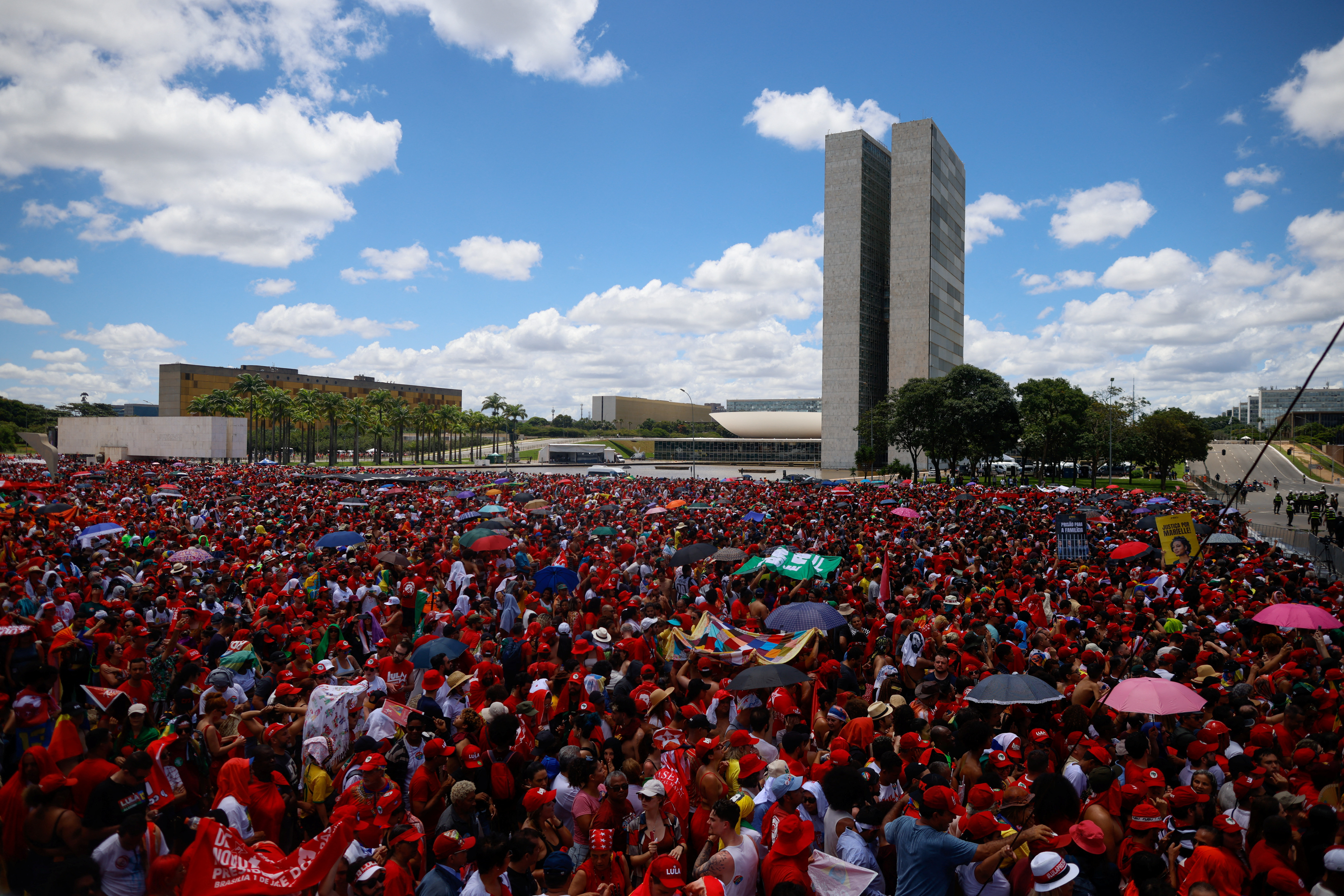
The ceremony in Congress begins at 3 p.m. (1800 GMT), after which Lula will go the Planalto palace to don the presidential sash before a crowd of 30,000 supporters, while some 300,000 are expected to gather to celebrate on Brasilia’s esplanade.

Lula, 77, narrowly defeated Bolsonaro in October to win an unprecedented third presidential term after a hiatus that saw him spend a year and a half behind bars on corruption convictions that were later overturned.

In his previous years as Workers Party (PT) president from 2003-2010, the former union leader lifted millions of Brazilians from poverty during a commodity boom that buoyed the economy.

Now, he faces the daunting challenge of improving Brazil’s stagnant economy while also uniting a country that has become painfully polarized under Bolsonaro.

“A lot is expected of Lula. He’ll have the difficult mission to restore normality and predictability in Brazil, and above all to rapidly deliver results that improve the quality of life for its inhabitants,” said Creomar de Souza, director of Dharma Political Risk consultancy in Brasilia.

Bolsonaro left Brazil for Florida on Friday, avoiding having to hand over the sash to his rival, whose victory he has yet to recognize, while also removing himself from any immediate legal risks related to his time in office.

His supporters have protested for two months that the election was stolen and called for a military coup to stop Lula returning to office in a climate of vandalism and violence.

On Christmas Eve, a Bolsonaro supporter was arrested for making a bomb that was discovered on a truck laden with aviation fuel at the entrance to Brasilia airport, and confessed he was seeking to sow chaos to provoke a military intervention.

In a thinly veiled dig, acting President Hamilton Mourao, who was Bolsonaro’s vice president, criticized his former boss for failing to lead the country and allowing anti-democratic sentiment to thrive after his October defeat at the polls.

“Leaders who were supposed to reassure and unite the nation … allowed silence or inopportune and deleterious protagonism to create an atmosphere of chaos and social disintegration,” Mourao said in a speech late on Saturday.

Mourao defended Bolsonaro’s four years in power for leaving a strong economy, but criticized environmental backsliding after deforestation in the Amazon reached a 15-year-high.

As tens of thousands of Lula supporters arrived in central Brasilia for Sunday’s celebrations, authorities deployed 10,000 police and troops to reinforce security and search participants, who cannot bring bottles, cans, flag masts or toy guns. Carrying firearms by civilians was also temporarily banned.

Organizers said delegations from 50 nations and 19 heads of state and governments, including the king of Spain, have confirmed their attendance.

On Friday, before flying to Florida, Bolsonaro delivered a teary address in which he condemned the Christmas Eve bomb plot as a “terrorist act” but praised his supporters who camped outside army barracks across the country calling for a coup.

Related Galleries:

The motorcade of Brazil’s President elect Luiz Inacio Lula da Silva is seen near the Planalto Palace in Brasilia, Brazil, January 1, 2023. REUTERS/Ueslei Marcelino


Supporters of Brazil’s President elect Luiz Inacio Lula da Silva are sprayed with water during hot weather, as they gather outside the Planalto Palace ahead of Lula’s swear-in ceremony, in Brasilia, Brazil, January 1, 2023. REUTERS/Adriano Machado

Supporters of Brazil’s President elect Luiz Inacio Lula da Silva gather outside the Planalto Palace ahead of Lula’s swear-in ceremony, in Brasilia, Brazil, January 1, 2023. REUTERS/Adriano Machado

Supporters of Brazil’s President elect Luiz Inacio Lula da Silva gather outside the Planalto Palace ahead of Lula’s swear-in ceremony, in Brasilia, Brazil, January 1, 2023. REUTERS/Adriano Machado

Supporters of Brazil’s President elect Luiz Inacio Lula da Silva are sprayed with water during hot weather, as they gather outside the Planalto Palace ahead of Lula’s swear-in ceremony, in Brasilia, Brazil, January 1, 2023. REUTERS/Adriano Machado

Brazilian President-elect Luiz Inacio Lula da Silva stands next to Sonia Guajajara, nominee for minister of Indigenous Peoples, during the presentation of the ministers nominated for his government at the transition government building in Brasilia, Brazil December 29, 2022. REUTERS/Adriano Machado

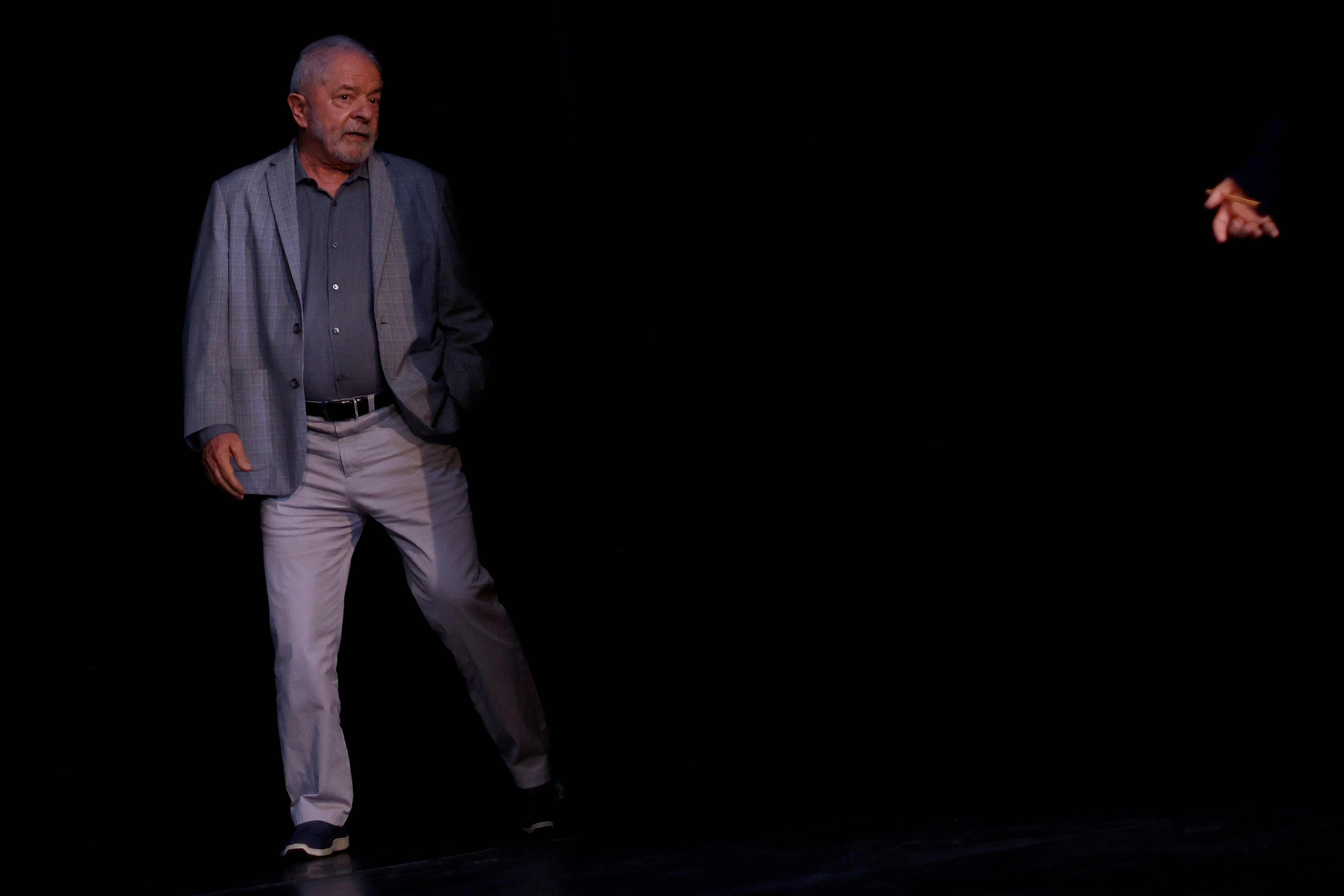
Brazilian President-elect Luiz Inacio Lula da Silva attends the presentation of the ministers nominated for his government at the transition government building in Brasilia, Brazil December 29, 2022. REUTERS/Adriano Machado/File Photo
WP Radio
WP Radio
OFFLINE LIVE