
Former FBI profiler thinks University of Idaho killer is a ‘young man’ students ‘knew’ nypost.com/2022/11/24/for… via @nypost
Month: December 2022
Michael Novakhov retweeted:
The NGA, National Geospatial-Intelligence Agency, the little known spy agency that CIA operatives on-the-ground depend heavily upon. #satellite #spysatellites #CIA #spies
osintdaily.blogspot.com/2022/10/cia-sp…

2022-12-01T21:36:12Z
Democratic Republic of Congo’s armed forces on Thursday said M23 rebels and their allies killed 50 civilians in a massacre in the eastern town of Kishishe this week, which the M23 denied.
Congo’s army and the M23, a Tutsi-led militia, have been locked in fighting for months in the country’s restive east, with each accusing the other of initiating attacks.
“The M23 Movement rejects the baseless allegations made against it in Kishishe,” said the group’s political spokesperson, Lawrence Kanyuka, in a statement.
“The M23 reminds the international and national community that it has never targeted civilian populations,” he said.
The United Nations and a U.S. diplomat also said they had information about civilian killings on Tuesday in Kishishe, North Kivu province, but did not give details. Both called for an investigation.
“We are deeply saddened by the massacre of civilians in Kishishe, which could constitute a war crime,” Stephanie Miley, charge d’affaires for the U.S. Embassy in Kinshasa, said on Twitter.
A spokesperson for the U.N. Secretary-General said the United Nations had received reports of human rights abuses committed during clashes between the M23 and local militias in Kishishe, which included a high number of civilian casualties.
Congo and U.N. experts say neighbouring Rwanda supports the M23, which Rwanda has consistently denied. The two countries took part in talks last week in Angola aimed at finding solutions to the conflict.
One of their agreements was that an East African Community (EAC) regional force would intervene against the M23 if it did not stop fighting and withdraw from its positions.
The EAC started sending troops into eastern Congo earlier this year to help fight various armed groups. A South Sudan army spokesman on Thursday said a battalion of 700 South Sudan troops would be sent to join the regional force.
Earlier on Thursday, thousands of people took to the streets of Goma and Bukavu, the two main cities in Congo’s east, to protest the deterioration of the security situation.
Related Galleries:

Members of Kenya Defence Forces (KDF), part of the troops to the East Africa Community Regional Force (EACRF) patrol as resident protest the deployment of a regional force which they see as ineffective in tackling the resurgent rebel group in North Kivu following renewed tensions around Goma in the North Kivu province of the Democratic Republic of Congo December 1, 2022. REUTERS/Arlette Bashizi

Congolese residents are seen in a reflection as they protest the deployment of a regional force which they see as ineffective in tackling the resurgent rebel group in North Kivu following renewed tensions around Goma in the North Kivu province of the Democratic Republic of Congo December 1, 2022. REUTERS/Arlette Bashizi

A Congolese resident talks to a policeman as they protest the deployment of a regional force which they see as ineffective in tackling the resurgent rebel group in North Kivu following renewed tensions around Goma in the North Kivu province of the Democratic Republic of Congo December 1, 2022. REUTERS/Arlette Bashizi

Congolese policemen stand guard as resident protest the deployment of a regional force which they see as ineffective in tackling the resurgent rebel group in North Kivu following renewed tensions around Goma in the North Kivu province of the Democratic Republic of Congo December 1, 2022. REUTERS/Arlette Bashizi

Congolese policemen walk in a formation outside a United Nations Organization Stabilization Mission in the Democratic Republic of the Congo (MONUSCO) compound as resident protest the deployment of a regional force which they see as ineffective in tackling the resurgent rebel group in North Kivu following renewed tensions around Goma in the North Kivu province of the Democratic Republic of Congo December 1, 2022. REUTERS/Arlette Bashizi
WASHINGTON (AP) — The Senate moved quickly Thursday to avert a rail strike that the Biden administration and business leaders warned would have had devastating consequences for the nation’s economy.
The Senate passed a bill to bind rail companies and workers to a proposed settlement that was reached between the rail companies and union leaders in September. That settlement had been rejected by some of the 12 unions involved, creating the possibility of a strike beginning Dec. 9.
The Senate vote was 80-15. It came one day after the House voted to impose the agreement. The measure now goes to President Joe Biden’s desk for his signature.
“I’m very glad that the two sides got together to avoid a shutdown, which would have been devastating for the American people, to the American economy and so many workers across the country,” Democratic Leader Chuck Schumer told reporters.
Schumer spoke as Labor Secretary Marty Walsh and Transportation Secretary Pete Buttigieg emphasized to Democratic senators that rail companies would begin shutting down operations well before a potential strike would begin. The administration wanted the bill on Biden’s desk by the weekend.
Shortly before Thursday’s votes, Biden — who had urged Congress to intervene earlier this week — defended the contract that four of the unions had rejected, noting the wage increases it contains.
“I negotiated a contract no one else could negotiate,” Biden said at a news briefing with French President Emmanuel Macron. “What was negotiated was so much better than anything they ever had.”
Critics say the contract that did not receive backing from enough union members lacked sufficient levels of paid leave for rail workers. Biden said he wants paid leave for “everybody” so that it wouldn’t have to be negotiated in employment contracts, but Republican lawmakers have blocked measures to require time off work for medical and family reasons. The U.S. president said that Congress should now impose the contract to avoid a strike that Biden said could cause 750,000 job losses and a recession.
Railways say that halting rail service would cause a devastating $2 billion-per-day hit to the economy. A freight rail strike also would have a big potential impact on passenger rail, with Amtrak and many commuter railroads relying on tracks owned by the freight railroads.
The rail companies and 12 unions have been engaged in high-stakes negotiations. The Biden administration helped broker deals between the railroads and union leaders in September, but four of the unions rejected the deals. Eight others approved five-year deals and are getting back pay for their workers for the 24% raises that are retroactive to 2020.
On Monday, with a Dec. 9 strike looming, Biden called on Congress to impose the tentative agreement reached in September. Congress has the authority to do so and has enacted legislation in the past to delay or prohibit railway and airline strikes. But most lawmakers would prefer the parties work out their differences on their own.
The intervention was particularly difficult for Democratic lawmakers who traditionally align themselves with the politically powerful labor unions that criticized Biden’s move to intervene in the contract dispute and block a strike.
House Speaker Nancy Pelosi, D-Calif., responded to that concern by holding a second vote Wednesday on a bill that would add seven days of paid sick leave per year for rail workers covered under the agreement. The call for paid sick leave was a major sticking point in the talks along with other quality-of-life concerns. The railroads say the unions have agreed in negotiations over the decades to forgo paid sick time in favor of higher wages and strong short-term disability benefits.
The unions maintain that railroads can easily afford to add paid sick time when they are recording record profits. Several of the big railroads involved in these contract talks reported more than $1 billion profit in the third quarter.
The House passed the legislation enacting September’s labor agreement with broad bipartisan support. A second measure adding seven paid sick days for rail workers passed on a mostly party-line vote in the House, but it fell eight votes short of a 60-vote threshold needed for passage in the Senate.
© Copyright 2022 Associated Press. All rights reserved.
2022-12-01T21:11:07Z

Traders work on the floor of the New York Stock Exchange (NYSE) in New York City, U.S., November 29, 2022. REUTERS/Brendan McDermid
Wall Street ended mixed on Thursday as a selloff in Salesforce weighed on the Dow, while traders digested U.S. data that suggested the Federal Reserve’s interest rate hikes are working.
On Wednesday, the S&P 500 surged over 3% on optimism the Fed might moderate its campaign of interest rate hikes.
U.S. manufacturing activity shrank in November for the first time in 2-1/2 years as higher borrowing costs weighed on demand for goods, data showed, evidence the Fed’s rate hikes have cooled the economy.
The personal consumption expenditures (PCE) price index rose 0.3%, the same as in September, and over the 12 months through October the index increased 6.0% after advancing 6.3% the prior month.
Excluding the volatile food and energy components, the PCE price index rose 0.2%, one-tenth less than expected, after gaining 0.5% in September.
“On a normal day, the package of data this morning would be pretty risk-on, but after the rally yesterday, I think it’s not quite good enough to push another leg higher,” said Ross Mayfield, an investment strategy analyst at Baird.
Wednesday’s rally drove the S&P 500 index (.SPX) above its 200-day moving average for the first time since April after Fed Chair Jerome Powell said it was time to slow the pace of interest rate hikes.
Traders now see a 79% chance the Fed will increase its key benchmark rate by 50 basis points in December and a 21% chance it will hike rates by 75 basis points.
Salesforce Inc (CRM.N) tumbled 8.3% after the software maker said Bret Taylor would step down as co-chief executive officer in January.
Dollar General Corp (DG.N) fell 7.5% after the discount retailer cut its annual profit forecast, while Costco Wholesale Corp (COST.O) dropped 6.6% after the membership-only retail chain reported slower sales growth in November.
The S&P 500 declined 0.08% to end the session at 4,076.79 points.
The Nasdaq gained 0.13% to 11,482.45 points, lifted by gains of over 1% each in Nvidia (NVDA.O) and Facebook-owner Meta Platforms (META.O).
Dow Jones Industrial Average declined 0.56% to 34,396.53 points, pulled lower by Salesforce.
Of the 11 S&P 500 sector indexes, seven declined, led lower by financials (.SPSY), down 0.71%, followed by a 0.47% loss in consumer staples (.SPLRCS).
A U.S. Labor Department report on Thursday showed initial claims for state unemployment benefits dropped 16,000 to a seasonally adjusted 225,000 for the week ended Nov. 26.
Investors now await nonfarm payrolls data on Friday for clues about how rate hikes have affected the labor market.
With a month left in 2022, the S&P 500 is down about 14% year to date, and the Nasdaq has lost about 27%.
Advancing issues outnumbered falling ones within the S&P 500 (.AD.SPX) by a 1.1-to-one ratio.
The S&P 500 posted 32 new highs and no new lows; the Nasdaq recorded 118 new highs and 91 new lows.
Volume on U.S. exchanges was relatively heavy, with 11.7 billion shares traded, compared to an average of 11.3 billion shares over the previous 20 sessions.
By Jennifer Kotting
Idaho community schools are flexible for both urban and rural school districts
The education landscape reflects the geography of the state—vast expanses of land with many rural school districts that students sometimes need to travel some distance to attend in person. When it comes to per pupil spending, Idaho ranks 51st out of 50 states and the District of Columbia, spending 58 percent of the national average per student, though the amount varies widely from district to district. Districts with less than 100 students also have less infrastructure than urban districts to support onboarding and training. Despite these challenges, Idaho is demonstrating innovation and investment through implementation of community school strategies.
Community schools were originally introduced in Boise, the largest city in Idaho, in 2016 with four community schools in the district. They are also taking hold in Idaho’s rural districts with localized solutions to address unique challenges. Today there are 35 community schools across 19 diverse districts in Idaho. Recently, community schools have been featured as achieving better-than-average attendance results alongside a unique approach to education and family engagement.
For these community school leaders in Idaho, the community school strategy is about the whole village helping each other to the point that it becomes part of a school community’s identity.
Community schools are designed to be responsive to localized needs, providing districts with flexible and innovative ways to address local challenges with local assets—whether urban or rural. In addition to strengthening teaching and learning, community schools can operate as a hub, not just of services, but of engagement, learning, and collaborative approaches that the entire community can take part in. That has been especially important to the more rural districts in Idaho where services and resources are more spread out.
A number of rural districts sought to implement the community school strategy, especially as leaders around the state observed how schools that were most prepared for pandemic were community schools. Tim Jackson, president and CEO of the United Way of Treasure Valley, says, “Community schools are there when communities galvanize around children and families who need extra support.”
Coalition and learning communities strengthen community schools
State-level coalition-building is a key feature of how community schools have developed in Idaho, which is not the case for every state in the U.S. The way Idaho has created statewide connections serves as a strong example for leaders in other states who want to start or strengthen their own community schools strategy.
Christa Rowland, regional deputy director at the Institute for Education Leadership, has been a leader in the growth of community schools in Idaho by founding the Idaho Community School Learning Network and co-founding the Idaho Coalition for Community Schools, modeled after the national coalition approach. The learning community started with smaller in-person monthly meetings held by the United Way of Treasure Valley. This spread to a state level and is now a virtual, opt-in statewide learning community for community school coordinators and others, like administrators and schools board members.
Coordinators are employed by their districts, and when they get started, they have a built-in coalition and learning community in which they can participate, gain knowledge, and create relationships that extend outside of network calls. They can also learn best practices, such as how to conduct a needs assessment, set up an attendance team or stakeholder council, arrange visits at other schools, and decide on the learning agenda for the year ahead. The network has been an especially critical resource for the 10-15 new coordinators hired in 2022, many of whom joined the network immediately as they started their jobs.
In addition to the learning community, there has been a yearly conference where people come to talk about community schools, share best practices, learn about what’s happening locally, and hear from national speakers. Rowland says the results of these networking and learning opportunities are observed in collaborations that emerge between districts and powerful connections across the state: “I think community school strategies have spread quickly to other districts because of these regular statewide collaboration opportunities.”
Idaho community schools are moving from covering basic needs to system level change
It’s common for school districts that are jumpstarting a community school strategy to begin by covering basic needs. Hayley Regan, collaboration manager at the United Way of Treasure Valley and facilitation for the Idaho Coalition for Community Schools, says, “Covering basic needs is a great way to get people on board and supportive, but it has made the focus highly programmatic. The more mature evolution has meant transitioning to strategy and system level change beyond meeting basic needs of students. It can be really challenging, but it has been well worth the effort to build on the strength of tangible service provision and get people invested in slower, generational change.”
L’Tanya Self is an experienced coordinator who has witnessed the development of community schools at two urban Title I sites in Boise since she started in 2016. She describes her day-to-day work: “Every day is different. Sometimes I’m in the classroom, sometimes handling data, sometimes engaging families or in the food pantry, and sometimes unlocking doors for community partners who are running events.”
Self has observed the evolution from programming to more in-depth strategy first-hand: “In the first couple of years, we said yes to everything, whatever people wanted to provide. We helped people by doing that, but we also learned lessons and started evolving. It’s not a poverty strategy or program. Everyone benefits. And now, we are getting to more strategically aligned programs in our schools.” As the community school evolved, they did more to survey and interpret the data to ensure that when a community partner makes an offer, that it’s relevant to the community.
Enriched learning opportunities with community partners enhance academics and family engagement
Sometimes those offers come in the form of enriched learning opportunities like a chess club at lunchtime or putting on a play in partnership with the local university. Taft Elementary School, a community school in Boise, has found that moving from purely needs-based services to enrichment and engagement activities has improved family engagement and student behavior. Loren Bailly, a teacher at Taft, commented on the introduction of Family Fridays: “Family members can volunteer to provide playground assistance in person at recess. This builds relationships in a fun setting, and family members are more inclined to show up to other school events and volunteering. Adults also notice what other kids need and raise those issues with a sense of the bigger community.”
Community schools are influencing system-level changes in classroom instruction through shared leadership tables that allow for more community participation in decisionmaking. In the Marsing School District, which is located in rural Idaho, a needs assessment and community input revealed a great need for high-quality early learning since preschool isn’t funded by the state. The district started with Head Start early learning at the community center and started a community preschool, along with a special education partnership with a consortium of school districts called Canyon Owyhee School Service Agency. These early learning opportunities became a magnet for conversations with parents who are dropping off their kids, so staff can tune into what’s happening with their lives and mental health. Enriched learning can also be a magnet for state and federal funding, says Norm Stewart, the district’s superintendent: “If a school district has an afterschool program going, then ARPA funding, federal programs money, nutrition funds, migrant funds, Title I funds are all good places to start to get the community schools concept off the ground.”
For these community school leaders in Idaho, the community school strategy is about the whole village helping each other to the point that it becomes part of a school community’s identity: “It’s in the words we use in staff meetings and emails that say, ‘It’s not one person’s job to implement everything. We’re going to do it together.’” With that precedent set, teachers can also be connectors, find resources, and introduce different learning opportunities. Self continues, “That comes from a shared sense that we are a different kind of school – we are a community school. I think every school should be a community school.”



By Andrew Chung
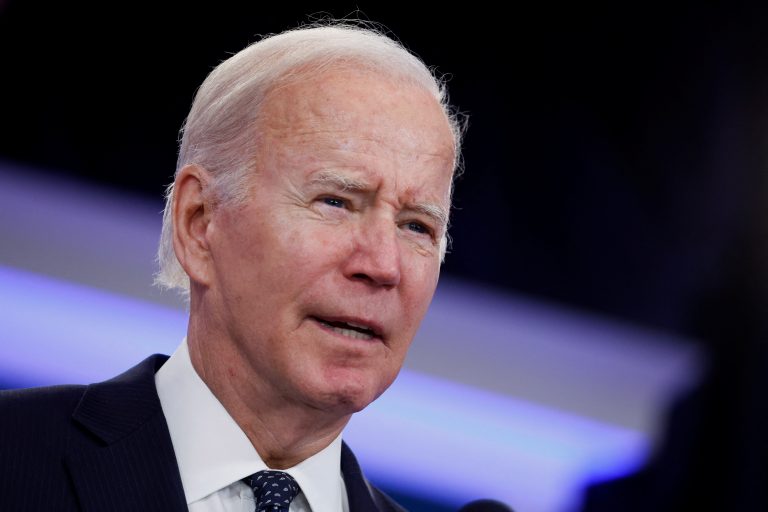
(Reuters)—The U.S. Supreme Court on Thursday agreed to hear President Joe Biden’s bid to reinstate his plan to cancel billions of dollars in student debt after it was blocked by a lower court in a challenge by six states that have accused his administration of exceeding its authority.
The justices deferred taking action on Biden’s request to lift an injunction issued on Nov. 14 by the St. Louis-based 8th U.S. Circuit Court of Appeals blocking the program, but said in a brief order that they would hear oral arguments in the case in their session that runs from late February to early March.
The challenge to the Democratic president’s policy was brought by Arkansas, Iowa, Kansas, Missouri, Nebraska and South Carolina. Five of those six states are Republican governed while the other, Kansas, has a Republican attorney general.
The policy faces another hurdle as the administration contests a separate Nov. 10 ruling by a federal judge in Texas deeming the program unlawful. A federal appeals court on Wednesday declined to put that decision on hold, and the administration has said it plans to ask the U.S. Supreme Court to intervene.
(Reporting by Andrew Chung; Editing by Will Dunham)
The post Supreme Court to Render Verdict on Biden’s Student Loan Boondoggle appeared first on Washington Free Beacon.
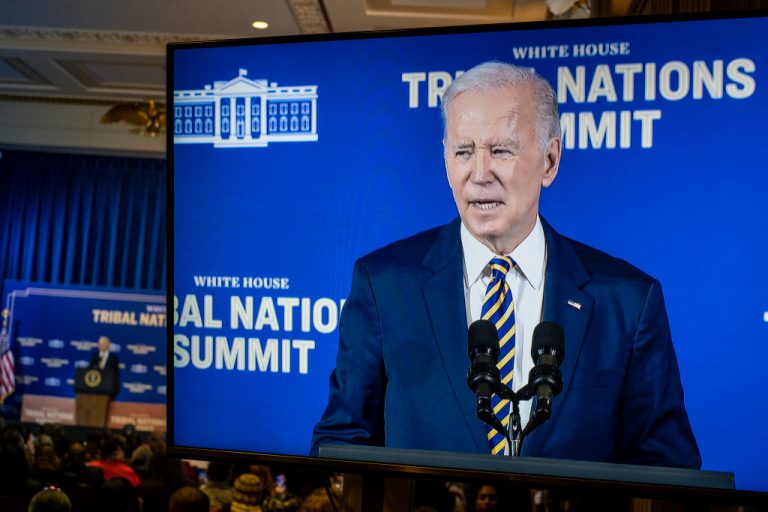
The White House hosted its second Tribal Native Summit this week, where it outlined how the Biden administration will spend more than $45 billion for “Tribal communities and Native people.”
“I made a commitment that my administration would prioritize and respect Nation to Nation relationships,” President Joe Biden said Wednesday at the summit, which brought tribal leaders from across the country to Washington, D.C.
More than 20 federal agencies laid out proposals for how this massive sum of money would be spent on Native issues. From attempting to revitalize old tribal languages to putting up new Native-themed decorations at a federal agency, it is unclear how most of the spending spree will improve everyday life in the Native population.
Here are some of the most bizarre ways the Biden administration plans to spend the $45 billion.
1. Decorating a hallway at the Department of Health and Human Services
Employees at the Department of Health and Human Services will soon have “visibility of Tribal Nations as Nation-to-Nation partners” every single day. The agency is set to unveil plans for a new “Hall of Tribal Nations” at its Washington, D.C., headquarters, the White House says.
The hall, set to be complete in the next few months, will be decorated with tribal flags.
2. Revitalizing Native Languages
Americans across the country must be aware of the “crisis of Native language loss” and the “urgency for immediate action” to revitalize lost languages, according to a White House fact sheet.
To address the urgent crisis, the administration promised a 10-Year National Plan on Native Language Revitalization, which will focus first on “establishing a formal policy recognizing the role that the United States government played in erasing Native languages and affirming the need for federal resources and support for Native language revitalization.”
The administration says it wants Native languages integrated back into “mainstream society.” It is still working on identifying how exactly to fund this initiative.
It is unclear which languages the administration wants to integrate. According to the Indigenous Language Institute, there are nearly 200 languages still spoken in the Native population. Three-quarters of the population, however, just speak English.
3. Promoting “Indigenous Knowledge” in Federal Agencies
The White House is unveiling guidance to use “Indigenous Knowledge” in federal policymaking. The administration crafted this “first-of-its-kind” guidance to elevate indigenous “observations,” “oral and written knowledge,” and “practices” in government research and decision-making.
Among other issues, the federal government will rely on Indigenous Knowledge to address environmental sustainability and “responsible stewardship” of natural resources, according to the White House.
4. Helping Native Communities Relocate Over Threat of Climate Change
The Department of Interior is making a “vital investment” of $135 million to help tribes face the “growing risks” of climate change.
Three tribes “at risk of being washed away,” Biden said Wednesday, will receive $25 million each. The money will help provide “early learning opportunities” on how to move their communities away from water.
The relocations will provide “long-term resilience” from the “imminent” and “immediate” threat of climate change, according to a department press release.
One in 10 Native people, meanwhile, lack access to clean water or basic sanitation.
5. Installing Electric Vehicle Infrastructure on Native Lands
The Biden administration wants to ensure Native communities are a part of the “EV future of the country,” according to the White House. Ten federal agencies will coordinate in building up tribal access to electric vehicles, including providing zero-emissions school buses, helping tribes purchase “EV fleet vehicles,” and “supporting Tribal Nations’ roles in the EV battery supply chain.”
While the White House looks to expand access to electric vehicles among tribal communities, 14 percent of Native households on reservations have no access to electricity.
6. Prioritizing Environmental Justice
The Department of Justice will host an “Environmental Justice Convening” in 2023. It will address “harms” caused by “environmental crimes” against tribal communities, including pollution and climate change.
7. Restoring Bison Populations
The United States Department of Agriculture will work to “restore bison populations” and “promote species conservation.” They will work closely with the InterTribal Buffalo Council to “assist Tribes in developing new bison herds.” The initiative will also release a handbook and “hands-on” curriculum for Native people.
The post 7 Bizarre Initiatives From Biden’s $45 Billion Tribal Spending Spree appeared first on Washington Free Beacon.
WASHINGTON (AP) — The Supreme Court on Thursday said the Biden administration program to cancel student loans will remain blocked for now, but the justices agreed to take up the case in late winter.
The court’s decision to hear arguments relatively quickly means it is likely to determine whether the widespread loan cancellations are legal by late June.
That’s about two months before the newly extended pause on loan repayments is set to expire.
The administration had wanted a court order that would have allowed the program to take effect even as court challenges proceed. But as a fallback, it suggested the high court hold arguments and decide the issue.
Biden’s plan promises $10,000 in federal student debt forgiveness to those with incomes of less than $125,000, or households earning less than $250,000. Pell Grant recipients, who typically demonstrate more financial need, are eligible for an additional $10,000 in relief.
The Congressional Budget Office has said the program will cost about $400 billion over the next three decades.
More than 26 million people already applied for the relief, with 16 million approved, but the Education Department stopped processing applications last month after a federal judge in Texas struck down the plan.
The Texas case is one of two in which federal judges have forbidden the administration from implementing the loan cancellations.
In a separate lawsuit filed by six states, a three-judge panel of the 8th U.S. Circuit Court of Appeals in St. Louis also put the plan on hold, and that case before the Supreme Court.