Categories
Audio Sources - Full Text Articles

Biden signs $1.66 trillion FY 2023 government funding bill

2022-12-29T23:46:42Z

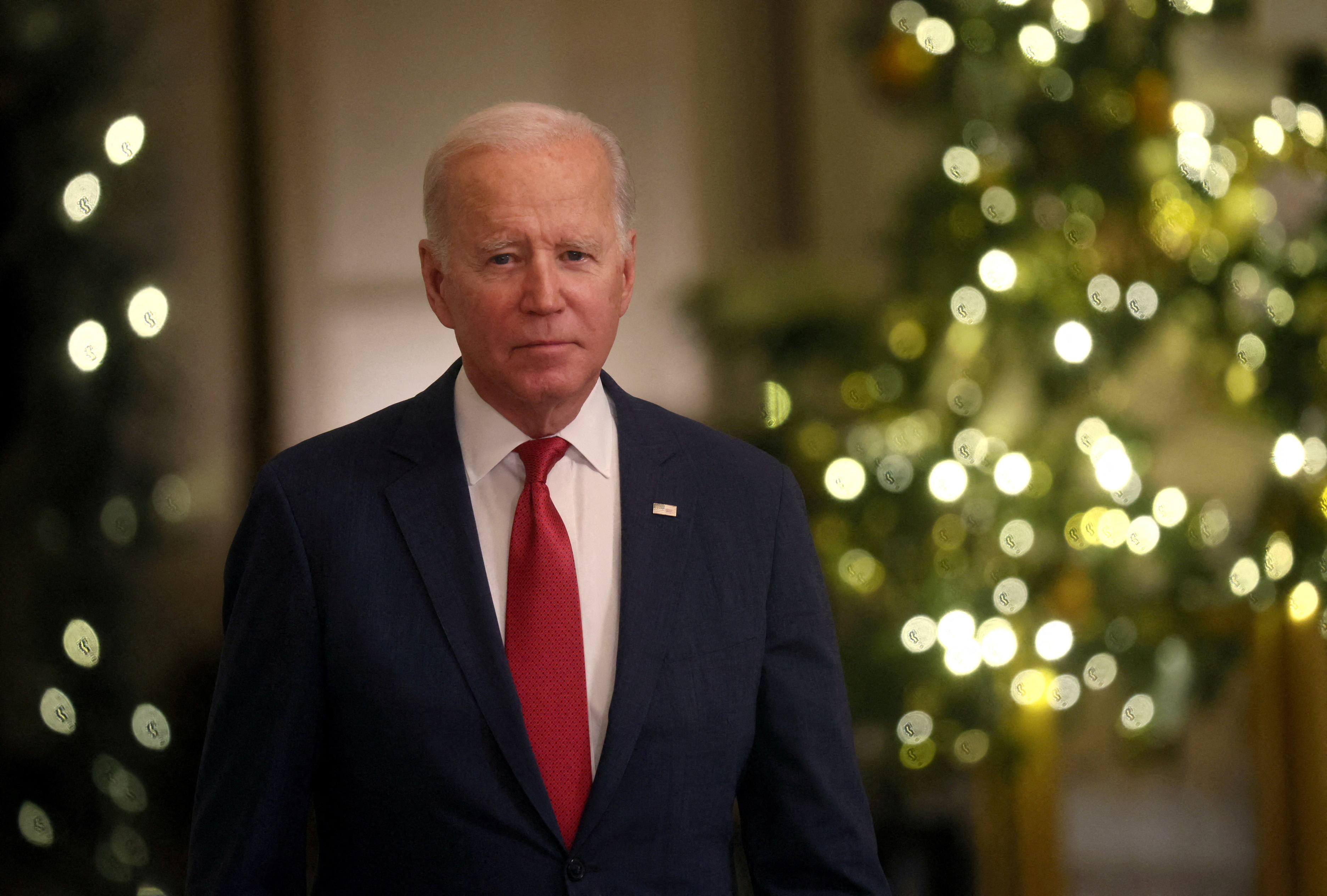
President Joe Biden on Thursday signed a $1.66 trillion bill funding the U.S. government for fiscal year 2023, the White House said in a statement.

Biden signed the bill, which passed Congress last week, while vacationing on the Caribbean island of St. Croix.

The legislation includes record military funding, emergency aid to Ukraine, more aid for students with disabilities, additional funding to protect workers’ rights and more job-training resources, as well as more affordable housing for families, veterans and those fleeing domestic violence.

The 4,000-plus page bill passed the Senate on a bipartisan vote of 68-29, with the support of 18 of the 50 Senate Republicans. It passed the House of Representatives on a largely party-line vote of 225-201.

Related Galleries:

U.S. President Joe Biden delivers a Christmas speech at the White House in Washington, U.S., December 22, 2022. REUTERS/Leah Millis

U.S. President Joe Biden salutes as he boards Air Force One for holiday vacation travel to St. Croix, U.S. Virgin Islands, from Joint Base Andrews, Maryland, U.S. December 27, 2022. REUTERS/Jonathan Ernst
Categories
Audio Sources - Full Text Articles

Most Ukraine regions suffer power outages after Russian missile barrage

2022-12-29T23:52:10Z

After a day when his entire country was attacked by Russian missiles, Ukrainian President Volodymyr Zelenskiy acknowledged that most regions were suffering power outages but he said the damage would have been worse without “heroic” air defence.

Zelenskiy, in a video address on Thursday night, said air commands in central, southern, eastern and western Ukraine repelled 54 Russian missiles and 11 drones during one of Russia’s biggest aerial assaults since it started the war in February.

The areas where loss of power was “especially difficult” included the capital Kyiv, Odesa and Kherson in the south and surrounding regions, and the region around Lviv near the western border with Poland, Zelenskiy said.

“But this is nothing compared with what could have happened if it were not for our heroic anti-aircraft troops and air defence,” he said.

Air raid sirens rang out across Ukraine – for five hours in Kyiv. Reuters footage showed emergency workers pouring through the smouldering wreckage of residential homes in Kyiv destroyed by a blast and smoke trails of missiles in the sky. Officials had earlier said more than 120 missiles were fired during Thursday’s assault.

More than 18 residential buildings and 10 critical infrastructure installations were destroyed in the latest attacks, the defence ministry said in a statement.

Waves of Russian air strikes in recent months targeting energy infrastructure have left millions without power and heating in often freezing temperatures.

Ukraine’s smaller armed forces have scored several battlefield victories against the invading Russian troops but for months Zelenskiy has asked Western countries for additional help with air defence. To that end, the United States last week announced nearly $2 billion in more military aid, including the Patriot Air Defense System, which offers protection against aircraft, cruise and ballistic missiles.

Moscow has repeatedly denied targeting civilians, but Ukraine says its daily bombardment is destroying cities, towns, and the country’s power, medical and other infrastructure.

Russia invaded Ukraine on Feb. 24 in what President Vladimir Putin calls a “special military operation” against what it perceives as threats to its security. Ukraine and its Western allies have denounced Russia’s actions as an imperialist-style land grab and imposed sanctions to try to disrupt the campaign.

The most intense fighting is still in the eastern frontline towns of Bakhmut and Soledar in Donetsk province, one of four regions Russia claimed to have annexed in September. The others are Luhansk in the east, and Kherson and Zaporizhzhia in the south.

Russian forces do not fully control any of the four regions, although the Kremlin has said they are making progress in one of the main stated goals of “demilitarising” Ukraine.

Russia is looking for a battlefield victory in eastern Ukraine and has been trying to capture Bakhmut for months.

Russia “has not abandoned the insane idea of capturing the Donetsk region,” Zelenskiy said on Thursday night.

Ukraine’s troops have held on in Donetsk, which together with Luhansk makes up Russian-speaking Donbas, an industrial heartland and part of which was seized by Russia-backed separatists in 2014. The same year, Russia also annexed the Crimean Peninsula from Ukraine.

Related Galleries:

A rescuer rests at a site of a residential house damaged during a Russian missile strike, amid Russia’s attack on Ukraine, in Kyiv, Ukraine December 29, 2022. REUTERS/Valentyn Ogirenko

Rescuers work at a site of private houses heavily damaged by a Russian missile strike, amid Russia’s attack on Ukraine, in Kyiv, Ukraine, in this handout picture released December 29, 2022. Press service of the State Emergency Service of Ukraine/Handout via REUTERS

A view of a house destroyed by a Russian missile strike, as Russia’s attack on Ukraine continues, in Kyiv, Ukraine December 29, 2022. REUTERS/Vladyslav Musiienko

Rescuers work at a site of a residential house damaged during a Russian missile strike, amid Russia’s attack on Ukraine, in Kyiv, Ukraine December 29, 2022. REUTERS/Valentyn Ogirenko

A view of a house destroyed by a Russian missile strike, as Russia’s attack on Ukraine continues, in Kyiv, Ukraine December 29, 2022. REUTERS/Vladyslav Musiienko

Ukrainian Border Guards receive drawings from school children, among donations of food and gifts from their families and people in general, as Russia’s attack on Ukraine continues, in Sloviansk, Ukraine, December 29, 2022. REUTERS/Clodagh Kilcoyne

Local resident Klavdia, 82, stands near her house which was destroyed by a Russian military strike, as Russia’s attack on Ukraine continues, in Kherson, Ukraine December 29, 2022. REUTERS/Oleksandr Ratushniak


Categories
Audio Sources - Full Text Articles

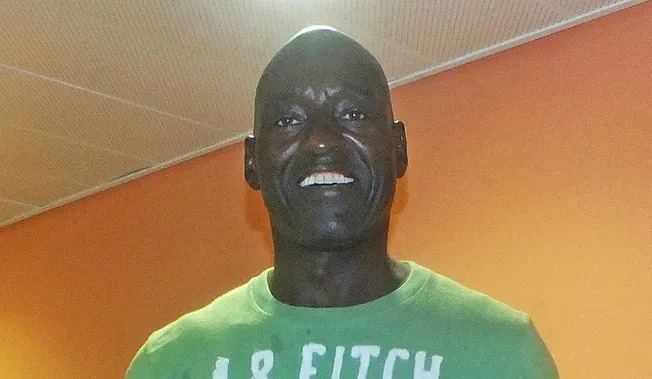
How a Black Jew from Alabama became an Israeli basketball legend

18439.jpg

This article originally appeared on Haaretz, and was reprinted here with permission. Sign up here to get Haaretz’s free Daily Brief newsletter delivered to your inbox.

Willie Sims, an American-born star of Israeli basketball in its adolescence – and rare for the local game, a Jewish-born foreigner – died Friday at 64.

The Alabama-born Sims, who had suffered a heart attack in August, was one of the leading players in Israel’s Premier League, and played for 15 seasons in the 1980s and early ’90s for Maccabi Haifa, Hapoel Tel Aviv, Elitzur Netanya, Maccabi Tel Aviv, Hapoel Eilat and Maccabi Hadera.

Unlike many Americans at the time, who converted in order to play as Israelis, Sims was a Jew from birth – his mother was born to a Jewish father named Jack Miller, and her mother had converted.

Sims’ parents divorced when he was 5, and he was raised as a Reform Jew by his grandmother in Queens, New York. Sims attended synagogue until adolescence, and when he studied at Louisiana State University he encountered both racism and antisemitism. Someone once wrote on the door to his room: “Black and Jewish, why are you in Louisiana?”

At 19, after graduating from Long Island City High School, Sims arrived in Israel with the U.S. team for the 10th Maccabiah Games. He shot the two free throws that led to a 92-91 victory over Israel in the finals.

After completing college he won another gold medal at the Maccabiah, and despite being drafted by the NBA, he accepted an offer to join Maccabi Haifa in the summer of 1981, along with his teammate David Blatt – whose later head-coaching career would include Maccabi Tel Aviv and the Cleveland Cavaliers.

Sims soon became an Israeli for all intents and purposes. He served an abbreviated stint in the army and married a Jewish woman named Ariela in a civil wedding in Cyprus. The couple had two sons and a daughter, Danyelle, a model who married Gal Mekel, who played for two teams in the NBA.

Sims had a unique ability to adapt to his team’s needs. During his two years at Maccabi Haifa he averaged over 20 points per game. On his next team, Hapoel Tel Aviv, his numbers declined, but in the 1985-86 season he was the leading scorer for Elitzur Haifa, a surprise participant in the playoff finals.

During five seasons at Maccabi Tel Aviv from 1988 to 1992, Sims played second fiddle to high scorers Kevin Magee and Doron Jamchi.

He often played center, though he was a classic guard and excelled mainly on defense. His best-remembered play was a block of a shot by Barcelona’s Juan Antonio San Epifanio, helping seal a come-from-behind victory in February 1992.

Maccabi Tel Aviv chose to part from Sims at the end of that season, and at his next stop, Hapoel Eilat, he scored in the double digits once again. He finished his 15 seasons in the Premier League with 3,761 points, the 47th top scorer in Israeli basketball history, averaging 12.2 points per game. In the playoffs he ranked 15th at 842 points, 11.1 per game.

When he retired at 38, he was appointed assistant coach at Maccabi Hadera of the National League, but amid a shortage of players he agreed to suit up for games until he was 41.

After he retired for good, he took a fitness training course in the United States and started a studio and a club for children in Karkur north of Tel Aviv. He served as a fitness coach and an assistant coach at Elitzur Netanya, and played for several years with the Maccabi Tel Aviv veterans.

“Willie was always a fighter and an athlete with a wonderful smile, who won five championships in five seasons with the Yellows, three Israeli State Cups, and participated in the European Final Four three times,” Maccabi Tel Aviv said in a statement.

Shimon Mizrahi, the team’s chairman, added that “Willie was a great soul. A player with all his heart and soul, a model athlete who with his sportsmanlike spirit spurred on others.”

Shmuel Frenkel, the co-chairman of Israeli basketball’s Super League, said, “I remember Willie as a great defensive player, a player for special missions without an ego and with a rare fighting spirit and a radiant personality.”

The post How a Black Jew from Alabama became an Israeli basketball legend appeared first on The Forward.

Categories
Audio Sources - Full Text Articles

For 60 years, the US Navy has been training dolphins and sea lions to keep rivals away from its most sensitive hardware

Navy marine mammal handler with a dolphinA US Navy marine mammal handler with a dolphin during a port-security exercise in May 2005.

US Navy/Illustrator Draftsman 1st Class Pierre G. Georges

  • The US Navy has been training dolphins and sea lions to detect undersea threats since the 1960s.
  • The Navy wants to move away from its marine mammals and use drones and other new sensors instead.
  • But those dolphins and sea lions can still do their jobs better than that new technology.

Since 1959, the US Navy has trained a small force of bottlenose dolphins and sea lions to recover lost equipment, intercept intruders in ports, and detect buried sea mines.

This year, the Navy sought to end one of those marine mammals’ most important missions — hunting for and neutralizing mines buried in the seabed — and use sophisticated underwater vehicles and sensors instead.

But there’s a problem: That technology hasn’t yet equaled a dolphin’s unique ability to find mines.

So Congress balked, using the 2023 defense bill to bar the Navy from retiring its mine-detecting dolphins or ending port-security training for its marine mammals until it deploys new mine-countermeasure systems that are as good or better.

Navy trainer with a marine mammal sea lionA US Navy trainer with a Mark 5 Marine Mammal sea lion in Key West in October 1990.

US Navy/PH1 (Ac) Scott M. Allen

Congress’ move halts the long-planned retirement of Marine Mammal Systems, a program run by Naval Information Warfare Center-Pacific at Point Loma Naval Base in San Diego.

The proliferation of high-quality, relatively inexpensive drones means that the Navy’s dolphins and sea lions may soon be deactivated, but for now they remain a part of the service’s mine-countermeasures systems, alongside ships, helicopters, sonars, and mobile explosive ordnance disposal (EOD) teams.

The Navy’s mine-countermeasures force continues to struggle with aging equipment and is already incorporating unmanned underwater vehicles such as the Mk 18 Mod 1 Swordfish and Mk 18 Mod 2 Kingfish, which have sensors that sweep for mines and navigational hazards.

“Someday it may be possible to complete these missions with underwater drones,” said Darian Wilson, a NIWC-Pacific spokesman, “but for now, technology cannot do everything the animals can do.”

How it began

Dolphin performance Marineland FloridaDolphins perform at Marineland near Daytona Beach in Florida in 1959.

Erich Andres/United Archives via Getty Images

The first oceanarium with dolphin shows opened in St. Augustine, Florida in 1938 and featured dolphins performing tricks with fish-toting trainers.

That drew the Navy’s interest. In 1959, it began work with mammals for mine-countermeasure missions and established the Marine Mammal Program a few years later. The program worked with sharks, rays, and sea turtles but settled on dolphins and sea lions.

Bottlenose dolphins are born with a biological sonar that they use to navigate and find food. Navy personnel, using food as a reward, train them to use it to locate objects that electronic sonar might miss, like mines, enemy swimmers, or lost weapons. The whiskered sea lion has keen eyesight and an extraordinary sense of directional hearing, giving it a natural ability to locate food or, with Navy training, to find mines or human intruders in the murkiest water.

While often seen at the surface, both are deep divers. Sea lions can dived 900 feet, and trained bottlenose dolphins have dived more than 1,000 feet, according to the Dolphin Research Center and SeaWorld.

That’s nearly seven times deeper than most humans can comfortably do with basic scuba gear — without suffering decompression sickness. They can also zip around dense kelp beds, underwater obstacles, cluttered harbors, and busy shipping channels.

Navy Sea LionA US Navy sea lion attaches a recovery line to a piece of test equipment.

US Navy

The Navy Marine Mammal Program’s budget for 2023 provides $40 million for “food, medicine, veterinary care, husbandry, and facilities,” Wilson said. Just over half of that — about $21 million — covers care and feeding for the program’s 77 dolphins and 47 sea lions. The program employs 54 Navy civilians and six Army veterinarians, as well as 220 contractors and 22 graduate students or undergraduate volunteers.

The dolphins and sea lions work as a Marine Mammal System and train with divers or explosive ordnance disposal technicians and equipment for one of three missions, Wilson said:

The MK 5 MMS “object recovery system” are sea lions that locate and attach recovery lines to Navy equipment, like a diver’s dropped tool or a training mine that then can be pulled from the water. The current budget provides about $1 million for it, half of what’s needed for personnel and equipment.

The MK 6 MMS “intruder interdiction” system is dolphins and sea lions that work with security personnel to find and apprehend unauthorized swimmers or divers that could threaten ships, ports, and people. The mammals tap and tag the intruder, who then are nabbed by security sailors. The current budget funds it fully at about $7 million.

The MK 7 MMS “mine countermeasures” are dolphins working with EOD teams to find and mark mines. The dolphin drops a marker near a suspected mine, which EOD personnel or an unmanned system then neutralizes. The Navy planned to fund it with about $3.5 million for 2022 — half of what’s needed. The 2023 defense bill blocks the Navy’s plan to eliminate its funding next year.

Navy marine mammal dolphin Persian GulfA Mark 6 swimmer-defense dolphin in the Persian Gulf in August 2003.

US Navy/PH2 Veronica Birmingham

The program’s budget includes about $3 million for research in bioacoustics to understand how sound affects marine mammals. “We also continue to study the dolphin’s natural sonar to glean lessons that might improve electronic sonar and signal processing,” Wilson said.

The program has led to more than 1,200 scientific papers, and parallel research efforts, many funded by the Navy, have shed light on dolphins’ built-in sonar capabilities and aided work on electronic sonar that’s critical to modern naval warfare.

The Navy is one of a few military forces with marine mammal programs. (Notably, Russia has used trained dolphins to guard important naval facilities.) The US sent mine-hunting dolphins and sea lions to Vietnam in 1970, and dolphins helped guard ships in Bahrain in 1987 and in the northern Persian Gulf in 2003.

US Navy dolphins have also patrolled during major public events and contribute to public safety even when not on duty: Two dolphins inadvertently found a rare, 130-year-old torpedo buried off Coronado, California while training in 2013.

Navy Marine Mammal Program dolphinA US Navy marine mammal trainer with a dolphin at Naval Air Station Key West in April 2017.

US Navy/Trice Denny

Kaj Larsen, a former Navy SEAL, said he’ll never forget the first time a dolphin rammed him underwater.

“The truth is, it’s really one of the most effective ways to prevent attacks by combat divers, because everything else doesn’t really work,” said Larsen, who first experienced Flipper’s furor during the dive phase of the Basic Underwater Demolition/SEAL course some 20 years ago.

BUD/S students’ combat-swimmer missions doubled as anti-combat-swimmer training for the dolphins. While combat divers learn to defeat sonar nets, “we really have no way to defeat a dolphin. You’re in their element,” Larsen said, “and they find you every single time underwater.”

Aside from brief public statements, however, the mammals’ real-world missions remain classified.

“We generally do not discuss or release operational details of the Marine Mammal Program for security reasons,” said Wilson said, who did not make program officials or trainers available for interviews, citing “ongoing program-related issues.”

Mine threats remain

Iran Persian Gulf Strait of Hormuz sea mine US NavyA US Navy boarding party inspects mines on an Iranian ship in the Persian Gulf in September 1987.

(AP Photo/Mark Duncan)

Sea mines, especially cheap ones, remain widely used and highly potent, whether floating freely, tethered just below the surface, or hidden on the seafloor.

Fifteen of 19 US ships sunk or damaged by enemy mines since the end of World War II were in shallow waters, said Scott Truver, a researcher, author, and mine-warfare expert. During the weeks-long Gulf War in 1991, several US warships were severely damaged by Iraqi mines.

In recent years, Iran has threatened to use its arsenal of mines to halt vital oil shipments in the Persian Gulf, and the appearance of mines in the Black Sea amid Russia’s war in Ukraine has caused shipping disruptions.

Those familiar with the program say marine mammals remain an affordable option to protect ships, harbors, and ports until better tech is operational. Truver said the cost is “pixie dust compared what we’re spending on an aircraft carrier.”

“The nation needs the capability to deal with buried mines,” particularly as the mine threat grows, Truver said. “Houthi rebels are capable of making us have a bad day, let alone Russia and the likes.”

Navy amphibious assault ship USS Tripoli mine damageRepair crews inspect amphibious assault ship USS Tripoli after it struck an Iraqi mine in the Persian Gulf on February 18, 1991.

US Navy/JO1 Gawlowicz

China’s navy regularly trains with sophisticated mines, Truver added, noting that “the number of mines produced and ready for deployment have grown in the last 10 years.”

While opinions differ about the program’s cost, few question the marine mammals’ capabilities. “It is infinitesimally small [budget] compared with what has been and is being spent on a variety of other types of technology,” said Scott Savitz, a senior engineer at Rand Corporation, a nonpartisan think tank.

The marine mammals “offer so much at a relatively low cost that it seems absurd not to continue to use them, certainly in the near-term,” Savitz added.

The Navy expected advanced UUVs and side-scanning sonar to render marine mammals obsolete, but the technology hasn’t advanced to that point. “We’re always five years away from supposedly having technology that will obviate the need from having to use the mammals. I question whether we’re at that point yet,” said Savitz, who’s worked with unmanned surface and undersea vehicles.

The Mk 18 Kingfish “has been spectacular,” Truver said, “but it still can’t do what a portion of what the mine-warfare Navy thinks is important for buried mines, for example.”

Navy mine countermeasures unmanned undersea vehicle UUV droneA Mk 18 Mod 2 UUV during a mine-countermeasures exercise in the Baltic Sea in June 2019.

US Navy/Chief Mass Comm Specialist Shannon E. Renfroe

Savitz said that dolphins and sea lions are capable of a faster “detect-to-engage” sequence than existing technologies, which use a set sequence of decisions and actions to detect an object, determine if it’s a mine, and decide what countermeasures are needed. The mammals simply tap on paddles to alert their trainer or EOD handler when they find a suspected mine.

“They have great precision in being able to differentiate objects that are similar to mines or mines themselves from the massive detritus that is on the seafloor in populated areas,” Savitz said, calling it “an exquisite capability that’s able to overcome a lot of environmental challenges.”

Dolphins “have no problem” working in strong currents, which battery-operated systems may struggle with, Savitz said. “Just as we use dogs to find drugs or explosives, there’s a lot of benefit for relying on the natural ability of dolphins,” he added. “We don’t need to reinvent something we have a capability [for] already.”

Lifetime front-line care

Navy Air Force dolphins C-17 GlobemasterNavy dolphins on a C-17 aircraft en route to New Caledonia in November 2009.

US Air Force/Tech. Sgt. Cohen A. Young

The dolphins and sea lions’ home base are floating pens at Point Loma and three other bases on San Diego Bay and at other key Navy ports, Wilson said. Like seagoing sailors, they sometimes deploy on ships or aircraft for exercises and missions overseas.

Officials say the animals are not held captive. When working with trainers, they leave their pens almost daily and are free to swim away and not return. Stories of dolphins swimming up to nearby boaters looking for fishy treats are not uncommon.

“They get the highest-quality care available anywhere in the world” as dictated by a standing Secretary of the Navy instruction, Wilson said. “They spend their days exploring with us out on the bay here in San Diego or further offshore, in the Intracoastal Waterway down south, in Puget Sound up north, and when they aren’t working, they’re at home socializing with their companions.”

Navy Marine Mammal Program California sea lionA US Navy sea lion jumps into a riverine command boat during a mine-countermeasures exercise in Bahrain in November 2014.

US Navy/MCS1 Kathleen Gorby

Releasing dolphins raised in captivity — where their lifespan is usually 40 to 60 years — is a contentious issue; in the past, such dolphins have died after being introduced to the wild. If the program ends, the mammals will remain with the Navy.

“The Navy is committed to caring for our animals for the rest of their lives,” Wilson said. “As our animals age, the number of animals will continue to decrease. We typically lose one or two marine mammals per year from natural causes. We have never experienced an animal casualty in combat.”

Dolphins are “highly advanced” and “are perfect” for their mission, said Richard “Ric” O’Barry, an animal trainer-turned-activist and author known for his work in the 2009 documentary “The Cove.”

“Their sonar makes our Navy’s best sonar system” look like “a toy,” O’Barry said. “That’s why they were conscripted into the Navy.”

navy dolphinsGen. Martin E. Dempsey, chairman of the Joint Chiefs of Staff, at the marine mammal facility in San Diego in March 2012.

Petty Officer 2nd Class Joshua Scott/US Navy

A former Navy diver, O’Barry worked at Miami Seaquarium for 10 years. On his first day he captured five dolphins for the Navy. “I didn’t question the orders,” he said. “It seemed like a great fun thing to do.”

He trained dolphins for the 1960s TV show “Flipper” before he began questioning captivity. In 1996, he and another activist were fined for released two former Navy dolphins from a marine park.

O’Barry, 83, remains active with a rescue dolphin sanctuary in West Bali, where three once-captive dolphins were rehabilitated and released in September. He believes it’s time for the Navy to retire the mammals.

“I like the Navy. I’ve spent five of the most important years of my life in the Navy,” he said. “But I don’t like what the Navy does with dolphins.”

Gidget Fuentes is a freelance writer based in Southern California and has reported extensively on the military including the Marine Corps, the Navy, and Pacific regional issues.

Read the original article on Business Insider
Categories
Audio Sources - Full Text Articles

Mark Meadows going down in flames

19121c5c768fb6ee35d5576afe2d9a7f?s=100&d

Help support Palmer Report! Our articles are all 100% free to read, with no forced subscriptions and nothing hidden behind paywalls. If you value our content, you’re welcome to pay for it:

Pay $5 to Palmer Report:

Pay $25 to Palmer Report:

Pay $75 to Palmer Report:


It was a fire as hot as the underworld of Hades. Flames. Bright neon-orange flames danced merrily in a fireplace, burning documents. Masses and masses of documents went out of the frying pan into the fire. The burning had begun. At least this is according to Cassidy Hutchinson, who told the January 6 committee that is what she witnessed. And she said then White House Chief of Staff Mark Meadows oversaw the burning.

She says she saw this play out between the dates of December 2020 and mid-January 2021. And she said it happened around “a dozen times.” The burning would begin in the office of Meadows, sometimes after meeting with Republican Rep. Scott Perry.

Then Meadows would casually toss the documents into the orange flames, setting them ablaze. Burning them. Burning documents that DID NOT belong to him. Meadows also reportedly told staffers to occasionally to omit some meetings from official White House records.

—

Click here to support Palmer Report! Our articles are all 100% free to read, with no forced subscriptions and nothing hidden behind paywalls. If you value our content, you’re welcome to pay for it:

Pay $5 to Palmer Report:

Pay $25 to Palmer Report:

—

Sign up for the Palmer Report mailing list

—

Follow Palmer Report on Facebook • Twitter • Post • Mastodon

—


The White House — that sacred, historic place that has seen great Presidents and hosted historical figures became a crime scene for the likes of an evil, twisted con artist (Trump) and his willing sycophant (Meadows.)


If this is to be believed — documents belonging to we, the people, were burned. Precious information and historical records — gone in an insane moment of roaring flames. On Twitter, the mood was grim. Andrew Weissmann said Meadows and others might just be thinking they need “good counsel” about now.

I am not worried about Meadows nor Trump, or anyone else who might be involved escaping unscathed. I’d venture to guess Jack Smith is already on this. Still, it stings. It stings to think about the people’s documents — being treated as no more than annoying scraps of papers, tossed aside like a doll, into the scorching heat to burn into nothingness.

Support Palmer Report! Our articles are all 100% free to read, with no forced subscriptions and nothing hidden behind paywalls. If you value our content, you’re welcome to pay for it:

Pay $5 to Palmer Report:

Pay $25 to Palmer Report:

Pay $75 to Palmer Report:

Write for the Palmer Report Community Section.

Help support Palmer Report! Our articles are all 100% free to read, with no forced subscriptions and nothing hidden behind paywalls. If you value our content, you’re welcome to pay for it:

Pay $5 to Palmer Report:

Pay $25 to Palmer Report:

Pay $75 to Palmer Report:

The post Mark Meadows going down in flames appeared first on Palmer Report.

Categories
Audio Sources - Full Text Articles

450,000 customers remain without electricity in Odesa and district

630_360_1671100905-599.jpg

In the town of Odesa and the district, 450,000 shoppers keep on being with no electrical power right after the Russian missile assault.

The electricity distribution firm DTEK Odesa Electric Grids stated this in a Fb submit, Ukrinform experiences.

“The condition in the ability technique is really complicated. Because of to yet another Russian assault on December 29, 450,000 consumers in Odesa and the Odesa district were still left without the need of electrical power,” the enterprise wrote.

It is emphasised that electricity engineers are executing all the things they can to restore energy to domestic individuals.

As noted by Ukrinform, Russian missile strikes strike ten areas in Ukraine for the duration of a early morning attack on December 29, detrimental 28 distinct facilities and injuring five men and women.

iy

Source link

The post 450,000 customers remain without electricity in Odesa and district appeared first on Ukraine Intelligence.

Categories
Audio Sources - Full Text Articles

JP Morgan ‘pulled the levers’ of Jeffrey Epstein’s sex-trafficking operation, US Virgin Islands says in new lawsuit

jeffrey epstein purple couchJeffrey Epstein in Cambridge, Massachusetts, in 2004.

Rick Friedman/Corbis via Getty Images

  • A new lawsuit alleges JP Morgan facilitated Jeffrey Epstein’s sex-trafficking scheme.
  • The US Virgin Islands Attorney General also claims the bank covered up its involvement.
  • “Red flag” laws were ignored until after Epstein’s death, the lawsuit says.

A new lawsuit from the US Virgin Islands Attorney General Denise George accuses JP Morgan Chase of facilitating Jeffrey Epstein’s sex-trafficking scheme and covering it up.

“Human trafficking,” the lawsuit alleges, was the “principal business” of Epstein’s accounts at the bank, but the bank “turned a blind eye” for more than a decade “because of the deals and clients that Epstein brought and promised to bring to the bank.”

Epstein died in jail in 2019 while awaiting trial on sex-trafficking charges. His death unleashed a flood of litigation over the $630 million fortune he left behind and a compensation fund for more than 200 people who claimed to be his victims. His arrest also led to a widespread reckoning for his powerful friends and associates — including Bill Gates, Donald Trump, Prince Andrew, Leslie Wexner, and Elon Musk — as well as organizations like Harvard University, JP Morgan, and Deutsche Bank.

Earlier this year, the US Virgin islands settled a separate lawsuit, first brought in 2020, with Epstein’s estate and its executors. The estate was required to pay $105 million, in addition to half of the proceeds from the sale of Little St. James, Epstein’s island where accusers say they were raped and trafficked. 

The new lawsuit, filed on Tuesday, emerged from the same investigation and alleges JP Morgan “knowingly facilitated, sustained, and concealed the human trafficking network operated by Jeffrey Epstein” and “financially benefitted from this participation.”

“JP Morgan knowingly, negligently, and unlawfully provided and pulled the levers through which recruiters and victims were paid and was indispensable to the operation and concealment of the Epstein trafficking enterprise,” the lawsuit says.

One of Epstein’s accounts with JP Morgan, named Southern Trust, didn’t perform the “cutting edge consulting services” Epstein claimed. In reality, the lawsuit alleges, it was “a conduit for payment to foreign women, credit cards, airplanes, and other instrumentalities.”

The bank and its employees knew they were facilitating Epstein’s sexual abuse and sex-trafficking conspiracy to coerce “young women and underage girls to engage in commercial sex acts,” according to the lawsuit.

jeffrey epstein islandJeffrey Epstein’s island of Little St. James in the US Virgin Islands.

US Attorney’s Office for the Southern District of New York

But, according to the suit, the bank concealed its conduct by failing to comply with “red flag” laws. The section of the lawsuit that details how JP Morgan allegedly turned a blind eye to Epstein’s conduct is heavily redacted.

“JP Morgan ignored numerous red flags and failed to comply with federal banking regulations until years later after JP Morgan was no longer benefiting from Epstein’s business,” the lawsuit says.

A representative for JP Morgan declined to comment.

The decisions to keep Epstein as a client, and to move his money around, were “advocated and approved at the senior levels of JP Morgan,” including by a former chief executive of its asset management division who had an “inappropriate relationship with Epstein.”

Details related to that official, Jes Staley, were redacted from the lawsuit. According to an investigation by British regulators, Staley and Epstein exchanged over 1,200 emails between 2008 and 2012. Staley stepped down from his position as CEO of Barclays in 2021 as he disputed how the regulators characterized his relationship with Epstein.

In addition to the US Virgin Islands, an anonymous “Jane Doe” filed lawsuits against JP Morgan and Deutsche Bank in November, alleging the financial institutions benefitted from Epstein’s sex-trafficking operation.

Epstein’s associate Ghislaine Maxwell was found guilty in December 2021 of trafficking girls for sex with Epstein and sexually abusing them herself.

At her criminal trial in Manhattan, a JP Morgan official presented documents showing that Epstein gave Maxwell at least $30.7 million between 1999 and 2007.

Another witness who testified in Maxwell’s trial said that one of Epstein’s jets — which prosecutors said he used to traffic women for sex — was owned by a company called Hyperion Air.

That same company, Hyperion Air, is identified by the US Virgin Islands Attorney General as one of Epstein’s accounts with JP Morgan.

Read the original article on Business Insider
Categories
Audio Sources - Full Text Articles

Warren Buffett eviscerates a $300 million streetcar project in his hometown as a mistake ‘cast in cement.’ Here’s why he thinks buses are a better bet.

side by side of warren buffett and sketch of planned streetcars in OmahaWarren Buffett is warning against his hometown of Omaha’s plans to continue with its streetcar project that is estimated to cost a little over $300 million.

Paul Morigi/Getty Images, HDR

  • Warren Buffett’s hometown of Omaha is planning to build a streetcar that would travel right by Berkshire Hathaway HQ.
  • But the billionaire argued that investing in an “extended or more intensive” bus system would be better.
  • Buffett wants Omaha residents to vote on the streetcar project, but it doesn’t require a vote.

Warren Buffett is speaking out against a $300 million streetcar project in his hometown of Omaha, Nebraska — even though it’s tied to a 44-story office tower for which a hole is already dug in the city’s downtown.

The planned route would also travel right past Berkshire Hathaway headquarters.

Still, the Oracle of Omaha wrote a letter to the Omaha World-Herald, slamming streetcars as public transport that keeps “mindlessly rolling on, fueled by large public subsidies.” 

“Mistakes are literally cast in cement,” he said in the letter published Wednesday. Instead, the city should consider beefing up its current bus system, Buffett wrote.

The streetcar project is already set to move forward after the Omaha City Council this month approved the issuance of $440 million in bonds to pay for its construction and for the cars themselves. Construction is expected to cost $306 million.

Mutual of Omaha — one of the city’s Fortune 500 companies, like Buffett’s Berkshire Hathaway — has said it would build a new 44-story office tower along the streetcar’s route for a new headquarters. The company’s CEO said the planned streetcar drove its decision to build the new tower, according to a report in the Nebraska Examiner. 

omaha's planned streetcarsA rendering of Omaha’s planned streetcar project, which Warren Buffett has questioned.

HDR

Already, the city’s main library was torn down to make way for the Mutual of Omaha tower and a hole remains for construction to begin on the $600 million headquarters for the insurance company. 

But Buffett, who said in his letter that he doesn’t typically take public sides on his hometown’s issues, warned that the streetcar project is “going to be hugely expensive if implemented.” 

He admitted in his letter that “it can be off-putting to many to have a wealthy 92-year-old tell them what is good for their future.” Still, he said, the city should instead look to expanding its bus system. “As population, commerce and desired destinations shift, a bus system can be re-engineered,” he said. Buffett didn’t return a request for comment from the AP.

mutual of omaha towerMutual of Omaha has said it would soon start construction on a 44-story, $600 million office tower, pictured in a rendering, along the planned streetcar route.

Mutual of Omaha

An analysis by MuniCap, a public finance company, of the streetcar project’s financial plan found that possible development stimulated would more than pay off the project, The World-Herald reported.

Jean Stothert, Omaha’s mayor, met with Buffett on Wednesday for a “friendly discussion” on the streetcar, the newspaper reported. While Stothert said she admires Buffett, she told The World-Herald she disagrees with his take on the project.

Stothert did not immediately respond to Insider’s request for comment ahead of publication.

Buffett, meanwhile, wrote that Omahans should have a chance to vote on the streetcar project — and if there is a vote, he would vote against it.

The World-Herald reported that the types of bonds approved for the streetcar project do not require a public vote.

Joining in Buffett’s opposition to the streetcar project was Henry Burke, a former civil engineer at Kiewit, an Omaha-based construction company, also in the Fortune 500, who wrote a letter to The World-Herald listing reasons he’s against the project.

Burke wrote that the streetcar construction is expensive, could cause traffic issues, and the expected development around the streetcar might not happen.

But advocates for the project, including Jay Noddle, a local developer and president of the Omaha Streetcar Authority, said the streetcar would mainly be used to encourage development in its first few years — before it’s used for transportation. 

Read the original article on Business Insider
Categories
Audio Sources - Full Text Articles

Home Depot’s 93-year-old cofounder who said ‘nobody works’ anymore because of ‘socialism’ has donated $64 million to elect Trump and the Republican party over the years

bernie marcus home depot

Richard Drew / AP Images

  • Bernie Marcus, the billionaire cofounder of Home Depot, said Thursday “nobody works” anymore.
  • Marcus said he believed if he founded Home Depot today it wouldn’t be as successful.
  • Marcus donated millions to Trump in 2016 and 2020, and more to other Republicans over the years.

A billionaire cofounder of Home Depot who said “nobody works” has donated nearly $64 million to political causes over the years, including the campaigns of former President Donald Trump, Florida Gov. Ron DeSantis, and Sen. John McCain, according to data from the Federal Election Commission.

In an interview with the Financial Times published Thursday, 93-year-old Bernie Marcus said “nobody works, nobody gives a damn,” blaming the change on “socialism.”

“‘Just give it to me. Send me money. I don’t want to work — I’m too lazy, I’m too fat, I’m too stupid,'” he said, adding that he thinks if he founded Home Depot today it may not have been as successful. 

Home Depot today is worth $321 billion and has around 2,300 stores in North America. As for the current US unemployment rate, it’s at 3.7%, the lowest in decades, despite the hiring challenges some businesses are still experiencing.

Marcus, who cofounded Home Depot in 1978, has become a mega-donor to the GOP over the years, supporting Trump’s presidential campaigns in both 2016 and 2020. His public support for Trump sparked calls to boycott Home Depot, prompting the company to distance from him.

In a statement provided to Insider, a spokesperson for Home Depot said: “Our co-founder Bernie Marcus left The Home Depot more than 20 years ago, and his views do not represent the company.”

But going back to at least 1978, Marcus has donated a total of  $63,801,322 to political campaigns and PACs, FEC data obtained by Insider showed.

Many of the donations went to directly supporting Republican candidates, including the presidential campaigns of Trump, McCain, Sen. Marco Rubio, Jeb Bush, and Sen. Mitt Romney, among others. 

Some of Marcus’s largest individual donations have gone to conservative super PACS that directly supported Trump.

In 2020, he made two separate donations of $5 million each to the Preserve America PAC, a single-candidate PAC that supports Trump.

In 2016, Marcus made two donations, one for $3 million and one for $2 million, to Rebuilding America Now, a super PAC established to support Trump’s first campaign. He also gave another $2 million to Making America Number 1, a pro-Trump PAC.

Between 2015 and 2022, Marcus donated more than $15 million to the Senate Leadership Fund, a PAC dedicated to helping Republicans gain a majority in the Senate, and more than $5 million to the Congressional Leadership Fund.

Marcus has also donated extensively to House and Senate races, contributing to a long list of Republican lawmakers that includes Sens. Tom Cotton, Mike Lee, Chuck Grassley, Mitch McConnell, and Tim Scott, as well as Reps. Kevin McCarthy and Liz Cheney.

Marcus in 2022 also donated to Herschel Walker, the failed Senate candidate from Georgia, and Sen. Joe Manchin, the West Virginia Democrat who has been accused of impeding his own party’s agenda.

Marcus and his wife, Billi, have also pledged to give away most of their estimated $8.9 billion fortune. In 2010, they signed The Giving Pledge, a commitment to donate most of their wealth to charitable causes.

Read the original article on Business Insider
Categories
Audio Sources - Full Text Articles

New York“s first legal recreational marijuana shop opens

2022-12-29T22:16:48Z

The first licensed marijuana store in New York opened on Thursday, more than a year after the state legalized the drug and during delays in setting up the legal market to benefit people previously arrested for marijuana crimes.

The dispensary was opened in New York City’s East Village by Housing Works, a non-profit organization that fights homelessness and AIDS. The non-profit was among the first 36 groups or individuals that the state awarded with a marijuana retail license last month.

“We’re prioritizing repairing harm, harm that’s been done even by the state’s own policies,” Chris Alexander, the inaugural executive director of the New York State Office of Cannabis Management, told a crowded news conference at the store. “It’s no accident that disproportionately people who are incarcerated for possession and sale of drugs are people who are Black, Latino or Latina.”

In legalizing marijuana in March 2021, New York lawmakers required that it could only be sold by licensed retailers to adults over 21 years old, and that the first licenses would be awarded to entrepreneurs with prior marijuana-related arrests or convictions, giving them a toe-hold ahead of corporate retailers in the lucrative market. Retailers can also only sell marijuana that licensed New York producers grew and processed.

New York initially promised it would find ready-to-open storefronts and business loans for the first licensees, and that non-profit groups that work with previously incarcerated people, such as Housing Works, may qualify for some licenses. But the process has taken longer than expected.

A gray market has flourished in the interim, with unlicensed retailers illegally selling cannabis out of stores and slickly branded vans across New York City.

Mayor Eric Adams, a Democrat, has said unlicensed retailers will not be tolerated. Alexander, the state marijuana director, said local and state law enforcement have been educating gray-market vendors on the licensing rules, following up with cease-and-desist letters and, more recently, seizing merchandise.

Marijuana has been fully legalized by 20 other states, but remains illegal under federal law, which can make it difficult for vendors to access business loans and other banking services.

At Housing Works, some of the smokable flower, which sells for between $20 and $30 for an eighth of an ounce (about 3.5g), and the pre-rolled joints are from marijuana that Florist Farms in Cortland produced in upstate New York.

“This is a game changer for our company,” said Karli Miller-Hornick, the farm’s co-founder. “We’re going to be able to hire more people.”

New York’s marijuana sales will be taxed at 13.5%, revenue that will go to schools, public housing, addiction services and mental health services.

Peggy Pliscott, a 50-year-old hair stylist in the East Village, welcomed the dispensary’s arrival on Thursday.

“People can make a living,” she said. “People can buy what they need legally. Seems a win-win.”

Related Galleries:

A worker organizes cannabis flowers before the opening of the first legal recreational marijuana dispensary located in the East Village in the Manhattan borough of New York City, U.S., December 29, 2022. REUTERS/Eduardo Munoz

A woman scans marijuana products before the opening of the first legal recreational marijuana dispensary located in the East Village in the Manhattan borough of New York City, U.S., December 29, 2022. REUTERS/Eduardo Munoz

Marijuana products are displayed before the opening of the first legal recreational marijuana dispensary located in the East Village in the Manhattan borough of New York City, U.S., December 29, 2022. REUTERS/Eduardo Munoz

People attend the opening of the first legal recreational marijuana dispensary located in the East Village in the Manhattan borough of New York City, U.S., December 29, 2022. REUTERS/Eduardo Munoz

A woman checks cannabis products before the opening of the first legal recreational marijuana dispensary located in the East Village in the Manhattan borough of New York City, U.S., December 29, 2022. REUTERS/Eduardo Munoz
WP Radio
WP Radio
OFFLINE LIVE